






Abstract
Adolescent and young adult mothers investigated by child welfare experience multiple challenges, including high concentrations of poverty, housing instability, social isolation, mental health issues, and intimate partner violence (IPV). However, little is known about the lived experiences of young mothers involved with the child welfare system who have also encountered IPV. This study begins to address this gap by analyzing interview data of young mothers who had child welfare involvement in Ontario while pregnant or parenting and who noted experiencing IPV (n = 10). Interpretative phenomenological analysis was used to understand their understanding and perspectives of their involvement with child welfare. Three themes related to this dual experience were identified. First, young mothers described being threatened with referral or being referred to child welfare by their former abusive partner as an additional method to exert control. Second, young mothers believed they were scrutinized for concerns related to the child’s father and his abusive behavior, rather than their own parenting abilities. Lastly, some believed that being in foster care during childhood increased their vulnerability to both IPV and child welfare involvement once they became parents. These findings suggest that child welfare workers should thoroughly check the referral source and may benefit from additional IPV training and use trauma-informed approaches when working with young mothers who are survivors of IPV. There is a need to improve the ways in which youth are supported while transitioning out of the child welfare system, to decrease their vulnerability to experiencing IPV and future child welfare involvement.
Background
In Ontario, Canada, child welfare (CW) agencies are non-profit organizations that are governed by the Child, Youth and Family Services Act to ensure the safety and well-being of children (Government of Ontario, 2017). Children’s Aid Societies (CAS) are authorized to investigate and provide support to families where there are concerns of imminent or future risk of physical, sexual, and emotional harm or neglect (Government of Canada, 2024). CW workers typically require a background in social work or a related discipline (Government of Canada, 2025). There are many factors that increase the risk of CW involvement for families, including young maternal age, experiences of intimate partner violence (IPV), and previous CW involvement (Dion et al., 2022; Fallon et al., 2011; Hovdestad et al., 2015; King et al., 2019; Putnam-Hornstein et al., 2013).
Young mothers—under the age of 25—are often investigated by CW services due to perceived risks (e.g., housing instability, poverty, increased mental health and substance use concerns, domestic violence) linked to their age and socioeconomic, relational, and emotional circumstances (Dion et al., 2022; Fallon et al., 2011; Filippelli et al., 2017; Hovdestad et al., 2015; King et al., 2019, 2024). CW involvement can be intrusive and destabilizing for young mothers, often exacerbating rather than alleviating, their challenges through assessing and monitoring young mothers’ capabilities based on circumstances beyond their control (King et al., 2024). These interventions reinforce a deficit-based perspective that unfairly holds young mothers accountable for systemic disadvantages (Giles, 2012). The intrusive nature of CW oversight exacerbates young mothers’ mental health struggles, undermines their parental identity and confidence, increases social isolation, and contributes to their reluctance to seek necessary services (Dion et al., 2022). Additionally, resistance to CW intervention, even when support is sought voluntarily, is often perceived as high-risk behaviour and met with threats of escalating intervention or child removal (King et al., 2024).
Young mothers’ experiences of IPV
Young mothers are particularly vulnerable to experiencing IPV, which includes physical, emotional, sexual, and economic abuse, as well as reproductive coercion (e.g., forced unprotected sex, verbal coercion to prevent contraception use) and control over child-rearing practices (Alhusen et al., 2015; Born, 2012; Herrman et al., 2019); these experiences may be exacerbated due to other intersectional identities (e.g., race, socio-economic status) that they may hold (Cotter, 2021; Roberts, 2022). For instance, in Canada, women who are between the ages of 12-24 and identify as a visible minority are more likely to experience IPV (Cotter, 2021). Experiencing IPV has significant physical, psychological, and social consequences for adolescent and teen mothers, who face higher rates of cumulative violence exposure (Bekaert and SmithBattle, 2016). Research has linked IPV to negative prenatal and birth outcomes, increased substance use, and higher rates of depression among this population (Alhusen et al., 2015; Lindhorst and Oxford, 2008; Quinlivan and Evans, 2005). Relatedly, exposure to IPV has been associated with emotional, physical, developmental, and social impairments among children, such as difficulties in emotional regulation, attachment issues, poor social skills, and engaging in aggressive behaviours (Black et al., 2002; Holt et al., 2008; Howell et al., 2016).
Experiences of IPV can increase the likelihood of young mothers’ encountering and having prolonged involvement with the CW system, particularly in Ontario where exposure to IPV is the primary child maltreatment concern among substantiated CW investigations (Fallon et al., 2025; King et al., 2024). Within CW legislation, a child’s caregiver is responsible for maintaining a safe environment and preventing a child from being harmed (Ontario Association of Children’s Aid Societies, 2021). In cases of IPV, mothers may be blamed for neglecting to protect their child from harm or risk of harm, either by not recognizing or intervening in the abuse of their child or not leaving the violent relationship (Henry et al., 2020). Despite evidence highlighting that women enduring IPV actively work to protect their children, biased parenting expectations and social assumptions of motherhood place equal or greater blame on the mother than the abuser (Miller and Manzer, 2021).
Young mothers experiencing IPV may feel discouraged by service providers, authorities, and even their families, in seeking support due to fears of not being believed, gender norms that minimize abuse, potential blame, retaliation from their partner, and fear of losing custody of their children (Bekaert and SmithBattle, 2016; Born, 2012; Chung, 2007; Kulkarni, 2006; Roberts, 2022; Scheiman and Zeoli, 2003; Wood and Barter, 2015). Some women who experience IPV may be misidentified and wrongfully arrested and convicted following false reports made to police by their coercively controlling partners or due to their disclosure (or lack of) during the police investigation (Larance, 2025). Relatedly, CW workers may seek to control mothers who have experienced the violence, rather than address the concerns with the violent partner (Roberts, 2022). Concerns about confidentiality, judgment from others, and a lack of affordable and effective community resources also limit young mothers’ willingness to engage with social systems (Bekaert and SmithBattle, 2016; Herrman et al., 2019).
Previous child welfare involvement during childhood
Previous involvement with the CW system during childhood (under the age of 18) has been identified as another significant risk factor for future involvement as a young mother (Hovdestad et al., 2015; King et al., 2019, 2024). Youth who experience out-of-home care (such as foster care or group home placements) face significant challenges, including unstable placements, disrupted education, substance use, criminal involvement, intimate partner violence, and a lack of social support and positive role models (Barn and Mantovani, 2007; Doucet et al., 2018; Katz et al., 2023; Rutman and Hubberstey, 2016). Many of these youth have also experienced childhood maltreatment, compounding their vulnerabilities and increasing the likelihood of adverse outcomes in adulthood (Dworsky and Courtney, 2010). These challenges contribute to an increased likelihood of teenage pregnancy and other high-risk behaviours among young women, such as self-harm and sexual exploitation (Dworsky and Courtney, 2010; King et al., 2014). Additionally, adolescent and young adult mothers with prior CW involvement are at higher risk of developing mental and behavioural health conditions (Matone, 2016).
Current study
Although empirical literature highlights that young mothers’ social factors increase their risk of experiencing IPV as well as being involved with the CW system, little is known about young mothers who have experienced IPV and their involvement with the CW system, especially within the Ontario, Canada context. Therefore, this study explores the experiences of young mothers who had child welfare involvement during their pregnancy or while parenting, were under the age of 25 during their involvement, and identified as survivors of IPV.
Methods
This analysis was conducted as part of a larger study in which young mothers’ experiences with the CW system in Ontario were explored broadly (King et al., 2024; Goulden et al., forthcoming; Wong et al., forthcoming). This study used interpretative phenomenological analysis (IPA), a methodological approach that involves in-depth semi-structured interviews with a small sample of participants who have similar characteristics and lived experiences (Pietkiewicz and Smith, 2014; Smith, 2009; Smith et al., 1999). The University of Toronto’s Research Ethics Board approved the study protocol and all procedures (RIS: 39613).
The research team consists of all female-identifying individuals with diverse, unique personal and professional lived experiences. Several members of the research team are mothers, including two of the interviewers who were also young mothers at the time of data collection. Additionally, one member has lived experience within the CW system as a result of IPV-related concerns and two have worked as child protection workers. Lastly, many members are also racialized. Their experiences and perceptions may have shaped the analysis and interpretation of the data. To support the quality and rigor of the analysis, the research team engaged in a peer-review process that included dialogue of alternative perspectives to ensure that the findings were grounded in the participants’ experiences. Consistent with IPA, this process reflected the goal of documenting how researchers understand how participants are making sense of their reality (Eatough and Smith, 2017; Smith and Osborn, 2007; Tuffour, 2017).
Sampling and recruitment
For the larger study, young mothers between the ages of 16 and 24 who had current or previous CW involvement in Ontario, Canada were recruited for this study in 2020 and 2021. Mothers up to the age of 30 were eligible to participate if they had CW involvement as parents and prior to turning 25. Participants did not have to experience IPV to participate, as the purpose of the larger study was to examine young mothers’ involvement with the CW system more broadly. Purposive and snowball sampling were used and included posting recruitment materials in CW offices and community-based agencies that support young mothers, word of mouth through community networks and participants, and posts on the project’s website. Additionally, paid advertising on social media platforms was used to increase recruitment across various social media platforms (Twitter, Facebook, Instagram); this was the most effective strategy for recruitment as youth were actively engaged on these platforms, particularly during the COVID-19 pandemic when social isolation mandates were in place.
Informed consent was obtained from all study participants prior to their participation in the study. Participants were informed that their participation was voluntary and confidential and that they could withdraw from the study at any time. Participants were provided with a $50 honorarium if participating in the interview via phone and $60 for video-conferencing to cover additional data costs. The flexibility of virtual participation was particularly warranted given that this study occurred during the COVID-19 pandemic when in-person initiatives were restricted due to social-distancing mandates.
Data collection
Demographic questionnaire
Participants’ eligibility was assessed through an online questionnaire that was developed by the research team and completed on Qualtrics, a commonly used web tool for data collection. Participants who met the eligibility criteria were directed to complete the informed consent form. Participants were provided with the opportunity to reach out to the study’s Principal Investigator to request more information prior to completing the consent form. Following consent, participants were invited to complete a 25-item online demographic questionnaire prior to participating in an interview. The questionnaire gathered information about participants’ demographics and key experiences (e.g., age, gender, race, education, family composition, experiences in foster care during childhood). Participants were asked to provide their contact information at the end of the questionnaire so that a member of the research team could reach out to schedule an interview. Any identifying information that was collected in the demographic questionnaire (e.g., contact information) was removed from the final data set.
Individual interviews
Participants were invited to a semi-structured interview that was approximately 1 hour. The interview guide was designed to encourage participants to tell their stories in their own words about their experiences with the CW system. The structure of the interview included a grand question (i.e., How would you describe your experience with CAS?) (Spradley, 1979), followed by open-ended questions and opportunities for additional prompts, to better understand participants’ stories (see Appendix A). At the end of the interview, participants were provided with the opportunity to select a pseudonym to connect with their transcript. For any who did not choose a pseudonym, one was assigned to them.
Three members of the research team conducted the individual interviews from October 2020 to December 2021 virtually via Microsoft Teams (n = 20) or by telephone (n = 1). All interviewers were mothers, and as previously noted, two identified as young mothers under the age of 29 at the time of the interviews. Prior to beginning the interview, consent was reviewed with each participant, and they were given an opportunity to ask any questions or share their concerns. The interviews were recorded using the Microsoft Teams function for recording, and participants were notified once the recording began, which was indicated by a recording icon (i.e., red light) on the screen. The telephone interview was recorded using an audio recorder. All recordings were stored on the university’s secure server, with access managed by the Principal Investigator and members of the research team. The recordings were transcribed using Otter.ai software and manually reviewed for errors.
Participants
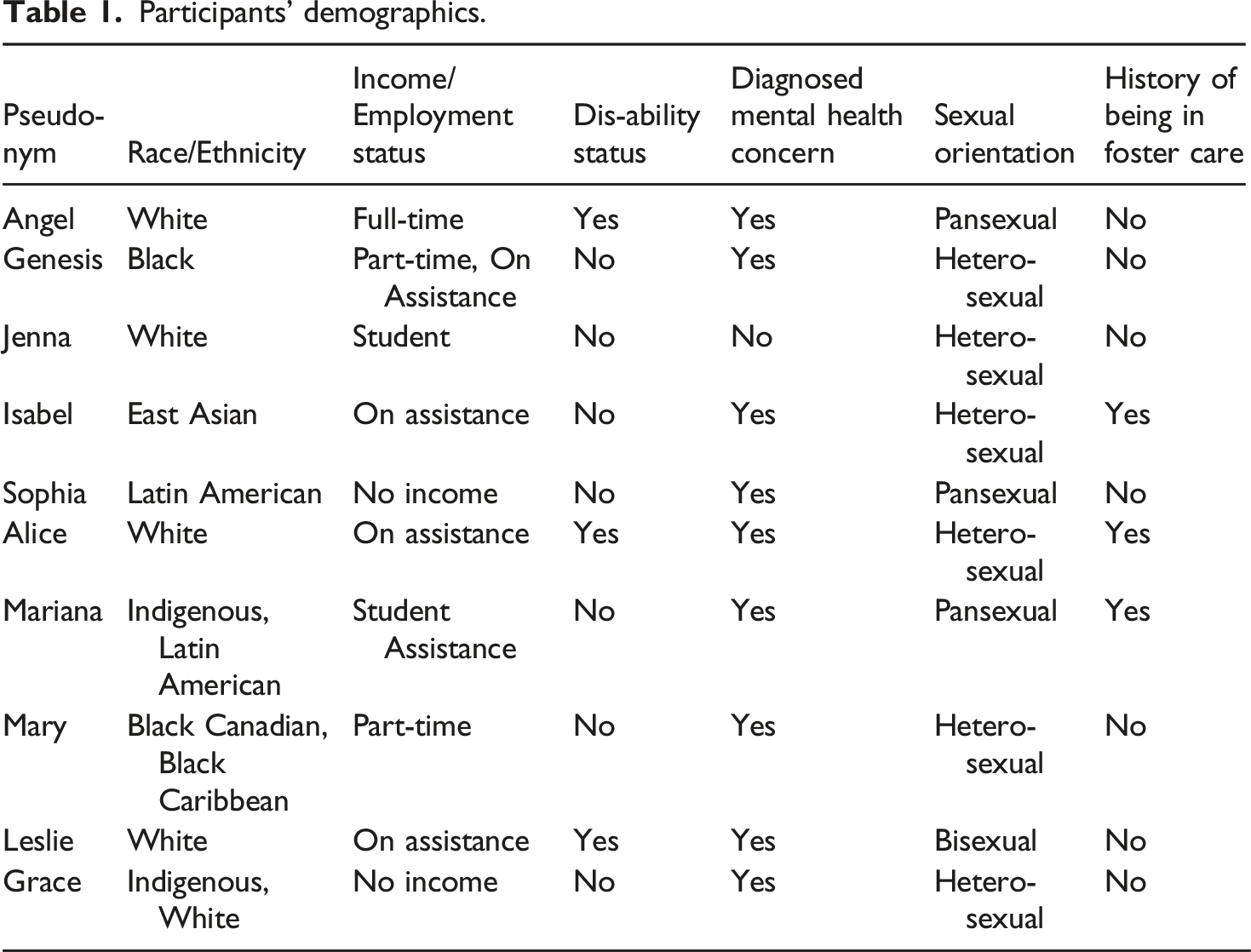
Participants’ demographics.
Data analysis
The first step of the IPA approach to our analysis included generating themes in a single case whereby members of the research team reviewed the first participant’s (i.e., Jenna) transcript twice. The review included reading and listening to the interview simultaneously, followed by annotating anything that was significant or noteworthy (e.g., similarities, differences, repetitions, amplifications, contradictions) in the left-hand margin on a Microsoft Word document. The second step involved transforming phrases into themes to make clear links between the generated theme and the participant’s excerpts in the right-hand margin. The subordinate list of codes from Jenna’s story informed the analysis of the other transcripts, which were distributed across, reviewed, and coded on Dedoose—a data management software—by four research assistants who conducted a similar process. Although the research team continued to generate connections, ground the participants’ accounts, and cluster the themes for the initial analysis (additional details of the methods can be found in King et al., 2024), this second analysis extracted any excerpts that were coded as intimate partner violence onto a Microsoft Word document. The first author then re-engaged in the coding process to identify themes among those who had experienced intimate partner violence. The themes that emerged were then discussed with the research team in a peer-review process. Only those who shared experiences of IPV are included in this analysis (n = 10).
Findings
Participants were invited to discuss their experiences with CAS as broadly as possible, including how they encountered the system, what happened during and after their involvement, and how the system supported or discriminated against them. Three superordinate themes were identified from participants’ descriptions, particularly those who had experienced IPV: (1) “Want me to call CAS on you?”: Abusive ex-partners retaliate through calling the child welfare system; (2) “He wasn’t a safe person”: Concerns about ex-partners drive young survivors’ child welfare involvement; and (3) “If they had helped me after I left foster care…”: Out-of-home care increasing vulnerability to IPV and child welfare involvement.
“Want me to call CAS on you?”: Abusive ex-partners retaliate through calling the child welfare system
Mothers highlighted how the threat or use of CW intervention as a means of control is a powerful tactic in abusive relationships. Several young mothers shared that their ex-partners threatened them with the possibility of calling child protection services on them as a way to maintain dominance and instill fear, given that it was “an excellent way to get [them]” (Angel). The threats increased the emotional distress experienced by young mothers, especially for those with a history of negative involvement with the CW system, either as a child or as a parent. Angel stated: Even like my son’s father, when he gets really mad at me, he’s like, ‘want me to call CAS on you?’ It's like, you have no idea what tree you’re barking up by even saying [that]. Not threatening possibly me losing a child wrongfully again, and then what do I get for it, another letter? (Angel)
In some instances, the young mother’s involvement with the CW system was the result of their ex-partner calling CAS and reporting child abuse concerns. The ex-partners used child protection services as a malicious retaliation tactic towards young mothers, even in instances where there were no demonstrated protection concerns. This was particularly true after young mothers left the abusive relationship to protect themselves and their child(ren). Notably, mothers alluded to the lack of consideration by child protection workers on the motives of the referral or contextual factors between the father and mother (e.g., restraining orders), placing the mothers in a position for unnecessary system involvement and surveillance. For example, Genesis shared: I do not think that it is fair. Why aren't you guys checking his house, and especially, the other thing was I had an active restraining order against him. So that should have been a big red flag at that point in time. I was literally in a shelter a couple months prior to him calling because of him and his mom. There was a domestic incident. And I had to call central intake and they had to literally give me a cab to a shelter. Like right away. I literally left with like slippers and not even a sweater on my back or my son's like nothing. We had nothing. (Genesis)
Relatedly, Jenna described how her involvement with CAS was due to her ex-partner calling with concerns that are commonly related to the effects of experiencing IPV (e.g., mental health challenges), which may be further exacerbated due to being a new mother (e.g., experiences of post-partum depression). She noted that her circumstances (e.g., limited education when compared to abusive partner) increased her risk of involvement and surveillance by CW services. Jenna shared: My son’s father was a lot older than me. He had a lot of money, he had a master's degree, he had everything. And he was pretty much trying to say that I cannot take care of his child based on those factors, and they got involved. And [because of] my mental health. But my mental health was struggling cuz I had a newborn after leaving domestic violence. (Jenna)
This theme underscores how young mothers experienced the threat of or actual CW involvement as being weaponized by abusive former partners, which negatively impacted, and in some instances, worsened the mother’s mental and emotional well-being. When abusive partners were unable to exert control over mothers, they utilized the state to apply coercive control, which, at times, led to unwarranted involvement with the CW system. This use of power is concerning given that the system inherently holds power (e.g., continued surveillance, authority to remove children from their care) over young mothers and can exacerbate some of the challenges they may already be experiencing.
“He wasn’t a safe person”: Concerns about ex-partners drive young survivors’ child welfare involvement
Several young mothers who experienced IPV described how CAS was involved due to concerns related to their children’s father rather than the mother’s ability to parent and care for their child. However, the role and actions of the fathers were often overlooked, increasing scrutiny, accountability, and blame on the mother. One young mother described how she was not afforded the opportunity to care for her child as her child was taken from her immediately after giving birth due to a birth alert
1
that was filed by the worker noting that the child’s father was “not a safe person” (Isabel). Instead of finding ways to support the young mother (who had just reached the age of majority and was experiencing other vulnerabilities such as being trafficked after aging out of care) and her child together, it was decided that separating the newborn from her mother was in the best interest of the child: I got pregnant with my daughter, who's now four, at 18. And then she was taken right from the hospital. And then she came back. And then um, she was taken again last year, but then she came back to me this April. I had a worker who was like, who still knew my case. And because we were together, the man that might be baby’s dad, and she knew that he was not a safe person. And she said that we couldn’t be raising a child together so she had a birth alert out for the baby. So she was taken. But I was able to get her back. But the trafficking kept continuing. So she was taken for a whole year. (Isabel)
The concerns related to the fathers, at times, led to prolonged CW involvement. Jenna noted that “they [CAS] didn’t close the file not based on safety concerns for me, but safety concerns on my ex-partner [potentially] getting custody of my son.”
Young mothers also expressed that they were expected to independently leave their abusive partners as a way to protect their child; if they did not, they were “blamed for staying with the person” (Sophia). They believed this demonstrated a lack of understanding about the nature, context, types, and impacts of IPV, including the reasons (e.g., housing, finances) that young mothers may have remained in the abusive relationship. In some cases, young mothers shared that they were financially dependent on their abusive partners and had no way to support themselves and their young children if they had left. Instead, young mothers shared that CW workers focused solely on the impact of IPV on children, showing no consideration or support for the young mother and their child, both of whom were harmed. Instead of approaching young mothers who have experienced IPV with empathy, young mothers shared that they were blamed, exacerbating the stigma associated with young motherhood. In some cases, the behavior of the partner – even when they were no longer living with the family – led to infants and young children being separated from their mothers and placed into out-of-home care. My ex was very abusive. They never really looked into it. I think that's something that I would have loved for them to help me with because they just seen me as somebody that was with this person because I wanted to, but a lot of the time I wanted to leave. I was scared too, and I didn't have any supports. They weren't very understanding with it. They never asked me how I was in that sense when they knew something was up. I think there needs to be a lot more look into these I feel like they just look into when it's like physical abuse. And I understand that. But there's also different types of abuse that needs to be checked into like it's not just physical. I think that that needs to be a change with them. (Sophia)
There were times when the credibility of the young mother was questioned as CW workers did not always trust their perspectives or narratives. Grace shared that “women who are running away from abusive men with their children need to be believed more often”. In instances where the young mother was trying to protect their child by asking for child protective services to intervene with a father who was described to be abusive, CW staff would do the contrary. Rather, greater surveillance and intrusive measures were geared towards the young mother. Alice shared: You know, I will have the police in my house on a Friday night for a bruise when everybody knows that I haven't done anything. But um, no one will. There's no preventative measures in place, and they've essentially said, um, send them for a visit with him. Once he does something abusive, then we'll get involved and I'm like, can we please protect them before that happens? (Alice)
This theme highlights how young mothers were involved with the CW system for concerns that were not related to their parenting capacity or concerns about their potentially abusive or neglectful behavior. They believed their involvement was triggered and maintained because of concerns that workers had with the child’s father, even when the mother had separated from their abusive partners. Instead of believing young mothers and finding ways to support them, young mothers were scrutinized for the actions of their former partners.
“If they had helped me after I left foster care…”: Out-of-home care increasing vulnerability to IPV and child welfare involvement
A final theme speaks to the vulnerability created by spending time in out-of-home care and the unmet needs during adolescent girls’ transition from the system into adulthood. Several young mothers believed that living in out-of-home care during their childhood increased their risk of being investigated by the CW system when they became parents, particularly when compared to those without such a history. Mariana voiced: I hate the fact that when you’re previously in care and you’re previously a Crown Ward, they always investigate you, always. And if you’re not a Crown Ward, you’ve never been in care, they never bothered to investigate. They don’t give a shit. (Mariana)
Relatedly, another young mother shared that her lack of support during her transition out of the CW system increased her vulnerability to IPV, which in turn further increased her risk of encountering the CW system. The withdrawal of supports from CAS at the age of 18 led her to homelessness and increased her susceptibility to exploitation and abuse. As a result, she was dependent on her child’s father for basic needs for both herself and her child. Isabel expressed: I was a foster child myself, like a crown ward, since I was 14. And then when I left Children's Aid, like when I turned 18, they kind of like, cut off all the support. And I was homeless. Then I met my baby's dad, and we were getting along really great. And then he turned out to be a trafficker… at that time, like, when I was with my baby dad, he was controlling all the money, all the food, and stuff like that. So I was really nervous to leave him. So I wish, like if CAS had said, we can help you with like groceries and things like that. But there was they didn't really offer any of that. Like, basic needs and things for my daughter. Back to when I was 18, like if they had helped me, like after I left foster care, like myself, then I don’t think I would have gone into that situation. (Isabel)
Young mothers with a history of being in out-of-home care may be stigmatized and considered as high risk by professionals in other social systems, which may lead to them being reactive to circumstances that may otherwise be deemed not concerning for parents without CW history. Young mothers with childhood involvement, often for reasons outside of their control, become targets and victims of judgement because of their past, creating a perception that they are inherently at risk, incapable of providing adequate care for their children, or are likely to abuse their children. Alice shared: Even last week, my son had a bruise on his cheek. Doctor called CAS. CAS knows me. The worker was like ‘I'm sorry, we have to do this, but we're coming with the police’ at like, 11 o'clock at night. And the police come into my house and they take a picture. And even the CAS worker was like, ‘Oh, we're really surprised. Like, we thought it would be a bigger bruise like you could barely see it’. Um, and so there's this extreme reaction. Because I'm young, I guess you can't see it online. I’m just going to show you I have really visible scarring on my arms. I don't know you can't pick it up on camera. But so people see me and they see you're young, you're covered in scars, and they make a judgement. Um, so there's this extremely action last week. Meanwhile, my children's father is awfully abusive…Yet, CAS will not get involved because he has done nothing to the children. (Alice)
This theme highlights that young mothers with out-of-home care experience in childhood were not adequately supported during their transition out of the system, ultimately increasing their vulnerability of being victims of IPV and encountering the CW system in motherhood. Despite children and youth being separated from their families and communities to ensure that they are adequately cared for after being at risk of, or having experienced, maltreatment, it is apparent that youth who have survived the system tend to fare worse—including being viewed as more risky or judged for their parenting abilities by professionals— than their peers without CW involvement. Their lack of support from the system results in seeking help elsewhere, including abusive partners. They must then survive the violence exerted by their current or former partners, resulting in encountering, being oversurveilled, and discriminated against by the system again as parents—increasing the cyclical, intergenerational impact of CW involvement.
Discussion
This study explored the CW experiences of young mothers who were survivors of IPV. Three main themes were established from the accounts shared by the young mothers which, taken together, speak to the ways that young mothers experienced their CW involvement as a continuation of these abusive relationships where they were under threat, unseen, and underserved. Further, for those mothers who themselves had been in foster care, their vulnerability to IPV was created by the lack of support during their transitions from CW supervised care. The cycles of coercive control – whether by their partners or by the state – impacted their well-being as young women and young parents.
The first theme highlighted how young mothers’ abusive former partners threatened to call or maliciously called CW services to continue to control and provoke fear among the mothers. We argue that this is a form of emotional violence that young mothers continue to experience after leaving the abusive relationship, extending beyond the violence they had already suffered, as emotional violence constitutes of behaviours that are used to frighten, hurt, or control another individual (Engel, 2002). This finding aligns with Loncar and Scott (2025) and Larance (2025) who found that male abusers misused CW services as a tactic to manipulate mothers—a form of coercive control, as noted by Mandel et al. (2021). The violence by their former partners is then met with further harm from the state as CW involvement is often intrusive and can have negative effects on families (Aston et al., 2021; Fong, 2020; Loncar and Scott, 2025). Johnson and Sullivan (2008) noted that the mothers in their study who were involved with the CW system due to IPV concerns felt that there was no recognition of them being victims, leading to further victimization by the system, which is a phenomenon referred to as double victimization (Thiara and Gill, 2010).
The second theme underscores how CW involvement for young mothers who experienced IPV occurred due to concerns with the father’s suitability as a parent or caregiver. Several participants described the ways in which patriarchal values were reinforced within the CW system as there was an increased focus on the mother’s ability to care for their child, often overlooking the role and actions of the father. This finding is similar to that of Johnson and Sullivan (2008) in which the women who experienced IPV believed that the child protection workers held them responsible for the perpetrators’ actions. Similarly, Loncar and Scott (2025) found that CW involvement continued for an extended period of time due to concerns with the father being high-risk. Mothers are generally entirely responsible for their children’s safety, despite the child(ren)’s father having access to them (Hughes et al., 2011; Roberts, 2022). They also reported that the women would only receive services once they left their partners, again, highlighting the lack of consideration for the mother’s well-being.
As shared by a participant in this study, there are many forms of IPV that young mothers may experience, which was not always understood by child protection workers. Several young mothers in this study were dependent on their ex-partners for basic needs (e.g., housing, finances), making the decision to leave the abusive relationship challenging. A study by Fusco (2013) found that child protection workers did not feel adequately trained to respond to cases where there was IPV, as finding the time for supplementary trainings was difficult. Rather than finding ways to support young mothers in leaving abusive relationships, child protection workers blamed mothers for staying with their abusive partners and, in some instances, removed their child(ren) from their care. Loncar and Scott (2025) found that the CW system placed unfair expectations on the mother (e.g., fixing a door that her former partner who breached their no-contact order broke) and did not take into account contextual factors that made meeting CAS’s expectations challenging (e.g., mother was on maternity leave and did not have the financial means to fix it); rather, she was in jeopardy of having her child removed from her care, just as we found in this study. In these scenarios, the state exacerbates harm as young mothers may already be trying to navigate structural and systemic barriers that challenge their ability to parent safely. Moreover, some of the participants in this study shared how they were not always believed about their experiences or perspectives by CW staff, which could have contributed to their negative experiences with the system. Loncar and Scott (2025) found that when workers believed mothers and supported them in pursuing safety for themselves and their children, it had a positive impact on their CW involvement. Conversely, when mothers’ experiences of violence were unrecognized and they were not provided supports, it resulted in mothers feeling scrutinized and experiencing a loss of autonomy, which were counterproductive for their safety and wellbeing (Loncar and Scott, 2025).
The last theme exemplified how young mothers believed that their involvement with the CW system and spending time in out-of-home care during childhood increased their risk of experiencing IPV, as well as encountering the system as a parent due to several risk factors that have been linked with aging out of care (e.g., experiencing homelessness, mental health challenges, limited social support). Young mothers with out-of-home care experience were perceived as more risky by professionals that are meant to be of support, resulting in biased judgements, and little opportunities to make “mistakes.” The accounts that the young mothers in this study shared are not surprising given that research has shown that aging out of the CW system increases the risk of future CW involvement as a parent (Hovdestad et al., 2015; King et al., 2019, 2024). Notably, experiencing IPV also increases the likelihood of encountering the CW system as exposure to IPV is the main reason for child maltreatment investigations in Ontario, accounting for 48% of substantiated cases (Fallon et al., 2025). Additionally, being a victim of IPV and having fewer social supports are common risk factors for primary caregivers (Fallon et al., 2020), circumstances that youth who age out of care are more likely to experience (Kovarikova, 2017).
Limitations
This study has considerable strengths, including being the first, to our knowledge, to speak to young mothers who survived IPV experiences with the CW system in Ontario. This is notable given that exposure to IPV is the primary reason for CW involvement within this geographical region. However, there are some limitations. First, the interviewers did not ask participants directly about their experiences of IPV; rather, the accounts included in the analysis were the result of those who willingly expressed their experiences of IPV. Additional participants may have experienced IPV but may have not discussed it. Nonetheless, by not asking directly about their experiences of IPV, young mothers remained in control over what and how they shared their narratives. Additionally, our sample consisted of young mothers who were, on average, slightly over the age of 25. The intention was to recruit mothers who were younger and had current CW involvement, but many of the participants were recalling their CW experiences. Lastly, this study was conducted virtually due to COVID-19 social restrictions, which may have presented as a barrier for some young mothers who may not have had access to a device or the internet. Despite these limitations, the study was able to garner a greater understanding of young mothers’ involvement with the CW system, particularly for concerns related to IPV.
Recommendations and implications
The findings of this study suggest that CW practice with young mothers who have experienced IPV require special attention. First, the young mothers in this study highlighted the lack of consideration for their well-being. As such, trauma- and violence-informed approaches and wraparound services for both the mother and child should be prioritized as the well-being of the mother influences the well-being of the child (Berg et al., 2020; Lalonde et al., 2020). Trauma- and violence-informed practice may include recognizing the impact of the violence, creating emotionally and physically safe environments, focusing on strengths, and fostering opportunities for choice and collaboration (Lalonde et al., 2020). It may prevent further harm to the mother in the context of surveillance and monitoring by the state. Second, it is recommended that CW workers engage in thorough checks on referrals that may have malicious intent, which may reduce unnecessary involvement for young mothers who may already be experiencing other challenges. Relatedly, workers should receive more training on working with victims of IPV. Lastly, it is important that youth aging out of care are provided better supports (e.g., financial, social) that reduce their vulnerability to experiencing IPV and CW involvement during parenthood. Although these recommendations must be considered for young mothers who experience unique challenges, they may be applicable to all mothers who come into contact with the CW system and have experienced IPV.
Conclusion
Young mothers who experienced IPV and encountered the CW system shared that they were victims of malicious referrals to child protection services, often over-surveilled for the actions of the child’s father, and at increased risk of IPV and CW involvement due to experiences in out-of-home care as a child. This is concerning given that cases of CW involvement remain in the system eternally, increasing the risk of more intrusive interventions if involved with the system in the future, becoming an instrument for further victimization rather than support for mothers and their children. Notably, several young mothers in this study had their child removed from their care, yet research suggests that majority of IPV-related cases do not result in out-of-home care placement for children (Fallon and Van Wert, 2016). Future studies should explore the association between maternal age, experiences of IPV, and CW service trajectory outcome more explicitly as young mothers may face unique challenges based on their intersecting identities.
Footnotes
Acknowledgements
The authors would like to thank all of the young mothers who have taken the time to share their stories with us. This work would not have been possible without you.

Ethical considerations
All procedures performed in studies involving human participants were in accordance with the ethical standards of the institutional and/or national research committee and with the 1964 Helsinki Declaration and its later amendments or comparable ethical standards. The University of Toronto Research Ethics Board approved the study protocol and all procedures (RIS: 39613).
Consent to participate
Informed consent was obtained from all individual participants included in the study.
Author contributions
Rasnat Chowdhury lead the data analysis, interpretation, and writing for this manuscript. Megha Goel supported with writing this manuscript (i.e., literature review) and manuscript review. Ami Goulden supported with the conceptualization, data collection, data analysis, and manuscript review. Florence Wong supported with data analysis and the manuscript review. Janice Appiah supported with data collection, data analysis, and manuscript review. Bryn King supported with the conceptualization, data collection, data analysis, manuscript review, and overall mentorship to the research team. This manuscript is for the special issue on domestic violence and abuse in Qualitative Social Work: Research and Practice.
Funding
The authors disclosed receipt of the following financial support for the research, authorship, and/or publication of this article: This study was funded by the Social Sciences and Humanities Research Council of Canada (Insight Grant #435-2018-0936).
Declaration of conflicting interests
The authors declared no potential conflicts of interest with respect to the research, authorship, and/or publication of this article.
Data Availability Statement
The data that support the findings of this study may be made available on request from the principal investigator, BK. The data are not publicly available because they contain information that could compromise the privacy of research participants.
Note
Interview guide
(1) Can you tell me a bit about why you wanted to participate in this study? (2) How would you describe your experience with Children’s Aid? (3) Please describe any specific services or programs you received from Children’s Aid. (4) What was your relationship like with your CAS worker? (5) Have there been times when you felt like your worker or the agency was biased against you because of an aspect of your identity (prompts: age, race/ethnicity, sexual/gender identity, disability) or past experiences (prompts: drug use, sex work, previous CW/foster care history)? (a) If yes: Can you tell me about those experiences? (6) How did CAS involve your child’s father? (7) How have COVID-19 and social distancing measures impacted you and your family (prompts: health, mental health, finances, parenting, resources, relationships with service providers/CAS)? (8) What are some key supports in your life now? (9) How has CAS been involved with any of these supports? Did they work together? (10) What are some of your successes as a young parent? How do you think you are doing taking care of yourself, your baby, and your family now? (11) What are some of the challenges you face as a young parent? (12) Can you tell me more about your child? (13) Can you tell me about your relationship with your child? (14) What are you most excited about for the future? (15) What else would you like us to know about you, your child, and CAS that I didn’t already ask?