






Abstract
Black women in the United States experience disproportionately high rates of intimate partner violence (IPV) and face significant barriers to accessing culturally congruent services. Ecological theories, such as Bronfenbrenner’s (1994) chronosystem and intersectional frameworks including Black feminist theorists such as Hill Collins’ (2000) matrix of domination and Richie’s (2012) violence matrix, illustrate that Black women’s experiences of intimate partner violence (IPV) are entwined within broader historical and sociopolitical forces. These factors, including structural racism, the COVID-19 pandemic, and the Black Lives Matter (BLM) movement, have influenced the design, delivery, and perception of IPV services, constraining help-seeking options and limiting access to care that is congruent with the lived experiences of Black survivors (Murugan et al., 2022). We employed a qualitative approach and purposive sampling to interview 18 IPV service providers in a Midwestern metropolitan area. Interviews were framed within the intersecting chronosystem influences of the domestic violence movement, structural racism, COVID-19, and the BLM movement and asked service providers to observe the ways that contemporary IPV services address the needs of Black survivors. Data collection included a brief demographic questionnaire and individual, semi-structured interviews via Zoom. Thematic analysis was used to identify key patterns in the data. Four themes emerged to reflect service providers’ perceptions of the availability, accessibility, and cultural responsiveness of IPV services for Black women: (1) Racist tropes minimize Black women’s lived experiences; (2) Criminal Justice as the default IPV remedy might not be an option for many Black women; (3) Traditional advocacy efforts may inadvertently reinforce the very oppression they aim to dismantle; and (4) Black advocates carry additional burdens in advocacy. The insights highlight the need for transformative IPV services that prioritize Black survivors’ voices and promote equity, safety, and healing beyond carceral systems.
Keywords
Introduction
Black women in the United States (U.S.) experience disproportionately high rates of intimate partner violence (IPV) and face significant barriers to culturally responsive support. IPV includes physical or sexual violence, psychological aggression, stalking, and/or controlling behaviors by an intimate partner (Breiding et al., 2014). Although IPV is broadly recognized as a public health problem, Black women endure distinct forms of harm, including structural racism, criminalization, and limited access to care that honors their culture and lived experiences (Murugan et al., 2022).
Ecological and intersectional frameworks, including Bronfenbrenner’s (1994) chronosystem and Black feminist theories such as Hill Collins’ (2000) matrix of domination and Richie’s (2012) violence matrix, demonstrate that Black women’s experiences with IPV cannot be divorced from broader historical and sociopolitical forces. To understand the extent to which IPV services align (or misalign) with the needs of Black survivors, it is critical to consider the perspectives of those who provide IPV support services. As such, our study examined how IPV services are shaped by intersecting chronosystem-level factors, including the Battered Women’s Movement (BWM), structural racism, the COVID-19 pandemic, and the Black Lives Matter (BLM) Movement. Through in-depth, qualitative interviews with 18 service providers in a Midwest metropolitan area, this research sought to clarify how macro-level influences affect the availability, accessibility, and cultural responsiveness of services for Black survivors. The findings provided insight into the challenges, contradictions, and potential opportunities to transform IPV services to promote equity, safety, and healing beyond reliance on carceral systems.
Background
Over one-third (41%) of Black women in the U.S. have experienced lifetime physical IPV (Breiding et al., 2014), and Black women, across all racial and ethnic groups, are more likely to be murdered by their intimate partners (Violence Policy Center, 2021). The public health consequences of nonlethal IPV are also profound, with Black women experiencing serious IPV-related injuries and mental health consequences (Lacey et al., 2021; Stockman et al., 2015). Despite these elevated rates and consequences, Black women are less likely to report IPV and receive fewer IPV-related services (Breiding et al., 2014; Kelly et al., 2020). Culturally appropriate and accessible support services can play an important role in connecting Black women to resources (St Vil et al., 2017) and reducing disparities in risk for nonlethal IPV and for escalation to femicide.
Intersectional and ecological theories widen the aperture of analysis for understanding disparities in the experiences and help-seeking of Black survivors. Patricia Hill Collins’ matrix of domination (Hill Collins, 2000) examined interlocking structures of oppression defined by race, gender, and class, and Beth Richie’s violence matrix (2012) focused on nested household, community, and social spheres of violence. These intersectional, person-in-context perspectives illuminate unique, systemic challenges in help-seeking for Black survivors. Similarly, culturally aware ecological models have been proposed to describe sociocultural influences on assault, post-assault experiences, and help-seeking (Dworkin and Weaver, 2021; El-Bassel et al., 2022; Neville and Heppner, 1999). These models, informed by Bronfenbrenner (1994), place the person-in-context and highlight how help-seeking is shaped by interrelated individual, assault, and multilevel environmental contexts, called macrosystems (see Figure 1 below). These macrosystems were deemed ‘a societal blueprint for a particular culture or subculture’ (Bronfenbrenner, 1994). The superordinate level of the model is the chronosystem, which situates these environmental contexts in time, including historical events and transitions, as well as the passage of time (Crawford, 2020). Bronfenbrenner’s chronosystem not only illustrated how significant historical events, such as the COVID-19 pandemic and the Black Lives Matter (BLM) movement, altered the conditions under which survivors seek safety but also served as a point of inflection for longstanding systems of identity-based oppression. Ecological model from Hoffman and Kruczek (2011).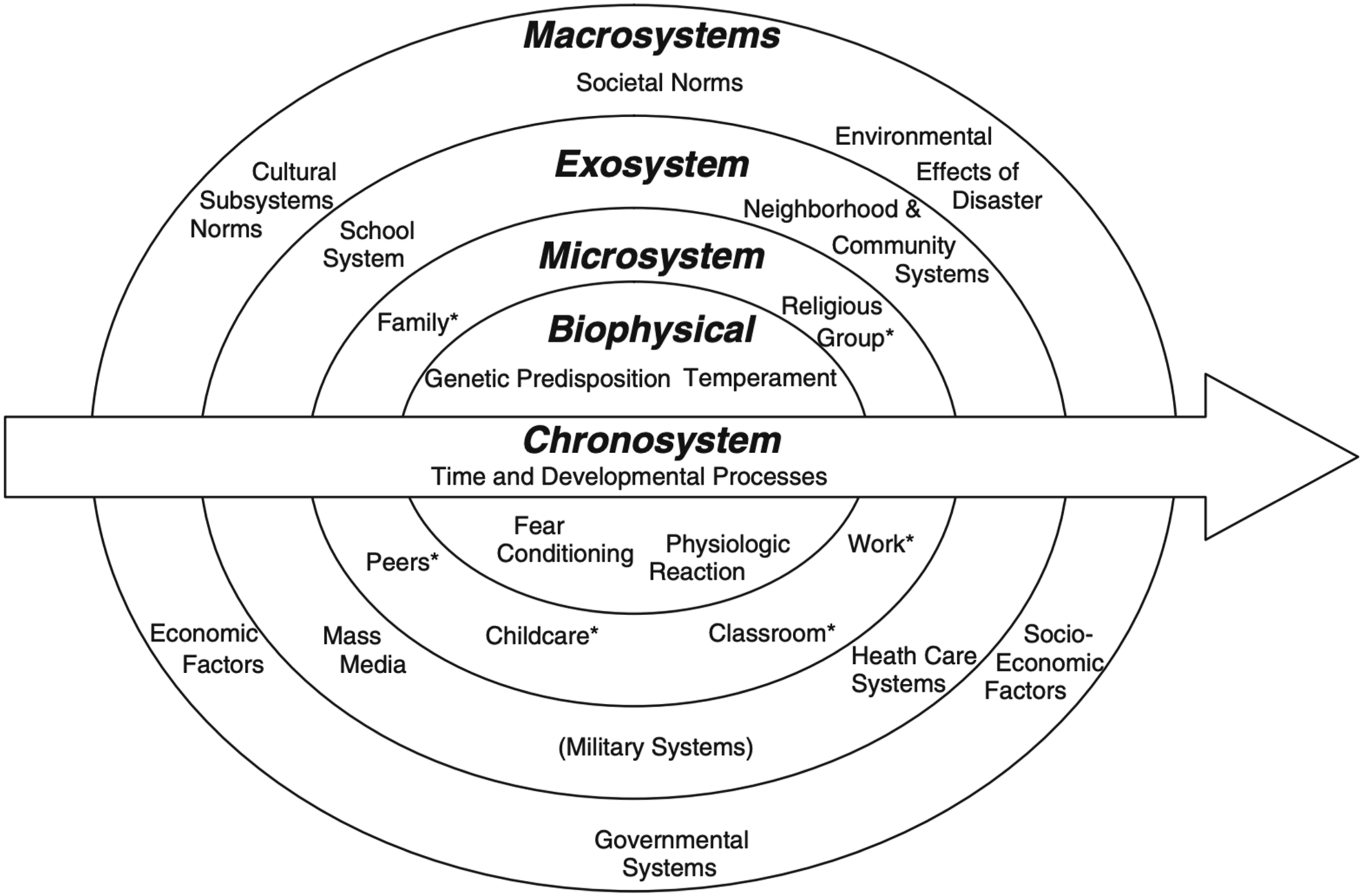
In tandem, these macro perspectives emphasized that the experiences and help-seeking of Black survivors cannot be fully understood without considering the influences of time, power, systemic oppression, and intersectional identity. These approaches situate Black survivors’ intersectional identities within broader sociocultural and historical contexts and illuminate misalignment with the mainstream IPV definitions, services, and help-seeking options formed by the Battered Women’s Movement (BWM).
The BWM in the United States originated as an activist-driven approach shaped by the sociocultural context of the 1970s (Lehrner and Allen, 2009) and is an important timestamp for IPV-related services in the American chronosystem. The BWM and the resulting services (e.g., shelters, hotlines, advocacy programs) were grounded in second-wave white feminist analyses of domestic violence (Brownmiller, 2005; Dobash and Dobash, 1992). These frameworks, centered around the experiences of white, middle-class women, conceptualized IPV primarily as a product of patriarchy, male privilege, and gendered power imbalances (Dobash and Dobash, 1992; Schechter, 1982). Consequently, emerging service models were predicated on the assumption that women could safely leave abusive relationships and rely on system-embedded supports such as criminal legal interventions. While this approach expanded public recognition of IPV, it ignored the realities of Black survivors. Crenshaw’s (1991) Mapping the Margins demonstrated how these frameworks failed to consider how structural racism, poverty, child welfare surveillance, and criminalization constrained Black women’s access to safety and support. Potter (2008) emphasized that Black survivors were often misidentified as aggressors, faced disproportionate criminalization, and received limited institutional protection, further illustrating how these mainstream IPV models failed to consider the intersecting oppressions affecting Black women’s responses from and options for help-seeking. These limitations of the BWM also created narratives depicting a rigid victim–offender binary and reinforced the notion of the “perfect victim.” Oversimplified characterizations of victimization marginalized survivors whose experiences did not align with white, middle-class norms or who may use force as a survival strategy (Larance et al., 2022). Long before the 1970s, anti-violence movements were influenced by the theorizing and activism of Black women, who advocated for an intersectional lens in examining IPV (Davis, 1981; Richie, 2012). For example, Rosa Parks’s work with the NAACP exposed the sexual assaults of Black women by white men in the Jim Crow South, and this work was crucial in linking racial terror, gender-based violence, and state complicity (McGuire, 2010). These contributions and perspectives of Black women highlight their exclusion from the broader movement and the limitations in the design of the resulting services.
Structural racism, a social determinant of health, is also embedded in the American chronosystem (Spencer, 2021). Structural racism operates beyond the individual and describes how institutions are interconnected with ‘racialized rules’ (i.e., norms, principles, and regulations) that govern individuals and organizations, creating racial hierarchies (Gee and Hicken, 2021; Wien et al., 2023). In terms of the BWM, structural racism has constrained Black survivors’ resource options for culturally relevant interventions and care, leading to delays in seeking or receiving help (Bent-Goodley, 2021). Moreover, navigating police and federal systems, institutions historically responsible for violence against Black men, represents a significant barrier for Black women (Few, 2005). Relatedly, the concept of “racial loyalty” has also been identified as a factor hindering help-seeking among Black women survivors (Waller and Bent-Goodley, 2023). Often, women are forced to choose between personal safety and the potential harm that could come to their abuser if they rely on assistance from law enforcement. Institutional differences in the responses to Black women needing help with IPV have also been documented. Few (2005) examined the experiences of 30 Black and White rural battered women who sought help from domestic violence shelters in southwest Virginia. Researchers documented the unique challenges rural women face, such as cultural barriers and geographic isolation, as well as differences in help-seeking behaviors, particularly regarding law enforcement and family support. While both groups viewed shelters as safe havens, Black women often relied on informal networks before seeking shelter. The study suggested improvements to services, including greater visibility, employment training, and a more diverse staff to meet the needs of this underserved population better. Findings highlighted the important role of front-line advocates, their training, and the service delivery systems in achieving these goals.
The COVID-19 pandemic was a cataclysmic event in the contemporary chronosystem that significantly impacted IPV and Black survivors, specifically. The pandemic’s stay-at-home orders resulted in devastating effects on the economy and employment (CBPP, 2022). These dramatic changes in the sociocultural landscape amplified risk factors for IPV, including increased isolation and exacerbated stressors such as financial insecurity, crowding, and the demands of parenting and homeschooling (Wood et al., 2021). Sweet’s (2024) work examining IPV during COVID-19 underscored how the pandemic amplified the frequency and severity of IPV while simultaneously altering the dynamics of coercive control. Abusers took advantage of public health measures, such as stay-at-home orders, to strengthen their control over survivors, who faced limited mobility. Black women encountered additional challenges, including restricted access to services and increased surveillance (Sweet, 2024).
A systematic review and meta-analysis conducted by Piquero and colleagues (2021) examined whether IPV increased post-lockdown. Based on 18 empirical studies, researchers found that IPV increased post-lockdown, with an overall medium effect size. COVID-19 also amplified resource disparities, underscoring how historically marginalized populations, including Black women survivors, may have been disproportionately affected due to increased social isolation and reduced access to resources (Galea et al., 2020). Sweet’s (2024) analysis corroborated these findings and demonstrated that the pandemic intensified vulnerabilities stemming from racism, gender inequality, and economic marginalization that have profoundly impacted Black survivors’ safety (Sweet, 2024). Within the first several months of the COVID-19 stay-at-home orders, the nation witnessed the murder of George Floyd and subsequent protests demanding human rights accountability for Black lives (Beckett and Hankins, 2021). Therefore, the inflection of the Black Lives Matter (BLM) movement provided another contemporary chronosystem lens for understanding Black women survivors’ experiences with systems of oppression.
Help-seeking is a coping strategy that may either mediate or protect women against IPV and IPV escalation (Ahmad et al., 2009; Coker et al., 2012; Lacey et al., 2021). However, culture profoundly shapes how women conceptualize, identify, and address their experiences of IPV, as well as the resources available to them. Historical events and discriminatory practices whose legacies persist during contemporary times have fostered distrust in mainstream institutions, thereby serving as barriers to help-seeking among Black women (Lacey et al., 2021). For example, IPV is often viewed as credible only if law enforcement has been contacted and women subsequently cooperate with the state’s prosecutors (Crenshaw, 1991). These expectations leave many Black women, who have avoided engagement with the criminal legal system, preemptively fearing that their experiences will be disbelieved, that they will be shamed, and that services will be denied. Further, historically, mainstream institutions have deemed their services as available for ‘worthy victims,’ defined as vulnerable, fearful, and helpless, sketched from narratives of white, middle-class women (Sweet, 2023). Black women, whose identities, and lives depart from this narrative, may then expect that services are either not an option or that their personal narratives will require significant masking and/or transformation to fit this victim blueprint.
Our study examined Black women’s experiences of contemporary IPV services, framed through intersecting identities and structurally based chronosystem influences, including the BWM, structural racism, COVID-19, and the BLM movement. As a first step in meeting this goal, we interviewed domestic violence service providers. 1 Moreover, asked them to describe and reflect upon the range of services that they provide to Black women. As front-line workers, we viewed service providers as holding an important perspective on the state of the domestic violence movement vis-à-vis these intersecting chronosystem and macro-level influences, as well as on the challenges and dilemmas facing service provision. Providers were informed that a subsequent study would be focused on asking Black survivors about their personal experiences with services. Therefore, we were not asking providers to speak for Black women, but rather to share their perspectives and observations on Black survivors’ experiences with IPV, help-seeking, and services within their organizations.
Methods
Recruitment and sampling
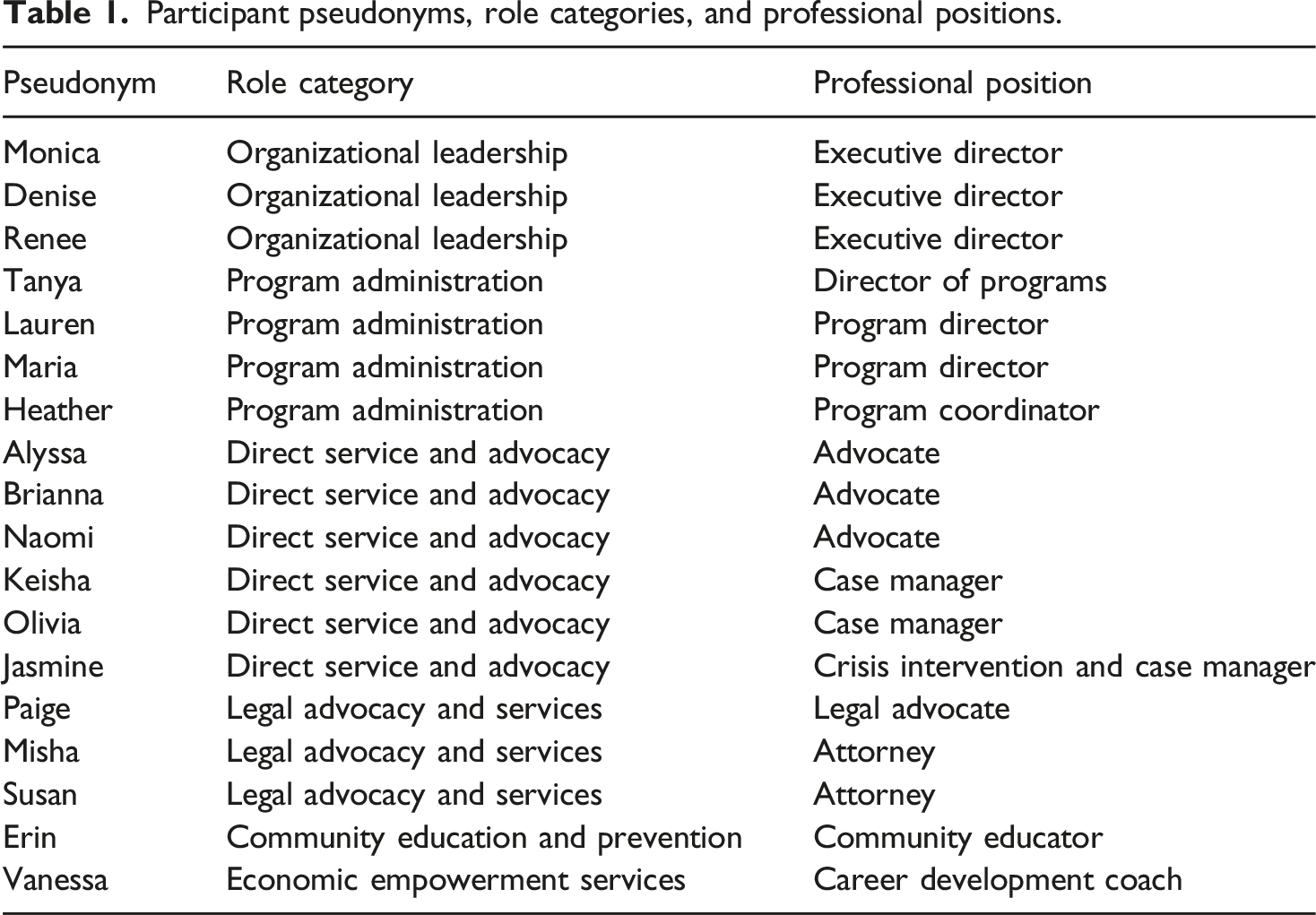
Participants were recruited using purposive sampling, including convenience sampling via the End Domestic Violence Network (EDVN) listserv. Participants had to be at least 18 years old and employed as executive directors, program directors, case managers, therapists, and legal service providers at an IPV agency in a metropolitan area of the Midwest. Individuals interested in the study were invited to contact the first author by phone or email for additional information about the study and its procedures. If a potential participant expressed interest, the interview date and time were scheduled.
Participant pseudonyms, role categories, and professional positions.
Procedures
Study procedures were approved by the Institutional Review Board at Saint Louis University. After obtaining informed consent, the first and second authors conducted semi-structured interviews with 18 service providers. Semi-structured interviews are used to collect data from participants who have “personal experiences, attitudes, perceptions, and beliefs related to the topic of interest” (DeJonckheere and Vaughn, 2019: 2).
The semi-structured interview guide contained approximately 15 questions. It addressed the following topics: service providers’ perceptions of the availability and accessibility of culturally congruent services for Black survivors, the extent to which COVID-19 and ongoing systemic racism have affected survivors’ experiences accessing services, and what is needed to provide culturally congruent and accessible care for Black survivors effectively. In addition to this loose structure, follow-up probes allowed for open-ended responses. Planned and interview-evoked follow-up probes were utilized to deepen the PIs’ understanding of the service providers’ responses. Planned follow-up questions or probes ask for more details about particular aspects of the core questions. For example, one question in the interview guide asked how providers perceive existing IPV services’ effectiveness in responding to the needs of Black women. Planned follow-up questions included: In what ways do you think existing IPV services need to be adapted to meet the unique needs of Black survivors? Are there any new approaches that have been implemented to increase access to services among Black survivors? Are there any unique opportunities or challenges that Black service providers face when working with Black survivors? Unplanned follow-up questions were also utilized to seek clarification on words and phrases to avoid assuming shared meaning. For example, interviewers might ask, “Could you tell me what that means or looks like for you?” or “Could you give me an example?” to encourage elaboration.
It is important to note that over half of our participants were white, and many were hesitant to speculate about the experiences of their Black clients/members and/or colleagues. Researchers acknowledged these concerns and encouraged participants to describe what their Black clients/members may have shared about their experiences accessing services, and what their colleagues shared about their work and their perspectives as people of color.
Interviews were conducted via Zoom between December 2021 and September 2022, lasted 60–90 min, and were audio recorded. Participants received a $20 Amazon gift card as compensation. After the interviews, participants completed a brief sociodemographic questionnaire via Qualtrics. Interviews were transcribed verbatim by a third-party, HIPAA-compliant transcription service. Field notes were recorded immediately after the interview to capture important contextual information.
Data analysis
The interview data were transcribed and analyzed using Dedoose, a cross-platform software program commonly utilized for qualitative and mixed-methods research. The research team applied a thematic analysis approach, which is defined as “a method for identifying, analyzing, and reporting patterns within data” (Braun and Clarke, 2006: 79). Thematic analysis is known for its flexibility, enabling researchers to provide rich, detailed, and complex descriptions of the data.
The first and second authors, along with three research assistants (one doctoral student and two master’s level students) began by familiarizing themselves with the data by thoroughly reading each transcript. Each team member documented their thoughts on potential codes, which they shared and discussed during a debriefing session.
A preliminary codebook was developed, containing codes and their definitions based on the interview guide questions and the codes discussed during the debriefing. The research team used a hierarchical approach (Saldaña, 2021) to develop the codes. This allowed the research team to organize the codes into parent (umbrella) codes, child codes (subcodes), and grandchild codes (subsubcodes). This structure enabled the research team to capture the complex, layered nature of the data by organizing specific ideas under broader codes.
One transcript was then selected by the research team for preliminary coding to ensure that the initial codebook effectively captured patterns in perspective across the interviews. The coders subsequently met to review and compare their coding. Any discrepancies were discussed until a consensus was reached. This process led to the first refinement of the codebook, which included adding new codes, clarifying code definitions, and including specific quotes as exemplars. The research team then re-coded the initial transcript using the refined codebook.
Due to minimal discrepancies among coders that were not specific to the code itself (such as differences in the length of the excerpt coded by different coders), all remaining transcripts were double coded by the authors. The full team convened as needed to discuss and resolve any coding discrepancies, leaving only minor differences. The team then met to discuss how to consolidate the codes into broader themes. Quotes were selected from each code corresponding to the themes and were re-evaluated to ensure they accurately represented the meaning of those themes (Braun and Clarke, 2006).
Additionally, member checking was performed with the participants to enhance the accuracy and reliability of the qualitative data. Specifically, after completing the analysis, the researchers presented a summary of the findings to the study participants. They were asked if the findings reflected their experiences and if they had any suggestions for changes or additions. Overall, participants generally confirmed that the findings were reported accurately.
Results
Interviews revealed four themes: (1) Racist tropes minimize Black women’s lived experiences; (2) Criminal justice as the default IPV remedy is not an option for many Black women; (3) Traditional advocacy efforts may inadvertently reinforce the very oppression they aim to dismantle; and (4) Black service providers carry additional burdens in advocacy.
Theme 1: Racist tropes minimize Black women’s lived experiences
Most providers emphasized the significant impact of racial stereotypes and how they undermine the authentic lived experiences of the Black survivors they support. Additionally, many providers expressed concerns that these stereotypes dehumanize Black survivors and create barriers to understanding their complex realities.
Strong Black woman
A frequently cited stereotype that many providers explicitly mentioned is that of the “strong Black woman.” Providers indicated that this stereotype depicts Black women as resilient and self-sufficient, which may create the impression that Black survivors can endure hardships without needing assistance. For example, Naomi, an advocate working in direct services, shared that many of her Black clients have been subject to the following sentiment: “There is a general idea that their healing [Black women] is easier because Black women are so resilient… because they’ve been through shit…”
Keisha, a case manager, expanded on how this stereotype reinforces expectations of self-reliance and functions as a barrier to help-seeking: You're [Black women] strong, and this is normal for you because everyone has already told you that you don't deserve nice things. You [Black women] don't deserve the cushion. You don't deserve safety and security. Since we've been out grinding and getting it on our own all this time… but these other women do because they can't do it on their own, but you've already proven that you can 'cause you're Black.
Perfect victim
Another stereotype discussed by many providers is that of the “perfect victim.” Providers discussed how this stereotype is often associated with the credibility of Black survivors, especially when seeking access to the criminal justice system. Providers specifically remarked on biases that judges have related to Black survivors’ physical and emotional presentation in court. Paige, a legal advocate, described how Black women’s emotional expression is interpreted in court: Angry, confrontational, tough. These are all things that get thrown around. Those might not be the exact words, but that’s what’s sort of lurking behind. Black women are, in order to be seen––if it’s even possible for Black women to be seen––as the quote/unquote “perfect victim”, they would have to devote themselves entirely to seeming meek, without agency.
Paige further noted that stereotypes related to family structure frequently surface during legal proceedings: I feel like some of my Black victims have a lot of children, and they have not all of [the children have the] same father. Sometimes that stereotype gets brought into court a lot, of, like, “Well, she has multiple men in her life. She must be doing this for attention.”
Relatedly, to the notion of the “perfect victim,” providers discussed how Black survivors’ credibility is often scrutinized when they have criminal backgrounds of their own. Building on this, Susan, an attorney, emphasized how criminal histories are often used to discredit Black survivors: It is always about attacking victim credibility here for sure. Sometimes our Black victims will come in with criminal histories of their own. Sometimes it's dangerous, sometimes it's not. I really don't care what it is, but our courts care, and that's gonna affect them. I have this one victim who's been arrested a ton for assaults and all kinds of stuff. Immediately I feel like there's more sheriff presence in the courtroom.
Theme 2: Criminal justice as the default IPV remedy is not an option for many Black women
The criminal justice system is often perceived as the default remedy to address IPV. However, almost all providers noted that it is neither accessible nor desirable for many Black survivors. Specifically, providers discussed the profound mistrust and fear that Black survivors hold towards the criminal justice system.
Fear of police brutality
Many providers shared that Black survivors are often reluctant to call the police out of fear of escalating the violence further and potentially resulting in harm to themselves and/or their abusive partner. Jasmine, who provides crisis intervention services, reflected on survivors’ fears of police involvement escalating violence: We know why there’s mistrust, and we know why there’s fear in the Black community of the police, and if a partner is being violent and she just wants him to stop, but if she calls the police, then that could lead to George Floyd, right? I don’t want that to happen. I just want him to stop.
She further explained that survivors are often weighing multiple life-threatening risks: Am I going to call [the]police and risk not only his life because that is a thing that might happen, but I'm also risking my own life because the police aren’t particularly nice to Black women either, so it’s a risk to everyone’s life involved.
Fear of exacerbating the situation
In addition to concerns about police brutality, providers noted that Black survivors often hesitate to involve law enforcement due to fears of worsening already fragile situations, including arrest warrants and fines. Some providers discussed dual arrests of both the victim and abusive partner and the involvement of child protective services as specific fears that Black survivors often have. Keisha described how these fears shape survivors’ decisions: Because that happens a lot more with Black couples than it does with any other couple, both people end up being arrested. As much as people will say like—that is a horrible thing that happens that the police will arrest both people in a domestic violence incident, but it overwhelmingly happens more often with Black couples. Then what? Then they arrest us both. Where do my kids go? Then Children's Division is gonna get involved. Children's Division has negative views of Black women too. You lose either way. Your safety is impacted either way. You're not going to be safe no matter what you do.
Fear that the justice system does not care about Black survivors
Many providers acknowledge that the criminal justice system is often the only way for Black survivors to access resources; however, it presents numerous barriers that prevent them from seeking help. Providers noted that this was especially exacerbated by the COVID-19 pandemic. Monica, an executive director, expressed concerns and frustration that during the pandemic, some survivors from predominantly Black neighborhoods experienced inadequate responses from the police: We work with different police departments and this is totally observational, but I have to wonder from speaking with Black survivors when the pandemic hit, they weren’t able to get police reports done, or they weren't getting a response to their homes, they were just having to take police reports over the phone. Based on the areas and the districts, and then when you compare that to the zip code and the populations of the individuals who live there, it does seem as though they weren’t getting the right response, and there’s a lack of accountability for responders.
Further, some providers observed that Black survivors have felt disillusioned with the criminal justice system, feeling that the system is unjust and fails to protect them. For example, Paige shared: I hear it all the time from my Black members. They are not wrong. They say “This is not fair. The [criminal justice] system is not fair. Nobody cares if I live or die. Why do I have to wait for him to kill me before you guys do anything?”
As such, many providers stated that it is essential to provide Black survivors with adequate support outside of law enforcement. Alyssa, who works in direct services and advocacy stated: “There’s a ton of women, probably mostly Black women, who don’t wanna involve the justice system or the police. If we keep harping on it, then we are barking up the wrong tree.”
Theme 3: Traditional advocacy efforts may inadvertently reinforce the very oppression they aim to dismantle
Inadequate domestic violence shelter options
Many service providers highlighted that traditional advocacy methods often unintentionally perpetuate the very systems of oppression they aim to challenge and dismantle. Specifically, these providers have expressed frustration over the limitations and barriers that individuals, particularly Black survivors, encounter when seeking assistance from shelters and social services.
Service providers consistently observed that survivors often express a sense of desperation when seeking shelter, especially during the height of the pandemic, leading them to accept inadequate and subpar options out of necessity. Olivia, a case manager, expressed the exasperation that survivors often face by saying: “It feels like begging to get this crappy bed in a crappy shelter for 90 days and yet you’d give your right arm for it at that moment because at least it is a place to stay.”
Lack of resources and services in Black survivors’ communities
Providers observed that Black survivors experienced heightened desperation due to the insufficient number of accessible shelters within their communities. Participants specifically noted that relocating to a different county for shelter was not a viable option because of the absence of support networks, transportation challenges, and difficulties in managing other essential needs, such as employment and childcare. Lauren, a program director shared: For Black women who live in a very specific community, that makes the options for shelter very limited, and then it’s like, “Well, okay, now you want me to go to the county? Well, none of my family or friends are in the county and I don't really have transportation. Now I’m stuck here and I can’t really get my needs met and find a job or do it, or go to my job or find childcare.”
Challenges navigating complex and cumbersome bureaucratic processes
Service providers highlighted the challenges that Black survivors face when trying to access essential resources, outside of shelter. These challenges arise not only from the limited availability of support within their communities but also from complex and cumbersome bureaucratic processes. Such hurdles create additional barriers, making it even harder for survivors to obtain the assistance they urgently need. For instance, Olivia, pointed out that mothers in need of a Pack ‘n Play often have to navigate various obstacles, such as attending classes or group therapy sessions or having to prove that they “deserve” the assistance. You get moms just tryin’ to get a Pack ‘n Play. There’s programs that'll help with stuff like that, but you gotta go to three classes or whatever just to get a Pack ‘n Play. There’s all this, like, “Who deserves? Who’s deserving? You have to prove to us that you’re deserving of this pittance of stuff that we're giving you.”
Lasting impacts of the domestic violence movement
Some providers specifically addressed the influence of the domestic violence movement in the United States, focusing primarily on the perspectives and experiences of cisgender white heterosexual women. Consequently, available resources may not be congruent with the needs of Black survivors. Denise, an executive director, highlighted this issue regarding Black survivors’ access to services within the legal and criminal justice systems. As a result of being this very CIS white women movement for many, many years, we have way too much dependence on the court systems and the police as a strategy to combat or to try to help folks and many people not necessarily a safe place for them to be.
Theme 4: Black service providers carry additional burdens in advocacy
The identity and positionality of service providers can significantly shape their understanding of their work with survivors. Participants were asked to reflect on their personal experiences and/or observations regarding the unique challenges faced by Black service providers while navigating their roles during the COVID-19 pandemic and the ongoing impacts of systemic racism. Many providers were reluctant to speculate about the experiences of their Black colleagues, but they were encouraged to reflect on what those colleagues may have shared with them.
Emotional toll of witnessing racial violence and injustice
An overwhelming majority of participants reflected on the burden Black service providers face when witnessing racial violence and injustice (e.g., police brutality against Black individuals and communities) while still being expected to function normally at work, which poses a significant emotional toll. Brianna, an advocate who identified as Black, explained: I will say, I can’t tell you how hard it is to have to go to work and pretend like everything’s equitable and normal in the world when you just, the day before, saw on TV a man dying with a knee on his neck. I didn’t even want to—I didn't want to talk to anyone, let alone my coworkers. I didn’t want to talk to any of my participants. I didn’t want to be at work. I know, from talking to other Black women advocates, they felt the same thing, that how am I supposed to—how am I expected to just go about business as usual after I just saw that?
Erin, a prevention educator, who identified themselves as white, echoed this sentiment regarding Black service providers. “It’s impossible to not think about the trauma that is being inflicted upon our Black advocates every single day. Then also being witness to violence, being witness to injustice in the world that you do…”
Additional labor of educating colleagues about racism
Furthermore, many service providers discussed the extra burden that Black service providers face at work when they are expected to take on the additional responsibility of educating others about racism and its harmful effects while also leading diversity initiatives. For example, Naomi stated: I think another thing we can do for Black advocates just in general is stop asking Black advocates to do the work for white people. Stop asking Black advocates to be on diversity committees and equity committees. Not that Black people shouldn't be on those committees. Absolutely, we should, and we should be able to share our thoughts and experiences, but we shouldn't be the ones needing to teach you and educate you on racism.
Suspending the personal from the professional at work
Many Black service providers urged the domestic violence agencies they work with to rethink the expectation that employees should separate their personal experiences from their professional roles. This call for re-evaluation was especially relevant in the context of their own experiences with the dual pandemics of COVID-19 and ongoing systemic racism. They highlighted how this expectation of compartmentalizing contributes to a workplace culture that feels isolating and unsupportive. For example, Keisha highlighted: We shouldn’t be the ones trying to tell you that I'm having a hard time. The other thing we really need to do, and it's related to this is, we can’t shy away from having these conversations. I think, a lot of times, as program leaders, we think, okay, we just—we need to focus on work, but we have to recognize that our staff aren’t just workers. They're people who come to work with whole rich lives and experiences. If I ask somebody to just come and just leave your problems at the door when you come in and just come in here and act like everything out there is fine, that’s a complete disservice not only to that person, but to our participants because then we’re ignoring the realities of the world.
Discussion and implications
Participants overwhelmingly reflected on how the criminal justice system, often the default remedy for IPV, is deeply mistrusted by Black survivors. Barriers preventing Black survivors from engaging with the criminal justice system included concerns about police brutality, dual arrests, the involvement of the child welfare system, and racial bias in the court system. These findings were consistent with previous studies that have critiqued the ways that the carceral system has been largely ineffective at providing safety and justice to Black survivors of IPV (Goodmark, 2023; Mendoza and Rochford, 2024).
In conceptualizing these reflections, it is critical to acknowledge the historical and present-oriented roots of these barriers not only for Black survivors but also for the Black community as a whole. Black feminist scholars, such as Crenshaw (1991) and Richie (2012), have long contested that IPV against Black women cannot be divorced from the larger sociopolitical conditions that contextualize their everyday lives. Beyond COVID-19, 2020 marked the wave of a second pandemic: the publicized killing of Black people at the hands of police. From this wave of publicized brutality, the world turned its attention to the Black Lives Matter movement (BLM) that began as a response to the acquittal of Trayvon Martin’s murderer in 2013. The relationship between BLM and IPV lies in critiquing traditional, carceral systems like police, courts, and prisons, which fail to protect Black people, especially Black women experiencing IPV. Crenshaw’s (1991) research on intersectionality and police violence highlights how Black women experience both IPV and harm from state-sanctioned actions. Meanwhile, Richie’s (2012) violence matrix demonstrates that carceral systems often worsen Black women’s vulnerability to IPV and create obstacles to accessing support services. BLM, in this context, promotes “Black safety,” focusing on community-based responses and mutual aid instead of relying on state violence and other resources that have traditionally been associated with IPV-related services. This approach emphasizes creating spaces for Black well-being, joy, and self-determination, challenging carceral solutions to IPV, and advocating for support systems that respect Black women’s autonomy and humanity (El-Amin et al., 2022). Future research is essential for evaluating non-carceral methods that support rehabilitation and justice for Black survivors.
Service providers noted several stereotypes or tropes that impacted Black survivors. The Strong Black Woman trope was noted as an impediment to survivors receiving needed resources (based on expectations of service providers) or Black women, themselves, thinking that they are undeserving of help. Kelly et al. (2020) propose the concept of toxic Black femininity, which refers to societal expectations of Black women to be perpetually strong to uphold the overall well-being of the Black image while simultaneously suppressing their own needs. Relatedly, Woods-Giscombé (2010) found that the “Superwoman Schema” (SWS)—where African American women feel obligated to display strength and self-sufficiency—can both empower and strain their health. While the SWS helps women navigate challenges and preserve family and community, it also contributes to stress-related health behaviors, relationship strain, and physical and mental health issues (Donovan and West, 2015; Waller and Bent-Goodley, 2023; Woods-Giscombé, 2010). The expectation that Black women must be perfect to be a credible victim may relate to the Just World Belief (the Idea That Good things happen to people who are good and bad things happen to people who are bad), with heightened expectations for Black women (Linhares et al., 2022). These findings emphasize the need for IPV responses informed by intersectionality and Black feminist thought. Such approaches offer alternatives to carceral solutions, address deeply embedded structural conditions, and prioritize the autonomy, humanity, and safety of Black women.
The service providers emphasized the limitations of traditional advocacy measures, particularly bureaucratic obstacles, insufficient resources, and the absence of culturally congruent services. These factors exacerbate the challenges faced by Black survivors. Many providers, as documented in extant research, noted that the domestic violence movement has a historical legacy rooted in white, middle-class, and carceral frameworks (El-Amin et al., 2022). Consequently, traditional advocacy approaches may not adequately address the realities faced by Black survivors, who may be dealing with issues related to racism, poverty, childcare challenges, and limited or no access to transportation (St Vil et al., 2017). Service providers who have been steeped in these traditional frameworks may not only lack an awareness of the survival strategies of Black women but also may miss opportunities to leverage safety planning because the survival strategies of Black women do not align with these historical legacy frameworks. For example, traditional domestic violence service providers may lack the collaborative relationships with faith-based organizations, which are often used by Black women, and may be reluctant to discuss the contexts in which reactive violence, which is also a survival strategy identified by Black women, has been effective and in which it has increased risk (St Vil et al., 2017).
Future social work research should prioritize meaningful collaborations among practitioners, community members, and, whenever feasible, the survivors. Collaborative partnerships enhance research by incorporating the voices of those directly affected by IPV (Few, 2005). Engaging practitioners may provide insight into service provisions and delivery challenges, while community participation may help identify specific needs and contextual factors. Including survivors’ perspectives fosters equitable and culturally congruent interventions (Waller and Bent-Goodley, 2023). Social work practitioners are critical to support Black survivors navigating complex bureaucratic systems. They often assist survivors in accessing legal aid, housing, counseling, and financial support. By offering guidance and advocacy informed by the sociocultural realities of Black women, social workers empower survivors to overcome barriers, facilitate access to necessary (and helpful) services, and promote long-term safety and stability. There have also been calls to ‘widen the lens’ on research on IPV in Black communities by including studies of protective factors, culturally congruent help-seeking, and resilience among Black survivors (West, 2021). See Mushonga et al. (2021) for an excellent examination of resilience factors and posttraumatic growth in African American women survivors of IPV. Researchers have also advocated advancing intersectional approaches in IPV research to acknowledge the complex interactions of multiple identities that have experienced oppression (e.g., race, ethnicity, sexual orientation) and how these identities inform IPV experiences (Cardenas, 2023).
Finally, our study revealed a significant yet underappreciated aspect of the experiences of Black service providers working in IPV, including the emotional labor and institutional burdens they face. Black providers are expected to support survivors of IPV while also navigating their own trauma, dealing with racialized work dynamics, and facing the pressure to educate their colleagues about the pervasive issue of racism (Voth Schrag et al., 2022). Such invisible labor is often overlooked in organizational structures, yet it is crucial for maintaining culturally congruent practices. These findings urge IPV organizations to embrace more equitable and trauma-informed practices based on the Substance Abuse and Mental Health Services Administration’s Trauma-Informed Approach (SAMHSA, 2014). This approach highlights the importance of safety, trustworthiness, peer support, collaboration, empowerment, and responsiveness to cultural and historical trauma. IPV organizations should develop culturally responsive supervisory structures and establish transparent processes for addressing racialized harm in the workplace. Additionally, they should offer ongoing training focused on structural racism and culturally relevant healing methods. It is also essential to increase Black representation in leadership positions, ensuring that Black staff members play a role in shaping organizational policies, culture, and service delivery, rather than only participating in frontline care.
Limitations
The results of this study should be considered in light of the following limitations. The participants in this study were recruited to share their observations regarding the experiences of Black survivors of IPV that they serve and their navigation of IPV services. As such, we recognize that their sentiments may not align with the lived experiences of Black survivors. Additionally, the study sample was recruited from IPV service providers in a medium-sized Midwestern city. Because the sample represents a small subset of service providers, the findings cannot be generalized. However, they still offer exploratory and idea-generating insights for Black survivors and services in other locations. Lastly, there was a wide range in the workers’ time working in IPV services. Consequently, this may affect a provider’s perceptions of the study’s areas of inquiry. Despite its limitations, this study sheds light on providers’ perspectives on the experiences of Black survivors they serve.
Conclusion
Black survivors of IPV have had to navigate the barriers of macrosystemic oppressions that are woven into the fabric of traditional IPV services. It is important to acknowledge that such barriers are not static; instead, they have unfolded through time and are shaped by the evolving chronosystem. The chronosystem includes sociohistorical inflections, such as the COVID-19 pandemic and the rise of the BLM movement, which unfolded against the backdrop of a pernicious, long-standing culture of racism. Findings from our study challenge us to consider how these historical legacies and societal accentuations have constrained Black survivors’ help-seeking. Centering Black voices to identify their needs and honoring survivors’ resilience through non-carceral, survivor-led interventions can inform the development of culturally congruent systems of care that support long-term equity, healing, and safety for Black survivors.
Footnotes
Acknowledgements
We are thankful to the service providers who generously shared their time and insights. Their contributions serve as the foundation of this work, and we are honored to amplify their voices through this research. We would also like to extend our special thanks to our doctoral and master’s students: Melissa Copeland, Sydney L. Bell, Jewel Stafford, Quin Rich, Lea Walter, Leah Strickman, and Kaevyn Maple. They dedicated their time and expertise to provide valuable feedback on the interview guide, assist in developing the initial codebook, and participate in the collaborative coding process. Their valuable insights and thoughtful engagement with the study enhanced the project’s integrity and depth.

Ethical considerations
This study was approved by Saint Louis University’s Institutional Review Board (#32058).
Author contributions
VM and TLW conceptualized the study and led the writing of the manuscript. TLW and MJ conducted the literature review. TLW conceptualized and drafted the primary elements of the introduction section with intellectual and written contributions from MJ. VM conducted the analysis and drafted the methods and the results sections. VM and TLW conceptualized and drafted the primary elements of the discussion section with intellectual and written contributions from MJ. MJ provided critical review across the entirety of the manuscript.
Funding
The authors disclosed receipt of the following financial support for the research, authorship, and/or publication of this article: Doerr Center for Social Justice, School of Social Work, Saint Louis University.
Declaration of conflicting interests
The authors declared no potential conflicts of interest with respect to the research, authorship, and/or publication of this article.