






Abstract
Intimate partner violence (IPV) disproportionately affects LGBTQ+ individuals, yet their unique experiences remain underrepresented in mainstream research, services, and prevention strategies. This qualitative study explores the lived experiences of 30 LGBTQ+ survivors of IPV across the United States, aiming to understand the multifaceted systemic barriers they face and identify survivor-informed solutions for more inclusive prevention and intervention strategies. Using reflexive thematic and thematic network analysis, five key themes were identified: lack of recognition and understanding of abuse, limited support networks, economic dependency, lack of media representation, and inaccessible crisis resources. Participants described challenges in identifying nonphysical and identity-based abuse, compounded by financial control, community isolation, and systemic discrimination. Thematic network mapping highlighted the interdependence of structural barriers, particularly the intersection of economic vulnerability and institutional exclusion. Findings underscore the need for LGBTQ+inclusive education, culturally competent crisis response, financial empowerment strategies, and affirming media representation. This study calls for systemic reform in IPV prevention and intervention to address the specific realities of LGBTQ+ survivors and ensure equitable access to safety and healing.
Keywords
Introduction
Intimate Partner Violence (IPV) refers to a pattern of abusive behaviors aimed to maintain control and power over a current or former partner. It may lead to various adverse outcomes including physical, sexual, emotional, digital, or financial harm (CDC, 2024). IPV is a pervasive issue that affects individuals across all demographics, yet LGBTQ+ individuals experience disproportionately higher rates of abuse due to a complex interplay of societal, systemic, and personal factors (Clossen et al., 2024; Langenderfer-Magruder et al., 2016). The long history of challenges related to recognizing IPV as an important matter stem back to the refusal to acknowledge the issue of “battered women” by government officials and legal scholars (Schechter, 1982). However, even after recognizing IPV as a public health issue, many systemic barriers continue to exist for LGBTQ+ survivors including forced but unwanted involvement in legal systems that are not safe and supportive of LGBTQ+ communities (Larance and Miller, 2025). Despite growing awareness, IPV within LGBTQ+ relationships remain underrepresented in both research and prevention strategies, leaving many without adequate support. Traditional narratives around IPV often focus on heterosexual, cisgender relationships, prioritizing physical violence while overlooking forms of abuse uniquely affecting LGBTQ+ individuals, such as identity-based coercion, financial control, and the threat of being outed. This lack of representation perpetuates misinformation and leaves many LGBTQ+ individuals without the necessary tools to recognize or escape abusive relationships.
This paper highlights the experiences of IPV in LGBTQ+ communities, where LGBTQ+ refers to individuals who identify as lesbian, gay, bisexual, transgender, queer, and other identifiers that indicate a non-cisgender or non-heterosexual identity. Further, this paper explores the multifaceted impacts of IPV on the many communities within the LGBTQ+ acronym including the barriers survivors face when seeking help and the limitations of current prevention strategies. By analyzing these factors, this study aims to highlight systemic gaps in services and propose strategies for more inclusive, effective interventions that survivors would have liked to have had at time of victimization. Addressing these disparities is essential to ensuring that LGBTQ+ survivors are not left without the resources, support, and protection they deserve. It is important to note that in this project (and all of our work on IPV both as a clinician (one author) and a policy social worker (the other author) we do not treat coercive control as a separate type of abuse, but as the central organizing dynamic that underlies and gives purpose to other abusive behaviors. While it is absolutely true that coercive control is sometimes presented as a separate “type” of abuse (listed alongside physical, sexual, emotional, or financial abuse), in our work, however, we do not treat coercive control as a distinct category. Instead, we understand coercive control as the core dynamic that underpins most forms of abuse.
Literature review
Prevalence of intimate partner violence in LGBTQ+ communities
Research indicates that IPV in LGBTQ+ communities is both prevalent and distinct in its manifestations. Sexual or physical intimate partner violence within the US impacts around one out of ten cisgender (a person whose gender identity corresponds with their sex assigned at birth) men and three out of ten cisgender women within their lifetime (Walters et al., 2013). Some studies find that IPV reports among members of LGBTQ+ communities surpass the rates of heterosexual individuals. For example, one study cited that rate of IPV were 44% for lesbians, 26% for gay men, 37% for bisexual men, and 61% of bisexual women for lifetime reports of IPV related to stalking, rape, or physical violence (Walters et al., 2013). This is in contrast to a lifetime report of 29% for heterosexual men and 35% for heterosexual women. A study from Private Lives, a report of the health and wellbeing of LGBTQ+ people in Victoria, Australia found that more than four out of ten LGBTQ+ individuals reported experiencing abuse (Hill et al., 2021). When asked about specific forms of violence, 61% of participants reported experiencing some form of IPV: verbal, physical, sexual, financial, and emotional. Though the data were not available by identity, this reinforces the findings in other nations of disproportionately high rates of IPV experienced by LGBTQ+ communities.
Individuals who identify as bisexual seem to be at a higher risk of encountering IPV in comparison to others of different sexual orientations. For example, a national study by conducted in 2011 by the Center for Disease Control indicated that 61% of women who are bisexual and 37% of men who are bisexual reported experiencing stalking, rape, physical violence from an intimate partner (Walters et al., 2013). This was compared to other sexualities where 35% of heterosexual women, 44% of lesbians, 29% of heterosexual men, and 26% of gay men reported experiencing stalking, rape, and physical violence by an intimate partner. In one meta-analysis study of the prevalence of IPV among self-identified lesbians between 1990 and 2013, researchers found the mean prevalence of IPV victimization across the lifespan to be around 48% (Badenes et al., 2016). Another study from Australia explored the impact of IPV on bisexual survivors and their experiences seeking services and found that misogyny and biphobia are driving factors for systemic barriers in both frameworks and practices around IPV (Loomis et al., 2023). Participants of that study reported experiences of invisibility, stigma, and discrimination that are largely invisible or unacknowledged in IPV services. This indicates the bisexual community is likely at higher risk for IPV and abuse.
When examining rates of IPV among gay men, a scoping review found that prevalence rates of IPV ranged from around 29.7% to 78% within their lifetime depending on the study (Domingos and De Lira, 2024). When examining victimization types, a recent study that examined combined prevalence rates estimated gay men experience IPV at around 33% (Liu et al., 2021). Different risk factors that contribute to this prevalence include experiencing alcohol abuse, psychological abuse, and witnessing IPV from parental figures. One’s Human Immunodeficiency Virus (HIV) status was the strongest risk factor for IPV victimization among gay men (Domingos and De Lira, 2024).
Perhaps the most vulnerable members within the LGBTQ+ communities are transgender (gender identity may be different from sex assigned at birth) and gender diverse (TGD) communities who consistently experience higher rates of IPV when compared to cisgender individuals. For example, the 2015 U.S. Transgender Survey, the largest national U.S. based survey of transgender people and their lived experiences with issues such as housing, employment, health, and well-being, 35% of TGD respondents reported that they have experienced IPV in their lifetime (James et al., 2019). This number is relatively consistent across studies as a systematic review of the literature found that lifetime prevalence of physical IPV was 37.5% and sexual IPV was 25% (Peitzmeier et al., 2020). This same review found that when compared to cisgender counterparts, TGD individuals were 1.7 times more likely to experience physical IPV and 2.5 times more likely to experience sexual IPV.
Notably, the type of abuse TGD individuals experience is often emotionally loaded as the IPV can be perpetrated in ways that demonstrate trans-negative sentiments, biases, or attitudes commonly portrayed by a predominately cisgender society (Guadalupe-Diaz and Anthony, 2017; Marrow et al., 2024). This violence includes the mutilation of body parts like the genitals or the chest as well as physical assault. TGD individuals also face unique forms of victimization, for example, threats as well as verbal, emotional, and economic abuse. These include threatening remarks about their gender identity including verbal or emotional abuse and harassment about their appearance (Garthe et al., 2018; Marrow et al., 2024). Economic abuse can include removal of funding for surgery or the cost of hormones, without which can lead to devastating mental health outcomes (James et al., 2019; The Trevor Project, 2023). All these factors play a role in exacerbating the negative results of their marginalized status. Based on how IPV is traditionally measured, the metrics do not always capture the reality of the violence perpetrated against transgender communities (Garthe et al., 2018). As such, this not only limits the understanding of TGD victimization, but it also continues to marginalize a highly vulnerable population.
Impact of abuse on LGBTQ+ individuals
IPV may have devastating consequences for many survivors, including health and psychological impacts. For LGBTQ+ survivors, the impact is influenced uniquely by their identities. For example, one of the biggest risk factors that correlates with higher rates of IPV amongst TGD individuals is minority stress. The different minority stressors they can go through is rejection, internalized transphobia, and transgender-related victimization (Garthe et al., 2018). These stressors can lead to one having negative mental health as well as different adverse experiences. It was found that in relation to gender identity transgender individuals faced high levels of both harassment and discrimination in their place or work or at their homes (James et al., 2019; Peitzmeier et al., 2020). These stressors can increase overall vulnerability of experiencing negative outcomes, which include PTSD symptoms, depressive symptoms, psychological distress, and low-quality relationships. When experiencing a high level of minority stress this can lead to individuals using substances, having higher levels of distress, dysregulation, negative affect, unhealthy behaviors in relationships, and poor communication. All aforementioned factors are linked to one having an increased risk of experiencing IPV (Garthe et al., 2018).
Bisexual individuals experience minority stress from being a stigmatized group that is exposed to discrimination and prejudice. A study conducted by the CDC found that bisexual individuals experience major psychological distress at nearly double the rate of heterosexual participants (Walters et al., 2013). Similarly, a study by Dickerson-Amaya and Coston (2019) found that bisexual men reported having poor mental health after experiencing IPV and were more prone to report this when compared to both heterosexual and gay men. This indicates that bisexual individuals are a population at higher risk to experience IPV and exacerbated consequences of abuse (Corey et al., 2023).
IPV tends to present itself for TGD individuals in extreme ways which includes exposing someone’s gender identity or restricting one’s access to gender affirming care and connections within the community for support (Kattari et al., 2022). These negative consequences are severe for TGD individuals and, because of this, they face higher suicide rates when access to gender affirming care (i.e., hormones, access to medical care) is taken away (James et al., 2019; The Trevor Project, 2023). TGD individuals also face trans-specific types of IPV. This can include things such as being called a dead name (e.g., a name the person no longer uses that typically causes distress when used), stating an individual is not a “real” woman or man, mis-pronouncing their name, misgendering them through use of incorrect pronouns, or invalidating one’s gender identity. This could be by associating a non-binary person with their sex assigned at birth (e.g., girls, guys, ladies, gentlemen, Mr, Ms). This is particularly painful as non-binary people identify as not part of a binary gender structure and/or outside of a binary gender structure (i.e., not exclusively male nor female, non-gendered, a gender not related to maleness or femaleness, fluid in gender) These trans-specific types of IPV drastically affect one’s overall wellbeing and decrease their mental health (Kattari et al., 2022), making the need for prevention strategies crucial.
Current IPV prevention strategies
Despite the urgency of addressing IPV in LGBTQ+ relationships, current prevention efforts in the US are few and remain insufficient. For example, in the US, most prevention strategies rely on programming that takes place in school settings which tend to focus heavily on heterosexual relationships among teenagers (Teten Tharp, 2012). These programs include prevention strategies including: teach safe and healthy relationship skills, engage influential adults and peers, disrupt the developmental pathways toward partner violence, create protective environments, strengthen economic supports for families, and support survivors to increase safety and lessen harms (CDC, 2024). Though these strategies are beneficial to IPV prevention, they do not address the unique needs of the LGBTQ+ communities.
Extending beyond the US for example, in the United Kingdom, there are workshops such as, “Mr Right/Mr Wrong” which target heterosexual women and provide psychoeducation intended to assist in making healthy choices in future partner selection (Lewisham Children & Family Centers, 2023)). This workshop lays responsibility for future violence with women and has yielded results described as limited in effectiveness in preventing revictimization (Rivas et al., 2015). Other models of prevention rightfully situate the problem of abuse with the perpetrator, though continue to emphasize men as the perpetrators and women as the victims or survivors (Rivas et al., 2015). Notably, these workshops are often given after an initial incident of abuse has taken place, which indicates that it is in an effort to prevent future instances of IPV as the participants have already had violence perpetrated against them. This workshop, like others, appears to narrowly focus on heterosexual relationship dynamics.
As described, IPV education programs frequently fail to include LGBTQ+ specific examples, leaving many young individuals without the knowledge or language to identify unhealthy relationship patterns. Inclusive, affirming education is critical for prevention, as it provides LGBTQ+ individuals with the necessary framework to recognize warning signs, establish healthy relationships, and access supportive resources when needed. It is unsurprising that rates of IPV are high when prevention efforts are lackluster or non-existent for this population. Similar issues exist when exploring the service-seeking behaviors of the LGBTQ+ communities in the US.
Help-seeking barriers for LGBTQ+ survivors
Despite the fact that rates of IPV occur at similar or higher rates among the LGBTQ+ communities compared to individuals who identify as heterosexual, LGBTQ+ individuals seem to rarely rely on mainstream IPV services (Bytheway and Stephens-Lewis, 2024). This is likely a result of the numerous barriers faced by LGBTQ+ communities. For example, despite the inclusion of transwomen in the Violence Against Women Act (VAWA), shelters and their staff may have narrowly defined definitions of who is a “woman” and reject or mistreat trans women who are not deemed to be “woman enough” (Calton et al., 2016; Leat et al., 2023). This discrimination is exacerbated as additional marginalized identities are introduced (e.g., race, ethnicity, language, disability, documentation status, socio-economic status).
There are additional psychological barriers such as concerns that being part of LGBTQ+ communities and a survivor of IPV may reinforce negative stereotypes of an already stigmatized group. For example, if an LGBTQ+ survivor presents for services due to experiencing IPV, they may fear that they are viewed as a bad representation of LGBTQ+ communities (Guadalupe-Diaz and Jasinski, 2017). Meaning that someone who holds anti-LGBTQ+ bias may then use the survivor’s status as a survivor to victim-blame and insist that if the LGBTQ+ person was in a heteronormative relationship, they would not experience abuse. If an LGBTQ+ survivor seeks help and has to disclose their LGBTQ+ identity, they are then not only outing themselves in their identities, but also being placed at risk for discrimination or worse treatment as a result of Homophobia and transphobia (Guadalupe-Diaz and Jasinski, 2017). This can lead to survivors isolating and having a lack of social supports as a result of not disclosing their abuse. The isolation of survivors leads to increased mental health concerns (Hillman, 2022) and negative overall well-being. Strategies to improve accessibility and responsiveness of services for LGBTQ+ survivors must be developed and implemented. Without such services, these communities will continue to suffer in silence or seek inadequate services for complex problems.
Methodology
Research design
This study employed a qualitative research design to explore the lived experiences of LGBTQ+ survivors of IPV. A qualitative approach was selected to allow for an in-depth exploration of participants’ lived experiences, perceptions, and challenges. The study was designed to highlight nuanced insights that are best captured through rigorous qualitative methods.
Positionality statement
Authors of this article are members of LGBTQ+ communities with one author identifying as cisgender and another as trans/non-binary. Both authors are social workers with combined experiences of working in policy and clinical settings focused on IPV victimization and service provision. In order to minimize biases, an advisory board was created for this project. All board members held identities different to the authors and were involved from design to data collection. Further, in conducing the analysis for this project, the authors consulted and debriefed with colleagues and community members with diverse backgrounds and reflected on lived experiences, and possible biases or assumptions so as to not misinterpret or influence the data collected.
Participants
Sociodemographic Characteristics of Participants at time of Interview.
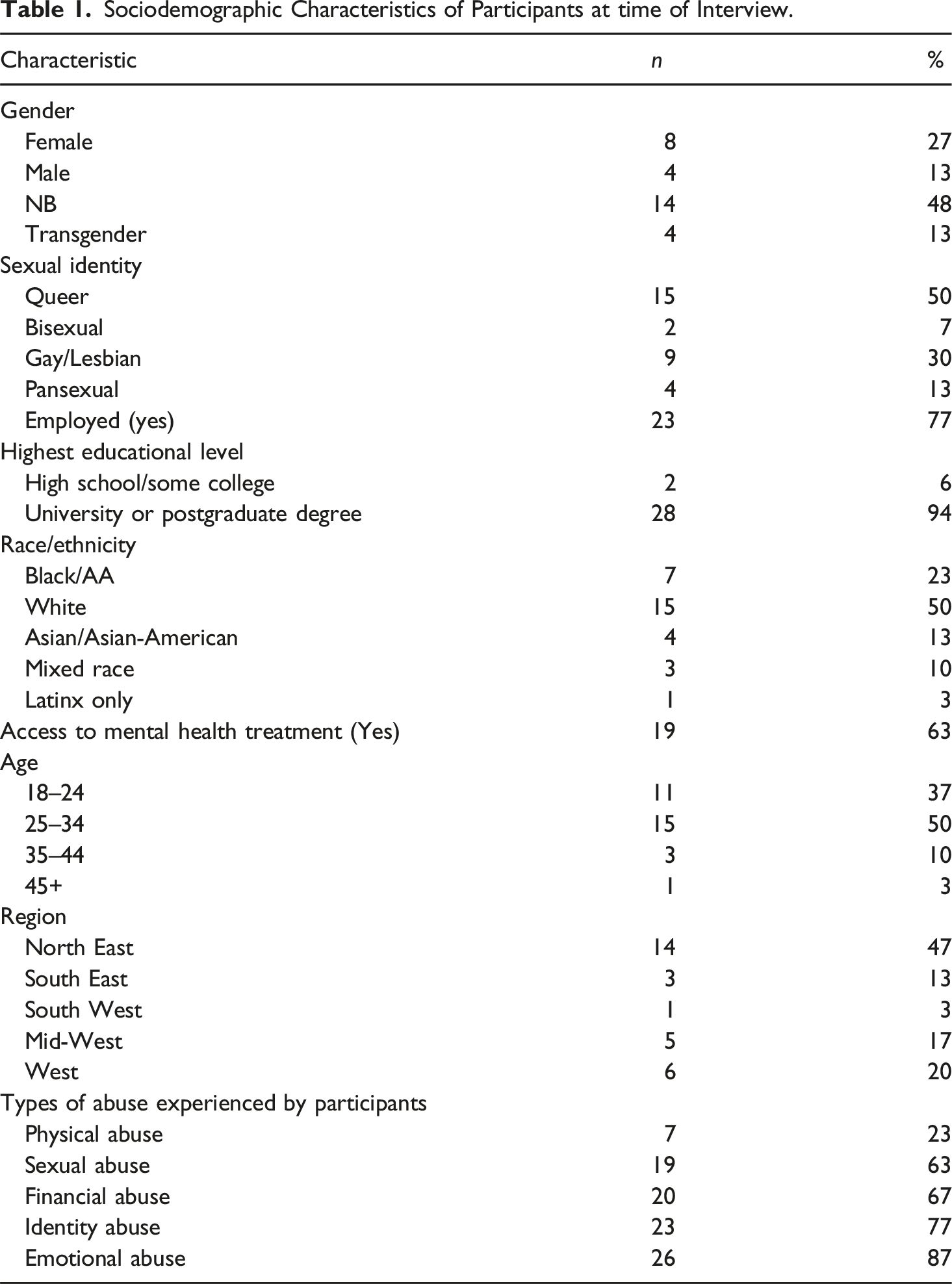
Data collection
Data was collected through semi-structured interviews conducted via Zoom and in English. This method was chosen for its flexibility and ability to facilitate open discussions while maintaining a degree of structure to ensure key themes were covered with participants across the US. Each interview lasted between 45 and 90 minutes, allowing participants to share their experiences in detail. The interviews were audio-recorded and transcribed verbatim for analysis. Questions focused on various topics including experiences with various types of abuse (emotional, physical, financial, identity, and sexual), community resource and support, perception of representation of LGBTQ+ relationships in media, and other related follow up questions as needed. A definition of the types of abuse was provided to all participants to ensure a general conceptual understanding of discussed concepts and questions. All participants received an informed consent form prior to the interview and time was allocated before recording to ensure participants had time to discuss and share any questions or concerns, they may have prior to beginning the interview. All participants received a $25 gift card for their times and participation. All project material were approved by the University’s Institutional Review board.
Data analysis
In order to analyze the data collected, a two-step analytical process was used: thematic analysis followed by thematic network analysis. Reflexive thematic analysis was conducted following Braun and Clarke’s (2019) approach to ensure a rigorous and structured analysis of the interview data. First, each interview transcript was read multiple times to facilitate familiarization with the data and to gain an in-depth understanding of participants’ narratives; during this stage, key excerpts related to IPV experiences were highlighted. From there, open coding was used to generate initial codes that captured recurring patterns in participant responses. Coded data were clustered into potential themes by grouping together similar patterns of meaning, and at this stage key themes such as recognition of abuse, economic dependency, and access to crisis resources began to emerge. These themes were then reviewed and refined by checking for coherence across the dataset and ensuring that they captured the breadth and complexity of participants’ experiences. In the next step, each theme was clearly defined and named in ways that reflected its significance in explaining participants’ IPV experiences. Finally, the themes were integrated into the findings section, with illustrative participant quotations used to demonstrate and substantiate key patterns.
Following thematic analysis, thematic network analysis (Attride-Stirling, 2001) was applied to visually map the relationships between themes and contributing factors. Thematic networking allowed for a structured representation of how different aspects of IPV experiences are interconnected. In this stage, the themes identified through thematic analysis were first organized hierarchically: primary themes were labeled A–E, and related subthemes were numbered (A1–E3) to reflect their relationship with these overarching categories. A graph-based visualization was then constructed to illustrate how the major themes interacted with their respective subthemes, enabling a relational analysis of which factors appeared to influence one another.
To enhance interpretability, the size of each node in the network was scaled according to the frequency with which the corresponding theme or subtheme appeared in the data. Larger nodes indicated themes that were more commonly discussed, whereas smaller nodes represented less frequently mentioned but still analytically relevant themes. The positioning of nodes was also conceptually driven: primary themes were placed centrally, with subthemes arranged around them in ways that reflected their conceptual links. Where thematic overlaps existed, nodes were placed in closer proximity to indicate the strength of their conceptual and experiential connections in participant accounts. The overall structure of the network was iteratively refined to enhance clarity and readability, ensuring that the relationships between themes and subthemes were visually and analytically coherent. Both stages of analysis were completed using MAXQDA, a software program designed for the analysis of qualitative and mixed methods data.
Ethical considerations
This study followed strict ethical guidelines to protect participant confidentiality and well-being. Ethical approval was obtained from the Institutional Review Board (IRB) prior to data collection. Participants were provided with informed consent forms outlining the purpose of the study, their rights, and measures taken to ensure anonymity. All data were securely stored, and pseudonyms were used to maintain confidentiality. In this project participants were asked to share in detail their lived experiences with IPV which may have caused distress for some individuals. Before the interview, all participants were made aware of the content of the interview, importance of taking breaks if/when needed, and several resources such as national hotline numbers were provided. Participants were also made aware that the interviewer (lead author) would assist in contacting necessary resources with the participant if needed.
Furthermore, both authors on this project are in-group members of LGBTQ+ communities themselves. During data collection, the lead author scheduled meetings with a mentor to debrief the interview and process any impact it may have had on the interviewer. During the analysis phase, both authors allocated sufficient time to process the data and took breaks accordingly. Both authors also engaged in several individual wellbeing practices (e.g., journaling, walks, mindfulness activities) throughout the process to mitigate the adverse impact of reading such detailed transcripts.
Lastly, the entire sample in this study were members of LGBTQ+ communities within which the concept of “name” including pseudonyms, given names, and chosen names play a pivotal part in participants own identities and lived experiences, both negatively and positively. Therefore, in order to honor the diversity in gender and racial identity in our sample, we have refrained from assigning participants pseudonyms and will only use the first letter of participants’ names throughout this manuscript. This decision was also shared with participants at the beginning of the interview where participants had the opportunity to complete the interview with any name the chose to do so knowing their initial only would be used in all of our reporting.
Trustworthiness and rigor
Ensuring the trustworthiness and rigor of this study was essential to maintaining the credibility, dependability, and confirmability of the findings (Schwandt et al., 2007). Several strategies were employed to strengthen the study’s validity:
Member checking
After initial analysis, five participants were invited to review key themes and interpretations to ensure that their experiences were accurately represented. This process helped validate the findings by allowing participants to provide feedback or clarifications on the researcher’s interpretations.
Peer cross-checking
To enhance credibility, a peer cross-checking process was employed where another researcher independently reviewed the coding framework and emerging themes. Discrepancies in coding were discussed and resolved collaboratively, ensuring a robust and unbiased thematic structure.
Audit trails
A detailed audit trail was maintained throughout the research process, documenting decisions related to data collection, coding, and theme development. This transparency allowed for an independent review of how themes were derived and provided accountability in ensuring a consistent analytical approach.
Reflexivity
The researchers engaged in continuous self-reflection to acknowledge and mitigate any biases that might influence the interpretation of findings. Reflexive journaling (ongoing records of researchers’ thoughts, feelings, and decisions) was used to document researcher assumptions and reflections throughout the study (Malacrida, 2007).
Findings
This section presents the key findings from the qualitative analysis of 30 interviews with LGBTQ+ individuals who shared their experiences of intimate partner violence. The analysis focuses on two main areas: (1) factors that participants believed would have provided support and understanding during their experiences, and (2) barriers that made it challenging for them to either leave the abusive relationship or consider other options. The findings are structured around five major identified themes: lack of recognition and understanding complexities of abuse, lack of support network, economic dependency, lack of media representation and visibility, and lack of accessible crisis resources.
Recognition and understanding complexities of abuse
Participants frequently mentioned that recognizing abuse within LGBTQ+ relationships was challenging due to societal perceptions and internalized beliefs. Many were uncertain whether their experiences qualified as abuse because they did not align with mainstream narratives of domestic violence. The traditional portrayal of abuse often involves a physically dominant male perpetrator and a physically smaller female victim, a dynamic that does not necessarily apply to LGBTQ+ relationships. As a result, many survivors struggled to identify emotional, psychological, or financial abuse as legitimate forms of IPV. As one participant (K) stated, “I didn’t see it as abuse at first because we were both women. I thought abuse only looked like a man hitting a woman.” Another participant (M) echoed this sentiment reporting, “It took me years to realize that emotional and financial control were forms of abuse. I just thought that was how relationships worked.”
Moreover, the lack of conversation around power dynamics in LGBTQ+ relationships led some participants to normalize coercive behavior. Many reported experiencing control tactics such as identity-based abuse, where an abusive partner would manipulate them using their gender identity or sexual orientation. As one participant (K) described, “She would threaten to out me to my family if I didn’t do what she wanted. I felt completely trapped.” Without a working understanding of how IPV can look in LGBTQ+ relationships, these survivors were less able to determine they were experiencing abuse and therefore less confident they could or even should try to get out of the abusive relationship.
Support network
The presence or absence of a strong support network significantly influenced participants’ ability to recognize abuse and seek help. Many faced social isolation due to stigma or the small size of LGBTQ+ communities, making it harder to leave an unhealthy relationship. For some, their partner was their sole connection to LGBTQ+ communities, which increased their fear of leaving and feeling completely alone. As one survivor (F) put it, “When I started opening up about my experience, people in my community told me to keep quiet because it would make us look bad.” This places an additional burden on the survivor to hide their abuse in order to protect the reputation of their communities as it is already targeted by mainstream society.
Even survivors who had a network of support did not feel comfortable seeking help as their network was also not fully understanding signs of abuse in LGBTQ+ relationships. One participant (C) described, “My friends wanted to help, but they didn't know how. They kept saying, ‘Are you sure it’s abuse?’ which made me second-guess myself.”
In some cases, survivors reported that their partners deliberately isolated them from friends and support systems, making it even harder to contemplate seeing help. As described by another survivor (S), “He convinced me that my friends were against us and that I didn’t need them. Before I knew it, I had no one to turn to.” This is a tactic that is not uncommon to abusers broadly, yet for those who are part of a marginalized community, there is often good reason to be skeptical of those outside of the community. As such, the blurring of healthy skepticism due to systemic oppression and abusive isolation becomes a unique challenge to LGBTQ+ survivors.
Economic dependency
Financial dependency emerged as a major barrier preventing individuals from leaving abusive relationships. Many reported that financial control, job instability, and limited access to economic resources played a crucial role in their decision to stay. Some participants’ partners controlled their income, prevented them from working, or forced them to rely on shared finances, making it extremely difficult to leave. As one participant (B) described, “I was financially dependent on my partner. If I left, I had nowhere to go, no savings, and no support system.” Another participant (L) echoed a similar sentiment stating, “She made sure I was financially tied to her, always discouraging me from working or having my own bank account.” Without the resources to support oneself, the survivor is forced to decide whether their basic needs are more important than the need to escape an abusive situation, a decision that has no good option.
Economic dependency also intersected with other vulnerabilities, such as being a student, an immigrant, or someone with a disability, further reducing their ability to escape. One participant (T) elaborated, “As an international student, I didn’t have work rights, and my partner used that to keep me trapped.” Again, the concept of keeping a survivor out of work is one that is not new, yet with the addition of LGBTQ+ identities, the impact of this is far greater because of discrimination this participant may have faced within the U.S. or if they were forced to return to their country of origin which may or may not be LGBTQ+ affirming or safe.
Lack of media representation and visibility
A recurring theme was the lack of positive representation of healthy LGBTQ+ relationships in media, making it difficult for participants to identify unhealthy dynamics. Many grew up without clear role models for what healthy LGBTQ+ relationships should look like, leaving them without guidance when they did encounter abuse. Further when experiencing abuse, it was not uncommon for participants to assume the behaviors were normal in LGBTQ+ relationships. This was rationalized through the belief that a healthy and loving relationship is unrealistic based on media portrayals. As one participant (G) stated, “Most queer relationships I saw on TV ended in tragedy or toxicity. I had no model for what a healthy relationship should look like.” Another (L) expressed a similar sentiment stating, “We need more stories that show queer couples supporting each other, not just dramatic breakups and suffering.” Naturally, when all that is shown about relationships are drama, tragedy, and suffering, imagining a positive and healthy relationship seems unrealistic, much less unattainable.
Additionally, some participants noted that the few representations of LGBTQ+ relationships in mainstream media often reinforced negative stereotypes, such as portraying these relationships as inherently unstable or overly sexualized. One participant (S) recounted, “Growing up, every queer couple I saw on screen either ended up breaking up, dying, or being in some toxic cycle. It made me think that was normal.” When these negative stereotypes are reinforced, people learn to consider them the “norm” when conceptualizing their relationships. Not only does this do a disservice to these communities, but it places already marginalized groups at greater risk for violence and oppression.
Accessible crisis resources
Many participants faced significant barriers in accessing shelters, legal assistance, and crisis hotlines due to institutional biases against LGBTQ+ individuals. Some were turned away from shelters due to their gender identity or relationship structure (such as non-monogamous relationships), while others struggled to find professionals trained to understand LGBTQ+ relationship abuse. One participant (K) recalled, “The shelter told me they only take women, and they didn’t know what to do with a nonbinary person. I had nowhere else to go.” Another participant (G) reported similar issues when seeking help stating, “I tried calling a domestic violence hotline, but the person on the other end seemed confused when I said my abuser was also a man.” When survivors reach out for support from professionals, to be turned away or misunderstood by the person considered to be an expert is a dangerous precedent to set. Yet for LGBTQ+ survivors, this was sadly a common experience.
Even in LGBTQ+ specific spaces, some survivors found that available resources were not intersectional, often prioritizing certain groups over others. As a transgender participant (A) described, “I reached out to an LGBTQ+ center, but they mainly focused on youth or gay men. As a trans woman, I felt completely invisible.” This highlights a divide within LGBTQ+ communities where there can be an overemphasis on serving LGB communities and a lack of understanding and experience in serving LGBTQ+ communities.
Participants also emphasized the need for more trained professionals who understand the unique challenges of LGBTQ+ survivors and can offer inclusive, affirming support. As one survivor (J) explained, “I didn’t even bother seeking help because I knew I’d have to explain my identity before I could even talk about the abuse.” Given the other reported instances of help-seeking, one could hardly blame this participant for hesitating to disclose their abuse and reach out for support.
The results from thematic networking also offered interesting insight into how these themes are interrelated. These results are presented in Figure 1. Thematic network analysis between themes.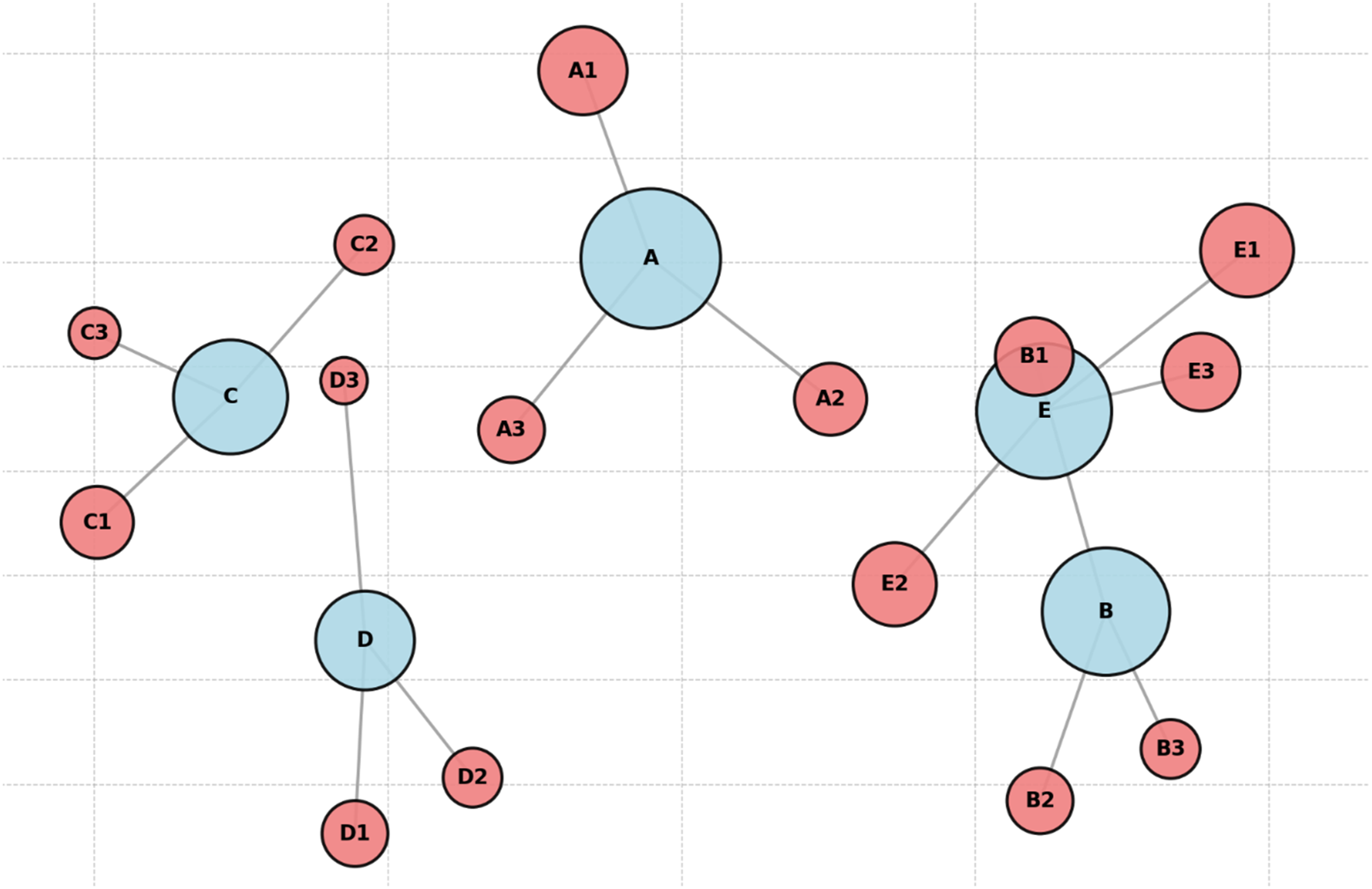
Definition of themes and thematic factors in Figure 1.
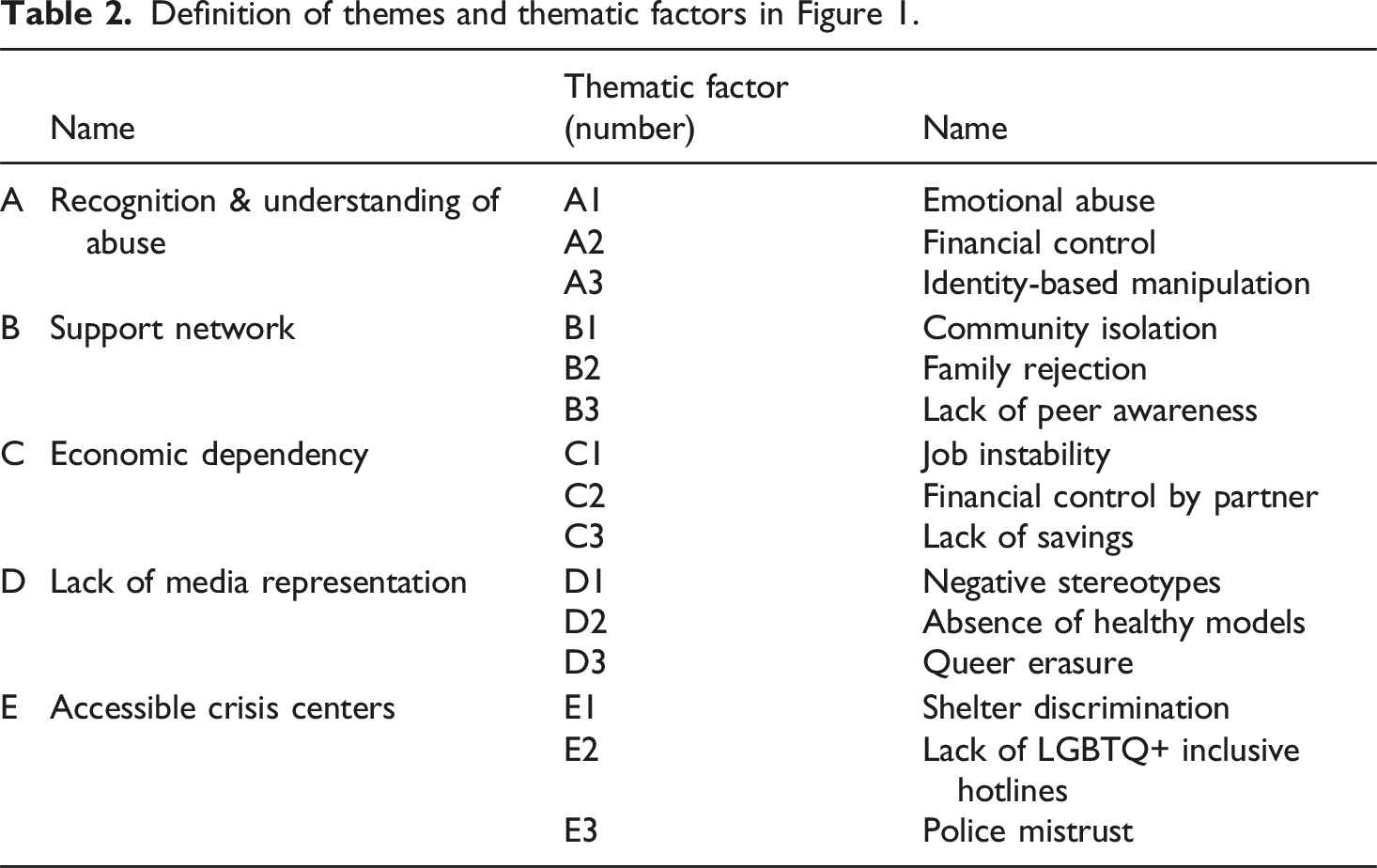
The thematic network analysis revealed several key findings about LGBTQ+ individuals’ experiences of IPV. The five primary themes (A-E) and their thematic factors highlight the complex and interconnected nature of IPV in LGBTQ+ relationships. The thematic network provided a visual representation of the relationships between themes, revealing the most frequently discussed issues and their influence on one another.
Recognition and understanding of abuse (A)
Participants often struggled to recognize IPV due to the lack of awareness about emotional and psychological abuse within LGBTQ+ relationships. The thematic factors (A1 - Emotional Abuse, A2 - Financial Control, A3 - Identity-Based Manipulation) indicate that many survivors experienced non-physical abuse that was difficult to identify. One participant (M) noted, “I didn’t realize that controlling my finances and isolating me from my friends was abuse until much later.”
Support network (B)
The role of friends, family, and community organizations was crucial in shaping participants’ experiences of IPV. Some participants reported community isolation (B1) due to stigma, while others faced family rejection (B2), which limited their access to support. One participant (K) stated, “I didn’t tell my family because I was afraid, they wouldn’t support me since they never accepted my sexuality in the first place.” This concern demonstrates a common but difficult decision LGBTQ+ survivors are often faced with. That is, if they disclose their abuse, will they face abuse and discrimination, or will they be blamed for the abuse and have their sexual or gender identity used as the scapegoat. If the survivors were cisgender and heterosexual, there would be no ambiguity around the belief the being abused is wrong. Yet, for LGBTQ+ survivors, they’re often told they “deserve” the abuse because of their LGBTQ+ identities.
Economic dependency (C)
Many survivors cited economic dependency as a key barrier to leaving an abusive relationship. The thematic factors (C1 - Job Instability, C2 - Financial Control by Partner, C3 - Lack of Savings) highlight the financial constraints many LGBTQ+ survivors face. A participant (K) explained, “I wanted to leave, but I was financially dependent on them. I had no way of supporting myself.” Financial abuse was also most difficult to identity and understand by many survivors.
Lack of media representation (D)
Participants discussed how the lack of positive LGBTQ+ relationships in media affected their ability to recognize unhealthy relationship dynamics. The thematic factors (D1 - Negative Stereotypes, D2 - Absence of Healthy Models, D3 - Queer Erasure) illustrate the ways in which media influences perceptions of relationships. One participant (L) expressed, “All the queer couples I saw in media were toxic or ended in tragedy, so I thought my situation was just normal.”
Accessible crisis resources (E)
Analysis indicated that many LGBTQ+ survivors struggled to access crisis resources due to discrimination and institutional barriers. The thematic factors (E1 - Shelter Discrimination, E2 - Lack of LGBTQ+ Hotlines, E3 - Police Mistrust) highlight the systemic failures in providing adequate support. One participant (F) reported, “I tried calling a domestic violence hotline, but they didn’t know how to help me because my abuser was also a woman.” Notably, this fixed belief that abuse is always perpetrated against women and at the hands of men, harms cisgender and heterosexual survivors as well. Not all violence and abuse happen within romantic partnerships. To fixate on stereotypical gender roles and norms puts all survivors at risk of being not believed, being mistreated, or being unserved when seeking services.
In thematic networking analysis, the size of each theme in the network (nodes) reflects its prominence in participant narratives. Recognition of abuse (A) and accessible crisis resources (E) were among the most frequently discussed issues. Further, the proximity of thematic factor in the network shows how factors like economic dependency (C) and support networks (B) are deeply intertwined. Thematic overlaps suggest that multiple structural and social barriers contribute to survivors’ inability to leave abusive relationships.
The findings from the thematic network analysis demonstrate that IPV in LGBTQ+ relationships are multifaceted and shaped by intersecting barriers, including financial constraints, lack of awareness, community isolation, and institutional discrimination. By visually mapping these experiences, these results provide a structured understanding of IPV dynamics within LGBTQ+ communities, emphasizing the need for more inclusive support systems, financial empowerment resources, and improved media representation of healthy LGBTQ+ relationships. The thematic network results suggest that recognition of abuse is the most urgent issue as many survivors did not realize they were in abusive relationships until much later. In addition to structural and institutional barriers such as crisis resources and economic dependency that prevent survivors from feeling empowered to leave a relationship. Finally, while mentioned less frequently compared to other themes, media representation plays an important role in shaping perceptions of healthy relationships.
Discussion
The findings of this study highlight critical gaps in the support available to LGBTQ+ individuals experiencing IPV. Structural barriers, including a lack of education on diverse abuse dynamics, economic instability, social stigma, limited media representation, and inadequate crisis resources, all contribute to the challenges survivors face. Addressing these issues requires a multi-faceted approach, including expanding LGBTQ+-inclusive mental health and crisis services, increasing economic independence resources, improving media portrayals of healthy LGBTQ+ relationships, and ensuring institutional policies are inclusive of all gender identities and sexual orientations.
Structural and systemic influences on LGBTQ+ IPV
Victimization does not occur in a vacuum; it takes place within a larger ecosystem of structural and systemic influences. As visualized in the thematic network (Graph 1), broader societal structures, including economic conditions, healthcare systems, education systems, and social norms, directly impact the availability of resources, institutional responses, and societal attitudes. These elements influence LGBTQ+ survivors’ experiences around recognizing signs of abuse, seeking help, and breaking the cycle of abuse. Economic conditions were found to be deeply intertwined with social networks, emphasizing how financial stability shapes social connections and access to support. Many participants described economic dependency as a significant barrier to leaving an abusive relationship, illustrating how financial insecurity can lead to isolation and increased vulnerability. This interconnectedness underscores the layered complexity of IPV experiences among LGBTQ+ individuals and the urgent need for systemic interventions that address both structural and interpersonal factors.
The complexity of LGBTQ+ IPV
LGBTQ+ individuals experience disproportionately high rates of IPV due to the complex interplay of societal, systemic, and personal factors (Calton et al., 2016; Walters et al., 2013). The themes uncovered in participant narratives reveal how these challenges create conditions that enable and perpetuate abuse. A lack of education and awareness regarding IPV in LGBTQ+ relationships leave individuals vulnerable to abuse. Traditional narratives on abuse prioritize heterosexual dynamics and physical violence, often failing to acknowledge the unique forms of harm LGBTQ+ survivors experience, such as identity-based abuse, emotional coercion, and financial manipulation. Without access to inclusive education or examples of healthy LGBTQ+ relationships, whether in media, educational curricula, or community conversations, many survivors enter relationships without a framework for recognizing warning signs. This absence of representation normalizes unhealthy behaviors, making it significantly harder for individuals to discern mistreatment and seek help.
Further, isolation emerged as a recurring theme in the findings, as societal stigma, family rejection, and lack of affirming community spaces left many LGBTQ+ survivors without the support systems needed to recognize or escape abuse. Abusers often exploit this pre-existing isolation, deliberately severing survivors’ connections to potential sources of help. This dynamic creates a dangerous dependency, wherein survivors feel trapped due to emotional and logistical reliance on their abusive partners.
Importantly, even when survivors attempt to seek help, systemic barriers further limit their options. Many mainstream IPV services, including shelters, therapists, and crisis centers, are not adequately equipped to support LGBTQ+ individuals, especially transgender survivors. Survivors frequently report encountering ignorance, misgendering, or outright discrimination when accessing these resources, which discourages help-seeking behaviors and can cause further harm. These findings were in line with previous studies that highlighted similar experiences while seeking services (Guadalupe-Diaz and Jasinski, 2017).
The lack of LGBTQ+-affirming IPV services is especially pronounced in rural and conservative regions, where support networks are already limited (Soares et al., 2024). Abusers exploit this systemic failure, knowing that their victims have nowhere safe to turn.
Transgender survivors of IPV experienced additional layers of marginalization compared to their cisgender counterparts, particularly through identity-based abuse and systemic barriers to support services. Many transgender survivors reported being misgendered, deadnamed, or denied access to shelters and crisis resources that were not inclusive of trans identities. They also faced financial abuse tied to their gender identity, such as partners controlling access to gender-affirming healthcare, hormones, or clothing that aligned with their identity. Additionally, transgender survivors frequently encountered barriers to seeking support, as many service providers lacked cultural competency or expressed outright discrimination, deterring them from reaching out for help
In contrast, while cisgender survivors also faced emotional, physical, and financial abuse, their experiences were often validated within existing IPV frameworks, whereas trans survivors frequently felt invisible or excluded. The fear of being outed, community rejection, or reinforcing negative stereotypes about trans people further silenced trans survivors, making it even harder for them to seek support.
The findings show that economic instability, workplace discrimination, and financial exploitation are often used as tools of coercion and control. LGBTQ+ individuals face higher rates of poverty, employment discrimination, and housing insecurity, which make them particularly vulnerable to economic entrapment within abusive relationships. When a survivor is financially reliant on their abuser, leaving becomes an almost insurmountable challenge.
Social stigma and internalized shame further contribute to LGBTQ+ survivors’ reluctance to disclose their abuse. Many fear reinforcing negative stereotypes about LGBTQ+ relationships, worrying that acknowledging their victimization might be used as justification for homophobic or transphobic biases. Survivors may also fear being outed by their abuser or losing community acceptance. As a result, many LGBTQ+ survivors endure IPV silently, feeling as though they must navigate the experience alone. This silence allows abuse to persist unchecked and makes it harder for survivors to access necessary resources. It also reflects the broader failure of mainstream IPV discourse to be inclusive of LGBTQ+ realities, leaving many survivors without the language or societal framework to articulate their experiences.
These interconnected factors, educational gaps, systemic failures, economic inequities, and societal stigma, create an environment in which abuse can thrive within LGBTQ+ relationships. The lack of visibility and understanding surrounding these issues further compounds the problem, as survivors often feel they are navigating this struggle alone. By addressing structural, cultural, and policy-level deficiencies, LGBTQ+ survivors of IPV can receive the affirming, effective support they need. Without such interventions, the cycle of invisibility, dependency, and systemic neglect will continue, leaving many LGBTQ+ survivors without a path toward safety and healing.
Implications
The findings from this study have important implications for social workers and clinicians supporting LGBTQ+ individuals experiencing intimate partner violence. The results highlight the need for more inclusive, accessible, and culturally relevant interventions that address the unique challenges faced by LGBTQ+ survivors of IPV. Notably, since the collection of this data, many of the sources cited within have been defunded (e.g., The Trevor Project, CDC). The recent attacks on LGBTQ+ communities, specifically TGD communities have created immense barriers to establishing, maintaining, and implementing appropriate and inclusive services. The socio-political sentiment to drive LGBTQ+ communities out of legislation and resources as well as, to the margins of society is nothing short of a death sentence. Despite these attacks, the suggested strategies remain:
Enhancing recognition and education on IPV in LGBTQ+ relationships
Social workers and social service providers should receive specialized training on the complexities of abuse within LGBTQ+ relationships, including emotional, financial, and identity-based manipulation. Additional support and training are needed to address existing homophobia and transphobia in service provision, and awareness campaigns and educational programs should incorporate diverse relationship dynamics to ensure that LGBTQ+ survivors can better recognize abuse.
Strengthening support networks
LGBTQ+ individuals often experience community isolation and family rejection, limiting their access to traditional support systems. Social workers can help by facilitating peer support groups tailored to LGBTQ+ survivors, strengthening community-based resources that provide affirming and nonjudgmental support, and encouraging chosen-family models and alternative social support systems.
Addressing economic dependency
Economic instability is a significant barrier preventing survivors from leaving abusive relationships. Social work interventions should focus on providing financial literacy training and employment support for LGBTQ+ survivors, connecting survivors with housing assistance and emergency funding programs to increase their independence, and advocating for policies that support economic empowerment and workplace protections for LGBTQ+ individuals.
Improving media representation and public awareness
Media plays a critical role in shaping societal perceptions of LGBTQ+ relationships and IPV. Social workers can engage in advocacy efforts to promote positive and diverse representations of LGBTQ+ relationships and partnering with media organizations to create public awareness campaigns that challenge harmful stereotypes and educate communities about healthy relationship dynamics.
Expanding accessible crisis resources
Many LGBTQ+ survivors report experiencing discrimination when accessing shelters, hotlines, and law enforcement services. To improve accessibility, social workers should advocate for LGBTQ+ inclusive policies in domestic violence shelters and crisis centers, develop training programs for law enforcement and service providers on how to support LGBTQ+ survivors effectively, and support the establishment of dedicated LGBTQ+ crisis resources, such as hotlines, shelters, and legal aid services that understand the unique challenges LGBTQ+ survivors face.
Conclusion
This analysis reveals that participants viewed education, community support, accessible resources, and systemic change as critical factors that could have prevented their involvement in abusive relationships or facilitated their ability to break the cycle of abuse. The results from this study highlight the urgent need for systemic change in social work practices supporting LGBTQ+ survivors of IPV. By integrating education, financial support, advocacy, and inclusive crisis resources, social workers can play a crucial role in improving outcomes for LGBTQ+ individuals facing intimate partner violence. Implementing these strategies can help create a safer, more affirming, and effective support system for LGBTQ+ survivors, ensuring they receive the care and resources necessary to heal and rebuild their lives.
Footnotes

Funding
The authors received no financial support for the research, authorship, and/or publication of this article.
Declaration of conflicting interests
The authors declared no potential conflicts of interest with respect to the research, authorship, and/or publication of this article.