







Abstract
This article explores the quality of working life (QoWL) of people with intellectual disabilities (PWID) employed in Work Integration Social Enterprises (WISEs). WISEs are hybrid organizations that combine social and commercial goals and provide important alternative employment opportunities for PWID, yet little is known about how PWID themselves experience their working lives within these tension-driven settings. Drawing on a qualitative, participatory research design, the study is based on participant observation and semi-structured interviews with 16 PWID employed in three Swiss WISEs, alongside a focus group of PWID who contributed to the development of the research design and interview guidelines. The findings show that PWID identify meaningful work experiences, the ability to work independently with tailored support, and opportunities for growth and career development as central to a high QoWL. In particular, peer support structures were valued by participants because they fostered productive work, supportive environments, and career paths, thereby contributing to a high QoWL and simultaneously supporting both the social and commercial goals of WISEs.
Keywords
Introduction
Today, there is a significant gap in employment opportunities for people with intellectual disabilities (PWID) (Lysaght et al., 2018; Tøssebro and Olsen, 2020). According to Inclusion Europe (2023), fewer than 10% of PWID across 20 European countries are employed in the open labor market and earning their own income. The American Association on Intellectual and Developmental Disabilities (AAIDD, 2021) defines intellectual disability as “a condition characterized by significant limitations in both intellectual functioning and adaptive behavior that originates before the age of 22.” The low employment rate of PWID led to the rise of Work Integration Social Enterprises (WISEs), which are a specific type of social enterprise (Adam et al., 2016). WISEs operate in various sectors, from bakeries to IT services, offering productive work in a supportive environment to those at risk of labor market exclusion, for instance, people with disabilities or people with refugee experience (Chui et al., 2019; Lysaght et al., 2018).
WISEs are hybrid organizations that embody multiple institutional logics: On the one hand, a commercial logic emphasizing paying attention to customers’ orders, production deadlines, quality of products/services, or growth and innovation to compete in the market. On the other hand, a social logic focusing on social change, support provision, empowerment, and work integration (Woodside, 2018). Scholars agree that these institutional logics are competing and, therefore, give rise to multiple tensions (Battilana et al., 2015; Belte et al., 2023; Besharov and Smith, 2014). For example, while customers expect high-quality products delivered on time, PWID may require a low-stress, supportive environment with minimal pressure (Woodside, 2018).
WISEs pose an important alternative to sheltered workshops – which typically offer segregated, low-paid employment with limited opportunities for career development – and to supported employment – which aims to integrate individuals into the open labor market with on-the-job support (Chui et al., 2019; Tøssebro and Olsen, 2020). WISEs combine competitive work environments with tailored support, which fosters opportunities for skill development and a sense of belonging (Beyer et al., 2010; Metzler et al., 2018). However, the tensions arising from competing logics in WISEs can complicate creating a working environment that meets both productivity demands and the support needs of PWID (Belte et al., 2023; Rendall et al., 2025). PWID, as both productive workers and service recipients, are caught in the middle of these tensions and are at risk of exploitation in the sense that they are pressured to be productive while receiving minimal support to meet commercial goals (Garrow and Hasenfeld, 2012). Thus, the question arises of how PWID experience their employment in WISEs.
To explore how PWID experience their employment in the tension-driven work environment of WISEs, this study draws on the multifaceted concept of quality of working life (QoWL), which “encompasses the characteristics of the work, and work environment that influences the employee’s work lives“ (Bagtasos, 2011: 3). A high QoWL is important because work is not only a source of income, but also contributes to a sense of purpose, daily structure, social inclusion, and overall health and wellbeing (Kocman and Weber, 2018; Lysaght et al., 2009; Tøssebro and Olsen, 2020). Key indicators of QoWL include work-life balance, skill use, autonomy, job security, stress levels, management style, work environment, job security, meaningful tasks, and relationships with supervisors and colleagues (Bagtasos, 2011). These structural and relational factors shape how work is experienced and whether it is perceived as sustainable, valued, and increases overall wellbeing (Lanctôt et al., 2012; Rendall et al., 2025). Studies have further shown that low QoWL can have more negative effects on mental and physical health than unemployment itself, as it may lead to stress, low self-esteem, and reduced well-being (Rendall et al., 2025).
Scholars also investigated the drivers of QoWL in the disability sector. For instance, in a quantitative study, Flores et al. (2011) found that whereas in sheltered settings, QoWL is positively impacted by lower job demands and elevated support from both supervisors and coworkers, in supported employment settings, QoWL was predicted by strong supervisor support and reduced psychological demands. The authors suggested that this reliance on supervisors in supported employment may reflect challenges in forming social connections with coworkers, which might limit workplace satisfaction (Flores et al., 2011). Furthermore, Rendall et al. (2025) focused on people with mental disabilities in WISEs and showed using Q methodology – in which participants rank predefined statements rather than formulate their own responses – that emotional safety, both meaningful support and work experiences, along with autonomy and tailored tasks, contribute to a higher QoWL. These studies offer initial insights into the QoWL among employees with disabilities. Still, their findings may not be directly transferable to PWID in WISEs, given the differences in work settings and disability-related support needs. Although the benefits of WISE employment for PWID, such as well-being, skill development, or social inclusion, are well documented (e.g., Babikian and Hamdani, 2023; Beyer et al., 2010; Metzler et al., 2018), little is known about how PWID themselves experience their QoWL within WISEs, or how these organizations can foster it within their tension-driven environment balancing social and commercial goals. This is notable, given the central role of WISEs in providing alternative employment opportunities for PWID.
To address this gap, this study explores the QoWL of PWID and the organizational practices that support it in three WISEs in Switzerland. The study aims to answer the following research questions: What do PWID identify as key to their QoWL within the tension-driven work environment of WISEs? Which organizational practices do PWID identify as supporting their QoWL? To answer these questions, the study uses a qualitative, participatory research design. PWID were not only interviewed as informants but also involved as experts by experience through a focus group that helped shape the study design and interview guidelines.
In doing so, this study advances the underdeveloped field of QoWL research in disability contexts, by foregrounding the perspectives of PWID on their QoWL and practices that support it within WISEs. The results show that PWID take pride in contributing to the commercial mission of the WISE, as long as this occurs in a supportive environment, and emphasize the importance of skill development and career opportunities. When examining these findings through the lens of the paradox perspective, peer support emerged as a key practice because it fosters a supportive work environment, creates career paths, and enables PWID to engage in meaningful and productive work, thereby contributing to both the social and commercial goals of WISEs.
The paradox perspective on WISEs
The paradox perspective provides a theoretical lens to examine not only the persistent tensions in hybrid organizations, such as WISEs, but also how they are effectively managed (Putnam et al., 2016; Schad et al., 2016; Smith and Lewis, 2011). Schad et al. (2016: 10) define a paradox as “persistent contradiction between interdependent elements”. While contradiction refers to conflicting demands that appear incompatible, interdependence highlights that these demands are nonetheless connected. Although their connection may seem irrational, it can lead to innovative or creative solutions (Poole, 1989; Schad et al., 2016). This perspective encourages researchers and practitioners to move beyond a dilemma approach, in which decision-makers address the logics separately, and instead embrace the ongoing process of integrating multiple potentially competing logics dynamically and adaptively (Michaud and Rijpens, forthcoming).
Whether WISEs accept their paradoxical situation or favor one logic over the other becomes tangible by analyzing their practices (Gisch et al., 2021). To effectively combine the social goals of work integration with the commercial goals of a productive business, Smith et al. (2018) proposed a framework that captures how WISEs can create workplaces for PWID. Accordingly, WISEs should shift from a client-based approach, where PWID are seen primarily as care recipients, toward recognizing them as employees, with fair pay, shared responsibilities, and opportunities for advancement. They should support skill development through personalized tasks, mentorship, and training, and enhance the visibility of PWID by celebrating achievements and encouraging community inclusion. Additionally, PWID should be given choice and control by participating in business planning and decision-making processes. However, while the framework outlines how WISEs can balance their social and commercial goals, it does not incorporate the perspectives of PWID on the proposed practices. As such, it remains unclear how these practices are experienced by PWID in their daily work lives and whether they also foster high QoWL, or risk reinforcing exploitative dynamics, as raised by Garrow and Hasenfeld (2012).
Methodological approach
Local context
This study was conducted in Switzerland, the author’s country of residence, which facilitated access to WISEs and enabled communication with PWID without language barriers.
Switzerland has one of the highest employment rates of people with disabilities (OECD, 2022). In 2024, the employment rate among people with disabi stood at 68%, whilst 88% of people without disabilities were employed (Federal Statistical Office, 2025). Even though this rate is considered high, employment remains largely confined to sheltered settings, especially for PWID. A recent study in Switzerland found that 85% of surveyed PWID 1 rated their chances of finding employment in the open labor market as low, citing employers’ reluctance to hire PWID and the lack of suitable job opportunities (Grünenfelder et al., 2023).
In this context, WISEs play a crucial role by offering employment opportunities that lie between sheltered work and the open labor market. At the same time, Switzerland is classified as a liberal welfare state (Esping-Andersen, 1989), characterized by relatively limited public spending on social safety nets to avoid work disincentives (Cooney, 2016). Nyssens (2007) investigated the impact of liberal welfare policies on social enterprises and concluded that while there is some level of public support, governments typically allocate only little funding to these organizations. In Switzerland, this is reflected in the absence of a specific legal framework or dedicated policies supporting WISEs. In addition, disability policy largely falls under the jurisdiction of local authorities, resulting in fragmented and regionally uneven support structures for Swiss WISEs (Adam et al., 2016). Hence, in the Swiss context, WISEs are often required to operate more like for-profit companies, with a stronger focus on income generation, which can intensify the tensions between social and commercial goals (Cooney, 2016; Gonin and Gachet, 2015). Such challenges are not unique to Switzerland but are faced by WISEs across national contexts due to the inherent tensions of their business model, especially in liberal welfare systems such as the United States (Cooney et al., 2016).
Participatory research approach
To support the author, a non-disabled social work researcher, in respectfully and effectively engaging with the lived experiences of PWID, four PWID were recruited through various disability organizations to participate in focus group sessions, which are often used for this purpose (Hauser, 2020). The PWID in the focus group had a similar range of intellectual disabilities as the study’s participants and were employed in either sheltered settings (n = 2), a WISE (n = 1), or the open labor market (n = 1). However, none of them were part of the teams involved in the main study. During four sessions, the focus group supported the development of the research design and the interview guidelines. For instance, they noted that PWID may find it easier to demonstrate their work than verbally describe it. They also suggested asking whether supervisors are patient and willing to repeat instructions multiple times.
Design and recruiting
This study employed a qualitative approach to explore the experienced QoWL of PWID and organizational practices supporting it. To do so, five Swiss WISEs offering long-term employment and training for transitions into the open labor market to PWID were asked to participate, of which three agreed to provide access to their workforce. Thus, this study combines purposive and convenience sampling (Flick and Rapley, 2014).
The three WISEs in this study operate in the greater area of Zurich, Switzerland, but differ in size, sector, and their emphasis on social versus commercial goals. WISE 1 is a large, more socially oriented organization offering employment in areas such as mechanics, logistics, or packaging. It places strong emphasis on work integration through programs like supported employment placements and internal career development, while generating less than half of its revenue through market activity. WISE 2, by contrast, follows a more commercially driven approach, generating about 50% of its budget from its own revenues. Socially, it focuses on long-term employment opportunities for PWID in its bakery, packaging, or carpentry teams. WISE 3 is a medium-sized hospitality enterprise that operates several restaurants. It generates around 75% of its revenue through business activities and offers individualized development pathways and training aimed at enabling transitions into the open labor market.
PWID employed at these WISEs were recruited through a two-step process. Initially, the author introduced the project to PWID from various teams at the three WISEs. In some cases, the author spoke to whole teams, while in others, WISE staff distributed a flyer inviting PWID to an information session and encouraged them to attend. After the session, PWID interested in participating registered via a sign-up list. The sign-up list was discussed with the WISEs’ staff to ensure that participants were able to understand the project and provide informed consent, which resulted in a self-selecting and criterion sample. These selected participants were then informed in more detail, and written consent, including for recording the interviews, was obtained. Participation was voluntary. The Ethical Committee of the University of Neuchâtel evaluated the ethical questions upon submission positively.
Participant characteristics
Participants’ characteristics.
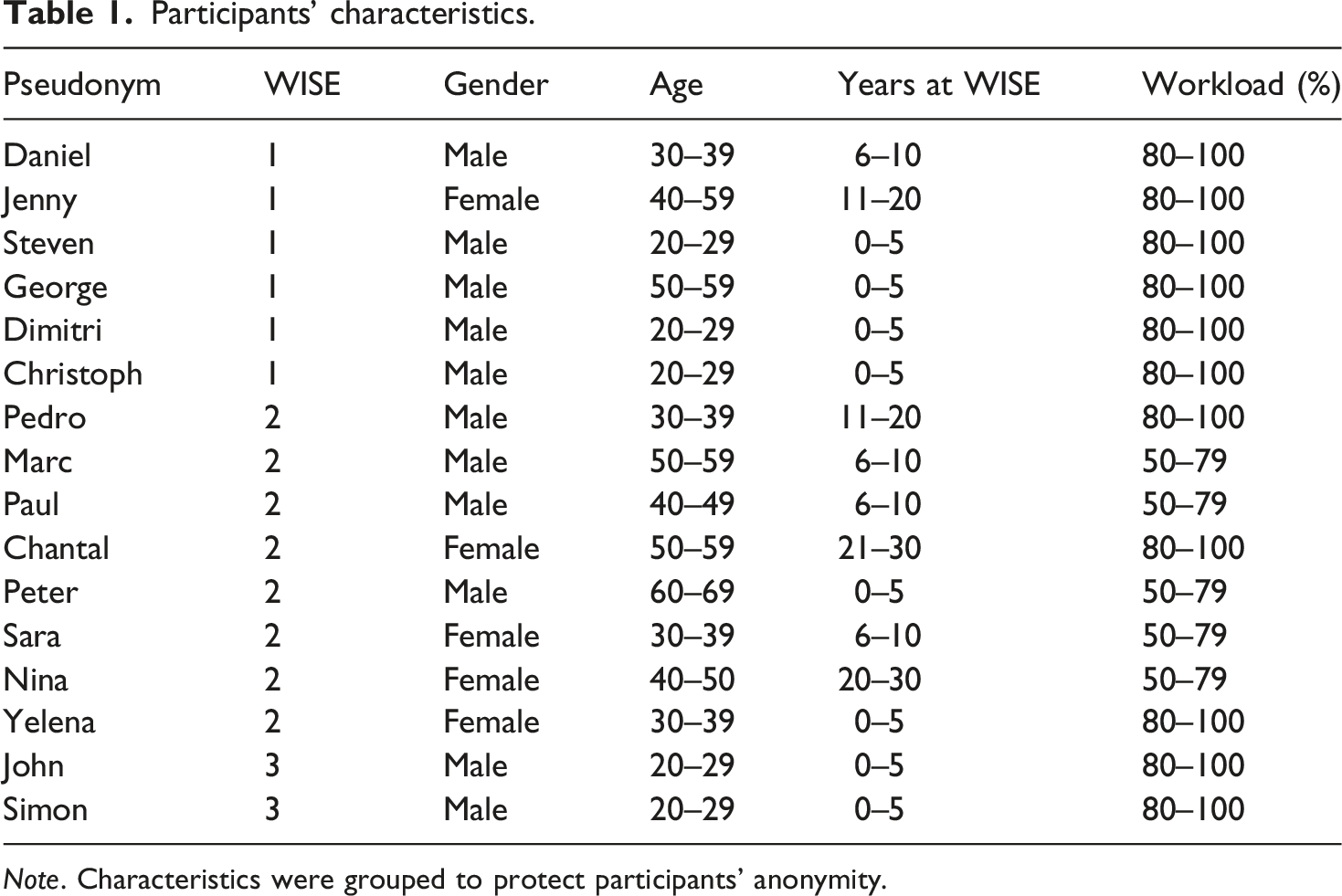
Note. Characteristics were grouped to protect participants’ anonymity.
Data collection
To collect data, this study used participant observation, interviews, and document analysis. To gain insight into the QoWL of PWID, the author actively engaged in work tasks alongside the SPs, as suggested by the focus group. The level of involvement was decided by the SP, who introduced and guided the author through the tasks. Participants were distributed between six teams across the three WISEs, which were visited between February and April 2025. Based on preliminary analysis, an additional visit to the bakery team at WISE 2 took place in June 2025 to complement the existing data. Additionally, after each day, the author wrote a reflective report documenting the visit and observations as thoroughly as possible. During each visit, individual semi-structured interviews lasting between 30 and 90 minutes were conducted in a private space and recorded. Questions during the interview included for example “How do you feel about your current job?” or “Do you have opportunities for promotion and/or further training? If so, what are they?” Moreover, the author analyzed various documents provided by the WISEs, such as annual reports or concepts for training and support, to gain a deeper understanding of the organizational context and the intentions of certain practices. Using multiple data sources enabled data triangulation and strengthened the credibility of the analysis (Greene et al., 2010).
Data analysis
This study aimed to produce experience-based insights and contribute the perspectives of PWID to social work research and practice, rather than to generate formal theory. To do so, this study employed an experiential and inductive approach to reflexive thematic analysis (TA) following Braun and Clarke (2022)’s six-phase process to identify, analyze, and report on patterns within the data. Reflexive TA acknowledges the researcher’s subjectivity as a valuable part of the process and emphasizes that themes are generated through the researcher’s engagement with the data, rather than being objectively found in the data (Braun and Clarke, 2023).
The data analysis was conducted from an interpretivist perspective, aiming to explore the lived experiences of PWID, recognizing that meaning is not fixed and shaped by context and perspective (Schwandt, 1994). The analysis was undertaken by a non-disabled social work researcher, whose position also informed the interpretative process.
Before data analysis, an initial literature review was carried out to increase awareness of subtle themes that otherwise might be overlooked. The author familiarized herself with the data by transcribing the sections relevant to the research questions of the interview recordings and reading all materials multiple times, including interview transcripts, reflective reports, internal documents, and field notes. All data was in German and only selected quotes were translated into English post-analysis using the software DeepL Pro. Outputs were reviewed by the author to ensure accuracy. Afterwards, the data was coded using the software MAXQDA. These codes were organized into potential themes using a theme mapping technique and were then reviewed by examining the coded extracts and evaluating whether they formed coherent and meaningful patterns that reflected the dataset. In this stage, some codes were rearranged for a better fit, and themes were either combined or split to reflect the data more accurately. After selecting the most relevant themes to the research questions, the author drafted each one, which led to further refinements, including changes to the theme names. Lastly, the author decided on a final narrative to present the results.
Findings
Relevant themes regarding QoWL of PWID in WISEs.
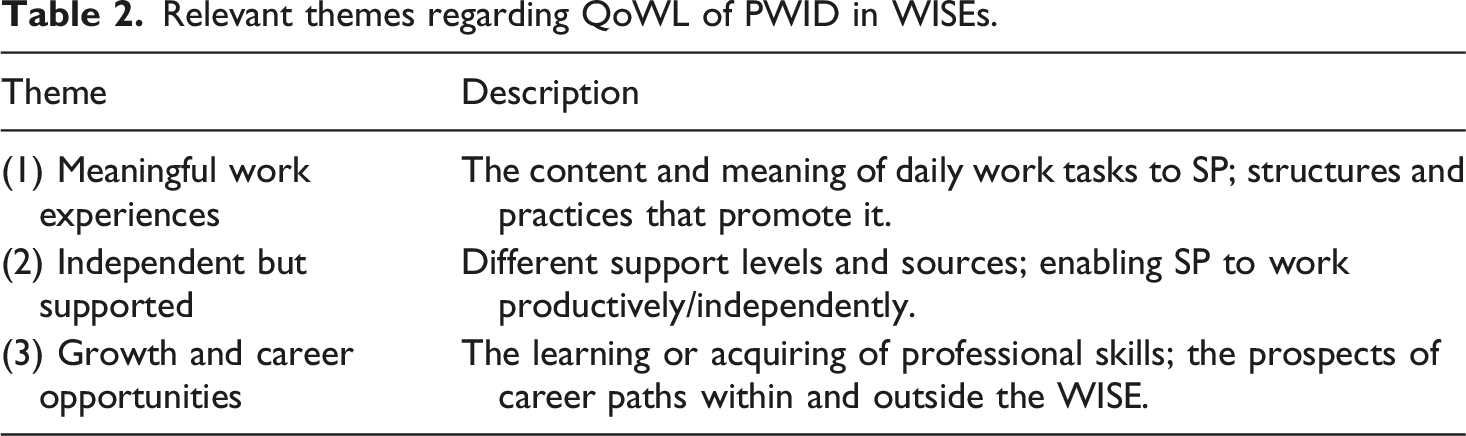
Theme 1: Meaningful work experiences
The first theme, Meaningful Work Experiences, shows that PWID identified engaging in productive work as central to high QoWL, particularly when tasks contributed to the commercial mission of the WISE while being adapted to their individual capabilities. In this context, meaningful work is used in an interpretive sense to reflect participants’ own understandings of what made their work feel purposeful and valuable.
During the interviews, it became clear that SPs took pride in taking on responsibilities like any other employee. For instance, in WISE 3, this included service and bar tasks, which, according to Simon (WISE 3), might not have been possible in other work settings: “What I like best is serving guests and taking payments, or setting the tables and folding napkins in the evening. There’s nothing I don’t like. It’s my dream job because a lot of people come here. I also looked at other workplaces, but there I would have only been able to bring the food, not take the orders.”
This aspect was also noticeable during the visits. For instance, in WISE 2’s bakery, hardly any differences in the tasks performed by SPs and employees without support were noticeable to the author, and a high level of professional knowledge was evident. The author noted after the visit: “My interview partner took me straight to the large ovens, where we took out bread and placed it on the rack before moving to the croissant station. I also spotted my other interview partner operating a dough machine. Throughout the entire visit, neither received any instructions. They knew exactly what to do and when.” (Reflective Report of the Author, June 2025)
Contributing to the commercial mission also appeared to be valued by the SPs, who appreciated working on products that were demanded by customers. At the same time, they emphasized that the WISE provided an environment where they could work at their own pace and without the pressure often associated with the open labor market. For instance, Peter, who works in the packaging team of WISE 2, said: “I like working on different products that you can see in stores. […] This is a nice job with less stress. […] I was really lucky to find this job.”
Or for Christoph (WISE 1), who works in mechanics, it is important that customers are satisfied with the work delivered: “Here, you can take the time to do things properly. […] I don’t want customers to think, ‘Who did such a sloppy job?’ In the end, it’s a promotional gift [the product he was working on], and the customer should think, ‘I’d gladly have them do something for me again’.”
Additionally, structures in WISE 1 and WISE 3 enabled SPs to exercise some choice and control over their work through daily team meetings where tasks were discussed and assigned. The author noted in the reflective report after visiting WISE 1: “At 8 a.m., all employees (about 15 people were present) gathered in front of a blackboard. The supervisor presented the tasks, and employees could choose them. Everything ran smoothly – all tasks were taken without any discussion or disagreement. It seemed quite clear who does what.” (Reflective Report of the Author, March 2025)
In WISE 2, SPs from different teams reported differing levels of work-related stress. For example, Marc from WISE 2’s packaging, told the author: “I do what I can. I don’t let myself be put under pressure. It doesn’t matter whether the job is finished today or tomorrow. My supervisor doesn’t pressure me.”
In contrast, Nina reported that work in the bakery at WISE 2 is becoming increasingly stressful due to the bakery’s growth. Nina explained: “The supervisors don’t have the time to train the new employees properly. So I have to show them how to do things here. I am not responsible for that, but someone has to do it. Sometimes, it becomes too stressful for me.”
These different approaches to organizing work were also observed by the author. In the packaging team, tasks were assigned by team leaders, whereas in the bakery, employees coordinated and rotated their work independently. The packaging team, however, appeared more relaxed, with less focus on productivity. The author noted: “The atmosphere in the entire room [of the packaging team] seems very relaxed. I repeatedly saw people walking over to others’ tables to chat. I overhear various conversations – some about the current work, others about the weekend, and some about local news and events.” (Reflective Report of the Author, February 2025)
After the visits, it was evident to the author that while the three WISEs varied in pace and atmosphere, all aimed to create environments where SPs could contribute meaningfully and engage in tasks similar to those of other employees, while working at their own pace.
Theme 2: Independent but supported
The second theme, Independent but Supported, highlights how PWID emphasized the importance of working as independently as possible while having support available when needed. This theme reflects the balance participants valued between autonomy in daily tasks and individual support, and how it contributes to a high QoWL in WISEs.
The interviews showed that SPs valued the ability to work independently. For example, Steven told the author about his work in logistics of WISE 1: “If something in the process isn’t working well, I take action. For example, I separated the spaghetti and linguine further because they look so similar. That makes collecting them easier.”
This independent way of working was also observed by the author. For instance, during the visit to WISE 3, the author noted how Simon managed the entire indoor dining area (about 15 customers during the shift). He welcomed guests, took their orders, served drinks and food, engaged in conversations, and handled payments.
To achieve this level of independent work, SPs received various forms of support at the workplace to contribute meaningfully to the products and services. For example, in WISE 2, the supervisors usually prepared a sample product, sometimes also a sample for each step, for the SPs to follow. Furthermore, the author observed that WISE 1 has developed specific machines for certain tasks, enabling SPs with physical limitations to operate them and participate in a broader range of work tasks.
In WISE 1 and WISE 2, apart from supervisors, experienced SPs demonstrated the different steps and showed their peers how to use the relevant machines or tools. For example, in his interview, Pedro explained how he supports others at work: “I’m the go-to person for one of the employees. If he needs help or doesn’t understand something, he can come to me. If he’s working on tasks that I also know, I can explain them to him again. I mostly help those who are less experienced, not so much the ones who are more capable.”
Overall, the author also observed several instances in WISE 1 where team members were approached with questions or actively approached others to offer help. For example, the author noted in the report after a visit to WISE 1: “Steven also showed me the second storage area, where additional goods are kept. Another SP was there collecting items. He occasionally asked her questions, for example, whether she knew where certain things were or if she was managing alright in the storage room, and when she did not know what “distel pigs” were, whose meat they stocked, he showed her pictures of them on his phone.” (Reflective Report of the Author, April 2025)
The peer support among the SPs may also be encouraged by the fact that supervisors are responsible for up to 20 SPs, particularly in WISE 1 and 2, making it more feasible for SPs to ask their peers for support rather than their often busy supervisors. At the same time, many SPs said that in any case, if they are unsure about a task, they can always ask their supervisors, even multiple times. For instance, Christoph (WISE 1) said: “I work very independently. My supervisors usually stop by once or twice a day, and if I have any questions, I go and ask them.”
Or Sara (WISE 2) told the author: “My supervisor explains the tasks clearly, and if I have any questions, I can always ask again.”
SPs were also encouraged to find their own methods and discover what works best for them. For instance, Daniel (WISE 1) told the author about his system for packing a customer’s order: “I always try to create the simplest possible system. I use groups of five because it makes counting easier. I also take enough time to prepare everything properly. The system developed over the years through my experience.”
Or John (WISE 3) about how he organizes cleaning tasks at the restaurant: “I’ve developed my own system at work. I start with vacuuming, then move on to mopping, setting the tables, and finally preparing the buffet. I always try to get as much done as possible before the break.”
However, finding the right support measures is not always straightforward. Marcel (WISE 2) reflected on finding the right support for each employee and said: “She [his supervisor] is responsible for 20 people, and each person has their own issues. It’s probably not easy to respond to everyone’s needs. She manages it, it’s not an easy task to know every single issue each person has, because everyone is different.”
In WISE 3, for example, the author observed that a checklist was available for preparing the bar area, but the SP responsible had to be reminded of it by the Head of Service after leaving tasks incomplete. As this was not the first occurrence, according to the supervisor, the checklist may not be the most effective support tool for this SP.
To identify what tasks and support methods work best for SPs, ongoing dialogue and feedback seemed essential. For example, Daniel (WISE 1) explained how he gives feedback to his supervisors about which tasks work well for him or how they could be adapted: “Tasks that are always exactly the same aren't really for me. I struggle when things are repetitive. The supervisors do make an effort to take that into account as much as possible. I tend to be a bit cautious with new tasks. I'm not always sure if something will work for me or not. But I try to stay open, give it a try, and then give feedback on whether it works for me or not. Sometimes we also try to find alternative ways of doing things. After all, you should be able to work in a way that feels right for you. And they appreciate it when I give them feedback.”
Theme 3: Growth and career opportunities
The third theme, Growth and Career Opportunities, shines light on how PWID valued opportunities to learn new skills, take on responsibilities, and develop careers within or beyond the WISE. Participants linked these opportunities to their overall positive experience of their working lives in WISEs, particularly in contrast to limited prospects in other employment settings.
Steven told the author that WISE 1 recently started a program that offers training to become a peer consultant or an assistant to the supervisor. Peer consultants support their team members with personal issues, such as conflicts at the workplace, while assistants serve as the team supervisor’s right hand. They assist with various tasks and help team members with questions related to their work, or train new team members. Steven just started the program to become an assistant and said: “I’m the assistant to the team leader, and I hope to work more closely with him in the future. We've agreed that I’ll be in cc on returns and complaints emails so I can read along. I don’t need to respond, but I can observe for now and maybe handle them myself later on.”
During the visit, Steven proudly showed the author some of his team assistant tasks, for instance, preparing new product information sheets for the team.
Apart from the apprenticeship trainings and other educational/professional courses, there are currently no similar programs in WISE 2 and 3. However, professional development is still at the core of these WISEs. In WISE 2, when the task and deadline allow it, supervisors encourage SPs to take charge of managing a task, which includes overseeing the process and coordinating the team. Peter from WISE 2’s packaging team told the author: “I share the responsibility for an order with a colleague, and I like that. I want to make the company happy and deliver good quality.”
Similarly, his colleague Sara (WISE 2) said: “I can take responsibility and do a task on my own. I can also decide if I want someone to help and choose who that is. Then I can show this person how to do it.”
The SPs interviewed further described how the WISEs help them build new skills based on their current level. For example, Nina, after over 20 years in the bakery of WISE 2, is now taking on additional tasks in the confectionery and is eager to develop new skills. Or George (WISE 1) wanted to become a team assistant, but his supervisors told him he was not ready yet and instead helped him develop his computer skills: “It’s a pity that the other option [team assistant] isn’t possible, but that’s just how it is. Approaching people and finding solutions isn’t really one of my strengths. But they [the supervisors] are open to showing me new tasks on the computer.”
Other SPs talked about courses they took, for instance, Simon (WISE 3) participated in a barista course to learn how to make different coffees, or John (WISE 3) completed a housekeeping internship.
During the interviews, the topic of transition to supported or open employment was sometimes mentioned. WISE 1 offers a program in which SPs keep their work contract at the WISE, but they work at a partner organization in the open labor market. After a few years, the SP, the WISE, and the partner organization review whether permanent employment is an option. WISE 2 is currently establishing a similar program.
WISE 3 has a different approach: Their various restaurants differ in their degree of similarity to mainstream restaurants, ranging from very close to more distinct from the open labor market. This structure allows the WISE to place and move SPs according to their skills and their desire to transition into the open labor market.
During the interviews, it became clear that many SPs do not seek other employment. Most of them reported that they had no plans to leave the WISE, due to different reasons. For instance, Jenny said she stays in WISE 1 because they accommodate her health needs: “I feel comfortable here. I would feel overwhelmed in the open labor market. Here, it’s not a big deal if I arrive late or have a flare-up of my rheumatism.”
Others had a negative experience in the open labor market. For instance, Nina (WISE 2) shared: “I worked in the open labor market for a long time, but eventually I found it too stressful, which led to psychiatric issues. I’m now satisfied working here, where I can try out and learn new things, and where it’s accepted that my performance may not always be consistent.”
Similarly, Steven (WISE 1) said about his experience at the open labor market: “For now, I want to stay here. I once did a work trial [in the general labor market]. The boss signed an agreement acknowledging that I work more slowly. For the first two months, they were considerate, but after that, not anymore. I was even bullied for being too slow. In the end, I had to leave because of that, even though the boss had signed off on it.”
Finally, for some SPs, the WISE offers better job opportunities compared to alternatives in the sheltered or open labor market. As Christoph (WISE 1) explained: “I’m right between the two labor markets. I feel comfortable in that in-between space, where I can express and push myself, and show what I’m capable of.”
Discussion
This study aimed to explore the experiences of PWID on their QoWL at WISEs and what organizational practices support it. The findings present key themes in the experiences of PWID regarding their QoWL at WISEs. The first theme, Meaningful Work Experiences, highlighted how PWID in this study valued being taken seriously as employees and contributing meaningfully to the WISE’s commercial mission. The second theme, Independent but Supported, showed that the PWID in the three participating WISEs appreciated working independently, but also the availability of tailored support – whether from supervisors, peers, or specific tools, which was essential for fostering autonomy and skill development. The third theme, Growth and Career Opportunities, demonstrated the importance of professional development through career paths, informal learning, or external courses for a high QoWL according to the interviewed PWID. Although some considered transitioning to the open labor market, many preferred staying at the WISE, as the work environment aligned with their preferences regarding work tasks, support, and development.
Overall, these findings suggest that meaningful work in a supportive environment and opportunities for skill development contribute to a high QoWL of PWID in WISEs. While previous studies have also highlighted the importance of tailored tasks for supporting the QoWL (Rendall et al., 2025), the perspectives of PWID in this study reveal a somewhat different emphasis: They took pride in engaging in productive work that resembled employment in the open labor market and valued access to career opportunities, as long as it occurred within a supportive environment. For the PWID in this study, this meant, for example, having the space to work at their own pace or to take on additional responsibilities if they wished to. This suggests that the PWID of this study agree with previous research discussing that WISEs can offer access to competitive work while providing flexibility and support, a combination that may not be available in sheltered or supported employment settings (Babikian and Hamdani, 2023; Beyer et al., 2010; Metzler et al., 2018).
A novel finding of this study concerns the role of peer support structures, which emerged across all three themes as a particularly enabling factor contributing positively to PWID’s QoWL in WISEs. While supportive environments and coworker support have been discussed in previous research (e.g., Flores et al., 2011; Rendall et al., 2025), peer support that is organized through formal roles and practices has received less scholarly attention in relation to QoWL. The findings suggest that intentionally enabled peer support can serve multiple functions: it creates career paths for PWID that might not exist in either sheltered or open employment. Simultaneously, peer support structures reduce SPs’ reliance on supervisors as the sole source of support, thereby fostering a more supportive work environment.
The relevance of peer support becomes even more apparent when considered in the broader context of WISEs’ tension-driven work environment. While Smith et al. (2018) emphasized the importance of recognizing PWID as productive employees and supporting their skill development, the findings of this study extend this perspective by showing how peer support structures can empower PWID in their everyday work: By implementing formal peer support structures, WISEs enable PWID to contribute effectively to the production (reflecting the commercial logic) while also fostering empowerment (reflecting the social logic). In this light, this study also complements the work of Chui et al. (2019), who linked empowerment to self-reliance, by arguing that empowerment can emerge through peer-based roles that enable responsibility-taking, career development, and more independent working within teams. Therefore, peer support not only enhances the QoWL of PWID in WISEs but also represents a practice through which social and commercial goals can be addressed simultaneously. This finding aligns well with the paradox perspective on WISEs, which advocates moving beyond a dilemma approach and toward creatively combining social and commercial logics in everyday organizational practices (Poole, 1989; Schad et al., 2016).
Concerning the potential risks of exploitation within WISEs, the findings indicate that most PWID in this study did not perceive their workplaces as pressured or stressful. While some differences appeared between more commercially oriented and more socially oriented settings, especially between the bakery and the packaging team of WISE 2, the data are insufficient to conclude how organizational orientation shapes the work environment. These findings suggest that although the tension between social and commercial goals is an inherent feature of WISEs (Woodside, 2018), it does not necessarily manifest as a perceived tension at the SPs level. Rather, different WISEs offer different work environments, and PWID tend to seek out settings that best match their preferences.
Finally, while many interviewed PWID expressed no desire to leave the WISE, the findings also revealed that some had negative experiences in the open labor market or doubted their chances of finding comparable employment elsewhere. This perceived lack of alternatives raises important questions about whether some PWID remain in WISEs not only by choice, but also due to limited options elsewhere, which may still reflect some vulnerability, aligning with concerns raised by Garrow and Hasenfeld (2012).
Implications and future research
This study offers implications for research, social work practice, and policy. Although grounded in the Swiss context, it argues that the findings are also relevant for fostering a high QoWL for PWID in WISEs in other countries, as operating in a tension-driven environment is a common challenge for WISEs across national contexts, especially in other liberal welfare systems (Cooney et al., 2016).
First, using a participatory research approach, this study demonstrates how PWID can be involved as experts by experience in research regarding their working lives. The findings further contribute to the limited body of research on QoWL in WISEs by foregrounding the perspectives of PWID and linking these insights to organizational practices that balance social and commercial goals. However, QoWL is a multifaceted concept (Bagtasos, 2011), and this study only discussed aspects that were most present in interviews and observations. Further research, including quantitative studies, is needed to explore the broader range of QoWL elements and deepen the understanding of what supports a high QoWL for PWID in WISEs.
Second, the findings inform social work practice in WISEs by showcasing how peer support structures foster a supportive environment, create career opportunities, and enable PWID to engage in meaningful and productive work. For social workers in WISEs in the intellectual disability sector, this highlights the importance of recognizing PWID as workers capable of taking responsibility, while also balancing support needs and productivity demands and advocating for conditions that support autonomy and career paths. Nevertheless, future research should explore how cultural, regulatory, organizational, and economic conditions influence which practices support both the QoWL of PWID and the dual social and commercial mission across different WISEs and country contexts.
Finally, this study agrees with previous research that WISEs offer employment opportunities that are valued by PWID and represent an important alternative to both sheltered and open labor market employment. At the same time, while tension-driven environments in WISEs do not necessarily lead to exploitation, the findings point to a structural dependency on WISE employment when alternative job options are scarce. This underscores the need for further policies that expand inclusive employment opportunities and strengthen pathways to the open labor market, ensuring that PWID have genuine and sustainable choices in their working lives.
Limitations
The findings of this study are subject to several limitations. First, the purposive and convenient sampling may have introduced bias, as participating WISEs might have had particularly positive experiences they wished to share. Second, since some WISE staff helped identify participants, there is a risk that they selected SPs whose views aligned with the organization’s interests. Third, the perspectives of female and non-binary PWID are underrepresented and would have possibly contributed further insights. Fourth, as participation required informed consent, only SPs with mild to moderate intellectual disabilities were included. Therefore, the findings only reflect their experiences and do not represent those with higher support needs. Finally, the coding and theme construction were conducted by a single author, which is not per se a limitation to TA (Braun and Clarke, 2022), but reduced the opportunities for alternative interpretation and reflective dialogue. This approach may also have affected the credibility of the analysis to some extent.
Footnotes
Acknowledgments
The author is grateful to the members of the focus group, David Baumann, Simon Berger, Christoph Linggi, and Jerry R. Morillo, for their contribution to the research design and interview guidelines of this study. The author further thanks her supervisors, Prof. Dr. Emmanuelle Reuter and Prof. Dr. Tobias Fritschi, for their guidance, feedback, and support throughout this paper. The author acknowledges the use of ChatGPT (https://chat.openai.com/) and Grammarly ( ) for writing assistance. No ideas, arguments, results, reports, themes, or similar content have been generated by AI.
Ethical consideration
The Ethical Committee of the University of Neuchâtel evaluated the ethical questions upon submission positively.
Consent to participate
All participants provided written informed consent prior to participation.
Funding
The author received no financial support for the research, authorship, and/or publication of this article.
Declaration of conflicting interests
The author declared no potential conflicts of interest with respect to the research, authorship, and/or publication of this article.
Data Availability Statement
Due to the sensitive nature of the qualitative data and to protect participant anonymity, the data cannot be shared. Participants were informed during the consent process that the author will not share their data.