






Abstract
As institutions of higher education in the United States continue to address the legacies of exclusion that have limited educational opportunities for students of color, leaders across academia, government, and the private sector are called upon to implement meaningful remedies that increase engagement. The Leadership Alliance Mellon Initiative (LAMI) is one such program in the U.S. that addresses the underrepresentation of aspiring researchers in the humanities and social sciences. This article examines whether undergraduates with no prior research experience appear to “catch-up” to peers with earlier research exposure through an intensive summer research program. Findings suggest that students without prior research experiences achieve comparable outcomes in research skill development, researcher identity, self-efficacy, and future career planning, positioning both groups as equally competitive graduate school applicants. Long-term data further show similar graduate school matriculation rates, suggesting that structured, equity-oriented research experiences can mitigate disparities in preparation and access.
Keywords
Persistent racial disparities in graduate degree attainment continue to shape the research workforce in the United States. According to the National Science Foundation’s Survey of Earned Doctorates (National Center for Science and Engineering Statistics, 2021: p. 321), Black/African Americans earned only seven percent of all doctorates awarded to U.S. citizens or permanent residents in 2021. This racial disparity is particularly salient in research-focused careers that require advanced graduate educational training. People of color remain underrepresented in degree attainment and research careers across the science, technology, engineering, and mathematics (STEM) fields, as well as in the social sciences and the humanities. One way to address this disparity and strengthen the pipeline of highly qualified candidates of color entering the research-focused workforce is to provide students with early opportunities to engage in undergraduate research.
Attention to the unequal distribution of undergraduate research opportunities across institutions in the United States is what distinguishes The Leadership Alliance (TLA) ‘s purpose. For over 30 years, TLA has committed to creating pathway programs to increase the matriculation of undergraduates at Minority Serving Institutions (MSIs) into PhD programs, support their successful degree completion, and advance underrepresented research scholars into leadership positions across academic, industry, and government sectors (Ghee et al., 2014, 2016). However, while TLA’s early programming successfully broadened access to STEM research through its Summer Research Early Identification Program (SR-EIP), comparable opportunities were largely absent for undergraduates in the humanities and social sciences. Recognizing the limited availability of research opportunities in these fields, TLA was awarded a multi-year grant from the Andrew W. Mellon Foundation to advance undergraduate research in the humanities and social sciences. The Mellon grant enhanced TLA’s capacity to support student-driven inquiry, expand faculty-mentored research opportunities, and promote equitable access to high-impact academic experiences. The Leadership Alliance Melon Initiative (LAMI) program was equipped to serve as a catalyst for interdisciplinary scholarship and deepen TLA’s commitment to fostering intellectual engagement across the liberal arts and fields of study often overlooked in conversations about undergraduate research pipelines.
Despite the demonstrated positive impact of STEM-based undergraduate research experiences (Brownell et al., 2015; Craney et al., 2011; Larracey et al., 2023), far less is known about how similar opportunities support students in the humanities and social sciences in the U.S., particularly those who enter summer research programs with little to no prior research exposure. The present study addresses this gap in the literature by examining whether LAMI, a targeted, humanities and social science-focused track within the SR-EIP, enables students without prior research experience to “catch-up” to peers with earlier exposure. Guided by Social Cognitive Theory, the study investigates how an intensive summer research experience influences students’ development of core research skills, researcher identity, self-efficacy, graduate school readiness, and graduate school matriculation. To explore these potential impacts, we draw on data from pre- and post-program surveys of LAMI participants over 5 years to address the following research questions: 1. Do programs like LAMI enable participants without prior research experience to develop research skills and a conceptual understanding of the research process at levels comparable to those of their more experienced peers? 2. Does this “catch-up” effect extend to participants’ academic trajectories, such that those without prior research experience progress toward graduate education at rates similar to their more experienced peers?
Literature review and conceptual framework
Research-based career pathways and undergraduate research in STEM
Undergraduate research experiences, particularly in the STEM fields, have long been recognized in the literature as critical entry points into research-based pathways for historically underrepresented students. The Leadership Alliances’ Summer Research Early Identification (SR-EIP) program is one such successful program in the United States (Ghee et al., 2016). Programs like the SR-EIP have been associated with a wide range of outcomes for participants, including the development of skills in gathering and analyzing data (Brownell et al., 2015; Denofrio et al., 2007; Lopatto, 2007), communicating research (Kardash, 2000; Lopatto, 2007), designing research projects (Hunter et al., 2007; Kardash, 2000; Seymour et al., 2004; Thiry et al., 2012), and understanding disciplinary-specific literature (Kardash, 2000; Lopatto, 2007). These programs also lead to higher graduation rates among participants (Indorf et al., 2019; Jones et al., 2010; Nagda et al., 1998), better preparation for graduate school (Ghee et al., 2016), stronger self-identification as a researcher (Chemers et al., 2011; Estrada et al., 2011; Ghee et al., 2016), and a greater sense of self-confidence in pursuing a research career (Ghee et al., 2016; Hanauer et al., 2016). In this respect, undergraduate research experiences effectively address educational disparities in degree attainment among historically underrepresented racial and ethnic groups (Chang et al., 2008; Russell et al., 2018).
However, undergraduate opportunities to engage in research can vary by institutional type. Research by Gasman and Commodore (2014) demonstrates that institutions with more robust research facilities and support can increase the number of diverse and skilled candidates for research careers. Conversely, students attending undergraduate institutions without well-developed or well-supported research infrastructure may face constraints that imperil their research career trajectories. This disparity in institutional endowments limits our ability to assess the impact of efforts to improve the pipeline for underrepresented students. For example, Prenovitz et al. (2016) found that participation in the Mellon Mays Undergraduate Fellowship Program did not produce a statistically significant effect among its participants, compared with similar students at participating schools, all of which have comparatively well-developed undergraduate research opportunities. This null finding raises the question of what happens when students cross institutional lines in pursuit of research training.
Research-based career pathways and undergraduate research in the humanities and social sciences
Studies examining the impact of research programming on increasing the number of undergraduates entering research careers are almost entirely focused on students interested in STEM fields. There is a corresponding shortage of literature (Larracey et al., 2023) examining the impact of undergraduate research in the humanities and social sciences, largely due to the dearth of research programs focused on these disciplines. However, research has found that incorporating research components into the curriculum for humanities and social science students yields positive outcomes, such as developing new research skills (Willison, 2012) and preparing undergraduates for more rigorous research (Elman et al., 2015). Further examinations comparing students in non-STEM and STEM fields within undergraduate research contexts report broadly similar benefits for students in both disciplinary areas (Craney et al., 2011; Stanford et al., 2017). Understanding how these programs positively impact humanities and social science undergraduates is vital for developing a suite of best practices for research programs in these fields.
The leadership alliance and the LAMI program
The Leadership Alliance identified the need to expand its programming to better support students in the humanities and social sciences. Capitalizing on the success of its STEM programming, LAMI was designed as an eight to ten-week hands-on summer research program structured to support research skill development and professional growth of scholars in the humanities and social sciences. Students from TLA consortium partner schools were recruited to the LAMI program through their academic advisors and counselors, as well as TLA institutional liaisons at their home institutions, through meetings, orientations, and workshops about research opportunities. Additionally, TLA marketed the LAMI program across various social media platforms, including Facebook, and TLA’s monthly e-letters, and on the organization’s website. All interested students applied to the program via an online application system, and completed applications were shared with those TLA partner institutions 1 offering intense summer research opportunities in the humanities and social sciences.
Students are motivated to participate in a summer research experience with the Leadership Alliance for a combination of financial, academic, and professional reasons (Linn et al., 2015). The program’s stipend, along with provided housing and paid travel to and from the research site, reduces financial barriers to dedicating a summer to research. Beyond the funding, participants gain invaluable hands-on experience by working closely with established researchers at elite institutions, providing exposure to high-level academic environments and mentorship that can shape their future careers and strengthen their competitiveness when applying to graduate school. The program also offers a fully funded trip to the Leadership Alliance National Symposium, where students present their research, engage with a national community of scholars, attend a keynote address, and build meaningful professional networks. Together, these opportunities support both intellectual growth and career development, making the experience highly attractive for students seeking to explore research careers and graduate education.
An integral component of LAMI was the research skill and professional development programming specific to research careers in these fields. Students participated in weekly workshops on topics such as an introduction to research tools and techniques, library research skills, digital humanities and related tools, geographic information systems (GIS) software, constructing a research poster, presentation skills, applying to graduate school, networking, career planning, and career preparation. Many TLA partner institutions also held weekly writing seminars that provided guidance, practice, and feedback on statements of purpose, personal statements, and research statements for fellowship applications.
During the LAMI program, scholars participated in LAMI Day, an in-person event hosted by one of TLA’s partner institutions. LAMI scholars were brought together for professional development, community building, peer reflection, and networking. At the end of the program, LAMI scholars presented their research at The Leadership Alliance National Symposium. They participated in panel discussions on the graduate school application process, graduate school experience, interdisciplinary study and joint programs, teaching, and career planning. These activities were intended to familiarize scholars with research practices and academic pathways while also fostering a sense of belonging and community among emerging researchers in the humanities and social sciences.
Conceptual framework: LAMI and social cognitive theory
The conceptual framework guiding this study is grounded in Bandura’s (1986) general social cognitive theory. Social Cognitive Theory (SCT) frames career attainment as a developmental process shaped by a series of personal decisions, with these decisions in turn shaped by the broader social and institutional context (Lent et al., 1994). SCT focuses on the personal, behavioral, and environmental factors influencing the interrelated aspects of career development: (a) formation of interest, (b) selection of academic and career goals, and (c) performance and persistence in educational and occupational pursuits. SCT posits that trainees form durable career goals in the context of positive self-efficacy beliefs and favorable outcome expectations. These beliefs shape both the decision to pursue a particular training path (choice goals) and undertake the courses of action necessary to attain that goal (choice actions) (Lent et al., 2000). SCT also accounts for the influence of personal variables (e.g., gender, race, disability status), learning experiences (e.g., access to role models, faculty or peer discouragement), and contextual support or barriers on career choice and development.
These principles informed aspects of the LAMI program’s structure. Grounded in SCT, LAMI emphasized mentorship and environmental supports, community and affiliation, and the development of self-efficacy and intrinsic motivation. These components created a context in which students could build confidence, engage deeply in research, and envision pathways into advanced academic and research careers.
Present study and research aims
Given the scarcity of summer research programs for students in the humanities and social sciences, more research is needed to understand how these experiences impact educational and research career pathways of these undergraduates, particularly for students of color. This knowledge is essential because administrators must make strategic decisions about allocating scarce research opportunities: Should they prioritize repeat participants, or expand opportunities for students with no prior research experience? In STEM contexts, Thiry et al. (2012) found that multi-year research experiences predicted higher growth in core research skills. Still, this approach risks limiting opportunities for students whose institutional settings do not provide early access to research.
This raises a central question: Can a stand-alone program, such as LAMI, enable students without prior research experience to “catch-up” with their more experienced peers? Utilizing data collected from LAMI participants, this study examines how disparities in research experience can be mitigated through a high-touch research experience created specifically for students interested in humanities and social science research. This paper addresses two research questions: 1. Do research programs like LAMI enable participants without prior research experience to “catch-up” and develop research skills and a conceptual understanding of the research process at levels comparable to those of their more experienced peers? 2. Does this “catch-up” effect extend to participants’ academic pathways, such that those without prior research experience progress toward graduate education at rates similar to participants with more extensive research backgrounds?
Taken together, the existing literature and the principles of SCT underscore the importance of examining whether high-touch, humanities- and social-science-focused research experiences can mitigate disparities in access to prior research training. Because research skills, researcher identity, self-efficacy, and career planning are all shaped by students’ learning experiences and the opportunities offered by their institutions, understanding how a program like LAMI influences these developmental processes is essential. In doing so, this study addresses a significant gap in the literature by offering insight into a research-training model that may broaden access to graduate education in the humanities and social sciences. By assessing SCT-aligned constructs across multiple domains, such as skills, identity, and career planning, this study examines how students’ learning experiences, environmental supports, and pre-existing opportunities interact to shape their future research career aspirations.
Methodology
Data collection
Data for this study were collected as part of LAMI’s annual program evaluation during the 5-year grant period spanning 2014–2019. Each year, pre- and post-program surveys were administered to all LAMI scholars to assess students’ experiences in the program outcomes, such as research skill acquisition, attitudes towards research careers, and changes in academic and career plans.
Tracking data for each LAMI scholar were obtained from the National Student Clearinghouse and included information on educational and training activities pursued after completion of a baccalaureate degree, such as graduate school enrollment and degree attainment. These data were collected in late 2023, when all 2014–2019 LAMI scholars could have completed their undergraduate studies.
The pre- and post-LAMI program surveys were developed by TLA’s external program evaluator in conjunction with TLA administration to assess the extent to which LAMI met its programmatic goals: providing students with hands-on research experiences and encouraging them to pursue research careers in the humanities and social sciences. Additional survey items assessed participants’ self-reported development of research skills, future academic and career plans, mentoring experiences, professional development activities, and knowledge of the graduate school application process.
Participants
The participants in this study were undergraduate students selected for the LAMI program in 2014 (n = 44), 2015 (n = 55), 2016 (n = 62), 2017 (n = 49), 2018 (n = 38), and 2019 (n = 43). Of these 291 LAMI participants, 49 did not complete the pre-program survey (n = 15), the post-program survey (n = 32), or either survey (n = 2), resulting in an analytical sample of N = 242.
Demographic characteristics of LAMI participants from 2014 to 2019.
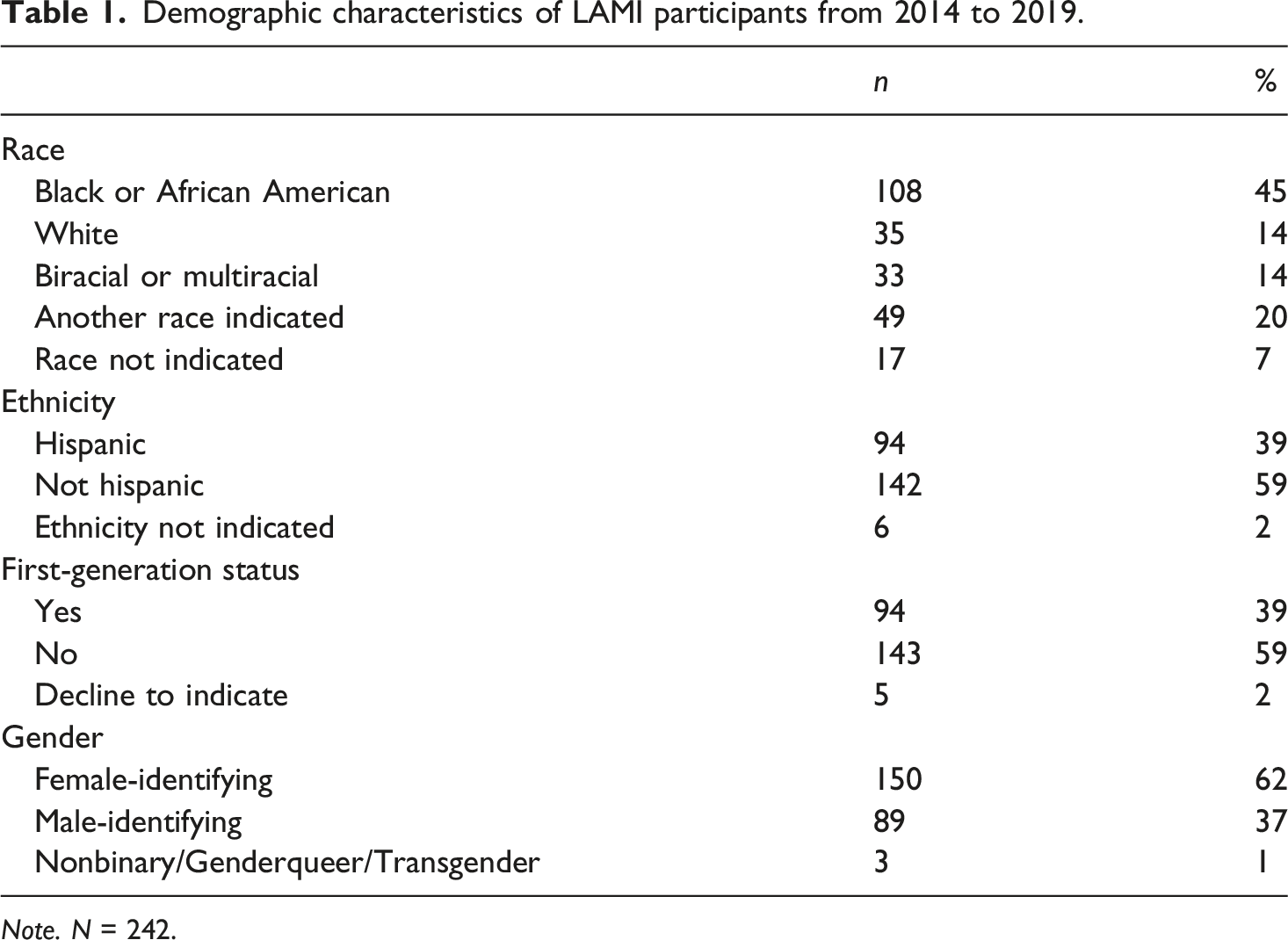
Note. N = 242.
Academic characteristics of LAMI participants from 2014 to 2019.
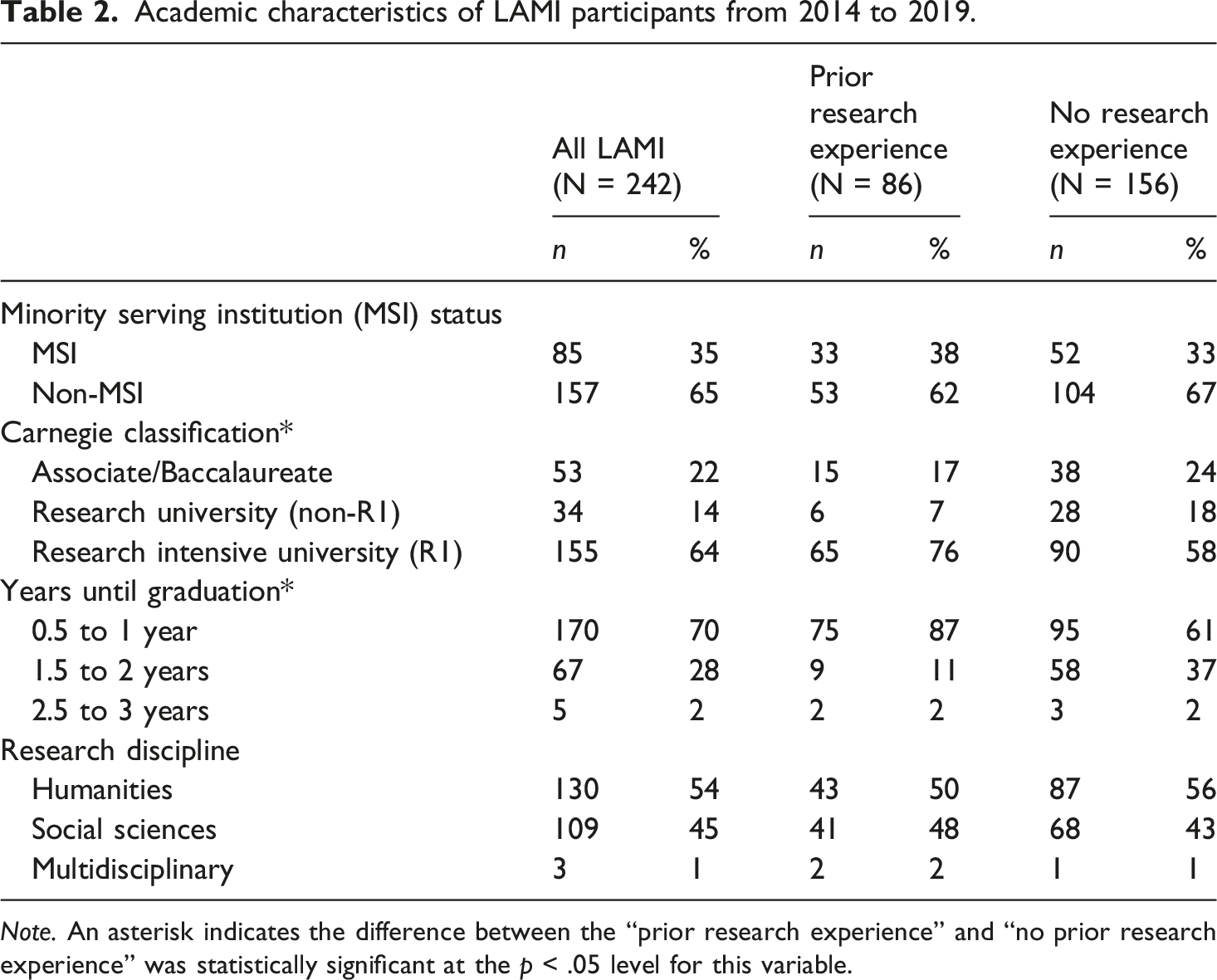
Note. An asterisk indicates the difference between the “prior research experience” and “no prior research experience” was statistically significant at the p < .05 level for this variable.
LAMI participants in the analytical sample (N = 242) represented a diverse set of academic and institutional backgrounds (Table 2). Approximately one-third of participants (35%) were enrolled as undergraduates at an MSI, while two-thirds (65%) attended non-MSI institutions. Consistent with TLA’s partnerships with research-intensive universities, a majority of participants (64%) were enrolled at R1 institutions (e.g., very high research spending and doctorate production), with smaller proportions attending Associate or Baccalaureate degree awarding institutions (22%) or R2 research institutions (e.g., high or moderate research spending and doctorate production; 14%). In terms of academic progression, most students were within 1 year of graduation (70%), while 30% were one and a half to 3 years away from completing their degrees.
LAMI participants were also evenly distributed across research disciplines, with 54% indicating majors in the humanities and 45% in the social sciences. Prior research experience varied significantly across institutional categories. Among students attending an R1 institution, 76% reported prior research experience before participating in the program. This is significantly higher than those attending non-R1 (7%) or Associate/Baccalaureate institutions (17%). Students with prior research experience indicated participation in programs such as the McNair Scholars Program, the Mellon Mays Undergraduate Fellowship, or research-based programs specific to their institution. These patterns highlight how differences in institutional research infrastructure shape students’ early exposure to research.
Analytical variables
To assess how a high-touch summer research experience like LAMI can offset disparities in prior research exposure, we examined change across three outcome variables: (1) research skills, (2) researcher self-identity, and (3) research career planning. These three variables map directly onto the core components of SCT: research skills correspond to the development of domain-specific self-efficacy, researcher self-identity reflects evolving interests and confidence in performing research-related tasks, and research career planning aligns with SCT’s emphasis on outcome expectations and choice actions. Framing the outcomes within SCT allows us to examine not only whether change occurred, but how students’ learning experiences and environmental support may have shaped their academic and career trajectories. In addition to these developmental outcomes, we also compared group differences in subsequent matriculation into graduate school to explore whether any observed “catch-up” patterns extended to students’ longer-term educational pathways.
Growth in research skills
Participants rated their knowledge of 16 research skills in both pre- and post-program surveys. These items captured both general aspects of the research process and specific methodological competencies. Participants were asked the following “please indicate your current level of knowledge about the each of the following topics: (1) the overall research process, (2) professional aspects of research, (3) ethical aspects of research, (4) literature and basic concepts in your research area, (5) quantitative techniques and methods for data gathering, (6) approaches to quantitative data analysis, (7) qualitative techniques and methods for data gathering, (8) approaches to qualitative data analysis, (9) computer applications for data management and analysis (e.g., SPSS, STATA, SAS, NVIVO, MATLAB, etc.), (10) bibliographic/reference software that manages research citations (e.g., Zotero, EndNote, and RefWorks), (11) critical reading skills and tools for the analysis of text, (12) data mining techniques (such as text mining and stemmatic analysis), (13) techniques and tools for conducting archival research, (14) techniques for conducting individual and/or group interviews, (15) research report preparation, and (16) research report presentation.”
Each item was rated as high, intermediate, low, or none. To measure overall skill growth, we constructed pre- and post-program indexes from the 16 research items (pre-program ⍺ = 0.89; post-program ⍺ = 0.86). To better understand which skills were most salient for participants with no prior research experience, we created a second index using the unweighted means of five foundational items: professional aspects of research, ethical aspects of research, literature and basic concepts in the field, research presentation, and research presentation preparation (pre-program ⍺ = 0.82; post-program ⍺ = 0.79).
Changes in researcher self-identity
In both surveys, participants rated their agreement (1 = strongly disagree to 4 = strongly agree) with five statements that capture their confidence, motivation, interest, persistence, and perceived ability to succeed as researchers. Students were asked their level of agreement with the following statements: (1) “I have the ability to have a successful career as a researcher, (2) I possess the motivation/persistence required for a career in a research-oriented field, (3) I have a strong interest in pursuing a career as a researcher, (4) My desire to become a researcher is strong enough to help me overcome barriers I might encounter in pursuit of this career, and (5) I am confident that I can understand research procedures.” These five self-identity items reflect SCT’s construct of self-efficacy, capturing participants’ confidence in performing research-related tasks, persisting through barriers, and imagining themselves as future researchers. SCT posits that increases in self-efficacy beliefs are a key mechanism through which learning experiences translate into academic and career goals, making these items central to assessing a program’s developmental effects. To measure overall changes in researcher self-efficacy, we created pre- and post-program indices from the unweighted means of these five items (pre-program ⍺ = 0.84; post-program ⍺ = 0.91). 2
Changes in research career planning
To examine shifts in participants’ academic and career trajectories, we assessed changes in agreement with five statements reflecting their understanding of graduate school, the application process, career options in their research field of interest, and intentions to pursue academic or non-academic research careers. Students were asked their level of agreement with the following statements: (1) “I have a solid understanding of graduate school life, (2) I have a solid understanding of the graduate school application process, (3) I have a solid understanding of the careers available to me in my discipline, (4) I plan to pursue an academic career, and (5) I plan to pursue a research career outside academia.” Responses ranged from strongly agree to strongly disagree. These career-planning items correspond to SCT’s dimensions of outcome expectations and choice goals, which reflect how students evaluate future academic pathways and the perceived feasibility and desirability of pursuing research careers. Due to the limited correlation between these statements, each item was analyzed independently.
Graduate school matriculation
Matriculation outcomes were obtained from the National Student Clearinghouse for all participants except eight (N = 234). Two dichotomous variables were created (a) matriculation into any graduate school program (e.g., Master’s, PhD, or other): and (b) matriculation specifically into PhD programs.
Analytical strategy
We conducted our analysis in two stages to assess the support for the research hypotheses. First, to evaluate the impact of the program on students with and without prior research experience, paired t-tests were used to compare pre- and post-program values for each outcome variable: growth in research skills, changes in researcher self-identity, and changes in research career planning. Second, logistic regression models were used to examine differences in graduate school and PhD matriculation rates based on participants’ pre-program research experience.
Although the sample sizes for subgroup analyses were modest, the use of paired t-tests and logistic regression is appropriate for evaluating within-person change and identifying broad patterns across groups. However, given the modest subgroup sizes, all findings should be interpreted with caution. Statistical significance is reported to highlight consistent patterns rather than to assert large effects, and effect size indicates that observed differences are meaningful but modest. The following results are best understood as descriptive evidence of trends aligned with the SCT framework described above, rather than definitive population-level or generalizable estimates.
Summary of key findings
Do research programs like LAMI enable participants without prior research experience to “catch-up” and develop research skills and a conceptual understanding of the research process at levels comparable to those of their more experienced peers?
Growth in research skills
Across all sixteen categories, pre-to post-program differences were statistically significant (p < .05) (Figure 1). Next, a paired-samples t-test was conducted to compare pre-program and post-program scores across the 16 research skill items for all program participants. Overall, research skills increased significantly during the program (pre-LAMI M = 2.41, SD = 0.52; post-LAMI M = 2.90, SD = 0.53; t (240) = 15.87, p < .001). Participants’ pre- and post-program self-assessment of research skills (N = 242).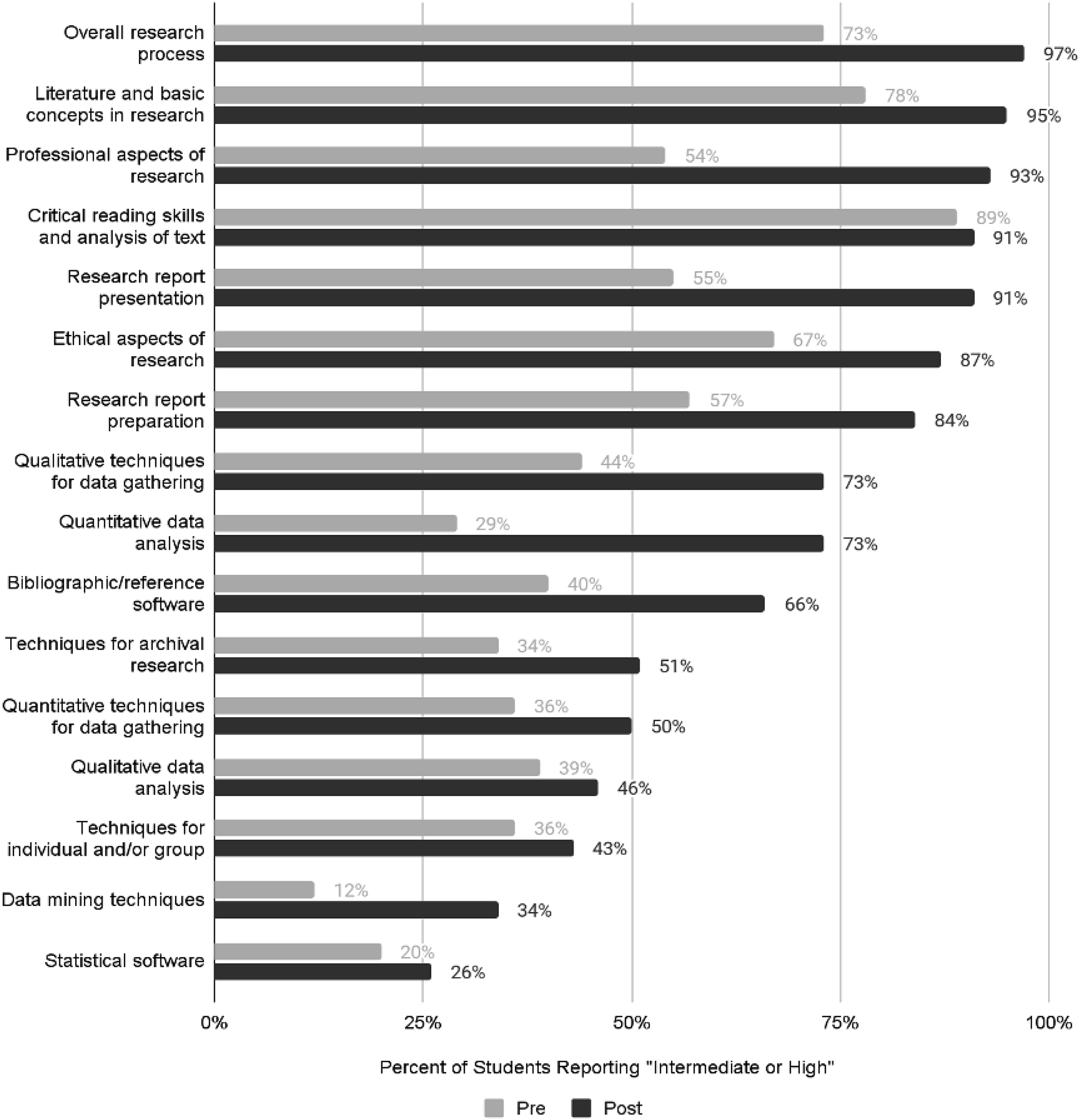
Average research skill growth by prior research experience.
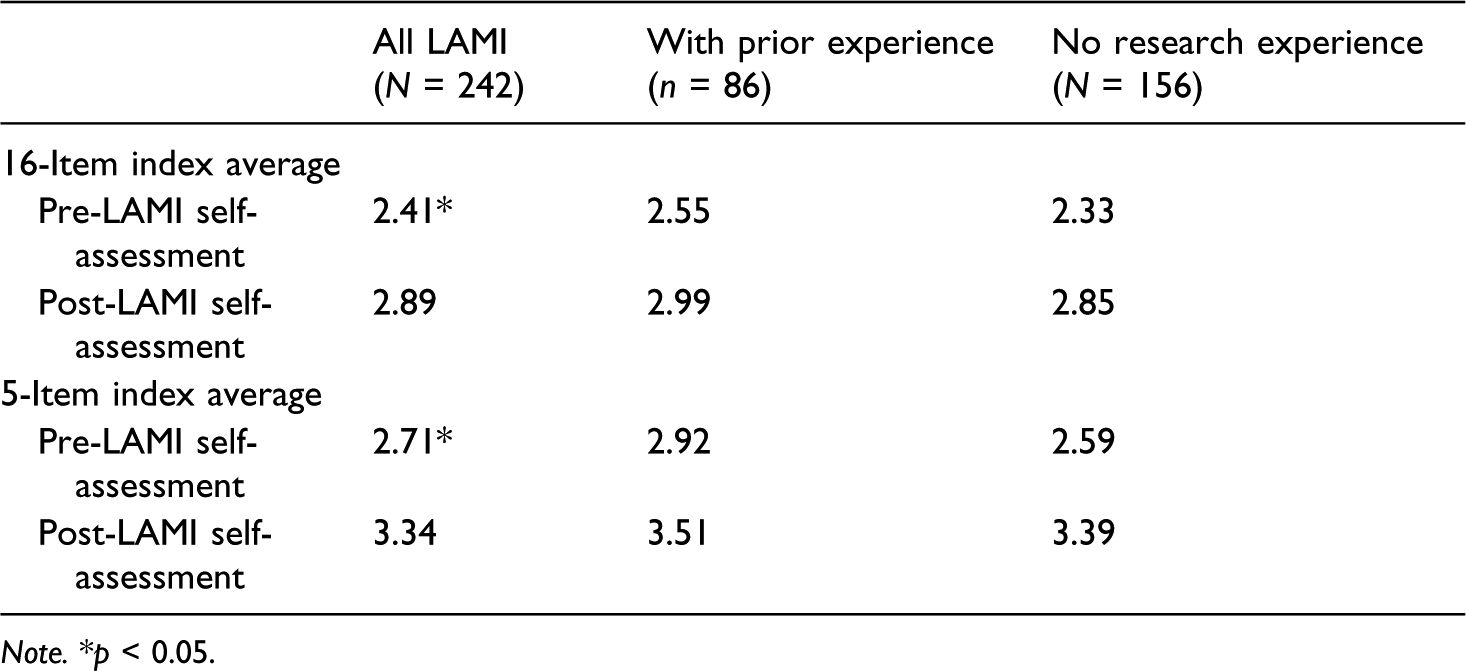
Note. *p < 0.05.
To better understand which skills were most salient for participants with no prior research experience, we created a second index using the unweighted means of five foundational items: professional aspects of research, ethical aspects of research, literature and basic concepts in the field, research presentation, and research presentation preparation (pre-program ⍺ = 0.82; post-program ⍺ = 0.79). Growth in these general research skills appeared more pronounced. Pre-program, participants with prior research experience reported significantly higher mean scores (M = 2.92, SD = 0.50) than those participants without research experience (M = 2.59, SD = 0.65; t (213) = 4.462, p < 0.001). By the program’s end, this difference had been reduced by one-third, with post-program means of M = 3.51 (SD = 0.45) for students with prior experience and M = 3.39 (SD = 0.56) for those without prior experience. This post-program difference was not statistically significant (t (240) = 1.74, p > .05).
We also examined whether academic standing might confound these results, as participants with prior research experience may be further along in their degree programs and have less room for skill growth. To address this concern, we repeated the analyses for students entering their final year of college (N = 170; 75 with no prior experience and 95 with prior experience). For the 16-item measure, no statistically significant differences were observed between the two groups at either pre- or post-program. However, analysis of the five-item index again revealed notable pre-program differences. Students with no prior experience scored significantly lower (M = 2.71, SD = 0.63) than those with prior experience (M = 2.94, SD = 0.51; t (168) = 2.48, p < .05). By the end of the program, the two groups were statistically indistinguishable (t (168) = 0.92, p = .360). These findings suggest that scholars nearing graduation who enter LAMI without prior experience may be able to “catch-up” to their more experienced peers through participation in an intensive summer research program.
Researcher self-identity
Overall, post-program changes in researcher self-identity were positive for all participants (p < .05) (Figure 2). Therefore, we moved forward and used the same approach applied to the research skills measures to examine the individual-level difference between participants with and those without prior research experience. However, do not find evidence of a statistically significant “catch-up” effect. The pre- and post-program index means for both groups were similar. Participants’ pre- and post-program self-assessment of research skills (N = 151).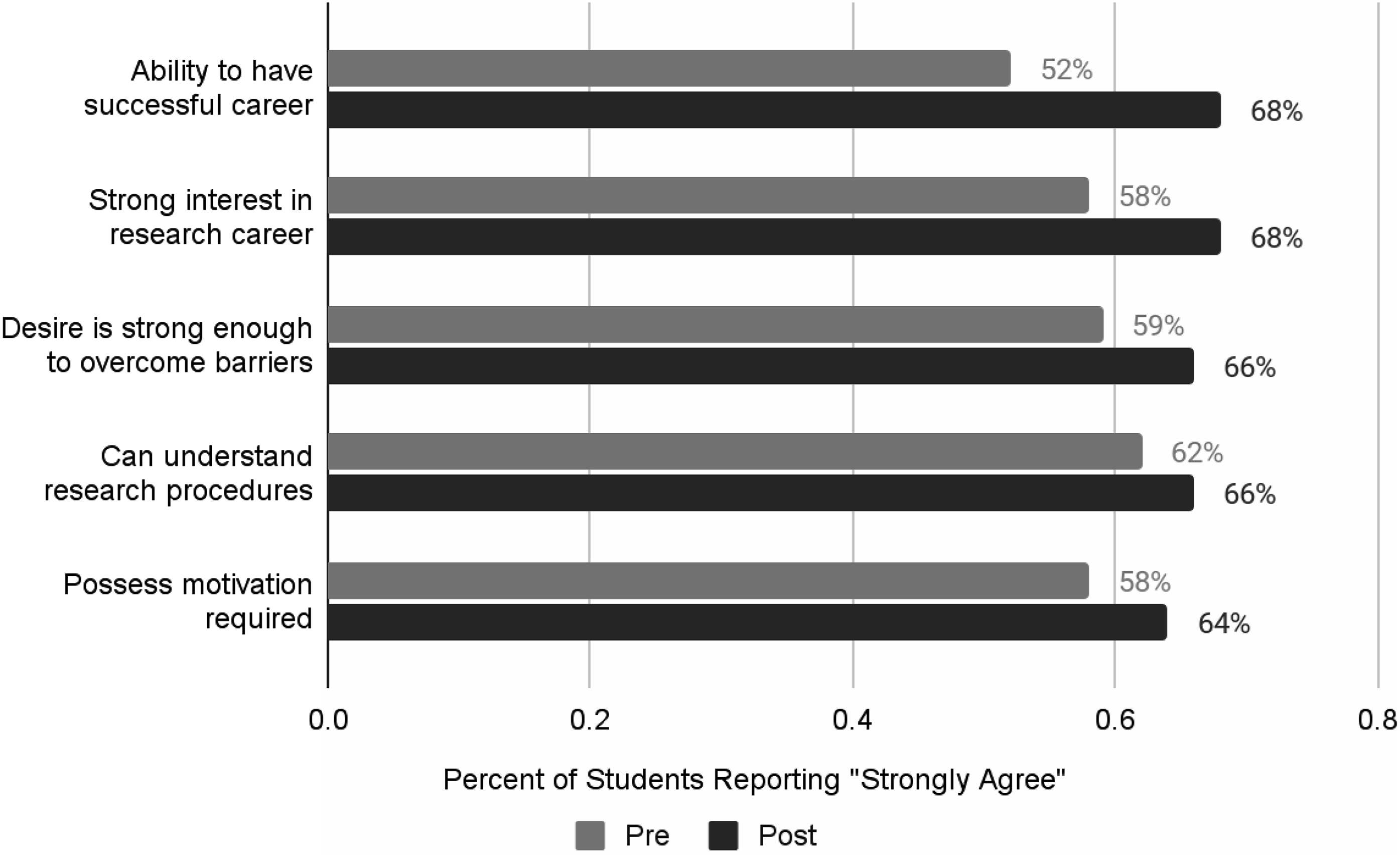
Because no difference emerged using the index means alone, we examined whether the magnitude of change from pre-to post-program differed by prior research experience. Results from the repeated-measures t tests indicate that students without prior research experience demonstrated a statistically significant increase in researcher self-identity (average change = 0.085, SD = 0.45; t (86) = 1.755, p < .05 (one-tailed)). In contrast, students with prior research experience did not show a statistically significant change across time (average change = 0.047, SD = 0.61; t (63) = 0.62, p < .27 (one-tailed)). Although both groups showed increases following participation in the research program, the increase in their researcher self-identity was more pronounced for those entering the program without prior research experience.
Research career planning
Overall, the results indicate a positive impact of the research program on participants’ research career preparation and educational pathways, with statistically significant increases (p < .05), except for plans to pursue an academic career. (Figure 3). Participants became more confident in planning their research and graduate careers. They reported an increased understanding of graduate school and research career options, regardless of whether they had participated in a prior research-oriented academic enrichment program. Participants’ pre- and post-program self-assessment of research career planning (N = 242).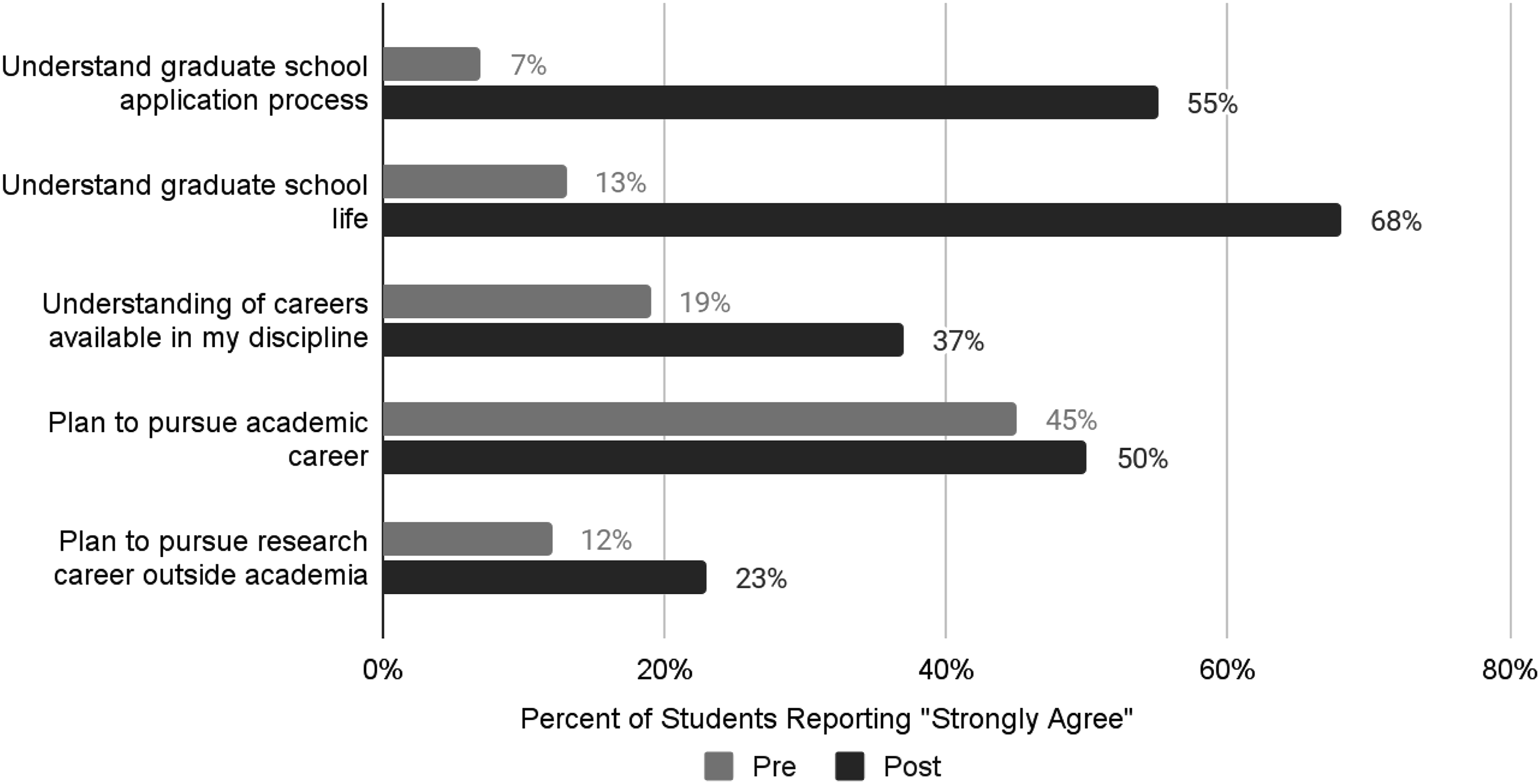
When comparing participants by prior research experience, we observe evidence of a “catch-up” effect. Before the program, participants without prior research experience were significantly less likely to agree that they understood the graduate school application process and graduate student life than their peers with prior experience (p < .01). After the program, these differences are no longer statistically significant, indicating that these early informational differences were no longer observed after the program. However, one exception emerged regarding plans to pursue an academic career. Participants with prior research experience were significantly more likely to endorse this pathway pre-program (p < .052), and this difference widened post-program (p < .015). Thus, while the LAMI program helped equalize knowledge of graduate education and research career pathways, preexisting differences in career aspirations persisted.
Does this “catch-up” effect extend to participants’ academic pathways, such that those without prior research experience progress toward graduate education at rates similar to participants with more extensive research backgrounds?
Matriculation into graduate school
We first examined whether the “catch-up” effect extended to participants’ academic pathways by comparing graduate school matriculation rates for participants with and without prior research experience. Using TLA tracking information and National Student Clearinghouse data, we found no significant descriptive differences in matriculation outcomes between the two groups. Slightly more than half of all participants had enrolled in a graduate program at the time of data collection, with similar rates for those without prior research experience (55%) and those with prior experience (61%). To further isolate the potential influence of prior research experience, we estimated a series of logistic regression models that controlled for demographic and academic characteristics.
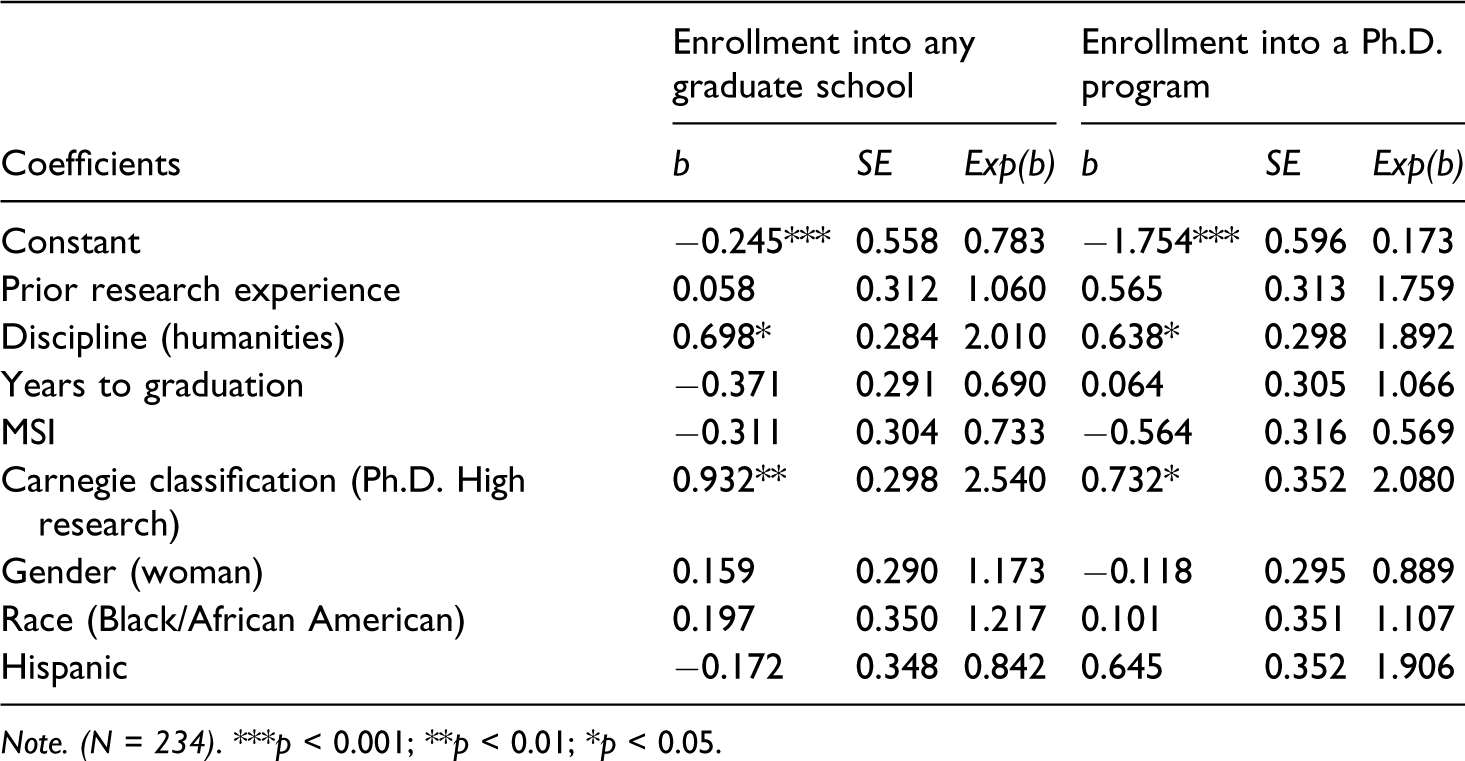
Binomial logistic regression results for matriculation into a graduate school program.
Note. (N = 234). ***p < 0.001; **p < 0.01; *p < 0.05.
Importantly, prior research experience did not significantly predict graduate school enrollment. Participants with and without prior research exposure had comparable odds of entering a graduate program (Exp(b) = 1.06). Rather than further advantaging students who entered the program with prior experience, these patterns are consistent with the possibility that participation may reduce initial differences between groups, with students without prior experience showing graduate school enrollment rates comparable to those of their more experienced peers.
Matriculation into Ph.D. programs
A second binomial logistic regression model was used to examine predictors of matriculation into PhD programs (Table 4). This model was also statistically significant, χ2 (8) = 22.70, p = .004, but accounted for a similarly small portion of the variance (Nagelkerke R2 = .13). As in the first model, academic discipline and undergraduate institution type were the only statistically significant predictors, though their effects were slightly reduced.
Consistent with findings on graduate school enrollment, prior research experience was not a statistically significant predictor of PhD matriculation. Both groups (those with and without prior research experience) were equally likely to enroll in a doctoral program after graduation. Although the odds ratio suggests a modest increase in the likelihood of entering a PhD program for participants with prior research experience, this effect was not statistically significant. Institutional differences may partially explain this, as participants from high-volume PhD.-granting institutions were more likely to have prior research experience upon entering the LAMI program.
Discussion
The results of this study suggest that participation in the LAMI program is associated with increases in students’ research skills, researcher self-identity, and research career planning. These patterns are especially notable for students entering the program without prior research experience, who showed evidence of narrowing initial gaps relative to their more experienced peers. Across multiple indicators, students who began the program with less research exposure appear to “catch up” to peers who enter with more extensive experience.
Students with no prior research experience consistently reported lower pre-program ratings of general research skills and less familiarity with graduate school and the application process. By the program’s end, however, these differences were markedly reduced, and in several areas no longer statistically distinguishable. These patterns suggest that structured engagement in research activities, mentorship, and professional development may offer students with fewer prior research opportunities a pathway toward comparable levels of perceived readiness.
Program participants also reported increases in their self-perceived researcher identity. This was particularly the case for students without prior research experience, who entered the program with lower baseline confidence and showed greater gains over time. These findings are consistent with SCT’s theoretical framework that emphasizes the role of meaningful learning experiences and supportive environments in strengthening students’ sense of themselves as capable researchers.
Finally, matriculation patterns indicate that participants with and without prior research experience were similarly likely to enroll in graduate and PhD programs in the years following participation. While the variables explained by the predictive models are modest, the comparable enrollment rates observed across groups suggest that participation may help reduce initial disparities in perceived preparedness for advanced graduate study.
Taken together, these findings reflect developmental patterns consistent with key ideas in Social Cognitive Theory, particularly the importance of learning experiences, exposure to disciplinary practices, and supportive academic environments in shaping students’ confidence and goal setting. More broadly, the results add to ongoing conversations in the humanities and social sciences about how to create equitable pathways into research for students whose undergraduate institutions may offer limited opportunities. The patterns observed in this study suggest that an intensive summer research program may provide these students an opportunity to strengthen skills and confidence in ways that support their academic and career trajectories and allow them to “catch up” to their more research-experienced peers.
Implications, limitations, and future research
The findings of this study offer several considerations for structuring and designing equitable undergraduate research opportunities in the humanities and social sciences. In particular, they highlight the value of providing structured and intensive research engagement for students whose institutions may not offer research opportunities. Ensuring dedicated time for applied research, close mentorship, and exposure to core scholarly practices may give students with limited prior experience a meaningful chance to participate fully in disciplinary research and begin to “catch up” to peers with earlier exposure or those from research-rich institutions. Additionally, the gains observed in students’ understanding of graduate school life and the application process reflect the LAMI program’s intentional emphasis on professional development to increase equity for those students who do not attend research-intensive universities. These insights are relevant for summer programs, course-based research experiences, and other settings in which faculty and institutions seek to broaden participation in research training.
While the results of this study provide evidence to inform future research and program design and implementation, its reach is limited. The measures used to assess research skill gains relied on participants’ self-reports and may not correspond directly to actual skill development. The measures may also be subject to changes in internal standards as students progress through the program. Additionally, selection effects may also shape the findings. Students who apply and are accepted to a competitive research fellowship may already differ in important ways from the broader population of humanities and social science undergraduates. In addition, the modest subgroup sizes and observational design limit our ability to infer causal pathways. As a result, the patterns reported here should be interpreted as suggestive rather than definitive.
These limitations point to several directions for future research. Qualitative or mixed-methods studies are needed to better understand the elements of the “catch-up” effect, including how students experience growth in research skills, researcher-identity development, and career planning. Additionally, qualitative work can dial into how specific program components contribute to these changes. Comparative work could also examine whether intensive summer experiences differ from academic-year research opportunities in their impact, particularly given the concentrated nature of summer research. Finally, quasi-experimental or longitudinal research that compares LAMI participants with similar nonparticipants would help clarify the extent to which perceived changes translate into graduate school matriculation and longer-term career outcomes.
The findings of this study contribute to ongoing discussions in higher education regarding the expansion of equitable access to research experiences, particularly in the humanities and social sciences, and for students of color. The results highlight both the promise and the complexity of designing impactful undergraduate research opportunities for students whose institutions may offer limited access, while also underscoring the need for continued inquiry into the structures and experiences that best support students’ academic and research career trajectories.
Footnotes
Acknowledgements
The authors acknowledge the contributions of the following individuals, whose insight and collaboration shaped the conceptual framework that guided the LAMI program from its earliest stages: Cynthia Neal Spence, Department of Sociology at Spelman College, and William Wittels, The Graduate School at Brown University.

Ethical considerations
The Brown University Office of Research Integrity has determined that this work does not involve human subjects as defined by the U.S. Department of Health and Human Services and U.S. Food and Drug Administration regulations. Therefore, this project is exempt from IRB approval. Please see the determination letter included in the manuscript submission.
Consent to participate
Students were informed that data from their survey responses may be used in aggregate in future scholarly publications when they took the voluntary survey. By taking the survey, they consented to participate.
Funding
The authors disclosed receipt of the following financial support for the research, authorship, and/or publication of this article: The authors disclose receipt of the following financial support for the research, authorship, and/or publication of this article: This work was supported by the Mellon Foundation Grant Number: G-1708-04848.
Declaration of conflicting interests
The authors declared no potential conflicts of interest with respect to the research, authorship, and/or publication of this article.