







Abstract
Sustainability as an educational objective in higher education is becoming increasingly prevalent. Design studies, and future designers, play a significant role in promoting sustainability. However, sustainability education must prioritize experiential learning alongside conventional methods. To achieve this, learning beyond the classroom through active methodologies is crucial, allowing students to comprehend the environment as an integral part of the society in which they reside. Incorporating local ecological knowledge into the curriculum enhances the perceived value of the surrounding territory, thereby contributing to its preservation and appreciation. This paper presents the outcomes of a pedagogical proposal involving challenge-based learning in the Baix Llobregat Agrarian Park (Catalonia, NE Iberian Peninsula) across various higher education design courses. The proposal has a dual objective: firstly, to utilize territorial capital as a central theme for project-based learning in design studies, fostering the development of knowledge, skills, and values necessary for addressing contemporary societal challenges and advancing a more sustainable and equitable future. Secondly, design activities serve as an initial step in highlighting the distinctive characteristics of the territory through the materialization of products, services, or strategies. The research encompasses 26 projects from 37 students, each representing design scenarios aimed at communicating the potential of territorial resources to local communities. A detailed case study is provided, along with an evaluation of student perceptions regarding the suitability of this approach through surveys. The results demonstrate the potential of integrating the disciplines of ethnoecology and design to enhance both the territory and local ecological knowledge.
Keywords
Introduction
Sustainability as a knowledge objective in higher education is becoming commonplace (Aznar et al., 2014; Gutiérrez-García et al., 2002; Hernández-Barco et al., 2019; Lozano et al, 2013). UNESCO has recognized education as a fundamental entitlement in advancing sustainable development since 1992. However, it is within the updated framework of the 2030 World Agenda for Sustainable Development that this perspective becomes particularly apparent, not only as a distinct objective but also as a pivotal instrument for attaining all the sustainable development goals (SDGs), as outlined by Rieckmann (2017). Universities play a significant role in driving sustainable development through paradigm shifts, contributing through three interrelated avenues: generating new knowledge, fostering relevant competencies, and cultivating societal interest in sustainability (Hernández-Barco et al., 2019; Rieckmann, 2012; Zamora-Polo and Sánchez-Martín, 2019).
While achieving a more sustainable future demands transforming our approach to education, as emphasized by Jickling and Wals (2008), sustainable development requires dynamic and holistic teaching methodologies. This includes shifting from teacher-centered to student-centered education, prioritizing autonomous and active student learning. Highlighted by the Bologna declaration (1999), this transition aims to engage students and academic staff in a global perspective on local activities, instilling positive attitudes towards the environment and fostering a desire for a better, safer world for all (Hernández-Barco et al., 2019). Systemic and environmental education prioritizes experiential learning, with opportunities for learning beyond the classroom being essential for students to comprehend the environment as an integral part of society (Gambino et al., 2009; Hernández-Barco et al., 2019). This approach emphasizes the importance of hands-on experiences in fostering a deeper understanding of sustainability issues and empowering students to become active agents of change in their communities.
The impact of design studies on sustainable development has evolved significantly, transitioning from a focus solely on formal object-scale configuration and cultural symbolism to assuming broader responsibilities within the complex production and consumption system. The United Nations Rio declaration on environment and development (1992) emphasizes the need for social research and policy to promote lifestyles that are less dependent on finite Earth resources and more in harmony with its carrying capacity. Manzini and Jégou (2003) argue that the local dimension presents a compelling opportunity for design to make substantial contributions to sustainable development. Building on this, Parente and Sedini (2018) introduce the concept of design for territories, advocating for synergistic and collaborative actions across various domains —productive, social, environmental, and cultural— aimed at local empowerment and global recognition. This paradigm shift has redefined the roles of designers, transforming them into catalysts or facilitators in community processes, thereby expanding the professional scope of design (Jiménez-Martínez, 2014). The local dimension, encompassing various elements such as culture, social practices, economy, history, identity, and ecological knowledge, offers a broad spectrum of learning opportunities. Its complexity makes it an ideal framework or context within sustainability education programs (Iranzo-García and De la Vega, 2018; Otero, 2000; Stewart, 2008), which aim to cultivate understanding and foster sustainable attitudes of protection and respect towards the territory and local heritage among students (Hernández, 2010).
Traditional ecological knowledge (TEK) holds significant potential in sustainability education, particularly when approached from an experiential learning perspective. It has been widely acknowledged for its invaluable contribution to our understanding of ecological systems (Armstrong et al., 2007; Delgado, 2015; Folke, 2004). Furthermore, integrating TEK as a subject of study can foster a deeper appreciation of one’s cultural heritage, a crucial aspect for promoting sustainable development (Gutiérrez-García et al., 2002; Iranzo-García and De la Vega, 2018). Numerous authors have explored this approach in primary and secondary education, yielding noteworthy results (Benlloch et al., 2005; De la Vega and Iranzo-García, 2021; Delgado and Díaz, 2014; Hamilton et al., 2003; Piera et al., 2009).
Therefore, it is fitting to propose pedagogical initiatives centered around the Llobregat delta, utilizing its landscape and heritage elements as guiding principles for learning and practicing competency skills in system design within higher education. Additionally, ethnoecological studies underscore the importance of returning acquired knowledge to the community (Vallès, 2019). The resulting student projects from this pedagogical approach can serve as active dissemination tools for local ecological knowledge and facilitate the return of knowledge to the community, particularly in enhancing ethnobotanical understanding.
The aim of this research is to explore the effectiveness of active education methods in local contexts for enhancing sustainability learning within higher education design programs. Specifically, we intend to investigate whether a particular teaching approach effectively fosters meaningful learning, curiosity about local ecological knowledge and related sciences, particularly ethnobotany, leveraging the expertise of the researchers/professors. In summary, the specific objectives are: (a) to evaluate the development of competencies in higher design education through the utilization of local ecological knowledge as an educational resource, (b) to integrate specific ethnoecological knowledge into the design field, (c) to develop teaching materials and methodologies to support instructional practices, and (d) to collaborate with design students in devising project proposals for valorizing local ecological knowledge.
Methodology
Relevance of the location
The study area encompassed in this research is the Baix Llobregat Agricultural Park (BLAP), located in the Llobregat delta (Catalonia, NE Iberian Peninsula). It is a territorial feature chosen for its landscape, floristic, geographic, economic, and cultural significance, which has been the subject of various studies, including ethnobotanical research (Marín et al., 2023). This area is particularly relevant due to its proximity to a major urban center, Barcelona, experiencing significant human pressure while still preserving large areas of protected spaces and a diverse array of plants associated with local ecological knowledge, especially in the agricultural realm. It represents a culturally significant landscape with exceptional environmental, historical, economic, and social value (Zazo, 2013). Moreover, it is an area where various circular economy strategies, fostering synergies between agriculture and urban areas, are poised to be implemented, making it a fertile ground for productive innovation (Magrinyà, 2017).
Educational framework
Project description, research topic, number of students involved (n), content module, educative center, year of promotion.
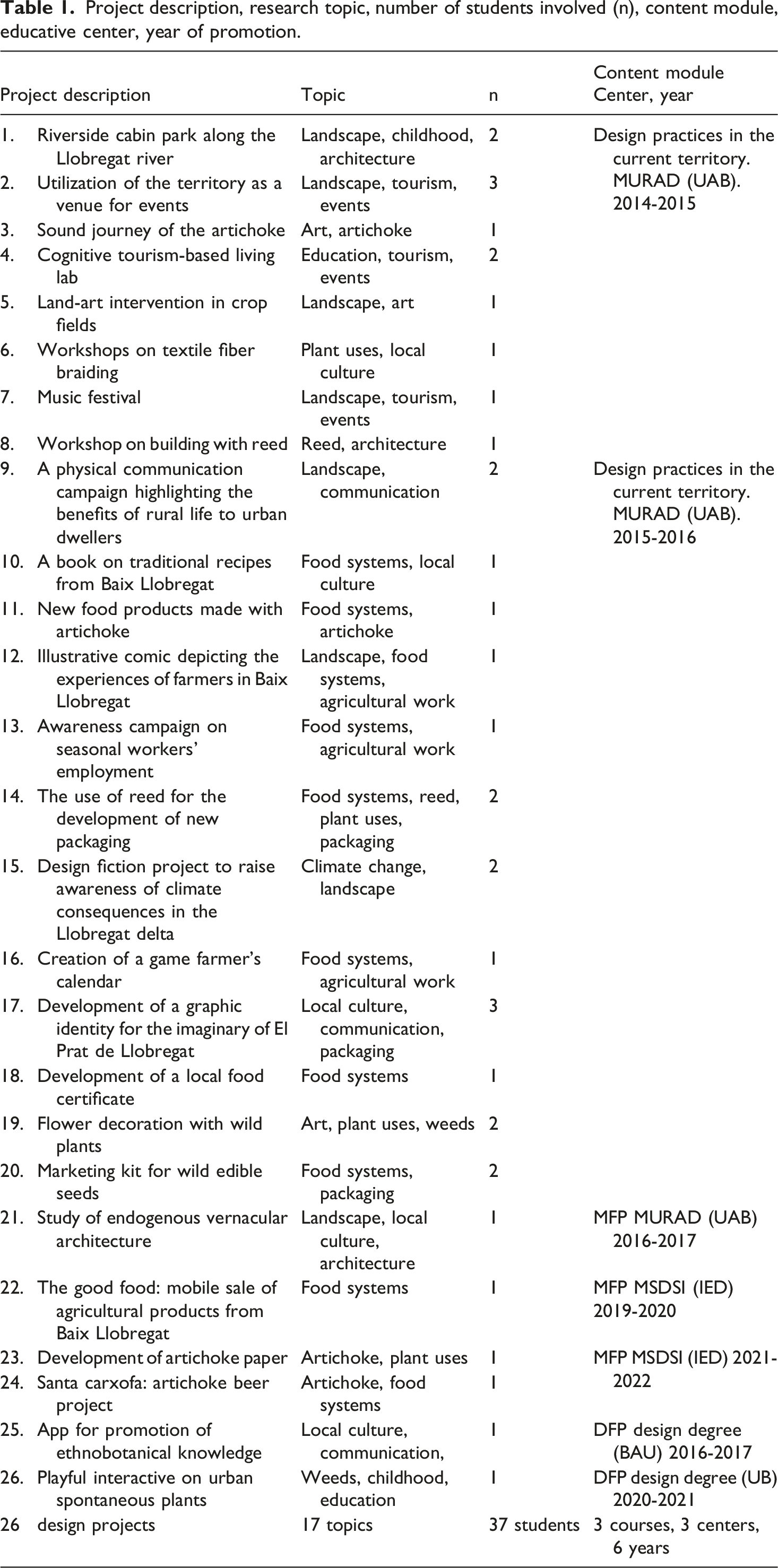
The practice is embedded within the various challenge-based projects that engage students throughout the course. For MURAD students, participation in the practice is mandatory due to the inclusion of a content module (6 credits under the European Credit Transfer and Accumulation System, or ECTS) emphasizing applied design to the territory during academic years 2014-2015 and 2015-2016. As for MURAD academic year 2016-2017 as well as MSDSI students, the practice is situated within their master’s final project (MFP), which amount to a total of 21 ECTS, allowing them to choose whether to engage with the design and territory conceptual framework.
It is also worth mentioning that the educational proposal has been applied in the Design Bachelor’s final project (DFP) at BAU, Art and Design University Centre (an affiliated center of the Universitat de Vic), as well as in the Design Bachelor’s final project at the Universitat de Barcelona, UB (12 ECTS), where one student from each institution voluntarily participated in the pedagogical approach.
Educational proposal
Active education methods are based on the idea that students will learn better if they directly apply their knowledge to improve real-life situations (Gutiérrez-García et al., 2002; Hernández-Barco et al., 2019). A pedagogical proposal based on challenge-based learning is suggested to be followed, where the design process is integrated (Figure 1). Challenge-based learning is an active education approach where students tackle real-world problems or challenges, often in interdisciplinary teams, to develop critical thinking, problem-solving skills, and creativity. It emphasizes inquiry, collaboration, and practical application of knowledge. Students work on authentic, complex issues that require them to research, analyze, and propose solutions, mirroring the challenges they may face in their future careers or in society. The goal is not only to find solutions but also to foster a deeper understanding of the subject matter and encourage innovation and resilience in the face of challenges (Johnson and Brown, 2011; Nichols et al., 2016). Design process model, phases and tools. Font: own elaboration from Brown, 2009.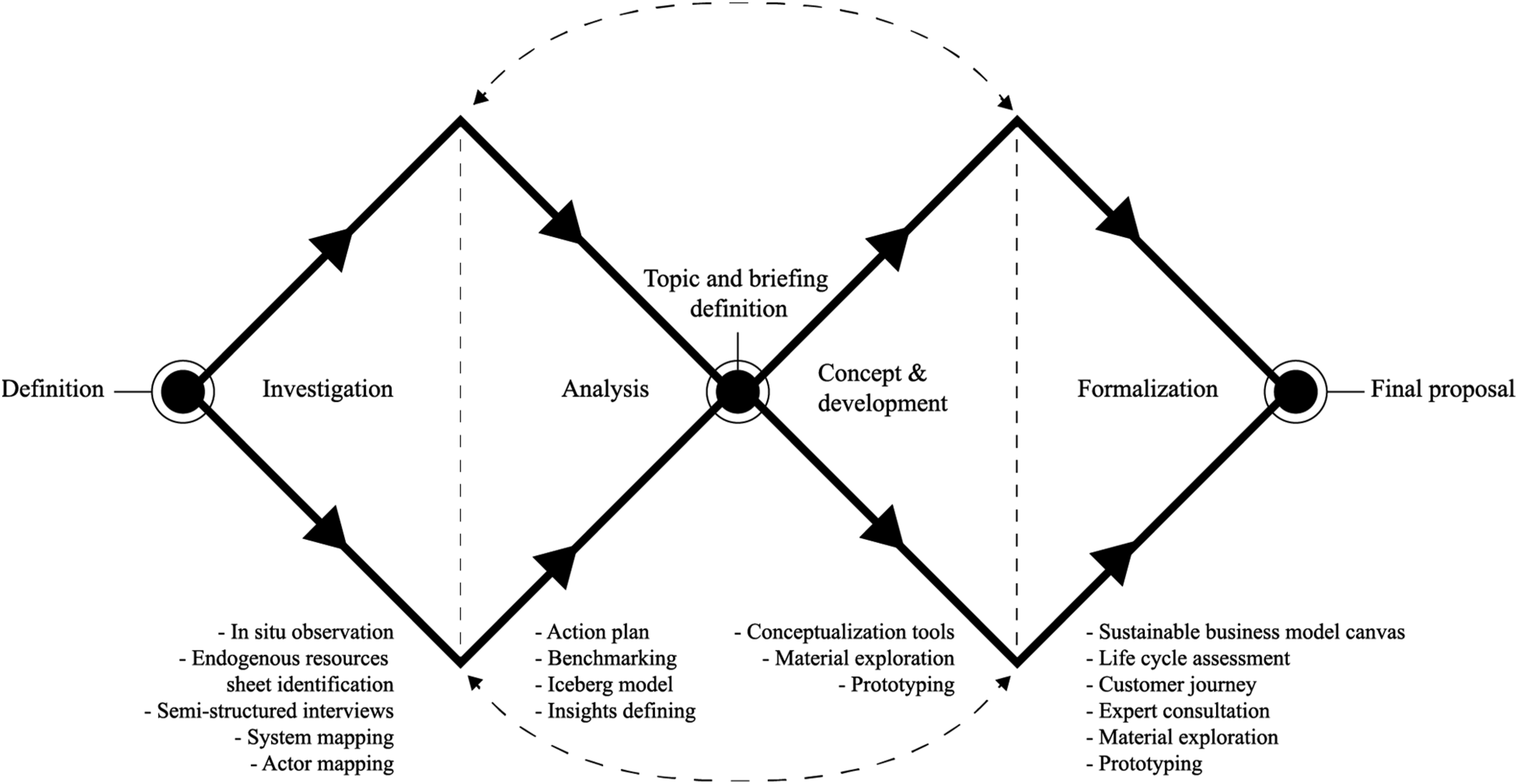
The design process model is divided into distinct stages. There are various design thinking models and all of them represent a cyclical process (Ambrose and Harris, 2009; Brown, 2009; Design Council, 2019; IDEO Education, 2012). This signifies a continual transition between these phases, involving the generation of new ideas, their analysis, refinement, and often a return to the initial stages. Our cognitive approach fluctuates between design stages and mental states, encompassing divergent and convergent thinking, as well as analysis and synthesis (Brown, 2008, 2009). Regardless of the specific model employed, each step in the design process aims to produce a creative solution addressing either a recognized or unforeseen problem.
The pedagogical proposal is divided into five milestones:
Definition
In the initial stage, students are introduced to the challenge and provided with an introductory talk by scientific staff, emphasizing the importance of promoting local ecological knowledge, particularly ethnoflora. Objectives, scope, and specific competencies of the educational proposal, including learning outcomes and content, are then outlined. Students are encouraged by the professor to conduct (individually or in groups) self-directed research, selecting appropriate methods to gain insight into the territorial system and identify design-relevant problems or criteria. This phase is augmented by presentations from local stakeholders, such as members of the ‘Gastronomy and Tourism Association of Baix Llobregat’, technicians from the BLAP, representatives from various businesses, members of the ‘Forest Defense Group’, and farmers, either in the classroom or directly within the territory. These activities facilitate students’ understanding of the territory’s capabilities and foster an initial engagement with the subject of study.
Investigation
This stage involves understanding the territorial capital of the Llobregat delta by students, aiming to identify and organize the endogenous resources for further utilization (Martos, 2023). Tutored by the professor, students have autonomy in conducting fieldwork, allowing them to establish direct contact with the environment. This phase involves gathering information on-site using various formats and multidisciplinary tools (interviews, surveys, observation, oral sources, physical samples of potential resources, system and actor mapping, endogenous resource detection forms, or plant sample collection, for instance).
Analysis
After conducting preliminary research, an action plan should be defined, specifying the problem to be addressed and the main activities required, along with the tools and competencies necessary for plan implementation. Each group presents their findings in class, articulates their design question, and identifies opportunities for exploration during the upcoming ideation phase. Feedback from teaching staff, other students, and sometimes key stakeholders helps refine their objectives and projects.
Concept and development
The shift from theory to practical application is evident as students move from abstract concepts to experiential design. Defining the design idea for field testing is crucial at this stage. Students are urged to generate initial concepts informed by research findings and design criteria. They iterate on these concepts or generate new ones, creating prototypes to establish project foundations. These prototypes suggest design visions involving stakeholders and demonstrate the design’s ability to reinterpret problems as opportunities.
Project formalization
This involves preparing the project for implementation, although achieving such an outcome may be challenging or impractical within an educational setting. Therefore, for our purposes, this stage serves as a deadline for project completion and allows for the assessment of outcomes as if they were hypothetically implemented. In addition to developing a product, service, or system, students are also required to enhance their project with a business plan, a life cycle analysis, or other tools that add value to their proposal and align with the competencies to be acquired within the educational program. Furthermore, this stage can also serve as a catalyst for students to continue pursuing their outcomes and the topics they are passionate about beyond the scope of this practice.
Evaluation of the educational proposal
The students were evaluated through the submission of a final report and an oral presentation of their projects, with participation from both students and faculty members, occasionally including local stakeholders. The evaluation criteria took into account the degree of acquisition of the learning outcomes throughout all stages of the design process. The projects analyzed were developed over a six-year period (2014–2022) across three institutions and multiple cohorts. A shared rubric aligned with the stated learning outcomes was used by faculty members to assess the projects. Peer feedback was incorporated during intermediate presentations as formative input. Stakeholder participation was advisory in nature and did not directly contribute to grading. In order to evaluate the students’ perception on the suitability of the educational proposal, an online survey was carried out after the practice concluded to all students. From 37 surveyed students, 11 answers were received and analyzed. Quantitative responses were summarized using descriptive statistics (mean values and range). Open-ended responses were analyzed through basic thematic grouping to identify recurring perceptions related to stakeholder engagement, territorial awareness, and competency development.
Results and discussion
Resulting projects
A total of 26 projects resulted, and 37 students were involved (Table 1). With varying levels of development and depth of knowledge of the territory, the projects provided evidence of competency development aligned with the subject’s learning outcomes. In all the projects, basic tools of design, sustainability, and ethnoecological study were used in a real and close context (not fictional), with a high degree of applicability in most cases.
The most recurring themes addressed are food systems, landscape, and local folklore or culture. It is also noteworthy to highlight projects centered around an emblematic species of the territory, such as the artichoke (Marín et al., 2023), as four projects revolve around it. Lastly, it is worth mentioning projects that develop ideas related to tourism activities and event design, which some authors have identified as potential enhancers of the territory (Araújo and Paül, 2012; Paül et al., 2014). The project’s heterogeneity is reflected in Figure 2. Several projects resulting from the challenge-based design. Top left, a marketing kit for wild edible seeds (project number 20); Top right, riverside cabin park along the Llobregat river (project number 1); bottom left, illustrative comic depicting the experiences of farmers in Baix Llobregat (project number 12); bottom right, development of a graphic identity for the imaginary of El Prat de Llobregat (project number 17).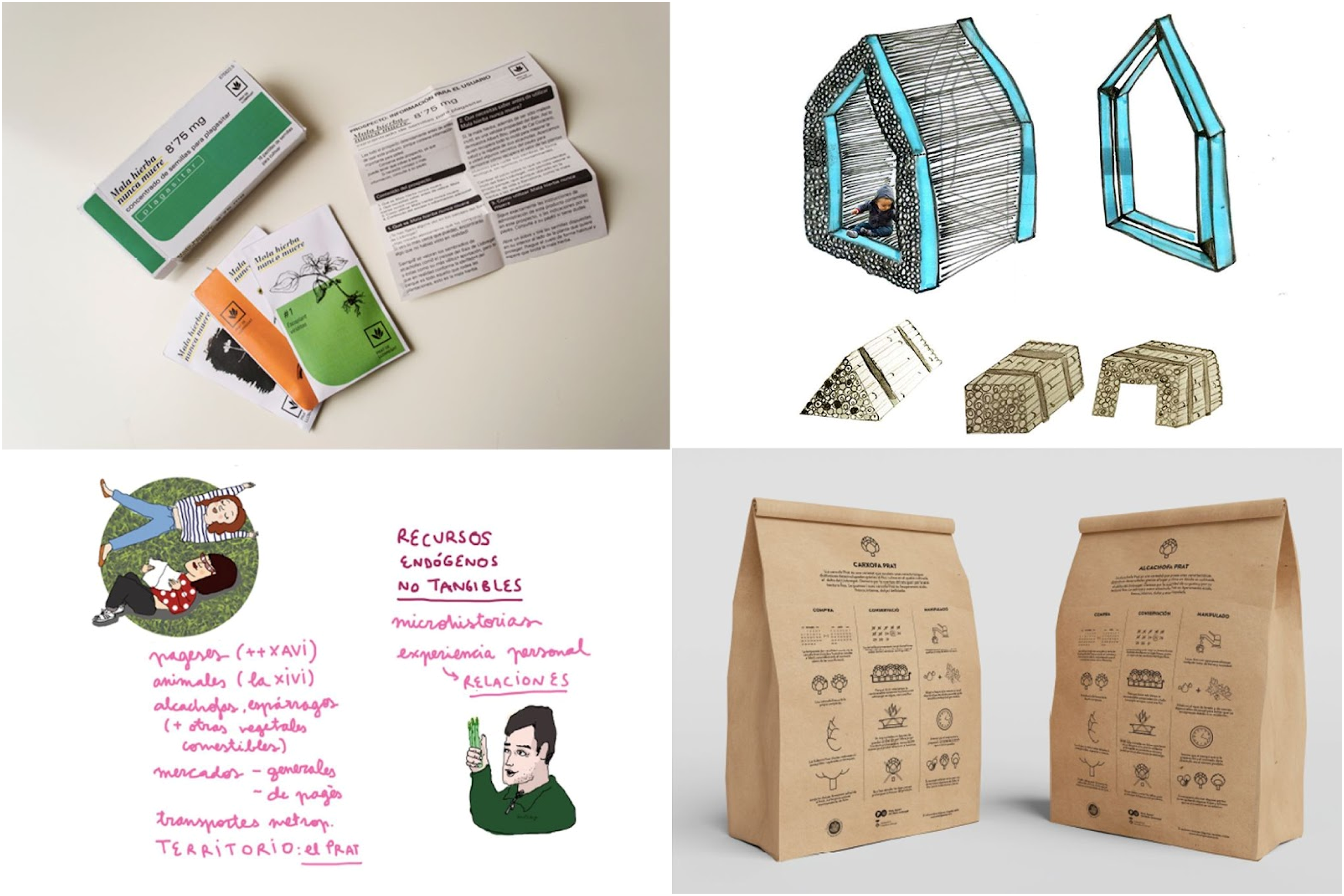
Artichoke paper as case study
To illustrate and reflect on the effectiveness of this teaching framework, one of the projects emerged within the 2021-2022’s Master in Sustainable Design and Social Impact (offered at Istituto Europeo di Design, IED) is presented. It concerns project number 23, which appears in Table 1 and is carried out by the Argentine student Carolina Galeazzi, whose initial topic of interest is biobased materials and waste valorization.
In this context, students are tasked with operating within a real territorial system (the BLAP), where they identify a range of problems and resources to focus on. They employ various multidisciplinary tools such as semi-structured interviews, resource detection sheets, or system mapping (Figure 3) to understand and analyze the complexity of systems, the multitude of territorial actors and their needs. Furthermore, they aim to identify potential synergies between fields of knowledge, economic sectors, and the value chain. Specifically, the student’s project focuses on the artichoke, one of the flagship crops of the area, whose identity value is weakened for various reasons (Marín et al., 2024). There is a low added value to the agricultural product, an underutilization of plant resources, and inefficiency in the management of its waste. In fact, of which only 15–20% of the plant material is used as food (Lattanzio et al., 2009). The other 80–85%, including leaves, stems, and other non-edible plant residues, are burned in the field itself. System mapping, where the main actors and stakeholders are identified, along with their explicit and implicit needs. Author: Galeazzi (2022).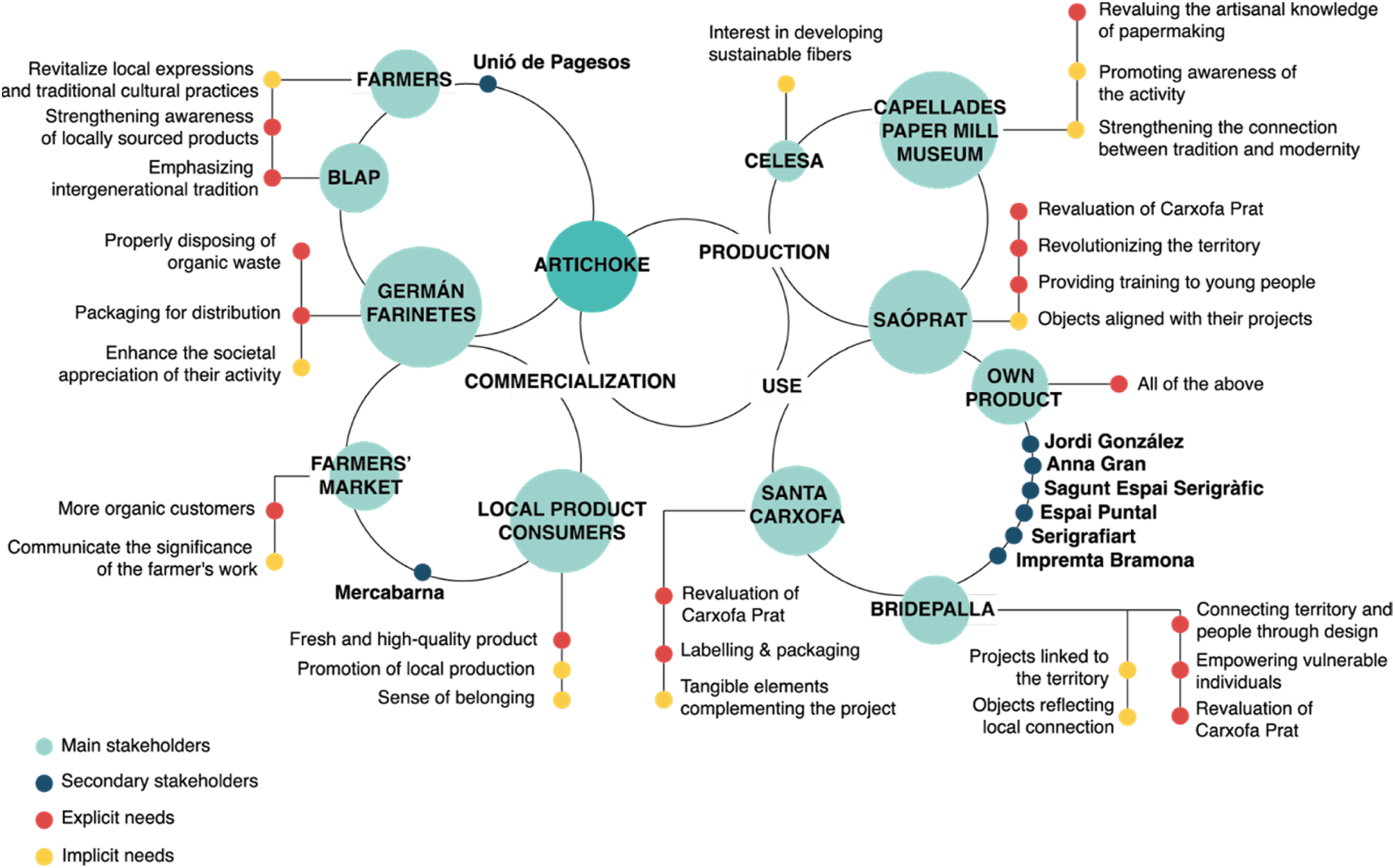
In summary, the student hypothesizes that it is possible to find viable applications for the organic waste of the artichoke, which would contribute to improving the management of agricultural resources and reducing the environmental impact in the territory. A material experiential part is carried out autonomously by creating several prototypes by interacting with the artichoke waste to achieve a result with maximum potential in the form of a flat sheet (Figure 4). Top, elaboration of several prototypes working with artichoke fibers. Bottom, elaboration of various prototypes in the form of paper sheets made from artichoke waste. Author: Galeazzi (2022).
Following that, several testing sets were developed with the involvement of local stakeholders, including farmers from BLAP, and the Capellades Paper Mill Museum (Barcelona), a public institution specializing in handmade paper production (Figure 5), to assess the feasibility of the proposal. Some images of the artichoke paper-making process. Top left, waste collection. Bottom left, paper sheet production. Right, air drying. Author: Galeazzi (2022).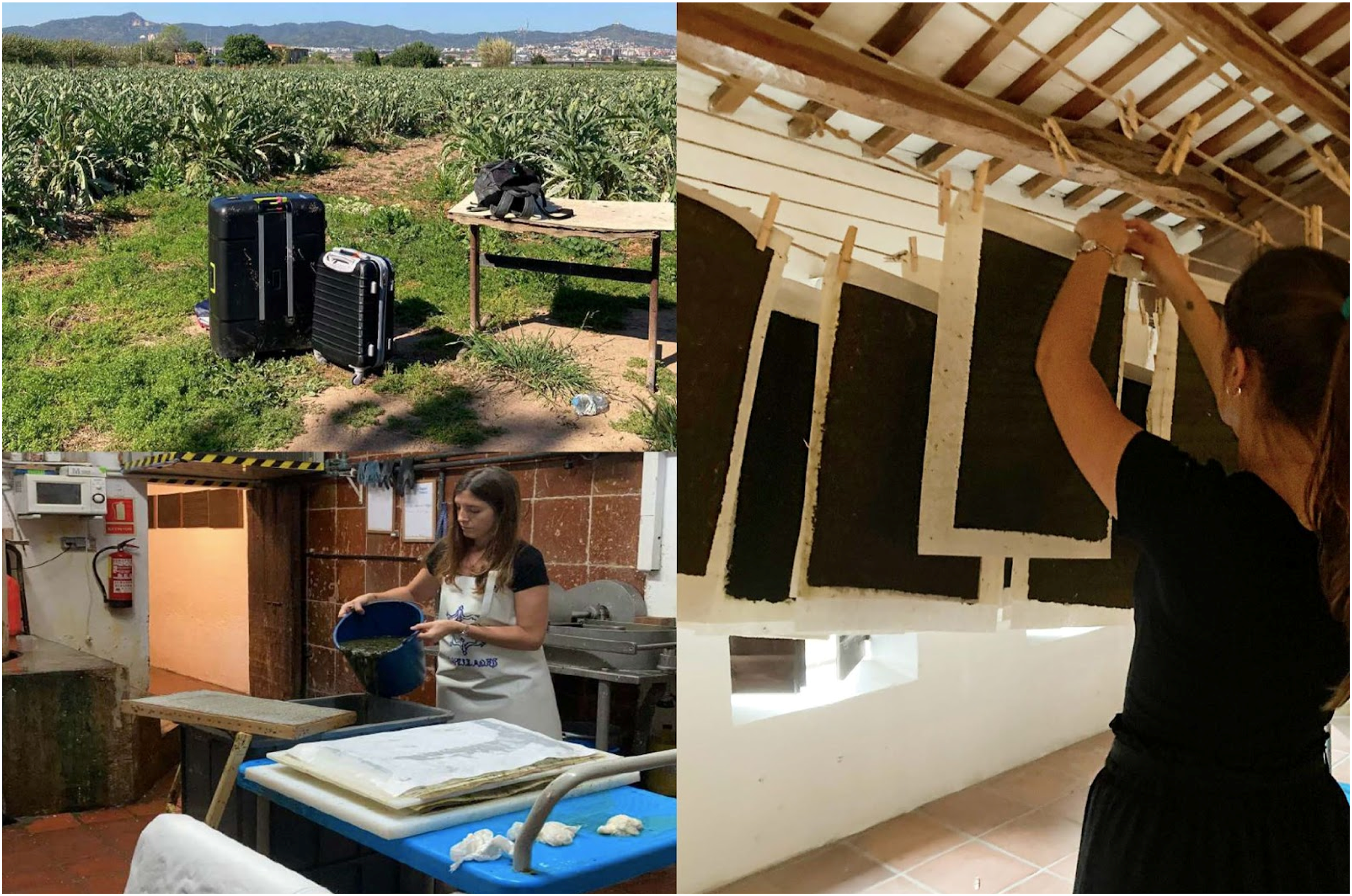
Finally, an optimal result is achieved, and a proposal for a semi-industrial-scale production circuit is developed, involving various local actors. These include the consortium of the BLAP, which would collect, shred, and dry the artichoke waste; Celesa, a biomass processing industry converting it into pulp; the paper mill in Capellades, which would produce the paper; and SaóPrat, a local association working with youth at risk of social exclusion, would handle the final transformation of the paper. Additionally, a life-cycle assessment is done in order to evaluate the environmental impact of the proposal. The student is also able to present various applications for artichoke paper, ranging from event posters to the production of promotional details (Figure 6). Different proposed applications for artichoke paper. Top left, notebook covers. Bottom left, flyers for the “Artichoke Festival of El Prat de Llobregat”. Right, poster representing the Baix Llobregat Agricultural Park. Author: Galeazzi (2022).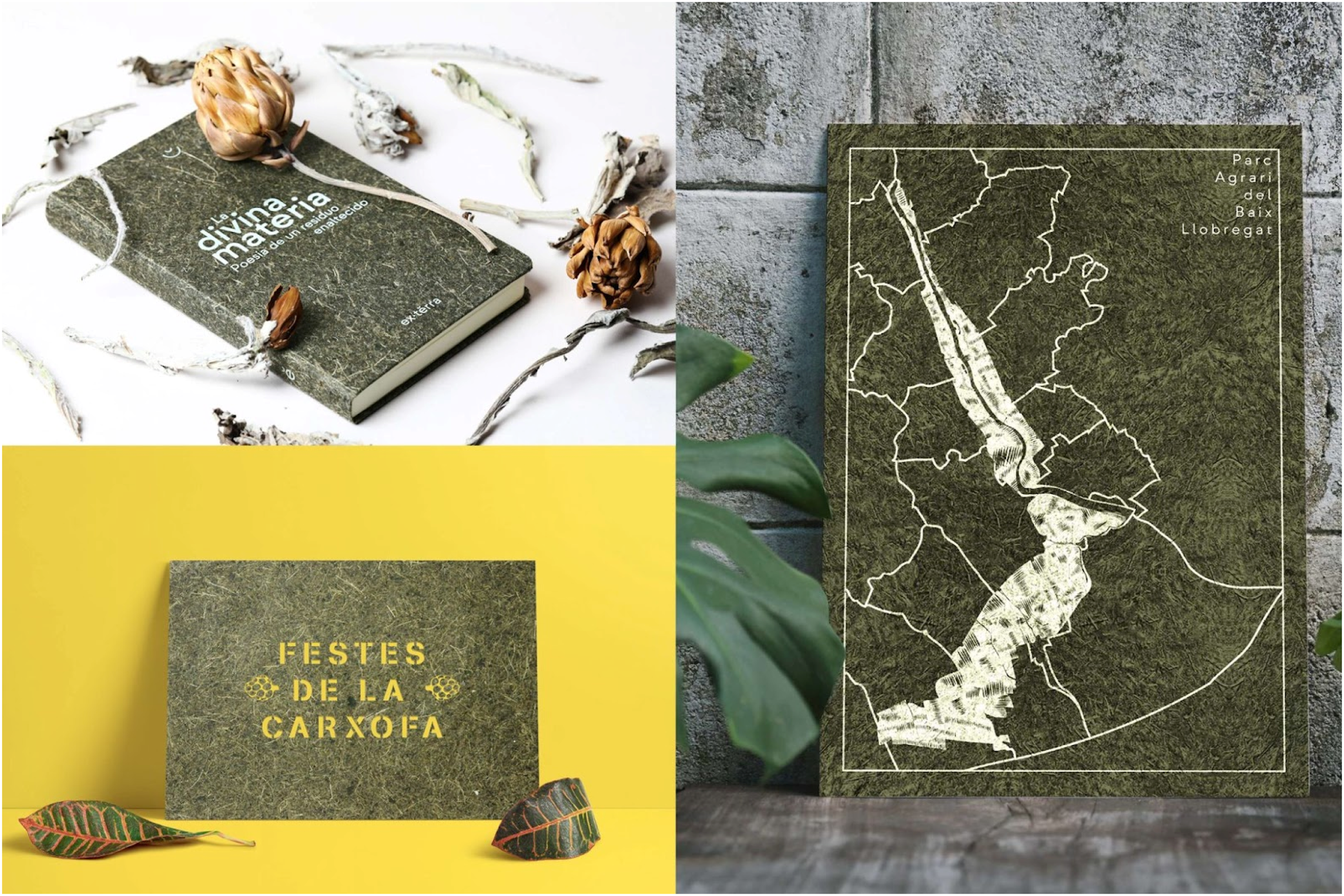
The project has attracted the interest of numerous media outlets, been highlighted by the university to attract new students, and has been honored by winning the 2022 Foodture Awards and receiving an honorable mention in the 2023 Ecodesign Awards organised by Generalitat of Catalonia. Furthermore, during the same academic year, other projects were supported by this one, creating collaborative environments (Austin, 2004). This is the case of project number 24 (Table 1), in which this paper was used for product packaging, and an ink made with boiling water of artichoke fibers, a byproduct of the testing and prototyping phase, was also used for graphic stamping (Figure 7). Left, artichoke paper applied into artichoke beer packaging. Right, use of artichoke ink. Authors: Galeazzi (2022), Vargas (2022).
Learning and project evaluation
The assessment of the learning proposal is conducted through the deliverables and the project presentation, where the achieved objectives and the contents worked on are evaluated. Across the courses where this pedagogical proposal was implemented, competency development was observed through the submitted deliverables and presentations, according to the stated evaluation criteria.
In general, the solutions are not meant to be implemented in a short time, but rather represent speculative design scenarios aimed at communicating the potential of the territorial resource system to local communities, thereby fostering their empowerment (Edwards and Pettersen, 2023). It is observed how design students, after a deep immersion in the territory and contact with locally specific resources, are able to develop proposals linked to it and learn about important sustainability issues. Furthermore, the close connection with a specific area has triggered the interest of local institutions for the issues addressed. Moreover, the visualization of some of the projects results in a tangible way has facilitated for the different local stakeholders the understanding of the design for local development dynamics, the approach used and the potentialities to involve design competencies in territorial valorization processes (Villari and Parente, 2010).
A survey has been conducted to assess the degree of perceived suitability of the educational practice in enhancing their skills as system designers. Survey responses (n = 11) were generally positive, with mean ratings ranging from 6.20 to 9.00 out of 10.00. Items related to engagement with local stakeholders and the applicability of knowledge to real contexts received the highest ratings, thus positively supporting the foundations of the pedagogical practice undertaken (Figure 8). The use of tools derived from sciences that study local ecological knowledge is crucial for students, as illustrated by these comments: ‘Engaging with local residents and their knowledge proved invaluable in the design process’ (S3) and ‘Identifying endogenous resources is essential for empowering a community and deepening our understanding of it’ (S6). Students highly value challenge-based design within nearby territories to become agents of change, as emphasized by this student: ‘Initially, I underestimated the value of working outside the classroom. However, through this experience, I realized the tangible impact we can have on society’ (S2). Additionally, ‘Although challenging, collaborating with locals who may initially be skeptical about design interventions can lead to mutual appreciation and positive outcomes’ (S8). Survey results on students’ perceptions of proposal suitability (n = 11). Font: own elaboration.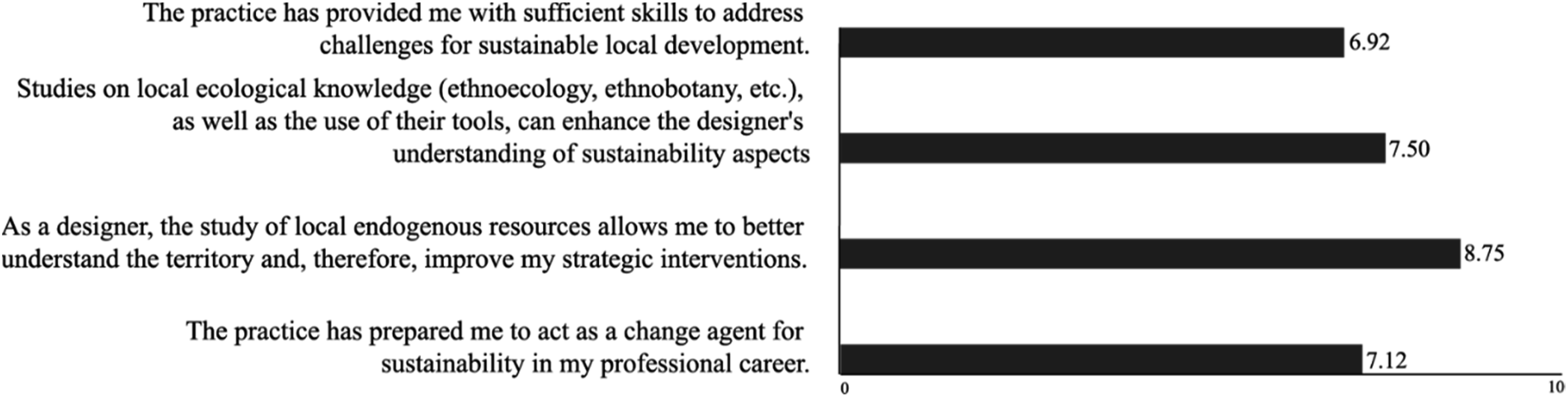
At this stage, engaging in real-world projects fostered creativity and encouraged research with a practical focus. Additionally, many students gained less tangible yet valuable competencies such as empathy towards social and environmental realities, exposure to unfamiliar environments, teamwork, and interaction with real stakeholders. ‘Farmers possess a wealth of knowledge about plants, landscape management, and local history that we must preserve’ (S3). Their increased sensitivity towards sustainability, particularly within a specific geographical context, is evidenced by the following comment from a student: ‘Exploring the Llobregat area opened my eyes to its beauty and significance, despite its proximity to Barcelona and our limited knowledge about it’ (S2).
Specifically, the case study illustrates how the proposed framework can support sustainability-oriented design processes in real contexts. The results of the project used as a case study suggest that the proposed approach can effectively contribute to the objectives outlined in this article.This project has extended beyond the confines of the classroom, evolving into a collaborative effort involving various local stakeholders to achieve its realization. Furthermore, it has provided the foundation for the student, alongside other colleagues, to initiate an entrepreneurial venture (https://www.depende.es) and secure employment in local companies dedicated to sustainable design. Thus, it suggests the development of sustainability-oriented skills that are valued in the productive sector. It becomes evident that systemic design helps generate solutions (Cáceres et al., 2021; Jones, 2020; Van de Bijl-Brouwer and Malcolm, 2020). Similarly, its implementation in real contexts during university education helps solidify concepts about sustainability, crucial for developing the skills required to work as a professional (Hesselbarth and Schaltegger, 2014; Mochizuki and Fadeeva, 2010).
As other authors affirm (Gutiérrez-García et al., 2002; Piera et al., 2009), there is a strong relationship between apparently disconnected disciplines such as ethnoecology and design that can benefit both. The sciences encompassing ethnoecology, such as ethnobotany, constitute a valuable educational tool of great interest in the field of environmental knowledge, as they offer enormous possibilities in both formal and non-formal education and connect curriculum content with students’ daily reality and cultural environment. Undoubtedly, the introduction of local ecological knowledge in design classrooms through active methodologies can facilitate the understanding of values focused on sustainability and achieve design competencies.
Moreover, studying the territory and its endogenous resources -encompassing natural, cultural, and social aspects-can foster innovative learning by encouraging a comprehensive interpretation of reality through integration and synthesis. This participatory experience empowers action, nurturing fundamental knowledge and skills, as other authors affirm (Antrop, 2006; Bovet et al., 2004). Considering the territory as an educational resource offers the opportunity to analyze nature and society in a coordinated manner, subsequently promoting the valorization of environmental and cultural heritage, thereby contributing to its preservation (Iranzo-García and De la Vega, 2018).
Conclusions
Active methodologies integrating the study of local context and ecological knowledge have become integral parts of design curricula in various higher education programs. This approach is essential for nurturing critical thinking, knowledge acquisition, and the development of reflective and critical attitudes necessary for addressing contemporary challenges. By extracting educational content from the local territory, new meanings and utilities are derived, revitalizing local ecological knowledge, as noted by previous authors (Benlloch et al., 2005). Through these experiences, students cultivate positive attitudes toward the preservation and valorization of local traditional knowledge. Additionally, local institutions and academic centers gain insights into the synergy between territory and its local ecological knowledge and design, while local stakeholders can leverage project outcomes to enhance local resources promptly.
These academic design projects exemplify how individuals engage with their local realities to identify and activate territorial capital, thus enriching collective heritage. They underscore the conversion of local ecological knowledge into tangible territorial value through design interventions.
Understanding nearby and everyday landscapes is paramount for fostering emotional connections between students and their immediate environment, heightening their awareness of the area, reshaping their behavior, and cultivating attitudes of respect toward their living environment.
Supplemental material
Supplemental material - Local ecological knowledge as a resource for design studies
Supplemental material for Local ecological knowledge as a resource for design studies by Jon Marín, Joan Vallès, Teresa Garnatje and Carlos Jiménez-Martínez in Arts and Humanities in Higher Education.
Footnotes
Acknowledgments
To all the students who participated in this didactic proposal, and to all those involved, to a greater or lesser extent, in making these practices successful.

Funding
The authors received no financial support for the research, authorship, and/or publication of this article.
Declaration of conflicting interests
The authors declared no potential conflicts of interest with respect to the research, authorship, and/or publication of this article.
Supplemental material
Supplemental material for this article is available online.
Author biographies
References
Supplementary Material
Please find the following supplemental material available below.
For Open Access articles published under a Creative Commons License, all supplemental material carries the same license as the article it is associated with.
For non-Open Access articles published, all supplemental material carries a non-exclusive license, and permission requests for re-use of supplemental material or any part of supplemental material shall be sent directly to the copyright owner as specified in the copyright notice associated with the article.
