






Abstract
Background:
Diabetes is a common co-morbidity for patients with heart failure. Diabetes as a co-morbidity means that inpatient care should focus on both conditions to maximize the treatment regimen. However, this pressing issue is not widely researched and so it is unclear whether the acute care management needs of these patients are being met.
Aims:
(1) To assess the differences in the number of hospital readmissions between patients with heart failure and patients with heart failure–diabetes; (2) to assess the use of integrated care approach for patients with heart failure–diabetes during the index heart failure-related admission; (3) to explore patient experiences of admissions.
Methods:
A mixed methods design was used: we identified heart failure-related admissions between 1 April 2011 and 31 March 2012 in two hospitals, then reviewed medical records and interviewed 14 patients.
Results:
Over a 12 month period patients with heart failure–diabetes (n=172) had more heart failure-related Accident and Emergency attendance episodes (incident rate ratio 1.24, p<0.01) and hospital readmissions (incident rate ratio 1.23, p=0.01) than patients with heart failure (n=370). We reviewed 72 medical records which met inclusion criteria (adults with heart failure–diabetes, ejection fraction <45%): during admission most of them were reviewed by heart failure specialists but less than one-third were reviewed by diabetes specialists. The interview respondents addressed the need for better integration and co-ordination of care.
Conclusions:
This is one of the first UK studies to assess the integration of inpatient care for those with heart failure and multi-morbidities. The findings suggest that maximal care management during admission should be explored as a way of reducing the frequent readmissions and improving patient outcomes.
Background
Diabetes mellitus and heart failure are major progressive health problems which have important economic implications on health services and great impact in the individual’s everyday life. The prevalence of heart failure is approximately 1–2% of the adult population in developed countries, rising to ≥10% among people >70 years of age.1–4 In the UK, heart failure represents the most common long term condition and costs the National Health Service (NHS) an estimated £625m per year, 5 affecting up to 2% of the population, with 63,000 new cases each year, 6,7 and is the most common reason for hospitalization in patients >65 years. 8
The International Diabetes Federation global estimates for 2011 suggest that 52 million Europeans aged 20–79 years have diabetes mellitus (any type), and that this will increase to over 64 million by 2030. 9 In the UK, diabetes accounts for about 10% of total NHS resource expenditure. 10 The prevalence of diabetes in the general adult population is 8.5%, 11 and in patients with heart failure is 30–47%. 12 The presence of diabetes in patients with heart failure is independently associated with poorer cardiac functional status and poorer outcomes, including greater morbidity and mortality, as well as increased risk of hospitalization.13,14
Optimization of diabetes management reduces long term cardiovascular complications and improves outcomes,15,16 but when patients with diabetes are admitted for other reasons there may be lost opportunities in managing diabetes and optimizing outcomes; whether this has occurred in patients with heart failure and diabetes remains unknown. Given the evaluation of care management for people with heart failure and diabetes is an important and under-studied area of investigation, this study was conducted to assess whether the provision of inpatient care was integrated to maximize the treatment regimen for both conditions and meet the needs of those with heart failure and diabetes during their heart failure-related admission, and to explore patients’ experiences of admissions.
Methods
Design
A mixed methods approach was employed to maximize the depth of understanding of the care management for this patient cohort, during their index admission between 1 April 2011 and 31 March 2012.
The quantitative part of this study comprised two stages: (1) a retrospective review of heart failure-related index admissions and readmissions and Accident and Emergency (A&E) attendances for all the patients with heart failure (including those with and without diabetes) to two general hospitals in the UK within a 12 month period; (2) an in-depth examination of medical records for understanding the care provision, with particular attention given to the management of both conditions during their index admission for those who met the inclusion criteria. All these data were collected from the hospital databases and medical record review.
Semi-structured interviews were conducted to understand service users’ experiences of inpatient care over a period of time. Patients with both heart failure and diabetes had face to face/telephone interviews.
Sample, setting and procedure
Stage 1: patients with documented diagnosis of heart failure by cardiologists admitted to the cardiology wards in two UK general hospitals for exacerbation of heart failure during the specified period were included in this project. The number of subsequent readmissions and A&E attendances within 12 months after the index admission were identified from reviewing their medical records, then were compared between patients with both heart failure and diabetes and those with heart failure but without diabetes, in order to establish the impact of co-morbidity of heart failure and diabetes on acute healthcare services.
Stage 2: the inclusion criteria for an in-depth examination of patient medical records were: 1) both conditions of diabetes and heart failure; 2) ≥18 years old; 3) with an ejection fraction of <45% at the index admission.
Patients’ experiences of their admissions were explored by semi-structured interviews. English speaking patients with both heart failure and diabetes who were inpatients at the time this study was undertaken or had had a recent admission were contacted for interview. Inpatients had face-to-face interviews in a quiet room during their hospital stay; those who had had a recent admission had telephone interviews. The interviews started with questions exploring what factors contributed to their last/current admission, followed by questions on their views on the inpatient care provision. Patient experiences of discharge process were also explored.
Ethics
This study was part of the UK Commissioning for Quality and Innovation scheme (CQUIN), which supports improvements in the quality of services and the creation of new, improved patterns of care. The CQUIN participating trust approved the study as a service improvement project. Therefore ethical approval was not needed, only governance and ethical oversight was provided by the trust and healthcare commissioners, 17 who also approved data collection from patient medical records and interviews to explore patients’ experiences of their admissions.
Data collection
Demographic and clinical variables
Demographic information including age, gender, employment status and ethnicity were collected, and clinical data including history of heart failure and diabetes, length of hospital stay, New York Heart Association (NYHA) class, body mass index (BMI), blood pressure, glycated haemoglobin (HbA1c), complications and treatments were also collected at index admission by medical record review. The data on numbers of attendances to A&E and readmissions for those with and without diabetes within 12 months after the index admission were collected from the hospital patient database.
Semi-structured interviews
Qualitative data were collected from semi-structured telephone or face-to-face interviews. Interviews were audio-taped with consent and transcribed verbatim.
Data analysis
Descriptive statistics were used to characterize the participants. Patients with heart failure in the entire cohort were grouped based on presence or absence of diabetes. Chi squared was used to compare the differences between the groups in A&E attendances and emergency readmissions in the 12 months after the index admission. An a priori alpha level of 0.05 indicated significance for all the analyses. Data analysis was performed using SPSS 20 version.
Framework analysis was used for an in depth analysis of the interview data. 18 NVivo version 11 was used to organize the data. The data were analysed by two researchers using a consensus approach.
Results
Over a 12 month period, 542 heart failure patients were admitted with a primary diagnosis of heart failure, of which 172 patients (32%) also had a secondary diagnosis of diabetes. Of these, 95 patients were excluded from the inpatient care assessment as they had an ejection fraction ≥ 45% and the medical records of five other patients were not accessible to the researchers for in depth examination; therefore 72 patients were included in the assessment of inpatient care and further analysis of clinical and demographic data. Please see Figure 1 for participant flow.
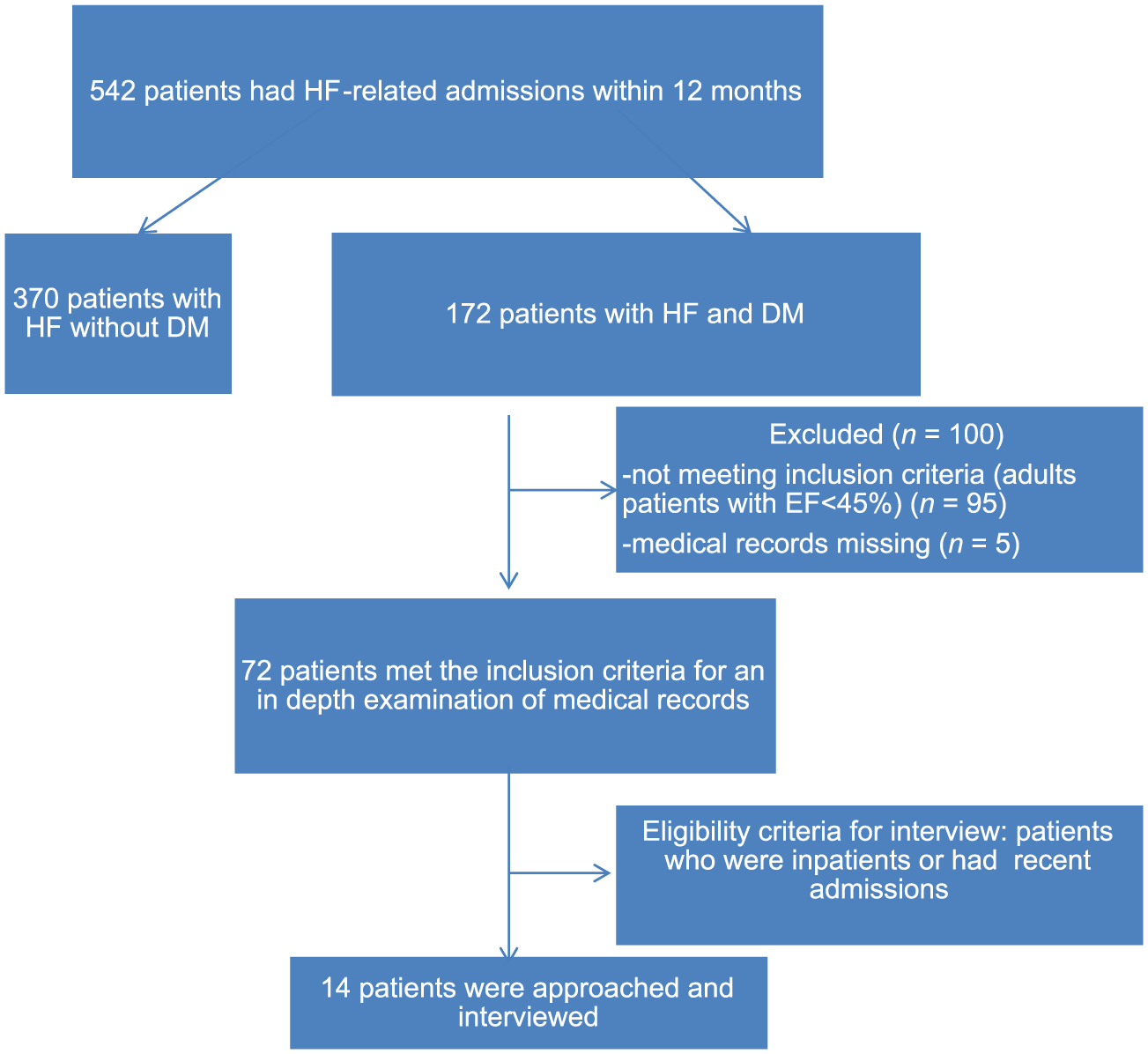
Study population flow diagram.
Medical record data
Demographic characteristics at index admission
Demographic data were extracted from the medical records for 72 patients, as shown on Table 1. This was an elderly, predominantly male patient group, living for the most part in their own homes, with less than half of them having support from a spouse or partner.
Demographic and clinical characteristics of the cohort with heart failure and diabetes (N=72, unless specified).

Includes one patient with schizophrenia.
NYHA: New York Heart Association; EF: ejection fraction; BMI: body mass index; BP: blood pressure; HbA1c: glycated haemoglobin; HF: heart failure; DM: diabetes mellitus; ICD: implantable cardioverter defibrillator; MI: myocardial infarction, CVA: cerebrovascular accident; COPD: chronic obstructive pulmonary disease; ACE: angiotensin-converting-enzyme
Clinical characteristics and length of stay
Clinical characteristics on index admission are presented in Table 1 and show this to be a complex patient group with multiple co-morbidities. The majority of patients had emergency admissions (94.4%), and significant impairment of left ventricular function (mean ejection fraction 25.9%). The aetiology of the majority of this patient cohort (82%) was ischaemic heart disease, with 43% with a history of myocardial infarction. Around half of the patients had an implantable cardioverter defibrillator device.
Evidence of the duration of heart failure and diabetes suggests diabetes was diagnosed much earlier than heart failure in the majority of individuals (87.8%), with a mean duration of diabetes of 9.3 (SD 7.2) years as opposed to 2.6 (SD 3.4) years for heart failure. The majority of cases (76%) of heart failure were classed as severe (NYHA classes III and IV) although data were available on limited numbers (n=25) only. HbA1c measurement was found from their hospital records for only 9.8% of the patients and indicated poor glycaemic control.
Nearly half of this cohort (49%) were obese and one-third of them were overweight (34.7%). The average BMI was 30.1, indicating that managing their weight had been a challenge for them. Most of them also had other conditions in addition to heart failure and diabetes: nearly two-thirds of the patients (63%) had hypertension and just under half (46%) also suffered from chronic kidney disease. A quarter of them experienced anxiety and/or depression with a similar number (23.9%) having documented evidence of cognitive impairment.
The average length of their hospital stay (LOS) during the index admission was 16.8 (SD 14.4) days but ranged from one to 76 days. Two-fifths of these individuals were treated with insulin for diabetes as opposed to oral medication or diet alone.
Recordable medical management received during their index admission
During the index admission just over half of the patients (55.6%) received an echocardiogram. The mean number of days from admission to receiving an echocardiogram was 4.3 (SD 4.1). The majority of patients (85%) were reviewed by the Heart Failure Specialist Nurse (HFSN) and the same number of patients had their heart failure medication adjusted, while fewer than one-third of them were reviewed by a Diabetes Specialist Nurse (DSN) (29%) and approximately two-fifths of the patients had their diabetes medication adjusted (41.7%). The majority of patients were followed up in heart failure clinics (69.4%), but only a few (2.8%) referrals to diabetes services post discharge were made by the hospital. A request to address glycaemic control was specifically sent to one general practitioner (GP) when a patient was seen by an arrhythmia specialist nurse in the outpatient department. The details of medical management received during their hospital stay are presented in Table 2.
Medical management received during their index admission (N=72, unless specified).
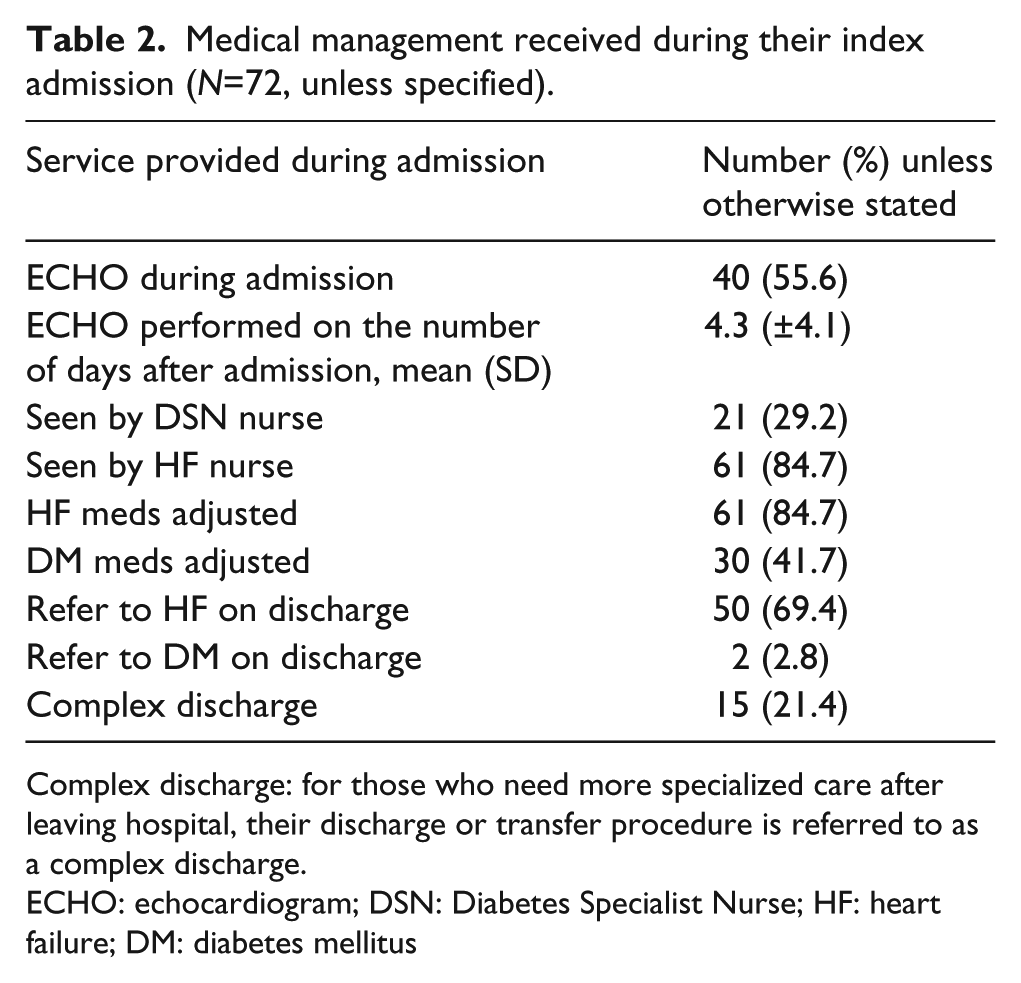
Complex discharge: for those who need more specialized care after leaving hospital, their discharge or transfer procedure is referred to as a complex discharge.
ECHO: echocardiogram; DSN: Diabetes Specialist Nurse; HF: heart failure; DM: diabetes mellitus
Surprisingly, although the majority of the patients were reviewed by the HFSN and received educational information, still 15.3% of individuals were smokers (60% of them were seen by a HFSN) and 10.9% reported a moderate to heavy alcohol intake (80% of them were seen by a HFSN).
Subsequent readmissions and A&E attendance
Total sample: the analysis of data from the hospital patient database (presented in Table 3) showed that within the 12 months after the index admission, patients with heart failure and diabetes were significantly more likely to attend A&E (incident rate ratio 1.23 (95% confidence interval (CI) 1.08; 2.15, p<0.01) and significantly more likely to be readmitted to hospital as an emergency (incident rate ratio 1.24 (95% CI: 1.16; 1.56, p=0.01) than those patients with heart failure but without diabetes.
Comparison of incidence of A&E attendances and readmissions with a primary diagnosis of heart failure within 12 months (total N=542: cohort 1: n = 172; cohort 2: n = 370).
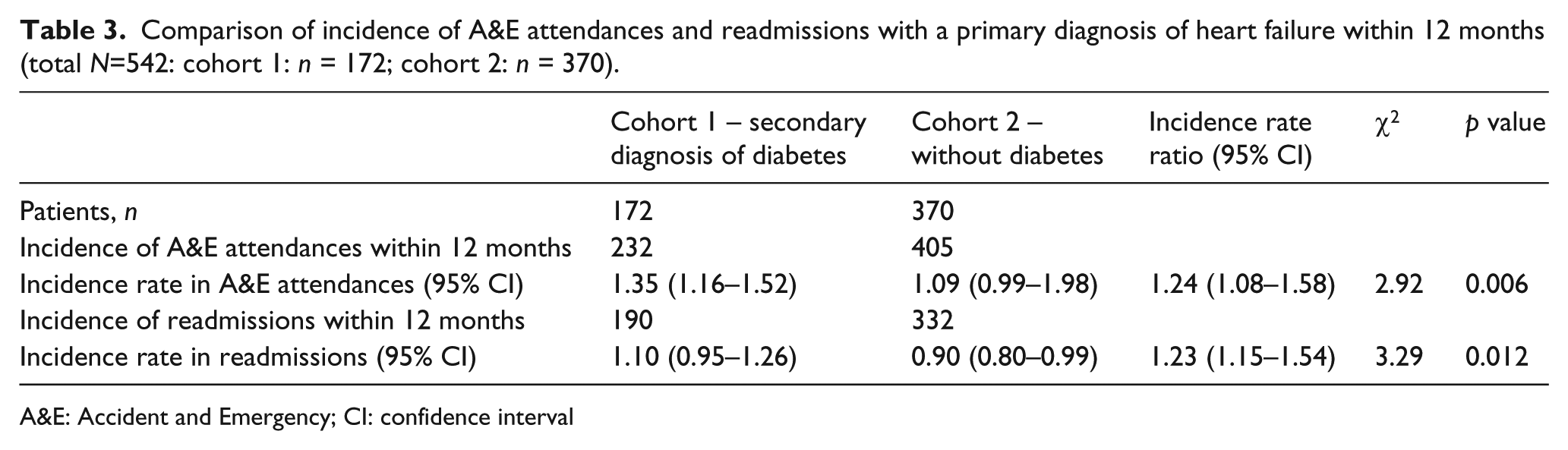
A&E: Accident and Emergency; CI: confidence interval
For the sample of 72 patients whose medical records were reviewed and assessed: Table 4 presents data for patients’ length of stay in the subsequent heart failure-related hospital readmissions within the 12 months period after each individual’s index admission. Notably 11 patients experienced their first readmission within only 28 days after the index admission, 38% experienced at least one readmission and the mean LOS was up to 38.6 (SD 37) days for the third readmission, although only 5.5% of patients had three subsequent readmissions.
Length of hospital stay for heart failure-related readmissions within 12 months after index admission (N=72, unless specified).
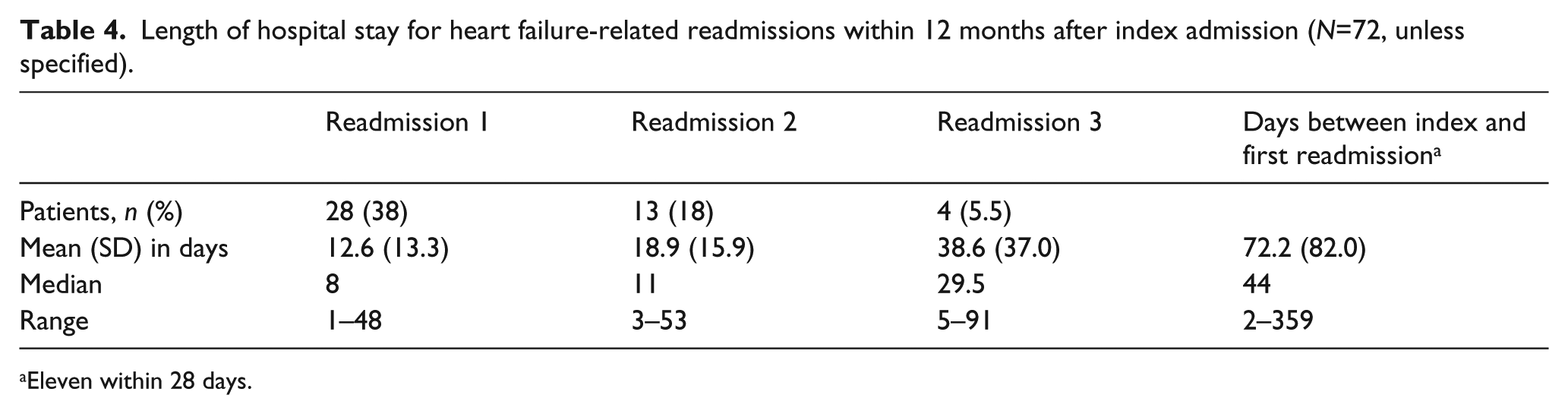
Eleven within 28 days.
Data generated from the interviews on patients’ experiences of their admissions
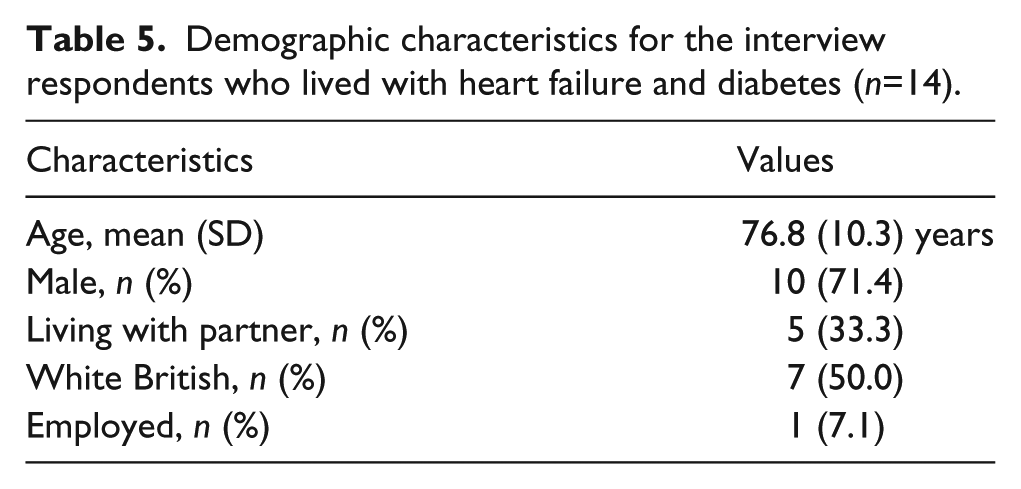
Patients with both heart failure and diabetes who had current or recent admissions were provided with participant information sheets and were contacted for interviews. The aim of the interviews was to gain an in-depth understanding of their experiences of last/current admissions. When data saturation was reached 20 patients in total had been approached and 14 patients (70%) were interviewed. Of these, nine were interviewed after discharge and five were inpatients. Twelve patients responded to interview questions themselves while two patients’ family members responded to interview questions on their behalf (with the presence of the patients) (0024 (daughter), 0025 (wife)). The demographics of the interview respondents were similar to those of the cohort (n=72), whose medical records were examined (Table 5). Seven patients reported that they had developed heart conditions prior to diabetes, and their estimated duration of diabetes ranged from four to 20 years. Three main themes relating to the admission are discussed below.
Demographic characteristics for the interview respondents who lived with heart failure and diabetes (n=14).
Preventability of the admission
When asked about the precipitating factors leading to admission, some patients thought that their hospitalization could have been prevented by increased monitoring and contacts with healthcare providers. Patients discussed the need for reassurance from more frequent monitoring and ‘tests’ and being checked and contacted more frequently. One patient reported generally there was an inadequacy of information and support from healthcare providers.
‘Attending the clinic more frequently, monitoring me more closely, you know [may have prevented admission]’ ‘Well, I’m not sure that the tests would have made any difference; it’s just that I had a lot of fluid there, but it might have helped my peace of mind’ ‘I would like to be checked every now and then, phone me in the morning, I would feel safe and good’ ‘Sometimes, I think they could give you more information and they could talk to you little bit more. Not to leave you hanging about for months and months on end…’
Views on hospital care during admission
Patients also suggested better integrated care from different care team members and more communications with healthcare providers for information they needed. Few of the respondents commented specifically on hospital care, but those that did expressed frustration at a lack of co-ordination leading to longer lengths of stay.
‘In my condition there are several branches involved heart, kidney, dialysis and they don’t coordinate with each other. There is communication problem…I was supposed to be seeing the dialysis consultant, that has been four days now but he hasn’t come…I have to come to his clinic…So they need to do their own jobs together, stop wasting time. The bed would be empty so more people can have the service.’ ‘I don’t think they are very communicative really, but what can you do?’
Views on transitional care process
Patients’ experiences of pre-discharge and post-discharge were also explored.
Written instructions/discharge letter
A need for written instructions and clear explanations in a language understandable to patients was mentioned by this patient cohort. Only half of patients reported receiving a discharge letter and instructions prior to discharge and found they were easy to understand and very helpful.
‘Well if they did…[give me any instructions] I haven’t got it in writing and I can’t remember’ ‘I love the fact it [written instructions] is explaining to me things that would go over my head in the hospital, why they have done certain procedures, I understand most of it’
Problems with prescriptions/follow-up medication supply
Problems with prescriptions were likely to occur when medications were changed. One patient’s medication had been altered in error by the pharmacist; a couple of them had some medications missing or a delayed delivery. None of the patients encountered any problems with follow-up medications; they mainly got their repeated prescriptions from their GP and delivered from pharmacists.
‘There was a problem with hospital medication supply for a couple of weeks, but that was because they were changing all my medication’ ‘Sometimes it’s a bit delayed. The one that they delivered last time here was a bit late and there were some tablets missing, so I had to get back to the doctor to understand why’
Home visits on discharge
Generally there was a lack of follow-up care after discharge. Half of the patients did not receive any visits from their GP, or district nurse or any other healthcare professionals. Three patients were visited by a district nurse and one was visited by a physiotherapist.
‘Ah, yes I did see a district nurse, erm once…A one-off, yeah’ ‘…when the physios came in and made sure I could use the stairs all right and see if I needed a walking aid and a stick’
Discussion
We found that patients with both heart failure and diabetes were significantly more likely to attend A&E and to be readmitted to hospital as an emergency due to the exacerbation of heart failure than those patients with heart failure but without diabetes, which is consistent with findings from previous studies.11,12 Despite consistent evidence that optimization of diabetes management reduces long term cardiovascular complications and improves outcomes,15,16 nonetheless we found that diabetes management (such as diabetes medication adjustment, review by the DSNs) during admission was not prioritized, that HbA1c was infrequently measured as a method of assessing glycaemic control, and referring to diabetes services at discharge was rare. Thus the opportunities for most patients to optimize their diabetes treatment were missed during their heart failure admission. However, it is important to acknowledge this within the context of this being a patient group with multiple co-morbidities, whose readmissions may not necessarily be attributable to either heart failure or diabetes. In one recent study of heart failure readmission rates in an American population only 6.5% of readmissions within 30 days were due to heart failure, with most others linked to a variety of co-morbidities. 19 Similar findings were noted in a younger heart failure population. 20 The 2016 European Society of Cardiology Guidelines for the diagnosis and treatment of heart failure highlight that co-morbidities are of great importance in heart failure and stress that management of co-morbidities is a key component of the holistic care of patients with heart failure. 21 Yet developing and implementing a true multi-disciplinary approach which takes on board this holistic aspect may be a particular challenge for healthcare services, given the complexity of heart failure individuals who are characterized by significant and enduring multi-comorbidity. A more realistic approach therefore may be to focus on one common co-morbidity such as diabetes, whose adverse effect on cardiac outcomes is known. 22
The absence of a multi-disciplinary approach was apparent when we explored patient experiences of their admissions to hospital. Some interview respondents expressed their need for reassurance by more frequent contact/checks and close monitoring which may have prevented their admissions. This may be an indication of a lack of confidence in self-management of their conditions leading to greater uncertainty. This also indicates the challenges of living with a combination of heart failure and diabetes and other co-morbidities. Some expressed a need for ongoing support and close follow-up to help them ‘feel safe and good’ and provide ‘peace in mind’, which may also improve outcomes. 23 Poor care co-ordination among the specialties was also identified as a contributing factor to frustrations and extended LOS. Concerns were also raised by some patients who did not receive a discharge letter or any written instructions; given their older ages and reported memory dysfunction, written instructions would allow them to review information when needed. There is evidence to suggest that high-quality discharge information and patients’ participation in the discharge process can reduce hospital readmission rates, 24 therefore focusing on the quality of this transitional care should be one of the important areas to optimize the inpatient care process. A home visit after discharge occurred among only half of the interview respondents. Evidence exists for the efficacy of home visits as a means of preventing re-hospitalization. 25 Multidisciplinary management programmes with condition-specific aspects can improve outcomes through structured follow-up, patient education with information understandable to them, optimization of medical treatment, psychosocial support and improved access to care.21,26 Such strategies may reduce heart failure hospitalization and mortality.25,27 Therefore it is important for nurses who are involved in caring for people with both heart failure and diabetes to provide them with sufficient education and support addressing both conditions, as well as liaising with other healthcare team members during their admission.
Despite the significance of this project, there are several limitations. First, this project only examined the demographic and clinical characteristics of the patients and therapies provided during their admissions from patients’ medical records. Some unrecorded data could have been missed. Second, as limited time and resources did not allow an in-depth examination of the medical records of the heart failure only group, potential confounding factors such as severity of heart failure class, or length of time since heart failure diagnosis, which might explain the differences between the heart failure only and heart failure–diabetes groups, can only be theorized. Third, the small sample size in the medical records examination process combined with some missing data could limit its generalizability. Fourth, as this is a retrospective study of data from 2011 to 2012, it is possible that findings do not necessarily reflect current practice.
Conclusions
This project revealed significant differences in the use of acute healthcare services between patients with both heart failure and diabetes and those with heart failure but without diabetes. The in-depth examination of inpatient care processes and the exploration of patients’ views on their admissions suggest diabetes management should be considered as important as heart failure management during their admissions. Opportunities to optimize their treatment regimen for all conditions should be maximized in addition to focusing on the presenting condition. In future practice, healthcare professionals from all the relevant teams need to take a collaborative and integrative approach for patients with both heart failure and diabetes. Future prospective studies with a large sample size are needed to design integrated interventions to support this patient cohort with involvement of the relevant multidisciplinary team, and to examine health outcomes between groups when diabetes management is optimized.
Footnotes
Diabetes management needs to be part of the treatment plan during heart failure admission; The multidisciplinary team is needed to provide ongoing support and follow-up monitoring at post-discharge; Nurses who are involved in caring for people with both heart failure and diabetes should provide integrated education which addresses both conditions; Optimization of diabetes management for heart failure patients may reduce readmissions and Accident and Emergency attendance.
Declaration of conflicting interests
The authors declare that there is no conflict of interest.
Funding
This work was supported by the CQUIN participating trust.