






Abstract
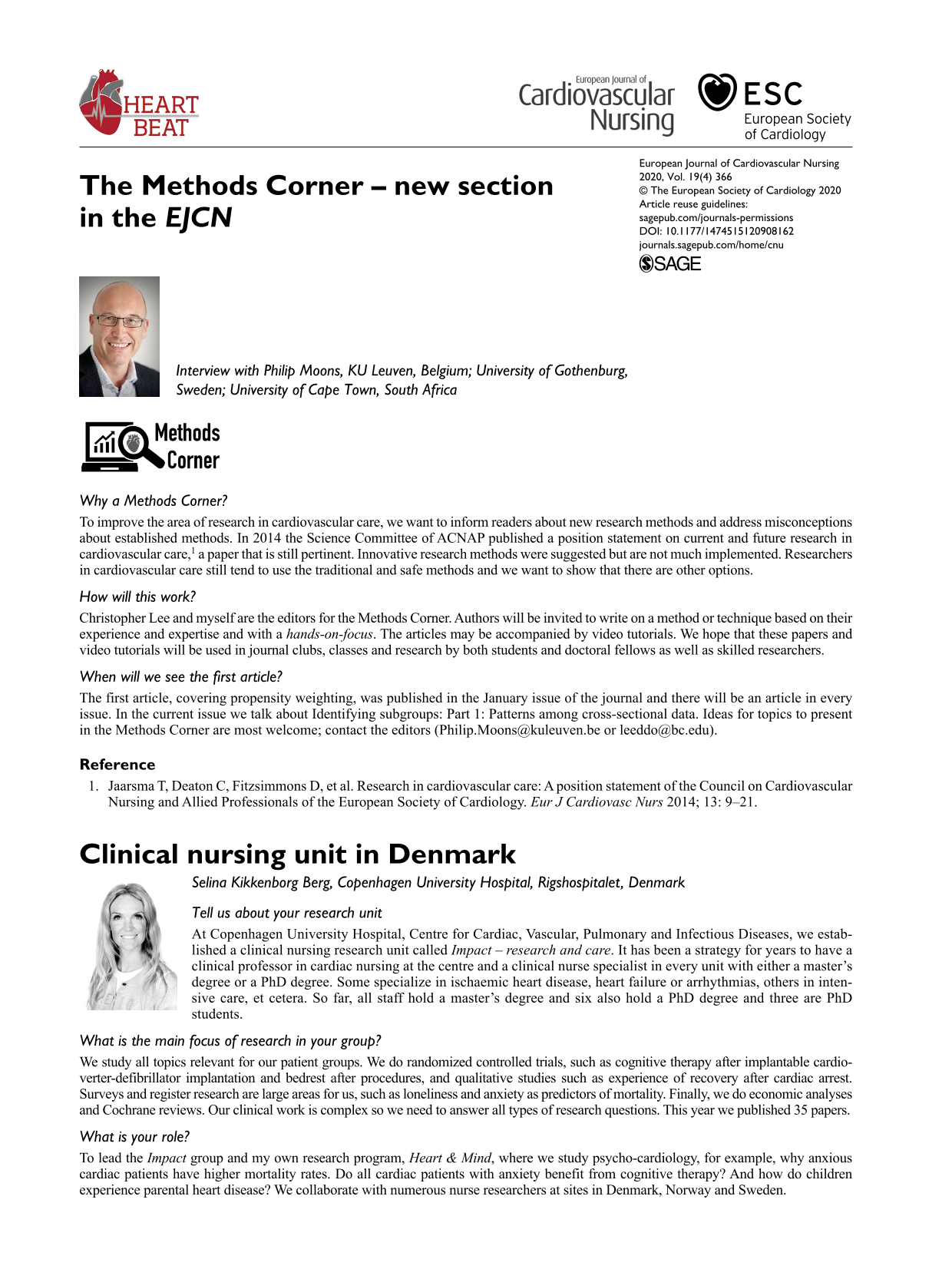
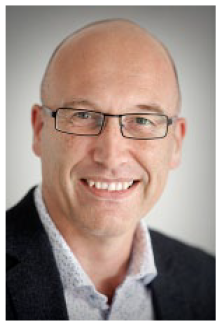
Interview with Philip Moons, KU Leuven, Belgium; University of Gothenburg, Sweden; University of Cape Town, South Africa

Why a Methods Corner?
To improve the area of research in cardiovascular care, we want to inform readers about new research methods and address misconceptions about established methods. In 2014 the Science Committee of ACNAP published a position statement on current and future research in cardiovascular care,1 a paper that is still pertinent. Innovative research methods were suggested but are not much implemented. Researchers in cardiovascular care still tend to use the traditional and safe methods and we want to show that there are other options.
How will this work?
Christopher Lee and myself are the editors for the Methods Corner. Authors will be invited to write on a method or technique based on their experience and expertise and with a hands-on-focus. The articles may be accompanied by video tutorials. We hope that these papers and video tutorials will be used in journal clubs, classes and research by both students and doctoral fellows as well as skilled researchers.
When will we see the first article?
The first article, covering propensity weighting, was published in the January issue of the journal and there will be an article in every issue. In the current issue we talk about Identifying subgroups: Part 1: Patterns among cross-sectional data. Ideas for topics to present in the Methods Corner are most welcome; contact the editors (
1. Jaarsma T, Deaton C, Fitzsimmons D, et al. Research in cardiovascular care: A position statement of the Council on Cardiovascular Nursing and Allied Professionals of the European Society of Cardiology. Eur J Cardiovasc Nurs 2014; 13: 9–21.
Clinical nursing unit in Denmark
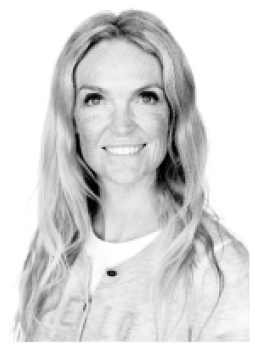
Selina Kikkenborg Berg, Copenhagen University Hospital, Rigshospitalet, Denmark
Tell us about your research unit
At Copenhagen University Hospital, Centre for Cardiac, Vascular, Pulmonary and Infectious Diseases, we established a clinical nursing research unit called Impact – research and care. It has been a strategy for years to have a clinical professor in cardiac nursing at the centre and a clinical nurse specialist in every unit with either a master’s degree or a PhD degree. Some specialize in ischaemic heart disease, heart failure or arrhythmias, others in intensive care, et cetera. So far, all staff hold a master’s degree and six also hold a PhD degree and three are PhD students.
What is the main focus of research in your group?
We study all topics relevant for our patient groups. We do randomized controlled trials, such as cognitive therapy after implantable cardioverter-defibrillator implantation and bedrest after procedures, and qualitative studies such as experience of recovery after cardiac arrest. Surveys and register research are large areas for us, such as loneliness and anxiety as predictors of mortality. Finally, we do economic analyses and Cochrane reviews. Our clinical work is complex so we need to answer all types of research questions. This year we published 35 papers.
What is your role?
To lead the Impact group and my own research program, Heart & Mind, where we study psycho-cardiology, for example, why anxious cardiac patients have higher mortality rates. Do all cardiac patients with anxiety benefit from cognitive therapy? And how do children experience parental heart disease? We collaborate with numerous nurse researchers at sites in Denmark, Norway and Sweden.