







Abstract
This study examines the well-being and support needs of migrant students in Polish schools from the perspective of teachers. The analysis focuses on three domains of student well-being: emotional well-being, social integration, and educational participation. Data were collected through an online survey of N = 712 teachers in public schools in three major Polish cities with the highest migrant populations. The majority of respondents were female (82.4%). The survey explored teachers’ perceptions of students’ needs and support measures. Findings indicate that migrant students’ emotional needs – particularly the need to feel safe, accepted, and belong – are perceived as fundamental to learning and integration. However, existing support measures only partially address these needs. Teachers identified gaps in culturally responsive support, including limited access to intercultural assistants, insufficient opportunities for instruction in students’ first languages, and challenges related to Polish language development. Results also suggest that school support systems prioritize remedial or deficit-oriented interventions rather than strength-based approaches recognizing students’ cultural and linguistic resources. Overall, the study reveals a mismatch between the formal availability of support services and the forms of assistance actually accessed by migrant students, highlighting the need for more targeted, culturally responsive, and integrated support strategies in Polish schools.
Keywords
Introduction
Contemporary discourse increasingly emphasizes the concept of permacrisis to characterize the ongoing condition of global instability. As Fabbrini et al. (2023) observe, emerging challenges and shifting expectations are no longer isolated, temporary occurrences but enduring and interwoven phenomena that profoundly challenge fundamental human values and beliefs across multiple domains. Fabbrini et al. (2023) argue that present-day societies are increasingly shaped by interlinked challenges – political, economic, environmental, and humanitarian – that constitute a new normal of enduring instability. Similarly, Homer-Dixon et al. (2021) conceptualize this configuration as a global polycrisis, wherein overlapping crises reinforce one another in unpredictable ways, placing unprecedented stress on democratic institutions, public trust, and social cohesion.
Education systems are deeply embedded in these transformations. The influx of migrant children into European schools, particularly since 2015 (European Commission/EACEA/Eurydice, 2019; OECD, 2015) and further intensified by Russia’s full-scale invasion of Ukraine in 2022 (European Commission/EACEA/Eurydice, 2022), has challenged national education systems to ensure inclusive, equitable, and high-quality learning environments (Pantić et al., 2025). The shifting demographics of student populations (OECD, 2015) have revealed structural tensions in policy, institutional preparedness, and pedagogical practice (European Commission: Directorate-General for Education, Youth, Sport and Culture, 2024; European Migration Network (EMN), 2025). At the same time, they have reaffirmed the centrality of schools – not only as sites of instruction but also as crucial institutions of care, integration, and psychosocial support (European Commission, 2020; European Migration Network (EMN), 2025; Koehler and Schneider, 2019).
Within this broader context, student well-being has become a central concern in education policy and research, and is increasingly conceptualized not as a secondary outcome of schooling, but as a prerequisite for educational participation and achievement (Aiello et al., 2025; EEA, 2024; EMN, 2025; Makarova and Kassis, 2022; OECD, 2023, 2025). This perspective is particularly relevant for students with migration backgrounds, as migration constitutes a multidimensional life event that may shape children’s and adolescents’ well-being through experiences occurring prior to departure, during displacement, and after arrival in the host country (World Health Organization, 2018). Migration may involve cumulative stressors such as insecurity, loss of social networks, disrupted schooling, and prolonged uncertainty, and may also entail exposure to potentially traumatic events associated with conflict, forced displacement, or exploitation (Hazer and Gredebäck, 2023). These experiences may affect psychosocial functioning and developmental outcomes, although evidence also highlights substantial heterogeneity and resilience among migrant children.
In school settings, such challenges may manifest through language barriers, interrupted educational trajectories, social exclusion, cultural dislocation, and in some cases exposure to forced displacement or trauma. At the same time, research emphasizes that migration does not inevitably lead to adverse outcomes, and migrant students’ well-being may be strengthened through inclusive social environments, accessible public services, and educational systems capable of responding to diverse needs and experiences (Smith et al., 2021). Consequently, schools are increasingly expected not only to ensure access to education but also to find migrant students’ well-being support needs and provide proper forms of support within everyday educational practice.
Although Poland has historically been a country of emigration, recent decades have witnessed a marked reversal. Economic migration from Eastern Europe and Asia, followed by a sharp escalation in forced migration due to geopolitical instability, have transformed Polish classrooms with unprecedented speed. Between 2020 and 2024, the number of migrant-background students in primary and secondary education increased sevenfold, reaching 5.5% of the total school population (SIO, 2024; NIK, 2023). The majority are Ukrainian students – many of whom arrived after 2022 under refugee or temporary protection status – but other groups include children from Belarus, Chechnya, Syria, and Vietnam (GUS, 2024). This rapid diversification has confronted Polish schools, long operating within a relatively monocultural paradigm, with new and complex challenges.
In the initial response phase, institutional efforts focused primarily on crisis intervention and ensuring access to schooling. Gradually, more formalized measures were introduced under the general Education Law, including the creation of preparatory classes, the employment of Ukrainian-speaking staff, and the deployment of intercultural assistants (Madalińska-Michalak, 2024). While these interventions played a significant role in supporting school access, they did not always translate into sustained and systemic support for migrant students’ well-being, particularly for non-Ukrainian students and those with complex psychosocial needs (Pacek, 2022; Walczak and Wielecki, 2024; Dąbrowa, 2025). Moreover, the legal and institutional framework introduced asymmetries between groups. Ukrainian children, for example, were allowed to fulfill compulsory schooling obligations through remote learning in the Ukrainian education system, either independently or in parallel with Polish schooling. Although this provision helped reduce pressure on local schools during the first waves of displacement, it also created challenges in monitoring educational progress and may have further fragmented opportunities for school-based social integration. At the same time, children from other migrant groups were required to follow integration pathways without comparable accommodations.
Importantly, Polish education policy does not include a dedicated strategy aimed at supporting the mental health or broader well-being of migrant students. Psychological and pedagogical support services operate under general provisions that often fail to consider migration-related conditions such as language barriers, cultural dislocation, or trauma. This reveals a key tension: while access to education is legally guaranteed, the conditions under which migrant students learn – and whether they experience schools as safe, inclusive, and supportive environments – remain unevenly addressed. These circumstances raise critical questions about the specific well-being support needs of migrant students and about the forms of support that are available and implemented in Polish schools in everyday practice.
Despite the growing relevance of these challenges, research on migrant student well-being in Poland remains limited. Although the recent influx of Ukrainian refugees has intensified scholarly attention, existing studies often emphasize vulnerability and risk factors rather than the broader range of school-based support mechanisms and protective practices that may foster well-being (Centrone et al., 2023; Jurek et al., 2022; Tyler-Rubinstein et al., 2022). Moreover, relatively little empirical evidence is available regarding what forms of support schools provide in practice, how these forms are implemented, and whether they correspond to students’ emotional, social, and educational needs. In this context, teachers constitute particularly important actors, as they are directly involved in recognizing students’ needs and translating institutional provisions into everyday pedagogical and relational practices (Pacek, 2022; Walczak and Wielecki, 2024). Examining teachers’ perspectives therefore offers a valuable entry point into understanding how migrant students’ well-being is interpreted and supported at the school level.
Situated within this complex and evolving educational landscape, this article investigates teachers’ perspectives on the well-being of migrant students in Polish schools, with particular attention to the availability and everyday school practice. The analysis is guided by three interrelated premises. First, migrant students’ well-being is understood as a multidimensional and context-dependent construct shaped by everyday school experiences and institutional conditions. Second, schools may function as protective environments when proper support structures and responsive pedagogical practices are in place. Third, teachers play a leading role in identifying students’ needs and implementing support mechanisms in daily practice.
Against this background, the study employs an exploratory design. The aim of the study is to provide an initial diagnostic account of migrant students’ well-being support needs in Polish schools, as perceived by teachers, and to examine the forms of support implemented at the school level, including emotional, social, and educational dimensions. The study was conducted as part of the research project “Support for the Well-being of Migrant Students in Polish Schools” (see Madalińska-Michalak and Dabrowa, 2025) and conducted in Warsaw, Kraków, and Wrocław – Poland’s largest urban centers, each marked by significant concentrations of students with migration backgrounds. By examining the extent to which school-level responses correspond to the emotional, social, and educational needs of migrant students, the study identifies key areas in need of systemic improvement and offers empirically grounded insights for the development of more inclusive and responsive support strategies.
For the purposes of this study, the term “migrant students” refers to children and adolescents who have experienced migration as part of their life trajectory, including both forced and voluntary migration, and who currently attend Polish primary or secondary schools (European Commission/EACEA/Eurydice, 2019: 11). In line with the study design, which relies on teachers’ perspectives as the primary source of data, migrant status was operationalized through teachers’ identification of students who entered the Polish education system following migration and were perceived as requiring specific linguistic, social, or educational support related to this experience.
By foregrounding the perspectives of teachers – key institutional actors positioned at the intersection of policy and practice – the article examines how schools respond to the complex needs of migrant students, particularly the extent to which educational institutions are equipped to support their wellbeing. It offers empirically grounded insights into how schools navigate the tension between formal commitments to inclusion and the everyday realities of supporting increasingly diverse student populations. In doing so, the article aims to advance understanding of how educational institutions can more effectively respond to the complex and intersecting needs of migrant students. It argues for the development of comprehensive and context-sensitive support structures that enable these students to thrive emotionally, socially, and academically within their new learning environments – while also attending to the institutional conditions that enable or constrain such efforts.
Conceptual foundations: Student well-being, schools, and teachers
Student well-being has become one of the central concept in contemporary educational research and policy; however, its meaning remains theoretically plural and contested. Early conceptualizations tended to associate objective measures of welfare, need satisfaction and measurable indicators of quality of life (Gasper, 2002, 2005), but these approaches have been criticized for overlooking its situated, relational, and culturally mediated dimensions (Casas et al., 2013; Sayler et al., 2015; Weisner, 2014). Contemporary definitions instead emphasize its multidimensional character, encompassing emotional states, social connections, life satisfaction, and resilience in the face of adversity (Michaelson et al., 2012; Newland et al., 2019).
Empirical research supports this multidimensional perspective by demonstrating that well-being is associated with a range of interrelated protective factors, including spiritual resources that may buffer stress and burnout (Chirico et al., 2023), personal strengths such as gratitude and self-esteem (Yildirim et al., 2019), educational attainment (Lee and Yang, 2022), and social support networks that foster mental well-being among young people (Ekinci, 2024). At the same time, well-being is increasingly recognized as context-sensitive rather than culturally neutral, shaped by social norms, relational environments, and institutional conditions (Casas et al., 2013; Weisner, 2014). This implies that well-being is not solely an individual experience but also reflects broader psychosocial and organizational contexts (Momin and Rolla, 2024a, 2024b, 2024c).
In educational settings, student well-being is therefore best understood as co-produced within relational and institutional environments. Schools represent a key developmental context in which well-being is shaped through peer relations, teacher–student interactions, classroom climate, institutional culture, and everyday routines. The whole-school approach offers a particularly useful framework for capturing these dynamics, as it conceptualizes well-being as emerging from the collective functioning of the educational ecosystem, including school leadership, teacher practices, student participation, and collaboration with families and communities (Booth and Ainscow, 2011; Zhou et al., 2025). From this perspective, student well-being is not a peripheral educational outcome but a necessary condition for equitable learning, meaningful participation, and developmental resilience.
Complementing this systemic understanding, widely used multidimensional models – such as PERMA (Seligman, 2011), PROSPER (Noble and McGrath, 2015), and the “Five Ways to Wellbeing” framework – provide conceptual tools for finding key domains through which well-being is experienced and supported. These frameworks converge in emphasizing emotional balance, supportive relationships, engagement, and a sense of meaning and purpose, which are linked to educational participation and school belonging. Empirical studies confirm that school belonging, perceived safety, and supportive peer and teacher relationships are strongly associated with young people’s well-being and educational outcomes (Cosma et al., 2023; Fernández et al., 2024; OECD, 2018). Conversely, exposure to bullying, racism, xenophobia, and other forms of discrimination undermines well-being and increases the risk of psychological distress, particularly among students from structurally marginalized groups, including migrants (Council of the European Union, 2022).
At the same time, schools should not be viewed as neutral environments. They are embedded in broader socio-economic and legal systems that can produce vulnerability and exclusion. In the case of migrant students, well-being is shaped not only by interpersonal relations or school ethos, but also by structural conditions such as access to public services, the precarity of legal status, and wider state-level immigration regimes (Ticktin, 2011). Understanding well-being as part of an “infrastructure of care” helps to reframe it as a socially and institutionally mediated condition rather than merely an individual feeling. This perspective is particularly important in view of evidence indicating a decline in adolescent well-being across Europe, including decreasing life satisfaction, and increasing health-related difficulties. This perspective is particularly important given recent European studies documenting a concerning downward trend in adolescent well-being, characterized by declining life satisfaction, reduced self-reported excellent health, and rising health-related difficulties across age and gender groups – with the most pronounced deterioration observed among girls aged 13–15 (Cosma et al., 2023).
The present study draws on the student well-being model proposed by Soutter et al. (2014), which conceptualizes well-being as embedded in the educational environment and operationalizable through observable school practices. Consistent with this framework, well-being is defined here not as a subjective self-evaluation but as a contextually manifested pattern of behaviors, interactions, and forms of participation observable within everyday school functioning. This perspective enables the analysis of institutional responses and support practices through relational and engagement-based indicators, rather than relying exclusively on self-report measures. It also allows for the development of context-sensitive operational indicators aligned with school-level practice.
Student well-being was operationalized across three analytically distinct yet interrelated dimensions:
Emotional dimension – observable indicators of perceived safety, psychological comfort, satisfaction with classroom participation, and openness in teacher–student interactions.
Social dimension – quality of peer relationships, participation in school life, and engagement in student initiatives.
Educational dimension – learning engagement, participation in curricular and extracurricular activities, and use of available educational support resources.
This conceptual orientation is particularly relevant for students with migrant backgrounds, whose well-being is shaped not only by individual adaptation processes but also by structural and relational conditions within the host society. It has the advantage also of allowing the research to represent the collective institutional capacity of a school to support the emotional, social, and educational dimensions of a student’s life, as activated and observed through the professional perceptions and in the daily practices of the classroom teacher.
Research highlights that migrant children and youth often navigate complex identity negotiations and shifting forms of belonging, which may intersect with experiences of marginalization and exclusion (Bruhn and Gonzales, 2023; Leurs, 2015). Moreover, young migrants may be silenced through adult-centric narratives that limit recognition of their lived experiences and agency (Bönisch‑Brednich et al., 2023). These insights reinforce the need to conceptualize migrant students’ well-being as a relational and institutional phenomenon shaped by school climate, inclusion practices, and access to support structures.
The conceptual strands underpin the study’s analytical lens, which treats migrant students’ well-being as multidimensional, views schools as protective environments, and highlights teachers’ roles in supporting students.
School-based support and migrant students’ well-being: Gaps, challenges, and practices
Cross-national research reveals considerable variation in how education systems support – or fail to support – the well-being of migrant students. Studies consistently show that migrant-background students often underperform academically relative to their native peers, and that this underachievement is associated with reduced levels of well-being and school belonging (OECD, 2018). Yet, outcomes vary across contexts. For example, Arabic-speaking students achieve higher academic success in the Netherlands than in Finland but report a stronger sense of belonging in the Finnish system (OECD, 2018). Additionally, results from Belgium, Ireland, and Portugal highlight a pervasive sense of alienation among immigrant students within these education systems (OECD, 2018). Overall, migrant students tend to underperform academically relative to their non-migrant peers, a trend strongly associated with the complex challenges that affect their well-being (OECD, 2018: 20). These findings underscore the significance of institutional environments – not only individual or cultural factors – in shaping educational trajectories.
In Poland, systematic research on migrant student well-being remains limited. Recent studies focusing on Ukrainian refugee adolescents indicate deteriorating mental health, rising emotional and behavioral difficulties, and challenges in forming peer relationships (Centrone et al., 2023; Jurek et al., 2022; Tyler-Rubinstein et al., 2022). However, these studies often frame well-being as a secondary outcome rather than a central concern. Data on other migrant groups remain scarce and fragmented.
Importantly, much of the existing research emphasizes students’ deficits and vulnerabilities, with limited attention to the strengths, coping strategies, and protective factors that foster resilience. Similarly, little is known about the role of teachers in recognizing and responding to students’ well-being needs in everyday practice – even though they occupy a frontline position in shaping school environments.
Research design, methodology, and data collection
Research aims and conceptual framing
This study investigates the well-being needs of students from migrant backgrounds – encompassing both forced and voluntary migrants – in Polish schools. It explores how support mechanisms are perceived, accessed, and implemented in everyday educational practice, as understood through the perspectives of teachers. The study addresses emotional, social (with particular emphasis on relational and integrative aspects), and educational dimensions of well-being, aiming to assess how schools respond to these areas to effectively support migrant students. It was conducted within the framework of the project Support for the Well-being of Migrant Students in Polish Schools (see Madalińska-Michalak and Dabrowa, 2025), and adopts a diagnostic approach designed to lay the groundwork for future research and pedagogical interventions.
The conceptual framework guiding the study is defined by three key premises. First, this research represents an initial diagnosis intended to stimulate broader investigations into the inclusion and well-being of migrant students in the Polish context. Second, it is grounded in a pedagogical perspective, which is essential both for theoretical advancement and for informing responsive educational practice. Third, it seeks to generate empirically based insights that can support the development of inclusive, student-centered, and socially just school environments.
In this study, the perspective of teachers was adopted as the primary source of data on the well-being of students with migration experience. Teachers, being in continuous contact with students, have direct access to observable manifestations of their school functioning (Jennings and Greenberg, 2009).
All indicators were formulated as observable aspects of school functioning accessible to teachers within the scope of professional practice, rather than as measures of internal psychological states. This methodological choice is justified by critiques of the predominance of self-report measures in research on child and adolescent well-being. Deighton et al. (2014) question the validity and practical utility of such measures, suggesting that self-report data are insufficient to capture the complexity of school-based well-being.
The central research question guiding this article is: What are the current needs and forms of support related to the well-being of migrant students in Polish schools, as perceived by teachers? Within this scope, the study focused on three key areas: teachers’ perceptions of the specific support needs by migrant students; the availability of institutional support mechanisms; and the forms of support that are currently implemented or desired.
Study design and methodological approach
The study was designed as an initial exploratory inquiry aimed at capturing the perceptions and experiences of teachers – key informants within the school system. This pedagogically grounded approach enables a more comprehensive understanding of the challenges and opportunities surrounding the support of migrant students, who often face complex emotional, linguistic, and social transitions.
A quantitative research design was adopted, with the understanding that a broad diagnostic sweep of teacher perceptions would yield valuable baseline data. Given the exploratory goals of the study, standardized psychometric instruments for measuring well-being were not employed. Instead, the authors developed a customized questionnaire suited to the Polish context and educational setting.
All statistical analyses were conducted using IBM SPSS Statistics (Version 29). Formal reliability analysis was constrained by the heterogeneity of item formats. Internal consistency could be examined only for selected groups of items using comparable Likert-type scales addressing coherent conceptual domains. Reliability coefficients could not be calculated for multiple-choice or qualitative items, which served diagnostic purposes rather than the measurement of latent traits. The statistical procedures were applied following the structure and measurement properties of the data.
Survey instrument and data collection procedures
The self-designed questionnaire consisted of 33 items, structured across four thematic sections: (1) well-being of migrant students; (2) specific emotional, social, and educational support needs; (3) availability and effectiveness of school-based support; and (4) necessary resources and forms of desired support. The instrument included 7 demographic questions, 22 closed and semi-open questions, and 2 open-ended prompts, allowing for both quantifiable data and brief narrative elaboration. Response formats included Likert-type scales (e.g. 1–5 for frequency or agreement), dichotomous yes/no responses, and open text fields. The data were generally analyzed using quantitative methods tailored to the structure of the questionnaire. Likert-scale items were examined using descriptive and comparative statistics (e.g. frequencies, means). Multiple-choice questions were analyzed through frequencies and percentages to identify predominant needs and forms of support related to student well-being. Open-ended questions were subjected to qualitative content analysis to capture added teacher observations and the contextual nuances of student behaviors.
Data were collected through an online survey platform. This method allowed for efficient and wide-reaching access to urban schoolteachers while maintaining anonymity –critical for encouraging open and candid responses. The survey was distributed via institutional channels, including regional education authorities and municipal education departments. School principals were also involved in disseminating the survey invitation to staff. Participants were informed of the study’s purpose, the intended use of results, and their right to withdraw at any time.
Participation was entirely voluntary and anonymous. These assurances fostered participant trust and encouraged meaningful engagement, which was reflected in the high completion rate and substantial responses to open-ended questions. This level of engagement suggests both the relevance of the topic and the perceived urgency of the issues under investigation.
Sample characteristics
A purposive sampling strategy was employed to recruit teachers from primary and secondary schools in three major Polish cities with high proportions of migrant students: Kraków, Warsaw, and Wrocław. These urban centers, all members of the Union of Polish Metropolises, serve as important educational hubs where inclusive education strategies are increasingly visible and empirically tested.
At the time of data collection, the number of students with migrant backgrounds in each city was as follows: Kraków – 18,808 (total population: 807,644); Warsaw – 48,794 (total population: 1,862,402); and Wrocław – 23,862 (total population: 673,531). While proportional representation across cities varied due to differences in response rates, efforts were made to secure a heterogeneous sample in terms of school type, size, and local context.
The final sample included 712 teachers, representing a diverse cross-section of institutional profiles. The vast majority were female (82.4%), which mirrors national trends in the gender composition of the teaching workforce and reflects broader international patterns in the profession.
Teaching experience among respondents varied widely, with the largest group reporting over 30 years of experience (27.9%), followed by those with 21–30 years (25.6%). Early-career teachers – defined as those with less than one year or 1–5 years of experience – were markedly underrepresented, each accounting for 7.2% of the sample. This distribution reflects existing challenges in teacher recruitment and retention, as well as the aging demographics of the profession.
Most participants were employed in primary schools (70.5%), while 29.5% worked in secondary education. A considerable proportion taught in medium-sized institutions, with 29% employed in schools enrolling 500–799 students and 25.4% in schools with 300–499 students. Teachers most estimated the number of students with migrant backgrounds at their school to be between 26 and 50 (26.1%) or fewer than 10 (20.8%). Preparatory classes were more often used in schools with higher concentrations of migrant students, although the correlation was weak (ρ = 0.22; p < 0.001).
Statistical analysis
Descriptive statistics and frequency distributions formed the basis of the initial data analysis. Given the normal-like distribution of most variables, parametric tests were also applied to examine associations between variables and to determine the significance of observed trends. The use of parametric methods increased the analytical robustness of the study, allowing for more reliable inferences and reinforcing the internal validity of the findings.
Methodological considerations
While this study employs a robust quantitative approach to capture teachers’ perspectives on migrant students’ well-being and support needs, it is important to note certain methodological limitations. The focus on teacher surveys provides valuable breadth but limits depth of insight into the lived experiences of migrant students and families. Furthermore, the selection of three major urban centers may reduce the generalizability of findings to more rural or less diverse settings. These limitations highlight the need for complementary qualitative research and more geographically diverse sampling in future studies.
Key findings
Needs of migrant students
Teachers most frequently recognize the emotional needs of migrant students, particularly the need for acceptance (84.4%) and the need for safety (78.2%). Other commonly identified needs include the need for belonging (42.6%) and the need for recognition (34.4%). The needs for self-regulation and boundaries, the need for agency (9%), as well as the need for self-development and autonomy are less frequently highlighted. For the latter two needs, the difference falls within the margin of statistical error, with values of 10% and 11.7%, respectively (see Figure 1).
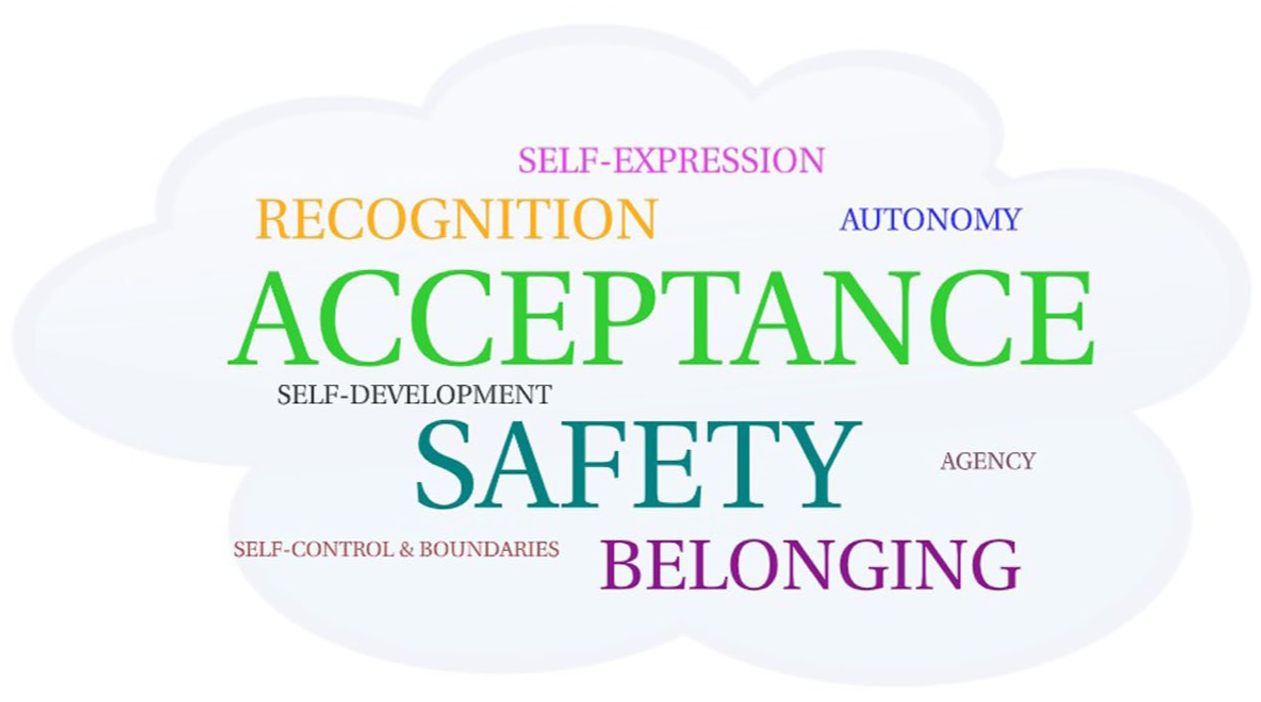
Emotional support needs of migrant students. Three key needs could be indicated by each participant. The frequency table is included in the Appendix 1 (Table 3).
Students’ social needs are met within the school environment not only through interactions with teachers but, more importantly, through peer relationships. Migrant students tend to engage more frequently with peers from the same cultural and linguistic background, with 74.3% and 93.4% of respondents confirming such interactions, respectively. These differences are more evident in the average scores M = 2.88 (SD = 0.67) for interactions with Polish peers, and M = 3.48 (SD = 0.64) for interactions within their own cultural group. Peer interactions were only slightly associated with the total number of migrant students at a given school, showing a weak effect size (ρ = 0.23, p < 0.001).
Teachers reported several key social needs related to integration within the school community. The most frequently identified need was participation in group trips (67.1%), which offer students a break from routine and opportunities for social interaction in diverse settings. Closely following were extracurricular activities (65.7%), recognized as essential for fostering social cohesion and improving the overall school climate. Additionally, educational activities aimed at developing interpersonal skills, cooperation, and emotional connections were highlighted by 55.3% of respondents, reflecting principles central to social-emotional learning frameworks. Participation-oriented activities, including organizing school events (49.9%) and student council involvement (7.7%), were less frequently reported but are critical for fostering students’ belonging, agency, and engagement within the school community (see Table 1). Importantly, the perceived value of these activities appears consistent regardless of students’ language proficiency, underscoring their relevance across diverse populations of migrant student.
Social support needs of migrant students.
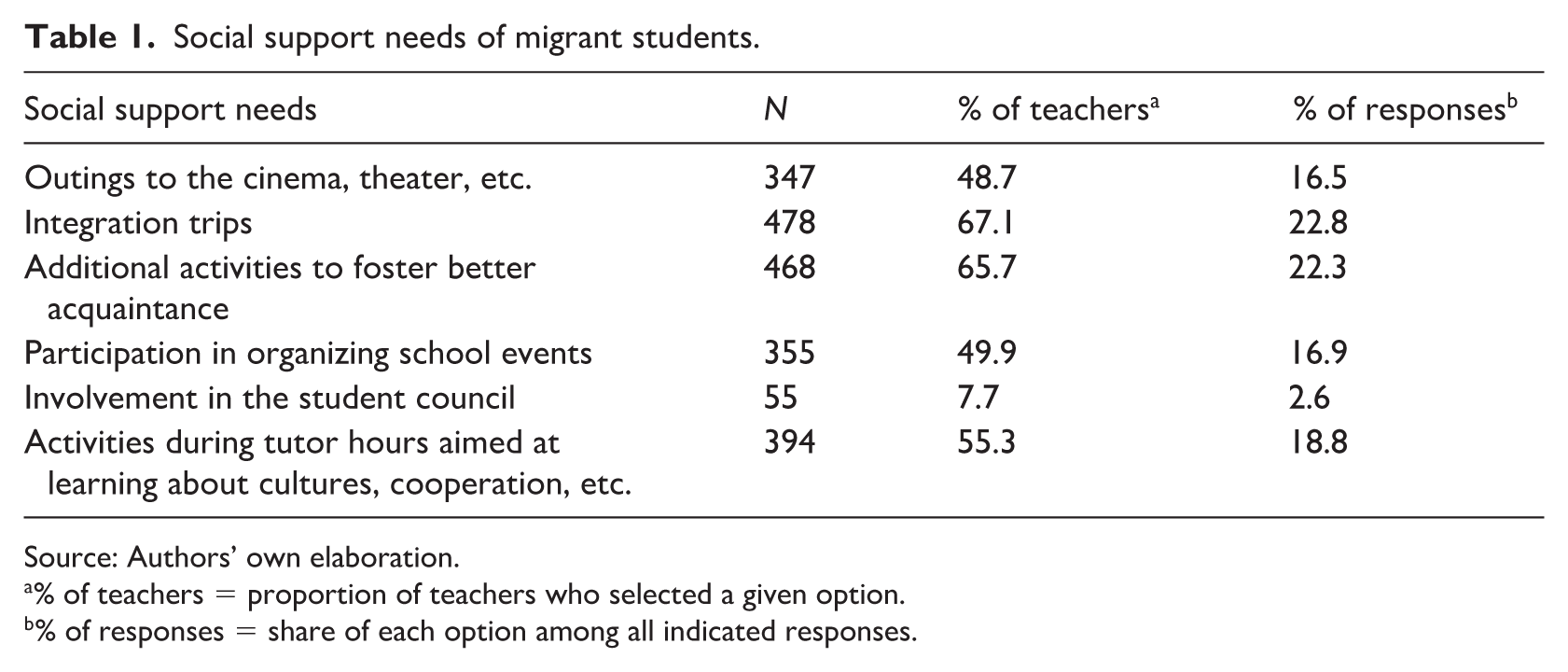
Source: Authors’ own elaboration.
% of teachers = proportion of teachers who selected a given option.
% of responses = share of each option among all indicated responses.
Considering the educational needs of migrant students, teachers primarily highlight the necessity of an individualized approach (62.9%), remedial classes (45.6%), and the simplification of instructions and texts (43.1%), which are fundamental to effective learning and achieving adequate academic outcomes. Needs such as additional materials in Polish (24.9%) and extended time for task completion during lessons (22.3%) are mentioned less frequently. The relatively low mention of exam accommodations (13.5%) may be attributed to existing Education Law regulations. Teachers additionally recognize the need for materials in students’ native languages (12.9%), as this greatly aids comprehension for learners with limited Polish proficiency, especially older primary and secondary students tackling subjects that involve specialized terminology (see Table 2).
Educational support needs of migrant students.
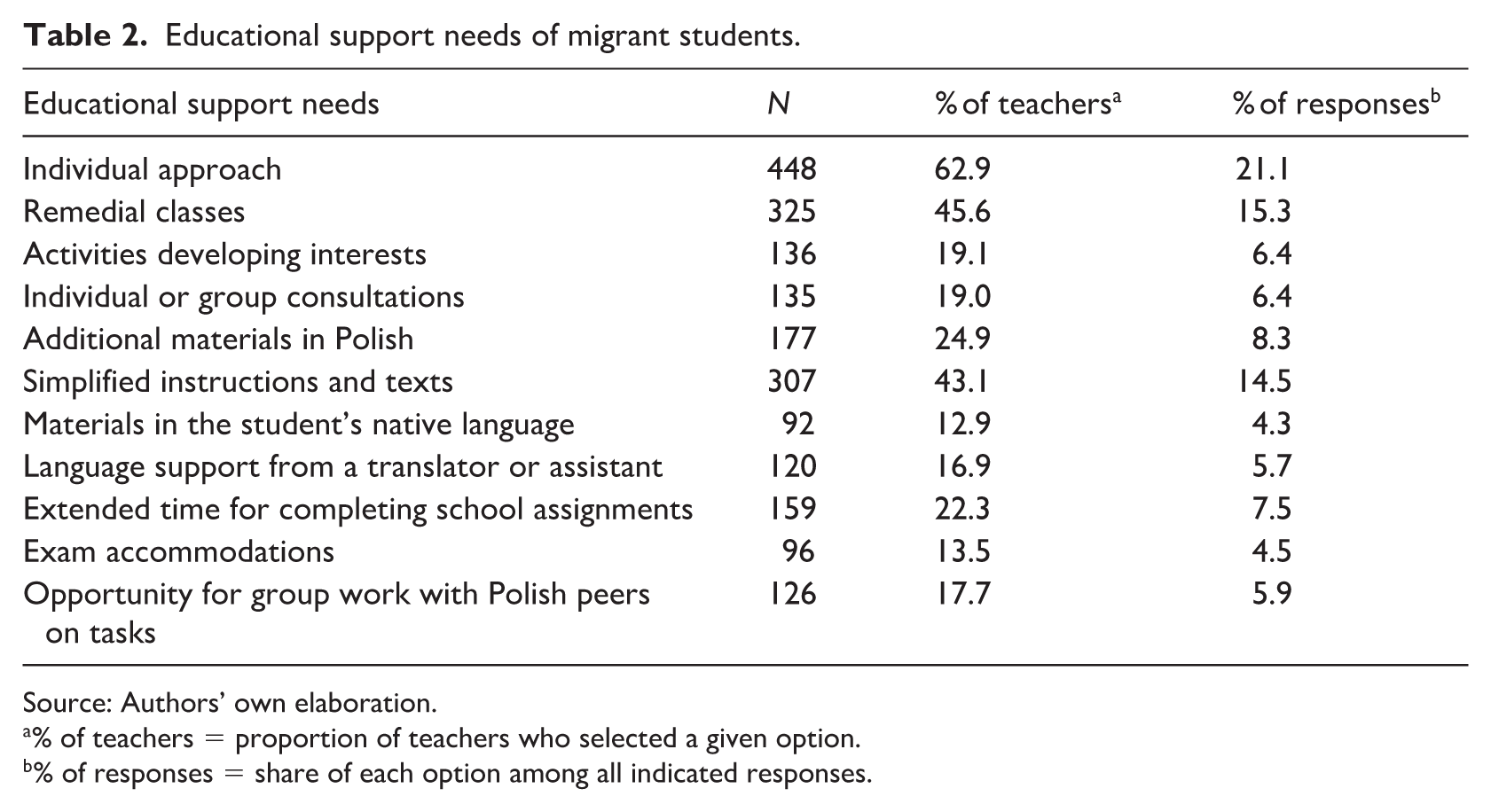
Source: Authors’ own elaboration.
% of teachers = proportion of teachers who selected a given option.
% of responses = share of each option among all indicated responses.
Forms of well-being support in response to student needs
Teachers indicate that the most offered form of support in schools where they are employed is psychological/pedagogical assistance (87.5%). Other frequently mentioned forms include additional Polish language lessons (77.7%), remedial classes (72.6%), and specialist support (64.5%). However, the map of available support in schools does not fully align with the forms of support used by students.
According to teachers, the most frequently used forms of support by students are additional Polish language lessons (65.3%), psychological/pedagogical assistance (58.1%), and remedial classes (55.8%). Teachers also mention specialist support (25.4%) and involvement in school events (16.6%). Additionally, students show more interest in the support provided by intercultural assistants (18.0%; see Figure 2).
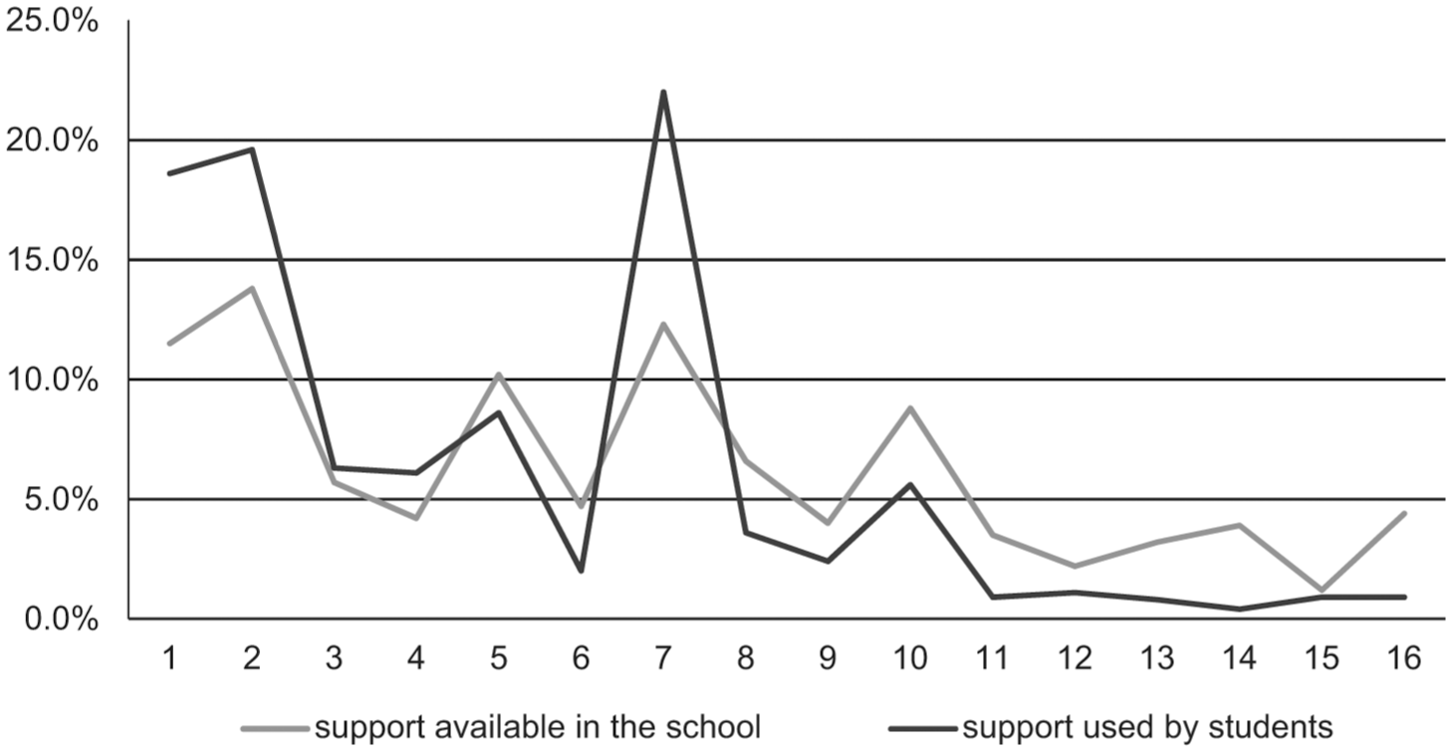
Available & used forms of support by migrant students in schools. Note: Labels for the forms of support, numerically marked on the chart: 1 – Remedial classes; 2 – Psychological/pedagogical support; 3 – Integration programs/classes; 4 – Support from an intercultural assistant; 5 – Support from specialists, such as speech therapists, therapists, special education teachers, etc.; 6 – Specialist classes focusing on stress management, building adequate self-esteem, etc.; 7 – Additional Polish language lessons; 8 – Classes developing interests and hobbies; 9 – Support from individuals who speak the students’ migrant languages; 10 – Engagement in school events; 11 –Involvement in projects, including those focused on well-being; 12 – Providing space in the school for meetings with peers from the same national/ethnic group; 13 – Organizing events involving parents and various institutions and organizations; 14 – Creating conditions for students to initiate school events; 15 – Native language lessons; 16 – Participation in student council work. The frequency table is included in the Appendix 1 (Table 4).
Teachers participating in the study evaluated the forms of support available in their schools positively. On a rating scale from 1 to 5, none of the responses fell below a score of 3.0, indicating a generally favorable perception of the measures implemented to support migrant students. The average rating across all forms of support was 3.75. The highest-rated types of support included assistance from intercultural assistants (M = 4.00, SD = 1.07), native language lessons (M = 3.93, SD = 1.24), and support from individuals who speak the students’ native languages (M = 3.92, SD = 1.03). These findings suggest that teachers particularly value support mechanisms that enhance communication and integration for migrant students.
The overall number of students, as well as the number of migrant students in schools, did not show a statistically significant relationship with teachers’ evaluations of support measures. In contrast, teaching experience emerged as a significant predictor of these evaluations, suggesting that more experienced educators may be better equipped to assess and value support initiatives.
Discussion
This study set out to explore the well-being and support needs of migrant students in Polish schools through the perspectives of teachers, drawing on a multidimensional framework that incorporates emotional, social, and educational dimensions. The findings offer critical insights into the gaps between migrant students lived experiences and the current architecture of school-based support.
Teachers strongly emphasized that emotional needs – such as feeling safe, accepted, and included – are not ancillary to learning but foundational to both educational progress and social integration. This view aligns with recent scholarship that positions student well-being not merely as an internal psychological state but as fundamentally relational and institutionally mediated (Grové and Laletas, 2020; Murray et al., 2024). The prominence of belonging and trust in teachers’ accounts reflects a broader shift in educational research away from narrow academic metrics (Cárdenas et al., 2022) toward more holistic, well-being-oriented understandings of inclusion (Downes et al., 2025; OECD, 2018, 2019).
At the same time, teachers identified a persistent misalignment between official support measures and the actual needs of migrant students. Although schools may formally offer psychological services, additional Polish language instruction, or remedial teaching, these provisions often remain generic, insufficiently tailored to the cultural and linguistic specificities of migrant learners. This gap echoes patterns identified in other European contexts, where inclusion is frequently approached through reactive, fragmented, or one-size-fits-all interventions (Wal Pastoor, 2017).
Importantly, teachers expressed a strong preference for culturally responsive tools – such as intercultural assistants or instruction in students’ first languages – yet noted that access to such resources was extremely limited. This disconnect reflects structural limitations that extend beyond classroom practice, underscoring the tension between progressive policy rhetoric and under-resourced institutional infrastructures. These findings lend further support to critiques of deficit-oriented inclusion models and reinforce calls for systemic approaches that recognize the cultural capital of migrant students and reframe schools as spaces of intercultural learning and civic cohesion (Downes et al., 2017, 2025).
Social integration also emerged as a key concern, with teachers highlighting the complexities of peer relationships. Migrant students often form bonds with peers from similar backgrounds, which can foster psychological comfort but may also limit broader school engagement. This dynamic reflects findings from recent European research that emphasize the importance of promoting intercultural peer interaction to strengthen belonging, civic participation, and educational motivation (Moskal, 2023).
Despite the multidimensional framework guiding this study, the findings reveal an uneven alignment between migrant students’ emotional, social, and educational support needs and the forms of assistance available in schools. While emotional safety and acceptance are strongly prioritized, social participation and educational engagement receive markedly less attention. This imbalance suggests that school-based support remains primarily protective and remedial rather than developmental and empowering. Teachers rated culturally responsive measures – such as intercultural assistants and native-language support– as highly valuable; however, these resources remain scarce, indicating a structural gap between recognized needs and institutional provision. Consequently, emotional support is more readily addressed than social integration or educational participation. Furthermore, the weak association between peer relations and school demographic composition suggests that social separation reflects deeper linguistic and institutional barriers rather than student numbers alone. Taken together, these patterns highlight a fragmented support architecture in which emotional, social, and educational needs are insufficiently integrated, underscoring the necessity of coherent, system-wide approaches to inclusion.
Theoretically, the study contributes to a growing body of work that views inclusion and well-being through systemic and ecological lenses. By centering teachers’ perspectives, the findings offer a shift away from individualized discourses of vulnerability toward a more relational and institutional understanding of educational support (Costa et al., 2022; Valencia, 2010; Walton, 2025). Schools, in this framing, are not neutral backdrops but dynamic social ecosystems that can either support or constrain migrant students’ development and agency.
Yet, while the study reveals strong examples of teacher commitment and agency, it also brings into focus entrenched structural barriers that limit teachers’ capacity to translate inclusive ideals into practice. Many teachers reported a readiness to engage more deeply with the needs of migrant students but felt unequipped due to insufficient training, limited collaboration opportunities, and an overall lack of institutional backing. These constraints resonate with broader critiques of inclusive education across Central and Eastern Europe, where policy frameworks are often ambitious but unevenly implemented and under-resourced.
In essence, this research indicates that while an “infrastructure of care” is present in Polish schools, its effectiveness may often be constrained by fragmented provision and a lack of culturally specific resources. Achieving educational equity requires a shift from remedial, individualized support toward durable, systemic reforms that treat inclusion as an ongoing institutional process rather than a fixed intervention; this is arguably particularly relevant in the context of working to address more meaningfully and effectively migrant students’ well-being in Polish Schools.
In this context, the recent “Accessible school for all” initiative (ReferNet Poland, Cedefop, 2024) constitutes a noteworthy policy development. Implemented by the Educational Research Institute in collaboration with UNICEF and the Ministry of National Education, the project aims to enhance educational accessibility by training specialist teachers as learning accessibility advisors. These advisors are tasked with implementing inclusive strategies – from adapting materials to supporting mental health – to foster systemic change at the school level. However, while promising in its ambitions and scope, the project also illustrates ongoing tensions between policy design and everyday school realities. Its relatively limited reach, paired with a strong emphasis on specialist roles, may unintentionally reinforce the marginalization of generalist teachers, who continue to bear the primary responsibility for diverse classrooms without sufficient preparation or structural support. In this way, the initiative risks operating as a parallel support mechanism rather than effecting a full institutional embedding of inclusive practice.
Taken together, the findings point to a pressing need for more comprehensive, system-wide investment in teacher education, leadership development, and inclusive school cultures. Efforts to build institutional capacity must go beyond isolated projects and be embedded in long-term strategies that support all educators – not just specialists – in responding to linguistic, cultural, and psychosocial diversity. Without such structural shifts, even the most motivated and empathetic teachers may remain constrained in their ability to enact inclusion meaningfully. Ultimately, achieving educational equity for migrant students requires moving beyond temporary, project-based fixes toward durable reforms in how inclusion is conceptualized, resourced, and enacted across education systems.
Study limitations and directions for future research
This study provides valuable insights into the well-being and support needs of migrant students in Polish schools from the perspective of teachers. However, several limitations must be acknowledged to contextualize the findings and guide future research endeavors. Firstly, the research was conducted exclusively in three large urban centers – Warsaw, Kraków, and Wrocław – selected for their demographic diversity and substantial migrant populations. As such, the findings may not be generalizable to rural or less diverse regions, where institutional capacities, local community dynamics, and migrant experiences may differ markedly. Future studies should consider more geographically diverse samples to capture a broader range of educational contexts.
Secondly, the exclusive use of quantitative survey data from teachers, while enabling systematic analysis, restricts the depth of understanding regarding the lived experiences of migrant students and their families. The inclusion of qualitative methodologies such as interviews, ethnographic studies, or participatory approaches would enrich the investigation and offer more nuanced insights into the complex processes of inclusion and well-being.
Thirdly, although teachers play a pivotal role in the educational ecosystem, this study focuses solely on their perspectives. Other key stakeholders – including school leaders, migrant students themselves, parents, and policymakers – also influence and experience inclusion in multifaceted ways. Future research adopting multi-stakeholder designs could provide a more comprehensive understanding of the dynamics involved.
Finally, while this study identifies a significant gap between the availability of support services and migrant students’ actual needs, it does not fully explore the institutional and systemic mechanisms underpinning this mismatch. Further qualitative and policy-oriented research is necessary to elucidate how governance structures, resource allocation, and school cultures shape inclusive education practices.
Despite these limitations, this study contributes a robust empirical foundation for understanding the enactment of migrant inclusion within Polish schools. It highlights critical challenges and offers avenues for reform in policy and practice. Future research should build on these findings by employing longitudinal and mixed-methods study designs to trace the evolving nature of inclusion and belonging in increasingly diverse educational settings.
Conclusions and recommendations
The findings presented in this study contribute to a growing body of research on the inclusion and well-being of migrant students by offering a contextually grounded account of how support needs are understood and addressed in Polish schools. By centering teachers’ perspectives, the study illuminates the complex interplay between institutional structures, classroom realities, and student experiences. It reveals that while formal support mechanisms are in place – ranging from psychological services to additional language instruction – their implementation often falls short of addressing the multifaceted challenges migrant students face. These include not only linguistic and academic barriers, but also emotional insecurity, cultural dislocation, and social exclusion.
Teachers consistently highlighted that emotional well-being, a sense of belonging, and relational trust are essential foundations for learning and integration. These insights reinforce theoretical approaches that view schools not as neutral delivery sites for curriculum, but as socially embedded ecosystems capable of enabling or constraining inclusion through their structures, relationships, and cultures. The study also draws attention to how support systems, despite their formal presence, often remain fragmented, under-resourced, or insufficiently adapted to the needs of students from diverse linguistic and cultural backgrounds. The reliance on generic or compensatory models of support reinforces deficit-based assumptions and overlooks the cultural capital and resilience that migrant students bring to the classroom.
Based on these findings, several areas emerge as critical for systemic and sustained attention. First, schools must adopt more inclusive and ecologically grounded approaches to assessing student needs – frameworks that recognize academic achievement as intimately linked to emotional, social, and cultural well-being. These assessments should include participatory mechanisms that engage both students and their families, ensuring that support strategies reflect the diversity of migrant experiences and are responsive to the realities of school life.
Second, inclusive education cannot be the responsibility of specialists alone. While the introduction of roles such as learning accessibility advisors through initiatives like the “Accessible school for all” project marks a positive development, sustainable inclusion requires that generalist teachers are also equipped, supported, and recognized as central to this work. Inclusive pedagogies, native-language support, and co-teaching strategies should be embedded across the teaching workforce. Professional development must move beyond one-off training to foster long-term reflexivity, collaboration, and cultural responsiveness among all educators.
Third, national education policy must more directly integrate migrant student well-being into broader inclusion agendas. This includes rethinking teacher preparation programs, aligning policy rhetoric with classroom realities, and providing sufficient resources to support implementation. Schools must be empowered not only with external expertise, but with leadership and institutional flexibility to adapt practices in ways that are locally meaningful and socially just.
Finally, inclusion should be understood as an ongoing institutional process rather than a fixed intervention. Continuous monitoring, evaluation, and adjustment of support practices must be built into school routines. Importantly, these processes should engage multiple stakeholders – teachers, students, parents, and communities – to ensure that schools remain responsive, democratic, and equity-oriented in the face of demographic and social change (Seitz et al., 2023).
By focusing on the Polish context, this study contributes to international discussions on migration, education, and social justice (Pinson et al., 2023; Proyer et al., 2021; Rönnlund et al., 2025) by highlighting the specific challenges and opportunities encountered in Central and Eastern Europe. While grounded in one national system, the findings reflect broader tensions across European education – between policy ambition and institutional capacity, between inclusive ideals and everyday constraints. These dynamics are especially salient in the context of forced migration (Fiddian-Qasmiyeh et al., 2014) and shifting demographics, which continue to reshape school communities across the continent. Future research should expand on these findings by incorporating the voices of migrant students and families themselves and by employing longitudinal, mixed methods designs to capture how inclusion and belonging evolve over time and across institutional contexts.
Footnotes
Appendix 1
Available & used forms of support by migrant students in schools.
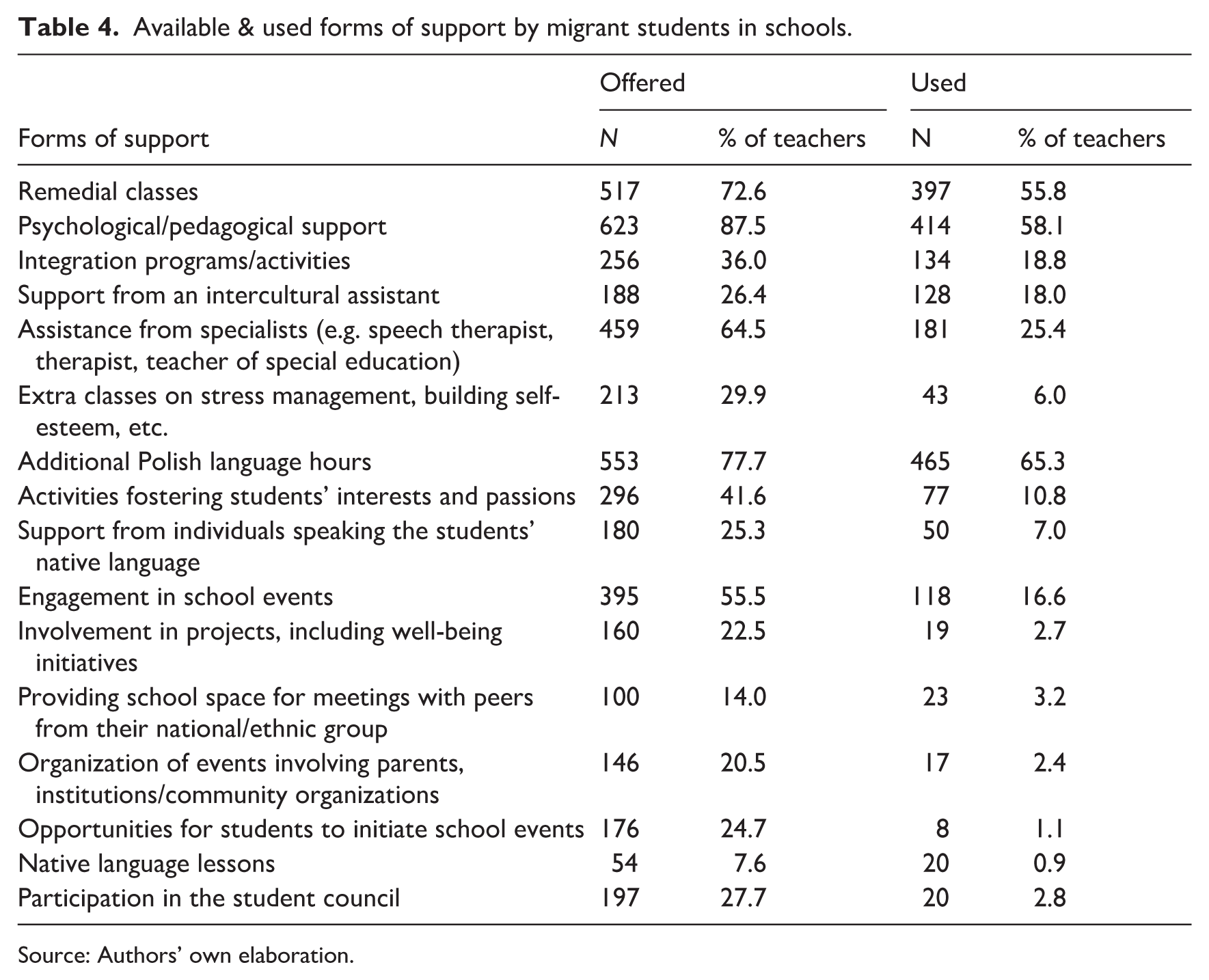
| Forms of support | Offered | Used | ||
|---|---|---|---|---|
| N | % of teachers | N | % of teachers | |
| Remedial classes | 517 | 72.6 | 397 | 55.8 |
| Psychological/pedagogical support | 623 | 87.5 | 414 | 58.1 |
| Integration programs/activities | 256 | 36.0 | 134 | 18.8 |
| Support from an intercultural assistant | 188 | 26.4 | 128 | 18.0 |
| Assistance from specialists (e.g. speech therapist, therapist, teacher of special education) | 459 | 64.5 | 181 | 25.4 |
| Extra classes on stress management, building self-esteem, etc. | 213 | 29.9 | 43 | 6.0 |
| Additional Polish language hours | 553 | 77.7 | 465 | 65.3 |
| Activities fostering students’ interests and passions | 296 | 41.6 | 77 | 10.8 |
| Support from individuals speaking the students’ native language | 180 | 25.3 | 50 | 7.0 |
| Engagement in school events | 395 | 55.5 | 118 | 16.6 |
| Involvement in projects, including well-being initiatives | 160 | 22.5 | 19 | 2.7 |
| Providing school space for meetings with peers from their national/ethnic group | 100 | 14.0 | 23 | 3.2 |
| Organization of events involving parents, institutions/community organizations | 146 | 20.5 | 17 | 2.4 |
| Opportunities for students to initiate school events | 176 | 24.7 | 8 | 1.1 |
| Native language lessons | 54 | 7.6 | 20 | 0.9 |
| Participation in the student council | 197 | 27.7 | 20 | 2.8 |
Source: Authors’ own elaboration.
Acknowledgements
We would like to sincerely thank all the teachers who participated in this study and generously shared their time, experiences, and perspectives. Their contributions were invaluable for providing insights into the well-being and support needs of migrant students in Polish schools.

Ethical considerations
This study was conducted following ethical standards to safeguard participants’ rights, confidentiality, and well-being.
Funding
The authors received no financial support for the research, authorship, and/or publication of this article.
Declaration of conflicting interests
The authors declared no potential conflicts of interest with respect to the research, authorship, and/or publication of this article.