







Abstract
This study explores how parental perceptions of school counselling in international schools are shaped by cultural values, institutional structures, and counsellors’ professional identity. School counselling is an important part of international schools’ strategic prioritisation of wellbeing, yet its effectiveness depends on parental engagement as gatekeepers, advocates, and collaborators. We conducted semi-structured interviews in English and Cantonese with nine parents from international schools. Thematic analysis resulted in three themes: Cultural stigma and institutional priorities marginalising counselling, Communication gaps and relational barriers in counselling support systems, and Counsellor professional identity and parental advocacy for systemic change. Parents valued counsellors’ expertise, authority, and cultural sensitivity, but faced barriers such as the prioritisation of academic achievement, stigma around mental health, and fragmented collaboration between stakeholders. These dynamics appear to create a cycle of disengagement, undermining the effectiveness of counselling. Our findings suggest that schools should clarify counsellors’ roles, address resource constraints, and implement proactive, culturally meaningful and sensitive communication to reduce stigma and build parent-counsellor alliances. The study offers novel insights for improving counselling services in international schools, emphasising proactive, collaborative strategies to support student wellbeing.
Keywords
Introduction
International schools are often considered to be schools offering a non-local, English-medium curriculum. The missions of these schools generally emphasise cultural diversity, international mindedness, and global engagement, and they primarily cater to the children of affluent families (ISC Research, 2025; Poole, 2020). As of January 2025, there were over 14,500 such schools globally, serving 7.4 million students and generating $67 billion in fee income (ISC Research, 2025). This represents a 45% increase in schools, enrolling 49% more students, with a 73% increase in income since 2015. The growth of the sector is even more notable in Asia, where 58% of international schools are now located, and with China having more schools (1,124) than any other country in the world. In the Special Administrative Region (SAR) of Hong Kong, the context in which our study is set, the sector experienced a 50% growth (measured in the number of schools) between 2018 and 2025 (Education Bureau, 2025; Legislative Council of Hong Kong SAR, 2018). Historically, international schools in the SAR served the children of expatriates, but have increasingly attracted affluent local families, driven by parental preferences for English-medium instruction, global curricula, and pathways to overseas universities (Lee & Tsui, 2024). Recent enrolment trends have also shifted towards wealthy mainland Chinese families, further supporting the dominance of the Chinese ethnic group (HKSAR Government, 2024).
A focus on mental health and wellbeing is a strategic priority of the international school sector (ISC Research, 2025). Over a decade ago, around 13% of young people globally experienced mental health disorders (Polanczyk et al, 2015) and, during the recent COVID-19 pandemic, clinically significant levels of depression and anxiety in children and adolescents rose to 23.8% and 18% respectively across the world (Racine et al, 2021). It is claimed by some that children and adolescents who have spent a significant amount of time during their formative years outside their culture of origin experience high rates of anxiety, depression, adjustment disorders, and social issues (see, for instance, Tan et al, 2021; Jones et al, 2023). Such students may struggle with the upheaval of transitions, the loss of friends and a family support network, cultural disorientation, and issues of identity and belonging (Hughes et al, 2024).
School-based support for mental health may confer significant benefits over community-based approaches, being more accessible, less stigmatising, allowing for earlier identification of problems, and being associated with higher rates of attendance at interventions such as counselling (Weist et al, 2023). Both school-based social-emotional learning programmes and targeted interventions for students with specific mental health problems have been shown in various contexts to lead to an improvement in academic outcomes (Cefai et al, 2022; Kase et al, 2017; Taylor et al, 2017; Wiglesworth et al, 2016).
Most international schools offer counselling as part of their wellbeing provision, the successful implementation of which depends – as is the case in schools more broadly – on an ecosystem of stakeholder engagement, within which parents act as gatekeepers, their perceptions facilitating or hindering students’ access to counselling services (Collins et al, 2024; Longhurst et al, 2021). These perceptions are, in turn, shaped by factors related to counsellor effectiveness, cultural values, and institutional structures.
School counselling is an evidence-based practice for supporting the development and wellbeing of children and adolescents within the school setting. The work of international school counsellors is diverse and multifaceted, and may include individual and group counselling focused on mental health and wellbeing, career and university application guidance, working with families, safeguarding, the development and implementation of psychoeducational and wellbeing programmes, and providing staff training on meeting students’ needs (Diamant, 2010; Harris, 2014; Fan et al, 2019). In the present study, we consider specifically counselling that is focused on mental health and wellbeing, as distinct from careers and university guidance.
International school counselling is a relatively new profession. As such, counsellors often have poorly defined roles (Diamant, 2010; Langston & Van Gordon, 2023) and may struggle to assert a clear professional identity and to meet their professional and developmental needs (Inman et al, 2009). Standards and frameworks for international school counselling have been developed. For example, the International School Counselor Association (ISCA) Model is a framework for implementing comprehensive school counselling programmes in international schools worldwide (Fazler & Brown, 2011), while the International School Psychology Association (ISPA, 2025) has developed a set of Training Professional Standards for psychologists working across diverse cultural settings. However, there is little coherence or consistency across international schools in how counselling is implemented, and in our experience many international schools do not implement counselling in a programmatic or systematised way.
International school counselling: The case of Hong Kong
In this study, we sought to investigate the factors influencing parental perceptions of school counselling in international schools in Hong Kong, with a view to informing strategies for better counsellor-parent collaborations, improving service accessibility, and promoting young people’s wellbeing in an under-researched, culturally complex, and rapidly changing environment.
As in other types of schools in the territory, counsellors in Hong Kong’s international schools face particular challenges in establishing their identity and providing effective services due to the absence of legal regulation for counselling, limited public understanding of the profession, and high levels of cultural stigma related to mental health (Lam & Yeung, 2017). Counsellors in schools can feel marginalised, disempowered, and unsupported, with a weaker professional identity compared to other mental health professionals, such as social workers and clinical psychologists, who are better established professionally (Fung, 2019).
Parental perceptions of school counselling
Parental support is a key determinant of effective counselling. Positive relationships between counsellors and parents are essential to successful counselling programmes (Diamant, 2010), and meaningful stakeholder engagement has been identified as a priority for the development of school-based mental health services (Weist et al, 2023). Strong school-parent partnerships are associated with students’ social-emotional wellbeing and academic achievement (El Nokali et al, 2010; Ma et al, 2016), and a strong counsellor-parent alliance is a predictor of counselling engagement and continuity (Hayes, 2017; McLeod, 2011). Understanding the factors that influence parental perceptions of school counselling is, therefore, essential for developing the collaborative relationships associated with effective counselling services. Despite this, little is known about parental perceptions of international school counselling.
Parental perceptions are shaped by the institutional structures supporting or undermining counselling services. Under-resourcing of counselling, inadequate staffing, high student-to-counsellor ratios, and unclear roles can limit the capacity and accessibility of services (Education Bureau, 2020; Zuković et al, 2024). Parents may confuse counsellors with teachers, social workers, or learning support staff as a result of the ambiguous and wide-ranging nature of the counsellor’s role, a persistent feature of international school counselling (Harrison et al, 2021; Langston & Van Gordon, 2023). Such misunderstandings may lead to weak and reactive communication and poor collaboration between counsellors and parents, and to a lack of clarity about confidentiality, eroding trust and contributing to perceptions of counselling as inaccessible and ineffective (Collins et al, 2024). Parents’ perceptions are also influenced by counsellors’ professional identity, a construct encompassing their qualifications, competencies, defined roles, relationships with other professionals, and institutional recognition (Harrison et al, 2025). As parents are more likely to trust professionals who have formal training and a clearly defined skill set, professional identity is closely tied to perceived effectiveness.
Cultural factors may also present several barriers to counsellor-parent communication and cooperation. High levels of stigma related to mental health may associate help-seeking with familial shame and a loss of ‘face’, discouraging the disclosure of personal issues to counsellors (Kim et al, 2009; Miville & Constantine, 2007; Ow & Katz, 1999). A strong cultural focus on academic achievement, and a view that counselling is a remedial service or punitive response to academic failure, also hinder parents’ engagement with counsellors (Hue, 2016; Yuen et al, 2019). The high power-distance in Asian societies may lead parents either to defer to counsellors as authority figures or to view them with suspicion, a dynamic that may cause students to conceal from parents their attendance at counselling sessions (Harrison, 2019; Hue, 2016).
The present study
Despite existing evidence for the effectiveness of school-based interventions for addressing youth mental health issues (Cefai et al, 2022; Kase et al, 2017), the relationships between cultural, institutional, and professional factors shaping parental attitudes have not been explored in international schools. We sought to address this critical gap by investigating how parental perceptions influence their gatekeeping roles and engagement with school counselling in international schools in Hong Kong. The study was guided by the research question: How do cultural values, institutional structures, and counsellors’ professional identity shape parental perceptions of school counselling?
Methods
Given that, to our knowledge, research exploring parents’ perceptions of school counselling in international schools has not previously been carried out, we adopted an exploratory qualitative approach. Such an approach is suitable when a research area is novel and there are no well-established frameworks on which to draw, allowing for the development of insights to inform future studies. In addition, parents’ perspectives are shaped by several interacting factors, and the experiences and interpretations of individual parents are likely to be diverse, so in-depth qualitative exploration is helpful in understanding these factors and the meaning parents ascribe to their lived experiences. An exploratory study also allows for the emergence of novel – and even unexpected – insights to inform future research.
Participants
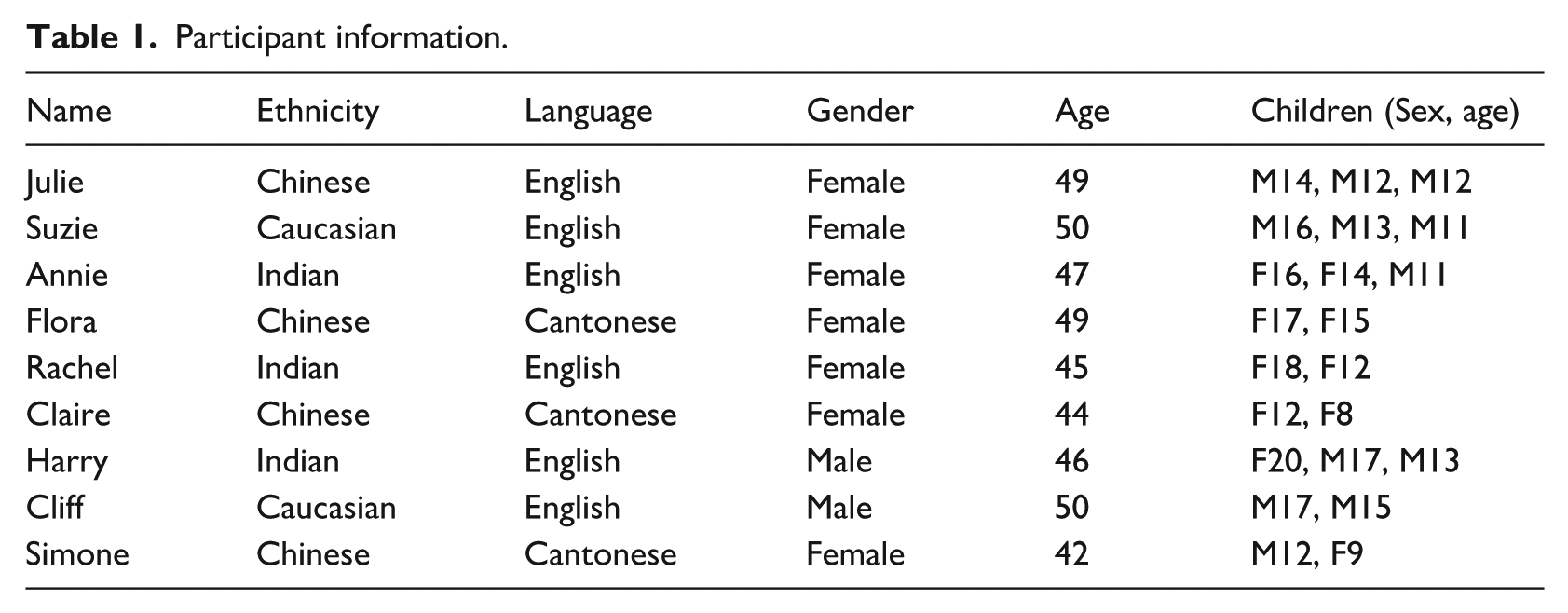
The study received ethical approval from the Human Research Ethics Committee of Hong Kong Shue Yan University [HREC 23-05 (M09)]. International school parents in Hong Kong were recruited through social media promotion and the researchers’ professional connections. Qualitative studies generally achieve theoretical saturation within 9 to 17 interviews, particularly when focused on a relatively homogenous population (Hennink & Kaiser, 2022). Through purposeful sampling, we targeted parents with children in international secondary schools. While our sample was homogeneous in terms of their socioeconomic status (all were affluent and well educated) and school type (secondary), we purposefully did not restrict participants to a particular ethnicity, seeking a variety of cultural perspectives within this shared context. This provided a pool of information-rich cases relevant to our aim, and reduced the need for a larger sample (Coyne, 1997; Malterud et al, 2016). Nine parents of students from nine different international schools took part. Similar studies have used comparable sample sizes to generate meaningful insights about stakeholders’ perceptions of counselling (Collins et al, 2024; Verasammy & Cooper, 2021). Seven participants were female and two were male. They were aged from 42 to 50 years. Four of the parents were ethnically Chinese, three were Indian, and two were Caucasian. Their education levels varied, with the majority possessing master’s degrees. They all had between 2 and 3 children, with the ages of first children ranging from 12 to 20 years, second children from 8 to 17 years, and third children from 11 to 13 years. Detailed participant information, including ages, genders, education levels, and specifics on the number and ages of children, is presented in Table 1. Participants have been assigned pseudonyms to ensure anonymity.
Participant information.
The schools attended by the participants’ children all employed dedicated school counsellors, although the number of counsellors and the type of counselling varied. In all cases, counselling consisted predominantly of direct work with students and was mostly a responsive service. None of the schools implemented a comprehensive counselling framework, although one school drew heavily on the American School Counselor Association National (2019) Model, and several adopted multi-tiered systems of support.
Data collection and analysis
Participants gave informed consent and were assured of anonymity. Six interviews were conducted in English by the first author, and three were carried out in Cantonese by the second author. All the interviews were conducted online using the Zoom application. Interviews in participants’ native language, conducted by researchers deeply familiar with the context, promoted strong dialogue quality, contributing to the thickness of the data. The processes of data gathering and analysis proceeded iteratively until theoretical saturation was deemed to have been achieved. Drawing on guidance on saturation in qualitative research (Guest et al, 2006; Saunders et al, 2018), this is the point at which no new insights relevant to the research questions were developed from analysing the data. In our judgement, the final sample of participants provided sufficient information to support robust findings (Malterud et al, 2016).
Transcripts were generated automatically from the Zoom application and checked for accuracy. They were read over several times by the appropriate language speaker to generate preliminary ideas for themes, and this was followed by inductive coding with manifest codes aligned closely to the participants’ use of language (Maxwell, 2013). Coding was facilitated by the NVivo 11 and Delve software tools and was carried out on the original language transcripts to avoid loss of meaning. We used a combination of manual and artificial intelligence (AI) coding, with AI codes being checked manually. Similar codes were aggregated into clusters and then into themes, each with a central organising concept (Clarke et al, 2015: 297). This process resulted in ten clusters, which were subsequently consolidated into three themes, each distinguished by a distinct conceptual emphasis. Quotations from participants were used to substantiate the themes in reporting the findings, and only at this point were the relevant portions of the Cantonese transcripts translated into English.
Reflexivity and trustworthiness
In a qualitative study, reflexivity is an essential aspect of the trustworthiness of the findings. Acknowledging the researchers’ positions and mitigating potential biases increases the plausibility of explanations for parental perceptions (Downey et al, 2024). The first author is a native English speaker with almost twenty years of experience as a teacher, senior school leader, and counsellor in Hong Kong international schools, and brought an insider perspective that informed question framing and interpretation. The risk of assumption-making was addressed with the use of reflexive journaling throughout data collection and analysis, whereby assumptions about cultural stigma, institutional structures, and professional identity were documented. The second author is a Hong Kong-based counselling psychologist and native Cantonese speaker. He brought cultural understanding and sensitivity to Confucian values, countering potential Western biases in the first author’s perspective. Neither author worked in a school at the time the research was conducted, so there was no conflict of interest. Regular debriefing sessions between authors included dialogue on how their backgrounds shaped the development of themes (Nastar, 2023). Credibility was addressed by theoretical saturation, where no new themes were developed after nine interviews, and confirmability through grounding the findings in participants’ verbatim statements. Transferability of the findings is addressed by including a contextual description of Hong Kong’s international schools, enabling judgments to be made on applicability elsewhere (Stutchbury, 2021).
Results
We investigated parents’ perceptions of school counselling in international schools. The results highlighted the interaction of institutional, sociocultural, relational, and professional factors. The themes underline how resource scarcity, cultural stigma, fragmented communication, and counsellors’ professional identity shape parents’ views of and engagement with counselling services.
Theme 1. Cultural stigma and institutional priorities marginalising counselling
This theme describes how cultural norms, particularly stigma around mental health, interact with institutional priorities and the prioritisation of academic success to marginalise counselling, leading to under-resourcing and limited integration of wellbeing support.
An achievement-oriented cultural narrative and anxieties about failure and social standing tended to stigmatise counselling. Parents expressed tensions between academic priorities and wellbeing, revealing a complex interaction between cultural stigma, school ethos, and parental roles. Hong Kong’s academic culture valorises success, and parents noted a pressure for students to excel in multiple domains. For example, Harry said that ‘your grade should be up, you should be good at sports, you should play two instruments, you should speak three languages.’
Attending counselling could be perceived as a sign of failure and was stigmatised in traditional Chinese attitudes: ‘It’s like losing face. There’s such a big social stigma to losing face’ (Harry). This stigma could be experienced by students, as Harry explained: ‘If my child is saying to me all the time, ‘Oh, please don’t send me to the counsellor’s office’, then you know there is stigma around it at school.’ Suzie highlighted how embarrassment, rooted in societal norms that equate seeking help with weakness, could act as a barrier, noting, ‘I’m sure a 13-year-old would be really embarrassed if they had to go [to counselling].’ Gender differences were also relevant, as Suzie described: ‘[My son] went, but he said he didn’t need it, so he didn’t go again. I think for boys, it’s less of a thing to do. I get the impression that more girls go than boys.’
Rachel felt that the influence of Western-trained counsellors brought a more open ethos compared to the local culture: ‘The counsellors that we work with in international schools are basically British and Australian, right? I haven’t met with a counsellor who’s worked in a local school. If that were to be true, then they would be bringing that culture and ethos with them.’ Children in culturally mixed families could face confusing messages about counselling, as Cliff explained: ‘In Hong Kong, there are a lot of cross-cultural families. On one side, you don’t talk about this stuff, and on the other side, you do. So one of the difficulties kids have is they’ve got mixed messages.’
A focus on academic outcomes was perceived as marginalising counselling, leading to its under-resourcing and a ‘band-aid’ (Rachel) approach to wellbeing. Parents were frustrated that limited staffing, inconsistent support structures, and a cultural bias toward academic achievement prevented counselling support from being more proactive and preventative. The cultural focus on academic achievement was mirrored by school, sidelining mental health support. Julie explained how she saw the marginalisation of counselling being the result of a prevalent mindset in school: ‘It’s more like the mindset, whether wellbeing is a culture of the school, whether they want to proactively push for that on top of the academic and other things they have in mind.’ Julie went on to explain how a failure to prioritise mental health leads to a ‘burnout culture from a school level’ because ‘we are saying it’s okay to run behind numbers’, by which she meant that counselling was seen as secondary to the school’s academic focus.
Parents observed that, since counselling was not a priority, it was under-resourced: ‘You’ve got to recognise that this [counselling] takes funding, and you’ve got to make sure you fund it long term, and it’s not cheap. It’s not a priority.’ (Cliff). Resource constraints manifested mainly in understaffing. Julie observed that the counsellors could be stretched because of this: ‘If the school has only a few counsellors covering the whole school, then even from seeing cases their time will be quite occupied.’ Similarly, Flora observed that ‘there aren’t many counsellors, maybe just one or two to support students.’ The prioritisation of academic outcomes over counselling was seen by parents as a driver of this under-resourcing, as Rachel observed: ‘They can’t sell [counselling] to the parents as much as they can sell “how many kids went to Ivy League schools, how many kids went to Oxford, Cambridge.’’’ Similarly, Cliff associated a lack of prioritisation of counselling with a culture of valorising academic achievement:
This is a cultural thing. I suppose they find it hard to let go of the academic achievement stuff. And that might be the cause of the problem. If you're going to spend time on the social, mental, wellbeing side of things with a student, you’re gonna have to let something else go.
In summary, institutional and cultural features such as stigma and an institutional prioritisation of academic achievement were seen by parents to marginalise counselling, resulting in under-resourcing and a reactive approach that limited proactive wellbeing support.
Theme 2. Communication gaps and relational barriers to counselling
This theme describes how fragmented communication, a lack of counsellor visibility, and power imbalances within schools could hinder effective counselling, leaving parents feeling unsupported and isolated.
Parents noted that schools had systems to address wellbeing, although it was sometimes unclear how these systems operated and how counselling was integrated into them: ‘I know that there are counsellors. I don’t know for certain if there’s a wellbeing team. But the tutors are responsible for making sure that the kids get regular check-ins’ (Suzie).
Effective school counselling requires good communication and collaboration among stakeholders. The need for such communication was highlighted by Cliff: ‘I think it’s important to know about how the school does the preventative and remedial’. Parents noted some supportive factors. For example, Harry thought that the counsellors were accessible: ‘As soon as she [Harry’s daughter] wanted to see one, I think she saw one in a week, so there wasn’t any issue.’
However, parents reported gaps in outreach and information sharing. Parents complained that schools failed to proactively inform them about counselling services, leaving them in the dark: ‘Either the counsellors or the school or the administration doesn’t really focus on explaining to parents what counselling is’ (Julie); ‘I don’t recall ever reading school communication about it’ (Cliff). Some parents simply did not have time to attend sessions on counselling offered by the school, perhaps suggesting that the school’s outreach efforts were not effective: ‘They organise a parent session, they do. But I just don’t go’ (Julie).
Some parents highlighted a failure on the part of the school to coordinate support internally, putting a responsibility on parents to bridge communication gaps and communicate with different members of the school staff. Annie noted, for example, that ‘I don’t necessarily see that collaboration, or this has been my experience’ and that she had ‘to go individually to people to relay what’s happening with my child’s mental health.’ She went on to describe her feeling that ‘there’s a heavy responsibility on a parent’ and that ‘I now need to go and contact this teacher and this teacher to let them know that she’s [Annie’s daughter] got this situation going on, we just need to alleviate some of the workload for her’ because ‘this information needs to be fed back to the relevant teachers so that they can be mindful.’ This experience may reflect a lack of integrated systems where counsellors, teachers, and school leaders work together to support students, leaving parents to navigate a fragmented system.
The effectiveness of the school’s wellbeing systems was also seen as being undermined by competing priorities: ‘I’m sure [counsellors] go in to classes and talk to [the students] sometimes, but very often there will be other people go in there and talk about different things’ (Julie). Indeed, wellbeing and counselling could be marginalised in the school, as Rachel expressed: ‘Every topic is celebrated at school except these topics on emotional regulation and things like that. They are left for the counsellor.’
Parents experiencing dismissive attitudes from school leadership further eroded trust and limited productive relationships. Annie recounted such an experience: ‘Two different people in senior leadership basically came back to me and said, ‘they’re boys, boys will be boys, they will grow out of it.’ Such responses could trivialise parental concerns and alienate parents seeking support for their children. This dismissive stance may reflect a broader power imbalance, where parental voices are marginalised, and counsellors lack the autonomy to address systemic issues effectively.
Systemic issues, such as the lack of counsellor initiative or visibility, also limited counsellors’ accessibility to students and parents. For many parents, counselling services felt irrelevant unless their child was facing immediate and urgent problems, limiting engagement with preventive measures. Julie reflected, for example:
If your kids need it, you go. But if your kids never need any support, you don’t go to those things. If you have a typical kid who is just doing well in school [and] never had learning or social issues, it’s really not something on your mind.
This perception that counselling is only for ‘problem’ cases limited proactive involvement, reinforcing a reactive approach that fails to address emerging needs. In summary, fragmented communication, lack of counsellor visibility, and institutional power imbalances create perceived barriers to effective counselling, leaving parents to bridge gaps and navigate a reactive, disconnected support system.
Theme 3. Counsellor professional identity and parental advocacy for counselling
This theme describes how counsellor professional identity is perceived to foster trust and engagement, while parents advocate for systemic changes to prioritise wellbeing, despite cultural and institutional constraints.
The professional identity of school counsellors, encompassing their status, expertise, qualifications, and collaborative approach, shaped parents’ positive perceptions of school counselling, fostering trust and engagement when counsellors are recognised as authoritative, well-trained professionals, integral to the school’s support system. Counsellors who used a collaborative, approachable, and child-centred approach enhanced parental trust and engagement and a sense of alliance. Annie shared her willingness to engage with her daughter’s counsellor: ‘I have no qualms about picking up the phone to her and saying, ‘My daughter’s just called me from the bathroom, she’s in a flare. Is there support available for her?’ And she’s on it.’ This responsiveness was, for Annie, an indicator of a counsellor’s accessibility and commitment. Annie emphasised the potential for partnership, noting, ‘I think if you’re connected to the right counsellor and they’ve got the right approach then they proactively want to collaborate with the parent. I think that collaboration is possible, and parents and counsellors can be allies.’
This collaborative professionalism, where counsellors work alongside parents, countered the isolation sometimes felt by parents. Cliff expressed the importance of counsellors’ stability and experience and a need for consistent, authoritative counsellor presence, supported by institutional commitment: ‘Effective counselling would have to be from the school side, long-term continuity of good, experienced staff, not new counsellors every year, a team.’
Parents saw themselves as counsellors’ allies: ‘I think the parent community has a huge role to play’ (Annie). Some parents were keen to advocate for individual counsellors to the school’s leadership, emphasising the importance of their skills and experience in supporting students, as Annie expressed: I have spoken to leaders and teachers, and pointed out that my child is very comfortable speaking to a certain counsellor. Because I want them to be aware that this counsellor has got the experience and the right approach to support children.
Parents also advocated for systemic change where wellbeing was prioritised at a whole school level. Rachel felt that ‘it shouldn’t be one person doing that. I think it should be a school culture, just something that’s happening all the time, it is taught in the classroom, it’s modelled behaviour.’ Rachel also felt that counsellors should have a role in training teachers: ‘Teachers have to be highly aware of what neurodiversity is and what LGBTQ+ is. Counsellors can provide training in-house to teachers about these topics.’
However, parents also faced barriers to involvement. Annie recounted that another parent ‘was scared that other parents would judge her for it [advocating for counselling]. She said to me that she’s worried that the PTA [Parent Teacher Association] will be on her back, and the school will mistreat her child because she’s spoken up, so there is a fear that parents have.’ To counter this, some parents suggested collective advocacy. Annie suggested, for example, that ‘rather than contacting the school independently, you could post it [the concern] on the group chat. And you can ask, ‘Are there any parents that feel the same way and would like to join me?’ Because then it is more people coming together.’
Parents noted a reactive, crisis-oriented approach to mental health in schools. Claire felt that ‘you only find out about counselling services when you need them,’ and that ‘when something happens, they just tell you to go [to counselling].’ This approach was frustrating to parents, who expressed a desire for a more proactive and preventative approach, as Annie expressed: ‘I’d rather that they weren’t responding to their mental health but putting strategies and systems in place to support their mental wellbeing.’ Similarly, Julie felt that ‘I think they [the school] could do more if they actually run more activities systematically. What prevention work will they plan to be doing?’ Harry simply noted that the counselling was preventative by its nature: ‘I really think counselling is preventative.’ Some parents advocated for a shift towards a more preventative approach. For example, Annie suggested ‘speaking about the importance of mental wellbeing, removing and reducing the stigmas around mental health care’ during parent and student induction events. Parents also felt that the principal should advocate for the importance of mental health in the school, as Annie noted: ‘For a principal to stand up, and for them to say your child’s teacher and counsellor are equally important. Your child will turn to a counsellor if they are struggling emotionally, socially, mentally.’
In summary, counsellor professional identity was seen to foster trust and collaboration, while parents’ advocacy for systemic changes was seen to prioritise wellbeing, despite cultural stigma and institutional barriers that limit proactive mental health support.
Discussion
We investigated parents’ perceptions of counselling in international schools. The findings reveal that perceptions are influenced by – and in turn influence – a set of complex interactions between cultural and institutional factors, counsellors’ identity and positioning within schools, and communication between schools and parents.
Cultural and institutional factors, for the most part, seem to act as barriers to and undermine the effective implementation of counselling. Cultural attitudes and institutional priorities not only influence parents’ willingness to engage with counsellors, but can also indirectly affect schools’ prioritisation, positioning, and funding of counselling services. For example, the cultural prioritisation of academic success in Hong Kong and stigma related to mental ill-health intersect with the positioning of international schools as providers of elite education, social and educational capital, and access to prestigious higher educational opportunities within a competitive marketplace (Chen et al, 2020; Ingersoll, 2018). The de-prioritisation of counselling limits resources and proactive support, the balance of counsellors’ work often shifting towards responsive services as a result (Diamant, 2010). This can lead to parental expectations of counselling being unmet, and hence to disappointment and a reluctance to engage with counsellors. This dynamic can become a vicious cycle of structural and cultural barriers leading to a gap between parents’ expectations and experience, further reducing support for counselling. The cycle may also set up a tension between a school’s stated strategic aims and the lived experience of the school community. The findings reveal a particular instantiation of this cycle within a cultural setting that valorises academic attainment, but the cycle itself may be transferable to international schools in other settings, given their positioning as institutions offering an elite education and their competitive characteristics (Chen et al, 2020; Ingersoll, 2018).
Structural barriers appear to manifest as relational and collaborative weakness, parents experiencing fragmented communication and a lack of clarity about counselling and the wider wellbeing systems within school. This in turn can undermine trust and collaboration between parents, counsellors, and schools. Poor relationships can impede potential alliances, and parents who feel overburdened and disconnected are less likely to initiate or sustain engagement with counsellors. Strong relationships and good collaboration between stakeholders are important for the wellbeing and effectiveness of counsellors (Diamant, 2010; Langston & Van Gordon, 2023), and research consistently shows that strong, collaborative relationships between school counsellors and parents are important for effective counselling outcomes (Collins et al, 2024; Longhurst et al, 2021). Indeed, meaningful stakeholder engagement, such as co-designing services, has been suggested as a key means of improving school-based mental health (Weist et al, 2023). This suggests that fragmented systems, unclear counsellor roles, and a lack of trust in counsellors are structural barriers experienced in international schools in different contexts, and not unique to Hong Kong or Asia.
Research in Asia has suggested that effective communication between counsellors and parents is more likely when counsellors have a well-defined role, have higher status, and are more empowered to develop partnerships (Harrison, King et al, 2024). In other words, counsellors’ professional identity appears to be linked to parental perceptions of and engagement with counselling. When counsellors are perceived to have a stronger professional identity by virtue of their qualifications, experience, roles, and recognition within the school, parents are more likely to have a positive perception of counselling. In contexts where the counsellor’s professional identity is weak or misunderstood, parents may be confused about the counsellor’s role, experience stigma, or hesitate to engage with services (Harrison, Wang et al, 2024; Collins et al, 2024). Professional identity is itself shaped by the institutional setting and the wider cultural context. A lack of institutional recognition for school counsellors as professionals may reflect broader cultural attitudes that stigmatise mental health, while a strong professional identity can empower counsellors to better negotiate cultural stigma and institutional barriers (Dekruyf et al, 2013; Rahal, 2024). Evidence from meta-analyses indicates that strong collaborative relationships between counsellors, parents, and school support effectiveness (Collins et al, 2024; Longhurst et al, 2021), suggesting that this finding may be transferrable to international schools outside Hong Kong.
The findings also suggest that parents are more likely to trust and value counsellors who have formal training and whose roles are clearly distinguished from those of allied professionals (such as social workers). Parents appreciated counsellors’ collaborative and approachable attitude, their experience and expertise, the institutional stability of counselling teams, and school-level support for counselling. Studies in different cultural settings have found that counsellors’ self-efficacy and job satisfaction increase with mastery experience, access to training, and supervisor support (Asrowi et al, 2021; Ooi et al, 2021). However, the lack of organisational support for counsellors undermines their credibility and effectiveness (Burceva, 2020; Larran et al, 2025). Studies that link counsellors’ credibility to training, role clarity, and institutional recognition suggest that this finding is not unique to international schools in Hong Kong (Dekruyf et al, 2013; Rahal, 2024; Asrowi et al, 2021). However, this phenomenon might be more salient in the city, given the generally poor public recognition of counselling as a profession, and that the extent of stigma varies greatly between countries and regions.
Advocacy by parents appears to be a driver of improvement for school counselling services. Studies in the US have suggested that such advocacy leads to better service access for students with specific needs, but that change can be slow (Boshoff et al, 2016; Burke et al, 2024). Hence, the importance of parental advocacy is not unique to Hong Kong, but may be particularly impactful here, given the high levels of stigma and poor understanding of counselling in the territory. Barriers to advocacy have been identified in a US context, including the complexity of systems and the emotional toll of maintaining relationships with school personnel (Boshoff et al, 2016; Buren et al, 2021; Burke et al, 2024). Some research has also found that advocacy training programmes can improve parents’ advocacy skills, knowledge of services, and empowerment (Burke et al, 2019; Taylor et al, 2023). This may be especially helpful in the Hong Kong context.
The findings also reveal that parents view the support of school leaders as important in mitigating barriers to and promoting school counselling. Some research in the US highlights the importance of school leaders’ advocacy in overcoming barriers and implementing effective counselling (Drabenstott et al, 2023; Lane et al, 2022). Effective leadership has also been identified as a key driver of improved school-based mental health (Weist et al, 2023). Research in Asia has highlighted the importance of school leaders in taking steps to reduce stigma, promote counselling, ensure confidentiality, and integrate counsellors more effectively into the school (David, 2019; Jayawardena & Gamage, 2021). The importance of mitigating barriers to counselling and making it more accessible may be especially pertinent in contexts where stigma is high and public understanding of counselling is low.
Over time, advocacy for counselling can bring about a gradual shift in cultural attitudes and hence a greater acceptance of and engagement with counselling services, particularly if the advocacy includes interventions to target stigma and help-seeking attitudes (Jayawardena & Gamage, 2021; Suen et al, 2021). Some research suggests that parents’ acceptance and understanding of counselling is driven by positive experiences of counselling, exposure to innovative and culturally sensitive practices, involvement in decision-making, and the efforts of counsellors to build trust and demonstrate their value (Collins et al, 2024, Koros, 2023).
Limitations
The study has several limitations. Its small sample of nine parents, predominantly female, well educated, and within a narrow age range, limits demographic diversity and representativeness, potentially missing perspectives from fathers, and less affluent or culturally varied groups. Recruitment via professional networks and social media may have introduced self-selection bias, favouring parents with pre-existing views on counselling. Overemphasising parental gatekeeping without considering other stakeholders’ roles oversimplifies the counselling ecosystem, overlooking student influences, for example. Relying solely on interviews without triangulation from other data sources may have led to bias, especially in a Confucian context where stigma influences self-reporting. Variability in the interview languages (English and Cantonese) and interviewers may also have introduced inconsistencies. The international school sector in Hong Kong is a rapidly evolving context as the city’s demographics continue to change, and the study’s cross-sectional design could not detect longitudinal shifts in views.
Implications for research and practice
Effective counselling requires the addressing of several interconnected factors – cultural attitudes, institutional practices and priorities, communication systems, and counsellors’ identity and roles – in order to improve parental engagement and support student wellbeing. Our study reveals several elements perceived by parents as influencing the roles and impact of counsellors in international schools in Hong Kong. While these elements have specific instantiations in Hong Kong, given the region’s high levels of stigma, strong focus on academic achievement, and poor public understanding of counselling, they may also be applicable more broadly. For example, the cycle of underprioritising counselling leading to reactive services and hence to parental disappointment and thence to further devaluation of counselling may be transferrable to other contexts, as may be the importance of collaboration between counsellors and parents, the role of parental advocacy, and the impact of school leaders’ actions.
The role of school leaders appears to be particularly important in improving school-based mental health support (Weist et al, 2023). Through their proactive advocacy, school leaders can facilitate the development of strong relationships between parents and counsellors, addressing communication issues raised in Theme 2. The allocation of sufficient resources to counselling services, such as increased staffing and funding, is also critical to improving accessibility and effectiveness (Education Bureau, 2020; Zuković et al, 2024). Under-resourcing was an issue noted by parents’ views in Theme 1. Additionally, school leaders can counter cultural stigma, a significant barrier to counselling also described in Theme 1, by promoting counselling as a preventive and holistic support mechanism, integrating wellness programmes and multilingual outreach to normalise mental health discussions (Chow, 2015; Mo & Mak, 2009). Parents’ views in Theme 3 focused on a need for more systemic, whole-school change, where wellbeing is embedded into school culture, taught in classrooms, modelled by staff, and driven by senior leadership. A lack of role clarity has been suggested as the greatest challenge in international school counselling (Diamant, 2010; Langston & Van Gordon, 2023), and Themes 2 and 3 highlight this as an issue for parents. School leaders can address this issue by ensuring that counsellors’ roles are clearly defined and by communicating their roles to the school community. The importance of such communication is underlined by parents’ observations in Theme 2 that the purpose and value of counselling are not well explained, and that information provided is minimal unless a crisis occurs. Hughes et al (2024) have identified a need for more studies on the prevalence, roles, and experiences of school psychologists in international schools.
The data from this study suggest that best practice is made up of several elements. First, leadership and institutional commitment involve foregrounding counselling, prioritising wellbeing, providing sufficient resources, and communicating the value of counselling to the school community. Second, addressing cultural stigma can be achieved by proactively normalising help-seeking and creating a culturally relevant narrative of counselling. Third, schools can create strong channels for communication and parental engagement, and shift from a reactive to a proactive approach, conducting outreach to parents and including them in crafting a clear understanding of wellbeing and counselling.
Counsellors should prioritise building trust by emphasising their professional qualifications, ensuring confidentiality, and delivering consistent, empathetic support (Hayes, 2017; McLeod, 2011). Counsellors can educate stakeholders in culturally meaningful ways on counselling’s benefits, addressing misconceptions rooted in Confucian-heritage values (Kim et al, 2009; Hue, 2016). For example, presenting evidence that counselling supports academic success (Kase et al, 2017; Taylor et al, 2017; Wiglesworth et al, 2016) could be an effective way to motivate parents to engage in counselling. Collaborative initiatives, including mandatory wellbeing curricula and destigmatisation campaigns, have the potential to transform institutional cultures and establish systems that prioritise mental health as integral to education (Harrison et al, 2021).
Future research should explore the perspectives of a more diverse range of participants. Studies should investigate the experiences of parents across a wider set of cultural contexts, and should explore the views of other stakeholders including counsellors, school leaders, and students. The role of school leaders may be an especially fruitful topic of research, given their impact in shaping school culture. As the participants in this study were predominantly mothers of high socioeconomic status, research is needed with fathers and less affluent informants (Collins, 2024). The use of quantitative instruments would allow for a much wider view of parents’ perspectives, albeit with a loss of nuance, and the development of scales to measure parental views on school counselling tailored to international schools would enable further studies to be carried out in this area. Subsequent studies might also explore longitudinal interventions to shift cultural attitudes and evaluate the impact of enhanced counsellor professional identity on parental trust.
Conclusion
This study illuminates the interactions between parental expectations, structural barriers, cultural stigma, and counsellors’ professional identity in shaping parents’ perceptions of school counselling in international schools. By addressing structural barriers, reducing cultural stigma, and enhancing the professional identity of counsellors, schools can create an environment where counselling is valued and effectively supports students’ academic, emotional, and social development.
Footnotes

Ethical Considerations
Research ethics approval was obtained by the Institutional Review Board of Hong Kong Shue Yan University, Hong Kong [Ref number: HREC 23-05 (M09)].
Funding
The authors disclosed receipt of the following financial support for the research, authorship, and/or publication of this article: The first author received a grant from the University Grants Committee of Hong Kong SAR (Project name: Counselling support for the social-emotional wellbeing of young people in Hong Kong: Developing a model of counsellor effectiveness; Project number: UGC/FDS15/H07/23).
Data availability statement
The data will be made available upon reasonable request to the corresponding author.