







Abstract
Since September 2006, an international Aerospace Industry Steering Committee was assembled at Stanford University. Since February 2009, the committee has been formally working on developing guidelines for validating, qualifying and certifying structural health monitoring systems. Working within the G-11 division of SAE International, the committee has compiled guidelines for civil transport aircraft. Some of these guidelines can be used for military applications. However, military guidelines are needed to address specific military considerations including concept of operations. The military guidelines should also cover the wider spectrum of military aircraft types and should focus on the key elements required for integrating structural health monitoring within military systems. Therefore, a G-11 Aerospace Industry Steering Committee Military Aircraft Working Group was formed to develop such guidelines. This article describes the motivation, rationale, scope, milestones and initial work of the Military Aircraft Working Group. The results of the guidelines will form the future framework for the military community.
Keywords
Introduction
Detailed definition, validation and verification of an aircraft product are among the essential tasks required to obtain regulatory authority (RA) approvals (certification) for designing, producing, installing and operating the product. Because of the absence of clear task details for structural health monitoring (SHM) systems, Aerospace Industry Steering Committee (AISC) was convened to compile guidelines for developing, validating, verifying and certifying SHM systems. Since February 2009, AISC has been working within the G-11 division of SAE International; G-11 addresses all facets of reliability, maintainability and probabilistic methods. AISC has assembled powerful representations from key aerospace organisations including Boeing, Airbus, Airbus Defence and Space, Bombardier, Embraer, BAE Systems, GE, Honeywell, UTC Aerospace Systems, the National Aeronautics and Space Administration (NASA), Sandia National Laboratories, Messier-Bugatti-Dowty, the US Air Force, the US Navy, the Federal Aviation Administration (FAA), the European Aviation Safety Agency (EASA), National Research Council Canada (NRC), HAHN Spring Limited, Stanford University, Cranfield University, Japan’s RIMCOF, University of Tokyo and Delft University of Technology (TU Delft). As a result of the efforts of this international committee, SHM guidelines for civil transport aircraft were finalised as an Aerospace Recommended Practice (ARP) document numbered ARP6461. ARP6461 was published by SAE in September 2013.
Some of the guidelines of ARP6461 can be used for military aircraft. However, ARP6461 does not address specific military considerations and does not cover the wider spectrum of military aircraft types. Furthermore, the scope of ARP6461 did not include guidance on the integration of SHM within aircraft support systems; the scope only addressed the monitoring aspects and excluded the management aspects of structural health information. Therefore, AISC decided to compile ARP6245 to provide guidance on military SHM applications including SHM integration. The following section presents the motivations for this decision in more detail.
Motivation for the military SHM ARP
The main motivation for ARP6245 is to provide guidelines covering the following aspects that were beyond the scope of ARP6461:
Wider range of military aircraft types
The ARP should consider three military aircraft types: aircraft performing autonomous operations, remotely controlled aircraft and manned aircraft. The operations, missions and sizes of military aircraft vary between Remotely Piloted Aircraft, autonomous Unmanned Air Systems (UAS), fast jets and transport airplanes. Therefore, the SHM requirements will vary in sympathy with the variations in size, operation and mission. For example, because of size and weight constraints, and because adding new sensors and systems to fighter airplanes may be more challenging than adding them to large transport airplanes, requirements for sensor weight reductions could be needed.
Integration of SHM within aircraft support systems
The ARP should address the processes, standards and regulations required for integrating SHM into the various types of military aircraft and their support systems. For new aircraft designs, SHM may be considered at early design stages, and hence, SHM may influence the aircraft design and their support systems. The support systems to be considered are as follows:
Maintenance/management support systems that maintain airworthiness by optimally plan maintenance actions and fleet utilisation.
Flying support systems: a flight management system (FMS) mainly influences how the aircraft can fly a pre-planned route; a mission management system (MMS) manages a large number of tactical sensors and interfaces with systems such as FMS to, for example, optimally deliver weapons, provide situational awareness and plan/perform missions.
Concise information for SHM military stakeholders
The evolution of SHM involves a number of stakeholders and a wide range of disciplines such as fundamental research, structural and system engineering, software, avionics, inspection, sensing, testing, manufacturing and certification. The experience of each stakeholder cannot cover all disciplines. However, the awareness of each stakeholder of these disciplines through clear concise information would help accelerating the evolution of SHM. With common concise information, the efforts of a stakeholder would adequately consider the requirements associated with other disciplines and stakeholders. Therefore, ARP6245 should provide concise information about military requirements, processes, standards and regulations that are relevant to the integration of SHM systems into various aircraft types and their support systems.
Specific military considerations
Throughout the ARP, specific military considerations should be addressed. Examples of key considerations are given in the following.
Structures of military aircraft
The aircraft structure may be designed using a safe life approach, a damage tolerance (DT) approach or a combination of the two approaches. The design of the structure should follow the relevant military processes, standards and regulations with careful considerations of the differences in structural loads between military and civil aircraft. The required design approaches vary between nations and can also vary between different military operators of one nation.
Configurations of military aircraft
The same structural design can undergo a number of configurations. For example, a number of aircraft having the same structural design may be equipped with stores for ferry missions; a number of aircraft may be fitted with weapons for air-to-air combat missions; a number of aircraft may be fitted with weapons and releasable stores for ground attack missions; configuration modifications may be introduced to the same airframe in response to operational requirements. Therefore, the extended guidelines should show how the structural integrity management approach, which includes SHM, could carefully consider effects of varying configurations across airframes or across the same airframe during its lifetime.
Military operational conditions
Various airframes having the same structural design can be subjected to a wide range of operational conditions: the aircraft can operate at remote locations with varying degrees of operational conditions and maintenance support; it can be chosen for carrier operations; it can operate in harsh erosive or corrosive environments; it can perform different missions; it can be deployed to locations having low freezing temperatures or locations having extremely high temperatures.
Security and interoperability considerations
For SHM systems that exchange data with other military assets or share resources with secure aircraft systems (e.g. mission systems), security and interoperability considerations should be carefully addressed and should cover all data transfer and communication means. Military systems should identify, transfer and exchange data in a reliable secure way. ARP6245 should show how SHM would identify each individual aircraft, structural component conditions and operational environments without broadcasting the extent of the military capability and posing military risks on the nation. Considerations of reliable and secure data transfer methods between changing remote locations should also be addressed.
Other special military considerations
In emergency, especially for deployed aircraft, ad hoc repairs or movements of components between aircraft may be essential for successful military operations and may introduce structural modifications. Other special considerations include structures with low observable coatings, wireless communications in hostile terrains and so on. ARP6245 should scrutinise the existing military practices that address such special considerations and collate, extend and present concise information about them.
G-11 AISC Military Aircraft Working Group
Military Aircraft Working Group (MAWG) is one of the working groups of the G-11 SHM AISC, which assembles key participants from industry, governmental organisation and academia with a collective vision to efficiently and effectively implement SHM for a wide variety of commercial and military applications through the development of standards, procedures, processes and guidelines for maturation, implementation and certification of the SHM technologies. The AISC activities are motivated by the need for the following:
Worldwide consensus leading to agreed standards and recommended practices;
Critical identification of technology gaps and associated maturation activities to evolve products that satisfy the needs of industry;
Accelerating progress through effective interactions between stakeholders including aircraft manufacturers, system integrators, technology developers, research organisations, operators and RAs.
Goal of MAWG
The goal of MAWG is to establish a standard framework and process to integrate SHM technologies into the current military aircraft management process. The MAWG will provide the end users with guidance for SHM system design, installation, certification and exploitation within innovative maintenance concepts, for example, the condition-based maintenance + prognostics (CBM+) framework.
Over the last 5 years, the members of MAWG made major contributions to the SHM guidelines for civil aircraft with the view that ARP6461 would be extended to provide guidance on integrating SHM into the avionic system and the military support systems. Having finalised ARP6461, MAWG concluded that the military guidelines should be compiled as a standalone SAE ARP document to address the specific military considerations and to cover the wider spectrum of military aircraft types.
Current organisation of MAWG
The current organisation is shown in Figure 1 within the encompassing SAE International Organisation. More military and industrial participants have expressed interest and will join MAWG in the near future.
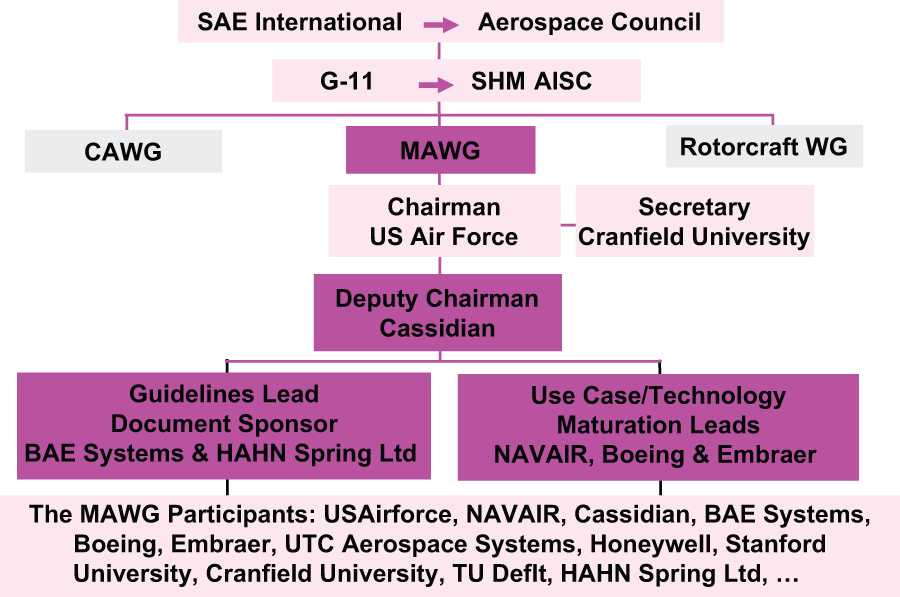
Organisation of MAWG as in 2013.
Military guidelines ARP6245
The first output from MAWG would be ARP6245. MAWG has just started the active compilation of ARP6245 and has set a challenging timescale to produce ARP6245: draft document by the end of 2014 and agreed approved document by the end of 2015. The proposed title, rationale, scope and contents of the document are given in the following.
Title
‘Guidance on the evolution and integration of Structural Health Monitoring systems for military aircraft’.
Rationale
A wide range of engineering disciplines are required to evolve SHM technologies and to integrate these technologies into aircraft systems and into maintenance and operational support systems for military aircraft. These disciplines are required from a variety of stakeholders with varying experiences: military operators, aircraft manufacturers, system suppliers, regulatory agencies, academia and so on. Therefore, clear concise information and guidelines are needed to make each stakeholder aware of the disciplines and requirements of the other stakeholders. The concise information should present, in a clear common language, the guidelines, recommended practices, requirements, processes, standards and regulations required for the evolution, integration and approval of SHM.
Scope
The document is applicable to military aircraft where stakeholders are seeking guidance on the development and approval of SHM technologies and on the integration of these technologies into encompassing maintenance and operational support systems. The document will refer to those guidelines prepared under SAE ARP6461 that are relevant and applicable to military applications.
Contents
During kick-off start meetings in February and March 2013, MAWG proposed the following preliminary contents of ARP6245:
Scope, purpose, approach and overview;
A list of relevant military regulations, standards and other publications from the United States, United Kingdom and North Atlantic Treaty Organization (NATO) along with civil standards, regulations and publications that are considered by military organisations;
Concise information about the design and maintenance philosophies of military aircraft highlighting the military considerations for safe life, DT, reliability centred maintenance (RCM), corrective maintenance, preventive maintenance from servicing to scheduled maintenance to CBM and so on;
Concise information about the essential aspects of structural health management of the three military aircraft types highlighting existing and potential management architectures for integrating SHM;
Concise information about key SHM requirements;
UK-, US- and NATO-accepted processes, standards and regulations for validation, verification and approval/certification of SHM;
Guidance on integrating SHM into avionic and support systems;
Military use cases and implementation examples.
The above preliminary contents may change and develop in response to inputs from the military and industrial participants who expressed interest and will join MAWG in the near future. In addition to these preliminary contents, the progress made by MAWG during the February/March meetings and during a workshop held in April 2013 is summarised in the following sections.
Lifecycles of aircraft products and support systems
For the purpose of the civil and military ARPs, SHM is defined as the process of acquiring and analysing data from onboard sensors to evaluate the state of a structure. Successful integration of SHM within the support systems should be based on sufficient analysis of the phases of the product lifecycle, which includes the following:
Maturation: concepts, R&D, assessments, demonstrations and so on;
High-level definition: intended functions and function use;
Development: definitions, safety requirements, detailed requirements, architecture, design, implementation, test/evaluation, integration, integration test/evaluation, and instructions for production, installation, maintenance and operation;
Production and installation;
In service: product utilisation, enhancements (technology refreshment, upgrade or incremental addition introduced through Phase 3), product utilisation and so on;
Disposal.
These phases should not be confused with the key processes required to ensure the successful conclusions of the phases. The key processes include the following:
Safety assessment analysis including Functional Hazard Analysis (FHA), Failure Mode, Effects, and Criticality Analysis (FMECA) and so on;
Validation to ensure the correctness and completeness of requirements;
Verification to ensure correct implementation;
RCM to logically analyse potential functional failures within a system and determine the optimum maintenance actions required to mitigate the risk of failures.
Configuration management to effectively identify, track, document and maintain development process data.
Since the military guidelines will focus on integration aspects, the MAWG team should not only consider the lifecycle of SHM as an isolated subsystem but also consider the lifecycle of the entire aircraft including its airborne systems (data transfer, communication, power systems, computers and so on) and ground-based systems (logistic, maintenance and operational systems). They should also consider the potential role of SHM in overcoming the threats to structural integrity and should consider SHM as a part of the entire integrated vehicle health management (IVHM) system (Figure 2). Supported by BAE Systems, Azzam and McFeat 1 scrutinised the military processes, standards and regulations used in the United Kingdom. 2 –7 MAWG agreed to incorporate the information presented in Azzam and McFeat 1 in ARP6245 and expand it to cover US- and NATO-accepted practices. The following sections summarise some of the above-mentioned considerations based on the information of Azzam and McFeat. 1
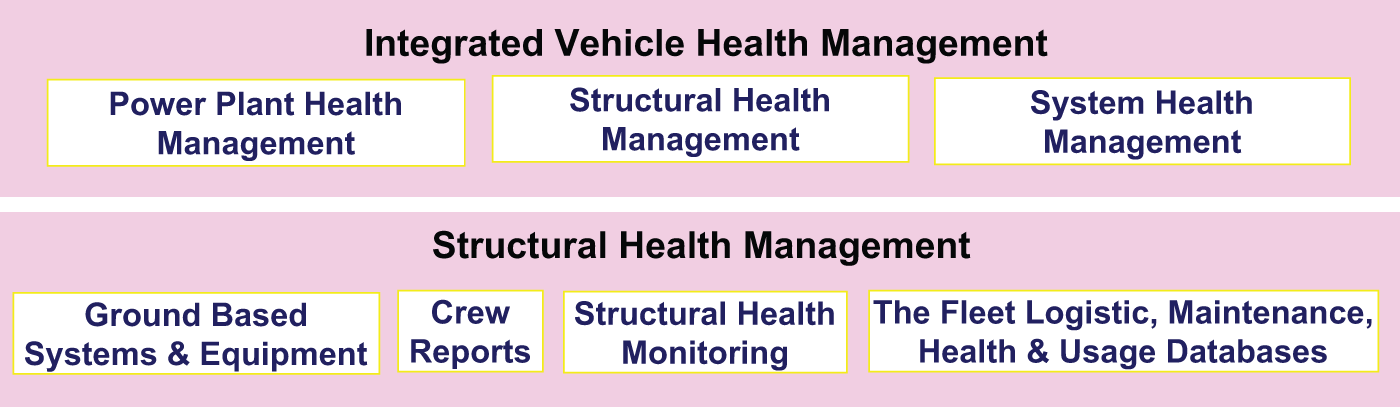
IVHM, SHM and ground support systems.
Designing and maintaining airworthy structures
Figure 3 summarises and compares civil and military maintenance regulations and processes, which are introduced to overcome the threats to structural integrity. SHM must comply with these design and maintenance regulations and should provide improved means for maintaining airworthy structures using existing processes.
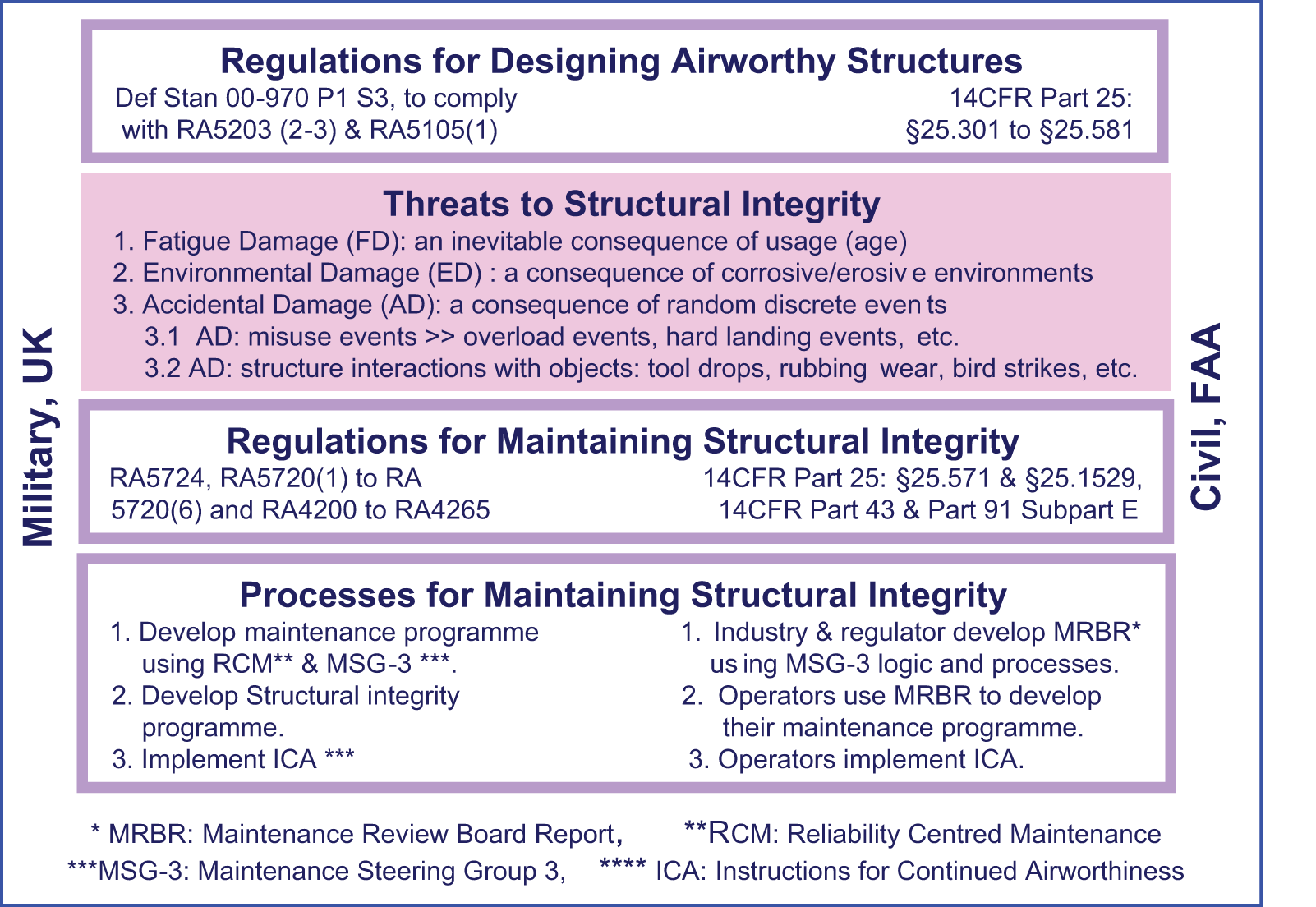
Key UK military processes for designing and maintaining structures.
While DT is the dominant philosophy for civil transport aircraft, military aircrafts are designed and maintained using safe life or DT philosophies to remain safe during their in-service life when subjected to expected operational conditions including design loading spectra and operational environments.
Safe life philosophy
The safe life philosophy requires that sufficient fatigue tests have been conducted to establish confidence that there will be no failures caused by expected operational conditions during promulgated in-service safe lives. The tests can involve specimens, components, subassemblies and full-scale aircraft. For each significant item, several specimens are tested to define a safe life after which the item has to be replaced irrespective of its actual condition. To compensate for uncertainties regarding material properties, operational environments, future mission types and severity of missions, the promulgated safe lives are assumed to be fractions of the lives demonstrated during full-scale tests. For example, if the safe life of a component is promulgated to be 4000 flying-hours, the contractual and regulatory obligations require that the fatigue tests should have demonstrated a life of B × 4000 h, where B can vary between 3 and 5 depending on whether the component is monitored during the operational phase and the accuracy of the monitoring methods, which are also based on the safe life approach. The safe life monitoring approach is based on S-N data where a safe S-N curve is often drawn below the mean to achieve a specified level of reliability: a curve drawn 3 standard deviations below the mean can achieve a 1/1000 probability of premature failure, which corresponds to a 0.999 reliability (1 − probability of failure).
If a safety factor is also introduced such that the probability of usage outside the design spectrum is 1/1000, then the probability of a premature failure under in-service usage will be the product of the above probabilities; that is, 1/1,000,000 flying-hours, which corresponds to in-service promulgated fatigue life with a 69 reliability. The UK Ministry of Defence (MOD) structural integrity programs require monitoring the fleet usage through techniques involving, for example, fatigue formulae, cycle counting, application of S-N data and Minor’s rule. These programs mandate periodic substantiation of promulgated safe lives using in-service data acquired from a number of instrumented aircraft. The substantiation programs are called Operational Data Recording (ODR) programs for helicopters and Operational Load Monitoring (OLM) programs. MOD also requires inspections scheduled at conservative time intervals to detect, evaluate and, if necessary, remove the undesirable effects of accidental damage (AD) and environmental damage (ED).
DT philosophy
The DT philosophy achieves and maintains a target reliability level through the following three pillars of DT: (a) designs allowing the presence and growth of manufacturing defects (MDs), fatigue damage (FD), AD and ED during determined service periods; (b) planned inspections capable of assessing the levels of damage and their effects on the target reliability and (c) planned repairs capable of maintaining the target reliability, and assuring operational safety, during a following service period.
Figure 4 illustrates the pillars of a DT approach where the target reliability is maintained by ensuring that the residual strength of the structure remains above a safe level in the presence of a growing crack as illustrated hereafter. A first inspection was set at half the expected crack growth lifetime T1/2 to give two chances of crack detection before failure; the inspection was performed and a crack was found. The repair was deferred because the crack was so small requiring a long time T2 to cause failure. A second inspection was set at half the expected crack growth lifetime. After T2/2, the inspection indicated that the crack grew faster than expected. The crack was repaired and the structure strength was restored to its original strength. Nevertheless, the structure was assumed to have undetectable repair defect longer than the assumed MD because of potential environmental and repair tool effects. Under service loads, this defect would grow slowly and eventually cause failure after reaching the critical crack length after a period T3. A third inspection was set at half the expected crack growth lifetime to give two chances of crack detection before failure; the third inspection was carried out; a crack was found and repaired.
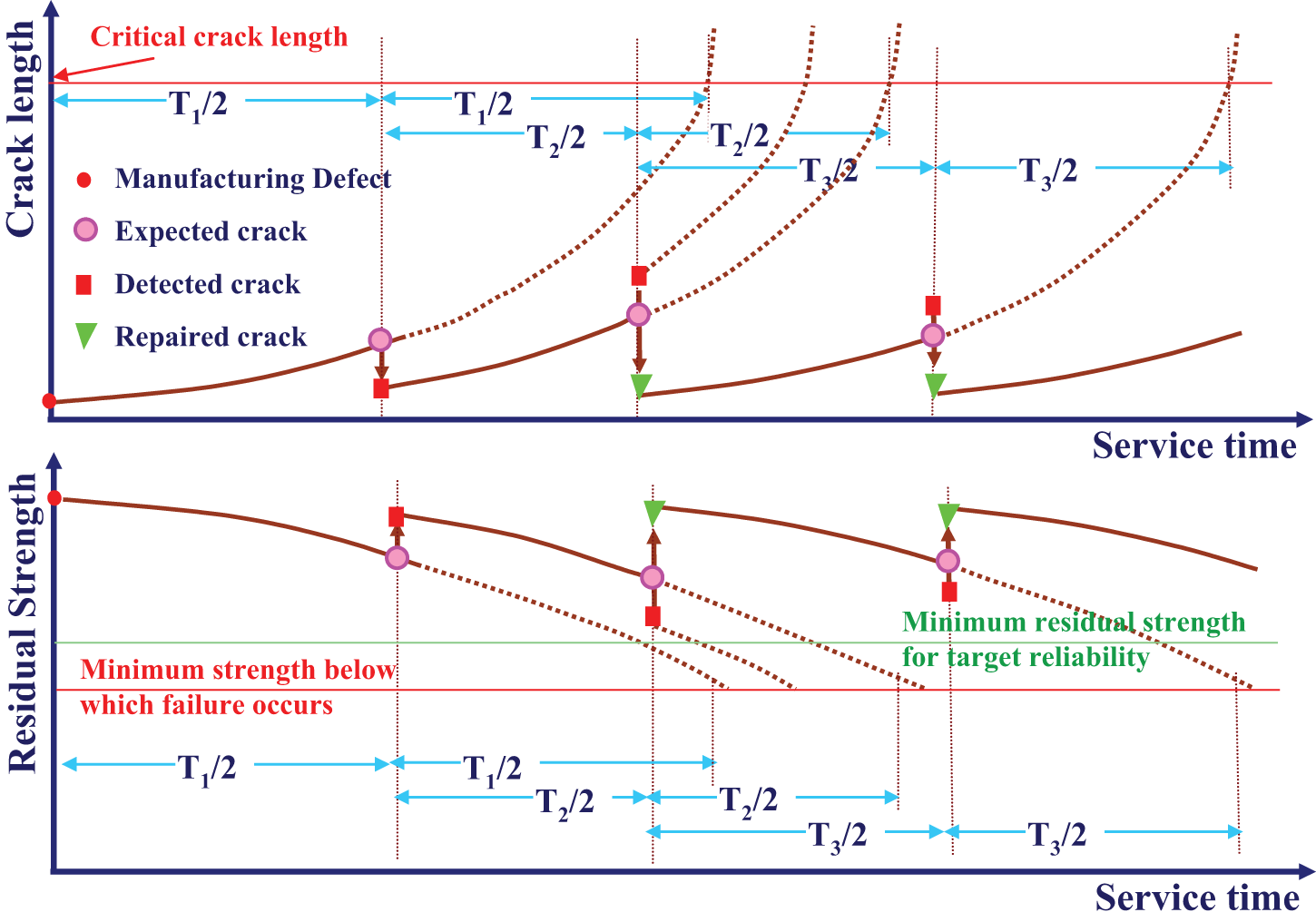
Three pillars of damage tolerance: designs, inspections and repairs.
Integration of SHM within military support systems
The successful integration of SHM within military support systems requires not only the analysis of the aircraft architecture but also the analysis of the architecture of the support systems. Then, each SHM elementary function can be integrated with the optimum number of architectural items, airborne and ground-based items, which may include Remote Interface Units (RIUs), data buses, central computing units and other avionic or IVHM items. The SHM elementary functions are sensing, monitoring, detection, assessment and decision-making/management.
Sensing involves collecting data from airborne sensors.
Monitoring involves the use of sensed data to maintain regular surveillance over factors that can lead to or indicate structural faults. These factors include, for example, loads, usage, impact events, fatigue and/or environments.
Detection involves the use of sensed data to find with pre-defined quality (diagnose) the existence, type, location, and/or extent of structural faults such as crack, delamination, corrosion, erosion and moisture absorption.
Assessment involves the use of detection and/or monitoring results along with design/structural information to determine the current structural status.
Decision making/management involves the use of detection, monitoring and assessment results combined with information about missions or available resources to reason and make decisions about aircraft flight operations, plan fleet utilisation or plan maintenance activities.
Along with military equivalents to the civil guidelines required for sensing and monitoring/detection functionality, ARP6245 should cover processes, standards and regulations required for assessment and decision-making, which are essential for integration into maintenance, mission and flight support systems.
Generally, an elementary function can be hosted in airborne systems or ground-based systems. Figure 5 presents the main architectural entities from which an SHM system can be made.
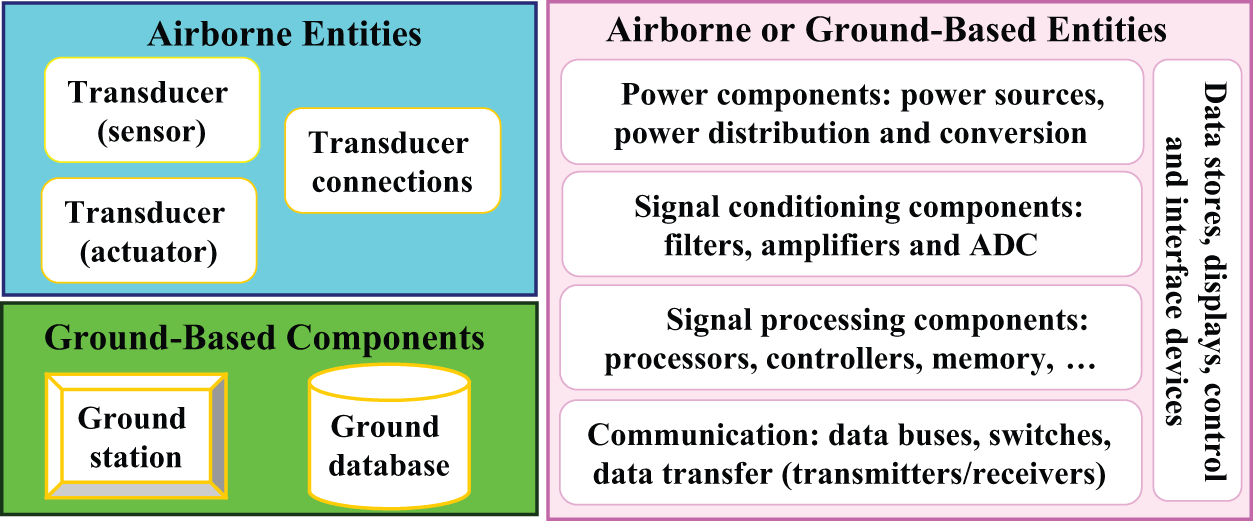
Physical components of SHM architecture.
Architecture is physical and functional descriptions of entities and how they join together to form a system; an entity can be a software/hardware item, a component or a subsystem. The required development rigour of an integrated SHM system and the associated certification challenges and cost–benefits can only be evaluated when adequate analysis of the chosen architecture is made to identify where each SHM entity is hosted-in or interfaced-with airborne systems or ground-based support systems. Figures 6 to 8 show SHM architectural choices for the three military aircraft types and for legacy and new design applications, noting the following:
An architectural choice can be identified by following one path terminated with flight/mission instructions, maintenance/management instructions or both.
For autonomous operations, the delivery of flight/mission instructions requires the allocation of the four elementary functions to airborne components with two high-level architectural choices: (a) interfacing or (b) integrating the decision-making component with FMS/MMS.
The ground-based decision-making and instruction functionality can be interfaced-with or hosted-in maintenance, mission and logistic support systems.
The components delivering elementary functions can be specifically designed for SHM, share resources with other aircraft systems or integrate with other systems such as IVHM.
Different architectures can deliver the same required SHM intended function (e.g. crack detection). An optimum architecture can be selected by assessing the feasibility of meeting military requirements and evaluating factors such as technology readiness level, development timescale, through life costs and weight. Constraints on the choice of the SHM architecture can be imposed by architectural features of other airborne systems and ground support systems.
Differences between architectural choices that deliver the same instructions arise from whether each elementary function is performed by an airborne component or a ground-based component.
The architecture chosen to deliver flight/mission instructions is different from the one chosen to deliver maintenance/management instructions; some of the architectural items of the former can be shared with those of the latter.
The development rigour of the integrated SHM depends on the SHM intend function, the function use and the architecture chosen to deliver the intended function. The development rigour, and hence, the development assurance level of each architectural item is determined from safety assessments at system and aircraft levels that classify the consequences of the item failure conditions.
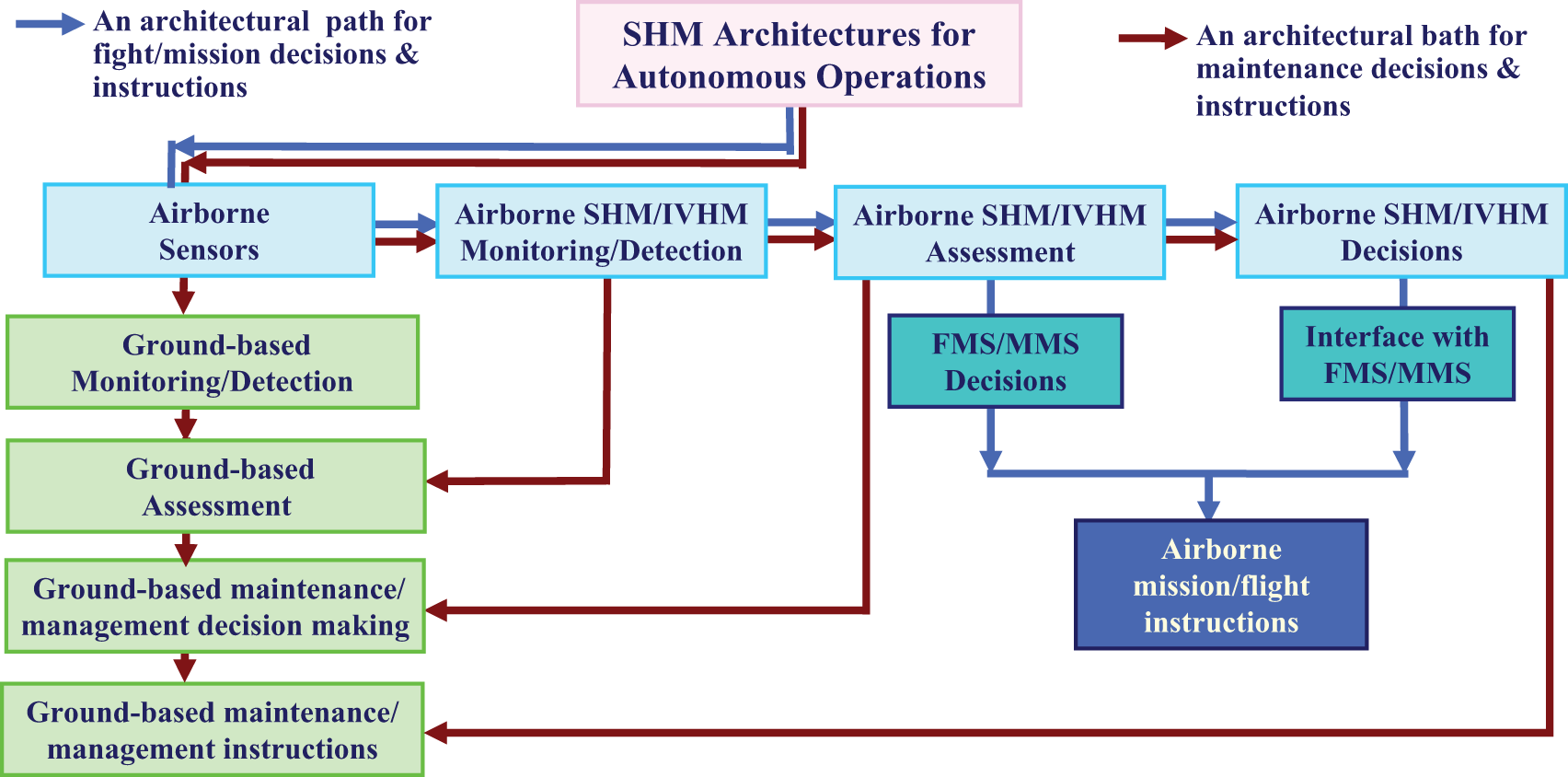
SHM architectures for autonomous operations.
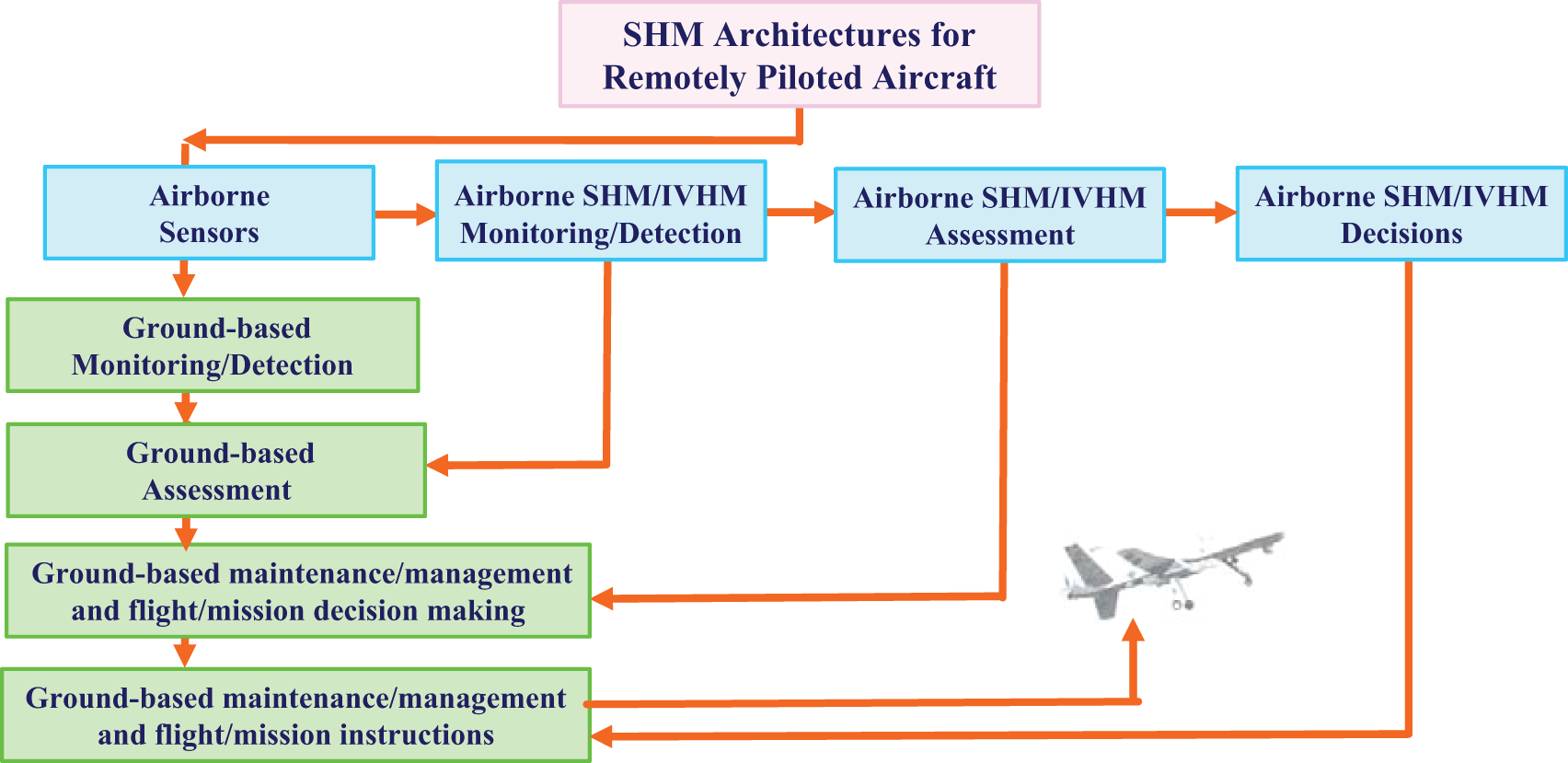
SHM architectures for remotely piloted operations.
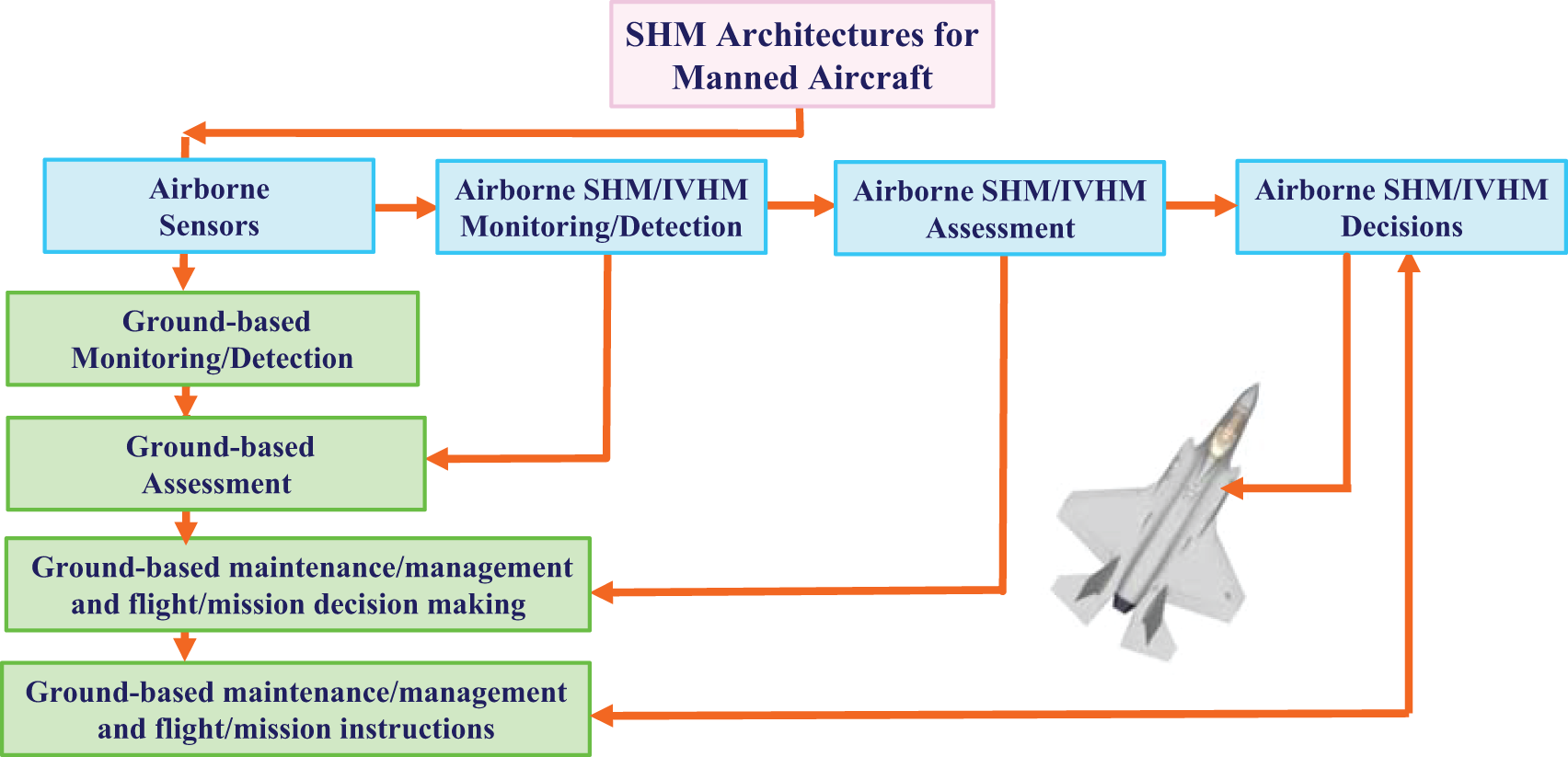
SHM architectures for manned aircraft operations.
ARP6245 should provide guidance covering all potential architectural choices and associated integration scenarios. For each SHM architectural item, the development efforts and certification challenges depend on the integrity levels of the airborne/ground support items to which the SHM item will interface or integrate. The highest certification challenge would be encountered when autonomous operations are required over both friendly and hostile terrain.
MAWG near-future activities
In June, Airbus Defence and Space hosted a workshop at their facility in Germany; Stanford University hosted another meeting in the United States in September 2013. Between these two meetings and up to date, BAE Systems and HAHN Spring Limited have hosted several workshops in the United Kingdom. During these workshops, inputs from MAWG members have been collated, reviewed and discussed to reach consensus between the various military stakeholders. It is anticipated that the recommendations and preliminary work presented in this article will be considered and expanded by the MAWG team. By the end of 2014, a first draft should be circulated for review by various stakeholders including the UK Military Aviation Authority (MAA).
Conclusion
The G-11 AISC team developed an SHM ARP for civil transport aircraft applications. The ARP was published by SAE in September 2013. Some of the guidelines of the ARP can be used for military aircraft. However, the ARP does not address specific military considerations and does not cover the wider spectrum of military aircraft types. Furthermore, the scope of the ARP did not include guidance on the integration of SHM within military aircraft support systems. Therefore, AISC decided to compile a standalone ARP to provide guidance on military SHM applications and cover the topics that are not considered by the civil ARP. The work on the military ARP document started early 2013 and benefited from previous work carried out by BAE Systems, HAHN Spring Limited and Airbus Defence and Space. This article reports on the preliminary progress made and gives recommendations that should be considered and expanded by MAWG. Currently, MAWG assembles members from Airbus Defence and Space, BAE Systems, Boeing, US Air force, NAVAIR, Embraer, Honeywell, HAHN Spring Limited, UTC Aerospace Systems, Cranfield University, Stanford University and TU Delft. Further military and industrial organisations have expressed interest and will join MAWG in the near future. The efforts of this international committee should produce an initial draft by the end of 2014. The leads of MAWG have set a challenging timescales aiming for agreed and approved military guidelines by the end of 2015.
Footnotes
Funding
This research received no specific grant from any funding agency in the public, commercial, or not-for-profit sectors.