






Abstract
Extracting damage features precisely while overcoming the adverse interferences of measurement noise and incomplete data is a problem demanding prompt solution in structural health monitoring (SHM). In this article, we present a deep-learning-based method that can extract the damage features from mode shapes without utilizing any hand-engineered feature or prior knowledge. To meet various requirements of the damage scenarios, we use convolutional neural network (CNN) algorithm and design a new network architecture: a multi-scale module, which helps in extracting features at various scales that can reduce the interference of contaminated data; stacked residual learning modules, which help in accelerating the network convergence; and a global average pooling layer, which helps in reducing the consumption of computing resources and obtaining a regression performance. An extensive evaluation of the proposed method is conducted by using datasets based on numerical simulations, along with two datasets based on laboratory measurements. The transferring parameter methodology is introduced to reduce retraining requirement without any decreases in precision. Furthermore, we plot the feature vectors of each layer to discuss the damage features learned at these layers and additionally provide the basis for explaining the working principle of the neural network. The results show that our proposed method has accuracy improvements of at least 10% over other network architectures.
Keywords
Introduction
Several large-scale structures such as bridges, buildings, aircraft, and defense systems are becoming irreplaceable in modern society. The safety and stability of these structures are fundamental issues that cannot be ignored owing to congenital and acquired damage. Structural health monitoring (SHM), a promising technique, has made progress in implementing damage detection strategies. The ultimate goal of the technique is to identify the presence, severity, and location of the damaged areas by processing measurement signals in various forms such as modal participation ratio, 1 frequency response function, 2 and wavelet coefficients. 3
In the research field of SHM particularly for large-scale structures, the approach that translating the measurement vibration signals into meaningful indices to reflect the actual condition of the structure is one of the most adopted approaches. 4 Indicators (i.e. hand-engineered features) based on various vibration signals such as mode shape–based,5,6 frequency-based, 7 frequency response function–based, 8 and vibration response–based9,10 features have been extensively studied. Among these methods, mode shape–based methods are particularly suitable for the issue of damage localization owing to their spatial arrangement characteristic. As an early-proposed hand-engineered feature to represent damage, the mode shape curvature has a definite physical meaning and has been applied to a variety of structures.11–13 This damage representation utilizes the second-order derivative of mode shape to reflect the damage location, and the center difference method 14 is the most popular method to calculate the mode shape curvature. In addition, detecting damage via this hand-engineered feature does not require the data in undamaged structure. Flexibility, 15 which is the inverse of the stiffness matrix, is another mode shape–based damage indicator. The methods based on this indicator mainly utilize the change in flexibility, before and after damage, to reflect the damage location. This indicator has the advantage in that it can extract the damage features from multiple modes and, therefore, is suitable for multiple damage scenarios and noisy conditions. 16 The capabilities of these methods have been validated via laboratory experiments or real structures. However, developing a hand-engineered feature to represent damage requires not only to study the change in characteristic before and after the damage occurred but also to resolve the problem of robustness to operational and environmental variations.17–19 Moreover, a hand-engineered feature is difficult to apply to a variety of structures, because a certain type of structure (including its material, geometry, and service environment) has specific vibration characteristics. Consequently, a reliable hand-engineered feature relies heavily on expert knowledge, including vibration analysis and signal processing. For example, it is difficult to obtain the data by deploying sensors in a rotating component when health monitoring is conducted on a mechanical system; thus, we cannot obtain all the data of the system. Besides, for the same structure, the detection results maybe different due to random character of the measurement noise. Therefore, a method which has robustness to noise and ability to overcome the interference of data missing is needed.
Deep learning 20 empowers many aspects of modern society, such as object identification, semantic understanding, and image processing. Convolutional neural network (CNN), as an important branch of deep learning, discovers an intricate feature in large datasets by using the error-backpropagation algorithm21,22 to indicate how a computational model should change the internal parameters used to compute the representation in each layer from the representation in the previous layer. Furthermore, deep learning can avoid the shortcomings of the aforementioned hand-engineered features, that is, a deep-learning-based method allows a computation model to be fed with raw data and to automatically discover the representations needed for the target task, and this is the fundamental distinction between the two approaches as shown in Figure 1. Because it can reduce not only the research time but also expert knowledge of physical problems, to date, several research groups have proposed CNN-based methods for damage detection,23–26 and the process adopted in them is the same: first, generating the sample set via vibration testing or numerical simulation; then, selecting the architecture of the network; and finally, training and testing the network. However, the computational model is a black-box, that is, it is hard to understand how it works. 27 Thus, a trained deep-learning model may not adopt to other tasks. To get a reliable estimation, it is vital for us to get qualitative interpretations to these models.24,28 Besides, considerable amount of time and expert knowledge are required to design feature extractors or classifiers.
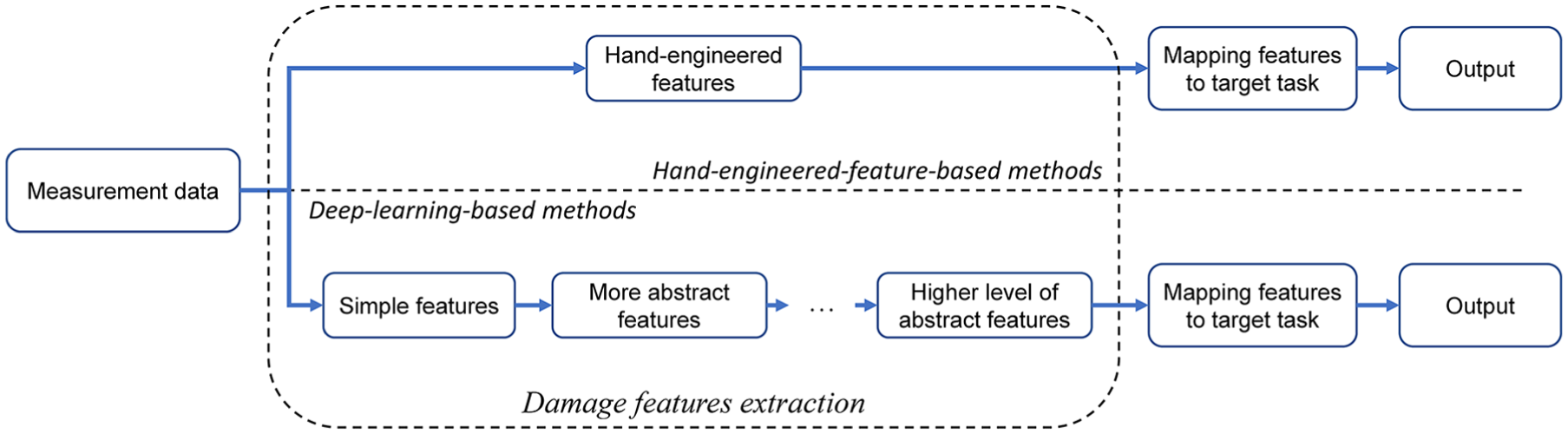
Comparison of computational flow between hand-engineered-feature-based methods and deep-learning-based methods: the deep-learning-based method is a feature extractor that learns representations of data with multiple levels of abstraction via recomposing multiple processing layers.
The main contribution of this study is the introduction of a novel framework of the deep-learning model to realize damage detection in a variety of conditions. In the designing and training strategy of the network, scenarios such as noise interference, measurement data missing, and multiple damage are considered. Then, we take corresponding measures including multi-scale representation learning, residual learning, and dropout technique to solve these problems. A network model needs a large amount of data for training; however, it is difficult to meet this requirement only by sensor measurements. To solve this limitation, we adopt an alternative strategy, which is generating the mode shapes of various beams as training samples via numerical simulation. The results of numerical and laboratory experiments demonstrate that the proposed method can not only learn damage representation from the raw data but also achieve an acceptable accuracy under various conditions. Besides, the knowledge transfer between related tasks can reduce training costs effectively. The transferring parameter methodology is introduced to re-use some parameters in the per-trained network for other target tasks. Moreover, experimental results show that this methodology can reduce training cost without decreasing accuracy. In addition, we discuss what the network learned in each layer and use it to analyze its working principle.
Proposed approach
Function of each module
Most architectures of CNN models mainly contain the convolutional and pooling layers. The convolution computation is the major process of feature extraction and learning. Let us consider a one-dimensional CNN with L hidden layers, and


where

where
The pooling layer is another commonly used layer type, which contains three functions: reduction of feature dimension, feature invariance, and overfitting prevention. In this study, average pooling and max pooling are employed, and they can respectively be described as


where
In this study, a novel network architecture is designed to solve the problems of noise interference and data missing. Concretely, the architecture consists of the following three modules.
Multi-scale module
Stacking multiple convolutional layers on top of each other can give the network an inherent feature of abstracting details in deeper layers.30–32 However, this imposes more burden on the network for learning to reconstruct details from an abstract representation of the signal. Moreover, such a network requires a large number of layers and, hence, is more difficult to train. To circumvent this, this article introduces a multi-scale module to extract as many features as possible from the input signal in the first layer itself. The architecture of this module is first proposed in GoogLeNet.
31
The main idea of this module is based on finding out how an optimal local sparse structure in a CNN can be approximated and covered by readily available dense components. The module contains multiple sets of convolutional filters, and each set has a special filter size. Figure 2 illustrates the architecture of the multi-scale module. In this study, we select four types of convolution kernels, with size
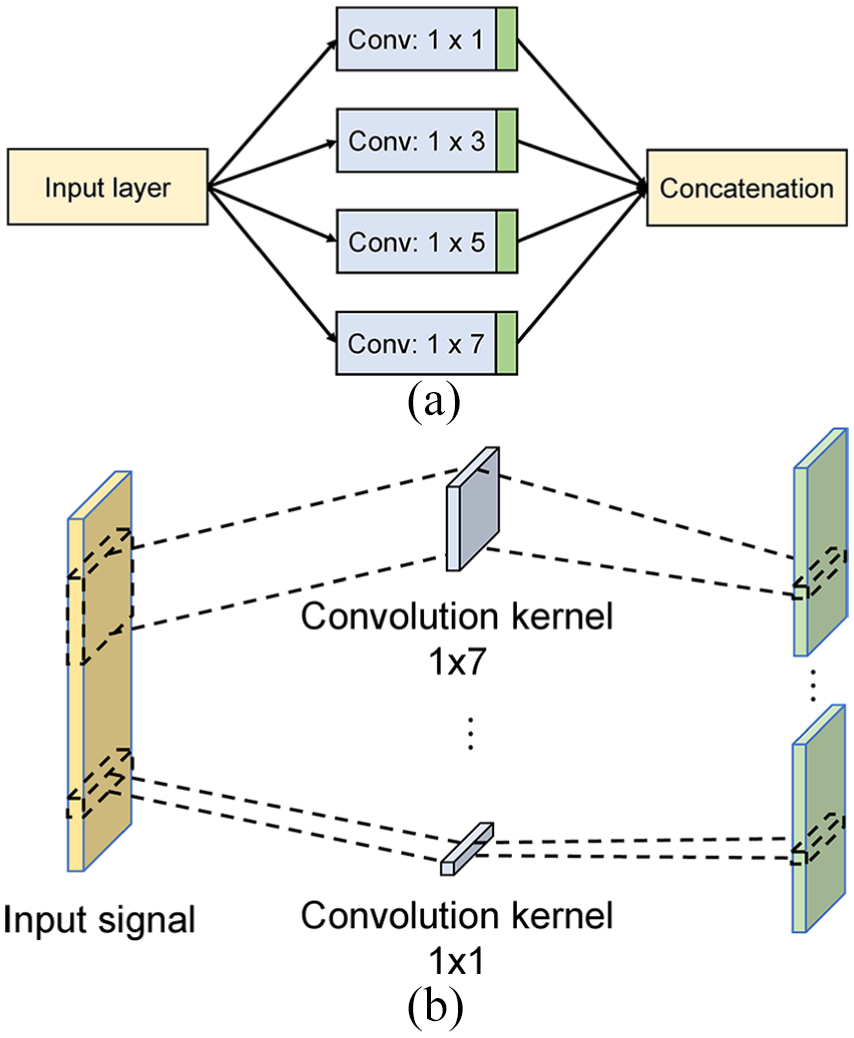
(a) Architecture and (b) schematic of the multi-scale module. Here, the black-dotted bordered rectangles denote the receptive fields of the convolutional kernels, Conv:
Residual learning modules (RLM)
Deeper neural networks are difficult to train, and the residual learning framework is more applicable to these networks because this framework can solve the problem of vanishing or exploding gradients. Furthermore, empirical evidences show that residual networks are easier to optimize.32,37 In this study, we adopt two types of RLMs to every few stacked layers, and the modules can be described as follows


where
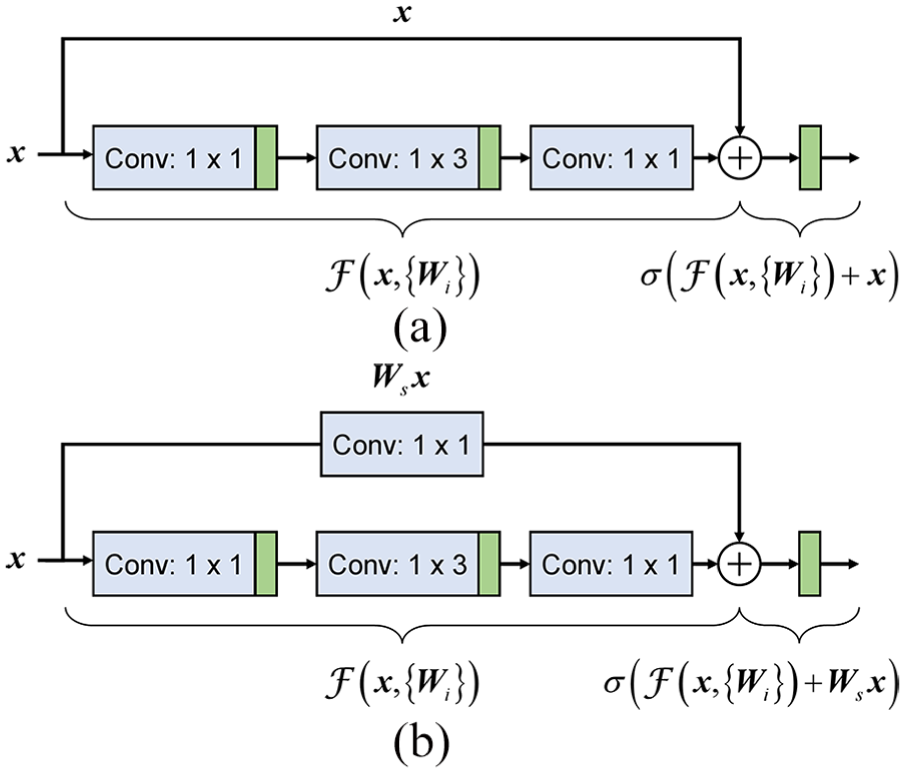
Detailed architectures of two types of RLMs, namely, (a) RLM-A and (b) RLM-B.
Global average pooling
For conventional CNN architectures, the output feature of the last convolution layer is vectorized and fed into fully connected layers.23,24 This connection mode bridges the convolutional layers with fully connected layers. Here, the convolutional and pooling layers are treated as feature extractors, and the fully connected layers are treated as target classifiers or regressions. However, the architecture of the fully connected layers has two shortcomings: first, the weight matrices contain a large number of parameters that require optimization, and the process employs excessive computing resources; second, a large number of parameters may lead to model overfitting, thus hampering the generalization ability of the overall network. Hence, we utilize the global average pooling strategy 38 to replace the traditional fully connected layers. The idea is to generate one feature vector for each corresponding category of the classification or regression task in the last convolutional layer. Instead of adding fully connected layers on top of the feature maps, we take the average of each feature map. The great benefit is that there is no parameter to optimize in the global average pooling, and thus, overfitting is avoided.
Architecture of the neural network
We tried several versions of networks during our verification stage. The most successful particular instance is illustrated in Figure 4, with the detailed configuration listed in Table 1.
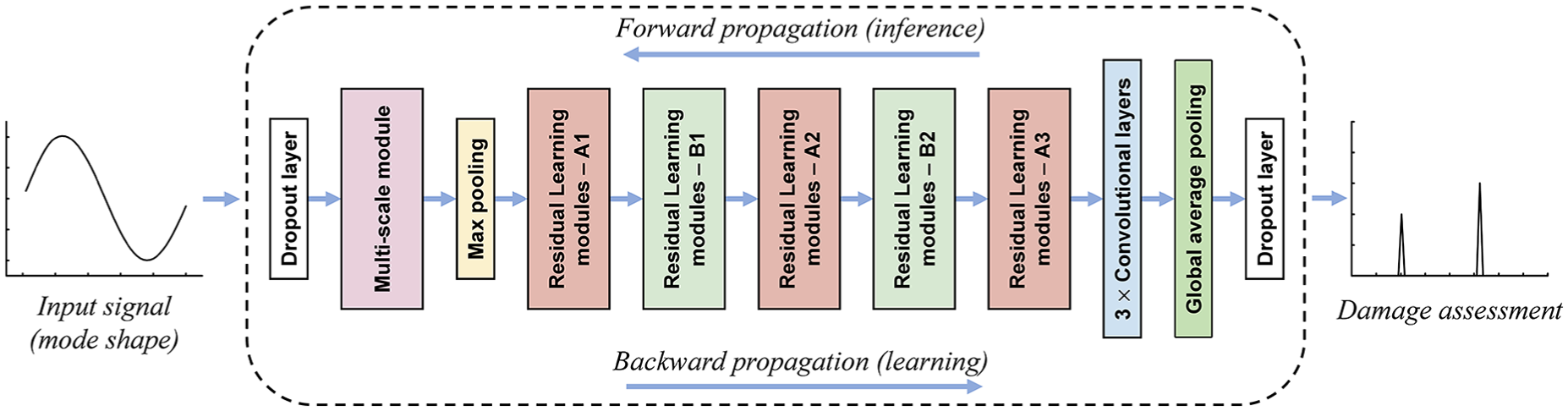
Overall schema for the proposed network architecture.
Detailed configuration of the proposed neural network architecture.
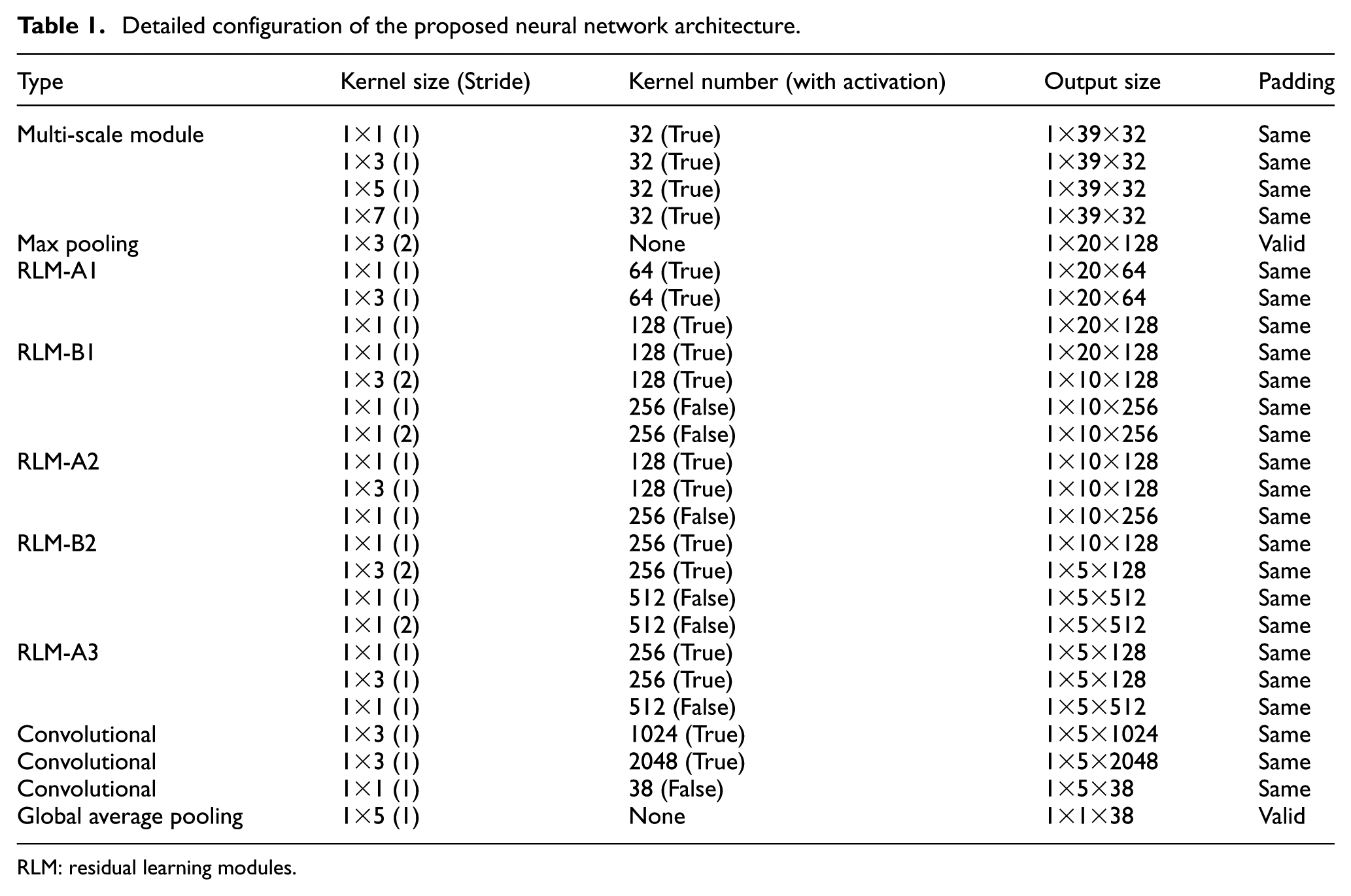
RLM: residual learning modules.
When a dataset consisting of mode shape is given, the network first uses the multi-scale module to learn damage features at various scales, and a max pooling layer is followed to down sample the feature vectors. Then, three RLMs A and two RLMs B are repeatedly stacked to learn the high-level features. Next, we designed three convolutional layers to extract features from the previous layer, and the third convolutional layer can reshape the output dimension. It should be mentioned that the size of the last convolutional layer is
Training strategy of the network
Generation of samples and labels
The finite element method (FEM) is adopted to model the Euler–Bernoulli beams with single or multiple damage. Then, the modal computation is conducted to obtain the mode shape data as training samples, as shown in Figure 5. Moreover, local damage is introduced via the stiffness degradation method, which can be described as

where

FEM model of a damaged beam: the damage locations (marked in gray), beam dimension, and material properties are randomly chosen.
Moreover, various boundary conditions are considered, including pinned–pinned (P–P), clamped–free (C–F), and clamped–clamped (C–C). In this way, the network can learn more types of damage representations thereby improving the applicability. The strategy for generating the samples is described as follows: (1) randomly choose the boundary condition, dimension, and material parameters of beams; (2) randomly choose p elements to decay their stiffness, with p ranging from 1 to 3; (3) randomly choose p damage coefficients for selected damaged elements, with

where
Processes (1)–(5) are repeated to obtain the sample set, and that contains
Loss function
Regression and classification are two fundamental tasks in supervised learning, which are used to predict the relationship between input and output variables. Concretely, a regression problem is equivalent to a function fitting that choose a function curve to fit the given data while predicting the unknown, and the output is continuous. The classification model can map the regression results to (0, 1) via a function (e.g. SoftMax) 21 and then define a threshold to classify the input. For damage detection issues, particularly when multiple damage occurs in a structure and the damage degrees need to be predicted, the regression model might be more suitable.
To minimize the output of the objective function, an algorithm for first-order gradient-based optimization of mini-batch stochastic gradient descent, called Adam, 41 is employed as the optimization algorithm. This method is based on adaptive estimates of lower order moments and is well suited for problems that are large in terms of parameters. Furthermore, we choose the mean squared error (L2 loss) as the loss function, and it can be written as

where
Training results
The training and testing of the proposed network are performed on the same software and hardware platform: the processor and graphics card types are Inter Xeon E5-2623 and Nvidia GTX 1080Ti, respectively. We adopt the Python packages NumPy and SciPy to program the FEM model of the damaged beams, and then calculate the mode shapes, that is, generate the samples and labels. Then, the deep-learning framework TensorFlow 42 is employed to establish, train, and test the network model. The graphics processing unit (GPU) acceleration technology is used, which can improve the training speed of the network remarkably.
We trained the proposed network with the generated dataset for 80 epochs, and it required approximately 8 h. The detection accuracy and loss value of each batch (a batch contains 512 samples) are recorded and displayed in Figure 6. As demonstrated in plots, the accuracy rate increases slowly and finally stabilizes around 0.8, and the curves of loss values have the same varying tendency. In a comparison of the performance in the training and test sets, the network achieves the same level of accuracy in training and testing sets. Moreover, the fluctuation of accuracy and loss in the training set is less than it is in the testing set, because the testing data are completely novel for the network. Therefore, the performance in the testing set is relatively unsteady.
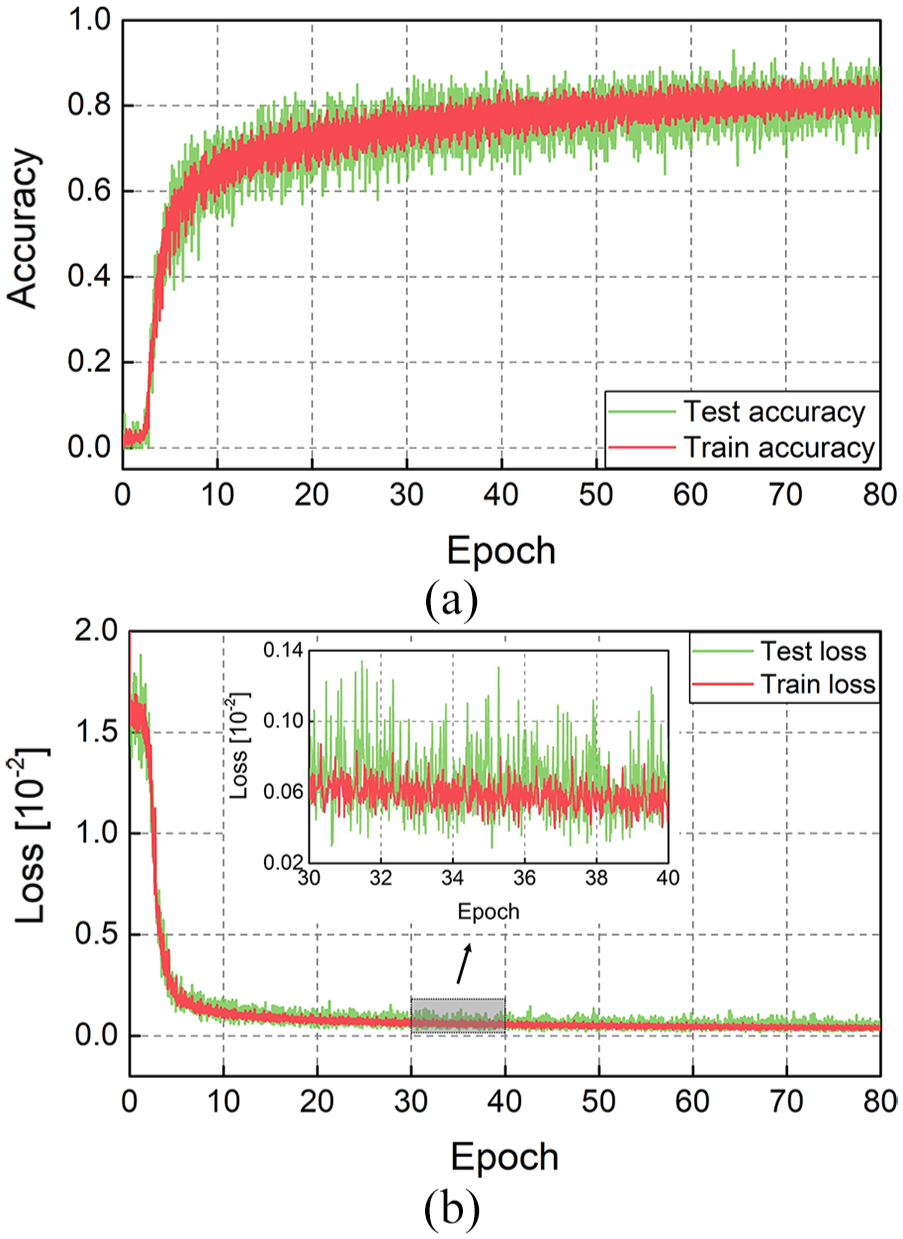
(a) Detection accuracy and (b) loss evolution during the training process.
Network evaluation via numerical simulations
Damage detection in noisy scenarios
A simply supported beam with a rectangular cross section of length 0.7 m, width 0.05 m, and thickness 0.01 m is considered as the test specimen. The Young modulus and density are 210 GPa and 7860 kg/m3, respectively. Rayleigh damping is used to simulate the damping effect which can be expressed as

where
Figure 7 displays the time domain responses of the fifth node and the first–third mode shapes extracted using the modal identify technique. The curves are smooth and no abnormality at the preset damage locations is observed; thus, it is difficult to locate the damage directly from the noisy mode shapes as the damage degree is small. The SNR, the ratio between the average power of the noisy mode shape
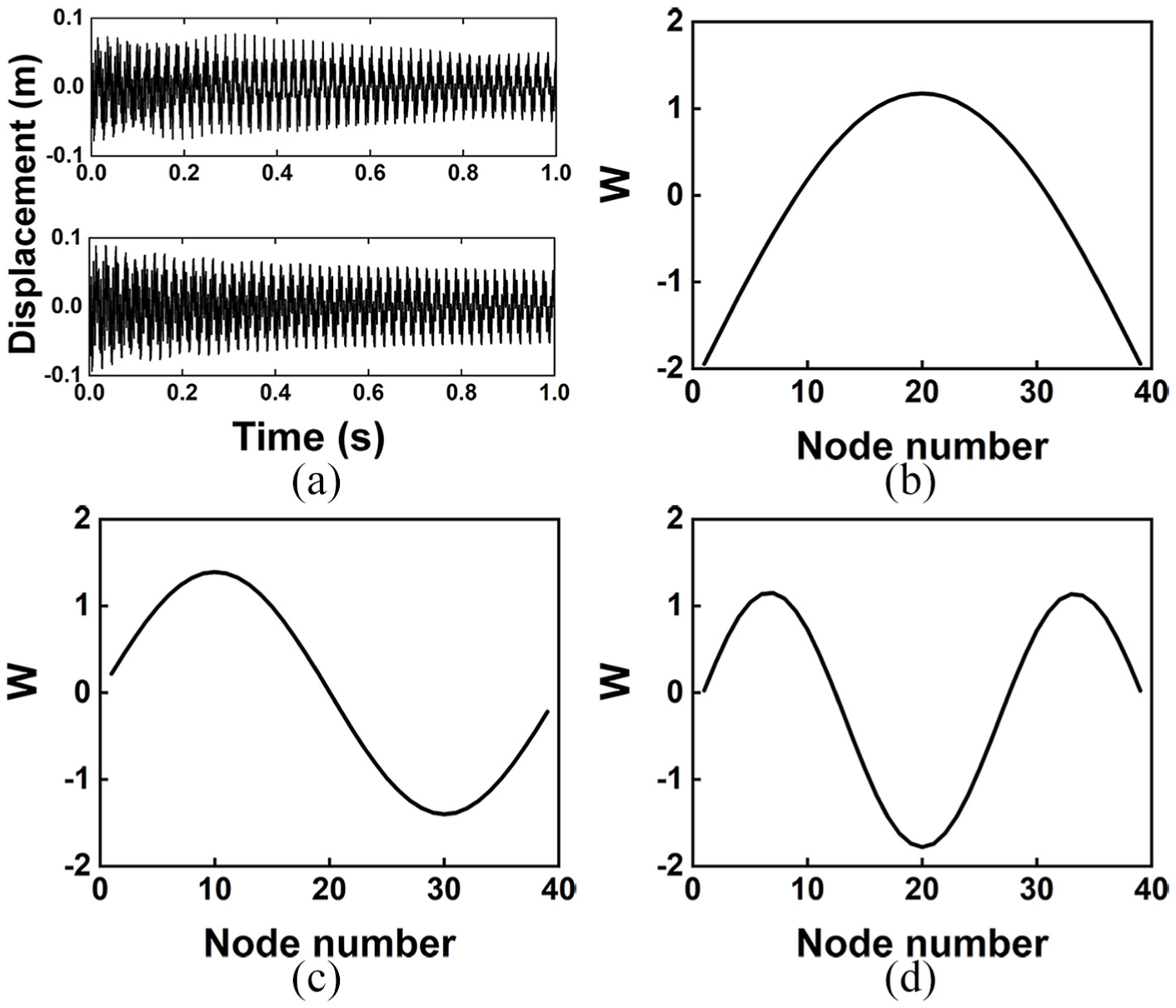
(a) Time domain responses of the fifth node in damaged (top) and undamaged (bottom) conditions and (b–d) the first–third noisy mode shapes.
Different orders of modal frequencies and the corresponding SNRs in damaged and undamaged (indicated in brackets) conditions.
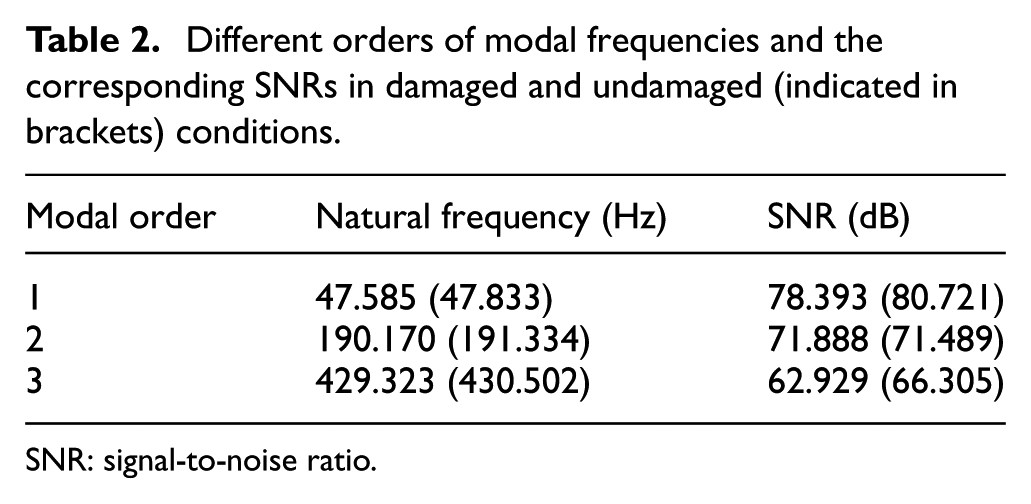
SNR: signal-to-noise ratio.
Figure 8 shows the predictions of the network; it can be observed that obvious damage features (i.e. singular peaks) appear around the preset damage locations. The results demonstrate that the proposed method can identify the damage based on the mode shape data directly and has robustness against measurement noise. Moreover, the predictions of undamaged mode shapes are almost zero; it means that the network has learned the damage feature and can process a scenario which we have never seen before.
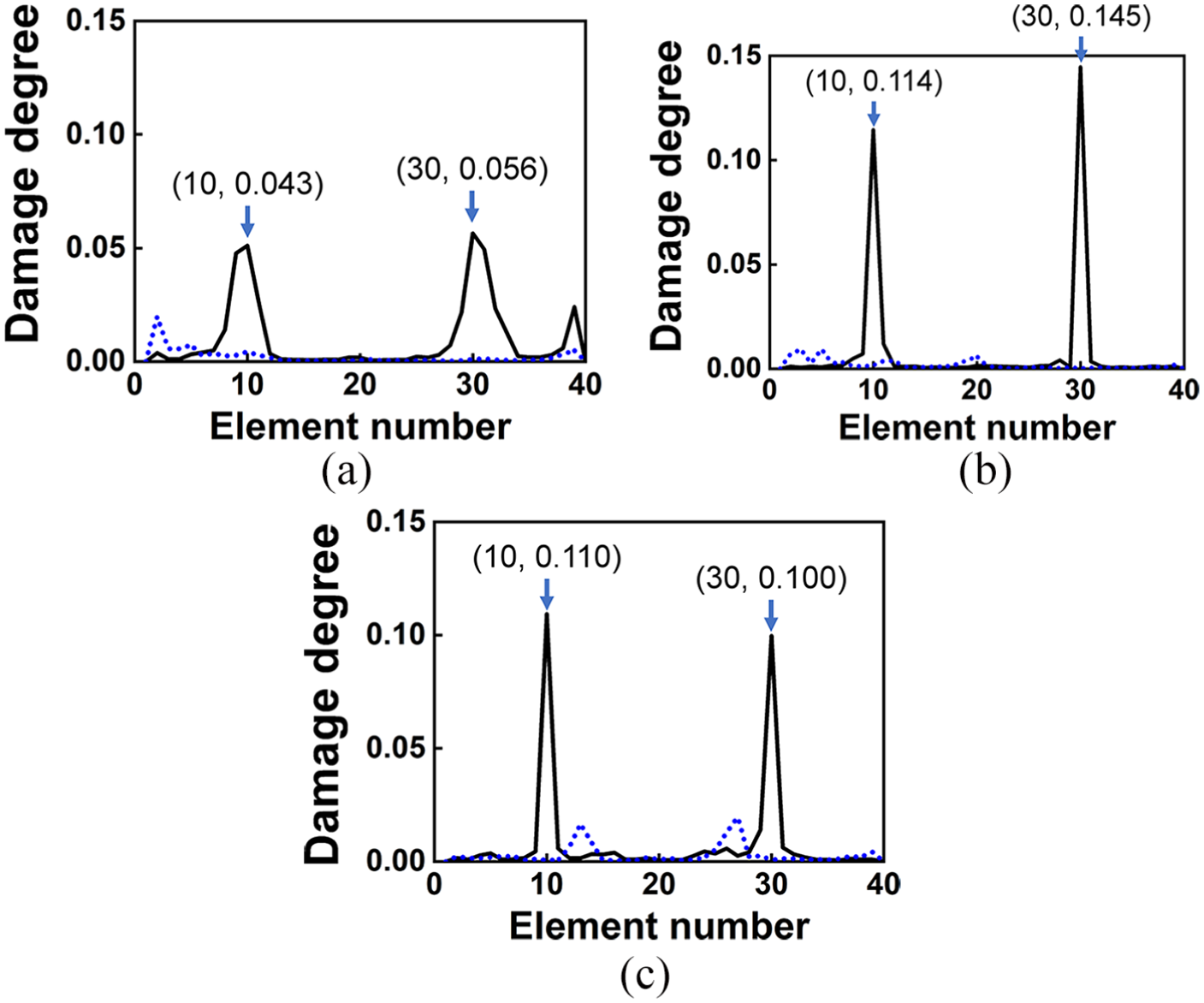
Damage detection results obtained by (a–c) first–third mode shapes (marked in black line) and the corresponding undamaged conditions (marked in blue dots).
In addition, we utilize the Monte Carlo simulation to separately evaluate the detection capability of the trained network in various noise environments. Each sub-simulation contains
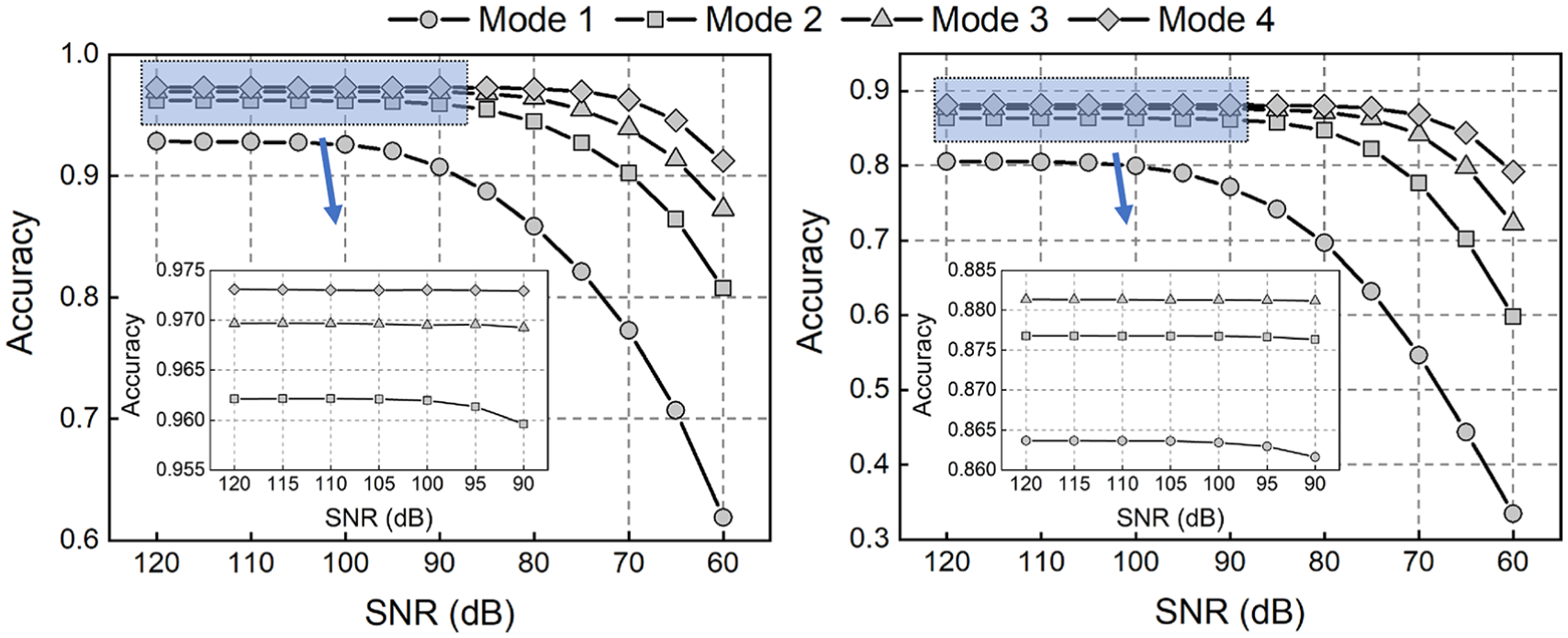
Detection accuracies of single (left) and multiple (right) damage scenarios in various noisy environments obtained by Monte Carlo statistic.
Data missing test
In real applications, the problem of data missing is unavoidable because of the limitation of measurement and improper data preservation. Figure 10 displays Three data missing scenarios and the corresponding detection results. The incomplete signals are based on the mode shapes mentioned above (as shown Figure 7(b)–(d)), about 10%, 20%, and 30% of the total. We utilize the zero value to fill in the missing fields in the computation to maintain the continuity of data, and the noise interferences are also added. According to the detection results, the proposed method can extract damage features from the incomplete input, which demonstrates that proposed method based on the deep learning has robustness to data missing and noise interference.
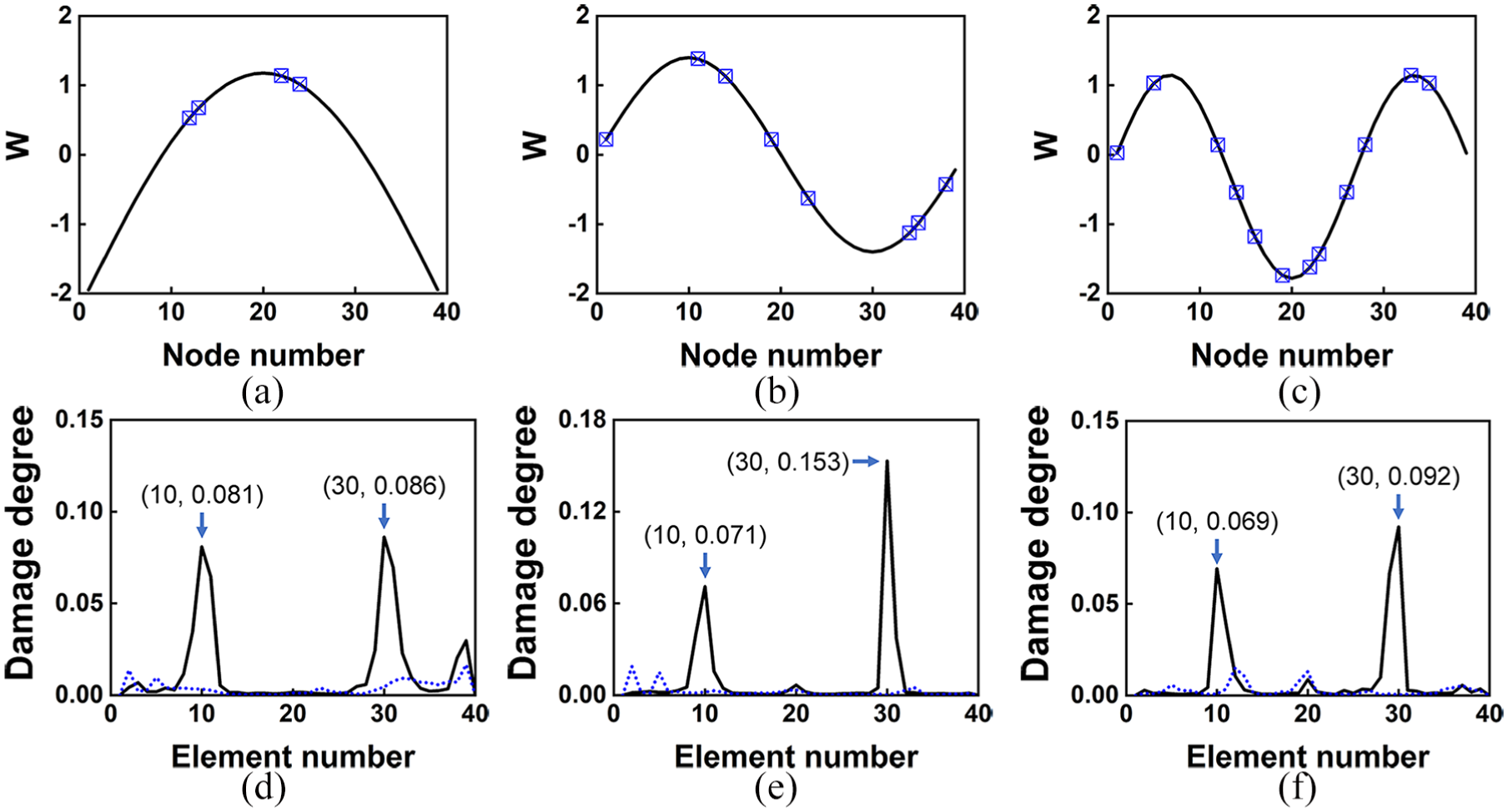
(a–c) Noisy mode shapes with missing data and (d–f) the corresponding detection results. Here, blue boxes denote the locations of missing data.
To validate the capability of the proposed method in data missing and noisy scenarios, the Monte Carlo evaluation is conducted again and the results are displayed in Figure 11. Here, each sub-simulation contains
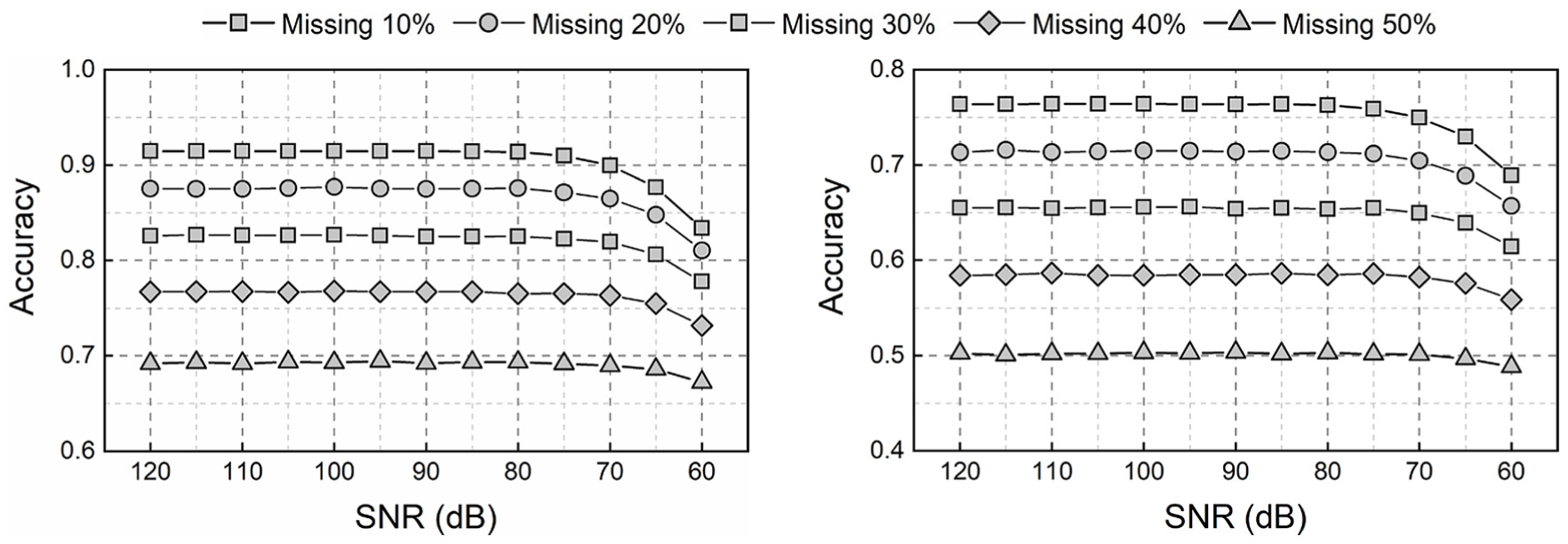
Assessments of single (left) and multiple (right) damage detection accuracies in data missing and noisy scenarios.
Experimental validations
This section describes the laboratory experiments conducted to validate the proposed deep-learning-based method. Two types of beam-like structures and two verification means are selected to demonstrate the validity of the proposed method. Concretely, the experiments are organized as follows:
Selection of single observation data to test the damage identification ability of the network in actual scenarios.
Selection of the cracked rotating shafts as test specimens and measurement of the mode shape 100 times to test the detection accuracy of the network.
Note that the network used here is the same trained network used in “Network evaluation via numerical simulations” 4, and the network is trained via numerical data.
Damage detection for cracked beams
The experimental investigations are based on the WavStructDamAs benchmark provided by Professor Katunin on his website.44,45 The benchmark consists of measurement data obtained from vibration-based testing of composite structures. The data we choose to verify the detection capability of the proposed method are mode shapes of beams with single and multiple cracks. The length, width, and thickness of the test beam are 250, 25, and 5.28 mm, respectively. Moreover, the beams are made of a 24-layered glass fiber–reinforced epoxy-based laminated composite. The mode shapes are measured by scanning LDV Polytec PSV 400.
The measurement mode shapes contain 39 sampling points, and the locations of the two cracks (both depths are 1 mm) are, respectively, 86 and 149 mm from the left fixed end, and the first- to third-order mode shapes are shown as Figure 12(a) to (c). As can be seen from the diagrams, there are no abnormal changes around the preset crack locations, and the mode shape curves remain smooth. These measurement results demonstrate that it is difficult to detect the local damage from the mode shape directly. By contrast, the damage features can be extracted completely by the trained network, except the result based on the first mode shape. Moreover, the trained network eliminates the noise interference while extracting the damage features, and this result proves that the proposed method has the capability of resisting the measurement noise.
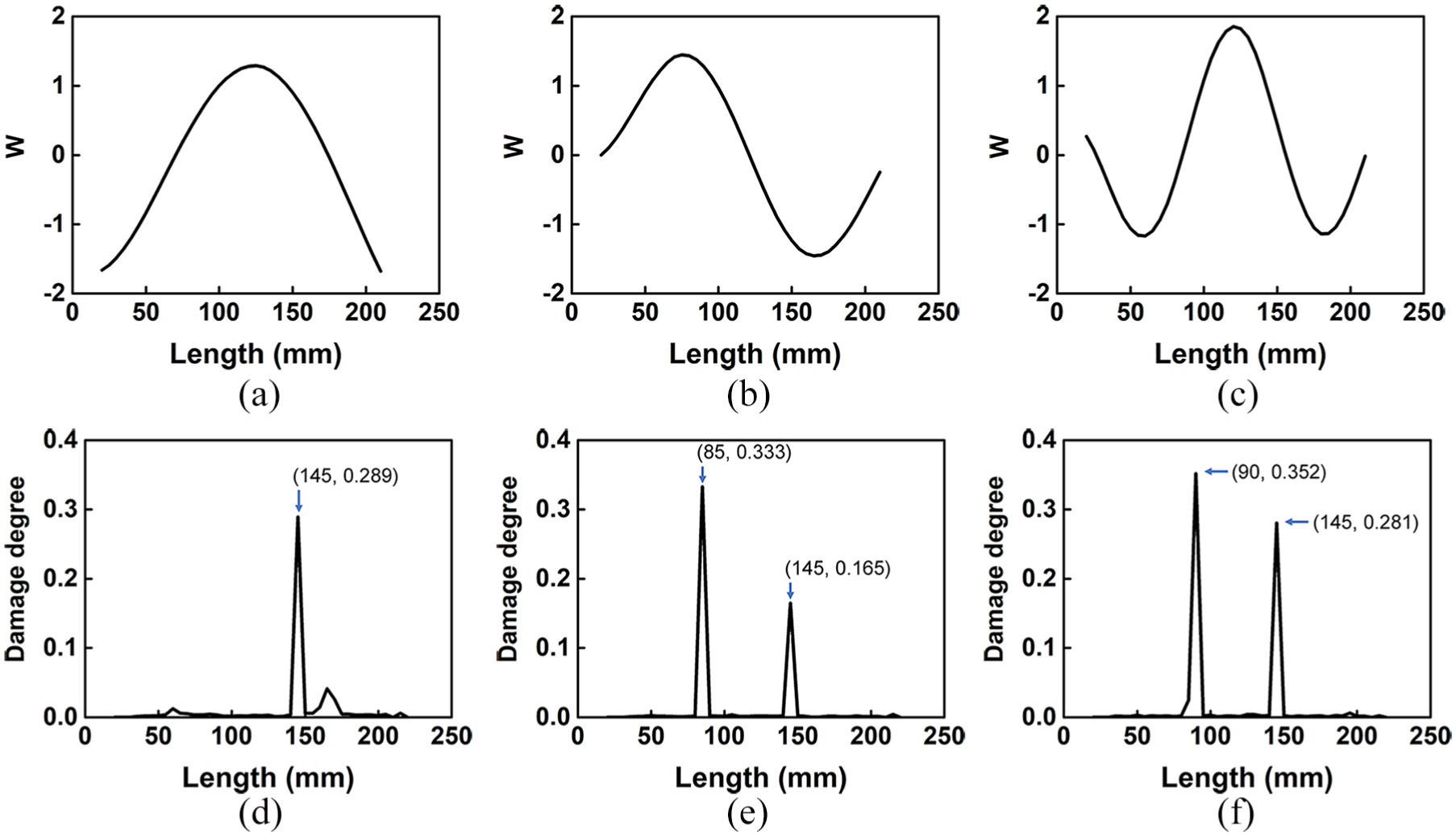
Measurement mode shapes of the cracked beam and detection results: (a–c) the first–third order mode shapes and (d–f) the detection results of the proposed network.
Another set of measurement data is chosen, and the test specimen contains two cracks and their locations are, respectively, 50 mm (depth 1 mm) and 119 mm (depth 2 mm) from the left fixed end. Here, we remove certain data artificially to verify the detection capability of the proposed method via experimental means, as shown in Figure 13(a)–(c). The locations of the missing data are selected by the authors; the original measurement data are complete. The detection results show that the network can extract damage features from incomplete data, whereas the missing data and measurement noise have no obvious influence on the feature recognition.
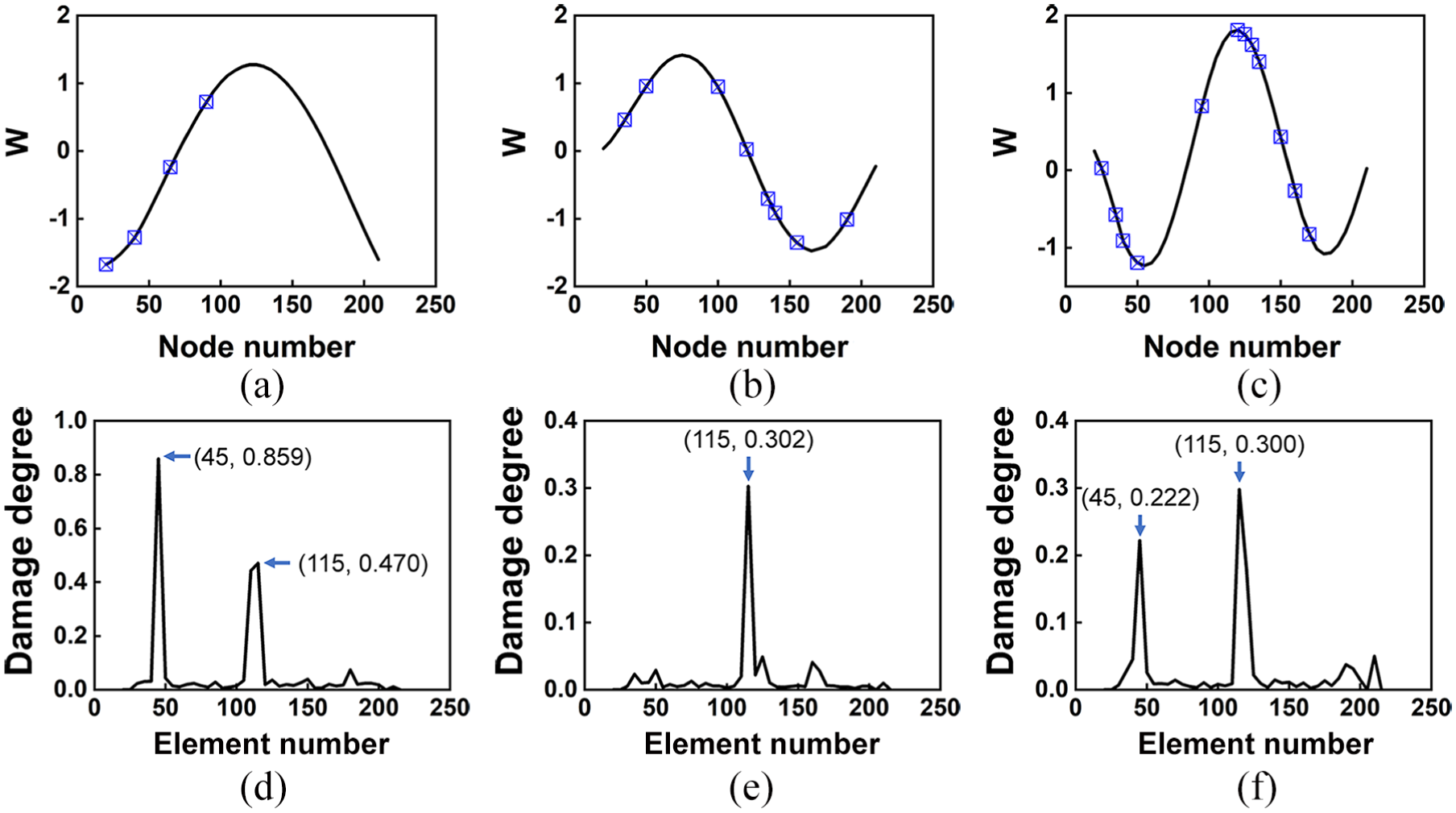
(a–c) Measurement mode shapes of the cracked beam with missing data and (d–f) detection results.
Transferring parameter methodology
In practical applications of SHM, large amounts of measuring signals are difficult to maintain a consistent length, and the number of predicted damage locations also vary. For a trained network, when the length of the input signal and the output prediction are different from the training samples, the traditional way is training a novel network to fit the new scenario; however, it implies a waste of computing resources and time. Therefore, we utilize the transferring parameter methodology 46 to make the trained network parameters adapt to novel input–output relations. The key idea of the transferring parameter methodology is that the internal layers of the CNN can act as a generic extractor of a mid-level signal representation, and then be re-used in other target tasks. Figure 14 illustrates the flowchart of the transferring parameter approach. First, the network is trained on the source task with a large amount of available labeled mode shape data, as shown in the top. Pre-trained parameters of the internal layers of the network are then transferred to the new target tasks, as shown at the bottom. To compensate for the different of the source and target data, we re-train the last two convolutional layers on the labeled data of the target task.
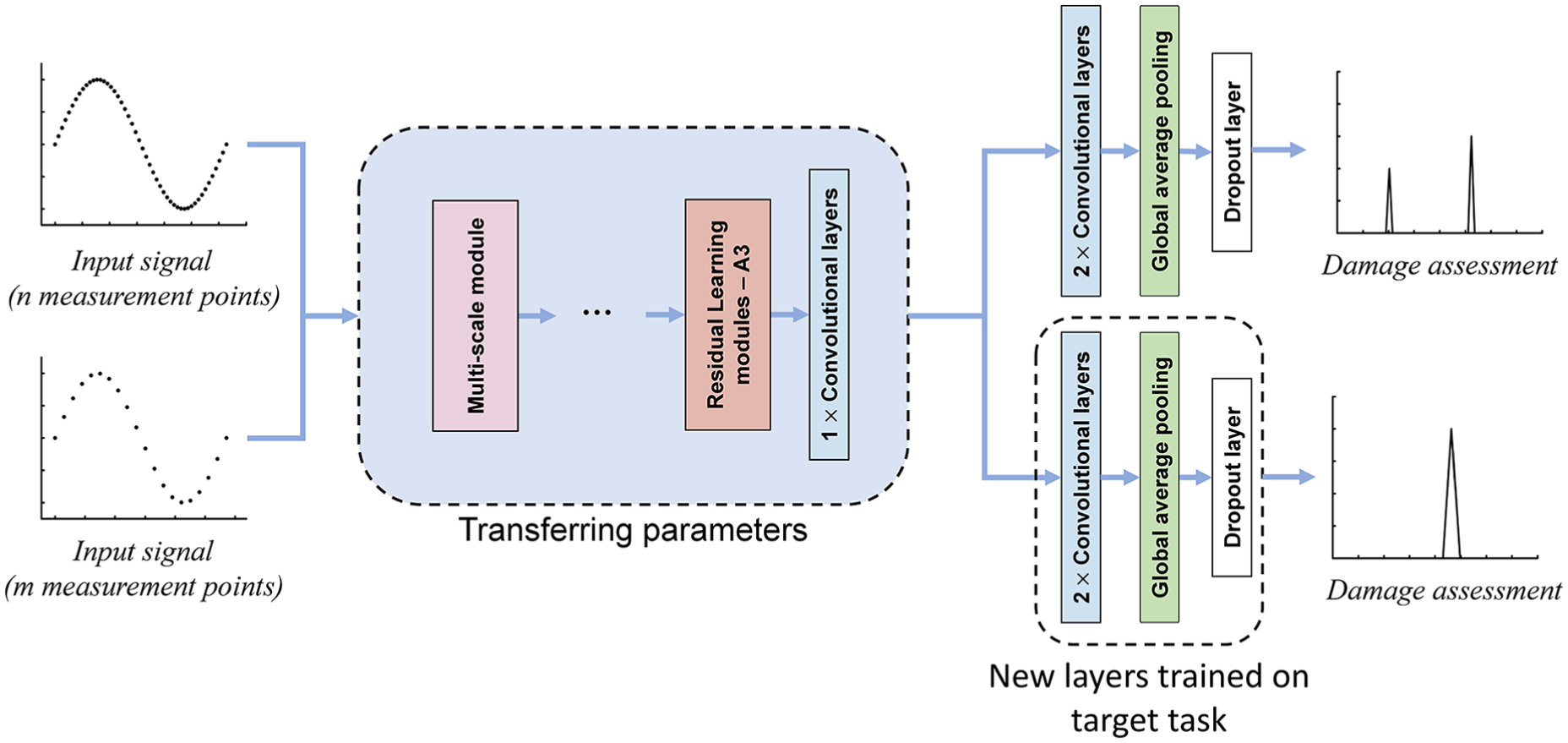
Transferring parameters of the trained network.
Furthermore, benchmark data are selected to demonstrate the detection capability of the network. Figure 15(a)–(d) displays the first- to fourth-order mode shapes of a single cracked beam, and the crack is 150 mm from the left fixed end. Each of the mode shapes contains 44 sampling points. We retrain a network via the transferring parameter technology and use these benchmark data to test the detection capability (as shown in Figure 15(e)–(h)). The retrained network can detect all damage locations according to the measurement mode shape data, except for the second order. It should be mentioned that we just generate
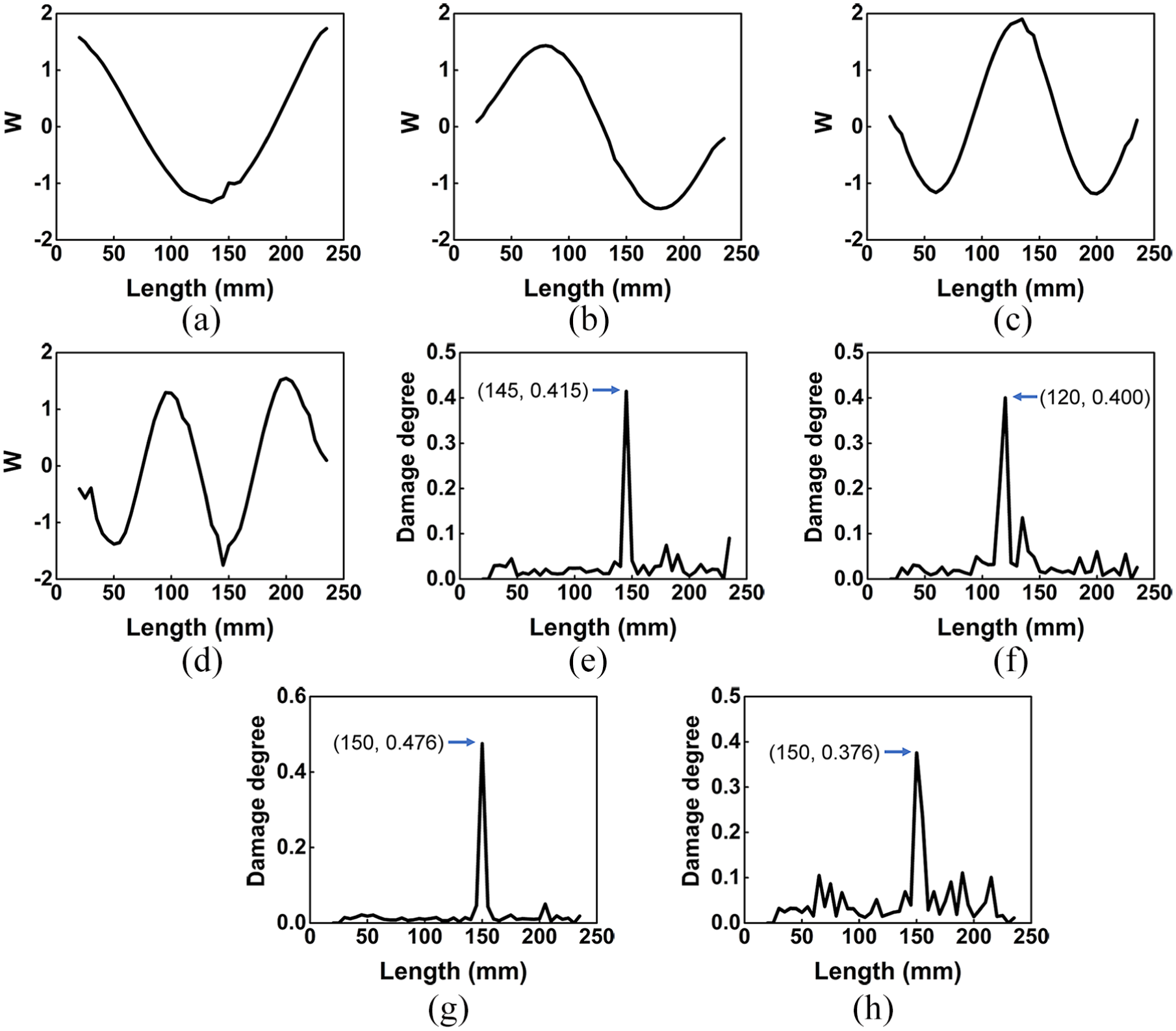
The first- to fourth-order mode shapes of the cracked beam and corresponding detection results: (a–d) mode shapes and (e–h) detection results.
To validate the damage detection capacity for other beam-like structures, we conducted an experiment on cracked rotating shafts. The experiment is designed on a Bently Nevada RK4 Rotor Kit as displayed in Figure 16. Two cracked rotating shafts are used as the test specimen, and we, respectively, introduce single and double cracks (all with depths of 2 mm) via wire-electrode cutting. The diameter and length of the shafts are 10 and 550 mm, respectively. The crack locations are as follows: for single case, 310 mm from the left bearing, and for the double crack case, 180 mm and 310 mm. We totally measured each sampling point in two speeds 100 times and obtained 100 mode shape data in each revolving speed. The speed control voltages are selected as 1 and 1.5 V, which correspond to the speeds 1920 and 2910 rpm, respectively. Owing to the limitations of the measurement instruments, we used three eddy current displacement transducers, Bently Nevada 3300 Xl, to capture the displacement when the shaft is rotating. Concretely, the transducers are moved by hand within an effective area, with about 432.5 mm, and measurement mode shapes contain 18 sampling points.
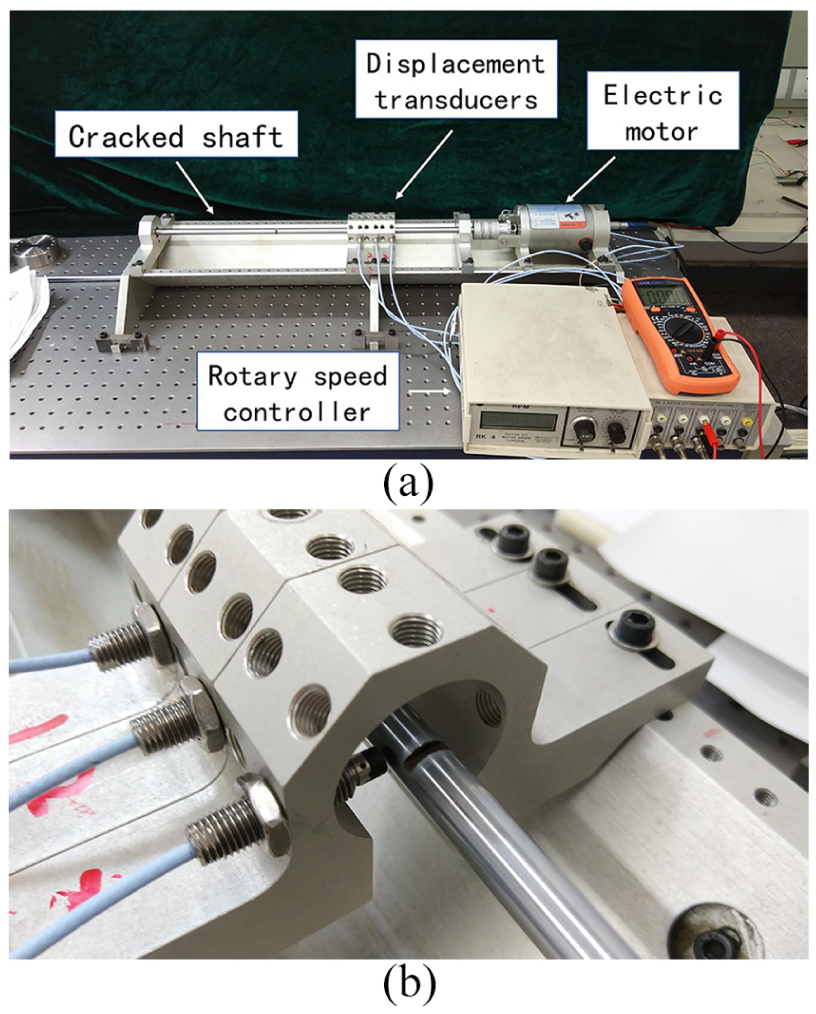
Setup of the cracked rotating shaft experiments: (a) experimental setup and (b) measurement details.
We adopt the transferring parameter method, as shown in Figure 14, to retrain a novel network for this experiment. Then, the trained network is used to detect the crack location, and the statistical results are evaluated as shown in Figure 17. Here, we only select the displacement mode shapes at the first critical speed to verify the proposed method owing to the limitation of the experimental platform. According to the figure, the proposed method can obtain reliable accuracies, of more than 70% in single-crack scenarios and more than 50% in multiple-crack scenarios.
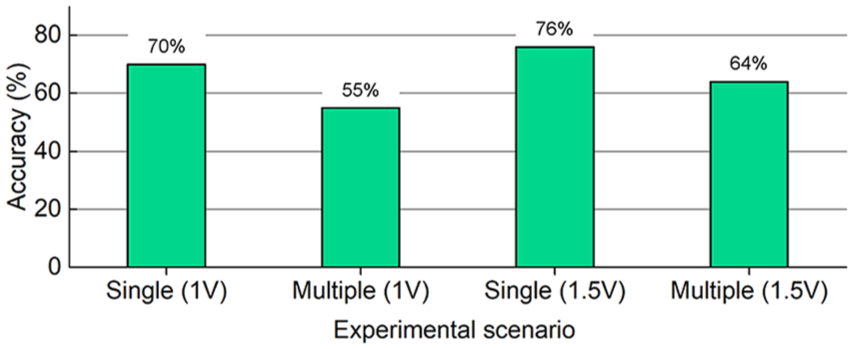
Accuracies of the single and multiple cracked rotating shafts at different speeds.
Discussion
Comparing with existing hand-engineered-based methods
To demonstrate the prowess of our proposed deep-learning-based method, we compare the performance of our method to four existing algorithms (mode shape curvature, 14 flexibility, 15 modal strain energy (MSE), 47 and a wavelet-based method). 3 The specimen used for comparison is a simply supported beam with 40 elements. A 10% stiffness reduction is introduced in the 24th element and the first mode shape is displayed in Figure 18(a). The mode shape curvature method cannot detect the damage under a noisy condition (Figure 18(b)), as a result of the amplification of noise. Although the other three methods can detect the damage (Figure 18(c)–(e)), some drawbacks still exist: (1) the data before and after the occurrence of structural damage are needed when we use the flexibility and MSE; (2) MSE needs to know the knowledge of material properties and boundary conditions; and (3) for the wavelet-based method, the boundary effect of wavelet on a limited signal may cause the abnormal wavelet coefficients at the ends of results which will narrow the detection range. However, our proposed method can detect the damage directly and accurately without any drawbacks as mentioned above (Figure 18(f)).
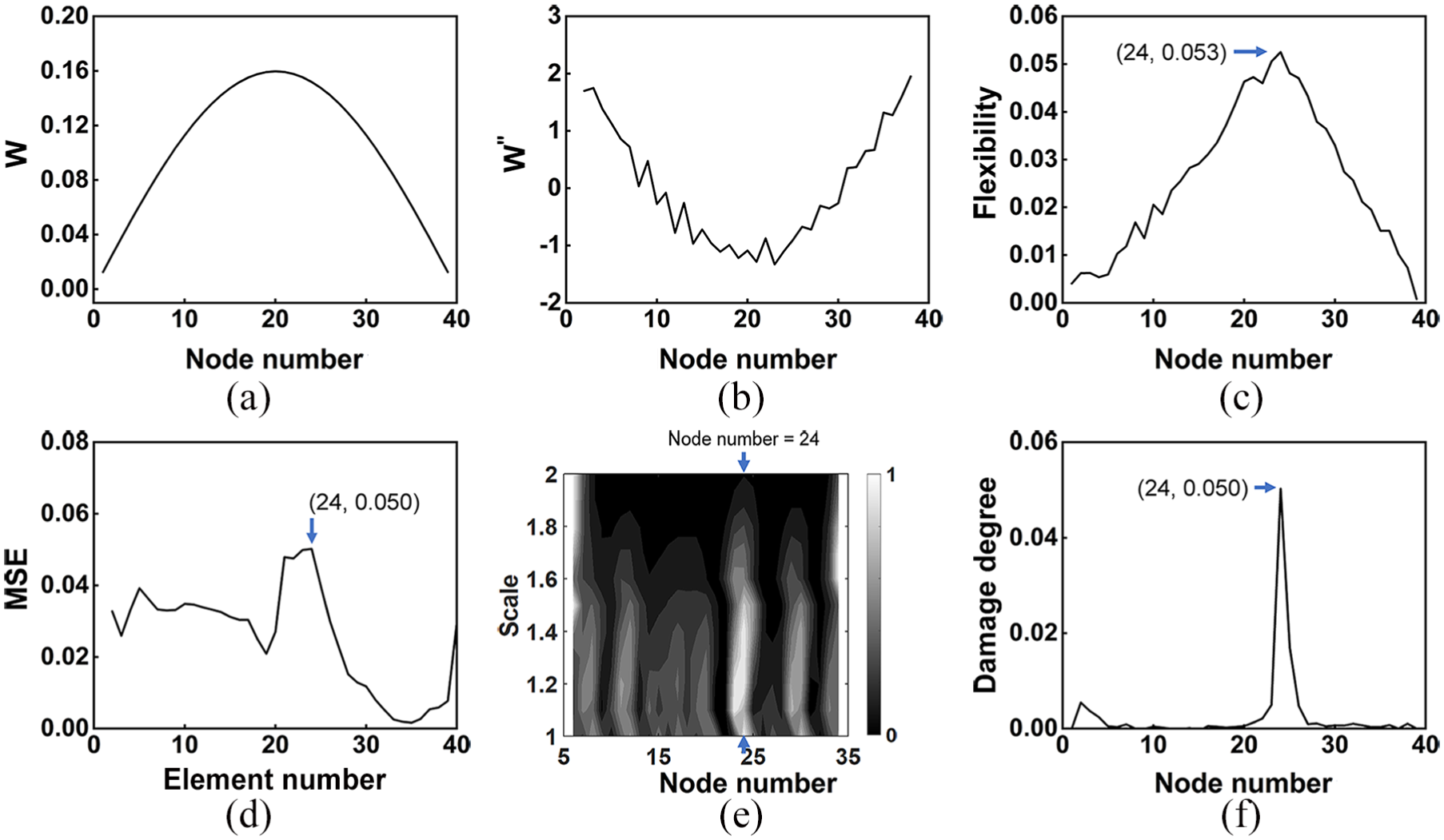
(a) The specimen mode shape and (b) its corresponding results via mode shape curvature, (c) flexibility, (d) modal strain energy, (e) wavelet-based method, and (f) the proposed deep-learning method.
Comparing with other deep-learning architectures
Deep learning has a series of breakthroughs for SHM. Recent evidences reveal that deep CNN can extract damage feature from the vibration signals. These methods make use of deep-learning model to detect damage according to various forms of vibration signals such as the time domain waveforms9,28,48 and the frequency domain waveforms.
49
To show the advantage of our method, we compare the performance of the detection capability of two CNN architectures28,49 with our proposed method. During the comparison, all the architectures are trained via the same training set (including 0%–15% data missing). Figure 19 displays the accuracy of the three different CNN architectures in noisy conditions, with SNR ranging from 60 to 120 dB. The accuracy is the average accuracy of
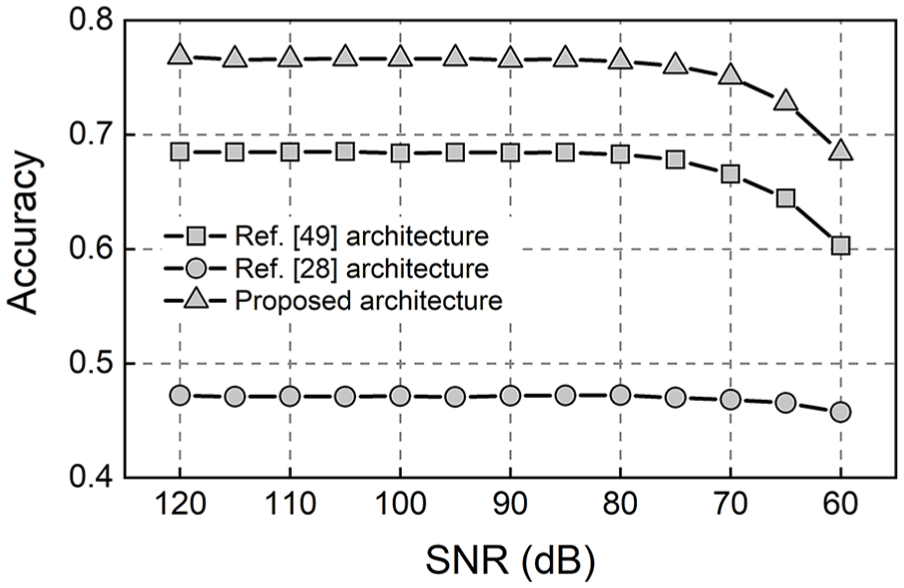
Assessments of the damage detection accuracies by using different CNN architectures.
Application in continuous beams
Furthermore, we retrain the network for continuous beams by using the parameters transferring methodology. A continuous beams data set with
Damage scenarios of continuous beams.

SNR: signal-to-noise ratio.
Figure 20 displays the noisy mode shapes of three structure types and the corresponding detection results. It can be found that obvious crests appear at the preset damage locations. This result demonstrates that a trained network can also be applied to other similar structure types by using the parameters transferring methodology, with a relatively less training cost.
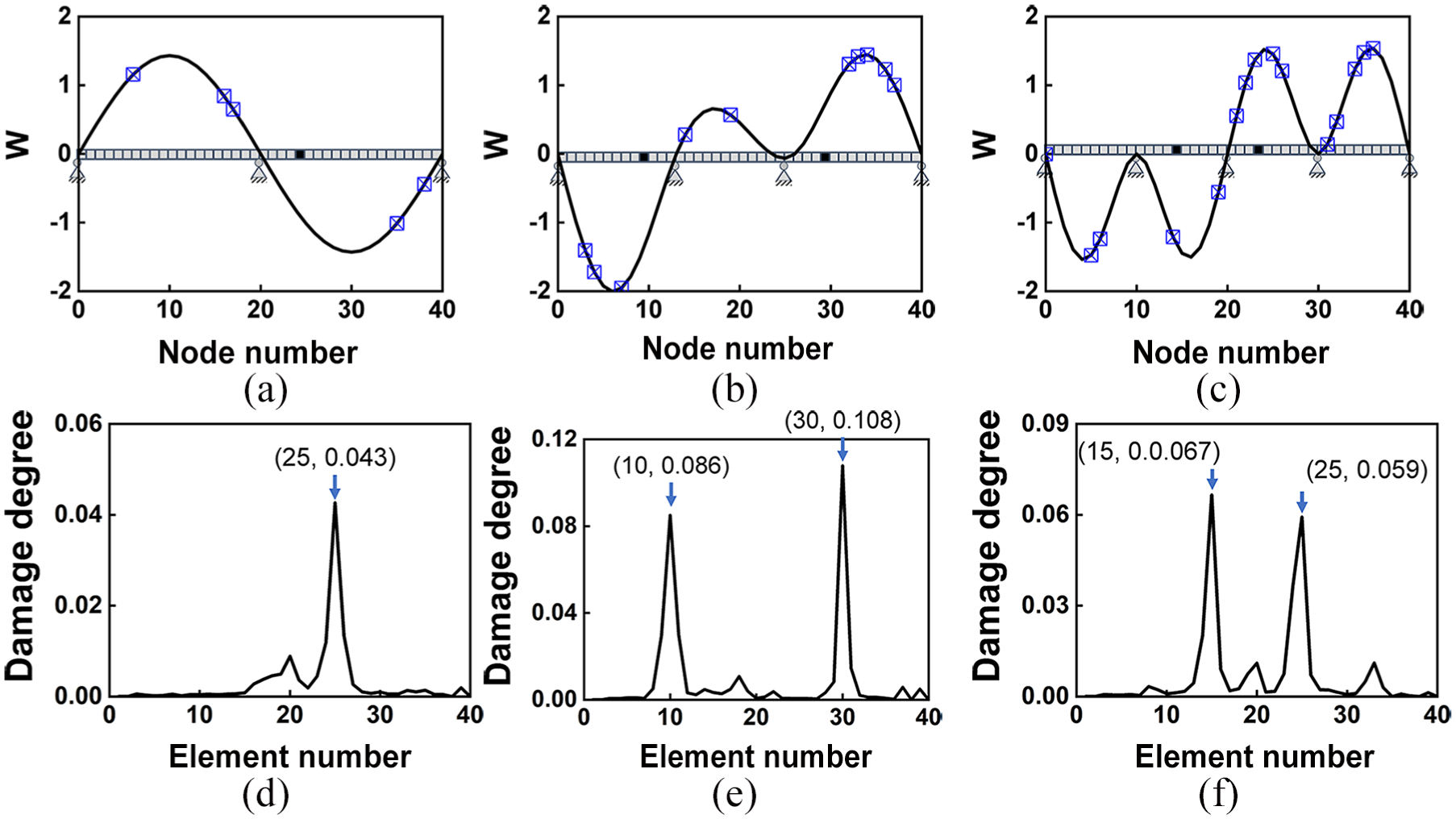
(a–c) Mode shapes of continuous beams with different boundary conditions and (d–f) the corresponding detection results. The damaged elements are marked in black in FEM models.
Learned feature in visualization
Although deep learning has achieved a remarkable development in many fields, how a network model works is still inscrutable. This problem is particularly severe when designing the architecture of a network and analyzing the network reliability. Therefore, study of explaining the output of each module and layer is significant as it helps us to analyze the working principles of the target task.24,28
Figure 21 displays the features of the convolution kernels with different sizes in the multi-scale module. The first mode shape of the experimental beam, as shown in Figure 13(a), is selected as the input data. Here, we re-select the 28th measurement point as the missing data to demonstrate the change regularity, the location of the point is approximately 155 mm from the left fixed end. It is apparent from the figure that a singular peak appears at the location of data missing, and the shape characteristic of each channel is similar to that of the input signal. Hence, we argue that the feature learned in this module is the shape characteristic of the input signal. Because different convolutional kernels have various receptive fields, the learned features of different convolutional kernels based on the same input vary.

Features that different convolution kernels learned in the multi-scale module.
Figure 22 displays the learned features of other modules and layers. It can be seen that with the deepening of the network, the learned features become increasingly abstract. In the last three convolutional layers, the fluctuations of each feature vector become gradual, and two singular peaks (i.e. damage features) appear in the feature map of the last convolutional layers.
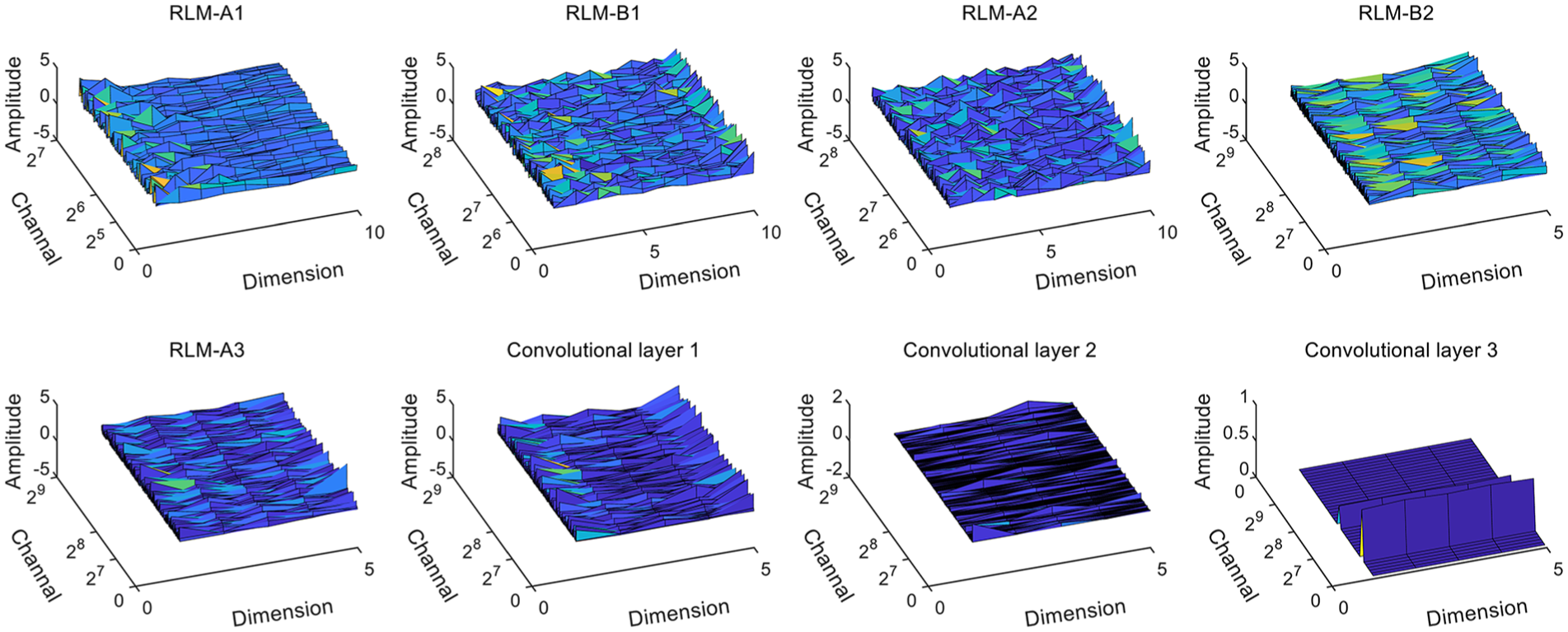
Features that different layers learned.
The analysis of the feature vectors shows that a deep-learning model is composed of multiple layers, which can learn representations of data with multiple levels of abstraction. Moreover, convolutional kernels with different sizes can learn various features from the same input. As the network becomes deeper, the learned features become increasingly abstract, and the mapping between the input and the target gradually emerges in the last few layers. Although the proposed network shows satisfactory performance in damage detection tasks, the physical interpretations of the abstract output in the middle of the framework still cannot be found according to current information. We will focus on this problem in our future study.
Conclusion
A deep-learning model based on CNN is proposed to deal with the problem of damage identification without any hand-engineered features. This model can extract damage features from noisy and incomplete mode shape data, and its detection capability is validated via numerical simulations and laboratory experiments. A comparison of the results from our proposed method with other network architecture shows that the proposed method has accuracy improvements of 10% over the other network architectures.
In the framework of this computation model, multi-scale representations of damage are extracted via a multi-scale learning module. In addition, a set of stacked RLMs are used to learn more abstract features while optimizing the training processes. Finally, the global average pooling technique is utilized to realize the regression process of damage identification. In designing the architecture and training strategy of the network, scenarios such as noise interference, measurement data missing, and multiple damage are considered; we take corresponding measures, including multi-scale representation learning, residual learning, and dropout technique. Furthermore, to discuss what representations the network learns, a measurement signal is used to illustrate the feature extracted in each layer/module.
At this stage, the proposed method can achieve a predictive effect, but the results are based on the data from numerical simulations and laboratory experiments. As the next step of this research, we will focus on actual structures and discuss more complex scenarios.
Footnotes
Acknowledgements
Authors would like to express gratitude to Prof. A. Katunin for sharing the benchmark data in the website. Z.X. acknowledges the support of the National Natural Science Foundation of China (NO. 51275385).
Declaration of conflicting interests
The author(s) declared no potential conflicts of interest with respect to the research, authorship, and/or publication of this article.
Funding
The author(s) received no financial support for the research, authorship, and/or publication of this article.