







Abstract
Planetary gearboxes with high-power density are employed extensively in industrial applications. To increase the efficiency and safety of planetary gear sets, fault detection and diagnosis is highly desired to service the decision support and maintenance planning. Vibration based fault diagnosis of planetary gearboxes attracts many researchers working on the modulation phenomenon and time varying transfer paths. However, the stationary working conditions are ideal, but the modulation signals are not stationary in practice as the instantaneous rotating speed slightly varies due to power sources or external loads. The stationary demodulation analysis is not capable to tackle the nonstationary modulation vibrations. Therefore, the modulation instantaneous autocorrelation bispectrum (MIAB) method is developed to extract the high-order cyclic features hidden in the cyclostationary vibration responses. The experimental studies of on-rotor sensing vibrations collected from a test rig with healthy and faulty planetary gearboxes were conducted to verify the effectiveness of the proposed MIAB method. The diagnostic results show the MIAB method is effective and reliable to extract compound fault signatures of planet gears and sun gears.
Keywords
Introduction
Planetary gearboxes are widely prevalent in transmission systems of large equipment, including wind turbines, helicopters, aeroengines, and powerplants, due to their compact structure and high-power density. However, harsh operational conditions of high speeds and heavy loads make the rotating components, for example, sun gears, planet gears, carriers, and planet bearings, vulnerable to fatigue pitting, cracks, and even breakage faults in their service life. Failure of planetary gearboxes can result in power loss of the equipment and even lead to catastrophic accidents. 1 Fault detection and diagnosis is an effective way to give early warnings and allow more chances for conducting proper maintenance actions, which ensures the reliable operation of planetary gearboxes and thus increases the efficiency and performance of the entire equipment.
The simultaneous rotation and revolution movements of planet gears cause multiple temporal-spatial-varying meshing points, causing intricate modulation phenomenon in vibration responses of planetary gearboxes. In addition, the varying transmission paths result in further modulation of the vibration responses. 2 The complicated modulation mechanisms attract considerable research efforts to achieve effective fault detection and diagnosis via modulation and demodulation analysis. For instance, when the gear tooth has a localized defect, the regularity of gear meshing stiffness is destroyed when gear mesh passing this defect, which induces transient impact based amplitude modulation (AM) and consequent speed variation based frequency modulation (FM). Inalpolat and Kahraman 3 describe the generation of the modulation sidebands and amplitude variations of the mesh frequency and high-order harmonics via an analytical signal model that is verified by experimental studies. Furthermore, they built a nonlinear vibration model to give insightful understanding of the multiple sidebands in the vicinity of meshing frequencies due to the coupled AM-FM vibration responses by considering the manufacture errors of the run-out and eccentricity of gears. 4 Feng and Zuo 5 built a planetary gear signal model to describe the AM and FM coupled effects of the localized gear faults. The underlying mechanism of the coupled modulation attracts many researchers to investigate the nonlinear modulation responses and hence, numerous demodulation approaches were developed to obtain the fault features from the intricate modulation vibration signals. Yang et al. 6 discussed the AM and FM phenomenon induced by the uniform wear and localized faults using a phenomenal model and concluded that the sidebands around the meshing frequencies and resonant frequencies are asymmetrical due to gear defects. According to the coupled modulation phenomenon when gear faults occur, researchers developed many demodulation analysis methods to attract gear fault signatures. To tackle the AM and FM coupled signals, extensive research have been done to extract the fault features and these works mainly focus on the decomposition-based processing methods. Feng et al. 7 used the ensemble empirical mode decomposition method to separate the original multicomponent signal into monocomponent ones for demodulating AM and FM fault features from the sensitive intrinsic mode function (IMF). Li et al. 8 used variational mode decomposition to individually obtain the AM and FM vibration signals from a multiple stage reducer with spur and planetary gears. The typical failures of these gears can be diagnosed using the envelope analysis of the decomposed IMFs. Feng et al. 9 employed local mean decomposition to obtain monocomponent signals to carry out the amplitude and frequency demodulation analysis, respectively. The separate demodulation can extract fault features of defective gears. Yang et al. 10 separate AM and FM signals by combining the squared signals and Bessel function of the first kind and the accurate separation achieves fault diagnosis of gear tooth breakage and shaft misalignment. Gu et al. 11 ingeniously utilized the internal phase relationship of modulation signals to develop the modulation signal bispectrum (MSB) method, allowing average operation of the multiple complex bispectrums calculated from large quantities of segments. The MSB approach has been evaluated to produce effective results when the signals are composed of mainly either AM or FM effects. Guo et al. 12 proposed a MSB variant, named as modulation spectrum correlation, for gear fault diagnosis using instantaneous current signals from motor stators. Then, the MSB method is extended into vibration-based bearing fault diagnosis by Tian et al. 13 The nonlinear characteristics of current signals under various faulty conditions pave the way to accurate fault diagnosis of rotating machines. The instantaneous motor current signals-based fault diagnostics of gears 14 and motors 15 is also achieved using the MSB analysis.
Amplitude and frequency demodulation analysis still relies on several classic processing methods, including envelope, Teager Kaiser energy operator, Hilbert transform, and Fourier transform. These methods are powerful to handle stationary modulation signals with high signal-to-noise ratios (SNRs) theoretically. However, vibration signals from rotating machines are nonstationary in nature. To increase the diagnostic performance of the demodulation analysis, Sawalhi et al. 16 separated the gear and bearing signals from industrial wind turbines based on the assumption that gear vibrations are deterministically periodic while the bearing vibrations are stochastic. The order tracking based separation of the gear and bearing vibration signals can accurately diagnose the gear fault and bearing fault. Guo et al. 17 developed a cyclic morphological modulation spectrum for vibration-based bearing fault diagnosis. Cyclostationary characteristics of vibration responses are widely recognized in machine condition monitoring. 18 Capdessus et al. 19 bring the cyclostationary into the field of gear fault diagnosis and use spectral correlation (SC) density as a new parameter to evaluate the spalling defects on gear tooth. Sun et al. 20 developed a phenomenological signal model of planetary gears. The modeling tells that the speed fluctuation alters the periodic signals into second-order cyclostationary ones. Feng et al. 21 introduce the tribological dynamic responses of the gear meshing with surface wear and raise cyclostationary indicators from planetary gearbox vibrations to detect the gear fatigue pitting and trace the abrasive wear. Zuo et al. 22 developed an instantaneous angular acceleration-based cyclostationary feature mode decomposition for diagnosis of typical defects in planetary gear components. Yang et al. 6 assumed the slight speed fluctuation was periodic in the modeling but it cannot explain most of the speed oscillations in the practical applications, which are a random process based on practical rotating speed statistics. 23 The effectiveness of the stationary signal processing methods deteriorates when the random speed oscillation increases because the degree of the cyclostationarity of the vibration signals rises to a certain level which exceeds the capability of the demodulation methods for the stationary signals.
In this article, a second-order statistic parameter, instantaneous autocorrelation, is used to obtain the oscillation of the instantaneous energy in vibration responses. As the planetary gears generate large quantities of sidebands and harmonics in vibration signals due to multiple meshing points, the instantaneous autocorrelation still contains rich modulation signals in the form of equally spaced discrete components. A modulation instantaneous autocorrelation bispectrum (MIAB) approach is developed to demodulate the speed fluctuation induced nonstationary modulation vibration signals of planetary gears.
The remainder of this article is organized as follows: In the second section, the theoretical background of the proposed MIAB method is introduced. Subsequently, both simulation studies and experimental validation of the proposed method are conducted in next two sections, respectively. Finally, the main conclusions are summarized in the fifth section.
Modulation instantaneous autocorrelation bispectrum
The coincident AM and FM effects of a localized gear fault can be represented by the following expression:

where
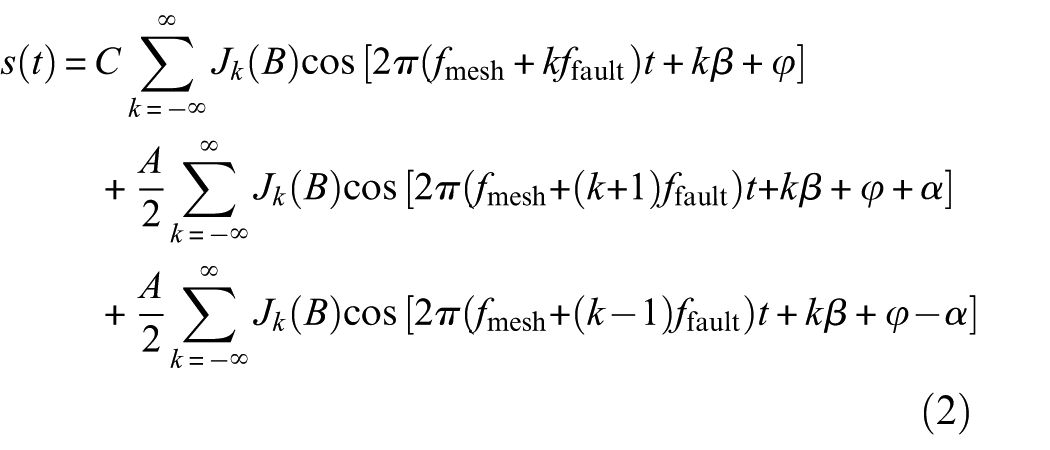
where
The conventional MSB method is developed specifically for the modulation signals generated from rotating machines 15 :

where

with

Accordingly, the total phase of the complex MSB segment can be calculated as

The total phase of the AM and PM signals in the MSB calculation will be 0 and
By nature, the vibration signals from rotating machines are cyclostationary due to slight speed and load oscillations in practical working conditions. The nondeterministic rotating frequency can smear the discrete components of the vibration responses in the frequency domain. Taking sun gear fault as an example, Equation (2) yields
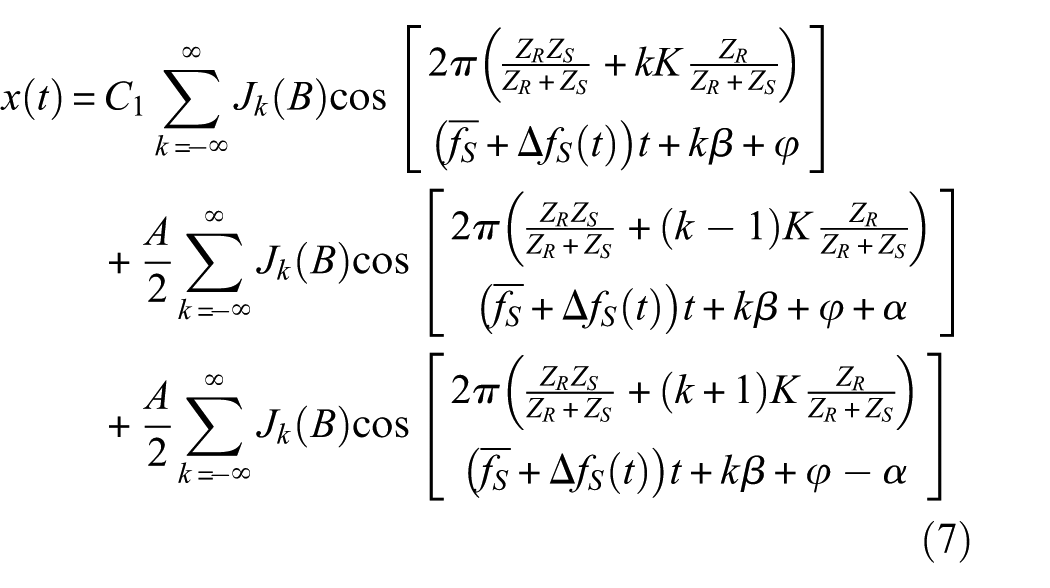
where
To effectively process cyclostationary signals from rotating machines, the high-order statistics can be used to reveal the hidden modulation features. Practically, the second-order statistics are widely used due to the convenience and effectiveness. The instantaneous autocorrelation function, a typical second-order statistic, describes the variation of energy intensity and interactions of dynamic responses, which is defined as

Considering the rich modulation harmonics and sidebands, the cyclostationary vibrations from planetary gearboxes are periodic in

The equally spaced components can be concentrated more sparsely as they naturally form modulation signals. Thereafter, to highlight the energy flow in the instantaneous autocorrelation, the MIAB method is developed as
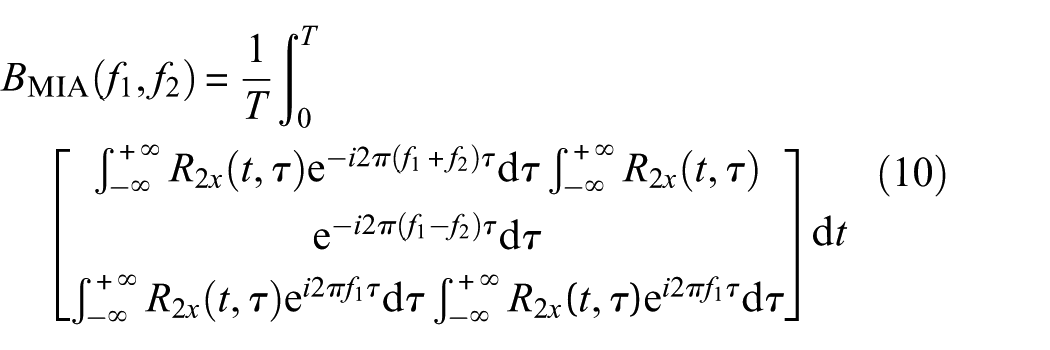
As

The MIAB is a quadratic form of instantaneous power spectrum that measures how the cyclo-spectral components at different frequencies interact through the joint time-lag evolution. It is more robust to estimate the persistent spectral relationships and detect the characteristic patterns in the
Simulation studies
Cyclostationary modulation signal simulation
To show the capability of the developed MIAS method, a cyclostationary AM/FM signal is simulated to include the random speed fluctuation, yielding
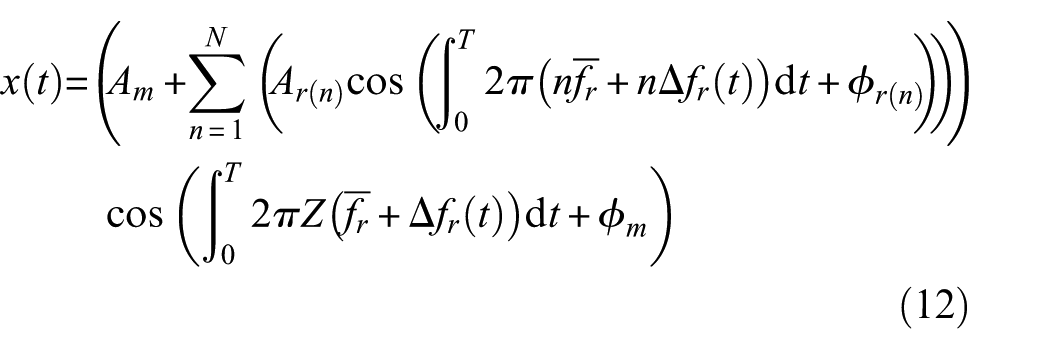
where
The simulated modulation signals with multiple sidebands are shown in Figure 1. The random speed variation is simulated by the cumulative process of random numbers as the rotating speed does not change transiently due to the large moment of inertia of rotors. The instantaneous rotating speed is depicted in Figure 1(a).
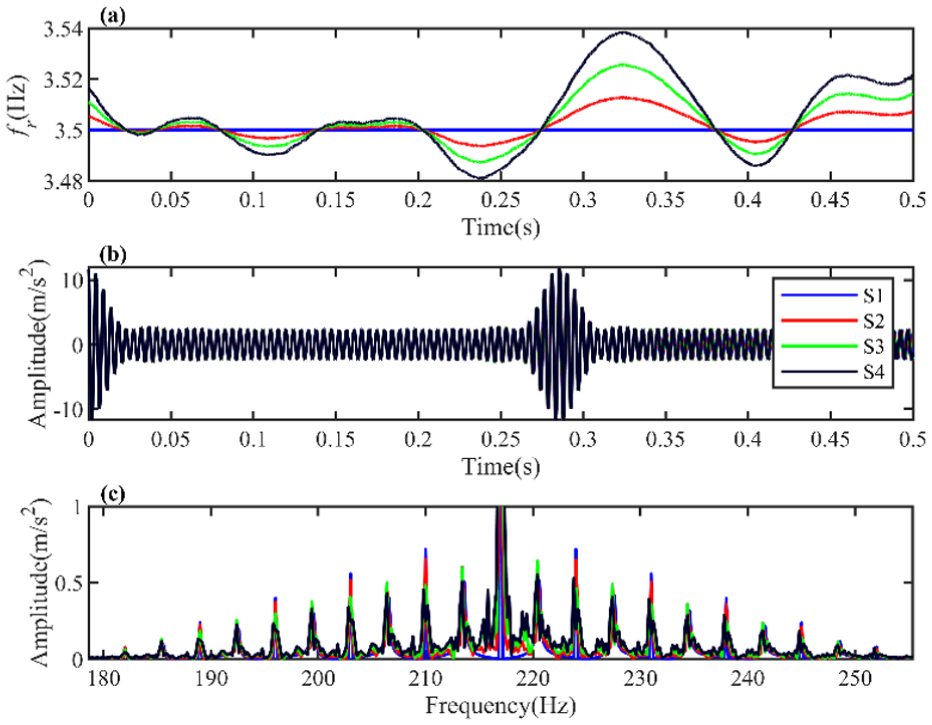
Simulated cyclostationary modulation signal: (a) instantaneous rotating frequency, (b) temporal waveform, and (c) corresponding spectrums.
Figure 2(a) shows the time–frequency representation of the simulated signal S4 using the Short-Time Fourier Transform (STFT) method and it can be seen that the instantaneous frequency of the meshing frequency is time-varying. In Figure 2(b), the Fast Fourier Transform (FFT) spectra of the four simulated signals are displayed and the energy of the main lobe is leaked to the nearby lobes due to the random variation of the rotating speeds.
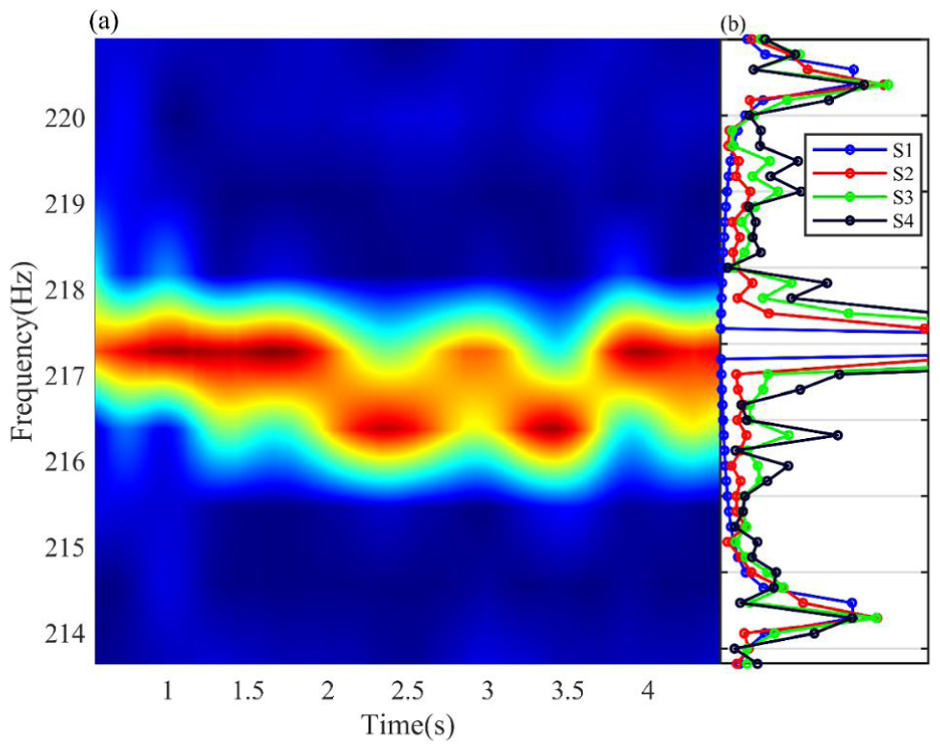
Time–frequency analysis of simulated signals: (a) STFT of S4 and (b) FFT spectra of simulated signals.
Demodulation results of MIAB
The SC method is the representative of the cyclic spectrum method family which has a powerful theoretical framework for communications, radar, and mechanical monitoring applications. To compare the influence from the speed variation, the SC method
25
is serves as the benchmark. As the background noise is inevitable in machine fault diagnosis, large quantities of white noise are further injected into the simulation signals from
The demodulation bispectrum of the noise-added
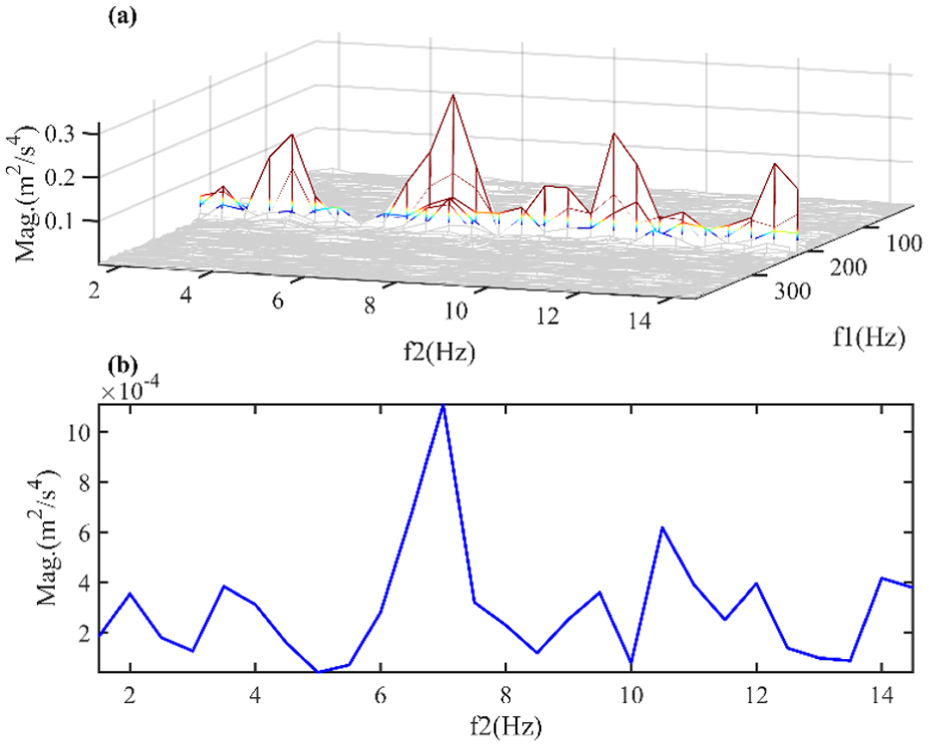
MSB of the simulated signals
Figure 4 shows the demodulation results obtained by applying the SC method to the noise-added
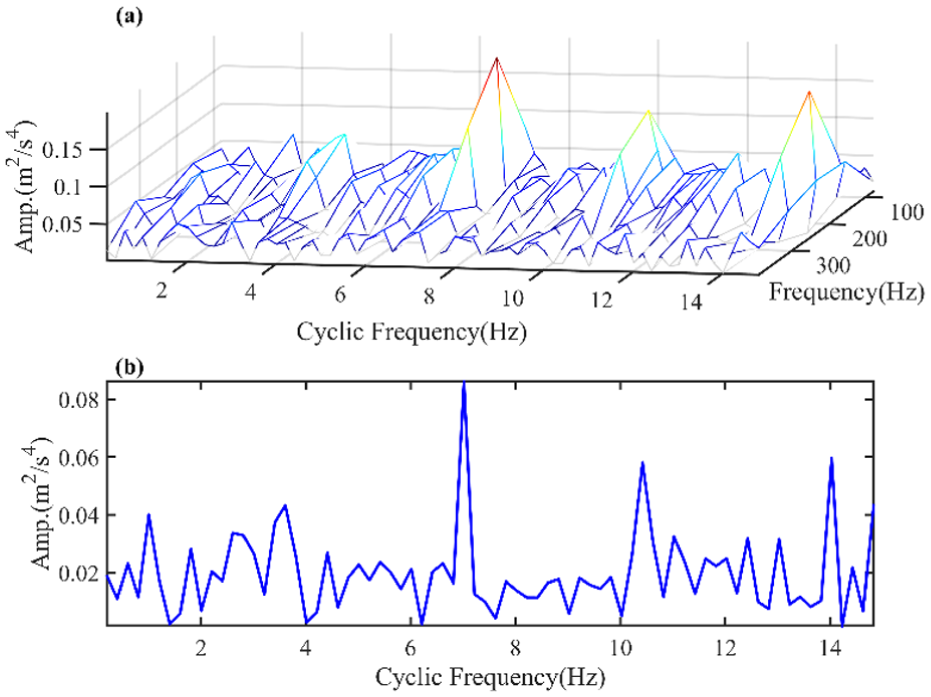
SC of the simulated signals
Figure 5(a) is the bispectrum obtained by the proposed MIAB method, while Figure 5(b) displays its integral along the axis of
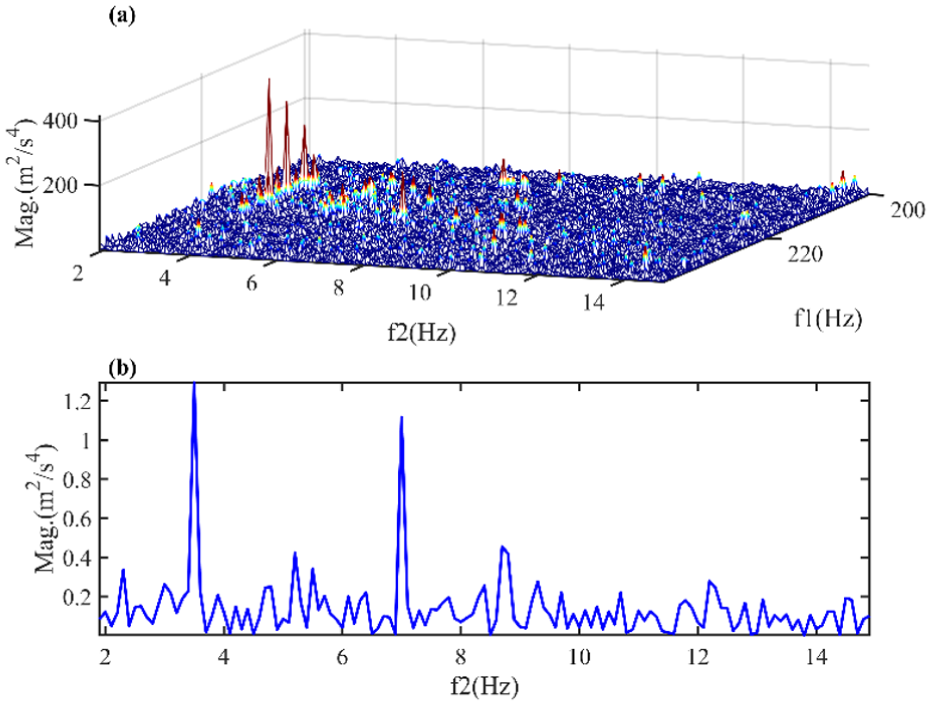
MIAB of the simulated signals
Finally, the demodulation results of four simulated signals with additional strong white Gaussian noise are presented in Figure 6. The integrated MIAB are highly consistent in different random speed variation levels. The fundamental frequency and second-order harmonic are pronounced in all cases. The amplitude of these components is very close, showing the robustness of the proposed MIAB under various quantities of random speed variation. In contrast, the MSB and the SC do not give competitive results compared with MIAB. The amplitude of the characteristic frequency obtained by the MSB decreases and is invisible when processing the most challenging case
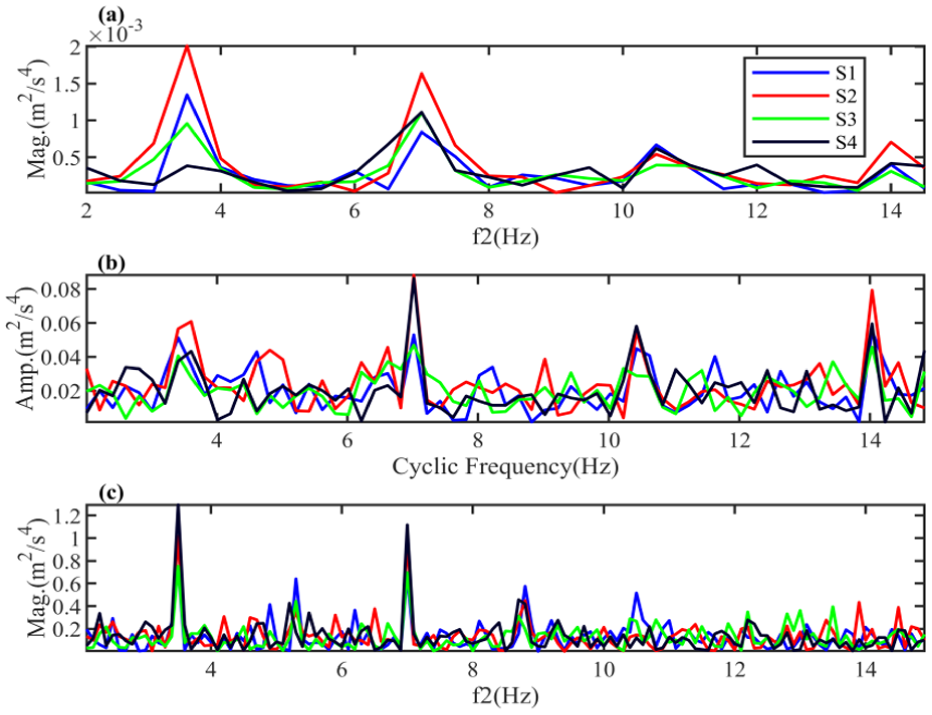
Demodulation results of the simulated signals: (a) integrated MSB, (b) integrated SC, and (c) integrated MIAB. MSB: modulation signal bispectrum; SC: spectral correlation; MIAB: modulation instantaneous autocorrelation bispectrum.
In the simulation study, the capability of the proposed MIAB method is verified by comparing results with those obtained from the MSB and the SC. The demodulated features are obvious and consistent in different cases of random speed variation under strong background noise.
Experimental studies
Planetary gearbox tests
The vibration signals were obtained from a planetary gear test bench of which the photograph and schematic diagram are shown in Figure 7. Two planetary gearboxes were installed to transmit the power from the motor to the generator, which develops a close loop of the power flow to minimize the power consumption during the tests. The key components are connected by flexible couplings to accommodate certain degree of misalignment during the test operation.
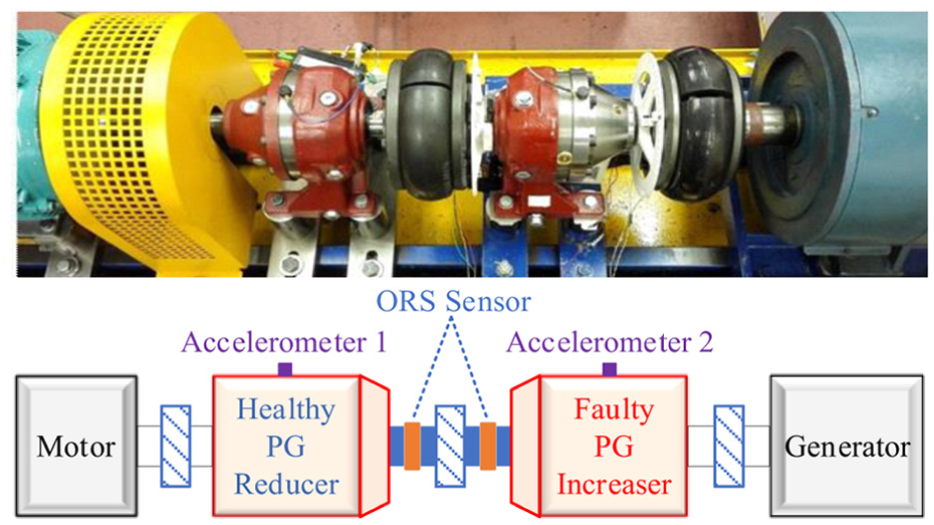
The planetary gearbox test rig.
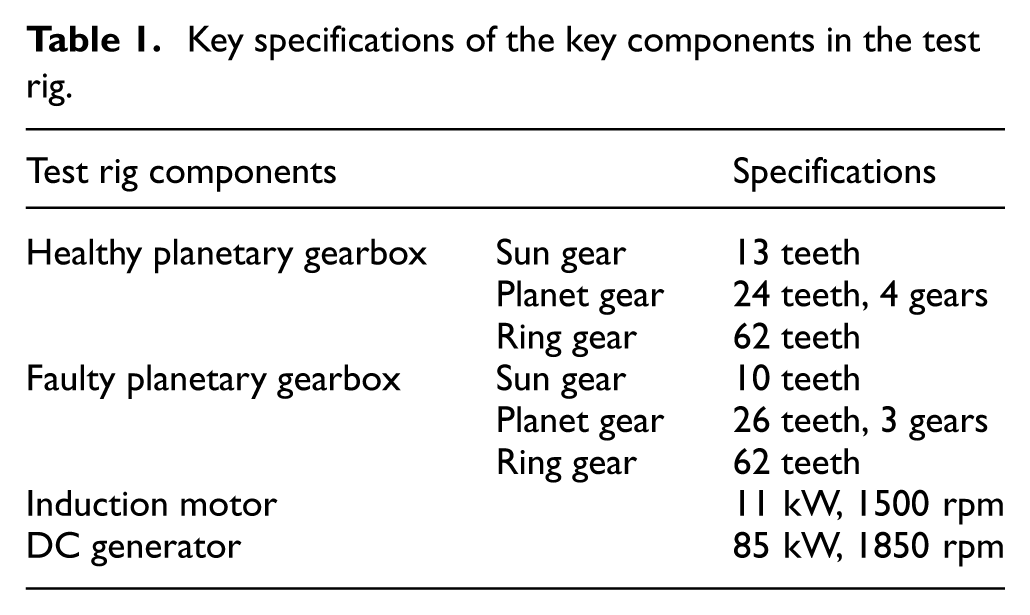
The configurations of two planetary gearboxes in the test rig are similar but different as the healthy planetary gearbox has four planet gears while the faulty one has three. The deviation configuration leads to different meshing and fault frequencies, which allows minimizing the interactive influence between the healthy and faulty planetary gearboxes. Consequently, the experiments can reasonably verify the performance of the proposed approaches. The key specifications of the components in the test rig are shown in Table 1.
Key specifications of the key components in the test rig.
As shown in Figure 8(a) and (b), artificially simulated compound local gear faults were seeded on the sun gear and the planet gear, each involving a material loss of 60% of the tooth width.
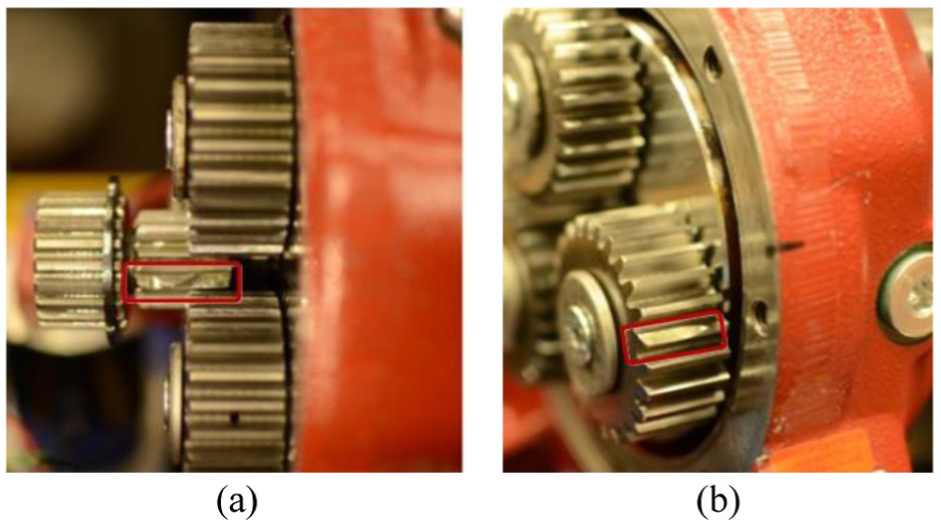
Photographs of compound gear faults: (a) sun gear fault and (b) planet gear fault.
The on-rotor sensing (ORS) accelerometers feature a high resolution of 13 bits and a measurement range of ±16g. They were installed on the carrier shafts of two planetary gearboxes, respectively. Since the sensors were placed onto the shaft, the simultaneous rotating behavior leads to the fixed relative position between the localized faults and the output sensors. The captured vibration signals are more beneficial to the fault diagnosis of planetary gears. The motor operated at 60% of its rated speed (1500 rpm) under two different load levels (75 and 90% of full load), respectively. The ORS vibration signals were collected for 5 s at a sampling frequency of 1600 Hz in all test conditions.
Using the specifications of the gearboxes in Table 1 and the rotating speed, the characteristic defect frequencies of the sun gear and planet gear can be calculated as


where
Fault diagnosis results
The vibration signals captured by the ORS accelerometers were analyzed by the proposed MIAB. To compare the performance of the proposed MIAB approach, the conventional MSB and SC methods are also employed as benchmarks for diagnosing planetary gear faults. The MSB method is widely used for fault diagnosis of bearings, 13 gears, 14 and induction motors 15 due to the outstanding capability of noise suppression and coupled component demodulation. As a Fourier transform based analysis approach, the conventional MSB is theoretically suitable for stationary signals, but its limitations become apparent in the diagnostic results presented below. In contrast, the SC is an acknowledged cyclostationary signal processing method, which has been extensively used in fault diagnosis of rolling bearings, gears and reciprocating combustion engines.
The results for the healthy gears under 90% load processed with the traditional MSB method are depicted in Figure 9. The diagnosis of the planet gear faults fails to reveal accurate defect information, and the sun gear fault feature is misleading in the occasion of the healthy planetary gearbox. As shown in Figure 9(a), the coupled components with high magnitudes moved downwards to the frequency range below 100 Hz because the four planet gear configuration lowers the harmonic family of the characteristic frequencies if compared with the faulty one.
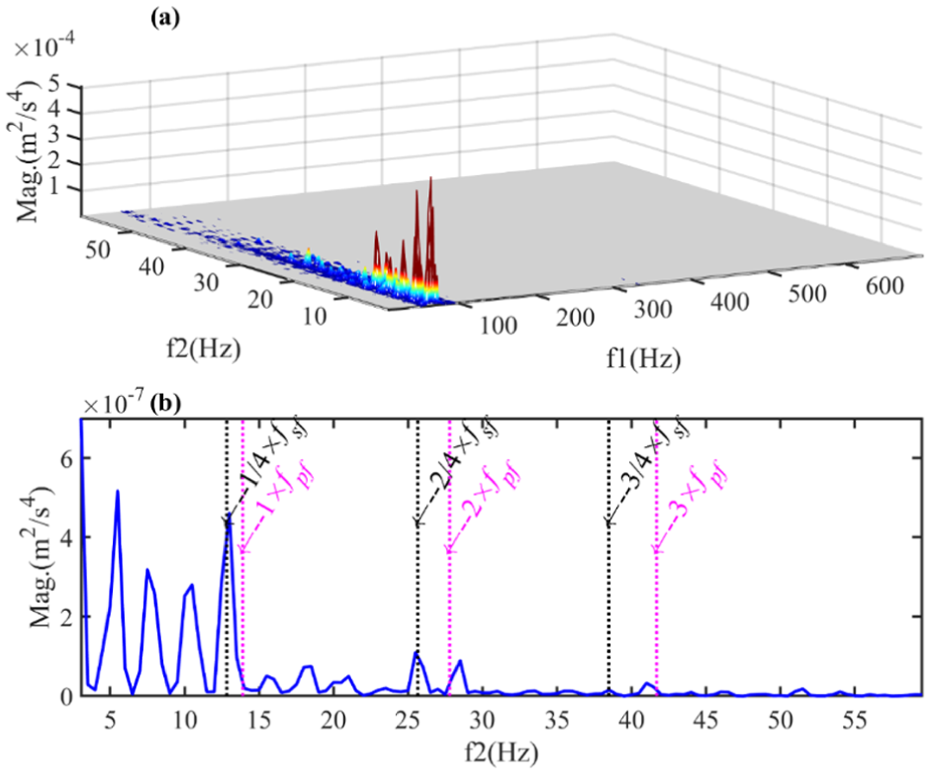
MSB results of healthy gears under 90% load: (a) bispectrum and (b) integrated bispectrum. MSB: modulation signal bispectrum.
Figure 10 shows the results of faulty gears under 90% load with the MSB. In Figure 10(a), the MSB has an energy concentration area of the
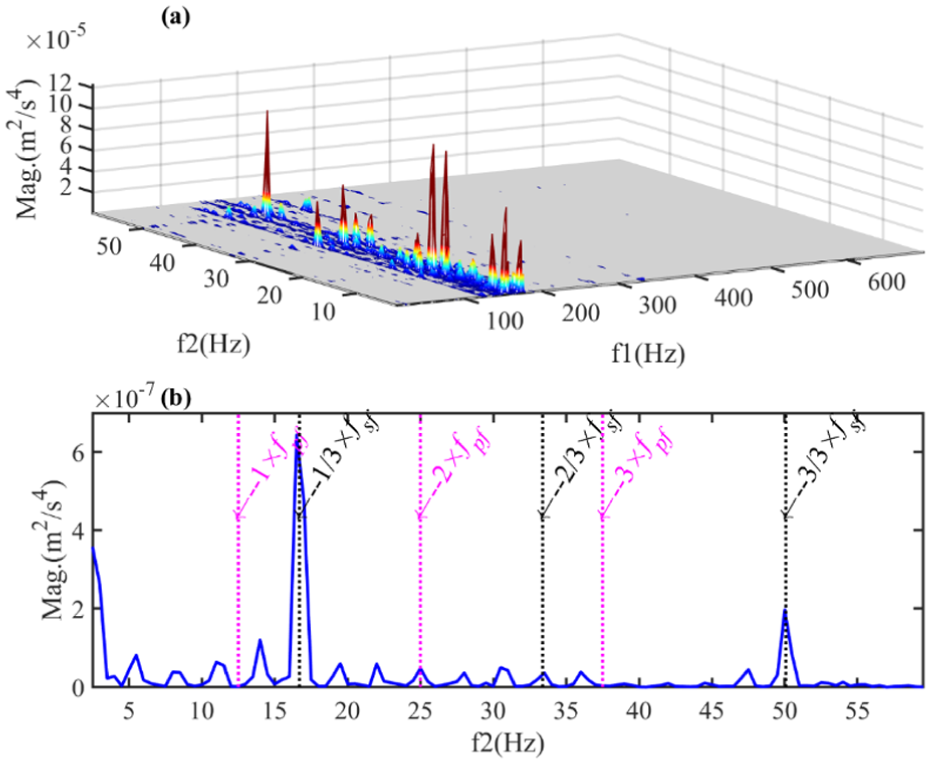
MSB results of faulty gears under 90% load: (a) bispectrum and (b) integrated bispectrum. MSB: modulation signal bispectrum.
The processing results of the ORS vibration signals from the healthy planetary gearbox under 90% load, obtained using the SC method, are depicted in Figure 11. The amplitudes of the characteristic fault frequencies are relatively small, showing a baseline operating condition of the gears. Compared with the MSB results of the healthy gears, the SC is not misleading on the sun gear fault as the amplitudes of the fault characteristic frequencies do not pop out from the other components.
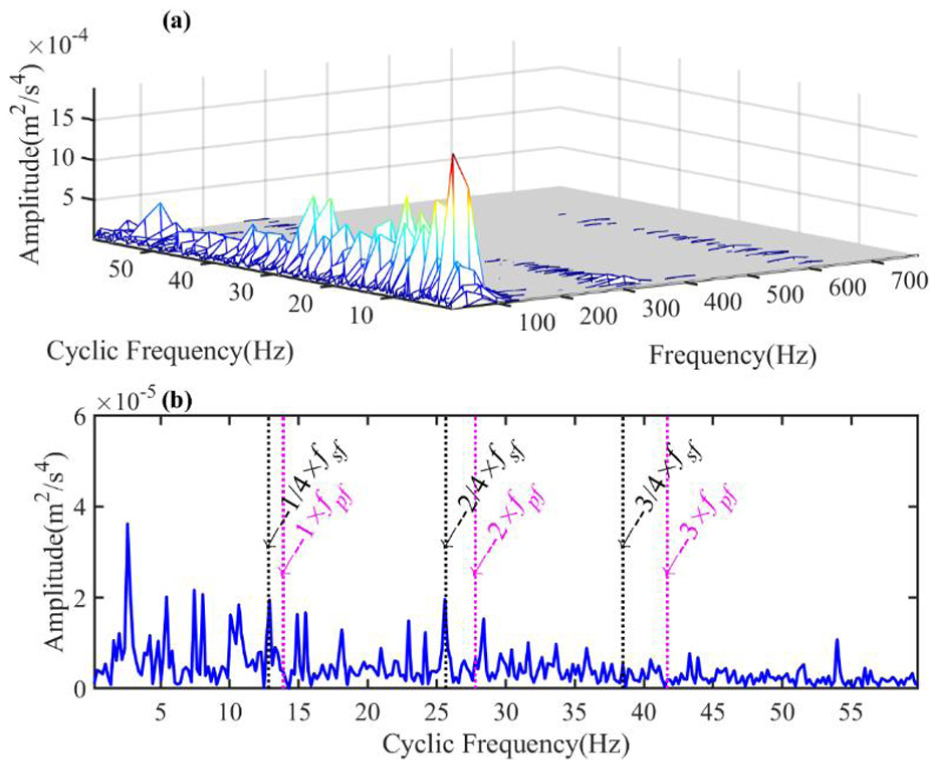
SC results of healthy gears under 90% load: (a) bispectrum and (b) integrated bispectrum. SC: spectral correlation.
The bispectrum from the faulty gears of the SC under 90% load is shown in Figure 12(a). The resolution of the frequency axis is very coarse in the fast computation method. In contrast, the resolution of the cyclic frequency axis is finer than the MSB. The outline of the SC is like the MSB as the energy are located within the same bifrequency area. The integrated SC is presented in Figure 12(b), from which the characteristic fault frequency and its subharmonic of the sun gear fault can be clearly observed. Similar to the diagnostic result of the MSB, the planet gear fault cannot be diagnosed by the SC.
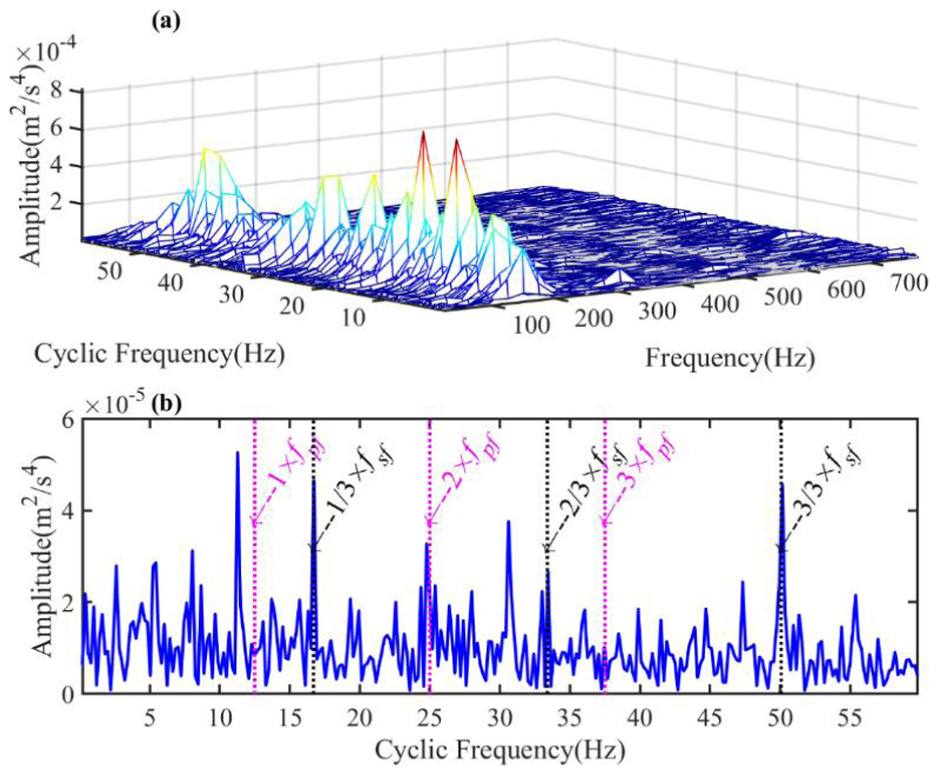
SC results of faulty gears under 90% load: (a) bispectrum and (b) integrated bispectrum. SC: spectral correlation.
Figure 13 displays the spectrum of the MIAB for the vibration signals collected from the healthy planetary gearbox under 90% load. It is evident that the resolution of MIAB can be maximum via the full exploitation of raw signals with the calculation of instantaneous autocorrelation functions. The MSB magnitudes in Figure 13(a) have few discrete components. Only several frequency components less than 10 Hz are visible, and they are the rotating frequencies of the planet gear and carrier, respectively. The amplitudes of the corresponding characteristic fault frequencies of the sun gear and planet gear are very small, which indicates this planetary gearbox is operating in a relatively healthy condition. The irrelevant components are further suppressed in the integrated spectrum due to the random phase along the frequency axis
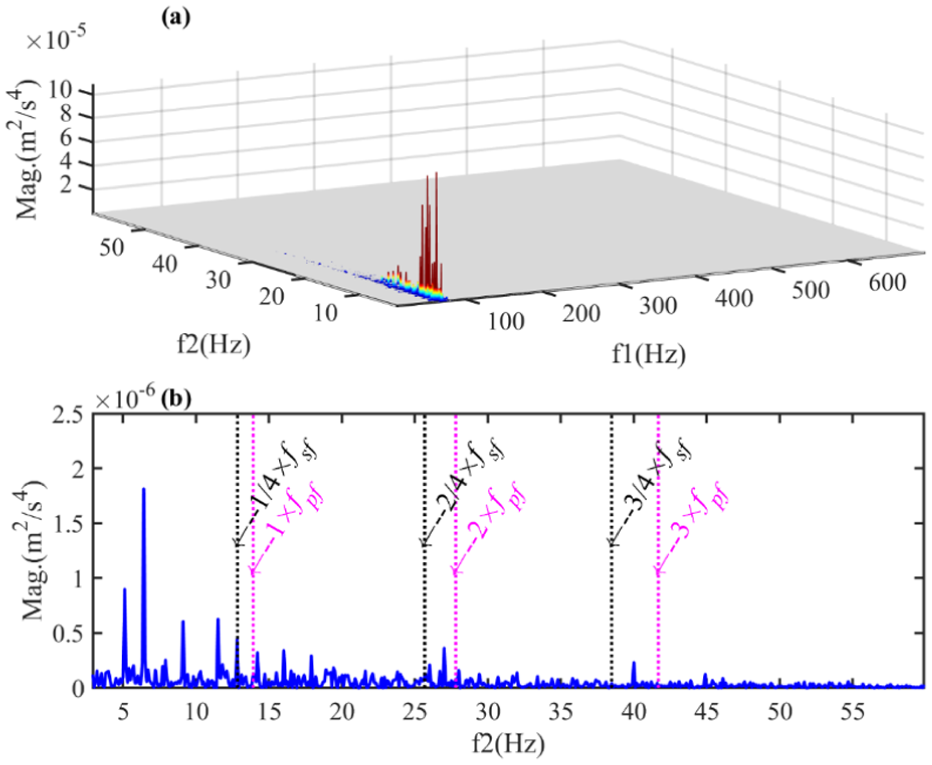
MIAB results of healthy gears under 90% load: (a) bispectrum and (b) integrated bispectrum. MIAB: modulation instantaneous autocorrelation bispectrum.
Figure 14 shows the diagnostic results of the planetary gear faults under 90% load via the proposed MIAB method. In Figure 14(a), the main energy of the bispectrum locates in the
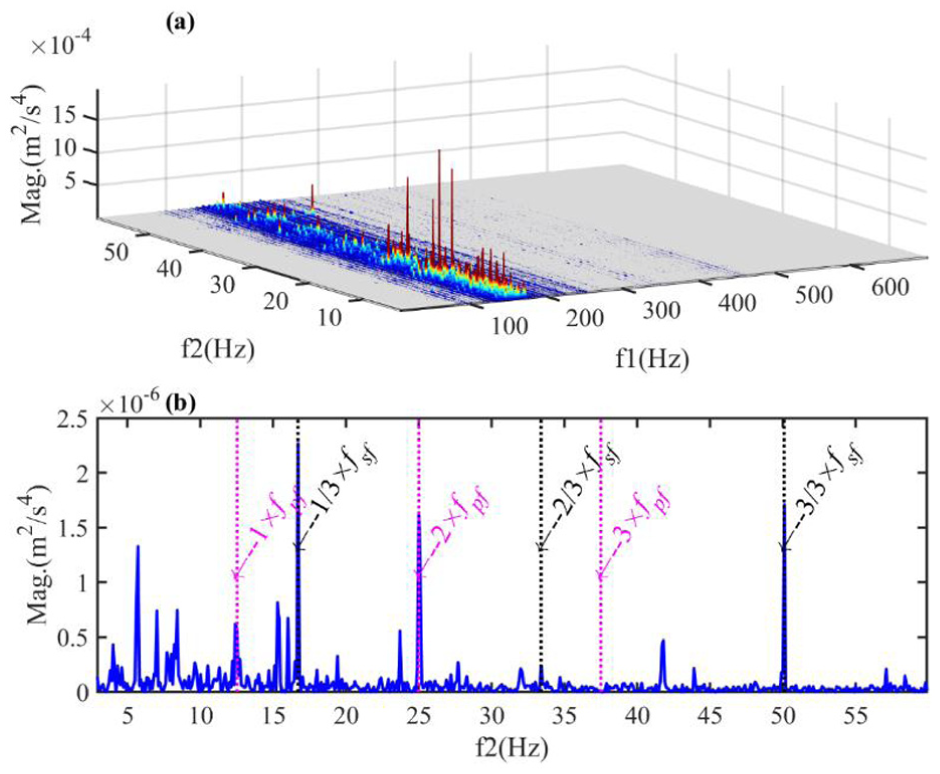
MIAB results of faulty gears under 90% load: (a) bispectrum and (b) integrated bispectrum. MIAB: modulation instantaneous autocorrelation bispectrum.
The ORS measurement technique directly obtains the dynamic responses of the rotors instead of the vibrations on the housing, thereby minimizing transfer paths and significantly increasing the SNR of the vibration responses. This advantage is reflected in the superior ORS-based results reported earlier. For comparison, the simultaneously acquired on-housing vibration signals are further analyzed. The accelerometers were installed on the external surface of the ring gear during the planetary gearbox tests. Figure 15 displays the MIAB results from the on-housing vibrations under the operating condition of 90% load. The integrated MIAB spectrum can show theoretical fault frequencies of the sun gear and planet gear clearly. The fundamental fault frequency of the sun gear fault is pronounced in the on-housing vibrations, and the subharmonics are hardly observed. In contrast, the 1/3 harmonic component in ORS signals is obvious. The differences can show the ORS signals can capture the slight variation of the fault impacts within a revolution of the sun gear, but these variations are lost during the transmission from the fault impacts to the housing accelerometer.
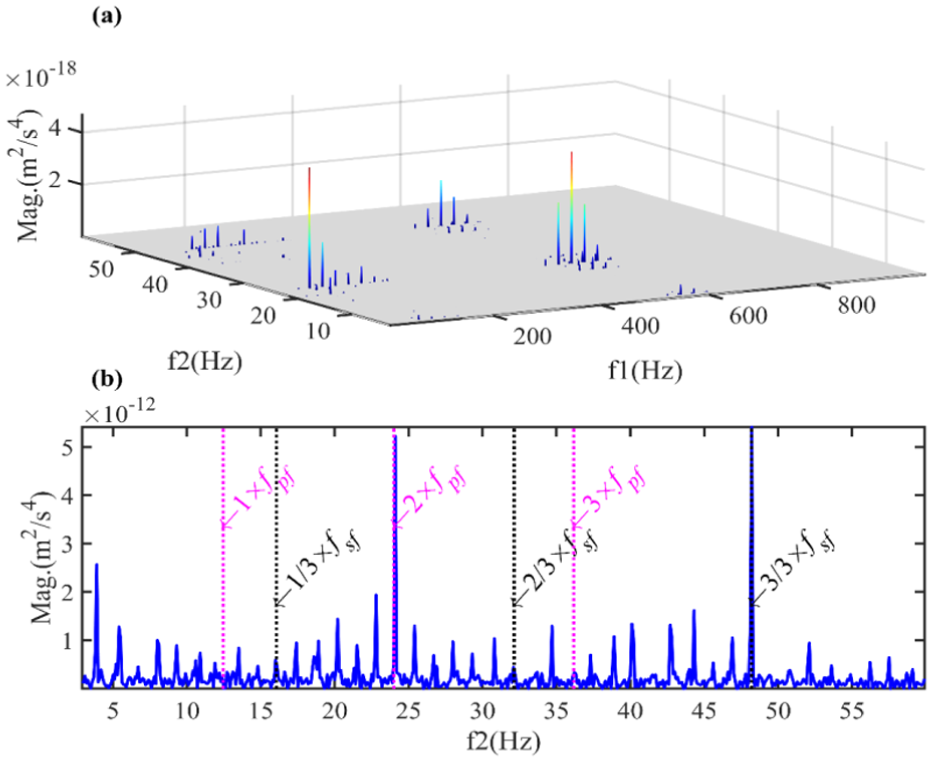
MIAB results of faulty gears under 90% load using on-housing vibrations: (a) bispectrum and (b) integrated bispectrum. MIAB: modulation instantaneous autocorrelation bispectrum.
To further evaluate the effectiveness of the proposed MIAB method, vibration signals under 75% load condition were also processed using these three methods.
The results of faulty gears under 75% load with the MSB are depicted in Figure 16. Similar to the 90% load case with energy concentrated in the
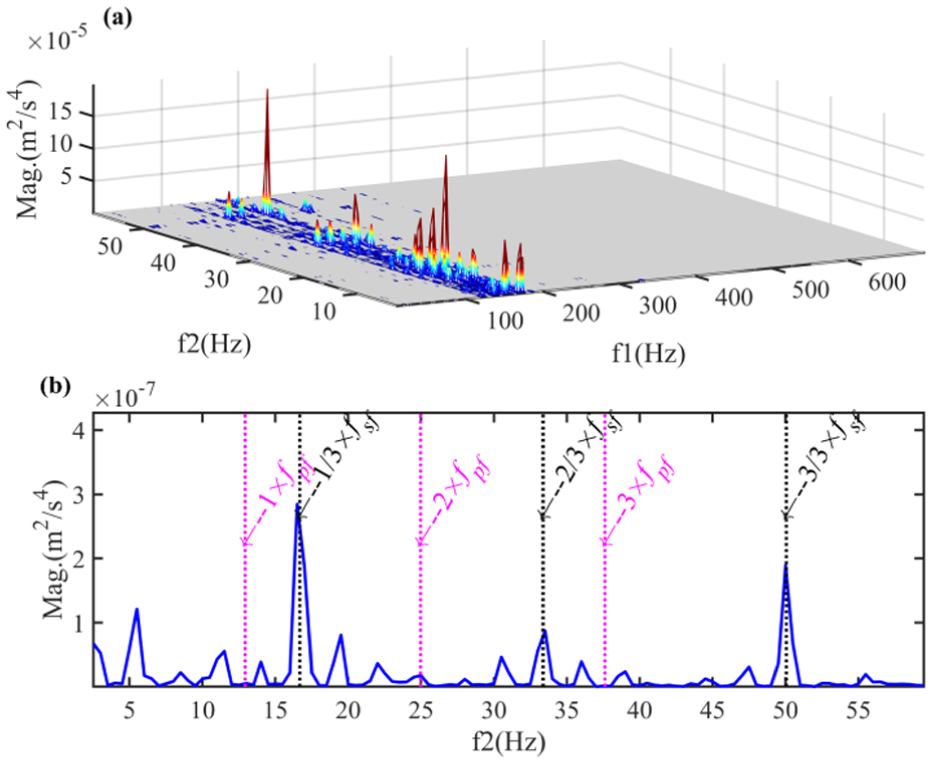
MSB results of faulty gears under 75% load: (a) bispectrum and (b) integrated bispectrum. MSB: modulation signal bispectrum.
When the planetary gearbox operates under 75% load, the bispectrum from the faulty condition of the SC is shown in Figure 17(a). The sun gear fault can be detected easily with obvious fault frequency and subharmonics. The planet gear fault can be observed in the integrated spectrum, but the amplitude of the planet gear fault frequency is not very pronounced if compared with the noise floor.
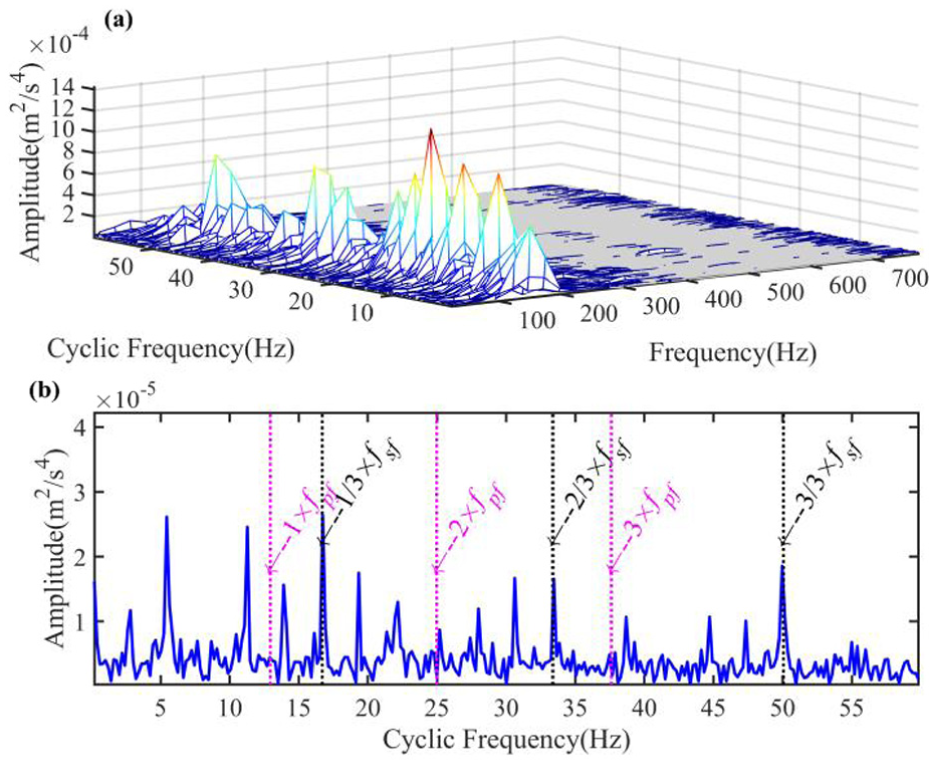
SC results of faulty gears under 75% load: (a) bispectrum and (b) integrated bispectrum. SC: spectral correlation.
Figure 18 shows the diagnostic results of the planetary gearbox faults under 75% load via the proposed MIAB method. The theoretical fault frequencies of the sun gear and planet gear are pronounced in the integrated MIAB spectrum. The second harmonic of the planet gear fault frequency is obvious because the localized fault on the planet gear can result in two impacts with the sun gear and the ring individually. The successful identification of theoretical fault frequencies is owing to the superior demodulation capabilities of the proposed MIAB. The hidden modulation characteristics of the planet gears can be demodulated effectively.
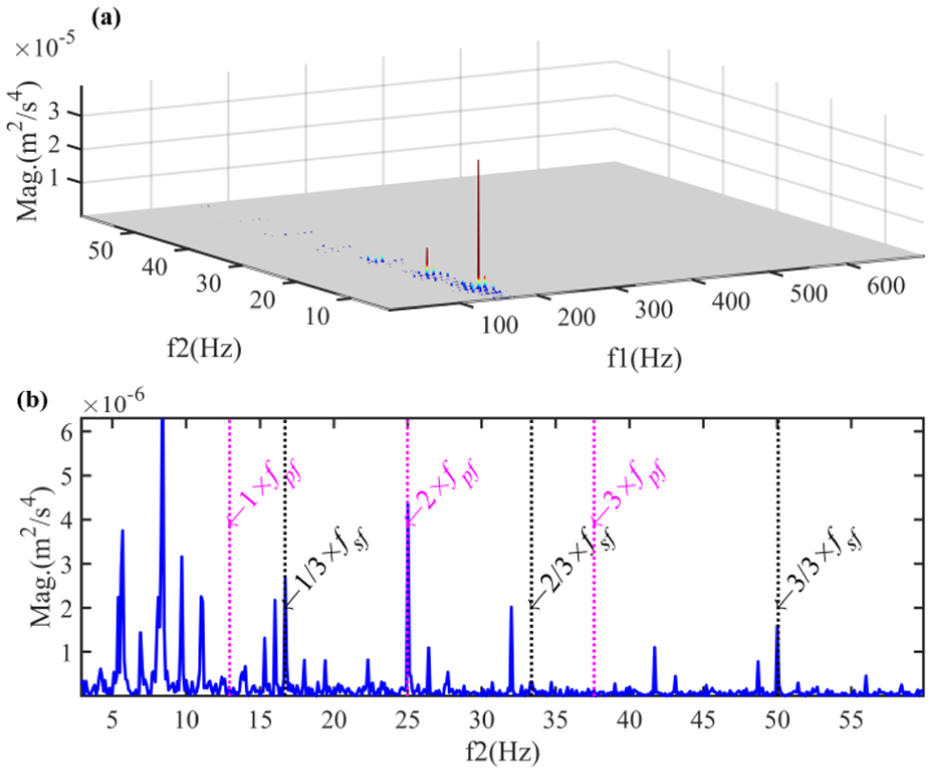
MIAB results of faulty gears under 75% load: (a) bispectrum and (b) integrated bispectrum. MIAB: modulation instantaneous autocorrelation bispectrum.
The compound faults of the planet and sun gears can be diagnosed accurately by the proposed MIAB method, while the fault information given by the conventional MSB and SC is limited. The comparison of these milestone methods in machine fault diagnosis shows that the diagnostic performance of the MIAB is more advantageous than that of the conventional MSB and the SC.
Due to the second-order statistics and bispectrum integration, the MIAB method does require more computing resources. The Monte Carlo test was conducted to obtain the average computing time for each of the three methods. The experiments were conducted on a computer equipped with an AMD Ryzen 9 9950X 16-Core Processor @ 4.30 GHz and 48 GB of memory, using MATLAB R2024b (24.2.0.2712019) as the computing environment. After 100 repeated tests, the average computing time for each method is presented in Table 2.
Computing time of the diagnostic methods.
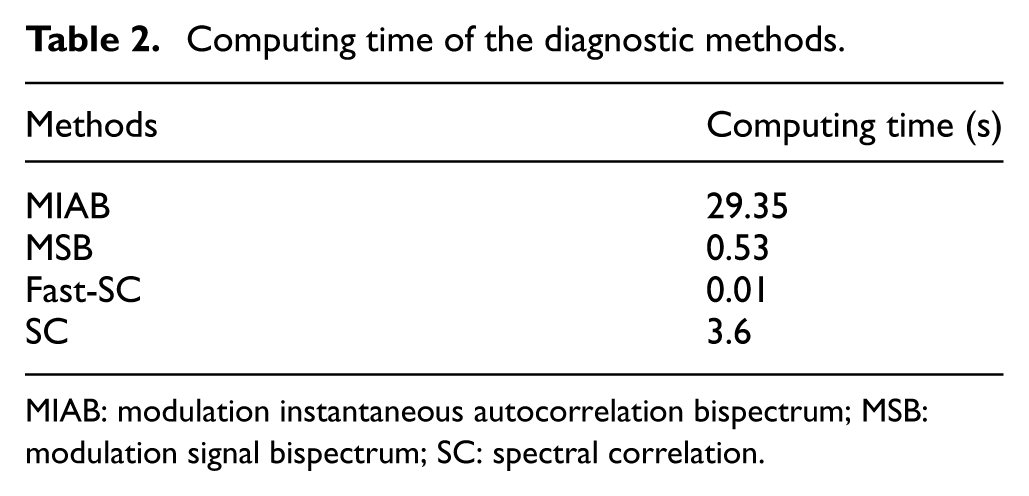
MIAB: modulation instantaneous autocorrelation bispectrum; MSB: modulation signal bispectrum; SC: spectral correlation.
The Fast-SC is a fast-computing method of the SC method, completing the computation in less than 0.01 s, whereas the conventional computing way takes approximately 3.6 s. The MSB is relatively efficient, consuming about half seconds under the same test condition. The proposed MIAB requires nearly 30 s, and it is the slowest method in this study. Computing efficiency is expected to be improved in the future study to develop a fast estimation approach suitable for online condition monitoring of rotating machinery.
Conclusions
In this study, a new method, MIAB, is proposed to handle the cyclostationarity of vibration signals from planetary gearboxes. The sidebands and harmonics of vibration signals are deduced based on a constant rotating speed of the planetary gearbox. The random oscillation of rotating speeds changes the character of vibration signals and makes the vibration signals cyclostationary. Thereafter, the conventional analysis methods fail to accurately extract fault signatures. By introducing instantaneous autocorrelation functions, the hidden cyclic features can be identified from the nonstationary vibration signals. In addition, the multiple meshing behavior and multiple revolutions of planetary gear components generate large quantities of discrete frequencies. To further concentrate the rich fault information in the instantaneous autocorrelation, the novel MIAB method in this paper is developed to process the equally spaced components in the cyclostationary vibration signals. The compound planet and sun gear faults can be effectively and accurately diagnosed by the MIAB. The prior performance of the proposed MIAB is benchmarked in the simulation and experimental studies by the conventional MSB and the SC. To address the current limitation in computational cost, future research will focus on further improving the computational efficiency of the MIAB method, making it suitable for real-time online condition monitoring of rotating machinery.
Footnotes

Funding
The authors disclosed receipt of the following financial support for the research, authorship, and/or publication of this article: The authors would like to acknowledge the support from the National Natural Science Foundation of China (Grant No. 52205099 and No. 52305104) and the Natural Science Foundation of Hunan Province (Grant No. 2024JJ6215).
Declaration of conflicting interests
The authors declared no potential conflicts of interest with respect to the research, authorship, and/or publication of this article.