






Abstract
Fault diagnosis and health monitoring of rolling bearings are crucial for ensuring the safe and reliable operation of mechanical equipment. However, the scarcity of labeled fault samples compared to the abundance of healthy data results in severe data imbalance, which fundamentally constrains the performance of data-driven intelligent diagnostic models. To address this issue, this paper proposes a resonance-aware digital twin framework designed for interpretable data augmentation under imbalanced conditions. First, a resonance feature-driven digital twin parameter optimization method is introduced, which adaptively extracts the optimal resonance band from a limited number of measured fault signals and utilizes this information to optimize the parameters of the dynamic model. This calibration process significantly minimizes the discrepancy in resonance characteristics between simulated and measured signals. Second, to address the issue of multi-source mechanical interference and noise in measured signals, a digital twin-based denoising autoencoder is proposed. This approach mixes simulated fault signals with measured healthy signals to replicate real operating conditions, training the encoder to suppress interference noise outside the resonance band and enhance fault features. Experimental results on both publicly available and private datasets validate the effectiveness of the proposed method. The method achieves high fault diagnosis accuracy under extreme imbalance scenarios of a 100:1 ratio (with only five fault samples), with respective accuracy of 92.25 and 97.46%, effectively demonstrating its potential for practical fault diagnosis applications.
Keywords
Introduction
As critical components of rotating machinery in various high-end industrial equipment, the health condition of rolling bearings directly determines the operational lifespan and reliability of the entire system. As they are subject to complex operating conditions, including variable speeds and heavy loads, rolling bearings are highly prone to failure. 1 Therefore, accurate and timely monitoring of their operating condition is essential for preventing catastrophic system breakdowns and ensuring the safe and stable functioning of equipment.2,3
When leveraged effectively, historical monitoring data can provide a critical foundation for bearing fault detection and diagnosis. With the advent of artificial intelligence and Industry 4.0, traditional fault diagnosis methods that rely solely on manual identification of specific features associated with faults in time-domain, frequency-domain, or other hybrid-domain analyses have become less prevalent due to their inefficiency and dependency on expert knowledge. 4 In contrast, data-driven approaches leveraging big data have shown strong capability in automatic feature mining and representation learning. 5 Representative techniques, such as convolutional neural networks (CNNs), deep residual networks, and recurrent neural networks, have been widely adopted due to their ability to directly extract fault-related features from raw data, thereby facilitating classification and recognition tasks. 6 Nevertheless, the effectiveness of these techniques is highly dependent on abundant, high-quality labeled samples, a requirement often unmet in practice, where preventive maintenance results in severe fault sample scarcity. This severe data imbalance significantly constrains the applicability of deep learning-based fault diagnosis techniques.
To mitigate data scarcity and class imbalance, data augmentation has emerged as a pivotal strategy for enhancing intelligent diagnosis performance by integrating data synthesis and generation paradigms to expand original datasets. Conventional synthesis strategies primarily rely on overlapping sampling or synthetic minority over-sampling technique (SMOTE). The latter mitigates imbalance by synthesizing new instances via linear interpolation within the feature space of minority classes. Recent studies have sought to improve SMOTE-based methods. For instance, Wei et al. 7 designed cluster-majority weighted minority oversampling technique (Cluster-MWMOTE) to address inter-class and intra-class imbalance, utilizing agglomerative hierarchical clustering (AHC) to sub-cluster minority class data before applying MWMOTE oversampling; Wang et al. 8 enhanced the MWMOTE technique by using AHC to segment minority class samples and incorporating k-nearest neighbors (KNN)-based denoising to improve data quality. However, for complex samples, these approaches tend to produce highly similar instances devoid of physical significance, causing overfitting and compromised generalization. Moreover, they are susceptible to amplifying original signal noise, which accumulates to impair synthetic quality and increase the probability of misdiagnosis.
Concurrently, an alternative line of research has focused on data-driven generative models. Represented by generative adversarial networks (GANs)9,10 and variational autoencoders (VAEs), 11 these approaches synthesize more diverse and realistic samples by learning the underlying distribution of source signals and performing transformations in the latent space. Liu et al. 12 proposed adversarial variational autoencoder with sequential attention (AVAE-SQA), which integrates reliable control limits, adversarial training, and attention mechanisms to concurrently boost the model interpretability. Yin et al. 13 proposed variational auxiliary classifier wasserstein generative adversarial network (VACWGAN), which fuses the auxiliary classifier GAN structure with an independent classifier to enhance multi-objective generation, while integrating Wasserstein distance, gradient penalty, and VAE encoding components to improve training stability and sample quality. Ren et al. 14 proposed GAN driven by multi-domain information (MDIGAN) to improve synthetic sample quality by designing dedicated generators and discriminators tailored to different feature domains. However, these methods still require a certain number of measured samples for training. When the available measured samples are extremely limited, the generated data often suffers from poor quality, low diversity, and high similarity to the limited training set, thereby constraining diagnostic performance.
Given the limitations of data-driven augmentation, digital twin technology offers a promising avenue to overcome this bottleneck by constructing high-fidelity virtual representations of physical entities. This approach generates substantial simulated data that demonstrate strong physical interpretability and support applications in fault diagnosis and prognosis.15,16 For instance, integrating mechanistic models such as dynamic modeling 17 and finite element simulation18,19 into data-driven fault diagnosis enables adaptive optimization and real-time calibration through dynamic interaction between virtual models and operational data, providing new perspectives for equipment health management. However, numerous existing approaches remain predominantly centered on one-way mapping from virtual systems to physical systems. To achieve high-quality sample generation via unidirectional mapping from virtual simulated data to physical reality, empirical methods are often employed to set model parameters 20 or conduct costly measurements. For instance, Ma et al. 21 developed a digital twin model of a bearing test rig using ADAMS software, acquiring simulation parameters including friction coefficients, contact stiffness, and modal parameters through experimental tests. Given the high modeling accuracy, they proposed a digital twin-assisted augmented meta-transfer learning method. However, the empirical setting of dynamic parameters inevitably leads to significant differences in the intrinsic fault characteristics between the simulated signals and the measured signals, and it requires repeated trial-and-error adjustments. One approach involves leveraging transfer learning to address the distribution discrepancies arising from the empirical setting of dynamic parameters and the interference noise present in real-world environments. The goal is to extract domain-invariant features, enabling effective transfer of diagnostic knowledge acquired from supervised learning in the source domain to the target domain. Representative works, such as digital twin-based domain adversarial graph networks, 22 digital twin-driven local domain adaptation, 23 and various other domain adaptation techniques based on transfer learning,24—26 have been applied to fault diagnosis to tackle challenges such as variable operating conditions and scarce fault samples. A few studies27,28 have also attempted to pre-extract noise information from measured data and inject it into simulated signals before applying transfer learning to better align their distributions. These show great potential and offer innovative solutions for industrial diagnostics. However, unsupervised domain adaptation requires a certain amount of real-world data for support, which may not be available under certain conditions.
In addition, several studies have investigated inverse mapping mechanisms from physical to virtual space, particularly using measured signals to correct parameters of mechanistic models. 29 Wang et al. 30 proposed a digital twin method that integrates measured signals with dynamic simulation models. In their approach, adjusting the model parameters was formulated as an optimization task, where the objective function was defined as the Euclidean distance between fault-relevant features extracted from both simulated and measured signals. Shi et al. 31 constructed a digital twin model for real-time monitoring and mapping of localized defects in rolling bearings, with emphasis on fault parameters and evolution processes. Building upon this concept, He et al. 32 proposed a two-stage updating digital twin method, which constructs an initial defect evolution curve through multi-objective optimization and calibrates it using real defect sizes identified at specific double-impulse moments, ensuring high-fidelity alignment between the virtual and physical degradation states. Liu et al. 33 proposed a hybrid particle filter method integrating logarithmic linear recursive least squares for model parameter updating and recursive maximum likelihood estimation for system noise identification, to accurately predict the remaining useful life. Qin et al. 34 embedded a bearing model into a neural network to construct an inverse physics-informed neural network for identifying model parameters. You et al. 35 established a 15-degree-of-freedom (DOF) vibro-acoustic coupling dynamics model and updated parameters using a time–frequency domain correlation error as the objective function. Similarly, You et al. 36 employed a particle filter-based hyperparameter self-calibration method to optimize nine hyperparameters in the physical system. Shang et al. 37 proposed a digital twin-based physics-informed autoencoder with a dimensionless module embedding bearing dynamics. By mapping identified dynamic parameters to a probability space, it effectively enhances data diversity. Shang et al. 38 proposed a digital twin framework grounded in finite element analysis, which incorporates a multi-scale attention-based CycleGAN. This integration aims to achieve domain adaptation and improve the fidelity of the generated data. Similarly, Xu et al. 39 designed an attention-based Cycle GAN for cross-domain exchange, featuring an enhanced generator and a Patch GAN discriminator. It incorporates self-organizing neural networks and attention skip connections to improve feature extraction and transfer, promoting effective virtual-physical interaction. These studies collectively demonstrate that bidirectional virtual-real mapping and effective parameter optimization are essential for enhancing the performance of digital twin-based fault diagnosis.
Despite these advances in bidirectional mapping, a more fundamental challenge arises from the inherent complexity of the measured vibration signals, which constitute a coupled response resulting from fault-induced impacts, multi-source mechanical interference along the transmission path, and background noise. 40 If such raw signals are directly used for parameter correction and fault diagnosis, the influence of domain-specific features unrelated to faults (such as interference noise) will be difficult to avoid. In particular, bearing fault vibrations manifest as oscillatory pulses dominated by structural resonance frequencies, which contain rich fault information. Therefore, one of the ideal strategies to improve fault diagnosis accuracy is to focus on demodulation processing within the resonance band, thereby effectively avoiding the influence of other interference components and noise. However, this strategy has not yet been fully incorporated into the application of digital twin technology. In summary, while the simulation-driven method provides an innovative approach to addressing data scarcity in fault diagnosis, it still faces the following key challenges in the field of vibration signal-based rolling bearing fault diagnosis:
The resonance band contains critical fault feature information. However, the high sensitivity of dynamic model parameters makes it challenging to effectively align the resonance characteristics of simulated and measured signals.
The widespread presence of multi-source mechanical vibrations and background noise in measured signals is the primary cause of the distribution discrepancy between simulated and measured signals, which further leads to reduced diagnostic accuracy for models trained using simulated data.
To address the above challenges, this paper proposes a resonance-aware digital twin framework for rolling bearings under imbalanced sample conditions. The framework integrates digital twin technology with deep learning. By establishing an effective bidirectional mapping, it aligns the resonance bands of measured and simulated data while eliminating multi-source interference noise from other mechanical components, thereby enhancing diagnostic accuracy. The entire framework achieves satisfactory diagnostic performance in scenarios with extremely scarce fault samples. The main contributions of this paper are as follows:
(1) The innovative use of fault resonance bands from limited measured signals to guide the optimization of dynamic model parameters, improving the consistency between simulated and measured signals in key frequency bands and reducing resonance band discrepancies.
(2) A digital twin-based denoising autoencoder (DT-DAE) strategy is proposed, which mixes easily obtainable measured healthy signals with simulated fault signals to generate noisy training samples that resemble real operational conditions. This trains the encoder to suppress multi-source mechanical interference noise and enhance fault features.
The remainder of this paper is structured as follows: the second section briefly formulates the problem. The third section elaborates on the principles of the proposed method. The fourth section presents experimental validation and discussion. The fifth section presents the conclusions of this study.
Problem formulation
With the advancement of artificial intelligence, intelligent approaches for fault diagnosis have been widely adopted in industry. However, in practice, critical components, such as bearings, are often replaced preventively, meaning equipment typically operates normally for long periods. As a result, fault samples are scarce, and the imbalanced data limits the effectiveness of data-driven diagnosis. In this regard, digital twin technology provides a viable approach to mitigating sample scarcity. It can efficiently generate simulated data to enrich fault sample libraries. Based on bearing dynamics models, digital twins can produce simulated data with diverse states and characteristics rooted in physical mechanisms, thereby providing reliable, low-cost, and easily accessible data sources for intelligent diagnosis. 41
As shown in Figure 1, the vibration signals acquired from operational equipment are subject to the combined influence of multiple factors, including multi-source vibration interference, background noise, and measurement errors. Denoting the measured bearing signal as

where
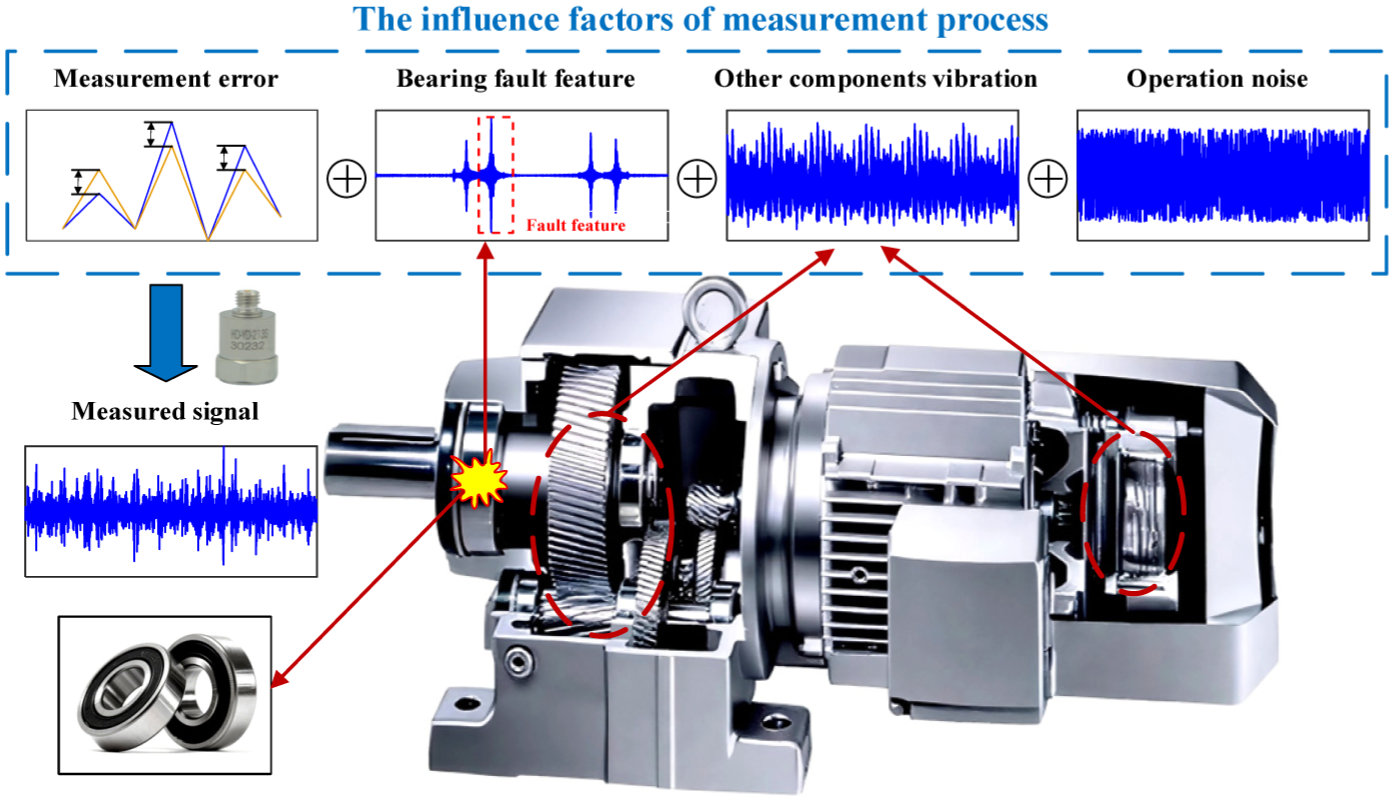
Influencing factors of the vibration measurement process.
The simulated fault vibration signal, denoted as
Moreover, as shown in Figure 2, even disregarding the influence of other interfering components, a discrepancy persists between the bearing characteristic components
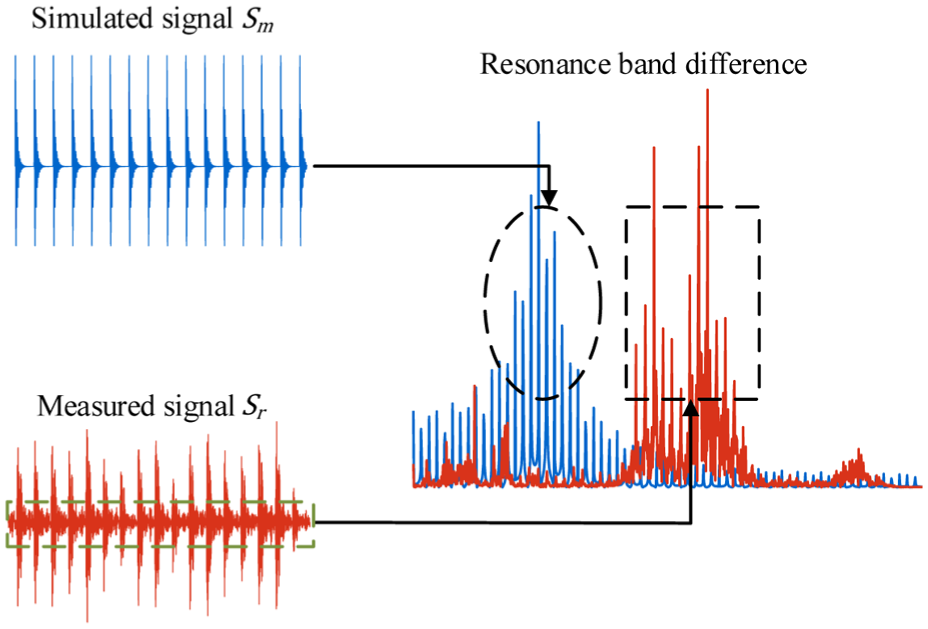
Comparison of frequency bands between simulated and measured signals.
Proposed method
Construction of dynamic simulation model for rolling bearings
The fidelity of a bearing digital twin fundamentally depends on an accurate dynamic model of bearing faults. This model should be capable of simulating multiple fault modes under real operating conditions. Through reasonable model simplification, this paper ensures strong generalization across a wide range of bearing datasets while effectively controlling model complexity, which also reduces the computational cost of parameter optimization. To simulate the dynamic behavior of rolling bearings, a 6-DOF localized fault dynamic model is established. As illustrated in Figure 3, the model incorporates a distinctive feature: unit resonators attached to the outer ring in both vertical and horizontal directions. These resonators are designed to simulate the high-frequency response characteristics of the system, excited by factors such as bearing damage and inherent structural vibrations.
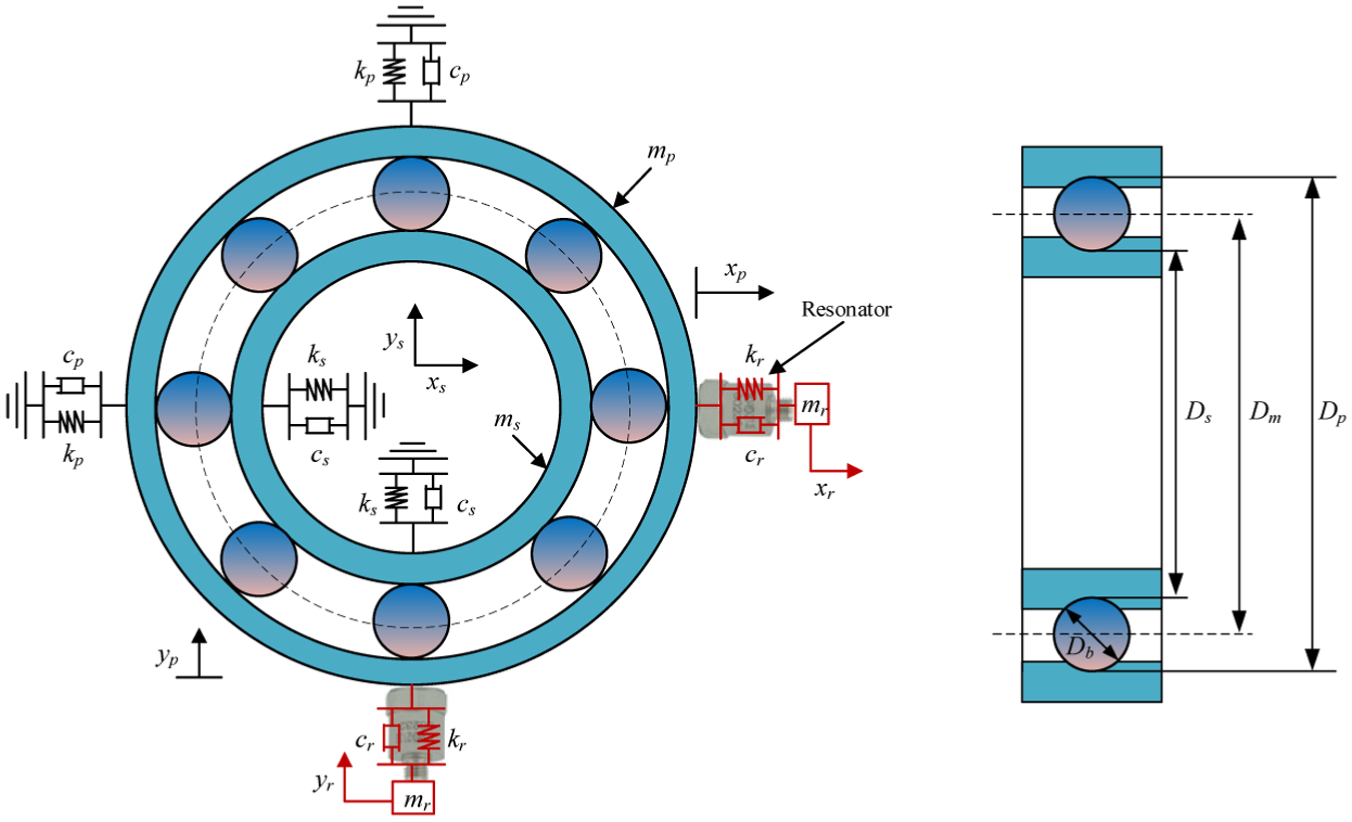
Schematic of the nonlinear dynamical model for rolling bearing.
The model includes the mass of the outer ring and housing
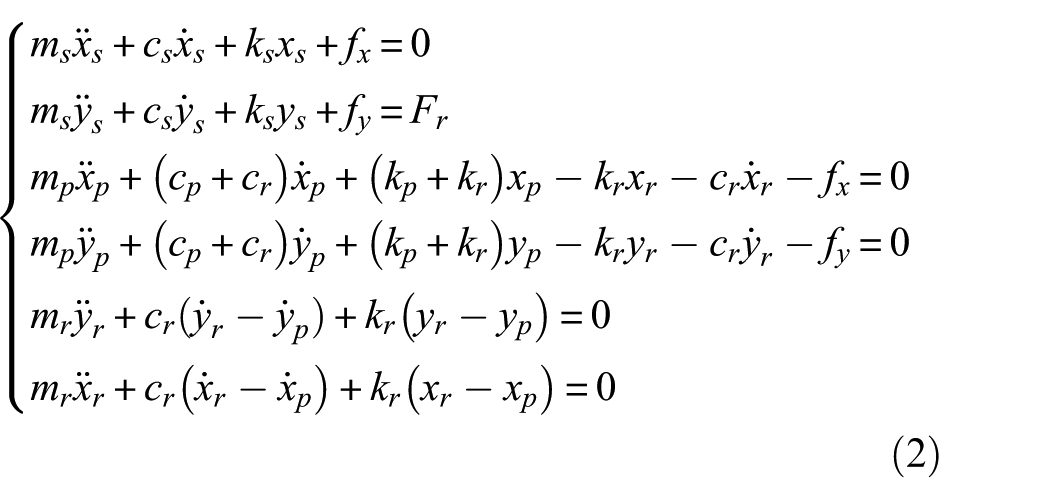
The parameters are defined as follows: m represents mass, c denotes the damping coefficient, k indicates radial stiffness, x and y are displacements in the horizontal and vertical directions, respectively, with subscripts p, s, and r corresponding to the outer ring and base, inner ring and shaft, and resonator unit, respectively. The total radial force F
r
acting on the bearing is supported by the rolling elements located within the load zone. These elements undergo elastic deformation, thereby generating nonlinear contact force components
The total deformation of the jth rolling element is defined as follows:

where j = 1, 2, …,
The angular position of each rolling element is determined by the cage position and the relative angular displacement between adjacent rolling elements. The angular position

where
Assuming pure rolling motion, the rotational speed of the cage can be expressed as:

where
Based on Hertzian contact theory, the contact force acting on the jth rolling element is expressed as:

where
The resultant nonlinear contact forces in the x and y directions can be described by:
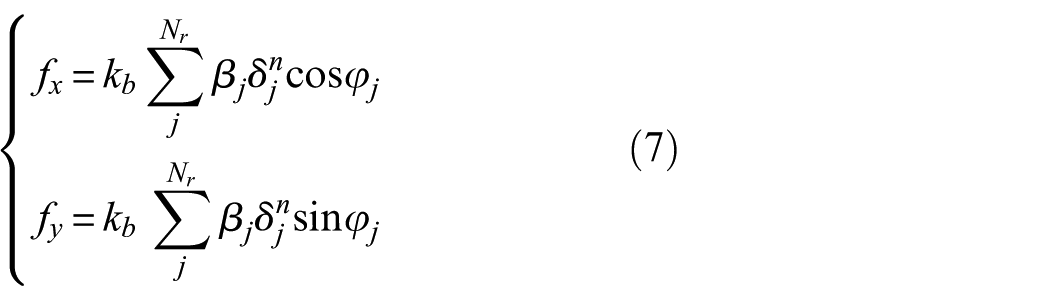
For small local concave defects in rolling bearings, the defective area is often simplified as a rectangular region for analysis. Figure 4 presents schematic diagrams of faults on the outer ring, inner ring, and rolling element. The widths of the rectangular defects are denoted as
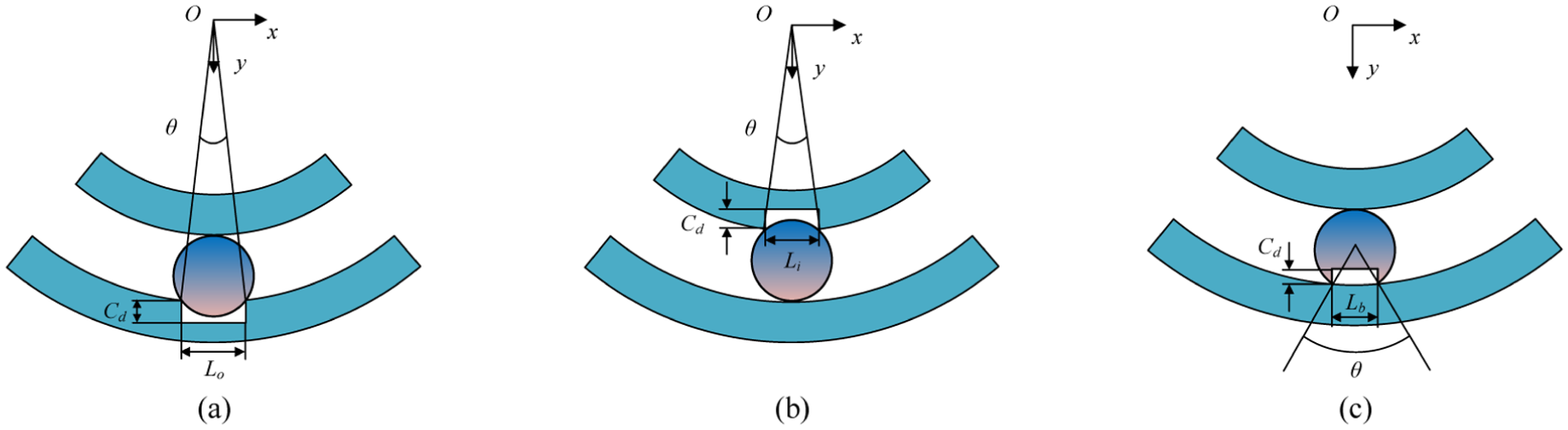
Geometric models of localized bearing defects: (a) Outer race defect, (b) Inner race defect, (c) Rolling element defect.
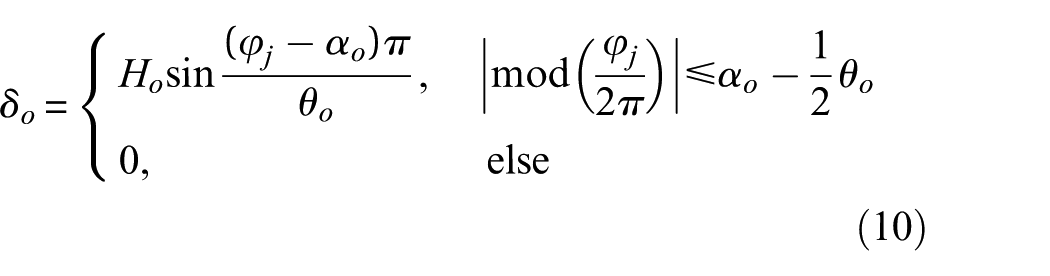
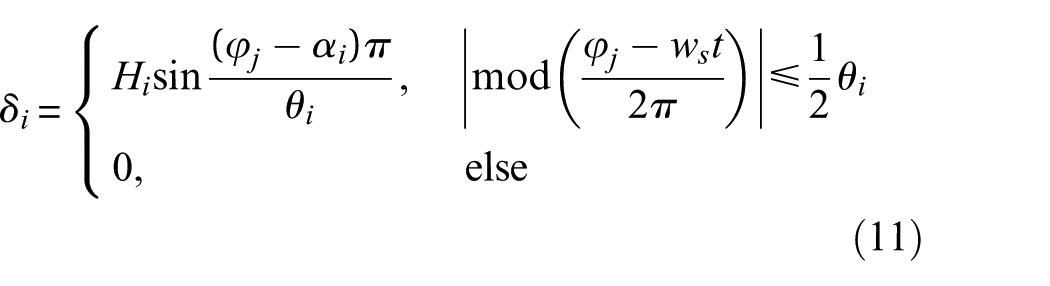
The angular extents along the circumferential direction and maximum additional displacements for different fault types are as follows:


During the process of a rolling element traversing the fault zone, the additional displacement initially increases and then decreases continuously. This variation is commonly modeled using a sinusoidal function. The additional displacement for different fault types is expressed as:
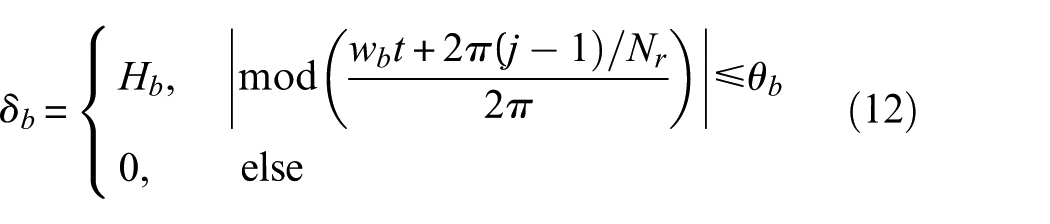
When a defect is present in the bearing, the deformation at the contact interface between the rolling element and the raceway can be described by the following expression:

Applying the Runge–Kutta method to Equation (2) enables the numerical solution of the vibration response, yielding a comprehensive set of results for diverse operating conditions and various fault locations.
Resonance feature-driven digital twin parameter optimization
The main distinction between this study and previous research is the pre-extraction of the optimal resonance band from measured signals before updating model parameters. This method is named resonance feature-driven digital twin parameter optimization (RF-DTPO). The architecture of this method is illustrated in Figure 5.
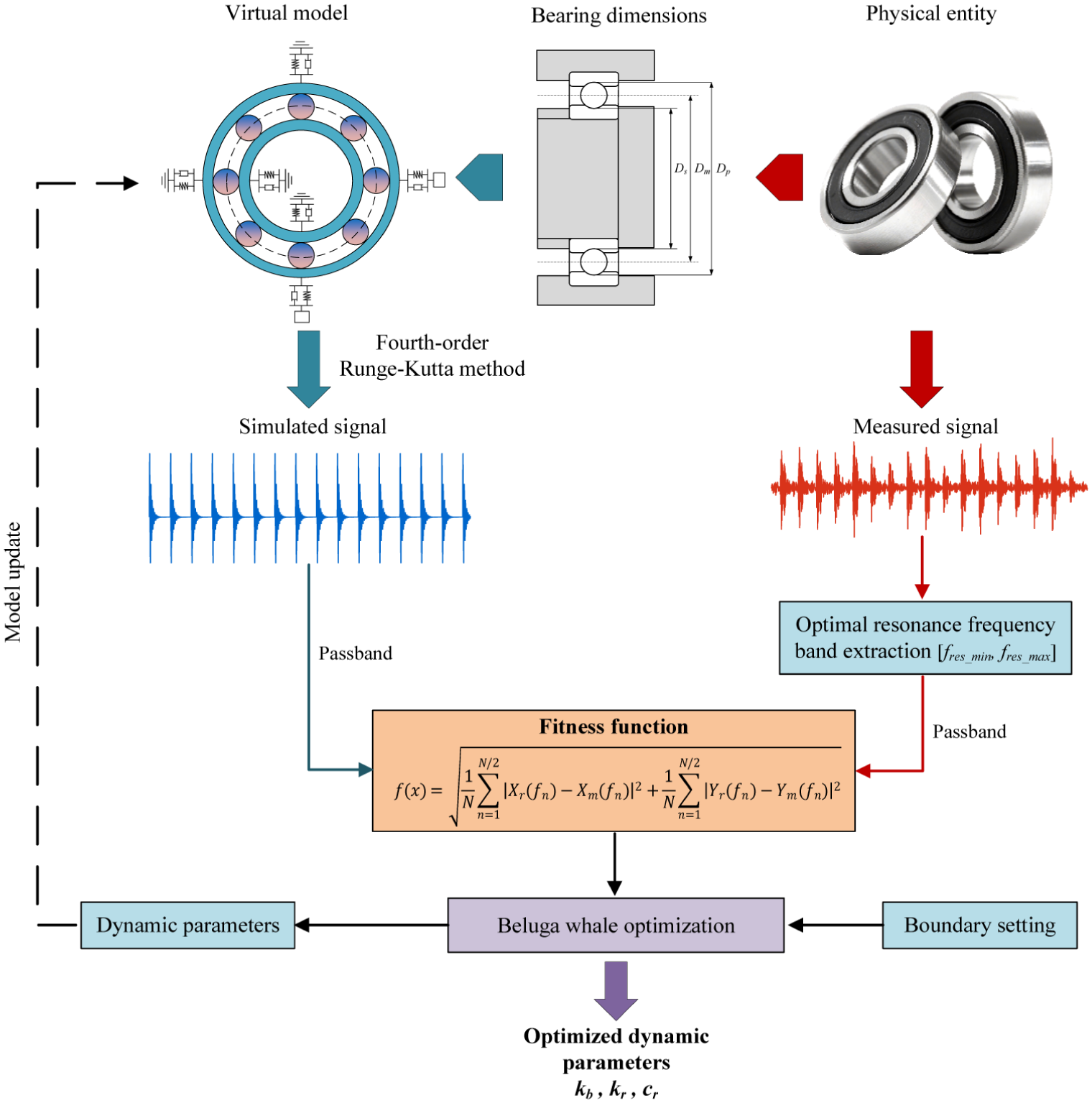
The architecture of the RF-DTPO method. RF-DTPO: resonance feature-driven digital twin parameter optimization.
When localized defects develop in rolling bearings, the intermittent impacts they produce can trigger resonance in both the bearing itself and nearby structures, leading to observable modulation effects. Within the resonance band, fault-related information is amplified by structural resonance effects, thereby encapsulating rich fault characteristics. 42 Thereby, within the demodulation frequency band, this method effectively focuses on the physical features most relevant to faults, avoiding the negative impact of multi-source mechanical interference and background noise on parameter identification, significantly enhancing the consistency between simulated signals and measured signals in key physical characteristics.
For this purpose, an adaptive resonance band identification method is adopted to extract the optimal resonance band. As illustrated in Figure 6, this method adaptively determines the parameters of a bandpass filter to achieve effective filtering near the resonance frequency excited by fault impulses, thereby enhancing fault-related characteristics.
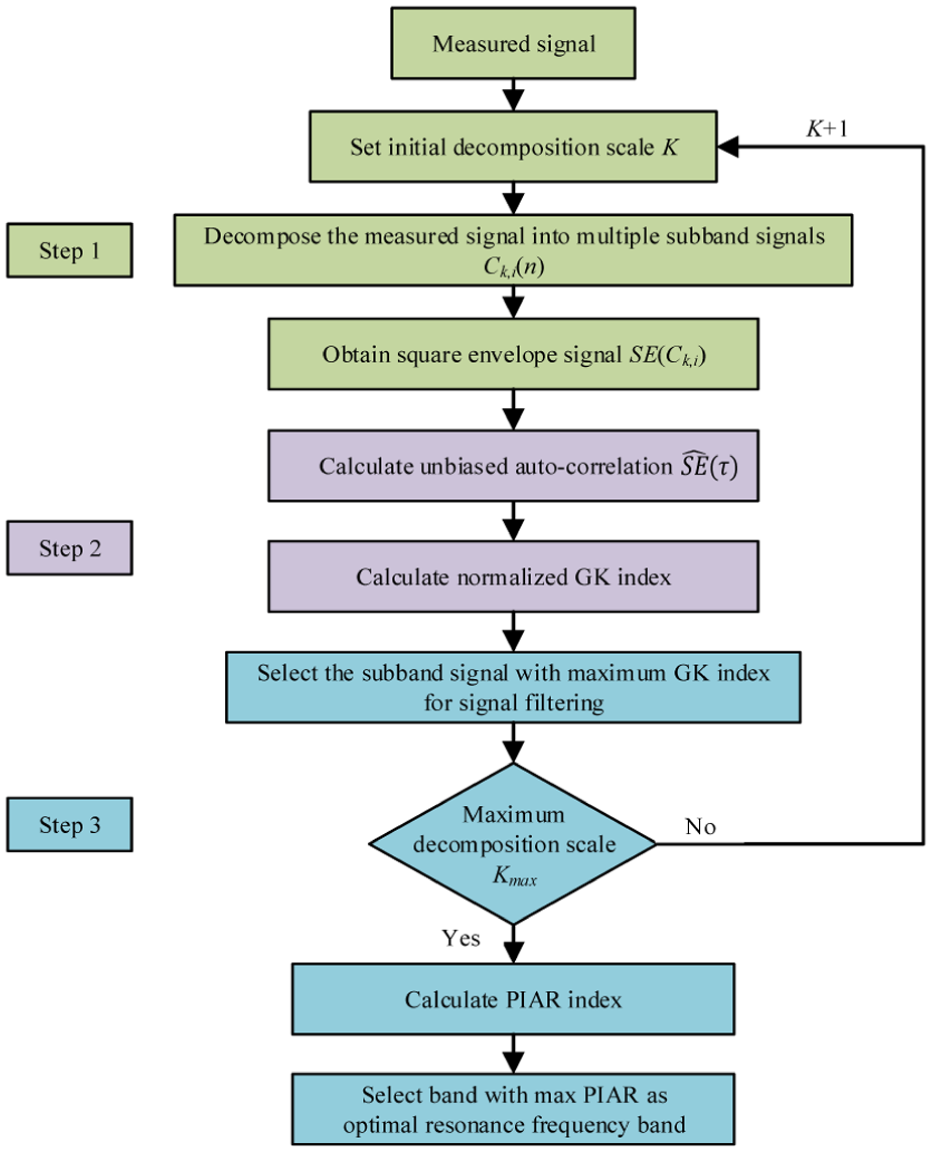
Flowchart of adaptive optimal resonance band extraction.
The method sets an initial decomposition scale K and decomposes the original signal into several sub-band signals

Transient impulses caused by faults induce fluctuations in the signal energy, which consequently lead to a significant increase in the kurtosis value. However, kurtosis is also highly sensitive to non-fault-related impulsive noise, rendering methods based solely on kurtosis susceptible to interference. To address this limitation, the Gini Index, originally developed in economics to measure wealth inequality or sparsity, has been validated as an effective sparsity measure in the context of mechanical fault diagnosis. 43 It is defined as:

where
To leverage the advantages of kurtosis and Gini metrics, a combined index, termed the GK Index, is defined as
The selection of an appropriate decomposition level K is critical. An excessively small K may fail to retain sufficient fault-related information within the frequency band, while an excessively large K could introduce unnecessary noise. The maximum level
The PIAR 44 is defined as the ratio of the average amplitude of repetitive impulses to the square root of the signal amplitudes, expressed as follows:

where
The sequence

where a value of 1 denotes a repetitive impulse, and a value of 0 denotes a noise point.
The


where
Upon extracting the requisite resonance features, achieving a high degree of consistency between the digital twin model response and the measured bearing vibration signals, within the optimal resonance band, it is essential to accurately optimize the key parameters of the dynamic model. To address this parameter optimization task efficiently and autonomously, this section employs an emerging meta-heuristic algorithm—the Beluga Whale Optimization (BWO) algorithm. 45 BWO serves the function of executing parameter optimization. This algorithm simulates the foraging behavior of a beluga whale population, demonstrating outstanding global search capabilities and efficient convergence performance when dealing with high-dimensional nonlinear parameter optimization problems.
When a localized fault occurs on a bearing surface, each pass over the defect creates an impact. This excites vibration responses near the natural frequencies of the bearing and structure, influenced by stiffness, damping, and time-varying forces. To avoid redundancy in the parameters to be optimized, simplify the model, and reduce computational cost, parameter selection can be performed by considering both the model characteristics and physical significance. In the fault-bearing dynamic model employed in this paper, the equivalent contact stiffness between the rolling elements and raceways governs the nonlinear contact force. Concurrently, a high-frequency resonator is incorporated to simulate the system’s high-frequency response, which is excited by fault impacts and inherent structural vibrations. Here, the contact stiffness
Therefore, a key aspect of this paper is the concurrent optimization of three key parameters: the resonator stiffness
Simulation model parameters.
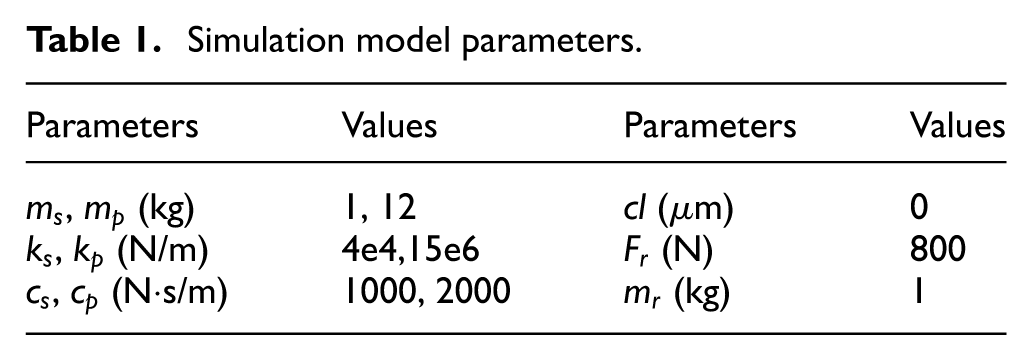
For a deep groove ball bearing, the empirical value of the equivalent stiffness

where
The simulated vibration signal is obtained by solving the system using a fourth-order variable-step Runge–Kutta algorithm. To enhance robustness against noise present in the measured signals, the fitness function is evaluated in the frequency domain. This approach emphasizes feature discrepancies within the resonance band, thereby improving both the robustness of the parameter identification and the efficiency of the optimization search. Specifically, the fitness function is formulated as the root mean square error (RMSE) between the frequency-domain representations of the measured and simulated signals exclusively within the optimal resonance band, which is minimized during the optimization:
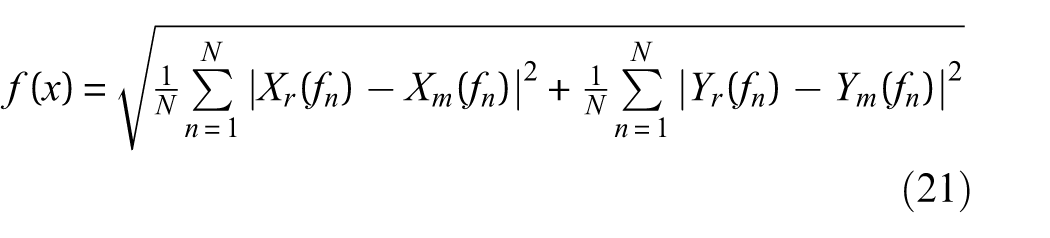
where
Digital twin-based denoising autoencoder
After the parameter optimization of the dynamic model, the resonance band of the simulated signal has been calibrated. However, in real industrial environments, interference from other mechanical components outside the resonance band in the collected signals is inevitable, which can similarly significantly degrade the accuracy of fault diagnosis. To address this challenge, a DT-DAE is proposed in this paper.
Since both healthy signals and fault signals originate from the same source and share the same operational environment, their noise characteristics, background interference, and nonstationary feature distributions are similar. Therefore, this paper employs an autoencoder, as illustrated in Figure 7. The autoencoder is an unsupervised neural network consisting of an encoder and a decoder. Its objective is to leverage simulated data and abundant healthy signals to train the autoencoder, enabling it to automatically suppress multi-source mechanical interference noise outside the resonance band and enhance fault-related features.
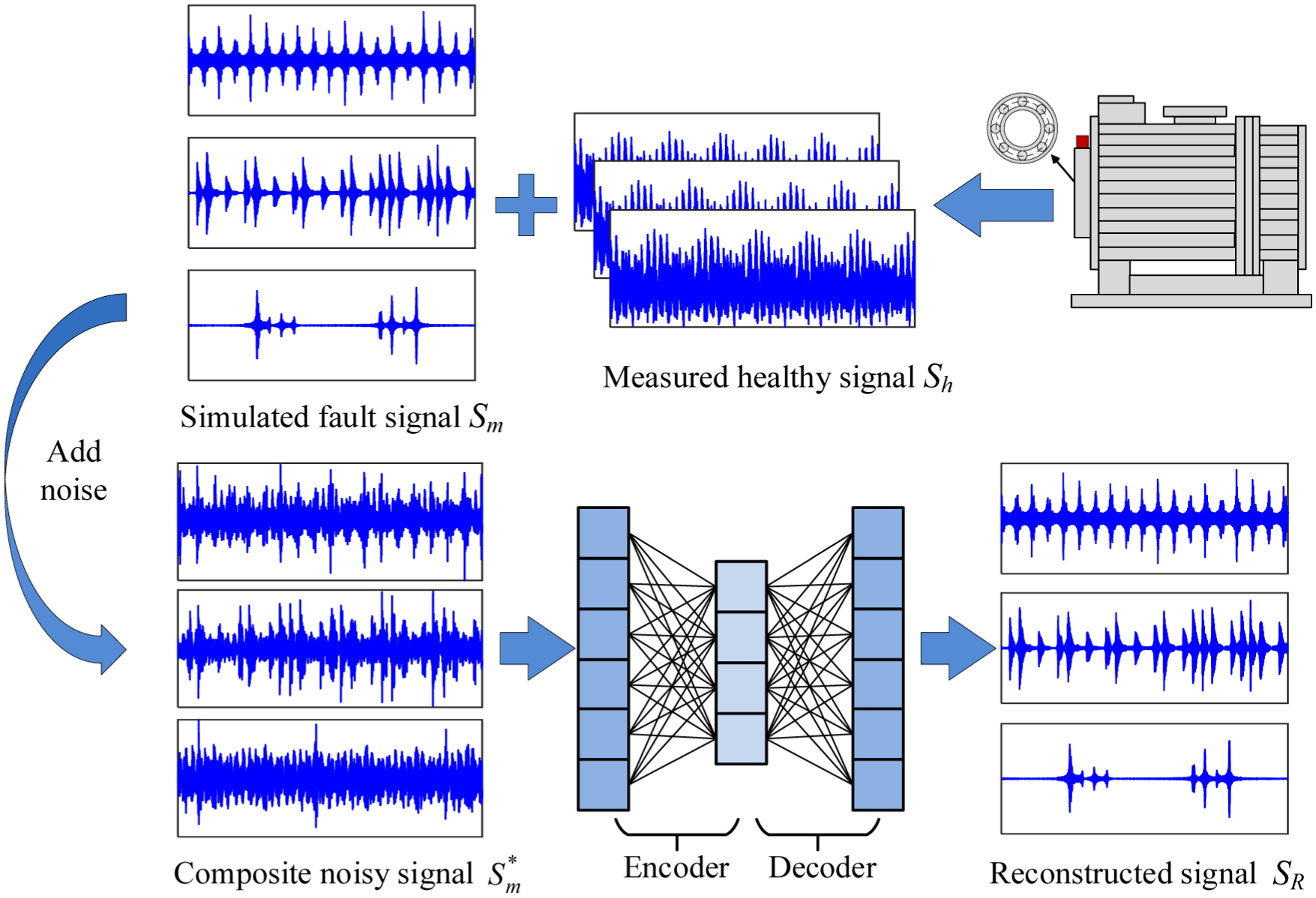
The architecture of the DT-DAE method. DT-DAE: digital twin-based denoising autoencoder.
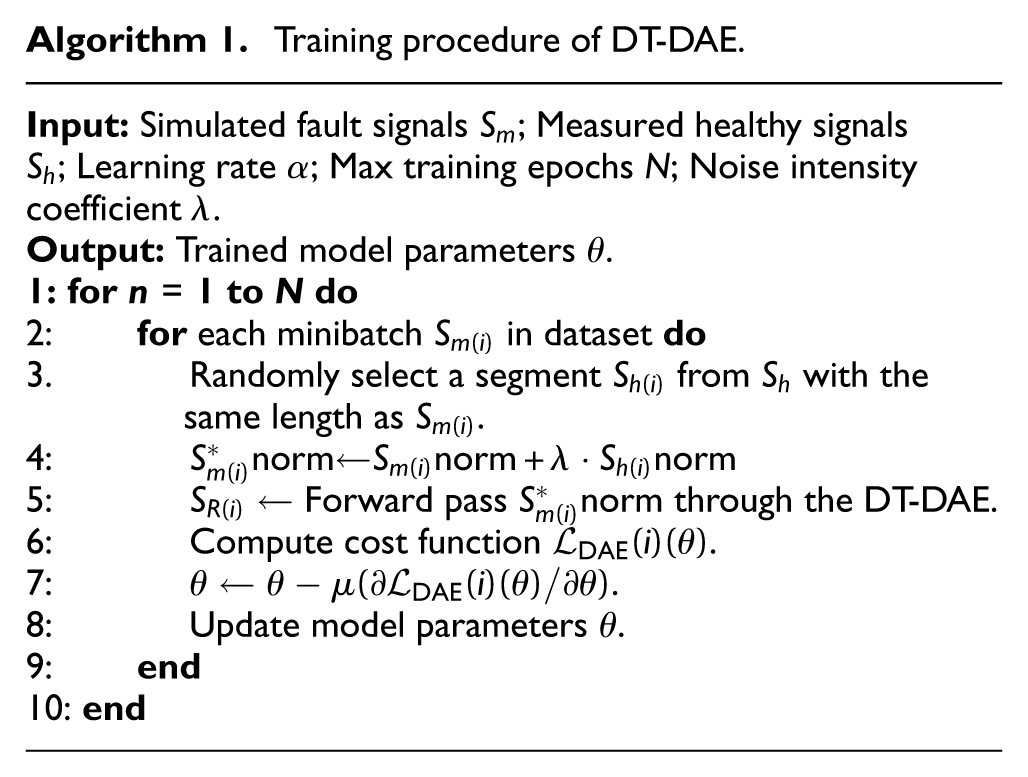
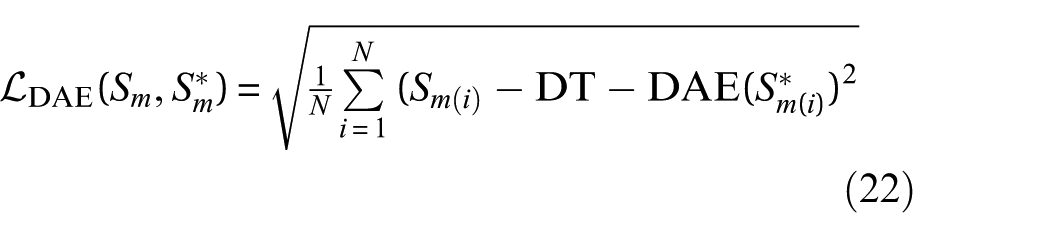
As outlined in Algorithm 1, the DT-DAE incorporates a noise simulation strategy: vibration signals acquired from healthy bearings under real-world conditions are injected as characteristic interference into the simulated fault signal
Training procedure of DT-DAE.
The resulting composite noisy signal
Implementation of the proposed method
To address the prevalent issue of scarce fault samples and imbalanced class distribution in intelligent fault diagnosis of rotating machinery, this paper proposes a data augmentation framework based on digital twins, which aims to reconstruct the training set by generating synthetic samples for minority classes, thereby improving the balance of class distribution in the data. The overall architecture is illustrated in Figure 8. The framework comprises four stages: Equipment vibration data acquisition, digital twin parameter optimization and sample generation, DT-DAE training, and fault diagnosis application. The specific procedural steps for implementing the proposed method are outlined below:
Step 1: Equipment vibration data acquisition. The raw vibration signals of rolling bearings collected are processed by applying a sliding window, divided in chronological order to construct an imbalanced dataset.

where the healthy samples (indexed by
Step 2: Digital twin parameter optimization and sample generation. A small amount of labeled measured fault data is utilized to extract resonance band features, based on which the parameters of the dynamic model are optimized, thereby generating simulated signals that are highly consistent with the characteristics of real faults.

where
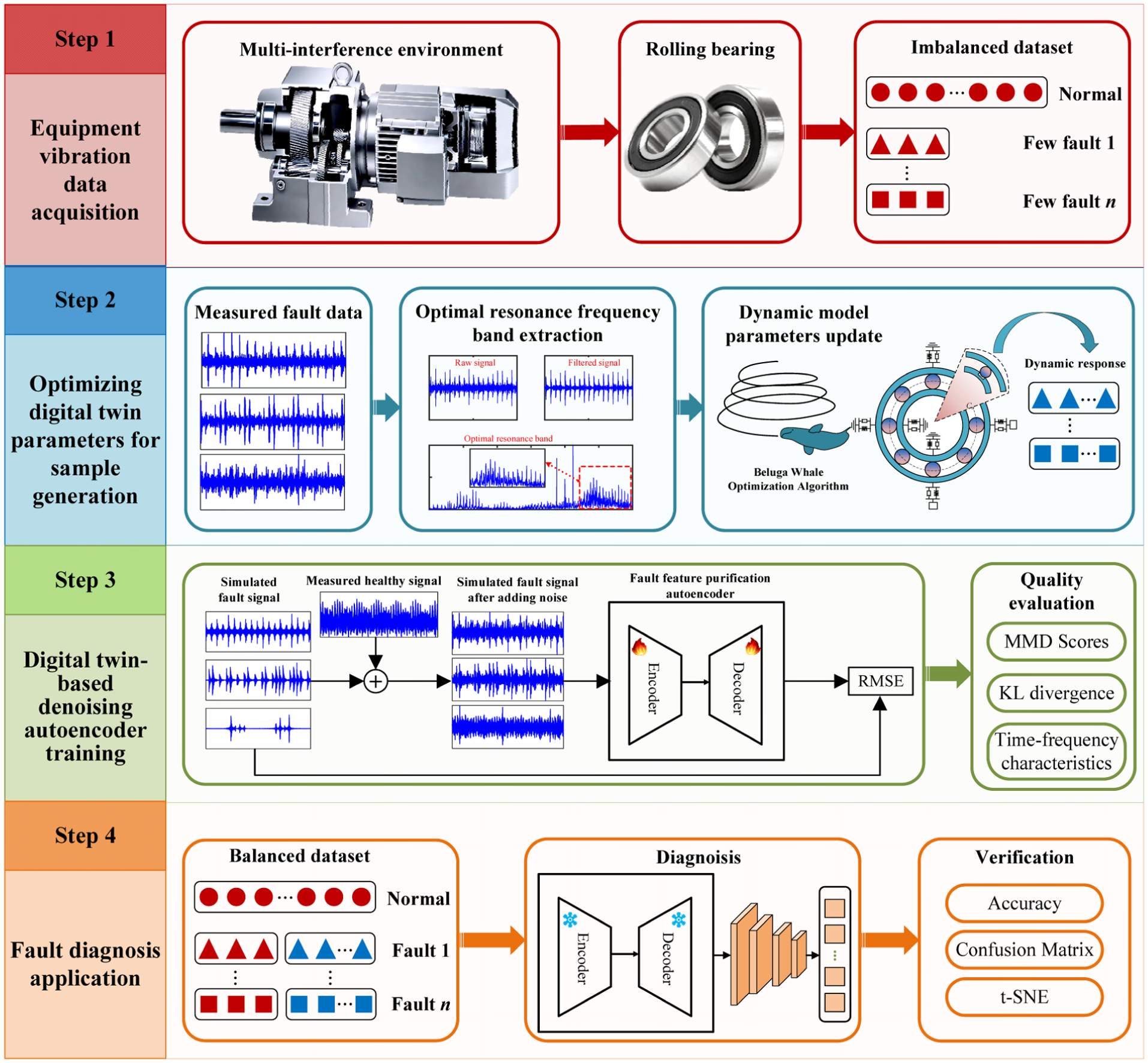
Overall flowchart of the proposed framework.
The dynamic response is simulated by inputting operational condition parameters and bearing geometric specifications. Both the dynamic model response signals and the measured signals are filtered within the optimal resonance band. Based on the beluga optimization algorithm, an iterative search is conducted for the dynamic parameters until the maximum number of iterations is reached, outputting the optimal parameters. These optimized parameters are then used to update the dynamic model, generating simulated fault signals
Step 3: DT-DAE training. DT-DAE is conducted by mixing a large amount of measured healthy data

where
Step 4: Fault diagnosis application. The generated samples are merged with the original labeled vibration data to obtain a balanced training dataset. The signals output by the DT-DAE are used as input to train and evaluate a standard CNN diagnostic model, and the diagnostic performance is validated.


where
Experiments and discussion
Experimental description
The effectiveness of the proposed method is demonstrated through two experimental case studies. The test bench structures are shown in Figure 9, with detailed bearing parameters and operating conditions provided in Table 2. The first experiment is based on publicly available test data from the Case Western Reserve University (CWRU) bearing data center. The setup primarily consists of a drive motor, a torque sensor, and a dynamometer. The test bearing used is a deep groove ball bearing SKF 6205-2RS, with a signal sampling frequency of 12 kHz. To extend the operational conditions, the second experiment is based on bearing fault test data from a permanent magnet synchronous motor (PMSM). The setup primarily consists of a drive motor, a torque and speed transducer, and a load motor. The test employed an artificially simulated faulty deep groove ball bearing SKF 6309, where pit defects were fabricated on the raceway surface using laser processing technology. The signal sampling frequency was set at 12 kHz.
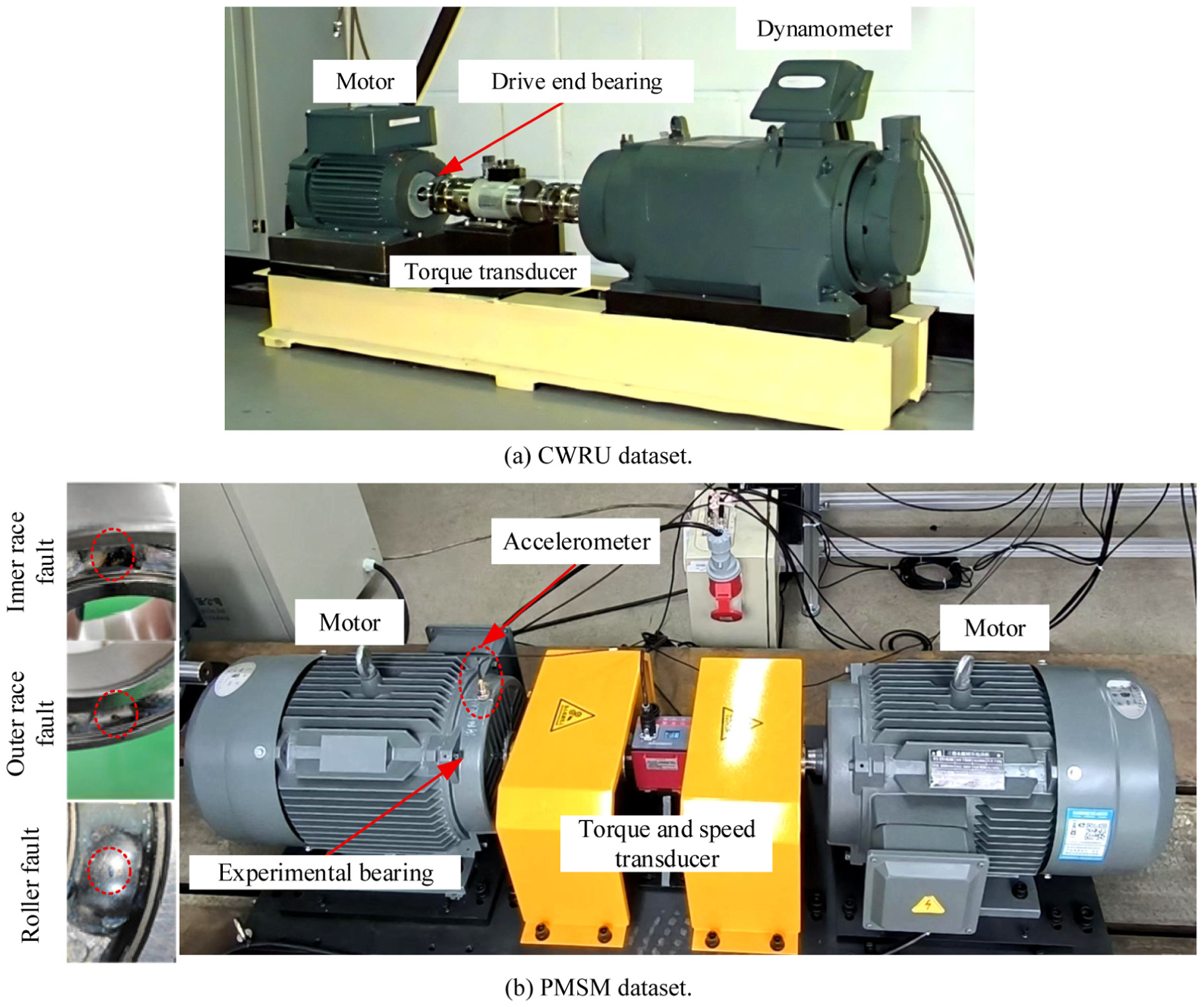
Test rig for faulty rolling bearings: (a) CWRU dataset and (b) PMSM dataset. CWRU: Case Western Reserve University; PMSM: permanent magnet synchronous motor.
Test bearing parameters and operating conditions.
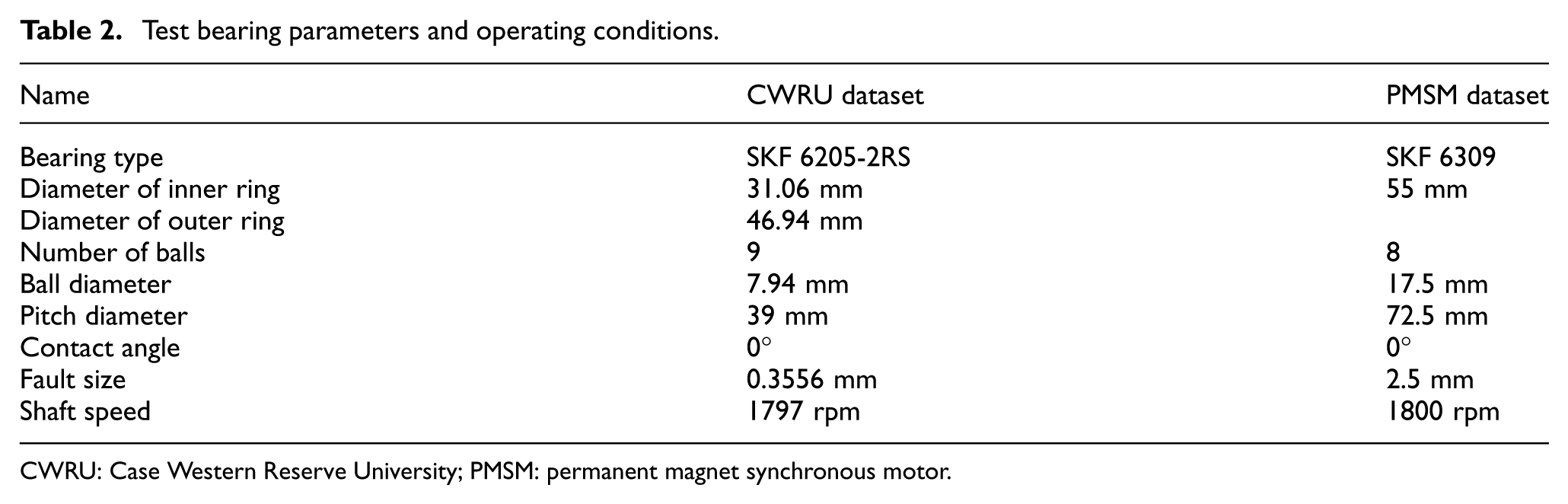
CWRU: Case Western Reserve University; PMSM: permanent magnet synchronous motor.
To accurately reflect the practical scenario of scarce fault samples in industrial applications, the original dataset was processed to construct an imbalanced dataset. The original vibration signals were segmented into samples using a sliding window of length 2400 with a 20% overlap rate. Given that industrial data typically exhibits temporal characteristics and that the extraction of resonance bands in this study requires continuous samples of a certain length, the data were divided in chronological order to prevent any data leakage.
The training set includes all healthy samples (1 × 500) and a limited number of fault samples, to simulate the real-world scenario of fault data scarcity. Meanwhile, a test set (4 × 100) was constructed for subsequent model testing and evaluation of the generated samples. The specific data split is summarized in Table 3.
Dataset partition details.
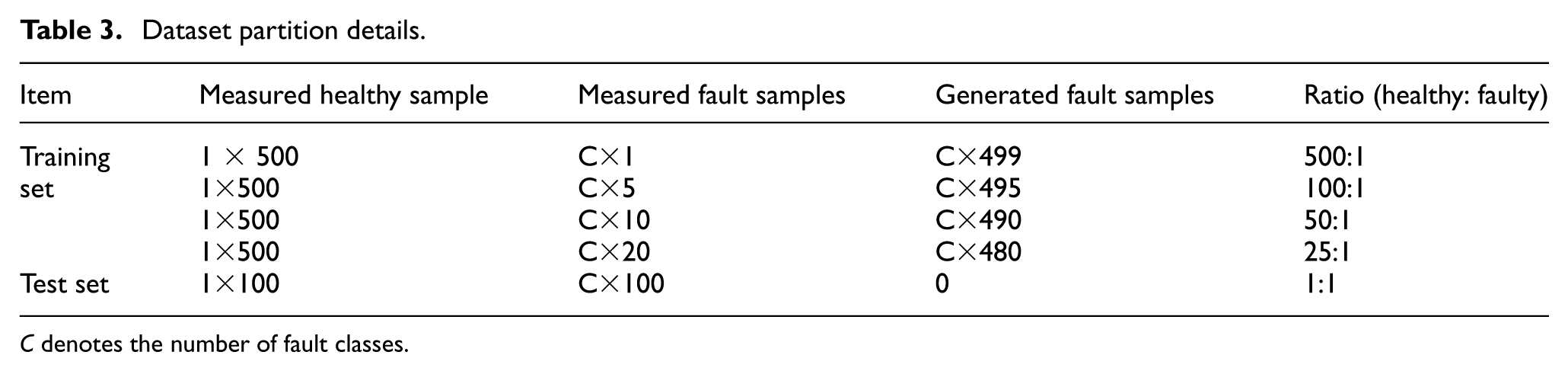
C denotes the number of fault classes.
Parameter setting
The experiments were conducted on a computer with the following hardware: an AMD Ryzen 9 7900X CPU (32 GB RAM) and an NVIDIA GeForce RTX 2060 GPU. The software environment included Python 3.10, PyTorch 2.5.1, and CUDA 12.4. A strategy of exponential decay was applied to the initial learning rate during training. Upon completion of training, the diagnostic accuracy on the test set was used to evaluate the model’s performance. To mitigate the effects of random variability, each task was independently executed six times. The mean diagnostic accuracy and standard deviation from the last epoch were then calculated as the final evaluation metric. The parameter settings are shown in Table 4, and the DT-DAE model structure is illustrated in Figure 10.
Main parameter settings.
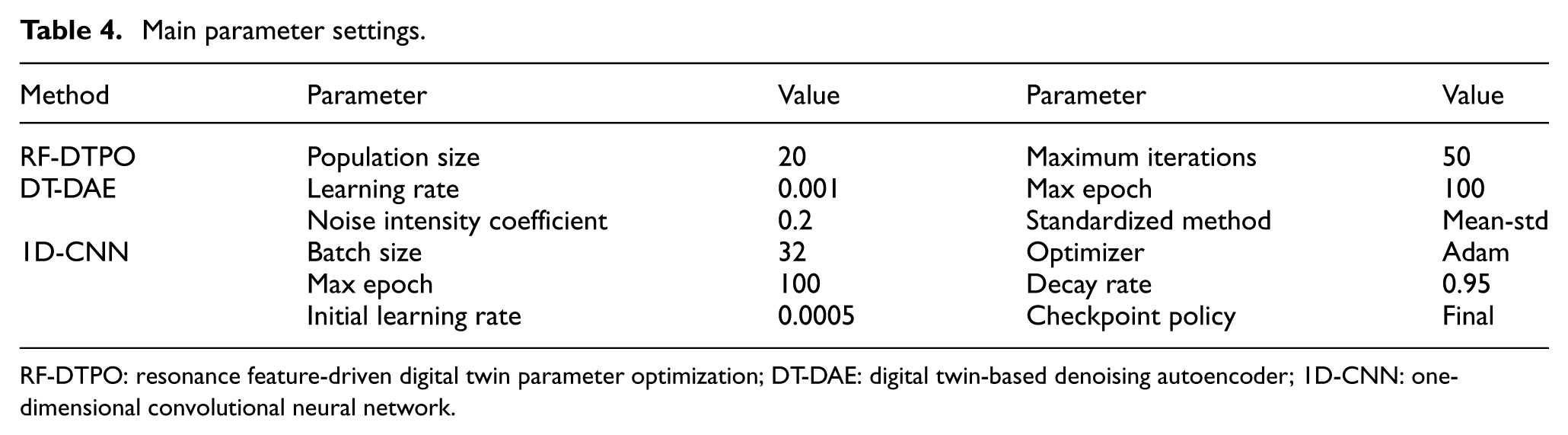
RF-DTPO: resonance feature-driven digital twin parameter optimization; DT-DAE: digital twin-based denoising autoencoder; 1D-CNN: one-dimensional convolutional neural network.
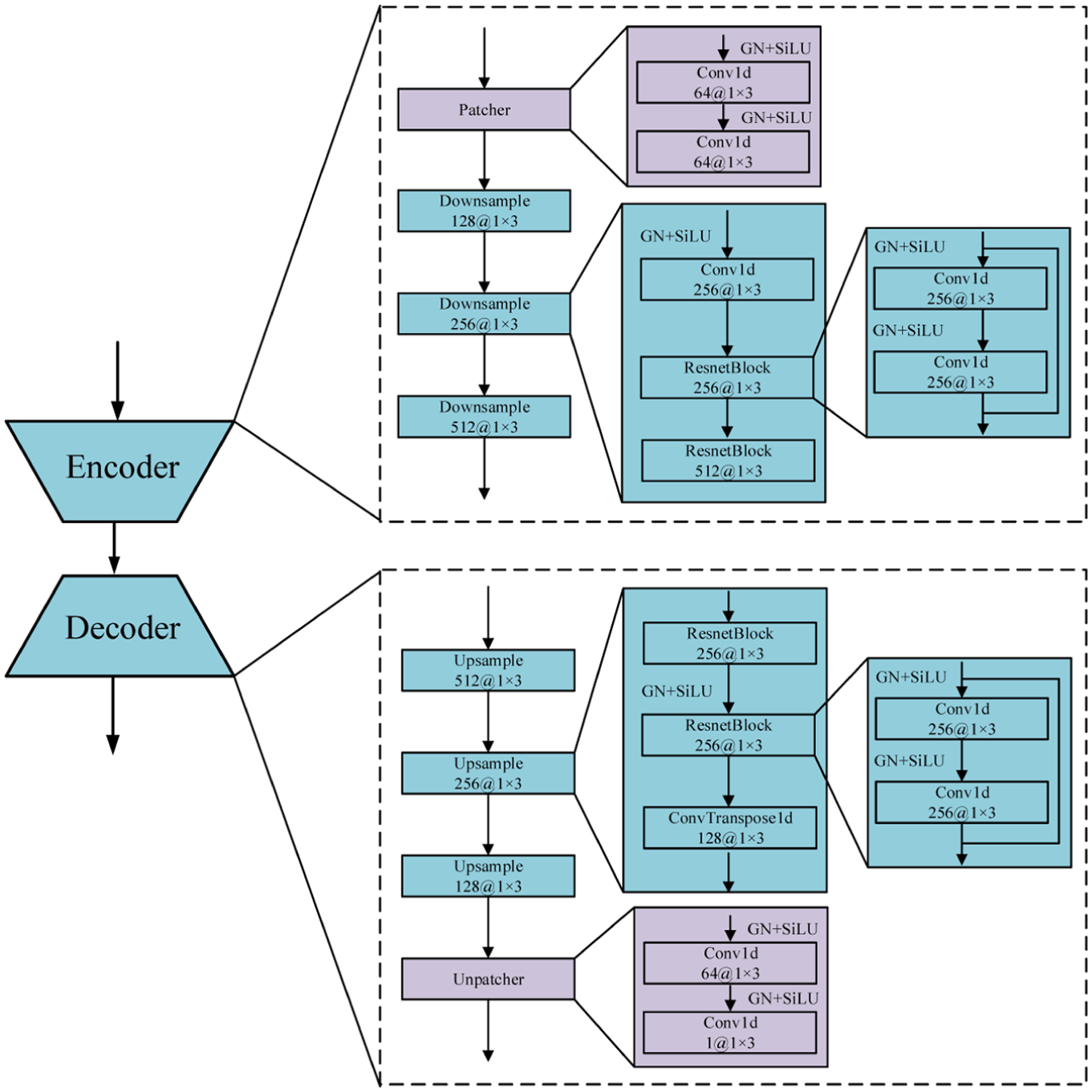
The specific structure of the DT-DAE network. DT-DAE: digital twin-based denoising autoencoder.
The one-dimensional (1D)-CNN has demonstrated exceptional capability in extracting features from 1D signals. It operates by utilizing multi-layer deep neural networks to transform low-dimensional input features into a more abstract and high-dimensional representation. It has been widely applied in the field of mechanical fault diagnosis. 47 In a typical 1D-CNN feature extractor, convolutional and pooling layers are alternately stacked, which enables the model to hierarchically extract representative features from raw vibration signals through successive convolutional and pooling operations. Accordingly, to validate the efficacy of our proposed approach, we adopted WDCNN 48 as the downstream diagnostic model. Its architecture is characterized by an initial large-kernel convolution that mitigates high-frequency industrial noise during feature extraction, followed by small-kernel layers for deep nonlinear transformations. Both the network structure and parameter settings are identical to those in the original literature.
Effectiveness of RF-DTPO
This digital twin model can dynamically adjust its dynamic parameters based on the actual operating conditions of the bearing. After the bearing parameters, sampling rate, population size, and maximum number of iterations for the optimization algorithm are set, the model outputs the global optimal solution and its corresponding fitness value when the maximum number of iterations is reached. This solution corresponds to a set of optimal dynamic parameter values. Figure 11(a) illustrates the iterative optimization process under an imbalance ratio of 100:1. As the iterations proceed, the fitness value gradually decreases, indicating that the optimization process continuously converges and approaches the optimal solution. The method involves a time-consuming step of repeatedly solving dynamic equations through iterations. Under different fault conditions, as shown in Figure 11(b), the average runtime per iteration for a single execution of the optimization process is 77.37, 26.92, and 174.91 s, respectively.
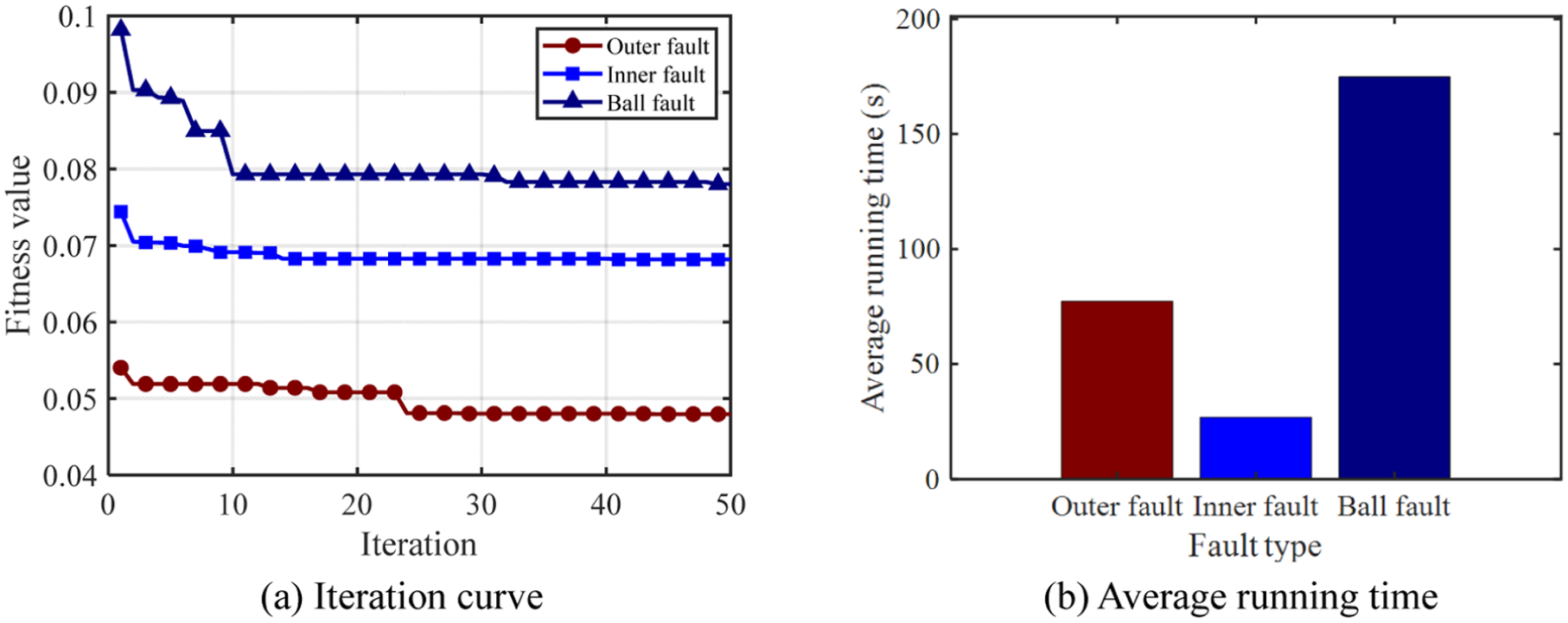
Optimization convergence curves and computational efficiency: (a) iteration curve and (b) average running time.
To verify the correctness of the parameter search and the generated simulated data, this study first conducted a comparative analysis of the waveforms and spectra between the simulated vibration signals (obtained after dynamic parameter search) and their corresponding measured signals with known labels. To ensure a fair comparison, the amplitudes of all signals were normalized to possess a mean of zero and a standard deviation of one. As shown in Figures 12 and 13, the waveforms and spectra under different fault conditions in the two datasets are compared. The results indicate that rolling bearing faults exhibit periodic impact pulses in both simulated and measured time-domain signals, and the simulated signals show high consistency with the measured signals in terms of impact trends across different fault types. The fault pulses in the simulated signal are clearer and more prominent in the time domain, as the virtual entity represents an ideal dynamic fault mechanism, while the measured signal is affected by measurement noise. Furthermore, due to certain slip phenomena during actual bearing operation, particularly the strong randomness associated with rolling element faults, some phase differences between the simulated and measured signals are inevitable. Nonetheless, the proposed method effectively simulates the primary fault characteristics and achieves good agreement between the simulated and measured signals within the resonance band.
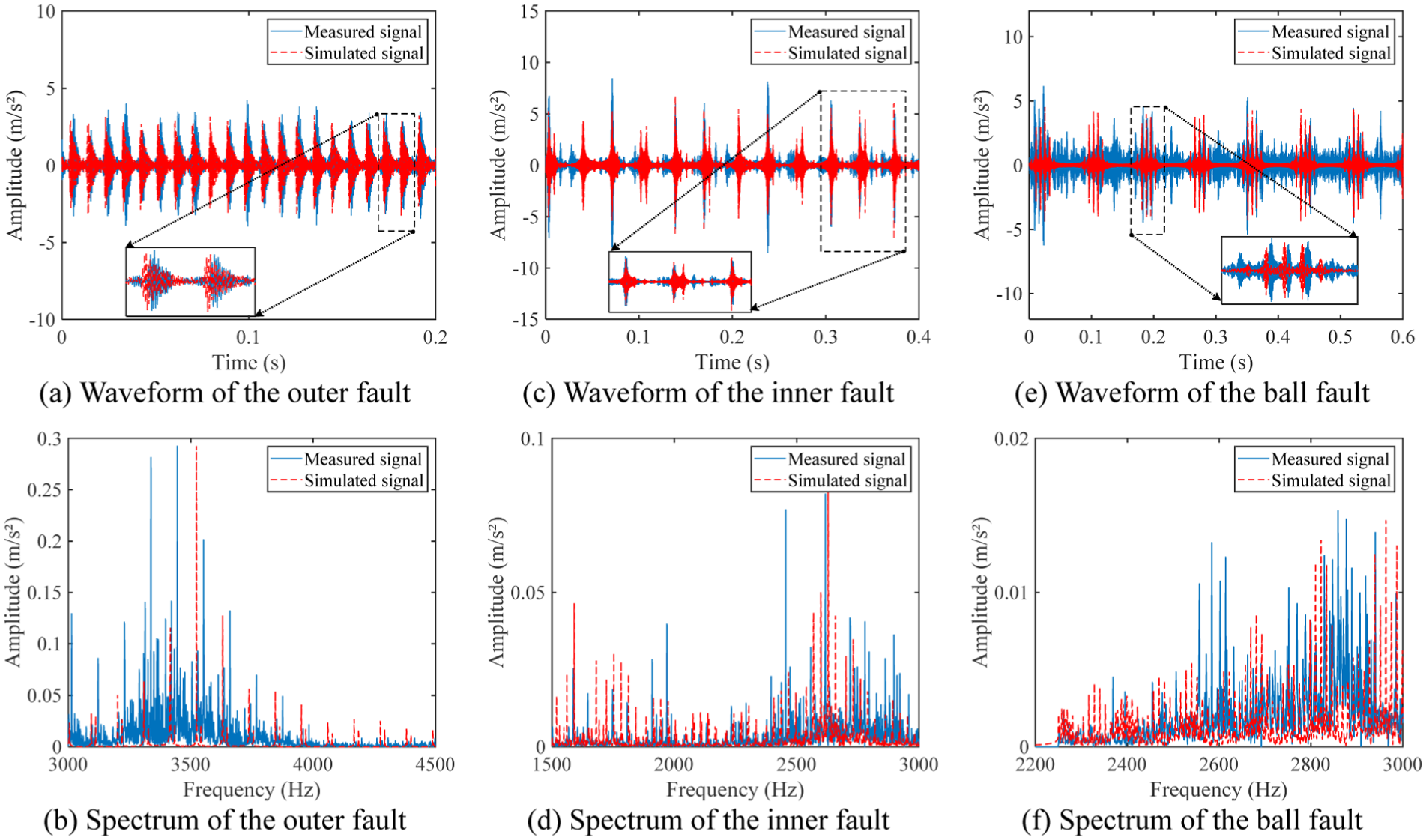
Time-frequency characteristics of various fault states in the CWRU dataset: (a) waveform of the outer fault, (b) spectrum of the outer fault, (c) waveform of the inner fault, (d) spectrum of the inner fault, (e) waveform of the ball fault, and (f) spectrum of the ball fault. CWRU: Case Western Reserve University.
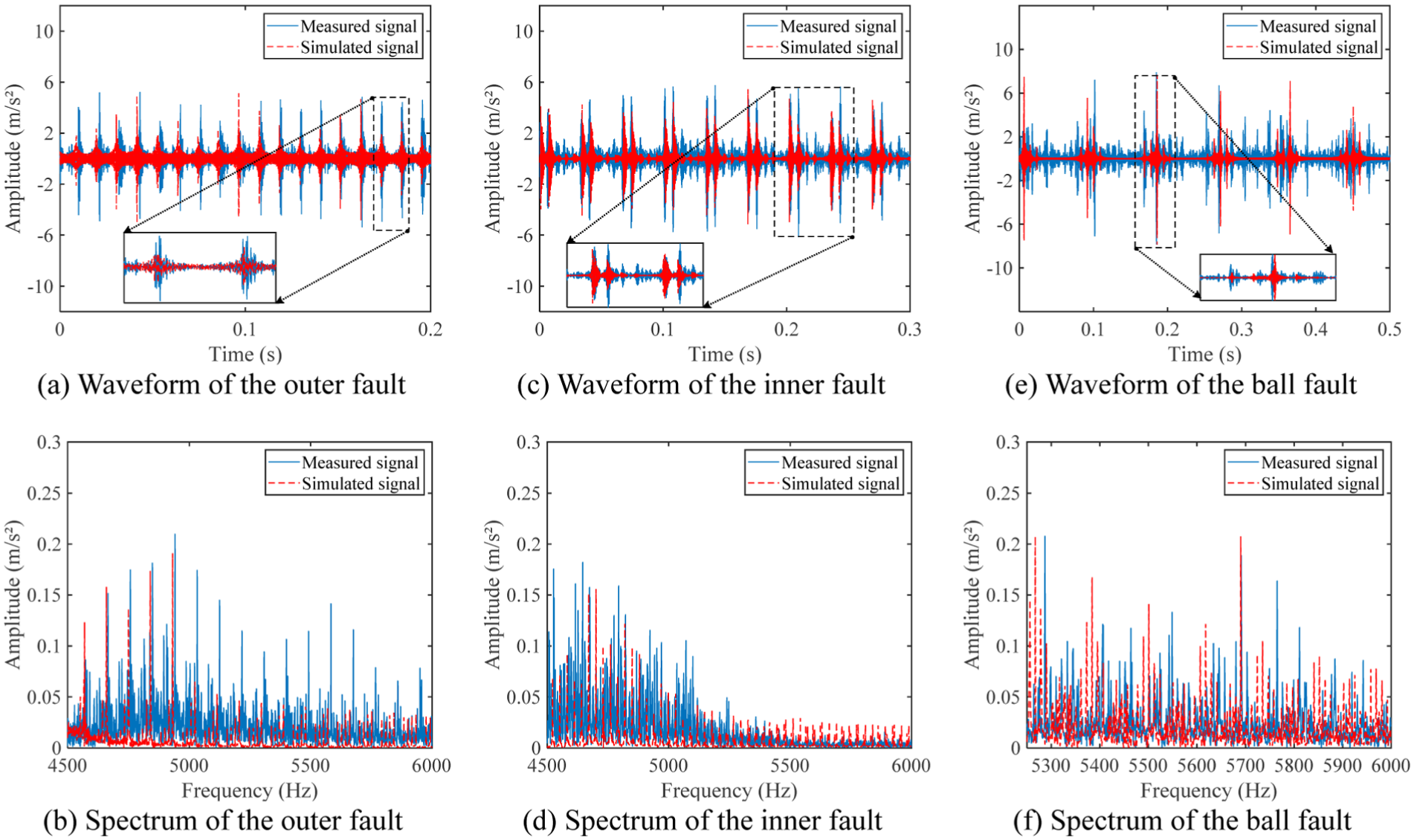
Time-frequency characteristics of various fault states in the PMSM dataset: (a) waveform of the outer fault, (b) spectrum of the outer fault, (c) waveform of the inner fault, (d) spectrum of the inner fault, (e) waveform of the ball fault, and (f) spectrum of the ball fault. PMSM: permanent magnet synchronous motor.
Application for fault diagnosis
Quantitative assessment metrics
To quantitatively evaluate the discrepancy between the simulated and measured signal, this paper adopts the maximum mean discrepancy (MMD) 49 and Kullback–Leibler (KL) divergence as metrics for assessing the similarity of their overall distributions. These metrics are defined as follows:
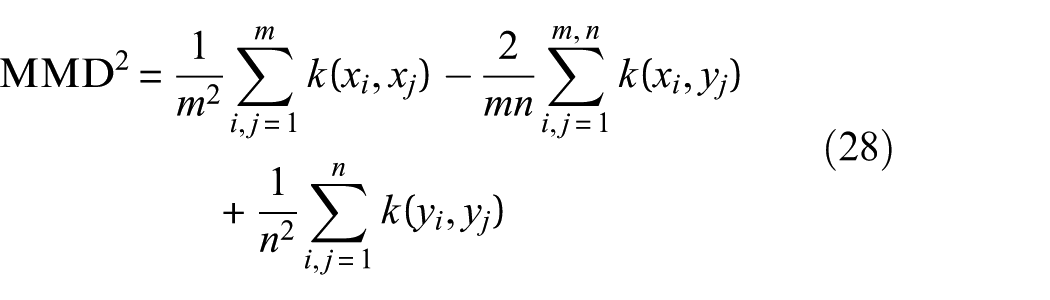
where

where
Furthermore, the classification accuracy is used to quantify the performance of fault diagnosis, which is defined as:
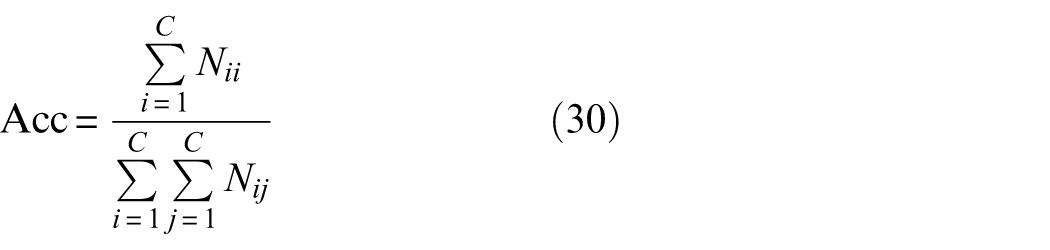
where
Ablation experiment
To rigorously assess the contribution of each structural element within the proposed framework, systematic ablation studies are conducted, as summarized in Table 4. Identical experimental settings are maintained across all trials to ensure comparability, and the influence of individual modules is evaluated by analyzing the performance of specific model variants.
M1: Remove the DT-DAE module, using only the simulated data generated by the RF-DTPO module, with Gaussian noise added as training data.
M2: Remove the RF-DTPO module, using only the empirical kinetic model and the DT-DAE module.
M3: Replace the health data noise addition strategy in the DT-DAE module with Gaussian noise.
M4: Retain all modules of the proposed method in their entirety.
The noise intensity coefficient in the DT-DAE has a significant impact on the diagnostic performance of the model. As shown in Figure 14, we conducted experiments with different noise intensity coefficients λ and analyzed the effect of noise intensity on fault diagnosis accuracy at a 100:1 imbalance ratio. The objective of the experimental tuning was to identify a noise intensity level that effectively suppresses noise interference without excessively distorting signal features. The experimental results demonstrate that at a noise intensity of 0.2, which corresponds to a signal-to-noise ratio of about 7.0, the highest final diagnostic accuracy is achieved across both datasets.
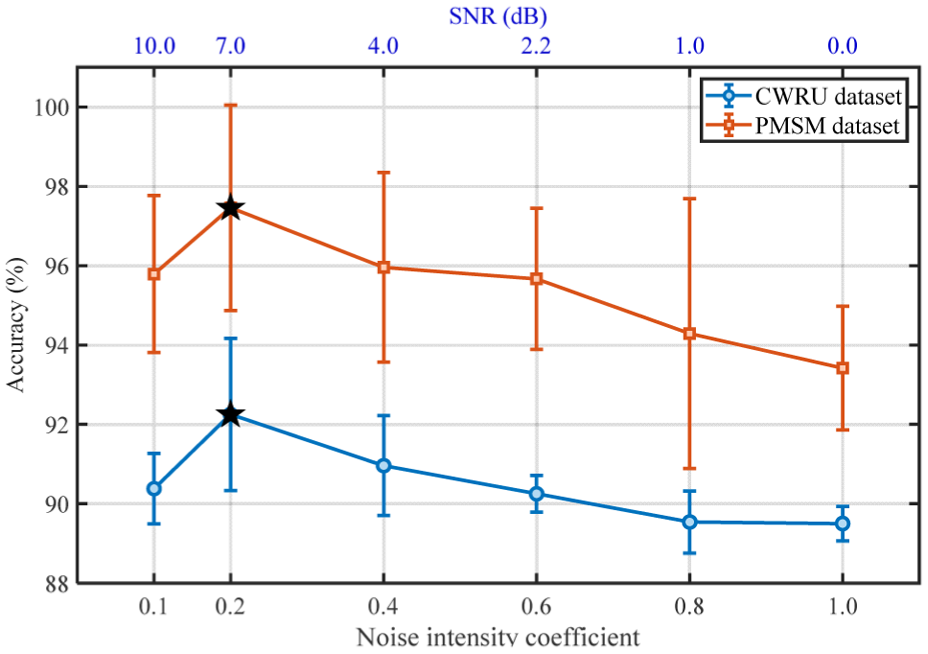
Diagnostic accuracy of the proposed method under different noise intensity coefficients.
Based on the above ablation experiment design, we comprehensively evaluated the four model configurations (M1–M4) on the CWRU and PMSM datasets. To evaluate the similarity of sample distributions, Figure 15 presents the MMD scores and KL divergence of the samples generated by different methods under varying imbalance ratios. The results indicate that on both the CWRU and PMSM datasets, M4 achieves the lowest MMD value and KL divergence across all imbalance ratios, demonstrating that the distribution of its generated samples most closely matches that of the measured signal. M3 follows closely, with MMD scores slightly higher than M4 but significantly better than M1 and M2. While the scores of M1 and M2 vary across different datasets, they are consistently and significantly higher than those of M3 and M4. These findings clearly validate the necessity and synergistic effects of each module in the proposed framework. The RF-DTPO module effectively enhances the distribution authenticity of generated samples by aligning simulated signals with measured signals in the resonance band. Meanwhile, the health data noise addition strategy in the DT-DAE module, as opposed to simple Gaussian noise, further strengthens the model’s anti-interference capability and adaptability to complex operating conditions.
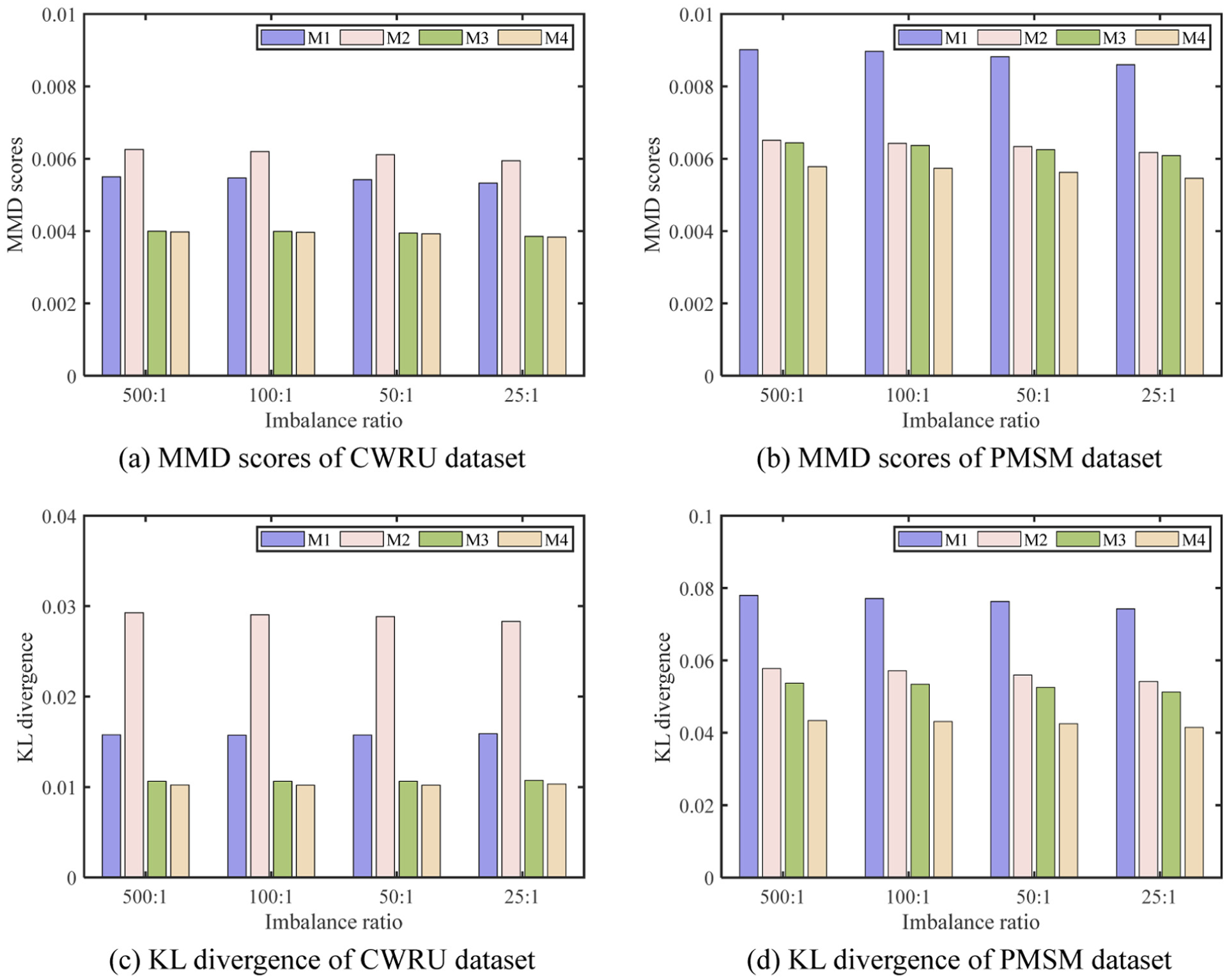
Divergence metric of generated samples across ablated models: (a) MMD scores of the CWRU dataset, (b) MMD scores of the PMSM dataset, (c) KL divergence of the CWRU dataset, and (d) KL divergence of PMSM dataset. CWRU: Case Western Reserve University; PMSM: permanent magnet synchronous motor; MMD: maximum mean discrepancy; KL: Kullback–Leibler.
Given the observed differences in generation quality, we further investigated whether they lead to corresponding improvements in downstream diagnostic performance. Tables 5 and 6 summarize the diagnostic performance of different methods on the two test sets under varying imbalance ratios, respectively. The results show that classifiers trained using data generated by M4 achieve the highest accuracy, significantly outperforming other configurations. This result is consistent with the MMD scores and KL divergence evaluation conclusions, once again demonstrating the advantages of the proposed framework in enhancing fault diagnosis performance. Through ablation experiments, we not only validate the effectiveness of each module but also clarify the comprehensive value of the complete model in addressing data imbalance issues and improving diagnostic accuracy.
Ablation experiment configuration scheme.
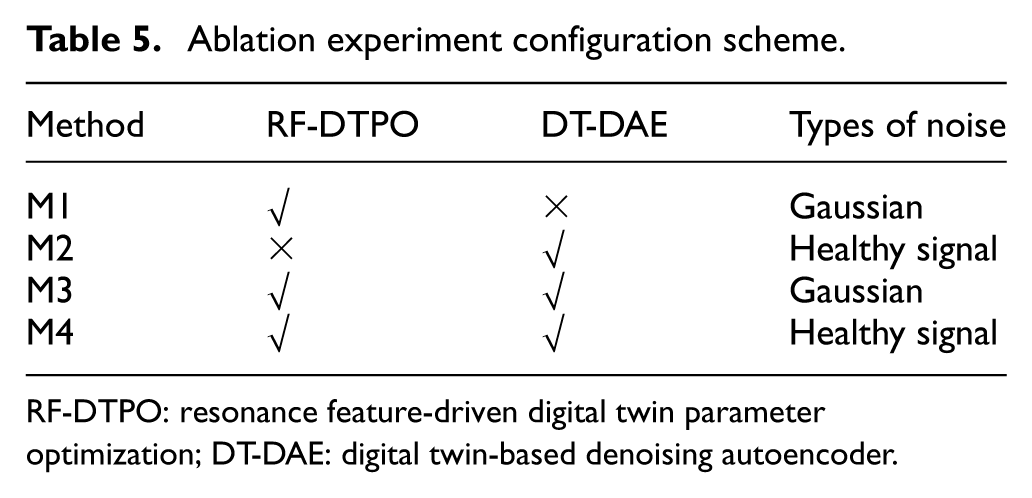
RF-DTPO: resonance feature-driven digital twin parameter optimization; DT-DAE: digital twin-based denoising autoencoder.
Diagnostic accuracy in the ablation experiment on CWRU dataset.
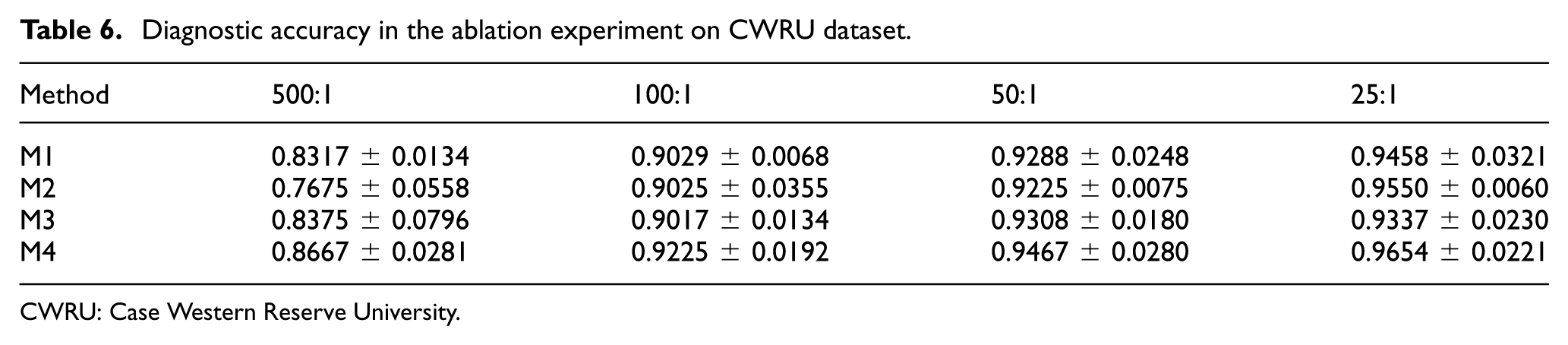
CWRU: Case Western Reserve University.
Comparative experiments
To validate the effectiveness of the proposed method, we used four different generative models to generate samples and conducted evaluations and comparisons of the generated signals. The comparative methods are as follows:
SMOTENN: A hybrid method that combines oversampling and data cleaning, effectively enhancing the classification performance of imbalanced datasets by generating minority class samples through SMOTE and then removing noisy data using edited nearest neighbours (ENN).
Wasserstein GAN with gradient penalty (WGANGP): An enhanced variant of GAN, which minimizes the Wasserstein distance between the distributions of measured and generated data. By replacing weight clipping with gradient penalty, it effectively resolves the training instability issues inherent in wasserstein GAN, such as gradient vanishing or explosion caused by weight constraints.
TimeVAE: A variational autoencoder framework enhanced with trend and seasonality blocks for high-quality multivariate time-series data generation. 50
Empirical dynamic model: Adopting an identical dynamic model structure, the empirical baseline was configured with parameters set according to the reference
51
and the contact stiffness
To systematically validate the quality of the proposed method in data generation, we conducted a comprehensive performance evaluation under multiple imbalance ratios, as high-quality, high-fidelity data generation is the fundamental prerequisite for ensuring the effectiveness of subsequent fault diagnosis. As shown in Figure 16, under both the CWRU and PMSM datasets, the proposed method consistently achieves the smallest MMD and KL divergence across all imbalance ratios, and the metric values for all methods decrease as the imbalance ratio declines, demonstrating significantly superior data generation capability compared to existing benchmark models. It is particularly noteworthy that traditional oversampling methods, such as SMOTENN, and deep generative models such as WGANGP and TimeVAE exhibit significantly higher MMD and KL divergence than the proposed method, and are even substantially higher than the empirical dynamic model based on physical mechanisms. This phenomenon reveals a critical issue: under small-sample conditions, the generalization capabilities of these generative models are fundamentally limited. The underlying reason lies in the fact that the limited and highly imbalanced training samples are insufficient to support complex generative models in learning a comprehensive representation of the fault feature space. As a result, these models struggle to adequately capture the diversity of fault patterns, the dynamic characteristics of state evolution, and the feature mapping relationships under varying operating conditions, ultimately compromising the authenticity and diversity of the generated samples.
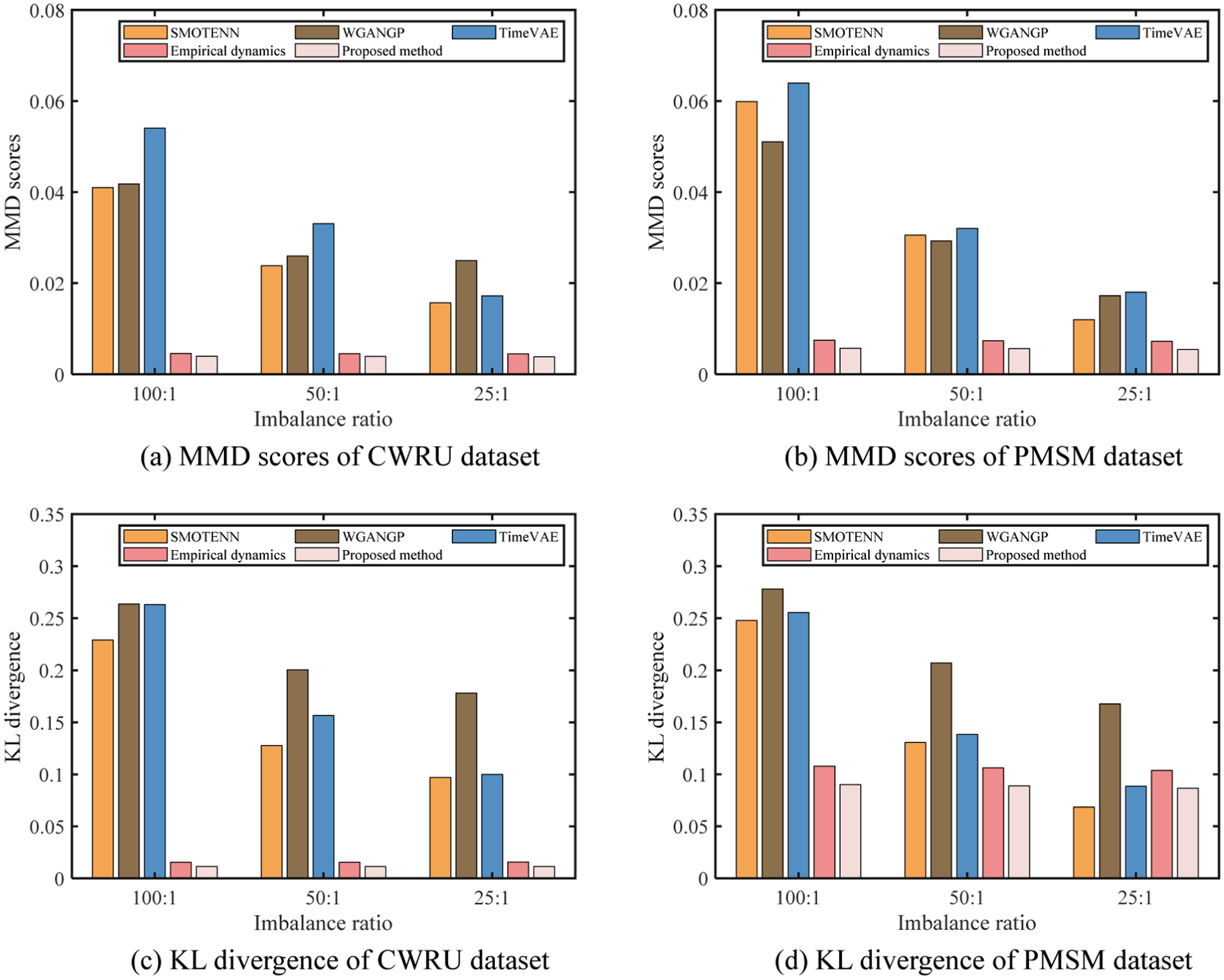
Divergence metric of generated samples from different methods: (a) MMD scores of CWRU dataset, (b) MMD scores of PMSM dataset, (c) KL divergence of CWRU dataset, and (d) KL divergence of PMSM dataset. CWRU: Case Western Reserve University; PMSM: permanent magnet synchronous motor; MMD: maximum mean discrepancy; KL: Kullback–Leibler.
To further investigate the physical interpretability of data generation and its practical value in fault diagnosis, we conducted a comparative time–frequency analysis based on the wavelet transform on the CWRU and PMSM datasets. Figures 17 and 18 systematically illustrate the distribution patterns of time-frequency characteristics of the two datasets under the processing of the empirical model and the proposed method, respectively. Subfigures (a) to (c) and (g) to (i) present the simulated signals generated by the conventional empirical dynamic model and the original measured signals, respectively. A distinct distribution discrepancy in spectral characteristics can be observed: the energy of the simulated signals is excessively concentrated in the low-frequency region below 3 kHz, exhibiting a unimodal and centralized distribution pattern.
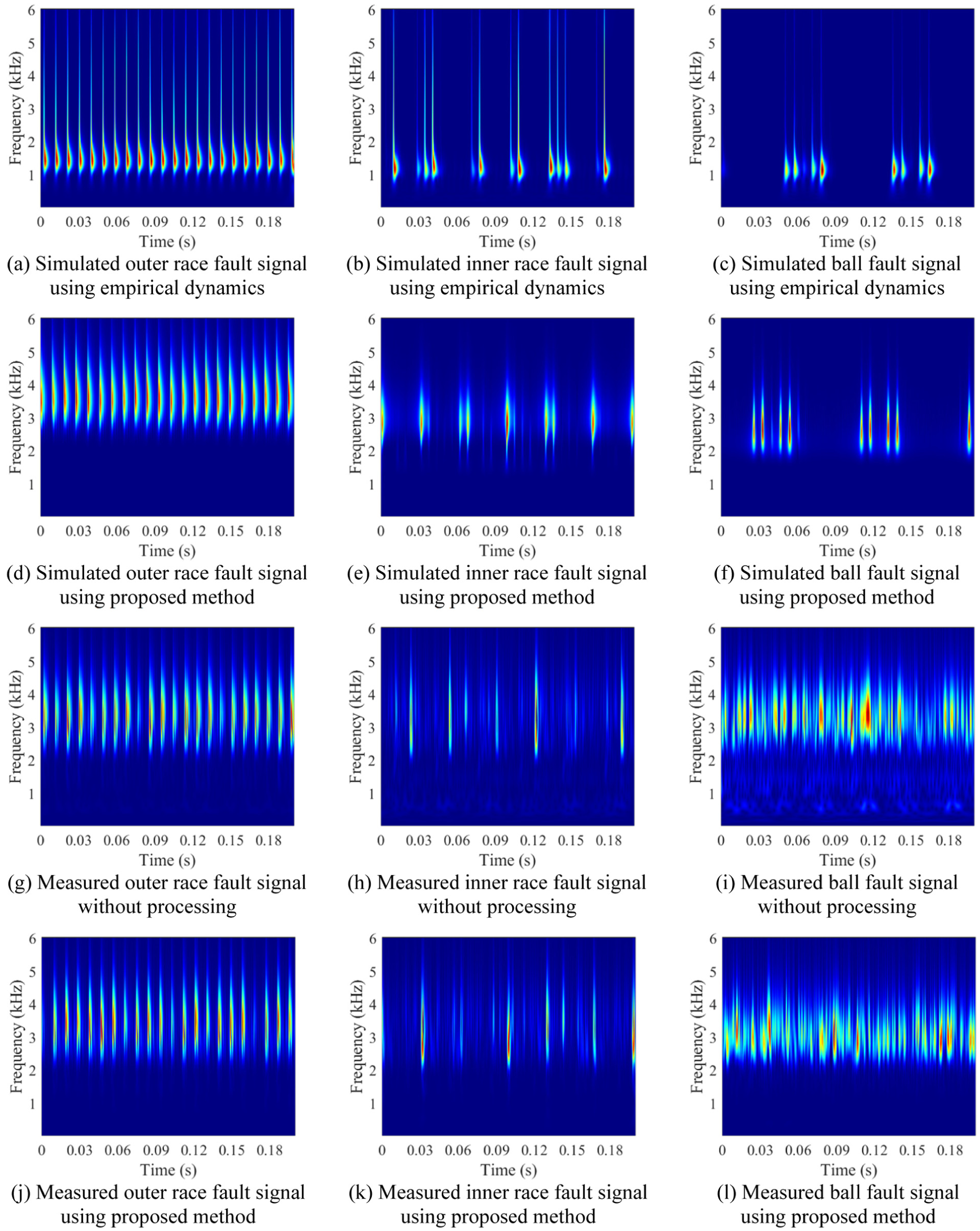
Comparison between simulated and experimental time–frequency spectra for the CWRU dataset: (a) simulated outer race fault signal using empirical dynamics, (b) simulated inner race fault signal using empirical dynamics, (c) simulated ball fault signal using empirical dynamics, (d) simulated outer race fault signal using the proposed method, (e) simulated inner race fault signal using the proposed method, (f) simulated ball fault signal using the proposed method, (g) measured outer race fault signal without processing, (h) measured the inner race fault signal without processing, (i) measured ball fault signal without processing, (j) measured outer race fault signal using the proposed method, (k) measured inner race fault signal using the proposed method, and (l) measured ball fault signal using the proposed method. CWRU: Case Western Reserve University.
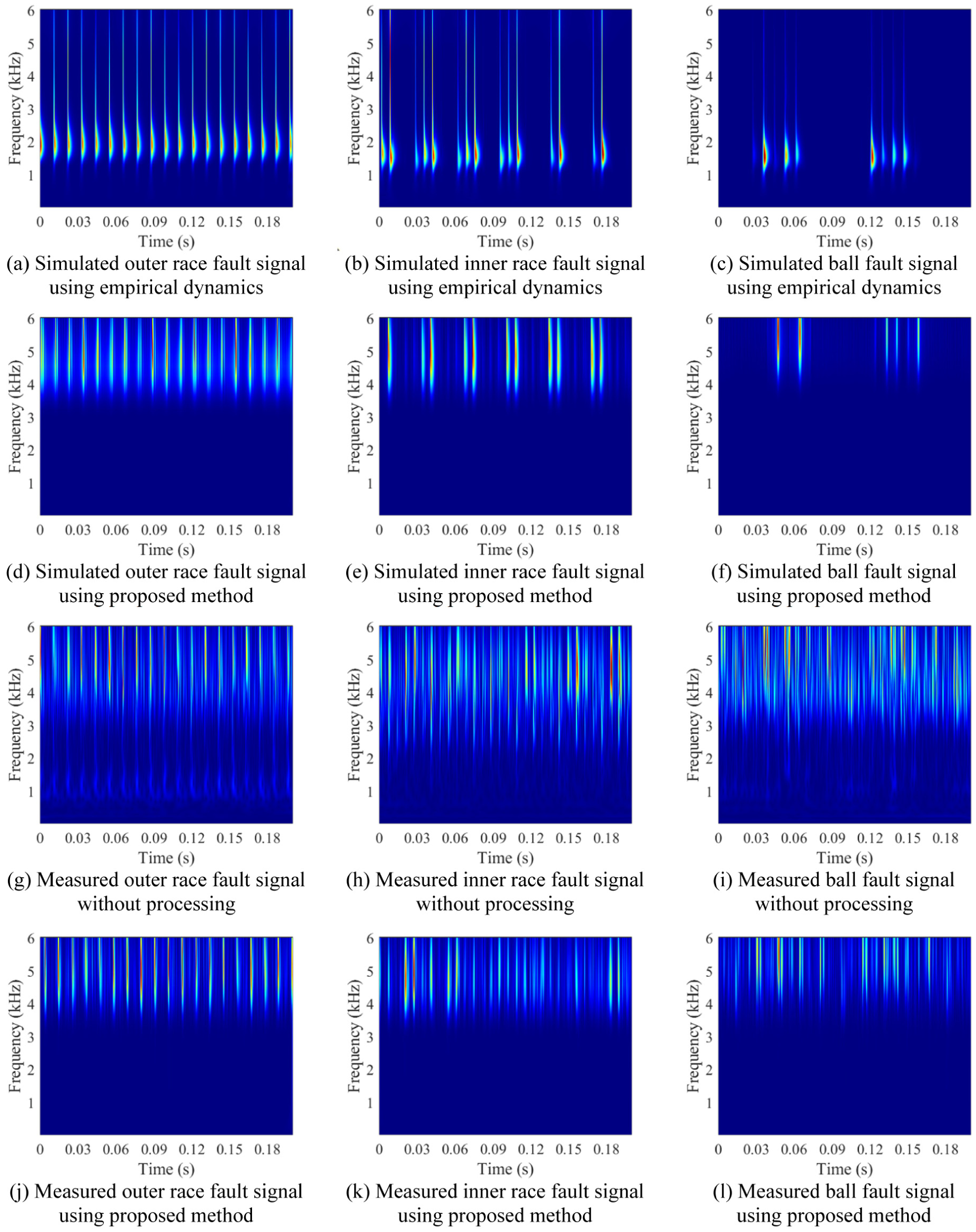
Comparison between simulated and experimental time–frequency spectra for the PMSM dataset: (a) simulated outer race fault signal using empirical dynamics, (b) simulated inner race fault signal using empirical dynamics, (c) simulated ball fault signal using empirical dynamics, (d) simulated outer race fault signal using proposed method, (e) simulated inner race fault signal using proposed method, (f) simulated ball fault signal using proposed method, (g) measured outer race fault signal without processing, (h) measured inner race fault signal without processing, (i) measured ball fault signal without processing, (j) measured outer race fault signal using proposed method, (k) measured inner race fault signal using proposed method, and (l) measured ball fault signal using proposed method. PMSM: permanent magnet synchronous motor.
This simplified frequency-domain representation stands in sharp contrast to the complex energy distribution of the measured signals. Specifically, the measured signals demonstrate rich frequency components across the full bandwidth. The CWRU dataset exhibits its primary energy peaks in the mid-to-high frequency range around 3 kHz, whereas the PMSM dataset shows an even higher frequency distribution. These peaks correspond to the characteristic resonance bands of different fault modes. More notably, the measured signals contain substantial interference components unrelated to fault features, which can easily lead the model to learn numerous irrelevant characteristics, thereby compromising the generalization ability of the diagnostic model.
Meanwhile, subfigures (d) to (f) and (j) to (l) present a comparison between the simulated signals processed by the proposed method and the measured signals. Analysis reveals that the generated simulated signals not only accurately reproduce the key resonance bands of the measured signals with high precision but, more importantly, achieve effective decoupling of fault features from interference noise. This enables the precise extraction of the resonance features most discriminative for fault identification. Such characteristics facilitate the model’s focus on learning the intrinsic fault patterns, thereby avoiding the interference of irrelevant noise components in feature learning.
The key advantage of the proposed method over the empirical model lies in its ability to accurately capture and replicate the specific resonance frequencies excited by the fault in the real system, rather than relying on generic or miscalibrated resonance parameters. This ensures that the generated data not only matches the theoretical fault characteristics but also aligns with the actual dynamic response of the physical bearing under test.
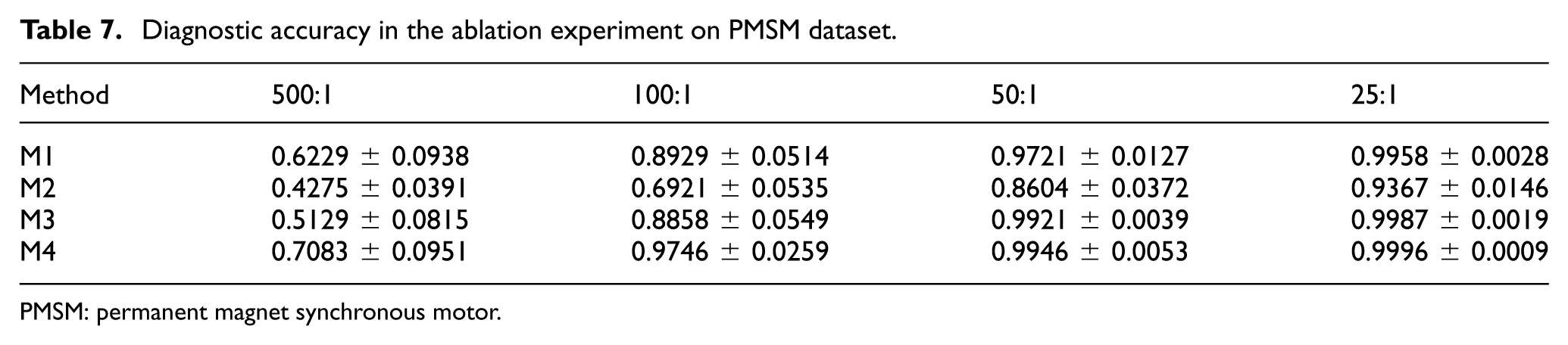
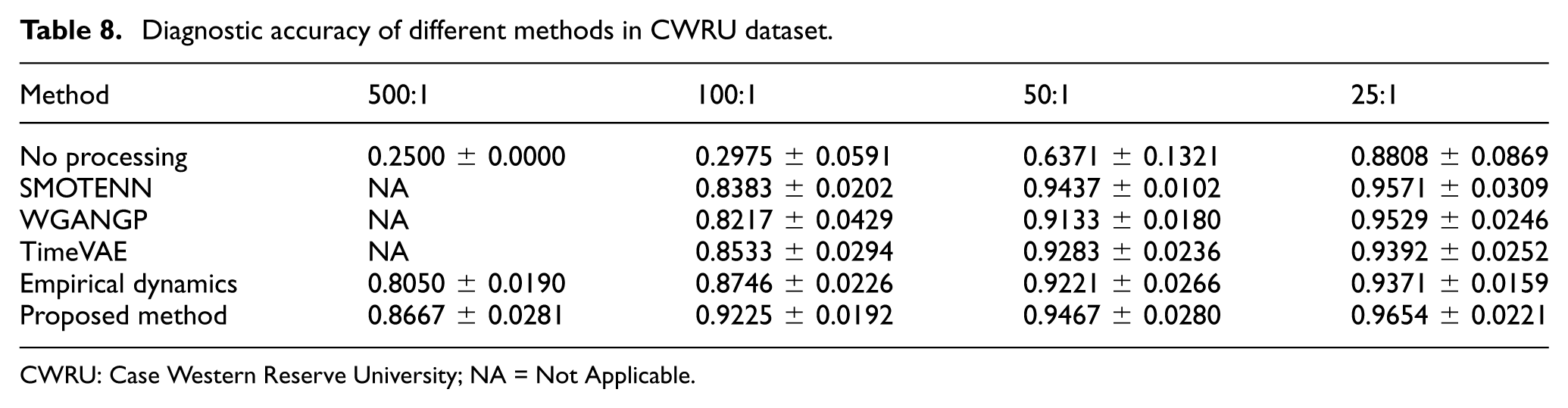
Building upon the aforementioned capability for generating high-quality and high-fidelity data, as shown in Tables 7 and 8, we further systematically evaluated the dynamic evolution of the downstream fault diagnosis model performance when achieving complete class distribution balance through the supplementation of synthetic samples. Using the baseline diagnostic performance without any augmentation strategy under varying imbalance ratios as reference benchmarks, in the CWRU dataset, the model diagnostic accuracy remained at relatively low levels of approximately 0.2500, 0.2975, 0.6371, and 0.8808 for imbalance ratios of 500:1, 100:1, 50:1, and 25:1, respectively. In the PMSM dataset, the model diagnostic accuracy was approximately 0.2500, 0.2879, 0.5596, and 0.8042, similarly indicating low performance. These results demonstrate that severe class imbalance significantly constrains the model’s ability to learn discriminative features, fundamentally limiting its fault classification performance. As the degree of imbalance decreases, the model accuracy shows a gradual upward trend.
Diagnostic accuracy in the ablation experiment on PMSM dataset.
PMSM: permanent magnet synchronous motor.
Diagnostic accuracy of different methods in CWRU dataset.
CWRU: Case Western Reserve University; NA = Not Applicable.
After introducing data augmentation strategies, the diagnostic accuracy of all methods shows significant improvement, validating the positive role of synthetic sample supplementation in alleviating class imbalance and optimizing the model training process. It is particularly noteworthy that the proposed method demonstrates clear performance advantages compared to all baseline methods under all experimental conditions. Specifically, in the CWRU dataset, the proposed method achieves outstanding performance on key metrics, reaching 0.8667, 0.9225, 0.9467, and 0.9654. In the PMSM dataset, its performance is equally remarkable, achieving 0.7083, 0.9746, 0.9946, and 0.9996. Especially noteworthy is that under the extreme imbalance ratio of 500:1, traditional data-driven methods are unable to train effectively due to only one fault sample, whereas the proposed method still exhibits a certain level of fault diagnosis capability. This performance not only confirms the robustness of the proposed method in extreme imbalance scenarios but also fully demonstrates its ability to significantly enhance the generalization capability of downstream diagnostic models through the high-fidelity sample generation mechanism.
As shown in Figure 19, comparative analysis further indicates that traditional and mainstream generative augmentation methods (including SMOTENN, WGAN-GP, and TimeVAE) underperform on both datasets. Although their performance improves as the imbalance ratio decreases, they fail to adequately overcome the learning challenges posed by small samples. In contrast, the empirical dynamic model based on physical mechanisms demonstrates relatively better augmentation effects under higher imbalance ratios, indicating that generation methods incorporating domain knowledge possess certain advantages. Nevertheless, the proposed method still maintains a significant lead over all comparative methods. This further demonstrates the particular advantages of the proposed method in generating high-fidelity samples and preserving discriminative fault features: it not only effectively synthesizes data that conforms to physical laws but also enhances fault-sensitive features and suppresses irrelevant interference in complex, noisy environments, thereby providing cleaner and more discriminative training data for subsequent diagnostic models. This phenomenon reveals a fundamental limitation of purely data-driven generative models: their performance heavily depends on sufficient and diverse training data. Under extreme sample imbalance conditions, such models struggle to capture the complete fault feature distribution, leading to mode collapse or overfitting to limited samples. In contrast, our physics-informed digital twin framework effectively circumvents this limitation by leveraging universal principles in bearing dynamics, resulting in a significantly reduced dependency of its generation capability on the amount of fault data (Table 9).
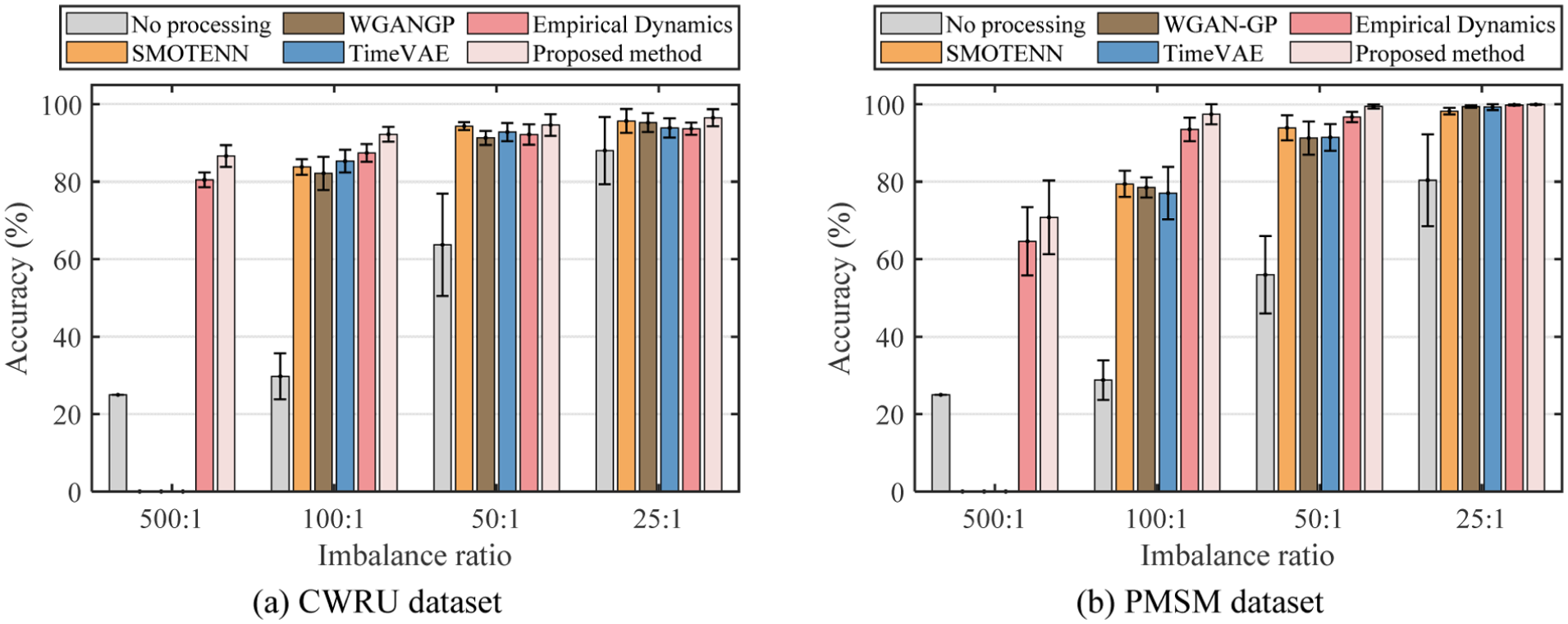
Diagnosis accuracy comparison of various methods under different class imbalance ratios: (a) CWRU dataset and (b) PMSM dataset. CWRU: Case Western Reserve University; PMSM: permanent magnet synchronous motor.
Diagnostic accuracy of different methods in PMSM dataset.
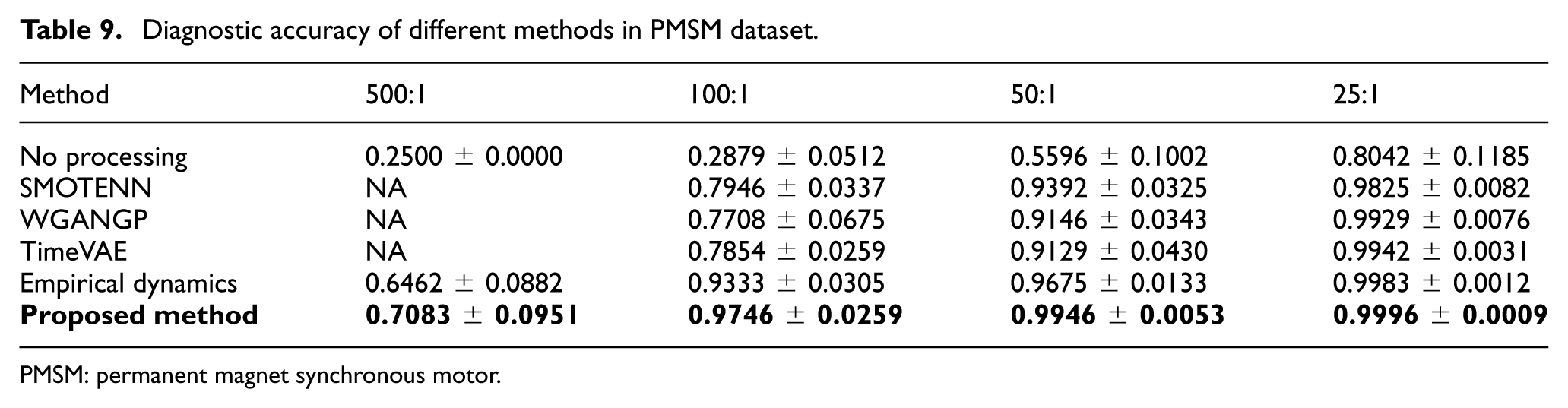
PMSM: permanent magnet synchronous motor.
Visualization analysis
To more intuitively evaluate the impact of different data generation methods on fault diagnosis performance, we employed t-distributed stochastic neighbor embedding (t-SNE) to visualize the output features of the classifier’s final layer, as shown in Figures 20 and 21. In each visualization plot, the different colors of the points correspond to the true fault type labels (NC: Normal condition, OF: Outer race fault, IF: Inner race fault, BF: ball fault). Without the use of any augmentation, the features of different fault categories exhibit severe overlap in the two-dimensional space, forming ambiguous mixed clusters. This visually confirms that severe imbalance leads to a significant decline in feature discriminability. After applying traditional generation methods, the clustering structure of the features shows some improvement, but a certain degree of indistinguishability between faults still remains. In contrast, the method proposed in this paper achieves the best performance.
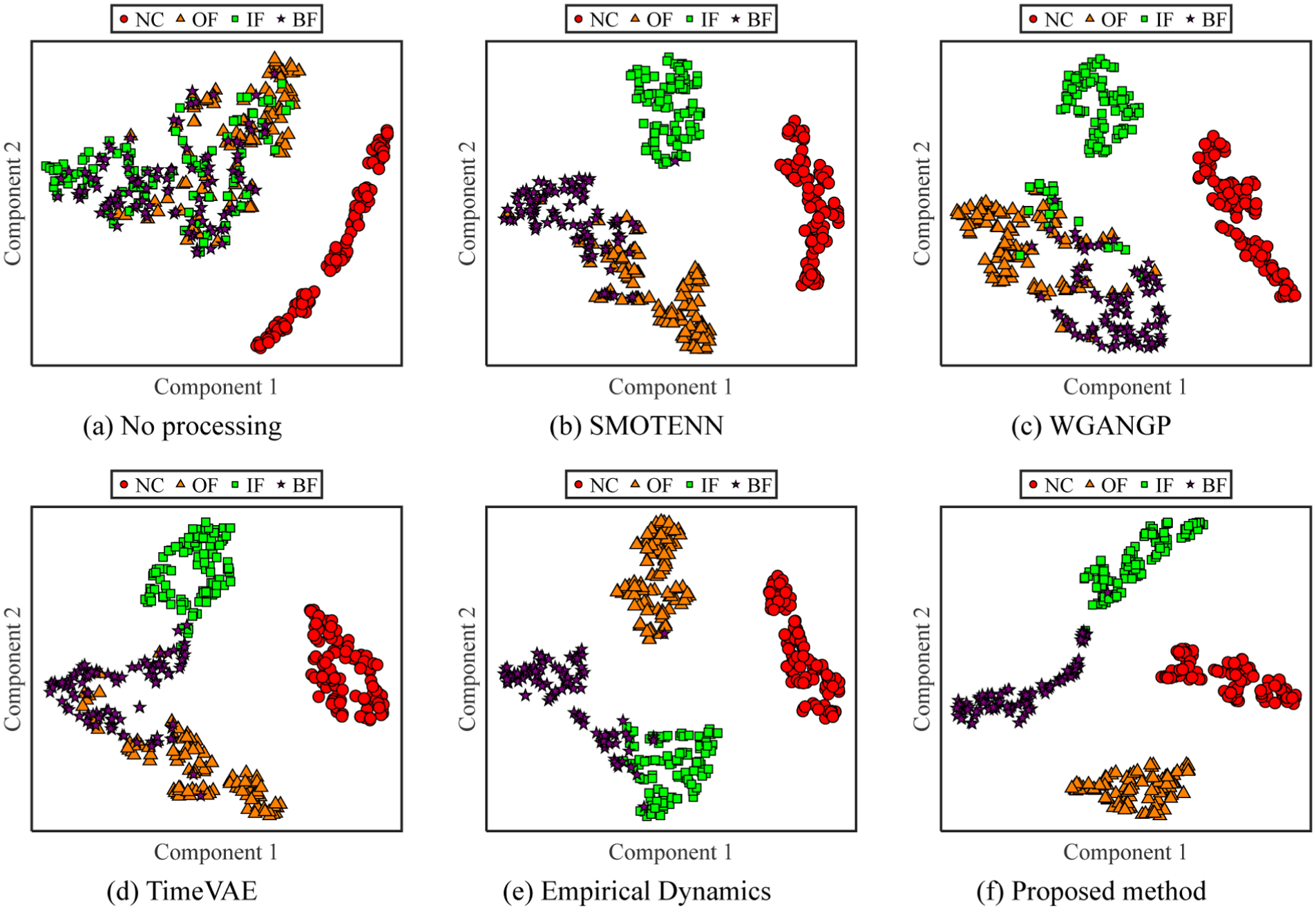
t-SNE diagram of different methods on the CWRU dataset under a 100:1 imbalance ratio: (a) no processing, (b) SMOTENN, (c) WGANGP, (d) TimeVAE, (e) empirical dynamics, and (f) proposed method. CWRU: Case Western Reserve University.
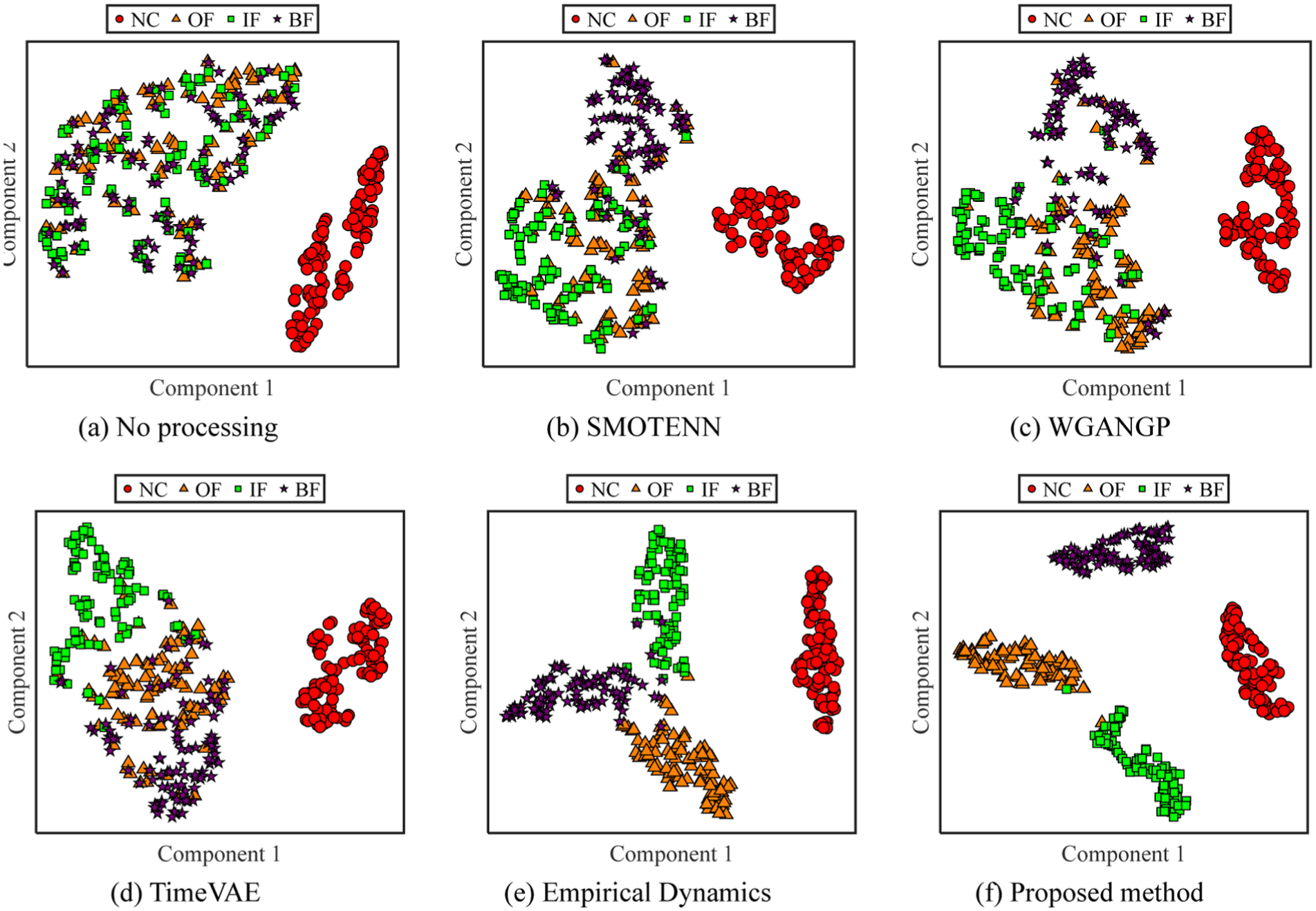
t-SNE diagram of different methods on the PMSM dataset under a 100:1 imbalance ratio: (a) no processing, (b) SMOTENN, (c) WGANGP, (d) TimeVAE, (e) empirical dynamics, and (f) proposed method. PMSM: permanent magnet synchronous motor.
Specifically, in the baseline scenario without any data augmentation, the model’s learning ability is severely constrained under the extreme imbalance condition (100:1), with the majority of fault samples being misclassified as normal conditions. This indicates that severe data imbalance leads the model to excessively favor the majority class, preventing it from effectively learning discriminative features of minority fault classes. After applying traditional generative augmentation methods such as SMOTENN, WGANGP, and TimeVAE, although the recognition rates for some fault categories improved, significant misclassification issues persisted. In contrast, the empirical dynamics model based on physical mechanisms demonstrated improvement in certain fault categories, particularly in enhancing the recognition of OF and IF. The method proposed in this paper performed optimally among all approaches.
Conclusions
This paper presents a resonance-aware digital twin framework to tackle the critical challenge of intelligent fault diagnosis under extreme sample imbalance. The main conclusions of this study can be outlined as follows:
Unlike traditional parameter calibration methods that rely on empirical settings or global signal matching, this study innovatively prioritizes the extraction of optimal resonance bands before parameter optimization. By focusing on the resonance bands richest in fault information, this method effectively overcomes the negative impact of multi-source interference and background noise from other frequency bands on parameter identification, achieving high-precision alignment between simulated and measured signals in key physical characteristics.
To address the distribution differences caused by non-fault feature components in measured signals, the proposed DT-DAE strategy ingeniously utilizes sufficient health state data to simulate interference under real operating conditions. Through supervised reconstruction learning, this strategy enables the model to automatically suppress interference noise unrelated to faults, enhancing fault features. This significantly improves the practicality of the generated data in complex industrial environments and the robustness of the diagnostic model.
Systematic experiments on the CWRU public dataset and a private dataset of PMSM bearings demonstrate that the proposed framework significantly outperforms various mainstream data augmentation methods in terms of generated sample quality (MMD, KL divergences) and downstream fault diagnosis performance (accuracy, t-SNE visualization). Even in the extremely imbalanced scenario of a 100:1 ratio (with only five fault samples), the proposed method still maintains a diagnostic performance exceeding 90%, effectively validating its high potential for real-world fault diagnosis applications.
Although this study provides an approach to applying intelligent fault diagnosis technology in real-world industrial scenarios, its practical deployment still faces challenges. These challenges stem from the diversity and randomness of equipment operating environments, as well as the variety and uncertainty of faulty components and their specific locations. The method relies on a certain number of labeled measured signals. Future research will focus on deeply integrating physical knowledge with deep learning techniques to further enhance the application of this framework in zero-shot and domain generalization-based fault diagnosis, ultimately achieving target-data-free industrial monitoring. On the other hand, the current research primarily focuses on the diagnosis of individual rolling bearings. Subsequent studies will expand from component-level diagnosis to equipment-level diagnosis to better align with actual industrial needs.
Footnotes

Author contributions
Funding
The authors disclosed receipt of the following financial support for the research, authorship, and/or publication of this article: This work was supported by the Continuation Funding Project for Innovative Research Groups of Natural Science Foundation of Hebei Province (no. E2024202298) and the National Natural Science Foundation of China (nos 52275102 and 52275101).
Declaration of conflicting interests
The authors declared no potential conflicts of interest with respect to the research, authorship, and/or publication of this article.