







Abstract
This case study of multimodal pedagogies within an intergenerational (IG) art class addresses questions about the learning opportunities that were created therein and what the fixing of participants’ ideas within a semiotic chain said about their facility with communicative modes and media, interests, and identity options. Key findings include: when compared to the adults’ work, the children’s use of media was more elaborate, experimental, and less inhibited and their designs more complex; the content of the children’s communication was multifaceted, and future-looking while some of the adults’ were constrained by limited identity options related to their position in the life course; and the class’s multimodal pedagogies provided occasion for the exploration of modes and media with support for working through key communicational decisions.
My life as a child in an Italian-Canadian family was defined by intergenerational (IG) relationships where there was no great differentiation between immediate and extended family members. People lived intergenerationally with grandparents sometimes being primary caregivers and children in turn learning about responsibility to family. Today, however, trends common to many industrialized societies such as geographic dispersal and the increase in the use of out-of-home care for children (McCain and Mustard, 1999) and older adults (Jarrott and Bruno, 2007) have reduced IG opportunities. Much can be lost when people of different generations are segregated. Within the literacy literature alone, children have been found to develop important literacy practices through IG interactions (e.g. Gregory et al., 2004) which contribute to their communication and identity options. In North America in the early 1960s in response to the loss of familial IG opportunities, systematically planned IG programs emerged (Larkin and Newman, 1997). IG learning programs, an offshoot of general IG programs, cropped up shortly thereafter and focused specifically on providing learning opportunities within IG contexts. Benefits of IG learning programs include increased appreciation for diversity (Jarrott and Bruno, 2007), lifelong learning (Brummel, 1989), and the notion that aging is a natural part of the life cycle (Penn State College of Agricultural Science, 2003).
Since about 2004, I have been studying the curricula of IG learning programs within shared site IG programs (i.e. where child- and elder-care share space and programming). My IG research has been primarily in the areas of curriculum and pedagogy with a special focus on literacy-related learning opportunities and ensuing identity options for participants. My studies have demonstrated how the making and consideration of ‘visual texts’ 1 (Albers, 2007) within IG learning contexts can be vehicles for expanded communication (Heydon, 2007) and identity options (Heydon, 2005) as well as opportunities for the forging of IG relationships (Heydon, 2009; Heydon, in press). The purpose of this article is to report on a study of the curriculum, pedagogies, and practices of one aspect of a series of lessons within the novel circumstance of an IG art class. The article narrows-in on a chain of four lessons where participants were invited to communicate what they felt was special to them through various media.
Literature review and theoretical framework
The study is located at the interstices between several literatures including those related to multimodal social semiotic theory within education and its elisions with the New Literacy Studies with an emphasis on literacy as social practice (e.g. Pahl and Rowsell, 2005; Rowsell and Pahl, 2007). The following highlights the aspects of these theories that are most salient for the study. Multimodal theory posits that there is a common communicational trajectory that involves the interrelated decisions of what to signify and how to signify it, particularly given the context of the communication (Kress and Jewitt, 2003). Interests, which come from people’s ‘knowledge and experiences’ (Albers, 2007: 6) are fundamental to the responses to these decisions (Kress, 1997). They are also bound up in people’s ‘identities in practice’ which ‘create’ and ‘support’ them (Rowsell and Pahl, 2007: 392). An identity is a ‘way of describing a sense of self that is in practice’ (Pahl and Rowsell, 2005: 155); it may, for instance, be made in relation to texts which offer ‘traces’ (Rowsell and Pahl, 2007: 391) of the social through several means including that in their text-making people ‘assemble Discourses . . . negotiate them, transform them, and materialize them’ (p. 392). Looking ahead to the IG study, one might ask how various Discourses of aging and childhood might manifest within the participants’ texts, as identities are ‘generated’ and can be ‘expressed in artefacts, texts, and discourse’ (Pahl and Rowsell, 2005: 155) and are therefore ‘sedimented’ (Rowsell and Pahl, 2007) within text.
Fundamental to understanding texts, identities, and contexts are the physical aspect of texts, and the multimodal notions of mode and media could be helpful in this regard. Modes are a ‘set of resources people in a given culture can use to communicate’ (Bainbridge et al., 2009: 4). Kress (1997) uses the term ‘to indicate that [people] make signs from lots of different ‘‘stuff’’, from quite different materials . . . and [they] use the physiology of [their] bodies to turn that physical, material stuff into signs: as speech, as music’ (p. 7). Media ‘focus[es] more on the manner of dissemination: a letter as a medium of communication and writing – the graphic material – as the mode’ (p. 7). To be a mode, resources must be organized into a grammar which makes a text ‘comprehensible to members of the culture in which it is produced and received’ (Bearne, 2009: 157). Significantly, people are generators not just users of signs (Kress and Jewitt, 2003), and modal grammars are similarly in a continual state of creation (Kress and van Leeuwen, 1996).
Important for the study is how ideas move across modes and/or media. Pahl (1999) has documented how young children in a nursery setting ‘started working in one particular mode. . . then moved across modes as their interest demands’ (p. 17). Interests and the desire to express them can mobilize people to experiment with mode and media in their bid to find the right fit between what they want to communicate it and how to communicate it. All signs (i.e. a ‘combination of meaning and form’; Kress, 1997: 6) are said to be ‘motivated’ (Hodge and Kress, 1993), thus people’s movement from mode to mode is driven by interest and the affordances of modes (i.e. ‘what it is possible to express and represent readily, easily, with a mode, given its materiality and given the cultural and social history of that mode’; Kress and Jewitt, 2003: 14). Materiality refers to a mode’s ‘physical’ features and history refers to ‘what has been done in the past with this material, and how the meanings made in the past affect what can be done with a mode’ (p. 15). Akin to affordances, the ‘facilities of media’ refers to ‘What is readily and easily possible to do with [a] medium’ (p. 16). Also relevant is the distinction between materiality and multimodality. Materiality relates ‘to a micro, fine-grained analysis of specific [textual] artifacts and how their content and design relates to the text maker’ (Rowsell and Pahl, 2007: 393). Multimodality refers to the more macro-oriented organizers of textual production and artifacts as it is ‘tied to larger discourses and ideologies such as globalization, cultural migration, and technology’ (p. 393) and involves the choices in modalities that are available.
Regarding what is known about young children and their communicational practices, of import is that children have been observed to ‘research’, discover, and represent the world in myriad ways. Their exploration and communication are ‘deliberate’ and open to possibilities as children have ‘not yet settled into the fairly narrow range of methods of communication used by the adults around them’ (Fraser and Gestwicki, 2002: 249) (e.g. language). Relative to adults, children are seen as free to move from mode to mode and can take advantage of what each affords. The movement of an idea from one mode or media to another has been referred to as ‘transformation’ (Pahl, 1999) and ‘transduction’ (Kress, 1997), and the connected, cumulative processes and products of communication create a ‘semiotic chain’ (Stein, 2008). Semiotic chains can be highly productive as they have been found to create spaces for learning, creativity, and concept development (e.g. Stein, 2003).
Central to semiotic chains is the notion of fixing which is the point in a chain where there is a ‘textual object’ (Stein, 2008: 98) (e.g. a visual text). There are a few foundational studies of children’s fixing: Kress’s (1997) inquiry into young children’s meaning making has provided insight into how drawings, collages, cut-outs, and the like are cogent literacy practices; Pahl’s (1999) study of transformations uncovered how children can link modes, develop concepts, and ‘express complex ideas in a material form, without the need for access to written modes of expression’ (p. 23); and Stein’s (2003) analysis of multimodal texts in South Africa expressed how sedimented identities can be forged within and against participants’ home, school, and community contexts.
Goals of study
Though children may have more flexibility in their communication than adults (Fraser and Gestwicki, 2002) and Gregory and Williams (2000) have investigated learning to read across generations, currently little is known about the relationship between text, identity, and social context in the literacies of older adults when compared to children’s. The study hopes to add to the literature by exploring if texts created in IG contexts may produce knowledge about how the young and old of a society see themselves and others and the ways in which they are socially positioned.
The study also hopes to contribute in the essential area of multimodal pedagogy. Despite the ubiquitous argument that literacy education must include more than print literacy, print literacy continues to be emphasized in most school curricula (Heydon and Iannacci, 2008). Ironically, knowing how to communicate through a variety of modes and media could support one’s print literacy (Kress, 1997). Furthermore, limiting literacy education to print reduces people’s communication options as learners’ ‘abilities to create and interpret through’ a variety of modes and media ‘expand the potential of what [they] can say and how they can say it’ (Albers, 2007: 6). There may be a reciprocal relationship between identities and text-making with the expansion of the one leading to the expansion of the other (e.g. Rowsell and Pahl, 2007).
There are some curricula that decry reductionist definitions of literacy and its education including the Preschool and Infant-toddler Centers in Reggio Emilia where their founder has claimed that ‘school for young children . . . should be a giant rodeo where they learn how to ride 100 horses’ (Malaguzzi, 1998: 88). The 100 horses refer to the ‘hundred languages of children’ (e.g. Edwards et al., 1998). Additional is Stein’s (2008) multimodal pedagogies that ‘work consciously and systematically across semiotic modes in order to unleash creativity, reshape knowledge and develop different forms of learning beyond the linguistic’ (p. 123). The specific qualities of these pedagogies and what they can produce, however, requires further exploration.
Methodology
Context of the study
The study is part of the last phase of a three-phase project involving IG curricula. Phase one was a case study focusing on the learning and interactional opportunities afforded by art classes in a mature IG shared site program in the urban United States. I found many learning opportunities that were created by a curriculum that was based in participants’ knowledge and strengths and recognized their need to communicate in a wide variety of ways. I identified that many of the learning opportunities were literacy-related and discerned how these opportunities were supported pedagogically (e.g. Heydon, 2007).
Next, I wondered if other IG shared site learning programs, particularly those that were less mature than the phase one site, provided similarly rich opportunities. Using a similar methodology, I thus studied the IG curricula of three sites in urban and rural Ontario, Canada, none of which offered art classes. In general I found that opportunities for interaction and learning were poorer than in site one. Key reasons for this included a need for curricular and pedagogical development for practitioners (Heydon, in press). Wanting to support this development, phase three of the project was an attempt to create a curricular and pedagogical resource for IG art classes. Over three years, the study built and field tested an IG curriculum support guide that had the goal of capitalizing on visual texts as a way to expand participants’ communication and identity options. With the help of the IG art teacher from the American site, I adapted many of the projects from that program and authored others to be used by practitioners (e.g. early childhood educators and recreation therapists). In year one of phase three the study built the curriculum guide and implemented it at ‘Picasso’. Year two, the practitioners used the curriculum guide for co-teaching with the research team and provided feedback for revision. Year three, the practitioners taught more independently, and the study focused on documenting the participants’ responses to the projects and the program as a whole. During each of the three years classes lasted for about one hour, one day per week from approximately October to mid-April and culminated in a spring art show.
Site
Picasso is a private, for-profit retirement and assisted living home in urban southwestern Ontario. It offers apartment-style residences to older adults who can live independently while offering them prepared meals, laundry, housekeeping, hairdressing, and other supports for daily living in addition to leisure programming. Adults who require more assistance may choose the assisted living option where they rent a room that is adjacent to a nurse’s station. These people receive the same dining and leisure supports as the people in the apartments, but can receive additional support, for example, bathing and medications. A small number of special beds are offered for adults requiring a high degree of care (e.g. for convalescing). The cost to stay at Picasso is slightly lower than many other for-profit elder-care facilities, though because it is private it is not as financially accessible as publically run facilities.
At the time of the study Picasso was approximately 20 years old and rented space to ‘Picasso Child’, an independent, not-for-profit child care centre that cares for children from infancy to age six. Picasso Child offers a limited number of child care spots that are subsidized by the municipal government for low-income parents. The neighborhood that surrounds Picasso and Picasso Child is characterized by a mix of low and middle income dwellings, and the neighborhood school (where the child participants in the study attended half-day kindergarten) has been in jeopardy of being closed as most of the higher SES families send their children to higher status schools. Prior to the research there was no shared programming between Picasso Child children and Picasso adults, and there was a stark delineation between children’s and adults’ spaces. I selected this site for phase three, because there were no shared sites in the region and the proximity of the child- and elder-care spaces and the willingness of the practitioners and administration at Picasso to work intergenerationally made the site ripe for development.
Methods
The article focuses on phase three of the project which was designed to ‘identify and gain analytic insight into the dimensions, dynamics’ (Dyson and Genishi, 2005: 81) and consequences of the processes and products of an attempt to create expanded communication and identity options within the IG art class at Picasso. Spotlighting four lessons that formed a semiotic chain, the study asked: what did participants do within the multimodal learning opportunities that were created by the class? What does the way participants chose to fix their ideas say about their facility with the various modes and media, their interests, and identity options? What are the consequences for educators hoping to offer children and older adults expanded communication and identity options? I chose a qualitative, case study for its potential to answer questions like these whose responses are dependent on context and where knowledge of the particularities of a context can provide insight into larger social phenomena (Dyson and Genishi, 2005). Such studies can provide rich descriptions and working hypotheses of the research questions so that educators can make informed judgments about the transferability to and importance of the findings for their own situations (Donmoyer, 2001).
The focal lessons centered on different media and all pertained to content that asked participants to draw on their ‘funds of knowledge’ (Moll, 1992) (i.e. the communicative and epistemic resources they brought with them to class) to visually represent what was special to them, moving from themselves to further out into the world: 1) an ink and pencil on paper heartmap (Bainbridge et al., 2009) of what was figuratively in their hearts; 2) a collage and digital photography passport to bridge a version of the self and the outside world; 3) a collograph of a special place outside of themselves; 4) a collective, 3D, mixed-media construction of a special place in the community.
Following ethical clearance from the university and site and the signed consent of participants (or guardians), data in phase three were collected at every class. Data collection attended to textual ‘processes and practices’ (Pahl, 2009: 193) with me attempting to document participants’ talk about what they were making as it was being made. I conducted short reflective interviews with the adults about their texts just following class or at the next class when reviewing the last day’s projects. I held reflective interviews with the children toward the end of class as soon as they completed their texts. To begin the interviews I asked, ‘Please tell me about what you made’, then posed questions related to choices in materials, design, and content. Children in particular seemed eager to hold up their work and talk about what they had created.
Data collection as a whole involved videotaping classes, speaking with participants directly before, during, and after classes, photographing texts, and creating field notes of observations. I also created reflective field notes (Dyson and Genishi, 2005) by audiotaping conversations I had with Wendy Crocker, an experienced early years teacher and the research assistant who taught the semiotic chain lessons (and who attended all classes in year three of phase three). Referring back to the research questions and theoretical framework, data were analyzed according to a modified constant comparative method (Handsfield, 2006) that sought to answer the research questions and promote trustworthiness. Analysis involved the juxtaposition of photographs of texts next to the interview transcripts, field notes, and video. Data were coded according to predictive themes and pattern-matched though to retain the complexity of the data, I included data that were contradictory or fit between themes. For the findings section of the article I created brief narratives from a triangulation of the data, to offer readers a feeling for the context and events. The dialogue in these narratives is verbatim from the transcripts.
The classes were based on the aforementioned theoretical framework and findings from the IG learning literature. The semiotic chain lessons, for instance, were couched in the overall IG art class, because learning opportunities are most prevalent in IG contexts that support IG programming rather than activities. Contrary to activities which are disconnected busy work that ‘do not allow the level of meaning [relative to programming] to exist because they lack depth and long term significance’, programming is ongoing and ‘provide[s] a way for experiences and interactions to take on meaning relevant to one’s life’ (Friedman, 1997: 105). Also, as participants should be helped to cooperate and work toward ‘common goals’ (Jarrott, 2007: 5), and programming should be ‘beneficial’ and challenging to both generations (Friedman, 1997: 107), the lessons were designed so participants with differing levels of skill and knowledge could be challenged. Classes additionally capitalized on findings from earlier phases of the study including the benefits of supporting participants in their communicational decisions by organizing classes around five main components: 1) welcoming strategies to foster community and a sense of safety; 2) a catalyst for the day’s project that can induce conversation and activate schema related to the subject matter and/or media to be used; 3) explicit instruction, modeling, and support to use the media in the project; 4) sustained opportunities to work on the project and draw on fellow participants for support; 5) opportunities to share products with an audience (Heydon, 2007). Finally, classes took advantage of strategies to expand identity options and de-pathologize old age and childhood by ‘focusing on what individuals contributed to the collective’ and their ‘quality of life’, insisting on ‘meaningfulness in interaction’ and that those who worked in the program ‘confront their biases’, and making ‘good on the notion that learning is lifelong’ (Heydon, 2005: 265–266).
Participants
Seven adults (six women; one man; mean age >80),) and eight children (six girls; two boys; ages four–five years) participated in year three of phase three. No participant identified themselves as part of a minoritized linguistic or ethnic group. No child’s care costs were subsidized, 2 and all children attended the half-day kindergarten program at the neighborhood school when they were not at Picasso Child. Most of the adults had been part of the class for three years and the children for two.
Findings
Given the plethora of data and the need to provide ample contextualization for it, the following findings and discussion spotlight the second project in the semiotic chain, the passports, which invited participants to create a collage from digital photographs they took of each other, travel images, brochures, and colored and textured paper. Participants were invited to represent themselves in a place they felt was special and in which they would like to see themselves. To consider what participants did within the learning opportunities that were created in the class, I first had to consider what the actual opportunities were and how they were generated. In general, I found the opportunities to be similar to those from previous research (Heydon, 2007) in that they addressed all aspects of the communicational trajectory.
Learning opportunities
Pedagogies for passports narrative.
The tables in the classroom were placed in a large square, awaiting the participants for IG art class. Several women arrived first, took their seats, and looked excitedly at the travel brochures that Wendy was placing on the tables. Despite their enthusiasm, the women looked, but did not touch the images. Wendy instigated interaction by picking up an image and joking to the woman beside her, ‘You love Hawaii, Nora. There you are in Maui or maybe it’s Oahu. I’d like to see you in one of those [grass] skirts.’ Nora laughed and the women dug through the images, rejecting some, holding others up. The discussion bubbled, and once the children came they quickly joined in on the talk. After allowing time for interest to build, Wendy called the class to order.
‘Hello everyone . . . Are you curious about what all of these pictures might be for?’ Everyone answered, ‘Yes!’
‘Last week we travelled inside ourselves to think about maps of our heart. This week we’re going to be travelling in our imagination anywhere you would like to go. So . . . turn and look at the partner you’ll be working with today. . . . Does everyone have a big partner to work with? Does everyone have a little partner to work with?’
Next, child participant Lina pointed to a brochure and informed Wendy, ‘This is where I’m going – to Disney World!’
‘Where do you think that is, Lina?’ asked Wendy.
When Lina looked as though she wasn’t sure, Wendy guided her to her partner. This had the effect of building IG conversation and allowed Lina to peruse more options before settling on Disney World, ‘So you and your partner need to have some time looking at all of the things on the table and then we’ll talk about our job today,’ Wendy directed.
The partners continued the conversation. Lina noticed the Eiffel Tower and said, ‘I’ve been there!’
Nora looked at an image that she knew but could not name. I whispered it to her and she proudly instructed her partner, ‘The Taj Mahal, that’s what that is.’
Child participant Cara asked Wendy to explain the term ‘ball’ as she looked at an image of people dancing. She knew she had heard the word before but wanted to know more. Wendy responded with, ‘Ask your partner where that might be.’
Next, Wendy introduced the concept of passports by showing her Canadian passport and a British passport for comparison. When one participant said she was born in the United States, the talk turned to people’s citizenships and where they were born. Following this, Wendy geared the class to the media people would be offered that day. She shared the term collage and gave examples.
‘I have a very famous collage called The Snail’, explained Wendy. ‘Do you see the kind of snail shell that is curling around in this picture? This is by an artist named Matisse. Do you see how in collage we cut out pieces of paper and put them on top of each other? . . . There are also some very famous artists that do illustrations for books and one is called Eric Carle. Eric Carle [1998] wrote a book called, Catch Me a Star. He actually teaches us not how to catch them, but how to [make] them. How many pieces do you think Eric Carle used to make his collage star? When you think you know, talk to your partner and see if that’s what they got.’
In unison participants called ‘five!’
After more viewing and discussing of collages, with many of the children stating that they had Eric Carle books at home or school, Wendy modeled the creation of her own passport collage. She explained, ‘I had a chance to go through all of these pictures when I was at home, and I chose the place that I would love to go out of all of these.’ Wendy introduced the Kentucky Derby and discussed why it was special to her. She then helped people view the photo she had selected for the foundation of her collage.
‘I just love this picture because it looked like the horse was coming right at me. . . and look, there is even another horse coming up here second place.’ Wendy then offered that in her passport she would put a photograph of herself with the horse. She then helped the class think about the photo they would be taking of each other later to use in their own collages by saying, ‘[When I’m getting ready to go to the Kentucky Derby] do you think that I am going to have a grumpy face like [I do] in this passport? No! This is the kind of face that I am going to have!’ Wendy pulled out a digital photo: ‘There I am . . . big happy smile, cheering hooray because of course my horse is the one that is in first place.’
Next, Wendy talked aloud about the decisions she needed to make and the process she would take to create her collage. She said she wanted to dress her photograph and invited participants to witness how she considered context and the facilities of the media to do this. ‘I am going to put clothes on using collage . . . So I found a beautiful dress,’ Wendy held up a picture of a dress. ‘I really liked the colors that were in this dress, and I thought I would make myself some pants using that pattern. May I please have my glue stick there, Mr Roger? Are you the keeper of the glue stick?’
Child participant Roger laughed and passed over the tool. ‘I am making pants,’ Wendy explained as she cut. ‘Now you are going to take a lot more time than I am doing this, you are going to be careful and it will be so beautiful. Are you going to wear a skirt?’ Wendy asked adult Bonnie, connecting what she was doing to what Bonnie would be doing. ‘You have to think about where you are going to be.’ Bonnie and her young partner whispered about where they might go. ‘There are my beautiful pants’ announced Wendy as she turned her attention to another essential item for the Kentucky Derby, ‘What about a hat? Why would I need a hat? The Queen could be at this horse race and everyone at this horse race always wears a hat.’ Then Wendy modeled a design choice: ‘I found a hat, so I could wear that,’ she mused and showed an image of a hat. ‘Or I could make a hat, and I thought that this fabric was beautiful because I want everybody to see me at the horse race. So if I used this fabric for a hat. . .’
Bonnie now asserted herself and nodded, ‘You’ve GOT to wear a hat!’
Wendy next went through every aspect of her wardrobe including sunglasses until her passport was finished, and it was time for the participants to create their passports.
‘So here is your job,’ Wendy declared. ‘Number one: Pick out where you are going to go.’ Wendy advised participants to work together to look at different options. ‘Then, [the practitioners] and I are going to come and tap you on the shoulder for taking pictures . . . you can still have a look at all of these different things that are here then start to cut.’ Wendy signaled to all of the available media (travel magazines and brochures, construction paper, and heavy white paper). ‘Okay, here we go!’
Learning opportunities
The passport narrative demonstrates how participants were prepared for the carrying out of the project: they were prompted to think about content issues (e.g. a special place) and provided catalysts for contemplating this, yet they could interpret the content in their own ways. Wasting no chance, the classes set out opportunities to consider the content even before the official start of class, invited exploration, and focused on the technical aspects necessary to carry out the creation of the texts that dealt with a variety of media (e.g. photography, collage). Further, what and how to communicate were grounded in context (e.g. what would be suitable to wear in a particular situation?). 3 The lesson took advantage of learning from other IG art classes; for instance, we had noticed that in collage projects in other years many participants used images in literal ways (e.g. for a self-portrait project participants chose actual images of mouths to signify their own mouths in the collage). While the literal use of image could be the most apt signifier in some instances, it might not be in all. Thus to expand participants’ options, Wendy modeled how an interesting texture in an image of a dress could be translated into a pair of pants which better suited her interests, and she showed how she could create a hat rather than use a pre-made one.
Learning opportunities were generated from the intended curriculum and the participants themselves. For instance, one day the children were waiting for the adults to arrive, and the tables were covered in protective newsprint. One of the children started to ‘read’ the news and the practice caught on. The children called to each other about what they had found in the paper and noticing the teachable moment, Wendy began a game of ‘I Spy’ with images and features from the print.
Learning opportunities were also heightened by participants’ curiosity about and engagement with the project tools and materials. The children in particular were fascinated by scissors. In their research Kress (1997) and Pahl (1999) identified the importance of cutting in early literacy and each time the children in the study were offered scissors I was reminded of this. At the beginning of the collograph class, for example, the children were asked to go to the supply table and to return with materials for the adults. The children squealed with glee when they saw the scissors. They hurriedly returned to the tables and immediately started to play with them. Roger made cutting gestures in the air, and this caught on with all the other children doing similarly. Another child pretended to cut the newspaper covering the table. This started a new game with the children calling to each other, ‘Don’t cut that!’ then pretending to cut things. Anna, another child participant, seemed mesmerized by her scissors, cutting in the air with her right hand, and feeling the blades opening and closing with her left. The scissors were so fascinating to the children that this was the first time in art class that I witnessed a participant’s interest diverted from the project. Roger, for example, quickly cut out heavy paper to create a plate of a house for his collograph and then, finding that the negative space made the paper look like a pair of pants, he danced around holding them in front of his legs showing everyone. That cutting could create something unexpected was an interesting learning opportunity for Roger and not one I could have predicted.
Given the learning opportunities that were created when the intended curriculum was operationalized, key questions emerged regarding what participants choose to fix in their semiotic chains and how they choose to do this.
Fixing in the semiotic chain
While the project captured many examples of the different generations cooperating with each other in the process of text-making (e.g. Heydon and Daly, 2008), in closely reading the practices and products of the four-lesson chain, there appeared to be a splitting between generations in relation to the communicational and identity options that they took up. To illustrate, I turn to the process component of the passport data and their relationship to, in particular, the intentionality of the children and the ways in which particular design characteristics in the products seemed germane to the children and others to the adults.
Complex interests
The children had definite interests they wanted to communicate. The seriousness with which they approached their projects and the extent of the motivation of their signs was obvious by how intensely they worked and how much they persisted even when they had difficulty. Creating signs that could communicate their interests presented many design and technical challenges; Anna’s case is a good example of this.
Anna took great care in cutting out the digital photograph of herself for her passport. The photograph was black and white, and her long dark hair blended in with the background. In cutting out her photograph, Anna inadvertently sheared off some of the hair in the image and did not like the results. Consequently, she tried to cut out the hair that remained with the background then glue it back on her head. She attempted this in the air rather than putting the pieces down on the background and assembling them that way. The result was thus like the process, awkward. I watched Anna become increasingly frustrated and asked, ‘What do you think?’
‘It doesn’t look good!’ she answered with a frown and threw the paper across the table.
‘Well it’s a good thing we have more than one copy of your picture,’ I offered and pointed to where she could get one. I reconnected Anna with her adult partner, and we talked her through the cutting. She successfully remedied the problem and was elated with the product.
In the collograph project, Anna exhibited a similar interest in getting the cutting right. She tried to cut a triangle whose base could exactly match the side of a square she had cut to fashion a plate that would print the image of a house. The more the base of the triangle did not fit, the more she cut from it. Tongue sticking out of the corner of her mouth, brow furrowed, Anna concentrated deeply and became agitated by the challenge. Eventually, I demonstrated how Anna might solve the problem. As we worked together, I noticed Anna’s desire to remedy the mismatch between the vision of what she wanted to create and her own facility with the materials. Other children exhibited a similar commitment to their projects and an interest in working through challenges. In contrast, the adults did not get visibly frustrated when they could not carry out a task such as cutting. When they reached an impasse with their work, the adults usually put their tools down, watched what the others were doing, and waited for assistance. Adults rarely appealed for help directly but rather, like participant Nora, simply laughed until someone (adult or child) responded. There seemed to be less of an attempt by adults to push the boundaries of their facility with the modes and media though certainly the data support that they were interested in communicating; for instance, it was not rare for adults to stay after class to finish their texts. While there were differences in the way the generations demonstrated their interests and motivations in the creation of their texts, there were also differences in their products.
Complex texts
The children’s texts appeared to be more visually complex than the adults. This seemed to be the result of the children pushing through their facility with the media to experiment and communicate interests. For example, perhaps as a response to Wendy’s passport including sunglasses, many children wanted this accessory in their texts. This required a high degree of ingenuity. To make his sunglasses, Aaron glued two small, round pieces of white paper to the eyes of his photograph (see Figure 1). Making the circles was a task he struggled through. Before creating his ‘lenses’, Aaron noticed Roger had cut some circles: ‘Oh you made circles!’ he exclaimed. Roger showed them off, and Aaron was intrigued, perhaps because making circles was difficult for him. Aaron tried to cut circles repeating, ‘I can’t cut circles!’ but with perseverance and using Roger’s text as an example, he was finally successful. Aaron’s lenses were followed by two large rectangles signifying the arms of the glasses: ‘They’re the parts that go over your ears,’ he explained to Roger who asked what they were. Aaron extended the arms beyond the boundaries of the background so they were one of the most prominent aspects of the text and created an irregular border for the text as a whole.
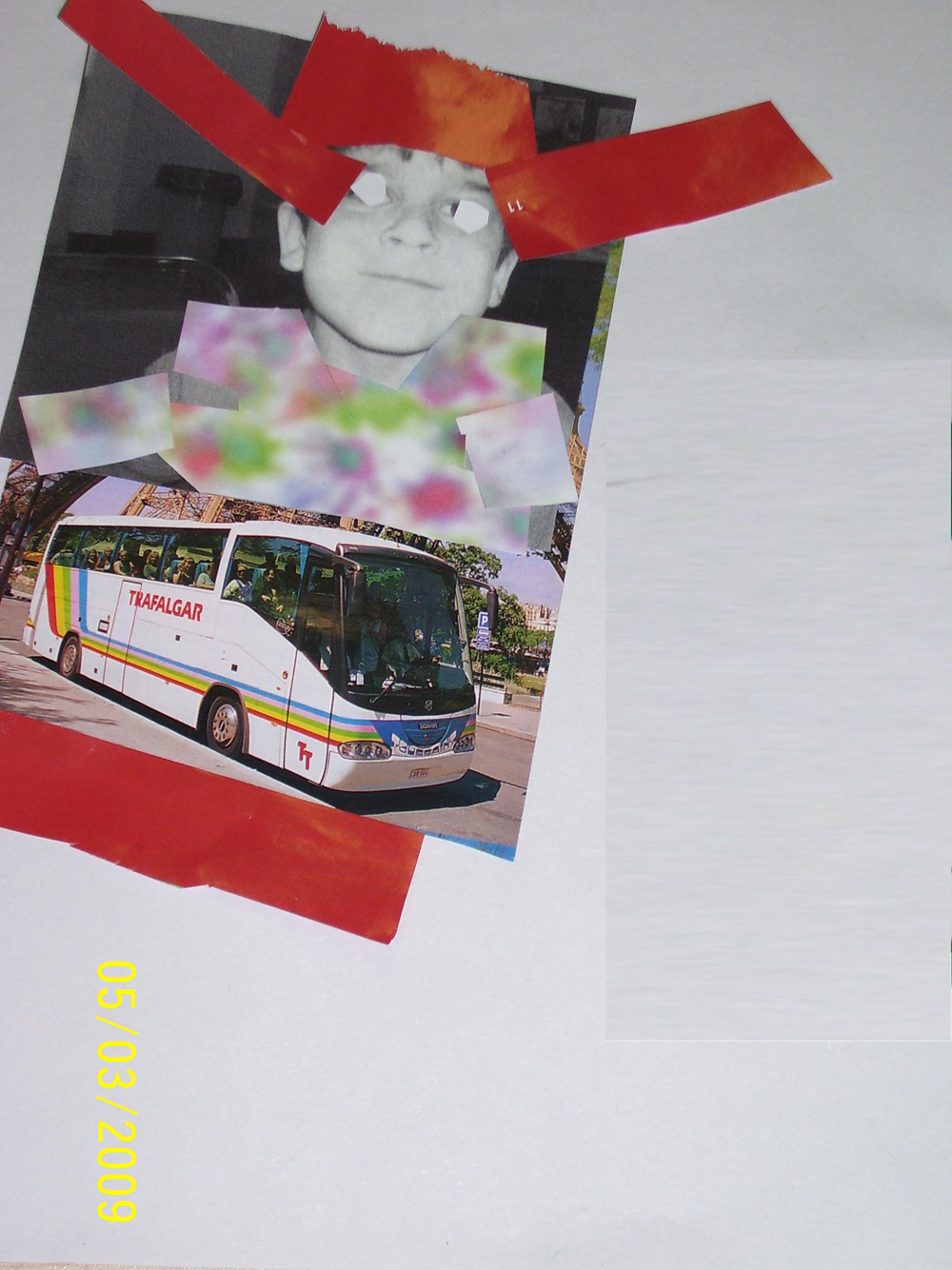
Aaron’s passport
Cara’s text (Figure 2) was also the result of experimentation and challenging her facility with the media. Like the other children’s texts, Cara’s incorporated sunglasses. Adept at cutting triangles, Cara created lenses from two small triangles of dark, opaque paper, and she dealt with the problem of how one might ‘see’ through opaque paper by locating the lenses at the corners of her eyes. In this way, she could signify sunglasses while allowing her eyes to still show. Cara further experimented with triangles by including two white triangles at her chin to denote the collar of a shirt. Cara was not wearing a shirt with a collar in her photograph, however, she went up to Wendy, pointed at her collared shirt, and asked, ‘What is that?’ Wendy explained that it was a collar after which Cara promptly added the triangles to her text then proudly showed Wendy.
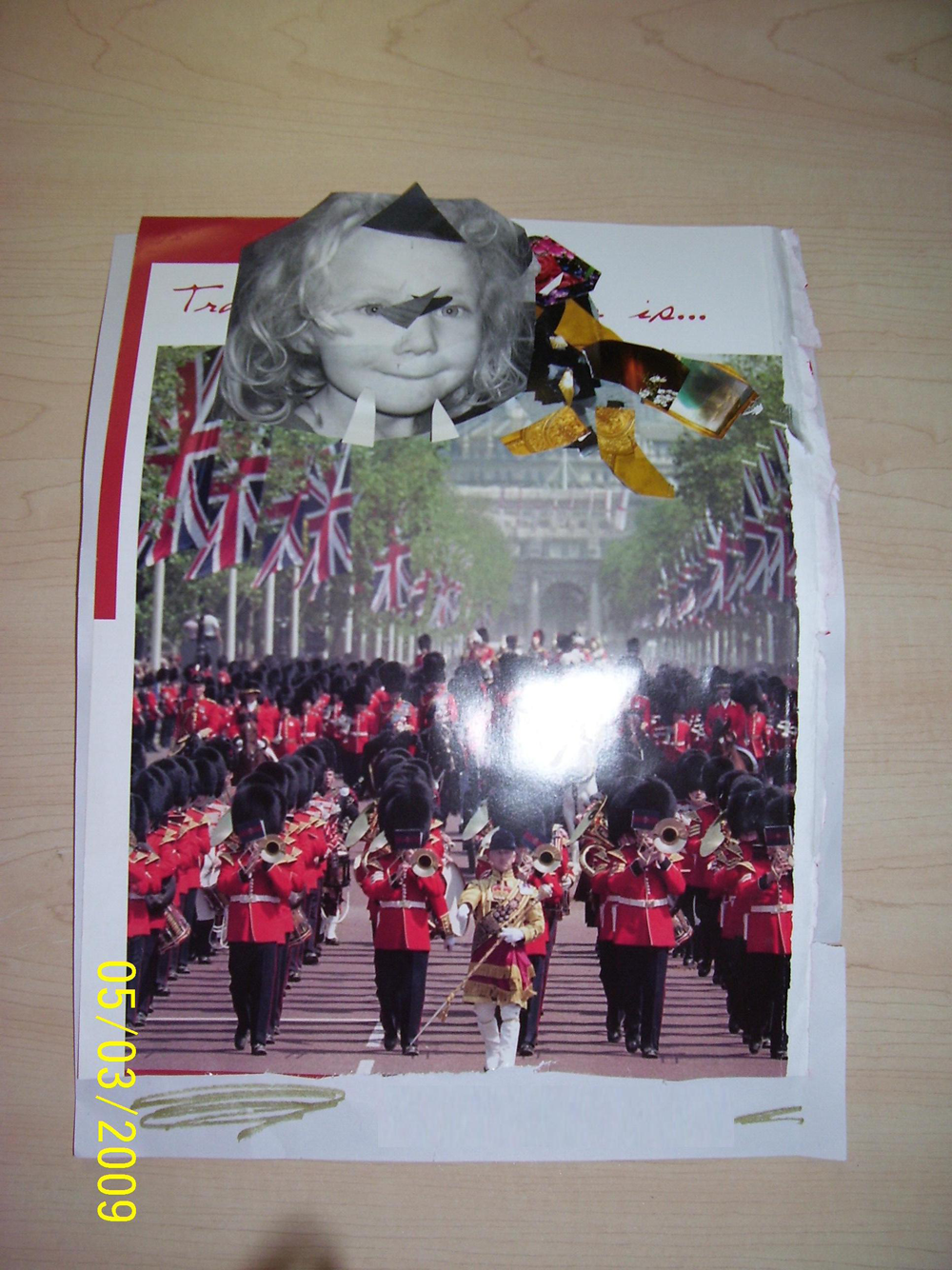
Cara’s passport
Child participant Eden found a different way to fashion eyewear (see Figure 3) by placing one small square and triangle, each its own color, on top of her eyes with a sliver of paper glued between to form a bridge. The complexity of Eden’s text continued. Rather than build her collage on top of a standard sheet of rectangular paper, Eden cut multiple pieces of paper and glued them together to create an irregularly shaped background. She then superimposed the image of a hula dancer over a surfer on the top piece and carried cut-out images in a downward direction with her own portrait sticking out to the left.
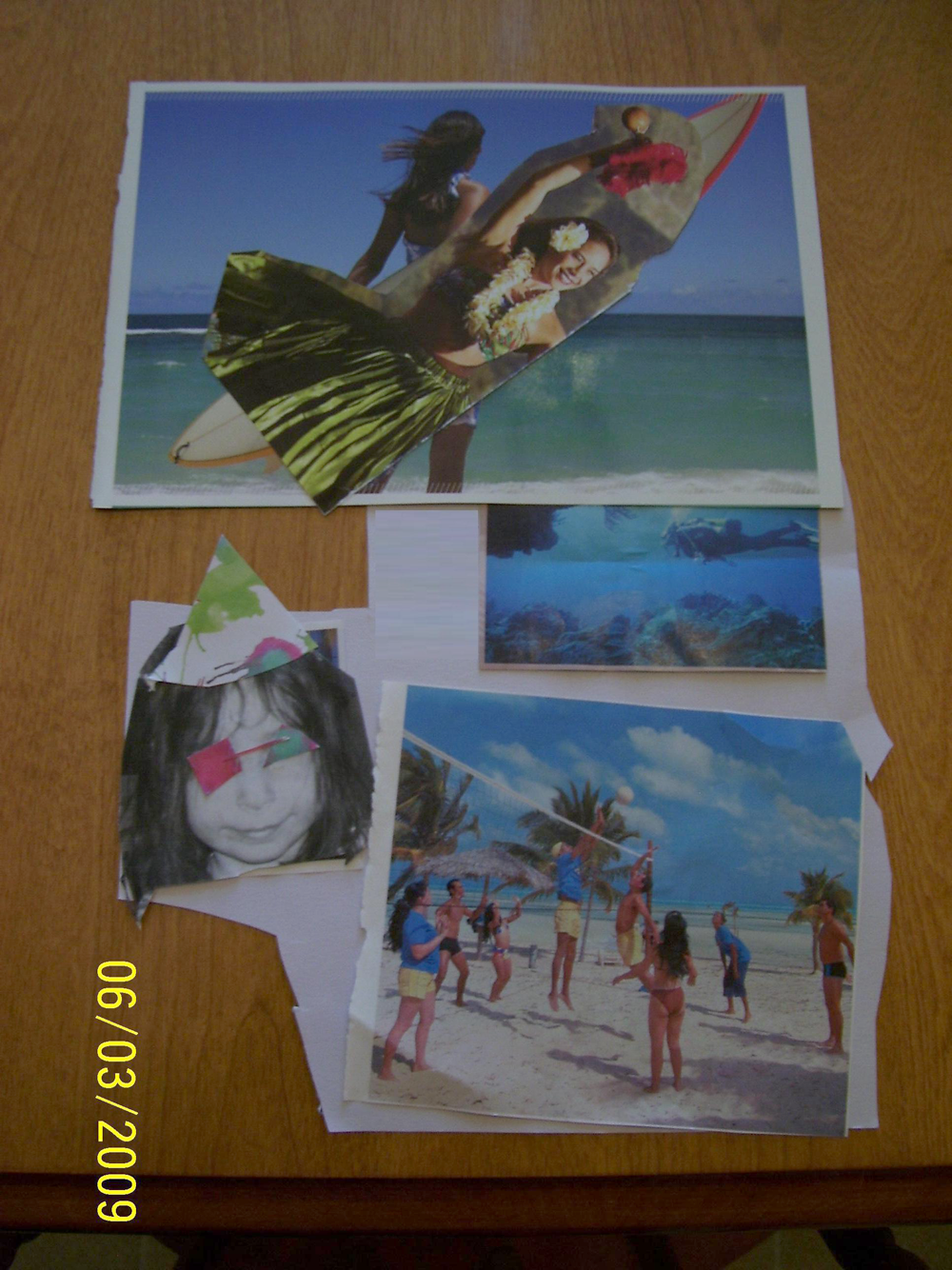
Eden’s passport
Other details that added complexity to the children’s texts included that all the children dressed their photographs. To do this, they chose textured rather than literal images: Aaron created a psychedelic shirt and red hat, Cara fashioned a little body jutting from the side of her head so as not to disrupt the background image, and Eden made herself a hat reminiscent of what one might wear to a birthday party. Other details included were a small suitcase Cara made from textured paper and a shirt decorated with a cut-out of husky dogs which gave Lina’s text (see Figure 4) another layer of intricacy as the northern dogs were not immediately semantically compatible with her surroundings. Also interesting is that Lina explained that when she was dressing the arm in her photograph, she made the sleeve too short, so she superimposed a long arm over top and extended it beyond the frame of the passport. Her solution to this design and facility problem resulted in an increased visual complexity to her text.
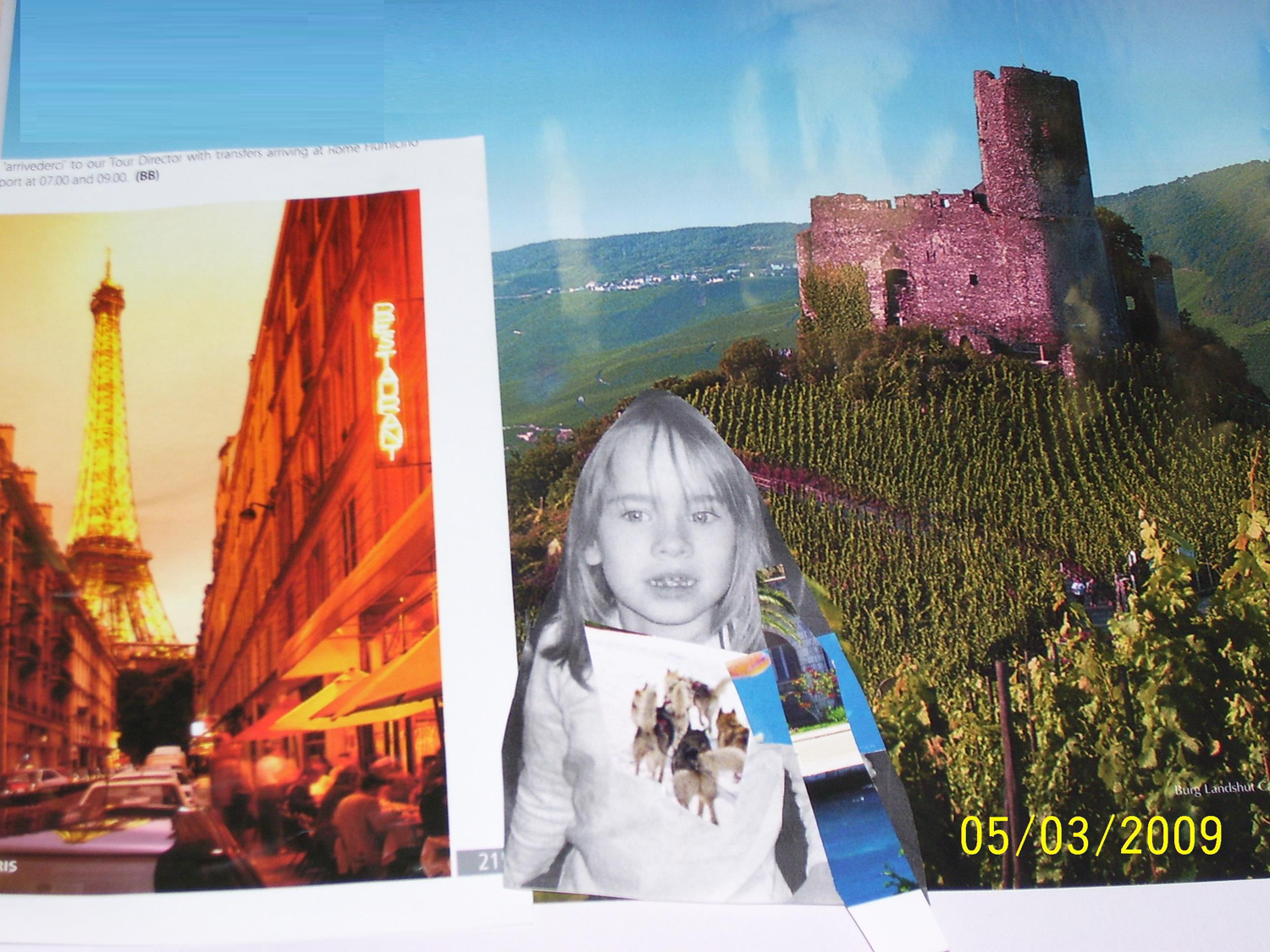
Lina’s passport
In sum, the children’s interests drove their text-making. They, for instance, all shared an interest in communicating themselves with sunglasses, and they solved the quandary of how to do this in unique ways. Further, in the absence and sometimes eschewing of literal details (e.g. psychedelic shirts and suitcases), the children chose to experiment thereby pushing the boundaries of their facilities with the media. The children’s inventive practices resulted in their texts sharing particular qualities such as visual complexity.
Conventional texts
The children’s texts when compared to the adults’ demonstrated more overlapping of materials and images, more cutting, less literal use of images, and more experimentation with the media. The designs were more elaborate resulting in more visually intricate texts. In contrast, the adults’ texts seemed more conventional. They mostly avoided finicky cutting and overlays opting instead for large images laid beside each other (e.g. see Figure 5). The exception to this was Nora who chose to intricately cut out trees, a hula dancer, and her own image (see Figure 6). Still, the cut-outs here are different from those of the children in that they follow more conventional design elements; for example, the boundaries of the images dictated where Nora cut (e.g. the palms of the tree were each cut along the line of the image). Also, like all the other adult texts, Nora selected a frame for her text that was pre-determined by the borders of the standard piece of paper she used (e.g. rectangular-shaped; 8 ½ x 11 size).
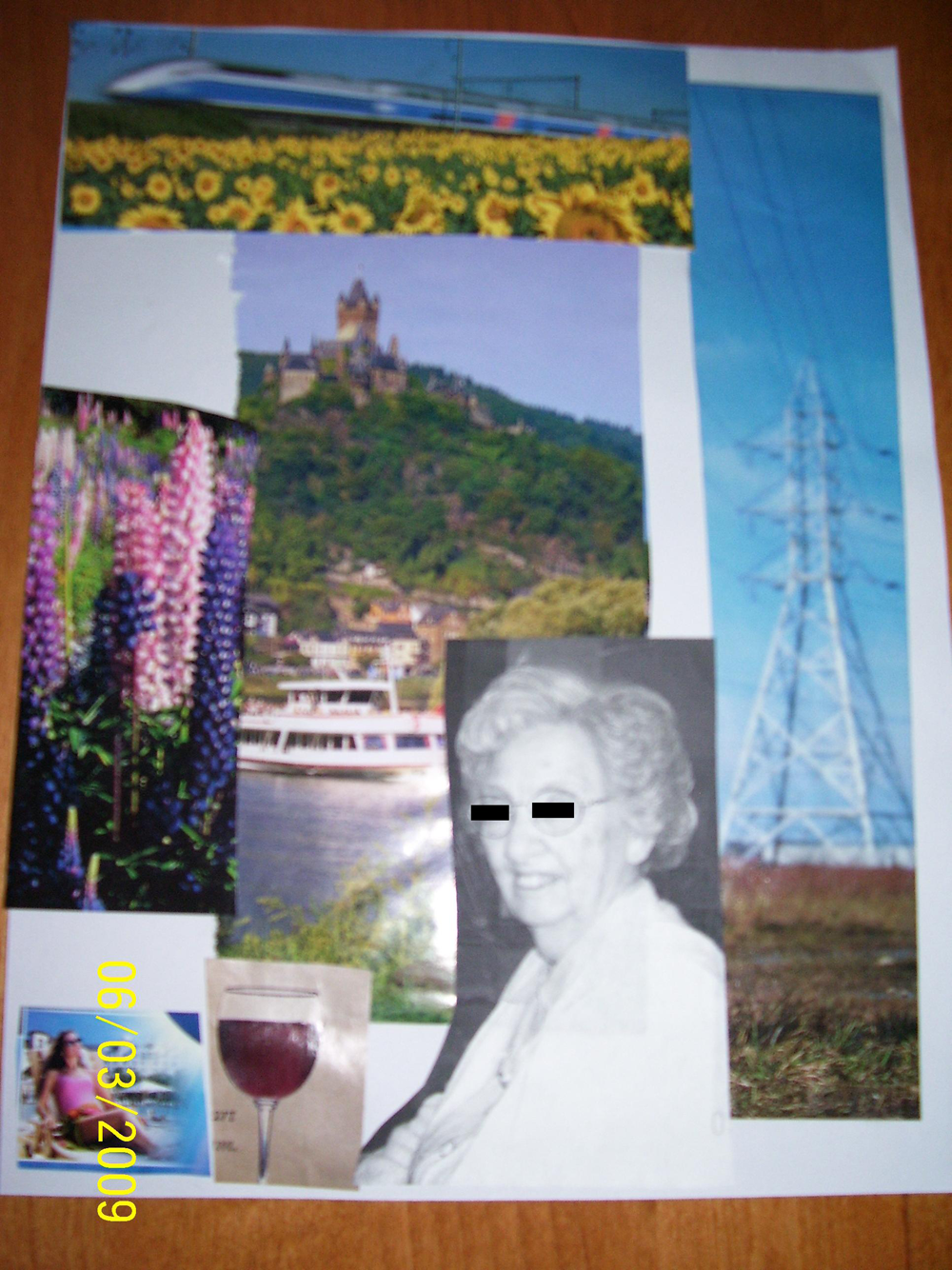
Mona’s passport
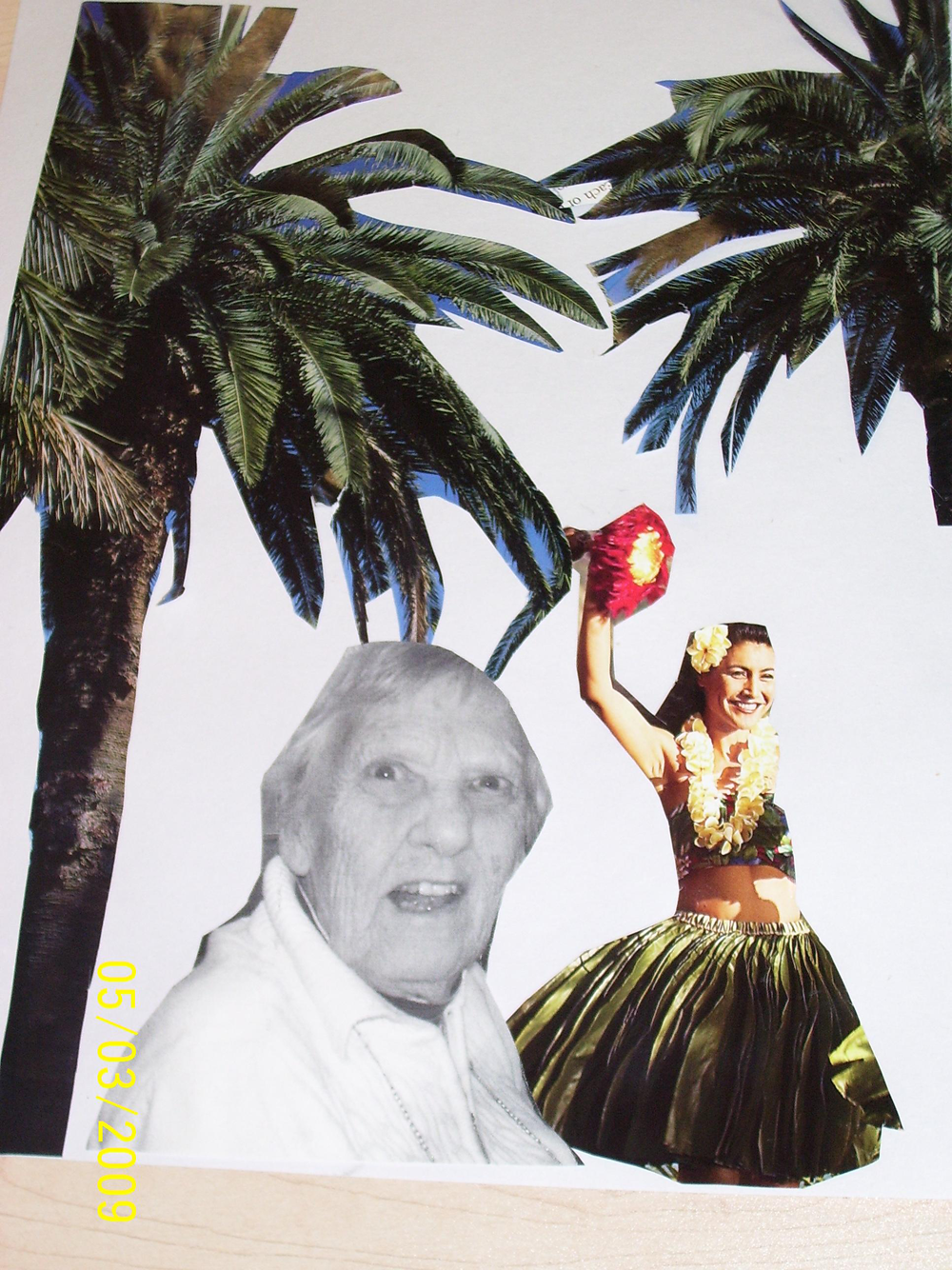
Nora’s passport
While the adults’ decision to avoid cutting could have been due to fine motor limitations, participants were used to receiving help from each other and the instructors to solve conceptual or technical problems (e.g. Heydon, 2005). Additionally, even in the face of technical limitations, the children’s texts were more complex. Thus the relative simplicity of the adults’ texts could have been a design choice perhaps connected to conventionality as a degree of socialization or even as an outcome of a lack of experimentation as they had more experience with perspective, proportion, and manipulating the media. Also, as mentioned, adults were less inclined to push beyond their facility with the media.
Content
Regarding content choices, the participants’ initial interests were present in the products though sometimes in unexpected ways. Nora’s text highlighted Hawaii, the first place she talked about in class. While the children were originally intent on Disney World as they were perhaps drawing on ubiquitous Disney Discourses, they did not move this interest directly into their final texts. Instead, as Wohlwend (2009) found to be the case when the girls in one kindergarten classroom were allowed to play with the idea of Disney across modes and media, the original relationship that existed between their identities and Disney morphed into new storylines and possibilities. In the IG art class the girls’ early, literal interest in Disney World became a more generalized interest in palaces, castles, and balls: Cara superimposed her image over Buckingham Palace; Lina, who had a discussion with Cara and adult participant Noreen about balls and who had initially been interested in the Eiffel Tower, did include the tower in her passport, but the most prominent image in her text became an ancient castle. This transformation of interests followed its own micro-semiotic chain as interests began as stories of travelling to Disney World between participants, became visual texts in the passports, then following the creation of the passports, Lina, Cara, and Eden told elaborate stories to each other about their texts, and these stories featured them as princesses. The translation of interests across modes also happened in other instances when, for example, Cara told a story about the woman in the grass skirt in Eden’s text. This woman was the same person, she said, as the one who was scuba diving and then playing volleyball. The woman, Cara explained, just kept ‘falling down the page’ moving from activity to activity. The images in Eden’s text were indeed organized vertically in this order.
The children enthusiastically chose multiple places to represent in their passports, places that were not random but could, as demonstrated through their storytelling, form a coherent narrative. Children also used constructs in their narratives like, ‘I am going to go’ and ‘I will go’, suggesting a looking toward the future. Hence, the children’s texts communicated identities of possibility and perhaps ‘hope’ as they were a ‘predisposition toward action’ (Simon, 1992: 4). In their narratives the children additionally highlighted what they knew about the images (e.g. Lina’s naming of the Eiffel Tower), and they sought detailed information about what they did not know (e.g. Roger highlighted L’Arc de Triomphe in his passport, and he wanted to know the structure’s exact name and where it was; Cara was similarly interested in Buckingham Palace). The concern over detail is understandable if the children interpreted the project as being a plan for action.
Comparatively, some of the adults seemed to interpret the project as being about reminiscences or wishes related to unfulfilled desires. In contrast to identities of possibility, many of the adults communicated identities based on ‘wishes’ which are impotent in that they do not include ‘the dimension of activity’ (Simon, 1992: 3). Adult participant Mona’s passport is such an example (see Figure 5). 4 During the making of her text Mona interacted little with her child partner. When I asked about her passport, she told me about life on the prairies in the 1920s.
‘The roads were just tracks . . . and we had a car, you had to put it up on blocks over the winter, and [use a] horse and buggy, and my aunt and uncles’ family lived not too far from us, and they used to bring the kids to school in a sleigh. They used to pick my sister and I up and we’d go to the little one room school, but my mother didn’t like out West. She didn’t like the wind and the dust so she talked my father into coming back East. I was eight years old at the time, but I remember lots of it. . . . my one sister went back and saw the old place, and I have a cousin that goes back every so often and visits.’
‘You’ve left a little piece of your heart out West?’ I wondered.
‘Well, I suppose. I was just young then, and it was home to me.’
Shortly thereafter, I spoke with Noreen about her passport and its images of Venice. Mona listened in and said to Noreen who was in her 60s, ‘You’re still young; you can do it.’ Mona then became sad as she talked about how she liked to travel until her husband became ill and they had to abandon trips they had planned.
One can see in Mona’s collage her interest in her past with the lupines and hydro wires which she identified with western Canada. In reference to her text Mona said she wanted to be drinking wine on the deck of a boat looking at beautiful flowers, all reminiscent of her travel days with her husband. She also explained that she included the train, because it was ‘going fast’. Mona then became teary saying she ‘never got to go anywhere anymore’. There is a tension in trying to read Mona’s text semiotically; there is at once optimism and sadness. The optimism is communicated through the vertical orientation to her design which is reinforced by the tall hydro tower, building on the top of a mountain, and upright lupines, the smile on her face, the sunny scene in the bottom left corner, and the speed of the train. The sadness is communicated by the fact that Mona faces to the left, her back turned against the tower of her childhood memory. Also, the verticality of the text could be challenged by a horizontal orientation that is created by a left to right lying down of the cut-out pieces. Sadly, the sense of an identity of loss wins out when one considers the narrative that surrounds Mona’s text. This example speaks to the need to consider the practice and product of a text in its reading.
Other adults negotiated the identity issues associated with aging in different, more explicitly hopeful ways. Noreen, the youngest adult in the class, likely interpreted the project in a similar way to the children. When I asked her to tell me about her passport she said, ‘It is Italy that I want to go to.’ Noreen greatly interacted with others during class and worked intensely on her text even opting to stay late to finish. Like Mona, Bonnie expressed that she would not be travelling anymore because of her age, however, akin to the children’s texts, hers was a plan for the future. Bonnie’s passport included young, smiling people frolicking in the water, a train signifying the trip she would like to take ‘through the Rockies to British Columbia’, and a ship to travel to ‘the glaciers’, with a photo of her smiling toward the top right of the layout: ‘These are the places,’ Bonnie told Wendy, ‘that I’ll have to leave for the next time.’ Bonnie laughed throughout the entire class and like Noreen interacted with others and took care in the making of her passport. Thus dissimilar to Mona’s experience, Bonnie’s text-making was joyous and the identity she communicated was forward-looking.
Conclusion
The literature relates some of the opportunities for creativity, expression, and concept-development that can come from the process of transduction, the movement of an idea across semiotic modes and/or media. Pedagogies designed to capitalize on this process are still in a nascent stage as too is the understanding of what children and adults do within them. The study, which is located in a unique IG context, sought to gain analytic insight into what participants did within the multimodal learning opportunities that were created by the IG art class, how they chose to fix their ideas within the semiotic chain, and what this says about their facility with various modes and media, interests, and identity options. The study considered the consequences for educators hoping to offer children and older adults expanded communication and identity options. A key finding was that where participants were in the life course affected their texts in terms of what they intended to signify and how they signified it. The notion that children may be more open to communicative possibilities than adults was reinforced as the children’s texts were more visually complex than the adult’s. Moreover, the children experimented far more with the media. This is an important observation that rejects an emergent literacy framework that sees children’s meaning making as a lesser version of adult meaning making. Instead, it gives substance to an early literacy perspective where children’s literacies are ‘valid in their own right’ (Gillen and Hall, 2003: 10). Finally, the children appear to have expansive identity options with texts that communicate a forward movement and looking. This was not always the case with some of the adults’ whose practices and texts instead show fewer attempts to push the boundaries of their facility with the media, more conventionality, and somewhat more restrictive identities.
Despite these last findings, the data do indicate that the semiotic chain lessons created learning opportunities and are potentially fertile examples for the development of other multimodal pedagogies. Key is exposure to and occasion for the exploration of diverse modes and media with support for working through the communicational trajectory. Future inquiries, however, might consider how to foster children’s hundred languages while keeping their facility with various modes and media active through the life course so that adults too may have broad communicative options and opportunities for the creativity that can be fostered through multimodal communication. Given the reciprocal relationship between communication and identity, one might also inquire if and how increased communication options might open up identity options, so that aging need not be equated with narrowed identities.