







Abstract
In Australia, there has been rapid growth in the demand for early childhood education and care programmes, leading to strong demand for early childhood teachers. To become an early childhood teacher, potential candidates must complete an approved early childhood teacher education programme. In this paper we explore the approved programmes in Australia (N = 102) that provide early childhood teacher education (from January 2024). We look at the names of programmes, content, entry requirements, duration, design and placement days. We also explore the current growth in international student enrolments within early childhood teacher education programmes. We make visible a number of gaps in programme provision, with our findings showing strong variation across the approved programmes despite complying with the same content and provision requirements. We conclude with a discussion on what this variation across programmes means for the workforce of early childhood teachers and for future policy directions, and postulate around possible market forces and the influence of neoliberal management on early childhood teacher education.
Introduction
In Australia, and in many other parts of the world, there has been rapid growth in the demand for early childhood education and care programmes, leading to strong demand for the supply of early childhood teachers. To become an early childhood teacher, potential candidates must complete an approved early childhood teacher programme. Yet, alongside the increased demand for early childhood teachers, there appears to be a wide range of different pathways to become qualified teachers. This paper explores the approved early childhood teacher education programmes in Australia, at a point in time (from January 2024). In a scoping review of approved programmes, we explore the different entry points, duration, age ranges, course requirements and placements across approved providers to shed light on current pathways. This scoping review provides opportunities to reflect on the current pathways to become early childhood teachers across the compliant programmes and begins to create questions on this diversity of programmes, highlighting emerging gaps.
Literature review
This review of literature provides an overview and understanding of early childhood education and care (ECEC), before turning to policy changes and legislative requirements in Australia pertaining to workforce strategies and accreditation requirements. This focus will provide foreground attention to notions of the early childhood teacher, both qualifications and career pathways.
Early childhood education and care
Early childhood education and care (ECEC) is a context of the education sector focussing on children aged birth to 8 years of age (Leseman and Slot, 2025; Mitchell and Taylor, 2015; OECD, 2006a), that includes services prior to school (long day care, preschool/kindergarten) and the early years of primary school (first formal years of schooling). In the early years of life, and in particular the birth to 5 years period, irrefutably acknowledged as critical for children’s learning experiences and foundations for life trajectories (Heckman and Karapakula, 2019; Leseman and Slot, 2025; OECD, 2006b), there has been a global focus on investment in high quality ECEC (OECD, 2022; Sparling and Meunier, 2019). Attention to investment in ECEC, and in particular return on investment (Heckman and Karapakula, 2019; Masse and Barnett, 2002) draws on a long-standing body of empirical evidence that quality ECEC makes a difference for children (Parks, 2000; Weikart, 1967) and their future contributions to society (Heckman and Karapakula, 2019; Siraj et al., 2016). Therefore, there has been an upturn in policy attention on funding to improve the provision of quality ECEC for all children in all ECEC programmes, especially those in prior to school settings.
Alongside the attention on quality ECEC, there has been recognition and interest in workforce matters, particularly as there is a clear link between provision of quality ECEC and qualification (Manning et al., 2019), with a degree-qualified early childhood teacher being not only desirable for achieving high quality ECEC but also a legislated policy requirement in Australia. This requirement is not isolated to Australia; in Finland, for example, early childhood teachers must hold a university qualification.
ECEC workforce
A notable feature of the provision and uplifting of quality is a qualified ECEC workforce (Department of Education, 2025). Attention to early childhood qualification requirements has been of interest globally (OECD, 2019), with growing acknowledgement that a university degree qualified teacher, with a specialised early years qualification, is desirable, particularly to uplift quality. In Australia, in particular over the past two decades, there has been a steady stream of policy reform, partially in response to international comparative studies into the provision of ECEC (OECD, 2006a, 2022).
Early years reform agenda
The “education revolution” (Australian Labor Party [ALP], 2007) was a focus in Australia following a newly elected Labour government (Rudd and Macklin, 2007). The Early Years Reform Agenda (EYRA) was one of a number of proposed changes to education, initially captured in a document titled New Directions for Early Childhood Education (Rudd and Macklin, 2007). The core goal central to these reforms was access for all children living in Australia to a “quality early childhood education” (Department of Education Employment and Workplace Relations (DEEWR), 2009: 1) for 15 hours a week in the year prior to commencing formal schooling. In particular, a call for increased investment in ECEC saw a number of key policy initiatives including “all four-year-olds entitled to receive 15 hours of learning per week” with delivery by a “four-year qualified teacher” (DEEWR, 2009: 16). Also proposed was a national early childhood curriculum to replace, or sit alongside, the previous curricula which may have been developed by each state and territory, including, for example, the Early Years Curriculum Guidelines (Queensland Studies Authority, 2006). A key component of this quality early childhood education was the “universal access” strategy, with preschool education (for 4-year-old children) for up to 15 hours per week be “delivered by a university-trained early childhood teacher” (DEEWR, 2009: 1). This represented a significant shift in staffing requirements for ECEC in prior to school contexts, most notably in long day care, for children aged 6 weeks to 6 years.
National quality framework
Following the instigation of education change in Australia, the EYRA focussed on a raft of new legislation and policy developments (Rudd and Macklin, 2007). The National Quality Framework (NQF) was introduced in 2012, following the Council of Australian Governments’ (COAG) consensus in 2009 on pathways to invest in and strengthen early years national approaches to ECEC. Notably consistent standards for quality were a focus, with the logic that this would see positive outcomes for children. The government regulatory authority that oversees the NQF is the Australian Children’s Education and Care Quality Authority (ACECQA).
Qualification requirements
The NQF (ACECQA, 2026) and the National Children’s Education and Care Workforce Strategy (Department of Education, 2025) include legislation and policy on qualification requirements, with specifications on degree-qualified teacher, diploma-qualified educator, and certificate III-qualified educator, as well as a nominated role of Educational Leader. The Education and Care Services National Law Act 2010, Section 169 and the Education and Care Services National Regulations (2011), Regulations 137–143 include requirements for degree-qualified early childhood teachers depending on the number of children the setting is licenced to enrol in a day. For example, an ECEC centre needs to employ one or two early childhood teachers (ACECQA, 2026), depending on the size or maximum number of children enrolled each day. These are the minimum national requirements; however, some states have regulations that were held over from the introduction of the national regulations. For example, in New South Wales the number of early childhood teachers depends on the number of children in the service. In an ECEC centre that has 60 children, 3 qualified early childhood teachers are required, and with 80 children, 4 early childhood teachers are required (Education and Care Services National Regulations, 2011).
ECEC national workforce strategy
A focus on ECEC workforce matters, and in particular qualification requirements, has been expanded through a national 10-year strategy, Shaping our Future (Education Services Australia, 2022). This document includes six key areas: professional recognition, data and evidence, qualifications and career pathways, attraction and retention, leadership and capability, and wellbeing. Each of these areas infuses 21 short-, medium- and long-term actions (Education Services Australia, 2022). For the purposes of this paper, two of these key areas are outlined in further detail. Qualifications and career pathways include a focus on “supporting quality, improving consistency and reducing complexity, as well as enabling flexible career progression” (Education Services Australia, 2022: 8). Attraction and retention include a focus on “workforce diversity, including attracting the right people to the sector, and valuing and retaining high calibre staff” (Education Services Australia, 2022: 46). Each of these two areas, as well as arguably the other areas, have particular relevance for this paper with a focus on early childhood teacher education.
Staff shortages, however, continue to impact the Australian ECEC sector. In 2024, the Jobs and Skills Australia Commissioner Professor Barney Glover reported that Australia needed an additional 21,000 early childhood education and care professionals to meet current demand (Australian Government, Jobs and Skills Australia, 2024). As such, the report predicted that “to meet projected national population growth increases (1.3% per year) and increased female participation in the workforce, the ECEC workforce will need to grow by around 1.5% per year” (Australian Government, Jobs and Skills Australia, 2024: 11).
The lack of staff has created problems within some early childhood settings. If an early childhood setting cannot recruit a qualified early childhood teacher, then they are able to apply for a waiver for this requirement. As of 1 January 2025, the national average proportion of services with a waiver for meeting staffing requirements was 8.3% (ACECQA, 2025b). The range across Australia was 1%–16.1%. While the government aims to have qualified early childhood teachers in all early childhood settings to support quality learning environments, currently the lack of supply means a shortfall. As noted in the Jobs and Skills Australia report (Australian Government, Jobs and Skills Australia, 2024: 11), if current pay and conditions are maintained within the sector, already existing workforce pressures will be exacerbated, leading to a continued shortfall in staff.
Research in Australia has shown that the early childhood teacher workforce is different from the general teacher workforce. For example, in 2022, 75% of early childhood teachers had less than 20 years of experience compared to 53% for the general teaching workforce (Australian Institute for School Leadership (AITSL), 2024). The most commonly reported pathway into an early childhood teacher education program was also via a vocational education and training (VET) pathway (AITSL, 2024), highlighting the importance of upskilling current educators in early childhood settings.
Early childhood teacher education
Early childhood teachers are best prepared to provide children with quality education and care (Manning et al., 2019). Prior research has shown significant correlations between higher teacher qualifications and high-quality early childhood learning environments, where teacher qualifications have the strongest effect on programme structure, language and reasoning (Manning et al., 2019). As such, many countries around the world have worked towards qualification/certification standards for early childhood teachers (Finland—Finnish National Agency for Education, n.d.; SwedenSkolverket, 2023).
Across Australia, early childhood teacher education is delivered by higher education institutions. Each early childhood teacher programme needs to be accredited by ACECQA (2025a) before it can be offered by the institution and must be at the Australian Quality Framework Level 7 or higher (Australian Qualifications Framework (AQF), 2013). The programme needs to include reference to the National Programme Standards as required by AITSL (2024) and the Higher Education Standards Threshold (Tertiary Education Quality and Standards Agency (TEQSA), 2021).
The age foci of the early childhood teacher education programmes are birth to 5 years, birth to 8 years, or birth to 12 years. Studying in a birth to 8 or birth to 12 years programme requires students to study not only to be a teacher in an early childhood setting, but also to be a teacher in a primary school setting. The duration of early childhood teacher programmes varies according to the qualification. For example, a Bachelor of Early Childhood Education may be 3 or 4 years in duration. If a Bachelor programme focuses on birth to 8 or birth to 12 years, it will be 4 years in duration, as primary school teachers are required to be 4-year trained, and it is likely to be called a Bachelor of Education (AITSL, 2024). The postgraduate degrees include the Graduate Certificate (usually 0.5 years); Graduate Diploma (1 year duration), and Master of Teaching (2 year duration).
Entry into an undergraduate degree can be via academic entry, such as using the Australian Tertiary Admissions Rank (ATAR; usually for school leavers), or non-academic entry based on past experience (for mature age applicants). Entry into the postgraduate programmes requires an undergraduate degree which may, or may not, require a cognate discipline area of study. Postgraduate programmes that do not require a cognate undergraduate degree are popular with international students.
Programmes are required to include the content and professional experience days stipulated by ACECQA (2025a). The requirements outlined by ACECQA include six curriculum content areas:
Child development and care.
Teaching pedagogies.
Education and curriculum studies.
Family and community contexts.
History and philosophy of early childhood.
Early childhood professional practice.
Supervised professional experience includes a minimum of 15 days with children aged birth to 35 months, a minimum of 25 days with children aged 3 until commencing school, and overall, a total of 80 days for an undergraduate qualification and 60 days for a postgraduate qualification.
Programmes are designed by academic course coordinators based on ACECQA requirements and are accredited by ACECQA prior to implementation in the higher education institution. Research has shown that stakeholders have concerns about the quality of some early childhood teacher programmes (Boyd et al., 2020; Pascoe and Brennan, 2017), especially in the areas of translating theory to practice, and communication with families. For example, in a recent review of early childhood teacher education programmes in Australia, Jones and Tonge (2025) reported a lack of study of physical development across most programmes. Previous studies have also found an absence of content related to infants and toddlers in Australian early childhood teacher education (Garvis et al., 2013) as well as content concerning technology in general (Keane and Garvis, 2024). While it is not known what the optimal model of an early childhood teacher programme is (Boyd, 2020), overall, there are many diverse programmes to study to become a qualified early childhood teacher. This review aimed to explore all approved early childhood teacher programmes in Australia that provide early childhood teacher status, from January 2024, and to report on the diversity of the pathways to becoming an early childhood teacher, whether it be with a 6-month programme or a 4-year programme. Findings are important for understanding the diversity of pathways to inform further discussion and policy around programme effectiveness of early childhood teacher education.
Method
Scoping reviews are an important research method to create a “snapshot” of current knowledge and gaps in the research literature (Levac et al., 2010). Scoping reviews are often applied to map knowledge and to be able to inform future research within the field (Tricco et al., 2016). In this study, we are focussed specifically not on academic literature, but on the content and design of early childhood teacher education. Thus, we deemed this method the most suitable to inform future research and policy to support early childhood teacher education (Peters et al., 2020).
For this scoping review, we applied Arksey and O’Malley’s five-stage framework (2005) to provide rigour and transparency to the mapped data collected and to help produce reliable findings. In the first of the five steps we focussed on a research aim. Our focus was to look across all approved programmes and to explore key trends that emerged. The aim of this study was to identify current trends in approved early childhood teacher education programmes in Australia. In the second step, we created boundaries for the relevant studies. We downloaded a publicly available list of approved early childhood teacher education programmes from the accrediting body, ACECQA, as of the 31st January 2024. The list (which may have been updated since this time), allowed us to create a snapshot of 110 relevant programmes at that time. From these data identified names of institutions and programmes. Next, with the third step, we searched the websites of the higher institutions to find out further information about programmes, and located information on only 102 programmes, as some of the approved institutions did not have information on their website about the programme.
From the 102 programmes, we were able to begin charting the data (Step 4). Data extraction from websites included information about names of programmes, state/territory, duration, entry requirements, credits given, delivery mode, number of courses, programme design, accreditation, age range of programme, domestic/international students, and extra information. Information was stored in Excel. The charting process allowed us to compare the 102 approved teacher education programmes in a transparent and robust way. Following this data extraction, the team met to compare categories and to ensure we had alignment within our processes to ensure rigour. In the final step of the process, we charted the data and created a narrative synthesis across the file. This was followed by a critical synthesis to identify the diversity across the early childhood teacher education programs and how this may influence the early childhood education field. Gaps were identified, leading to recommendations for future research to support high quality early childhood teacher education.
Findings
Our audit provided information on 102 programmes for analysis. The 102 programmes were delivered by 43 institutions identified across all 8 states and territories, with Victoria being the largest provider of early childhood teacher education qualifications. Table 1 shows the number of programmes by state and territory (as well as New Zealand).
State and territory programme delivery.
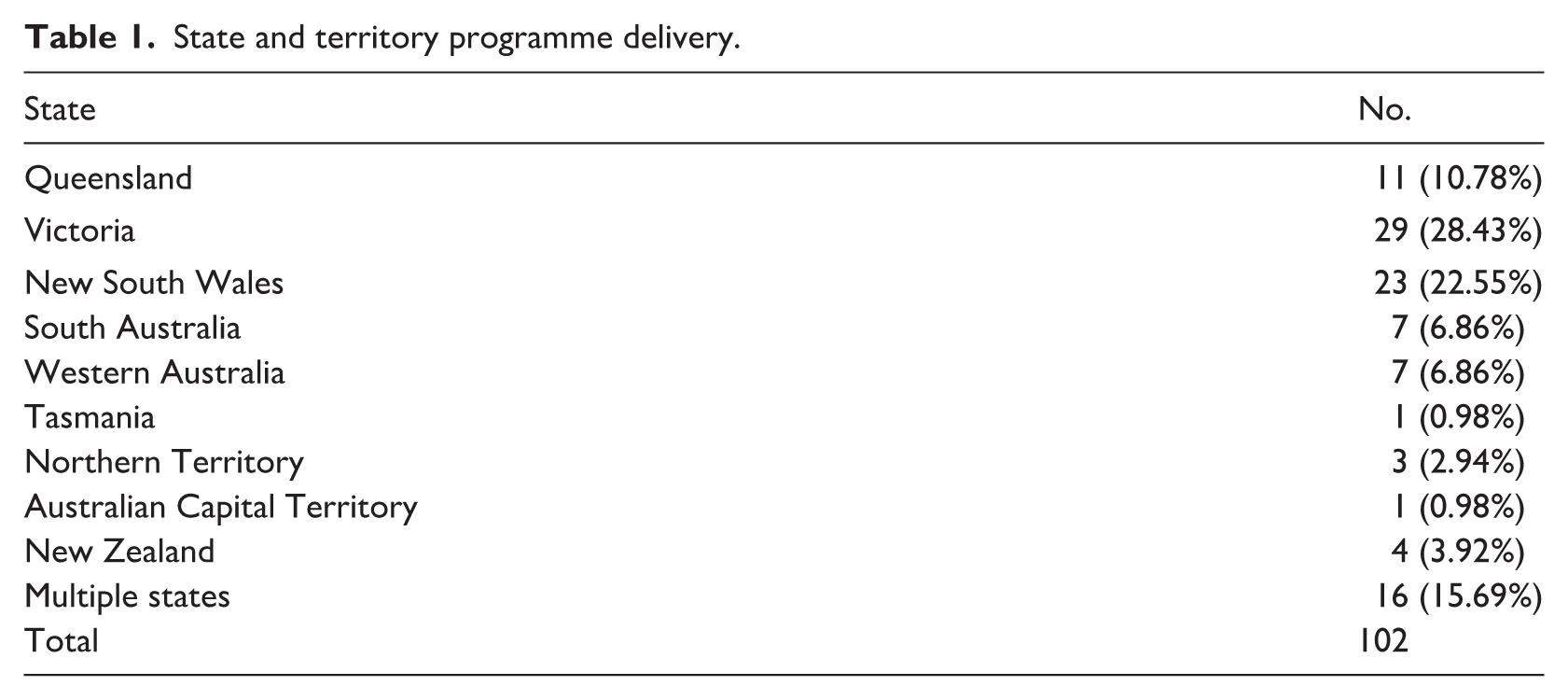
“Multiple states” in Table 1 refer to universities that are located, and that deliver, early childhood teacher education in more than one state. A separate category was created for these programmes. As Table 1 indicates, Victoria and New South Wales combined represent the majority of programmes in Australian early childhood teacher education (51%). This figure rises to 38 programmes delivered in New South Wales and 35 programmes delivered in the states of Victoria when multiple state delivery is taken into account, raising the Victorian and New South Wales shared to 66.6% of the Australian early childhood teacher education market.
Within the 102 programmes, 9 were registered trading organisations (8.8%), 6 were TAFE providers (5.8%) and the remainder (87) were universities delivering early childhood teacher education programmes. Within Australia, a range of different providers can deliver early childhood teacher education programmes if meeting accreditation requirements.
The types of programmes were collated to see how most institutions delivered early childhood teacher education. Bachelor qualifications were the highest (58 programmes), followed by the postgraduate programmes of a Master of Teaching (26 programmes), the Graduate Diploma (13 programmes), and Graduate Certificate (5 programmes). This means that 57% of programmes were undergraduate programmes and 43% were postgraduate.
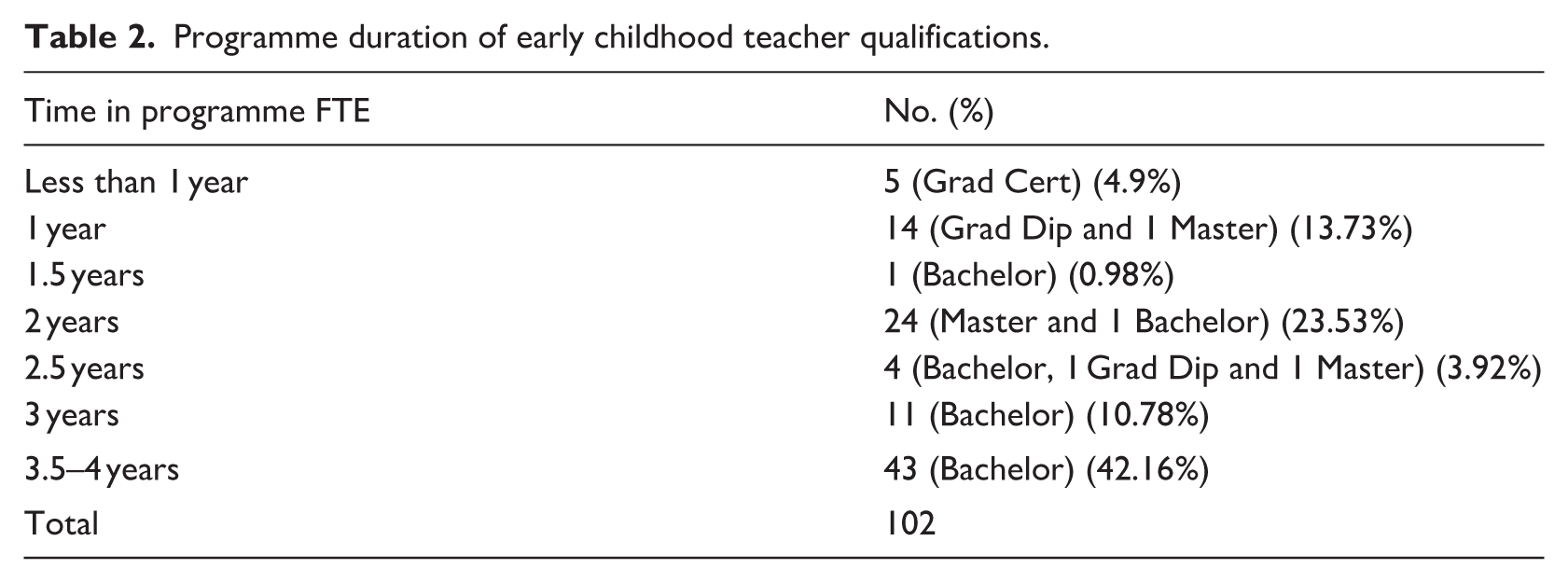
The study also explored the amount of time required to complete the programme to be qualified as an early childhood teacher. Five programmes took less than 1 year; however, these were dependent on candidates already holding a teacher qualification. Graduate Diplomas were also 1 year and had entry points of a non-education Bachelor qualification or a diploma qualification with years of recent experience. Programme duration is shown in Table 2, indicating that 43% of programmes are less than 2 years in duration, while 19% of programmes are 1 year or less in duration. The time span for completion ranged from less than 1 year to 4 years.
Programme duration of early childhood teacher qualifications.
The number of programmes provided by Australia (102) can be compared to other countries. For example, Norway has 13 universities that offer a 3-year Bachelor programme for kindergarten teaching (European Education and Culture Executive Agency, 2023). In Canada, there are about 50 teacher education programmes where it “is easier for provincial governments to regulate quality than it is for countries with many more programmes” (National Centre on Education and the Economy, 2025).
Across the programmes, the delivery market was also collated as being either for domestic students, or for domestic/international students. Most programmes delivered across the 42 institutions delivered to both domestic and international students (85 programmes); only 17 programmes delivered specifically for domestic students.
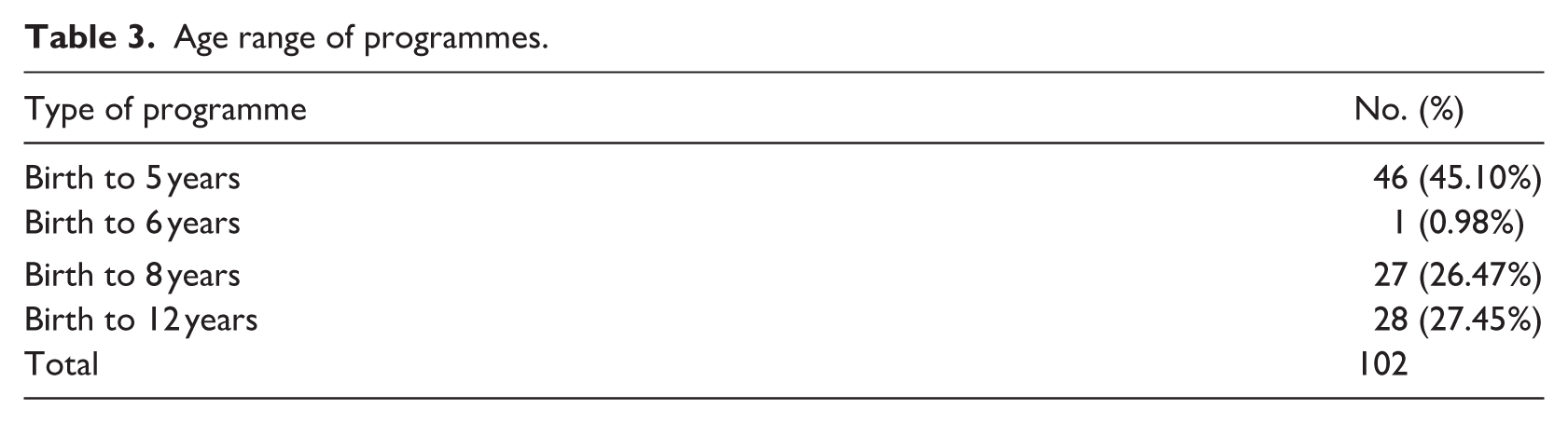
The age range that programmes catered for was also collated; differences may be accounted for because of registration requirements across different jurisdictions. Table 3 shows that that 46% of programmes cater for birth to 6 years (before formal schooling) while 54% of programmes include primary education and therefore also need to meet the AITSL teacher standards (Table 4).
Age range of programmes.
Delivery of programmes.
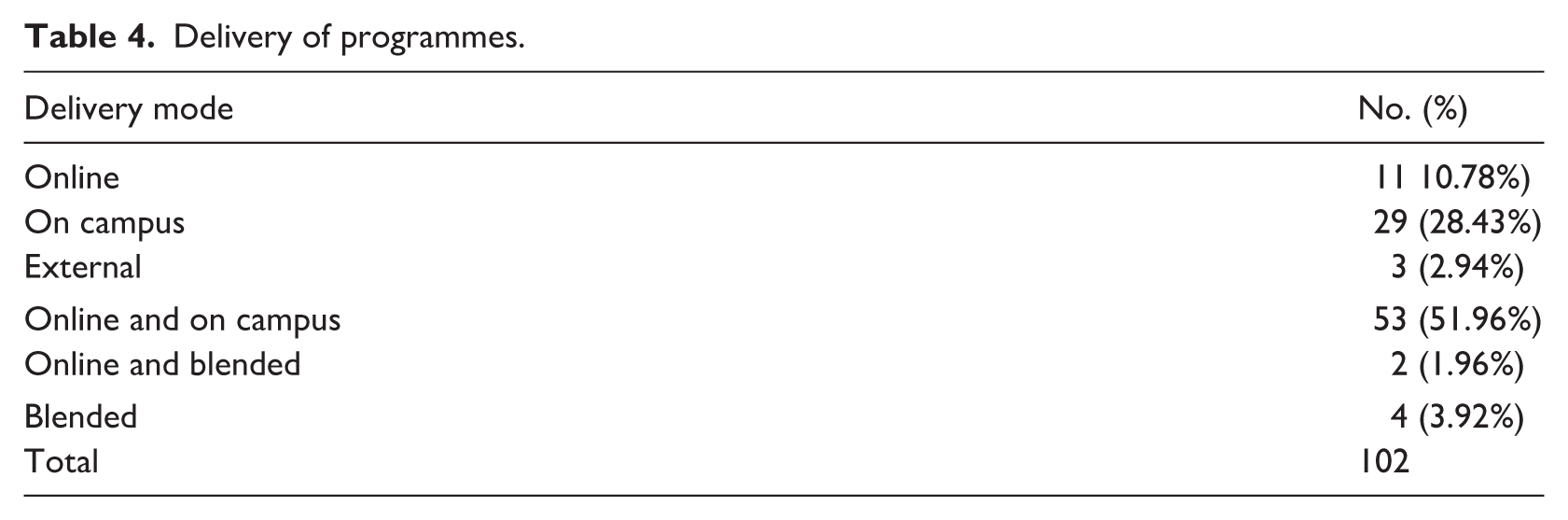
The delivery mode of early childhood teacher education programmes was also explored, where there is no specific requirement for a mode from current registration providers. While some jurisdictions may have requirements for attendance for primary or secondary teachers, early childhood education does not appear to have the same qualifications, although international students may be required to attend as a condition of their visa. The majority of students appeared to study in a blend of online and on campus formats. Only 28% of programmes were delivered only on campus.
Our study also explored early childhood teacher education courses. We found significant diversity in the number of courses studied. For example, the smallest number of courses studied within a programme was 4, while the highest number of courses was 33. Placement days also varied from 60 to 120 days—especially for programmes that also had to meet primary teacher requirements. Further variation was found in entry requirements for IELTS (ranging from nil to a 7.5 score), ATARs (ranging from nil to 93) and also previous courses studied at school (such as math and English at school). Some programmes (55%) that also had to meet AITSL requirements for primary school teaching had extra requirements of candidates undertaking a non-academic attributes’ test at entry, LANTITE (test for pre-service teacher literacy and numeracy) and a recognised teaching performing assessment towards the end of study. Entry into these programmes also had minimum ATAR requirements (usually ATAR 70 and above).
Discussion
Across the 102 programmes reviewed, strong variation occurred in almost all collated data, making visible a number of gaps across early childhood initial teacher education degrees. Our analysis identified a number of key features across the early childhood teacher qualification programmes, including duration to complete the programme, content, professional experience, recognition of prior learning, advanced standing for previous qualification, higher education institution provider, and age range of programmes.
The first major variation concerned the time to complete an accredited early childhood teacher education programme, with a range of less than 1 year up to 4 years qualification. Some programmes, however, must be understood in context; for example, the graduate certificate programme that is 6 months duration allows existing primary and secondary qualified teachers to upskill to early childhood education. Other programmes had no prior teacher qualifications as a requirement. As such, this raises significant questions around the quality of a graduate early childhood teacher: is course duration and prior study important? Do graduates from a 2-, 3- or 4-year programme have the same knowledge and skills when exiting programmes? Questions are also raised around the cost for early childhood preservice teachers: if they could complete a degree in a shorter time frame, why would they complete a 4-year programme? However, the length of the programme does not mean that the number of early childhood education courses studied are the same. For example, in a 2-year Master of Teaching programme there may be 16 courses dedicated to study of ECEC, while in a 4-year Bachelor of Education for primary and early childhood teaching, only one-third of the programme might be dedicated to ECEC study (ACECQA, 2026). Therefore, the duration of the programme does not mean that the programme explicitly covers ECEC. Furthermore, Boyd et al. (2020) found that employers identified that graduates from programmes that focussed on birth to 5 years were better prepared in comparison to graduates from programmes that focussed on birth to 12 years.
In considering the duration of the programme it is important to also consider the content that is taught. Currently early childhood programmes in Australia approved through ACECQA are required to embed six content areas (ACECQA, 2025a; see earlier in this paper, Early Childhood Teacher Education). Whilst it is assumed that these content areas are evidenced in programme content across the 102 early childhood courses that were part of this scoping review, what is not known is the embeddedness and depth of application of these areas. At the same time as required content, there has been interest in what has potentially been diminished or even removed from early childhood programmes. For example, examination of the word “play” in course titles or content description was noticeably absent when McArdle et al. (2019) examined 20 approved early childhood programmes in Australian universities and the VET sector. Notably, the word was “absent or occurred at relatively low frequency,” with the “least frequent occurrence . . . in materials from ITE degree-level courses” (p. 155). These researchers and teacher educators posed the question of “whether ‘play’ is being overlooked” in early childhood courses. A further example of interrogating early childhood programme content was in a systematic review with a focus on social justice and equity (Ryan and Grieshaber, 2024: 768) to examine “what teacher educators have been doing to shift the curriculum away from developmental perspectives to more critical approaches.” Notably, this paper concluded that of the 23 empirical studies that were reviewed, few included “critical theories that address power relations enacted through early childhood practices.” These two examples of research that specifically examined early childhood programme content and delivery are beyond the scope of this review; nonetheless, they offer further insights into the notable variations and content and theoretical gaps that exist. While programmes are compliant with accreditation, reflection about variations across programmes, and the implications of these variations, is needed. This also extends to the way that content is delivered, with the majority of programmes being delivered online. It is unclear if this is the most effective way for knowledge uptake in early childhood teacher education, especially with limited research on programme outcomes.
A further point to consider in our scoping review, and a central component of programme content, is the professional experience course. We were particularly interested in the number of professional experience courses, and, significantly, the number of professional experience days completed in each course, and across each programme. The range of professional experience days required across early childhood teacher programmes differed significantly. Sixty days is the requirement in postgraduate programmes and 80 days for undergraduate programmes (ACECQA, 2025a). It is unknown how the range of days impacts the early childhood students’ learning in preparing to become an early childhood teacher. Not only is the number of days significant, but also where the student has their placement matters: is it in an ECEC centre that is meeting the NQS (ACECQA, 2025a)? The supervision arrangements for the student and the point in the programme at which the professional experience days occur are areas of consideration for the structure of early childhood teacher programmes to prepare graduates. Given the recognition of professional experience as an important—arguably, the most important—component of teacher preparation, the variability of the number of days and the content within professional experience courses are worthy of further scrutiny. Whilst we illuminate a potential point of difference in the number of days, there is no context for how professional experience models were implemented. McArdle (2010) highlighted the central place of professional experience in programme design, encouraging innovative models of delivery, including consideration of work-integrated learning. Particular initiatives have been developed to support students in professional experience “success,” including a focus on transdisciplinary placements (Gibson et al., 2022), with a long history of trials of paired placements (Walsh and Elmslie, 2005) or, more recently, peer learning models for international students (Bone et al., 2019). Again, we acknowledge that while programmes are compliant, we query what this variation means for the early childhood teaching profession.
The structure of the early childhood teacher programme needs to be considered in light of the final qualification of the graduate. If the graduate is focussed on becoming an early childhood teacher, then studying a degree that includes primary and early childhood education is likely to cause frustration for the students (Boyd and Newman, 2019), for the employers (Boyd et al., 2020), and for early childhood academics who feel that the quality of the programme is muddied by including primary education (Boyd, 2020). Combining an early childhood teaching programme of study with a primary school teaching programme of study makes the qualification complex and cumbersome, and includes courses and professional experience not specific to ECEC. In this respect, a reduction in quality of the early childhood teacher programme was identified by academics due to increased content and additional days of professional experience in primary education (Boyd, 2020).
The diversity in entry requirements, number of courses studied, placement days, IELTS requirements and modes of delivery also raises questions around how quality of graduates can be assured within the early childhood teaching profession. The dual programmes that cover primary school have to meet AITSL requirements, where there are set guidelines on entry requirements, content studied (mapped to AITSL professional teacher standards), the requirements for a teaching performance assessment task and completion of the LANTITE (Language and Numeracy Test for Initial Teacher Education). Current governance over early childhood teacher education programmes does not extend to this amount of compliance, allowing higher education institutions to stipulate their own requirements around entry and how they are meeting requirements. On the one hand this allows higher education institutions to cater for greater diversity and to support many students who may want to become early childhood teachers through different pathways. This is important when the supply of early childhood teachers is crucial to building and sustaining a high-quality early childhood workforce in Australia. On the other hand, diversity may create greater variation in early childhood teacher quality based on different levels of training and support received. Early childhood teachers may be better prepared in some programmes than others. Boyd et al. (2020) found that ECEC employers preferred graduates from a diploma pathway as they were considered to be better prepared for early childhood teaching than those from a 4-year programme. As such, studies that explore the quality of early childhood teachers based on variations in early childhood teacher education programmes are essential to support policy development and to help providers of early childhood teacher education to also enhance quality. This may also include possibilities for moderation across institutes in regard to content, assessment and professional experience in response to meeting accredited programmes requirements.
There was also a surprising difference in programme providers, with 9 of the 102 courses offered at private higher education providers, and 6 courses offered at TAFE. This is a new space, and perhaps an expanding area, that warrants further consideration. With more diversity available for programme delivery and diversity of providers, opportunities arise to support a range of learners to become early childhood teachers. Such important findings may be necessary for the early childhood community, where great sharing of programme outcomes of graduates may be important. This could also include the ways that programmes are delivered (online vs hybrid vs on campus) to provide evidence of which modes are most effective in developing high quality graduates for the early childhood teaching profession (was online teaching more effective as a delivery mode?). Such programme outcomes may also be considered important by external accreditation bodies as providers apply for re-accreditation of early childhood teacher programmes.
Conclusion
This scoping review has provided a summary of accredited early childhood teacher education programmes in Australia as at January 2024. The review was designed to look at the variation across early childhood teacher education programmes and to highlight the diversity in the different paths to becoming an early childhood teacher in Australia. This study has shown a number of gaps in understanding and evidence of early childhood teacher education programmes, with significant variation in duration, type of programme, mode of programme and entry requirements. Variation is also evident in the age range of children studied, with courses with primary education components also requiring AITSL teacher standard requirements such as LANTITE, teaching performance assessments and courses that must be studied in high school for entry. Diversity also appears across entry requirements and the way programmes are delivered.
From this review, we suggest that further empirical evidence is required on early childhood teacher education programme effectiveness in regard to age range, duration of programmes and what is studied. We currently do not know what effective early childhood teacher education looks like. While there is significant diversity across programmes, it is unclear which programmes are the best in supporting and sustaining a high-quality early childhood workforce. There is also limited research on the effectiveness of a candidate who has completed a programme that also needs to meet AITSL requirements, versus a candidate who has completed a programme for birth to 5 years that needs to meet ACECQA requirements. Given the priority of the government to support the supply of early childhood teachers in Australia, it is important to gain an evidenced understanding of what effective early childhood teacher education looks like and what is the most effective way and duration for candidates to undertake studies to become qualified as teachers. We suggest that this should be a priority for workforce consideration, especially to support the sustainability of a high-quality early childhood teacher workforce.
Footnotes
Acknowledgements
We acknowledge our critical friends and fellow ARC CIs Professor Marianne Fenech, Professor Sandie Wong and Dr Tracy Durksen

Funding
The authors disclosed receipt of the following financial support for the research, authorship, and/or publication of this article: This research was supported by funding from the Australian Research Council (DP 240100249).
Declaration of conflicting interests
The authors declared no potential conflicts of interest with respect to the research, authorship, and/or publication of this article.