






Abstract
This paper investigates the atmosphere perception of dynamic coloured lighting over warm and cool hue ranges in a living room. Experiments were carried out with eight fully functional multi-channel tunable LED luminaires. Thirty Chinese observers (14 males and 16 females) evaluated 36 light conditions (2 luminance ×2 chroma ×3 hue range types ×3 speeds) using a questionnaire of 25 response scales. Four atmosphere factors were extracted: coziness, spaciousness, liveliness and warmth. Both dynamics and hue range significantly affected the atmosphere perception.
1. Introduction
In recent years, LEDs have become a popular choice for illumination, not only because of their long service life and low energy consumption, but also because of their good performance with rich colours and dynamics. The LED provides more freedom to create more complex and attractive effects in luminaire design.
Many investigations have confirmed that lighting affects human emotion, performance and cognition.1–6 Models have been developed from investigations of the emotional effects of lighting. In 1974, Mehrabian and Russell 7 proposed the PAD (Pleasure, Arousal and Dominance) model using the emotional scales: pleasure–displeasure, arousal–nonarousal and dominance–submissiveness. In 1988, Watson et al., 8 proposed the PANAS (Positive and Negative Affect Schedule) model, which consists scales of positive affect and negative affect. Research based on these two models confirmed that lighting does influence human emotion. However, there were some disagreements among the previous work.3,5,9 This is due to the complexity of emotions: They are not only affected by environmental factors, but also by non-environmental factors, such as the observer’s internal state.
Flynn10–12 was one of the pioneers to measure the subjective impression of environments for various lighting systems using semantic differential rating scales. Through factor analysis, three dominant categories were discriminated: evaluative impression (e.g. pleasant–unpleasant), visual clarity (e.g. clear–hazy) and spaciousness (e.g. spacious–cramped). The last two categories describe how the environment is visually perceived. Only the evaluative category contains a few atmosphere descriptors. In 2008, Vogels 13 introduced the concept of atmosphere. Different from the affective state such as emotion and mood, atmosphere is the experience of ambient surroundings in relation to observers. They also developed a metric to measure the atmosphere perception, and extracted two factors as coziness and liveliness. Employing Vogels’s method, many scholars have investigated lighting atmosphere from various angles: Erp14 investigated perceived atmosphere of static neutral light and coloured light; Custers et al. 15 studied the atmosphere perception in retail environments; Liu et al. 16 developed a word-pair questionnaire for Chinese observers and investigated the atmosphere perceptions in a living room with different luminares and lighting sources. Kuijsters et al. 17 focused on effects of ageing on atmosphere perception.
However, all these atmosphere perception studies were carried out with static light. As one of the major features of LED-based lighting, the affective effects of dynamic lighting need more attention. For the dynamic property of colour fluctuation speed, Sekulovski et al. 18 and Wan et al. 19 found that orange light conditions created a more relaxed atmosphere than white light, and adding slow pulsations to some coloured lighting might support stress-reduction while creating a relaxed atmosphere. Wang et al. 9 studied the atmosphere of full hue-range colour-varied dynamic lighting and extracted three atmosphere factors: tenseness, coziness and liveliness. She confirmed the effect of dynamic lighting on liveliness, but few investigations have been carried out on the effects of dynamic lighting over different hue ranges. According to colour psychology, the basic colour wheel can be split into two halves, warm and cool. This study explores the atmosphere perceptions of dynamic lighting with colour varying over warm and cool hues. The impact of lighting parameters on visual scaling is also investigated. Besides, gender and academic background effects on atmosphere perception are also reported.
2. Method
2.1. Experiment environment
Our experiments were conducted in a lighting laboratory (length 5.4 m, width 4.7 m, height 2.7 m) decorated as a living room. Figure 1 shows the test environment. An elliptical tea table (1.7m × 0.6 m × 0.45 m high) was placed directly under the ceiling panel, covered with a piece of grey paper. Two dark brown leather sofas were adjacent to the table. One hundred wooden cubic blocks (3 cm on each side), some colourful fruits (including oranges, apples, Indian jujubes and straw berries), flowers and plastic balls were put on the table to help simulate a living room environment. The mean CIELAB
20
value (L*a*b*) of the grey paper surface (L* = 76.6, a* = −2.0, b* = 8.0), brown leather sofas (L* = 26.6, a* = 5.7, b* = 4.0) and wooden blocks (L* = 71.8, a* = 6.1, b* = 32.2) were measured by an Xrite i1Por Spectrophotometer under D65/10 degrees condition. Room temperature was kept at 23 ± 1℃ during experiment.
The experiment environment.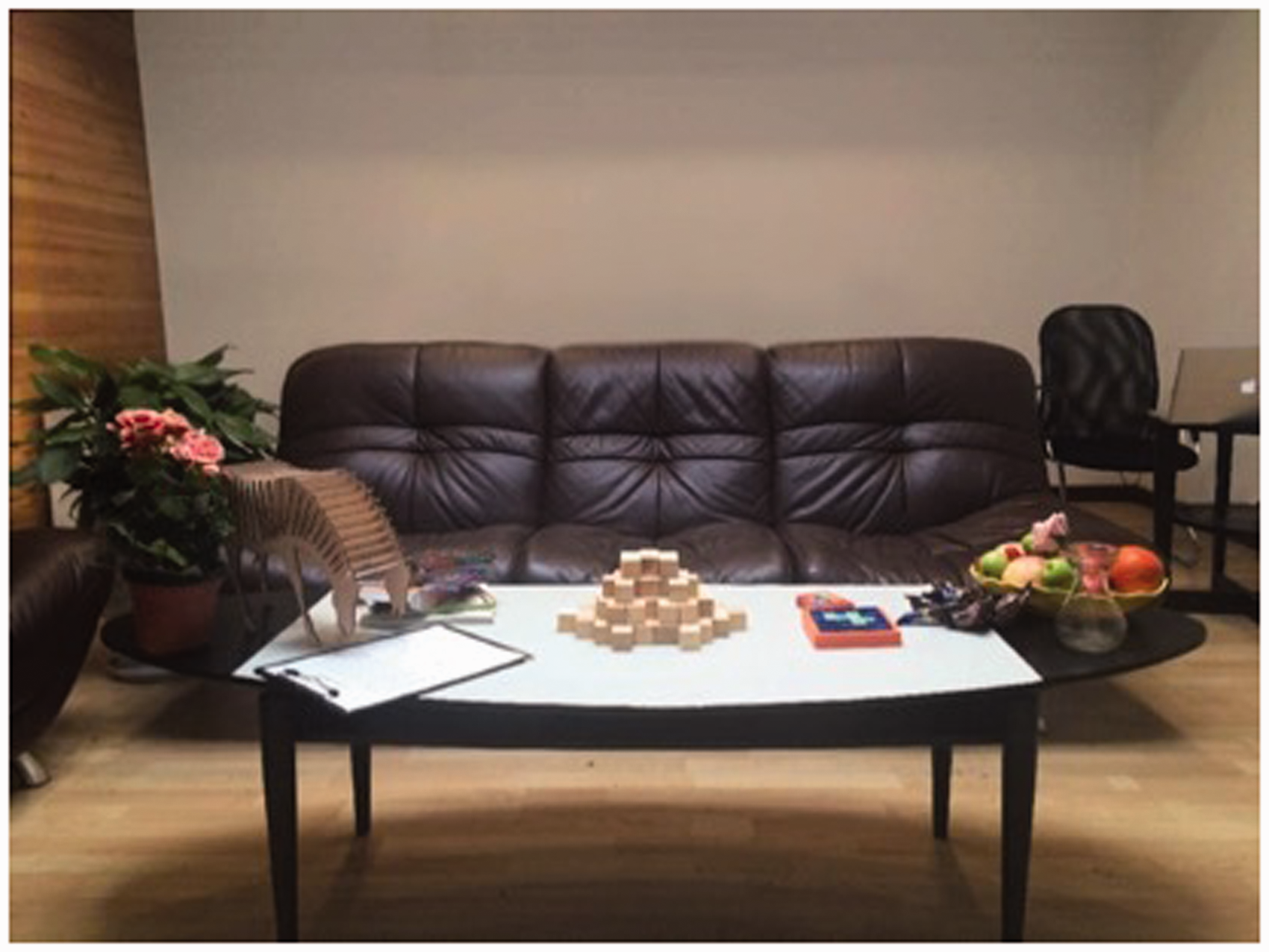
2.2. Lighting conditions
The room was illuminated from above by eight LEDCubes© (Thouslite Ltd.). Each LEDCube is a multi-channel LED lighting system. Six different types of LED are used in the system giving a good coverage of the visible spectrum. Two types of red LEDs were together controlled as an R channel, similarly two for green (G) and two for blue (B). Figure 2 shows the spectral power distributions.
Normalised spectrum power of LED cubes used in the experiment.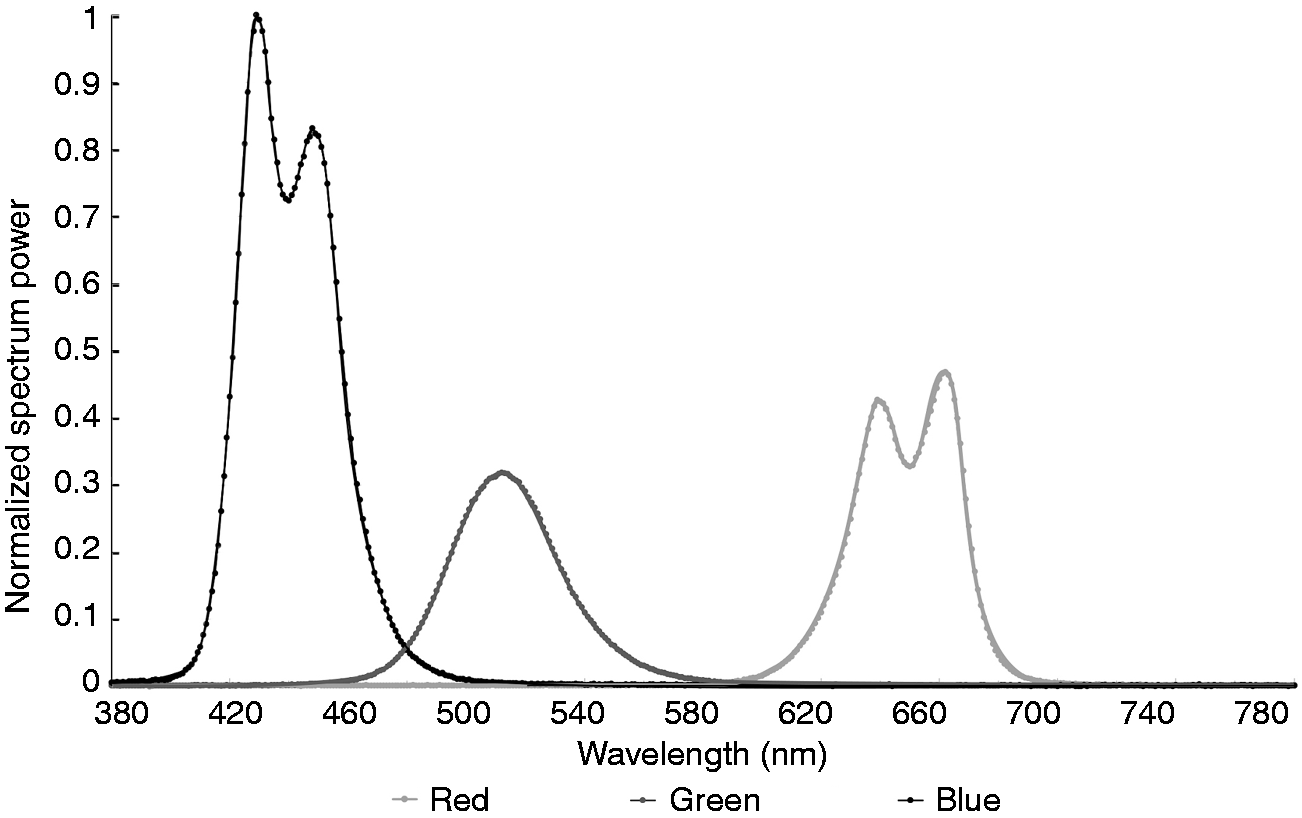
Physical parameters.
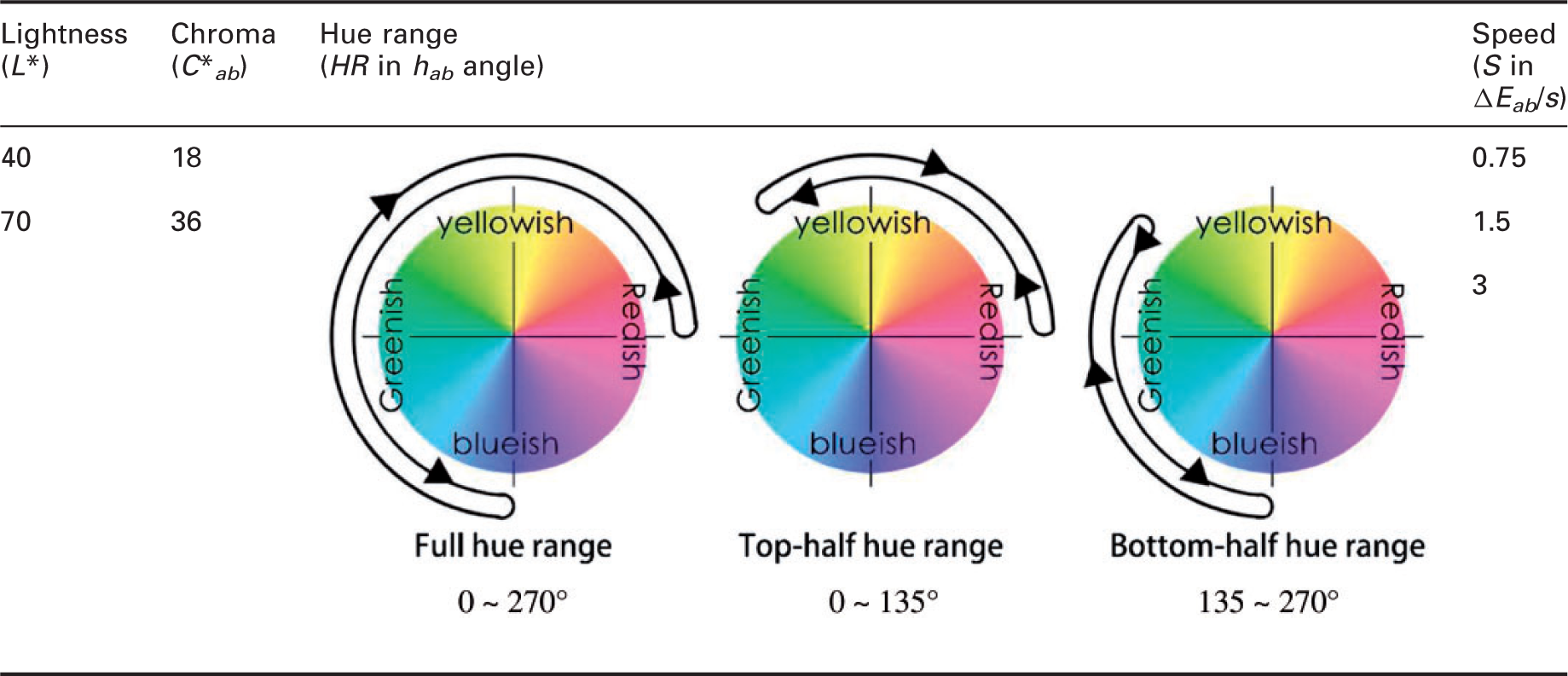
Here, chroma is the radial component of the cylindrical coordinate CIE L*Cab*hab representation of the CIELAB colour space. The definitions of C*ab and hab are
 C_{ab}^ \ast = \sqrt {a^{ \ast 2} + b^{ \ast 2} }
  h_{ab} = \tan ^{ - 1} \left( {{{b^ \ast } / {a^ \ast }}} \right)
To produce smooth dynamic colour-varied lighting, perceived flicker caused by an inappropriate minimum distance between sampling stimulus should be avoided. 22 Note that since CIE LAB is not a uniform space, the perceived colour differences in the 4th quadrant of the a*b* plane are larger than those in the other quadrants. With the constant ΔE*ab interval set in the experiment, it causes flicker in the 4th quadrant hue range, especially around pink and purple regions. Hence, the 4th quadrant hue range was excluded in the experiment.
The remaining hue ranges were set as three types: (0°–135°) which covers warm hues, (135°–270°) which covers cool hues and the full hue-range (0°–270°). They were assigned as 1, −1 and 0 respectively, according to the proportion of warm hue in each range type. Each range was displayed back and forth at different speeds.
2.3. Questionnaire
Three questionnaires from previous studies by Vogels, 13 Wang et al. 9 and Liu et al. 16 were taken as references in the present study. Vogels 13 applied 38 words, originally Dutch and translated into English in her paper. Liu et al.’s 16 experiment contained 71 word-pairs, and was conducted in Chinese and also translated into English. However, they were both concerned with static lighting environments. Wang et al. 9 applied 21 words to study the atmosphere produced by dynamic coloured light. This experiment was also carried out in the Chinese language. Taking Liu et al.’s questionnaire 16 as a basic reference, word pairs were used to avoid linguistic misunderstanding. Each word pair is also considered as one scale.
All scales were classified into three categories as light appearance, atmosphere and preference. Every scale was looked up through the online Merriam Webster and Oxford Advanced Learner’s English-Chinese Dictionary. According to the words’ meaning, some words were eliminated because they are not commonly used to describe room atmosphere in Chinese, such as ‘musty’ (‘bedompt’ in Dutch). When two words have similar meanings, such as ‘exciting’ and ‘inspiring,’ only one of them was retained (in this example, ‘inspiring’ was retained). The scale ‘natural–artificial’ was added to test the effect of light from the aesthetic experience perspective on the interior space. And ‘ugly–beautiful’ was added to assess observers’ preference.
Questionnaire composition.
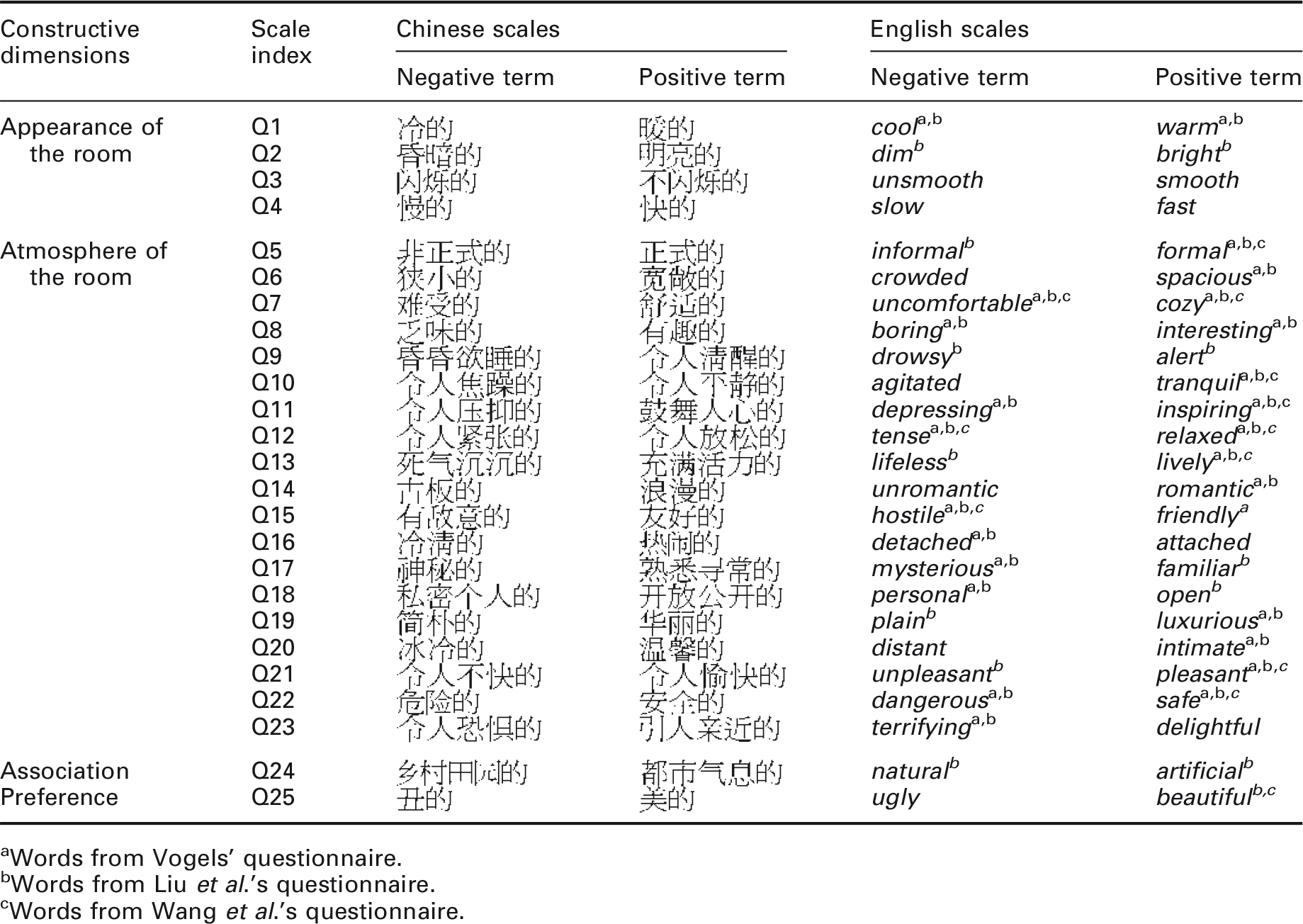
Words from Vogels’ questionnaire.
Words from Liu et al.’s questionnaire.
Words from Wang et al.’s questionnaire.
Observers were asked to apply a 6-point rating to each scale in the questionnaire. For each light condition, observers were forced to choose one term from the scale to describe it. Then they were asked to report how applicable the term is from 1 the least to 3 the most. If the observer chose the negative term, the scale score would be negative. Otherwise, it would be positive. The questionnaire was presented in Chinese and the responses were oral. All scores were used directly in the following calculations.
2.4. Observers
Previous studies23,24 revealed perception differences existing between designers and users in many areas. Since designers play a great part in products such as lighting, observers with and without design background were both involved. Thirty Chinese observers (14 males, 16 females) having a mean of 25.4 years and a standard deviation of 2.9 years participated. 25 Twelve came with design-related background. All observers passed the Ishihara test. 14 None had experience of assessing lighting atmosphere.
2.5. Experimental procedure
The experiment procedure.

When an experiment started, the light conditions were displayed one by one in random sequence. Every light condition included three phases. Phase 1 was 10 seconds neutral light (luminance: 68 cd/m2, 6500 K) for the observers to prepare. Phase 2 was 45 seconds 26 of experimental light. To help observers accommodate, they were asked to build certain forms with 100 wooden blocks placed on the table. A sound signal rung at the end of this phase. Phase 3 was to answer the questionnaire with the experimental lighting displaying.
In order to avoid order bias, all 36 light conditions were randomly arranged through all observers. The order of the questionnaire scales was also randomised. Each observer finished the experiment in two sessions. Each session contained 18 light conditions and took 60 minutes. The interval between two sessions was one week.
3. Results and discussions
3.1. Light quality and reliability of the questionnaire
The score of unsmooth-smooth for all observers across all light conditions (Mean ±Standard error = 0.09 ± 0.057) indicates that all experimental lighting was smooth without perceptible flicker. Reliability describes the consistency of measuring tool or method. Cronbach’s Alpha (α) is usually used as estimation of reliability. A commonly accepted rule 27 is: α greater than 0.6 indicates acceptable reliability, beyond 0.9 shows excellent reliability. In this study, an α of 0.85 demonstrated a high reliability for the experiment.
3.2. Inter-observer agreement
Inter-observer agreement describes the data consistency between different observers scoring the same conditions. This can be measured by calculating the standard deviations associated with each scale for each condition. The nearer the mean standard deviation (MSD) gets to zero, the more the observers agreed with each other. An MSD value of 1.0 indicates an inter-observer variability of 1.0 on the −3 to 3 category scale used. 16
The MSD values for male, female and all observers
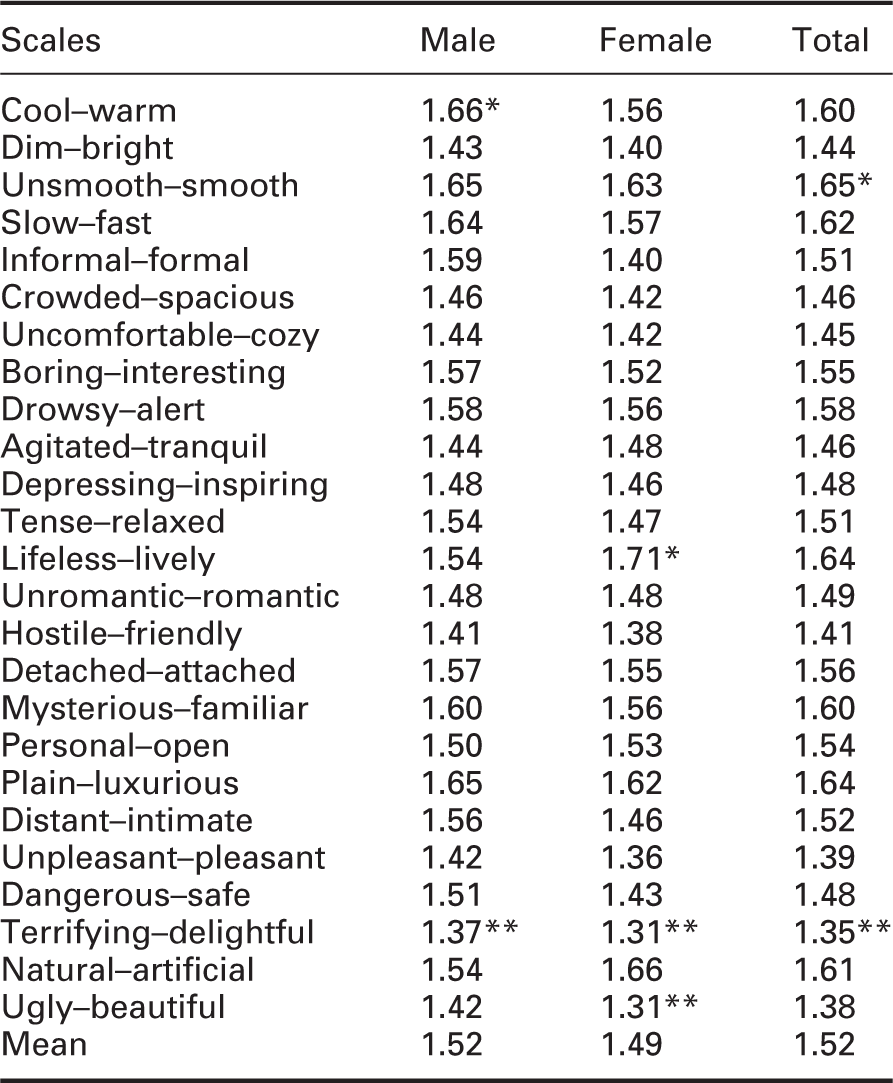
Marks the maximum values.
Marks the minimum values.
3.3. Gender differences in atmosphere scale perception
To avoid the effects of light condition differences and reveal gender effects, we applied the partial correlation analysis with Spearman rho correlation method: Spearman’s rho test is a non-parametric measure to deal with the interval data and partial correlation is the correlation between two variables after removing the effect of one or more additional variables. Across all physical parameters, eight scales showed significant differences with p values lower than 0.05. They are ‘slow–fast’ (p = 0.011), ‘uncomfortable–cozy’ (p = 0.004), “agitated–tranquil’ (p = 0.010), ‘tense–relaxed’ (p =0.011), ‘hostile–friendly’ (p = 0.001), ‘dangerous–safe’ (p = 0.022), ‘unpleasant–pleasant’ (p = 0.044) and ‘ugly–beautiful’ (p = 0.000). Mean values of these scales for males and females showed that males were more sensitive to speed (‘slow–fast’) while females were more inclined to dynamic light and felt comfortable, relaxed and safe. This result is in line with the findings of Wang et al. 9
3.4. Academic background differences in atmosphere scale perception
The same partial correlation analysis method was applied to investigate the perception difference related to academic background. Across all physical parameters, significant differences were found in ‘dim–bright’ (p = 0.01), ‘boring–interesting’ (p = 0.012), ‘depressing–inspiring’ (p = 0.023), ‘lifeless–lively’ (p = 0.031), ‘detached–attached’ (p = 0.000), ‘personal–open’ (p = 0.001), ‘plain–luxurious’ (p = 0.022), ‘tense–relaxed’ (p = 0.002) and ‘agitated–tranquil’ (p = 0.021). Mean values of these scales show that, people from a design background tended to feel the light conditions as brighter and more inspiring, while people without a design related background were more inclined to feel relaxed and tranquil.
3.5. Effects of the physical lighting parameters
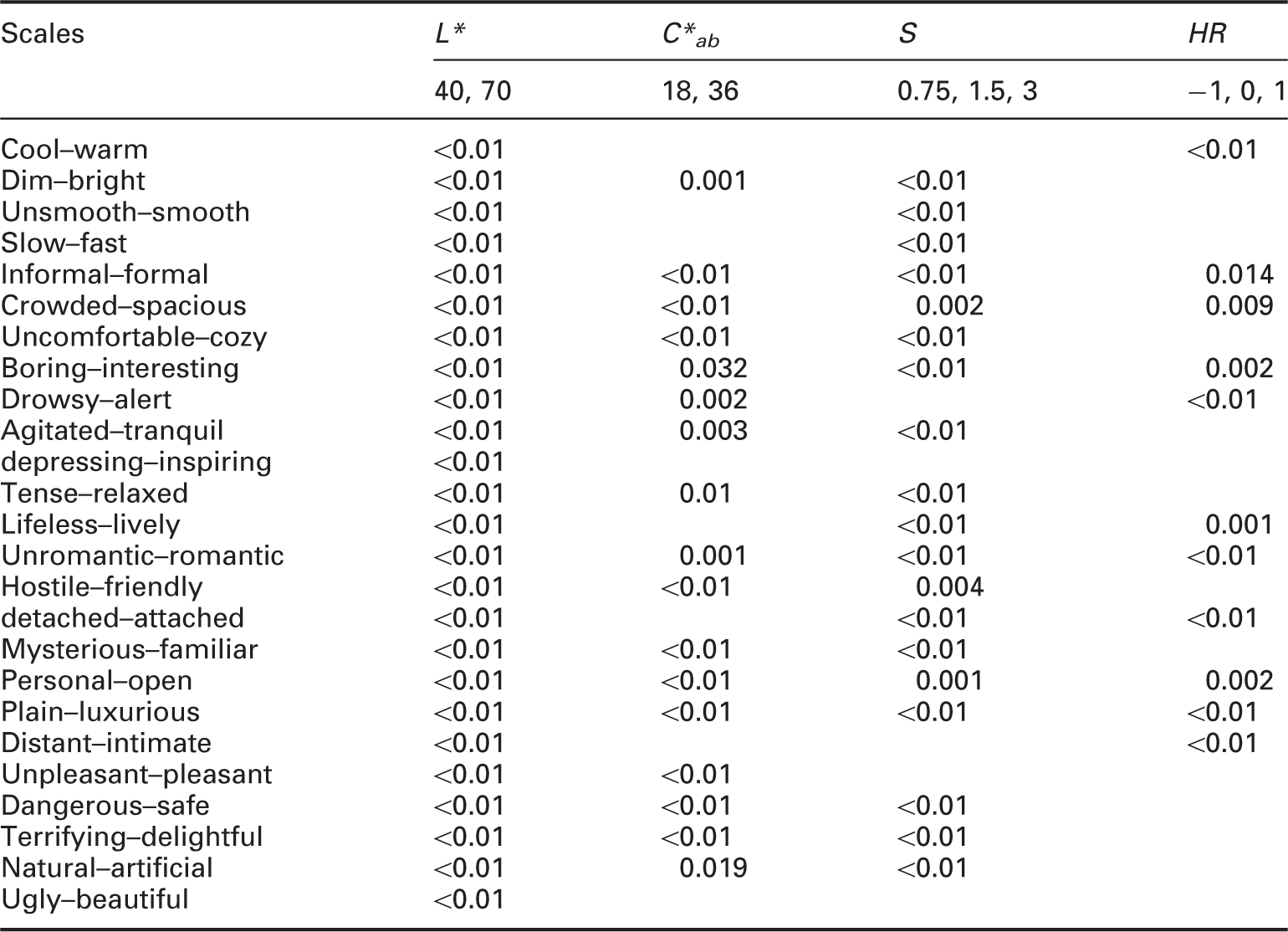
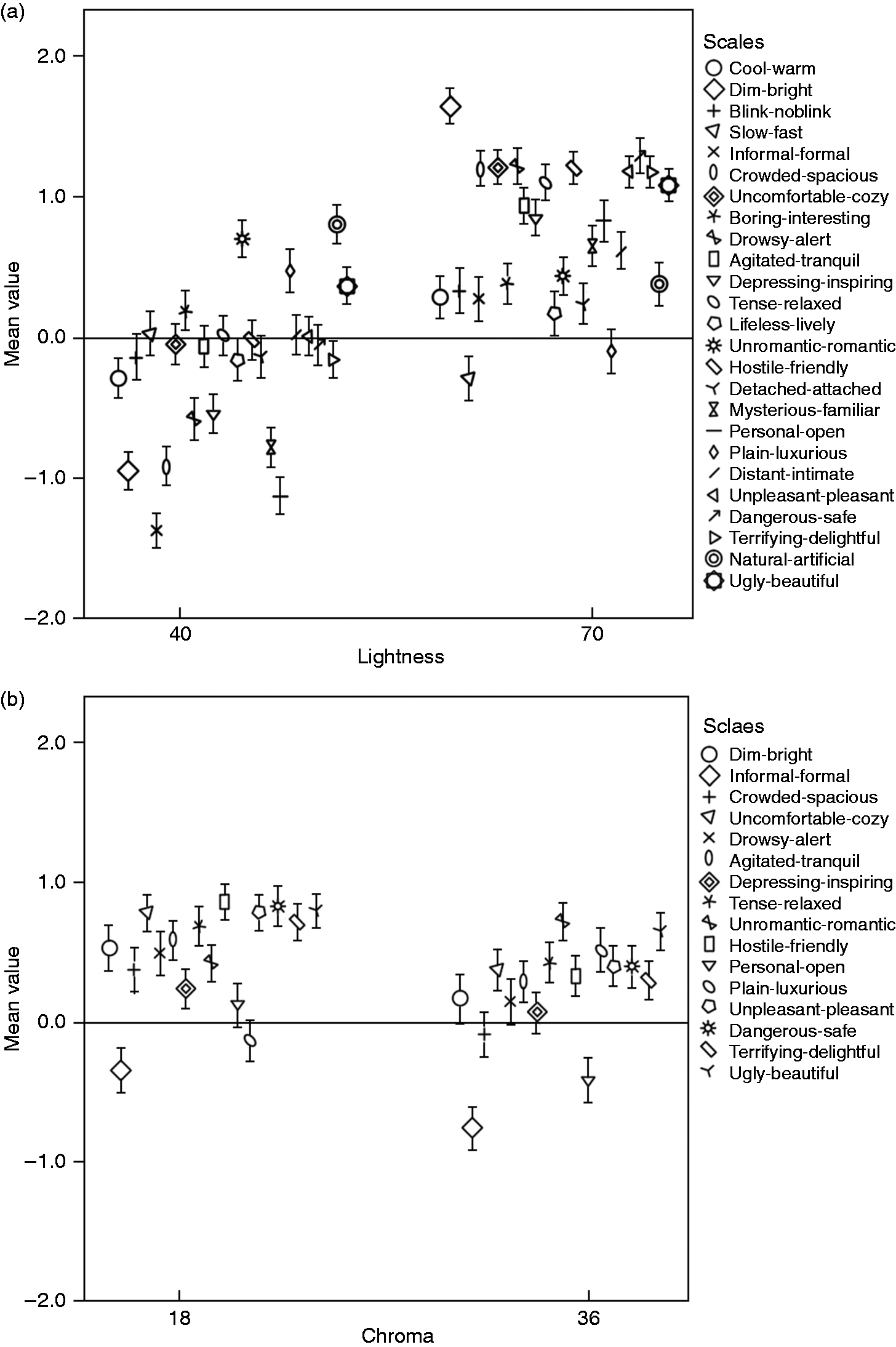
The effects of physical lighting parameters on the perception were revealed through Spearman rho correlation analysis. Scales significantly affected by the parameters are listed in Table 5. Mean values of these scales against lighting parameters are listed in Figure 3. It further revealed their relationships with physical lighting parameters:
Luminance had a significant positive impact on the perception of most scales. Observers were more inclined to dynamic lighting with higher luminance. As luminance increases, dynamic lighting would appear brighter, warmer, but slower. Meanwhile, the atmosphere became cozier, safer, more formal and arousing. Chroma significantly affected ‘dim–bright’ perception. As chroma increased, observers felt dimmer. When chroma increased, observers felt less comfortable, arousing, spacious, romantic and luxurious. Hue significantly affected ‘cool–warm’ perception. An increase in warm-hue light resulted in a more romantic and lively feeling. Speed positively affected the perception of fast, romantic, lively, attached and luxurious; however, negatively affected the perception of formal, spacious, comfortable, safe and urban. Preference (‘ugly–beautiful’) was only affected by luminance. As luminance increases, observers evaluated the scene to be more beautiful. The ‘natural–artificial’ perception was affected by luminance, chroma and speed. As chroma decreased, speed decreased, or luminance increased, the atmosphere was felt to be more natural. Scales significantly affected by physical parameters (p value) Mean values of scales plotted against (a) lightness, (b) chroma, (c) hue range and (d) speed. Error bar represents 95% confidence interval
4. Atmosphere dimensions
4.1. Factor analysis
Factor loadings of atmosphere dimensions
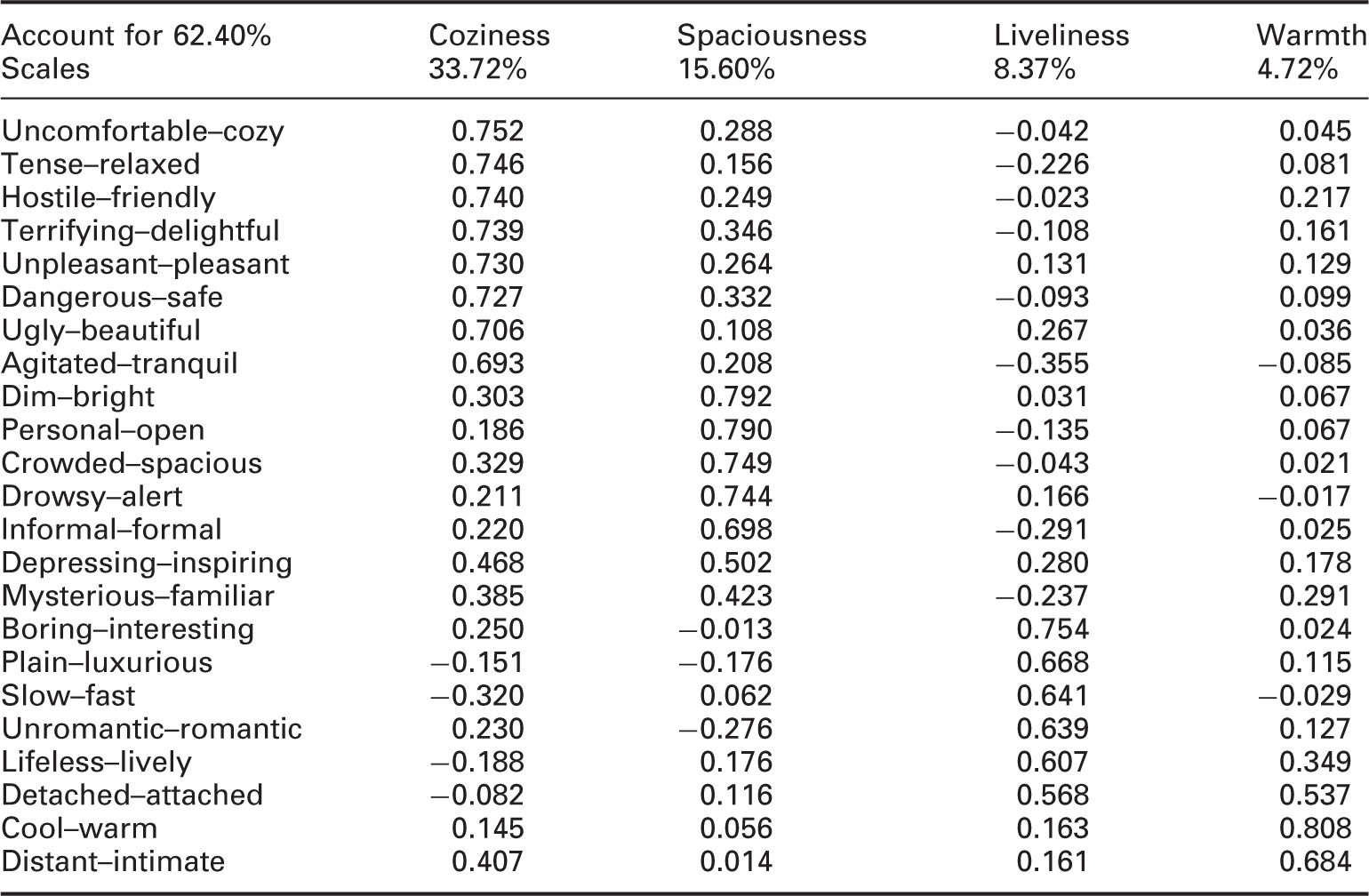
Through reviewing the meaning of scales contributing to each factor, and comparing factors’ components with previous studies, factor names can be suggested. Factor 1, which highly loaded with ‘uncomfortable–cozy’ and ‘tense–relaxed,’ was denoted as coziness. Factor 2 was named as spaciousness, because of the high factor loadings of ‘crowded–spacious,’ ‘personal–open,’ ‘drowsy–alert,’ ‘informal–formal’ and ‘depressing–inspiring’; ‘dim–bright’ is expected to have positive relationship between luminance and spaciousness. Factor 3, which consists of ‘boring–interesting,’ ‘lifeless–lively,’ was named as liveliness; ‘slow–fast’ is expected to have high correlation between dynamic lighting and liveliness. And Factor 4, including ‘warm’ and ‘intimate,’ was named as warmth; ‘cool–warm’ is expected to have a strong relationship between hue range and warmth. Warmth accounts for a small part of the total variance, so it has been omitted. Figure 4 shows the plots of scales between combinations of the three factors.
Scales plotted within the atmosphere factors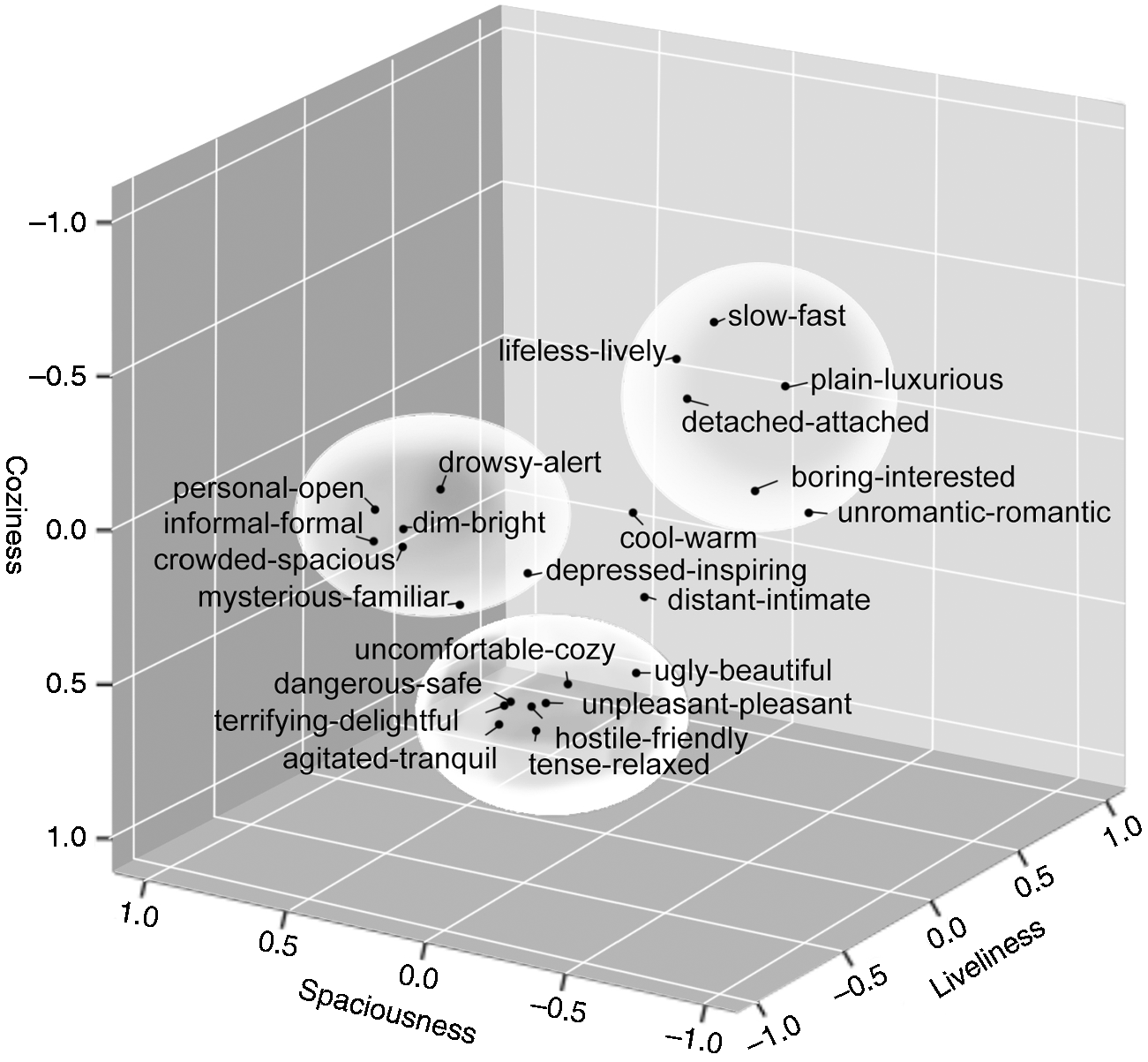
Cronbach’s alpha values for coziness (mean = 0.88, min = 0.75, max = 0.94), spaciousness (mean = 0.75, min = 0.55, max =0.88), liveliness (mean = 0.71, min = 0.62, max = 0.87) and warmth (mean = 0.63, min = 0.58, max = 0.85) indicate acceptable internal consistency for each dimension.
4.2. Gender and academic background
ANOVA analysis was used to test gender difference and academic background difference on atmosphere perception. As a result, no perception difference except for the coziness(p < 0.01) factor was found between males and females. As shown in Figure 5(a), females were more likely to feel coziness. For academic background, significant differences existed in the spaciousness and liveliness factors (both p < 0.01). As shown in Figure 5(b), observers from a design background were more likely to feel spaciousness and liveliness.
(a) Gender effects on coziness, (b) academic background effects on spaciousness and liveliness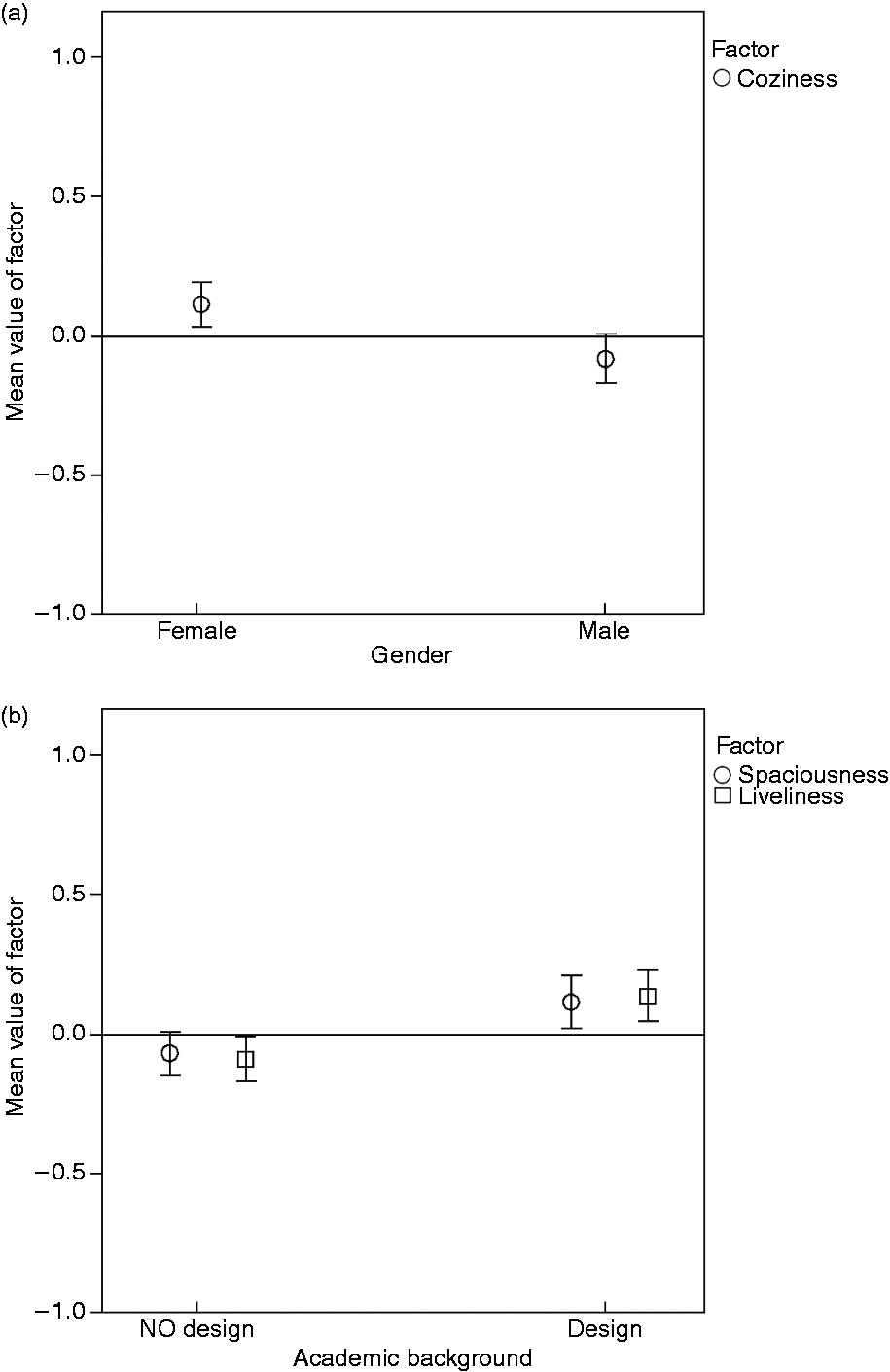
4.3. Relationship between lighting appearance and atmosphere perception dimensions
Effects of the ‘cool–warm,’ ‘dim–bright’ and ‘slow–fast’ scales on the lighting appearance dimensions were evaluated. Figure 6 shows mean values of Factor 1 to Factor 4 plotted against the lighting appearance ratings. Figure 6(a) shows that, the brighter the environment was, the higher coziness and spaciousness atmospheres were experienced. Figure 6(b) indicates warmer lighting would create a higher coziness, warmth and liveliness atmosphere. But when it got warmest, liveliness decreased slightly. Figure 6(c) shows that fast dynamic lighting helped to create liveliness, while reducing coziness.
Factor scores plotted against (a) ‘dim–bright,’ (b) ‘cool–warm’ and (c) ‘slow–fast’ rating. Error bar represents 95% confidence interval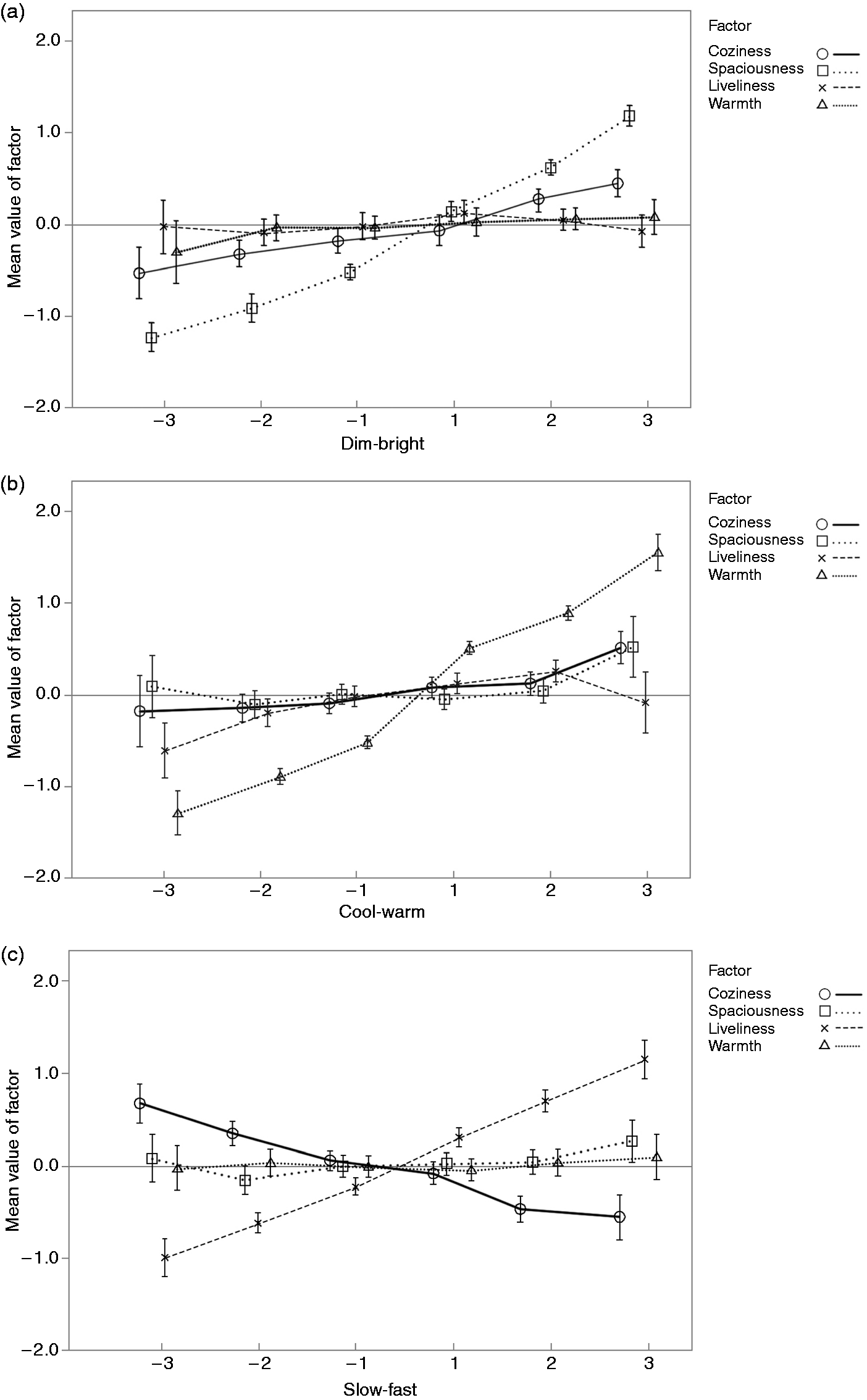
Effects of light appearance scales on each atmosphere dimension

4.4. Effects of luminance, chroma, hue range and speed
An overview of the effects of lighting parameters on the perception of atmosphere factors

A comparison of atmosphere perception dimensions

Table 8 shows the effects of lighting parameters on the perception of atmosphere factors. It can be seen that perceptions of coziness, spaciousness and warmth were all positively related to luminance. Chroma positively affected liveliness, but negatively affected coziness and spaciousness perceptions. Speed of dynamic lighting also had a positive effect on liveliness and warmth, however it negatively affected coziness. As for hue range, when there is more warm hue, the lighting atmosphere is perceived to have more liveliness and warmth, but less spaciousness.
Coziness is significantly related to luminance, chroma and speed. To generate coziness, the results indicate that one should increase luminance, or reduce chroma and speed. Spaciousness is significantly affected by luminance, chroma and hue range. A higher luminance, lower chroma and cool hue range could help increase a spacious atmosphere and the sense of arousal. For liveliness, effects of chroma, speed and hue range were all significant. Warmth was significantly affected by all the parameters except for chroma. Observers were inclined to feel warmer when the scene displayed a higher luminance, and warm hue range. Also, a medium speed reduced the perception of warmth compared to that produced by slow and fast speeds.
Major conclusions can be drawn from Figure 7. (1) By increasing luminance, a cozy, spacious and warm atmosphere was generated. Together with the positive relationship between ‘dim–bright’ and coziness; the relationship between luminance and coziness disagreed with those found in the previous studies.14,15 This will be discussed in the next section. (2) Results concerning chroma partially agreed with the finding of Wang et al.
9
that a higher chroma is perceived as more lively, but less detached. Contrary to Wang et al.
9
we found that a higher chroma provided a less cozy atmosphere. (3) By changing the hue range from cool to warm, the atmosphere became lively and warm, but less detached and arousing. The hue ranges barely affected the coziness perception. This is in agreement with Liu et al.’s finding
16
that coziness was hardly affected by the CCT of the sources used, but different from Vogels
13
who found that CCT had a negative correlation with the coziness. (4) By increasing dynamic speed, the atmosphere becomes more lively but less cozy. This is contrary from Wang et al.’s finding that medium dynamic speed was coziest.
9
However, spaciousness perception, which related to the sense of arousing and formal, has no significant relation with speed. Atmospheres created by fast speed are slightly warmer than those created by slow and medium speeds.
The effects of physical parameters on the atmosphere factors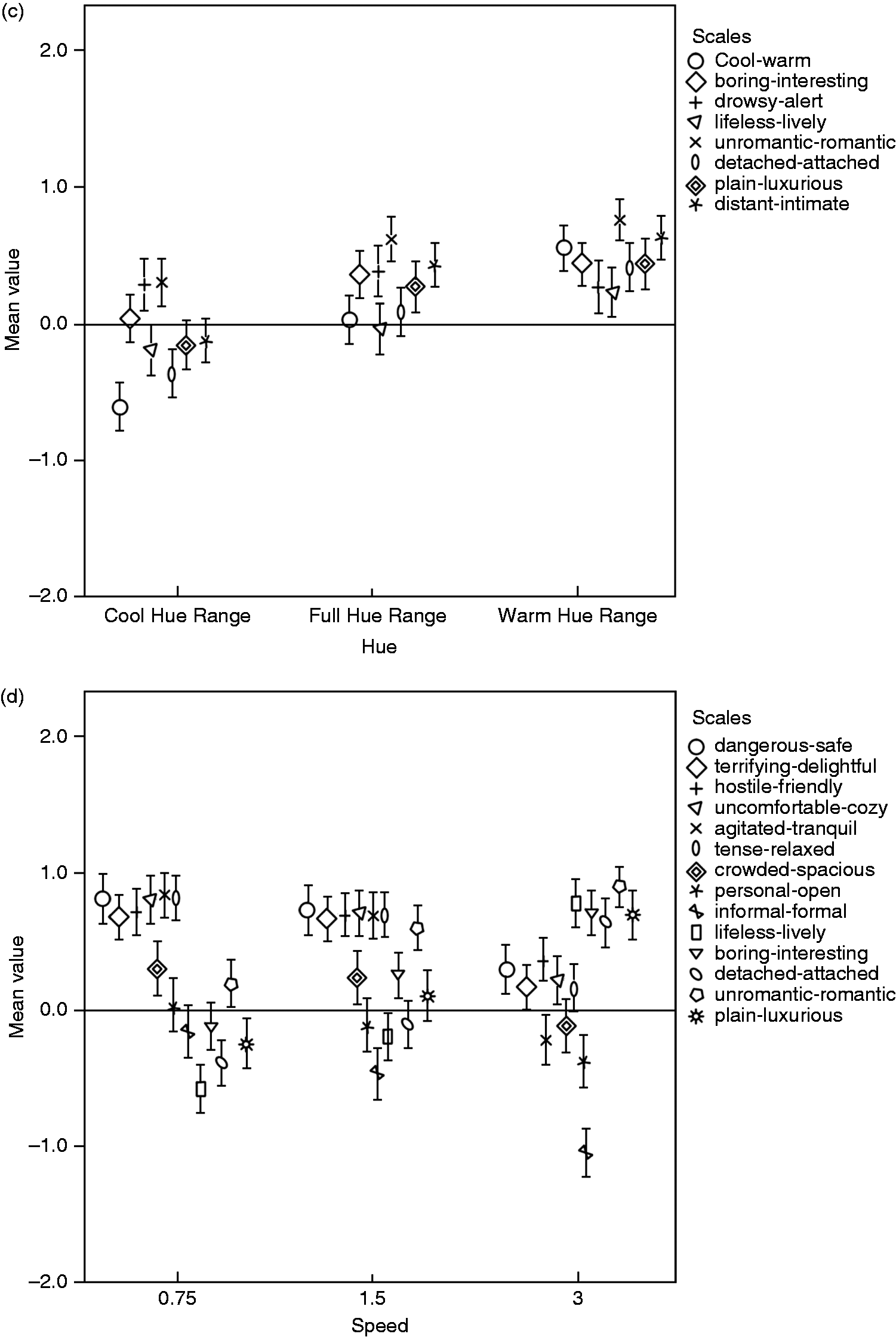
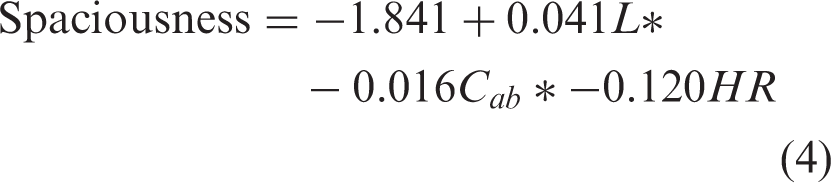
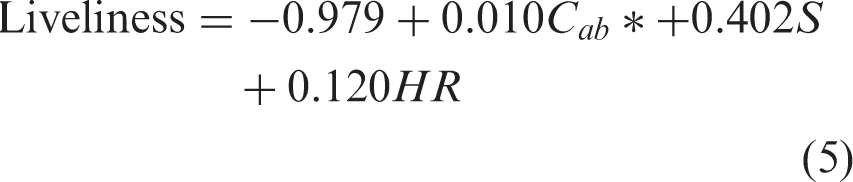
To further reveal how physical parameters work on the atmosphere perception, linear regressions were calculated. Equations (3) to (6) show the linear regression equations for physical parameters against atmosphere factors. HR standing for hue range, values as −1, 0 and 1 for cool range, full range and warm range, respectively. S standing for speed, values as 0.75 ΔEab/s, 1.5 ΔEab/s and 3 ΔEab/s respectively. L* stands for lightness and Cab* stands for chroma. The correlation coefficients applying to equations (3) to (6) are high with the values of 0.75, 0.97, 0.72 and 0.74, respectively.


5. Discussion
5.1. Atmosphere perception
Firstly, although light conditions and questionnaires were not same across the five studies, they all share the atmosphere factors of coziness and liveliness, also having highest loading factor in the present study. And they were similarly constructed. It confirms that coziness and liveliness are general atmosphere factors across dynamic and static lighting.
Table 9 lists the atmosphere perception dimensions from Vogels, 13 Erp, 14 Wang et al., 9 Liu et al. 16 and this study. Vogels, 13 Erp14 and Liu et al. 16 researched atmosphere of static lighting, while Wang et al. 9 and this study were on dynamic lighting. Both Vogels 13 and Erp’s 14 experiments were conducted in Dutch with Dutch people, while the other three were in Chinese with Chinese observers. Vogels, 13 Erp 14 and Wang et al. 9 applied single words in questionnaire, while Liu et al. 16 and this study applied word pairs.
Although light conditions and questionnaires were not same across the five studies, they all share the atmosphere factors of coziness and liveliness, also having highest loading factor in the present study. They were also similarly constructed. It confirms that coziness and liveliness are general atmosphere factors across dynamic and static lighting.
Secondly, tenseness, appearing in studies from Wang et al. 9 and Erp14 study, is absent in Liu et al. 16 and the current study. This may be caused by the difference of questionnaire forms. Liu et al. 16 and this study used word pairs form, while Wang et al. 9 and Erp14 used single word form. However, most words related to tenseness in Wang et al. 9 and Erp14 can be found in Liu et al.’s 16 word-pairs. This indicates that tenseness may be contained in this study paired with coziness.
Thirdly, spaciousness in this study is consistent with space impression of spatial impression studies from Flynn et al.11,12 It also shares terms of detachment from the study of Erp, 14 such as ‘business,’ ‘formal’ and ‘spatial.’ Both are considered to be associated with ‘less emotional,’ ‘isolation.’ So, in some way, spaciousness can also be interpreted as detachment.
Finally, a warmth atmosphere, which related to ‘cool–warm’ perception, was extracted as expected. However, low variance loading implied warmth may not be a primary atmosphere.
5.2. Discussion about light parameters’ effects
As shown in Figures 6 and 7 and Table 7, coziness is positively correlated with luminance. This is contrary to findings from previous studies.14,15 The following explanations are possible.
It is due to the difference between pair-wise and single-term scales. Coziness in this study has an opposite meaning with ‘tense,’ as used by Wang et al.,
9
Bronckers
28
and Erp.
14
In other words, the negative relationships between luminance and tenseness found in Wang et al.
9
agrees with our finding. It is due to the difference between static lighting and dynamic lighting. In the studies by Custers et al.
15
and Erp14 that used static white light, a brighter lighting produced less cozy or more tense atmosphere. In Bronckers
28
using static coloured light, luminance hardly affected coziness. This indicated that luminance effect on coziness for dynamic coloured lighting is opposite to that for static lighting. The discrepancy may stem from cultural difference between Dutch and Chinese. This was also mentioned by Wang et al.
9
and Liu et al.
16
To confirm this, independent investigation is required.
To confirm luminance’s effect on coziness, further experiments are required. Coziness is also negatively correlated to speed and chroma, and hardly affected by hue range. This indicates that, the closer a dynamic lighting gets to static and neutral, the cozier the lighting atmosphere will be. A similar effect can also be found with static coloured light 28 that atmosphere will be less cozy if saturation increases.
For liveliness perception, the positive effects of speed 9 and warm hues 14 are in line with previous studies. However, Wang et al. 9 pointed out that chroma hardly affected liveliness perception for dynamic coloured lighting over full hue range. We found that liveliness increased with chroma. This implies that chroma’s effect on liveliness may be strengthened to some degree by hue range (cool or warm).
Based on the former discussion, spaciousness can be interpreted as detachment.9,14 In Erp’s research, 14 detachment is positively related to luminance, and negatively related to ‘cool–warm’ perception. In Flynn and Spencer’s research, 11 cool white light is more spacious and clear. The same effect was also found in the present spaciousness perception. The consistency partially supports the corresponding relationship between spaciousness and detachment.
Warmth is mainly impacted by hue range, which is consistent with perception results under white light with different CCT 11 that low CCT white light is more visually warm. In addition, luminance and speed also help to create a warm atmosphere. Low luminance and fast speed help increase warmth.
The impact of luminance on preference is in keeping with Heerwagen’s finding 29 that luminance affected preference. However, chroma, speed or hue range had no significant impact on preference.
Some perception differences may exist between different genders. Males were more sensitive to dynamic lighting, but females were inclined to dynamic light but felt comfortable, relaxed and safe. Hence, dynamic lighting may create different atmospheres for different genders, which is consistent with gender effects of non-verbal communication,30,31 emotional intensity 32 and facial reactions to different emotional stimuli, 33 as well as the gender differences found in research from Wang et al., 9 and Knez and Enmarker. 5 Atmosphere perception differences may also exist between observers with and without a design background. However, further investigations with larger group of samples on the atmosphere perception between genders and between type of expertise are required to exclude these possibilities.
6. Conclusion
This paper reports a 30-observer experiment investigating the atmosphere perception of dynamic lighting over warm and cool hue ranges. Four atmosphere factors were extracted: coziness, spaciousness, liveliness and warmth. Comparison with previous studies showed that, coziness and liveliness are common atmosphere factors across different light conditions and cultures (Dutch and Chinese).
Correlation analysis revealed the effects of lighting properties on atmosphere factors. High speed and high chroma are helpful in creation of liveliness, while low speed and low chroma can increase coziness. Hue range also weighs high on the atmosphere perception. Both cool hue range lighting and high luminance can produce spaciousness, which related to the attributes of alert, spatial and formal. Application of a warm hue range helps to create warmth as expected.
Coziness is positively correlated with luminance. This is contrary to findings from some previous studies. Dynamic lighting and culture differences (Dutch and Chinese) are possible reasons to explain the discrepancy. However, further experiments are required. Besides, the atmosphere perception between genders and expertise need to be clarified.
Footnotes
Declaration of conflicting interests
The author(s) declared no potential conflicts of interest with respect to the research, authorship, and/or publication of this article.
Funding
The authors disclosed receipt of the following financial support for the research, authorship, and/or publication of this article: The author Bing Li was supported by National Key Technology Research and Development Program of the Ministry of Science and Technology of China (Grant No. 2015BAF14B00), and Key Program of National Natural Science Foundation of China (Grant No. 61332017).