







Abstract
With increased consumers’ demand for safe and healthy food, LED lighting for photobiology has received wider attention. In order to prolong the preservation time of the post-harvest lettuce, this paper documents a novel light source designed for preservation based on the chlorophyll absorption spectrum. Effects of intermittent exposure (35 μmol m−2 s−1) on sensory quality and chlorophyll content in fresh lettuce were investigated during 3 days storage at 20°C ± 1°C and 60% ± 1% humidity using dark as the control. The results show that the lighting reduced the colour difference value of lettuce by 23.5% compared with the dark. The content of chlorophyll was 19.7% more than in the dark. The lighting with the novel light source inhibited the decline in the colour difference value −a/b of lettuce and delayed the degradation of chlorophyll.
1. Introduction
The use of pesticides has turned into a necessary component of farming systems throughout the world. 1 With the rapid development of agriculture, the use of pesticides, fertilisers and other chemical reagents has increased agricultural production, but it has caused serious harm to the ecosystem and threatened human health.2–4 Consumers have become more interested in healthy, safe and green vegetables. LED lighting for photobiology, which is an integrated technology to improve agricultural production efficiency and promote human health through the energy transfer of light, has been gaining a lot of attention in the field of food. 5 In plant growing, LED lighting for photobiology has been used in plant factories, which are highly automated, completely closed production systems in horticultural production, to improve the efficiency and quality of plant growth in a safe and green method, achieving high yields and quality production. 6
Sunlight is the main source of energy for growing crops, but the light in the photosynthetically active radiation range, between approximately 400 nm and 700 nm, is not used uniformly, where only 4.6% to 6% of the total radiant energy from the sunlight is absorbed by plants for photosynthesis.7,8 The morphology, physiology, photosynthetic efficiency and flowering capacity of plants are influenced by different light qualities. 9
Plants contain many different plant pigments, such as chlorophylls, carotenoids and anthocyanins. The plant pigments play an important physiological and ecological role in plants. Crop yield is the result of the cumulative photosynthetic rate during the growing season. Photosynthetic pigments, such as chlorophylls and carotenoids, play pivotal roles in both light harvesting and photoprotection of the photosynthetic apparatus. Pigments such as anthocyanins, though not involved in light capture, act as photoprotectants, absorbing harmful UV rays, reducing photoinhibition and photodamage.10–12
Plant factories had been using traditional agricultural lighting sources such as incandescent, high-pressure sodium and fluorescent lamps in the past. 13 Although these light sources enable plants to be grown properly, the quality of light from these light sources is so mixed that most of the wavelengths in their spectrum have minimal effect on boosting crop growth.14,15 At the same time, electrical energy consumption is extremely high for plant factories. 16 Therefore, these light sources are not the most suitable electric light sources for plant factories. With the development of technology, LEDs are considered a prospective light source for agricultural lighting in the future. LEDs have a wide range of wavelength types that coincide with the spectrum of plant photosynthetic and photomorphogenic responses while having the advantages of adjustable spectrum, small size, low heat, high radiation and strong resistance to vibration.17,18
In 1982, red LEDs were used for tomato supplementation in greenhouses in Japan. 19 Since then, LEDs have been used as a light source for production in plant factories. Yanagi and Okamoto 20 discovered that the combination of red LEDs and blue LEDs resulted in a significant improvement in spinach morphological indicators compared to fluorescent lights. Wang et al. 21 showed that the best growth of floral was with LEDs compared to incandescent lamps, fluorescent lamps and high-pressure sodium lamps. As study into plant growth continues, researchers have discovered that technology of light irritation is available for the preservation of fruit and vegetables. 17 Broccoli irradiated with red LED for a period of 5 days had slower degradation of yellowing and chlorophyll compared with broccoli in darkness for an equivalent duration. 22 Moreover, broccoli treated with red LED (660 nm) was more green than when illuminated with blue LED (470 nm) or white LED (430 nm to 730 nm). 23 Yellow LED and blue LED were shown to inhibit the growth of microorganisms in rocket leaves, whereas green LED and white LED alleviated chlorophyll degradation and increased carotenoids content in red chard. 24 White LED treatments at 10 μmol m−2 s−1 over a period of 7 days were able to maintain the chlorophyll and vitamin C content and maintain the appearance of bok choy compared with darkness. 25 At the same time, white LED showed the best preservation of lettuces that were irradiated for 21 days and had a greater content of chlorophyll and the total soluble solid after irradiation at 10 μmol m−2 s−1, compared with the red (630 nm), blue (450 nm) and green (526 nm) lighting. 26 Over an experimental period of 21 days, the tomatoes pretreated with blue LED (440 nm to 450 nm) had delayed softening. 27
Currently, the research in LED lighting for photobiology is focused on plant growth, poultry farming, aquaculture, health lighting and medical aesthetics, whereas the preservation of fruits and vegetables is still in the exploration stage. The demands of different vegetable species for light quality and light intensity are different, resulting in LEDs not being used appropriately. 28 Therefore, this study designed a novel light source to investigate its effect on post-harvest lettuce preservation quality, in order to provide a theoretical basis for improving the quality of post-harvest lettuce and prolonging the storage period.
2. Materials and methods
2.1 The novel light source
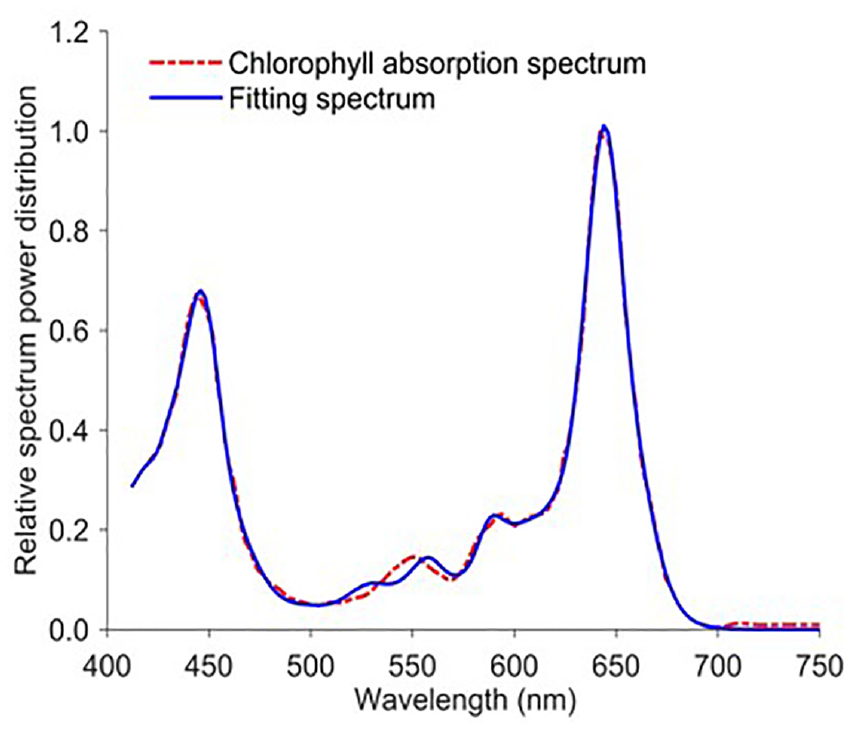
Post-harvest vegetables are still living individuals. 29 Under the appropriate light conditions, post-harvest vegetables are still able to accumulate photosynthetic material. Photosynthesis of plants absorbs about 60% of the light energy in the visible range, with the wavelengths 600 nm to 700 nm in the red–orange band and 400 nm to 500 nm in the blue band being the peak absorption regions. Plants accumulate photosynthetic material by absorbing light energy and converting it into chemical energy. The strongest absorption of the chlorophyll absorption spectrum is concentrated in the red light part of 640 nm to 660 nm and the blue light part of 430 nm to 450 nm. Chlorophyll a has two absorption peaks respectively at 430.6 nm and 660.9 nm. Chlorophyll b also has two obvious absorption peaks at 456.9 nm and 643.8 nm. 30 Therefore, the novel light source, where the spectrum corresponds to the plant absorption spectrum, probably has the ability to promote the photosynthesis of the lettuce after harvesting, which delays chlorophyll degradation, leaf yellowing and senescence.
Based on the visible light range, the spectrum of the novel light source for the post-harvest lettuce preservation was constructed with narrowband LEDs by means of the spectral superposition principle and the least squares method according to Equation (1):

where Φs(λ) represents the spectrum power distribution, Φ i (λ) represents the spectral power distribution of an LED (i = 1, 2, …, n) and ki is the weight of LEDs for the matching spectral.
For a better comparison of the similarity between the fitted spectrum and target spectrum, the evaluation metric R2 for the spectral fitting was calculated as shown in Equation (2):

where y is the power distribution of the target spectrum, ye is the power distribution of the fitted spectrum and n is the wavelength range. R2 value is less than or equal to 1. When the value of R2 is closer to 1, it means that the fitted spectrum and the target spectrum are more similar. 31
Table 1 shows the number of LEDs required in the optical design, showing that a total of 17 narrowband LEDs were required for the best combination. The fitting evaluation index R2 was 0.997.
Parameters of narrowband LEDs
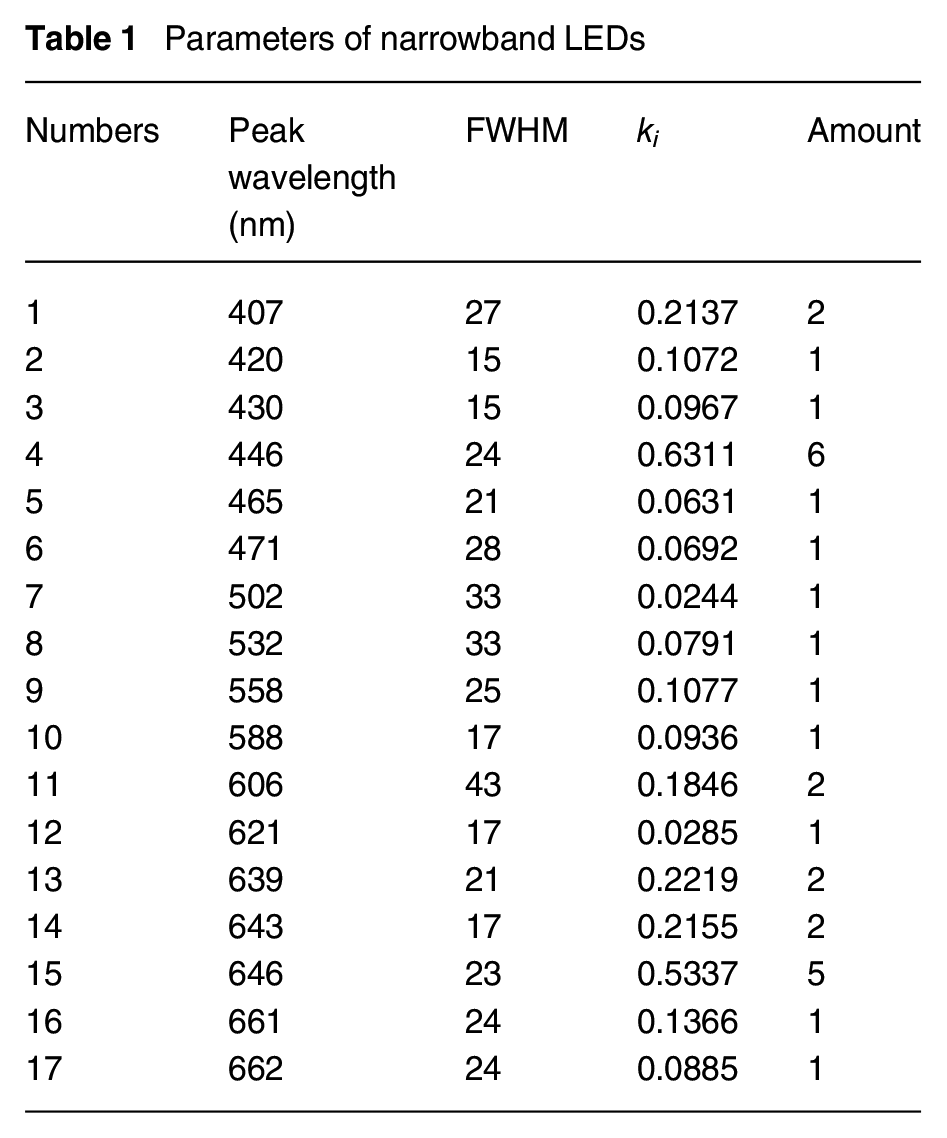
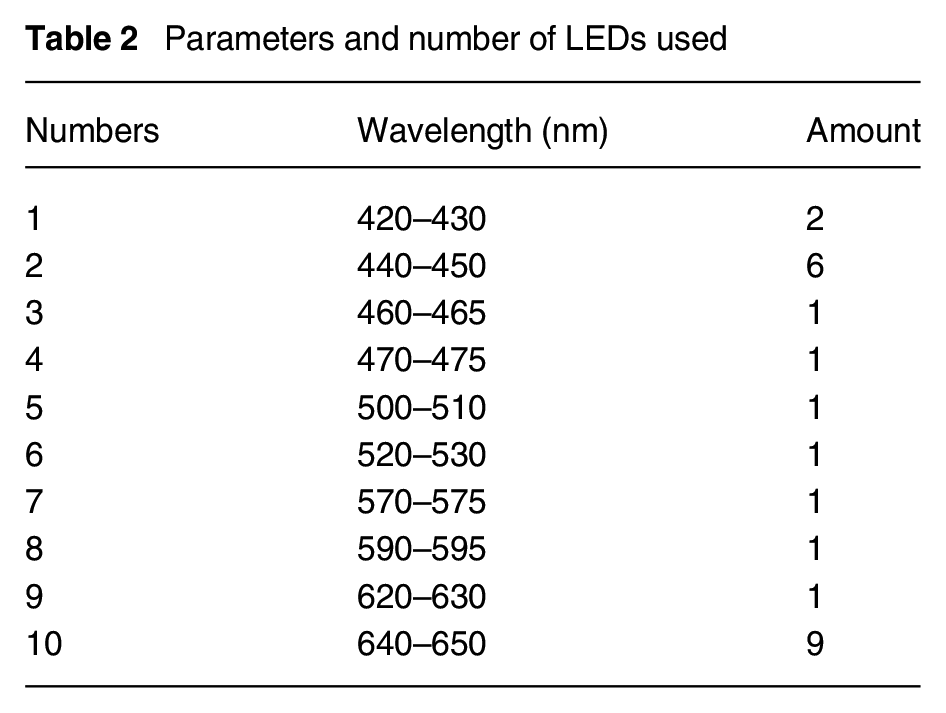
There are limited varieties of narrowband LEDs in practical production. The LEDs in the simulation could not be bought in the exact same model, so the quantity was decreased. In order to match the design results as closely as possible, the narrowband LEDs selected contained the main wavelengths from the simulation results. Table 2 shows the parameters of the LEDs which were used for the experimental light source. There were 10 kinds of LEDs used for the novel light source, with a total of 24 pieces. The major LEDs with the highest numbers had peak wavelengths of approximately 440 nm to 450 nm and 640 nm to 650 nm, corresponding to the main wavelengths of the novel light source design results (Figure 1).
Parameters and number of LEDs used
Comparison of fitting spectrum and chlorophyll absorption spectrum
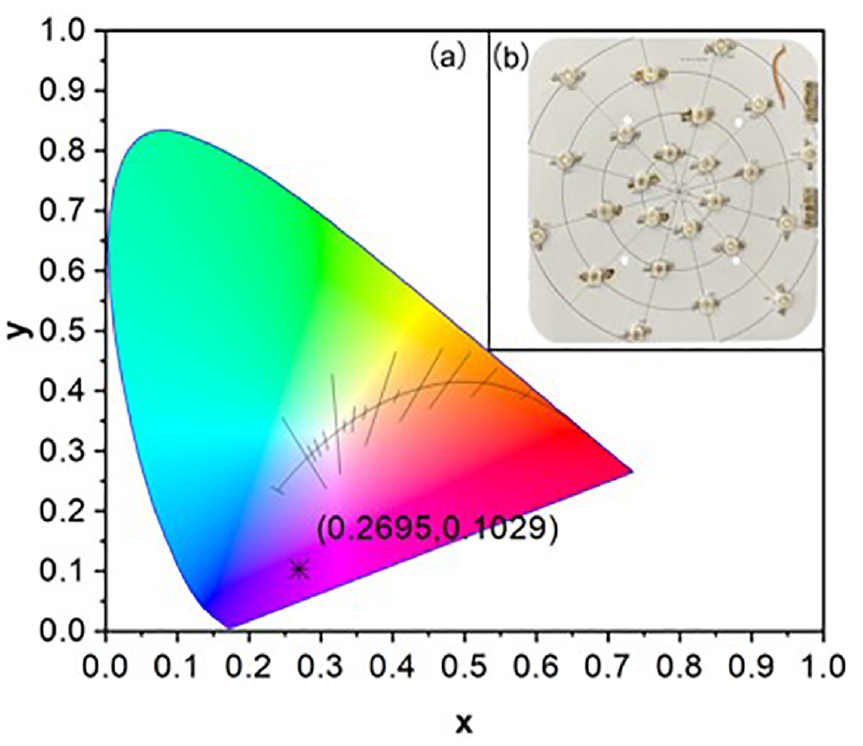
In Figure 2(a), the chromaticity coordinates of the experimental light source were (0.2695, 0.1029). Figure 2(b) shows the appearance of the novel light source. All the LEDs were placed in four concentric circles. The first concentric circle had a radius of 20 mm with the radius of each concentric circle differing by 20 mm. Six LEDs were arranged in the same circle with a circumference angle of 60°.
(a) The chromaticity diagram of the experimental light source; (b) image of the experimental light source
2.2 Plant material treatments and measurement
2.2.1 Plant material treatments
Lettuce (Lactuca sativa L.) was selected from freshly picked vegetables at the market. Samples were of similar size, without obvious pests and mechanical damage. Measurements were taken at random locations on the lettuce leaves with marking size 10 mm × 10 mm, at two locations each. Two treatment boxes (500 mm by 500 mm by 700 mm), each housed three lettuces. Two treatment boxes were placed in the same environment at a room temperature of 20°C ± 1°C and humidity of 60% ± 1%. Lighting group was treated with lighting for 12 h day−1 for three days. The photosynthetical photon flux density (PPFD) of the light source was 35 μmol m−2 s−1 with a uniformity of 0.92, which was measured by the plant lighting analyser (PLA20, EVERFINE Corporation, Hangzhou, China). The measured surface size was 300 mm by 300 mm, with the distance from the light source at 700 mm.
2.2.2 Weight loss
Percent weight loss is an important indicator of change during the preservation of vegetables. Percent weight loss was calculated as shown in Equation (3):

where X0 is the initial weight and X is the weight after storage. 21
2.2.3 Colour
Colour difference value provides a visual indication of the change in colour of vegetables during storage, with a larger −a/b indicating greener vegetables. 32 The a* represents the red–green colour of the object. Meanwhile, b* indicates the yellow–blue colour of the object. The average of a* and b* was obtained for each marker point by repeating the measurement three times (CS-2000, Konica Minolta, Japan).
2.2.4 Chlorophyll
A portable chlorophyll meter (TYS-A, Zhongkeweihe, Beijing, China) was used to determine the relative chlorophyll content of the lettuces. The average of three measurements was repeated for each marker point.
The colour difference values, chlorophyll content and weight loss of the vegetables were measured at 12 h intervals.
2.3 Statistical analysis
The Kruskal–Wallis test was used for statistical analysis. All colour and chlorophyll measurements were normalised to the hour 0 level (before treatment) and expressed as the percentage of hour 0 level. 33 All figures were generated by Excel, MATLAB GraphPad Prism 8, Photoshop CC 2017 and Origin 2021.
3. Results and discussion
3.1 Effect of weight loss
As the duration of storage increases, there is a gradual increase in the loss of water from leafy greens. High rates of weight loss in green leafy vegetables lead to dehydration, resulting in reduced leaf turgor and increased susceptibility to physical damage. The sensory quality of green leafy vegetables is one of the most important factors for consumers to consider purchasing. In Figure 3, as the storage time increased, the weight loss rate of each experimental group showed a gradually increasing trend, which was always higher in the lighting group than in the dark group with the highest rate of weight loss between 12 h and 24 h. There was no significant difference (p > 0.05) in the weight loss rate of lettuce in the lighting group compared to the dark group during the whole storage period.
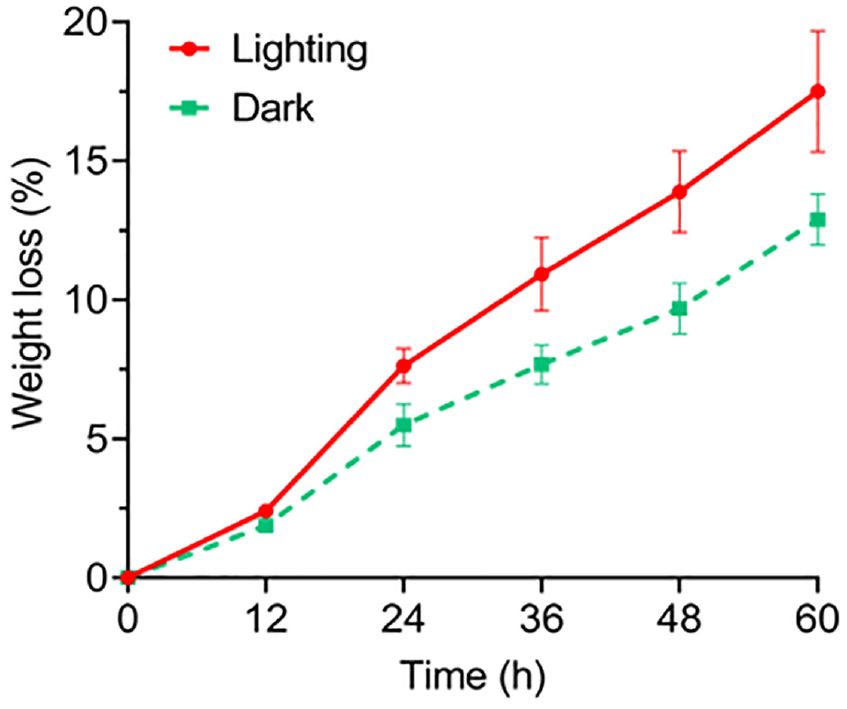
Effect on weight loss of lettuce. Values are means ± SEM (standard error of the mean) (n = 3)
The PPFD required for post-harvest preservation is low, which generally ranges from 10 μmol m−2 s−1 to 80 μmol m−2 s−1 used in various research reports. 9 The PPFD used in this experiment was 35 μmol m−2 s−1 at a lower intensity. Twelve-hour intervals of exposure were used to avoid causing high weight loss rates in the light group. The results of this study are similar to Charles et al., 34 in which weight loss up to 30% of the initial weight was observed in lettuce leaves stored for 7 days while exposed to continuous white light supplying 50 μmol m−2 s−1 to 150 μmol m−2 s−1. The results showed that LED light still favours accelerated water loss from vegetables with the effect increasing the longer the treatment time, even though they have the advantages of high radiation and low emissions of radiant heat. 18 In addition to field conditions, light is also a regulator of stomatal opening during storage. 35 Lettuce under irradiation maintains a higher stomatal opening ratio, which accelerates the rate of weight loss. 36 However, light may also have the opposite effect of a modulatory mechanism that prevents dehydration by delaying fine senescence and reorganisation. 37
3.2 Effect of colour
Figure 4 shows the visual external aspect of lettuce in the light and dark treatment groups. After 60 h, the leaves of the lettuce in the dark group showed yellowing, and a little browning and slightly rotting. The colour difference visually reflects the colour change of vegetables in the storage process with a numerical value. The −a/b value was used to reflect the degree of green retention of lettuce due to the yellowing of lettuce during storage after harvesting. Figure 5 illustrates the trend of −a/b values of lettuce. In the lighting group, the −a/b values of lettuce showed an increasing and then decreasing trend with a peak value at the 12th hour. Lettuce under dark conditions −a/b values showed an overall decreasing trend indicating a gradual decrease in freshness during storage. There was a gradual shift from green to yellow. The −a/b value of the lighting group declined slowly throughout the storage period, which produced a significant difference (p < 0.05) from the rapidly declining dark group. Overall, the final values of −a/b for the lettuces treated with lighting were higher than for the dark group by 23.5%, which is similar to the results of the study by Kasim and Kasim. 26
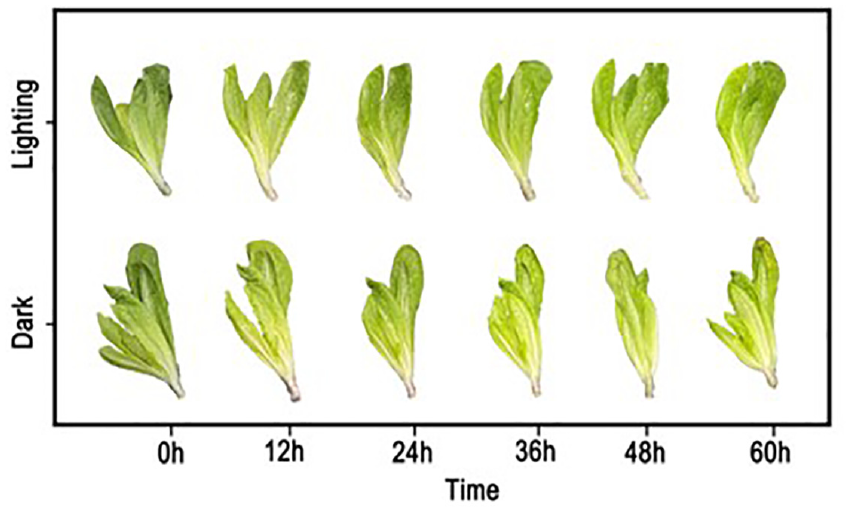
Visual external aspect of lettuce in the lighting and dark
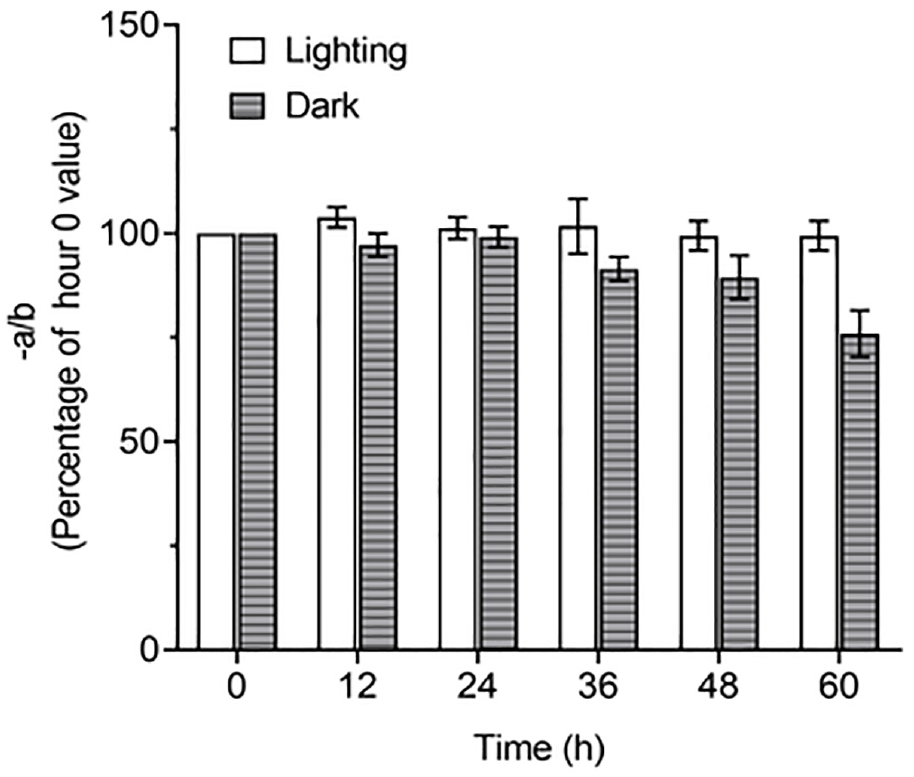
Effect on −a/b of lettuce. Values are means ± SEM (n = 3)
3.3 Effect of chlorophyll
The loss of chlorophyll is an indicator of the senescence of vegetables. As shown in Figure 6, the chlorophyll content of lettuce showed a decreasing trend. The degradation rate of chlorophyll content was lower in the lighting treatment group compared to the dark group. At the end of storage, the chlorophyll content of the light group was 19.7% higher than the dark control group. There were significant differences between the two groups throughout the preservation period (p < 0.05). From the results, the lighting group reduced the loss of chlorophyll to a certain extent after 60 h, indicating that lighting has an effect on slowing down the ageing of the post-harvest lettuce. These are in accordance with the results of Braidot et al. 38 who used white light treatment of lettuce to delay chlorophyll degradation.
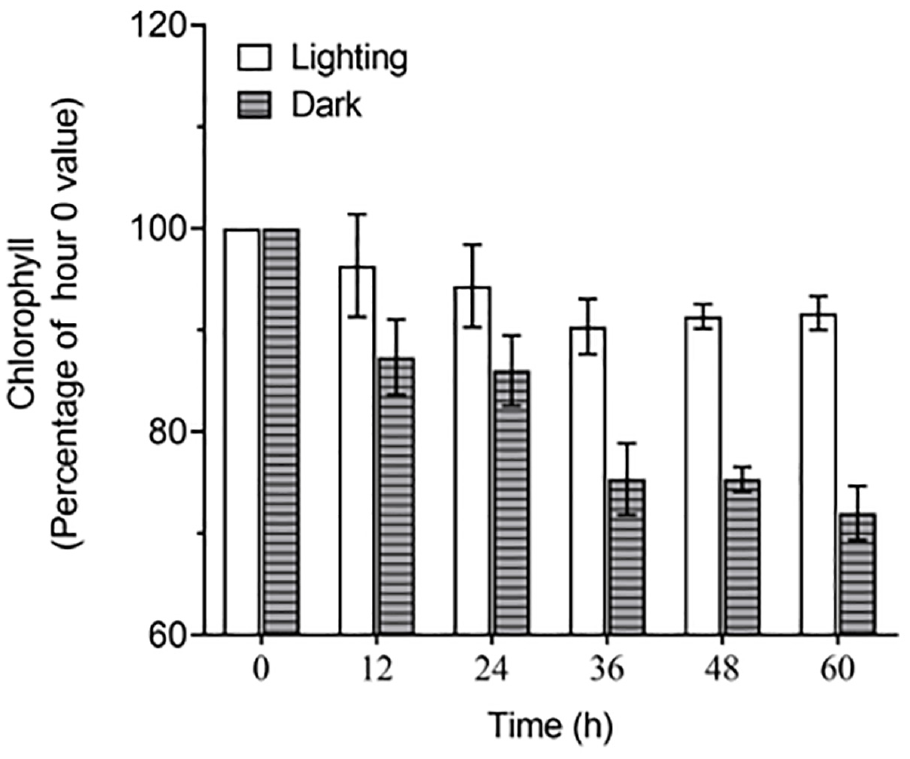
Effect on chlorophyll of lettuce. Values are means ± SEM (n = 3)
Horticultural crops are severely stressed after harvest owing to a reduction in sources of energy, nutrients, hormones and water, which leads to the rapid initiation of senescence. 39 Initiation of senescence is highly dependent on light supply, among other things. 40 During storage, the quality of crops deteriorates due to the yellowing of leaves, which is also a result of chlorophyll degradation. Leaf yellowing results from the degradation of chlorophyll, which is a major post-harvest problem in lettuce. Previous studies have demonstrated that light irradiation inhibits chlorophyll degradation and also decreases chlorophyll-degrading enzyme activity and gene expression.41,42 Kasim and Kasim 26 showed that all LED treatments significantly reduced yellowing in lettuce after 21 days at 5°C; white LED treatment significantly increased the chlorophyll content. Jin et al. 43 found that both fluorescent and LED green light treatments effectively delayed yellowing and senescence in broccoli florets. The results of the present experiment also showed that a dark environment accelerates chlorophyll degradation and senescence in post-harvest lettuce. Light is effective in delaying the degradation of chlorophyll in post-harvest lettuce.
4. Conclusions
Vegetables are usually placed in dark conditions during post-harvest storage, distribution and home refrigeration, which accelerates chlorophyll degradation and reduces vegetable quality such as colour, chlorophyll and Vc content. A novel light source was designed for the post-harvest lettuce preservation based on the chlorophyll absorption spectrum. Through the preservation experiments, differences in the effect of irradiation with this light source versus dark storage on lettuce quality were analysed. The results of the experiment showed that the novel light source irradiation increased the rate of weight loss in lettuce, but delayed yellowing and chlorophyll senescence, with colour difference values and chlorophyll degradation lower than the dark group by 23.5% and 19.7%.
Lighting for post-harvest preservation is safe, green and non-polluting, as well as simple and inexpensive to operate, satisfying consumer demand for safe, inexpensive and environmentally friendly food. Although the present study has some valuable results, there are still some limitations. The current experimental environment was only a simplified test that could not fully reflect the complex and variable environmental conditions in the real environment. In order to more accurately simulate the actual preservation process, the experimental environments that are closer to real conditions should be considered for future research. And more research on green leafy vegetables will be needed to provide more theoretical support for LED lighting preservation. The future research will better promote the development of the preservation technology of light radiation, which would provide a useful boost to the practical application in the field of vegetable preservation.
Footnotes
Declaration of conflicting interests
The authors declared no potential conflicts of interest with respect to the research, authorship, and/or publication of this article.
Funding
The authors disclosed receipt of the following financial support for the research, authorship, and/or publication of this article: The work was financially supported by the General Project of Liaoning Provincial Education Department (JYTMS20230415).
