







Abstract
Based on the idea that schools are important socializing settings for adolescents (Gottfredson, 2001), the school contextual version of General Strain Theory (Agnew, 1999) is tested in this article. The main hypothesis of this study is that strain at the school level affects individual offending by creating individual strain. Findings suggest that school contextual effects differ: convincing contextual effects are found for violent offending but not for general offending. Furthermore, although the school mean level of strain does significantly affect individual violent offending, this effect does not proceed by creating individual strain. It is therefore suggested that the school mean level of strain either has a direct effect on violent offending or influences other important individual offending mechanisms such as social learning or lifestyle risks.
Introduction
This article presents a multilevel test of key hypotheses derived from the contextual version of Agnew’s General Strain Theory (known as ‘MST’) to explain adolescent offending. 1 The study follows a tradition of research towards contextual explanations of offending, which, in the case of adolescent offending, has focused predominantly on the residential neighbourhood and the school of young people. Recent European studies, however, have shown that the neighbourhood environment is less relevant in explaining adolescent offending (Pauwels, 2007; Rovers, 1997; Weijters, 2008). Consequently, the focus has moved to the impact of the school. Considering how much time most young people spend at school every day, this context may be more important in explaining their behaviour. In this case, the question is why schools should matter, that is, which school characteristics are of theoretical importance in explaining individual differences in adolescent offending.
In this research, the impact of the school context is analysed from a strain perspective. Although the contextual version of Agnew’s General Strain Theory focused initially on neighbourhood effects (Agnew, 1999), this theoretical model can be applied to the school context as well, because schools are important ecological settings in which adolescents are socialized (Gottfredson, 2001; Pauwels, 2010).
Agnew’s General Strain Theory
The main argument of Agnew’s General Strain Theory (GST), which he first published in 1992 and elaborated on in 2006, is that offending is caused by strain. Strain is conceptualized as the experience of stressful events producing negative emotions such as anger, fear and depression. Agnew (1992) defines three possible sources of strain: failure to reach positively valued goals (for example, failure to achieve material wealth); negative events or stimuli (for example, criminal victimization); and deprivation of positive stimuli (for example, arising from the death of a beloved person). In Agnew’s conceptualization (2006a, 2006b), these events can either serve as a direct motivation to offend or have an indirect effect by affecting other causal mechanisms of offending, such as social learning.
Strain serves as a direct motivation to offend because of the frustrations and the negative emotions it evokes in the individual, especially if the strain is perceived as unfair. These negative emotions pressure the individual to take corrective action. In this case, offending behaviour is a strategy to cope with these negative emotions and/or to end the strain (Agnew, 1992, 2006a). Strain may also indirectly relate to offending. In this case, Agnew (2006a) stresses the chronic or repeated experience of strain. This kind of exposure increases the chances of offending through: (1) the reduction of social control; (2) the social learning of offending; (3) the reduction of the ability to cope with problems in a lawful way; and (4) the production of a negative emotional state and/or low moral constraints in the individual (Agnew, 2006a: 48). It is because of these mechanisms that the individual will have a higher risk of offending: strain functions as a cause of the causes of offending (Agnew, 2006b: 107f). This article, however, focuses solely on the motivational aspect of strain, analysing offending as a way to cope with unpleasant experiences.
MST as a contextual theory of delinquent behaviour
In developing GST, Agnew (1999) not only focused on explaining individual variance in offending, he also analysed neighbourhood influences on individual offending behaviour. For this reason, he created a contextual version of GST, which, even though it includes a contextual effect of strain on individual offending (Agnew, 1999: 128), has consistently been called ‘Macro General Strain Theory’ (MST) in the literature. The main assumption of this theory is that high concentrations of offending in certain neighbourhoods result from high strain concentrations in these neighbourhoods (Agnew, 1999). More specifically, certain neighbourhoods: (1) attract more strained individuals (as a compositional effect); and (2) produce more strain (as a true contextual effect).
However, recent European studies have generated mixed evidence for contextual neighbourhood effects, indicating that the residential area might not be as important as was initially hypothesized. 2 Based on these findings, it is suggested that studies need to focus on ecological settings in which adolescents effectively spend their time (Pauwels, 2007). Because schools constitute social environments in which adolescents are ultimately socialized, school environmental characteristics may be more important in explaining individual offending (Gottfredson, 2001). Accordingly, studies examining school influences overall indicate that school contextual effects on individual offending are small but significant (for example, Bruinsma, 1990; Felson et al., 1994; Pauwels, 2010; Vynckier and Pauwels, 2010; Wilcox and Clayton, 2001). 3 Therefore, some scholars (Brezina et al., 2001; Cheung and Cheung, 2009; Hoffmann and Ireland, 2004) have explored the possibilities of applying MST to the school context. In this case, both compositional and contextual influences are highlighted.
Why would schools matter in the production of offenders?
Certain schools may attract more strained individuals (compositional effect)
Certain schools may attract an increasing number of adolescents from disadvantaged families because of the courses they offer, their location and their reputation. Owing to their deprived situation, these families might be less likely to stimulate their children to engage in the social competencies and ambitions that are essential to be successful at school (Vettenburg et al., 2002). Therefore, these adolescents might have worse academic results, possibly causing them to be less motivated to participate in the school system, or even to develop problem behaviour at school. As a result, socioeconomically disadvantaged youth might be more likely to change schools or be expelled. As a consequence, they end up in the same ‘last resort’ schools. In this way, segregation based on the students’ socioeconomic disadvantage might be developed and maintained between schools (Vettenburg et al., 2002).
From an MST perspective, this segregation may partially explain why schools hold different concentrations of strained students. Socioeconomic deprivation is related to a wide range of strain for young people. Owing to deprivation in their family, young people might be denied certain luxuries, or they might have to work in their spare time, causing them to experience strong feelings of injustice and/or anger when they compare their situation with that of their peers (Bernburg et al., 2009). Furthermore, socioeconomic deprivation is related to familial strain experiences such as parental fighting, divorce, excessive alcohol consumption and unemployment (Agnew, 1999). Finally, the negative interactions with the school system that were described above may create strong feelings of injustice, inequality and futility in young people (Van Houtte and Stevens, 2008). Consequently, high concentrations of socioeconomic deprivation go hand in hand with high concentrations of ‘strained’ youth in school. Since strain leads to an increase in offending, ‘strained’ schools may therefore have a higher concentration of offenders.
Schools hosting a high concentration of strained individuals may become strain producing (contextual effect)
However, according to MST, differential composition is not the only reason why schools differ in offending rates. The school environment is an important behavioural setting that may influence individual offending as well, independently of individual variables. Every school develops a unique school culture. Through this culture, attitudes, preferences and opinions are shared among students (Elchardus, 2002). Thus, in schools with a high concentration of strained individuals, the school culture may function as a channel through which feelings of inequality, injustice and futility are communicated between students (Pelleriaux, 2001). Furthermore, owing to the high concentration of strained individuals experiencing negative emotions, interactions in the school may be unpleasant (see Agnew, 1999). The school culture becomes a medium through which strain is passed on among students, in this way also affecting students who do not necessarily come from disadvantaged families themselves. Being at school turns into a strain with which every ‘newcomer’ is confronted; this too may cause the school to have higher offending rates.
It should be noted that poor school organization is an important school-level variable that is also known to be related to individual offending (for example, see Payne, 2008). Therefore, aside from the processes described above, school organization and culture may add to the amount of strain that is experienced by the attending students. This idea implies that not only the concentration of individuals who experience strain but also variables that are intrinsically related to the school level – such as the importance schools ascribe to supportive relations between teachers and students, to common norms and experiences – may influence individual strain at school (Payne, 2008). As the scope of this article is confined to the effect of the school’s overall level of strain, the influence of school organization will not be investigated. Nonetheless, the possibility of these effects is kept in mind for the interpretation of the results.
Empirical test of MST
Previous school contextual studies
Until now, there have been few empirical tests of MST assumptions. As far as we know, only six studies have focused on the contextual hypotheses of this theory: three studies concentrated on strain at the neighbourhood level (Burns, 2009; Hoffmann, 2003; Wareham et al., 2005); three were aimed at testing strain at the school level. 4 Since this article focuses specifically on school contextual effects, only the school-based tests are discussed.
The results of these studies have been mixed. The findings of Brezina et al. (2001) strongly support a school contextual MST explanation of violent offending: they found that anger at the school level is related not only to school aggression but also to individual aggression (controlling for individual anger and frustration). Cheung and Cheung (2009) found that the school mean level of strain is significantly related to adolescent gambling, but that the effect is modest, lending some support to MST assumptions. Hoffmann and Ireland (2004) did not investigate school-level strain effects but explored the moderating role of illegitimate school opportunity structures on individual offending. From an MST perspective, they expected the link between individual strain and offending to be stronger in schools high in illegitimate opportunity structures, but this expectation was not confirmed by their data. Therefore, they conclude that their findings oppose the application of General Strain Theory in a school context.
There are several explanations as to why these three studies yield different results. First, measures of the dependent variable vary between the studies. Brezina et al. (2001) focus on violence or aggression and Cheung and Cheung (2009) examine adolescent gambling, whereas Hoffmann and Ireland (2004) explore general offending. Second, measures of the strain concept also vary. Brezina et al. (2001) measure the subjective experience of negative affect, whereas the other two studies focus on stressful life events. Finally, different MST hypotheses were tested in these studies: Brezina et al. (2001) and Cheung and Cheung (2009) focused on school-level strain effects, whereas Hoffmann and Ireland (2004) explored the impact of school opportunity structures on the link between strain and individual offending.
Present study
The present study tests the contextual effect of the school level of strain on individual offending behaviour. Accordingly, it is hypothesized that:
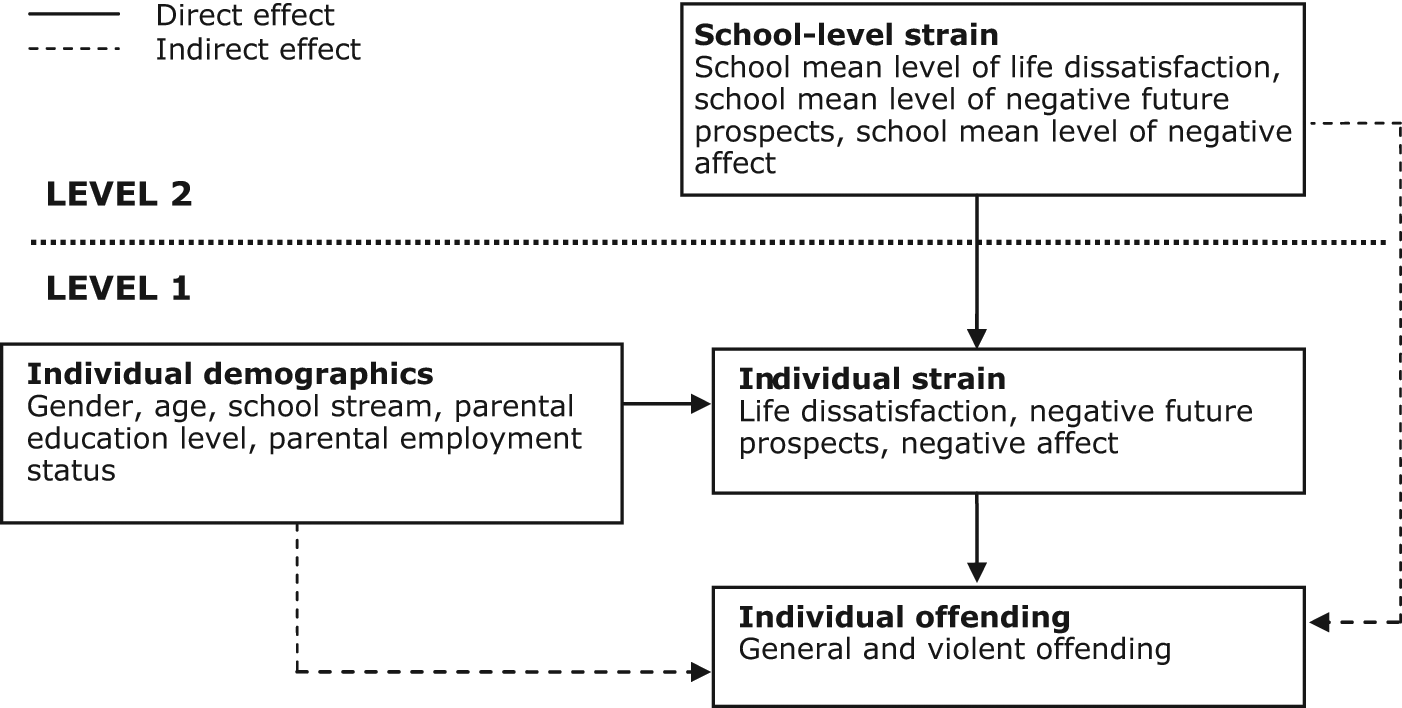
Graphic of contextual strain effect on individual offending, controlling for compositional effects based on individual demographics.
In this way, the present study fills a gap in the existing literature by: (1) adding empirical evidence to the limited MST literature; (2) providing the first MST test based on European data; and (3) focusing on the core hypotheses of MST, suggesting that contextual strain might influence individual offending by creating individual strain.
Data
The data for the present study are derived from Flemish high schools in the Brussels area of Belgium. All Flemish schools in the city of Brussels (N = 42) were invited to cooperate in this project. Eight of the schools refused to participate; two of the schools could not participate owing to practical problems. Consequently, a total of 32 schools participated in the project, a school participation rate of 76.19 percent. Within these schools, classes were randomly selected for participation, based on grade and school stream. 5 This procedure resulted in 2837 randomly selected students, of whom 2513 completed the survey (88.58 percent response rate within schools). Of these, 47.2 percent are male, 52.8 percent female. A significant majority of the respondents (71.7 percent) do not have Belgian ancestry. 6 Brussels is an international city, attracting many immigrant workers. Therefore, it has to be kept in mind that the sample is not representative of Flemish youth or of Brussels youth: findings apply strictly to youth attending Flemish schools in Brussels. Earlier tests on this database indicated that attending a school with more disadvantaged students is significantly related to individual violent offending (Op de Beeck and Put, 2011). This article builds on these findings by examining whether this effect can be ascribed to school-level differences in strain.
Unfortunately, some of the items in the database are characterized by a high non-response rate, which can be ascribed to a number of reasons. First, the complex language situation in Brussels should be mentioned. The main languages in Belgium are Dutch (Flemish) and French. The capital of the country – Brussels – is bilingual, which is why Brussels has Flemish as well as French schools. Since the data were gathered by the Youth Research Platform, a platform financed by the Flemish Ministry, only Flemish schools were included in this research. Nonetheless, it appears that only 23 percent of the sample were maternal Dutch speakers, which may be why difficulties in understanding and answering the questions occurred. There are three possible explanations (or a combination thereof) for this finding. First, a higher number of French-speaking people reside in Brussels, causing a ‘Frenchification’ of Brussels. Second, the Flemish school system has a positive reputation, which may motivate Brussels inhabitants to send their children to a Flemish school even though Dutch is not their mother tongue. Third, as noted, Brussels is an ‘immigrant’ city hosting many people whose mother tongue is not Dutch, and this may explain the high number of non-native speakers in the Flemish school system.
The combination of language problems with a lengthy questionnaire caused a significant number of students to be unable to finish within the available time. As this problem had been noted early in the process, it was addressed by asking part of the sample to start in the middle of the questionnaire, to avoid all the non-response being concentrated in the last questions. Figure 2 shows how the number of item non-responses rises as the questionnaire progresses, with a clear break in the middle.
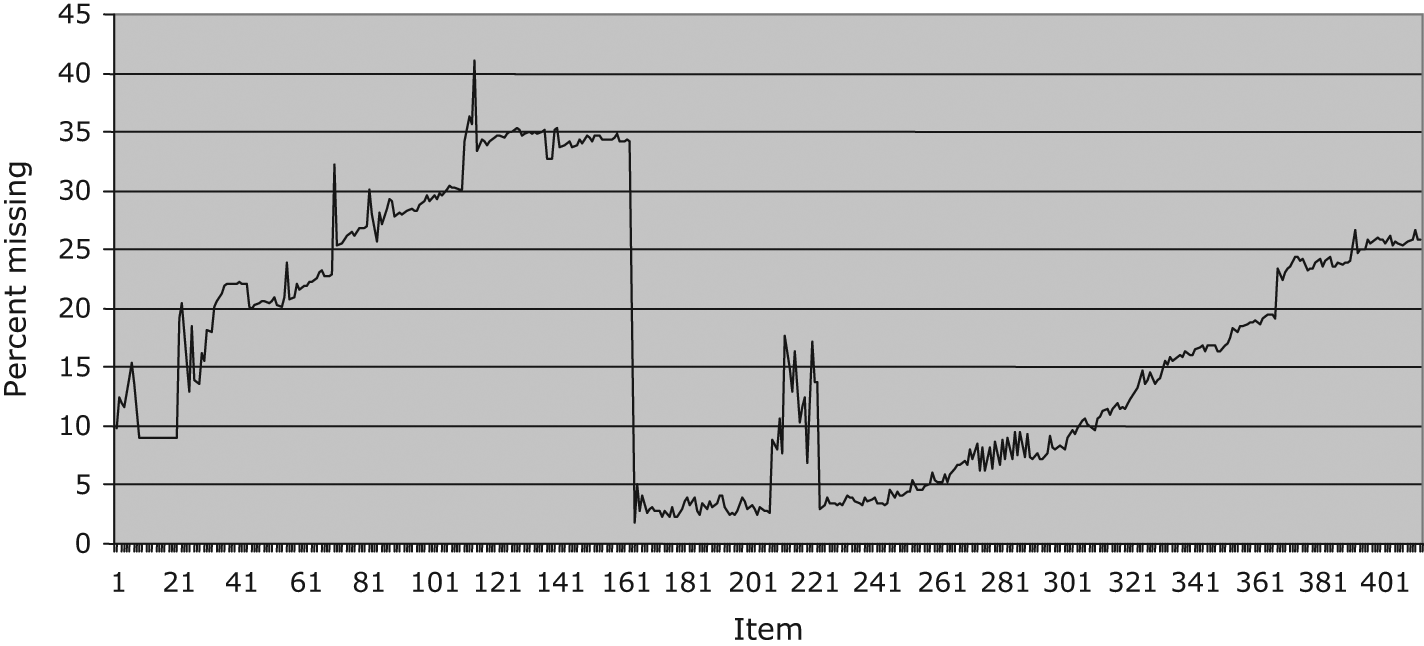
Evolution of item non-response throughout the Youth Monitor Brussels (among 14–18-year-old respondents).
A multilevel analysis (a linear regression analysis with schools at level 2, individuals at level 1) shows that the item non-response is unequally divided over the different schools: in an empty model, 12.5 percent of the variance is located at the school level (p < .001). However, this variance is completely mediated by the language, age, place of residency and school stream of the respondents: younger students, students in the vocational stream, students living in Brussels and students whose mother tongue is not Dutch were less likely to complete the questionnaire. In spite of these findings, every school appears to suffer from a significant item non-response percentage. Since the strain variables were placed at the end of the questionnaire, these items have rather high missing percentages (10–30 percent). Therefore, these variables are analysed using a traditional regression imputation method (linear regression). A previous study showed that imputing items on scales of offending and theoretical constructs does not alter the correlations between the original and the imputed data (Pauwels and Svensson, 2008).
Measures
Dependent variables
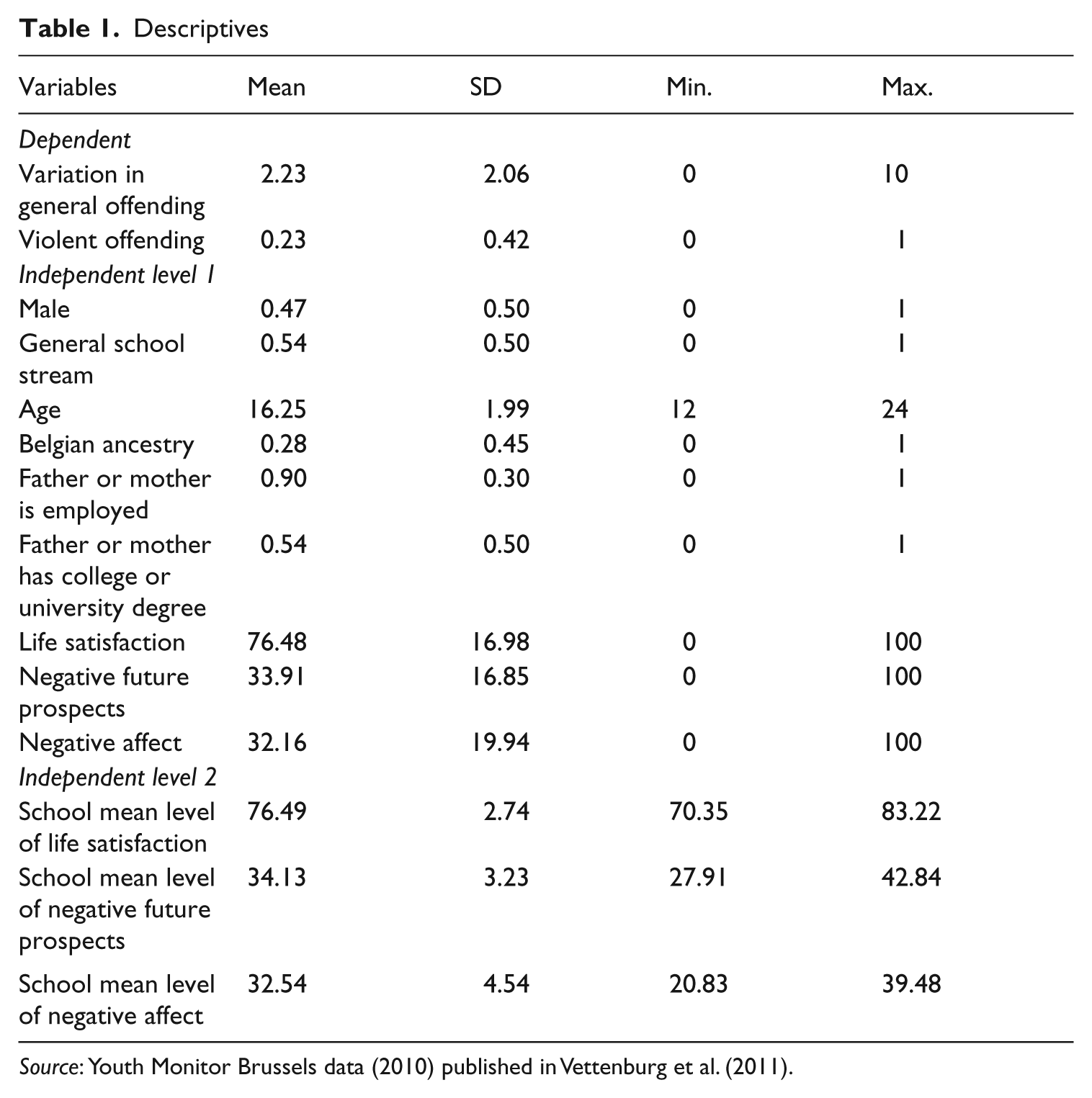
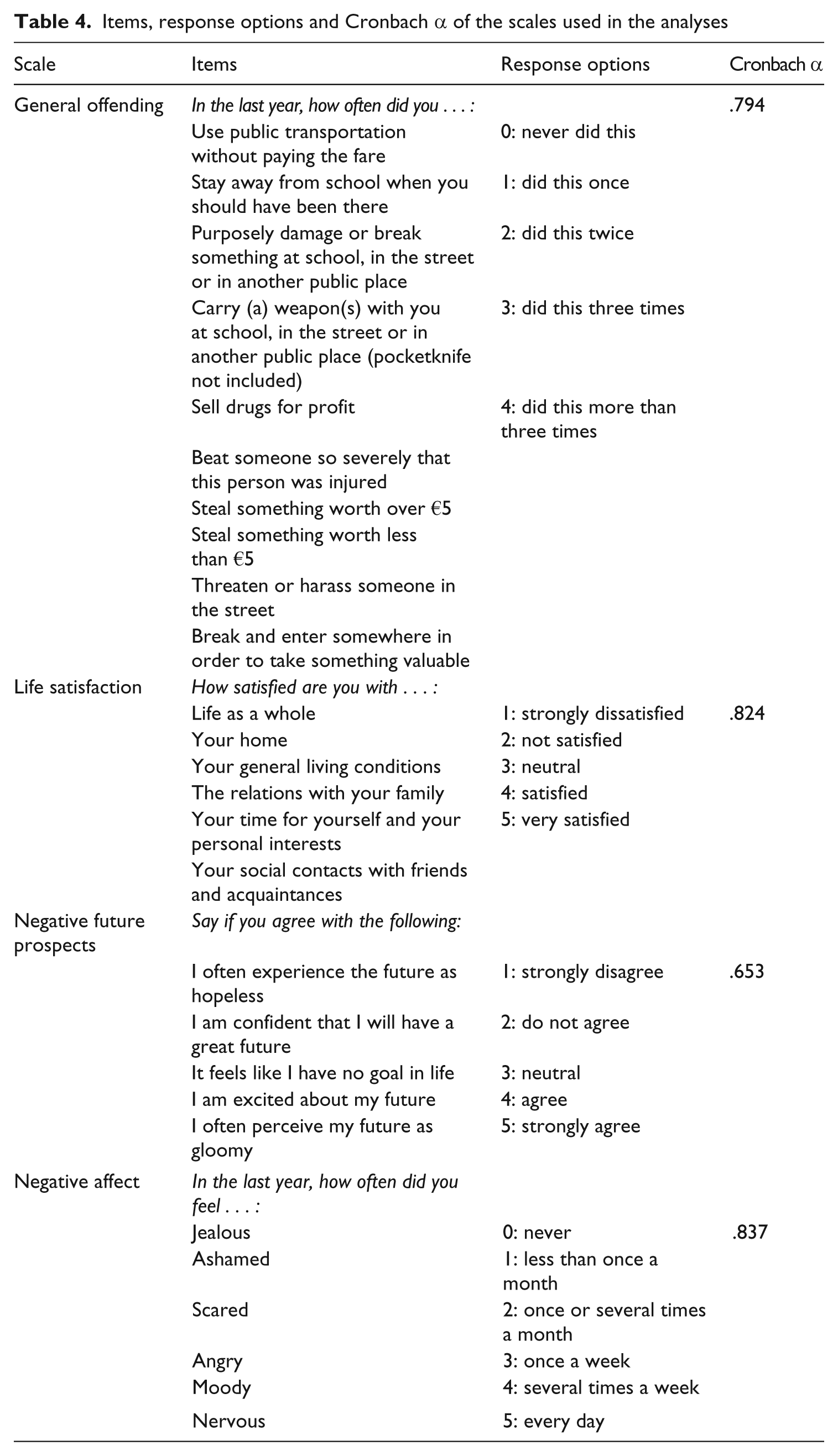
Brezina et al. (2001) focused on violent behaviour in their MST study, whereas Hoffmann and Ireland (2004) examined general offending. Therefore, the hypotheses of the current study are tested with two different offending measures. On the one hand, a ‘general offending’ scale is created, counting the number of different offences the respondent reported committing in the previous year (fare dodging, truancy, vandalism, carrying a weapon, drug dealing, physical violence, theft of something with a value over €5, theft of something with a value under €5, threatening or harassing someone, breaking and entering). Detailed information on this scale can be found in Table 4 in the Appendix. On the other hand, a ‘violent offending’ measure is constructed. Since this last measure is based on only two items (physical violence and threatening or harassing someone), therefore allowing only a small variance, this measure is dichotomized (1 = committed at least one aggressive offence in the last year, 0 = no violent offending in the last year). Descriptions of these measures are presented in Table 1.
Descriptives
Independent variables
Level 1 strain and negative affect
The main question addressed in this article is whether school-level strain generates individual strain in the students, thus affecting individual offending. Therefore, the subjective experience of strain is measured (see Froggio and Agnew, 2007). The database includes three instruments that measure this: life satisfaction, future prospects and negative affect.
Life satisfaction is dependent on both external stimuli and internal characteristics (Ash and Huebner, 2001), making this a very appropriate instrument to capture the subjective experience of strain (with lower levels indicating a higher strain experience) (Agnew, 2006a). For this reason, this measure has been employed in different GST studies (Baron, 2004, 2006; Jang and Johnson, 2005; Kunz, 2008; McDonald et al., 2005; Paternoster and Mazerolle, 1994).
Future prospects provide the individual with a sense of meaning and are related to a number of emotions such as hope and fear (Zaleski, 1994). Like the evaluation of life satisfaction, the appraisal of the future is partly dependent on personal characteristics (some people are naturally more optimistic than others about the future) and partly influenced by external pressures. Therefore, negative future prospects, too, are very suitable to estimate subjective strain experiences.
Negative affect is the third individual-level measure included in the analysis. Strain leads to offending because it prompts negative emotions in the individual (Agnew, 2006a). Consequently, a negative affect scale cannot be omitted when testing MST assumptions.
Level 1 control variables
Control variables are necessary to distinguish between compositional and contextual effects in the analysis. Therefore, the structural demographics of gender (reference group is ‘female’), age (scale), school stream (reference group is ‘technical and vocational stream’), parental educational level (reference group is ‘none of the parents has a college or university degree’), and parental employment status (reference group is ‘none of the parents is employed’) are controlled for.
Level 2 strain and negative affect
School mean level of life satisfaction, school mean level of future prospects and school mean level of negative affect are the school-level aggregates of the respective level 1 variables (after imputation). Within the school context, classes constitute important micro social environments as well, in which students interact and learn from each other. School-level variance might thus be limited in favour of class variance (see, for instance, Baerveldt, 1992). However, socioeconomic segregation in the Flemish educational system, as described by Vettenburg et al. (2002), mainly occurs at the school level. In addition, Pelleriaux (2001) emphasizes the main school culture functioning as a channel through which students influence each others’ subjective feelings of inequality. For this reason, the focus of this study is exclusively on the effects of the school mean level of strain. This focus concurs with the existing school-level MST studies that were explained earlier in this article.
Analytic strategy
Considering that general offending is a continuous variable and violent offending is a dichotomous variable, two different analyses are applied. General offending is analysed through a linear regression analysis and violent offending through a binary logistic regression analysis, with individuals at level 1 and schools at level 2 (estimated with Markov Chain Monte Carlo (MCMC) methods), using MLwiN version 2.22 (Goldstein, 2010). Since the general offending measure is skewed to the right, the square root transformation of this variable is analysed using a linear regression analysis (see Oberwittler, 2004). All scales are standardized before being entered into the analysis; this allows for comparison between the parameters of the different independent variables. In the logistic regression analysis of violent offending, unstandardized parameters are standardized before comparing coefficients across the models, by dividing them with the estimated standard deviation of the latent variable (y-standardization) (Mood, 2010: 73). The significance of all parameters is based on confidence intervals generated through MCMC (not reported in the tables).
First of all, empty models are tested to determine how much of the variance in the offending measures is located at the school level. 7 Secondly, the explanatory variables are added blockwise to the model. The order in which the variables are introduced into the equation is determined by the theory. Model 1 introduces school-level strain variables, to test how much school variance is explained by the school mean level of strain. Model 2 adds individual demographics, to control for compositional effects. Model 3 introduces individual strain variables, to determine whether the school mean level of strain effect is mediated by individual strain effects. 8 The estimated models are compared with previous models based on the Deviance Information Criterion (DIC), with lower values indicating a better fit to the data.
Results
Variance at the school level
The empty model of general offending, displayed in Table 2, shows that school-level variance in general offending is small (0.027). School-level variance in violent offending is much higher (0.267), as shown in Table 3. The intra-class correlation (ICC) and the variance partition coefficient (VPC) based on these parameters indicate that 4.5 percent of the variance in general offending and 7.5 percent of the variance in violent offending is located at the school level. Although these percentages may appear to be small, this is not unusual in multilevel studies on offending. Examples from existing MST studies show that level 2 variance in offending usually varies between 2 and 10 percent. Brezina et al. (2001) found that 6 percent and 7 percent, respectively, of the variance on their two dependent variables was situated at the school level. Hoffmann and Ireland (2004) found 9.8 percent school-level variance in their delinquency measure. School differences in European school contextual studies are traditionally even lower. For example, Weijters found 2 percent school-level variance (in general offending), Pauwels (2010) found 2.7 percent school variance (in serious offending), and Baerveldt (1992) found no school variance at all (in petty crime).
Unstandardized parameters from linear regression analyses testing the impact of school strain, individual SES and individual strain on general offending
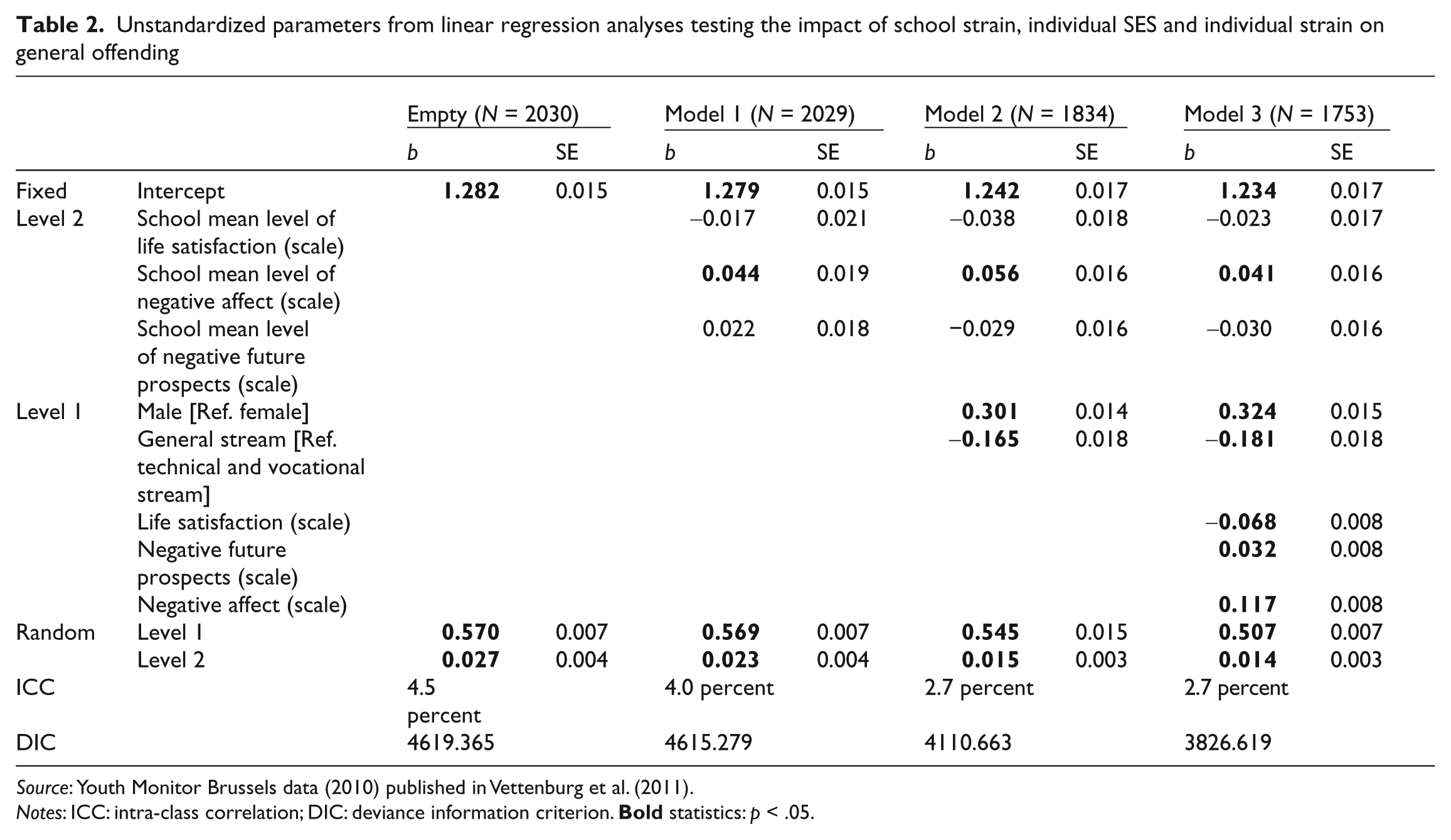
Notes: ICC: intra-class correlation; DIC: deviance information criterion.
Unstandardized and standardized parameters from logistic regression analyses testing the impact of school strain and individual SES on violent offending
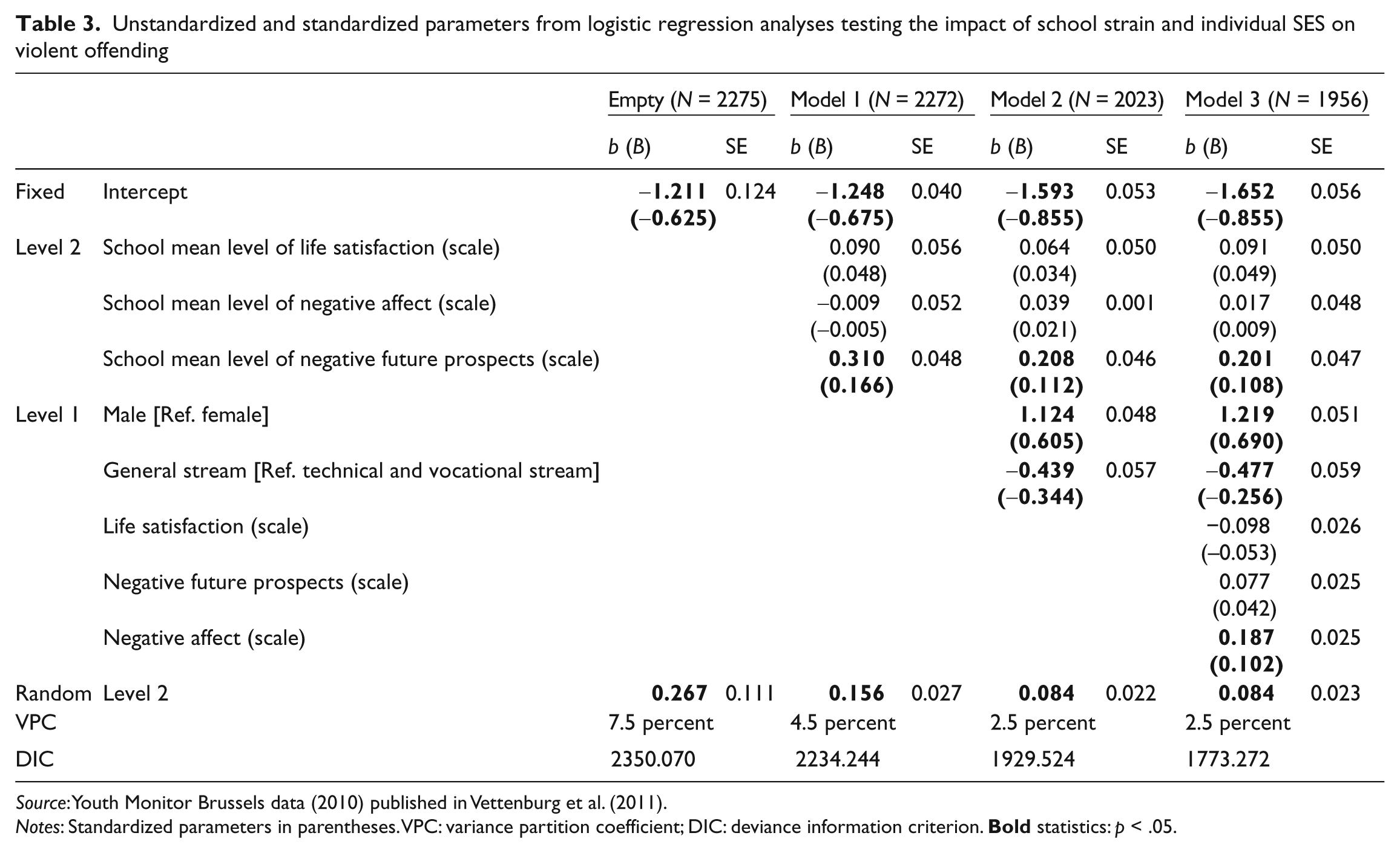
Notes: Standardized parameters in parentheses. VPC: variance partition coefficient; DIC: deviance information criterion.
Testing level 2 strain
Model 1 of Table 2 shows that the school mean level of negative affect is significantly related to general offending, but the effect is very small (b = 0.044, p < .05). The other school-level strain variables are not significantly related to general offending. 9 Moreover, in comparison with the empty model, school-level variables barely explain school variance in general offending (the school-level variance only decreases from 4.5 percent to 4.0 percent) and do not bring much improvement to the model. These findings cannot completely exclude the possibility of a contextual strain effect on general offending, but they indicate that such an effect is unlikely. Therefore, hypothesis 2 (and consequently hypotheses 3 and 4, since they are built upon hypothesis 2) is not confirmed for general offending. Violent offending, on the other hand, is related to the school mean level of negative future prospects (B = 0.166, p < .05), as is shown in Model 1 of Table 3. In addition, the violent offending analysis shows that school differences in offending can partly be ascribed to school differences in strain: the school-level variance lowers from 7.5 percent to 4.5 percent and this model has a better fit to the data. Consequently, hypothesis 2 is confirmed for violent offending.
Controlling for compositional effects
Of all the examined individual demographics, only gender and school stream have a significant effect on offending. Therefore, only these two variables are displayed in Model 2 of Tables 2 and 3. Adding gender and school stream reduces school-level variance in general offending from 4.0 percent to 2.7 percent. School variance in violent offending lowers from 4.5 percent to 2.5 percent. Furthermore, adding gender and school stream brings a much better fit to the data in both offending analyses.
These findings indicate that school differences in general offending as well as in violent offending result partly from compositional effects based on gender and school stream. Boys (b = 0.301, p < .05 for general offending, B = 0.605, p < .05 for violent offending) and adolescents who are enrolled in the technical or vocational stream (b = −0.165, p < .05 for general offending, B = −0.344, p < .05 for violent offending) have a higher individual risk of offending. This explains why schools that host more boys and that predominantly offer technical/vocational programmes have a slightly higher concentration of adolescents who engage in offending. The strong relationship between the school mean level of negative future prospects and individual violent offending, however, holds after controlling for gender and school stream. Hypothesis 3 is thus confirmed for violent offending.
Testing level 1 strain
Adding individual strain variables does not affect school general offending or school violent offending variance, as is shown in Model 3 of Tables 2 and 3. 10 Nevertheless, individual negative affect is significantly related to both offending variables (b = 0.117, p < .05 for general offending, B = 0.102, p < .05 for violent offending). Life satisfaction (b = −0.068, p < .05) and negative future prospects (b = 0.032, p < .05) are related to general offending, but the effects are rather small.
For both offending measures, individual strain variables contribute to a better fit to the data. The effect of the school mean level of strain remains significant after controlling for individual strain variables. Hence, because school-level strain effects are not mediated by individual strain effects, hypothesis 4 cannot be confirmed.
Although not explicitly hypothesized, it was expected that individual strain would also mediate the effects of gender and school stream, since General Strain Theory partly ascribes structural offending differences to variations in the experience of strain (Agnew, 2003; Broidy and Agnew, 1997). However, this appears not to be the case: in both offending analyses, the effects of gender and school stream remain more or less the same after adding individual strain variables, indicating that these effects must be caused by other mechanisms that are out of the scope of this study.
Discussion
A number of interesting findings emerged from this research. First, school contextual influences differ according to the offending measure that is used. Second, effects based on gender and school stream are the most prominent compositional influences explaining school differences in offending. Third, the school mean level of strain has a small impact on individual offending, although this effect is not mediated by individual strain. These findings contribute to the literature by showing that the study of school strain effects, especially of the school mean level of negative future prospects, is valuable in studying individual violent offending, but that future research should be directed at investigating more mechanisms through which individual offending is affected, because this effect appears not to proceed by creating individual strain.
School contextual effects differ depending on the offending measure that is used (see also Oberwittler, 2004). Convincing contextual effects were found for violent offending but not for general offending. This signifies that, in studying contextual effects on offending, it is important to devote attention to the measures that are being used. Yet, despite these differences, part of the variance on both offending measures was located at the school level. Accordingly, hypothesis 1, stating that offending differs between schools, was confirmed.
In both offending analyses, part of the school variance was explained by gender and school stream, indicating that school offending differences can partly be ascribed to compositional effects based on individual demographics. In addition, the effect of the only school-level strain variable affecting general offending – school mean level of negative affect – was very weak. Hence, streaming appears to be a more important correlate of general offending than school-level characteristics. This might indicate that the streaming system in Flemish schools constitutes a stronger mechanism of segregation between students than mere school location and/or reputation. Although the effects of streaming on individual offending have been the topic of study before (for example, Van Houtte and Stevens, 2008), these findings suggest that, in studying school influences on offending in Flemish schools, streaming influences should be included.
Violent offending, on the other hand, was strongly related to the school mean level of negative future prospects, and this effect lasted after controlling for individual demographics. Hypotheses 2 and 3 were thus confirmed for violent offending. This finding concurs with the results of Pelleriaux (2001), who found in a Flemish student sample that negative future prospects can effectively characterize a school culture and consequently affect students. Pelleriaux (2001) referred to such school cultures as ‘cultures of demotion’, which inflict fear and conservative attitudes in the students attending these schools. The current study adds to these findings by demonstrating that such school cultures not only influence students’ attitudes but also affect students’ aggressive behaviour. In addition, the fact that this variable is most prominent in the explanation of violent offending implies that certain types of school-level strain might be crime specific. After all, since Agnew (2006a, 2009) suggests that certain types of individual strain are crime specific, this might be the case for strain located at the school level as well. For instance, just as the need for money might inspire an individual to commit property offences, frustrations coming from a general atmosphere of hopelessness and restricted future possibilities may be released through violent (non-utilitarian) offending.
Contrary to expectations, it was found that individual strain variables do not mediate the effect of the school mean level of negative future prospects on individual violent offending: hypothesis 4 was not confirmed. There are two possible explanations for this unexpected finding. First of all, although this finding is against theoretical expectations, it corresponds with the results of Brezina et al. (2001). Analogous to the current study, Brezina et al. (2001), who analysed aggressive behaviour through a subjective strain measure (that is, anger), found that anger at the school level is significantly related to individual violent offending, even after controlling for individual anger. Based on these results, they conceptualized the impact of school anger on individual aggression as a direct effect, since interpersonal conflicts are more likely to occur in schools where the number of ‘angry’ people is high. Even though Brezina et al.’s (2001) data are restricted to American high school students of 1975 and 1978, the results of the current study suggest that their explanation may also apply to the Flemish high schools of contemporary Brussels: schools with a high number of students who are frustrated by the perspective of an uncertain future and out-of-reach opportunities may have higher chances of interpersonal frictions ending up in violence. 11 Therefore, adolescents attending these schools have a higher chance of getting involved in a fight, regardless of their individual propensities.
A second possible explanation for the direct relation between the school mean level of future prospects and individual violent offending stems from Agnew’s (2006a) conceptualization of strain as the cause of the cause of offending, as was explained at the beginning of this article. Earlier findings from the Brussels Youth Monitor indicated that risky lifestyles (that is, having delinquent friends and/or unstructured routines) and tolerant attitudes towards violence reduce school-level variance in violent offending (Op de Beeck and Put, 2011). It is therefore possible that, regardless of a potential direct effect, the school mean level of strain may affect individual offending not by creating individual strain but by triggering risky lifestyles and/or fostering tolerant attitudes towards offending. Because this article was confined to testing only strain effects, the impact of the school mean level of strain on individual offending through social learning and lifestyle mechanisms remains a path to be explored in the future.
Finally, it is noteworthy how negative affect is the most important individual strain influence in both offending analyses. This finding concurs with Agnew’s main contention that strain leads to offending because it evokes negative emotions in the individual (Agnew, 1992, 2006a). Therefore, the closer the strain measure approaches the estimation of negative emotions, the more strongly it will correlate with offending behaviour. 12 Future research involving subjective strain measures should thus benefit from including a negative affect scale (see Brezina et al., 2001), even though this type of strain was less relevant at the school level.
This study has some limitations. First, as noted, the database is characterized by a rather high level of non-response. Second, as is the case with many studies, the cross-sectional nature of the data cannot provide definite answers about the direction of the identified relationships. Moreover, correlations between two variables might even be caused by a third unmeasured variable. This is most likely the case for the correlations between gender, school stream and the offending variables. Gender and school stream cannot cause offending: these attributes are merely correlates of offending (Wikström, 2006:129), which implies that there must be an underlying explanatory mechanism involving these variables that was out of the scope of this study. In this case, other relevant indicators in the study of adolescent offending, such as morality, risky lifestyles or self-control, may be responsible (De Groof and Smits, 2006; Pauwels, 2007; Wikström and Butterworth, 2006).
Finally, owing to the restricted demographic scope of the sample, the findings can technically be applied only to youth being educated in Flemish schools in the Brussels area. It is thus possible that the schools in the study are too homogeneous, which leads to an underestimation of contextual effects. School effects might have been more pronounced if schools from the whole Flemish region (or even from all of Belgium) had been included. Moreover, as noted, specific school characteristics such as school organization were not included in the study; the impact of these characteristics through their influence on individual strain experiences thus remains to be investigated.
Conclusion
Nonetheless, the results of this study concur with other Flemish studies of contextual influences on adolescent offending (for example, Pauwels, 2010; Vynckier and Pauwels, 2010), demonstrating that school contextual effects exist but are modest. Although the impact of school context cannot be excluded in the case of violent offending, this study could not prove that this effect proceeds by influencing individual characteristics (in this case, individual strain). Either the school context has a direct effect and thus lingers within the school walls, or its impact proceeds by influencing individual characteristics that were out of the scope of this article. It is the interaction between such individual factors and the school mean level of strain that defines the direction for future research on MST.
Footnotes
Appendix
Items, response options and Cronbach a of the scales used in the analyses
| Scale | Items | Response options | Cronbach α |
|---|---|---|---|
| General offending | In the last year, how often did you . . . : | .794 | |
| Use public transportation without paying the fare | 0: never did this | ||
| Stay away from school when you should have been there | 1: did this once | ||
| Purposely damage or break something at school, in the street or in another public place | 2: did this twice | ||
| Carry (a) weapon(s) with you at school, in the street or in another public place (pocketknife not included) | 3: did this three times | ||
| Sell drugs for profit | 4: did this more than three times | ||
| Beat someone so severely that this person was injured | |||
| Steal something worth over €5 | |||
| Steal something worth less than €5 | |||
| Threaten or harass someone in the street | |||
| Break and enter somewhere in order to take something valuable | |||
| Life satisfaction | How satisfied are you with . . . : | ||
| Life as a whole | 1: strongly dissatisfied | .824 | |
| Your home | 2: not satisfied | ||
| Your general living conditions | 3: neutral | ||
| The relations with your family | 4: satisfied | ||
| Your time for yourself and your personal interests | 5: very satisfied | ||
| Your social contacts with friends and acquaintances | |||
| Negative future prospects | Say if you agree with the following: | ||
| I often experience the future as hopeless | 1: strongly disagree | .653 | |
| I am confident that I will have a great future | 2: do not agree | ||
| It feels like I have no goal in life | 3: neutral | ||
| I am excited about my future | 4: agree | ||
| I often perceive my future as gloomy | 5: strongly agree | ||
| Negative affect | In the last year, how often did you feel . . . : | ||
| Jealous | 0: never | .837 | |
| Ashamed | 1: less than once a month | ||
| Scared | 2: once or several times a month | ||
| Angry | 3: once a week | ||
| Moody | 4: several times a week | ||
| Nervous | 5: every day |
Acknowledgements
This study was funded by the Policy Research Centre on Culture, Youth and Sports of the Flemish government.