







Abstract
This study aims to assess the effect of body-worn cameras (BWCs) on police use of force, in a British police force context. We tested the effect of BWCs with a large British force in a six-month randomised controlled trial. Police shifts (n = 430) were randomly assigned on a weekly basis into treatment and control conditions. Odds ratios of use-of-force rates per arrests were used to estimate the causal impact of BWCs. Analyses of these odds for overall use of force and again within pre-specified force categories were conducted. Overall, we found a 50 percent reduction in the odds of force used when BWCs are present compared with control conditions. Our estimates suggest a 35 percent reduction of overall weighted force in the treatment conditions compared with control conditions. However, the effect concentrates in open-hand tactics (physical restraints and non-compliant handcuffing), with no discernible effect on categories of more aggressive force responses (for example, dogs, Tasers, batons, pepper spray); 40 percent ‘more force’ was detected in treatment conditions for handcuffing non-combatant suspects. We conclude that BWCs deter officers, offenders or both into complaint behaviour. Importantly, showing a conditional effect on force types can be further contextualised as enhanced transparency and accountability by the police, with greater reporting of use of force that would otherwise be concealed. Our findings illustrate the importance of analysing police use of force with and without compliant handcuffing of arrestees, which may or may not form part of the force continuum.
Since 2012, police body-worn cameras (BWCs) have received extensive attention across the globe (Cubitt et al., 2016; Lum et al., 2015). All continents have a large number of law enforcement agencies either using or piloting BWCs. These small devices are perceived by many to be a promising way to achieve several aims in law enforcement, including reducing citizen complaints, reducing incidents of use of force, improving evidence gathering, improving public confidence and improving officers’ self-legitimacy (Tankebe and Ariel, 2016; White, 2014). In the US, the use of BWCs has been recognised by the US White House and the President’s Task Force on 21st Century Policing (Ramsey and Robinson, 2015). Another example for the reach of BWCs is the 12 August 2013 judgment by Judge Shira A. Scheindlin of the Federal District Court in Manhattan, who ordered the NYPD to set up a one-year pilot programme that would compel officers to wear cameras in the precincts where the most police stops were being performed (New York Times, 2013). In Europe, the UK College of Policing suggested that BWCs were the mechanism through which ‘dented public confidence’ could be restored (BBC News, 2013). The idea that BWCs are an inevitable necessity and will soon be commonplace equipment for police officers is currently propagated in the media and driven by its manufacturers (Stratton et al., 2014).
Despite these laudable claims, there is a shortage of evidence on the benefits of the BWC. A literature review of the evidence on the effectiveness of BWCs has suggested that, ‘despite vast information sources discussing BWC technology the operational evidence to support claims about either the pros or cons of this technology is sparse’ (Lum et al., 2015; Stratton et al., 2014: 13).
Of particular interest is the potential impact of these devices on police use of force, particularly at a time when police killings seem to be on the rise (Guardian, 2015). Indeed, public as well as political interest in the possible effect of BWCs on police use of force is not surprising (Ariel et al., 2016a; Collins, 2009; Goldsmith, 2010). Use of force is a powerful talisman for those publicising the wrongs of various police forces; a trawl of the internet reveals numerous videos of perceived police brutality (for example, Brown, 2015). Although most UK forces have a greater level of public support than their US counterparts, there are nevertheless pockets, in most forces, where mistrust and lack of confidence characterise the community’s perception of the police (Ariel, 2016b). Various scholars (Geller and Toch, 1996; Skolnick and Fyfe, 1993; Terrill, 2001) argue how officers’ use of force damages the public–police contract. Tensions arise if the police break this contract and there are potentially catastrophic results that may follow can predicate social upheaval; the riots after the deaths of Rodney King (1992), Mark Duggan (2011), Michael Brown in Ferguson County, Missouri, Alton Sterling in Louisiana (2016) and Philando Castile in Minnesota (2016), examplify this phenomenon. Thus, anything that can strengthen and reinforce the police–public contract is vitally important to modern police forces.
BWCs have entered this discourse with a bang. To illustrate, although most agencies in the Western world are facing austerity measures, the Obama administration recently proposed spending US$263 million on supporting the deployment of 50,000 cameras in the US (US Justice Department, 2015). Similarly, the UK Metropolitan Police announced the deployment of 20,000 cameras at significant cost to the taxpayer (BBC News, 2015; Greater London Authority, 2015). We suspect that most law enforcement agencies worldwide will embark on a similar journey by massively purchasing these devices, in just a few years.
Much like other pivotal moments in criminal justice research history (for example, Sherman and Berk, 1984), the opportunity exists to help guide policy with evidence. Yet the scope of research on these devices is limited, but is also underpinned by evidence that reflects varying degrees of methodological rigour (Lum et al., 2015). Thus far, there have been only a handful of published experiments on the effect of BWCs on police use of force. First, there is the Rialto study (Ariel et al., 2015) and the Cambridge University replication studies (Ariel et al., 2016a, 2016b, 2016c). Second, a notable study was conducted in Meza (Ready and Young, 2015). And, third, there was the Orlando Experiment (Jennings et al., 2015). There have also been a few quasi-experiments (for example, Ariel, 2016b; Katz et al., 2014), but overall the literature is not characterised by the mature body of rigorous evidence such as the hot spots experiments (Braga, 2017) or face-to-face restorative justice conferencing (Sherman et al., 2015). To the best of our knowledge, there have been no published rigorous tests of the effect of BWCs, under satisfactory controlled settings, outside the US. This study is the first completed test of BWCs in a British metropolitan police force, aiming to replicate the Rialto study in a large force and within specific settings. This study also seeks to complicate the Rialto study with a more granular analysis of ‘force’ – not simply as a dichotomous outcome, but rather as a scale, with greater emphasis on force categories than a binary variable. As we argue, these analyses echo theoretical debates about policing in late modernity, including accountability, transparency and social control practices more broadly.
We begin by briefly reviewing the relevant literature on police use of force, followed by a review of the literature on BWCs. We pay particular attention to ways in which these devices are hypothesised to reduce the prevalence and severity of force in police–public contacts. We then move on to describe the methods we used to estimate the causal inference of the effect of the devices on police use of force, and how we captured data on these incidents. A manual read of 590 arrest records that had taken place during the experimental period (some with and some without logs on use of force, injuries to suspects and details about the interaction, which are captured independently by custody officers as part of their routine booking procedures) was conducted in order to identify various dimensions of these aggressive encounters. The outcomes are presented next, followed by a discussion of the findings for future research and considerations for implementation of BWCs in police departments worldwide.
Police use of force
The Peelian principles that underpin modern policing suggest that the degree to which public cooperation can be secured diminishes proportionately to the necessity of the use of physical force by the police. Policing by consent means that the police should use physical force only to the extent necessary to secure observance of the law, or to restore order, when the exercise of persuasion, advice and warning is found to be insufficient (Lentz and Chaires, 2007). To that effect, Bittner (1970: 38) contended that ‘no matter what task the police are involved with, police intervention means making use of the authority and ability to overpower resistance’. Since this auspicious statement was made, there have been multiple studies of the many aspects of police use of force (Alpert and Dunham, 1997, 2004; Garner et al., 2002; Sherman, 1980; Wolf et al., 2009). Ariel et al. (2015: 511) suggested that ‘this scholastic interest reflects significant investment by practitioners and decision-makers in better understanding the ways in which law enforcement institutions exercise their power, and how such powers are managed’. Society presents the police force with a paradox in that, in order to stop violence, police officers may have to use violence (Sherman, 1980). Indeed, some researchers have claimed that the reason people call the police for help is based on their belief that force may be necessary (Langworthy and Travis, 1999). Collectively, these considerations defend the view that police work is inevitably about the application of force, when needed.
Far less agreement in the literature exists about how to understand the application of these police powers in police work. We review some of these postulations and evidence below. However, it is important to note that, within the spectrum of use of force, there are two situations that are deemed to be unequivocally undesirable: excessive use of force and unnecessary use of force. Either situation is argued to undermine and damage the police’s relationship with the community (Ariel et al., 2016b; Reiss, 1968; Worden, 1996). ‘Complaints about police conduct do not usually arise because police are apprehending burglars in the middle of the night, or robbers holding up a bank. Trouble arises out of social interaction’ (Skolnick and Fyfe, 1993: 97). Within this prism, it becomes effectively clear why any method by which excessive, non-proportional or altogether unnecessary application of force can be reduced would be a desired outcome.
Terrill (2001: 14) explores several explanatory perspectives in the understanding of police use of force that he derives from the social science literature of the last 40 years. There are numerous cues that officers recognise, as well as countless interactions between these variables, that lead to the use of force (Garner et al., 2002; Hickman et al., 2008; Terrill and Mastrofski, 2002; Wikstrom et al., 2012). Simply listing them, however, does not aid in explaining the use of force, although understanding their relevance to police actions is, nevertheless, important. Conceptually speaking, the broad range of variables that constitute ‘use of force’ can be categorised as situational, psychological and organisational.
Situational cues can prompt officers to make assessments about how an incident should be handled and how much ‘force’ should be applied (Ariel and Tankebe, 2016; Black, 1976; Sherman, 1980). These cues might be the race, gender, age, demeanour, sobriety or mental state of the suspect. The ecological circumstances of the interaction play a part here, such as the neighbourhood in which the police and suspect interact, lighting, availability of CCTV or the number of bystanders or officers involved. These cues can be considered the theatre in which the encounter takes place. Reiss (1968) found that 78 percent of the time force occurred in police-controlled settings, such as within the police vehicle, precinct or public streets; and in the majority of cases there are no witnesses. Research has further expanded this view, suggesting it is the suspects’ actions and resistance during the encounter that precipitate the level of force used by officers (Alpert and Dunham, 1997; Alpert et al., 2004; Terrill, 2001). This is the ‘demeanour hypothesis’ (see Engel et al., 2000; Worden and Shepard, 1996; Worden et al., 1996), which is one of the leading predictors of police use of force.
A psychological perspective suggests that it is the officers’ personal characteristics, experiences, views, training and outlook that determine the application of force (Terrill, 2001). There is evidence to suggest some officers are more aggressive in stressful situations whereas some officers show greater restraint when confronted by disrespectful conduct (Engel et al., 2000). In another study, aggressiveness and tough-minded characteristics in officers were predictors of greater use of force (Fabricatore et al., 1978). Worden (1996) found that officers who were university graduates were more likely to use physical force. The wealth of research in this area suggests that psychological variables are important to any study of the use of force, but we recognise that this area is understudied.
Finally, research on use of force applied two predominant organisational theories to understand what may influence officers’ use of excessive or unnecessary force. Wilson (1968) proposed an organisational theory that reflects on the corporate structures and political environment of the time. The model suggests that officers will tend to act similarly to given situations owing to organisational rules, regulations, standard operating procedures, incentives and top-down managerial models. A style of policing develops with a ‘common vision that becomes part of each officer’s mind-set of how to handle everyday aspects of policing’ (Terrill, 2001: 20). Therefore, in agencies where there is an overall official acceptance to use more force against suspects (or specific types of suspects), more officers are more likely to exhibit this pattern of behaviour. The second theory looks at police subculture (Baker, 1985; Brown, 1998; Skolnick, 2008) and presumes that it allows officers to operate with some impunity, because there is tacit approval of their actions by colleagues and a reluctance to inform on what is seen as appropriate. Baker (1985) summarised this in his ‘hierarchy of wrongfulness’: ‘dead wrong; wrong, but not bad; wrong but everybody does it.’ Some authors (Ariel et al., 2015) have described this as being how officers see excessive or unnecessary force, but, as Skolnick (2008) points out, officers are now more culturally diverse than in 1985, which may distort the neatness of this model. Either way, it seems clear that when considering use of force one cannot solely concentrate on officers and suspects; there needs to be consideration of the organisational environment in which they operate.
Measuring police use of force
When an officer uses ‘force’, he or she is nearly always required to file an official report, even if only in his or her pocket notebook. In many UK forces, the custody officer who is in charge of booking arrestees is responsible for recording incidents of use of force as well, including any injuries sustained by suspects as a result of the use of force. The challenge, however, is that not every physical action on the part of an officer is considered to be ‘force’. The very definition can be subjective, memory-prone, generally unclear and primarily an intradepartmental measure. This suggests to us that the reporting of use of force is closely linked to police accountability and transparency. Sound reporting of an accurate and full account of use of force is the cornerstone of police accountability and is essential if officers are to be held responsible for their actions, regardless of whether or not those actions were justified. As reviewed by other scholars (Mastrofski, 2002; Ransley et al., 2007; Stenning, 2009), police accountability refers to taking responsibility for the actions of the organisation by tracking or measuring its outputs. This requirement demands that the police are accountable for their performance, and will amend it when necessary. The police must act in the public’s interest, and are therefore assumed to be held to a higher degree of accountability than citizens – especially given the wide powers they hold in modern society (Bayley, 1996; Kupferberg, 2008; Skolnick and Fyfe, 1993; Walsh, 2001). For this and other reasons, Walker (2007: 5; see also Walker and Archbold, 2013: 94) contends that:
[T]he first accountability procedure to be considered involves the direction and control officer use of police authority through formal agency policies. This approach, generically known as administrative rulemaking, is a basic feature of modern police management, if not all public and private sector organizations. Administrative rulemaking consists of three elements: specifying approved and forbidden actions in written policies; requiring officers to file written reports on specific actions; requiring administrative review of officer reports.
Some ethnographic work in this area (for example, Hunt, 1985) suggests that what is construed as a ‘reportable incident of force’ and how much force is appropriate is often predicated by a police department’s organisational culture. For example, police subculture in relation to the reporting of use of force plays a role in accepting or allowing ‘force’ to be applied in certain circumstances. Researchers who study police organisations have made the case for some time now that use of force and its subsequent reporting are a function of police officers’ attitudinal commitment to certain institutional or organisational cultures around their roles in society and, more broadly, their views of power (Lester, 1996; Terrill et al., 2003). Certain institutional and subcultural codes make police agencies particularly resistant to cultural changes and transparency requirements (Skolnick, 2008: 37). Feelings of loyalty sustain this code of silence and make it particularly difficult to investigate purported unnecessary, or excessive, use of force, especially when it goes unrecorded (Baker, 1985: 210–213). For example, placing one’s hand on another’s shoulder in an authoritative way or using handcuffs may be considered use of force in some instances and for some individuals, whereas for others they may not. Aggressive voice commands (shouting, cursing and threats) can certainly be construed as ‘force’ as well; however, not all police forces hold the view that such commands are recordable acts of force. In similar ways, measuring ‘injury’ or ‘assault’ is also likely to be challenged in terms of definitional threshold, because it is open to interpretation when there are no clear signs of physical contact. Taken collectively, we see that what needs to be reported, or not, is not always as clear-cut as it could be, yet it does form a direct and tangible aspect of police transparency.
Recording issues also present problems when trying to identify the scope of use of force in policing. On the one hand, there seems to be an agreement that, in general, officers do not use force as often as the popular media usually suggest, since the majority of officers’ daily contacts are with law-abiding citizens (Alpert and Dunham, 2004; Bayley and Garofalo, 1989; Croft, 1985; Fyfe, 1988). On the other hand, there are organisational pressures and biases that mask the true levels of use of force prevalence, frequency and severity (Alpert and Smith, 1999). Adams (1996: 62) suggests use of force ‘happens twice as often’ as is suggested by official reports, particularly ‘low-level’ use of force, such as verbal commands or simply taking hold of someone. Still, measuring what ‘police force’ is, at what point it becomes excessive, unnecessary or disproportional (Reiss, 1968; Worden, 1996) – or even who instigates the use of force beyond what is required – is far from clear (Ariel et al., 2016c). No tracking system of force is completely reliable and valid; the amount of ‘force’ necessary in any given situation is subjective (Hickman et al., 2008).
Thus, police use of some force is an essential requirement against certain offenders, in specific circumstances. The ever-present challenge is to minimise the prevalence, frequency and severity of ‘force’, without putting officers’ lives at risk, while still allowing them to gain control in situations when ‘force’ is required (Ariel et al., 2016c). Enhancing proper recording of every force response, no matter at which ‘severity level’ or category, would be an equally desired consequence of a professional agency.
The deterrent effect of BWC on police use of force
At this juncture, BWCs come in. The mechanism behind the hypothesised effect of BWCs on use of force is deterrence, driven by the awareness of observation (see Ariel et al., 2015). There is a wealth of research dealing with how living creatures amend or change their behaviour when they think they are being watched (Dzieweczynski et al., 2006; Munger and Shelby, 1989; Wicklund, 1975). A social-cognitive process is engendered by the belief, or awareness, of being under observation and is expressed by an increased desire to observe societal rules; this is often manifested by an observable increase in conformity to acceptable behaviour patterns (Barclay, 2004; Gervais and Norenzayan, 2012; Sproull et al., 1996). People understand that rule-breaking is a behaviour that can lead to sanctions, and is therefore something that should be avoided (Klepper and Nagin, 2006; Nagin, 2013a). Kahneman (2011) explains that, although genuinely strict rationality in all decision-making is unobtainable by most people, it is nevertheless true that certain cues (even very small ones) that someone is watching can lead to positive reactions and improved behaviour because non-compliant behaviour can lead to adverse consequences, which, ultimately, rational actors wish to circumvent.
In criminology, these notions are more widely studied within the framework of deterrence theory (see Ariel et al., 2017). A ‘deterrence specturm’ dictates that the threat of apprehension is causally linked to more compliance and/or less rule-breaking. Police officers and scholars equally assume that the threat of immediate incarceration, or at least interdiction, deters non-compliance. This model is believed to be universal, so it is expected to work on both suspects/offenders as well as police officers. As Durlauf and Nagin (2011: 7) write, ‘for criminal decisions, what matters is the subjective probability a potential criminal assigns to apprehension’ (see also Groff et al., 2015). Nagin (2013a, 2013b), Loughran, Piquero, Fagan and Mulvey (2012) and, more recently, Nagin, Solow and Lum (2015) have shown some of the necessary conditions in which deterrence exerts an effect on criminal decision-making, and the same can be said for officers who must comply with police regulations. Getting caught doing something morally or socially wrong is often registered as behaviour that can potentially lead to negative consequences, which is an outcome people often flee from. Studies have, nevertheless, uncovered a propensity to avoid negative outcomes, and findings generally agree that individuals react compliantly to even the slightest cues indicating that somebody may be watching: being watched is registered as an antecedent to a likely apprehension and therefore this awareness encapsulates a tangible deterrence effect (Dzieweczynski et al., 2006).
Thus, deterrence and the awareness of observation work equally on suspects who would otherwise decide to commit a crime and on police officers who might otherwise break the rules of conduct. For this reason, BWCs are hypothesised to work simultaneously on both actors in a police–public encounter. When officers and suspects are cognisant of the BWC, they are equally assumed to have no preference towards rule-breaking, because the risk of apprehension and conviction by the evidence captured on videotape is overwhelming. BWCs, unlike CCTV, dashboard cameras or bystanders’ mobile phone cameras, can be viewed as ‘credible threats’ (Jervis, et al., 1989: 3; Nagin, 2013a): parties in the interaction are conscious not only of the fact that they are being watched but also of the consequences associated with non-compliance. ‘Getting-away’ with rule-breaking is far less conceivable if one is being videotaped and one is conscious that the behaviour is in fact videotaped. The evidence from the Rialto study supports this model.
What we know about BWC and the Rialto experiment
There have been four literature reviews (Cubitt et al., 2016; Lum et al., 2015; Stratton et al., 2014; White 2014) published on BWCs, and, since these publications, additional reports have been released from the Cambridge University replication studies (Ariel et al., 2016a, 2016b, 2016c). If read together, these cover the entire gamut of the research on BWCs to date. Of these, only a handful of randomised controlled trials (RCT) on the effectiveness of BWCs achieve the requirements of Level 5, in terms of its scientific rigour, on the Maryland Scientific Methods Scale (Sherman et al., 1998). The first was an RCT, known as the Rialto Experiment, which looked at the effectiveness of BWCs in Rialto, California, with a specific focus on use of force and complaints. The Rialto Police Department, a small jurisdiction in California with just over 50 frontline officers, compared nearly 500 police shifts during which all police–public encounters were equally assigned to either treatment or control conditions. During treatment shifts, Rialto officers were asked to videotape all their encounters with members of the public and to store evidence on a secured cloud. In control shifts, the officers were tasked never to use the devices. Outcomes were then measured in terms of officially recorded use-of-force incidents and complaints lodged against Rialto police officers. Following this 12-month experiment, Ariel, Farrar and Sutherland (2015) reported a relative reduction of roughly 50 percent in the total number of incidents of use of force compared with control conditions, and a 90 percent reduction in citizens’ complaints, compared with the 12 months prior to the experiment.
The findings from the Rialto study have generated heated debates worldwide (Reddit 2014), particularly concerning the transferability of the findings to other jurisdictions or to larger police departments (Miller et al., 2014; New York Times, 2014). Questions have also been raised as to whether the unique circumstances in Rialto jeopardised the external validity of the test (Brucato, 2014). Major metropolitan cities, and with them large law enforcement agencies, operate on a different scale to small or even medium-sized forces (Weber Brooks and Leeper Piquero, 1998). Likewise, whether or not these US findings are transferable abroad has also been raised. White (2014: 10) concluded that:
[I]ndependent research on body-worn camera technology is urgently needed. Most of the claims made by advocates and critics of the technology remain untested . . . Researchers should examine all aspects of the implementation and impact of the technology – from its perceived civilizing effect, evidentiary benefits, and impact on citizen perceptions of police legitimacy to its consequences for privacy rights, the law enforcement agency, and other outside stakeholders.
The Mesa study (Ready and Young) conducted an experiment with the Mesa, Arizona Police Department. The study analysed nearly 3700 field reports completed by 100 sworn patrol officers. Random assignment of the officers into treatment and control groups has resulted in several important findings: first, officers who did not wear body-worn video cameras were more likely to conduct stop and search, and were also more likely to make an arrest. This means that wearing BWCs may cause officers to be more cautious and risk-averse than control conditions. At the same time, treatment officers were more likely to give citations and initiate encounters. This suggests that BWCs may cause officers to be more proactive with this technology, although without increasing their use of invasive strategies that ‘may threaten the legitimacy of the organisation’ (Ready and Young, 2015: 445).
Finally, Jennings, Lynch and Fridell (2015) have also observed the effect of BWCs on policing, but focused particularly on response-to-resistance incidents. In their randomised experiment, they have used 46 officers who were randomly assigned to wear BWCs and 43 officers who were randomly assigned to not wear BWCs. The study has shown that BWCs reduced these types of incidents and serious external complaints. The prevalence of response-to-resistance incidents and the prevalence and frequency of serious external complaints were significantly less for officers randomly assigned to wear BWCs (Jennings et al., 2015: 480).
These three tests are all American. Experimental replications are also required in order to show whether their findings represent a US-centric anomaly attributable to the US contexts only, or are due to the novelty of these devices in US police operations, or both.
To be fair, noteworthy non-RCT studies, nevertheless, do exist on BWCs. The United Kingdom police forces were in fact the first to express an interest in BWCs. The Plymouth Head Camera Project (Goodall, 2007); the Grampian Police study (ODS Consulting, 2011); the Project Hyperion study in Hampshire (Ellis et al., 2014) – all these Level 1 or 2 studies on the Maryland Scale offer some confirmation of the hypothesised effect of BWCs on the incidence of use of force. Although these non-controlled before/after studies did not look directly at use of force, they have nonetheless reported reductions in crime, fewer assaults on officers and improvements in criminal justice outcomes. At the same time, these studies suffer from risks to internal validity and their results are, consequently, suspect. Another recent evaluative report on BWCs, conducted in the county of Essex by the College of Policing (Owens et al., 2014), has proved inconclusive owing to challenges in the implementation of the experiment. The study was beset with detrimental implementation issues, such as low usage of the cameras, which damaged both its treatment integrity as well as its internal validity and hence rendered the results obtained as challenging to interpret accurately.
Missing gaps in the literature on BWCs
Beyond replications, there are two areas where the available research is lacking and requires a more granular analysis of the effect of BWCs on police use of force. Firstly, a coherent breakdown of what ‘force’ means, beyond the dichotomous measure of self-reported use of force observed in previous studies, is needed and, secondly, a distinction between the compliant and non-compliant handcuffing of suspects must be made and described.
Not all force responses are created equal
Once BWCs are mandated in police operations, is there a reduction in the frequency and severity of the use of force? This question about the effects of BWCs on the use of force demands that a closer observation be made about the types of force that officers are more, or less, likely to use when BWCs are present. Outcome variations are currently unclear. On the one hand, BWCs could also have an effect on any level of force the police use. This implies that BWCs have an effect on all categories of force. On the other hand, the effect of BWCs might be located in the lower bands of what is referred to as the ‘force continuum’ (for a more elaborate review, see Terrill, 2001) – for example, verbal commands, empty-hand submission techniques and some aggressive response techniques such as pepper spray or baton use. The force continuum is a standard that provides police officers with a guideline about how much ‘force’ is appropriate against a resisting suspect, in different circumstances. As such, and under this line of theorisation on the effect of BWCs, BWCs are effective, but only up to the point where ‘force apparatus’ such as intermediate weapons (Taser discharges), dogs or lethal force are used. Put differently, BWCs would have an effect only in instances when the officer was able to convince the suspect to ‘step down’ using open-hand approaches, and therefore avoid the incremental use of force up to the point where these ‘force apparatus’ are applied.
To be sure, one should anticipate that some suspects are likely to be aggressive anyway, so more forceful responses would be deployed regardless of whether BWCs were present or not. To illustrate, deterrence relies heavily on rational calculations and awareness; for this reason, intoxicated or psychotic offenders are unlikely to be responsive to deterrent messages or the credible threat of punishment through their videotaped demeanour. These cases, which may anyway require extreme measures of police force, would not be susceptible to the effect of BWCs.
‘Compliant’ versus ‘non-compliant’ handcuffing
The other crucial element, which has been ignored in previous BWC studies, is the distinction between arrests where the suspect is handcuffed and ‘voluntarily’ agreed to go to the station and circumstances in which the suspect is handcuffed but involuntarily escorted to a police station for further questioning. From a procedural perspective, the use of handcuffs is not legally mandated (College of Policing, 2013, 2015), and the suspect may in fact submit without the use of handcuffs. However, in practice – and particularly when patrol officers tour in solo formations – nearly all arrests should result in handcuffing of suspects, simply because this is the health and safety guidance given to officers (Home Office, 2014a). Whether or not this is good practice is not the issue here, but, whether or not these restraints are recorded by the officer as ‘use of force’, they create a measurement bias that needs to be addressed. Departmental and jurisdictional guidance on whether or not these handcuffing practices constitute police ‘use of force’ diverges, and different approaches thus emerge (for example, see guidelines of Las Vegas Metropolitan Police Department, 2011; Warwickshire PCC’s Office, 2015; West Yorkshire Police, 2011).
Why are we placing so much attention on this seemingly technical aspect? Because measuring any handcuffing as a level of force that requires the officer to log a ‘use of force’ report, or alternatively a policy that stipulates that compliant handcuffing is not use of force but that non-compliant handcuffing is a recordable event, changes the result. Both would be considered ‘low-level force’, but one would appear in police records designed to track these incidents, whereas in another record-keeping system it would not. At the very least – and methodologically speaking – the two different tracking policies (Sherman, 2013) create a comparability issue between forces. The disparities illustrate the implications for police accountability and particularly around the transparency and the reporting of use of force, which continuous to be a contentious area in policing (Garner et al., 1995; Lersch et al., 2008; Pate et al., 1993; Terrill, 2001; Wolf et al., 2009). This problem is exacerbated when many forces, including West Midlands Police where the present study took place, have stopped requesting their officers to log use of force reports completely (West Midlands Police and Crime Commissioner, 2014). The only forms of systematic tracking available in many police forces across the United Kingdom are through custody arrest records, or non-computerised pocket notebooks, or particular force types such as Taser discharges or lethal weapons:
31. There is no longer a requirement for officers to record a use of force on a separate form in relation to open hand techniques, CS spray and baton strikes. Officers are instructed to record the detail of any incident, force used and the rationale supporting the application based on the NDM [National Decision Model] in their pocket notebooks. 32. The decision to stop recording such data was taken in late 2010 after consultation with Force Health and Safety, Professional Standards and Operations and was ratified by Command Team. Form WG 433 (use of force form) was withdrawn to support the force aim of reducing bureaucracy and reducing repetition of data. 33. Records are maintained on the deployment of firearms officers, Taser usage and police dog bites.
The Birmingham South body-worn cameras experiment
Experimental settings
The trial was conducted with the Birmingham South Local Policing Unit (LPU) in the West Midlands Police (WMP) force area. Birmingham South is a largely residential area populated by roughly 286,000 residents from a wide range of socioeconomic levels but with a limited range of ethnicities in comparison with other areas of the West Midlands (Birmingham City Council, n.d.). The trial was a field RCT utilising 46 response officers, and ran over a period of six months between June and December 2014. However, we emphasise that the officers did not serve as the units of analysis.
Unit of analysis
Although ideally officers would have been randomised to treatment and control groups on a 50/50 basis, making the officer the unit of analysis, this was not practicable operationally speaking, but methodologically as well as. Whereas the majority of officers work in solo formations, operational need within emergency response units often requires ad hoc, double crewing when responding to more complicated incidents. This means that officers in the control group could have been ‘contaminated’ by responding to calls together with members of the treatment group. As the treatment is hypothesised to affect the interaction with members of the public, ‘control officers’ would have had their behaviours altered in response to the presence of their colleagues’ BWCs. At the very least, suspects and victims would behave differently when BWCs are present – even if only some officers are wearing them (for example, Jennings et al., 2015). To use a medical analogy, this is similar to a clinical trial where both the treatment and the control patients are sharing the same pill.
A further consideration was the sample size. A sample size of only 46 officers would have possibly generated an underpowered study (Cohen, 1988) or one that was ‘doomed to failure’ (Clarke and Weisburd, 1994: 179). Increasing the number of officers was not a realistic aim for our study. In these circumstances, a sample size of 46 officers would only just have been sufficient if we were looking to detect quite large effects (d = 0.8) with a probability of .05 and a power at 80 percent. Based on the available evidence (for example, Ariel et al., 2015; Ariel et al., 2016b), the anticipated effect size of BWCs on use of force is small to medium (Cohen, 1988).
Instead, by making police temporal shifts (for example, 07:00–17:00 shift) the unit of analysis – much like the original Rialto study (Ariel et al., 2015) and as designated in its experimental protocol (Ariel and Farrar, 2012) – the sample size available can be increased significantly, therefore allowing for a much smaller effect size to be detected (Cohen, 1988). Because we ran the trial for 26 weeks, we were able to randomly assign 430 shifts into treatment and control conditions (with a 50/50 split). Using G*Power (Faul et al., 2007), this sample size was sufficient to detect a smaller effect (d = 0.3; Cohen, 1988) with a probability of .05 and a power at 80 percent.
Admittedly, this method might still have produced some residual contamination from the treatment groups being carried into the control shift. The same officers either used BWCs or did not use BWCs in treatment and control shifts, respectively. There is the potential that behavioural modifications due to treatment conditions ‘carried through’ into control conditions. If BWCs affect behaviour, then there may be a learning mechanism at play, where officers adapted their overall behaviour (and possibly attitudes), and this broader change affected control conditions as well. At the same time, the degree of contamination is more limited (than using officers as the unit of analysis, for instance) because at least the spillover does not directly affect those with whom the police interact: suspects, victims and witnesses. From a theoretical perspective, BWCs have at least as much of an effect on citizens as they do on officers. Therefore, if there is a spillover effect of the intervention, it is specific to one party only. As such, this design allows us to be in a better position to characterise violations of the Stable Unit Treatment Value Assumption (see Sampson, 2010). Ultimately, given the rule of maximin (Rawls, 1971) and the inherent operational policing pressures, shift randomization was deemed the best possible option for these circumstances. For further methodological discussions about temporal shifts as a unit of analysis in policing studies, see Ariel et al. (2015) as well as Ariel et al., (2016c).
Random allocation procedure
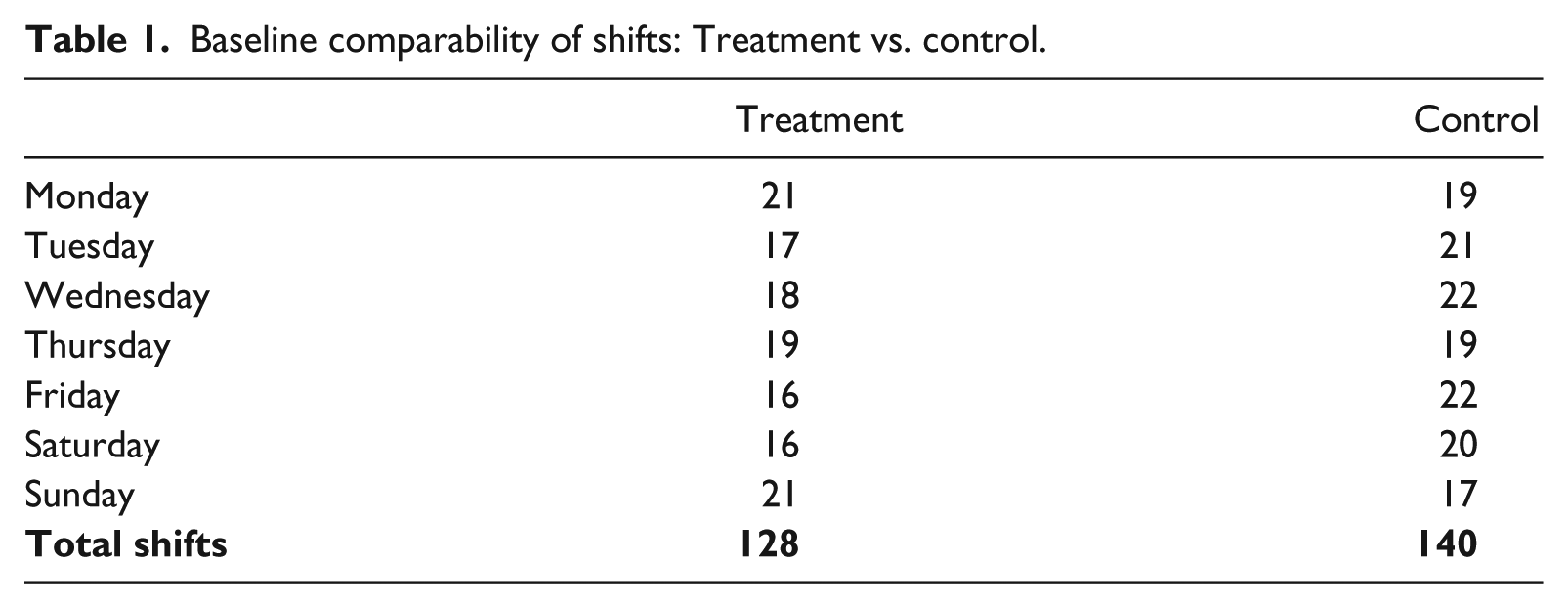
The random allocation of shifts was provided to the sergeants on a weekly basis using the Cambridge Randomizer (Ariel et al., 2012), on a pseudo-randomisation basis with 1:1 allocation of day and night shifts, including days of the week (Table 1). No baseline significant differences emerged (χ2 = 17.50; p = .354). These treatment and control shift sequences were communicated to the patrol officers, who would be deployed to patrol with or without the BWCs. Over the course of the six-month trial, 215 shifts were allocated to treatment and 215 to control conditions.
Baseline comparability of shifts: Treatment vs. control.
Treatment and experimental procedure
The trial began with a two-week exploratory test, so the officers could familiarise themselves with the equipment, the design of the experiment and the various processes involved. Technical problems were also resolved during this period. Once the RCT commenced and the random allocation sequence was communicated to the teams, then officers on treatment shifts were issued with cameras, whereas on control shifts the cameras remained in the police station.
Additional details of the trial procedures can be found in our pre-trial experimental protocol (see Supplementary Materials A). However, we highlight two important aspects of the procedure. First, at the beginning of every shift, the officer in charge was responsible for ensuring treatment integrity (for example, equipping all patrolling officers with BWCs on treatment shifts, and making sure that officers were not going on patrols wearing BWCs during control shifts). On treatment shifts, constables wearing BWCs would go out on patrol and record their interactions with suspects, arrestees, victims and witnesses, based on the experimental protocol. At the end of each shift, the officers returned to the station and docked the cameras in a specially designated room. The docking procedure uploaded the evidence into storage and charged the camera battery.
Second, the treatment included not only the wearing of BWCs during all encounters between police and members of the public, but prior to any interaction officers were requested to announce the presence and use of the camera. As more fully elaborated on in Ariel et al. (2016a, 2016b), the verbal communication was hypothesised to create a deterrent effect among both officers and suspects. In addition, the particular type of camera used in this trial included a front-facing screen, which the party who interacts with the police office can see himself or herself while the camera is turned on (see Picture 1).
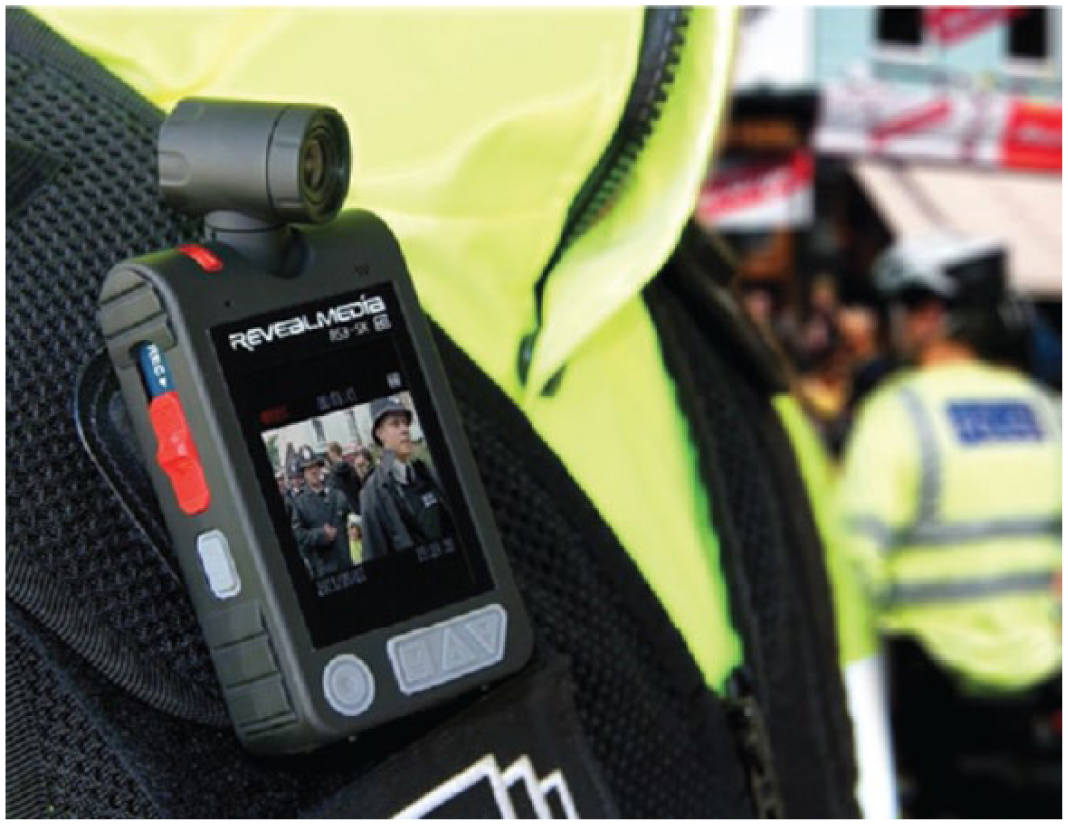
RevealMedia© front-facing body worn camera.
Manipulation checks
Treatment integrity was checked by a police Inspector on a daily basis, to ascertain that the random allocation sequence was preserved. These daily supervisor’s reviews, including regular checks of the officers’ data uploads, revealed 99 percent compliance with random allocation, in both treatment and control conditions. In practice, treatment integrity was continuously measured, and any mis-assignments that occurred during the trial were immediately dealt with and therefore nearly never reoccurred. 1 Furthermore, an Inspector also routinely randomly dip-sampled custody records and informed officers that this procedure was in place, thus ensuring that officers were continuously aware that an auditing exercise was maintained. These manipulation checks were put in place so that treatment fidelity was maintained and that reported use of force was accurately recorded as well.
Variables
Crimes and calls for service data for the study were recorded by WMP, in accordance with Home Office Counting Rules (Home Office, 2014b). In order to recover the data required for the study, a police software program called Discoverer 4i, a standard tool used by WMP analysts to harvest data from all police systems, was utilised. Discoverer 4i was particularly useful in determining whether arrests were made during treatment or control shifts.
As noted in our review, systematic recordings of incidents of use of force are not routinely captured by most UK forces, and WMP is no different. An initial consideration, that of returning to the manual recording of use-of-force forms by officers, was vetoed owing to well-documented difficulties in maintaining this process and bias in recording from officers (Alpert and Smith, 1999: 63). Systematic social observations were outside the scope of the RCT as well. Instead, independent recordings of use of force do routinely take place in the arrest custody suite by the custody officer. These records are kept in the custody recording system, or ICIS. The custody officer is legally required to register, among other details, what type of force was used by the arresting officer. To emphasise, the independent custody officer captured this information following an interview conducted with both the arrestee and the arresting officer. This short survey includes questions about injuries sustained by the arrestee, whether s/he is ill, etc. See Supplementary Materials B for a template of the electronic form that custody officers complete for every ‘booking’.
Specifically for use of force, the custody officer’s report includes a record of each category, which mimics the force continuum: (1) verbal commands, (2) compliant handcuffs, (3) physical restraint/forcible handcuffs, (4) CS spray, (5) baton and (6) Taser. Note that in this recording policy there is a clear distinction between compliant and forcible handcuffing by the arresting officer.
Statistical procedures
With the data, we had two binary variables, which each had only two possible levels (counts of observations at each level), displayed in a 2×2 binary proportions table. Therefore, we used Odds Ratios (OR) to assess the differences and to compare the responses (Y: the outcome variables) according to the value of the explanatory variable (X: BWC or controls). We therefore used the total arrest counts as the denominator (post-random assignment) and the number of force events within the post-treatment period as the numerator, and computed the OR. We also measured 95% confidence intervals (CI) associated with these point estimates.
We ran two statistical models for these main effects. First, we observed the treatment effect on all force categories lumped together as an ‘either or’ variable (as in all previous BWC experiments). Second, we modelled the treatment effect after removing from the dependent variables ‘compliant handcuffing’ as a use-of-force category, for the reasons we explained above.
Next, we carried out this procedure several times, for each type of use of force response: (a) physical restraints, (b) non-compliant handcuffs, (c) batons, (d) CS spray, (e) Taser drawn, (f) Taser used, and (g) police dogs. To emphasise, these are official categories of force responses in WMP. Therefore, these should not be considered as exploratory secondary analyses (Assmann et al., 2000).
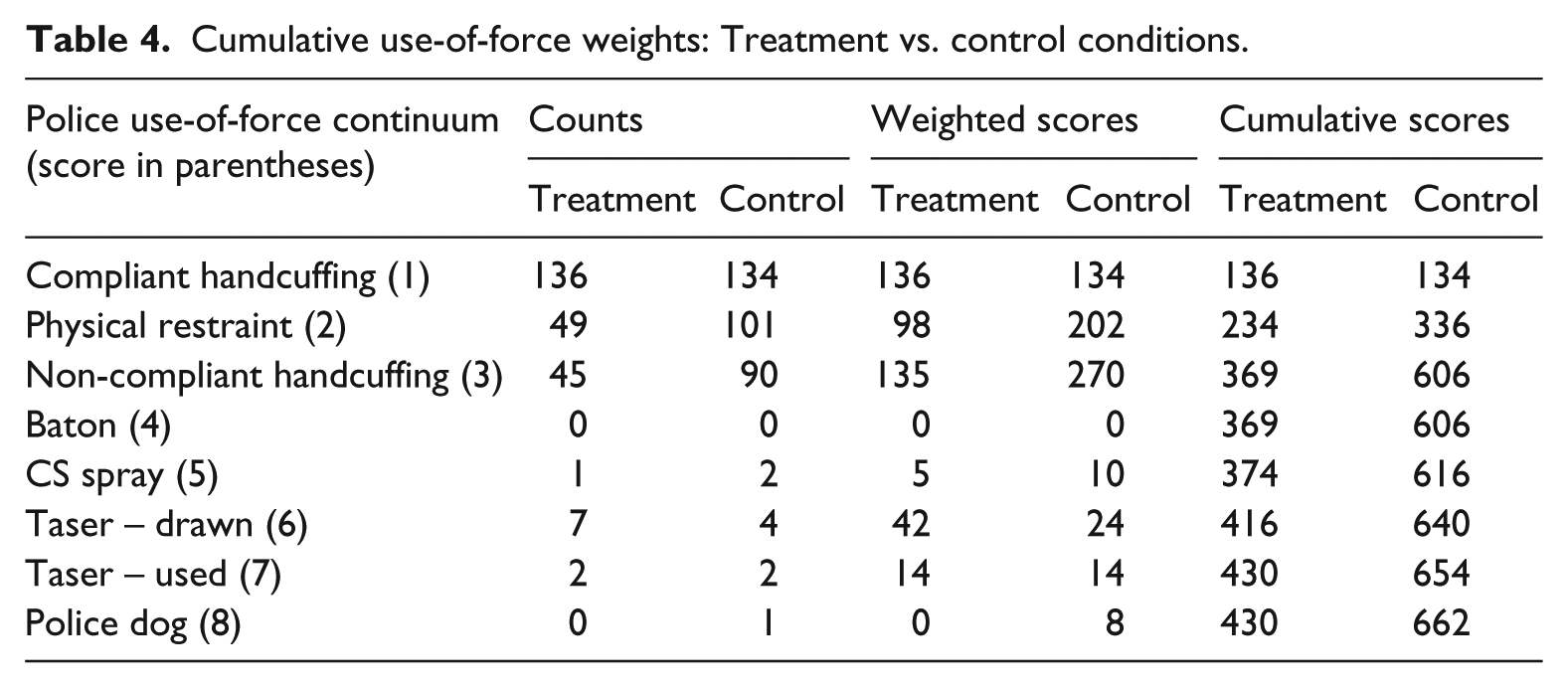
Finally, accepting that ‘force responses’ move up on the force continuum as the level of force applied to the subject increases, several force types could be applied in each case. It is not rare for officers to use both physical restraints with handcuffs and potentially Taser discharge as well ‘against’ the same combatant suspect. Therefore, we computed an overall weighted score, based on the cumulative ordinal position of each tactic, using a scale based on the force continuum scale, where ‘1’ is assigned to compliant handcuffing and ‘8’ to the use of a police dog (Table 3). The weighted scores were then used as dependent variables of the effect of BWCs.
Notice that we place emphasis on effect sizes, rather than statistical significance testing, given the growing awareness in scientific papers that that treatments should be evaluated based on the impact rather than the .05 alpha criterion. Effect sizes provide a more substantive answer to the efficacy question of any intervention. As recently commented by the editorial unit of Cochrane Collaboration (2014), ‘results should not be reported as statistically significant or statistically non-significant [as] the cut-off point of 5% is arbitrary… In general, point estimates and confidence intervals, when possible … should be used to describe effects based on the size of the effect and the quality of the evidence.’ Uman (2011: 57) noted that:
In contrast to traditional hypothesis testing which can give us information about statistical significance (i.e., did the intervention group differ from the control group) but not necessarily clinical significance (i.e., was this difference clinically meaningful or large), effect sizes measure the strength of the relationship between two variables, thereby providing information about the magnitude of the intervention effect (i.e., small, medium, or large).
In tune with this growing line of methodological approach, we also focused on the magnitude of the differences between BWC conditions and non-BWC conditions, rather than p-values, but present the associated 95% confidence intervals. For a more in-depth read on these methodological issues, see Fan and Konold (2010), Greenland et al. (2016), Kirk (2001), Thomas, Salazar and Landers (1991), Ziliak and McCloskey (2009, 2016).
Results
As noted, during the course of the six months, 215 shifts were randomly allocated to treatment and 215 to control, totalling 18,224 officer hours. In Birmingham South, 405 individual incidents of police use of force were recorded, out of a cohort of 590 arrests (270 arrests during treatment conditions and 320 during control conditions). Overall, there were 224 incidents of use of force recorded when cameras were not present and 181 when cameras were. However, once ‘compliant handcuffs’ were excluded, 56 and 106 incidents of use of force were recorded in treatment and control conditions, respectively (Figure 1).
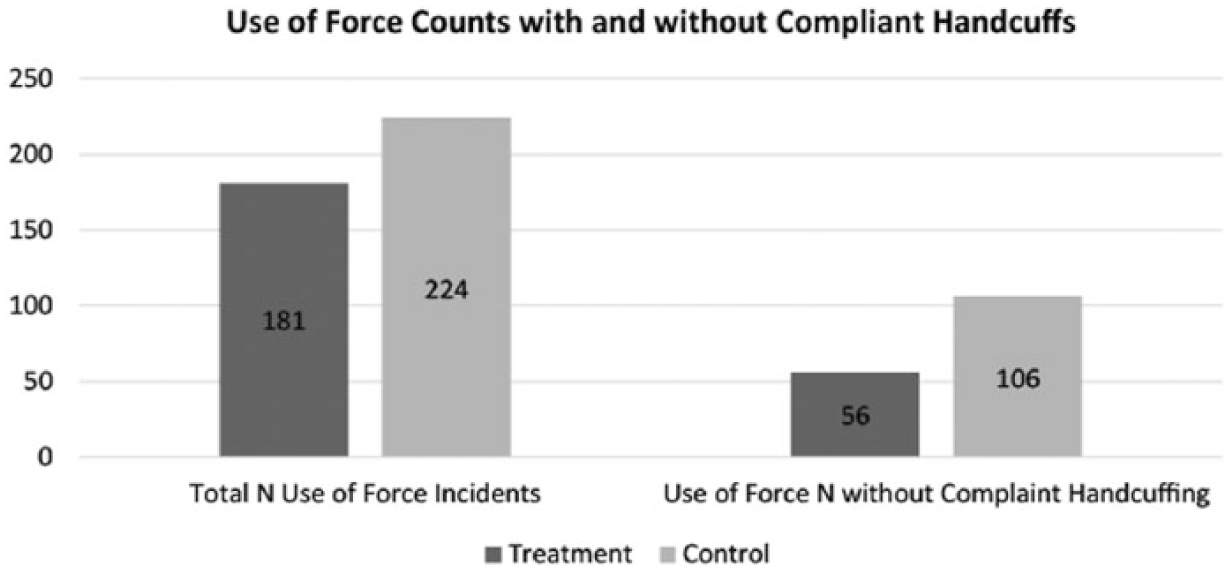
Use-of-force counts with and without compliant handcuffs.
We tested for the comparability of these arrests. The assignment of officer shifts to experimental and control conditions was random, fewer arrests are made during treatment (270) than during control conditions (320). We therefore tested whether different conditions and situations emerged during treatment versus control arrests, beyond the question of use of force. Our analyses (Table 2) indicate that the differences in arrests can be attributed to random variations in the data. As shown, the situations that led to arrests were not statistically significantly different – in terms of time of day, day of week, prevalence of drunk suspects, or possession of drugs. Likewise, we found no statistically significant concentrations of any type of condition ‘within’ officers (χ2(195) = 228.1; p < .05); see Supplementary Materials C).
Treatment vs. control arrest conditions.
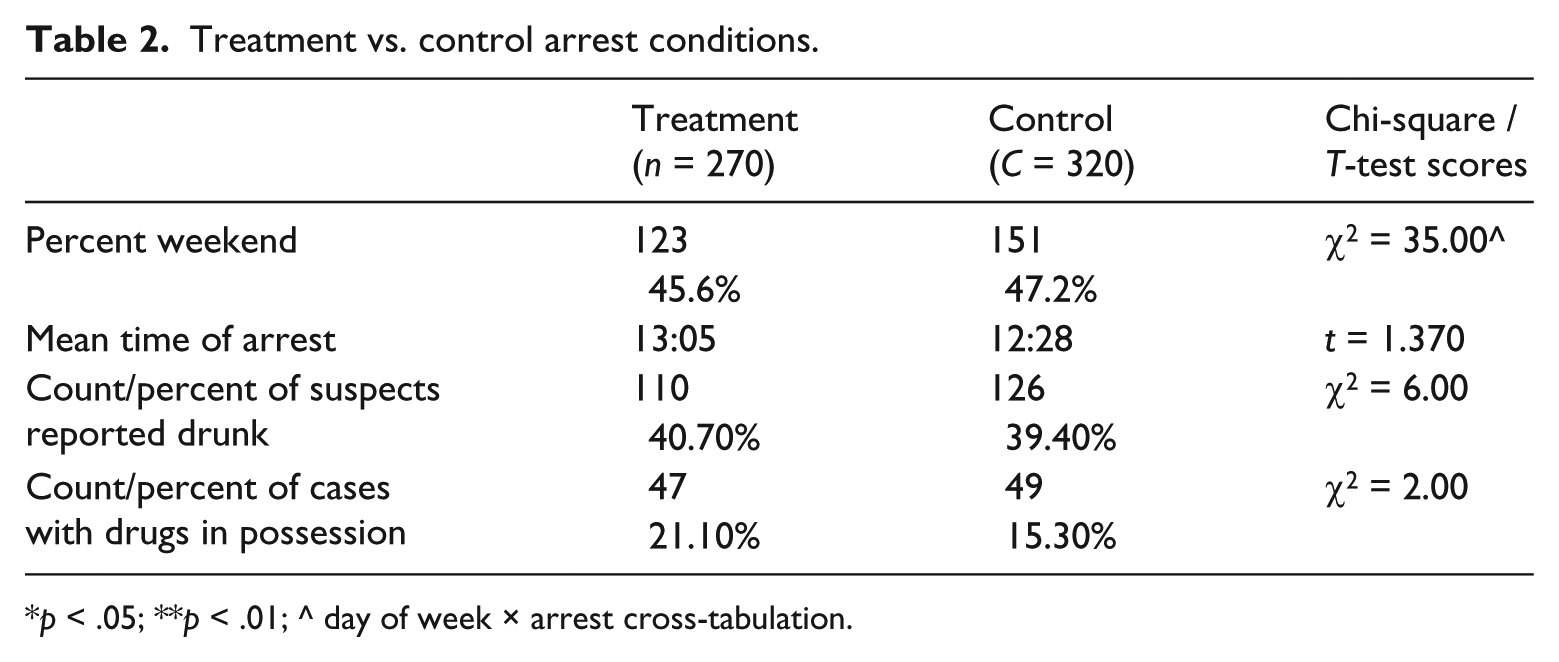
p < .05; **p < .01; ^ day of week × arrest cross-tabulation.
Model I: overall effects with compliant handcuffs. The odds for use of force per arrests when BWCs are present compared with BWCs not present are about 14 percent lower, ranging between 43 percent lower and 29 percent greater odds compared with the odds of use of force under control conditions. These results are not significantly different {OR = 0.856; 95% CI 0.567, 1.292}.
Model II: overall effects without compliant handcuffs. The odds for a use-of-force incident per arrests under the second model are about 48 percent and significantly lower {OR = 0.523; 95% CI 0.339, 0.807}. Put differently, the odds of a use-of-force incident beyond compliant handcuffing when BWCs are not present are double those when BWCs are present.
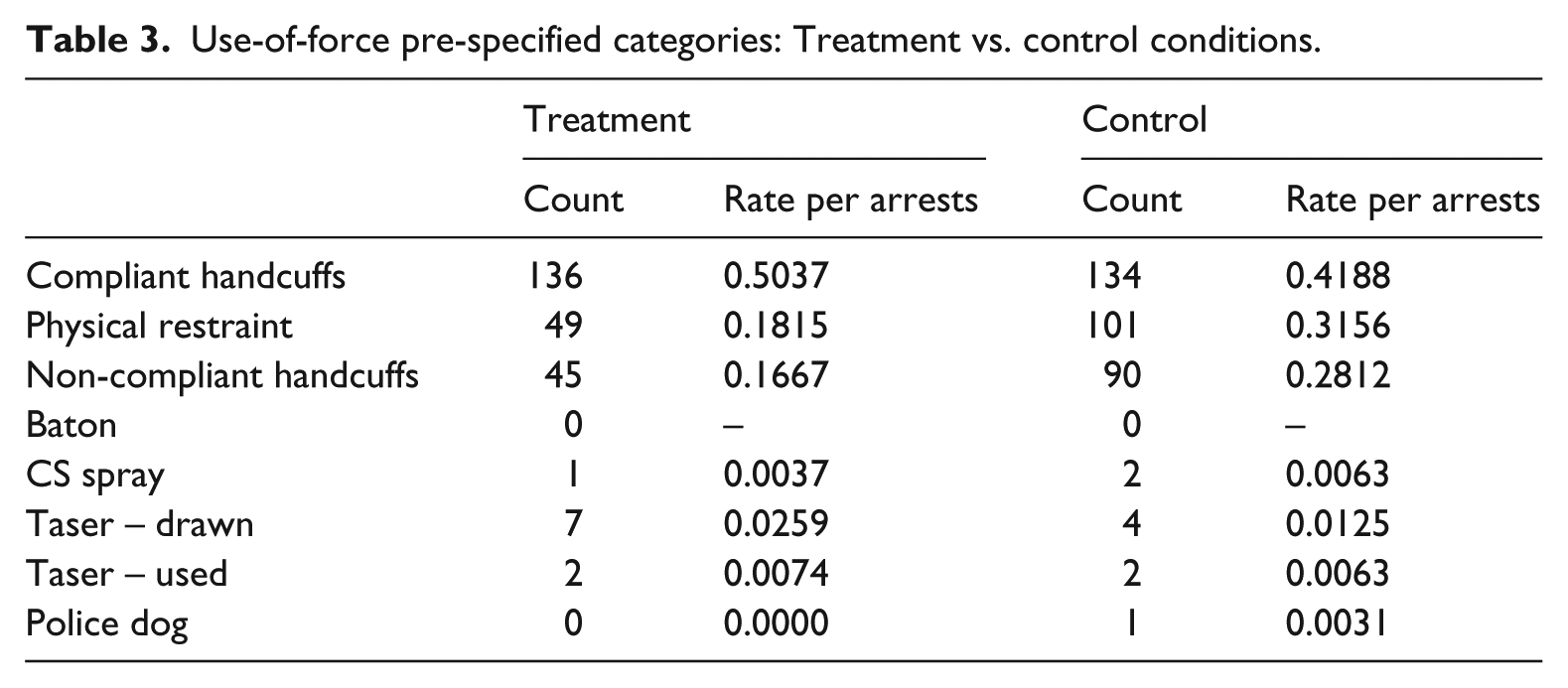
Table 3 lists the raw number of use-of-force incidents by type. Notice that the number of use-of-force ‘types’ exceeds the prevalence counts (240 in treatment and 334 in control conditions), since more than one type of force can be applied in the same forceful encounter (that is, a combination of several force responses ‘against’ the same suspect).
Use-of-force pre-specified categories: Treatment vs. control conditions.
The pre-specified breakdown of police use-of-force categories (Figure 2) indicates substantial differences in physical restraint and non-compliant handcuffing, as well as in terms of compliant handcuffs. However, the directionality of these effects is reversed. BWCs seem to lower the odds of physical restraints by 52 percent {OR = 0.476; 95% CI 0.304, 0.745} and non-compliant handcuffing by 49 percent {OR = 0.507; 95% CI 0.319, 0.805}. On the other hand, BWCs seem to increase the odds of compliant handcuffing by nearly 40 percent {OR = 1.405; 95% CI 0.961, 2.055, p = .079} 2 compared with control conditions.
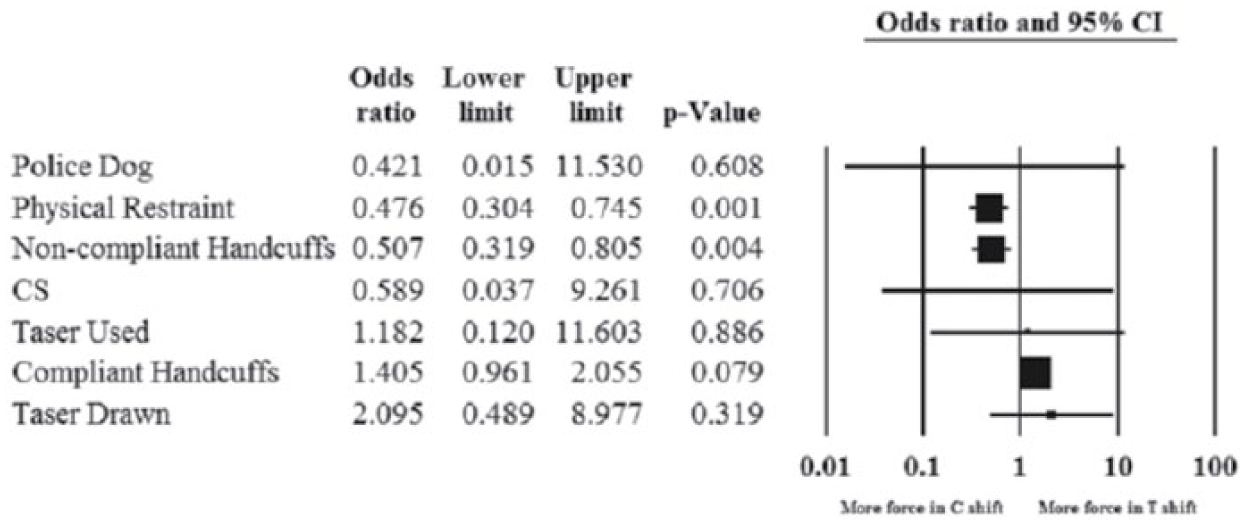
Use-of-force rates per arrests per shift.
Looking more closely at other force responses, we note that categories of police use of force above physical restraint represent only 5 percent of total police use of force in this sample (Table 3). If these results are indicative, they tend to suggest that BWCs increase the odds of force responses (Figure 2); however, these conclusions are suspect, given their low rates of occurrence.
Finally, in terms of the cumulative use-of-force scores (see Table 4 and Figure 3), there is, in comparing treatment and control conditions, a significant increase in the ordinal position of force when the data are arranged as a weighted, cumulative score. Our estimates suggest a 35 percent reduction of overall weighted force in the treatment conditions compared with control conditions.
Cumulative use-of-force weights: Treatment vs. control conditions.
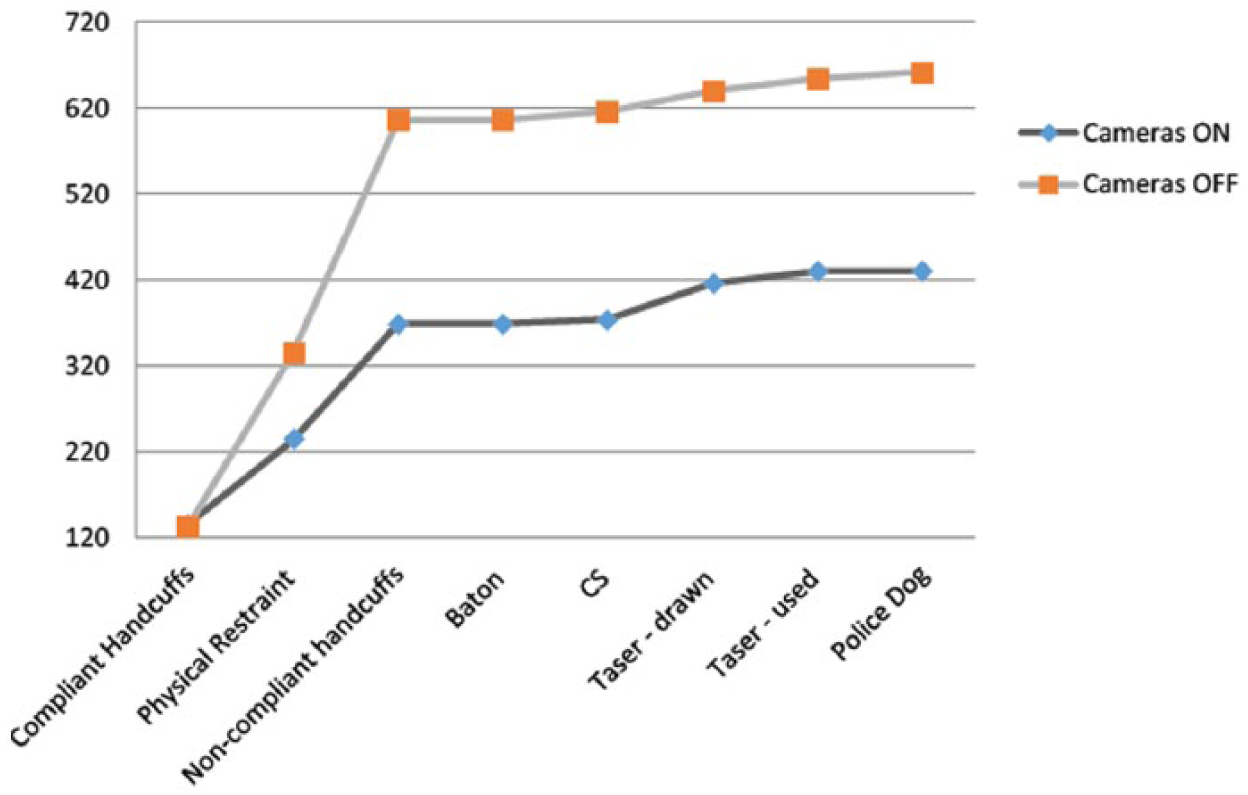
Cumulative scores.
Discussion
In this experiment, we robustly tested the effect of BWCs in a non-US setting, with one of the UK’s largest police forces. Over a six-month period, using the officers’ shifts as the unit of analysis, we have contributed to the evidence in three major ways. First, we demonstrated that the use of BWCs in police operations reduces both the prevalence and the severity of police use of force, in a country where police use of force is substantially less lethal than it is in countries such as the United States (Sherman, 2015). This suggests that, when the police use BWCs, police use of force can be curbed in ‘aggressive’ police–public contacts that do not involve life-threatening situations, for both officers as well as suspects.
Perhaps more importantly, our study exemplifies the importance of granular analysis of pre-specified outcome variations (see Ariel and Farrington, 2010). Overall, our weighted dependent variable, which captures any type of force response, shows a 35 percent reduction in the use of force compared with control conditions. However, the findings suggest that BWCs can be shown to be more efficient when recording force in one way but not in another. The way force is defined is crucial: when ‘police use of force’ includes what the professional literature refers to as ‘compliant handcuffing’ of suspects – meaning the ordinary handcuffing of arrestees when transporting them to jail – then our overall estimated effects are non-significant and weaker. However, when the definition of ‘police use of force’ excludes such handcuffing, the odds for force responses were halved compared with control conditions.
Moreover, once we break down ‘force’ into its components, we are then able to characterise the effect in more specific terms. Our findings suggest that the overall pooled effect on use of force is driven by low-level force categories rather than more aggressive tactics. We first show that BWCs increased compliant handcuffing. We then show that the odds for physical restraints and non-compliant handcuffs were lower with BWCs than in control conditions. Next, our data illustrate that the odds for using more combative force responses, such as batons, Taser or police dogs, were non-significant and therefore the effect is presently unclear. Thus, there is a distinct change when moving from ‘empty handed’ techniques to ones where ‘force tools’ are used. This suggests that once the level of force reaches the rare but elevated levels of force, the effect of BWCs is less discernible. However, given the non-significant results in these upper force categories – a finding that is likely to emerge owing to the small number of overall incidents in which officers in Birmingham South applied such tactics – more research is required before reaching firm conclusions on the effects of BWCs in these types of force.
Interpreting the effect of BWCs on compliant handcuffing
The granular analysis of the dependent variable – police use of force – indicated 40 percent greater odds for compliant handcuffs when BWCs were used compared with the odds under control conditions. This is the opposite of what we have detected for non-compliant handcuffing (a 51 percent reduction). How can these contradictory results in terms of compliant and non-compliant handcuffing be explained? If BWCs are meant to deter, in what circumstances might they actually increase the prevalence of use of force rather than decrease it? An increase in use of force is counterintuitive to the hypothesised effect of BWCs. It goes against the premise of deterrence theory, which can potentially explain the effects of BWCs. We offer three interpretations.
BWCs create unintended consequences
On the one hand, it is possible that wearing a BWC intensifies, rather than lowers, the tension between some officers and some suspects. If this is the case, officers may have to apply compliant handcuffs more frequently when BWCs are in use because the devices trigger aggression for particular suspects. In these circumstances, the handcuffs are used pre-emptively. For instance, the cameras can make certain suspects verbally abusive or hostile towards the officer (though not physical), and so the officer immediately responds with compliant handcuffs without which he would have to resort to tougher force responses. To emphasise, the officer would not have to resort to tougher force responses and consequently to use pre-emptive handcuffing if BWCs were not present.
There is some general evidence to support this argument: use of force does not occur in isolation and, ordinarily, police officers use force as a reaction to the demeanour of the suspect (Alpert and Dunham 1997; Alpert et al., 2004; Garner et al., 2002; Terrill, 2001; Terrill and Mastrofski, 2002). Officers are trained to match appropriate force against subject resistance, and they would move up the force continuum in line with the way that the suspect exhibited such behaviour (College of Policing, 2013). However, the key is the officer’s perception that more force is appropriate in the circumstances. Therefore, because the only difference between treatment and control conditions is the presence of BWC, then we could draw the conclusion that, in order to gain control of situations that may otherwise end up with more severe types of force responses, officers understood the encounter as one that merits the use of compliant handcuffing.
On the other hand, the unintended consequences explanation does not fully expound why we measured a substantial decrease in the odds for ordinary use-of-force categories whereas the odds for compliant handcuffing rates increased. If officers use compliant handcuffs at increasing rates during control conditions because they pre-empt assault against them, this could mean that BWCs may reduce overall use of force but at the same time increase the likelihood of assaults against officers. This suggests that BWCs are potentially backfiring in terms of assaults against the police (Ariel et al., 2016a), and WMP’s officers have found a way to deal with it: to increase the rates of pre-emptive handcuffing of arrestees. Therefore, the overall results mask a more complicated story: under certain conditions and for some suspects, BWCs increase rather than decrease levels of aggression, and a way to operationally deal with this problem is to place these suspects in handcuffs before they turn this aggression into violence. How officers are able to predict which suspects are more likely to assault them (for example, drugged offenders), or whether in fact there are case types that require these compliant handcuffs (for example, domestic assaults), remains unclear at this stage, 3 and more research is needed at this granular level.
Transparency and accountability
A more parsimonious interpretation would suggest that the increase in the use of compliant handcuffs is simply a reporting artefact. With the new BWC policy, officers (including the custody officers) began logging compliant handcuffs more diligently under the treatment conditions. Ariel (2016c) contextualises this pattern within the police accountability and transparency literature. In this regard, accurate and full reporting of use of force is a clear marker of enhanced accountability; democratic institutions must hold their functionaries responsible for their actions, justified or otherwise, so we require better recordings from them (Skolnick and Fyfe, 1993; Walker and Archbold, 2013).
Once BWCs are mandated in police operations, the reporting of use-of-force incidents increases, especially where they are normally underreported. This is less of an issue with more severe force responses, because it is very unlikely that a Taser discharge or the use of batons or police dogs could go unreported in large Western police departments. However, lower-bound force responses are easier to conceal, and even more so if there is no legal requirement to report them – such as compliant handcuffing or voice commands. Thus, officers in the treatment group began registering these incidents at increased rates per arrests, compared with control conditions. What once was left to ad hoc explanations by officers, who did not record ‘lesser’ types of force, now can no longer be hidden from the radar.
If this transparency mechanism is at play behind the increase in the odds of reporting compliant handcuffing, then we can conclude that BWCs have caused officers to become more accountable. The likelihood of ‘getting caught’ using this type of lesser force – now on videotape – has substantially increased. As a result, the rates of reporting went up.
Regimented police behavior
An alternative explanation, which fits comfortably within the construct of deterrence theory (Ariel et al., 2017), is that the increase in compliant handcuffing is an unintended consequence of ‘being observed’. As the awareness of being scrutinised and observed generally evokes a measurably favourable shift in behaviour (see our review above), it is conceivable that the increase in compliant handcuffing indicates that officers follow the rules of police conduct prescriptively. This means that the officer with a BWC is acting regimentally, in a ‘policeman-like’ way, which includes the handcuffing of arrestees. This is an adverse consequence, because it removes the need to show that the handcuffing was ‘reasonable, necessary and proportionate’ because now the arrest event itself is construed as ‘the objective basis for the decision to apply handcuffs’ (ACPO, 2010).
At the same time, this mechanism can be construed as a desired consequence. We want our officers to follow rules. The increased odds of handcuffing under treatment conditions can be interpreted as a fairer policy – to handcuff every arrestee, with limited discretion to decide if the arrest warrants handcuffing or not. This can be seen as the essence of a distributive fairness approach (Tankebe, 2013).
Policy implications
There is a wealth of studies suggesting that legitimate police use of force contributes to a wider public acceptance of the legitimacy of policing (Goldsmith, 2005; Manning, 2010; Mawby, 2002; Reiner, 2010). Some incidents of police use of force can irreparably damage the police–public contract, leading to catastrophic outpourings of violence against the state. The Dallas shootings of 7 July 2016 are examples of this. These may represent only a tiny fraction of 1 percent of the number of times officers use force on members of the public, and the intimate details of why and how the incident flared up into violence are not always captured in third-party recordings because the confrontation does not excite public interest until it becomes heated. These kinds of conflict demand rules for the police officer but none for the citizen (Vunak, 2001) and so invariably resemble a street brawl. Video footage of these kinds of event strongly influence the level of the community’s trust and confidence and may become a catalyst for what was seen in the UK in 2011 and in Ferguson, Missouri, in 2014. If BWCs indeed lessen the incidence of police use of force, or at least some forms of it, the ramifications cannot be underestimated.
Over a number of years, there have been numerous attempts to inhibit police misconduct, from policy changes and training through to civilian oversight committees. Mostly these have been ineffective (Walker, 2005). The question of whether, and how much, force is used is one that requires decision-making during police–public encounters, which is the most difficult police behaviour to influence (Chan, 1997, 1999; Ericson, 2007). Our study has shown there is an effective tool for accomplishing this, with BWCs.
Finally, it is important to ensure that an efficient BWC policy is adopted by police departments. One major element of such a policy would be strict guidelines whereby officers will be required to announce the presence of the camera. This may fit legal requirements about recording interactions with members of the public, but more importantly it acts to materialise the deterrence threat. If the reading of the Caution or Miranda Rights warning is required in order to echo the rights of the suspect to protect against involuntary self-incrimination (UK officers must give notice of arrest and the crime as soon as reasonably possible; College of Policing, 2015; US Supreme Court, 2015), then a BWC policy must include a clear warning as soon as operationally feasible. It is a combination of this awareness and recognition of the technology that changes behaviours, practically as well as legally, and a sound policy should secure the theoretical mechanisms with such an immediate warning.
Limitations of the study
This study has been conducted on a relatively small scale with only 46 officers, albeit there were 430 shifts randomised to control and treatment. We measured ‘only’ 19 arrests that used higher levels of force, which has made it difficult to provide stronger estimates of the treatment effects. Only a much larger or longer study would be able to detect smaller effects for these less frequent events. We invite further research to consider this possibility.
This study has also ignored the actual conflict point in these scenarios. There is still no robust understanding of the demeanour hypothesis as it pertains to BWCs (see Ariel et al., 2015; Jennings et al., 2015). There was no opportunity to either review the recorded footage of each incident or interview the parties involved. Even if access was granted to the footage, observing recorded footage clearly would be observational and partial only, because we cannot view incidents during control conditions. This leaves us speculating whether the camera operates on one or both of the parties involved, and whether the cameras affect the officers’ behaviour and then affect the offender, or work in the opposite direction. There may be a double effect. We simply do not know. It would be very difficult, time consuming and expensive to study the mechanism at play in these conflict scenarios, but it could be a valid direction for future research.
Conclusions
Any level of force exercised by the police over the public can strain relations and ‘a single critical incident can have deleterious consequences’ (Jefferis et al., 1997: 392). Technology can help reduce the need for force, and the BWC offers such a medium. Experimental evidence from Birmingham South shows that BWCs reduce the odds of use of force in arrests by about 50 percent, which echoes the findings found in the Rialto Experiment. However, this replicated result was achieved only when we removed compliant handcuffs from the use-of-force measure. Future studies will be required to pay closer attention to the way force is defined, because the effect of BWCs is conditional on the way ‘force’ is operationalised – with compliant handcuffs versus without compliant handcuffs, open handed versus force apparatus, etc. Our test shows that the treatment effect is concentrated in the lower bounds of the force continuum, with a non-significant effect on more aggressive force categories. BWCs seem to increase accountability and transparency, particularly as regards those police responses for which there is no requirement to log reports.
Footnotes
Funding
The author(s) received no financial support for the research, authorship, and/or publication of this article.
Notes
References
Supplementary Material
Please find the following supplemental material available below.
For Open Access articles published under a Creative Commons License, all supplemental material carries the same license as the article it is associated with.
For non-Open Access articles published, all supplemental material carries a non-exclusive license, and permission requests for re-use of supplemental material or any part of supplemental material shall be sent directly to the copyright owner as specified in the copyright notice associated with the article.
