







Abstract
Situational Action Theory (SAT) is an important theoretical development with relatively broad empirical content, reflected in highly specific hypotheses about crime causation. It offers an alternative concept of self-control to that of the General Theory of Crime and predicts that the effect of self-control on crime depends on crime contemplation. Crime contemplation is the tendency to consider crime as an action alternative. This paper is a test of SAT using data on 1304 juveniles from four Latin American cities with relatively high crime rates and impunity levels. It therefore contributes to cross-national testing. Both ordinary least squares and negative binomial regression techniques are applied. Three different ways to test interactions in non-linear models are used. Findings support the hypothesis. Results and limitations are discussed.
Keywords
Situational Action Theory (SAT) (Wikström, 2004; Wikström et al., 2012) is an important development in theoretical criminology. SAT incorporates a theory of action and orders systematically different causal elements, puts forward a connection between levels of analysis, defines causal mechanisms in situational terms, and, more generally, advances an analytical conception of criminology. In addition to offering a substantive explanation of crime and related behaviour, SAT can be seen as a scientific research programme in which hard-core ideas are developed and reshaped in a collective effort (Lakatos, 1970).
Two particular elements can be mentioned: crime is possible only if an agent first considers it as an action alternative, and agents are spontaneously able to adjust their behaviour to their moral rules in spite of empirical pressures and situational inducements to choose a different course of action. I will relate the former idea to (the tendency to see) crime-as-alternative or crime contemplation and the latter to moral self-control or, simply, self-control. I will be concerned in the present paper with the interaction between these two elements in the causation of crime.
The prediction of interactive hypotheses is a reflection of SAT’s relatively broad empirical content. In other words, the theory is comparatively easy to refute and, other things being equal, it is therefore to be preferred to alternative proposals from a scientific point of view (Popper, 1959). Conjectures such as self-control has a stronger effect on crime at higher levels of crime contemplation are highly specific and so are easy to reject if they are false (in an alternative-hypothesis approach). For that reason, most tests of the theory (see Pauwels et al. in this special issue) have concentrated on hypotheses about interactions in the causation of crime, including those between morality and self-control (Svensson et al., 2010; Wikström and Svensson, 2010), morality and deterrence (Pauwels et al., 2011), propensity and risky lifestyles (Svensson and Pauwels, 2010), deterrence and self-control (Hirtenlehner et al., 2014) and propensity and deterrence (Wikström et al., 2011), among others (Hirtenlehner et al., 2015; Pauwels and Svensson, 2010).
In a recent paper, Brauer and Tittle found that impulsivity predicts ‘criminality more effectively among individuals who already perceive of criminal acts as potential alternatives for their own behavior’ (2016: 7). This interaction between impulsivity and crime contemplation is consistent with SAT. Brauer and Tittle use data from a sample from Dhaka, Bangladesh. The questionnaire includes four items from the Grasmick et al. scale that are used to measure impulsivity, and contemplation of aggression/violence is captured with the following question: ‘How likely is it that you would consider or think about the following responses?’ in a specific scenario. Results support the proposition (2016: 10, 12, 19) and Brauer and Tittle write that ‘impulsivity’s influence on violent criminal behavior is limited to those who (for moral reasons) perceive and contemplate violence as a realistic possibility when provoked’ (2016: 21).
Though tests of SAT are quickly spreading worldwide, a majority of them are still conducted in environments that do not differ dramatically from those in which the theory was originally proposed, that is, culturally homogeneous environments with relatively low impunity levels and crime rates. It is important, therefore, to examine criminological hypotheses in varied contexts. SAT stresses that settings are critical and interact with individual characteristics in the causation of crimes as events. Settings are ‘the part of the environment … accessible to a person through his or her senses’ and are different from the more general environment or ‘all that lie outside the person’ (Wikström et al., 2012: 14). Person-setting interactions, thus, should still be present in different environments. It can be advanced that Cali and San Salvador and to a smaller degree Quito are cities with extraordinarily high crime and homicide rates, while impunity is equally widespread – not to mention their cultural divergence from European cities.
I report here the first test of SAT in Latin America and, more specifically, in a highly criminogenic context. I examine the interaction between crime contemplation and self-control in the causation of crime. From an analytical point of view, three different statistical strategies are used to test the interactive hypothesis in non-linear models. Finally, I suggest that some of SAT’s concepts need further clarification.
Theory
According to SAT, an agent can perform an action only if she has previously considered it as a possible alternative, typically among other options. There is variability between individuals in crime contemplation – the inclination to see crime as a potential action alternative. This is not simply to think about a possible action, as when one perceives an object on a table and realizes how easy it would be to take it. Instead, it must include a certain desire to perform it (apart from the relevant beliefs). It is not necessary, however, that the agent forms an intention to act (Davidson, 2001: 3–20). 1
Crime contemplation fundamentally depends on motivations, that is, the temptations and frictions to which an individual is exposed, and on the moral filter. This means that many or maybe most temptations and frictions do not translate into seeing crime as an alternative because moral forces will prevent it. SAT’s emphasis on the interdependence of individual characteristics and settings can be fully appreciated here: an agent low in morality can nevertheless be relatively low in crime contemplation owing to a low exposure to criminogenic motivations (Kant, 1998 [1793]: 6:38).
Self-control means different things in human and social sciences and one of its better-known definitions in criminology is that of the General Theory of Crime (Gottfredson and Hirschi, 1990). Self-control is understood in the General Theory of Crime in the Hobbesian tradition as prudence: 2 crime seldom favours self-interest, so that prudence advises against it (Hobbes, 1889 [1651]: 14–16, 60). In SAT, self-control does not necessarily correspond to prudence but is closer to morality. SAT’s notion of self-control is different from prudential and other arguably relevant conceptions, such as motivational self-control – an agent’s ability to self-motivate in line with her best judgement and to avoid acratic action, an ability that offenders can possess too. Wikström and Treiber write that self-control is a cognitive process that agents can exercise ‘to act in accordance with their own moral rules’; and that, as a control, it ‘affect[s] how a person chooses between action alternatives when at least one alternative involves a breach of a rule of conduct’ (Wikström, 2010: 232; Wikström and Treiber, 2007: 243; Wikström et al., 2012: 26). 3 Previous empirical studies using confirmatory factor analysis and controlling for measurement error suggest that it is adequately measured with Wikström’s eight-item cognitive scale (Serrano-Maíllo, 2013) inspired by Grasmick and colleagues (1993). Previous tests of SAT have relied on this scale to tap into self-control (Wikström et al., 2012).
Since, as we have seen, SAT claims that self-control is relevant only if the agent first considers crime as a potential action alternative, the following hypothesis can be derived from Wikström’s theory: Self-control has a stronger effect on crime at higher levels of crime contemplation.
Methods
Sample
I will use data from three different studies conducted in Cali, Colombia (2010), Quito and Riobamba, Ecuador (2013), and San Salvador, El Salvador (2014). The three studies share almost all their characteristics. Taking into account my objective of theory testing, the sampling design maximized variation (Stinchcombe, 2005: 22–32). It is a (bold) prediction of many general theories of crime, including SAT, that they can be tested within any sample, as long as it includes sufficient variability. Though a certain level of randomness is preserved, the samples are not intended to be representative of the juveniles in these cities. All data were merged together in a single set.
Schools and training centres were, thus, purposively selected (Palys, 2003: 144) to include both public and private institutions and to maximize the range of socio-economic contexts represented. For example, 58 juveniles not attending any educational institution – a serious problem in the region (World Bank, 2002: 77) – were contacted in their neighbourhoods and participated in the Cali study.
The final sample comprised 17 educational centres: 9 in Cali, 6 in Quito-Riobamba and 2 in San Salvador. These are interesting and culturally rich cities that have much to offer to the visitor. Their human warmth finds no parallel in Western metropolises. Unfortunately, they suffer from severe social problems and sky-rocketing crime and impunity rates. The difficulties in obtaining valid and reliable data on crime for international comparisons are well known. According to official estimates, South and Central America are among the regions with the highest violence and crime rates in the world; Colombia and El Salvador, in particular, occupy top positions in international comparative studies. The picture is largely the same when alternative official measures or victimization survey data are employed (Gabaldón, 2002: 249; Morrison et al., 2005: 120).
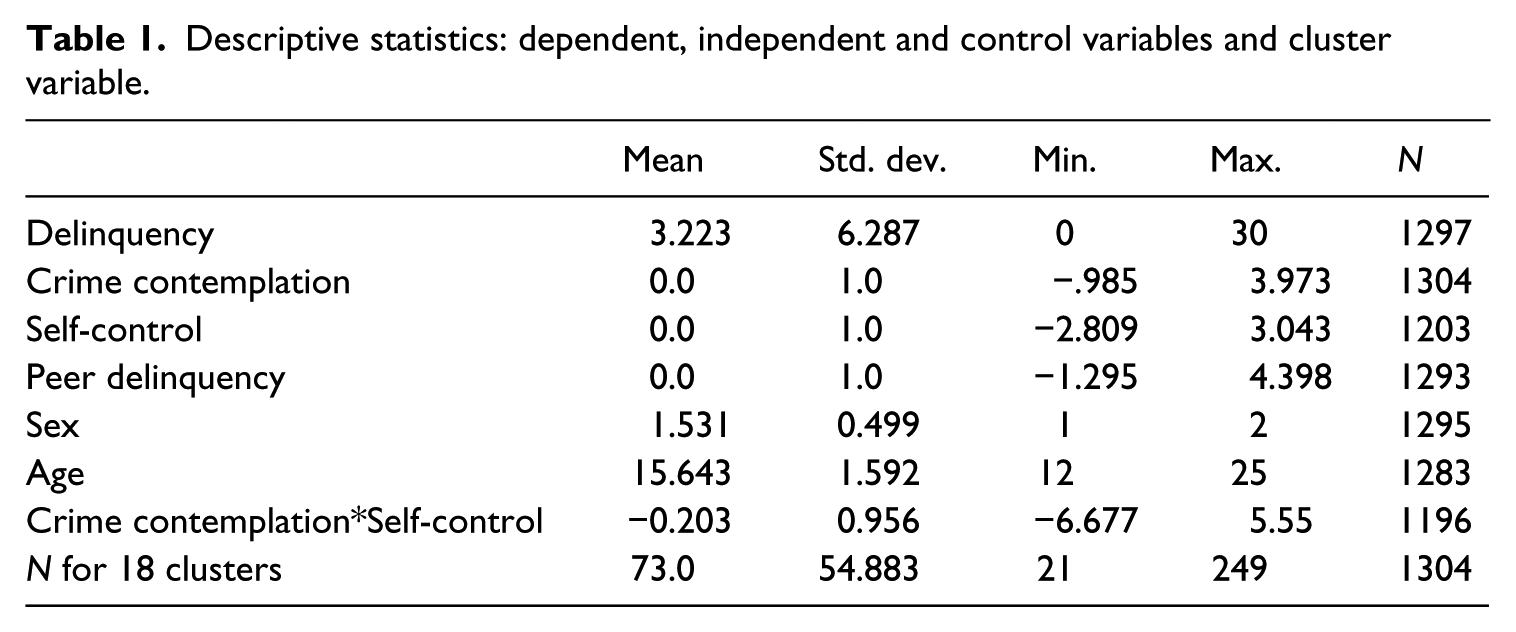
Almost all students agreed to take part in the study and reported it as a pleasant experience. Non-response amounted to less than 2 percent. A majority of the participants belong to the Cali subsample (70.17 percent), followed by Quito and Riobamba (25.54 percent) and San Salvador (4.29 percent). There is a slight overrepresentation of girls in the sample (N = 688; 53.13 percent); and, in spite of a larger range, 93.14 percent of the students are between 14 and 18 years old – for that reason, age is highly positively skewed (= 8.61).
Data at the city level are even scarcer but, again, the evidence points to relatively high levels of violence and crime in these environments. Data on an offence as serious as homicide are among the most valid and reliable in international comparisons (LaFree and Drass, 2002). The United Nations Office on Crime and Drugs (2013) compiles intentional homicide counts and rates in capital cities using data provided by competent national authorities through the United Nations Surveys on Crime Trends and the Operations of Criminal Justice Systems (CTS). The Observatorio Social, a department of Cali’s Municipality, reports data for the third-biggest city in Colombia. These figures show a high rate of homicides per 100,000 inhabitants in 2011 for Cali (81.0), San Salvador (89.9) and even Quito (11.4), both in absolute terms and in comparison with London (1.3) and New York (6.3). Even though direct comparisons between these figures are problematic, they nevertheless point to significant differences in the prevalence of homicide. Even Quito’s relatively moderate homicide rate was almost double that of New York in 2011. Additionally, in all probability these data underestimate homicide rates in Latin American cities (Gordon and Kury, 2009: 40–54; Shaw et al., 2004: 42–43). It is important to note that the political conflicts that devastate some of these regions are not the main cause of homicides. Gordon and Kury report that, of all known homicides in Colombia between 1998 and 2003, 75–90 percent were connected with common criminality without any political motivations (2009: 31–2); at the same time, guerrilla and paramilitary groups operated in rural areas. As already mentioned, another contextual particularity is that a relatively high percentage of crimes, including serious ones, are not effectively prosecuted in many Latin American cities and impunity is an important problem in the region (Chevigny, 2005: 66–7; World Bank, 2002: 66–8).
Measurement
As is usually the case in the test of individual-level theories, variables were measured using self-report data (Thornberry and Krohn, 2000). The PADS+ (Peterborough Adolescent and Young Adult Development Study) questionnaire, with minor changes and additions, was used. 4 It was translated into Spanish and pre-tested in each country using cognitive interview techniques. The study included the following variables.
Delinquency
Participants were asked to report how many times in the previous year they had committed any of 11 different offences (see Appendix). They were provided with fixed time reference points. All answers were added up (and truncated at 30). 5 Our dependent variable is thus a count and follows a negative binomial distribution.
Crime contemplation
The PADS+ questionnaire captures the concept (including its desire dimension) with four questions about the frequency with which participants had felt tempted to commit certain offences. 6 Each item has five response categories. A preliminary multiple correspondence analysis (MCA) recommends treating them as ordinal variables (Cronbach’s alpha [α] = 0.711) (Beh and Lombardo, 2014). For this reason, the information is reduced with a categorical principal components analysis (CatPCA) that favours a one-factor solution (eigenvalue1 = 2.143; variance explained = 53.584 % N = 1304) (Linting et al., 2007). This strategy has the advantages of taking into account dimensionality and allowing differential item-contribution to the resulting measure. Higher values represent a higher tendency to see crime as an action alternative.
Self-control
Wikström’s eight items (α = 0.68) were subjected to an exploratory principal components analysis (KMO = 0.716; p for Bartlett’s test < .0005) based on its five response categories and preliminary MCA. Results point again to a unidimensional construct (eigenvalue1 = 2.496; variance explained = 31.204 % N = 1203). Higher values mean higher self-control.
Peer delinquency
Six items with four response categories ask respondents about the criminal and deviant acts of their friends (α = 0.774). It is, therefore, an indirect measure of peer delinquency (Weerman, 2010). According to a CatPCA, these items are caused by one latent factor (eigenvalue1 = 2.816; variance explained = 46.932 % N = 1293). Higher values represent peers more active in deviant behaviour.
Demographic controls
Age in years; and sex (1 = female; 2 = male).
Table 1 shows the descriptive statistics for our dependent, independent and control variables.
Descriptive statistics: dependent, independent and control variables and cluster variable.
Analysis
I concentrate in this paper on the interaction between crime contemplation and self-control. Analyses apply both ordinary least squares (OLS) and negative binomial (NB) regression techniques. All models shown include controls and use clustered robust standard errors (Hilbe, 2011: 275, 277). 7
NB distributions are common in criminological research with general population samples because most participants have not committed, at least in the interval of the previous year, any of the crimes about which they are questioned. The outcome variable(s) will tend to approximate a Poisson distribution, in the typical case with an excess of zeros and violating some of its properties. Although in situations like these OLS regression can be applied if its assumptions are reasonably met, specific regression techniques have been developed (Hirtenlehner and Kunz, 2016).
It is crucial to note, though, that the test of interactions in non-linear models is problematic and that even cautious approaches are error-prone (Brambor et al., 2006). For example, Drichoutis (2011) found that a majority of papers testing interactions published between 2005 and 2010 in five prestigious empirical economics journals were flawed. In non-linear approaches, the multiplicative term does not capture the intended interaction effect because it is a mixture of different interactions inherent in the models (Ai and Norton, 2003; Greene, 2012). The familiar construction of groups relying on the moderator variable can be equally problematic (Allison, 1999: 189). Other approaches are promising (Norton et al., 2004), but some are difficult to extend to NB. In the present paper, I rely on one version of marginal effects (Buis, 2010; Williams, 2012) that allows estimation of the impact of self-control on delinquency at different fixed values of crime contemplation (MER). Results will be replicated with complementary techniques.
Findings
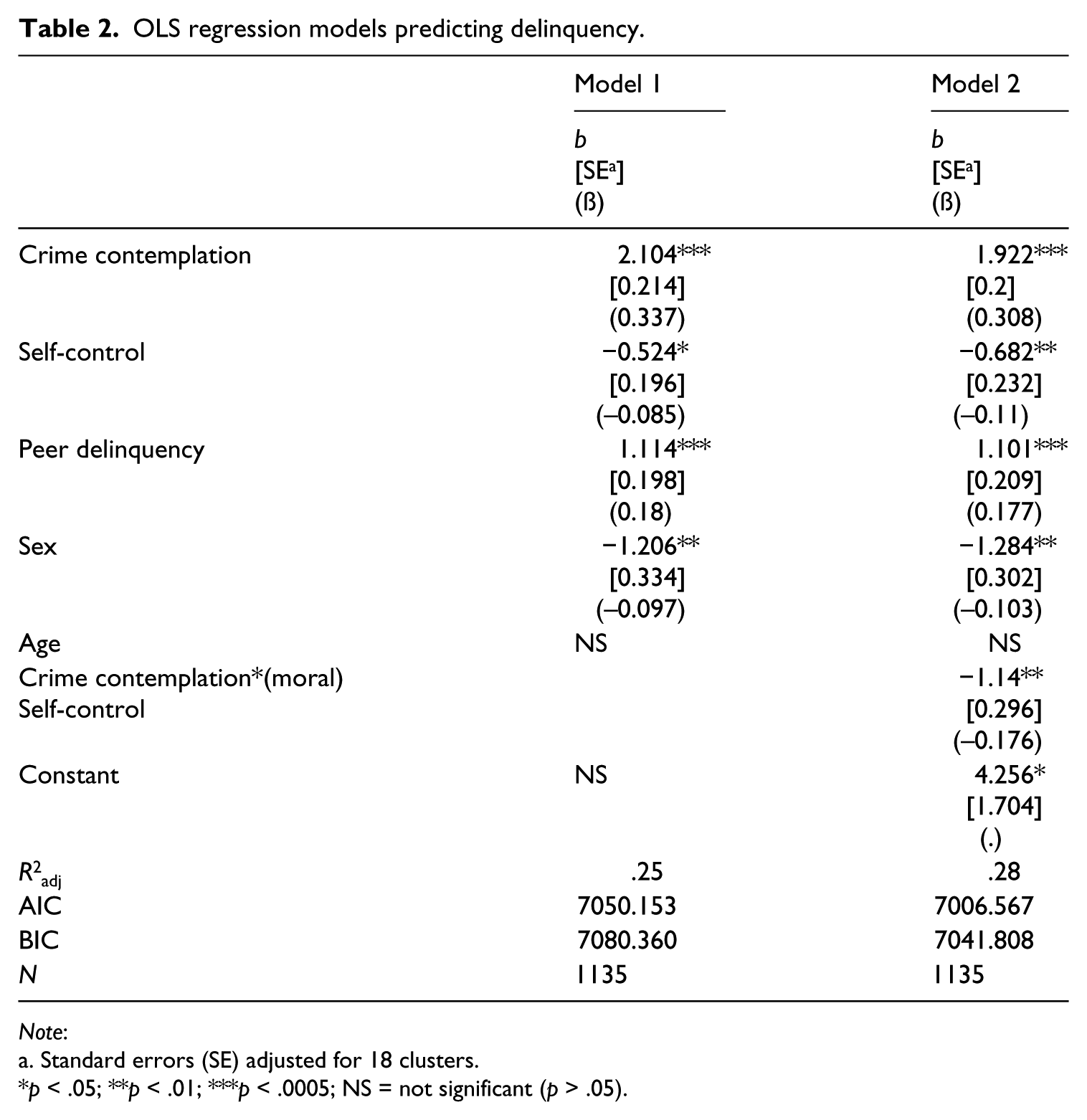
Table 2 presents the results from two OLS regressions predicting delinquency. In the first model we include all the independent and control variables with the exception of the interaction term. Owing to its strong association with crime and with many of its potential causes, it is advisable to control for age and sex. Crime contemplation and self-control prove to be strong predictors of crime when controlling for peer delinquency and the two socio-demographic variables. In this model, all variables except age are statistically significant predictors of crime in the sense expected by criminological theory. This exception is probably attributable to the short range of values and to the non-linear effect of age on crime. 8 As predicted by SAT, the higher the crime contemplation and the lower the self-control, the more offences are reported.
OLS regression models predicting delinquency.
Note:
Standard errors (SE) adjusted for 18 clusters.
p < .05; **p < .01; ***p < .0005; NS = not significant (p > .05).
The second model incorporates the product of crime contemplation and self-control to test SAT’s interaction hypothesis. Adding the product term improves Model 1 in a statistically significant way and yields better goodness of fit statistics. The interaction term is highly significant. Its negative sign is as predicted by SAT: 9 self-control has a stronger effect on crime at higher levels of crime contemplation, controlling for other variables (that is, it becomes more negative). 10 Findings, therefore, support our hypothesis.
There are alternative ways of testing interactions. Following another familiar procedure, we can divide the sample into three groups of individuals according to their values in the moderator variable, that is, crime contemplation. The low group includes those situated below −1 standard deviation from the mean. The medium and high groups follow the same logic. Next, the dependent variable is regressed on the focal variable for each of these three groups and results are compared and the differences tested. Three OLS regressions (not shown) including all the control variables support SAT’s hypothesis: the strongest estimates for the effect of self-control on delinquency are revealed in the model restricted to those high in crime contemplation (unstandardized coefficient [b] = −2.775; p < .05; N = 183) in comparison with those with medium values (b = −0.375; p < .05; N = 737) and those with low values (b not significant; N = 231). Figure 1 shows the regression lines for the three groups: there are apparent differences between the slopes, with the most prominent corresponding to those high in crime contemplation. These findings bolster our confidence in the hypothesis.
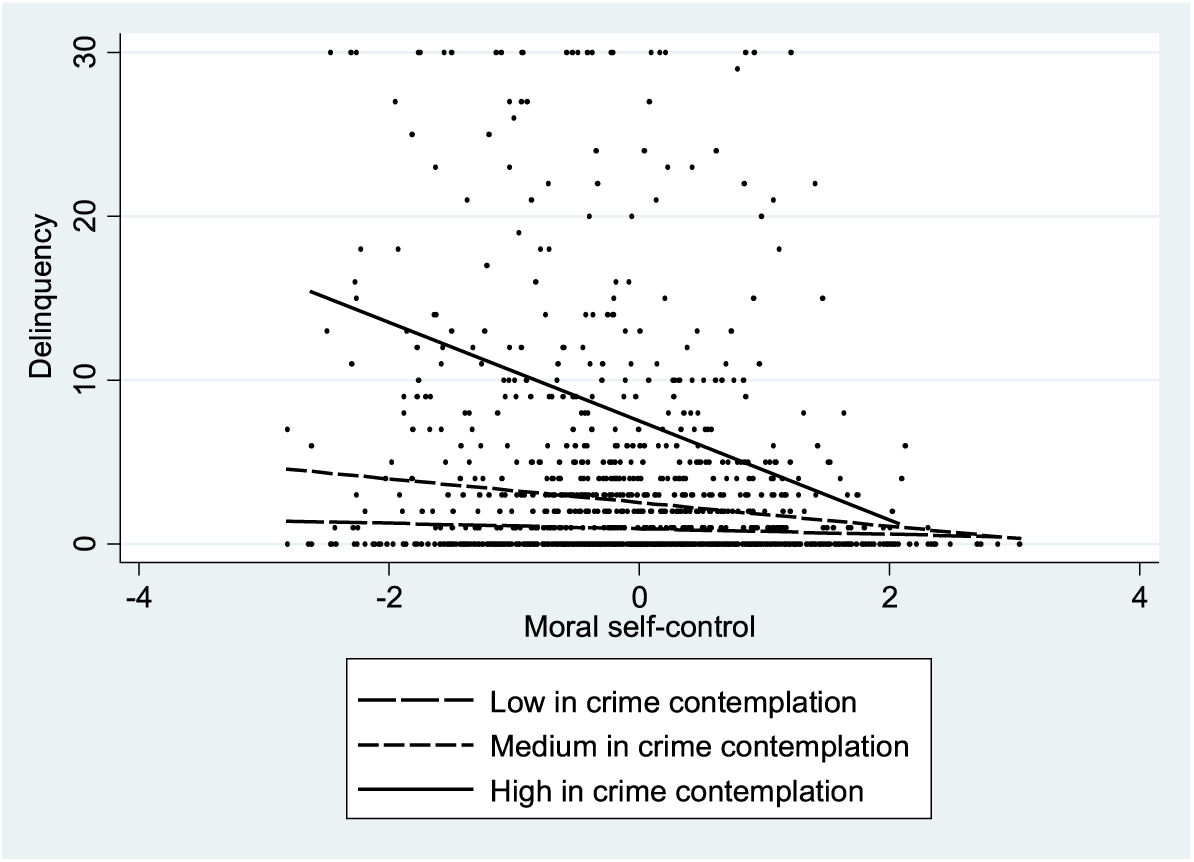
OLS regression lines of moral self-control predicting delinquency for three crime contemplation groups.
We turn now to the study of the interplay between crime contemplation and self-control with NB regression. Preliminary analyses favour negative binomial 1 regression (NB1) over Poisson, NB2 – the default for modelling count data – and zero-inflated NB methods. NB1 and NB2 use different methods in the parameterization of the variance: the former uses a constant and the latter a function of the expected mean (Cameron and Trivedi, 2013; Hilbe, 2011, 2014). Since a formal test (p = .951) suggests that NB1 does not differ from NB2 (Greene, 2008: 587), the former is to be preferred according to the goodness of fit statistics (Hilbe, 2014: 155). The results for an NB1 analysis (Nagelkerke’s pseudo-R2 = .236; N = 1135) regarding our full model are similar to the previous OLS efforts. Both crime contemplation and self-control predict delinquency in the sense expected by SAT (p < .0005), as well as peer delinquency and sex – but not age. The multiplicative term does not reach statistical significance (coefficient = −0.056; NS), but we already know that it does not capture the conjectured interaction effect. 11
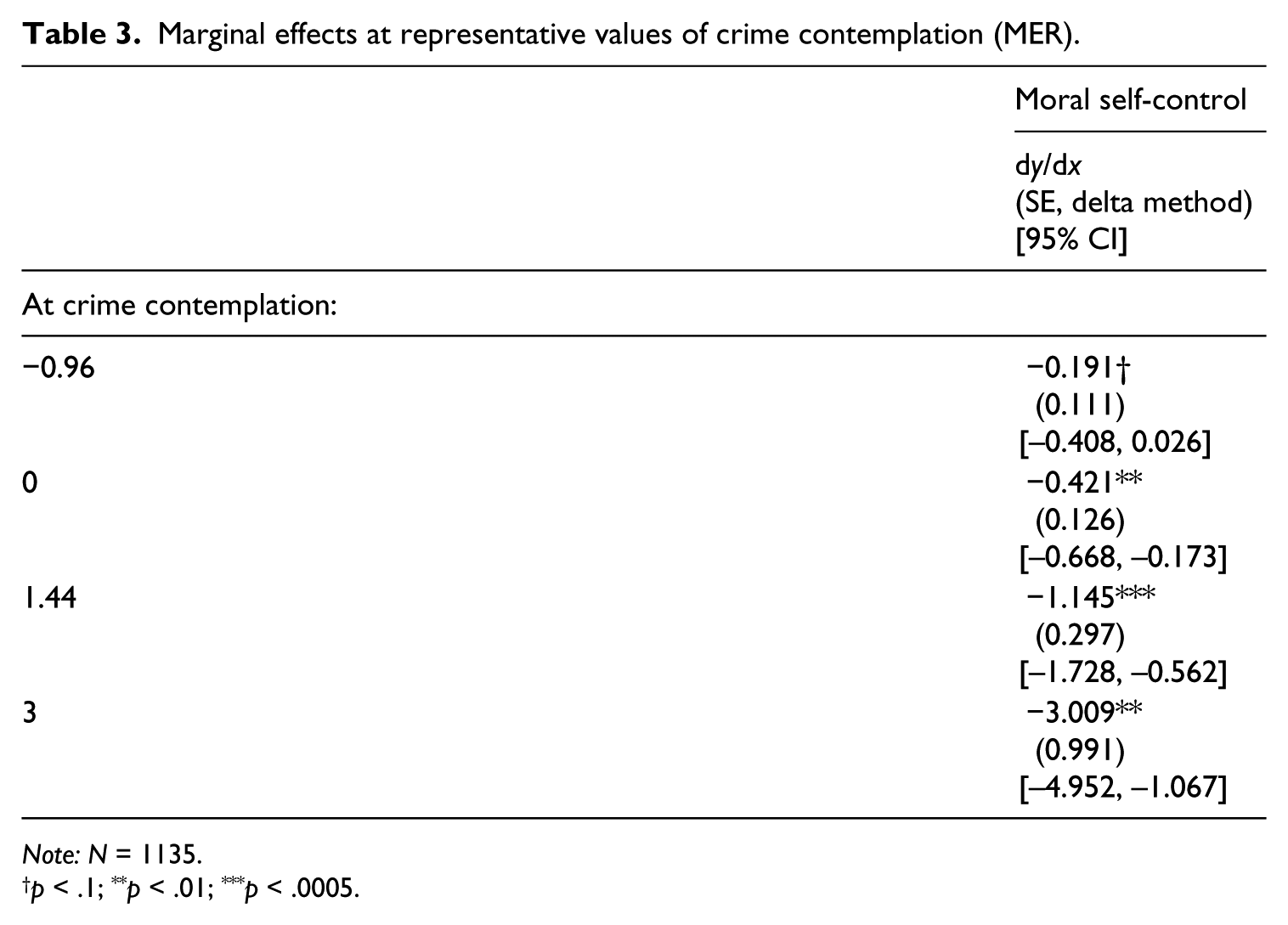
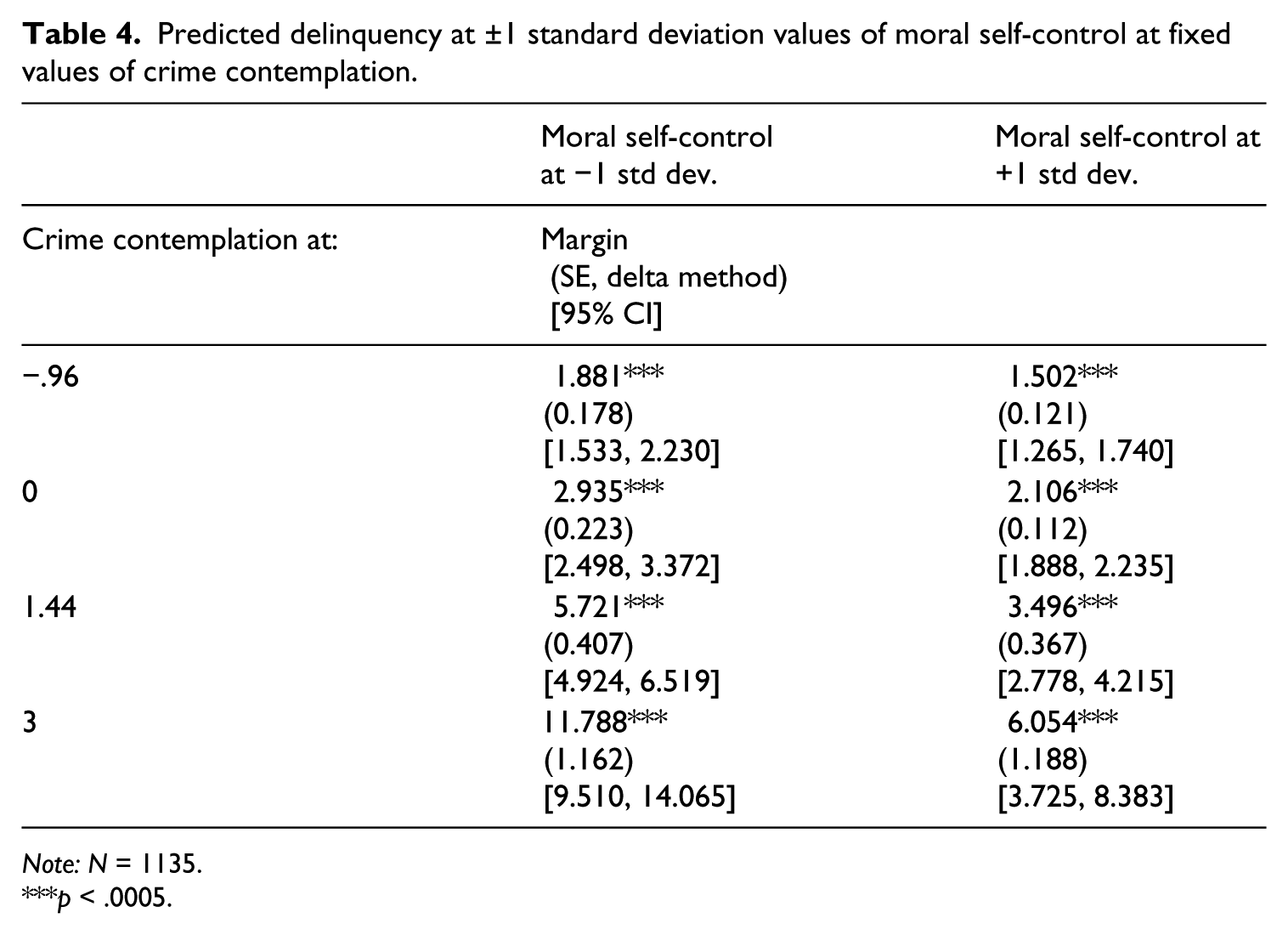
One possibility to test the interaction effect that takes advantage of the previous NB1 analysis is to rely on marginal or partial effects (ME) obtained with Stata’s command margins (Karaca-Mandic et al., 2012: 270–1; Long and Freese, 2014: 265; Williams, 2012: 326–7). 12 Marginal effects measure how the probability of the dependent variable changes when one of the regressors changes, holding other variables at fixed values. The clue is that one variable changes while the others do not (Long and Freese, 2014: 239). When calculated at representative values (MER) in non-linear models, discrete values for one or more independent variables are chosen, and then it can be seen ‘how the MEs differ across that range’ (Williams, 2012: 326). I rely on them in two ways: marginal effects (self-control on delinquency) at representative values of crime contemplation (Table 3); and predicted delinquency at ±1 standard deviation values of self-control at fixed values of crime contemplation (Table 4).
Marginal effects at representative values of crime contemplation (MER).
Note: N = 1135.
p < .1; **p < .01; ***p < .0005.
Predicted delinquency at ±1 standard deviation values of moral self-control at fixed values of crime contemplation.
Note: N = 1135.
p < .0005.
Table 3 and Figure 2 show that the effect of self-control differs according to the level of crime contemplation, and increases with higher values. For example, it is −0.191 and marginally significant (p < .1) at the lowest level of crime contemplation and increases monotonically up to −1.145 and −3.009 (p < .01) at the highest levels of crime contemplation. 13 Though this is the trend predicted, there is an overlap between the 95% confidence intervals between adjacent categories – it is crucial to keep in mind the statistical-power limitations in the study of interactions (VanderWeele, 2015).
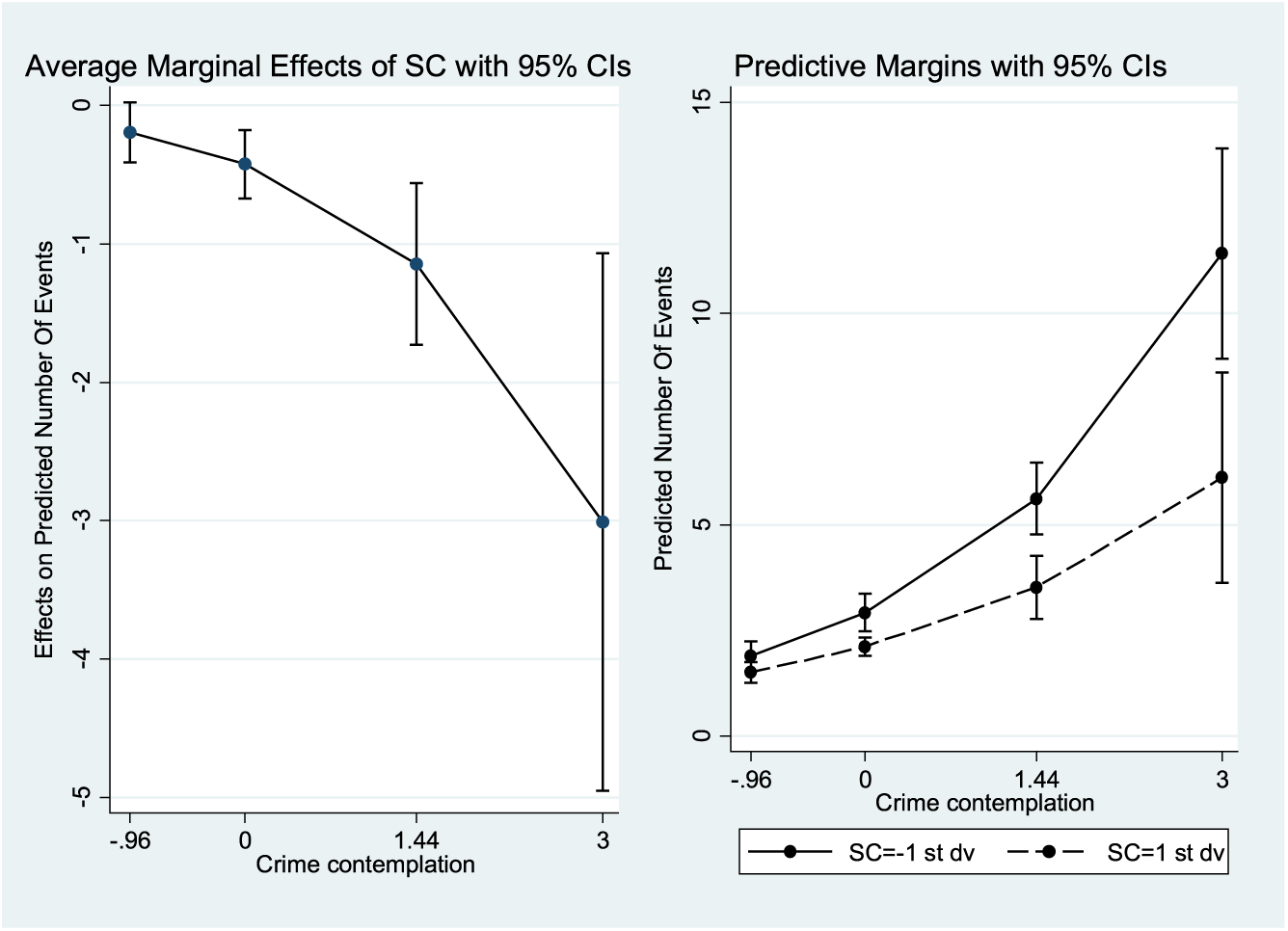
Table 4 and Figure 3, also using margins, show the predicted delinquency for individuals high and low in moral self-control, that is, those with ±1 standard deviation values on self-control, at fixed values of crime contemplation. As expected by the hypothesis, there is an increased effect of self-control at higher levels of crime contemplation.
Another testing strategy involves factoring the moderator variable and treating it as a categorical predictor (Hilbe, 2009: 201–6; 2011: 526–7). Risk ratios or incidence rate ratios (IRR) based on the coefficients from a first step NB1 regression with controls and clustered standard errors (N = 1135) can be obtained for two values of moral self-control (±1 standard deviation from the mean) at six levels of crime contemplation (with category 1, corresponding to the lowest level, as the reference) (not shown). Results show an increased effect of self-control at higher levels of crime contemplation in comparison with the reference category. Whereas IRRs for low and high self-control at category 2 of crime contemplation are, respectively, 1.54 (95% CI = 0.925, 2.566) and 1.08 (0.699, 1.659), the corresponding figures for category 6 are 6.309 (4.286, 9.287) and 3.684 (2.212, 6.135). This is again in line with the examined hypothesis.
Finally, Bowen (2012) and Leitgöb (2014) offer a way to separate the genuine interaction effect predicted by the theory and the effect due to the inherent non-linearity of the model. Figure 4 shows this effect. As can be seen, the negative effect of the interaction assumed by SAT is apparent for most of the distribution.
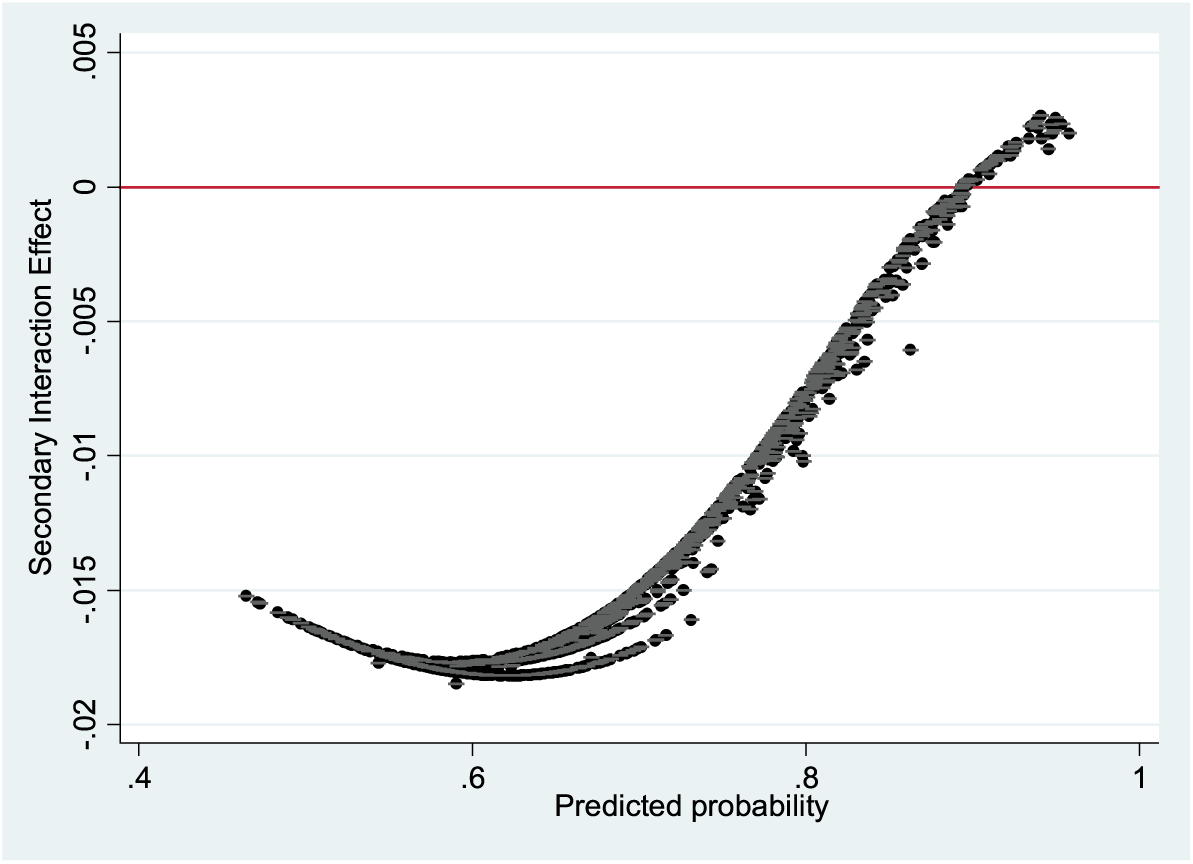
Genuine interaction effect between crime contemplation and moral self-control.
Discussion and conclusion
This paper reports evidence in favour of a key hypothesis derived from SAT using a variety of analytical approaches in line with Braithwaite’s idea of the concurrence of weaknesses (1979: 22). Analyses show that, in our sample, the impact of self-control on crime is stronger at higher levels of crime contemplation. This evidence is in line with previous empirical studies that have tested interactive hypotheses with an (almost) identical (Brauer and Tittle, 2016) or similar structure (Hirtenlehner et al., 2014, 2015; Schepers and Reinecke, 2015). At the same time, it comes from environments that not only have high impunity levels and crime rates but also are very different culturally from those in which criminological theories are usually proposed and tested (Rodríguez et al., 2016). Due attention has been paid to model assumptions and potential sources of bias. For example, the assumption of correct specification still applies when testing interactions and it is usually necessary to include control variables that protect from confounding (Skrondal, 2003: 253). This paper contributes to cross-national studies and specifically to theory testing in criminogenic contexts such as some Latin American cities. 14
From a theoretical point of view, SAT is a theory in development and some of its concepts and mechanisms could benefit from further clarification. Needless to say, this problem is not restricted to SAT, but, maybe in comparison with other approaches, a theory that embraces morality as a main mechanism in crime causation needs to define other elements and assumptions in a way consistent with its conception of morality. 15 In particular, SAT requires more theoretical work to demarcate it from other explanations, including control and rational choice theories. For example, crime contemplation shows how SAT’s conception of rationality contrasts with that of rational choice approaches (RCAs) (Kroneberg et al., 2010: 264; Wikström, 2010: 216, 219), including the familiar basic models integrated in criminological theories (Clarke and Cornish, 1985: 157). Since RCAs, in many of their versions, 16 may accommodate individual moral considerations as incentives or preferences (Plott, 1986: 140–1), a crucial difference between both paradigms lies in their opposing conceptions of rationality, a divergence with far-reaching consequences. In contrast to RCAs, rationality in SAT is a matter of appealing to universal motives, of avoiding a merely private use of reason, so that it is always irrational for an agent to act against her moral rules.
Some limitations of the present study must be acknowledged. It can be argued from a theoretical point of view that an agent who commits crimes, maybe because she is low in self-control, will consequently see more and more crime options. At one extreme, only when an agent discovers that crime and deviation are a possibility, for example by observing an offence while in the company of peers, might she start to see them as action alternatives (Kant, 1998 [1793]: 6:29). This would be a kind of experiential effect (Paternoster et al., 1982). Though we cannot address causal order here, understanding SAT as a research programme implies a division of labour. Recent longitudinal studies point to the temporal path conjectured by SAT (see Wikström et al. in this special issue).
Though SAT has put interactions in the front line of research, testing them statistically is error-prone and important sources of ambivalence remain for assessing them, some of which were pointed out long ago (Greenland, 1993; Rothman et al., 1980). This has led Zammit and colleagues (2010) to question whether the study of interactions is always justified. With few exceptions, empirical studies have tested orderly, monotonic interactions using the product of the focal and moderator variables (with OLS). In this approach, however, the lack of statistical significance of the multiplicative term might simply ‘reflect the presence of an alternative functional form’ (Jaccard and Turrisi, 2003: 21) or some other contingency (VanderWeele, 2015: 279). This should be routinely inspected, and I have studied some alternatives without observing evidence in favour of them. It is agreed that, since there are so many alternatives, the proposal of interactions without further specification (see Wikström et al., in this issue) may lead to irrefutability. A related concern is that, because effects can usually be expressed in different ways in non-linear models, interactions can also be defined in more than one manner (Buis, 2010: 305), with the result that some form of interaction might always be present (VanderWeele, 2015: 252).
With these important caveats in mind, theories with a broad empirical content reflected in bold interactive hypotheses are welcome in a scientific discipline committed to the collective advancement of knowledge through the refutation and reshaping of theoretical proposals in light of new evidence.
Footnotes
Appendix: Items employed in the three samples
Acknowledgements
I have benefited from the comments of Christopher Birkbeck, Helmut Hirtenlehner and Heinz Leitgöb.
Funding
The author(s) received no financial support for the research, authorship, and/or publication of this article.