







Abstract
Prior research demonstrates that poor sleep is an important predictor of delinquent behavior among adolescents. Engagement in delinquency is linked to a range of negative mental and physical health outcomes over the life course, underscoring a critical need to address adolescent sleep problems to reduce delinquency. However, little scholarly attention has been paid to how the broader context of social support influences the sleep–delinquency relationship. In this study, we analyze a series of structural equation models using a sample of 447 French adolescents to examine how parental and peer support correspond to three related aspects of sleep among adolescents (quantity, quality, and the frequency of sleep disturbance) with implications for delinquency. Furthermore, we assess how sex differences moderate the relationship between social support and sleep. First, we find that all three indicators of sleep are associated with delinquency, significantly mediated by reductions in self-control. Second, both peer and parental support correspond to sleep outcomes with full sequential mediation evident for sleep quality and delinquency. Finally, we find significant differences in the relationship between social support and all sleep indicators for boys and girls. Peer support is more strongly associated with sleep among boys, whereas parental support is more strongly associated with sleep among girls. We discuss the implications of these findings for improving adolescent sleep to reduce delinquency as well as opportunities for future research.
Introduction
Poor sleep among adolescents corresponds to an array of negative physical, mental, and behavioral health outcomes (Shochat et al., 2014). Sleep problems are common in adolescents ages 12–18 years due to significant social, biological, and developmental changes that occur during this phase of the life course. Although the National Sleep Foundation recommends adolescents obtain at least 8–10 hours of sleep per night, only about one in ten adolescents meet these requirements regularly on weeknights (Minges and Redeker, 2016). Adolescents who do not get adequate sleep are at higher risk for psychiatric disorders (Gregory and Sadeh, 2016), obesity (Felső et al., 2017), risk-taking behaviors (Short and Weber, 2018), and suicidal behavior (Porras-Segovia et al., 2019). The prevalence of sleep problems and their harmful consequences among adolescents implore the need to better understand the processes that influence sleep and its associated outcomes.
Researchers have identified poor sleep as an important risk factor for delinquent behavior among adolescents (Clinkinbeard et al., 2011; Connolly et al., 2021; Mears et al., 2022; Meldrum et al., 2015; Peach and Gaultney, 2013; Semenza et al., 2020). This relationship has been explained by numerous theoretical mechanisms including low self-control (Meldrum et al., 2015; Vazsonyi et al., 2018), ADHD symptomology (Jackson and Vaughn, 2017), susceptibility to peer influences (Semenza et al., 2022), and heightened impulsivity (Gillett et al., 2021). Furthermore, delinquency in adolescence has been linked to poorer mental and physical health outcomes over time (Barnert et al., 2017; Kim et al., 2020). As such, understanding juvenile delinquency and related risk-taking behaviors is of critical concern for adolescent health and well-being across the life course. Yet, despite growth in this area of research, there remain three key limitations. First, there has been limited theoretical consideration of how the broader social context of adolescents' relationships with their peers and parents shape the dynamics of sleep and delinquency. In particular, there remains inadequate attention paid to (a) the role of different types of social support and (b) sex differences across forms of support with explicit implications for sleep and delinquency. Second, much of the research on sleep and delinquency relies on measures of sleep quantity rather than indices of other sleep-related issues, such as poor sleep quality and sleep disturbance (see Connolly et al., 2021, and Peach and Gaultney, 2013, for exceptions). This is a notable limitation because recent research suggests that sleep quality, rather than quantity, may be more consequential for juvenile delinquency and risk-taking behaviors (Connolly et al., 2021). Third, the majority of research on sleep and delinquency has been conducted in the United States (Short and Weber, 2018), necessitating more study outside of the United States to generalize the findings of this work across international contexts (however, see Vazsonyi et al., 2015, 2018, 2021 for research outside of the United States).
To address these gaps in the literature, we draw upon a risk and resiliency framework (Jenson and Fraser, 2015) to consider a model of social support, sleep, and delinquency with particular attention to sex differences in how parental and peer support influence three related aspects of sleep among adolescents: quantity, quality, and the frequency of sleep disturbance. We argue that protective peer and parental support influence sleep differently depending on sex and that sleep will be associated with the risk of delinquency through the key mechanism of self-control. We then draw on a sample of French adolescents to test a series of hypotheses using structural equation models. This study extends knowledge regarding sleep and delinquency by considering how the broader context of risk and resilience via social support and differences by sex shape these associations. We conclude with a summary of our results, implications for policy and practice, and suggestions for future research.
Background
The link between sleep and delinquency
A substantial body of research demonstrates that sleep problems among adolescents correspond to a higher risk for delinquency. The evidence is largely consistent across samples and national contexts although studies predominantly focus on implications for sleep duration rather than measures of sleep quality (e.g., sleep interruptions, frequent waking, and trouble falling asleep). In one of the first studies on the subject, Clinkinbeard et al. (2011) found that delinquency was more likely among youth who slept for fewer hours in the United States using data from the National Longitudinal Study of Adolescent Health. Meldrum and Restivo (2014) found that individuals suffering from especially severe sleep deprivation (less than five hours of sleep) are at particular risk for delinquent behaviors including weapon carrying, drunk driving, and fighting. Similar findings related to sleep duration and delinquency have been documented outside of the United States in Finland (Backman et al., 2015), Norway (Sivertsen et al., 2015), and Taiwan (Yen et al., 2010). 1
Beyond research that focuses on the implications of sleep duration for delinquency, a handful of studies have examined delinquency-related consequences of poor sleep quality. For instance, Catrett and Gaultney (2009) found that insomnia and difficulty sleeping were associated with risky behaviors including delinquency. Recently, Connolly et al. (2021) found that adolescent reports of restless sleep correspond to heightened rates of delinquency even after controlling for sibling differences using data from the National Longitudinal Survey of Youth. Notably, the authors found no relationship between sleep quantity and delinquency after controlling for familial confounding and temporal stability. The authors concluded that sleep quality, rather than sleep duration, may be a more appropriate target for intervention when considering health-related means of reducing delinquency.
Researchers suggest that sleep deficits result in negative affect and emotional dysregulation, which then increases the risk of impulsive behaviors including aggression, violence, and property delinquency (Clinkinbeard et al., 2011; Kamphuis et al., 2012). Similar studies have shown that deficits in self-control and attention mediate the sleep–delinquency relationships (Jackson and Vaughn, 2017; Meldrum et al., 2015; Vazsonyi et al., 2018). For instance, Meldrum et al. (2015) found that a broad index of sleep deprivation indicators was associated with greater risk for delinquency using data from 15-year-old adolescents in the NIH's Study of Early Child Care and Youth Development. The authors found that the significant association between sleep deprivation and delinquency was largely mediated by low self-control (62% mediation).
Adolescents who suffer from poor sleep have a harder time controlling their impulses and delaying gratification due to an imbalance between the socioemotional and cognitive control systems that influence decision-making (Krizan and Herlache, 2016; Peach and Gaultney, 2013). Ultimately, sleep deprivation and poor sleep quality are thought to lead to comprised response-control, or the inability to inhibit impulses, which influences engagement in delinquent behaviors (Connolly et al., 2021; Semenza et al., 2020). Although the mechanism of low self-control has been empirically tested in a handful of studies, it has largely been shown to mediate the relationship between sleep duration and delinquency. However, one notable study has examined how low self-control specifically mediates the relationship between indicators of quality or sleep problems and delinquency. In a national probability sample of Swiss adolescents, Vazsonyi et al. (2018) found evidence of both direct and indirect links between sleep problems and deviance via low self-control. These findings were largely invariant across immigrant and socioeconomic status (SES) groups. Although more research is needed on sleep quality and delinquency, this initial research provides important evidence that sleep quality influences delinquency through self-control beyond the more commonly studied indicator of sleep duration.
Risk and resiliency: The role of social support for sleep among adolescents
Most studies that examine sleep and delinquency do not account for the broader social context in which adolescents are embedded that influence sleep in the first place. We therefore draw on a framework of risk and resiliency to consider additional factors surrounding the sleep–delinquency link (Jenson and Fraser, 2015). Researchers have long considered both risk and protective factors that contribute to heightened risk for behavioral problems among young people like delinquency (Kremer et al., 2020). Risk factors occur throughout the social ecology and include individual, school, peer, family, or community influences that increase the likelihood that a child will engage in delinquency, whereas protective resources are attributes, social resources, or characteristics that lower the probability of delinquent behavior (Werner and Smith, 1992). Protective resources such as emotional self-regulation, positive attitude, and reliable social support from peer and family members operate to help young people be resilient against negative problem behaviors (Jenson and Fraser, 2015).
For a complex behavioral outcome like delinquency, youth experience a combination of risk and protective factors that influence delinquent behavior. According to Jenson and Fraser (2015), the balance between level of risk exposure via the presence of multiple risk factors and the availability of protective factors can shape resiliency against negative outcomes for young people. The likelihood of delinquency is molded by an interactive process that involves both risk and protection as well as adaptation to those factors that results in delinquent behavior (or lack thereof). These combined risk and protective factors influence one another throughout a young person's immediate social environment and surrounding social ecology to shape developmental outcomes (Bronfenbrenner, 1979). A variable-centered approach to considering the confluence of risk and protective factors for delinquency is especially useful for considering how different factors influence one another to shape a particular outcome of interest (Masten, 2001).
It is increasingly evident that poor sleep increases the risk for delinquency, at least in part through the mechanism of reduced self-control (Meldrum et al., 2015; Vazsonyi et al., 2018). Within a risk and resilience framework, poor sleep is a risk factor for low self-control, which operates to increase the likelihood of delinquent behavior. However, there are likely many “upstream” protective and risk factors that shape the sleep behaviors that ultimately affect delinquency. One critical aspect of this larger context of risk and resilience is social support. Social support refers to an individual's perceptions and experiences of affection, care, value, belonging, or assistance from those in their personal social networks (Heaney and Israel, 2008). Pertinent to this study, social support is thought to provide a safe, reduced-stress environment that enables the high-quality sleep critical for health and well-being (Dahl and El-Sheikh, 2007). Social support is thus a protective factor for good sleep that may also indirectly increase resilience against delinquent behavior.
Social support influences sleep outcomes among adolescents such that better support from both parents and peers is generally associated with improved sleep (see Kent de Grey et al., 2018 for a meta-analysis on this topic). A substantial body of work links social support to improved sleep outcomes, yet much of this evidence comes from adult samples in the United States (Hao et al., 2021; Mesas et al., 2020). However, the research that has examined the influence of social support on sleep specifically among adolescents generally finds that greater support improves sleep outcomes (Van Schalkwijk et al., 2015; Tynjälä et al., 1999). For instance, multiple forms of social support have been linked to better sleep quality (Delaruelle et al., 2021), greater sleep quantity (Adam et al., 2007), and fewer sleep problems (Pyper et al., 2017).
Social support is conferred by many different people within an adolescent's social network including parents, teachers, coaches, and peers (Berkman et al., 2000). This support can be critically protective against the stress and negative emotions documented to degrade sleep (Kim and Dimsdale, 2007; Van Reeth et al., 2000). Adolescents who regularly receive support may be generally better prepared to cope with problems that harm sleep while also benefitting from further support during times of acute stress or anxiety (Van Schalkwijk et al., 2015). More generally, social support is thought to promote sleep quality by confirming with adolescents that they are safe and can sleep without fearing for their well-being (Kent de Grey et al., 2018). Although parental support is a key indicator of adolescent well-being, research demonstrates that peer support becomes increasingly salient as children get older and rely more on peer groups than their parents (Nickerson and Nagle, 2004). Yet evidence suggests that both parental and peer supports are important for proper sleep among adolescents (Van Schalkwijk et al., 2015).
In addition to its association with better sleep, social support is a key correlate of delinquency among adolescents and criminality for adults (Colvin et al., 2002). Youth that report greater parental and prosocial peer support are generally at lower risk for engaging in delinquency (Hoeve et al., 2012, 2009). Positive social support enhances social bonds and attachments to family and peers, reducing the likelihood that young people will cope with daily difficulties and negative affect by engaging in delinquent behaviors (Costello and Laub, 2020; Hirschi, 1969). Despite a history of scholarship that focuses on the direct relationship between social support and delinquent behavior, it is plausible that social support also influences intermediate processes, such as sleep, which correspond to delinquent behavior. Specifically, inadequate social support associated with degraded sleep may correspond to reduced self-control, which then influences delinquency (Meldrum et al., 2015). In support of this notion, Vazsonyi et al. (2015) found that both sleep quality and quantity independently and cumulatively mediate the effects of parental warmth on indicators of deviant behavior. While other researchers have documented the complex dynamics of social support, self-control, and delinquency (Hay et al., 2013; Wright et al., 1999), the study from Vazsonyi et al. suggests that social support from parents as well as peers may be an important distal factor that influences sleep and, in turn, engagement in delinquent behavior.
Sex differences in social support
It is important to further consider how the dynamics of social support, sleep, and delinquency differ among males and females. Juvenile delinquency is most commonly committed by males (Daigle et al., 2007), yet sex differences in delinquent behavior may be shaped by various types of social support and how they influence sleep. From this vantage, different types of social support may confer more protection for boys or girls against poor sleep outcomes. While some research suggests that boys have shorter sleep durations (Moore et al., 2011) and poorer sleep quality (Markovic et al., 2020) than adolescent girls, other studies find that adolescent girls have poorer sleep quality and hygiene than boys (Galland et al., 2017). Given mixed evidence of sex differences in adolescent sleep, we consider how divergent types of social support influence sleep differently for boys and girls with implications for delinquent behavior.
Scholarly evidence remains mixed regarding sex differences in the broad relationship between general social support and well-being. However, it appears social support for females is more pertinent for outcomes related to health and well-being. In a meta-analysis on social support and mental health, although mean sex differences did not appear to translate into functional differences in the association, effect sizes were larger in studies conducted solely on women (Harandi et al., 2017). In another meta-analysis on social support and well-being among children and adolescents, Chu et al. (2010) found that female participants had a significantly stronger mean effect size of social support on health outcomes than males. While these studies suggest there are sex differences in how social support impacts outcomes related to well-being, there may be additional differences in how social support types (e.g., parents, teachers, and peers) influence health outcomes such as sleep.
Research among adolescents suggests that various forms of social support from parents or peer groups may be differentially influential among girls and boys (Reimers et al., 2019). For example, there is evidence that adolescent girls have stronger attachments to their parents (Svensson, 2004) and derive greater social support from their parents than adolescent boys (Colarossi and Eccles, 2000). Adolescent girls may be more dependent on their parents than their male counterparts, in part because parents tend to enact more control over their daughters’ behavior than their sons’ (Gavin and Furman, 1996; Kerns et al., 1996). However, some research in this area is based on convenience samples of adolescents and may not necessarily be wholly generalizable. Evidence of sex differences in how parental support specifically influences health outcomes remains limited, although parental support appears to be more protective among girls than boys against harmful health behaviors like smoking, drug use, and alcohol consumption (Choquet et al., 2008). Parental support may therefore be more closely associated with sleep outcomes for girls than for boys because that type of support is particularly salient to their health and well-being.
On the other hand, social support derived from peer groups is shown to be more influential among male adolescents than their female counterparts. Chen (1999) suggests that adolescent boys often distance themselves from their parents during adolescence to properly achieve a conventional male identity. This leads boys to become more autonomous from their mother than girls (Gavin and Furman, 1996), often accomplished by developing relationships that involve companionship and joint activity with peers (Gabriel and Gardner, 1999). Through these peer relationships, peer support may be more influential on behavior for boys than girls (Gentina et al., 2016). For the purposes of this study, then, we explore whether peer support is likely to be more influential on sleep outcomes for boys than girls and conversely, how parental support might be more influential among girls.
Current study
Prior research suggests a complex relationship between adolescent sleep and delinquent behavior, yet further investigation is warranted to understand the broader social context in which this relationship operates. Drawing upon a risk and resilience framework, we offer a series of hypotheses with particular attention to the role of various forms of social support and sex differences in how these supports influence sleep and delinquency. We note the data used here to assess this series of relationships are cross-sectional and, as such, causal associations cannot be confirmed without longitudinal data (O’Laughlin et al., 2018). This study therefore offers an initial test of the interrelated relationships between the main study constructs of interest that can be built upon in future research. In general, we anticipate that social support will be protective against poor sleep, which will correspond to greater risk for delinquency via reduced self-control. However, we expect that the protective effect of parental and peer support will differ significantly between boys and girls. Please see Figures 1 and 2 for an illustration of our conceptual model and all hypotheses.
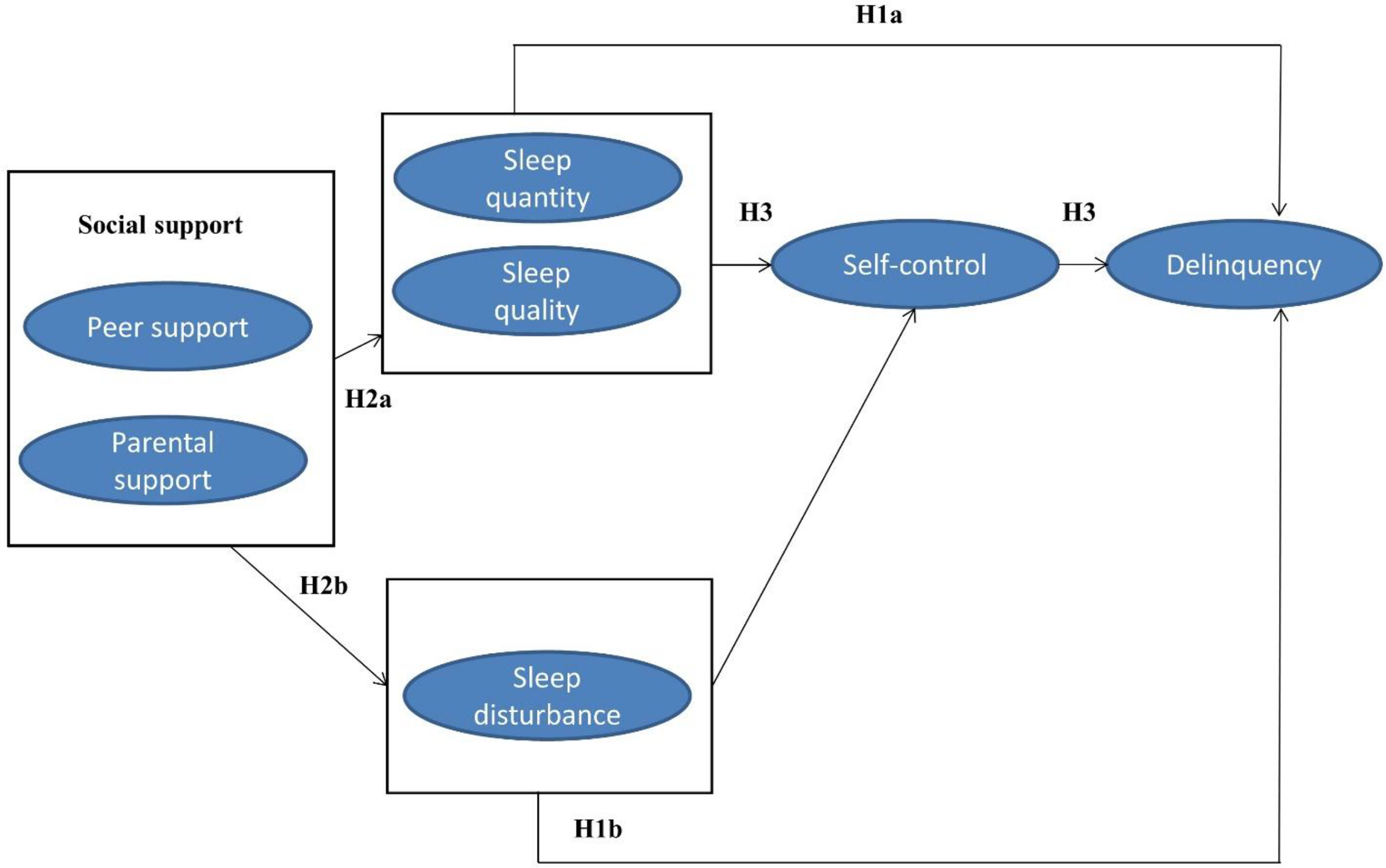
Main conceptual model (H1–H3).
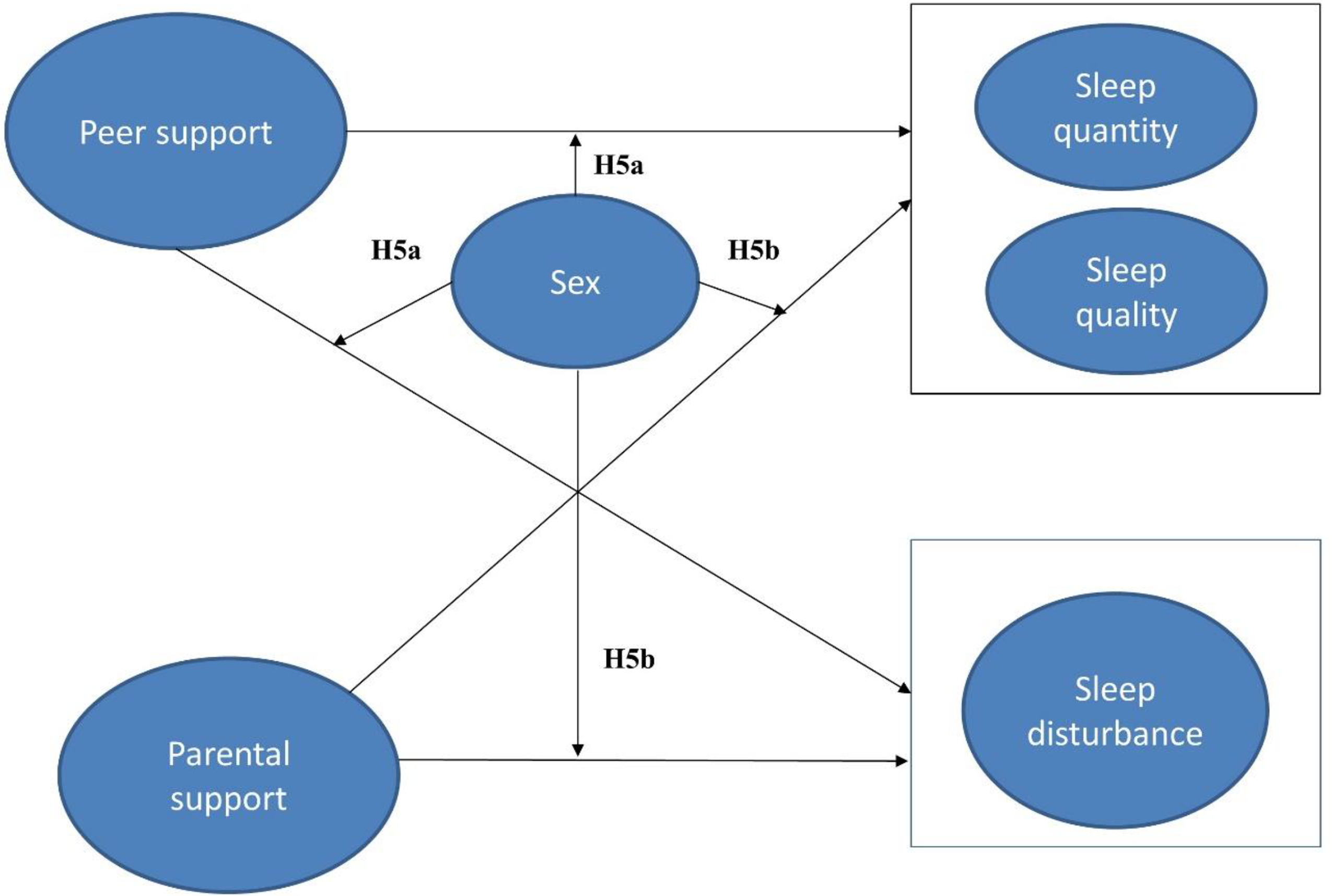
Conceptual model—Sex moderation (H5).
Method
Sample
We collected data using a survey of adolescents in 14 classrooms across four public and private schools in the city of Lille in Northern France. Since adolescents represent a vulnerable population in a research context (Batat and Tanner, 2019), all participants were required to submit both a signed parental consent and individual assent to participate in the study prior to taking the survey. All parents were given an opportunity to decline their children's participation in the survey. The adolescent participants were assured that all information provided was strictly confidential and only the first names of participants were collected. Students were assured that questionnaires would not be shared with parents, teachers, or anyone else except the researcher. The researchers obtained approval and support of all school authorities including school heads and teachers and collected the data from 447 students (14–18 years; 262 girls, 185 boys).
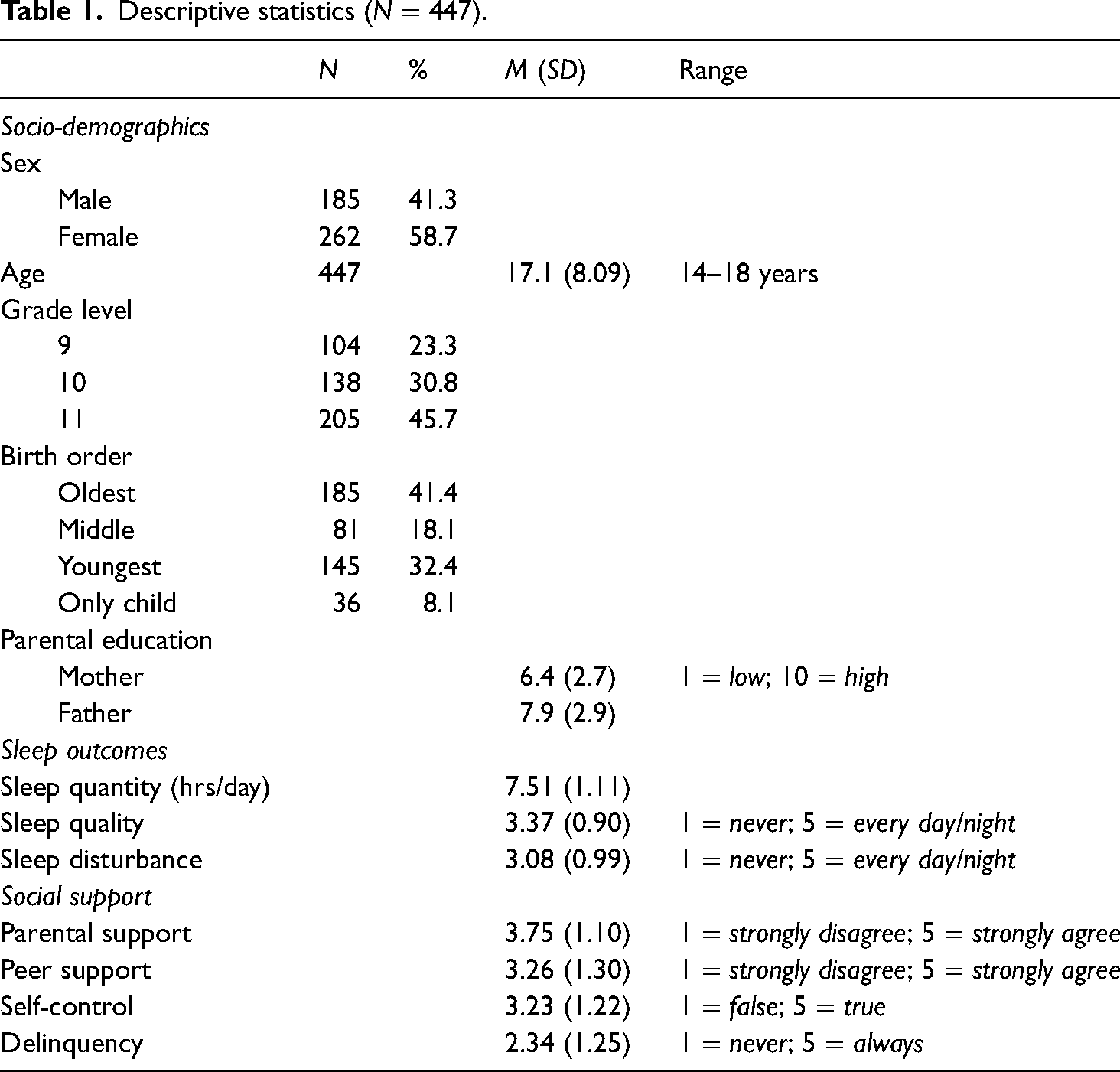
All participants were informed of the objective of the study in French. A paper-and-pencil survey was administered to all participants in each of the classrooms during regular school hours in January and February 2020. Participants completed the survey in the classroom in the presence of a teacher and the researcher, completing the questionnaire in roughly an hour on average. The average age of participants was 17.1 years and the average class size was 30 students. The average level of education for mothers was 6.4 (SD = 2.7) on a ten-item scale (1 = never went to school, 2 = 8th grade or less, …, 10 = professional training beyond a 4-year college or university). The average level of the father's education was 7.5 (SD = 2.9). Table 1 provides descriptive statistics for all 447 respondents included in the sample.
Descriptive statistics (N = 447).
Measures
Sleep
We measured sleep duration by asking respondents how many hours of sleep they got on average per night during the past month. Participants reported an average of approximately 7.51 hours of sleep per night. We measured sleep quality and sleep disturbance using two scales developed by Vernon et al. (2015), which were adapted from the School Sleep Habits Survey (Wolfson and Carskadon, 2003) and specifically developed for an adolescent population. The sleep quality scale includes two items: (a) “How often have you felt satisfied with your sleep?” and (b) “How often have you had a good night's sleep?” with responses ranging from “never” (1) to “every day/night” (5). The sleep disturbance scale is comprised of three items including: (a) “How often have you arrived late to class because you overslept?” (b) “How often have you fallen asleep in morning class?” and (c) “How often have you stayed up until at least 3 am?”
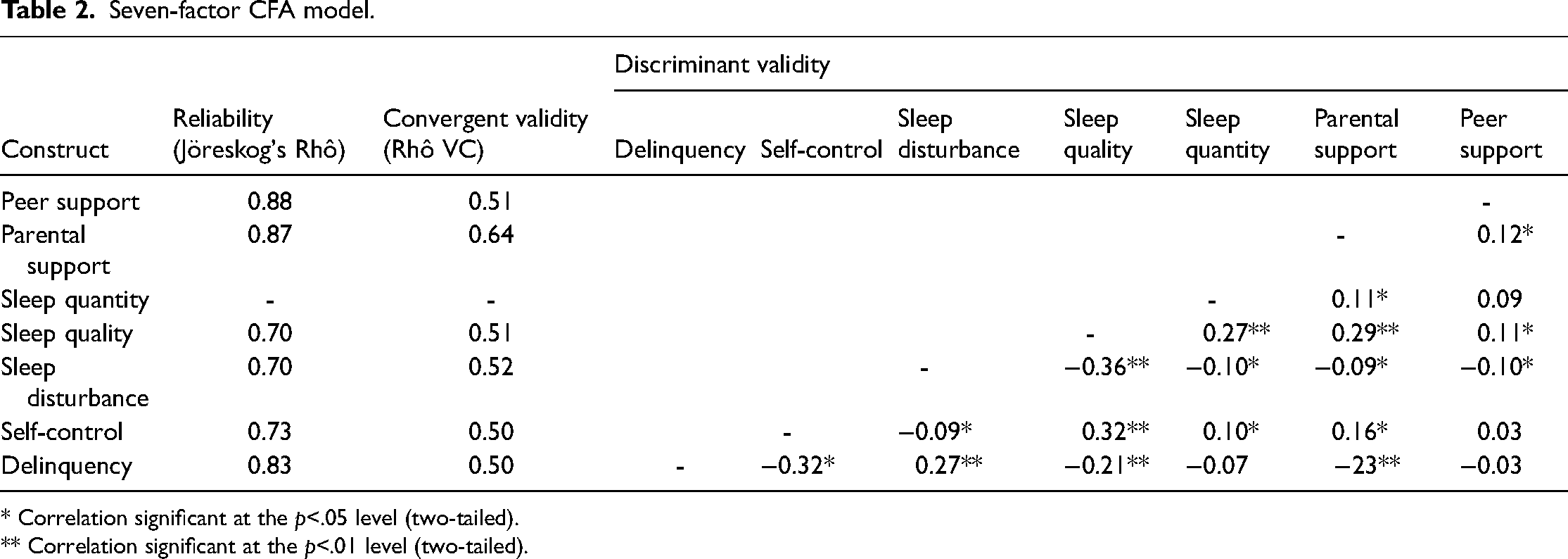
Prior research on adolescents provides evidence of the sleep scale's validity used here (Vernon et al., 2015). However, we recognize some of the items used here to conceptualize sleep disturbances and sleep quality such as oversleeping or coming late to class differ from those used in past research such as the Pittsburgh Sleep Quality Index (PSQI) (Buysse et al., 1989). Given our focus on young people, we chose to measure aspects of sleep quality in the context of respondents’ specific experiences with school. As such, these items from the School Sleep Habits Survey were deemed most appropriate for the broader questionnaire given to students as well as for use in the current study. See Table 2 for a report of the internal consistency reliabilities (coefficient alphas), variable inter-correlations, and convergent validities for all study variables. Moreover, see Appendix A, supplementary material for a description of all items included in each scale used in our analyses.
Seven-factor CFA model.
Correlation significant at the p<.05 level (two-tailed).
Correlation significant at the p<.01 level (two-tailed).
Delinquency
We measured delinquency using nine items from the normative deviance scale (NDS), which has demonstrated good psychometric properties and internal consistency among adolescents (Gentina et al., 2016; Vazsonyi and Snider, 2008; Vazsonyi et al., 2001). We use a shortened version of the scale, composed of nine items that measure the frequency of various delinquent behaviors along a 5-point scale (1 = never, 5 = always). Following exploratory factor analysis (detailed below), three items were removed and the remaining six items displayed sufficient reliability as shown in Table 2 (Jöreskog's Rhô = 0.83). The items were chosen to capture particular aspects of alcohol use, smoking, and school-related misconduct of interest to the researchers while remaining brief enough for inclusion in the larger survey that included other sections beyond the scope of the present study. Items include drinking alcohol, lying about one's age to buy alcohol or cigarettes, and having been sent out of a classroom because of “bad” behavior.
Self-control
To measure self-control, we used the 8-item Weinberger Adjustment Inventory (WAI), developed by Weinberger and Schwartz (1990), which measures the extent to which an adolescent moderates impulses before acting (e.g., “I do things without giving them enough thought”). The responses range from 1 (false or mostly false) to 5 (true or mostly true). Although the WAI focuses specifically on one aspect of self-control related to impulse moderation and control (Gottfredson and Hirschi, 1990), the inventory has been well-validated in clinical and nonclinical samples of adolescents (Weinberger, 1997). This scale is particularly pertinent to the current study since prior research indicates that lowered impulse control may be a particularly salient mechanism that links poor sleep to heightened risk for delinquent behavior among young people (Meldrum et al., 2015; Peach and Gaultney, 2013).
Social support
To measure parental support, we used the four-item Chaplin and John (2010) scale, with responses ranging from 1 (strongly disagree) to 5 (strongly agree). Items include responses to prompts such as, “My parents make me feel very special” and “My parents find time to talk to me.” We measured peer support using the four-item Chaplin and John (2010) scale. Items include responses to prompts including, “My friends are hard to please” and “My friends can be mean to me.” Prior research with adolescents provides evidence of the scales’ validity among adolescents (Gentina et al., 2018a, 2018b).
Sex
Finally, we use a binary measure of sex derived from the original survey which asks respondents, “Are you male or female?” This measure is used in our moderation analyses related to Hypotheses 5a and 5b.
Results
Exploratory and confirmatory analyses
Prior to hypothesis testing, we conducted analyses to determine the acceptability of fit of our measurement models. Exploratory factor analysis was carried out using SPSS, while confirmatory factor analysis (CFA) was conducted in the AMOS module. After confirming that all items passed the tests of univariate quasi normality and multivariate normality, we conducted exploratory factor analyses (principal components) using Oblimin rotation. Items with communalities below 0.50 were eliminated, as well as those with factors loadings below 0.50 (three items for delinquency). The seven-factor measurement model solution (parental support, peer support, sleep quantity, sleep quality, sleep disturbance, self-control, and delinquency) explained 64.1% of the total variance.
We tested Model 2, for which the composite reliability coefficients (Cronbach's alpha > 0.70), internal convergent validity (rhôvc > 0.50) and discriminant validities were acceptable (Fornell and Larcker, 1981) (see Table 2). To assess discriminant validity, we verified that each latent construct extracted more variance from its indicators (ρvc) than it shared with all other constructs. The results of the confirmatory factor analyses of the seven scales can be found in Table 2.
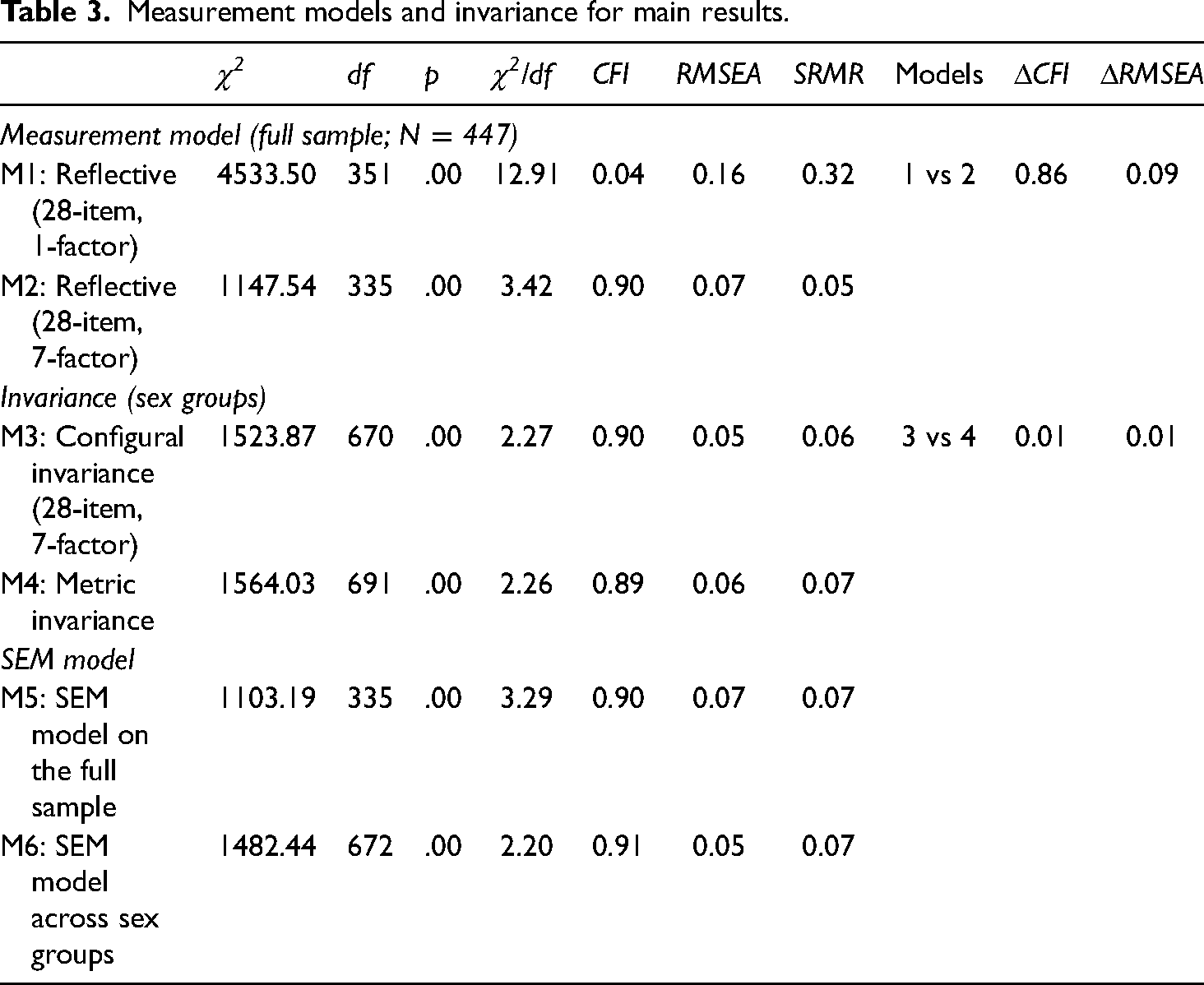
We used the following criteria in evaluating CFA: (a) chi square and degrees of freedom (χ2/df < 5, (b) comparative fit index (CFI > 0.90), (c) root mean square error of approximation (RMSEA < 0.10), and (d) standardized root mean square residual (SRMR < 0.10) (Vandenberg and Lance, 2000). The measurement Model 2 demonstrated excellent fit (χ2 = 1147.54, df = 335, p < .001; adjusted χ² = 3.42; CFI = 0.90; RMSEA = 0.07; SRMR = 0.05), as described in Table 3.
Measurement models and invariance for main results.
Measurement invariance across sex groups
We examined configural (factor structure) and metric (factor loading) invariance across sex groups, using multi-group CFA. The model achieved configural invariance. To test for metric invariances, we set all the factor loadings to be the same across sex in a constrained multi-group CFA (Table 3, Models 3 and 4). As evidence of metric invariance, the constrained and unconstrained models do not differ (ΔCFI/ΔRMSEA < 0.01).
Hypothesis testing
General model (H1a, H1b, H2a, H2b)
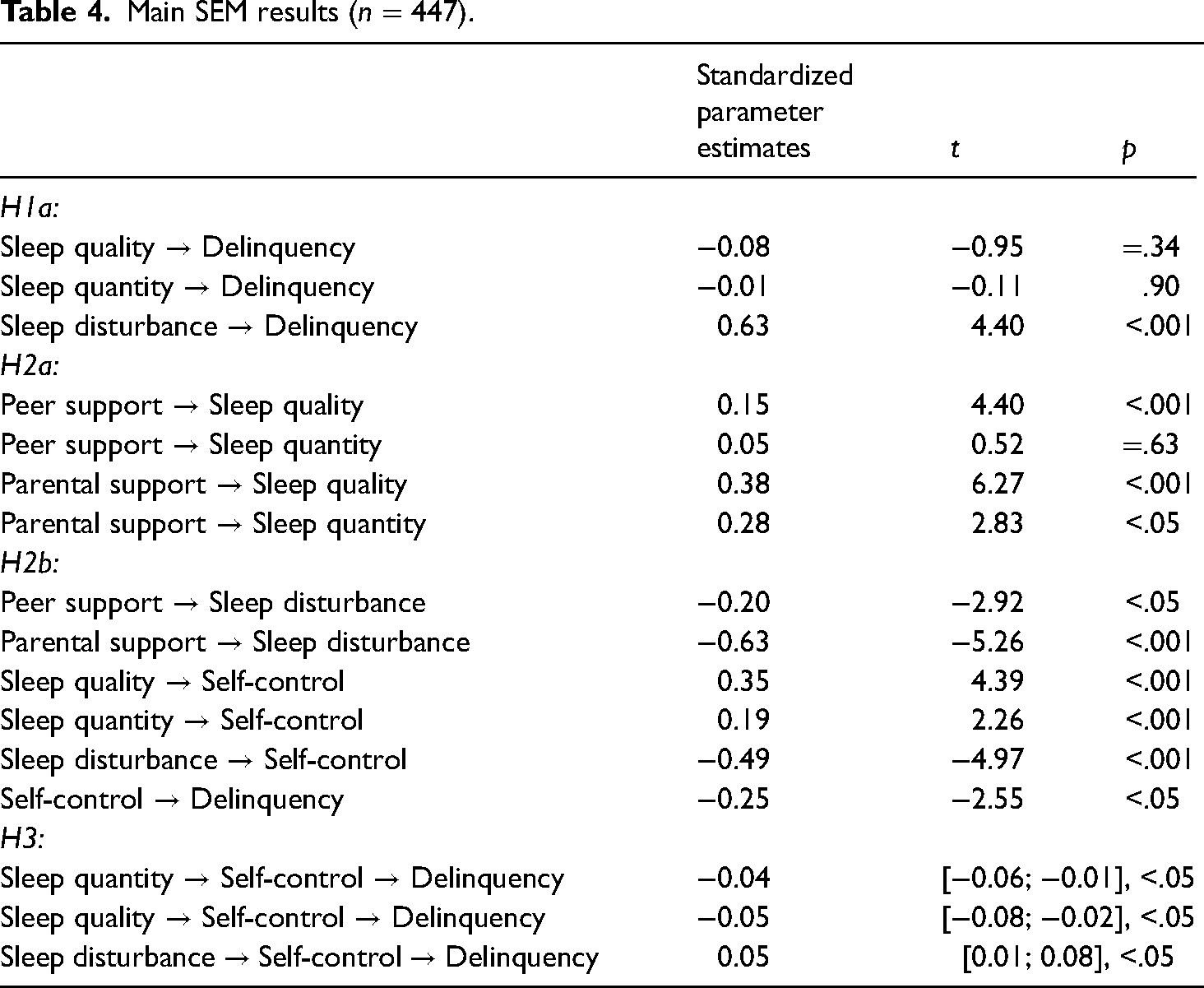
We specified the main SEM model (see Figure 1) among the whole sample to examine the relationships between social support, sleep, self-control, and delinquency. The estimation of the structural model (Table 3, Model 5) generated acceptable fit (χ2 = 1103.19, df = 335, χ²/df = 3.29, p < .001, CFI = 0.90, RMSEA = 0.07). Contrary to our expectations, sleep quality (γ = −0.01, t = −0.11, p = .90) and sleep quantity (γ = −0.08, t = −0.95, p = .34) are not directly associated with delinquency. As such, we do not find support for H1a. Only sleep disturbance is directly and positively related to delinquency (γ = 0.63, t = 4.40, p < .001), supporting H1b.
Parental support is positively associated with sleep quantity (γ = 0.28, t = 2.83, p < .05), and sleep quality (γ = 0.38, t = 6.27, p < .001) and negatively associated with sleep disturbance (γ = −0.63, t = −5.26, p < .001). Similarly, peer support is positively associated with sleep quality (γ = 0.15, t = 4.40, p < .001) and negatively associated with sleep disturbance (γ = −0.20, t = −2.92, p < .05). However, contrary to our expectation, peer support is not positively associated with sleep quantity in the full sample (γ = 0.05, t = 0.52; p = .63). We therefore find support for H2a regarding parents only and support for H2b regarding both peers and parents. Moreover, all the sleep indicators were significantly related to self-control (sleep quantity –> self-control, γ = 0.19, t = 2.26, p < .001; sleep quality –> self-control, γ = 0.35, t = 4.39, p < .001; sleep disturbance –> self-control, γ =−0.49, t = −4.97, p < .001). Moreover, self-control is negatively related to delinquency (γ = −0.25, t = −2.55, p < .05). All the results are presented in Table 4.
Main SEM results (n = 447).
Mediation effects (H3 and H4)
To test the simple mediations outlined in H3, we used Preacher et al.'s (2007) PROCESS tool (Model 4). If the bootstrapped confidence interval does not include 0, the indirect effect is significant and mediation is supported. The confidence interval does not include zero, indicating that sleep disturbance increases delinquency indirectly through reductions in self-control. Specifically, sleep disturbance is negatively associated with self-control, which is, in turn, negatively associated with delinquency (γ = 0.05 [0.01; 0.08], p < .05). On the other hand, both sleep quality (γ = −0.05 [−0.08; −0.02], p < .05) and sleep quantity (γ = −0.04 [−0.06; −0.01], p < .05) correspond to delinquency indirectly through self-control. Better sleep quality and greater sleep quantity are each associated with increases in self-control, which is negatively associated with delinquency.
To test the sequential mediations outlined in H4a and H4b, we used Preacher et al.'s (2007) PROCESS macro and computed bias-corrected bootstrap confidence intervals. The PROCESS macro is particularly adept at accounting for multiple mediation effects operating in parallel, enabling users to formally assess sequential indirect links while combining mediation and moderation tests (Hayes, 2015; Hayes et al., 2017). Following prior research (Ai et al., 2021; Zhuang et al., 2018), we computed regression equations and estimated the mediator variable models using sleep variables and self-control as the respective sequential mediators, enabling us to estimate indirect effects by bootstrapping methods (1000 bootstraps). The results of these analyses are shown in Table 5.
Sequential mediation results (n = 447).
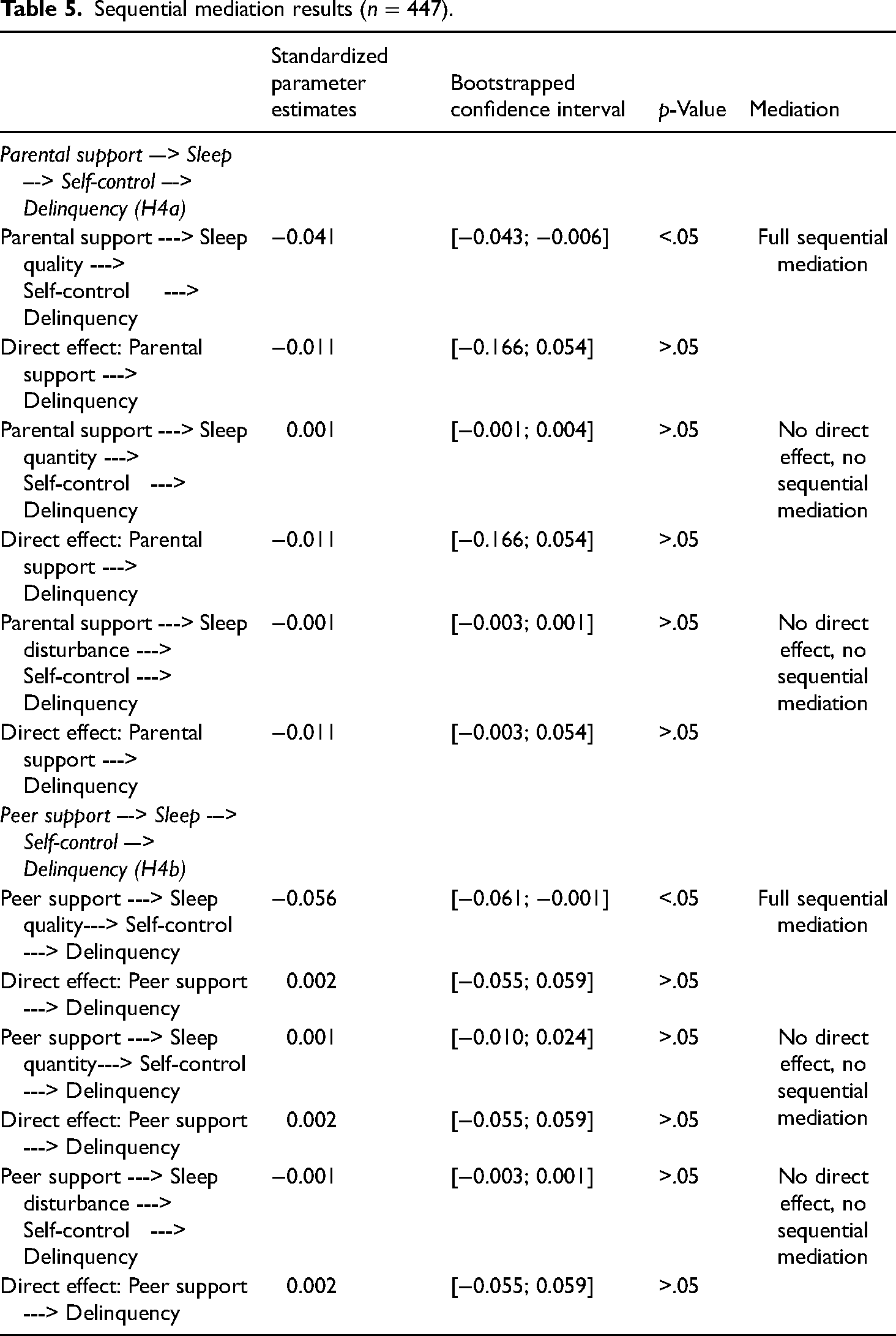
For each of the hypothesized sequential mediations through sleep quality, the confidence interval does not include zero, indicating a significant mediation chain. As such, Table 5 demonstrates the existence of a full sequential mediation for peer support (Peer support ---> Sleep quality ---> Self-control ---> Delinquency, γ = −0.05 [−0.06; −0.001], p < .05) and parental support (Parental support ---> Sleep quality ---> Self-control ---> Delinquency, γ = −0.04 [−0.04; −0.001], p < .05). Full mediation is inferred if the direct effect between the social support variables and delinquency is reduced to non-significance in the presence of the mediators. However, mediation chains are not significant for sleep quantity and sleep disturbance since the bootstrapped confidence intervals for these sequential mediations include 0. As a result, we find support for H4a and H4b dependent on the sleep indicator in question.
Moderating sex effects (H5a, H5b)
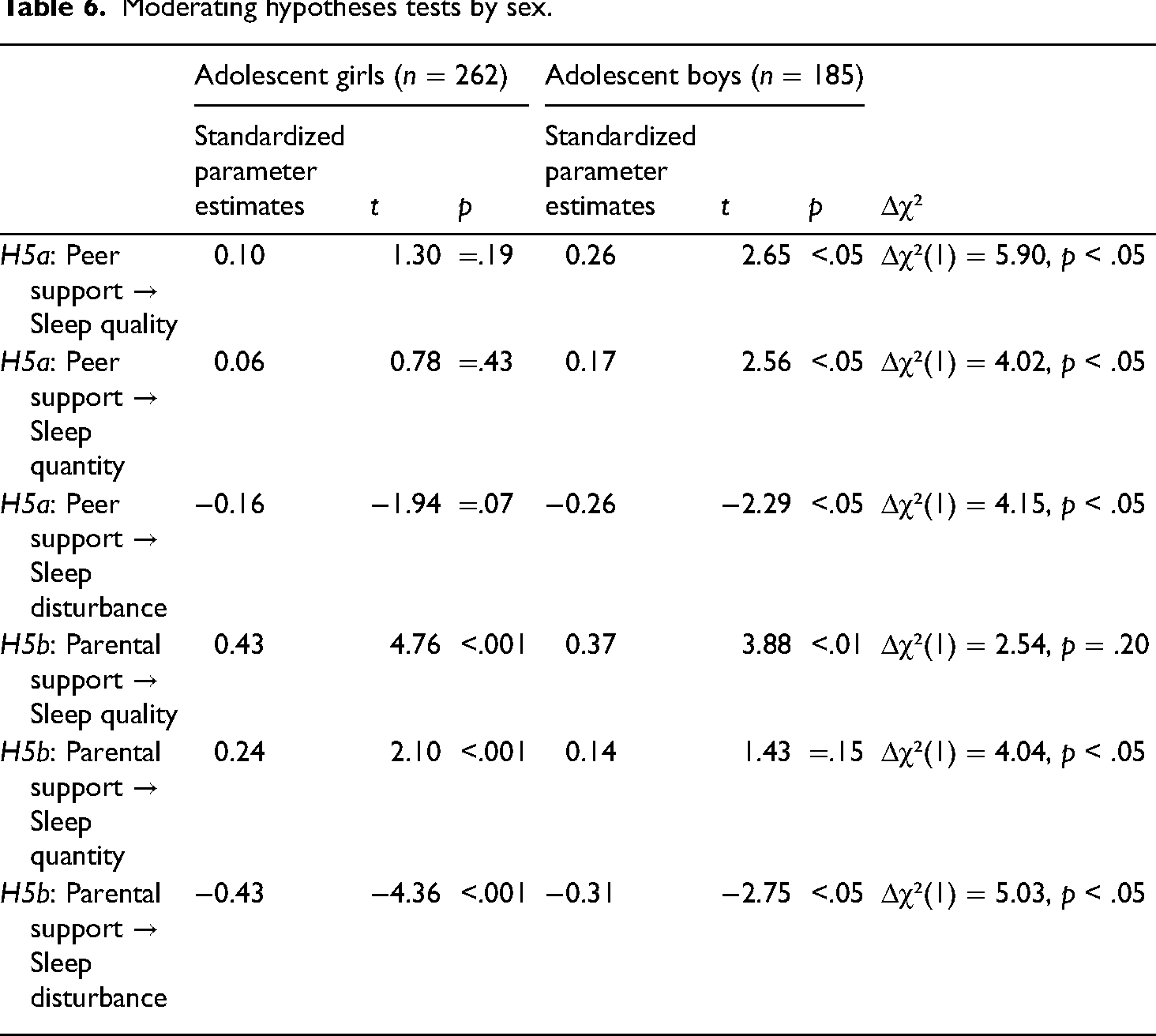
Finally, we tested our simple moderating hypotheses to examine sex differences in the influence of different types of social support on sleep. We used a multi-group analysis conducted with the software AMOS 26.0, which uses a case-wise full information maximum likelihood estimation procedure with missing values estimation to include all available data from each case (Albright and Park, 2009; Enders, 2006; Wothke, 2000). The multigroup analysis demonstrates good fit of the full model (χ2 = 1482.44, df = 672, p < .001; adjusted χ2= 2.20; CFI = 0.91, RMSEA = 0.05; Table 3, Model 6). We used multi-group analyses with two runs of data analysis to test for the moderating effects of respondent sex (Kline, 2005). In the first model, structural parameters are constrained to be equal across groups (χ²H). In the second, the structural constraints are removed, resulting in a Chi Square (χ²N) with additional degrees of freedom. The test for the moderating effect then produces the difference in the two values (χ²N − χ²H = χ²Δ), generating a χ2 value with degrees of freedom equal to the difference in degrees of freedom of the (χ²H) and (χ²N) values.
In support of H5a, we find that respondent sex moderates the effect of peer support on all sleep indicators (sleep disturbances Δχ²[1] = 4.15, p < .05), sleep quality (Δχ²[1] = 5.90, p < .05) and sleep quantity (Δχ²[1] = 4.02, p < .05). The relationships between peer support and sleep indicators are consistently stronger for boys than for girls. Moreover, in support of H5b, sex moderates the effect of parental support on sleep disturbances (Δχ²[1] = 5.03, p < .05) and sleep quantity (Δχ²[1] = 4.04, p < .05). However, sex does not moderate the effect of parental support on sleep quality (Δχ²[1] = 2.54, p = .20). All relationships between parental support and sleep indicators are stronger for boys than for girls. The results of the multi-group moderation analyses are shown in Table 6.
Moderating hypotheses tests by sex.
Discussion
We set out to examine the relationship between sleep and delinquency among French adolescents while considering the broader context of social support and related sex differences. Our analyses produced three main findings. First, sleep disturbance is directly associated with delinquent behavior while self-control significantly mediates the indirect relationship between all indicators of sleep (quality, quantity, and disturbance) and delinquency. Second, parental support is associated with all sleep outcomes while peer support corresponds specifically to sleep quality and sleep disturbance. We found the strongest support for full sequential mediation related to parental support, sleep quality, and delinquency. Finally, we found that different types of social support are more influential for sleep depending on self-reported respondent sex. Peer support is more strongly associated with all three indicators of sleep among boys, whereas parental support is linked more so to sleep outcomes for girls.
Our findings expand past research demonstrating that poor sleep is associated with greater risk of delinquency through the mechanism of degraded self-control (Meldrum et al., 2015; Vazsonyi et al., 2018). We build on this literature by showing that all three indicators of sleep correspond to delinquent outcomes via reductions in self-control. These findings underscore the importance of considering multiple facets of sleep deprivation and their implications for behavioral health among adolescents. Beyond previously studied measures of inadequate sleep quantity, poor quality sleep and frequent disturbances may also make it more difficult for young people to control impulses and engage in proper decision-making that ultimately generates higher risk for involvement in delinquency (Krizan and Herlache, 2016; Peach and Gaultney, 2013).
A key contribution of this study is the finding that social support plays a significant role in contextualizing the sleep–delinquency relationship. From a risk and resilience perspective, strong social support may provide protection against poor sleep in certain contexts with important differences between boys and girls that shape risk for delinquent behavior. Supporting H2a and H2b, we find that both parental and peer support correspond to sleep outcomes, although peer support is not significantly associated with sleep quantity. Furthermore, our sequential mediation analyses confirm the importance of both peer and parental support in the relationship between sleep quality and delinquency through self-control. This corroborates research suggesting that poor quality of sleep is an especially pertinent risk factor for delinquent behavior (Connolly et al., 2021). Greater social support from parents and peers may serve to improve sleep quality among adolescents by reducing stress, anxiety, or strain that make sleep more difficult for young people (Van Reeth et al., 2000; Van Schalkwijk et al., 2015). Furthermore, adolescents that receive better social support may be better able to cope with everyday problems and invoke increased support during acute times of crisis (Dahl and El-Sheikh, 2007). Young people who are better supported by their parents and peers may feel generally safer, which allows them to sleep easier without fear for harm to their everyday well-being (Kent de Grey et al., 2018).
Our moderation analysis demonstrates that various types of social support are more salient for sleep outcomes for adolescent boys and girls. In accordance with H5a and H5b, peer support is more strongly associated with all three sleep indicators among boys, while parental support has a more robust association with sleep outcomes among girls. Taken in the context of this study's other findings, the theoretical pathway from social support to delinquency appears to be sex-specific, at least in part, when considering sleep and its influence on self-control. Specifically, poor peer support may have a stronger effect on degrading sleep among boys, which can then serve to reduce self-control and increase the risk of delinquent behavior.
On the other hand, poor parental support may be more likely to harm sleep among girls, again increasing delinquency risk through the mechanism of self-control. These dynamics operate most consistently around sleep quality. Since research suggests social support provides young people with the resources to feel safe and cope with the daily stressors that are harmful to sleep (Kent de Grey et al., 2018), the associations found here suggest the social support-sleep link may be context-specific depending on sex and support type of those in question. However, there remains relatively little research in this area so future studies should continue to explore how sex (alongside more expansive aspects of gender identity) and social support conjunctively influence downstream factors such as sleep and delinquent behavior. Although theorists argue that social support is directly associated with delinquency and crime (Colvin et al., 2002), the evidence here suggests that degraded sleep and associated changes in self-control may operate as an important mediating process between the two.
There are several practical implications of our findings that can inform interventions to enhance adolescent sleep and reduce the risk of delinquency. Efforts to encourage better sleep habits among adolescents should focus not only on total time spent sleeping each night, but also on improving the quality of sleep (Connolly et al., 2021). Sleep hygiene programs to bolster adolescent sleep quality can be implemented in the general public or via school-based initiatives and have been found to successfully improve quality of sleep across cultural contexts (Illingworth et al., 2020; Otsuka et al., 2020). Strategies to improve adolescent sleep quality may include setting up bedrooms for optimal sleep (Kim et al., 20200), reducing noise pollution and disturbances from mobile devices (Carter et al., 2016), or delaying school start times to ensure that adolescent circadian rhythms align with school scheduling demands (Semenza et al., 2020). Improving sleep quality can improve affective and cognitive control, reducing the risk of delinquency among adolescents and mitigating subsequent health harms (Luyster et al., 2012).
On the other hand, efforts to improve sleep among adolescents will be most effective in concert with adequate social support from both parents and peers. Although sleep hygiene programs may help improve sleep quality, sleep enhancement strategies may be less effective in the context of poor social support. It is therefore critical for parents to ensure that they are providing adequate emotional care to their children, especially adolescent girls, since our results suggest a stronger influence of parental support on girls' sleep compared to boys'. Relatedly, positive peer support appears to be vital for proper sleep among boys. Given this, sleep hygiene programs with an approach to improving sleep that considers not only the child's physical environment but also their social context may ultimately be most effective (LeBourgeois et al., 2005). Programs that include resources from school counselors, conflict mediation specialists, and school psychologists may help to improve key interpersonal relationships among adolescents with implications for sleep quality and downstream repercussions for delinquent behavior. Given the documented negative health consequences of engaging in delinquency and the resultant criminal justice contact among adolescents (Boen, 2020; Esposito et al., 2017; Jackson, 2021), a more holistic approach to adolescent sleep improvement can yield long-term benefits for well-being over the life course.
Limitations and future research
Our paper is not without certain limitations that offer opportunities for future research. First, our data were collected from schools in one region of France and cannot be generalized to the entire country or across national contexts. We encourage researchers to continue studying the issues explored here in contexts outside of the United States using nationally representative samples where possible. Second, we were limited to the use of a self-reported, binary measure of respondent sex (male/female) included in the original survey. Continued work in this area should leverage measures that include aspects of gender identity and expression among gender-diverse persons where possible. Third, our two measures of social support are somewhat limited to support provided by parents and peers. Our measures do not include other relatives, teachers, or additional adults that may be instrumental in the lives of adolescents. Future studies should replicate the findings here while considering other types of social support and potential sex differences for sleep outcomes.
Relatedly, our measure of self-control focuses on one aspect of the broader self-control construct—impulse control. The larger construct of self-control is multifaceted and complex, comprised of multiple conceptual elements that contribute to the broader trait (Gottfredson and Hirschi, 1990). As such, we encourage future researchers to assess the dynamics analyzed here using more diverse measures of self-control that account for multiple elements. In addition, our measures of sleep disturbance and quality were derived from the School Sleep Habits Survey (Wolfson and Carskadon, 2003) and may differ from other measures of these sleep-related concerns (Vernon et al., 2015). Although these items were chosen here given their particular applicability to students in the context of their school experiences, additional research using sleep quality items from measures like the PSQI would be beneficial to further test the associations explored here (Buysse et al., 1989).
Finally, the data used here are cross-sectional and we cannot confirm causal relationships between the various measures in question. Although we outline a theoretical process using a series of structural equation models, longitudinal data are required to confirm the directional and causal nature of the relationships. For instance, it is conceivable that delinquent engagement corresponds to subsequent degraded sleep given research suggesting that criminal justice contact has negative implications for adolescent behavioral health (Jackson et al., 2019, 2020). Given the potential for methodological bias in cross-sectional research, future researchers should leverage randomized designs and longitudinal methods such as cross-lagged panel modeling wherever possible to test the mediation dynamics we have begun to address in this study (O’Laughlin et al., 2018).
Despite these limitations, our study provides important insight into the broader context of the previously documented sleep–delinquency link. Social support is a pertinent factor for achieving proper sleep for adolescents and different types of support are more instrumental than others for adolescent boys and girls. Enhanced social support from parents and peer groups may serve to improve adolescent sleep, especially aspects of sleep quality, and potentially reduce the risk of delinquent involvement. Since proper sleep is critical for adolescents to thrive and grow, improvements to sleep quality and resultant reductions in delinquency can provide potentially substantial benefits for well-being among youth.
Supplemental Material
sj-docx-1-euc-10.1177_14773708231154031 - Supplemental material for Sleep and delinquency: The context of self-control, social support, and sex differences among French adolescents
Supplemental material, sj-docx-1-euc-10.1177_14773708231154031 for Sleep and delinquency: The context of self-control, social support, and sex differences among French adolescents by Daniel C. Semenza and Elodie Gentina in European Journal of Criminology
Footnotes

References
Supplementary Material
Please find the following supplemental material available below.
For Open Access articles published under a Creative Commons License, all supplemental material carries the same license as the article it is associated with.
For non-Open Access articles published, all supplemental material carries a non-exclusive license, and permission requests for re-use of supplemental material or any part of supplemental material shall be sent directly to the copyright owner as specified in the copyright notice associated with the article.
