







Abstract
Comparisons between male and female perpetrators of child homicide have primarily focused on differences in offence characteristics or motives. Several studies have proposed classifications based on characteristics such as victim age or motive, which vary by perpetrator sex. In contrast, this paper examines the judicial treatment of male and female perpetrators. Filicides committed by female perpetrators represent a profound deviation from traditional expectations that associate motherhood with caregiving and self-sacrifice. Because male and female perpetrators differ substantially, assessing potential sentencing disparities requires controlling for offender- and offence-related factors. Binary and ordinal logistic regression analyses were used to test sex differences in judicial outcomes, specifically placement in forensic psychiatric hospitals and sentence length. Results show that perpetrator sex significantly affected sentence length but not the decision to issue a forensic hospital order after accounting for other relevant factors.
Introduction
Child homicide is a deeply sensational and emotionally charged topic, as its victims are among the most innocent and vulnerable members of society. Such acts are often difficult for the public to comprehend. In most cases, the perpetrators are the victims’ own parents – a pattern particularly pronounced among younger children (Bourget and Gagné, 2005; Brookman and Nolan, 2006; Crittenden and Craig, 1990; Dawson and Langan, 1994; Marks and Kumar, 1993, 1996; Nielssen et al., 2009; Resnick, 2016; Strang, 1996; UNODC, 2023). Globally, approximately 71,600 children under 18 were victims of homicide in 2021, accounting for 15% of all homicides, while children made up about 30% of the global population (UNODC, 2023: 58). Child homicide is among the leading causes of child mortality in economically developed countries (Castilla Peón et al., 2023; Crittenden and Craig, 1990; UNODC, 2019). However, prevalence varies significantly by region – for example, in 2016 the homicide rate per 100,000 children aged 0–17 was 0.5 in Europe and 3 in the Americas (UNODC, 2019: 12). In Germany, approximately 11.7 million children are under the age of 15 (Statistisches Bundesamt, 2025); police crime statistics report 55 homicide victims within this age group in 2024 (Bundeskriminalamt, 2025).
Unlike most other violent crimes, which are predominantly committed by male perpetrators, female perpetrators account for a relatively large proportion of child homicides, particularly filicide (Bourget and Gagné, 2005; Dawson, 2015). This may reflect women's greater likelihood to take on primary caregiving responsibilities (Adler and Polk, 1996; Wilczynski, 1997). In this context, it is especially important to examine how society responds to filicide perpetrators through the criminal justice system.
While many studies have investigated the causes of filicide and the gendered patterns in motives and methods (Bourget and Gagné, 2002, 2005; Crittenden and Craig, 1990; Finkelhor and Ormrod, 2001; Haug and Zähringer, 2017; Liem and Koenraadt, 2008; Resnick, 1969), fewer have explored disparities in sentencing maternal and paternal filicide (Amon et al., 2019; Brookman and Nolan, 2006; Marks and Kumar, 1993; Wilczynski, 1997). Such analysis requires adequate control of confounding variables, since the circumstances surrounding these crimes often differ between male and female perpetrators. This is especially relevant, since the German criminal justice system requires offender characteristics and offence circumstances to be considered in sentencing.
This study examines how the German criminal justice system responds to cases of filicide and whether male and female perpetrators are treated differently. The analysis draws on data from procedural case files containing detailed information about the offence, the perpetrator, the victim–offender relationship, the motive, and legal outcomes.
Research context
Filicide
Filicides are child homicides committed by a parent or de facto parent 1 (Bourget et al., 2007; Eriksson et al., 2016; Léveillée et al., 2007; Liem and Koenraadt, 2008), which applies to the majority of child homicides (Bourget and Gagné, 2005; Brookman and Nolan, 2006; Dawson and Langan, 1994; Crittenden and Craig, 1990; Haug and Zähringer, 2017; Höynck et al., 2015: 55; Marks and Kumar, 1993, 1996; Nielssen et al., 2009; Resnick, 2016; Strang, 1996; UNDOC, 2023). The risk of being killed by one's own parents declines as children grow older and begin to leave the home and expand their social connections (Adler and Polk, 1996; Brookman and Nolan, 2006; Crittenden and Craig, 1990; Finkelhor and Ormrod, 2001; Strang, 1996; UNDOC, 2023). Additionally, older children are generally less vulnerable, and violence is less likely to result in death.
Most studies suggest paternal filicide occurs as frequently as maternal filicide, though these crimes differ significantly (Bourget et al., 2007; Bourget and Gagné, 2002; Brookman and Nolan, 2006; Dawson, 2015; Marleau et al., 1999). 2 For instance, neonaticides are almost exclusively committed by mothers. Overall, the proportion of male perpetrators increases with the age of the victim (Bourget et al., 2007; Crittenden and Craig, 1990; Finkelhor and Ormrod, 2001; Höynck et al., 2015: 55; Léveillée et al., 2007; Liem and Koenraadt, 2008; Marks and Kumar, 1996; Marks and Kumar, 1993; Putkonen et al., 2011; Resnick, 1969). Furthermore, male perpetrators tend to be older at the time of the offence and use more violent methods, often involving weapons, which was found in several European countries as well as in North America and Australia (Bourget et al., 2007; Bourget and Gagné, 2005; Crittenden and Craig, 1990; Dawson, 2015; Liem and Koenraadt, 2008; Makhlouf and Rambaud, 2014; Marks and Kumar, 1993; Putkonen et al., 2011; Sidebotham and Retzer, 2019; Wilczynski, 1997). They are also more likely to have previously committed acts of violence against their children (Bourget and Gagné, 2005; Cavanagh et al., 2007; Eriksson et al., 2016; Léveillée et al., 2007; Putkonen et al., 2011), struggled with substance abuse (Marleau et al., 1999; Putkonen et al., 2010; Wilczynski, 1995), and often kill their children as a result of ongoing maltreatment (Bourget and Gagné, 2005; Dawson, 2015).
Male perpetrators are more often non-biological parents than female perpetrators, with significant differences in likelihood, execution, and motives when comparing biological and de facto parents (Daly and Wilson, 1994; Haug and Zähringer, 2017; Höynck et al., 2015: 55–56). Research also shows that fathers who kill their children are more likely to have a history of prior convictions (Marks and Kumar, 1993; Putkonen et al., 2011).
Both male and female filicide perpetrators share common characteristics, including a history of family abuse (Bourget et al., 2007; Eriksson et al., 2016) and previous experiences of suicidality, depression, or psychosis (Bourget and Gagné, 2005; Friedman et al., 2005; Léveillée et al., 2007; Stroud, 2008). Another common factor is living under stressful circumstances such as financial difficulties or low socioeconomic status, often indicated by below-average education (Adler and Polk, 1996; Bourget et al., 2007; Cavanagh et al., 2007; Eriksson et al., 2016; Léveillée et al., 2007; Strang, 1996).
Filicides occur in various situations and can vary significantly in their causal circumstances (Crittenden and Craig, 1990; Sidebotham and Retzer, 2019). Consequently, several studies on child homicide have developed classifications based on factors like victim age, perceived motive, and circumstances surrounding the death (Bourget and Gagné, 2002; Bourget and Gagné, 2005; Crittenden and Craig, 1990; Finkelhor and Ormrod, 2001; Haug and Zähringer, 2017; Höynck et al., 2015; Liem and Koenraadt, 2008; Resnick, 1969). These classifications aim to identify risk factors for each group and differ systematically by sex, reflecting the differences between male and female perpetrators outlined above (Bourget et al., 2007; Bourget and Gagné, 2002; Bourget and Gagné, 2005; Haug and Zähringer, 2017; Höynck et al., 2015; Liem and Koenraadt, 2008; Resnick, 2016; Sidebotham and Retzer, 2019) and also correlate with sentencing differences (Bourget et al., 2007).
One consistently mentioned category is neonaticide. Another is fatal child abuse, where the perpetrator's intent is to punish or discipline the child, and the child's death occurs unintentionally (Adler and Polk, 1996; Cavanagh et al., 2007). These cases are more often committed by men (Bourget et al., 2007; Bourget and Gagné, 2005; Crittenden and Craig, 1990; Dawson, 2015; Eriksson et al., 2016; Finkelhor and Ormrod, 2001; Höynck et al., 2015; Léveillée et al., 2007; Liem and Koenraadt, 2008; Makhlouf and Rambaud, 2014; Sidebotham and Retzer, 2019).
Another category with a high proportion of male perpetrators is homicide-suicide. These often involve multiple victims, including siblings and spouses, and are therefore more accurately described as familicides (Adler and Polk, 1996; Daly and Wilson, 1994; Höynck et al., 2015; Léveillée et al., 2007; Marleau et al., 1999). Some studies found that suicide following the offence is also common among mothers (Bourget and Gagné, 2002; Finkelhor and Ormrod, 2001; Haug and Zähringer, 2017; Höynck et al., 2015: 200; Liem and Koenraadt, 2008), although the underlying motives differ. Male perpetrators are more often driven by anger and desperation, whereas female perpetrators tend to act out of hopelessness or altruism (Léveillée et al., 2007; Liem and Koenraadt, 2008; Sidebotham and Retzer, 2019).
Another relatively rare category of filicide involves retaliatory acts in which the child is killed to harm the partner. These acts are more commonly committed by males (Bourget et al., 2007; Bourget and Gagné, 2002; Bourget and Gagné, 2005; Cavanagh et al., 2007; Liem and Koenraadt, 2008). Diagnosed psychiatric disorders also play a role in filicide. Though present among both sexes, most studies have found psychiatric disorders to be more prevalent among female perpetrators (Bourget and Gagné, 2005; Bourget et al., 2007; Eriksson et al., 2016; Finkelhor and Ormrod, 2001; Höynck et al., 2015: 234; Léveillée et al., 2007; Liem and Koenraadt, 2008; Marleau et al., 1999; Wilczynski, 1995).
Overall, categories similar to these appear consistently across several studies (Bourget et al., 2007; Höynck et al., 2015; Liem and Koenraadt, 2008; Nielssen et al., 2009; Resnick, 1969; Sidebotham and Retzer, 2019; Wilczynski, 1995). Their distribution varies depending on factors such as the study's selection criteria for victim age and the country of exploration (Sturup and Granath, 2015). A limitation of classifying child homicides based on motives and details of the offence is the absence of distinct criteria, which creates overlaps between categories.
In Germany, filicide has received little scientific attention, and empirical research – especially on sex or gender differences – is limited. Analyses focusing on filicide were conducted in medical dissertations (Hömberg, 2011; Raič, 1997). Additionally, the current database of children under 6 years (Höynck et al., 2015) and a research project on child homicide of children aged 6–13 (Haug and Zähringer, 2017) expanded the focus to include all types of child homicides committed by various perpetrators. In all cases, the focus was on the characteristics of the victims, perpetrators, and offence circumstances, forming the basis for categorization. The findings correspond to the international literature.
Differences in sentencing men and women
Numerous studies on sentencing outcomes have identified disparities in the treatment of male and female perpetrators. These studies typically investigate whether male perpetrators are more likely to be incarcerated and receive longer prison sentences. Although findings are not entirely consistent (Bontrager et al., 2013), the majority indicate a more lenient treatment of female perpetrators, who are both less likely to be sentenced to prison (e.g. Beeby et al., 2021; Doerner and Demuth, 2014; Pina-Sánchez and Harris, 2020) and, when incarcerated, tend to receive shorter sentences (e.g. Doerner and Demuth, 2014; Embry and Lyons, 2012; Holland and Prohaska, 2021; Pina-Sánchez and Harris, 2020; Philippe, 2020; Wermink et al., 2015). Most of these studies are not offence-specific but examine sentencing more generally. Others focus on specific categories, such as drug offences (Holland and Prohaska, 2021) or sexual offences (Beeby et al., 2021; Embry and Lyons, 2012). Research on homicide sentencing has similarly found disparities, particularly a more lenient treatment of female compared to male perpetrators who kill their spouses (Armstrong, 1999; Auerhahn, 2007; Johnson et al., 2010).
In the context of child homicide, the literature also observes notable sex differences. One consistent finding is that killings by female perpetrators are more likely to be reclassified as less serious crimes, such as infanticide or manslaughter, while male perpetrators are more often convicted of murder (Amon et al., 2019; Armstrong, 1999; Brookman and Nolan, 2006; Johnson and Dawson, 2024; Marks and Kumar, 1993). 3
Additionally, differences in case outcomes have also been identified. Female perpetrators are more likely to use psychiatric pleas, such as diminished responsibility (Wilczynski, 1997), and several studies have shown that women more frequently receive forensic hospital orders, whereas men are more likely to be sentenced to prison (Amon et al., 2019; Armstrong, 1999; Brookman and Nolan, 2006; Marks and Kumar, 1993, 1996; Wilczynski, 1997). 4 Scholars suggest that these disparities may stem from the societal perception that a mother who kills her child must be mentally ill, as this act represents a profound violation of traditional maternal norms – such as emotional selflessness and the expectation that mothers, as primary caregivers, are responsible for their children's well-being and development (Armstrong, 1999; Brennan, 2018; Marks and Kumar, 1996).
Lastly, prior research has documented sex differences in the severity of punishment. Female perpetrators were more likely to receive probation than their male counterparts (Amon et al., 2019; Johnson and Dawson, 2024; Marks and Kumar, 1993). When prison sentences are imposed, female perpetrators tend to receive shorter terms (Amon et al., 2019; Wilczynski, 1997). Some studies have even shown that the act of killing in terms of brutality is not a decisive factor in sentencing. For instance, fathers who kill in less violent ways still received harsher sentences than mothers who commit more violent acts (Armstrong, 1999; Marks and Kumar, 1993).
Theoretical explanations
The literature offers several explanations for the unequal sentencing of men and women. Chivalry or paternalism theory suggests that women receive more lenient sentences because they are often perceived as less dangerous, less capable of committing crimes, and – if they do – less accountable or responsible for their actions (Brennan, 2018; Crew, 1991; Nagel and Hagan, 1983). According to this perspective, gender differences in sentencing serve to legitimize patriarchal structures. By treating women mercifully, any structural sources, such as gender inequality, are denied (Brennan, 2018). In cases of child homicide – offences that are particularly severe and socially condemned – this leniency may take the form of interpreting such acts as ‘abnormal’ and attributing them to mental illness (Armstrong, 1999). However, the traditional assumption that law enforcement agencies and courts are predominantly male is no longer entirely accurate. In Germany, for instance, approximately half of the personnel in public prosecutors’ offices and courts are now female (Bundesamt für Justiz, 2024), although they also can have internalized patriarchal beliefs. Furthermore, empirical findings do not consistently support gender-based disparities across all types of offences (Bontrager et al., 2013; Crew, 1991; Tillyer et al., 2015; Visher, 1983).
Selective chivalry theory – as well as related frameworks such as the ‘evil woman’ hypothesis and double deviance theory – challenge the assumption of general leniency. These perspectives argue that women may receive harsher sentences in specific contexts. More lenient sentencing is thought to apply only to crimes that align with patriarchal perceptions of femininity. In contrast, ‘unfeminine’ offences or lifestyles that defy patriarchal ideals result in women being punished more severely for violating both legal and gender norms (Bickle and Peterson, 1991; Crew, 1991; Nagel and Hagan, 1983; Spohn and Beichner, 2000; Tillyer et al., 2015; Visher, 1983). Applied to filicide, the act of a mother killing her child constitutes a profound violation of traditional female characteristics. According to these theories, female perpetrators would therefore receive sentences as severe as, or even harsher than, those given to men.
Building on these frameworks of gender construction under patriarchy, further explanations for sentencing practices in filicide cases have been proposed. Brennan (2018), for example, adapts the notion of categorizing women as either ‘good’ or ‘bad’. ‘Good’ women conform to traditional ideals – passive, self-sacrificing, and vulnerable – while ‘bad’ women deviate from these traits. Sentencing decisions in filicide cases may depend on how the woman is framed within legal discourse. Women who can be portrayed as mentally unstable or as victims of their circumstances fit feminine attributions and thus receive more lenient sentences. In contrast, those who do not fit this narrative are punished more harshly (Armstrong, 1999; Brennan, 2018; Wilczynski, 1997). As Brennan (2018: 166) puts it: ‘Both strategies serve to deny her agency and, in so doing, neutralize the threat posed by her violent act’.
Wilczynski (1997) challenges the assumption of the chivalry theory that psychiatric disposals necessarily represent leniency. Instead, she suggests that alternative mechanisms of social control – beyond the judicial system – may be used to constrain women. Reframing female filicide offenders as ‘mad’ rather than ‘bad’ once again aligns with patriarchal gender expectations, which hold that women would not commit such acts unless mentally unwell.
The effect of this presumed unequal treatment, and the explanations behind it, remain consistent. Framing women who kill their children as mentally ill or victims of their circumstances deflects attention from structural factors that may contribute to filicide – such as the societal pressure on mothers, the isolation they often face postpartum, and the lack of adequate support from child welfare services (Armstrong, 1999; Brennan, 2018; Wilczynski, 1997).
Contrary to these theoretical frameworks, which attribute sentencing disparities to stereotypes and biases among decision-makers, some scholars argue that such differences may be justified, and sentencing research could not sufficiently control for confounding factors. Differences in context, motivation, and consequences of the offence (Johnson and Dawson, 2024), as well as broader societal conditions, personal circumstances, aspects of social life, and systemic inequalities, may legitimize differential sentencing outcomes between men and women (Covington and Bloom, 2023; Kruttschnitt and Green, 1984; Marks and Kumar, 1996; Pina-Sánchez and Harris, 2020).
Current study
As outlined, there is now a growing body of research from various countries (e.g. Beeby et al., 2021; Doerner and Demuth, 2014; Embry and Lyons, 2012; Holland and Prohaska, 2021; Pina-Sánchez and Harris, 2020; Philippe, 2020; Wermink et al. 2015) identifying disparities in sentencing outcomes for male and female perpetrators. However, it remains questionable whether these findings are transferable to the German criminal justice system. Germany operates under an inquisitorial legal system, in which the court is responsible for gathering and assessing evidence. Additionally, unlike many other jurisdictions, Germany emphasizes individual responsibility, with punishment primarily based on the offender's degree of guilt (see Sections 19 to 21 and 46 I of the German Criminal Code regarding criminal responsibility).
The objective of the present study is to compare the judicial treatment of male and female perpetrators of filicide involving children under the age of six. To do so, it is essential to comprehensively control for covariates that may influence sentencing decisions and vary between sexes. Drawing on previous literature, the first step will be to outline the key differences between male and female perpetrators of filicide. H1a: Male and female perpetrators of filicide are treated differently by criminal justice decision-makers. H1b: Male and female perpetrators of filicide are sentenced differently by criminal justice decision-makers. H2: Criminal justice decision-makers sentence female perpetrators of filicide more often to placement in a forensic hospital than male perpetrators in the case of a comparable background of the offence. H3: If criminal justice decision-makers assume perpetrators of filicide to be criminally responsible, they sentence female perpetrators to shorter prison sentences than male perpetrators in the case of comparable offences.
Data and method
Data selection
The analyses are based on data from a project on child homicide in Germany conducted by the Criminological Research Institute of Lower Saxony. Information was obtained from criminal case files on homicides of children under the age of six. All available cases between 1997 and 2006 were included (Höynck et al., 2015). Because victim age is not recorded in judicial databases, relevant cases could not be directly requested from prosecution offices. Instead, specific file numbers were identified through police documentation systems. Consequently, police departments in all German federal states were asked to provide file numbers for relevant cases, and prosecutors were requested to submit any additional ones not identified through this process (Höynck et al., 2015).
To ensure a relatively homogeneous database and improve comparability across cases, several exclusions were made. Cases involving non-parents (neither biological nor de facto) as perpetrators (n = 12) were excluded due to the focus on filicide. Also excluded were neonaticides (n = 96), which are almost exclusively committed by biological mothers (Marks and Kumar, 1996). The German criminal justice system treats juvenile and adult perpetrators differently in several respects. Therefore, cases involving juvenile offenders (n = 25), where sentencing serves an educative purpose and sentence lengths vary significantly, were excluded. Additionally, cases of attempted homicide (n = 6) were excluded due to the different outcomes. An accident without human intervention (n = 1), an acquittal (n = 1) and homicide-suicide cases (n = 27), in which no sentences are imposed, were also excluded. However, cases involving attempted suicide by the perpetrator were included. Finally, one case involving post-sentence preventive detention – a rare judicial measure not comparable to other sentencing outcomes – was excluded because of incomparability (n = 1).
Data description
Between 1997 and 2006, a total of 354 individuals were identified as having been sentenced for killing a child. After applying the selection criteria, 181 filicide perpetrators remained, 46% female (n = 83) and 54% male (n = 98). In this dataset, a perpetrator may have more than one victim; this applied to seven male and seven female offenders. In addition, some perpetrators acted together: in 43 cases one, and in one case two, additional individuals were charged with the same offence.
Coding strategy
Unlike several other studies, the present dataset is not limited to individuals in psychiatric hospitals (Bourget et al., 2007; Bourget and Gagné, 2002, 2005; Marleau et al., 1999) or to those sentenced to prison, both of which can introduce bias (Eriksson et al., 2016). In Germany, courts decide both on prison sentences and placements in forensic hospitals, so prosecutorial case files cover both types of decisions. These files include standardized forms, witness statements, police reports, and other documents detailing the perpetrator, the offence, and the investigation results. Because prosecutors must compile and document all relevant information, the files are generally comprehensive and consistent. They typically also contain a written judgment summarizing the court's findings and rationale. To systematically extract data on sociodemographic characteristics, criminal history, procedural actions, case outcomes, and sentencing decisions, a standardized coding instrument was developed.
Dependent variables
The primary purpose of this study was to examine differences in sentencing outcomes for filicide cases between male and female perpetrators. Therefore, the dependent variables reflect the criminal court's final decisions. Under German criminal law, sentences or measures involving deprivation of liberty include prison terms and placements in forensic hospitals under Section 63 of the German Criminal Code. Such placements require a finding of criminal irresponsibility or diminished responsibility. They are indefinite, remaining in force as long as the offender is considered dangerous.
Considering this, two decision stages may affect the outcome:
The type of sentence or measure: Distinguishing between time-limited prison sentences and indefinite forensic hospital placements due to mental illness.
6
This variable was coded dichotomously (0 = prison sentence, 1 = forensic hospital placement). The length of the prison sentence: For negligent killing, no minimum sentence is specified, whereas murder carries a mandatory life imprisonment.
7
Sentence length was measured in months, ranging from 2 months to life imprisonment. To handle life imprisonment which impedes a continuous metric scale but also to reflect the wide range of sentence lengths, six categories were created: less than 3 years (=1), more than 3–6 years (=2), more than 6–9 years (=3), more than 9–12 years (=4), more than 12–15 years (=5), more than 15 years, including life sentences (=6).
Based on these two dependent variables, two statistical analyses were performed. First, the effect of gender on the court's assessment of the causal role of mental illness in the commission of the crime was examined using correlations and a binary logistic regression model. Second, an ordinal logistic regression was used to assess the impact of gender on sentence length.
Selection of predictors
To examine the effects of perpetrators’ sex on the court outcomes, a dummy variable was coded (0 = male, 1 = female). In addition to sex, several other factors influencing the judicial decision were included. These were selected based on legal requirements, theoretical assumptions, and findings from the literature review.
German criminal law predefines the range and type of sentences for each offence, which directly influences the outcome variable. Previous research has also identified differences in the judicial reclassification of filicides between male and female perpetrators (Amon et al., 2019; Armstrong, 1999; Brookman and Nolan, 2006; Johnson and Dawson, 2024; Marks and Kumar, 1993). In this study, child homicide was categorized into seven different offences under the German Criminal Code 8 : murder under specific aggravating circumstances (sec. 211), murder (sec. 212), less serious case of murder (sec. 213), bodily harm resulting in death (sec. 227), negligent killing (sec. 222) as well as ill-treatment of persons in one's charge (sec. 225) and dangerous bodily harm (sec. 224). 9 Because of small numbers for the latter two sections (ill-treatment of persons in one's charge and dangerous bodily harm), these categories were combined, as both involve convictions where the perpetrator was not held accountable for the death of the victim but only for the physical harm.
Additionally, Section 49 of the German Criminal Code allows for sentence reductions in cases with mitigating circumstances, such as offences committed by omission (Sec. 13), where a person fails to prevent harm or danger despite a legal duty to act. The application of this section directly influences the length of the sentence. Offences committed by omission were more frequent among women, as shown in Table 1.
Descriptive statistics by sex.
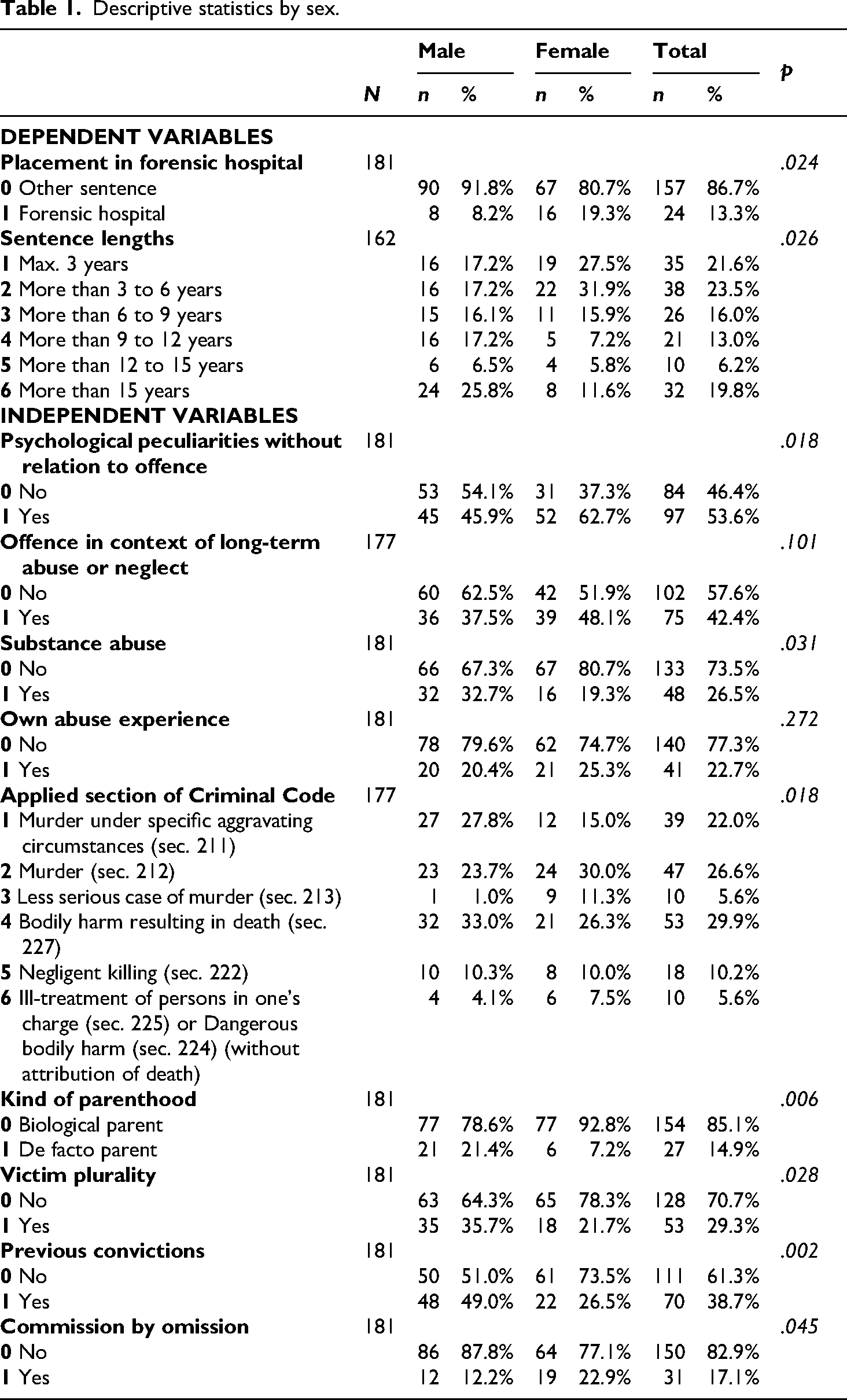
Furthermore, the general principles of sentencing in Germany (Section 46 of the German Criminal Code) stipulate that prior criminal history should be considered when determining a sentence. According to prior research, male offenders are more likely to have a criminal history (Cavanagh et al., 2007; Léveillée et al., 2007; Putkonen et al., 2011). Therefore, including prior criminal history as a control variable is essential, as prior offending behaviour – in the German context – rather certainly influences sentencing decisions. In the current data, the excerpt from the central penal register, contained in the case files, was used to confirm prior criminal history. Approximately one-fourth of women and half of men had previous convictions (see Table 1).
Other factors related to the perpetrators’ prior history also affect sentencing decisions according to Section 46 of the German Criminal Code. These factors were distributed differently between male and female perpetrators (see Table 1). Variables such as substance abuse (Léveillée et al., 2007; Putkonen et al., 2010), psychological issues in personal history (Friedman et al., 2005; Léveillée et al., 2007; Stroud, 2008), or experiences of abuse (Bourget et al., 2007; Eriksson et al., 2016) have been mentioned in further research and are considered. If these factors were absent from the case files, it is assumed that they were not factored into the sentencing decision. Hence, these variables were coded without missing values.
Especially in cases of long-term abusive behaviour or neglect, or when multiple victims are involved, the court takes these factors into account when determining the sentence. This is in line with general sentencing principles, which require consideration not only of the consequences caused by the offence but also of the extent to which the offender is to blame for them. In the current data, cases with long-term abuse or behaviour did not show significant differences between male and female perpetrators. However, offences committed by male perpetrators more frequently involved multiple victims. This pattern is also reflected in the literature, which reports a higher incidence of victim plurality among male than female perpetrators (Brennan, 2018; Cavanagh et al., 2007; Léveillée et al., 2007; Liem and Koenraadt, 2008).
Moreover, being a de facto parent appears to be a distinguishing factor between male and female perpetrators, according to both the current data and prior research (Cavanagh et al., 2007; Daly and Wilson, 1994; Resnick, 2016). Previous studies also found that the nature of the offences differs in several respects, which likely contributes to different sentencing outcomes.
The dependent and independent variables relevant for the following calculations, including their disparities between male and female perpetrators, are presented in Table 1. The p-value refers to the chi-square test or, for dichotomous variables, Fisher's exact test.
To summarize the findings of the comparison between men and women: female perpetrators of filicide more often had psychological peculiarities in their personal history that are unrelated to the current offence and were more frequently victims of past abuse. In addition, their offences were more often acts of omission. In contrast, male perpetrators of filicide more frequently had a documented history of substance abuse or addiction, a prior criminal record, and were more often not the biological parent (de facto parent). Furthermore, differences were found in the sections of the Criminal Code applied to their cases.
The extent of missing values varies across variables. The dependent variable sentence length had the highest proportion of missing data (10.5%). Cases with missing values were excluded listwise in subsequent analyses.
Results
Decision about placement in a forensic hospital
As presented in Table 1, 86.7% of the examined convicts received a prison sentence (with parole) (n = 157), while only 13.3% were placed in a forensic psychiatric hospital under Section 63 of the German Criminal Code (n = 24). A bivariate comparison of this variable and the perpetrator's sex reveals statistically significant differences: only 8.2% of men received a forensic hospital order, compared to 19.3% of women (p = .024, Fisher's exact test). However, since male and female perpetrators of filicide differ in a variety of factors, this correlation does not necessarily imply that gender directly influences judicial decisions. A correlation table presents the bivariate relationships between various potential factors (Table 2). Significant correlations with the dependent variable placement in a forensic hospital were also found for documented psychological peculiarities in the perpetrator's personal history (p < .001), as would be expected. Additionally, committing the offence in the context of long-term abuse or neglect (p < .001) is associated with a higher likelihood of receiving a prison sentence rather than a forensic hospital order. The strongest correlation was found between psychological peculiarities in personal history and documented substance abuse (r = .484, p < .001).
Bivariate correlation of the variable placement in a forensic hospital and selected predictors.
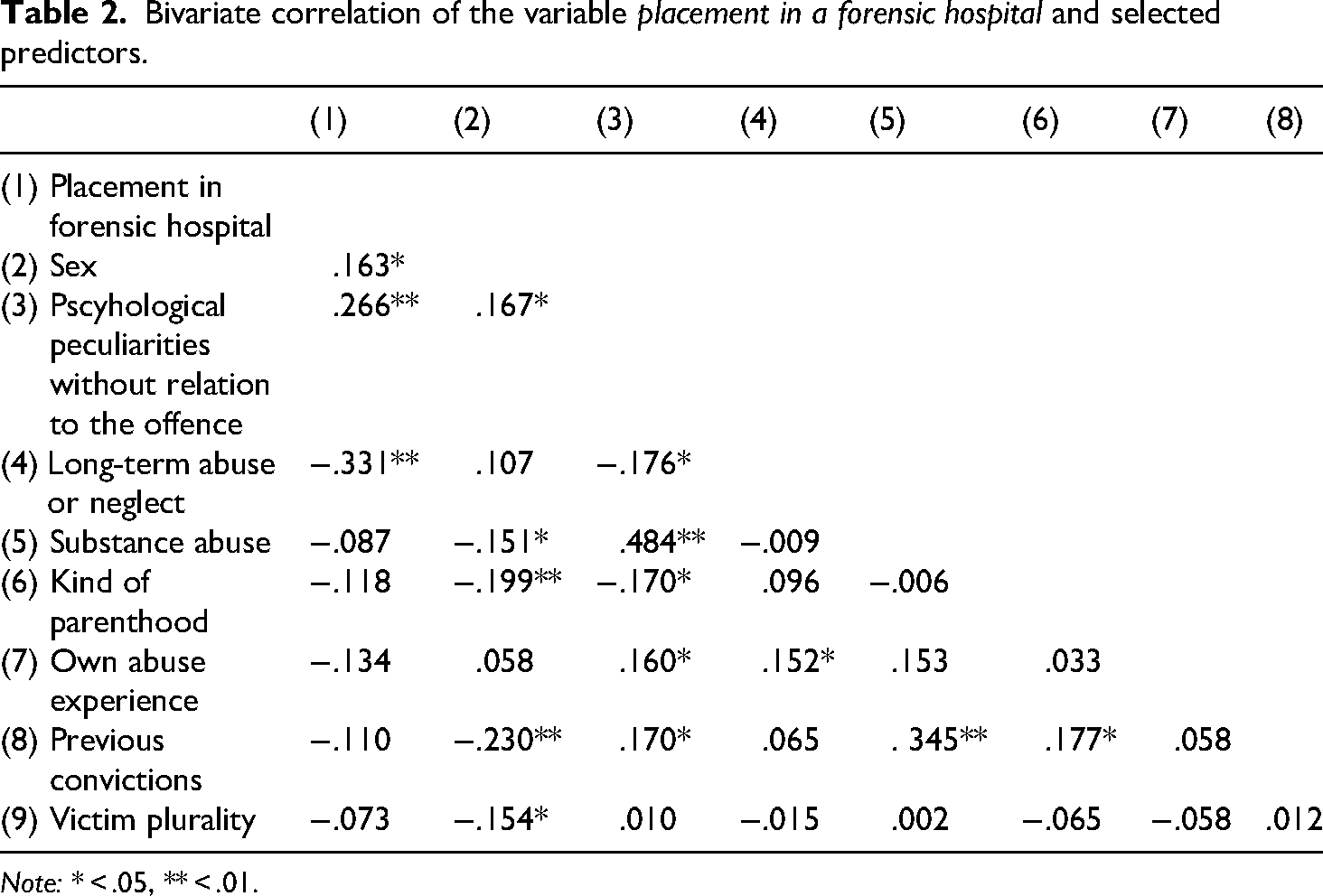
Note: * < .05, ** < .01.
Performing a binary logistic regression may provide further insights into the relationship between the dependent variable and potential predictors of a forensic hospital order. The analysis was conducted using IBM SPSS Statistics 27 with the LOGISTIC REGRESSION command.
Several conditions must be met for a binary logistic regression to yield robust results. Literature suggests that the number of cases should not be too low to avoid overfitting. Although the ‘rule of ten’ is widely known and often recommended (e.g. Moons et al., 2014), some authors consider it too conservative and argue that it can be relaxed (Smeden et al., 2016; Vittinghoff and McCulloch, 2006). Given the limited number of cases in the forensic hospital category (n = 24), it was necessary to restrict the number of predictor variables. In addition to sex, two dichotomous variables were included: psychological peculiarities without relation to the offence and offence committed in the context of long-term abuse or neglect. As shown in Table 2, correlations between predictor variables (r < .484) do not suggest multicollinearity (Dattalo, 2013: 14). An examination of residuals revealed three cases with values exceeding two standard deviations, with the highest being 2.4.
The binomial logistic regression model was statistically significant (χ²(3) = 40.21, p < .001). The model explained 20% of the variance according to Cox and Snell R² and 38% according to Nagelkerke R². Model fit was assessed using the Hosmer-Lemeshow test, which indicated a good fit (χ²(6) = 1.44, p = .963). However, due to the small and imbalanced sample, the classification accuracy did not improve, and the model failed to predict any cases assigned to the forensic hospital category.
Regarding the influence of individual predictors, only the variable ppwr significantly contributed to the judicial decision to place a perpetrator in a forensic hospital. Sex did not significantly predict the outcome. For the variable offence committed in the context of long-term abuse or neglect, an extremely high standard error suggested complete (or quasi-complete) separation (Mansournia et al., 2017). In all such cases, a prison sentence was imposed. This type of separation, which often occurs in small samples with rare outcomes, cannot be handled properly by the standard LOGISTIC REGRESSION procedure, as it requires variation in the dependent variable (Mansournia et al., 2017).
Since this issue could not be resolved by adjusting the dataset, an alternative approach was employed: a second binary logistic regression using Firth's bias reduction method (Firth, 1993). This method applies a penalized likelihood function to reduce the bias in maximum likelihood estimation (Mansournia et al., 2017). The analysis was performed using the logistf package in R.
This penalized binomial logistic regression model was again statistically significant (likelihood ratio test: χ²(3) = 15.99, p = .001; Wald test: χ²(3) = 59.66, p < .001). Standard errors for each coefficient were estimated using penalized maximum likelihood and appeared stable. As in the unpenalized model, only the variable psychological peculiarities without relation to the offence showed a statistically significant effect on placement in a forensic hospital. No significant effect was found for sex. Although the variable offence in the context of long-term abuse or neglect demonstrated perfect separation in the unpenalized model, statistical significance was not observed in the penalized model – likely due to the small and unbalanced sample. Table 3 presents the results of both binary logistic regressions.
Logistic regressions with the independent variable placement in a forensic hospital.
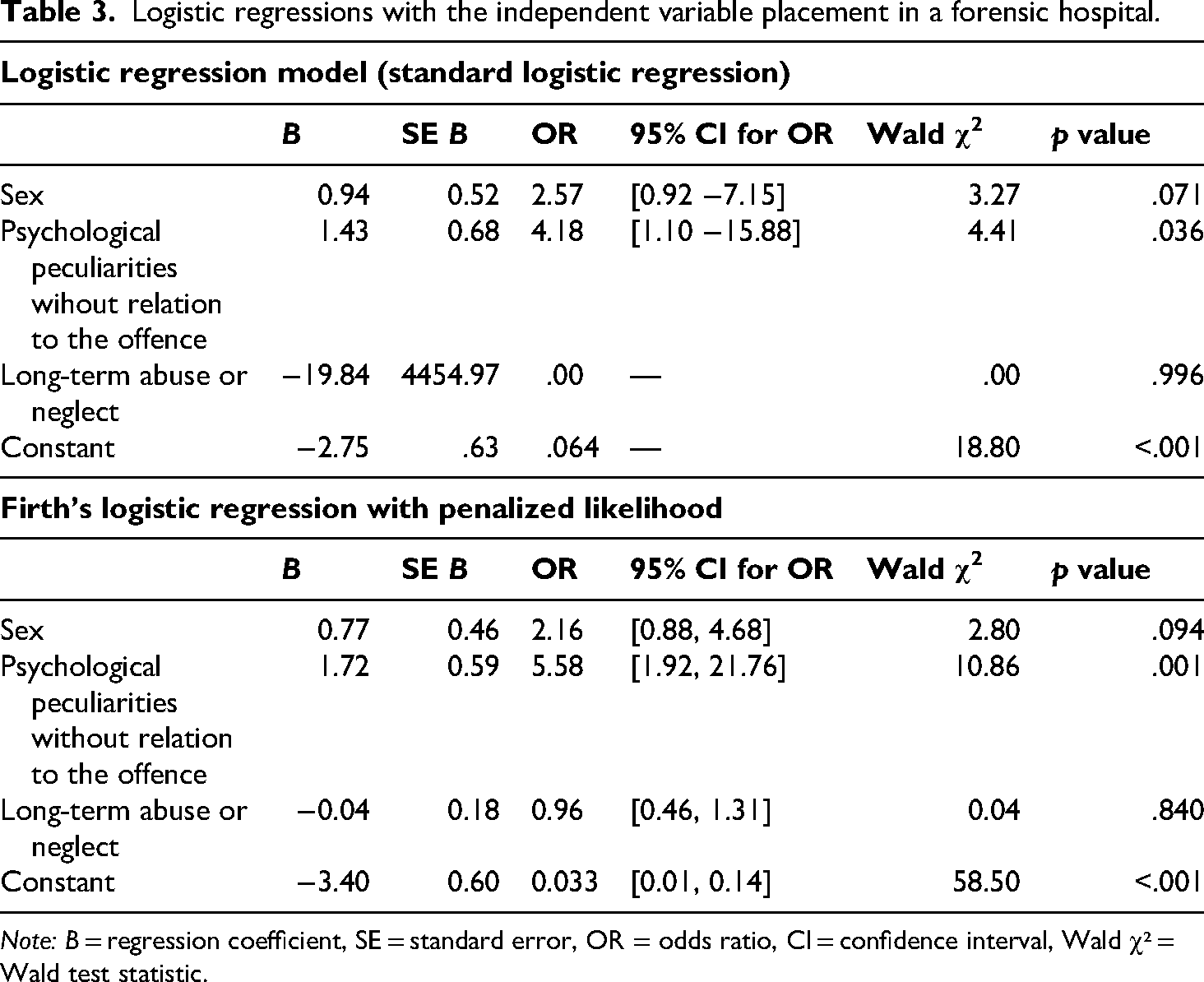
Note: B = regression coefficient, SE = standard error, OR = odds ratio, CI = confidence interval, Wald χ² = Wald test statistic.
Decision about sentence length
To examine differences between men and women in the imposed sentence, an ordinal logistic regression was conducted in IBM SPSS Statistics 27 using the PLUM procedure. The dependent variable was sentence length, and six independent variables were included: applied section of the Criminal Code, sex, commission by omission, criminal record, victim plurality, and type of parenthood.
All variables showed sufficient variability to be considered informative for predicting the outcome variable. To assess collinearity, Pearson's correlation coefficients indicated acceptable values (r ≤ .401) (Dattalo, 2013). Additionally, the variance inflation factor (VIF ≤ 1.62) and the condition index (≤.919) revealed no signs of multicollinearity. The test of parallel lines showed that the assumption of proportional odds was met in the current data, meaning that the odds ratios for each predictor were consistent across the categories of sentence length (χ²(40) = 31.83, p = .818).
In the ordinal logistic regression, the −2 Log-Likelihood value indicated a statistically significant improvement in model fit compared to the null model (χ²(10) = 247.542, p < .001). Furthermore, both the Pearson chi-square test (χ²(330) = 194.118, p = 1.000) and the deviance test (χ²(330) = 162.500, p = 1.000) were non-significant, suggesting a good model fit. The McFadden pseudo R² was r = .444, indicating a notable improvement of over 44% in the prediction of the outcome.
Table 4 presents the results of the ordinal logistic regression. As expected, two sections of the Criminal Code – murder under specific aggravating circumstances and murder – are significantly associated with higher sentence length categories, while negligent killing is significantly associated with lower sentence length categories. However, the applied sections of the Criminal Code are not the only predictors of sentence length. In addition, type of parenthood, victim plurality, and sex show significant effects on the outcome variable. Interpreting the odds ratios: biological parents have 0.085 times the odds of receiving a higher sentence length compared to de facto parents. Similarly, individuals with only one victim have 0.122 times the odds of receiving a higher sentence compared to those with multiple victims.
Ordinal logistic regression with the dependent variable sentence length.
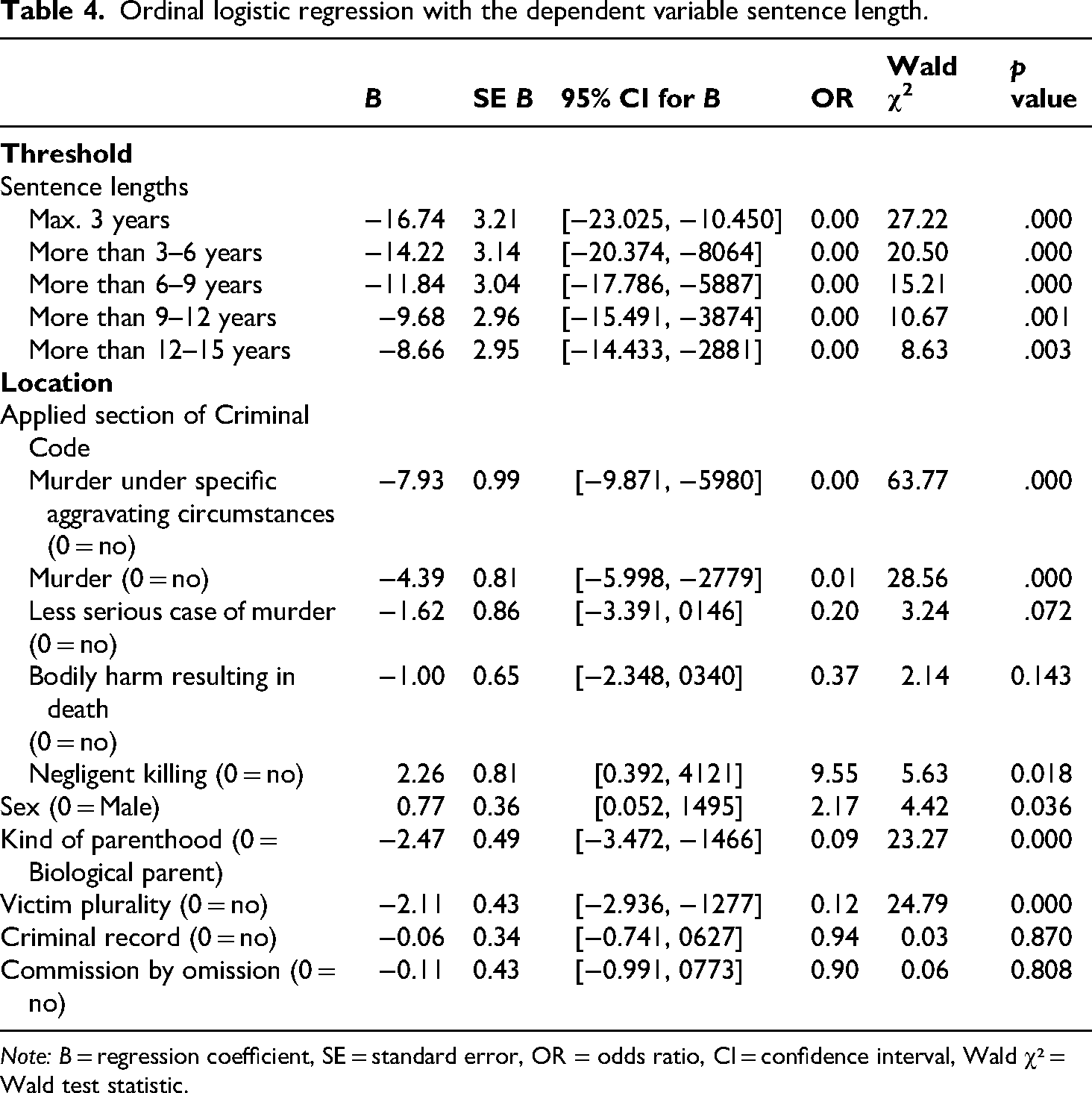
Note: B = regression coefficient, SE = standard error, OR = odds ratio, CI = confidence interval, Wald χ² = Wald test statistic.
Regarding gender, for male persons, the odds of receiving a higher sentence length (compared to any lower sentence length category) are 2.17 times greater compared to women, when controlling for all other variables in the model. By contrast, prior convictions and commission by omission do not appear to have a significant impact on sentence length.
Discussion
This study analyses data from case files of child homicide cases in Germany between 1997 and 2006, focusing on gender differences in sentencing filicide. Case file data are particularly valuable as they provide information directly relevant to sentencing decisions. As the study focused on differences between male and female perpetrators, certain categories – most notably the large group of neonaticide cases – were excluded from the analyses. A binary logistic regression was conducted with placement in a forensic hospital as the dependent variable, alongside an ordinal logistic regression with sentence length as the outcome variable.
Consistent with previous research on filicide (Eriksson et al., 2016; Léveillée et al., 2007; Liem and Koenraadt, 2008; Wilczynski, 1995), the current study reveals differences in the characteristics of maternal and paternal filicide. Male perpetrators were more often stepfathers, inflicted greater harm or killed multiple victims, and had higher rates of substance abuse and prior convictions. In contrast, female perpetrators were more likely to have psychological issues and committed filicide by omission. Sex differences were also evident in the legal classification of child homicides. Male perpetrators were more often convicted of murder under aggravating circumstances (Section 211; 28% vs. 15%) and bodily harm resulting in death (Section 227; 33% vs. 26%), whereas female perpetrators were more frequently charged with murder without aggravating circumstances (Section 212; 30% vs. 23.7%) and with less serious cases of murder (Section 213; 11.3% vs. 1%).
Filicide cases challenge patriarchal expectations of the ‘good’ woman. Chivalry theory suggests that framing these acts as mental illness may deflect attention from structural issues and thus reinforce patriarchal norms. Consistent with that, previous studies found that female perpetrators more often use psychiatric pleas and receive psychiatric orders than male perpetrators (Marks and Kumar, 1993; Wilczynski, 1997). However, current data did not support the hypothesis that female perpetrators are more often placed in forensic psychiatric hospitals (H2). While they were assigned to such institutions more frequently, regression analysis controlling for relevant variables showed no significant sex differences. The only predictor was the presence of psychological issues unrelated to the offence.
Theories like selective chivalry, ‘evil woman’ or double deviance propose that women who violate both legal and gender norms might receive harsher treatment. However, this was not supported by the data. Consistent with previous studies (Amon et al., 2019; Marks and Kumar, 1993), results indicate that female perpetrators receive more lenient sentences than males, even when controlling for other factors. Around one-third of male offenders received sentences under six years, compared to nearly two-thirds of female offenders. Conversely, a quarter of male and only 11.6% of female perpetrators were sentenced to at least 15 years. Ordinal logistic regression revealed that sentencing outcomes were significantly influenced by the applied criminal code section, not being a biological parent, and killing or harming multiple victims. Sex also had a significant effect on sentence length (p = .036), with male perpetrators being 2.17 times more likely to receive longer sentences, after controlling for other relevant variables. Thus, hypothesis H3 is confirmed, supporting the notion that male and female perpetrators are treated differently by the justice system also with regard to sentence length (H1a and H1b).
In contrast, Brennan's (2018) alternative interpretation – which posits that women portrayed as victims of circumstances align with traditional feminine expectations and therefore receive more lenient sentences – appears consistent with our findings. Accordingly, criminal justice personnel may perceive perpetrators of maternal filicide more as victims of circumstance than perpetrators of paternal filicide.
Another possible explanation is that male and female perpetrators differ in personal characteristics and aspects of their social lives that legitimately affect sentencing (Covington and Bloom, 2023; Kruttschnitt and Green, 1984; Wilczynski, 1997). Although data were obtained through case file analysis, which is generally considered a relatively comprehensive source of information, not all of these factors could be sufficiently identified or controlled.
From the author's perspective, it seems likely that judicial decisions reflect a careful, justified process. Filicide cases in Germany are rare, and the identified patterns represent the sum of individual decisions based on case material. The findings suggest that determinations of criminal responsibility – particularly in cases of filicide – are not significantly influenced by gender-related bias. In practice, criminal courts, especially in cases involving serious offences, routinely commission expert assessments of criminal responsibility, although this decision formally lies within the judge's authority. It does not appear that this question is treated lightly.
With respect to sentencing, the wide range of sentence lengths observed suggests that judicial decisions are made carefully and take case-specific characteristics into account. However, when controlling for several variables, sex significantly impacts sentencing outcomes. One possible explanation is that judges’ professional experiences – such as perceptions of recidivism and reintegration – might influence sentencing, even in exceptional cases like filicide (Pina-Sánchez and Harris, 2020). Thus, unequal treatment may not stem from a stereotypical perception of motherhood or an unfounded assessment of a specific case, but rather from assumptions grounded in prior experience with female offenders.
This study has limitations. Due to the cumbersome process of obtaining court files, some relevant cases might have been excluded. However, systematic selection bias seems highly unlikely. Nevertheless, using court files as a data source entails certain restrictions. These are not created for scientific analysis, reflect a constructed narrative rather than an objective account, and some discretionary decisions remain invisible. This also implies that selection processes or decisions made prior to documentation are not accessible to researchers. The relatively small sample size and exclusion of rare cases also limit generalizability. Additionally, while a comprehensive set of relevant case characteristics was considered, factors such as recidivism or resocialization prospects – which play a crucial role in the German criminal justice system – could not be fully controlled. The highly imbalanced forensic hospital placement variable also posed challenges for multivariate analysis, although Firth's logistic regression helped reduce bias.
Finally, while the findings offer important insights, they are specific to the German context, and their generalization to other countries or legal systems should be approached with caution.
Conclusion
The findings of this study shed light on significant gender disparities in the sentencing of filicide cases within the German criminal justice system. Despite controlling for various influencing factors, male perpetrators tend to receive longer sentences compared to their female counterparts, suggesting potential gender-based biases in sentencing. Interestingly, the study finds that gender does not influence decisions regarding forensic hospital orders, indicating that such decisions are primarily guided by factors like mental illness and criminal responsibility rather than gender stereotypes. This underscores the importance of expert evaluations in criminal irresponsibility cases, where assessments seem to be conducted with more objectivity than sentencing decisions. These results do not align with existing theories, such as chivalry, selective chivalry, the evil woman hypothesis, and the double deviance theory.
Although the case file analysis method is relatively comprehensive and advantageous, the possibility of insufficient control for relevant factors cannot be ruled out. This lends support to the assumption that sentencing differences may be justified by different characteristics and contextual factors associated with male and female perpetrators of filicide.
However, it remains unclear whether the observed biases are specifically related to the context of parenthood and caregiving inherent in filicide cases. It is also plausible that more general assumptions about criminal behaviour among men and women – such as perceived risk of recidivism – play a significant role in sentencing outcomes. This could be supported by the observation that the current analysis shows gender does not appear to influence decisions regarding forensic hospital orders.
These results underscore that one-dimensional explanations of gender differences in sentencing – such as those proposed by Chivalry, Evil Woman, Double Deviance, or Selective Chivalry theory – are insufficient. Gender effects are complex and cannot be reduced to simple mechanisms. Further investigation into the underlying mechanisms contributing to gender-based sentencing discrepancies from an intersectional perspective is needed. A key challenge lies in the cumulative effect of potential biases arising at different levels and from multiple actors within the criminal justice process, making them difficult to identify and isolate. Future research should explore the interplay between legal professionals’ attitudes, prevailing cultural norms, and established legal precedents that may contribute to these disparities.
Footnotes
Acknowledgements
The data for this analysis were provided by Prof. Dr Theresia Höynck, who holds the project lead in the project ‘Homicides of 0–5-year-old Children’ realized by the Criminological Research Institute of Lower Saxony, founded by the Fritz Thyssen Stiftung. For this, for support in the writing process, and helpful comments, I am grateful. Additionally, I thank Dr Anabel Taefi for taking the time to give suggestions to the paper.

Ethical statement
For the present study, no ethics approval was obtained because it involved a retrospective analysis of anonymized data that were already available prior to the initiation of the research. All personal information was processed in compliance with applicable data protection laws, ensuring pseudonymization or complete anonymization, so that no individual could be identified. Furthermore, no interventions or direct contact with the affected individuals took place, and the study had no impact on their rights or well-being. Since no active consent was required and all ethical standards to safeguard confidentiality were adhered to, obtaining ethics approval was not deemed necessary according to the applicable guidelines.
Funding
The author received no financial support for the research, authorship, and/or publication of this article.
Declaration of conflicting interests
The author declared no potential conflicts of interest with respect to the research, authorship, and/or publication of this article.