







Abstract
In this report, we demonstrate that both mechanical behaviour and thermal stability of polybutadiene rubber (PBR) nanocomposites could be improved by incorporating exfoliated graphite (EG) using melt mixing method. Incorporation of the filler EG in the polybutadiene (PBD) matrix is confirmed by infrared spectra and X-ray diffraction analysis. The structural characteristics, mechanical properties and thermal properties of these newly modified PBR nanocomposites were systematically analysed and studied. Thermal properties of the nanocomposites were studied using thermogravimetric analysis under nitrogen atmosphere. Thermogravimetric studies showed that PBR8 is having higher thermal stability than that of the PBR gum sample. Mechanical properties like tensile strength, Young’s modulus, tear strength, hardness and compression set of the nanocomposites were studied. Mechanical properties are also high for the modified PBR nanocomposites with maximum filler content. The permeability of organic vapours such as dichloromethane (CH2Cl2), chloroform (CHCl3) and carbon tetrachloride (CCl4) through PBR/EG nanocomposites was also studied. In vapour permeation studies, PBR4 exhibits the least permeability in CH2Cl2, CHCl3 and CCl4 solvents. Polybutadiene rubber–natural graphite (PBR/NG) nanocomposites were also prepared for comparison.
Keywords
Introduction
Polymer nanocomposites are renowned as promising research area in polymer science because of the enhanced mechanical, thermal, electrical and optical characteristics in comparison with their micro and macro counter parts.
Reinforcement by comparatively small quantity of ultrafine nanoparticles makes polymer nanocomposites remarkably favourable materials with high mechanical performance, excellent gas barrier properties, flame retardance and so on. 1 The main concern in preparing polymer nanocomposites is to acquire a complete dispersion of the filler in the polymer and maximum interfacial compatibility. Polymer nanocomposites are generally prepared by incorporating organic or inorganic fillers in the polymer matrix. Since the fillers can be used very effectively to improve physiochemical properties of rubbers, their effect on the cure behaviour, cross-linked network structure and mechanical behaviour is of great significance. 2,3 Polymer nanocomposites are mainly prepared by in situ polymerization, 4 solvent casting, 5 melt mixing 6 and co-coagulating of polymeric composite solution. 7 In recent years, particle additives with a variety of particle morphologies and compositions have become commercially available. Spherical, 8 sheet/platelet 9,10 and rod/fibre 11 nanofillers are commonly used in the development of polymer-based nanocomposites.
The natural graphite (NG) as such is not reinforcing in nature because big polymer molecules cannot accommodate with in the graphite sheet due to its high crystallinity. The addition of NG as filler exhibits minimum augmentation in stress–strain characteristics due to the formation of the aggregates in the polymer system. Exfoliated graphite (EG) nanoparticles exhibit honeycomb microstructure, which consist of small stacks of graphene that are 1–15 nm thick, with diameters ranging from sub-micrometres to 100 µm. As a result of exfoliation, graphite expands and resulted in the formation of a puffy material having high temperature tolerance and low density.
Since elastomers have outstanding properties like easy processing, flexibility and exceptional thermal properties, they found applications in commercial sector. However, pure rubber is always reinforced with fillers due to the lack of required mechanical performance without reinforcement. 12,13 Polybutadiene (PBD) is a synthetic rubber with high wear resistance as compared with styrene–butadiene rubber (SBR) and natural rubber. This low-cost rubber is used in tires, gaskets, belts, sports goods, shoe soles, handmade hose and high-performance automobiles. Cured butadiene rubber provides low rolling resistance and exceptional abrasion resistance because of its low glass transition temperature (Tg). But wet traction behaviour is very poor due to their low Tg. Polybutadiene rubber (PBR) has been modified to augment the mechanical, thermal and electrical properties in many ways. This modification is done by adding certain reinforcing agents such as graphite, silica, carbon black and carbon nanotubes. 14
Improvement in mechanical characteristics of PBR by reinforcement with modified graphene oxide is explored by Gu et al. 15 Marzocca et al. investigated the solvent diffusion and cure characteristics of PBR. 16 Improved antiskid property and low rolling resistance of expanded graphite and modified graphite flakes-reinforced SBR/PBR blends are investigated. 17
Most polymers are not actually absolute barriers against water vapour, gases and organic substances. Polymer nanocomposites having enhanced barrier properties are usually produced by the incorporation of plate-like fillers because of their high aspect ratio and surface area. 18 Reinforced nanoplatelets are impermeable and act as physical barrier toward diffusing molecules, and thus creating a tortuous pathway. 19,20 The incorporation of EG can considerably supress the permeation of vapours such as dichloromethane (CH2Cl2), chloroform (CHCl3) and carbon tetrachloride (CCl4)as compared with unfilled polymers.
We report the fabrication of PBR/EG nanocomposites using melt mixing method. Thermal properties of the nanocomposites were determined using thermogravimetric analysis (TGA). Mechanical properties like tensile strength, Young’s modulus, tear strength, hardness and compression set of the nanocomposites were studied. Vapour permeation studies were also conducted for the nanocomposites.
Experimental section
Materials
PBR, EG (Asbury carbons, Asbury, New Jersey, USA), elemental sulphur, zinc oxide (ZnO), stearic acid, N-tert-butyl-2-benzothiazole sulfenamide (TBBS) and trimethyl dihydroquinoline (TDQ) were used.
Synthesis of PBR/EG nanocomposites
Compounding was carried out in a two-roll mixing mill. At first, the mastication of rubber was done which was followed by the addition of activators (ZnO and stearic acid), accelerator (TBBS) and antioxidant (TDQ), respectively. After the uniform distribution of the additives in the matrix, the filler (EG) followed by vulcanizing agent (elemental sulphur) were also added. Homogenation is done four or five times and finally sheet out. ASTM D 1646 Elastograph was used to determine the cure time of rubber vulcanizates. Vulcanization characteristics of rubber compounds were determined on a computer-controlled elastograph at 160°C for time duration of 30 min. PBR-EG nanocomposites were prepared by varying the concentration of the filler. PBR-NG nanocomposites were also prepared for comparison. Formulation of the mixes for nanocomposite preparation is presented in Table 1.
Formulation of mixes in phr.
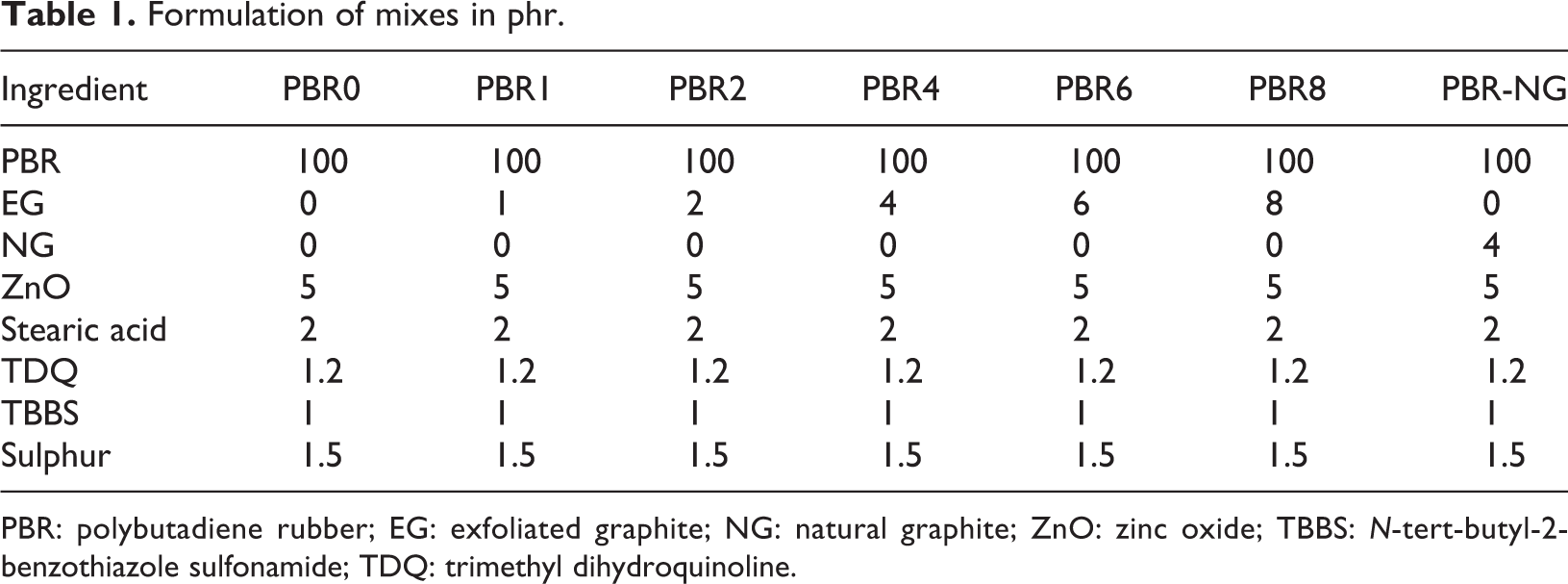
PBR: polybutadiene rubber; EG: exfoliated graphite; NG: natural graphite; ZnO: zinc oxide; TBBS: N-tert-butyl-2-benzothiazole sulfonamide; TDQ: trimethyl dihydroquinoline.
Characterization
X-ray diffraction (XRD) analysis of the modified PBR nanocomposites was performed by Bruker AXS D8 advance in the range of 0–90°. Thermal properties of both PBR gum sample and the PBR/EG nanocomposites were analysed using TGA (Model: Diamond TG; PerkinElmer). The temperature range is from room temperature to 700°C. Tensile properties such as tensile strength, elongation at break and tear strength were determined using the testing machine model INSTRON 4411. Mumbai make shore A circular-type hardness tester for soft rubber as per ASTM 2240 with special STD-A for applying a constant load is used to determine the hardness of the nanocomposites. Compression set test is followed by ASTM D-395-1978.
Vapour permeation studies
Vapour permeation through PBR-EG composite membrane was studied using CCl4, CHCl3 and CH2Cl2 as penetrant in specially designed permeation vessels. The vapour permeability was determined at room temperature by measurement of the weight loss of small vials filled with solvents and tightly closed by a membrane of 150 mm thickness. The weight loss was proportional to the time, area of the membrane and pressure inside the vials and is inversely proportional to the thickness of the membrane.
Results and discussion
Fourier transform infrared spectroscopy
Figure 1 represents the Fourier transform infrared spectra of PBR0, PBR-NG and PBR8 nanocomposites. A band was observed around 1500–1550 cm−1 region represents the aromatic C=C stretching vibration of EG content. The infrared spectrum of PBR nanocomposites shows the characteristic peaks of PBD. Band at approximately 730 cm–1 is because of butadiene (cis) and the one at 911 cm–1 represents double bond of butadiene.
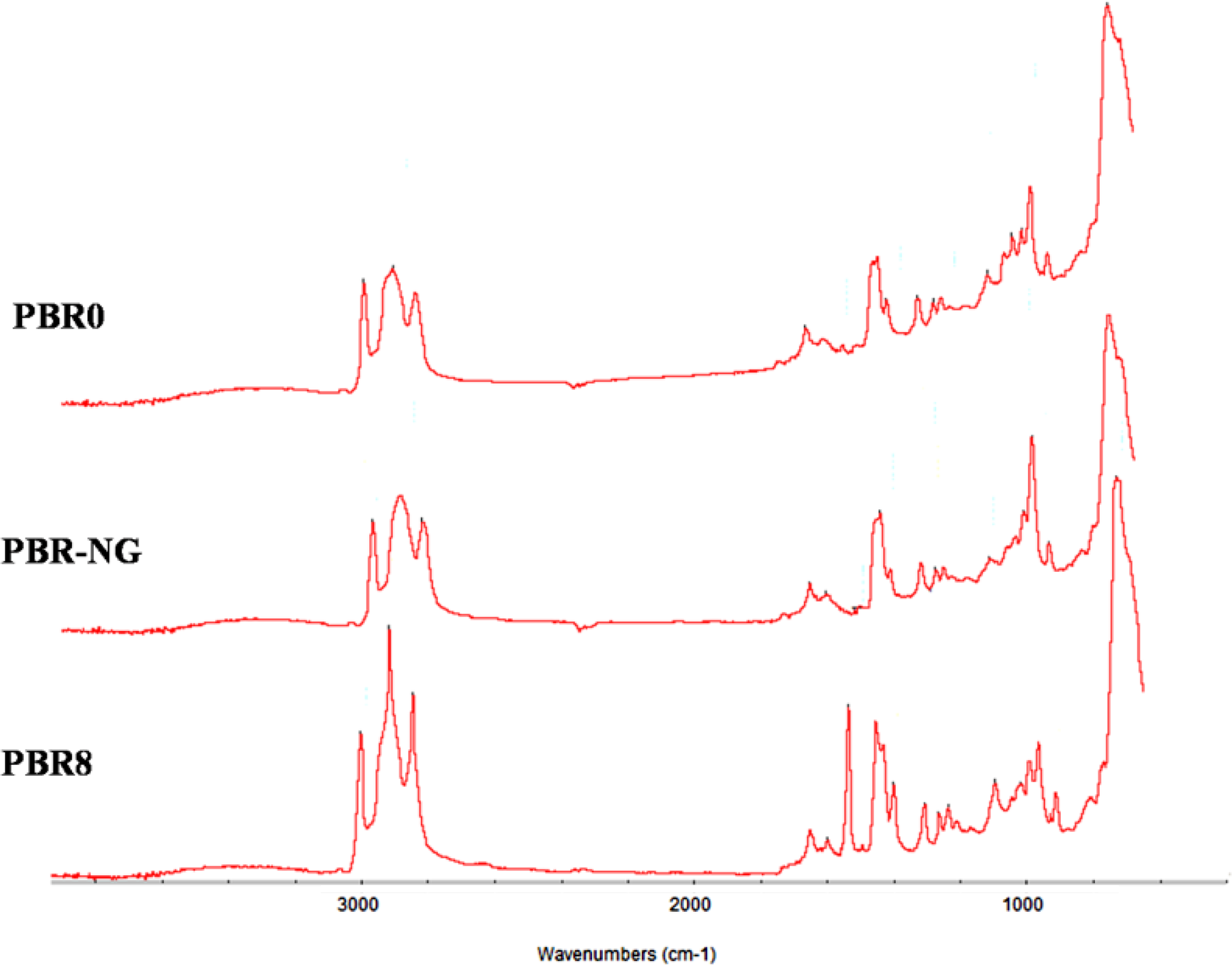
IR spectra of (a) PBR1 and (b) PBR8.
X-ray diffraction
XRD analysis was performed to investigate the presence of EG in the modified PBR nanocomposites. Figure 2 represents the XRD patterns of PBR/EG nanocomposites with various EG ratios. The XRD pattern of the EG shows a peak at 2θ = 26.51° (d = 3.35Å) corresponding to the (002) plane. As from the figure, it is evident that by increasing the graphite content in the PBR/EG, the intensities of graphite peaks are enhanced. It can be observed that the graph becomes more and more linear when EG is added, and graph shifts toward right which shows an improvement in interaction between PBR and EG. Therefore, PBR8 containing a filler content of 8 phr has maximum dispersion in the PBD matrix.
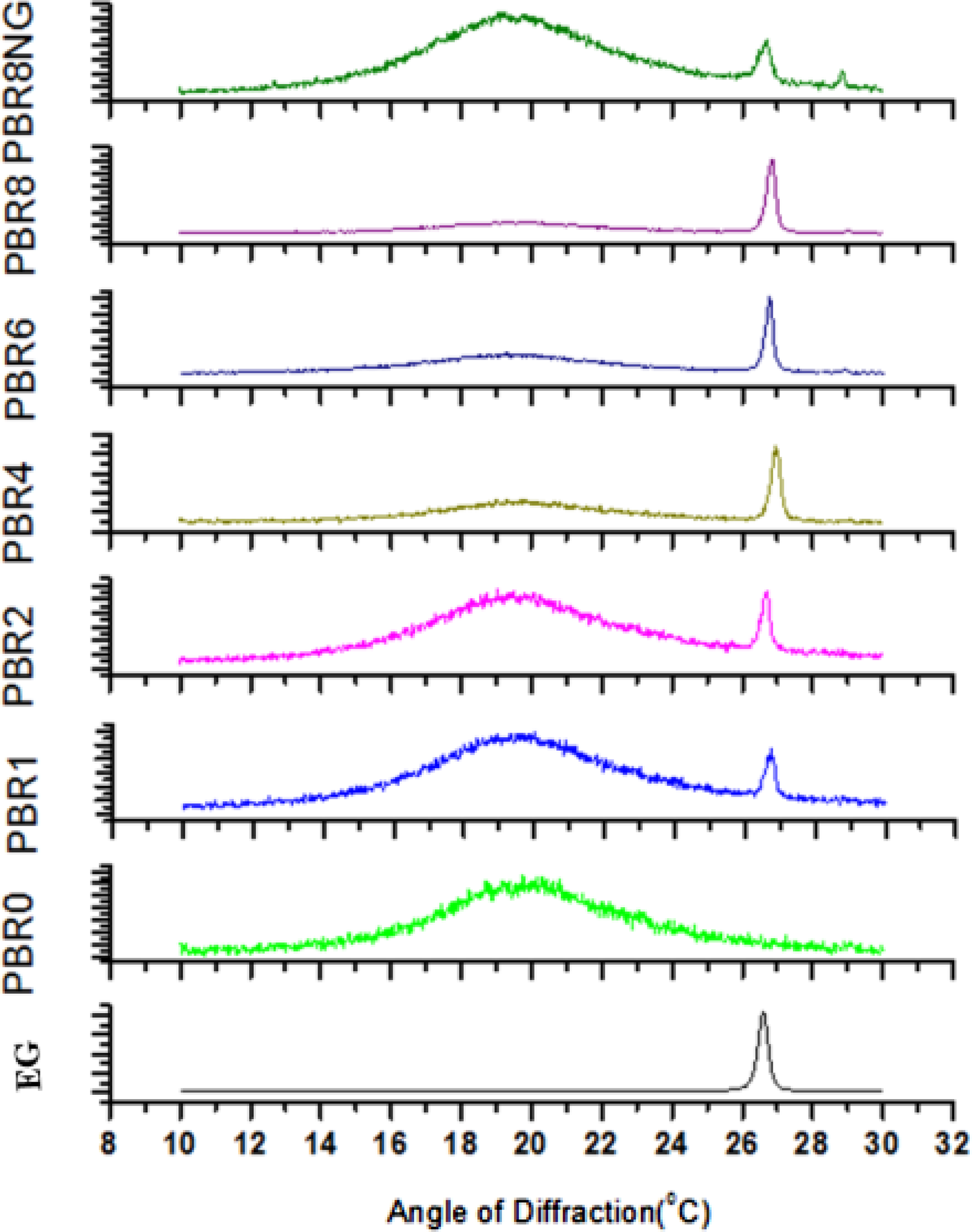
XRD patterns of PBR/EG nanocomposites.
Mechanical properties
Cure behaviour
Table 2 represents cure characteristics of the composites. The maximum reinforcement is observed for 8 phr expanded graphite composite. High reinforcement is obvious from its high MH value. Pure and NG composites show similar ML value. Extent of reinforcement and cross-link density is obtained from maximum torque value (MH). The time required for vulcanization to acquire optimum physical properties is regarded as cure time and it is maximum for PBR-NG composite. Cure time of both PBR-NG and PBR0 samples is high as compared with other graphite filled samples (PBR1, PBR2, PBR4, PBR6 and PBR8). The enhancement in cure time values of composites as compared with neat rubber suggests that the vulcanization process of PBR is accelerated. From the cure rate index (CRI) values, it is evident that at 2 phr concentrations of filler acceleration occurs effectively, after that it decreases.
Cure characteristics of the modified PBR nanocomposites.
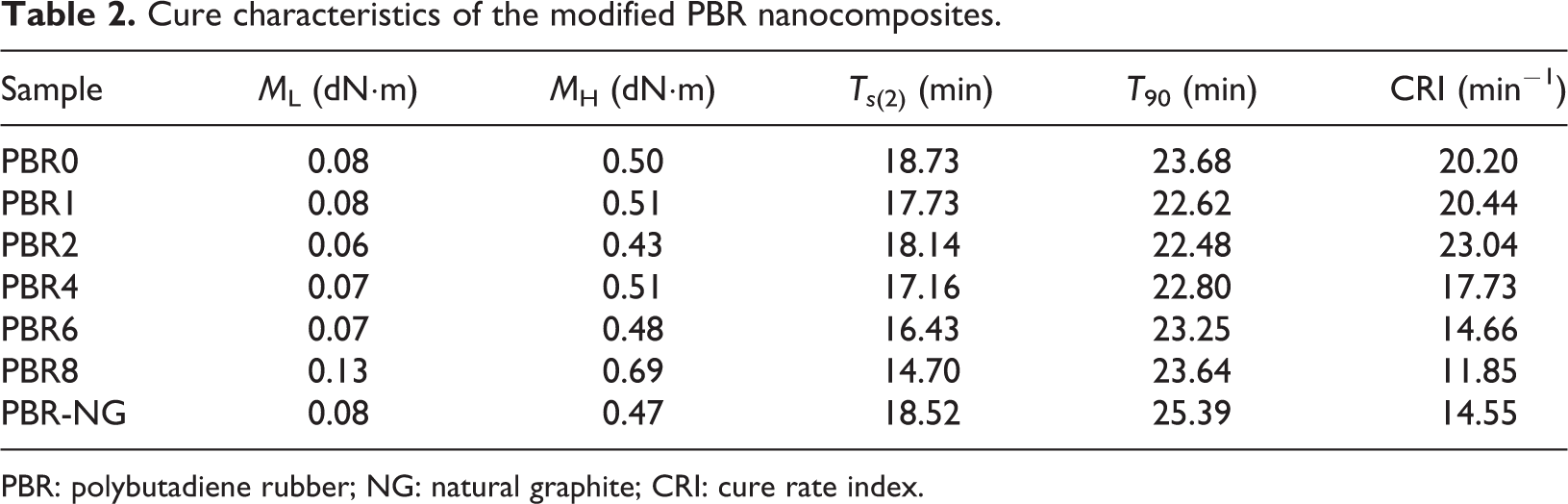
PBR: polybutadiene rubber; NG: natural graphite; CRI: cure rate index.
Stress–strain properties
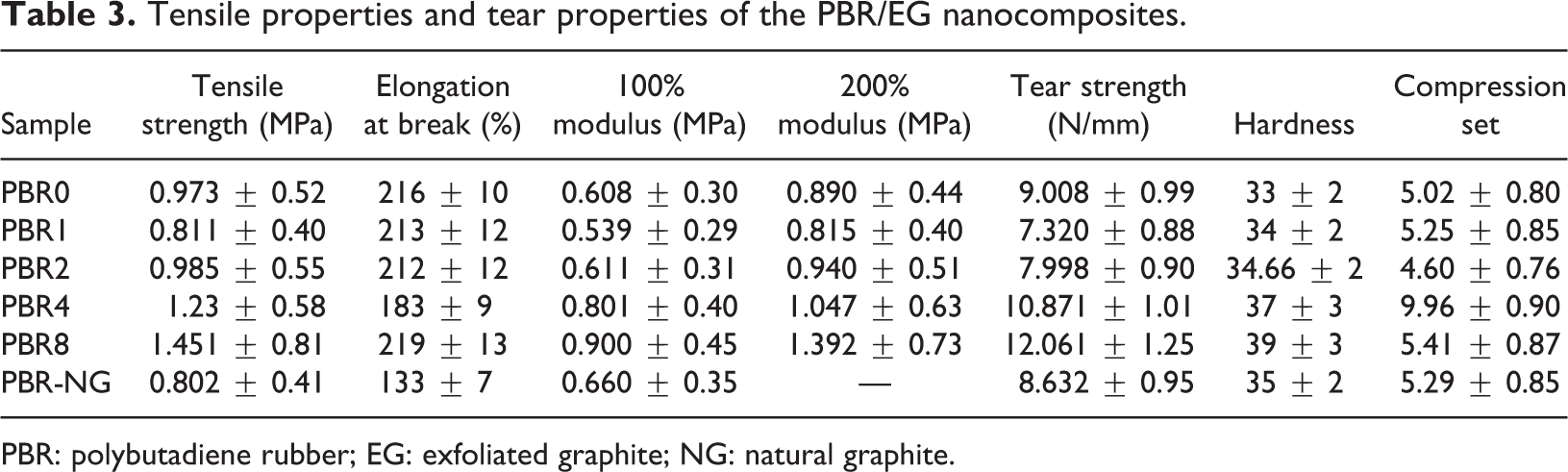
Tensile properties and tear properties of the PBR/EG nanocomposites are presented in Table 3. As the concentration of the filler increases, tensile strength value increases. The highest tensile strength value is observed for maximum filler loading. The enhancement in mechanical characteristics is ascribed to (1) the remarkably high mechanical strength of EG; (2) the enormous variance in the mechanical characteristics of elastomer (MPa in Young’s modulus) and EG, making it as a perfect strengthening agent in the rubber matrix; and (3) the worthy distribution of EG in rubber matrix by two-roll mill mixing enables the interfacial bonding between the EG and the polymer matrix which controls the effectiveness of load transfer from the rubber to the EG. Tensile strength of 1-phr EG-loaded sample is lower than that of pure PBR, but further addition of filler increases the tensile strength. Here, 1-phr loaded sample amount of reinforcing agent is too low to improve the tensile strength. These EG particles are not uniformly distributed in the rubber matrix, so these acts as stress concentration centres. Tear strength of different samples is presented in Table 3. The sample with high concentration of filler (8 phr) has high tear strength values. This indicates the high reinforcement in the PBR/EG nanocomposite system. Tear strength increases with graphite loading. But for 1 phr concentration of filler the tear strength decreased that from pure PBR composites.
Tensile properties and tear properties of the PBR/EG nanocomposites.
PBR: polybutadiene rubber; EG: exfoliated graphite; NG: natural graphite.
The Young’s modulus and elongation at break are also high for 8 phr concentrations, which suggest the better expanded graphite–rubber interaction for 8-phr loaded sample. The tensile strength and Young’s modulus values are minimum for PBR/NG composites. This might be due to the formation of aggregates in the PBR/NG nanocomposites. For pure PBR-graphite composite, the hardness is low. As the concentration of the filler increases, hardness also increases. The PBR-graphite composite with 8 phr of filler has a highest hardness value. Here EG act as a good reinforcing agent. Among the modified PBR composites, PBR8 exhibits better compression set value. For PBR8 sample, an attractive interface permitting the composite to tolerate a higher applied load and this amended the interaction of these two phases and compatibility, resulting greater mechanical performance. Compression set value for PBR4 is not good due to non-uniform dispersion.
Thermal analysis
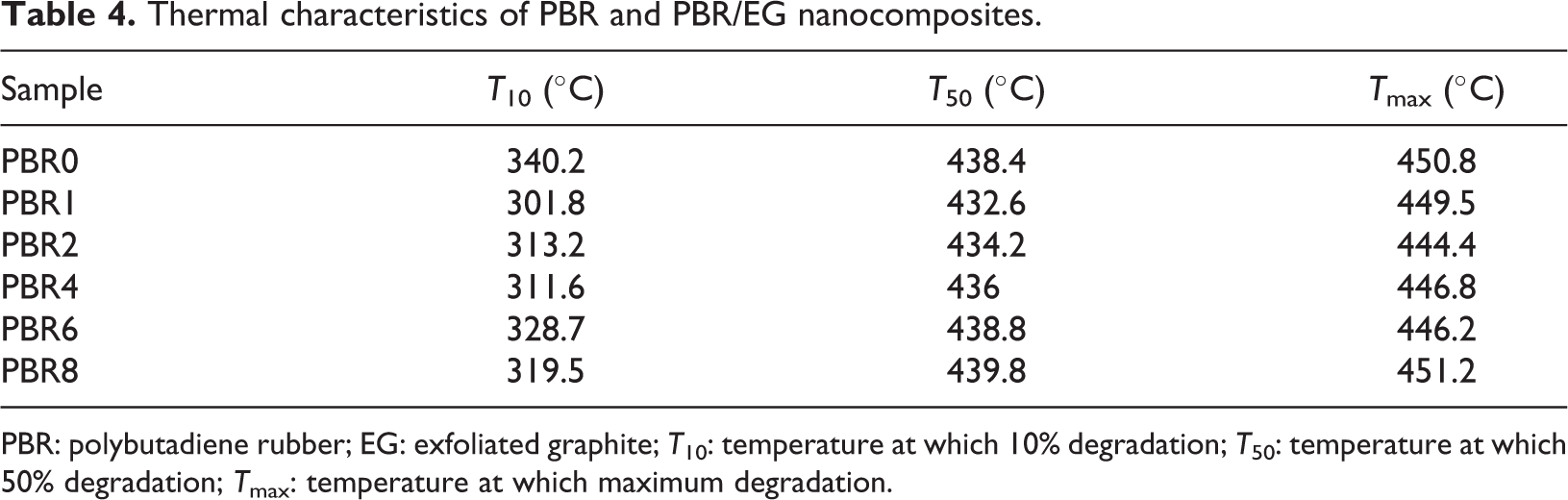
The parameters of thermal analysis include the temperature at which 10% degradation occurs T10, the temperature at which 50% degradation occurs T50 and the temperature at which maximum degradation occurs Tmax, and the values are listed in Table 4.
Thermal characteristics of PBR and PBR/EG nanocomposites.
PBR: polybutadiene rubber; EG: exfoliated graphite; T10: temperature at which 10% degradation; T50: temperature at which 50% degradation; Tmax: temperature at which maximum degradation.
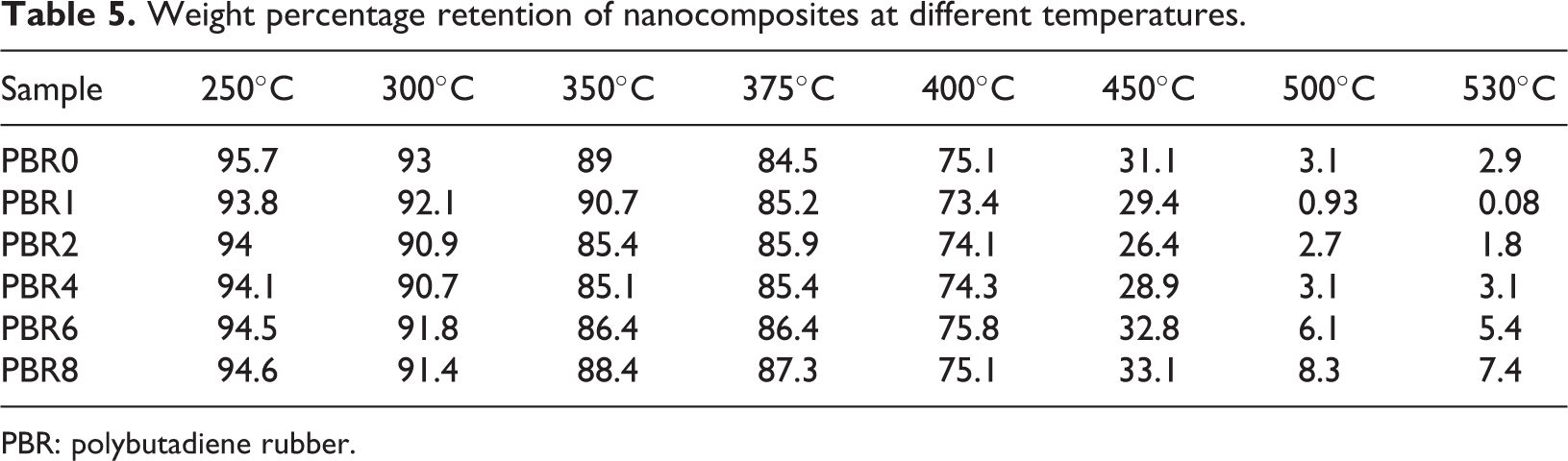
The thermal stability decreases initially with 1-phr filler loading. Then, there is an increasing order in the thermal stability of PBR2, PBR4, PBR6 and PBR8. T50 values decreased in the case of PBR1, PBR2 and PBR4 nanocomposites due to the agglomeration of the nanofillers in the matrix. T50 values of PBR6 and PBR8 are higher than that of PBR gum sample indicating a uniform distribution of the expanded graphite in the PBR matrix. The improved thermal stability is due to the physical barrier effect of EG, which slows down the escape of pyrolysis products and subsequently delays the further degradation of PBR. Table 5 provides the details of percentage of retention of sample at various temperatures. It can be easily deduced that the degradation takes place between 375°C and 450°C for all the composites. The amount of wt% retention for PBR4, PBR6 and PBR8 is high when compared to the polymer gum sample (PBR0).
Weight percentage retention of nanocomposites at different temperatures.
PBR: polybutadiene rubber.
Vapour permeation properties
The permeability of organic vapours through PBR-graphite composite membrane is usually assumed to follow solution–diffusion process. Vapour permeation can be calculated using the equation

where Q represents molar quantity of the vapour infusing through the membrane area (A) during time (t) under a steady-state condition, Δp represents vapour pressure difference across the membrane.
Figure 3 displays the impact of filler content (phr) on the permeability of PBR-graphite composites. Molecular mass and size of permeating molecule have significant effect on permeation process. As expected because of smaller size of CH2Cl2 vapours, these diffused more quickly through the membrane. Thus, vapour permeation is in the order of CCl4 < CHCl3 < CH2Cl2.
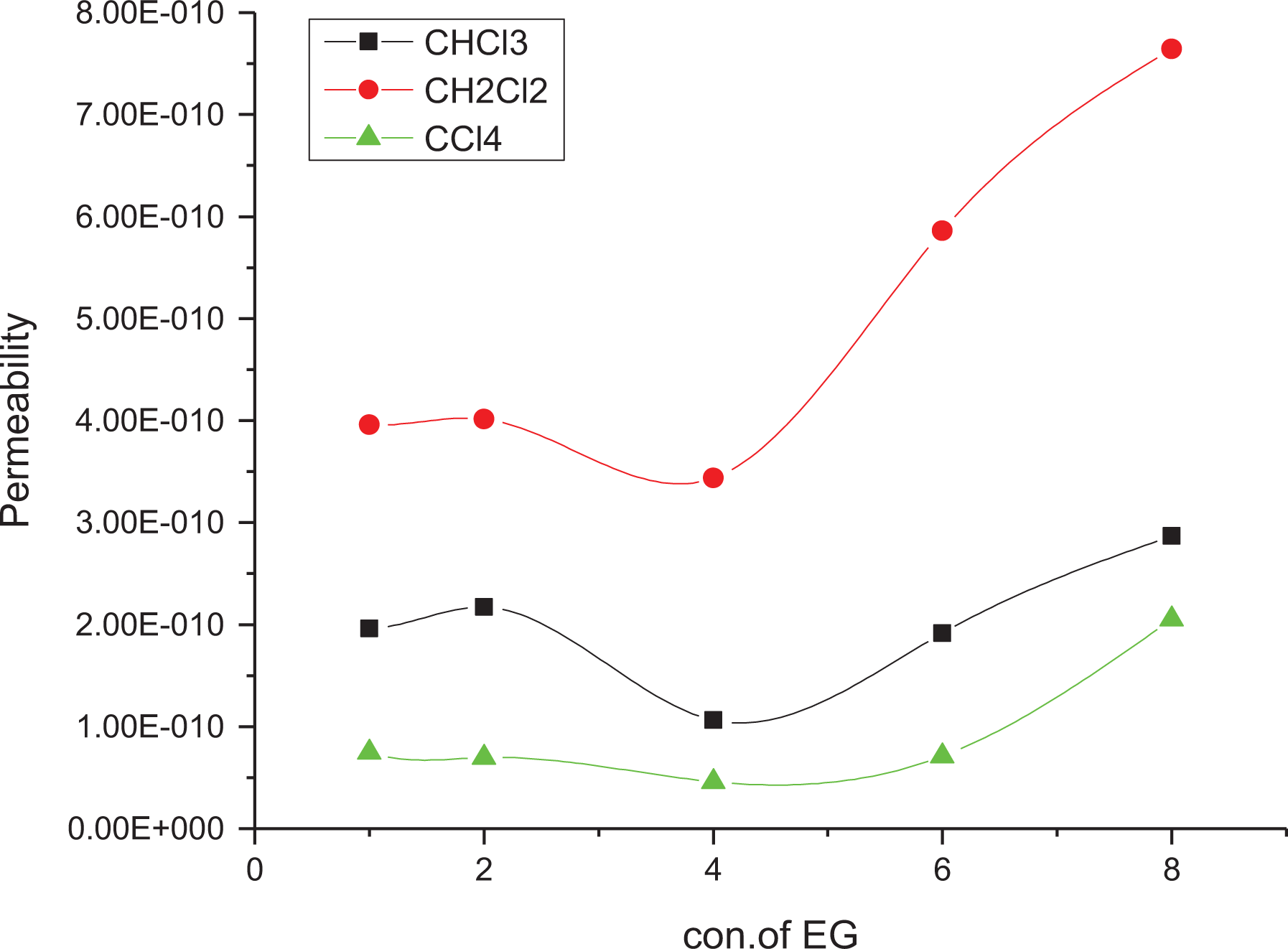
Impact of filler content (phr) on the permeability of PBR-graphite composites.
Initial concentration of filler is zero and therefore no reinforcement. So the permeability is high. When the filler is added (1 phr), the reinforcement and intercalation occurs. As a result permeability decreases. As the concentration of the filler increases, the permeability again increases (Figure 4). For a particular concentration of the filler (4 phr), the permeability is minimum. Further addition of filler increases the permeability. For 8-phr concentration of the filler, there exists aggregation so the permeability is more than the pure sample.
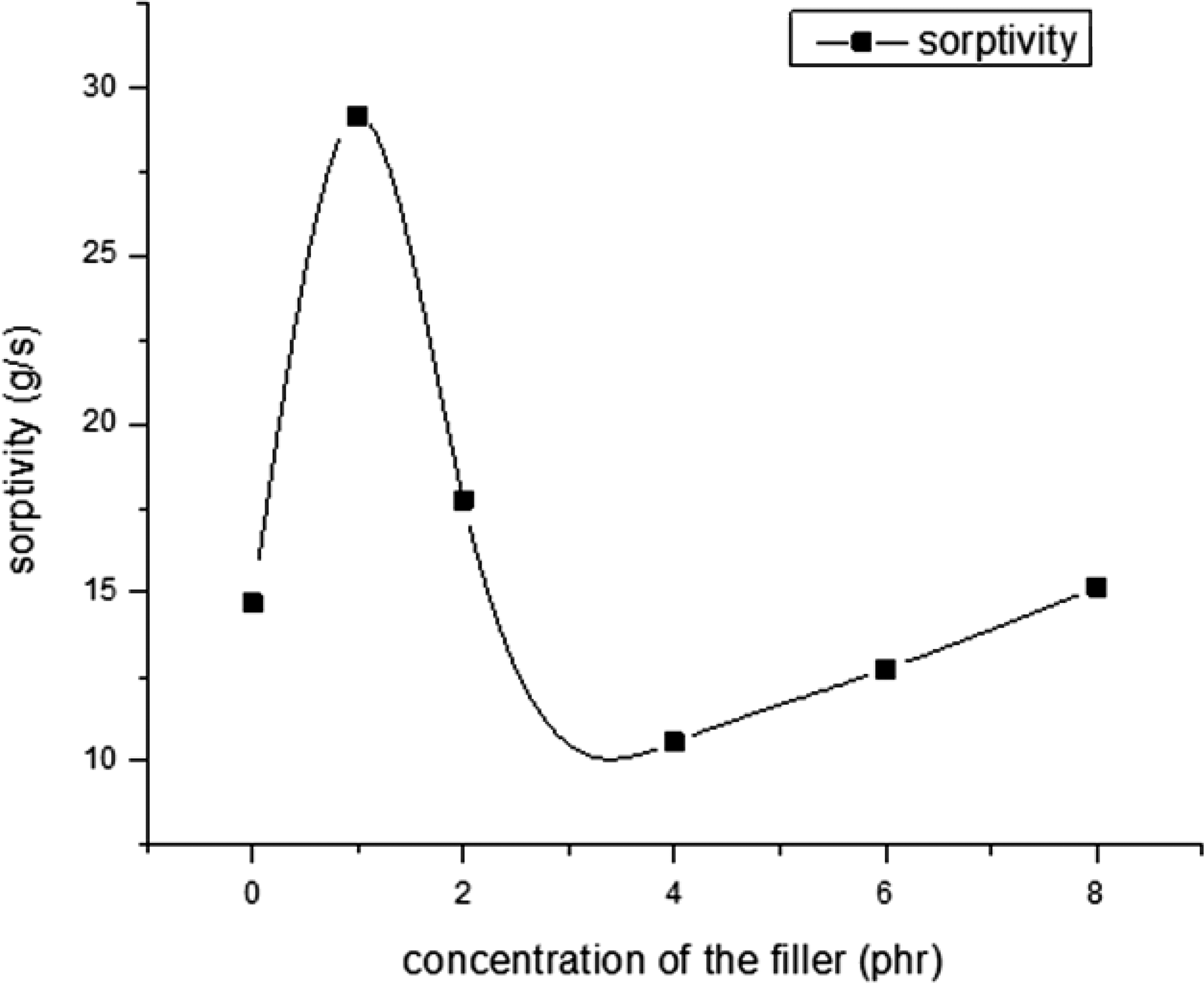
Effect of concentration of filler (phr) on the sorptivity of PBR/EG nanocomposite.
The permeability (P) is the product of sorption coefficient (S) and diffusion coefficient (D)

Permeability through a polymer membrane depends on several factors such as nature of the polymer, nature of penetrant and the processing conditions.
A detailed analysis of the transport process of a single permeant can be achieved provided sorption and either diffusion or permeation can be studied independently. Diffusion coefficients are in principle assessable from sorption measurements. It has been suggested that effective diffusion coefficients can be obtained from permeability and sorption coefficients. Permeability through a polymer depends upon the solubility of the solvent molecule into the polymer membrane, besides the diffusivity in it at a given temperature, pressure and concentration.
As per the above equation P = DS, diffusivity is inversely proportional to the sorptivity. Sorptivity is maximum for 1-phr concentration of the filler and minimum for pure form because there is no reinforcement. Diffusivity is maximum for pure and minimum for 1-phr concentration of the filler.
Conclusion
In this study, PBR/EG nanocomposites were successfully prepared by melt mixing method using two-roll mixing mill and hydraulic press. The thermal characteristics and mechanical stability of the prepared composite membranes were systematically studied. Thermogravimetric studies showed that PBR8 is having higher thermal stability than that of the PBR gum sample. Mechanical properties are also high for the modified PBR nanocomposites with maximum filler content. In vapour permeation studies, PBR4 exhibits the least permeability in CH2Cl2, CHCl3 and CCl4 solvents. From the study, it is clear that EG-filled PBR composite shows better reinforcement than NG-filled sample. Addition of NG as filler shows minimum enhancement in the thermal, mechanical and vapour permeation properties due to the formation of aggregates in the polymer system. Analysis of thermal, mechanical and vapour permeation properties for the PBR/EG nanocomposite systems with filler concentration higher than 8 phr is in progress.
Footnotes
Declaration of conflicting interests
The author(s) declared no potential conflicts of interest with respect to the research, authorship and/or publication of this article.
Funding
The author(s) received no financial support for the research, authorship and/or publication of this article.