







Abstract
A model study on the influence of some heavy metal ions on the stability and vulcanization efficiency of uncompounded and compounded high-ammonia natural rubber (HANR) latex was carried out by an exogenous addition and then determined by Brookfield viscometer, mechanical stability time (MST) tester, and tensile testing machine. The case of pre-vulcanized HANR latex with different aging times was determined by the change in the volatile fatty acid (VFA) number, MST, and viscosity. The compounded HANR latex was coagulated by adding Mn2+and Mg2+ while it was unaltered by adding Zn2+, Fe2+, and Cu2+ ions, leading to their colloidal stability. Therefore, these metal ions were chosen further to study the pre-vulcanization of compounded HANR latex. The presence of Zn2+, Fe2+, and Cu2+ in the latex is responsible for the delay in the vulcanization process and changes the appearance of compounded latex. Before compounding, the addition of such metal ions led to the reduction in tensile strength of the obtained gloves. At the same time, there was no effect on the tensile properties of the gloves made from the compounded HANR latex containing the metal ions.
Keywords
Introduction
It is well known that pre-vulcanization is the curing of rubber in the latex stage, which is an important step in latex vulcanization.1–3 The ability to pre-vulcanize natural rubber (NR) latex depends on the efficiency of the vulcanization process of the latex, ability of adsorption, diffusion, the reaction of vulcanizing agents, vulcanization time, and storage.4–7 However, these properties may decrease due to some non-rubber components in NR latex. Many studies reported the use of zinc and magnesium oxide as curing agents for carboxylated nitrile rubber and chloroprene rubber. These studies reported the effects of metal oxides as an activator on the vulcanization processes of various rubbers.8–11 More recently, the use of metal oxides nanoparticles in the development of rubber-based nanocomposites is well documented in the book chapter. 12
The metal ions present on the surface of NR hinder the adsorption and reaction of the vulcanizing agent with the particles of rubber. In addition, these metal ions also reduce the stability of the latex by creating the interaction with the carboxylate ion at the surface of the rubber particles, leading to the coagulation of NR latex. Therefore, to improve the pre-vulcanization process and stability of NR latex, it is necessary to elucidate the effect of metal ions.
Karunanayake and Perera 2006 reported that the presence of Mg2+ ion was a major cause of destabilization of the pre-vulcanized NR latex during storage. It was believed that Mg2+ ions form primary valence linkages between the surfaces of two adjacent latex particles instead of reacting with two free carboxylate ions, which could induce the initiation point for flocculation of NR latex. 13
The metal ions in NR latex were categorized on the basis of the location in which they are dispersed, that is, Na+, Ca2+, and Cu2+ united with the rubber particles, while Fe2+, Mg2+, and K+ are found in serum. It is interesting to note that the relative proportions of these metal ions have a marked influence on the colloidal stability of an uncompounded NR latex and its concentrates.
In this study, the model study on the effect of type and amount of some heavy metal ions on the stability of uncompounded and compounded high-ammonia NR (HANR) latex with the same vulcanization system will be investigated. The latex stability is determined by the Brookfield viscometer and mechanical stability time (MST) tester. Their swelling percentage observed the ability to pre-vulcanize the uncompounded and compounded HANR latex with different types of metal ions and maturation times. The tensile strength of gloves prepared from uncompounded and compounded HANR latex with different metal ions was also determined. Moreover, the effects of the metal ions on volatile fatty acid (VFA) number, MST, and viscosity of the pre-vulcanized HANR latex with different aging times are studied and compared with the original HANR latex. To the best of our knowledge, no study reported the impact of Mn2+, Fe2+, Cu2, Mg2+, and Zn2+on the stability of HANR latex and in determining the tensile strength of gloves prepared from the uncompounded and compounded HANR latex containing the metal ions. Therefore, the investigation from this model study will practically support the NR latex manufacturers to understand their raw materials leading to better production and the better quality of end products.
Materials and methods
Materials
Concentrated commercial HANR latexes, approximately 60% (w/w) of dry rubber content (DRC) obtained from Thai Rubber Latex Co. Ltd, Thailand, were collected once per month and named HA1 to HA7 for HANR latex from the first to the seventh month. The concentrated latex was preserved with 0.6% (v/v) NH3 in the presence of 0.025% (w/w) tetramethylthiuram disulfide and zinc oxide (TMTD/ZnO). Sulfur, ZnO, zinc diethyldithiocarbamate (ZDEC), Wingstay® L (Phenol, 4-methyl-, reaction products with dicyclopentadiene and isobutene), Iron (II) sulfate heptahydrate (FeSO4. 7H2O), Copper (II) sulfate pentahydrate (CuSO4. 5H2O), Zinc (II) nitrate hexahydrate (Zn(NO3)2. 6H2O), Manganese (II) chloride tetrahydrate (MnCl2. 4H2O), Magnesium (II) chloride hexahydrate (MgCl2. 6H2O) and all other reagents were of analytical grades purchased from Sigma (Thailand) and were used without further purification.
Pre-vulcanization of HANR latex
Formulation of pre-vulcanized latex.
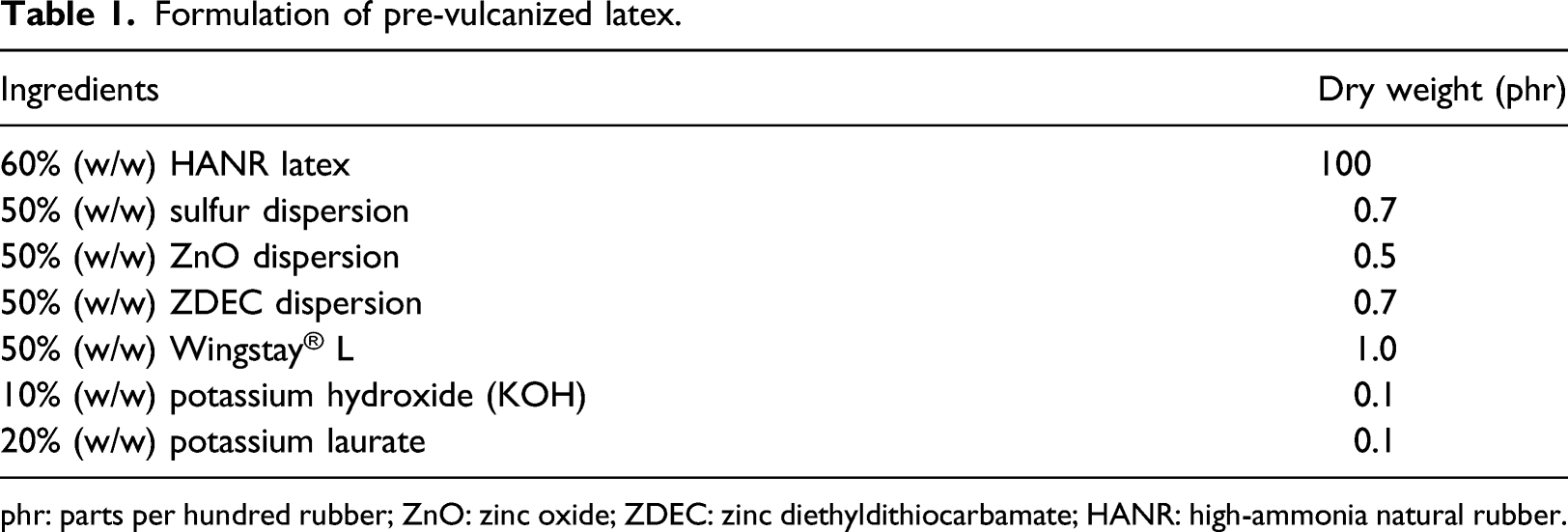
phr: parts per hundred rubber; ZnO: zinc oxide; ZDEC: zinc diethyldithiocarbamate; HANR: high-ammonia natural rubber.
Preparation of rubber glove
Finger cot mold was used instead of rubber glove mold. In this work, we prepared NR finger cots as the representatives of NR gloves. The mold was heated at 80°C for 10 min before dipping into a coagulant solution which contained calcium nitrate and the dispersion of calcium carbonate in water. After that, dipped coat molds were heated in a hot air oven at 80°C for 10 min and then dipped into the pre-vulcanized latex. The dipped finger cot was leached in hot water at 60°C for 1 min to remove any residual curing agents, then vulcanized in a hot air oven from 80°C to 110°C for 30 min. The obtained rubber finger cots were subjected to test the tensile strength and crosslink density.
Addition of metal ions to HANR latex
The various amounts of the additional metal ions that were incorporated are based on the presence of each metal ion in the original HANR latex. The added metal ions were Mn2+ (10–100 ppm), Fe2+ (20–500 ppm), Cu2 (20–500 ppm), Mg2+ (100–1000 ppm) and Zn2+ (500–2000 ppm).
Characterization
Determination of total solid content, DRC, and non-rubber content in HANR latex
The total solid content (TSC) is described as the percentage of the solid contained in the latex, and the DRC is defined as the percentage of dry rubber present in the latex. The TSC and the DRC of HANR latex were determined according to ISO 124:2014 and ISO 126:2005 standards.14,15 The non-rubber content (NRC) in the latex was obtained by calculating the difference between TSC and DRC.
Determination of VFA number
Volatile fatty acid number is expressed as the number of grams of potassium hydroxide (KOH) needed to neutralize the VFA in latex-containing 100 g of total solids. It was determined according to ISO 506:1992 standard
16
and calculated using the following equation
Determination of KOH number
Potassium hydroxide number is defined as the number of grams of KOH equivalent to all the acid radicals combined with ammonia in latex-containing 100 g of total solids. It was determined according to ISO 127:2018 17 and calculated using the same equation as the VFA number, as given in equation (1). Where, N = Normality of KOH solution (N), V = Volume of KOH solution (mL), W = Mass of the latex (g) and TSC = Percentage of total solids in the latex.
Determination of Mg2+ content
A 2 g of rubber cream fraction, obtained from NR latex by centrifugation at 8000 r/min for 30 min, was dispersed in 100 mL distilled water followed by mixing with 10 mL of NH4Cl/NH4OH buffer solution (pH 10.5), 4 mL of 4.0% (w/v) KCN solution and 0.1 g of Eriochrome black T as an indicator. The mixed latex was then titrated with 0.005 M Ethylene diamine tetra-acetic acid (EDTA). The endpoint was determined by the color change of latex from purple to light blue. The Mg2+ concentration (ppm by weight of rubber cream fraction) was calculated from the following equation using the standard method18,19
Determination of viscosity by Brookfield viscometer
Latex sample (500 mL) of 60% (w/w) TSC was poured into a 600 mL beaker and then subjected to the viscosity measurement by Brookfield DV-I viscometer (Thailand) followed the standard method ISO 1652: 2004. 20 The determination was carried out at room temperature.
Determination of MST
This analysis was carried out with NR latex of 55% (w/w) TSC at 35°C by using a Klaxon mechanical stability apparatus (England) operating at 14,000 r/min based on ISO 35: 2004. 21 The method of assessing the endpoint of the MST test was observed with the flocculation in a thin film of latex spread on the glass Petri dish.
Determination of metal ions in the HANR latex
Approximately 1 g of a sample was mixed with HNO3 and kept for digestion in a microwave oven. The residue was diluted with demineralized water. Some metal ions, that is, Fe2+, Cu2+, Zn2+, Mn2+, and Mg2+ were analyzed by Flame Atomic Absorption Spectroscopy (FAAS).
Determination of vulcanized level by a chloroform test
The chloroform rubber test was performed through coagulation by mixing the latex with an equal volume of chloroform. After 2–3 min, the coagulum was examined and graded according to its texture as a chloroform number or the level of vulcanization. 22
Determination of vulcanized level by % swelling test
Approximately 0.4 g of a latex sample was mixed with a drop of ink and spread like a circle with about 5–6 cm diameter. The sample was dried by a blow dryer until a clear thin film was obtained and then immersed in 10–15 mL toluene for an additional 15 min
22
The diameter of the swelling sheet was then measured, and the percentage of swelling was obtained by using the equation (1)
Determination of crosslink density after vulcanization
The rubber finger cot samples of almost 0.2 g were cut and immersed in toluene 100 mL and kept in the dark container for 1 week.
23
Then, the swollen rubber glove was calculated crosslink density (v) by using the Flory–Rehner equation (equation (2))24,25

Analysis of tensile strength
The rubber finger cot was cut into a rubber band shape. The stress–strain behavior of the sample was measured by INSTRON model 5566 (Thailand) tensile testing machine based on TIS 886–2559 26 with the crosshead speed of 500 mm/min and 100 N load cells.
Results and discussion
Effect of metal ions on divergence in properties of the original HANR latex
Basic characteristics and properties of HANR latex samples.
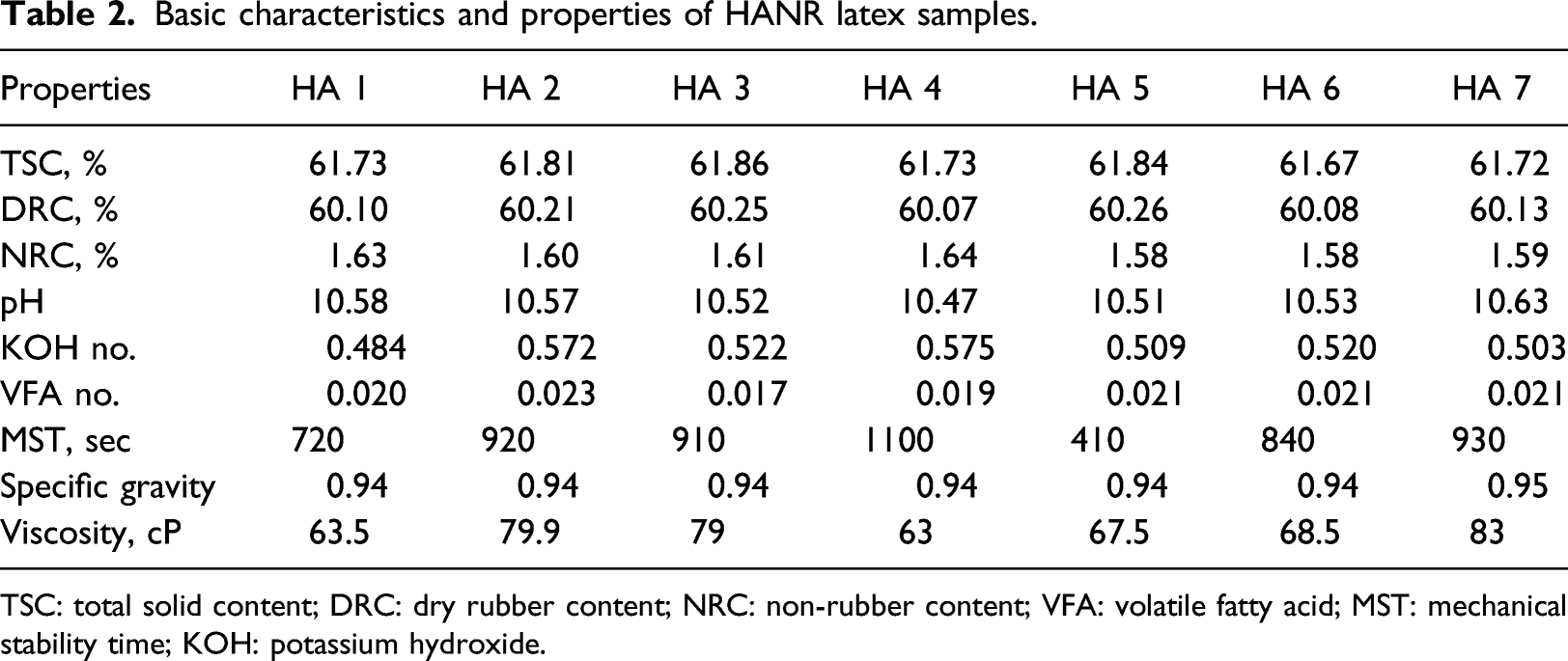
TSC: total solid content; DRC: dry rubber content; NRC: non-rubber content; VFA: volatile fatty acid; MST: mechanical stability time; KOH: potassium hydroxide.
Content of metal ions in HANR latexes and tensile strength of the prepared gloves.

Nevertheless, the tensile strength of gloves made from a series of the HANR latex samples was slightly different, although the amount of metal ions in each sample was inconsistent. This may be explained as owing to the presence of fewer amounts of metal ions and non-rubber components in NR latex from which the HANR latex samples were obtained after centrifugation, which are believed to cause the divergence in the properties of field NR latex (FNR) properties. Therefore, it is quite difficult to distinctly understand the effect of metal ions on the properties of HANR latex.
Therefore, to consider the effect of metal ions on changes in properties of HANR latex, an excessive amount of metal ions was added into the HANR latex. The impact of the metal ions on the pre-vulcanization process of uncompounded and compounded HANR latex was investigated in the present study. Moreover, the appearance of HANR latex after adding metal ion solution was also checked since divalent metal ions are presumed to affect latex stability.
Influence of an excessive amount of metal ions on stability of uncompounded and compounded HANR latex
The appearance and stability of uncompounded and compounded HA latexes after the addition of metal ion.
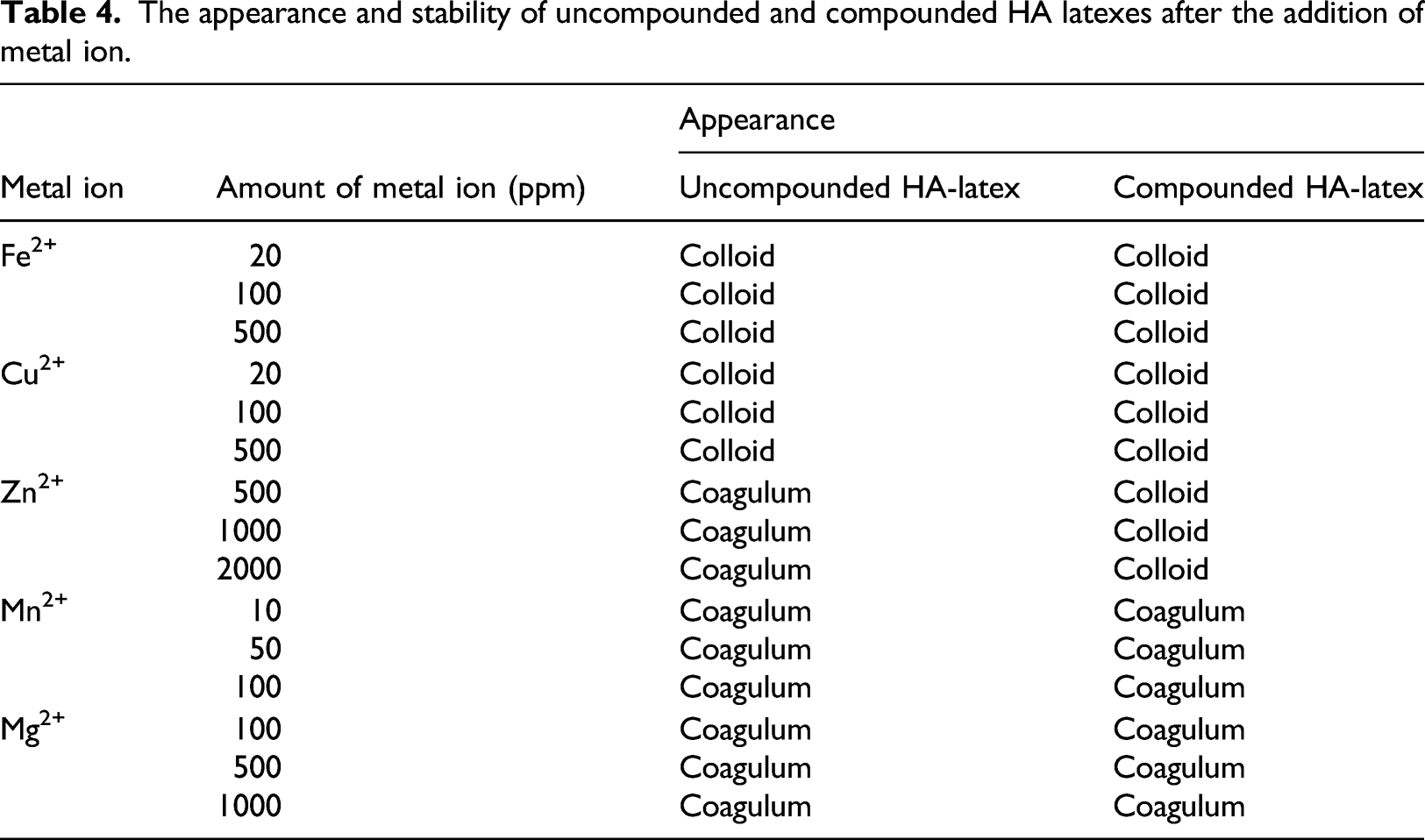
On the other hand, the compounded HANR latex was coagulated by adding Mn2+and Mg2+, while it was unaltered by other metal ions that lead to its colloidal stability. Interestingly, the addition of Zn2+ into the compounded latex did not affect the stability of the compounded HANR latex, as in the case of the uncompounded latex. This was because potassium laurate, an anionic stabilizer, and KOH added into the compounded latex promoted the stability of rubber particles. Therefore, Zn2+, Fe2+, and Cu2+ were chosen further to study the pre-vulcanization of the compounded HANR latex.
Influence of an excessive amount of metal ions on the ability to pre-vulcanize uncompounded and compounded HANR latex
Practically, to pre-vulcanize the HANR latex, the prepared compounding ingredients were added into the HANR latex and kept at room temperature to mature the compound NR latex until it vulcanized. The vulcanized level is then determined by chloroform and percent swelling tests. Normally, it takes about 3 days for the HANR latex to reach vulcanized level 4 and fully vulcanized with less than 80% swelling.
Effect of metal ions added before compounding on the vulcanized level of pre-vulcanized HANR latex.
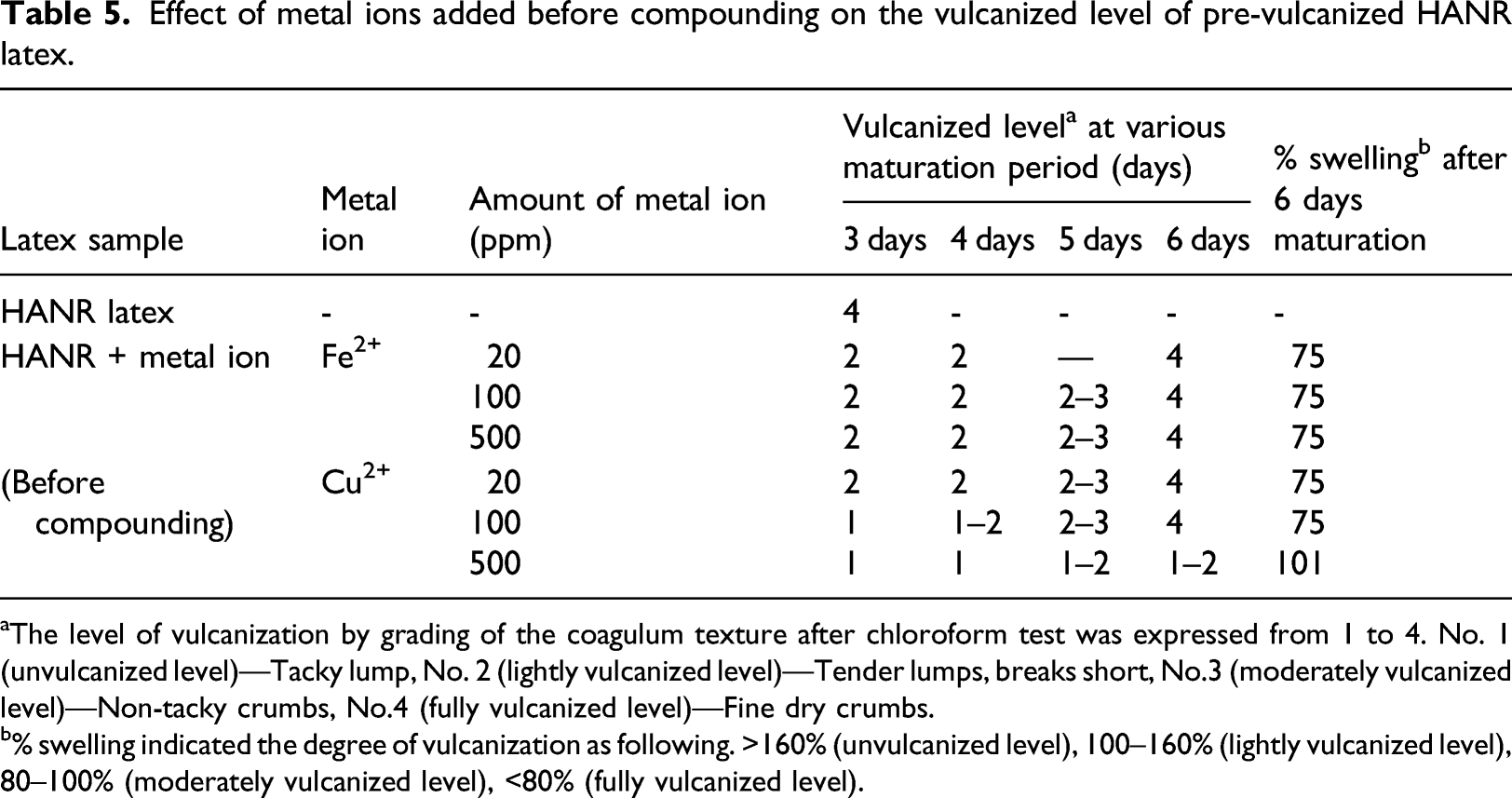
aThe level of vulcanization by grading of the coagulum texture after chloroform test was expressed from 1 to 4. No. 1 (unvulcanized level)—Tacky lump, No. 2 (lightly vulcanized level)—Tender lumps, breaks short, No.3 (moderately vulcanized level)—Non-tacky crumbs, No.4 (fully vulcanized level)—Fine dry crumbs.
b% swelling indicated the degree of vulcanization as following. >160% (unvulcanized level), 100–160% (lightly vulcanized level), 80–100% (moderately vulcanized level), <80% (fully vulcanized level).
Influence of metal ions on the compounded latex.
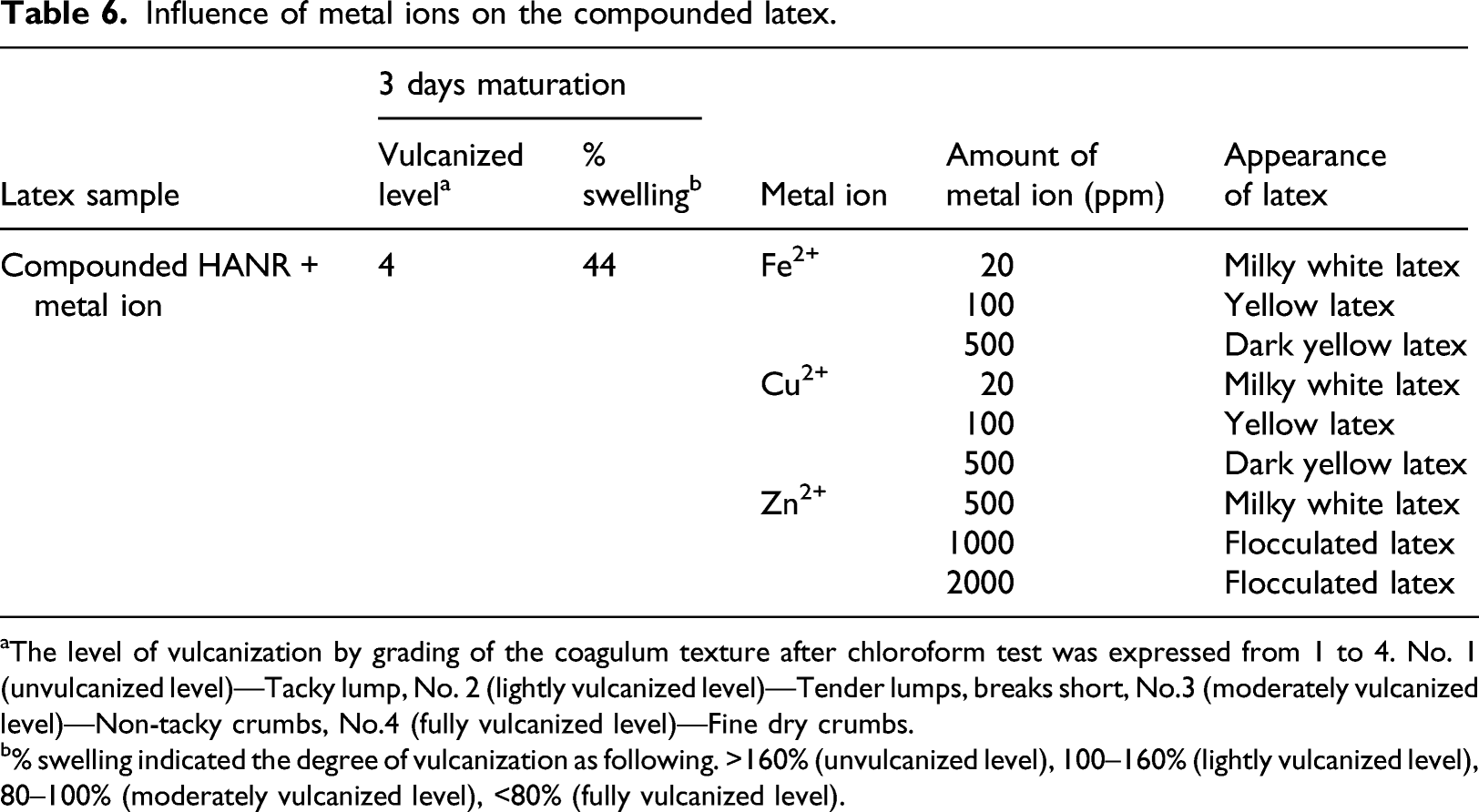
aThe level of vulcanization by grading of the coagulum texture after chloroform test was expressed from 1 to 4. No. 1 (unvulcanized level)—Tacky lump, No. 2 (lightly vulcanized level)—Tender lumps, breaks short, No.3 (moderately vulcanized level)—Non-tacky crumbs, No.4 (fully vulcanized level)—Fine dry crumbs.
b% swelling indicated the degree of vulcanization as following. >160% (unvulcanized level), 100–160% (lightly vulcanized level), 80–100% (moderately vulcanized level), <80% (fully vulcanized level).
Mechanical properties of gloves prepared from the uncompounded and compounded HANR latex with the addition of various types and amounts of metal ion
Mechanical properties of the prepared glove from each HANR latex sample with metal ion addition prior and after compounding.
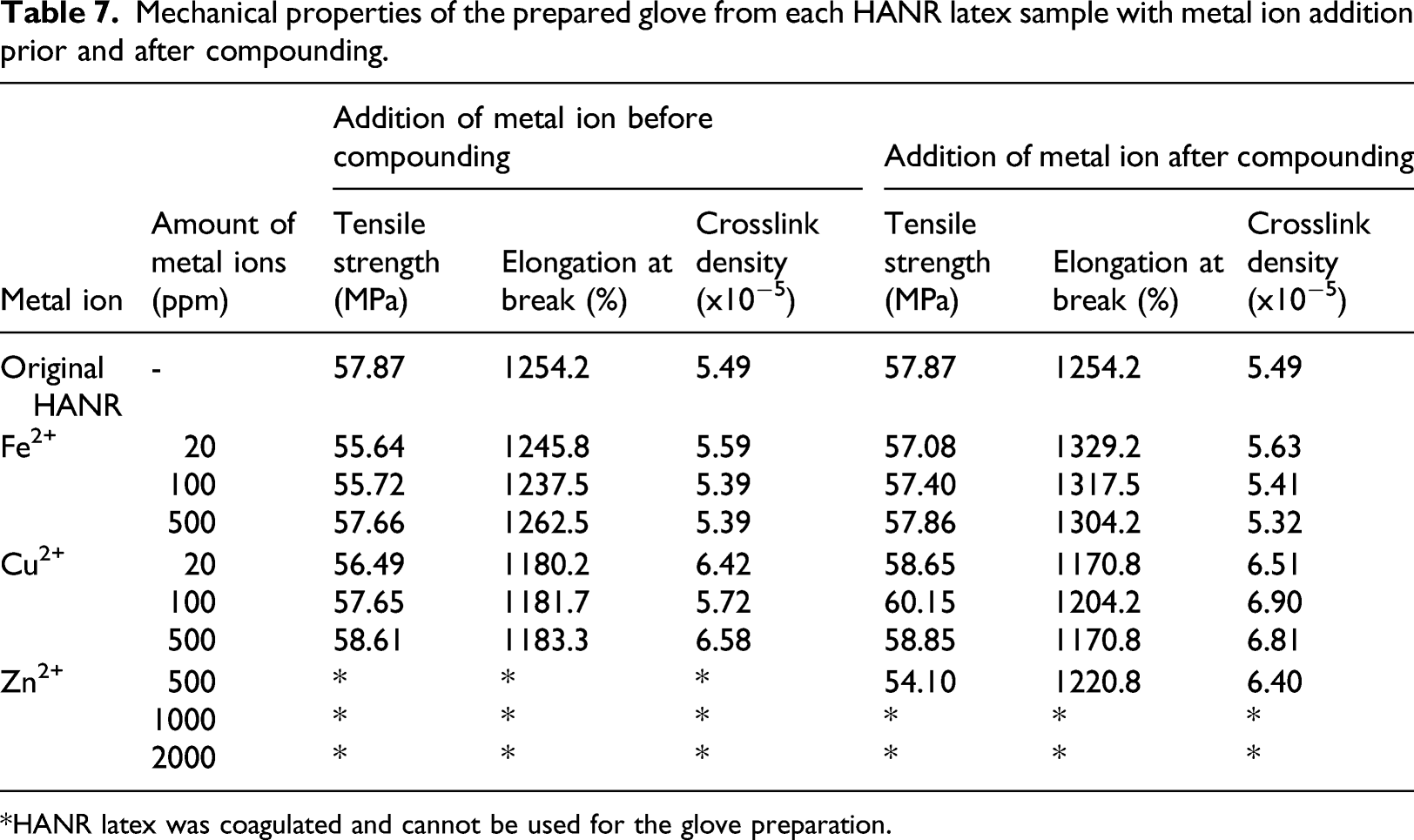
*HANR latex was coagulated and cannot be used for the glove preparation.
This may be explained by the proposed mechanism of pre-vulcanization.
4
The vulcanization was supposed to occur inside the rubber particles,
29
and the rate of vulcanization depends upon the adsorption, diffusion, and reaction within the latex particles of the chemical ingredients. In addition to this, it has been proposed that the carboxylic group in rubber react with metal ions to form the bridged ionic crosslink
30
as shown in Figure 1. The proposed mechanism for ionic crosslink formation by a metal ion with the carboxylic group.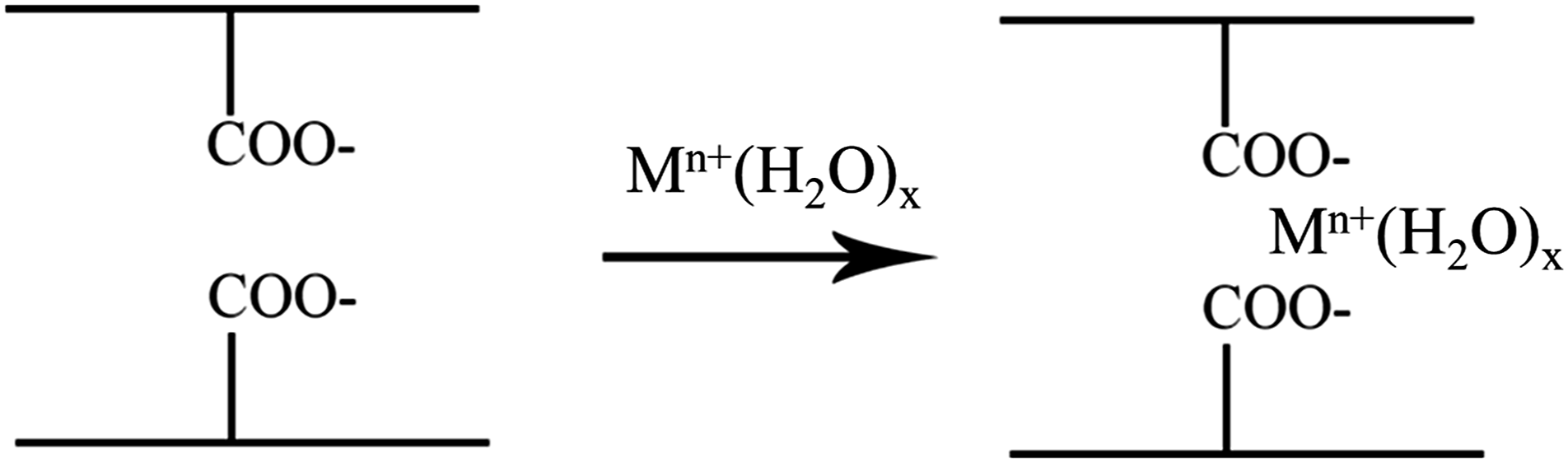
The carboxylic group, in this case, was proposed to be derived from proteins in which it was tenaciously bound on the surface of NR. Hence, the presence of divalent metal ions such as Cu2+ and Fe2+ adsorbed on the surface of rubber particles and hindered the diffusion of compounding ingredients into the rubber particles. So the addition of metal ions in compounded HANR latex before the addition of compounding ingredient needed more time for maturation as compared to original HANR latex as proposed in Figure 2. Elongation at break of the obtained gloves prepared from addition of Fe2+ after compounding showed a higher extend before the break, whereas the insignificant difference in rubber gloves obtained from before and after addition of Cu2+ and Zn2+. The crosslink density of rubber gloves showed the same trend along with the tensile strength. The proposed schematic representation of the effect of metal ion on pre-vulcanization of NR latex.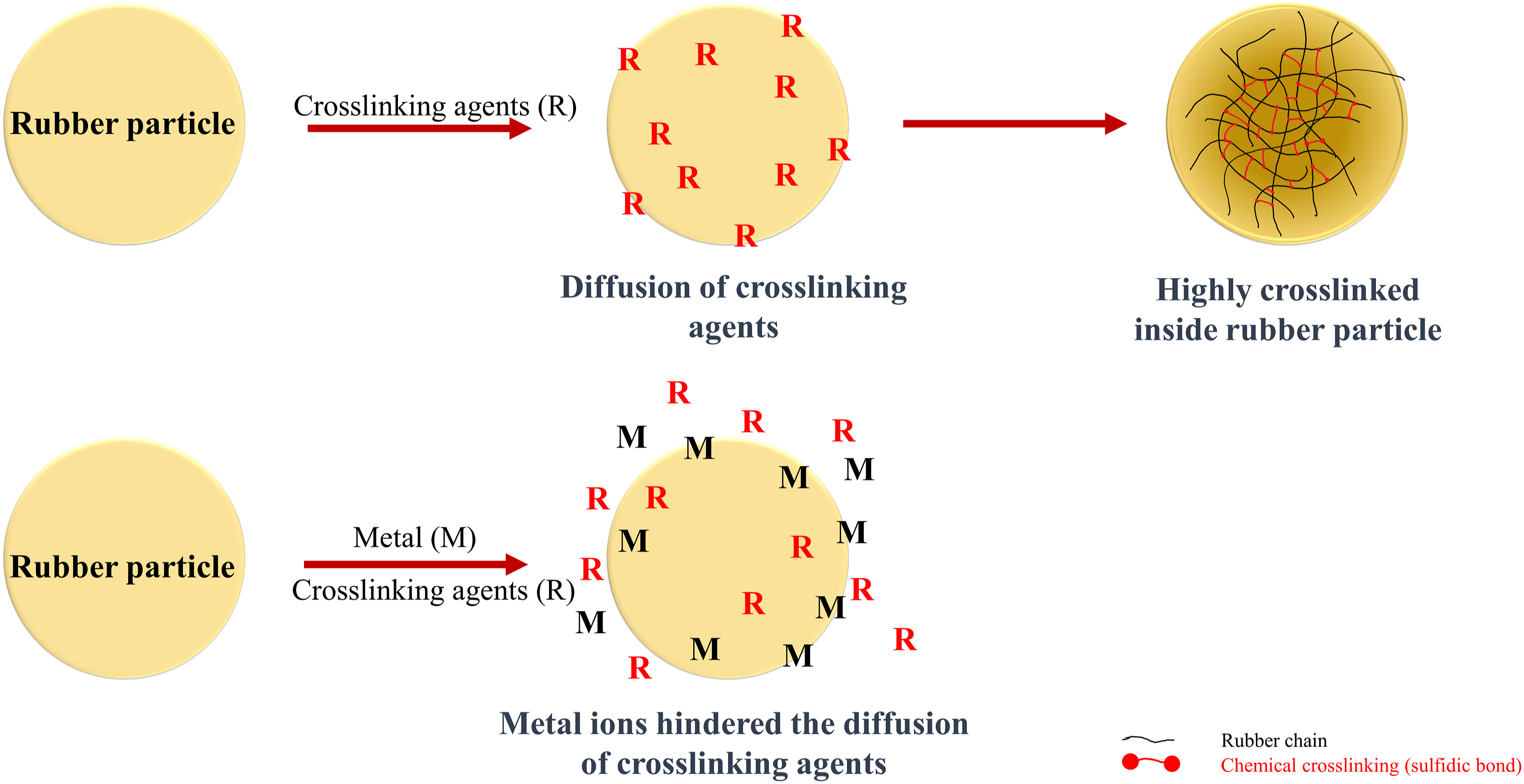
Improvement in stability and ability to pre-vulcanize the HANR latex
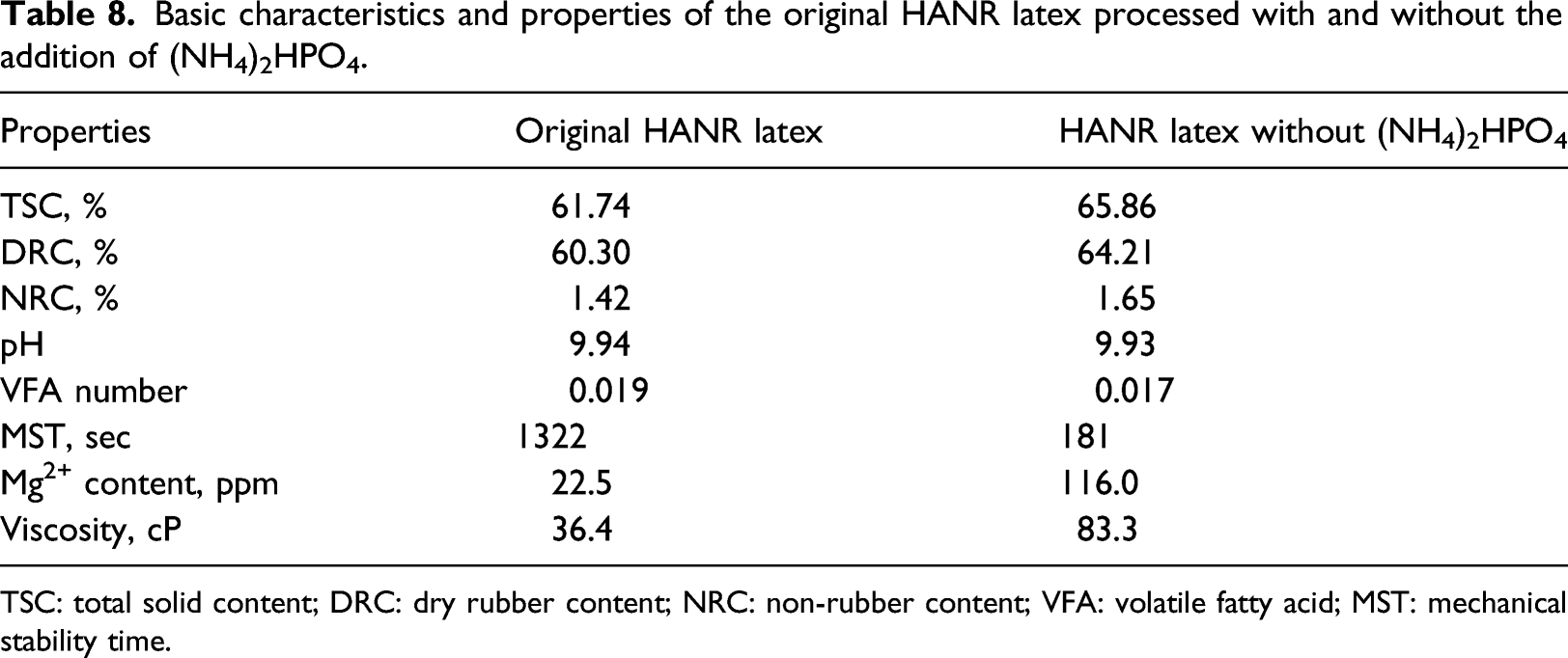
Basic characteristics and properties of the original HANR latex processed with and without the addition of (NH4)2HPO4.
TSC: total solid content; DRC: dry rubber content; NRC: non-rubber content; VFA: volatile fatty acid; MST: mechanical stability time.
It was observed that the TSC, DRC, NRC, pH and VFA number of the original HANR latex with and without (NH4)2HPO4) remove, were insignificantly different, while MST, Mg2+ content, and viscosity of the original HANR latex with and without (NH4)2HPO4) were different.
The HANR latex processed without (NH4)2HPO4 contained approximately 116 ppm of Mg2+ content and showed higher viscosity and lower MST values than that processed with (NH4)2HPO4. The lower MST in the case of HANR latex without (NH4)2HPO4 indicates that the presence of Mg2+ reduced the stability of the latex. The higher viscosity is the presence of Mg2+ that causes the gel fractions and branching in NR latex by ionic linkage. 26 Therefore, the addition of (NH4)2HPO4 to remove Mg2+ in the HANR latex helped maintain its stability. Moreover, regarding the too low stability and too high viscosity of HANR latex without (NH4)2HPO4, it cannot be subjected to further analysis of pre-vulcanization.
Effect of vulcanization time and storage on pre-vulcanized HANR latex with the addition of metal ion
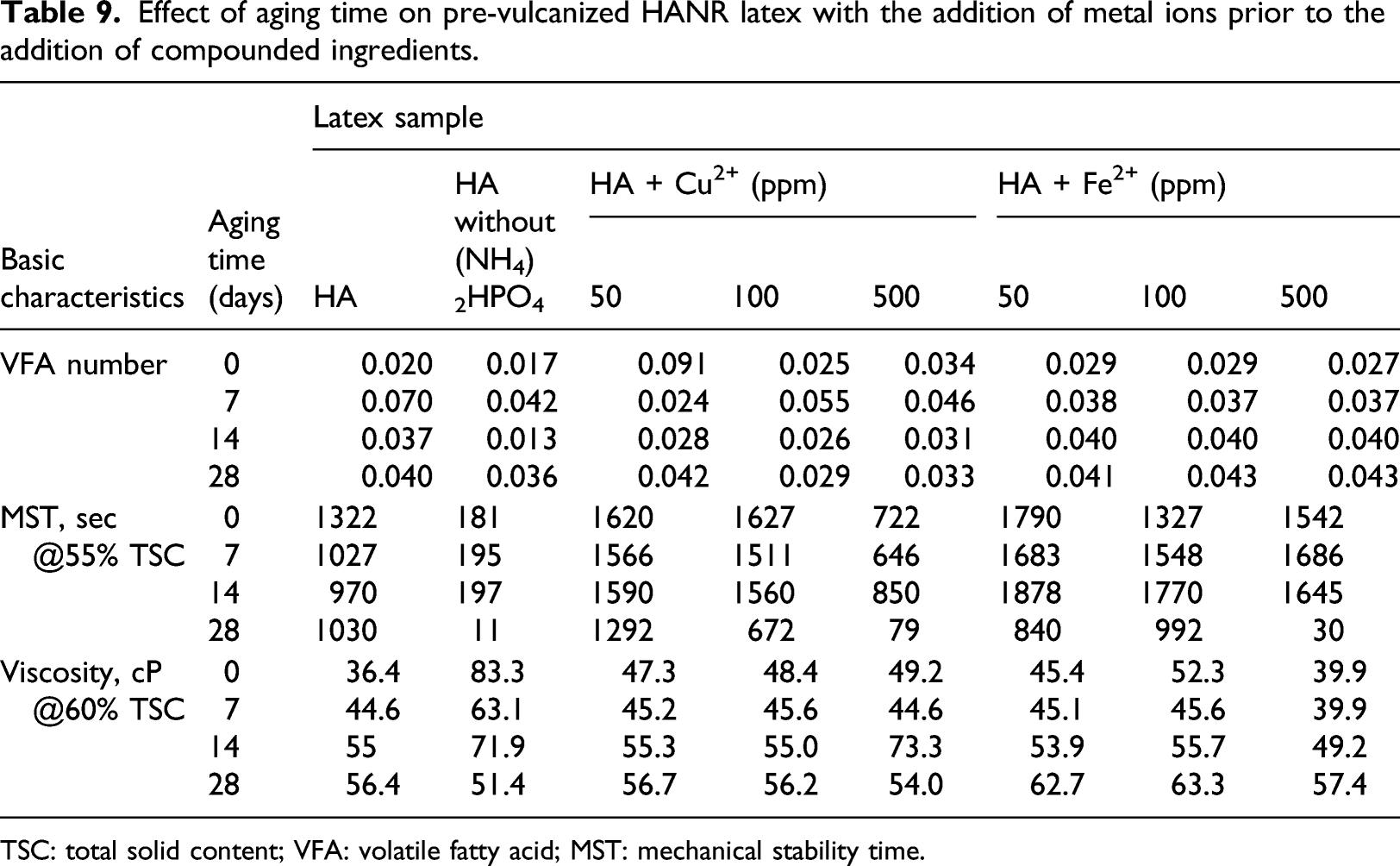
Effect of aging time on pre-vulcanized HANR latex with the addition of metal ions prior to the addition of compounded ingredients.
TSC: total solid content; VFA: volatile fatty acid; MST: mechanical stability time.
The addition of Cu2+ ions (500 ppm) caused a significant reduction in MST values compared with the original HANR latex, which supports the fact that the stability of HANR latex decreases after the addition of Cu2+ ions. This might be due to the adsorption of Cu2+ions on the surface of rubber particles that leads to the decline in HANR stability similar to that of the Mg2+ ion. The viscosity and MST of HANR added with Cu2+ ions decrease as storage time increases.
At the initial stage, the insignificant difference in the values of MST and viscosity was observed in HANR latex consist of Fe2+ ions. However, after long storage, the latex showed much more reduction in latex stability as compared with other latex samples and original HANR latex.
Conclusion
Based on the model study on the exogenous addition of metal ions into the NR latex, it was clear that some of the metal ions as Cu2+, Fe2+, and Zn2+ caused the delay in the maturation time for the pre-vulcanization process and also affected the appearance/quality of the compounded HANR latex. Additionally, the metal ions, that is, Fe2+ and Cu2+, reduced the tensile strength of the obtained glove due to hindering the diffusion of vulcanization chemicals into the rubber particles. Besides the above points, these metal ions also have a vast impact on the stability of HANR latex, especially MST and viscosity, which was proposed to be due to the adsorption of metal ions on the surface of rubber particles.
Footnotes
Acknowledgments
This work was supported by the National Research Council of Thailand (NRCT) to our student by the Royal Golden Jubilee PhD Program (PhD/0150/2560). The authors also gratefully acknowledge Mahidol University and the Center of Excellence for Innovation in Chemistry (PERCH-CIC), Ministry of Higher Education, Science, Research and Innovation. Sincere appreciation is extended to the Thai Rubber Latex Group Public Co., Ltd for supplying the NR latex.
Author contributions
The manuscript was written through the contributions of all authors. All authors have approved the final version of the manuscript.
Declaration of conflicting interests
The author(s) declared no potential conflicts of interest with respect to the research, authorship, and/or publication of this article.
Funding
This research was funded by the National Research Council of Thailand (NRCT) and Mahidol University, via grant numbers NRCT-7385-2563 and NRCT5-RSA63015-09.
