







Abstract
Virtue education is gaining popularity in institutions of higher education. Given this growing interest, several theoretical accounts explaining the process of virtue learning have emerged. However, there is scant empirical evidence supporting their applicability for intellectual virtue. In this study, we apply a theory of virtue learning to the development of intellectual curiosity among undergraduates. We find that learning why virtue is relevant and important to one’s education is consistently and moderately correlated with increases in intellectual curiosity across time points and analytic approaches. A weaker yet still positive association is found with increases in knowledge of intellectual curiosity. The implications of these results connect with pedagogical recommendations stressed across intellectual and moral virtue education.
Introduction
The concept of intellectual virtue is gaining popularity in education (Baehr, 2016; Kotzee et al., 2019), and in particular higher education (Arum et al., 2021; Hyslop-Margison, 2003; Jones, 2012; Orona, 2021a; Schwartz, 2020). The relevance to education has led scholars to supply strategies for developing virtue (e.g. Battaly, 2016; Roberts and Wood, 2007) and explore educational innovations that may cultivate them in students. However, empirical research on the development of intellectual virtue is scant. Moreover, most theoretical stipulations of important relationships remain untested.
In this article, we test a theory of virtue learning as applied to the intellectual virtue of curiosity. First, we introduce Besser’s theory, which serves to motivate and conceptually frame the present study. Next, we discuss how it relates to intellectual virtue, and subsequently utilize an array of analytic approaches to operationalize and test the hypothesis that increases in the knowledge of (understanding what) and value for (understanding why) intellectual curiosity (IC) relate to increases in undergraduate virtue development. This study carries implications for educators interested in pedagogical innovations attempting to enhance students’ intellectual virtue in post-secondary education, as well as scholars studying virtue development.
Conceptual framework
Besser (2020) introduces a theory of virtue learning grounded in self-determination theory. Self-determination theory posits that individual perceptions – subjective judgments of the relevance and centrality of actions and goals – are among the foremost drivers of human motivation (Deci and Ryan, 1985, 2012) That is, for goals and habits and activities to be meaningfully adopted in an individual’s life, they must resonate with that person’s notion of who they are and who they want to be in some sustained way. This kind of intrinsic motivation, in turn, depends on how well decisions satisfy an individual’s basic psychological needs, such as autonomy, competence, and relatedness (Deci and Ryan, 1985, 2012; Ryan and Moller, 2017).
Besser (2020) takes the notion of intrinsic motivation as implied by self-determination theory and uses it to construct a theoretical model of virtue development highlighting how the exercise of virtue must resonate with the learner. Besser (2020) claims, ‘. . . knowing why virtue and its exercise is important places subjects in a position to learn what virtue consists in and how to exercise it . . .’ (p. 287). Resonation is secured through linking the why of virtue learning to basic psychological needs, particularly relatedness and autonomy (Besser, 2020).
Accordingly, when learners are reflecting on why virtue resonates with them, they are better situated and equipped to learn what virtue consists of and how to exercise it (Besser, 2020). This, too, reinforces the payoff individuals acquire for practicing virtue – payoff in terms of a sense of relatedness and autonomy. Finally, in addition to the what and why of virtue learning, the final element in Besser’s theory is learning how. Knowing how is akin to learning a skill, and once resonation is achieved through reflection on the what and why of virtue, exercising virtue should become automatic (Besser, 2020).
Can this be applied to intellectual virtue?
There are at least three key reasons why Besser’s theory can be applied to the development of intellectual virtue. First, contemporary virtue epistemologists contend that the intellectual virtues are not especially different than the moral virtues. While the intellectual virtues have been understood in different ways, with some describing them as attitudes or dispositions (Baehr, 2013; Dewey, 1997; Kotzee, 2018; Spiegel, 2012), others describe them as reliable cognitive skills (Greco, 2000; Sosa, 1985); yet still, among the more influential of views suggests a two-component attribute. The two components include ‘. . . a motivational component, and a component of reliability in attaining the aims of the motivational component’ (Zagzebski, 1996: 165).
Thus, intellectual virtues can be broadly understood as dispositions that are (a) oriented toward epistemic goods, such as truth and/or knowledge, and (b) conducive to acquiring true beliefs (Baehr, 2013, 2015; Pritchard, 2020a; Zagzebski, 1996). In this case, intellectual virtues – just like moral virtues – are character attributes; while one entails good or right actions (moral virtues), the other entails good or right thinking (intellectual virtues). In fact, Zagzebski (1996) argues that ‘. . . no one has offered adequate reason to think the moral and intellectual virtues differ any more than one moral virtue differs from another’ (p. 158).
Related to the first point, empirical evidence supports the correspondence between intellectual and moral development. King and Kitchener (1994) note the structural similarities between the conceptual stages of development for reflective and moral judgment (Kitchener, 1982). Reflective judgment, which is a measure of how well individuals reason about ill-structured problems, has been positively associated with moral reasoning (King et al., 1989) and different aspects of psycho-social development (Polkosnik and Winston, 1989). Moreover, large-scale studies demonstrate that liberal art experiences result in growth across critical thinking and moral/ethical outcomes (Pascarella et al., 2013; Seifert et al., 2010). Thus, while Aristotle posited that moral virtue develops through training and habituation and intellectual virtue (aside from being hereditary/bestowed by nature) develops via teaching and instruction, scholars have reformulated Aristotle’s original dichotomy of virtue types, emphasizing the blurred and seemingly reciprocal relationship between moral and intellectual development (Battaly, 2016; King and Kitchener, 1994; Perry, 1999; Zagzebski, 1996).
Finally, the third reason why Besser’s theory applies to intellectual virtue is implied by the strategies proposed to foster intellectual virtue in students. Proponents of intellectual virtue education highlight the significance of pedagogical techniques such as instruction, the use of exemplars, unique forms of the Socratic method (Watson, 2019), and the opportunity to practice virtuous behavior, as summarized by Kotzee et al. (2019). These strategies correspond to the strategies proposed for moral development (e.g. Besser, 2020; Zagzebski, 1996). Moreover, Battaly (2016) suggests that ‘. . . formal instruction – lecturing about intellectual virtues and their value – introduces students to new categories, which they can apply to the world and themselves’ (p. 173). Here, we see a striking resemblance to the elements in Besser’s theory mentioned above: a clear what and why of virtue learning is considered essential and present on both accounts.
Current study
To summarize, the three points show that (a) moral and intellectual virtues are viewed as largely similar (or at least not uniquely different) in kind; (b) development in moral and intellectual domains appears to occur concomitantly, follows an analogous developmental sequence, and is responsive to similar educational arrangements; and (c) the pedagogical strategies recommended for the development of intellectual virtue correspond to the elements in Besser’s theory of virtue learning. If the intellectual virtues are indeed a subset of moral virtues with no special distinction between them and other virtues (Zagzebski, 1996), and IC is an intellectual virtue (Ross, 2020), then it follows that a model of virtue development would adequately describe and include IC. In this study, we operationalize Besser’s theory of virtue learning in the context of university education. Using an array of analytic techniques, we test the hypothesis that learning the why and what of IC relates to increases in IC. Thus, the specific contributions of this study include (a) testing a specific theory as it pertains to undergraduate development of IC and (b) being among the first empirical studies to examine the adequacy of a general virtue learning framework when applied to intellectual virtue.
Methods
The present study uses data collected from Orona and Pritchard’s (2021) pilot research on a novel online intellectual virtue curriculum module implemented at a large public university located in southern California. In that study, the primary aim was to determine the online module’s preliminary effectiveness at increasing students’ IC. While their non-experimental associations were positive, the study did not examine theoretically stipulated links regarding virtue development (Orona and Pritchard, 2021). The current study builds off this work to examine if and how elements of Besser’s theory are pathways and correlates of intellectual growth.
Participants
Two-hundred and two undergraduate students participated in this study and had full data on pretest and posttest measures. Sixty-four percent of the sample was female, 36% were underrepresented minorities (URM) and low-income, and 40% were first-generation. Sixty-one percent of students were declared science, technology, engineering, and mathematics (STEM) and Health Science majors; the other 39% were spread between social science majors (26%), business (10%), arts and humanities (2%), and undeclared (1%).
Procedure
As mentioned above, these data were collected as part of a larger university-wide project implementing an online curriculum to enhance undergraduate intellectual virtue (see Orona and Pritchard, 2021). Surveys were administered to students pre and post participation in the online module. It is important to note that this study is not an evaluation of the online module, but rather a correlational test to determine whether students who increased on the elements specified in Besser’s theory (what and why of virtue learning) display a concomitant increase in IC. For more information on the preliminary findings of the pilot evaluation of the module, please see Orona and Pritchard (2021).
Measures
Intellectual curiosity
It should be reemphasized that IC is understood as an intellectual virtue. Watson (2018) states its significance: ‘The identification of curiosity as a basic or fundamental motivating intellectual virtue highlights the special significance of curiosity in an educational setting and, specifically, for intellectual character education’. In the empirical sciences, IC has typically been measured with the following tests: Openness to experience (of the Big-five personality traits), the Typical Intellectual Engagement (TIE) scale, the Epistemic Curiosity (EC) scale, and the Need for Cognition (NFC) scale (Powell et al., 2016; Von Stumm, 2013; Von Stumm et al., 2011). Strong correlations have been found between all four, with evidence indicating a unidimensional construct between NFC and EC (Mussel, 2010).
In this study, we collect data on these latter two measures of IC at two time points. Thus, IC is here composed of two instruments: the 18-item NFC and the 5-item EC scale. As these instruments have been validated many times in previous research (e.g. Mussel, 2010; Powell et al., 2016), we combine the two total scores at each time point. Finally, we subtract IC at time 1 from IC at time 2 to obtain the change score.
Figure 1 and Table 1 display the distribution and summary statistics for the IC variables, respectively. As a reminder, the IC variables are sums between the total scores of NFC (measured on a 5-point scale) and EC (measured on a 4-point scale). Therefore, the range of the IC variables is from 1 to 9. All three variables are roughly normally distributed, although the time 2 variable shows some negative skew.
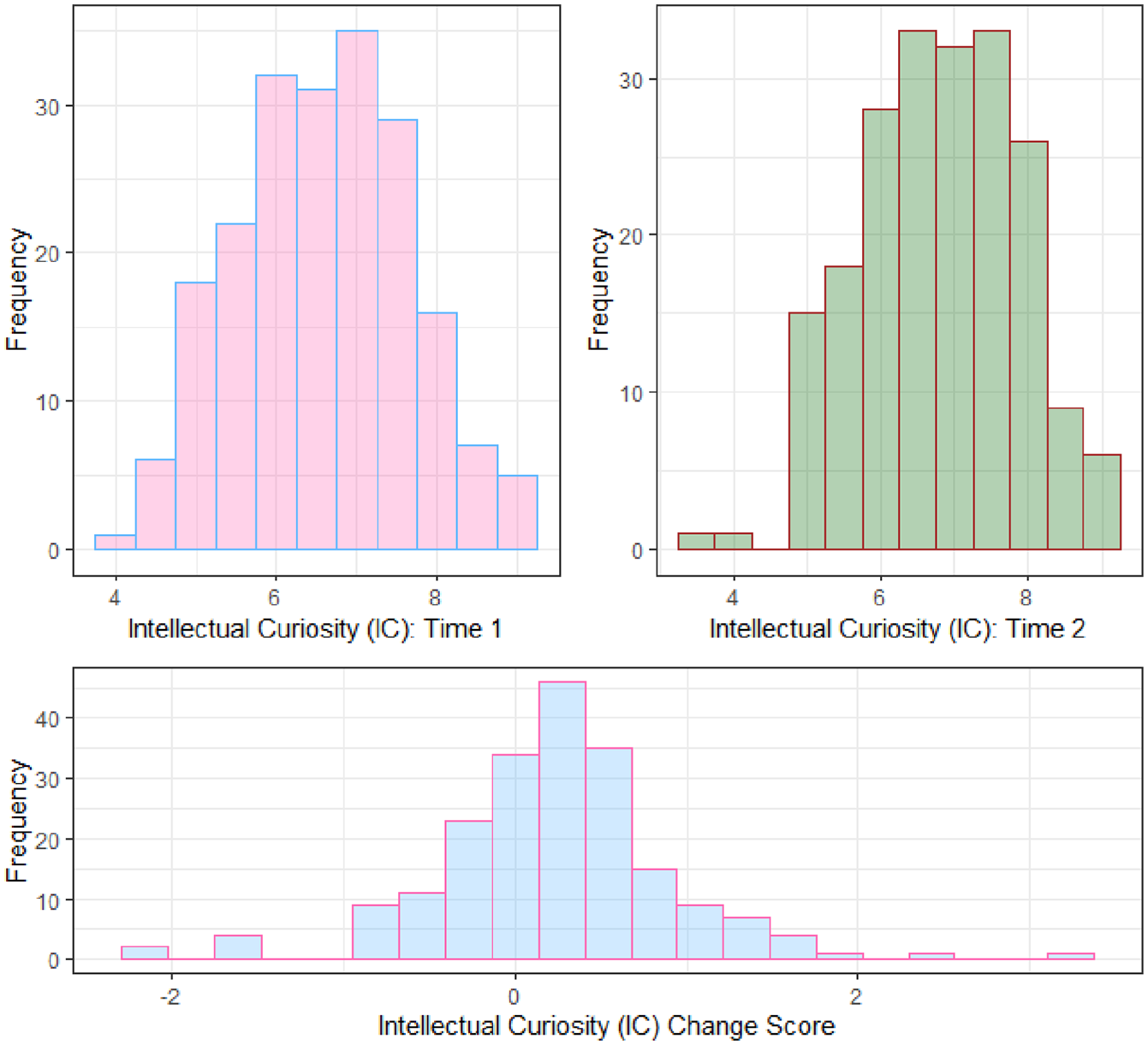
Top pane: Intellectual curiosity (IC) at times 1 and 2. Subtracting time 1 IC from time 2 IC generates the IC change score, shown on the bottom pane.
Means, standard deviations, and correlations.
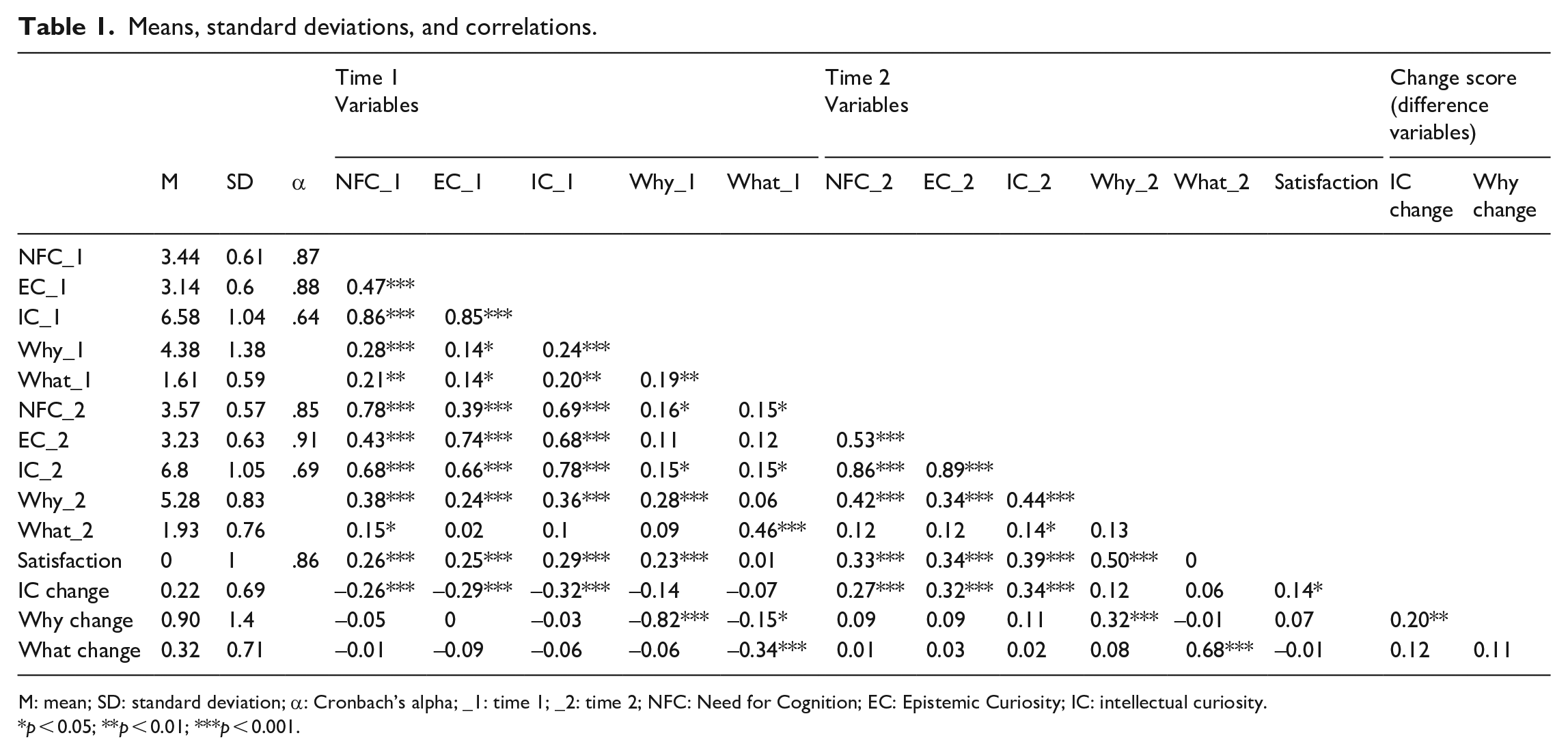
M: mean; SD: standard deviation; α: Cronbach’s alpha; _1: time 1; _2: time 2; NFC: Need for Cognition; EC: Epistemic Curiosity; IC: intellectual curiosity.
*p < 0.05; **p < 0.01; ***p < 0.001.
The what and why
Operationalizing Besser’s what and why, we utilize data relating to how much students knew about the intellectual virtues (specifically curiosity) and how important they perceived this virtue to their own education. The exact what question is: Prior to this module, what was your understanding of intellectual virtues? It is positioned on a 3-point response scale. The exact why question is: How important do you think intellectual virtues are to your education? It is positioned on a 6-point response scale. Both items were measured at two time points. Data relating to students’ understanding of how to implement intellectual virtue were not collected. Table 1 displays the summary statistics and bivariate correlations for these variables.
Control variables
Other variables utilized in this study include demographic and academic variables collected from the university system records, which are often used as covariates in studies of pedagogical effectiveness (e.g. Orona, 2021b). Demographic variables include URM status, sex, STEM major, first-generation status, and low-income status – all of which were coded as either 1 (membership in the listed group) or 0. Academic variables include prior (high school or transfer college) GPA, SAT reading score, and SAT math score. Another variable included is an index for students’ satisfaction with the intellectual virtue module, composed of four items (Orona and Pritchard, 2021). This is important to include, as we want to eliminate the potential that associations between variables are merely tracking enthusiasm.
Data analysis
In this study, we take several approaches to data analysis – all of which serve to test our hypothesis, though in different ways. For the first approach, we emphasize a simple descriptive statistic(s): the percentage of students who increased on IC, given that they increased in understanding the why and what of virtue, respectively. The purpose of this approach is to build an intuition for how essential what and why are to changes in IC. For instance, if individuals who do not change in what/why increase in IC at the same rate as those who do, this suggests the possibility of other paths to growing in IC aside from gaining an understanding of the what and why of virtue.
The second approach focuses on model comparison. Here, we examine Bayes factors and other model fit indices to see which predictor(s) strike a balance between explaining the current data yet avoiding overfitting. For these models, the dependent variable is the IC change score. In addition, we examine models that include the control variables listed in the ‘Measures’ section.
Finally, for the third approach, we specify cross-lagged latent variable models. For these models, the associations of interest are between the what and why of learning virtue and IC measured at the two time points. At time point 2, the time 2 correlations hold constant the same variables at time 1. Thus, instead of using change scores and generating composites of IC, we use sum scores (NFC and EC), parcels, and the full 23-item set (18-item NFC and 5-item EC) as indicators of the latent IC factor(s), specifying three different cross-lagged models. The purpose of these models it to examine the stability of the size and significance of the correlations of interest across different constructions of IC.
The purpose in applying these three approaches is to circumvent the possibility that results were produced by chance. Robustness checks are particularly advantageous given current issues with social science replication and provided these data are non-experimental (Freese and Peterson, 2017). Accordingly, we seek coherence between the approaches.
Results
Analytic approach 1: Proportional group comparisons
For the first analytic approach, we dichotomize the why, what, and IC change scores into two groups, respectively: those who increased on these variables, and those who did not. Table 2 showcases the percentage of students who either increased in IC or not (the rows) by whether they increased or not on what and why. Among those who increased on why, 68% also increased in IC. Among those who did not increase on why, 61% increased in IC. This means that there is a 7% greater probability of increasing IC if one has also increased in learning why intellectual virtue is important. However, this association was not significant, χ2(1) = 0.77, p = 0.38.
Group proportions.
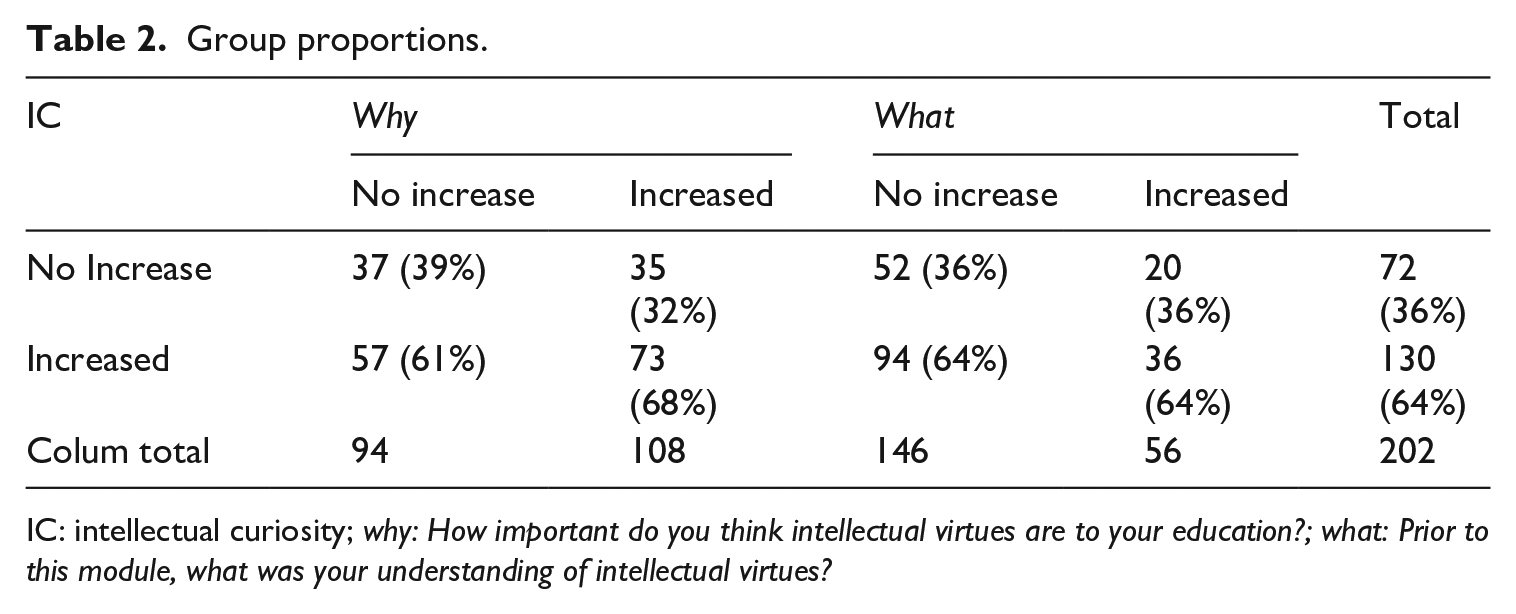
IC: intellectual curiosity; why: How important do you think intellectual virtues are to your education?; what: Prior to this module, what was your understanding of intellectual virtues?
Students who did and did not increase on what increased in IC with the same proportion (64%; χ2(1) = 0, p = 1). This means that, descriptively, knowing whether someone increased in their knowledge of intellectual virtue is virtually uninformative with respect to knowing whether they will also increase their IC. However, categorizing the data in this fashion provides only a broad overview of the relationship; to understand the extent to which what and why are useful predictors of IC change is more formally examined with the next approach.
Analytic approach 2: Model comparison
As shown in Table 3, we specify a variety of models. The models are ranked from the highest Bayes factor to the lowest. The Bayes factor compares two hypotheses (or two models) to one another. All models are compared against the intercept-only model. Values greater than 1 suggest evidence in favor of the specified model in comparison with the intercept-only model (no predictors). Values less than 1 suggest evidence against the shown specified model relative to the intercept-only model (Makowski et al., 2019).
Model comparisons (ranked by Bayes Factor).
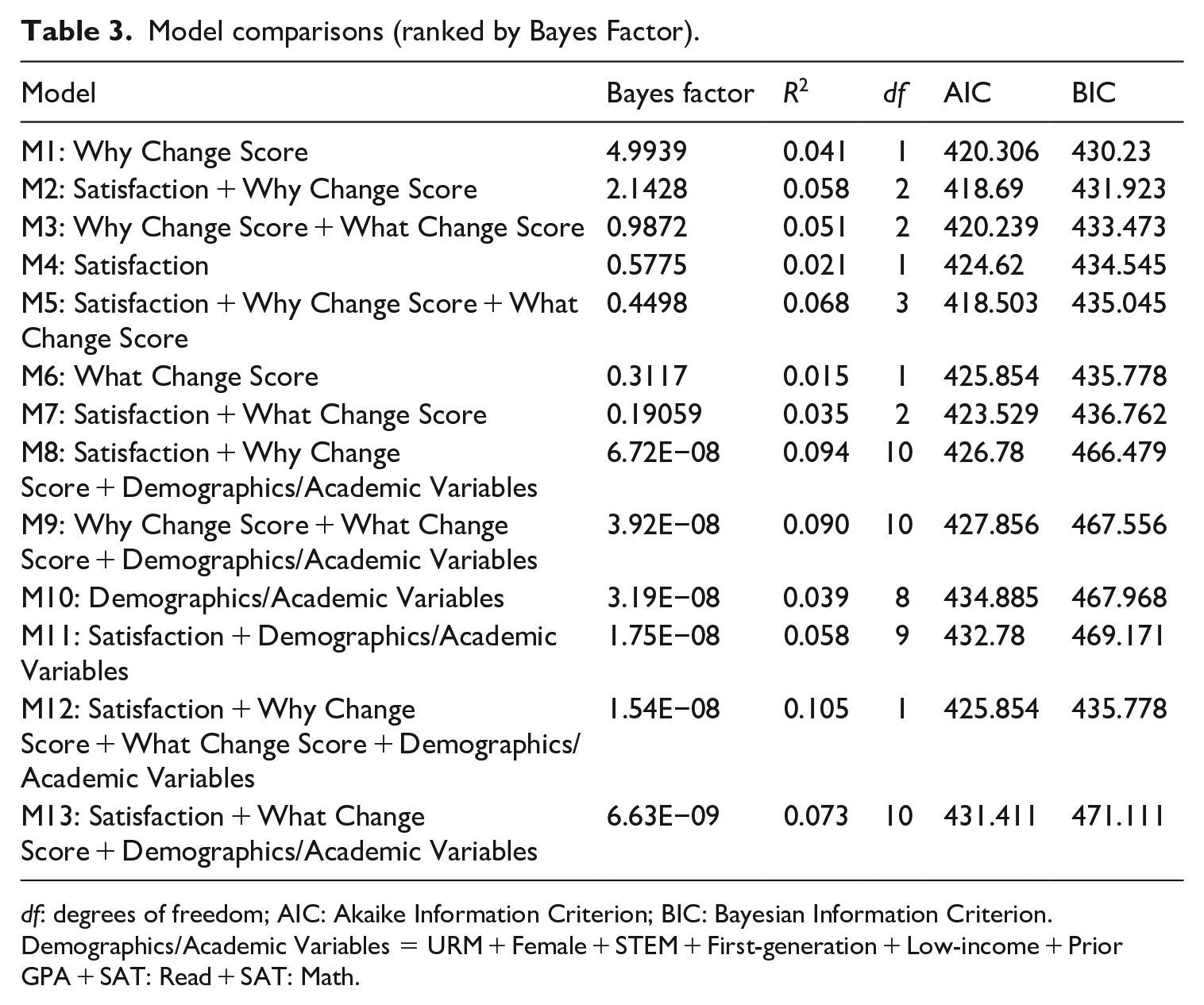
df: degrees of freedom; AIC: Akaike Information Criterion; BIC: Bayesian Information Criterion.
Demographics/Academic Variables = URM + Female + STEM + First-generation + Low-income + Prior GPA + SAT: Read + SAT: Math.
The Bayes factor, Bayesian Information Criterion (BIC), and Akaike Information Criterion (AIC) offer penalties for models with additional predictors. We see that that the model with only the why change score (M1) has the highest Bayes factor, and by a large extent. This model is followed by the model which adds the satisfaction index alongside the why change score (M2). These two models also have the lowest BIC values.
Interestingly, models with the what change score do not seem to explain the data well. In addition, neither do the models with demographic and academic variables, suggesting that neither of these sets of variables were particularly important in understanding students’ change in IC. To draw the distinction further, consider M1, with one predictor, which explains 4.1% of the variation in IC change, while M10, which has eight predictors, explains about the same (slightly less, actually) amount.
While not the focus of this strategy, we present the standardized regression estimates for what and why taken from the full model (M12) in Figure 2. Controlling for the satisfaction index, the what change score, and academic and demographic variables, the why change score significantly predicts IC change (β = 0.18, p < 0.05). The what change score does not significantly predict IC change (β = 0.10, p > 0.05). All coefficients for all models can be found in the Supplementary Material.
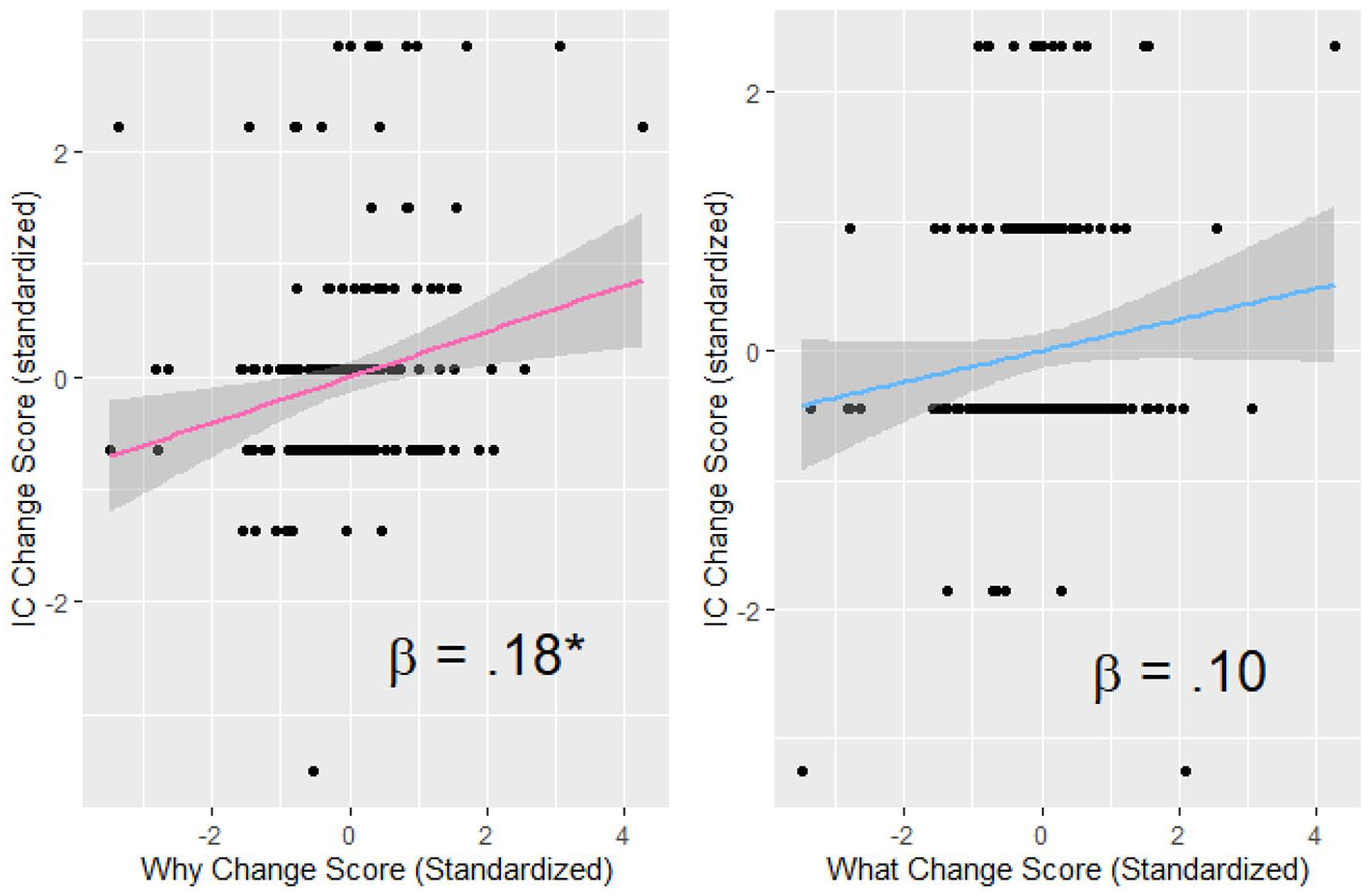
Linear relationships for the two elements in Besser’s theory with intellectual curiosity (IC).
Analytic approach 3: Cross-lagged latent variable model
Finally, Table 4 displays the results of the cross-lagged latent variable models. The information presented includes model fit statistics and the associations of interest – the correlations between what and IC and why and IC for each time point. The time point 2 correlations control for time 1 variables. The models differ only in the number of manifest variables used as indicators of the latent IC factor for both time 1 and time 2. For instance, model 1 uses the total scores for NFC and EC as indicators of IC (only two variables loading on the factor), while model 3 uses all of the individual items that constitute the NFC (18 items) and EC (5 items). In contrast, for model 2, we generate three composites or parcels (Little et al., 2013), all of which have six NFC items and at least one EC item (because there are five EC items, one parcel is composed of one EC, while the others have two). Figure 3 showcases the first structural equation model—model 1—which specifies NFC and EC as indicators of intellectual curiosity.
Cross-lagged latent variable models.
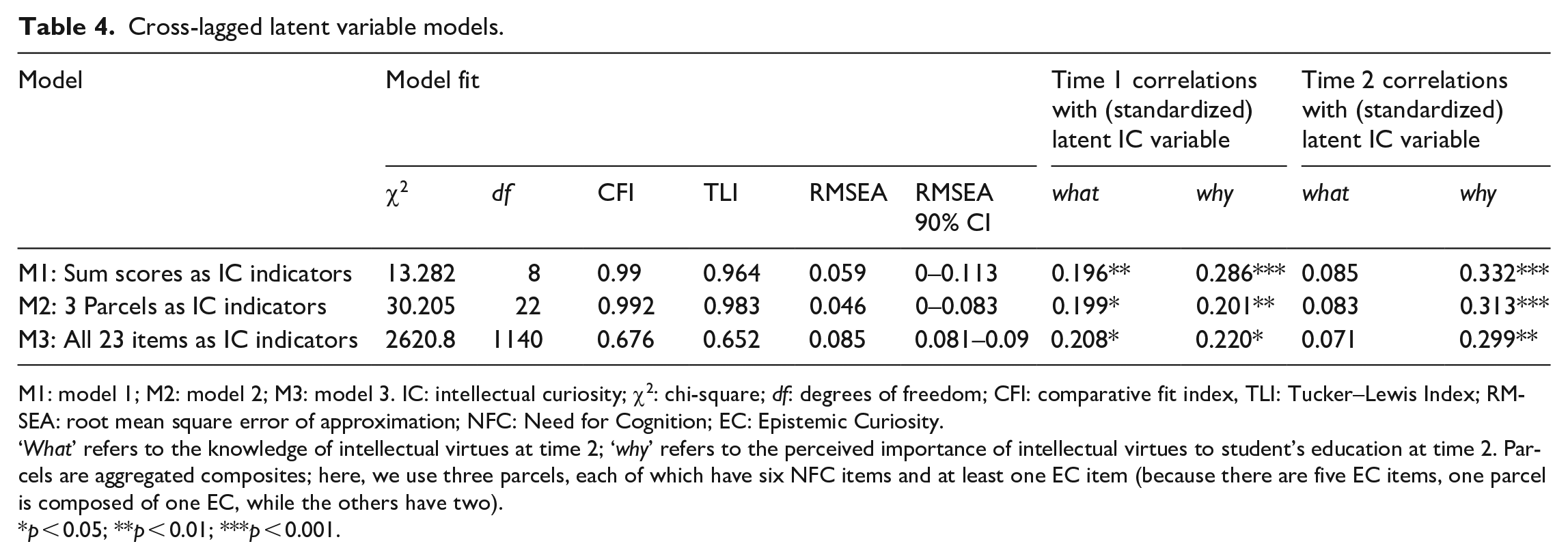
M1: model 1; M2: model 2; M3: model 3. IC: intellectual curiosity; χ2: chi-square; df: degrees of freedom; CFI: comparative fit index, TLI: Tucker–Lewis Index; RMSEA: root mean square error of approximation; NFC: Need for Cognition; EC: Epistemic Curiosity.
‘What’ refers to the knowledge of intellectual virtues at time 2; ‘why’ refers to the perceived importance of intellectual virtues to student’s education at time 2. Parcels are aggregated composites; here, we use three parcels, each of which have six NFC items and at least one EC item (because there are five EC items, one parcel is composed of one EC, while the others have two).
p < 0.05; ** p < 0.01; ***p < 0.001.
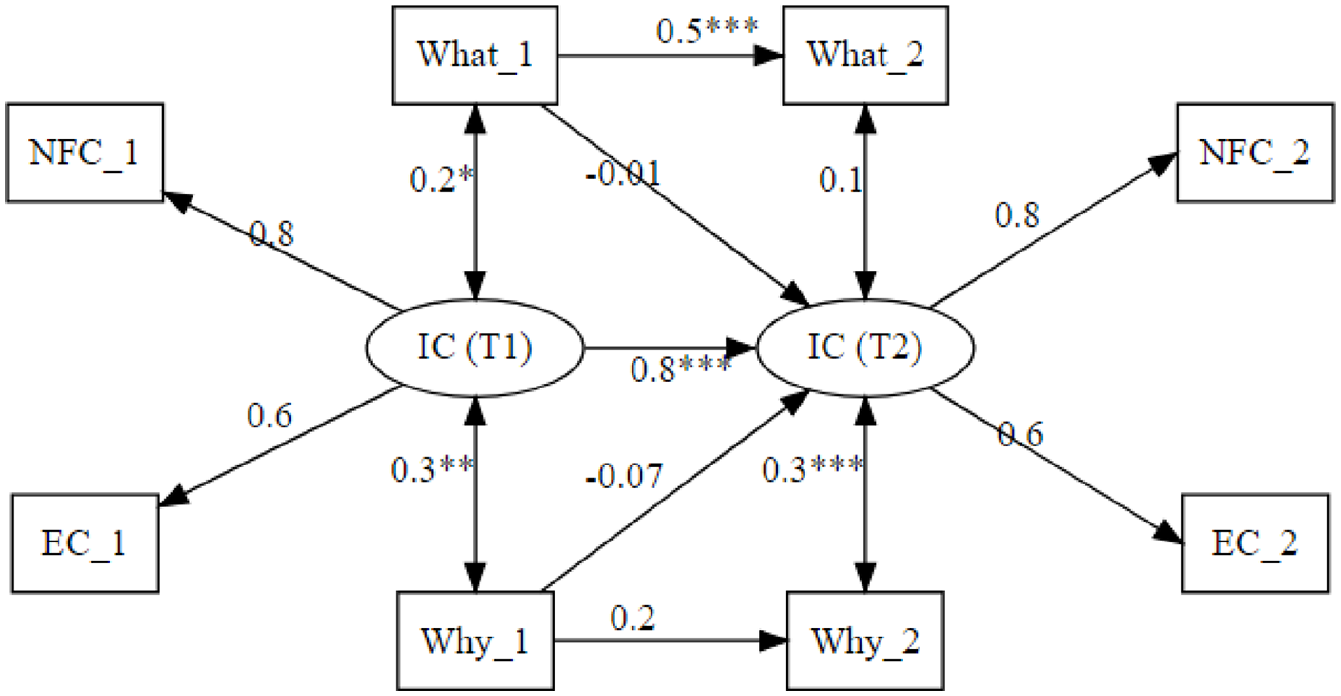
Structural equation cross-lagged latent variable model with Need for Cognition (NFC) and Epistemic Curiosity (EC) total test scores as indicators of intellectual curiosity (IC).
Models 1 and 2 fit the data well across the comparative fit index (CFI), Tucker–Lewis Index (TLI), and root mean square error of approximation (RMSEA). Model 3 approximates fit for the RMSEA measure but is below recommended thresholds (0.8) for CFI and TLI. The point of these models, however, is to examine the stability of the correlations of interest. We see that for each model, and for both what and why, the size and significance of the associations are consistent, although the what correlations vary across time points. For instance, at time point 1, the what correlations are each significantly associated with IC, with correlations ranging from 0.20 to 0.21, p < 0.05. At time point 2, the what correlations have a mere 0.014 range across models and are consistently insignificant across models.
The why correlations exhibit moderate correlations for all models, with a mere 0.066 and 0.033 correlation range across models for each time point, and are consistently significantly related to IC, irrespective of the manner in which we construct indicators. Consistent with the other two analytic approaches, learning why significantly and positively associates with IC across both time points and all model specifications, p < 0.05. Figure 2 depicts the model with the total test scores as indicators (M1), showcasing all specified paths.
Discussion
In this study, we applied Besser’s theory of virtue learning to undergraduate development of intellectual virtue. Culling information from the three analytic approaches, we see in these data that learning why seems to be moderately related to IC growth, while what does not. These results therefore provide partial – and preliminary – support for Besser’s theory. These results have implications for the designing of (intellectual) virtue learning activities/education, the conceptualization of intellectual virtues, and future research in measuring virtue.
As noted by theorists and philosophers, reflection is central to the development of intellectual virtue (Pritchard, 2020b). Reflective activities have been examined in other virtue studies situated in higher education contexts. For instance, the Global Leadership Initiative, presented and evaluated by Brant, et al. (2020), describes the use of seven pedagogical strategies for emerging adults to learn moral virtue, one of which is ‘reflection on personal experiences’ as it pertains to virtuous activity. Using both quantitative and qualitative analysis, Brant et al. (2020) found that many students report that reflective activities are an important aspect in their individual development.
In addition, Orona and Pritchard (2021) present the reflective activities embedded in the intellectual virtue module in which students in this study participated. They report the positive association of participation in the module on both the what and why of virtue learning (using the label, ‘subjective gain’), with larger associations found for why. The culmination of these studies, alongside the current one, suggests that – based on traditional notions of mediation requirements (e.g. Baron and Kenny, 1986) – learning why virtue is important may describe the mechanism by which reflective activities influence intellectual virtue development. Future research is needed to formally test these links, and further research is needed on the optimal levels and types of activities that meaningfully influence one’s understanding of the importance of virtue and to what extent this satisfies basic psychological needs.
Aside from highlighting the significance of reflection and learning why for educational purposes, a broader theoretical implication of this study is that the processes of moral and intellectual character formation appear to respond to similar stimuli. While there was no manipulation of an independent variable in this study, nor do we claim any causal relations, we do highlight the compatibility of these data with the theoretical and empirical work that has surfaced thus far (e.g. Besser, 2020; Brant et al., 2020; Watson, 2019), which suggests that the intellectual and moral virtues share pedagogical developmental techniques. This makes sense, if indeed the intellectual virtues are a subset of the moral virtues (Zagzebski, 1996).
This support is particularly interesting in light of recent arguments against pursuing moral education in higher education settings (e.g. Carr, 2017). But, given the above stated connection, how can universities inculcate intellectual virtue without developing their moral analogue (and vice versa)? This does of course hinge upon how the intellectual virtues are being conceptualized, as noted in the beginning of this article. If educators and researchers move toward a conception of intellectual virtue that articulates a greater influence from cognitive abilities – such as critical thinking and/or reflective judgment – then the connection between moral and intellectual virtues and the shared theories and pedagogies may dissipate or weaken substantially (Kotzee et al., 2019; Siegel, 2015). How useful the intellectual analogues to the moral virtues are for understanding intellectual development in higher education requires rigorous empirical research; future work should focus on how well measures of intellectual virtue relate to other meaningful behaviors, skills, and abilities.
Limitations and future directions
There are several limitations with the current study. First, this study is correlational. There are no causal links tested, and confidently identifying exogenous variation in the independent variables of interest precludes the current study design. Still, across the various analytic approaches employed, we find consistent results for the two associations of interest. Thus, the results are not contingent on how we operationalized the variables or what statistical approach was used. This is especially important given current concerns over selective reporting and researcher degree freedom. So, while this study is not causal, the correlations are consistent and stable.
Second, while these data include students from different majors and two different classes enrolled at a diverse public institution, greater generalizability can be enhanced by collecting data from multiple institutions. A multi-site study would be advantageous in testing the stability of these associations across settings where individuals and institutional policies and programs vastly differ.
Finally, the third limitation involves measuring the concepts in Besser’s theory, and virtue more broadly. For the what and why operationalized here, we relied on one self-reported item each. How well these items capture the intended construct(s) is debatable. At minimum, data should be collected on a robust set of indicators corresponding to all three of Besser’s elements (what, why, and how); these could be used in subsequent latent variable models to tease out the measurement error associated with individual items. Performance assessments and other creative data collection procedures can be used to better represent these constructs in future studies, as well.
As for measuring virtue, the use of self-report to measure IC is undoubtedly problematic (Curren and Kotzee, 2014; Jayawickreme et al., 2014; Maul, 2017a, 2017b; Ng and Tay, 2020). An approach capturing optimal levels of behavior can be used to develop a more precise measure of IC (Ng and Tay, 2020), which can be subsequently tested for its utility in predicting accurate and calibrated epistemic beliefs, and other important academic outcomes (e.g. Fagioli et al., 2020). What’s more, moving beyond just IC and including other intellectual virtues (e.g. humility, tenacity, and integrity) would be advantageous in understanding if and to what extent Besser’s theory extends more broadly. While we acknowledge this weakness, at this early stage of intellectual virtue theory testing, we regard the reliance on the EC and NFC – the latter enjoying a persistent 40-year research base (e.g. Cacioppo and Petty, 1982; Lavrijsen et al., 2021) – as a reasonable starting point.
Conclusion
In this study, we argued for the applicability of a general virtue learning theory in describing intellectual virtue development. We then tested two of three critical elements (what and why, but not how, of virtue learning) as they relate to increases in IC measured at two time points. We find consistent yet moderate correlations between IC and learning why virtue is important. Weaker associations are found with increasing knowledge of intellectual virtue. These results suggest partial support for the elements of Besser’s theory as they apply to intellectual virtue. The implications of these results connect with pedagogical recommendations stressed across intellectual and moral virtue development education.
Supplemental Material
sj-docx-1-tre-10.1177_14778785211061310 – Supplemental material for Gotta know why! Preliminary evidence supporting a theory of virtue learning as applied to intellectual curiosity
Supplemental material, sj-docx-1-tre-10.1177_14778785211061310 for Gotta know why! Preliminary evidence supporting a theory of virtue learning as applied to intellectual curiosity by Gabe Avakian Orona in Theory and Research in Education
Footnotes
Acknowledgements
I would like to thank Duncan Pritchard and the Educational Research Initiative at the University of California, Irvine for making this research possible. I would also like to thank Jacque Eccles, who pointed me toward much useful literature.
Declaration of conflicting interests
The author(s) declared no potential conflicts of interest with respect to the research, authorship, and/or publication of this article.
Funding
The author(s) received no financial support for the research, authorship, and/or publication of this article.

Supplemental material
Supplemental material for this article is available online.
Author biography
References
Supplementary Material
Please find the following supplemental material available below.
For Open Access articles published under a Creative Commons License, all supplemental material carries the same license as the article it is associated with.
For non-Open Access articles published, all supplemental material carries a non-exclusive license, and permission requests for re-use of supplemental material or any part of supplemental material shall be sent directly to the copyright owner as specified in the copyright notice associated with the article.
