







Abstract
As the disruptive effects of COVID-19 on education have prompted conversations about remedial learning and learning recovery, the expectation is increasingly that schools are more productive in less time. This raises concerns regarding potential increase in the use of prescriptive curricula. While critiques regarding the usage of such curricula abound, the lack of clarity about what it is that these curricula do and how they impact instructional processes render critiques too coarse-grained to be of value in both normative evaluations and remedial efforts. To resolve this problem, the authors provide a framework that analyzes what prescriptive curricula entail and how they impact teaching and learning. The framework postulates that prescriptiveness occurs along five dimensions and is a matter of degree along each of these. Subtle differences between how these dimensions and degrees of prescription materialize in individual curricula matter for formulating both targeted critiques about what makes such curricula objectionable and for developing adequate and feasible remedies to undo the harmful effects of prescriptive curricula.
Keywords
Introduction
The education discourse around the COVID-19 schooling disruption in the United States has been replete with talk of ‘learning loss’ and ‘unfinished learning’ resulting from interruptions in students’ ability to access and engage productively in high-quality learning activities (e.g. Dorn et al., 2021; Hanushek and Woessmann, 2020). Public commentators and politicians have placed the onus on schools to address students’ academic and socioemotional needs with comprehensive ‘recovery plans’, often calling for ‘acceleration’ of student learning rather than mere ‘remediation’ (e.g. Fordham Institute, 2021).
While the past few years have presented many unprecedented challenges, the expectation that schools and teachers ‘do more and do it faster’ is not itself unprecedented. In fact, it has been a recurring refrain of education reformers for several decades. Unlike other industries, the educational enterprise has proven quite difficult to make more ‘productive’, despite the emphasis on outcomes-driven accountability that has characterized US education policy (Berliner, 2011; Hursh, 2007). Attempts to enhance productivity in American education policy and research have broadly taken the form of initiatives aimed at ‘rationalizing’ curriculum design and classroom practice by more tightly coupling curricular elements with pre-specified and, in the behaviorist tradition, observable and measurable learning objectives (see Gamson et al., 2019; and, of course, notable critic, Eisner, 2001).
One major component of the more recent attempts to streamline education in the United States in this manner has been the standardization of grade-level content through the creation of the Common Core State Standards and other state standards documents that delineate the specific subject-area progressions that students should move through and master during any given year (Rothman, 2011). This regimentation of content requires curricular materials that are carefully ‘aligned’ to each state’s standards, and curriculum companies have responded by creating materials with lesson plans that prescribe content and pedagogical methods in increasing levels of detail.
As educators are spurred deeper into the logics of efficiency and acceleration that have in the past motivated the adoption of prescriptive curricula, it seems an apt time to reflect on the role of curriculum in structuring classroom experiences more generally. Specifically, it seems important to first understand how such curricula impact instructional experiences in K–12 education and to evaluate whether, and if so to what extent, this impact is morally permissible given socially legitimate educational aims. In this article, we develop a framework for analyzing the various ways that curricula may structure classroom instruction. Specifically, we consider how and to what extent prescriptive curricula pre-specify substantive, procedural, temporal, interactional, and emotional dimensions of classroom instruction. Utilizing this framework, we aim to add nuance to normative discussions of curricular control. Accordingly, we suggest that different degrees and dimensions of prescriptiveness reveal underlying values and assumptions about education that ought to be considered on their own merits. Moreover, we suggest that a breakdown of prescriptiveness along gradations and dimensions reveals that objections against prescriptive curricula may not warrant outright rejection and that amendments may (and perhaps ought to) be made where schools and districts have already developed or adopted a prescriptive curriculum.
The structure of the article proceeds as follows: The first section provides a definition of prescriptive curriculum and explores the context that is conducive to the use of prescriptive curricula. The second section develops an account of curricular prescriptiveness which postulates it as varying along a continuum rather than as a binary, expounds a set of five dimensions along which curricula may be structurally prescribed, and outlines characteristics of maximally and minimally prescriptive curricula. The third section sketches the implications of applying our framework to critiques of curricular prescriptiveness. Specifically, it shows that our framework enables more nuanced and sound normative evaluations of prescriptive curriculum. The fourth section concludes the article.
Prescriptive curriculum
In beginning to examine what prescriptive curricula are and how they impact instructional experiences in K–12 education, one must inevitably confront the fact that the use of the term curriculum is not without ambiguity. Toombs and Tierney’s (1993) description of the concept of curriculum shows well the daunting nature of the task of defining curriculum, which is a term ‘almost without boundaries’ indicating ‘anything from the ‘bundle’ of programs . . . to the individual experience of a particular student’ (p. 177). Given the limited scope of this article, we cannot resolve the conceptual disputes that numerous accounts of curriculum have generated over time, whether these accounts are broad (e.g. Bobbitt, 1918; Dewey, 1976), narrow (e.g. Broudy et al., 1964; Schwab, 1983), or foreground the institutional character of curriculum (e.g. Reid, 1992; Westbury, 1999). Instead, we embrace a broad definition that underlies many of the specific definitions that we observe in the literature: curriculum, broadly construed, serves as a means of structuring educational processes. Whether we think of curriculum as a range of experiences, an organizational or patterning scheme, or a politics of organization, curriculum remains a form of structure that is imposed upon and organizes educational processes and, consequently, impacts educational experiences in more or less definitive terms. We can thus define curriculum as a structure applied to education. Structure directs educational processes along particular trajectories of development and may be accompanied by varying degrees of control. In providing this definition, we make no claims as to its universal applicability. We simply rely on it as a starting point for our inquiry into salient features of prescriptive curriculum. Namely, we suggest that prescriptive curricula, like curriculum writ large, serve the purpose of structuring education to the extent that they can, given their reach.
Equally important to defining curriculum in abstract terms, nonetheless, is understanding the context within which curriculum is developed. Contemporary education policy in the United States has seen an increased focus on standards, assessment, and accountability. As educational objectives become increasingly specified, the idea that there exists a maximally efficient instructional pathway for accomplishing these objectives holds an allure that is difficult to resist (Au, 2011). The implicit (and often explicit) goal was to create curricular materials that would be impervious to the idiosyncrasies of an individual teacher’s interpretation and implementation – the fabled ‘teacher-proof’ curriculum – and maximally efficient at producing pre-specified learning outcomes as a result of rigorous design. Implicit in such traditions is the desirability of a division of labor between production and implementation of curricular materials, under the assumption that curriculum producers can create and organize content with greater skill, specificity, and consistency than individual teachers. The incentives to maximize instructional efficiency are heightened by the adoption of standardized systems of assessment that purport to measure the achievement of specific instructional objectives. This pressure for performance is passed on to commercial curriculum developers and disciplines the manner in which content is organized and the degree to which it is specified in commercial curricula. Since the content that students are expected to master and the manner in which they will be assessed on it are both predetermined, it would be counterintuitive for the producers of instructional materials to move in any other direction than that of greater specificity and structure. As teachers and school administrators look for ‘what works’, the degree to which the usage of particular instructional materials generates desired performance outcomes might be the difference between retaining or losing a customer. 1 All of these factors, we assert, pressure curriculum producers toward tighter instructional design and higher degrees of pedagogical specificity.
The resulting highly structured curricular materials are often referred to by the colloquial term ‘scripted curriculum’, which gives a nod to instructional directions that in many cases quite literally provide verbal scripts for classroom interactions between teachers and students. The term scripted curriculum, for many educators in the United States and beyond, evokes quite negative connotations and conjures a host of bleak images associated with fear and resentment regarding deprofessionalization and objectionable surveillance. Kohl (2009) captures the tone well: Scripted curriculum turns teachers into mechanical delivery systems. Most teachers I know try to revolt against them, but they have to face what are called ‘the Open Court police’
2
—people who wander the halls of schools checking that teachers are on exactly the mandated page, asking set questions rather than discussing ideas or texts, and accepting only the answers provided by the teachers’ booklet.
A whole body of critique has developed along these lines, which targets (1) curricular programs that include actual verbal scripts that teachers are expected to read from in the course of their lesson (e.g. Au, 2011; Carl, 2014; Ede, 2006; Fitz and Nikolaidis, 2020; McIntyre et al., 2008; Reeves, 2010), (2) ‘prepackaged’ or ‘commercially developed’ curricula (Wyatt, 2014: 463; e.g. Crocco and Costigan, 2007; Duncan-Owens, 2009; Owens, 2010), (3) standards-based curricula (e.g. Valdez, 2018), (4) curricula associated with high-stakes testing (e.g. Gill, 2007), and (5) curricula that constrain ‘teacher autonomy’ (Carl, 2014: 31), among other things. Since the broad usage of the term scripted curriculum extends beyond curricula that contain explicit verbal scripts, to avoid ambiguity we use the more capacious term ‘prescriptive curriculum’ which encapsulates the various elements of curricula that have been influenced by tightened logics of standards, assessment, and accountability and which some educational researchers find problematic. 3
Before presenting our framework for analyzing prescriptive curriculum, two caveats are in order. The first caveat is that the comments contained herein are informed by the authors’ engagement with the US education system and with curricular products that are utilized specifically within this geographic and political context. Accordingly, we embrace a micro-level understanding of curriculum which includes under its scope curricular materials that are used to structure classroom instruction in ways that (are thought to) promote the learning objectives identified by state-adopted standards. The context-specific understanding that we rely on is necessary for identifying prescriptive curricula to analyze, because educational researchers typically associate curricular prescriptiveness with a level of detail that can only be found in micro-level curricular materials. Yet, curriculum can also be, and often is, understood as a macro-level construct that structures education at a high level (i.e. government-mandated content or learning objectives) but does not interfere with what happens in the classroom (i.e. what teachers do to teach the content or meet the objectives). In fact, this macro-level understanding of curriculum is what European contexts often associate with the term curriculum, whereas in the United States it is typically referred to as instructional standards. As such, we anticipate that non-US readers may find our use of the term curriculum idiosyncratic.
Yet, we intend our theoretical findings to be widely applicable to the varying national contexts in which curriculum researchers and classroom practitioners find themselves. We believe this to be the case for two reasons. First, prescriptive curricular texts are increasingly adopted outside the United States (Fitz and Nikolaidis, 2020), making our findings directly applicable to many non-US contexts. As curriculum commercialization increases globally, moreover, there is reason to suspect that the export of prescriptive curricular texts will continue. Second, micro-level curricular materials are developed in alignment with and to advance the aims of the broader or macro-level curriculum. As such, they mirror the structuring that is imposed at the macro level, providing us insights about what that macro-level structuring looks like, and they are derivative of macro-level curriculum, providing us insight into how macro-level mandates may impact instruction at the micro level.
The second caveat is related to the first caveat and pertains to the fact that our analysis is limited to examining curricular materials in the form of texts. These materials, which we refer to as curricular texts, include a variety of curricular artifacts that teachers rely on to structure instruction, including textbooks, lesson plans, pacing guides, worksheets, and more. While comprehensive accounts in curriculum theory discuss how curriculum modulates the relationship between content, teacher, and learner such that curriculum development and enactment must be examined together to ascertain how curriculum impacts teaching and learning by restricting and/or enabling these educational processes (Deng, 2021; Hopmann, 2007), the analysis and framework we propose here are more modest. Namely, we aim to identify what characteristics curricular texts exhibit that are indicative of prescriptive tendencies typically associated with scripted curricula. However, it is important to emphasize that these tendencies are not necessarily associated with the outcomes of implementation, which unavoidably remain contingent on and are mediated by teacher and student agency (Hopmann, 2013) since curricular implementation has been shown to occur with varying degrees of fidelity in different instructional contexts, depending on a multitude of factors (e.g. Achinstein and Ogawa, 2006; Chapman and Elbaum, 2021; Diamond, 2012; Eisenbach, 2012).
The prescriptive curriculum structuration continuum
Having defined the way in which we understand the term curriculum and highlighted the educational context that informs decisions about increasing instructional productivity and standardization, we will now explore how various highly standardized and commercialized curricular texts – texts that we collectively refer to as prescriptive curricula – structure instructional experiences. In doing so, we will highlight two important aspects of prescriptive curricula: First, the prescriptiveness of a given curriculum is a matter of degree – curricula can be more or less prescriptive. Our attention should, therefore, be directed at differences of degree rather than binary formulations that juxtapose prescriptive and non-prescriptive curricula (Archbald, 1994; Eisner, 1984). Second, curricula may be prescriptive in different ways. Prescriptive curricula may be highly regulative of instructional time (e.g. curricula with pacing calendars), manner of delivery (e.g. lesson plans designed for direct instruction), lesson content (e.g. Common Core aligned curricula), or even classroom organization (e.g. curricula that use a station rotation model), among many other things. A nuanced analysis must, therefore, account for both varying degrees of prescriptiveness and multiple dimensions of prescribed structuration. In this section, we discuss what curricular characteristics variations in degrees of prescriptiveness are suggestive of and what the dimensions of prescribed structuration entail.
Based on differences in degrees of prescriptiveness that various prescriptive curricula exhibit, they can productively be viewed as existing on a continuum of prescribed structuration. We can call this the prescriptive curriculum structuration continuum (see Figure 6). The more prescriptive a curriculum, the more it potentially controls, and hence structures, the way in which instruction will proceed in the classroom. 4 Of course, curricular prescriptions need not exactly correspond to curriculum implementation, as implementation follows ‘the principle of negative coordination’ (Hopmann, 2013: 94) which delimits but need not constrain processes or diminish potential outcomes. Curriculum scholars have extensively discussed this consideration in their references to differentiations between adaptation and adoption (e.g. Datnow and Castellano, 2000; Maniates, 2010; Robinson, 2012; Timberlake et al., 2017; Vaughn et al., 2022). Yet, different curricula may be more or less amenable to adaptation or adoption depending on where they lie on the continuum, with more highly prescribed curricula implying or (at the very least) enabling tighter regimes of control.
Dimensions of prescriptive curriculum structuration
Many curricular attributes are amenable to prescriptive structuration. In an effort to be as exhaustive as possible, we surveyed prescriptive curricula and determined at least five dimensions of prescribed structuration: substantive, procedural, temporal, interactional, and emotional. These dimensions are neither universal nor exhaustive. Rather, they are provided as an analytic tool for understanding and assessing how curricula might, and often do, structure instructional processes. To determine the dimensions of prescriptive curriculum structuration, we examined free samples of curricula with verbal scripts that detail classroom interactions and, in doing so, provide what can be easily agreed to be unambiguous examples of highly prescriptive curricular texts (see Appendix 1 for a detailed list of curricula analyzed). Through careful examination, we identified constitutive elements, overlapping features, and general similarities to develop a heuristic that would allow us to analyze components of prescriptive curriculum. In this subsection, we explain what each of the five dimensions of prescriptive curriculum structuration entails and how we can identify them in particular curricula. Examples are provided from a popular open-source curriculum (EngageNY) that show what each of these dimensions looks like in a specific curriculum, although the manner in which these dimensions present themselves varies widely according to the product. 5
Substantive
The first dimension of prescriptive curriculum structuration is substantive structuration, or the substance of what the curriculum contains. Substantive structuration includes both an ideational and a material component. The ideational component refers to anything that is intangible or intellectual in nature – what is taught and the level of detail in which to teach it. The most salient example is epistemic resources of all kinds, including content knowledge (Goldman, 1999), comprehension skills (Elgin, 1999), and reasoning skills (Siegel, 1988). The ideational aspect of substantive curriculum structuration is, in some ways, the most important and characteristic aspect of curriculum. Material substantive structuration, on the contrary, includes anything tangible – what is used to teach the ideational substance. This includes hardware, software, learning supplies, classroom supplies, or other material supplies of instructional value. Specific examples include the physical textbook that includes the intellectual resources required by the ideational substance, the supporting material that teachers use (pacing guides, worksheets, etc.), or the classroom setup (desks in rows or clusters, classroom or lab, etc.). While material substance is arguably less influential than ideational, it can also shape the learning process (Latour, 1994; Snaza et al., 2016) – though not necessarily in the ways it was intended to.
In practical terms, substantive structuration is concerned with the intellectual content covered during a given class and the material supplies used to facilitate teaching. Content includes subject matter, supplemental learning material, topics of conversation, themes to be addressed, practice exercises, and the like. The more structuration the curriculum prescribes, the greater the content’s specification. Highly prescriptive curricula, for instance, will specify not just the general topic of consideration (e.g. addition or subtraction) but the details of the topic (e.g. the types of models that should be used to demonstrate the operation) and the ways in which it should be taught (e.g. the discrete steps that students should take to create their models and independently solve problems). Invoking the framework of Bachmann et al. (2022), the more prescriptive a curriculum, the more likely it is to contain purposive elements that specify outcomes and the less likely it is to contain conditional elements that restrain teaching (Hopmann, 2007) but relinquish control over possible outcomes of the instructional process. 6 In curricula that contain verbal scripts, content may also include the teacher’s statements and questions with expected responses. In addition to content, material objects can be considered part of the curriculum’s substantive structuration insofar as they are required by the curriculum.
Indicators of substantive structuration in curricula include explicit content, what materials are needed (from books and tablets to timers and scissors), what the objectives of the lesson are, examples of exercises, drawings on the board, scripted monologues and dialogues, specific questions for students, specific answers to questions, classroom layouts, and other similar substantive components, both ideational and material (see Figure 1).
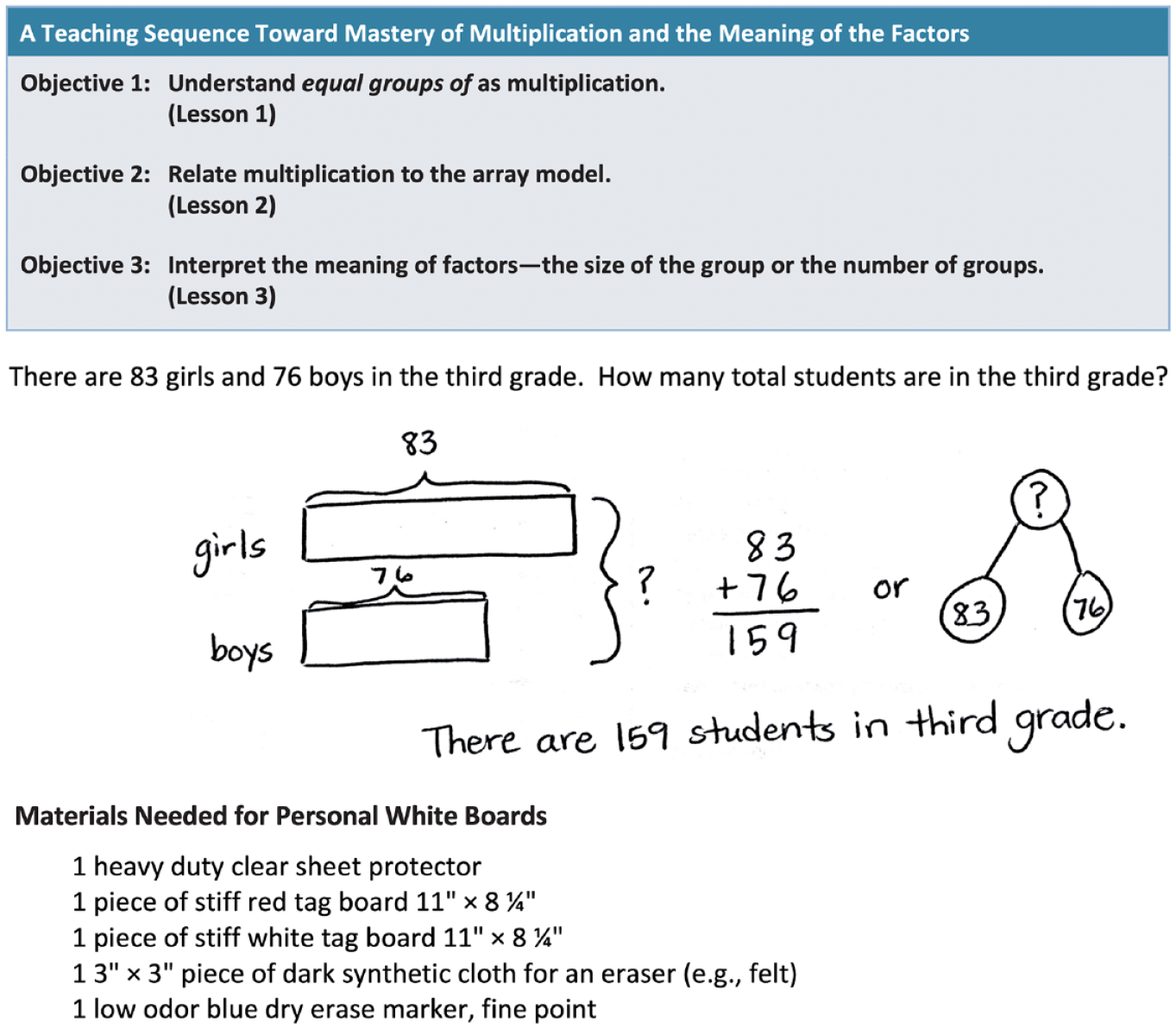
Examples of substantive structuration from EngageNY.
Procedural
The flipside of substantive structuration is procedural structuration. As substantive structuration is concerned with the what of curriculum, procedural structuration is concerned with the how. The purpose of procedural curriculum structuration is to ensure the orderly progression of learning. In a well-organized class with clear procedures in place, learning activities and tasks are incorporated in the lesson and implemented in an orderly fashion that enhances instructional structure. Greater structure, in turn, facilitates the learning process as everything proceeds in its turn, transitions are smooth, and students are afforded the opportunity to focus on learning devoid of unpredictable and unnecessary distractions (Doyle, 1986, 2006). The orderly functioning of a classroom is purely a matter of procedural structuration in that it is completely distinct from substantive considerations. The requirement is not that class be structured in a particular way but that it be somehow structured to facilitate the learning delineated by the ideational substance of curriculum. Procedures, nonetheless, may differ depending on the form of a class and, relatedly, the substantive structure of the curriculum. For instance, in traditional classrooms that prioritize accumulation of content knowledge and demonstration of one’s mastery through assessments, class procedures will likely be rigid (e.g. direct instruction) with clear boundaries delineating what students must (and, by extension, must not) do, whereas in progressive classrooms that prioritize inquiry, collaborative work, or real-world application of knowledge, procedures will likely allow for flexibility in movement, experimentation, collaboration, lively conversation, and discretion in the selection and performance of tasks.
In practical terms, procedural structuration is concerned with what tasks and activities will take place during class time. The task schedule determines what tasks must be included in daily instruction and their order of completion. Tasks and activities may include direct instruction (lectures, presentations, guided practice, etc.), collaborative activities (group work, class discussion, etc.), practice tasks (experimentation, construction, etc.), personal activities (brainstorming, independent study, play, etc.), and more. When it comes to procedural structuration, more prescriptive curricula exhibit more rigid task schedules and detailed procedures. On the contrary, the ordering of instruction in less prescriptive curricula is such as to ensure that instruction proceeds in an orderly fashion but what that ordering looks like in practice is significantly affected by the teacher’s preferences and students’ responses. 7
Indicators of procedural structuration in curricula include the presence of ordered activities and ordered lessons (e.g. itemized lists or tables), learning units (e.g. unit 1/unit 2 . . ., session 1/session 2 . . ., lesson 1/lesson 2 . . .), ordering instructions for teachers (e.g. prepare, plan, teach, review, assess, debrief, reflect, before/during/after class), numbered items, for example, 1/2/3 . . ., A/B/C . . ., step 1/step 2 . . .), and other similar ordering markers (see Figure 2).
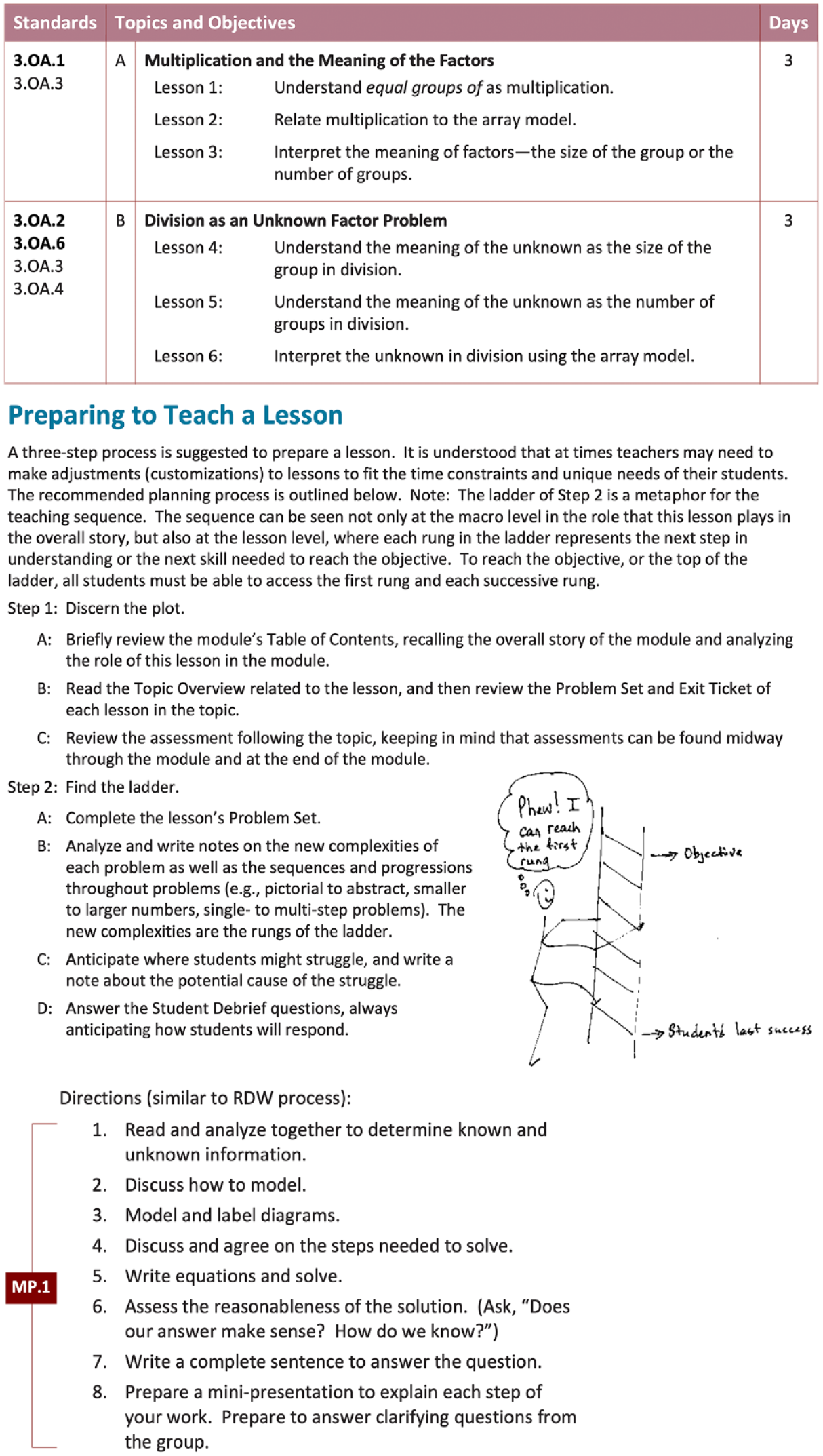
Examples of procedural structuration from EngageNY.
Temporal
The third dimension of curriculum structuration is the temporal. To the extent that content must be taught and assessed at given time points, the pacing of instruction is constrained. Given the importance of standardized tests for high-school graduation and college admissions, students need to master the tested material by the time they graduate from school. Curriculum must thus impose a temporal structure to ensure that instruction proceeds in a timely fashion (Eacott and Hodges, 2014; Roth et al., 2008). Temporal structuration is largely contingent on substantive structuration (i.e. the content to be covered) and procedural structuration (i.e. the tasks and activities to take place). The more content and tasks are prescribed, the less time for each of them, although the level of specificity in each of these three structural dimensions might unforeseeably impact the way in which prescriptions along the other two dimensions are applied – for instance, extensive but insufficiently specified content might be covered faster than more limited but minutely specified content. Temporal structuration is closely related to procedural in that procedures presuppose the presence of a timeline. Nonetheless, temporal structuration is distinct from procedural in that following procedures need not impose time constraints. When performing required tasks, a teacher can take their time or postpone starting a new task to accommodate delays from previous tasks. However, adding a temporal structure to the curriculum might involve directing a teacher to spend specific amounts of time on given tasks, start tasks at predetermined times of the day, or even skip tasks to save time.
In practical terms, temporal structure is concerned with the pacing of instruction and learning, with the latter often ‘steering’ the former (Lundgren, 1981). The less prescriptive the curriculum, the broader the units of time specified and vice versa. Curricula may be temporally divided into credit hours, academic years, semesters, trimesters, or quarters and include what is expected to be taught each semester, week, class, hour, or minute. Curricula that are minimally prescriptive specify broad units of time that, while delimit teacher work making it more manageable, allow the teacher ‘room to move’ (Hopmann, 2013: 94). Highly prescriptive curricula, on the contrary, typically contain detailed and rigid time schedules that specify with precision the starting time and duration of each designated procedure.
Indicators of temporal structuration in curricula include the presence of pacing guides, time estimates or ranges (e.g. 5 minutes, 5–10 minutes), credit hours (e.g. 1 credit hour, 3 credit hours), grade levels and bands (e.g. grade 1/grade 2. . ., grades 2–5), when to teach what (e.g. week1/week2/ . . ., day1/day2/ . . .), and other similar temporal markers (see Figure 3).
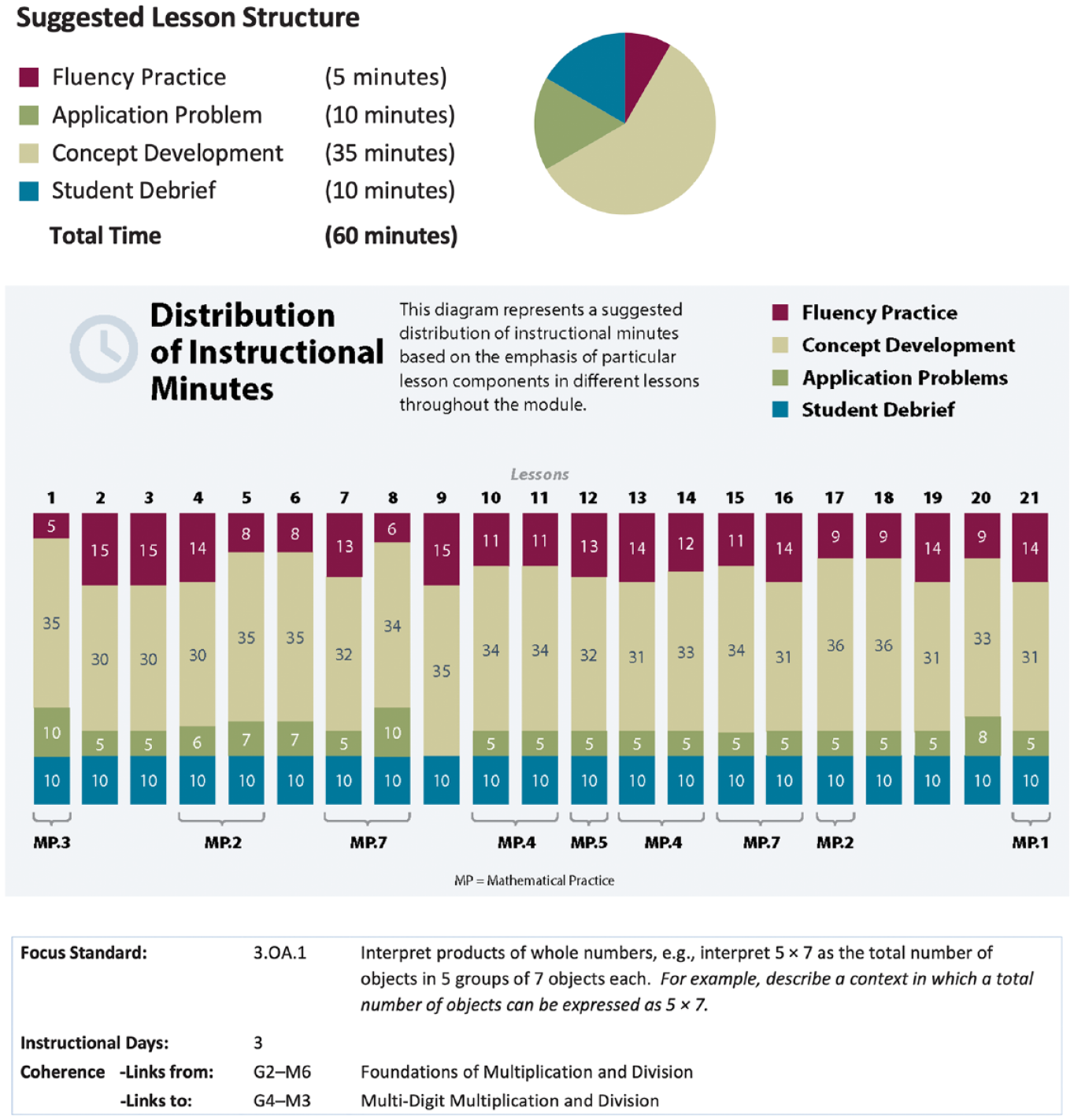
Examples of temporal structuration from EngageNY.
Interactional
The fourth dimension of curriculum structuration, interactional structuration, pertains to the context within which instruction occurs where people are constantly interacting with one another and their environment (Dewey, 1980). From experimenting in a school lab and participating in class discussion to playing a sport, education presupposes constant interaction with one’s surroundings. Even when studying in isolation, the student still interacts with their environment: they employ socially acquired linguistic skills and meanings, learn from the author(s) they read, understand intellectual content through the lens of previous experiences, interpret texts and situations, and adapt to or adjust their environment to fit their educational purposes (use their room, desk, pencil, notepad, highlighter, lamp, chair, computer, or coffee maker as tools to facilitate their learning). The way in which one interacts with one’s environment dictates the manner and efficacy of one’s learning. More importantly, classrooms are social spaces where students interact with teachers, other students, or administrators and the way in which they interact is largely determined by the curriculum. 8 A discussion-based curriculum, for instance, may require that the majority of class time be spent on discussion, that students be active participants, and that instructors be equal participants and/or facilitators (Clark et al., 2003). In contrast, a direct instruction curriculum may require that teachers impart knowledge on their students who are expected to learn in a well-structured manner from their teacher rather than more freely from each other (Stockard et al., 2018). The structure of classroom interactions may impact the way learning occurs, the attitudes that students acquire toward learning, and the amount of agency that teachers and students exercise over their teaching and learning, respectively. Like temporal structuration, interactional structuration is closely related to procedural in that procedures often delineate classroom relationships and interactions. However, procedures need not delineate all classroom interactions. A curriculum, for example, may require that students work on exercises but allow room to move by not specifying whether students should work alone or in pairs, teachers should help students or not, or students should use a notebook or tablet computer when brainstorming. In this sense, interactional structuration constitutes a distinct structural dimension.
The structuring of intellectual content, material supplies, tasks, activities, and pacing facilitates the structuration of interactions between individuals, groups, and their environments. Given the rigid substantive, procedural, and temporal structuration of highly prescriptive curricula, which controls what is to be done or said by teachers and students, in what order, and at what times, highly prescriptive curricula structure classroom interactions (conversational, behavioral, material, etc.) in a way that renders them more standardized, transparent, and predictable. The more prescriptive a curriculum, the tighter the structure of and control over interactions. The presence of a verbal script is the ultimate form of interactional structure as it leaves room for little to no interactional improvisation and agency.
Indicators of interactional structuration in curricula include verbal scripts demonstrating communicative interactions (e.g. teacher says:/ student says:, quotation marks, vignettes), communicative and behavioral directives to teachers (e.g. say, ask, write, review, anticipate, analyze, tell, point out, think aloud, remind, guide, draw, monitor), the presence of online versions of curricular materials, and indicators of who students should interact with (e.g. whole class, big group, small group, pair, solo), what they should interact with (e.g. computer, books, lab equipment), and how they should interact (e.g. teacher-student exchange, peer work, moving around the class, learning stations, guided study, independent study) (see Figure 4).
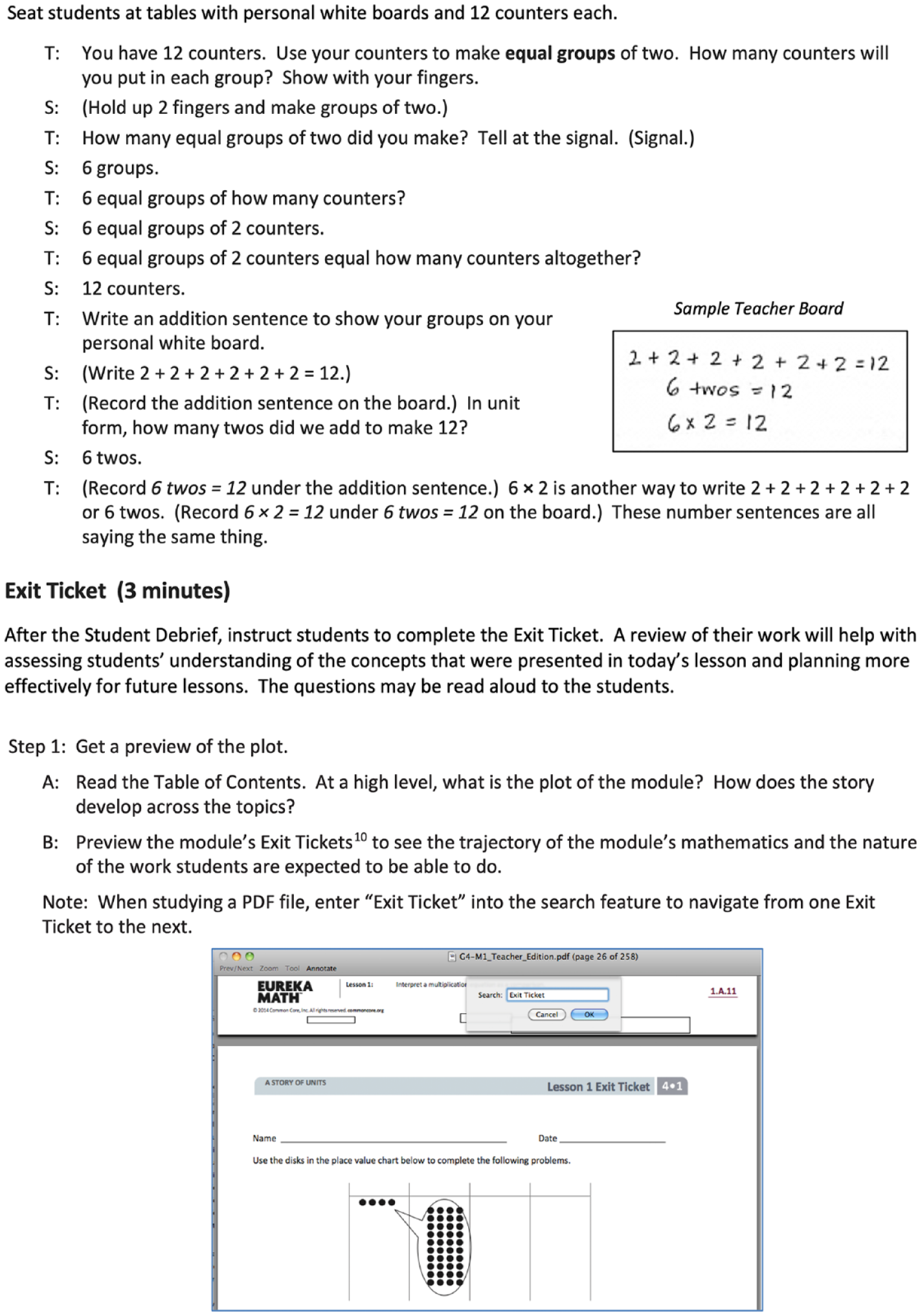
Examples of interactional structuration from EngageNY.
Emotional
The final dimension of curriculum structuration, the emotional dimension, pertains to the emotional tone that curricula direct teachers to create and maintain in the classroom. By establishing a particular emotional tone to instruction, curricula aim to positively shape students’ affective states – to positively impact their feelings about their educational experiences (Antonacopoulou and Gabriel, 2001; Craig et al., 2004; Zull, 2006). Students might be excited, interested, disinterested, unmotivated, bored, and more. Depending on one’s interests, naturally one will have positive or negative emotional responses toward the things that they learn. Curricula designed to arouse student curiosity, such as inquiry-based curricula (Friesen and Scott, 2013), or to make the material relevant to students’ experiences, such as culturally responsive curricula (Gay, 2018), have a particular objective regarding the emotional responses they hope to elicit in students through the teachers’ implementation of prescribed activities and use of recommended instructional language.
By encouraging the creation of a particular emotional atmosphere, the curricula endeavor to support the creation of corresponding emotions in the students – namely, to cultivate a sense of excitement, curiosity, interest, agreement, or general enthusiasm that will positively engage students with the subject matter. In essence, the emotional dimension of curriculum structuration constitutes the psychic manifestation of the interactional. Particular interactions may lead to, or are supposed to lead to, particular psychic responses in students. The more prescriptive a curriculum, the more it may anticipate and attempt to determine the psychic state and moods of those involved in the classroom interaction to foster emotional responses that are conducive to learning. Alternatively, prescriptions concerning the emotional tone of classroom instruction can be thought of as attempts to normatively establish certain affective states for students and teachers, a possibility which seems ripe for scholarly interrogation.
Indicators of emotional structure include emotionally relevant phrases (e.g. keep the energy and fun going), modifiers that describe delivery (e.g. say enthusiastically), punctuation (e.g. exclamation marks), words that show enthusiasm (e.g. fantastic, excellent, perfect), learning games, drawings in student workbooks (e.g. cartoons, animals, emojis), and other similar emotional markers (see Figure 5).
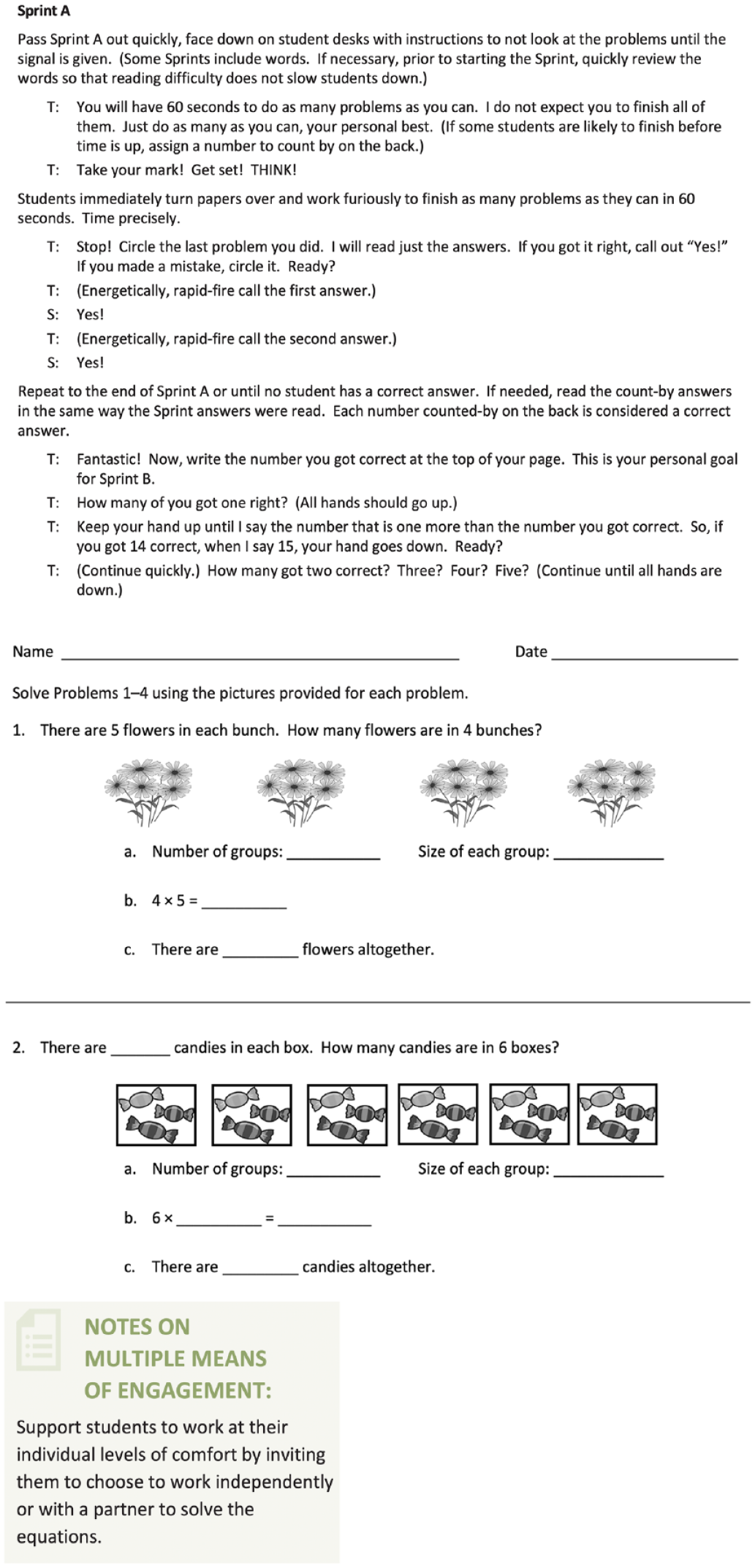
Examples of emotional structuration from EngageNY.
The substantive, procedural, temporal, interactional, and emotional dimensions of prescriptive curriculum structuration are analytically distinct in that they each reveal a unique mode of potential structuration within the curriculum. Conceptual separation of the five dimensions, of the sort we have developed in this section, is moreover theoretically beneficial in that it draws attention to each of the different functions that curriculum performs when teaching and learning occurs, the ways in which particular curricula can impact the experiences of teachers and students, and lines along which curricula may be prescriptive to varying degrees. Nonetheless, it is difficult to separate these dimensions in practice and to draw clear boundaries between them. Procedural considerations are contingent on substantive considerations, emotional on interactional, and so on. Relatedly, while we have outlined specific indicators that align with each of the different dimensions of structure, each of these indicators identifies a component of curriculum that affects more than one dimension of structuration if only indirectly. For instance, while a procedural indicator of ordered lessons raises no explicit temporal considerations regarding the starting time or duration of the lessons, the order will at the very least dictate what must be accomplished earlier in time and what later (a temporal consideration).
Gradations of prescriptive curriculum structuration
The five dimensions of prescriptive curriculum structuration discussed above are most easily observable in highly prescriptive curricula. However, they are not unique to highly prescriptive curricula; all curricula structure educational processes along these five dimensions though they do so in different degrees. For this reason, the modifier ‘prescriptive’ only makes sense (i.e. provides a distinct criterion of categorization) when it is used in comparative rather than absolute terms. That is to say, a curriculum may be said to be more or less prescriptive than another curriculum within any (or all) of these dimensions. 9 When considering the prescriptiveness of a given curriculum then, the question to ask is not ‘is this curriculum prescriptive?’ but rather ‘how prescriptive is this curriculum?’ which requires an answer that is a matter of degree. Importantly, the degree of prescriptiveness that a curricular text exhibits, as determined by its position on the continuum, may or may not influence its implementation such that the prescriptive structuration of a curricular text may circumscribe the agency of teachers and learners in one context, circumstance, or time period while enhancing it in another. This suggests that the prescriptiveness of curricular texts is distinct, though not necessarily independent, from the prescriptiveness of curriculum as implemented. The texts themselves can only tell us part of the story, but it is a part of the story that is well worth listening to.
Gradations of prescriptiveness indicate the characteristics that a given curriculum may exhibit. For instance, the greater a curriculum’s prescriptiveness, the more comprehensive it is likely to be. Comprehensive curricula include all possible components (goals, plans, assessment strategies, etc.) in the greatest possible detail (substantive, procedural, temporal, etc.). They are, therefore, more likely to contain micro-level curricular texts that are prescriptive of classroom instruction and to be easier to adopt with fidelity than less comprehensive curricula which require the teacher to do more work. Minimally prescriptive curricula, on the contrary, are generally narrow, meaning that they likely contain fewer components and provide less detail than comprehensive curricula which makes them more amenable – policy frameworks permitting – to localized adaptation (Eisner, 1984). For instance, a minimally prescriptive curriculum might not contain detailed lesson plans, pacing guides, or benchmark assessments. Macro-level curricula are likely to be narrow since they delimit what the education system in general must instill in students but they are not concerned with delimiting how they are instilled or detailing what happens in the classroom.
Relatedly, a maximally prescriptive curriculum is likely to be externally provided in its entirety, which is to say, all parts of a maximally prescriptive curriculum might be dictated by entities outside the classroom, school, district, or state (Eisner, 1984). Large curriculum companies who produce highly prescriptive curricula, for instance, often have teams of experts unrelated to a school, district, or state (educational researchers, school leaders, teachers, educational administrators, educational consultants, etc.) who develop curricula that are intended to be adopted with fidelity. Facing policy pressures and seeking to maximize profits, curriculum companies seek to standardize content in such detail that effectively precludes all forms of internal input in the curriculum development and implementation process (Saltman, 2016) – that is, input provided by the school’s teachers or administrators (Priestley et al., 2012; Vaughn et al., 2021). Minimally prescriptive curricula are likely to be internally provided for the most part, with teachers having to provide their own input, make adjustments, or even devise entire lesson plans (Eisner, 1984). The more external a curriculum, the more it is likely to feel like an imposition rather than a natural outgrowth of classroom practice (Eisenbach, 2012), sometimes leading to problems with fidelity of implementation (Handal and Herrington, 2003; Levin, 2008). The more internal a curriculum, the more likely it will reflect the specific context of a given school or classroom – for instance, the unique cultural features or life experiences of the student community. Importantly, the more external a curriculum, the better it might be for less experienced teachers, since teacher contribution is minimized (Hammond, 2022). More internal curricula, however, require high levels of teacher expertise in a wide array of relevant areas (Huizinga et al., 2014).
Finally, the more prescriptive a curriculum, the greater potential it has to circumscribe the students’ learning experiences. Maximally prescriptive curricula are likely to be highly controlling of instruction, providing all details about what to learn and how to learn it. The more prescriptive a curriculum is, the less likely it will be to provide unstructured space where students can engage in whatever endeavors they wish and the less likely it will be to present students with choices about what to learn (Kavanagh and Fisher-Ari, 2020; Smagorinsky et al., 2002). Minimally prescriptive curricula, on the contrary, are more likely to be agential than controlling; namely, they might create opportunities for students to exercise their agency as learners (Vaughn, 2014). 10 For instance, students might be able to choose if they would like to read, write, or discuss something, or, if they have to read, they may at least be able to choose what they would like to read. Agential curricula then allow more space for individualization than prescriptive ones (see Figure 6).
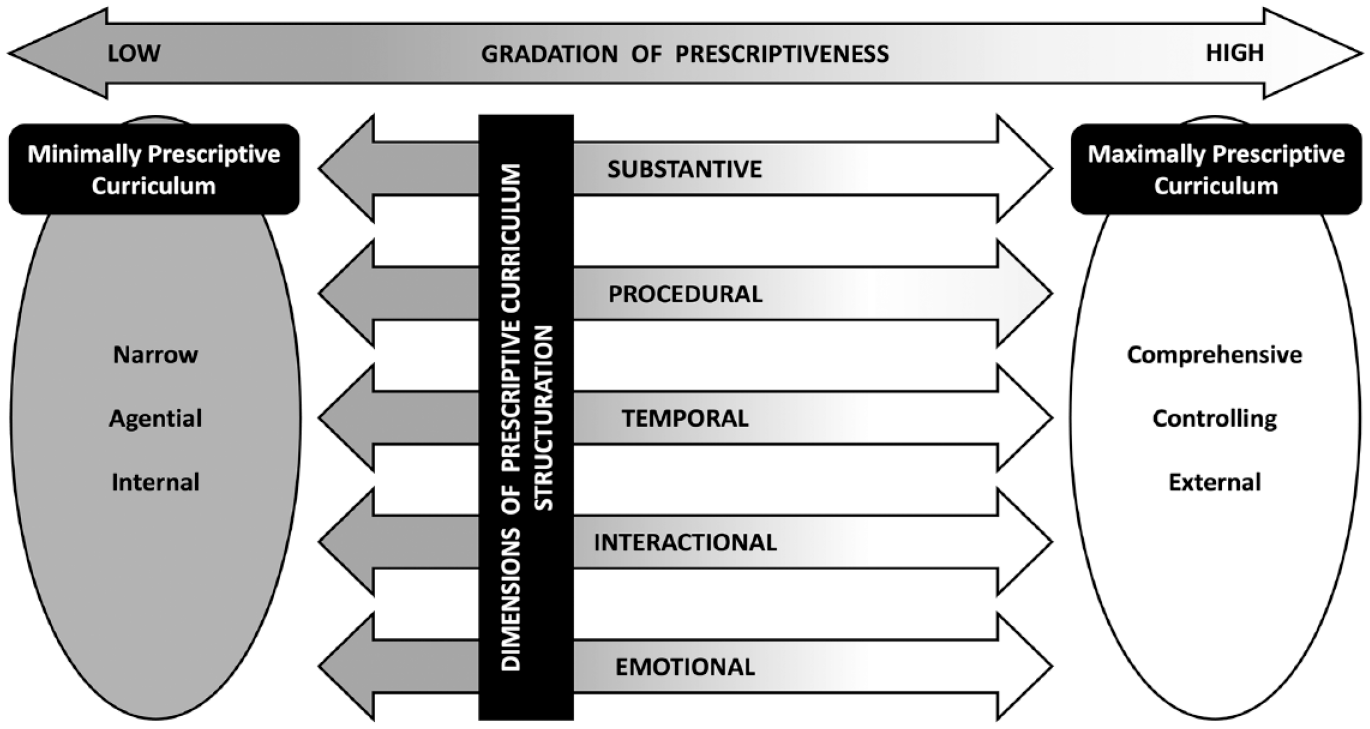
The prescriptive curriculum structuration continuum.
Refining normative critiques of curricular prescriptiveness
So far, we have offered an in-depth analysis of curricular prescriptiveness. Prescriptiveness, we have argued, should not be thought of as a binary category (e.g. prescriptive vs non-prescriptive) but rather as existing on a continuum that indicates the intensity of structuration that a given curriculum imposes on the instructional process. We have suggested, moreover, that prescriptive curriculum structuration (whether maximal, minimal, or somewhere in between) occurs along five dimensions – substantive, procedural, temporal, interactional, and emotional. Gradations of prescriptiveness along the five dimensions are suggestive of the characteristics of a given curriculum whether these pertain to its form (narrow vs comprehensive), development (internal vs external), or impact (agential vs controlling).
This framework allows for greater clarity when evaluating the ethical and educational dimensions of curricular prescriptiveness. Consider critiques of prescriptive curricula that relate to standardization (Au, 2011), commercialization (Saltman, 2016), and deprofessionalization (Fitz and Nikolaidis, 2020). With our framework in mind, objections such as these can be framed with respect to particular structural dimensions or characteristics which afford more fine-grained analyses of problems. For instance, debates have raged about teacher deprofessionalization and the role of scripted curriculum in this process (Milner, 2013). With our framework, deprofessionalization can be framed, among other ways, in terms of (1) substantive control, which suggests the problem is teachers’ inability to teach the content they choose; (2) procedural or interactional control, which suggests the problem is not teachers’ inability to choose content but their inability to teach the required content in a way that they consider appropriate; or (3) external control, which suggests the problem is not teachers’ inability to make executive decisions about content and pedagogy but their inability to make contributions to the development of the curriculum they are required to use. These dimensions, in effect, point to ways that we can trust (or mistrust) teachers. Each of the three framings points to different problems and lends itself to different critiques and solutions.
Importantly, while these critiques and solutions might be understood as being value-free and relying exclusively on evidentiary norms, there are important values at stake which render them normatively significant (Brighouse et al., 2018). Take substantive control. One might consider content to fall under the domain of epistemic authority and in doing so have it fall under the control of the teacher, who is presumably an expert in the subject-matter of their class. However, another might consider the standard of epistemic authority to be mistaken and suggest that bottom-up selection of curriculum content by the community the school serves is more appropriate. It is not epistemic authority that should decide the subject-matter but the community. 11 Alternatively, the same value may impact how one thinks about different dimensions of curricular prescriptiveness. The teacher’s epistemic authority as a subject-matter expert, for instance, pertains to substantive control, whereas the teacher’s epistemic authority as a pedagogy expert pertains to procedural control. What one considers the appropriate scope of the teacher’s role to be, therefore, determines which dimensions of prescriptiveness are relevant elements for normative evaluation.
The same can be said of gradations. Staying for a moment with the substantive dimension example, if one considers the teacher’s level of epistemic authority insufficient and would rather have specialized academics control the subject matter, they might opt for higher prescriptiveness along the substantive dimension. If, despite respecting the expertise of academics, they also value the epistemic authority of teachers as professionals who should at least be in control of some of the material (if not the explicit content or learning objectives, perhaps some assignments or supplemental material), then they might opt for lower prescriptiveness that gives teachers greater agency and affords them room to move. Again, such decisions would be largely a matter of one’s values and they would largely hinge on weighing competing values on normative grounds.
These distinctions and gradations also speak to whether we see teaching more as a technical endeavor or a moral relationship. The teacher could be seen as a technical professional, like an engineer, who operates from a scientific knowledge base that facilitates the tackling of certain sorts of practical problems (see Winch and Gingell, 2004). Viewed as a technical enterprise, the prescription might focus on issues relating to substantive or procedural control. Alternatively, teaching might be viewed not as a technical endeavor based on scientific knowledge but as a moral relationship – more like a friend than an engineer. A curriculum that uses heavy emotional structuration might be influenced by this more relational view of teaching, putting the teacher–student relationship as the central aspect of the teaching endeavor. The level at which these gradations appear in prescriptive curricula indicates the underlying philosophy of teaching at work.
Each dimension of and position on the prescriptive curriculum structuration continuum offers a number of choices that reflect assumptions about the practice of teaching, the nature of professionalism, the process of learning, what it means to be a teacher and a student, and, on a deeper level, what it means to be human. The education literature is full of teachers making fraught ethical decisions relating to prescriptive curriculum (e.g. Eisenbach, 2012; Smagorinsky et al., 2002). As one makes choices about how to structure instruction that reflect different dimensions of and positions on the continuum, one makes equivalent choices of educational and moral significance regarding what sorts of things ought to be controlled, how much they ought to be controlled, and what ought to be the appropriate scope of human action and democratic authority in education.
For example, as we increase the overall prescriptiveness of a curriculum and, in doing so, choose to structure instruction more tightly, we inevitably prioritize, among other things, control over freedom, planning over spontaneity, efficiency over productive slowness, and guidance over choice. Deciding whether the values we prioritize are appropriate given our legitimate educational aims is, of course, not a straightforward process. Take the example of prioritizing control over freedom. Providing freedom to teachers may be conducive to beneficial educational outcomes such as the empowerment of teachers who are undoubtedly best positioned to understand and respond to the idiosyncrasies of the context within which they work and the particular needs of their students. Student freedom, moreover, is necessary for cultivating student autonomy and treating students as if they were responsible adults, to enable them to develop their sense of agency and personal responsibility. At the same time, legitimate control over the instructional process may be exercised by external stakeholders to increase democratic accountability in public education or to ensure that certain outcomes that are valuable for the communities that schools serve are accomplished (Levinson, 2011). To decide the degrees of prescriptiveness and the dimensions which this prescriptiveness will target, one must think about conflicting values and the ethical implications of one’s decision: Should one grant instructional authority to one person or another? Should one limit the scope of authority to strictly necessary dimensions (e.g. controlling only the ideational substance through the macro-level curriculum) or broaden it to influence what happens in the classroom as much as possible (e.g. controlling all dimensions through micro-level curricular materials)? Should one embrace a relational approach by leaving room for genuine interactions between teachers and students or limit interactions to what is strictly necessary to avoid wasting instructional or study time?
Decisions about gradations of prescriptive curriculum structuration raise a host of questions about who gets to make decisions about what is taught and how it is taught, how adults and students interact within educational settings, and even how adults and students are supposed to feel about their educational experiences. Such considerations hold significance for identity formation (whether professional or personal), the nature of the social roles one occupies, the degree of agency one’s roles afford, and the actions one is allowed to engage in – considerations that extend far beyond the scope of institutionalized education. Curricular decisions that are undesirable from an educational and/or moral perspective may, therefore, have far-reaching, or even disastrous, consequences that are not apparent at first glance. At the same time, the fact that prescriptiveness represents a continuum and not a binary allows for the possibility of incremental change such that even seemingly insignificant curricular decisions can improve the educational environment. One need not scrap a highly prescriptive curriculum and begin from scratch. Tweaking the curriculum along certain dimensions may suffice to mitigate the possibility of harm by allowing flexibility where this is necessary. Depending on how severe the possibility of harm is, moreover, tweaking the curriculum along certain dimensions may be morally required since doing so could significantly mitigate harms without incurring the prohibitive financial and practical costs that a school or district would face if they completely rejected and replaced their curriculum. Analyzing curriculum in the terms suggested by this framework, then, can help guide responsible curriculum development and adoption with an eye toward improving the educational experiences of all those involved in schooling.
Conclusion
Theorizing the ethical implications of curriculum development and adoption is hardly a new scholarly endeavor. Ethically objectionable aspects of curricula have been raised by scholars for decades, many of which are well-theorized in the fields of philosophy of education and curriculum studies. Seminal examples include the ideological role of curriculum in modern capitalist societies (Apple, 2004), the dehumanizing nature of teacher-centered curriculum that treats students as empty vessels of be filled with knowledge (Freire, 2000), and even the postulating of ‘curricular injustice’ as a distinct category of educational injustice (Connell, 1993).
As we indicated early in the article, our framework is not grounded on as broad an understanding of curriculum as these seminal critiques are because the analysis we offer is based on the characteristics of highly prescriptive curricular texts. Our micro-level focus, therefore, limits the applicability of our framework as a lens by which to evaluate curriculum as a macro-level construct or a comprehensive theoretical category. This limitation notwithstanding, there are important insights that can be gleaned from our framework. With regard to curriculum as a macro-level construct, our framework provides insight into how it contributes to the structuration of standards-based curricular texts, and by extension classroom instruction – if only by minimally prescribing education along the ideational component of the substantive dimension. With regard to curriculum as a comprehensive theoretical category, our framework provides insight into how the structuring nature of curriculum, common in both broad and narrow definitions of curriculum, can, in the contemporary context of standardization and accountability, assume a level of detail and force that may impact classroom instruction in unprecedented ways despite the inability of curricular texts to fully control what happens in the classroom or what students learn.
Importantly, as we have argued, being able to better target normative evaluations and to remedy the negative impact of contemporary prescriptive curricula requires that we have a better understanding of how prescriptive curricula work and which aspects of these curricula make them objectionable. Our framework is well positioned to provide us with this understanding and to open up avenues for future research that probes deeper into the nature and function of prescriptive curricula. We cannot pretend to be able to resolve all the difficulties and offer concrete guidance as to remedies for the harms that curricular prescriptiveness causes. However, we hope to have shown that understanding how curricula structure classroom instruction and the kinds of prescriptions that curricula impose on educational agents is a necessary precondition to identifying the various values that are at stake when we make decisions regarding the impact of specific curricula. Accordingly, we hope that the framework we have offered in this article allows for more fine-grained normative evaluations of curriculum and can prove to be a useful tool for targeted policy remedies in the domains of curriculum development and adoption.
Footnotes
Appendix 1
Curricula included in analysis.

| ELA (K–8) | ||
|---|---|---|
| Brand | Publisher | Presence of verbal scripts |
| Lucy Calkins Units of Study | Heinemann | Extensive scripting throughout lesson plans |
| Core Knowledge Language Arts (CKLA) | Amplify | Intermittent scripting of pedagogical questioning |
| EL Education K-5 Language Arts | Open Up Resources | Intermittent scripting of concept development and pedagogical questioning |
| Fountas and Pinnell Literacy | Heinemann | Intermittent scripting of concept development and pedagogical questioning |
| Fundations | Wilson Language Training | Intermittent scripting of pedagogical questioning |
| Handwriting without Tears | Learning Without Tears | Intermittent scripting of activity instructions |
| Reading Horizons | Reading Horizons | Extensive scripting throughout lesson plans |
| Success for All (SFA) | Success for All Foundation | Intermittent scripting of concept development and pedagogical questioning |
| Words Their Way | Pearson/Savvas | Extensive scripting throughout lesson plans |
| Engage NY | Engage NY | Extensive verbal scripting throughout lesson plans |
| Reach for Reading | NatGeo Learning/Cengage Learning | Intermittent scripting of concept development and pedagogical questioning |
| Reading Mastery Transformations | McGraw-Hill | Extensive verbal scripting throughout lesson plans |
| Wonders | McGraw-Hill | Intermittent scripting of concept development and pedagogical questioning |
| Math (K–8) | ||
| Brand | Publisher | Presence of verbal scripts |
| Big Ideas Math | Big Ideas Learning, LLC | Extensive scripting of pedagogical questioning |
| Bridges In Mathematics | The Math Learning Center | Intermittent scripting of content development |
| enVision 2.0 | Pearson/Savvas | Intermittent scripting of concept development and pedagogical questioning |
| Engage NY | Engage NY | Extensive scripting throughout lesson plans |
| Eureka Math | Great Minds | Extensive scripting throughout lesson plans |
| Go Math | Houghton Mifflin Harcourt | Intermittent scripting of pedagogical questioning |
| Math Expressions | Houghton Mifflin Harcourt | Intermittent scripting of concept development and pedagogical questioning |
| Stepping Stones 2.0 | ORIGO Education | Intermittent scripting of concept development and pedagogical questioning |
| Ready Math | Curriculum Associates | Intermittent scripting of pedagogical questioning |
Acknowledgements
We are grateful to Kirsten Sivesind, Amy Keyser, and our anonymous reviewers for their valuable feedback on earlier drafts. Also, special thanks to audiences at the Association for Practical and Professional Ethics and at the Mid-Western Educational Research Association for their helpful comments and questions.
Declaration of conflicting interests
The author(s) declared no potential conflicts of interest with respect to the research, authorship, and/or publication of this article.
Funding
The author(s) received no financial support for the research, authorship, and/or publication of this article.
