






Abstract
The study explored how adult education empowers women by enhancing access to and control over resources: land, finance, and housing. A qualitative case study, using semi-structured interviews and a focus group with women, facilitators, and experts, reveals that while adult education enhances women’s capabilities and fosters collective organisation, it fails to dismantle entrenched patriarchal barriers limiting their decision-making power over resources. The study also found that access to land creates a double burden and health risks due to insufficient technological support, while tenure insecurity undermines investment. It highlights that financial inclusion is typically restricted to informal savings groups, leaving formal institutions inaccessible. Findings show that housing is hindered by bureaucratic obstacles and certification gaps, causing legal insecurity. The study argues that although adult education provides critical knowledge and skills to access resources, women’s autonomy and decision-making remain uneven and constrained by deep-rooted structural and sociocultural norms, leading to cycles of precarious empowerment. Genuine empowerment and sustainable development require integrated policies that combine educational capacity-building with legal reform, expanded institutional access, and the transformation of patriarchal social structures.
Introduction
Women are a disadvantaged group on Earth, particularly in developing contexts. In sub-Saharan Africa, data from 28 countries on agricultural land ownership indicate that systemic barriers restrict women’s access to vital resources and services, affecting their well-being and their families’ livelihoods (Food and Agriculture Organisation [FAO], 2025). In Ethiopia, gender inequality is deeply rooted in social culture norms and economic structures that favour men over women (Lemma & Sharma, 2025). Therefore, empowering women is vital to overcome violence against women (Engberg-Pedersen & Mulu, 2026) and gender-specific barriers, and to promote sustainable development (Lemma & Sharma, 2025). Empowerment is a multidimensional concept encompassing economic, political, psychological, and knowledge-related aspects (Stromquist, 2015). Central to development policy (Sharaunga et al., 2018), its objective definition remains elusive (Cornwall, 2016). It is widely recognised yet ambiguously defined, including feminist perspectives (Head et al., 2015; Kabeer, 1999; Stromquist, 2015). Kabeer (1999) defines empowerment as “the ability to make strategic life choices in a context where this ability was previously denied” (p. 3). Head et al. (2015) identifies “control and intrinsic agency as key elements” of empowerment (p. 2). Women’s empowerment specifically denotes women’s ability to make strategic choices through access to resources and agency (Kabeer, 1999). This process is often supported by improved education. Thus, women’s empowerment is a complex, vital process that enables individuals to assert their rights and realise societal potential.
Empowerment gained attention in educational research in the 20th century. For example, Perkins and Zimmerman (1995) identified 66 articles by 1966. Women’s empowerment emerged in the 1980s and 1990s to transform power dynamics, promoting women’s rights and gender equality (Cornwall, 2016). Since then, it has become a prominent theme in educational research. Studies explore the intersection of gender, education, and empowerment, including in higher education (Elsayed & Shirshikova, 2023). Research also critically examines schooling’s role in promoting or hindering women’s empowerment (Longwe, 1998) and adult education’s impact on personal empowerment (Elsey, 1993). Furthermore, women’s empowerment has risen to the global agenda, reflected in the United Nations Sustainable Development Goals (SDGs) (e.g., UNESCO, 2017), regional bodies such as the African Union (AU, 2018), and local government (e.g., Ministry of Finance of Ethiopia, 2021). This has spurred numerous theories and frameworks and heightened worldwide research interest. The emergence of programmes targeting adults, especially women, has highlighted the prominence of the topic in adult education (e.g., Eldred et al., 2014). Thus, the intersection of education and women’s empowerment is a critical area of inquiry pivotal for social change and equity.
This study aims to explore the Ethiopian Integrated Functional Adult Education Programme (Ministry of Education of Ethiopia, 2008) (hereafter called “adult education” in this study) and its role in empowering women by enhancing their access to and control over material resources. It also identifies societal and structural factors that hinder women’s access to and control over land, finances, and housing. It also provides insights on how future adult education practices, policies, and research should be shaped in developing contexts to empower women and achieve sustainable development.
Literature Review
The Effect of Gender on Socioeconomic Status
Women and girls represent half the global population (UN, 2025). They play vital roles in food production and contribute significantly to education, health, and community development (Yurco, 2024). Women’s contributions to agriculture, livestock, and the informal sector are fundamental to household income. Despite constituting over 40% of the agricultural labour force, women face barriers to accessing and controlling resources, limiting their decision-making power (Kabeer, 1999). Women often occupy subordinate societal positions with limited rights to own resources and make autonomous choices (Kabeer, 1999; Stromquist, 2015).
Recent UN data indicates over 90% of Ethiopian women work in informal jobs without social protection (UN, 2025). Although women hold 41.3% of parliamentary seats, significant gender equality challenges persist (UN, 2024). Social indicators from 2018 show 28.5% of women experienced violence, and 19.3% were engaged in unpaid care and domestic work (UN, 2024; World Bank, 2025). Economically, women’s labour force participation is 57.3%, compared to men’s 78.3%, and 87.4% of women are in vulnerable employment (UN, 2024). Women own only 34% of assets compared to men’s 66% (Ethiopian Statistics Service, 2023), and their literacy rate in 2019 was 40.4%, compared to men’s 59.2% (World Bank, 2025). A report of the German Agency for International Cooperation (2023) corroborates this, noting that despite laws enabling women to acquire, use, and transfer land, structural barriers and traditional customs often impede their rights. This highlights a critical need for educational opportunities to bridge these gaps. Research also emphasises that traditional gender expectations severely limit women’s independence (Khodary, 2022; Mengistie, 2022). With women typically confined to child-rearing and domestic responsibilities, their participation in broader societal roles is minimal, as systemic inequalities and sociocultural norms obstruct access to essential empowerment resources (Pal et al., 2022).
The Role of Adult Education in Women’s Empowerment and Sustainable Development
Little is known about how educational programmes empower women. The literature presents conflicting findings on whether adult education empowers women or imposes additional burdens. Studies exploring its role include Iñiguez-Berrozpe et al. (2020) on benefits for low-educated women, Toiviainen et al. (2019) on active citizenship, and Desjardins (2019) on labour-market advantages. However, the specific contributions of adult education to women’s access to and control over resources such as land, finance, and housing remain unclear. In Ethiopia, research covers women’s perceptions (Mengistie, 2022), literacy for entrepreneurship (Belete, 2011), links between empowerment and sustainable development (Bayeh, 2016), and participation challenges (Mengistie, 2020). Thus, understanding how adult education enhances women’s access to and control over resources is an important, underexplored research agenda globally and locally.
Sustainable development has been a global political and planning priority since the 1980s (Cai & Wolff, 2023) and has been solidified by the UN 2030 Agenda with its 17 SDGs (Hák et al., 2016). The concept applies across environmental, educational, economic, and gender agendas. Women’s empowerment is central to SDG 5, aiming for gender equality by 2030, and is interdependent with all other SDGs (United Nations, 2025). For example, SDG 4 focuses on eliminating gender disparities in education and ensuring access for vulnerable groups. Therefore, this study defines sustainable development as the process of improving and sustaining women’s access to and control over material resources through educational opportunities to improve their socioeconomic livelihoods.
The literature highlights the critical role of adult education in fostering women’s empowerment and advancing sustainable development. Desjardins’ (2019) global analysis found significant positive returns on labour-market outcomes, including employment, earnings, job satisfaction, and innovation. In developed nations, adult education particularly benefits women with lower initial education, boosting their social and political confidence, cultural participation, health, and employability beyond foundational schooling (Iñiguez-Berrozpe et al., 2020). Skill-based education also equips women with the financial independence and informed decision-making skills, contributing to their well-being and sustainable development (Gupta et al., 2024). Education acts as a catalyst for societal transformation, addressing inequalities, promoting productivity, and helping individuals navigate social structures (Saba & Almas, 2018). Facilitating women’s participation in adult education is therefore a strategic imperative for empowering communities and achieving sustainable development.
Women’s Empowerment and Material Resources
Land scarcity impacts food production, income, and survival (Li, 2014). Ownership significantly affects women’s well-being (Deere & Doss, 2006) and household decision-making (Friedemann-Sánchez, 2006). It enables income diversification, asset liquidity, and empowerment (Doss et al., 2020). Women face barriers to ownership due to sociocultural norms, legal restrictions, and insufficient stakeholder commitment. Examples include 14% ownership in nine Indian states (Agarwal et al., 2021), gaps in West Africa (Slavchevska et al., 2021), low rates in Zimbabwe (5% pre-independence, rising to 12–27% post-independence) (Zvokuomba & Batisai, 2020), and the lowest levels in the Middle East and North Africa (Najjar et al., 2020). A review across eight African countries confirmed women’s disadvantage in land rights (Doss et al., 2015). While ownership enables agency, it alone does not guarantee empowerment; control over additional resources remains vital.
Access to, use of, and control over financial resources are critical for women’s empowerment and socioeconomic status (Pal et al., 2022). However, women often face limited property rights (Kim, 2022). In developing countries, women engage in economic activities yet lack financial resources. For example, Kenyan women primarily work informally with minimal capital (Kim, 2022), while Ethiopian women face reduced participation in the formal economy, where financial access is key (Mossie, 2022). Women in developing nations experience greater financial access barriers than men (Seema et al., 2021). For example, in Jordan, assetless married women face higher intimate partner violence rates than those with assets (Akilova & Marti, 2014).
In Ethiopia, the patriarchal kinship system controlled land ownership. Although the 1995 Constitution (Federal Democratic Republic of Ethiopia, 1995) and subsequent laws (e.g., Rural Land Administration Proclamation No. 456/2005) guarantee women equal land rights, an implementation gap persists. Traditional norms often override statutory laws, limiting women’s control (German Agency for International Cooperation, 2023). Educational disparities hinder awareness of legal rights as female literacy rate in Ethiopia is 40.4% (World Bank, 2025). Additionally, 87% of Ethiopian women work in vulnerable informal sectors (UN, 2024), restricting formal financial access.
Globally, institutional and sociocultural barriers mediate access to material resources. In Ethiopia, constitutional reforms have not delivered tangible control due to patriarchal norms and limited education. Adult education may bridge this gap, yet its role in enabling access to resources remains underexplored. This study, therefore, explores how participation in Ethiopia’s adult education programme influences women’s access to and control over material resources. The study specifically addresses three questions: (1) How does participation impact women’s access to and control over land? (2) How does it influence access to and control over financial resources? (3) How does it assist women in achieving homeownership?
Conceptual Frameworks
This study integrates frameworks from education for sustainable development (ESD) (UNESCO, 2017), Feminist pedagogy (Hooks, 1994), Women’s Empowerment framework (Kabeer, 1999), and lifelong learning (Carr et al., 2018; Jarvis, 2004). ESD advocates education as a primary means to achieve SDGs, including quality education and gender equality (UNESCO, 2017), providing the context for understanding how adult education equips women with knowledge, skills, and values for empowerment and sustainable development. Feminist pedagogy promotes educational programmes that address inequities in male-dominated settings and consider gender interests (Hooks, 1994; Zhu, 2023). This framework informs how the adult education programme empowered women to recognise societal and structural challenges hindering their access to and control over essential material resources. Kabeer’s (1999) Women’s Empowerment framework is central. It posits education as a vital resource that empowers women in decision-making, leading to positive outcomes in health, economics, and the environment. Kabeer (1999) asserted that access to and control over material resources such as land, finance, and housing are prerequisites for genuine empowerment, enabling women to live valued lives. This direct focus on resource control aligns with the study’s aims.
Jarvis (2004) defines adult education as any process that facilitates learning in which learners view themselves as socially mature and accepted by society. Lifelong learning promotes independence, agency, and autonomy in adults, including women (Carr et al., 2018). This study uses the lifelong learning framework to show how the programme empowered women learners to make informed decisions about accessing and controlling resources, supporting the skills, knowledge, attitudes, and capabilities acquired for living valued lives. The integrated conceptual framework in this study contributes to literature by exploring the specific mechanisms through which adult education empowers women and promotes sustainability in developing contexts.
Methodology
This study investigates how adult education programmes contribute to women’s empowerment and sustainable development. Framed within a social constructivist paradigm (Taylor et al., 2016; Woods, 2006), the research assumes that social interactions shape reality and that understanding is co-constructed between researchers and participants. A qualitative case study design was chosen for in-depth examination of a specific phenomenon in a defined context.
Summary of Participants’ Demographics
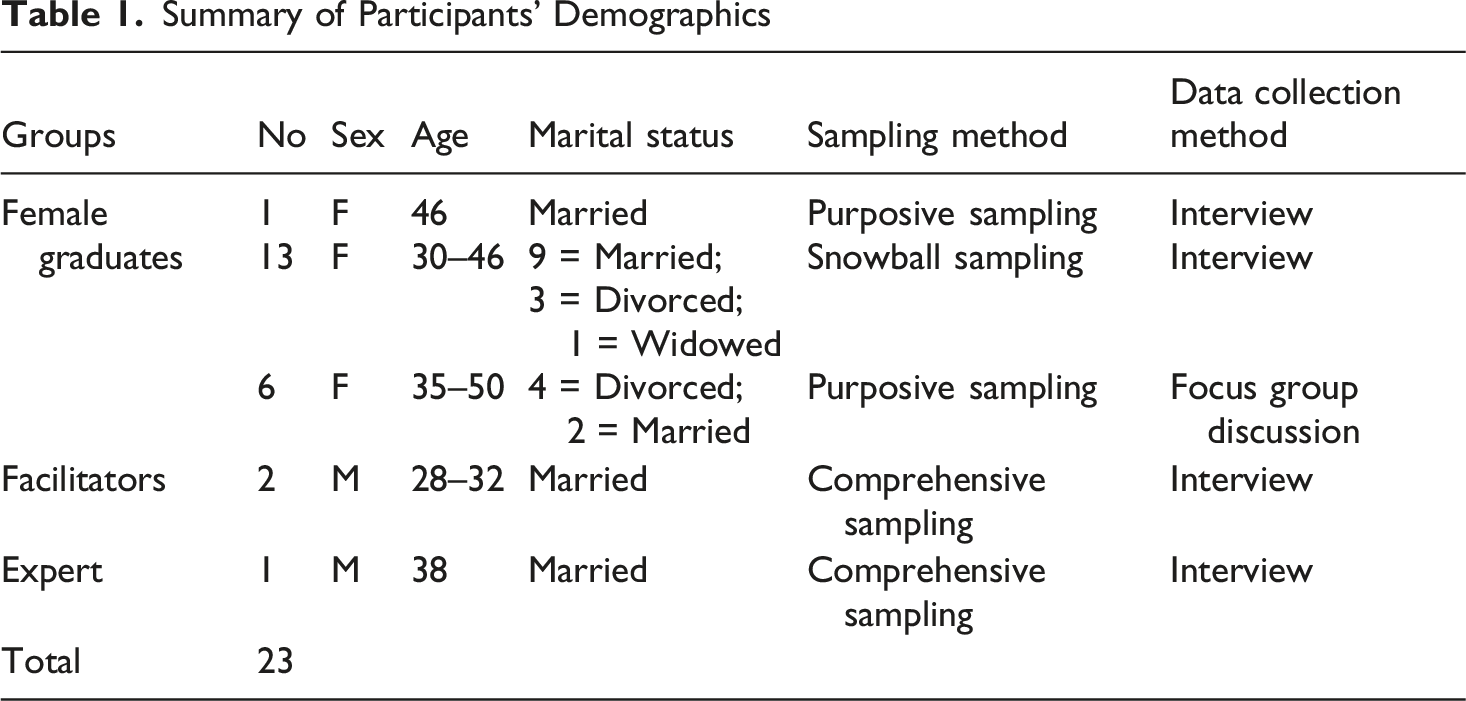
Data analysis followed Creswell’s (2012) six-step iterative process. First, data were organised and prepared through the transcription into Amharic and translation into English. Pseudonyms replaced original names during transcription, and originals and pseudonyms were stored securely. Participants verified the Amharic transcripts. Second, researchers read and reread transcripts for comprehension. Third, inductive coding segmented and labelled data into thematic categories. Fourth, themes were developed by grouping related concepts into broader categories. Fifth, narratives were constructed to convey participants’ responses in line with the themes. Finally, findings were interpreted for practical and theoretical significance.
Nature of the Adult Education Programme in Ethiopia
Although Ethiopia has a long history of religious education (Kassaye, 2013), formal and inclusive non-formal adult education is recent. The first formal education system began in 1908 (Fufa & Ensene, 2023). In 2008, the Ethiopian government initiated the National Adult Education Strategy (Ministry of Education of Ethiopia, 2008) for out-of-school youth and adults, particularly women disadvantaged by the formal system, aiming to improve the livelihoods of those aged 15+. The 18-month to 2-year programme, delivered flexibly in participants’ communities, integrates education, health, agriculture, law, family planning, asset management, financial skills, civic education, and cultural education to empower women and adults for sustainable development. In the study area, Integrated Functional Adult Education operates under the sub-city education department. Facilitators provide classroom instruction, support women in forming savings associations, and assist them in accessing resources from government and non-governmental organisations. These organisations connect graduates with resources, including land, finance, and property-ownership services.
Ethical Considerations
Ethical approval was obtained from the Institutional Research Ethics Review Committee of the first author’s primary affiliated university, followed by formal permission from the Sub City head. Informed consent involved providing all participants with an Amharic-translated information sheet and consent form detailing the study’s purpose, benefits, risks, and the right to withdraw at any time. Confidentiality was maintained by storing audio recordings in a password-protected folder and using pseudonyms during transcription, with the names securely stored. Credibility and trustworthiness were ensured through member checking, triangulation, auditing, peer assessments, and mitigating researcher bias by grounding findings in participants’ insights.
Findings
This study explores how adult education fosters women’s empowerment and sustainable development by enhancing women’s access to and control over material resources. Participants in interviews and focus group discussions highlighted a core tension between access and control. While adult education created new opportunities for women to access resources, control them, and secure their own decision-making power over those resources, that power remained uneven. This indicates that, although adult education serves as an empowerment resource, its impact on agency and achievement remains structurally mediated.
As participants described, while adult education provided “opportunities for accessing land, finance, and housing” (Zewudie), control over these resources remained limited. Most participants reported increased access to resources after participation in the programme, but they faced persistent barriers that hindered secure ownership and control. Discontinuous material support was a barrier; as Selam mentioned, “insufficient farming inputs limited the benefit” derived from the land. Another participant noted, “Society’s attitude underestimated our access to land, and they chuckled at us when we dug the land in summer to plant rice” (Woudie). This access also remained precarious; Selam characterised the guarantee of permanent ownership as “unresolved” and actively “discouraged by government officials.”
These views indicate that while adult education expanded access to material resources, it did not create the conditions necessary for sustained control and empowerment. The following sections explore three subthemes: (1) women’s land access, control, and agency; (2) women’s inclusion, access, and control over financial resources; and (3) women’s homeownership and legal insecurity.
Women’s Land Access, Control, and Agency
Participants described land as a high-value resource that shaped their livelihood and their perceived escape from poverty, reflecting the ESD framework’s identification of the interconnection between resource access and sustainable development outcomes. Participants mentioned constraints to socioeconomic vulnerability, emphasising that women with low socioeconomic status were least able to obtain land. Selam stated, “Women with low socioeconomic status are not able to own land in urban areas.” Participants viewed land as a “ticket to escape poverty” (Tigist), yet facilitators confirmed that land ownership remains “uncommon” among women from low socioeconomic backgrounds (Derese). In addition, the expert and facilitators asserted that they are working closely with the government office to support female programme graduates in improving their livelihoods, in addition to the facilitation at the learning centre.
Despite ongoing scarcity, most women described adult education as a means to access land through associations and formal requests. It enabled collective organisation, illustrating Jarvis’s (2004) argument that lifelong learning fosters agency and autonomy. Woudie noted that upon graduation, women could “join associations” and “request government land,” allowing them to shift from having “no land for production” to cultivating crops for market sales. This collective action strategy aligns with Feminist pedagogy’s view of education as a catalyst for individual and collective transformation, empowering women to act as agents of change through organised engagement with power structures.
This account links adult education to a practical mechanism for collective organisation and engagement with local authorities, facilitating land access for production and income generation. Participants framed adult education as reshaping urban possibilities, reflecting a cognitive shift and raising consciousness. Selam remarked, “Today, thanks to adult education, we can own land in metropolitan areas” through collective action. Zewudie also emphasised the programme’s transformative role, stating: Adult education programmes transformed our lives. After we attend an adult education programme, we own land for agricultural cultivation and generate income through planting rice. I find myself in a better position to lead my life than before. (Zewudie)
Adult education facilitated access to land, but women also faced constraints that limited their control and security over land-based gains. Social attitudes and gendered devaluation of women’s farming led to hostile or dismissive responses to women’s cultivation activities. However, participants noted that the programme boosted their confidence, allowing them to resist community members who undervalued women’s agricultural labour. This psychological resilience aligns with Feminist pedagogy’s aim to raise awareness of power dynamics and prepare women to act as agents of transformation despite patriarchal resistance. Developing the ability to ignore gendered devaluation fosters a sense of self-worth, which is crucial for women to exercise agency through adult education.
Participants also observed that income generation partially shifted community perceptions, illustrating the relationship between individual empowerment and social transformation emphasised in Feminist pedagogy. For instance, Selam noted, “Once we began generating income from our agricultural activities, some community members started to shift their perception of our ability to access and benefit from land.” Woudie added, “Eventually, many began to recognise our efforts, changed their previous negative views on our access to land, and encouraged other women to pursue adult education and seize this opportunity.” These responses suggest that while adult education paired with visible economic outcomes can challenge negative attitudes, initial experiences still reflected gendered scrutiny and social pressure.
Regarding additional constraints, participants described the physical and health costs of manual cultivation and the absence of farming technologies. Tigist reported, “Relying on manual labour to plough the land is challenging because during summer, while farming rice, I have suffered from pneumonia and persistent back pain.” Tigist’s account reveals a critical limitation in the empowerment process, that is, access to land without corresponding access to technology transfers the burden of production on women. In a focus group discussion, women expressed how agricultural and domestic workloads intersected, “We are overwhelmed by agricultural tasks and household responsibilities; therefore, we urge the relevant authorities to provide us with the essential farming technologies we need” (Tamire). This finding indicates that the empowerment effects of adult education occur within unchanged domestic labour distributions, suggesting that educational interventions alone cannot address the gendered division of reproductive labour that limits women’s ability to fully utilise resources.
Expert’s and facilitators’ perspectives supported this constraint. Melaku noted that, “To cultivate the land, they use traditional methods without employing technology.” Derese pointed out a structural mismatch, stating that without technology, the land demands “exceed [women’s] capacity for manual cultivation,” leading to disproportionate returns on labour. These accounts illustrate that land access does not guarantee productive control, especially when technological support is lacking, and health burdens increase.
Finally, legal insecurity and uncertainty over continued access to land were recurring constraints. Participants emphasised that the absence of certification undermined their confidence in investing in the land. Almaz stated, “We are always thinking about the lack of a land ownership certificate. Sometimes we are discouraged from working with the full potential to take care of the land, thinking that the government officials may overtake it.” Selam similarly noted, “Even though we access land from the outskirts of the metropolitan area, we do not have a guarantee of future ownership.” These narratives indicated that while adult education supports land access, legal insecurity limits the stability and empowerment of land-based livelihoods.
In summary, participants’ views showed that adult education can expand women’s pathways to land access, often through association-based strategies. However, women’s control and agency are always constrained by hostile social attitudes, inadequate technological support with health consequences, and unresolved tenure security.
Women’s Inclusion, Access, and Control Over Financial Resources
Adult education lays the foundation for financial skills, confidence, and income generation. Participants identified financial resources as central to empowerment, as they facilitate the acquisition of other resources and enhance decision-making capabilities. In the empowerment framework, financial resources act as both material assets and means to access further opportunities, creating multiplicative empowerment effects. Most participants emphasised that adult education strengthens foundational skills, such as literacy, numeracy, and computation, while also fostering confidence in business and employment contexts.
The link between adult education in literacy and numeracy and business capability underscores the lifelong learning framework’s focus on skills acquisition as essential for autonomy. For instance, Woudie stated that learning to “read, write, and compute” was the catalyst for running her business. These foundational competencies are critical for sustainable livelihoods, enabling women to engage in economic activities previously inaccessible due to educational exclusion. Almaz highlighted her shift from financial dependency before and after the programme. She shared, “I depended on my husband because he was better at writing, reading, and calculations than I was. Now, I can do these things on my own.” Almaz’s narrative illustrates a fundamental shift in household power dynamics. Her previous dependency on her husband for literacy-based tasks positioned her in a subordinate role within the household economy. The acquisition of these skills through adult education disrupted this gendered knowledge hierarchy, enabling the ability to make choices that were previously constrained not by preference but by capability gaps rooted in unequal educational access.
Facilitators described similar post-programme patterns: “Most women who completed the programme are now involved in income-generating activities, either by starting their own businesses or working for organisations as employees” (Derese). Programme participants also linked adult education to new connections with savings and loan opportunities. Tamire explained: I spent my days and nights at home. However, once I began attending adult education programme, I could engage in income-generating activities through loans from women’s associations. If I had remained at home, I would not have had the opportunity to connect with these financial support and savings groups. Being part of the adult education programme provided me with valuable, multidimensional opportunities. (Tamire)
Tamire’s trajectory from domestic isolation to community participation exemplifies the transformative potential of adult education. The phrase “days and nights at home” signifies not merely physical location but social exclusion from the public sphere where economic and political agency is exercised. Adult education functioned as a bridge to what Tamire terms “multidimensional opportunities,” which captures the interconnected nature of empowerment across economic, social, and psychological domains.
For many participants, the financial control provided by informal credits, saving groups, and skills from adult education led to tangible economic gains. Access to these informal loans was often portrayed as a pivotal turning point. Woudie described growing a “5,000 Birr loan into 20,000 Birr” of working capital, a fourfold increase that demonstrates how initial resource access, combined with skills and confidence acquired through adult education, can generate multiplicative returns. Similarly, Almaz described a shift from spousal reliance to becoming the “primary income generator” for her family. Tamire highlighted broadened participation in community-based associations: Before attending the programme, I had a difficult life, isolated from community organisations because I could not afford the membership fees. Now, I am a member of the Iquib informal savings association and the Idir informal association to help each other in times of hardship, as well as a member of the Yesnbet Manhiber informal association with weekly meetings and coffee ceremony. (Tamire)
Moreover, participants also articulated how income and savings altered forward-looking decision-making. Financial liquidity enabled a temporal shift in perspective, moving from daily survival to future-oriented planning, a cognitive transformation central to the lifelong learning framework’s emphasis on developing autonomous and mature decision-making. As Woudie explained, the programme taught her to “think beyond daily expenses,” allowing her to strategise for future uncertainties. These accounts suggest that adult education can enhance not only access to financial resources but also women’s perceived capacity to plan, save, and make decisions, which are key features of empowerment as lived practice.
Although adult education supported skills and facilitated informal financial inclusion, the findings also indicate constraints on the scale and security of women’s financial empowerment. Participants described financial resources as largely informal, with limited access to formal loans and banking. Derese noted that “Through loans, women could engage in income-generating activities using the skills, attitudes, and knowledge they acquired in an adult education programme and improved their financial situations and created a better life.” However, women’s perspectives also suggested that the financial resources available to them often remained insufficient for larger investments and sustained economic transformation, particularly where formal financial institutions were out of reach. Empowering women and advancing sustainable development requires not only individual capacity-building through adult education but also systemic changes in institutional access.
In summary, adult education can strengthen women’s literacy and confidence, enabling them to access informal loans, join savings groups, start businesses, and shift household financial roles. At the same time, participants’ narratives indicate that reliance on informal finance and limited access to formal financial institutions constrains the depth and scalability of financial control.
Women’s Homeownership and Legal Insecurity
Housing has been conceived as an improved well-being and an income-generating asset, as participants described it as a critical material resource for empowerment, particularly in urban contexts. Most women stated that adult education led to increased income and improved living conditions. Tamire stated: I faced many challenges in life. I lived in a house that did not feel like home. However, after participating in the programme, I was able to earn more money, which allowed me to rebuild my living space. At that time, I lacked the necessary materials for a proper home, and I often found myself dwelling on the difficulties of my past. Now, I am grateful to live in a comfortable house. (Tamire)
Housing, in this account, functions as both a material resource and a site of dignity and belonging, illustrating how empowerment encompasses psychological and social dimensions alongside economic ones.
Some participants also described home-related assets as a source of rental income. Selam explained, “After attending the adult education programme through a loan in our informal association, I constructed three small dorms to be rented, now I could lead a better life than in the past by renting the dorms.” These accounts indicate that adult education contributes to women’s strategies for improved shelter and the building of income-generating assets by engaging in income-generating activities after their learning.
Furthermore, adult education is a means of raising awareness of rights and resisting property dispossession for women. The programme increased participants’ awareness of housing rights and strengthened their ability to challenge unfair or illegal dispossession. Legal literacy acquired through the programme proved vital for asset reclamation. Zewudie detailed how she used her new awareness of her rights to challenge her ex-husband’s illegal dispossession of her home, asserting ownership through “discussions with facilitators” and with local “administrative offices.” She shared: I could claim ownership of my house. My ex-husband had taken it away from me illegally, and I was initially unaware of his actions. However, through the adult education programme, I became aware of my rights and learned that I could assert my ownership through discussions with the facilitators and classmates. I sought guidance from our facilitator and others knowledgeable about housing ownership rules. With their support, I challenged my ex-husband at the sub-city administration office. Now, I proudly own my home. (Zewudie)
This narrative demonstrates how adult education functioned as an empowerment resource by expanding legal awareness, advice networks, and confidence to engage administrative channels.
Despite material gains in constructing or reclaiming homes, participants repeatedly distinguished between having a house and having secure legal ownership. However, the physical construction of housing did not equate to legal security, revealing a critical disjuncture between material acquisition and secure control. Selam shared that administrative corruption created a state of “constant tension.” She noted that without an official certificate, her asset was at the mercy of “anyone with power” who had the means and authority to seize it. Selam’s phrase “anyone with power” implicitly acknowledges the power asymmetries, indicating that women’s gains remain vulnerable to appropriation by those with greater structural power, whether ex-husbands, government officials, or other actors.
This account illustrates how administrative processes and perceived corruption created ongoing anxiety and insecurity even after home construction, limiting women’s sense of control and stability. Adult education supported women’s housing improvements by generating income and strengthening awareness of rights to resist dispossession. However, women reported that bureaucratic barriers and a lack of certification undermined secure control over housing assets.
Discussion
This study explored the role of Ethiopia’s adult education programme in promoting women’s empowerment and sustainable development, focusing on their access to and control over material resources, such as land, finance, and housing. Kabeer (1999) identifies these resources as essential for genuine empowerment. The analysis reveals a central theme of “material resources and women’s empowerment” and subthemes, including land, finance, and housing, aligned with Kabeer’s categories. As Feminist pedagogy (Hooks, 1994) underscores, these resources function as key sites of patriarchal control. Targeted educational interventions are therefore crucial to foster consciousness-raising and enable transformative change. Findings indicate that adult education expands women’s access to and control over resources and their influence on decision-making. However, such power remains uneven, often constrained by “embedded patriarchal ideologies” embedded in social norms and administrative practices. For education to be truly transformative, it must challenge these deep-rooted sociocultural barriers, enabling women to exercise agency through access to and control of resources (Eldred et al., 2014; Kabeer, 1999; Stromquist, 2015).
Women’s Access to Land and Empowerment
This study shows that adult education offers women a pathway to access land, potentially improving their income and living conditions. However, access remains challenging, especially in urban areas, highlighting persistent structural inequalities despite educational efforts. Previous research supports this finding, indicating that traditional gender roles significantly restrict women’s access to resources, often forcing them to rely on family members (Khodary, 2022; Pal et al., 2022). Participants described land access as increasingly constrained and unequal, with challenges intensifying over the past two decades in both rural and urban settings. This aligns with Feminist pedagogy’s critique that education alone cannot dismantle intersecting oppressions, suggesting that adult education functions within existing socioeconomic hierarchies (Hooks, 1994). Studies in developed contexts also indicate that women’s marginalisation persists due to a lack of awareness and male-dominated structures (Clover & Sanford, 2016). The paradox in which land is deemed essential for empowerment yet remains systematically inaccessible illustrates the gap between formal rights and substantive empowerment, where structural conditions shape the translation of resources into meaningful choices.
The findings also indicate that adult education enhances women’s consciousness. This expanded awareness reflects lifelong learning’s capacity to foster maturity and autonomy, transforming perceptions of achievable futures (Carr et al., 2018; Jarvis, 2004). Land access functions as not only an economic asset but also an empowering resource linked to improved livelihoods and increased confidence. Control over land is crucial for women’s negotiation power within the family and society (Han et al., 2019). While economic gains can challenge patriarchal ideologies, social transformation (Hooks, 1994) remains incomplete and contested by social and structural barriers. True empowerment and social change require not only control over resources but also the exercise of agency beyond mere influence (Kabeer, 1999; Stromquist, 2015).
Participants in this study claimed that land access without adequate support imposes a double burden on women and hinders their empowerment. This indicates that material resources alone are insufficient. The conditions of access critically influence whether resources enable or constrain empowerment. From the perspective of UNESCO (2017), sustainable development requires not only access to resources but also the necessary technological and infrastructural support for sustainable livelihoods. Education, including adult education, plays a vital role in empowering women by facilitating access to resources, fostering personal and social change, and advancing broader SDGs (Eldred et al., 2014; Olomukoro & Adelore, 2015). Nonetheless, the study suggests that, despite adult education’s potential to enhance women’s consciousness and access to resources, significant barriers to genuine empowerment persist.
Specifically, land tenure insecurity undermines women’s psychological empowerment. Findings show that women are “always thinking” that government officials might dispossess their land, indicating a cognitive burden that hampers proactive investment and decision-making, which are key aspects of empowerment. Formal land title is essential to establish legal tenure, thereby ensuring women’s socioeconomic well-being, empowerment, and sustainable development (Crewett & Korf, 2008; Han et al., 2019). Without legal security, access to land results in precarious empowerment, where gains remain vulnerable to dispossession, restricting women’s ability to exercise genuine control over their life choices.
Women’s Financial Inclusion and Empowerment
Findings highlight the importance of women’s access to and control over financial resources. Access to finance improves decision-making regarding investments and expenditures (Kabeer, 1999; Kim, 2022). In this study, financial access facilitated a cognitive transformation through adult education, shifting women’s perspectives from daily survival to future-oriented planning. This broader temporal horizon, often overlooked in resource-focused analyses, enables women to envision and plan for the future, fundamentally altering their relationship to their life trajectories. Additionally, financial access supports women’s participation in income-generating activities, leading to empowerment, improved well-being for their families, and contributions to sustainable development (Pal et al., 2022).
This finding also reveals a structural ceiling on empowerment through access to financial resources. Women face significant challenges in accessing formal financial institutions (Seema et al., 2021). While adult education facilitated access to informal financial systems, exclusion from formal banking and credit services limited the scale of women’s economic agency. To enhance financial access, adult education programmes should collaborate with both formal and informal financial services, extending beyond support for business activities and employment. Furthermore, cultural and systemic barriers hindering women’s access to formal finance must be addressed through gender-sensitive policies to ensure genuine empowerment.
Women’s Access to Housing and Empowerment
Women perceive housing as a multifaceted resource: a basic necessity, an income source, and a private space for self-determination. Participants noted that “a house” and “a home” became distinct concepts after adult education. Their transition from inhabiting structures that “did not feel like home” to “a comfortable house” signifies more than material improvement. It might relate to what Kabeer (1999) terms a valued life. Housing also represents dignity and belonging, reflecting social dimensions of women’s lives. For these women, securing access to and control over housing is critical to empowerment and sustainable development. Educational participation improved their understanding of housing’s importance and relevant legal frameworks.
Participants’ narratives indicated that after adult education, women reclaimed property. This reclamation aligns with Feminist pedagogy’s goal of preparing women to be agents of individual, collective, and societal transformation (Hooks, 1994; Zhu, 2023). For example, Zewudie’s statement “I was initially unaware of his action” reveals how patriarchal systems exclude women from legal knowledge, constituting epistemic disempowerment. The programme functioned not merely as skills training but also as consciousness-raising, enabling participants to recognise injustice and identify pathways for redress. Their success in challenging the “sub-city administration office” demonstrates the translation of awareness into agency (Kabeer, 1999). Assertions like “I proudly own my home” (Zewudie) signal the psychological dimension of empowerment, dignifying ownership beyond mere possession and instilled through adult education.
While adult education raised women’s awareness of the need to reclaim housing, access alone does not ensure empowerment without secure legal ownership. Physical housing construction failed to guarantee legal security due to structural and administrative barriers, revealing power asymmetries (Hooks, 1994) in women’s control over resources. Those in power deter empowerment (Kabeer, 1999) and undermine valued livelihoods. This tension constitutes an affective burden of precarious empowerment, and persistent anxiety constrains the psychological benefits of resource acquisition. Effective interventions require adult education alongside advocacy for protective legislation, enabling women to control resources.
This study relied on qualitative data from interviews and focus group discussions, suggesting that future research should incorporate quantitative data from larger and more diverse samples. Additionally, the focus on a single case study limits generalisability, indicating that future studies would benefit from comparing multiple adult education programmes using longitudinal data. This study argued that adult education builds women’s skills and collective action, but it does not overcome the patriarchal structures that limit their control over resources. Access to land, finance, and housing is undermined by insecurity, informal barriers, and bureaucratic gaps. Consequently, this creates a precarious form of empowerment where increased capability fails to translate into substantive autonomy or decision-making power.
Conclusions
The findings of this study suggest that adult education expanded women’s capabilities, such as literacy, numeracy, confidence, and rights awareness, and strengthened their connections through associations and savings groups. It also equipped women with strategies for collective organization and income generation. Together, these developments enabled greater agency in accessing essential resources like land, finance, and housing. Learning fostered maturity, autonomy, and forward-looking decision-making. Participants highlighted education’s role in revealing power dynamics and patriarchal structures, preparing women to challenge inequity. Women’s empowerment remained constrained because access to resources did not translate into durable control over them. This extends Kabeer’s (1999) framework, showing that the relationship of resources, agency, and achievements is structurally mediated, not linear. While education enhanced capabilities and agency, challenges including structural ceilings, tenure insecurity, financial exclusion, bureaucratic barriers, and patriarchal attitudes blocked secure achievements. Adult education alone is insufficient without parallel changes in legal, institutional, and social structures.
The finding also shows that certification voids, the “double burden” of labour, and bureaucratic delay sustain precarious empowerment. These barriers embody patriarchal ideologies in exclusionary certification, male-centric labour arrangements, ignoring domestic duties, and biased bureaucratic systems. Empowerment and sustainable development thus require multi-level transformation: individual capabilities, institutional practices, and social norms. Adult education created resource pathways, but structural barriers limited the translation of gains into sustained decision-making power and security. This study theorises the structural mediation by which institutions and norms filter resources, agency, and achievements in women’s empowerment. These findings highlight three critical implications: for Feminist pedagogy, consciousness-raising requires collective action for structural change; for ESD frameworks, gender equality demands addressing institutional environments; and for lifelong learning theory, autonomy from education remains constrained by structures beyond pedagogical transformation.
Footnotes

Funding
The authors received no financial support for the research, authorship, and/or publication of this article.
Declaration of Conflicting Interests
The authors declared no potential conflicts of interest with respect to the research, authorship, and/or publication of this article.