







Abstract
Architectural surfaces are typically designed as inert boundaries that resist environmental and biological interaction. This paper reconceives surfaces as active substrates that support ecological processes through the integration of computational design, material engineering, and environmental exposure. Focusing on bioreceptivity, the research examines how multi-scalar geometry and controlled porosity influence moisture dynamics and early-stage moss establishment. Ceramic elements are generated using procedural noise fields translated into geometric variation and fabricated through additive manufacturing. The material system incorporates a sacrificial starch-based admixture to ceramics which increase bioreceptivity by producing augmented porosity for a variety of functions. The methodology is demonstrated in the design of a Moss Column, however the object is deployed as distributed test elements across multiple microhabitats in the coastal foothills of California and inoculated with locally sourced moss. Observations demonstrate that concave geometries, micro-scale roughness, and site-specific environmental conditions significantly influence moisture persistence and biological attachment. The results support evolving frameworks of bioreceptivity as not solely a static intrinsic material property, but a condition arising from the interaction of material, biological, and environment. This work positions computational design as a method for environmental conditioning which includes nonhuman participation. In doing so it frames the opportunity for digital computation and fabrication to be an act of calibration to ecological contexts. This work argues that the next evolution of architectural computing lies not in greater control, but in designing conditions that intentionally loosen human determinism to make room for shared living agency.
Keywords
Introduction
Architectural surfaces have historically been conceived as protective boundaries. As interfaces that separate interior from exterior, regulate exposure, and resist environmental change. This paper reframes the surface as a substrate: an active interface capable of supporting biological life, mediating environmental flows, and participating in ecological processes.
The integration of living systems into architectural materials has increasingly shifted from a paradigm of resistance, or service to one organism (the human), to that of accommodation and co-development. Historically, the establishment of building materials by organisms such as mosses, lichens, and algae has been framed as a process of biodeterioration as an undesirable condition associated with material decay and degradation. 1 However, more recent perspectives have challenged this assumption, recognizing that biological establishment may also produce beneficial effects, including environmental remediation, microclimatic regulation, and aesthetic transformation. 2 Within this evolving framework, the concept of bioreceptivity, first formalized by Guillitte, 3 provides a critical lens through which to understand the relationship between materials and living systems.
Bioreceptivity is defined as the capacity of a material to support the establishment, anchorage, and development of living organisms, implying not only the presence of biological matter but the conditions necessary for its sustained growth and reproduction. 3 This definition reframes material recruitment as an ecological interaction rather than a purely degradative process. In this context, materials are not passive substrates but active participants in shaping biological processes through their physical and chemical properties. Surface roughness, porosity, moisture retention, and chemical composition all contribute to a material’s capacity to host life, forming a set of conditions that either enable or constrain biological establishment.3,4
Importantly, bioreceptivity does not operate in isolation. Biological establishment emerges through the interaction between material properties and environmental conditions, including the availability of moisture, light, temperature, and spores for propagation. 3 As such, the capacity for biological growth must be understood as a coupled system in which material, design, and ecological context are inseparable. This perspective has informed recent research into bio-receptive concrete and ceramic systems, where both material composition and geometric articulation are tuned to support biological establishment.5–7
At the same time, this shift toward bioreceptive design intersects with broader developments in computational architecture. Digital design has historically enabled increasingly complex and differentiated geometries, often privileging formal variation and surface articulation as ends in themselves. As Carpo 8 argues, contemporary computation operates at a level of “excessive resolution,” where the capacity to produce highly detailed and discrete geometries can outpace their material or environmental relevance. In parallel, emerging work in bioreceptive design has begun to redirect this capacity toward ecological performance, positioning computation not as a tool for representation but as a means of conditioning environmental relationships. Cruz and Beckett 9 articulate this shift through the concept of bioreceptive surfaces as active interfaces where material, geometry, and exposure are calibrated to support living systems. Within this context, computational design becomes a method for organizing surface conditions such as roughness, porosity, and moisture retention, enabling geometry to operate as an ecological mediator rather than a purely formal construct.
Building on this body of work, this paper investigates the role of geometry and material composition in fostering moss growth on additively manufactured ceramic elements. The study describes the design process and systems applied to a project prototype, Moss Column (Figures 1–3). The prototype parts were then studied as discrete components, samples of a larger system, across multiple microhabitats, enabling localized testing of environmental and material interactions. Each component is inoculated with locally sourced moss and organic media, aligning with methodologies that assess bioreceptivity through controlled introduction of biological agents under favorable conditions. Through this approach, the research aims to evaluate not only whether biological establishment occurs, but how it varies in response to microclimatic differences, surface geometry, and material porosity. Moss Column depicted within local forest. Moss Column is a prototype to explore material, fabrication, tectonic, and spatial considerations for establishment of non-human life - primarily moss. Parts were individually used for testing across various site locations. Close up of Moss Column depicting surface texture up close. Moss Column in forest for scale comparison.
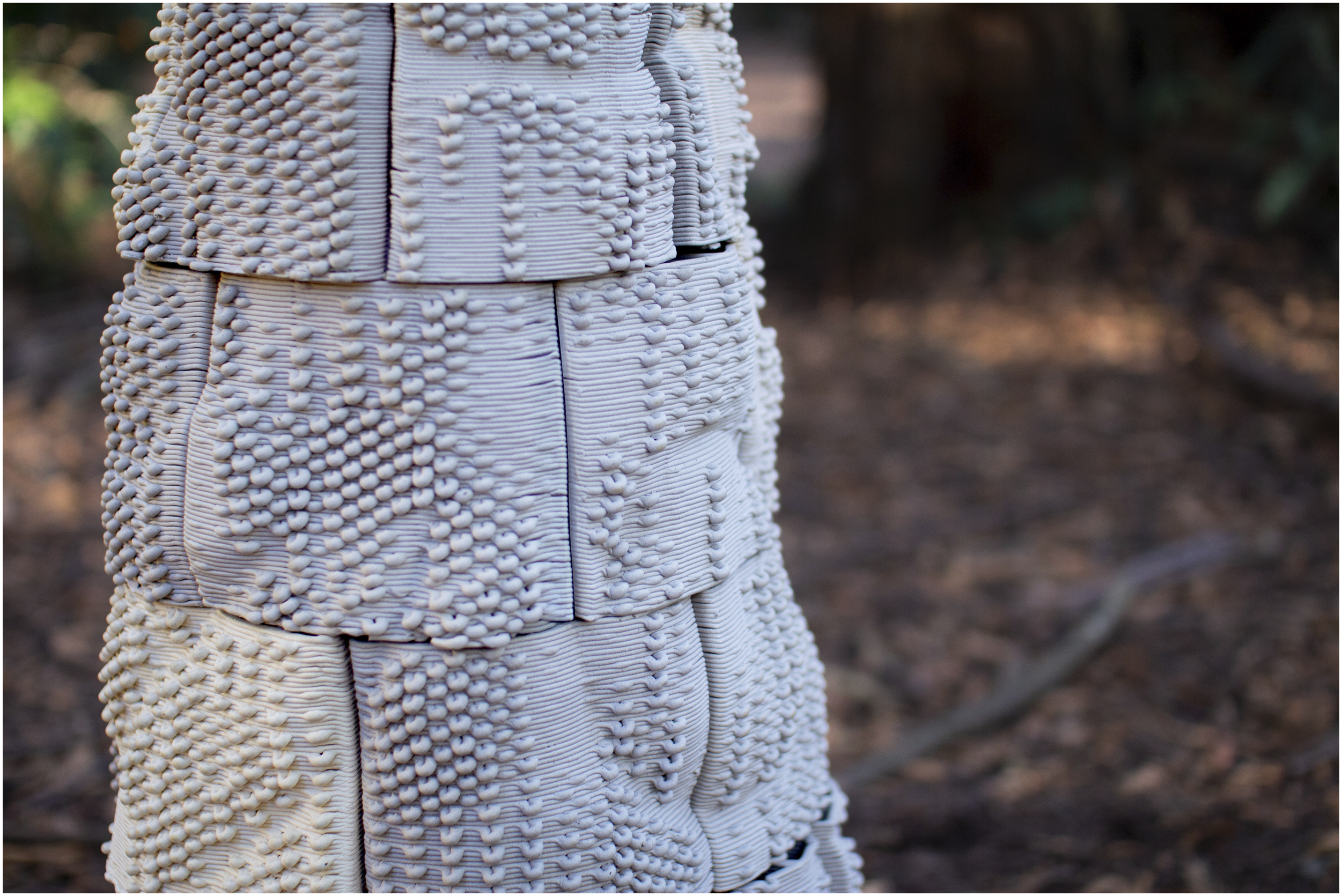

By situating material and computational design within a broader ecological framework, this work contributes to an emerging discourse on architecture as a host for living systems. It advances the understanding of bioreceptivity from a static material property to a dynamic condition shaped by the interaction of design, environment, and biological agency.
Literature review: Moss, bioreceptivity, computational design, and stochastic modeling
Ecological significance of mosses, growth dynamics, and biocrusts
Mosses (Bryophyta) and lichens (fungal-algal/cyanobacterial symbioses) are foundational engineers of terrestrial ecosystems. At global scale, mosses influence carbon storage, nutrient cycling, decomposition, and pathogen suppression across biomes, covering roughly nine million km2. 10 Their canopies regulate near-surface microclimates by retaining moisture, dampening temperature fluctuations, and mediating gas exchange, which in turn structures microbial communities and facilitates plant succession. 10 As a companion, lichens contribute complementary functions as on mineral substrates they drive primary pedogenesis (early soil formation) through biochemical weathering. Lichen hyphae penetrate microfissures while organic acids solubilize minerals, generating new soil and releasing nutrients. 11
From the lens of reciprocity, mosses and lichens expand the notion of “performance” beyond human-centric metrics. Their presence indexes ecosystem services: moisture regulation, carbon capture, dust and nutrient trapping, habitat provisioning for microfauna. This suggests a design ambition for the built environment to produce surfaces that do not merely withstand weathering, but participate in it.
Moss, and companion species, distribution is controlled by interacting microhabitat variables: surface roughness, porosity, mineralogy, wetting frequency and duration, aspect, shading, and airflow. On cliffs and vertical rock faces, communities stratify along hydrological and radiation gradients. Upper exposed faces favor desiccation-tolerant crustose lichens, while lower ledges and re-entrant pockets accumulate water and dust that favor bryophyte mats. 12 Periodic saturation followed by slow drying is critical as it sustains photosynthesis while limiting competition from vascular plants. 13
At the substrate level, bioreceptivity emerges from texture and chemistry. Nano-scale roughness (∼20–200 µm) provides anchor points for spores and soredia. Micro-scale cavities (∼0.5–1.5 mm) retain water films through capillary action. Mosses do not rely on direct mineral extraction from substrates but instead depend on external moisture and the accumulation of atmospheric and particulate nutrients within surface microtopographies.10,14 In foundational science, the same principles explain biological establishment of historic stone: rougher, more porous, sheltered surfaces recolonize faster. 1
Biological soil crusts (“biocrusts”) offer a precedent for how fine-scale topography modulates ecological function. Micro-relief increases infiltration, reduces erosive flow, retains sediment, and fosters microbial diversity. 14 The same logics extend to inclined or vertical architectural surfaces: micro-grooves and cavities can slow runoff, hold water films, and trap airborne particulates that act as nutrient resources and microsubstrates.
Biocrusts may accumulate under conditions that combine cavities and ledges while slowing the flow of hydrology to avoid washout. Studies on bioreceptive concrete demonstrate that mix design, surface morphology, and orientation determine biological establishment success. 4
Geometry-focused experiments show that ribs, depressions, and stepped profiles can create self-sustaining moss habitats by extending wetting duration and trapping nutrients. 5
Bioreceptivity and material–environmental coupling
The concept of bioreceptivity provides a framework for understanding how materials participate in ecological processes through their capacity to host living organisms. Initially defined as an intrinsic material property, bioreceptivity has increasingly been understood as a condition that emerges through the interaction of material characteristics, environmental exposure, and biological agency. Guillitte 3 defines bioreceptivity as the aptitude of a material to support the establishment, anchorage, and development of living organisms. While this definition emphasizes material properties, subsequent work has expanded the concept to account for the dynamic relationships between substrate, environment, and organism. 15
Within this expanded framework, bioreceptivity is not static but evolves over time. Guillitte 3 distinguishes between primary, secondary, and tertiary bioreceptivity, describing a temporal progression in which initial material conditions are transformed through environmental exposure and biological activity. Primary bioreceptivity refers to the biological establishment potential of a material prior to biological growth, typically associated with intrinsic properties such as porosity, surface roughness, and mineral composition. As organisms establish and environmental processes act upon the material, these properties are altered, giving rise to secondary bioreceptivity, which often governs longer-term ecological development. Further human or environmental interventions produce tertiary conditions that continue to modify the substrate.
More recent revisions clarify that these categories should not be understood as discrete classifications, but as states within a dynamic system. Rather than distinguishing between intrinsic and extrinsic bioreceptivity, Sanmartín et al. 15 propose distinguishing between intrinsic and extrinsic factors influencing biological establishment. Intrinsic factors include material properties such as porosity, permeability, surface roughness, and mineral composition, while extrinsic factors include microclimatic conditions, surface orientation, water availability, and the accumulation of external deposits such as soil, dust, and organic matter. These factors operate simultaneously, with their relative influence shifting over time as materials weather and biological communities develop.
A critical implication of this reframing is that bioreceptivity is inherently species and context-dependent. A material may be bioreceptive to certain organisms while remaining inhospitable to others, depending on the compatibility between substrate conditions and biological requirements. 15 In the case of bryophytes, including mosses, biological establishment is strongly influenced by moisture availability, surface roughness, and the capacity of a substrate to retain particulates and organic matter, rather than by mineral exchange alone.
Recent work in bioreceptive design extends these principles into architectural research, demonstrating that both material composition and geometric differentiation influence the distribution of moisture and nutrients across surfaces.4,5,7 These studies emphasize that bioreceptivity is not determined solely by material selection, but by the interaction between surface geometry and environmental conditions, particularly hydrological behavior.
Porous and roughened materials have been shown to enhance biological establishment by increasing water retention, stabilizing hydration cycles, and supporting the accumulation of particulates that contribute to substrate formation.4,7 In this context, geometry and material are understood as interdependent, where surface articulation influences water flow and retention, and material structure governs the persistence of moisture over time.
This coupling of material and environmental performance shifts the focus of design from isolated material properties toward integrated systems, in which substrate behavior emerges through the interaction of multiple factors. Rather than treating surfaces as static interfaces, they are understood as environments that mediate exchanges between water, air, and biological organisms. It shifts the focus from designing materials that passively support biological growth to designing systems that actively condition the emergence of ecological relationships over time. In this sense, architectural surfaces are reconceived not as inert boundaries, but as substrates that participate in processes of accumulation, transformation, and biological establishment.
Computational design of bioreceptive geometry
Contemporary computational design has expanded the role of geometry beyond formal expression, enabling the precise modulation of environmental performance through digitally controlled variation. Within this context, geometry is not treated as a static outcome but as an active mediator of material-environment interaction. Rather than producing uniform surfaces, computational approaches allow for differentiated conditions that can regulate moisture retention, water flow, and particulate accumulation as factors that are critical to supporting biological establishment.
Within architectural research, this reconceptualization has prompted a transition from representational approaches to integrated bio-material systems, where geometry, material, and environmental performance are designed in tandem. Cruz and Beckett 9 articulate this shift through the concept of “bioreceptive design,” proposing an architectural paradigm in which building surfaces operate more like biological “bark” than inert skins. Further, “Poikilohydric Living Walls” by Cruz 16 demonstrates how moss-based systems can be integrated into architectural envelopes through careful calibration of surface roughness, moisture retention, and environmental exposure. In these systems, biological growth is not applied as a secondary layer but emerges as a function of material and geometric design. Similarly, Symbiont Substrate 17 explores the integration of robotic fabrication and ceramic material systems to support microbial and lichen establishment, highlighting the relationship between fabrication logic and biological performance.
Within this trajectory, Moss Regimes 18 provides a critical link between computational design and ecological behavior. By mapping water flow across ceramic surfaces and embedding these patterns into material porosity and geometry, the project demonstrates how biological growth can be spatially directed through simulation-informed design. 18 The coupling of hydrological analysis with fabrication strategies establishes a model in which environmental processes are not merely accommodated but actively structured through design. While the previous precedent examples focus on concrete, state of the art work in the field of ceramic, additive manufacturing, exploring biofilm growth can be seen in the following precedents.
Recent advances in material research and additive manufacturing have expanded the role of ceramics from inert cladding systems to biologically active substrates, capable of supporting ecological processes through controlled material and geometric variation. Among these, the work of Rotondi et al. 7 is novel in establishing ceramics as a platform for bioreceptive design through material experimentation and circular practices. Their research demonstrates how the incorporation of organic waste into clay-based mixtures produces controlled porosity and heterogeneity following firing, enabling designers to “choreograph” patterns of biological establishment through material composition alone. 7 Rather than treating waste as a passive filler, it is positioned as an active design parameter that shapes pore structure, surface roughness, and ultimately the ecological performance of the material.
This material-driven approach is complemented by emerging work in additive manufacturing, where geometry, porosity, and environmental interaction are designed simultaneously.
Sochůrková et al. 19 investigate 3D printed clay and sediment-based structures as bioreceptive habitats within urban environments, emphasizing the role of microclimate, water retention, and morphology in supporting biological growth. 19 This work can further be seen in the author’s research practice, Urban Reefs, which “designs and creates open-ended habitats that encourage the growth and diversity of life in urban settings such as streetscapes, squares and buildings”. 20 Importantly, this work frames bioreceptivity, within digital fabrication of 3D printed ceramic, not only as a material property but as a spatial and environmental condition in which the more-than-human is an active agent of participation.
Across these works, a consistent trajectory emerges: the design of surfaces as performative ecological interfaces, where geometry is informed by environmental flows and biological response. However, these approaches also raise questions regarding the role of computational design in shaping such systems. As Carpo 8 argues, contemporary digital design has moved toward increasingly high-resolution and materially discrete forms, enabled by additive manufacturing and data-rich modeling environments. This condition of “excessive resolution” reflects a broader shift from streamlined, mathematically simplified geometries toward highly differentiated and often irregular forms. While this expanded capacity allows for unprecedented control over material variation, it also risks producing complexity that is formally expressive but environmentally ungrounded.
In contrast, emerging work in bioreceptive design suggests a different trajectory for computation as one that prioritizes environmental calibration over formal excess. Rather than maximizing variation, computational methods are used to identify and articulate conditions that support biological processes, including thresholds of moisture retention, surface inclination, and material porosity. In this context, geometry is not an end in itself but a means of structuring environmental relationships.
This paper builds on these developments by proposing a computational approach to surface design that integrates stochastic variation, material porosity, and environmental exposure as a unified system. By deploying distributed elements across varied microhabitats and evaluating their performance in situ, the research extends existing work from controlled fabrication and simulation toward field-based ecological testing. In doing so, it positions computational design not as a tool for generating form, but as a method for conditioning substrates that support life over time.
Noise-based surface generation as spatial stochastic modeling
Procedural noise has long been employed within computational design as a means of generating variation across digital surfaces. In most architectural and graphical applications, noise functions - predominantly as Perlin, simplex, or fractional Brownian motion (fBm) - are used to produce visual texture, simulate natural appearance, or introduce formal complexity.21,22 However, beyond their aesthetic utility, these functions are grounded in mathematical frameworks that parallel stochastic modeling techniques used across scientific disciplines to describe variability, uncertainty, and spatial heterogeneity.
In ecology and landscape science, comparable methods are used to generate “neutral landscape models” (NLMs), which simulate spatial patterns without prescribing specific ecological processes. These models rely on spectral synthesis and fractal geometry to produce hierarchical, multi-scale variability, enabling the study of how spatial structure influences ecological dynamics.23–25 More recent work has demonstrated that procedural noise functions, including Perlin noise, can be directly employed as spectral synthesis tools for generating such landscapes, producing spatial distributions that reflect the patchiness and continuity observed in natural systems.26,27 Within this context, noise is not merely a visual artifact but a representation of the stochastic processes that underlie environmental organization.
This research builds on this correspondence by treating procedural noise as a form of spatial stochastic modeling translated into geometric form. Rather than using noise to simulate appearance, it is used to generate a scalar field that encodes variability across the surface of a physical object. Gradient-based noise functions, including Perlin and simplex noise, are combined through fractional Brownian motion (fBm) to produce multi-scale variation, where parameters such as frequency, gain, and lacunarity control the distribution and intensity of features.28,29 This approach produces a continuous field of values that can be interpreted not as texture, but as a set of spatial conditions analogous to those modeled in ecological systems.
The scalar field generated through noise is mapped onto the geometry using UV coordinates, establishing a direct correspondence between computational values and physical locations on the surface. These values are then translated into geometric articulation through displacement and the insertion of discrete surface elements. Areas of higher intensity produce increased roughness and depth, while lower values remain relatively smooth, resulting in a differentiated surface that encodes variability at multiple scales. This process effectively converts a stochastic field into a physical substrate, allowing the principles of spectral synthesis to be realized in material form.
To align this stochastic variation with environmental performance, the noise field is coupled with topological analysis of the base geometry. Surface characteristics (slope, curvature, and orientation) are evaluated to approximate the movement and retention of water, media, and growth across the surface. Rather than allowing noise to operate independently, its influence is modulated in relation to these environmental factors, reinforcing regions where moisture is likely to accumulate and reducing articulation in areas dominated by runoff. This coupling introduces a structured constraint to the stochastic system, analogous to the interaction between deterministic and random components in stochastic differential equations, where underlying conditions shape the expression of variability.
The resulting surface operates across multiple scales. At the micro-scale, fine-grained roughness provides anchorage points for biological material. At the meso-scale, looped and offset elements function as micro-ledges that capture water and trap particulate matter. At the macro-scale, the overall form influences exposure, drainage patterns, and environmental interaction. This hierarchical structure reflects the multi-scale organization observed in natural landscapes and modeled in neutral landscape theory, where spatial heterogeneity emerges from the interaction of processes operating at different scales. 30
By translating stochastic fields into fabricated geometry, this approach reframes procedural noise as a tool for environmental calibration rather than visual representation. The generated surfaces do not prescribe specific biological outcomes but instead establish a range of localized conditions that can support varying degrees of biological establishment depending on environmental context. In this sense, the work can be understood as a physical instantiation of a neutral landscape model, where spatial variability is embedded within the material substrate and subsequently evaluated through ecological interaction.
This shift positions computational design within a broader interdisciplinary framework, aligning architectural techniques with scientific approaches to modeling complex systems. Rather than simulating nature at the level of appearance, the method engages with the underlying principles of variability and heterogeneity that structure ecological environments, enabling the design of surfaces that participate in, rather than merely depict, natural processes.
Methods
Base geometry and part to whole
A prototype, Moss Column, was designed using the aforementioned computational methodologies with reference to the prior literature review for context. Overall proportion (approximately 2.1 m tall × 0.35 m diameter) was derived from ergonomic and fabrication constraints: print-bed capacity, nozzle reach, and the structural limits of unfired clay. Its core geometry began as a cylinder, then was subdivided to remove hard edges and produce a gently tapering form rather than a perfect revolution surface. No physical 3D modeling was used to further articulate the surface. The surface was refined through two subsequent passes to embed detail at appropriate scales described in the section below, Multi-Scalar Surface Articulation. As the prototype was conceived as an instrument to measure bioreceptivity within the context of a localized environment, the installation of a monolithic assembly was not considered in this immediate study for research purposes.
Rather than functioning as a singular object, it was decided to distribute the individual parts of the Moss Column in order to better test the variable conditions. The experiment instead operates as a distributed field of experimental probes. Each element records the interaction between geometry, material, and environment, enabling the evaluation of how computational design strategies translate into ecological performance.
Multi-scalar surface articulation
The surface of the printed elements is structured through a hierarchical system of variation operating across three distinct scales: macro, meso, and micro (Figure 4). Each scale corresponds to a different mode of environmental interaction and collectively produces a surface capable of mediating water behavior, particulate accumulation, and biological attachment. Visual sample of noise used at various scales to generate spatial and surface qualities.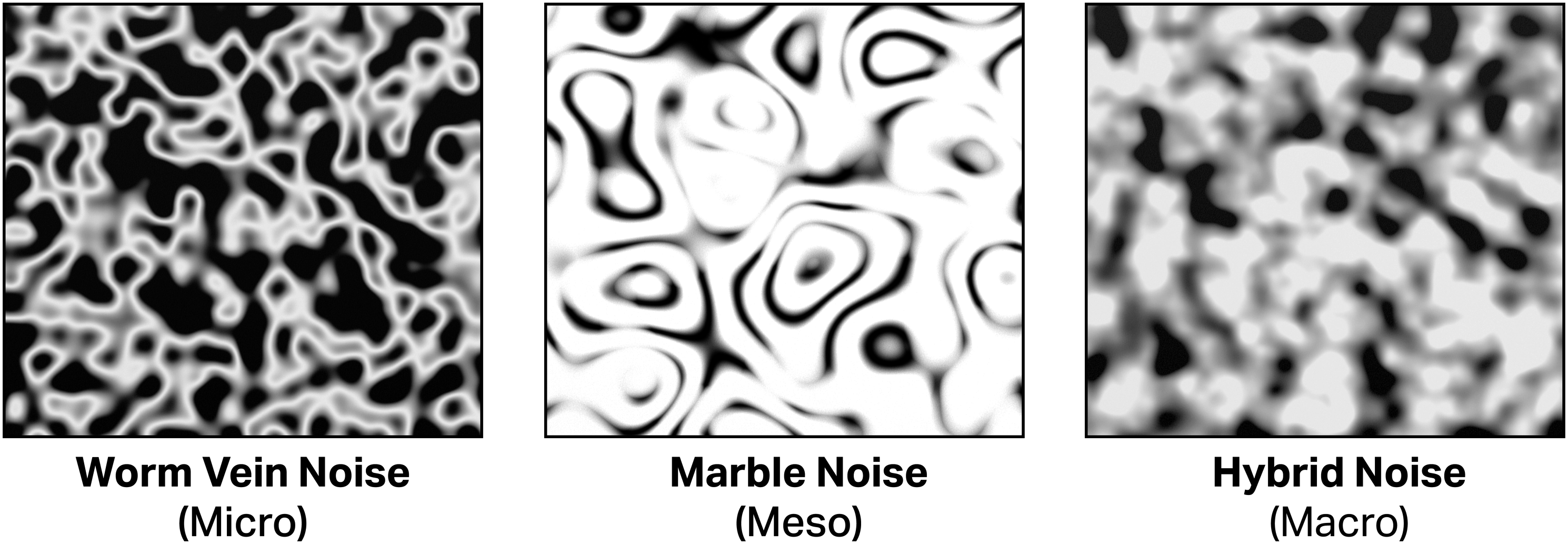
The multi-scalar articulation of the surface is derived from the transformation of procedural noise fields into geometric form. Noise functions are first computed as continuous scalar fields and mapped onto the geometry using UV coordinates, establishing a correspondence between computational data and specific locations on the surface.
Scalar values are translated into displacement vectors acting along surface normals, producing variations in depth and roughness (Figure 5). Multiple noise fields are combined through compositing operations such as multiplication, subtraction, and inversion to generate complex, non-repetitive topographies. In particular, meso-scale noise fields are inverted and subtracted from macro-scale fields to produce concave regions that interrupt larger surface undulations. Diagram of formal process, layering use of noise to produce spatial qualities and generate surface texture as g-code. While visually depicted in this diagram, no surfaces or meshes were used - only noise to generate g-code.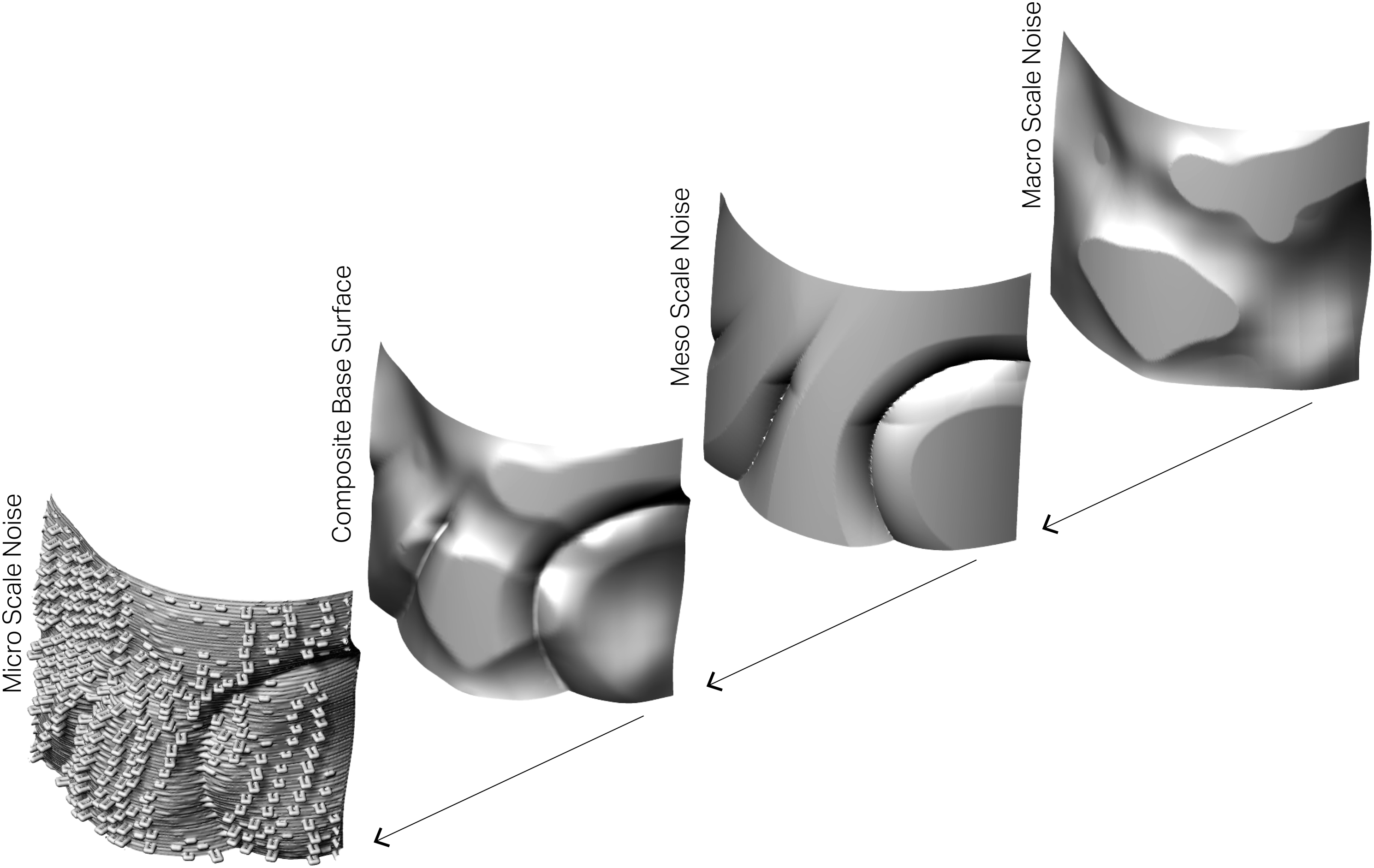
Macro-form articulation
At the macro scale (approximately 30 mm – 100 mm), global undulations are introduced to disrupt the uniformity of the base geometry. These deformations produce variations in inclination and exposure, influencing how the surface interacts with rainfall, fog deposition, and solar radiation. As a result, the geometry establishes gradients of wetness and dryness across the vertical extent of the element, allowing different regions to operate under distinct environmental conditions. Critically, this macro articulation was not hand-modeled but generated through a “Hybrid” noise texture. 31 Hybrid noise behaves similarly to fBm but with smoother valleys and sharper “peaks,” approximating craggy mounding and shear fractures. Settings included: Noise Type = Gradient Value; Octaves = 3; Frequency = 1.5; Increment = 0.5; Offset = 0.4. The field was scaled to ∼100 mm3 feature size.
Meso-form articulation
At the meso scale (approximately 8 mm – 30 mm), localized concavities, channels, and depressions are embedded within the larger form. These features act as micro-catchments that slow water runoff and increase the residence time of moisture on the surface. By extending the duration of hydration, these areas create favorable conditions for moss establishment and the accumulation of fine particulates and organic matter. A “Marble Noise” texture 31 was layered onto the macro field. Unlike a simple “vein” shader, this Perlin-derived noise variant produces branching channels with internal irregularity rather than smooth ribbons. Settings included: Noise Type = Enhanced Perlin; Octaves = 6; Frequency = 1.1; Increment = 0.869. The field was scaled to ∼400 mm3 to read as eroded grooves rather than ornament.
Micro-form articulation
At the micro scale (approximately 1 mm – 8 mm), surface roughness is introduced through the modulation of the fabrication process itself. This scalar stratification reflects ecological observations that biological systems depend on heterogeneity across multiple orders of magnitude, where interactions between scales influence both moisture dynamics and biological establishment patterns. 14 A “Worm Vein” noise map 31 was used as a placement field, producing sinuous paths of potential deposition. Settings included: Noise Type = Gradient; Octaves = 0; Bias = 43%; Gain = 61%. The field was scaled to ∼90 mm3. Rather than relying solely on mesh-based displacement, fine-scale variation is encoded directly into toolpath behavior, producing a textured surface that enhances anchorage and capillary action. Unlike reaction-diffusion or cellular automata, which model organic growth, this pattern intentionally creates real estate for growth, rather than simulating growth itself.
Following displacement, the surface is evaluated using topological metrics, including slope and curvature. These metrics are used diagnostically to approximate hydrological behavior, identifying regions of potential retention and runoff. Through iterative calibration of noise parameters, the distribution of low-slope and concave areas is increased, aligning stochastic variation with environmental performance. In this way, noise operates not as a representational tool, but as a method for encoding environmental behavior into geometry.
Toolpath translation and additive fabrication logic
The translation from geometric model to physical artifact requires the conversion of continuous surface data into discrete toolpath instructions. Due to fabrication constraints, the geometry is subdivided into modular units sized to fit within a build volume of approximately 400 mm square. This segmentation introduces a masonry-like assembly logic, where individual components are stacked to form larger structures. This assembly logic further contributed to the ability to distribute parts of the larger whole for study in varied environmental conditions.
With regard to spatial conditions of the larger whole, these joints function as cold seams that accommodate material shrinkage during drying and firing, while also introducing additional micro-environmental variation. Rather than being treated as defects, these seams contribute to heterogeneity by disrupting continuous flow paths and creating localized conditions for moisture retention. Local examples were observed on rock stacked walls, within a one mile radius of the selected sites, in which ferns and other plants grew between similar joints.
Fabrication is performed using a 4 mm nozzle with a layer height of approximately 1.75 mm, balancing resolution with structural stability (Figure 6). At this resolution, the deposition process produces a stepped surface condition that is further enhanced through deliberate toolpath modulation. Image of 3D printing process using clay and starch composition.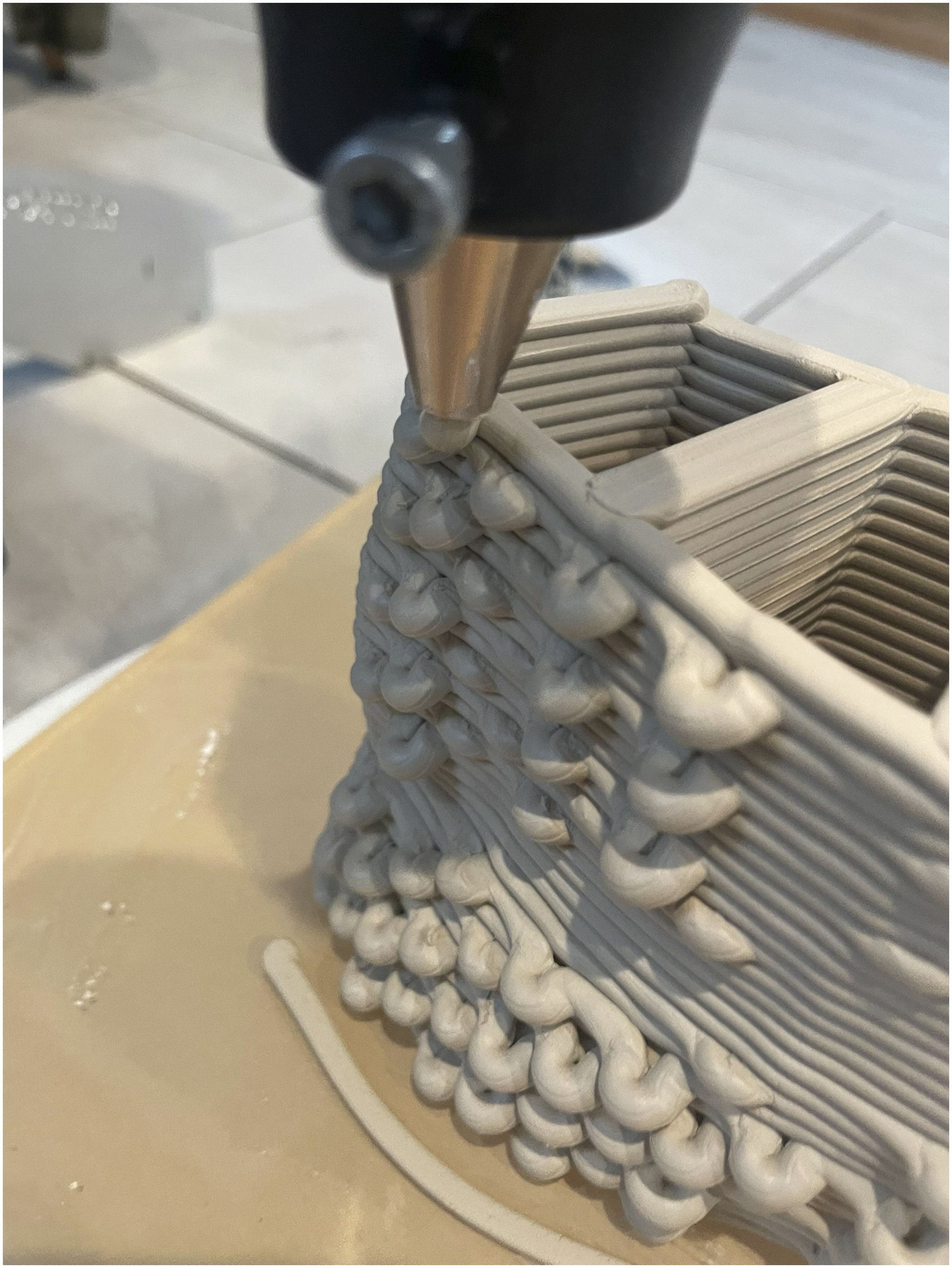
Micro-scale surface articulation is achieved by offsetting the extrusion path normal to the surface, generating looped patterns along each layer. These loops, approximately 8 mm in width, function as micro-ledges that increase surface area, slow water movement, and trap particulate matter. To avoid the formation of continuous vertical channels that would facilitate rapid runoff, loop positions are staggered between successive layers. This produces a non-aligned pattern that enhances surface rugosity and creates a distributed network of micro-reservoirs capable of retaining moisture.
Through this process, the translation from noise to material occurs across multiple stages ensuring that computational variability is preserved and transformed into material performance.
Material composition and bioreceptive framework
The material system is designed to support biological establishment through both its chemical composition and physical structure. A high-fire stoneware clay (Laguna B-Mix Cone 10) is selected as the base material, composed primarily of aluminosilicate minerals. This composition provides a chemically stable and relatively neutral substrate, comparable to natural rock surfaces where mosses commonly establish.
Unlike highly alkaline materials such as fresh concrete, which can inhibit early-stage biological establishment, ceramic substrates demonstrate improved compatibility with moss growth, particularly when porosity and moisture retention are enhanced.4,6,7
In this work, bioreceptivity is understood as a dynamic interaction between intrinsic material properties and extrinsic environmental conditions. 15 Intrinsic factors include porosity, surface rugosity, and mineral composition, while extrinsic factors include moisture availability, microclimate, surface orientation, and the accumulation of soil and organic matter. These factors operate simultaneously and evolve over time as the material interacts with its environment.
For moss-based systems, this distinction is critical. Unlike lichens, which actively participate in mineral weathering, mosses rely primarily on external moisture and the accumulation of particulate nutrients. As such, the design emphasis shifts from chemical composition toward the modulation of water retention, surface roughness, and sediment capture (and retention).
Mixture design and porosity engineering
To enhance intrinsic porosity, the clay body is modified through the incorporation of a biogenic pore-forming agent. Potato starch is added at 10% by volume, selected for its relatively large and uniform particle size (∼45–50 μm) and predictable burnout behavior. 32 Each 10% by volume addition of potato starch adds approximately 4.7% porosity 33 with burnout occurring between 300 and 600°C, ensuring complete removal prior to sintering and leaving a stable, interconnected pore network.
Compared to rice and corn starch, which produce smaller pore structures, potato starch generates pores that are sufficiently large to support capillary water retention while remaining more uniform and controlled than those produced by coarse organic additives such as coffee grounds. This positions potato starch within an intermediate range that enables repeatable and spatially homogeneous micro-scale porosity.
These pores act as capillary reservoirs, retaining thin films of water within the material and slowing evaporation. This internal moisture storage complements external surface geometry, enabling sustained hydration cycles. Together, porosity and surface articulation form a coupled system in which geometry governs water distribution and material structure governs retention.
Once fired, the Laguna B-Mix Cone 10 with 10% added potato starch by volume, measured to an average porosity of 5.57% across several tests. Ceramic parts, made of this mixture, were submerged for 24 h in room temperature water. After being submerged, they were removed and immediately weighed to compare their original weight against their new weight to calculate porosity. Laguna B-Mix Cone 10 is rated at roughly 1% porosity by the manufacturer.
Fabrication, drying, and firing
Fabrication is carried out using a large-format LDM clay printer (Potterbot), where extrusion-based deposition enables direct translation of computational geometry into physical form. The rheological behavior of the clay is carefully controlled to ensure dimensional stability, particularly given the increased porosity introduced by the starch additive.
Following printing, components are dried gradually under controlled conditions to minimize warping and cracking. The presence of pore-forming agents increases shrinkage and introduces internal stresses during drying, requiring careful management of humidity and airflow to ensure uniform moisture loss. It was observed that this contributed to minor deformation in printed parts and additional research is required for further precision in drying and firing of the desired part.
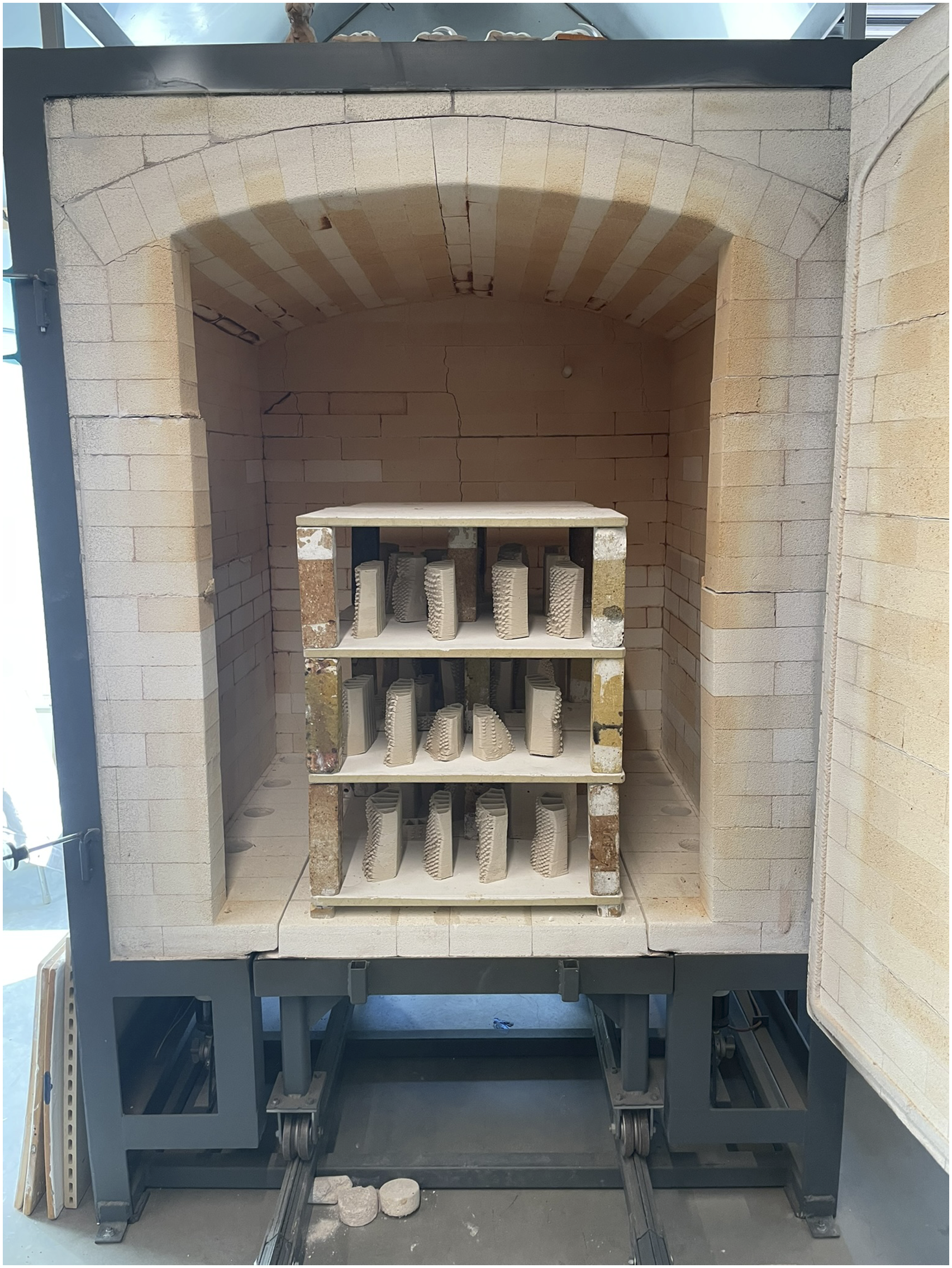
Once dried, the elements are fired to approximately 1300°C (Cone 10), fully sintering the ceramic body and stabilizing the pore structure created through starch burnout (Figures 7 and 8). The firing process produces a durable and weather-resistant material capable of long-term outdoor exposure. Image of various parts drying before firing. Image of parts in a large format kiln for firing.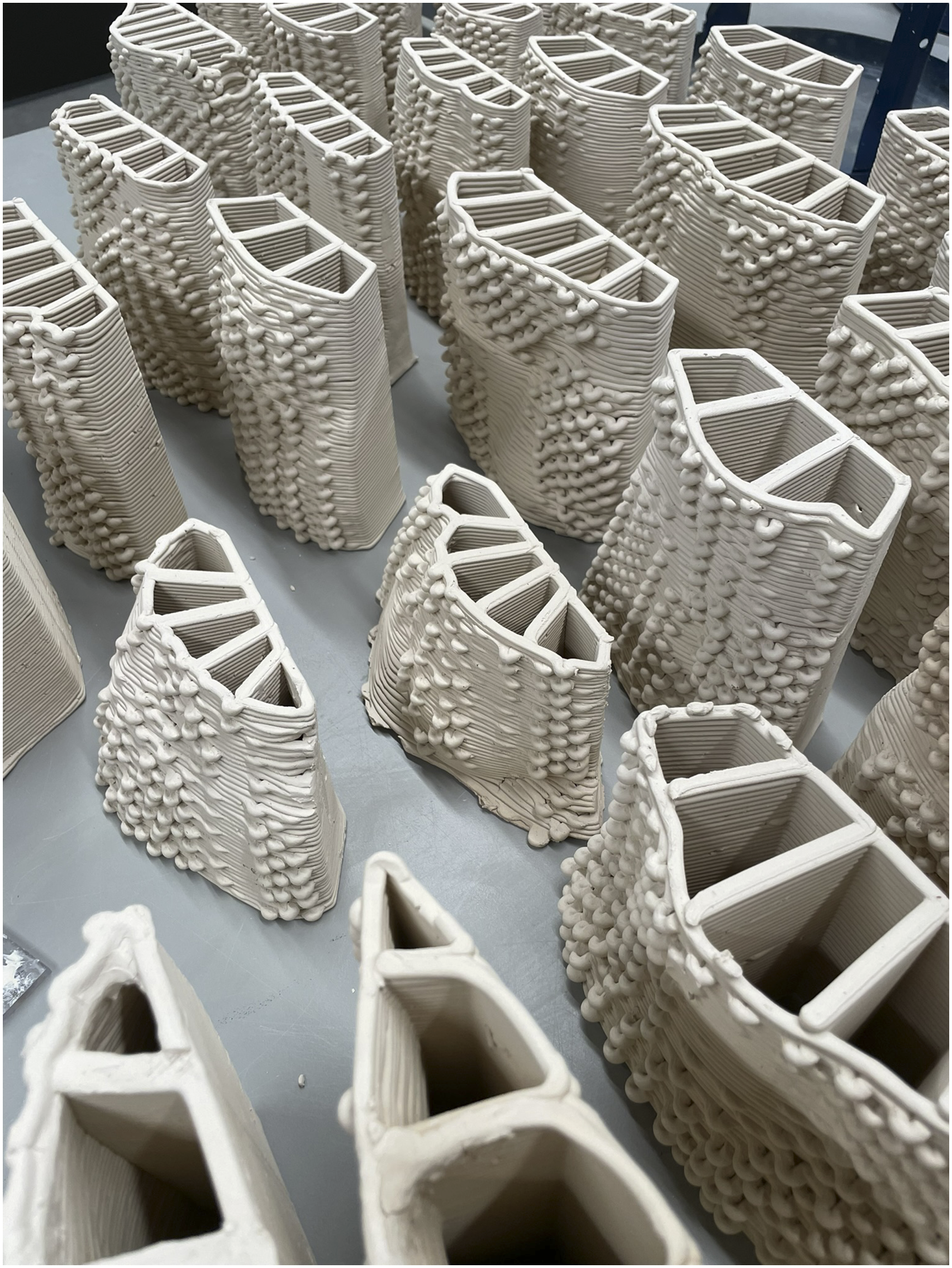
However, this process introduces a critical tension within the project. The energy required for high-temperature firing contrasts with the ecological intent of fostering biological growth. This sustainability paradox is acknowledged as a limitation of the current approach. The use of fired ceramics is justified here as a means of establishing a stable and persistent substrate for long-term ecological observation, enabling controlled study of material–environment interactions over extended periods.
Experimental inoculation and biological seeding
Rather than relying solely on passive biological establishment, this study incorporates an active inoculation process to initiate moss growth. Locally sourced Dendroalsia moss, chosen for its prolific growth in the region, is collected along with its native substrate to preserve ecological compatibility.
The inoculation mixture consists of moss and associated media blended with buttermilk, black tea, sugar, and site soil. A ratio of 1 part loose moss/media: 1 part buttermilk: 1 part black tea: 0.02 sugar was used. Buttermilk introduces lactic acid bacteria and nutrients, contributing to pH adjustment and microbial activity. Black tea further lowers pH and introduces organic compounds, while sugar acts as an external carbon source that supports early-stage growth. Dry bentonite clay, and additional site soil, was added to increase viscosity and improve adhesion of the mixture to the ceramic surface.
The resulting slurry was applied in multiple layers to each ceramic element, allowing it to embed within the surface microtopography. Roughly 100 g was added to each ceramic test subject, enough to fully cover the face of each part. Following application, the components are held in a controlled environment for 2 days to allow the mixture to settle and adhere before field deployment. The organic matter of the buttermilk did contribute to initial mold growth and it is advised to explore alternative natural fertilizers instead to avoid bacterial competition of resources.
Site selection and distributed deployment
The selected ceramic pieces are installed across multiple microhabitats within the coastal foothills of Oakland, California. These sites are characterized by mixed Redwood and Oak canopies, persistent fog, and proximity to seasonal water sources (Figures 9–11). Moss growing with local lichen, fungus, and plants. Moss growing on Oak tree adjacent to Site A. Moss growing on masonry within the locality of Site B. Example of moss growing on local stone structure.


The regional microclimate is shaped by marine fog driven through the Golden Gate and over the San Francisco Bay, where it is partially trapped by the East Bay hills. This creates conditions of diffuse light, high humidity, and periodic moisture deposition which is favorable for moss growth.
Two primary sites are selected based on existing moss populations and environmental conditions. Within each site, elements are placed under varying conditions, including freestanding placement, partial burial within soil, and intermediate configurations. This distribution allows for comparative observation of how microclimatic variation influences biological establishment. Part 12 and 13 were located at “Site A”, down hill from a serpentine prairie and roughly at 1020 ft elevation surrounded by Oak trees and a stream. Part 16 and 17 were located at “Site B”, roughly 1.8 miles west in a river valley at 590 ft elevation surrounded by ferns and Redwood trees (Figure 12). Depiction of Site A1, A2, B1, B2, and the control used to test parts 12–15 as shown.
Local weather temperature, dew point, and precipitation accumulation was recorded from a local weather station within roughly 1 mile and at 1500 ft elevation. On each site location a Kestrel DROP D2 wireless temperature and humidity data logger was used to collect data.
Due to an unusually hot March month, with no precipitation, it was decided to spray each part every other day with filtered water using a typical spray bottle. Roughly 5–10oz of water was sprayed each watering occurrence. Once rain returned in April, watering was stopped as the parts remained visibly damp for extended periods of time (as is historically normal for the environment).
Control test subjects
Part 14 and Part 15 were left to remain within the controlled environment as control test subjects protected from the elements and held in ideal conditions. A VIVOSUN S3018 30″ × 18″ × 36″ Grow Tent was set up with the following components: VIVOSUN T5 Grow Lights for Indoor Plants 5000K Full Spectrum, VIVOSUN AeroWave E6 Gen2 Grow Tent Clip Fan 6”, and a VIVOSUN AeroStream H05 Intelligent Wi-Fi Humidifier. The grow lights were set on an 8 h on/off cycle, the fan was set on a 30 min cycle on/off cycle, and the humidifier was set to maintain 90% humidity using its sensor. Parts were sprayed every other day with roughly 5oz–10z of filtered water.
Results and observations
The distributed deployment of inoculated ceramic elements enables the evaluation of bioreceptivity as a site-dependent and time-evolving process. Rather than producing a singular outcome, the experiment generates a range of responses across multiple microhabitats, allowing relationships between surface geometry, material properties, and environmental conditions to be observed.
Observations reported here are based on early-stage monitoring following installation, focusing on initial adhesion, moisture behavior, and the onset of biological activity. While long-term biological establishment patterns require extended study, these preliminary results provide insight into the interaction between designed surface conditions and environmental exposure. “Milestone 1” is a sampling of data at 21 days and “Milestone 2” is a sampling of data at 42 days. The ceramic test parts will remain to be observed across an entire year.
Initial adhesion and material–biological coupling
Following inoculation and placement, the moss slurry demonstrated strong initial adhesion to the ceramic surfaces. The combination of surface roughness and looped microtopography allowed the mixture to embed within surface features rather than remain as a superficial coating. Areas characterized by higher micro-scale articulation, particularly regions with dense toolpath loops and concave geometries, retained a greater quantity of inoculation material. In contrast, smoother or more convex regions exhibited partial loss of material during early exposure to gravity, wind, and moisture.
This suggests that microtopographic depth and surface irregularity play a critical role in establishing initial material–biological coupling, acting as mechanical anchors that prevent early detachment. The looped toolpath geometry appears particularly effective in creating small pockets that hold organic matter in place during the critical early stages of biological establishment.
Moisture retention and hydrological behavior
Moisture behavior varied significantly across both geometry and site conditions. Following periods of fog (generally during morning), water was observed to accumulate preferentially within concave meso-scale features and along micro-scale loop structures. This was indicated by observing darker regions of wetting versus lighter drier regions. Conversely, during an initial heat wave, drying was observed in the substrate causing curling and cracking in some regions. This was most pronounced in Part 13 seen in a central region characterized by no pattern texture and concave geometry.
Overall, concave areas exhibited prolonged moisture and substrate retention relative to exposed or convex regions, where water drained or evaporated more rapidly. The combination of surface geometry and internal porosity contributed to this effect: surface depressions slowed runoff, while the porous ceramic body absorbed and gradually released moisture. In heavy rain however, exposed convex geometry lost the most substrate as water and heavy rainfall eroded these regions - even under tree forest canopy.
These observations reinforce the role of multi-scalar surface articulation as a hydrological system, where geometry governs water distribution and porosity governs retention. The alignment between designed concavities, observed moisture accumulation, and observed water flow suggests that the computational approach to surface generation successfully translates into environmental performance.
Weight reduction and moisture retention
Weight measurements were used as a proxy for moisture retention and material drying behavior across all samples. All inoculated and field-deployed samples exhibited measurable reductions in weight over time, indicating progressive cycles of moisture loss and reduction of inoculation soil and moss coverage.
At 21 days (Milestone 1), samples from Site A (Parts 12 and 13) showed weight reductions of −2.62% and −3.11%, respectively, while Site B samples (Parts 16 and 17) showed reductions of −2.32% and −3.14%. By 42 days, these reductions increased to −7.99% and −6.35% at Site A, and −7.74% and −10.63% at Site B. In contrast, control samples maintained in a high-humidity environment, with no elemental degradation, showed minimal change with reductions remaining between −0.38% and −1.27% over the same period (Figure 13). Delta weight testing each part and its porosity measured by its ability to hold water.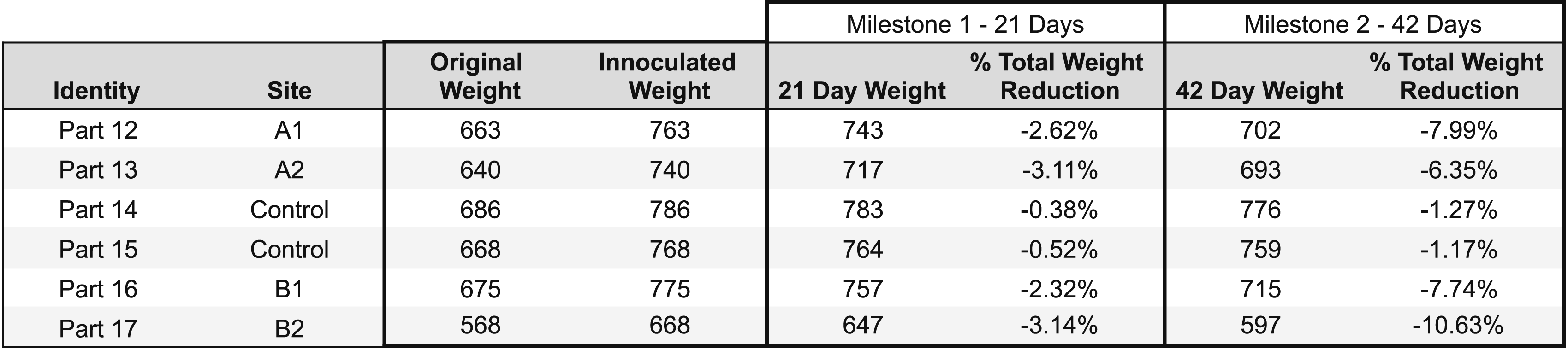
These results indicate that field-deployed samples experienced significantly greater moisture fluctuation and drying cycles compared to controls. Additionally, two abnormally intense yet short rain cycles contributed to removal of substrate from all parts in the field. It was observed after each rain that loose substrate had been washed clean away and eroded initial cover. This was expected and an important natural phenomenon to observe. Among all samples, Part 17 (Site B2) exhibited the greatest overall weight reduction, suggesting more pronounced drying conditions, lower moisture retention at that location, or geometry related factors contributing to loss of substrate.
Surface coverage and moss establishment
Surface coverage was evaluated at two milestones (21 and 42 days), distinguishing between total coverage (including soil, organic matter, and biological growth) and moss-specific coverage. Coverage was quantified using color-based pixel segmentation in Adobe Photoshop version 27.4.0. Images were normalized for scale and lighting, and the “Color Range” tool was used to isolate moss pixels based on hue values, with selections refined through masking. Pixel counts from the selection and total image area were used to calculate moss coverage as a percentage of surface area (Figures 14 and 15). Matrix of all parts depicting each micro noise (used for surface texture), concavity, base image, image at day 21, image at day 42, as well as coverage comparison at day 21 and day 42. Matrix depiction allows analysis and tracking of data across each spatial phenomenon. Delta coverage across all parts, comparing coverage of soil and moss across time.

At 21 days, total surface coverage for Site A and B across all samples was high, ranging from 77.45% to 97.49%, indicating successful retention of the inoculated slurry and particulate matter. Moss coverage at this stage remained relatively low, ranging from 5.49% to 16.97% across all samples.
By 42 days, distinct differences emerged between field-deployed and control samples. Field samples showed moderate increases in moss coverage, with Site A samples (Parts 12 and 13) reaching 27.00% and 33.04%, respectively, and Site B samples (Parts 16 and 17) reaching 28.52% and 28.46%. In contrast, control samples exhibited substantially higher moss coverage, reaching 62.07% and 64.58%.
At the same time, total surface coverage decreased across field samples between 21 and 42 days, reflecting loss or redistribution of soil and organic material. For example, Part 12 decreased from 77.45% to 60.83% total coverage, and Part 16 from 97.49% to 70.93%. Control samples, however, maintained consistently high total coverage above 93%.
These results suggest that while initial material retention was high across all conditions, field exposure to the elements introduced variability in both substrate stability and biological establishment.
Early biological activity and growth patterns
Early-stage biological response was observed in the form of retained moss fragments, color stabilization, and localized thickening of the inoculated material. While full biological establishment and sustained growth require longer observation periods, initial signs of establishment were visible in select regions.
Growth tendencies appeared to correlate strongly with both geometry and environmental exposure. Areas with persistent moisture retention, particularly concave zones and regions with dense microtopograph, exhibited greater retention of moss material and early signs of cohesion. As this is early-stage observation, this may also be attributed to distribution of inoculated slurry as captured within the meso and micro-scale features. In these locations, the inoculated slurry remained intact and began to integrate with the ceramic surface.
In contrast, regions with higher exposure or reduced surface complexity showed limited retention, with inoculated material thinning or detaching over time. This suggests that surface geometry and microclimate jointly influence early-stage viability, reinforcing the importance of both intrinsic and extrinsic factors in bioreceptivity.
Site comparison: Microclimatic influence
Comparisons between Site A and Site B reveal differences in both moisture behavior and biological growth.
Site A samples (Parts 12 and 13), located in an Oak-dominated environment at higher elevation (∼1020 ft), exhibited moderate weight loss and increasing moss coverage over time. Site B samples (Parts 16 and 17), located in a Redwood-dominated valley (∼590 ft), showed greater variability, including the highest weight reduction (Part 17) and lower overall (yet consistent) moss coverage relative to controls.
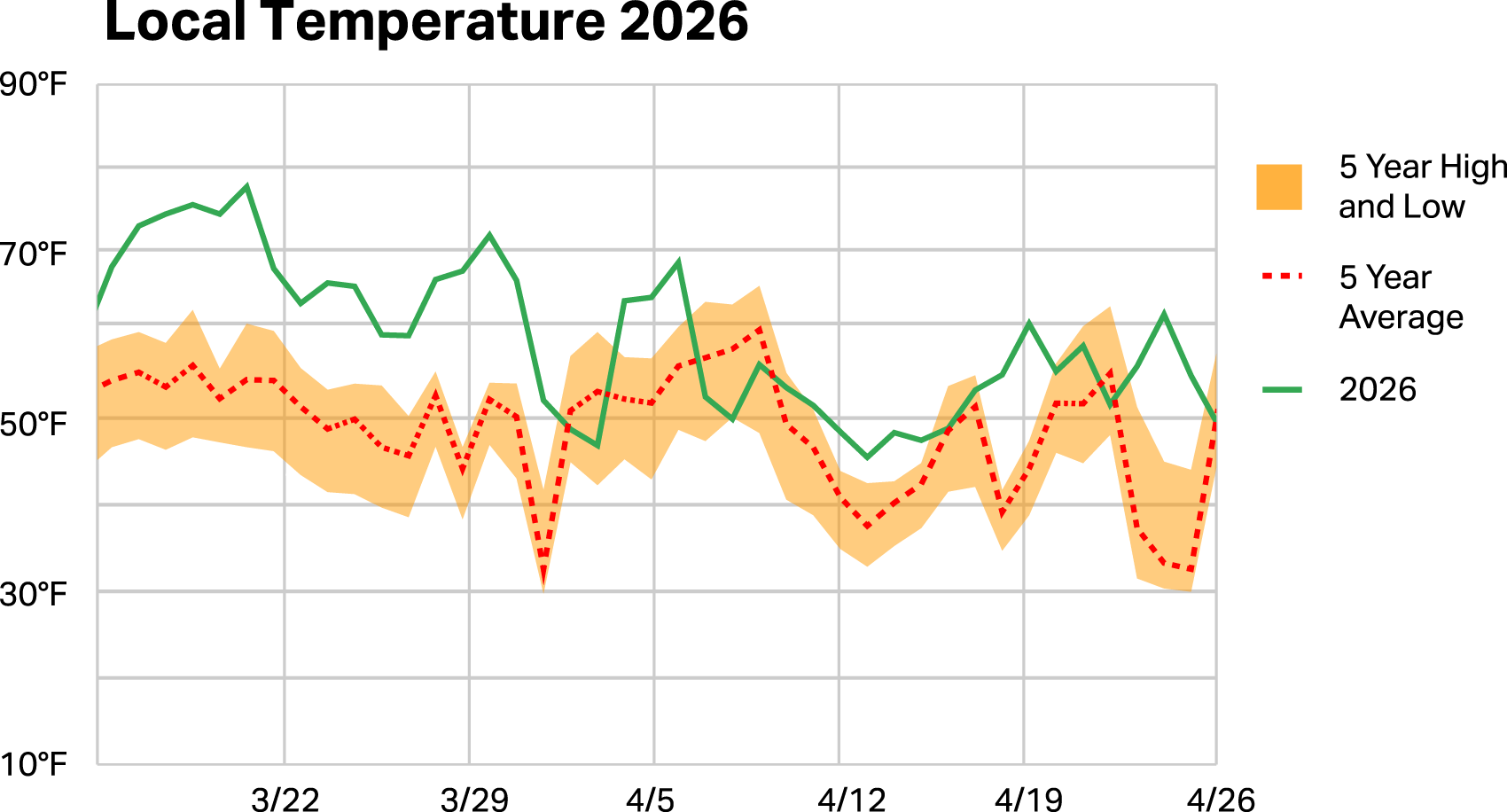
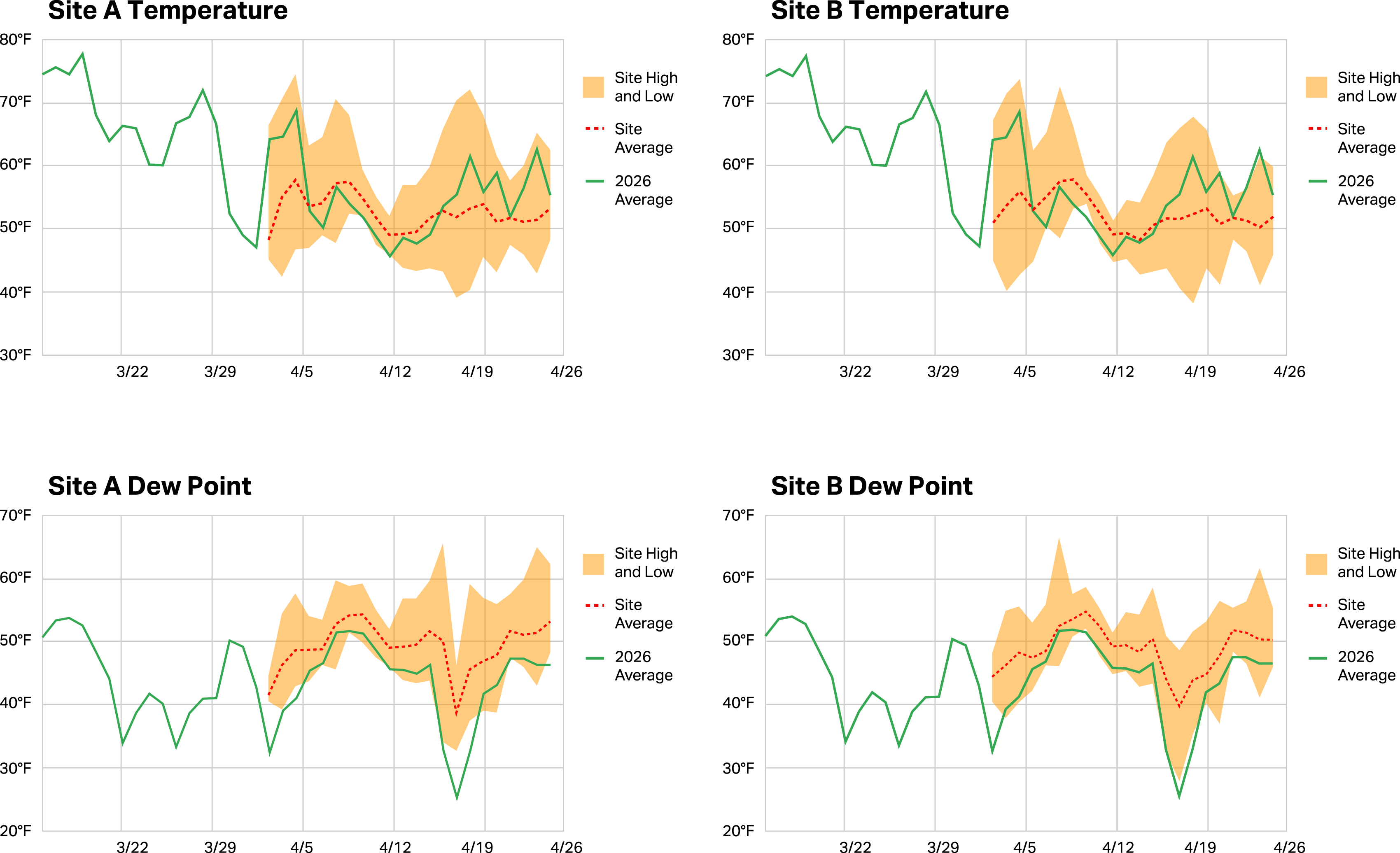
Despite similar temperature ranges across both sites, localized differences in canopy density, proximity to water sources, and microclimatic conditions appear to have influenced moisture retention and biological development. Both sites experienced average temperatures between approximately 49°F and 58°F during the monitoring period, with corresponding dew points indicating moderate humidity conditions (Figures 16–18). Precipitation accumulation, March 15–April 26, comparing the 5-year average to 2026 measurements. Taken from Chabot Space & Science Center - Oakland, CA, USA. Note little to no accumulation until 4/12 in which heavy rain occurred. Local temperature comparing 2026 with a 5-year average, high, and low. Taken from Chabot Space & Science Center - Oakland, CA, USA. Comparison of each site location temperate and dew point with the local average. Site data was taken using a Kestrel Drop D2 data logger and local comparison data was taken from Chabot Space & Science Center - Oakland, CA, USA.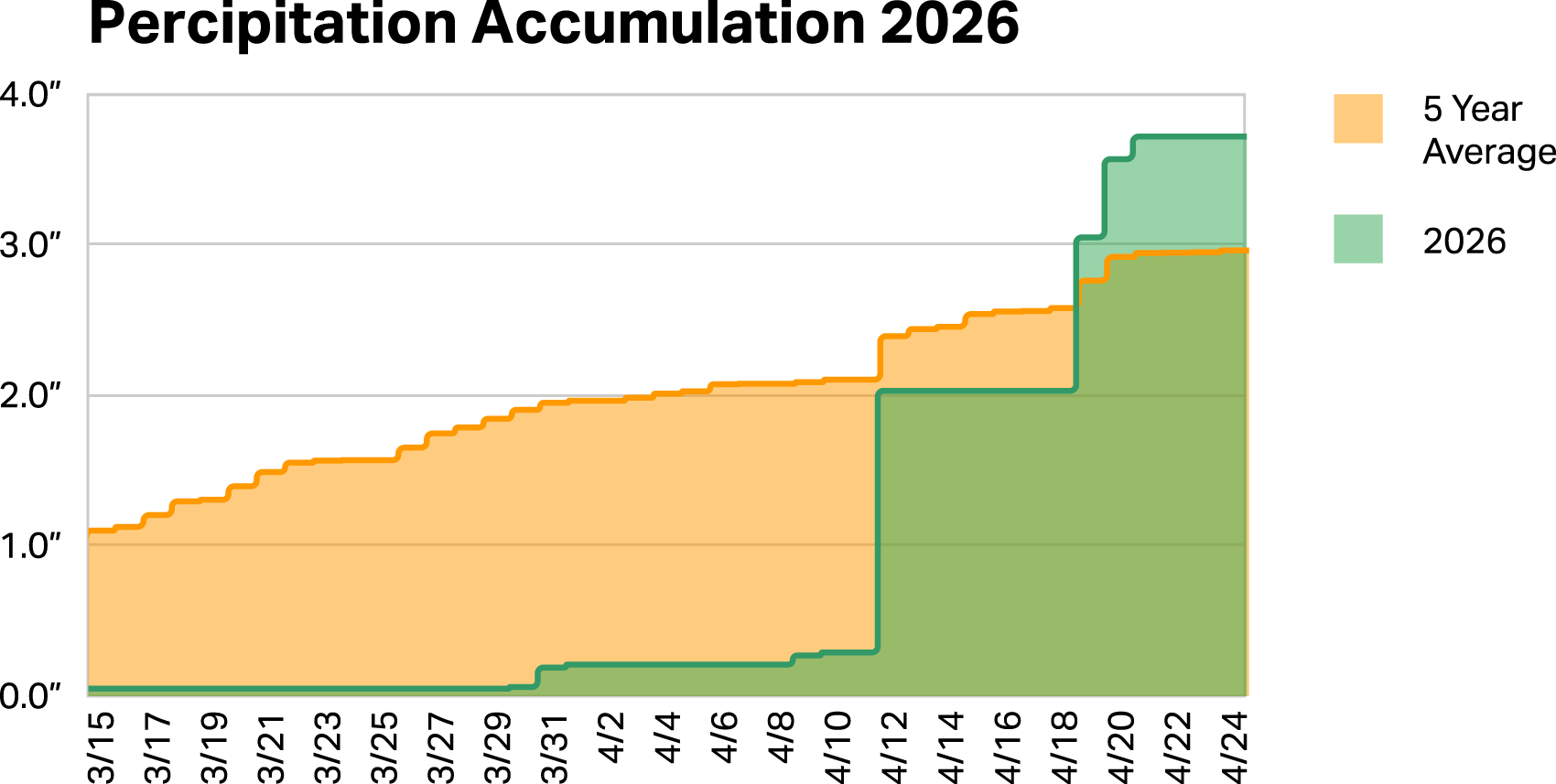
Additionally, Part 12 at Site A1 was observed to be consumed by banana slugs as disappearance of media, moss, and slime trails was observed.
These findings suggest that bioreceptivity cannot be evaluated independently of environmental context, and that distributed deployment provides a more robust method for assessing performance than singular installations.
Role of particulate accumulation and hybrid substrate formation
In addition to moisture retention, the accumulation of fine particulates such as soil, dust, and organic debris was observed within surface features. These materials became lodged within concave regions and micro-scale loops, forming a hybrid interface between ceramic substrate and organic matter.
This accumulation appears to play a significant role in early-stage bioreceptivity. The presence of soil and organic particles increases surface heterogeneity and provides additional anchorage and nutrient sources for moss establishment.
Over time, these deposits may contribute to the transition from primary to secondary bioreceptivity, as the material surface becomes increasingly modified by environmental processes. This aligns with the understanding of bioreceptivity as a dynamic condition, where substrate properties evolve through interaction with external factors.
Summary of observed relationships
Across all test conditions, several consistent relationships emerged: • Increased surface rugosity and microtopography of 3D printing improved initial adhesion, material retention, and initial moss growth • Concave geometries, low-slope regions, and surface texture enhanced moisture accumulation and persistence. Conversely, exposed convex geometries and areas of lesser surface texture show signs of erosion in loss of substrate and moss. • Ceramic material composition showed an increase in porosity which supports extended hydration cycles. • Particulate accumulation contributed to the formation of hybrid substrates and biocrust • Moss growth is more rapid under controlled conditions, where humidity remains consistently high and substrate disturbance is minimized.
These findings collectively suggest that bioreceptivity emerges from the interaction of geometry, material, and environment, rather than from any single factor alone. While this is promising to observe such a complex relationship, application to urban environments remains in question as many lack the unique qualities and microclimates of the observed natural environments.
Discussion and contribution
The results of this study position the Moss Column system not as a finished architectural object, but as a material and computational framework for investigating how designed surfaces can participate in ecological processes. While the observations remain preliminary, they provide evidence that surface geometry, material porosity, and environmental conditions interact in meaningful ways to influence early-stage biological establishment.
Bioreceptivity as a dynamic, site-dependent process
The results reinforce a critical shift in the understanding of bioreceptivity: it cannot be treated as an intrinsic property of a material alone, but must be understood as a dynamic condition emerging through the interaction of material, geometry, and environment. Variability observed across Site A, Site B, and the controlled environment demonstrates that biological establishment is highly sensitive to microclimatic conditions, including moisture availability, exposure, and disturbance.
While all samples were fabricated from the same ceramic material and inoculated using the same process, their performance diverged significantly once deployed. This aligns with recent revisions of bioreceptivity theory, which emphasize the role of both intrinsic and extrinsic factors in determining biological establishment. 15 The distributed deployment methodology further reveals that bioreceptivity is not a singular outcome but a range of responses, highly dependent on environmental context.
Geometry as environmental mediator
One of the most consistent findings is the role of geometry in mediating environmental conditions. Microtopographic articulation, particularly dense looped toolpaths and concave geometries, proved critical in supporting early-stage adhesion, moisture retention, and substrate stability.
Rather than functioning as a formal or aesthetic attribute, geometry operates here as a hydrological and ecological system, influencing how water is captured, retained, and redistributed across the surface. Concave regions and low-slope zones acted as reservoirs for moisture and particulate matter, while convex and exposed regions exhibited rapid drying and material loss. These findings closely align with prior work demonstrating the importance of surface geometry in bio-receptive systems.4,5
Importantly, the effectiveness of looped toolpath geometry suggests that fabrication logic itself becomes a design parameter. The translation of computational toolpaths into physical microstructures produces conditions that are directly legible in environmental performance, reinforcing the role of computation as a means of structuring ecological relationships rather than generating form alone.
Material porosity and temporal hydration cycles
Material porosity was observed to play a secondary but essential role in supporting moisture retention. The measured porosity (∼5.57%) enabled the ceramic to absorb and gradually release moisture, contributing to extended hydration cycles. While the addition of potato starch was in fact observed to increase porosity, further study is required to understand ideal porosity conditions for a variety of biological life. This may also involve lower fire ceramics or other ceramic based compositions which require less energy in production.
However, porosity alone was insufficient to ensure substrate stability or moss establishment. Field observations indicate that moisture retention is most effective when coupled with geometric conditions that slow runoff and reduce exposure. This supports the understanding of bioreceptivity as a multi-scalar system, where material properties and surface geometry must operate in tandem.
The interaction between porosity and environmental conditions also introduces temporal variability. Cycles of wetting and drying, amplified by fog, heat, and rainfall events, produced fluctuating conditions that both supported and inhibited biological development. These findings suggest that material performance should be evaluated not in static terms, but in relation to dynamic environmental cycles.
Disturbance, erosion, and substrate instability
Field deployment revealed the extent to which environmental disturbance shapes early-stage bioreceptivity. Rainfall events resulted in the erosion and redistribution of inoculated substrate, particularly in exposed or convex regions. Similarly, biological disturbance (such as consumption by banana slugs and others) introduced additional variability in material retention and growth patterns.
These disturbances highlight a key limitation of controlled inoculation methods: while initial adhesion may be strong, long-term establishment depends on the ability of the system to withstand environmental forces. The loss of substrate in certain regions suggests that early-stage bioreceptivity is highly fragile and contingent on both mechanical stability and environmental protection.
At the same time, these processes should not be understood solely as failures. Erosion and redistribution contribute to the formation of new conditions, including the exposure of ceramic surfaces and the relocation of organic material. This reinforces the concept of bioreceptivity as an evolving process, shaped by both constructive and destructive forces.
Hybrid substrate formation and secondary bioreceptivity
One of the most significant observations is the role of particulate accumulation in the development of hybrid substrates. Soil, dust, and organic debris became embedded within surface features, increasing heterogeneity and providing additional anchorage and nutrient sources for moss growth.
This accumulation represents a transition from primary to secondary bioreceptivity, as defined by Guillitte, 3 in which the material surface is progressively modified by environmental and biological processes. The resulting hybrid substrate - composed of ceramic, organic matter, and biological material - exhibits properties distinct from the original fabricated surface.
This finding aligns with recent work emphasizing the importance of material–environment coupling,4,7 and suggests that successful bioreceptive design must account not only for initial conditions, but for the capacity of a system to evolve through accumulation and transformation.
Controlled versus field conditions
The comparison between control samples and field-deployed elements highlights a fundamental tension in bioreceptive design. Under controlled conditions (high humidity, stable temperature, and minimal disturbance) moss growth was significantly more rapid and consistent. In contrast, field conditions produced slower growth, greater variability, and reduced overall coverage.
This contrast underscores the difference between optimal conditions and realistic conditions. While controlled environments demonstrate the potential for rapid biological establishment, they do not account for the complexity of real-world environments, where variability and disturbance are inherent.
The results suggest that performance in controlled settings may overestimate the viability of bioreceptive systems when deployed in situ. As such, field-based testing is essential for evaluating the robustness and adaptability of these systems. Additional research is required to study differences between pre-innoculated lab grown components versus components conditioned to changing conditions and environmental variables.
Reframing computational design
These findings have implications for the role of computation in architectural design. Rather than using computational tools to generate complex or highly resolved geometries, this research demonstrates the value of targeted differentiation, where variation is calibrated to environmental performance.
In this context, computational design aligns with critiques of excessive formal resolution, 8 redirecting computational capacity toward the identification of environmental thresholds and conditions that support biological processes. Geometry becomes a means of structuring relationships to mediate water, material, and organism. Rather than geometry as an end in itself. This approach also extends the concept of bioreceptive design as articulated by Cruz and Beckett 9 positioning architectural surfaces as active interfaces that mediate ecological processes. By integrating computation, material design, and environmental deployment, the work contributes to a broader shift toward architecture as a host for living systems.
Sustainability and material trade-offs
The use of high-fired ceramics introduces an energy-intensive process that complicates the ecological positioning of the work. While ceramics provide durability and stability, their embodied energy raises questions about long-term sustainability.
This tension is acknowledged, and the material is used here as a controlled substrate for experimentation. As the firing process of ceramics is often the most energy intensive input, inquiry into materials such as low fire ceramics are of future importance. The underlying design principles may be extended to lower-energy material systems in future research.
Limitations and critical reflections
Several limitations emerged through the course of this study that extend beyond experimental constraints and highlight broader challenges in designing bioreceptive systems.
The inoculation process introduced unintended biological activity, with the use of buttermilk in some samples leading to rapid mold growth that overtook the applied surface. This indicates that nutrient-rich organic additives can introduce competing organisms and compromise intended biological establishment. Future approaches should consider more controlled nutrient sources and avoid materials prone to contamination.
The preparation of the moss slurry also resulted in uneven distribution of biological material, limiting the ability to systematically evaluate surface performance. More precise inoculation methods may improve consistency and enable more controlled study. Additional research is required for a wider array of moss, bacteria, and other biological life.
Additionally, the missing control of samples that were uninoculated remains a limitation to better differentiate between origins of moss growth in the experiment. Further specific research into inoculation methodologies is required as additional data would provide better understanding in how moss can be established and introduced in translation to built environments.
Environmental variability also significantly influenced the study. During the length of the field work and study, a high-pressure system appeared over the west coast of California radically altering normal weather and climate. 34 Atypical climatic conditions included elevated record breaking spring temperatures and reduced precipitation. This underscores the challenges of conducting field-based research, and projected applications, under changing climate conditions.
Finally, the study highlights the importance of site specificity. The selected environments provided favorable conditions for moss growth but are not representative of most built contexts. This suggests that bioreceptive design must extend beyond material and geometry to include the design of microclimates within architectural environments.
Implications for application
While the results demonstrate the potential for bioreceptive ceramic systems to support moss growth, they also reveal the limitations of applying such systems within urban environments. The success of the field-deployed samples is closely tied to specific microclimatic conditions (fog, shade, proximity to water) that are often absent in urban contexts.
This suggests that bioreceptive design cannot be addressed solely through material or geometric strategies. Instead, it requires a broader reconsideration of environmental design, including the creation of microclimates that support biological processes.35,36
Conclusion
This research demonstrates that bioreceptivity is not an intrinsic material property, but an emergent condition arising from the interaction of geometry, material, and environment over time. Through the integration of computational design, porous ceramic fabrication, and distributed field deployment, the study establishes a framework for understanding architectural surfaces as active substrates that participate in ecological processes.
The results indicate that multi-scalar surface articulation and controlled porosity influence moisture retention, particulate accumulation, and early-stage biological attachment. These findings reinforce the importance of material–environmental coupling and support recent shifts in bioreceptivity theory toward dynamic, site-dependent systems. Rather than designing for static performance, the work positions computation as a tool for conditioning environmental relationships and enabling ecological development.
At the same time, the study highlights key limitations, including the absence of long-term quantitative data and the influence of site-specific conditions. These constraints underscore the need for extended monitoring, comparative testing, and refinement of material systems. Future research will focus on long-term monitoring, quantitative analysis, and the integration of environmental sensing. Additional studies will explore alternative materials and expanded scales of application.
Ultimately, this work contributes to an emerging paradigm in architectural design in which surfaces are conceived not as inert boundaries, but as evolving interfaces that support biological life. By aligning computational methods with ecological processes, it opens pathways for impact and application of material systems that engage more directly with the environments they inhabit.
Footnotes

Funding
The author received no financial support for the research, authorship, and/or publication of this article.
Declaration of conflicting interests
The author declared no potential conflicts of interest with respect to the research, authorship, and/or publication of this article.