







Abstract
The rup-rup technique is a traditional incision-based method for bending bamboo culms that relies on tacit craftsmanship and material feedback rather than formalized geometric rules. Although recent computational studies have modeled rup-rup using curvature-based segmentation, most approaches assume uniform culm geometry and do not account for longitudinal variability in internode spacing and diameter fluctuation. This study develops a material-informed parametric framework that translates tacit craft heuristics into rule-based computational logic while integrating culm-specific geometric data.
An experimental–computational methodology was employed, combining craft observation, manual geometric measurement of twenty-one Gigantochloa apus specimens, parametric scripting in Rhinoceros/Grasshopper, and full-scale bending experiments. Two computational models were evaluated against traditional practice: a curvature-driven Tangent-Curve Method and a craft-informed Length-Differential Method. Each model was tested with and without incorporation of literature-based elastic parameters. Results indicate that generalized morphological datasets were insufficient for accurate curvature prediction, whereas element-specific geometric input significantly improved bending accuracy and reproducibility. Furthermore, stabilizing cut width within the parametric logic reduced operator-dependent variability while preserving adaptive material response.
The findings demonstrate that computational formalization does not substitute craftsmanship but redistributes decision-making by encoding geometric consistency while maintaining material sensitivity. The proposed framework advances material-aware parametric modeling for non-uniform natural materials and contributes to hybrid digital–craft design methodologies in architectural computation.
Keywords
Introduction
Background
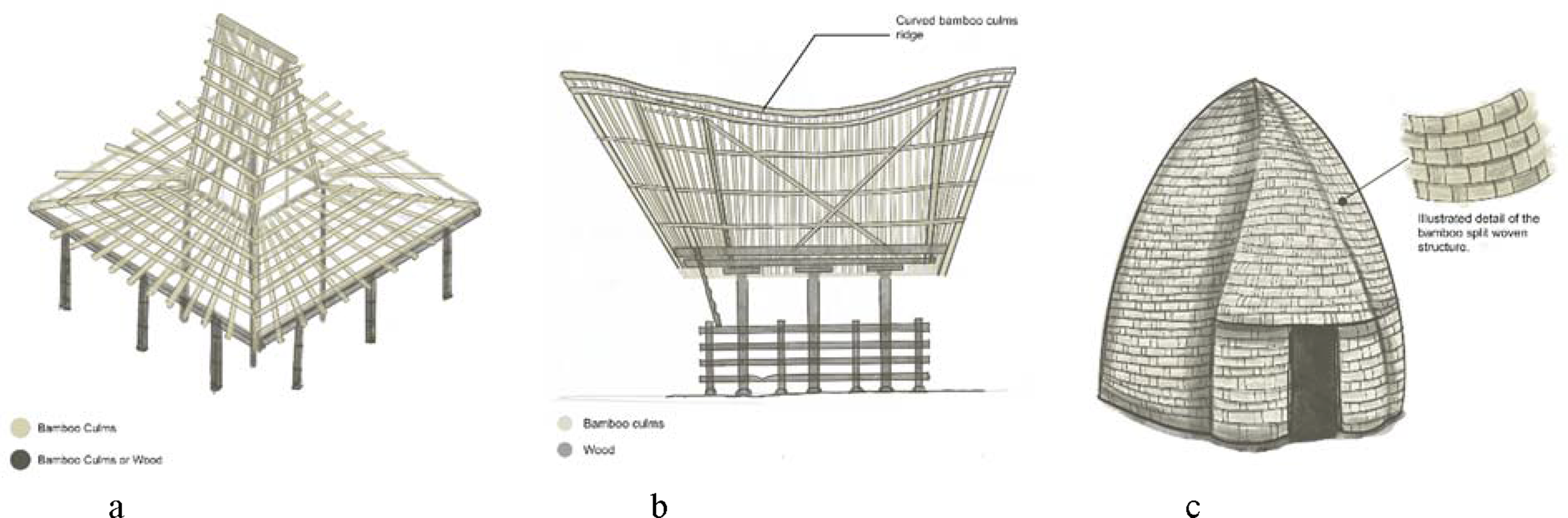
Bamboo has long been embedded in vernacular and craft-based building practices across Asia (Figure 1(a) and (b)), South America, and Africa (Figure 1(c)),
1
largely due to its local availability.
2
In these traditional contexts, bamboo structures are typically employed in small-scale buildings such as houses and sheds. (a) A vernacular house from Sumba, Indonesia used bamboo culms in the roof structure. (b) A Toraja house from Indonesia, bamboo culms used as rafters and curved ridge. (c) Dorze huts in South Ethiopia, utilized woven bamboo splits for the hut structure.
3
In contemporary bamboo architecture—often described as part of a Bamboo Revival—a shift toward larger-span buildings has led to the adoption of bamboo in hospitality, educational (Figure 2(a)), sports (Figure 2(b)), and conference facilities.
4
This shift, accompanied by a growing emphasis on organic and curved architectural forms, has intensified the demand for curved bamboo structural elements, in some cases challenging the material’s natural elastic capacity5,6 and necessitating the development of bending techniques.7,8 Contemporary buildings with curved bundled bamboo culms using rup-rup technique. (a) Sangkep by Ibuku. (b) The Arc by Ibuku.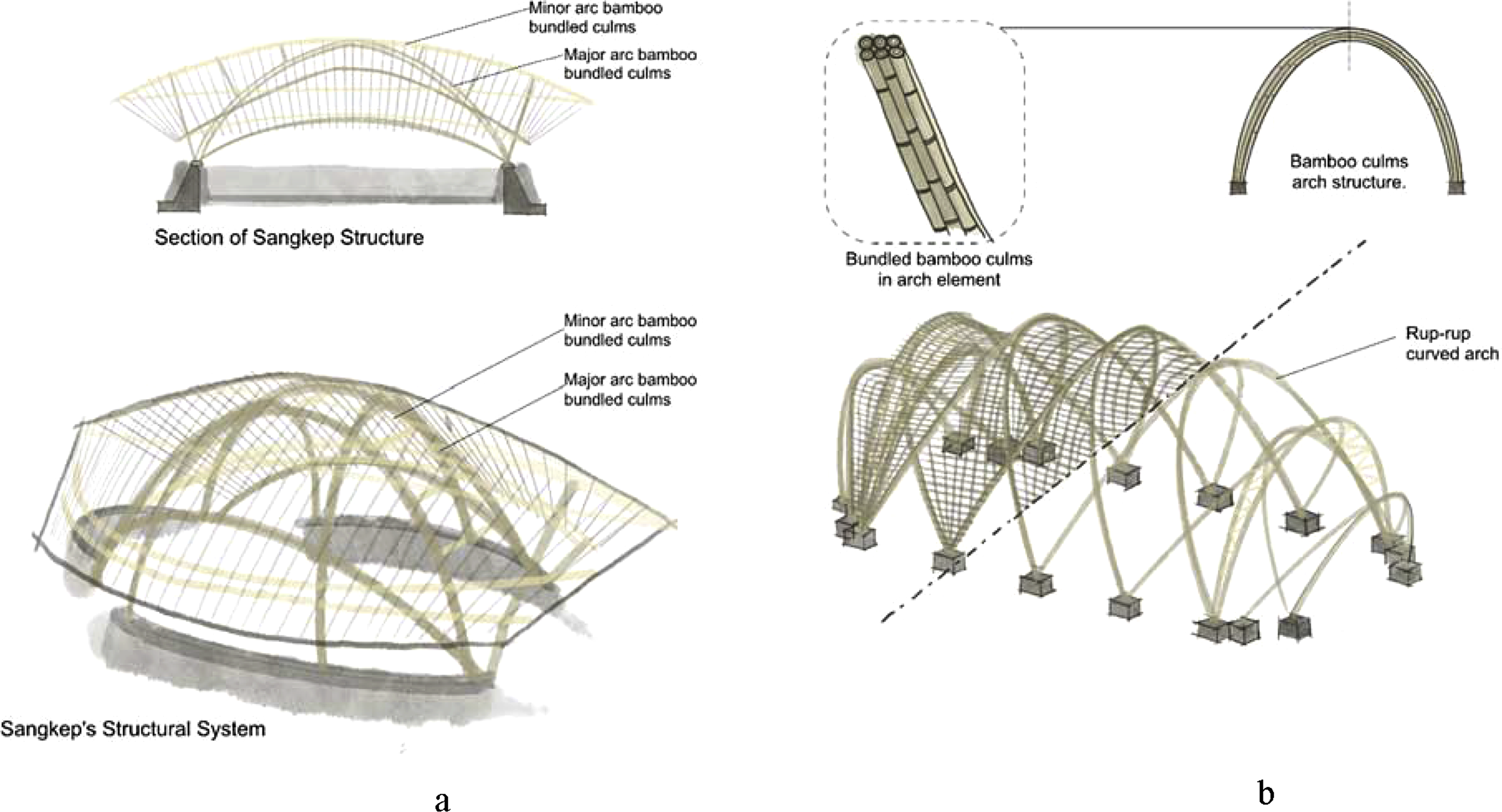
There are several techniques to bend bamboo, with two main categories, which are hot bending and cold bending. 2 With hot-bending techniques, bamboo culms become soft and plastic, allowing the culms to be shaped more easily. The two techniques to hot-bend bamboo are the Immersion Technique, which relies on submerging culms in lukewarm water, and the Combustion Technique, which uses a torch to heat the culms before they are shaped into the desired curve and left to cool. The cold-bending technique can be achieved by either making V-shaped incisions to allow the culms to curve or by splitting the bamboo into thin strips or sticks; both cold-bending techniques offer the advantage of requiring less equipment and a shorter production time. 9
One of the cold-bending techniques is the slashing technique,7,9 locally known as rup-rup,
10
sangardo.
11
It has been noticed that cold-bending techniques generally reduce the structural integrity of bamboo elements, such as arches and ridge beams (Figure 3). However, compared to bamboo split bundling, the rup-rup technique results in a smaller reduction in structural performance.8,11 In this technique, several wedge cuts are made in the bamboo culms to make the bamboo easier to bend into the needed curvature. Traditional bamboo construction techniques, including the rup-rup bending technique, embody generations of tacit knowledge that allows local craftsmen to manipulate bamboo’s natural variability—its nodes, internodes, and fibres—into complex geometries that rely on context-specific material judgement. Yet, despite its sophistication, this form of craft knowledge remains largely undocumented and difficult to transfer beyond its original cultural setting. Until now, this technique can only be executed correctly by a skilled bamboo craftsman. This becomes challenging for a novice to learn, hence passing down this skill is also challenging. The use of rup-rup technique as a bamboo structural element. (a) The use of rup-rup curved structural elements in Shell Restaurant by Pablo Luna. (b) The use of rup-rup curved structural elements in Pablo Luna Office by Pablo Luna.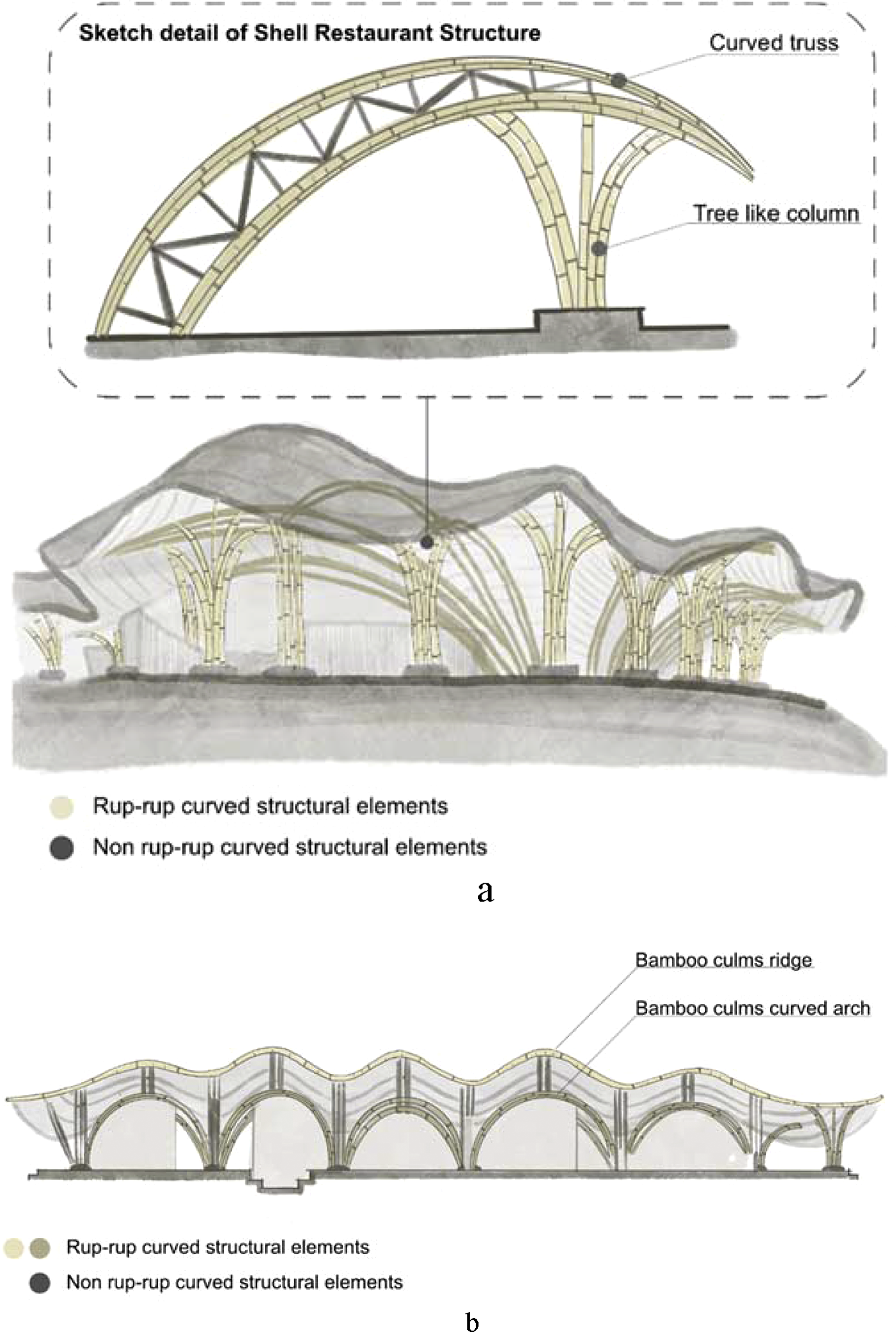
Abdelmagid et al. 10 established a robust geometric basis for the rup-rup technique through parametric computational modeling, enabling the calculation of cut positions and angles required to achieve a target curved bamboo element. Their work demonstrates that tacit knowledge embedded in traditional craft practices can be systematically recorded, simulated, and reinterpreted within digital design and construction processes. Complementing this geometric formulation, the present study shifts attention toward bamboo’s material non-uniformity—variations in culm diameter and internode spacing that directly influence bending behaviour6,12,13—investigating how such heterogeneity may be computationally integrated rather than abstracted. This perspective suggests the need for a framework in which computation does not merely formalize craft logic, but learns from it, capturing craftsmen’s reasoning while maintaining sensitivity to material variability.
This study repositions the rup-rup technique as a medium for translating embodied tacit knowledge into a computational framework. Rather than abstracting bamboo into a uniform geometric entity, the research integrates empirical measurement, parametric modeling, and physical prototyping to encode aspects of craftsman’ reasoning within digital workflows. In doing so, cut placement becomes informed by both culm-specific variability and intended curved structural elements, such as arches and ridge beams. The aim is not to replace craftsmanship with automation, but to formalize its underlying logic so that it can be computationally simulated, evaluated, and meaningfully transferred.
Research problem
Grounded in Polanyi’s notion of tacit knowledge 14 and informed by computational design theory, 15 this research develops a material-informed parametric framework in which measured culm geometry—particularly node distribution and internode spacing—guides the rule-based placement of cuts to align with predefined curved structural forms. Within this framework, reciprocity is operationalized as a continuous exchange: tacit knowledge informs computational logic, while digital simulation refines material intervention, forming an iterative feedback loop between craftsman and computational model. Through systematic testing, the framework examines points of convergence between digital prediction and material response, seeking reproducible yet adaptive outcomes that preserve the craftsman’s intuitive agency.
The study pursues the following research questions: (1) How can the tacit knowledge embedded in the rup-rup technique be translated into parametric rule logic? (2) How does the integration of culm-specific material variability influence the geometric accuracy and reproducibility of computational bamboo bending relative to target curvature? (3) In what ways can reciprocal feedback between computation and craftsmanship enhance the adaptability and transferability of traditional construction knowledge?
Scope
This study focuses on the rup-rup bending technique as practiced with Gigantochloa apus (G.Apus), a locally abundant bamboo species in tropical and subtropical regions of Southeast Asia, like Indonesia, Thailand, Myanmar, and northeastern India. 16
The investigation is further limited to manual full-scale fabrication guided by augmented reality overlays, without the use of mechanical bending jigs or automated cutting systems. While the findings demonstrate a proof of concept for reciprocal craft–digital framework, their generalizability is constrained by sample size, species-specific behaviour, and controlled workshop conditions. Environmental factors such as moisture content, temperature, and long-term structural performance were not fully examined. Consequently, the study’s outcomes represent a computationally informed interpretation of craft practice, which should be further validated through broader material testing and community-based applications.
State of the art
Digital computation of rup-rup technique
Most of the research addressing the rup-rup technique presents it as a documented craft procedure, outlining wedge-cut configurations, bending sequences, and structural implications.6,9,11,17 These studies capture the tacit dimensions of the practice, highlighting the craftsmen’s embodied judgment in manipulating curvature. The rup-rup technique employs a series of V-shaped incisions—a process internationally recognized as the slashing or V-cut technique (Figure 4).5,9 This method strategically removes material from the lower surface while keeping the upper fibers continuous. The upper region (typically ½, ⅓,¼ of the culm thickness) remains intact to preserve tensile continuity, while the lower portion (½. ⅔. ¾) is incised with repetitive V-cuts to allow controlled compression and curvature. The number, spacing, and depth of these cuts depend on the desired curvature radius and bamboo species. Rup-rup techniques.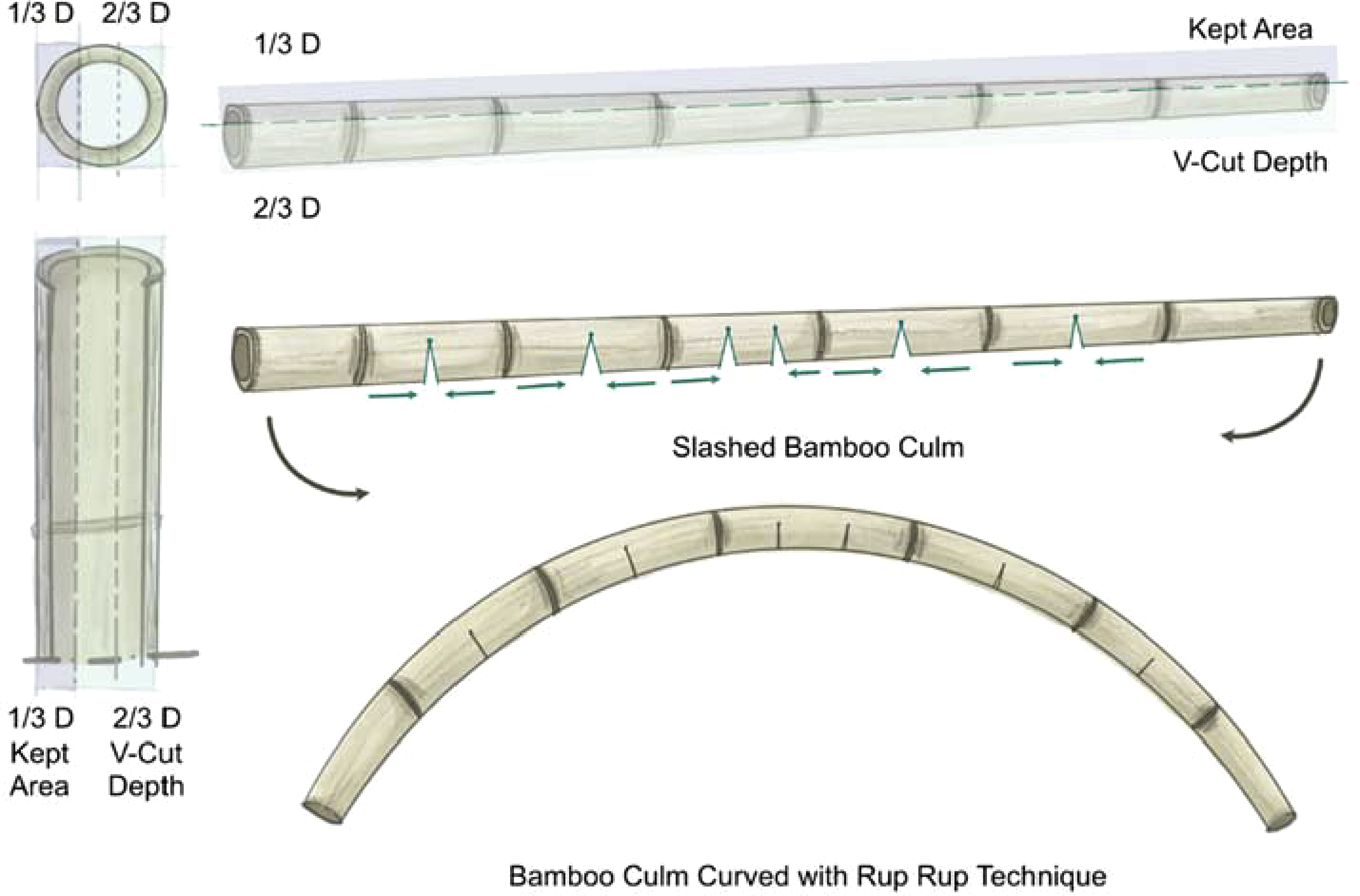
However, only a limited number of studies have progressed from describing rup-rup as a craft procedure to formalizing its cutting logic computationally or mathematically. Notable examples include polygon- or curvature-based notch parameterization approaches 18 and algorithmic reinterpretations of rup-rup for achieving target curves within digital modeling environments.10,19
Villanueva et al. 18 define cut positions mathematically in relation to curvature radius and stress distribution along the tensile fibers, primarily within regular arch geometries. Moreover, Abdelmagid et al., 10 extend the computational modeling of the rup-rup techniques to more complex curved configurations, enabling its application to doubly curved. In that work, the authors developed a geometric simulation to reproduce the bending behaviour of bamboo using the rup-rup method. The digital formulation begins with a reference curve representing the culm’s median axis, separating the intact tensile surface from the incised compression region. A tubular geometry is generated along this axis and proportionally adjusted to reflect the typical wall distribution in rup-rup bending. The curve is discretized into segments, and local tangents define curvature direction. Intersections between adjacent tangents determine preliminary V-cut locations, while their angular difference defines cut width and corresponding material removal required to achieve the target curvature. This “tangent-curve” strategy translates manual heuristics into a rule-based geometric system, establishing a computational interpretation of rup-rup. However, the method primarily operates on geometric abstraction and does not inherently account for culm-specific variability—such as internode distribution, diameter irregularity, or elastic response—which critically influence actual bending behavior.
Despite these advancements in computational formalization, the consideration of culm-specific geometric variability remains limited. Existing models primarily operate on idealized or uniform representations of bamboo geometry. In practice, however, such non-uniform characteristics critically influence bending behavior, and the feasibility of cut placement. The absence of systematic integration of this variability reveals a gap between geometric abstraction and material reality, leading to the need for a parametric framework that explicitly incorporates culm-specific geometry into the computational logic of rup-rup.
Non-uniform culm geometry in material-informed parametric logic
Bamboo culms exhibit inherent geometric non-uniformity along their longitudinal axis: variations in diameter tapering, wall thickness distribution, and internode spacing occur within a single element, 12 directly influencing bending response. 6 Moreover, this variability spans a wide range and follows species- and growth-dependent patterns rather than uniform linear progression, 20 unlike industrial materials characterized by homogeneous sectional properties, bamboo presents a continuously shifting geometric profile that challenges predictive modeling.
Recent computational studies have begun to acknowledge bamboo’s inherent geometric variability, employing digital measurement workflows, scanning technologies, and parametric representations to capture culm-specific geometric data. 21 These approaches represent a shift toward material-informed modeling, moving beyond idealized cylindrical abstractions and treating bamboo’s unique morphology as computational input. However, the primary focus in much of this work remains on structural evaluation, optimization, or form-finding framework,21,22 rather than on construction-driven decision logic that directly guides cut placement and fabrication processes.
While geometric variability is increasingly measured and digitally represented, it remains insufficiently embedded within the computational reasoning that governs construction decisions. This limitation is particularly evident in incision-based bending techniques such as rup-rup, where cut placement interacts directly with internode boundaries, local diameter fluctuation, and sectional stiffness variation. The absence of systematic integration of non-uniform geometry into parametric cut logic reveals a gap between material-informed modeling and fabrication-aware computational frameworks.
Research gap
Despite advancements in computational modeling of rup-rup and increasing recognition of bamboo’s geometric variability, the integration of culm-specific non-uniformity into fabrication-oriented parametric logic remains limited. Existing approaches primarily abstract curvature geometrically or incorporate variability for structural evaluation but seldom formalize how measured culm geometry informs construction decisions such as cut placement. As a result, a disconnect persists between material-informed modeling and craft-informed fabrication logic. This study addresses this gap by developing a material-informed parametric framework that embeds culm-specific geometry directly into the computational reasoning of rup-rup cut positioning.
Methodology
The study follows an experimental–computational research structure consistent with established design research methodologies, where empirical observation informs prescriptive model development and iterative validation 23 to translate tacit knowledge of the rup-rup bamboo bending technique into a material-informed parametric framework.
The study integrated observation of craftsmanship, geometric measurement, parametric modelling, and physical full-scale prototyping. The workflow was structured into five interconnected stages: (1) craft observation and tacit knowledge extraction, (2) geometric and material data acquisition, (3) parametric modeling and script development, (4) controlled experiment design by full-scale prototyping, and (5) validation and analytical evaluation.
Stage 1: Craft observation and tacit knowledge extraction
(Addressed RQ 1)
This phase employed a qualitative, practice-based approach to uncover the tacit decision logic embedded in the rup-rup technique. Direct observation of experienced bamboo craftsmen was conducted during live bending processes, and the activities were documented through video recordings, annotated sketches, and open-ended interviews designed to elicit implicit reasoning rather than predefined responses. Particular attention was given to how craftsmen determine cut spacing relative to curvature targets, adjust incision depth near internodes, respond to local diameter variation, and rely on tactile feedback during incremental bending. The observational and interview data were analyzed to identify recurring geometric heuristics and decision patterns. These were subsequently abstracted into rule categories—such as compression-side incision boundaries, tangent-aligned cut orientation, curvature segmentation, and internode-aware cut avoidance—thereby translating embodied craft knowledge into structured rule statements suitable for parametric encoding.
Stage 2: Geometric and material data acquisition
(Addressed RQ 2)
This phase focused on capturing culm-specific geometric variability through direct manual measurement rather than digital scanning, to maintain alignment with low-tech construction contexts. Two primary geometric characteristics were measured: internode length and nodal diameter, which directly affect curvature continuity and flexibility during the rup-rup process. A total of twenty-one bamboo specimens (the number of specimens will be elaborate in stage 4) were selected to represent a range of natural variability. Twenty-one specimens were documented, with careful recording of each internode length and nodal diameter using precision calipers and photographic reference grids. These real measurements provided an empirical dataset that reflects the natural irregularity of the material. The resulting measurements provided empirical input for the computational model.
Stage 3: Parametric modeling and script development
(Addressed RQ 1 and RQ 2)
In this phase, two parametric scripts were developed to investigate the translation of rup-rup logic into a rule-based computational framework. (1) Tangent-Curve Method. The first script replicated the geometric formulation established by Abdelmagid et al.
10
This method translated curvature geometry into v-cut parameters by constructing tangent lines along the reference curve (K) and projecting their intersections. The resulting script generated variable cut widths based on local curvature segmentation and offset relationships between the upper (tension) and lower (compression) surface curves; and (2) Length-Differential Method. The second script developed in this study based on the tacit knowledge extracted through observation, embedded rule-based decisions related to internode spacing, diameter, and curvature responsiveness. Unlike the Tangent-Curve Method, this approach predefined a constant V-cut width and computed the required number of cuts within each internode to achieve the target curvature, thereby reversing the direction of geometric determination.
Both models were implemented in Rhinoceros 3D and Grasshopper and incorporated a predefined target curvature as the geometric objective. While the Tangent-Curve Method operated primarily through curvature-driven geometric abstraction, the Length-Differential Method integrated culm-specific measurements into its rule formation. This dual-framework structure enabled a systematic comparison between established computational logic and tacit-informed parametric reasoning, allowing the influence of material variability on geometric accuracy and reproducibility to be evaluated.
In addition, recognizing that geometric variability influences elastic bending behavior, both models were tested under two conditions: with and without the incorporation of literature-based Young’s Modulus (E) and Modulus of Rupture (MoR) parameters to simulate natural bending response. In this study, average values reported for G.Apus by Nugroho et al. 24 were adopted, with E approximately 18 MPa and MoR approximately 67 MPa. The relatively lower E of G. apus compared to stiffer bamboo species indicates reduced bending stiffness, allowing the culm to undergo curvature with lower stress concentration before reaching rupture. These properties make G. apus particularly suitable for controlled incision-based bending techniques such as rup-rup.
Stage 4: Controlled experiment design by full-scale prototyping
(Addressed RQ 2 and RQ 3)
This phase employed a controlled experimental design to compare computational and craft-based bending approaches. Three groups were established: (1) A control group using traditional rup-rup techniques executed by experienced craftsmen without computational guidance. (2) Treatment Group 1, applying the Tangent-Curve Method under two conditions—without and with incorporation of Young’s Modulus (E) and Modulus of Rupture (MoR); (3) Treatment Group 2, applying the Length-Differential Method under the same two elasticity conditions.
Each treatment group consisted of five full-scale samples to enable assessment of reproducibility. Manual fabrication was conducted without mechanical bending jigs.
Stage 5: Validation and analytical evaluation
(Addressed RQ 2 and RQ 3)
In the final phase, validation combined quantitative and qualitative assessments. Following prototyping, Augmented Reality (AR) overlays implemented through Meta Quest 3 were used to superimpose the predefined target curve onto each physical specimen, enabling direct spatial comparison between predicted and achieved curvature. Curvature deviation was measured in situ relative to the digital reference, and deviation magnitudes were categorized into low, medium, and high ranges to evaluate geometric accuracy across specimens. This comparative framework enabled assessment of. (1) The influence of computational logic relative to traditional craftsmanship, (2) The role of material-aware modeling, and (3) The effect of incorporating elastic parameters on bending accuracy and reproducibility.
In parallel, craft performance was evaluated qualitatively through post-fabrication interviews to document perceived usability, adaptability, and clarity of rule application. The combined analysis allowed identification of the computational script that most effectively captured target curvature while maintaining reproducibility and practical suitability for non-expert users.
This feedback process established a reciprocal exchange between computational prediction and craft-based adaptation, informing subsequent refinement of the parametric logic. The evaluation focused on improvements in geometric accuracy, reduction in deviation magnitude, and the transferability of rule logic to non-expert participants, thereby assessing both the technical performance and the practical applicability of the proposed material-aware parametric framework.
Results
Translation of tacit knowledge into parametric logic
Direct observation of craftsmen during rup-rup bending revealed that incision placement and curvature control are governed by adaptive, situation-specific heuristics rather than fixed geometric rules. Four recurring decision patterns were identified: (1) Chord-based baseline marking to interpret curvature demand, (2) Incremental widening of V-cuts to adjust bending response, (3) Internode-aware modification of cut positions, and (4) Iterative tactile evaluation during bending to regulate smoothness and prevent fracture.
These heuristics demonstrate that rup-rup bending is not executed through predetermined cut dimensions but through continuous adjustment informed by material feedback and curvature perception.
When translating the digital target curve into workshop markings, craftsmen reconstructed curvature through chord-based measurement rather than direct geometric projection (Figure 5(a)). A straight baseline corresponding to the curve’s chord was established, and perpendicular distances were marked at regular intervals to approximate curvature variation (Figure 5(b)). At full scale, this was reproduced using a straight culm as the baseline and a flexible bamboo strip to trace the curve. The resulting ground markings served as reference guides for determining incision positions and depths. This process reveals that curvature interpretation in practice is mediated through physical reference systems rather than abstract curvature parameters. Observed Rup-Rup Techniques’ Step-by-step. (a) Marking the bamboo based every 50 cm. (b) Measuring the height for each point and create the bamboo split guide. (c) Slashing the bamboo culms to make V-cuts. (d) Tying the slashed bamboo into the bamboo split guide. (e) Tying another layer of split bamboo to strengthen the slashed bamboo culms. (f) Craftsmen re-measure the height of a certain point to make sure the correct curvature of slashed bamboo culms.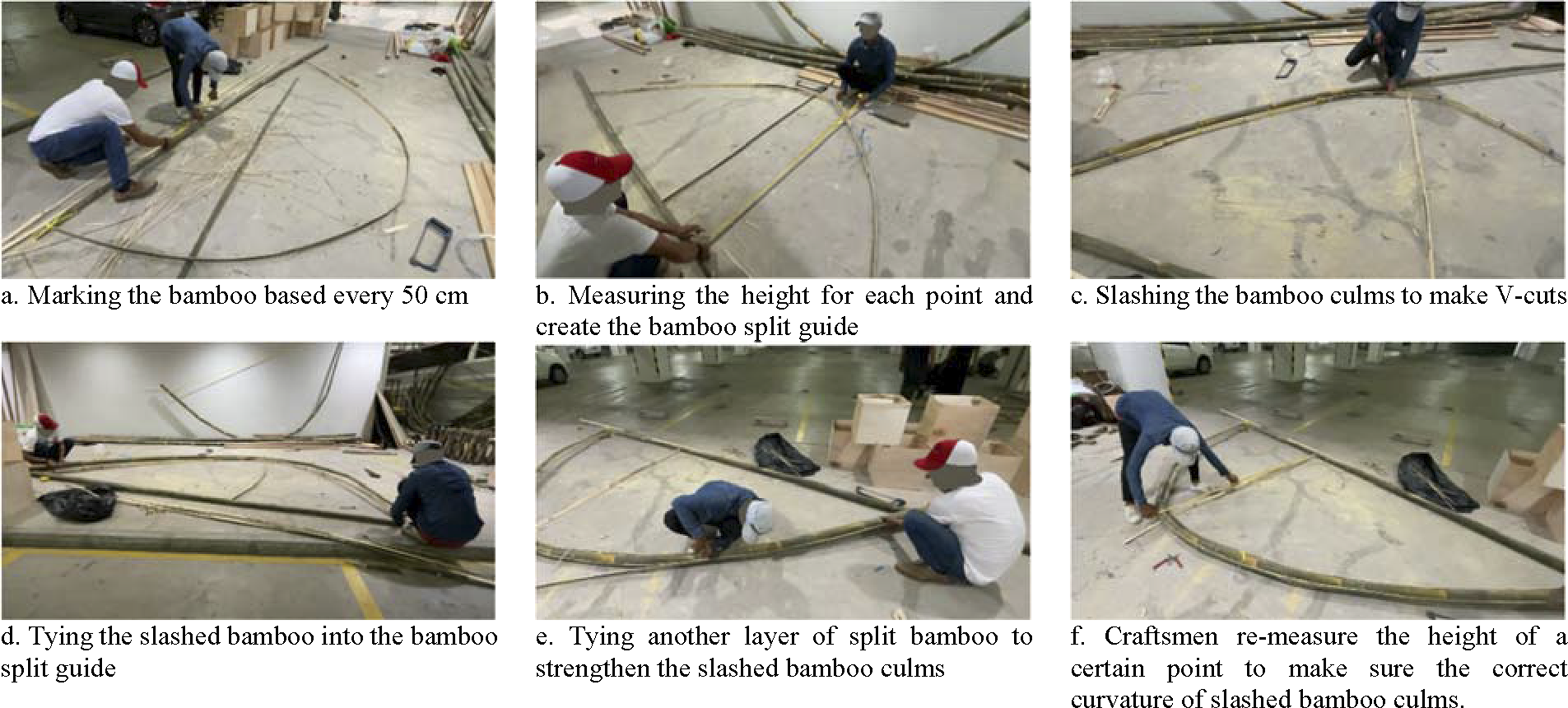
Further observation showed that V-cut width and spacing are dynamically balanced to maintain curvature continuity (Figure 5(c) and (d)). Craftsmen typically initiate bending with narrow incisions and incrementally widen them if curvature is insufficient. When curvature becomes overly sharp or angular, widening is reduced to preserve smoothness. Excessively dense spacing increases fracture risk, particularly near internode boundaries, where sectional stiffness changes. These adjustments indicate that rup-rup logic operates through a responsive equilibrium among cut width, spacing, and material resistance.
Repeated execution of the traditional rup-rup process demonstrated notable variability in curvature outcome across specimens. Even when targeting the same predefined curve, smoothness and continuity differed depending on the craftsman’s control of cut width and spacing. Minor variations in incision density produced measurable differences in curvature regularity, indicating that the process is highly sensitive to operator judgment and manual precision. This dependence on embodied expertise contributes to limited reproducibility and highlights the difficulty of transferring the technique to non-expert practitioners.
The observed operator-dependent variability revealed that curvature smoothness is highly sensitive to manual adjustment of cut width. In particular, inconsistent widening of V-cuts frequently produced angular discontinuities, while excessive narrowing required additional incisions that increased fracture risk. In response to this finding, the Length-Differential Method adopted a stabilized incision strategy in which cut width was predefined as a constant parameter, and curvature accommodation was achieved by varying the number of cuts within each internode segment. This inversion of logic reduced reliance on subjective widening decisions and aimed to preserve curvature continuity independent of individual craftsmanship quality.
Translation of geometry variability into parametric logic
Recording and measurement of material properties
Previous studies have reported generalized morphological ranges for G. apus, including typical internode spacing and nodal diameter variation. 12 Initially, these published G.Apus physical properties were incorporated into the parametric model to approximate geometric variability through proportional relationships. This served as a baseline for establishing proportional relationships within the parametric model. However, simulation outcomes revealed that generalized variability ranges were insufficient to predict the cut’s location accurately. The high degree of longitudinal irregularity across individual culms produced deviations that could not be reliably represented through averaged or range-based parameters.
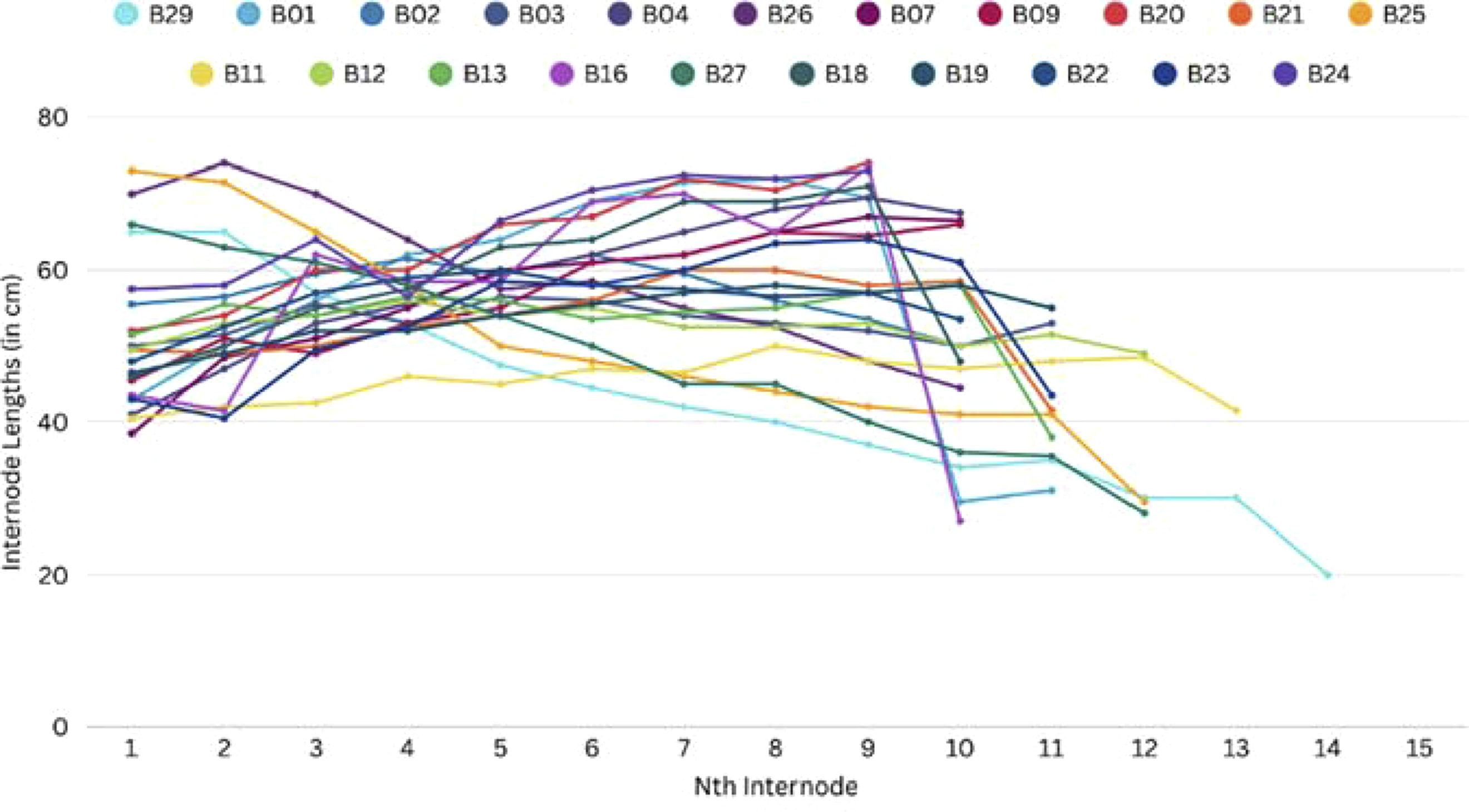
To address this limitation, culm-specific measurements were conducted for each specimen used in the rup-rup bending experiments. Twenty-one bamboo culms were manually documented, with nodal diameter (Figure 6) and internode length (Figure 7) recorded sequentially along the longitudinal axis using precision calipers and photographic reference grids. This specimen-based dataset captured the natural irregularity of each element, enabling direct integration of measured geometric variability into the material-aware parametric model. The results indicate that accurate curvature prediction requires element-specific geometric input rather than generalized morphological assumptions. Diameter of each node bamboo samples. Internode lengths of bamboo samples.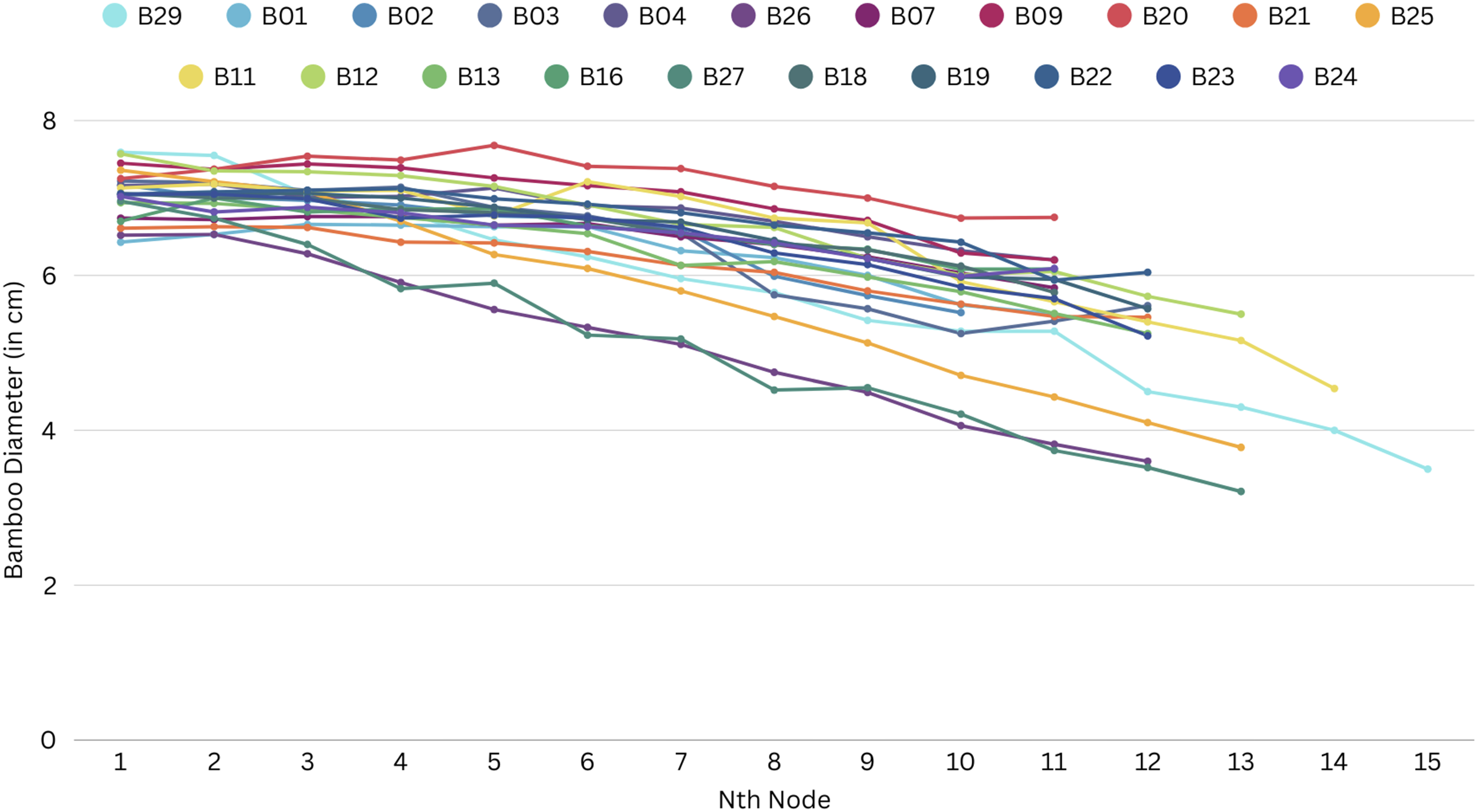
Integration of material-informed geometric parameters into the parametric framework
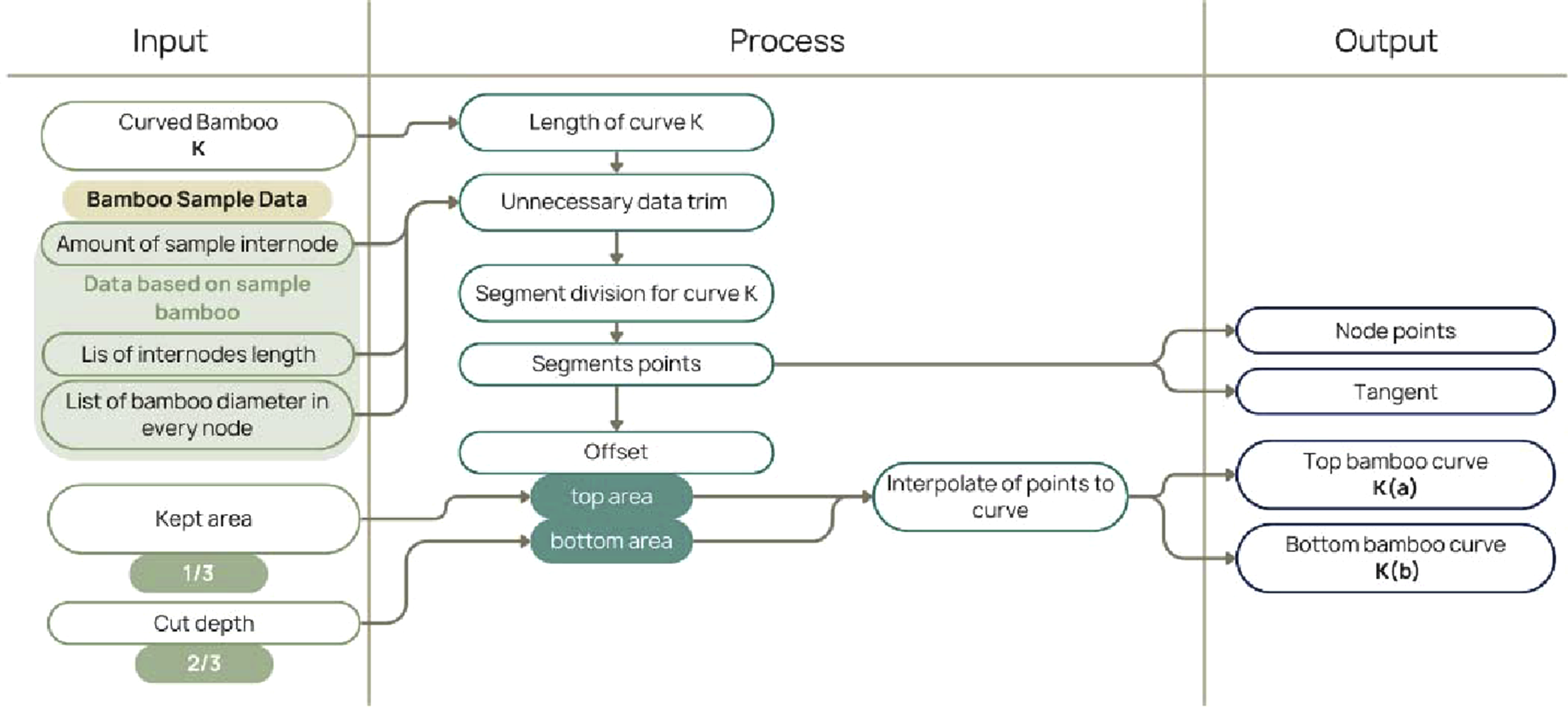
The recorded geometric data—either from the previously published G.Apus morphology 12 or manual measurements (Figures 6 and 7)—were implemented within a Grasshopper-based parametric framework to simulate the rup-rup bending process with sensitivity to material variability. In this workflow, internode length data defined the node positions along the reference curve, serving as the geometric framework for the bending simulation. These node positions also established the starting points for determining potential v-cut locations, ensuring that cuts were placed only between nodes and that the bending logic reflected the actual physical constraints of the bamboo culm.
The modeling process began with a single reference curve representing the median bending trajectory, which was subdivided according to the measured internode distances. Each subdivision generated local coordinate frames used to control curvature direction and offset generation. The diameter data were then applied to determine proportional displacements—one-third (⅓) of the diameter toward the upper curvature and two-thirds (⅔) toward the lower curvature—corresponding to the expected compression and tension zones. These displacements were applied perpendicularly to the curve frames to preserve geometric continuity.
Two Grasshopper scripts were developed to test the reliability of different data sources. The first (highlighted in Figure 8) utilized a generalized reference dataset, while the second (highlighted in Figure 9) incorporated manually recorded measurements from twenty-one bamboo samples. The comparison revealed that the reference-based model could not adequately capture the irregular spacing and dimensional variations observed in real bamboo. The wide variability among specimens caused the simulated curvature to deviate from actual bending behavior, indicating that the use of generalized reference data was insufficient for precise modeling. The manual measurement approach, though more time-consuming, provided a significantly higher level of accuracy in representing the real geometric conditions of the rup-rup bending process. Grasshopper definition using a generalized reference dataset. Grasshopper definition using manually recorded measurements.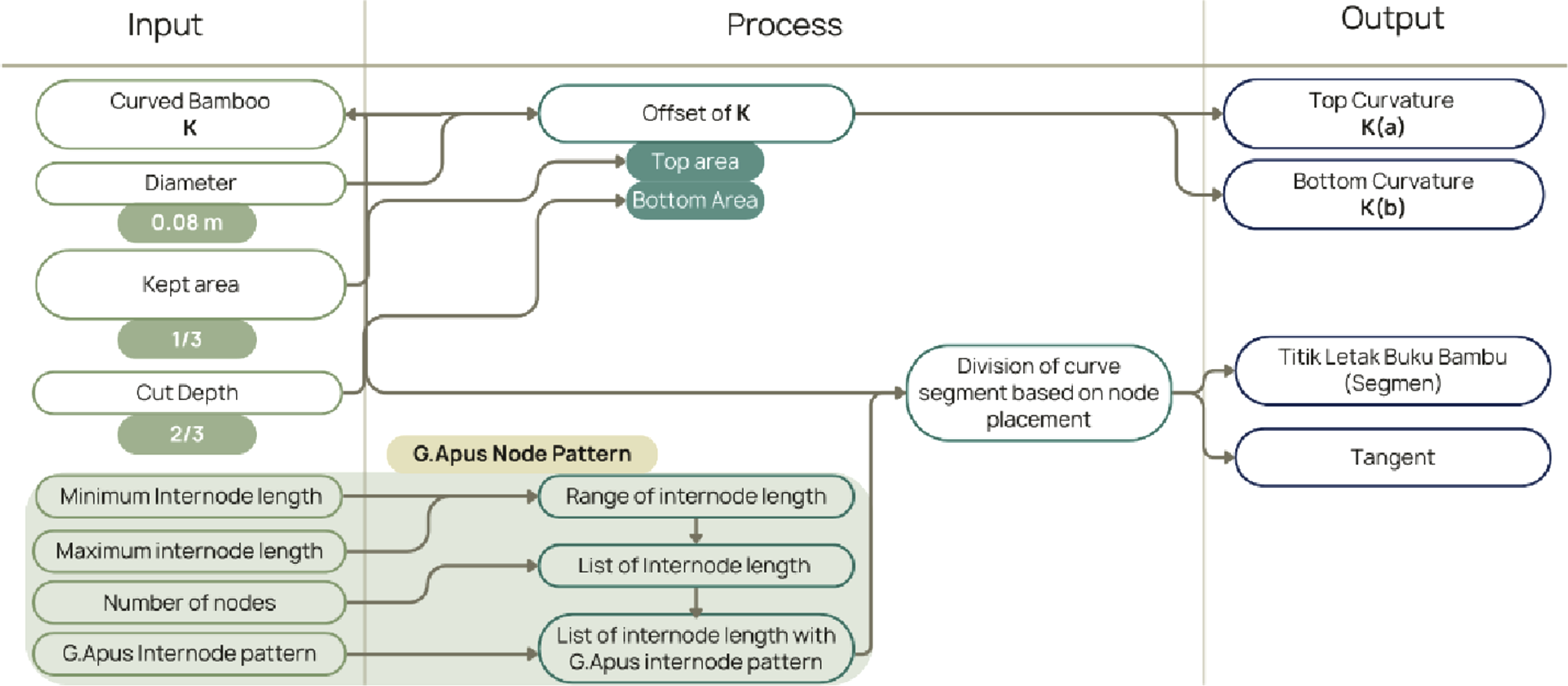
The evaluation of tangent curve method
The tangent-curve method
10
proposed a geometric strategy to simulate bamboo bending through the analysis of curve tangency and intersection, scripted as in Figure 10 and illustrated in Figure 11. This approach encodes the cutting logic by translating the curvature of a reference line (K) into a set of tangential relationships that determine v-cut positions and widths. In this method, tangent lines are constructed for each segmented point along the original curvature (K) and extended in both positive and negative directions (Figure 11(a)). The intersection of tangent lines between successive segments (Figure 11(b)). Is then projected back onto curve K; these projected points define the cutting positions (Figure 11(c)). The cutting angles are calculated by evaluating the angular difference between two consecutive tangents, yielding the required angle of incision for each v-cut (Figure 11(c)). To generate the cutting guidelines, the length of the original curvature (K) is linearized into a straight baseline representing the unbent bamboo culm (Figure 11(d)). The same procedure is applied to the upper and lower curvature profiles derived from diameter data. The identified cut points from both curves are connected by lines representing incision planes. Each line is rotated symmetrically to positive and negative angles—centered at the upper cut points—by half of the calculated cutting angle. The intersections between these rotated lines and the lower curvature yield the cut widths at each segment (Figure 11(e)). From this workflow, the main parameters used are the original curvature (K), internode distance, and diameter at each node, producing the corresponding cut spacing and width for fabrication. Tangent curve method: Pseudo-script. Tangent Curve Method: Step-by-step. a. Dividing the modelled bamboo curved with segment. (b) Addition of the tangent curve line for each segment. (c) Evaluation of the angle between the segment tangent curve S (n) and S (n-1). (d) Modelled straight bamboo culms with segment and node points. (e) Result of v-cut points and angles of the computational parametric workflow with the tangent curved method.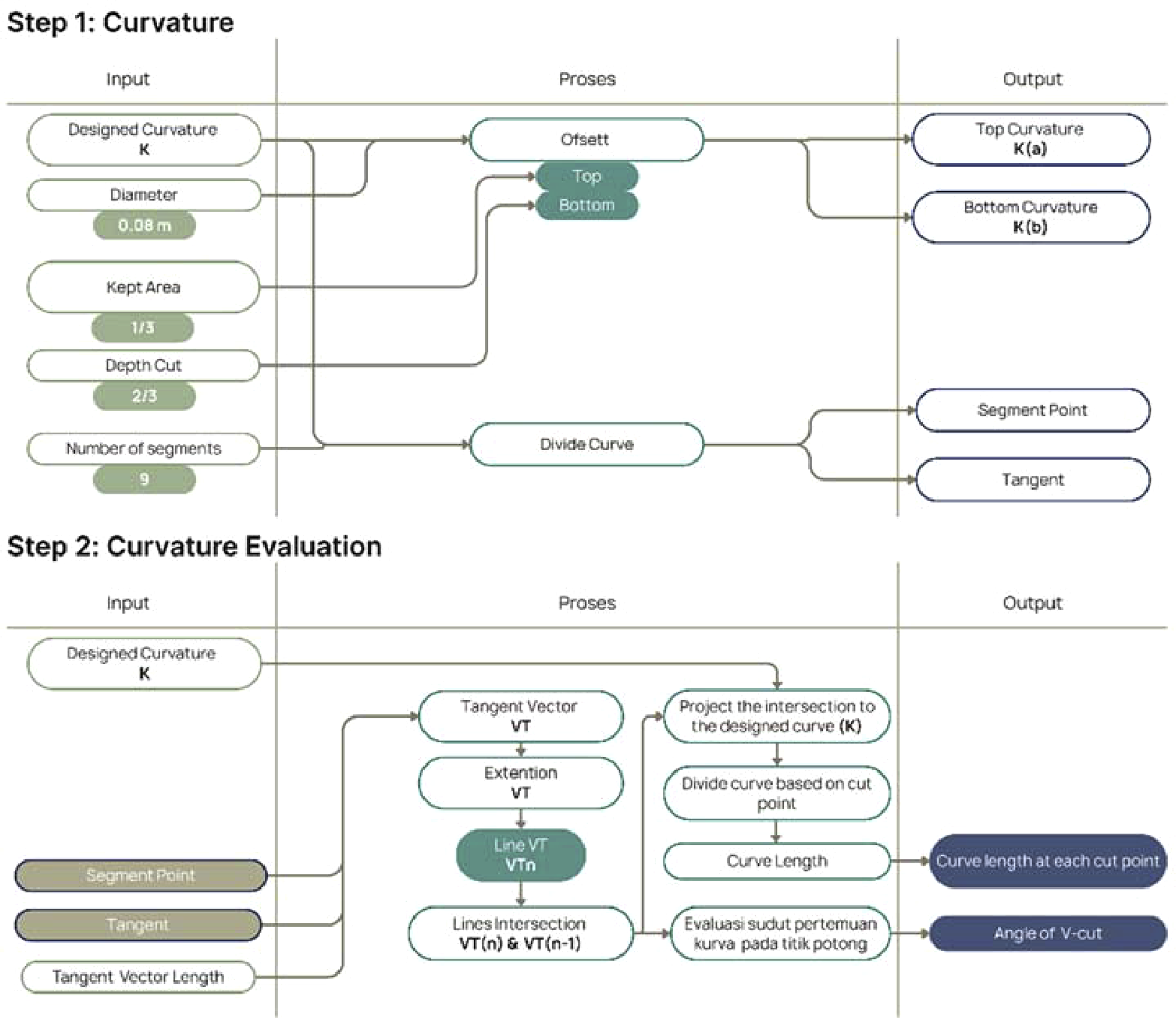
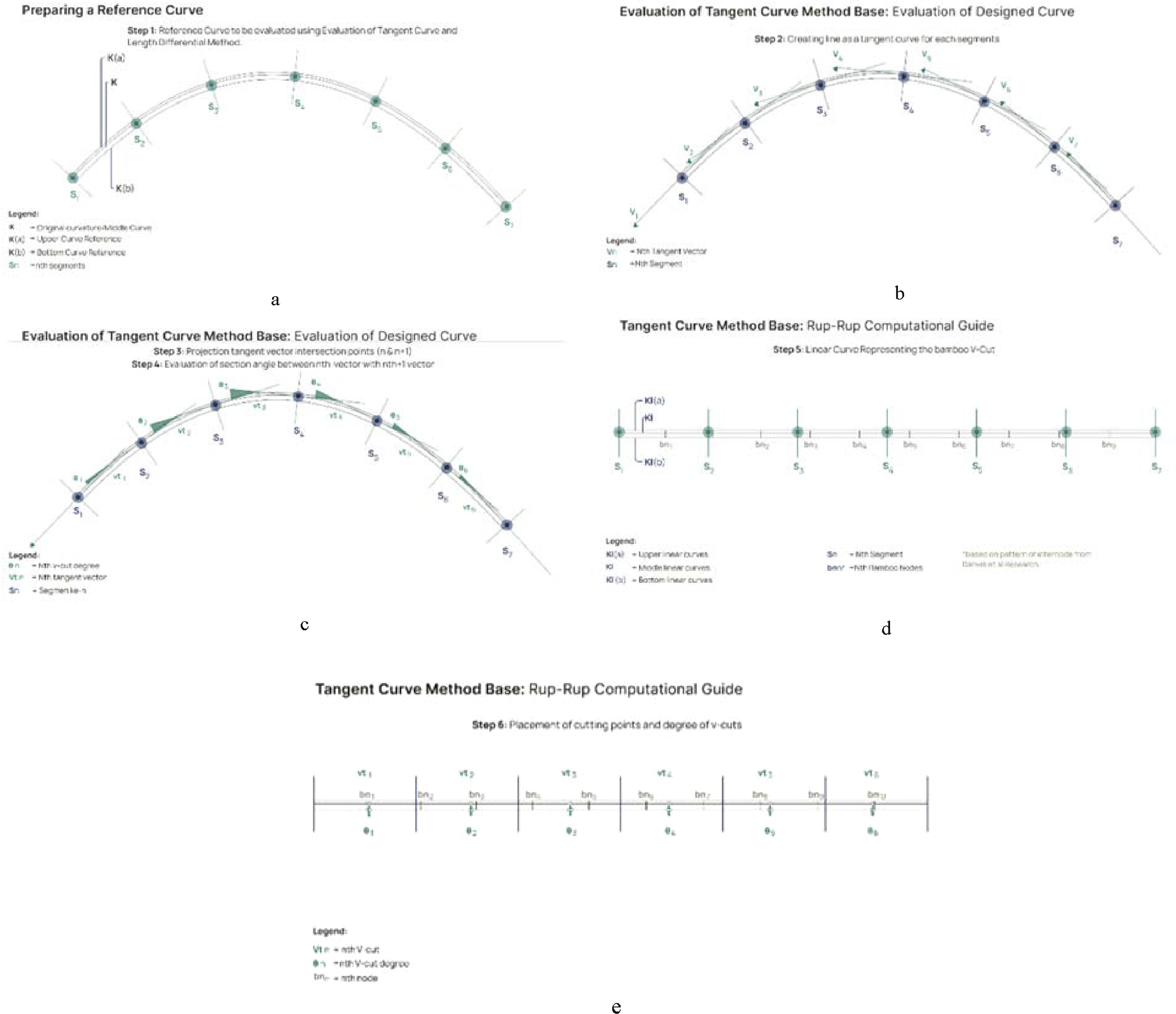
While this method successfully translated curvature geometry into cutting parameters, it functions primarily as a geometric transformation that assumes uniform material behavior. The process does not incorporate the variability in node spacing, diameter, or fiber response that craftsmen adapt to in real bamboo. Moreover, the resulting cut widths vary significantly along the curvature, which often leads to unsmooth or discontinuous bending when physically executed. This variability also makes the v-cut process more complex, as defining precise cut widths for each segment becomes labor-intensive and difficult to control during fabrication. As a result, when applied to physical bending, the simulated curvature frequently deviates from the actual bending behavior. In practice, the tangent-curve method proved effective for conceptual surface modeling but limited for representing the nuanced, material-responsive logic of the rup-rup technique in craft-based construction.
Encoding using the length-differential method
Building upon the insights from tacit craft knowledge and the limitations identified in the tangent-curve approach, a new workflow—termed the length-differential method—was developed. This method was designed with respect to both the embodied logic of craftsmen and the computational structure of the prior model, aiming to balance intuitive making with parametric precision. In this approach, the user first defines a constant width for the v-cut rather than allowing it to vary between segments. The digital model then calculates how many cuts are required within each internode to achieve the desired curvature. This inversion of logic—from number-defined width to width-defined number—simplifies the fabrication process and produces a smoother, more continuous curvature that is easier to reproduce in physical bending (Figure 12). Length differential method: Pseudo-script (1st development).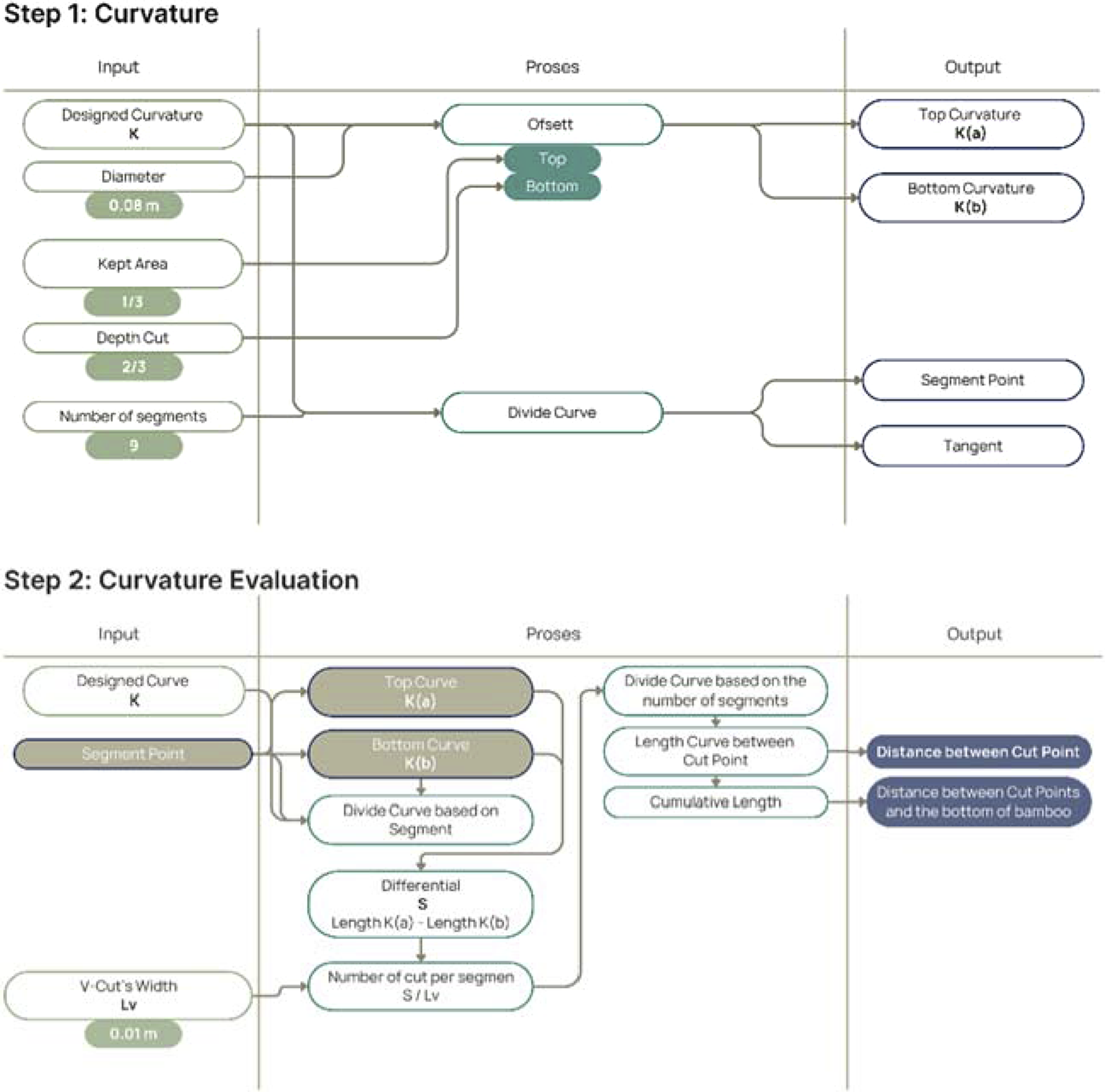
After generating the segment points along the reference curve (K), corresponding upper and lower curves are created to represent the external and internal boundaries of the bamboo culm (Figure 13(a)). These curves are shattered into segments according to the measured internode distances, reflecting the actual morphological characteristics of the material. The lengths of the upper and lower segments are then evaluated, and their differences are divided by the user-defined v-cut width to determine the required number of cuts per segment (Figure 13(b)). This process produces multiple v-cuts of equal width within each internode—contrasting with the tangent-curve method, which generated a single cut with variable width (Figure 13(c)). Length Differential Method: Step-by-step (1st Development). (a) Evaluation of the upper curve and bottom curve segment length. (b) Amount of V-cut needed in each segment based on the length differential method. (c) Result of v-cut points and angles of the computational parametric workflow with the length differential method.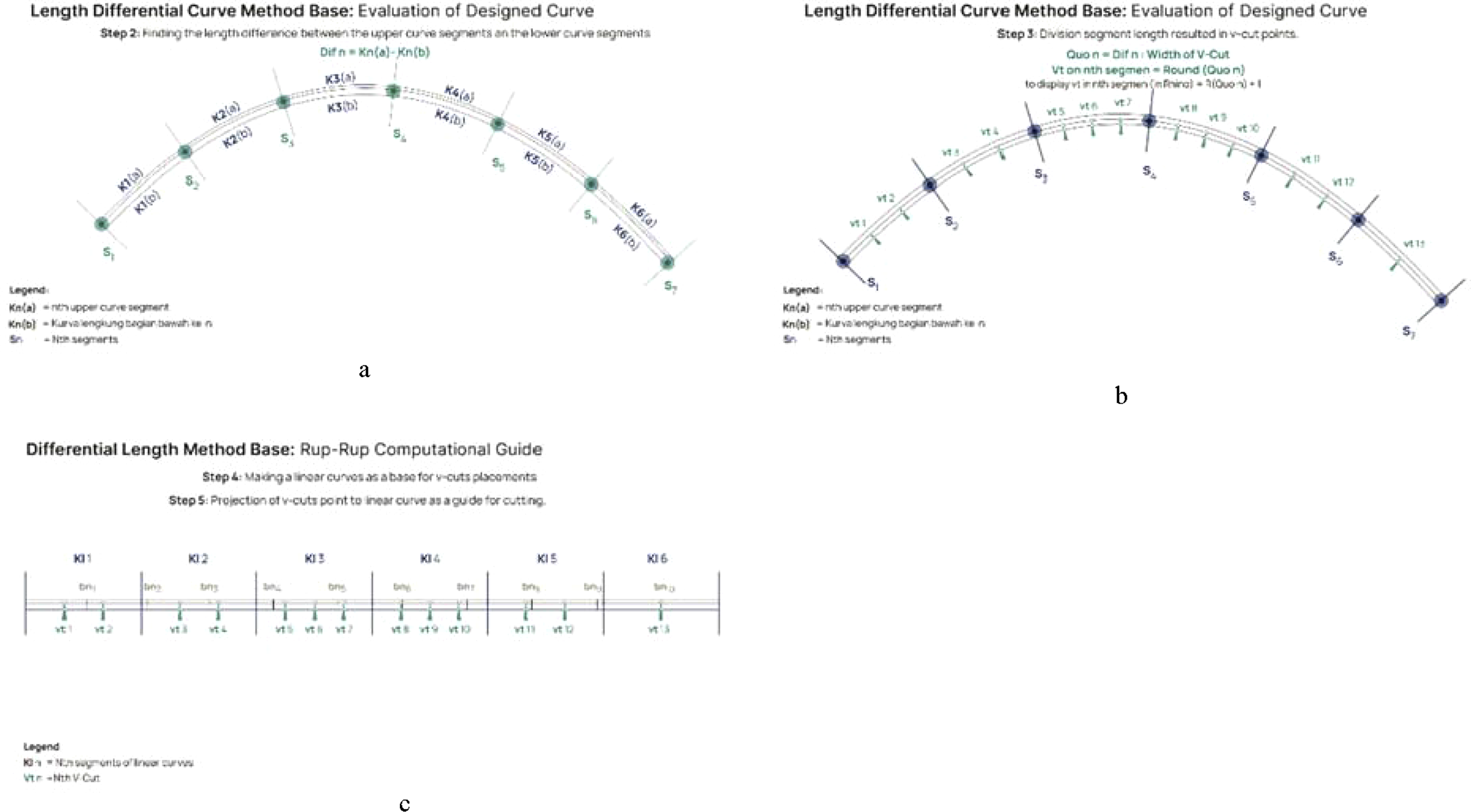
Incorporating E and MoR into the computational logic
To further align the digital model with natural bending behaviour, the mechanical properties of bamboo—its Young’s Modulus (E) and Modulus of Rupture (MoR)—were incorporated into the computational logic, scripted as in Figure 14 and illustrated in Figure 15. Because bamboo’s bending capacity is governed by its elastic and rupture limits, these parameters define the range of curvature that can be achieved safely without cracking or loss of stiffness. Experimental studies have shown that E and MoR vary significantly with culm diameter and wall thickness, which directly influence the bending response and allowable curvature. In this study, the wall thickness of a bamboo culm can be assumed to be approximately 10% of the external diameter (D/t ≈ 10), although the actual value varies depending on the species and the position along the culm.
25
Length differential method with E-MoR: Algorithm (2nd development). Length Differential Method with E-MoR: Step-by-step (2nd Development). (a) Dividing the modelled curved bamboo into segments. (b) Finding the radius of every segment curvature. (c) Evaluation if each segment curvature exceeds the natural bending capabilities, therefore needing a V-cut. (d) Evaluation of the difference between the bamboo bending radius capability and the desired curve radius. (e) Adjustment of the Rup-Rup cutting point guide according to the adaptation of bamboo natural curvature data.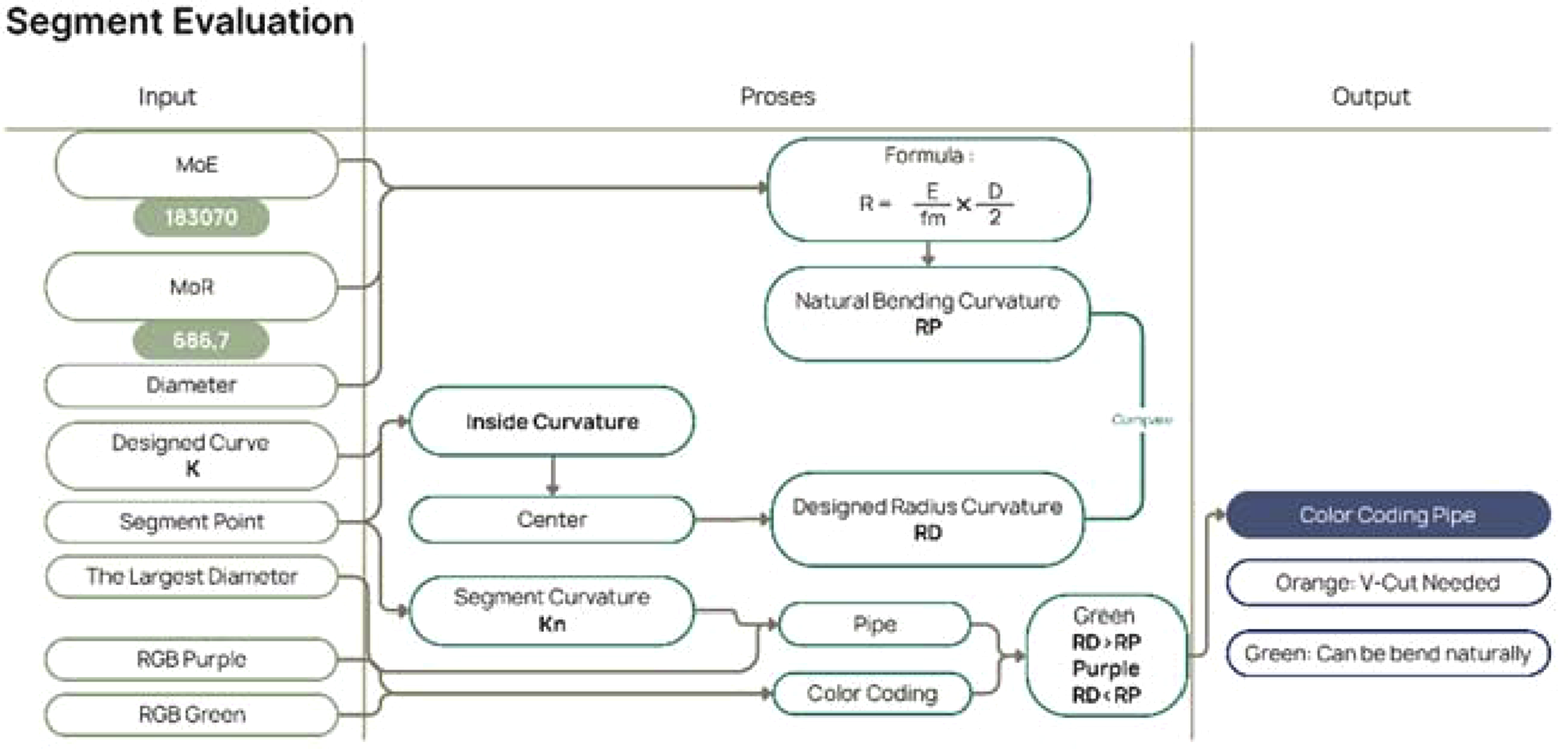
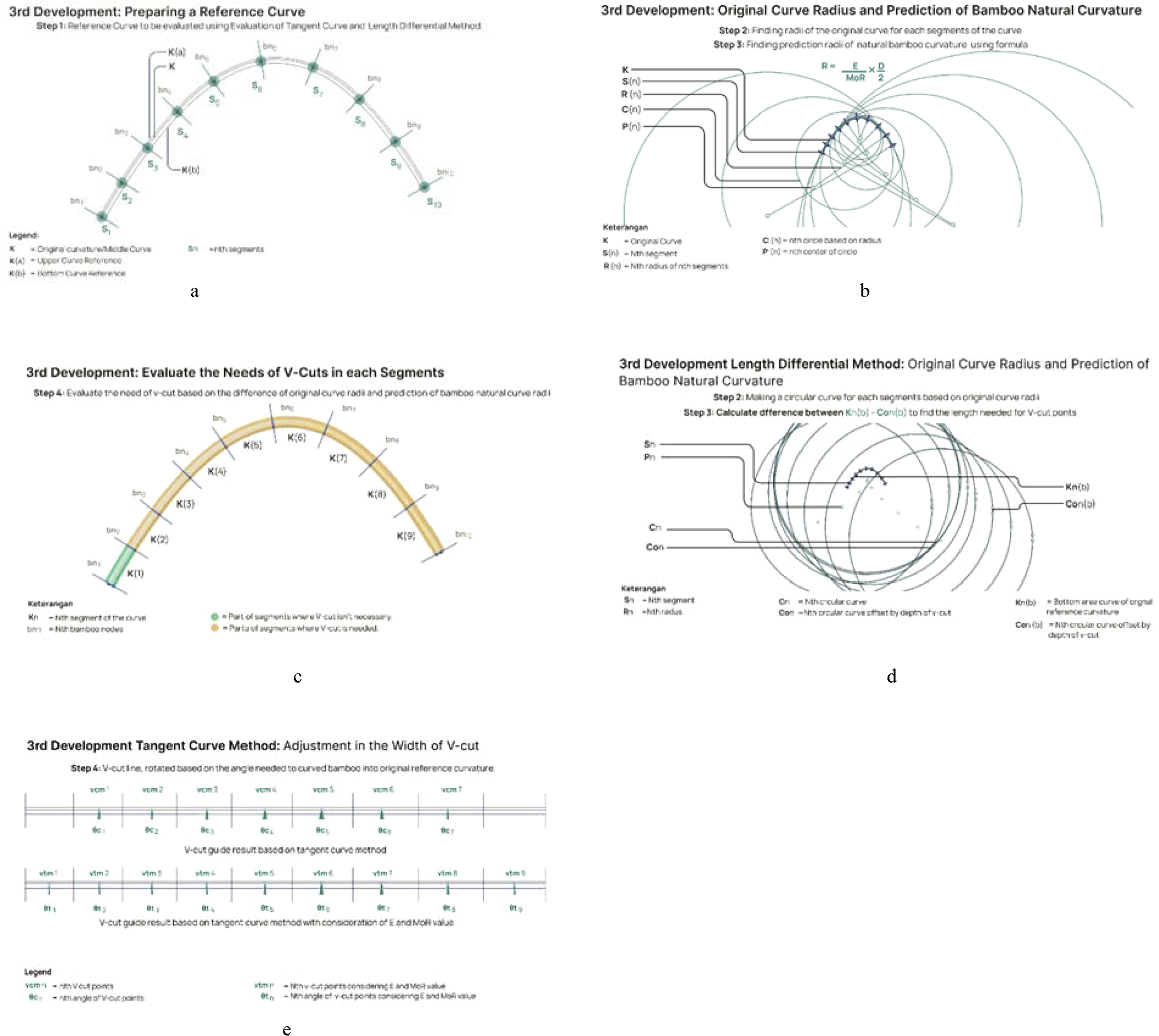
Likewise, full-culm bending analyses demonstrate that failure occurs when curvature-to-thickness ratios exceed critical thresholds, typically through longitudinal splitting or fibre shear5. To maintain the simulated bending within these safe limits, the model evaluates the radius of curvature for each segment and adjusts the number or distribution of v-cuts accordingly. By embedding both geometric variability (internode length and diameter differences) and mechanical behavior (stiffness and strength) into a single parametric framework, the length-differential method produces a model that mirrors the adaptive reasoning of craftsmen while ensuring structural feasibility. The resulting workflow translates intuitive, craft-based adjustments into a reproducible computational logic that is both fabrication-ready and materially faithful to the rup-rup technique.
Comparative performance of tangent-curve methods and length-differential
To examine how each computational strategy is performed in practice, the two methods—the Tangent-Curve and the Length-Differential—were tested through a series of full-scale bending experiments. As detailed in the Method section, four treatment groups were established to explore the influence of both geometric formulation and mechanical constraints: each method was tested with and without the integration of E–MoR parameters. The comparison focuses on three key aspects: curvature accuracy, reproducibility, and suitability for non-expert users, reflecting the balance between computational prediction and practical application in real workshop conditions.
Comparison of curvature accuracy
The accuracy of each computational method in predicting bamboo curvature was evaluated using Augmented Reality (AR) overlay analysis (see Figure 16 for an example). This setup enabled precise spatial alignment between the computed target curve and the physical bending outcome, allowing curvature deviations to be observed and measured in situ. The quantified results are presented as box plots in Figure 17 and further illustrated through deviation distribution analysis in Figure 18. AR overlay on left side, middle side, and right side. Box Plot the results of accuracy testing. Redraw the AR overlay on the prototyping.
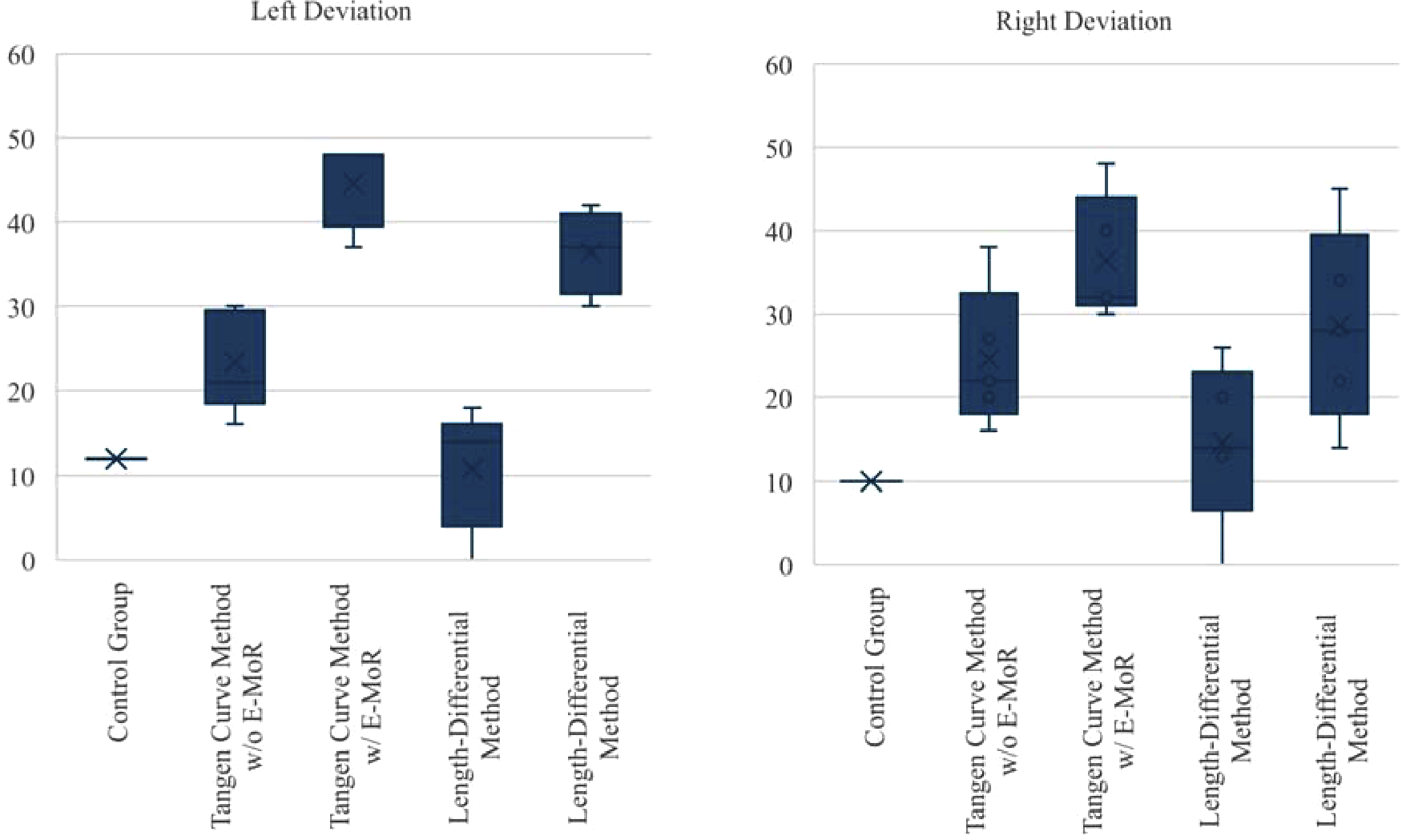
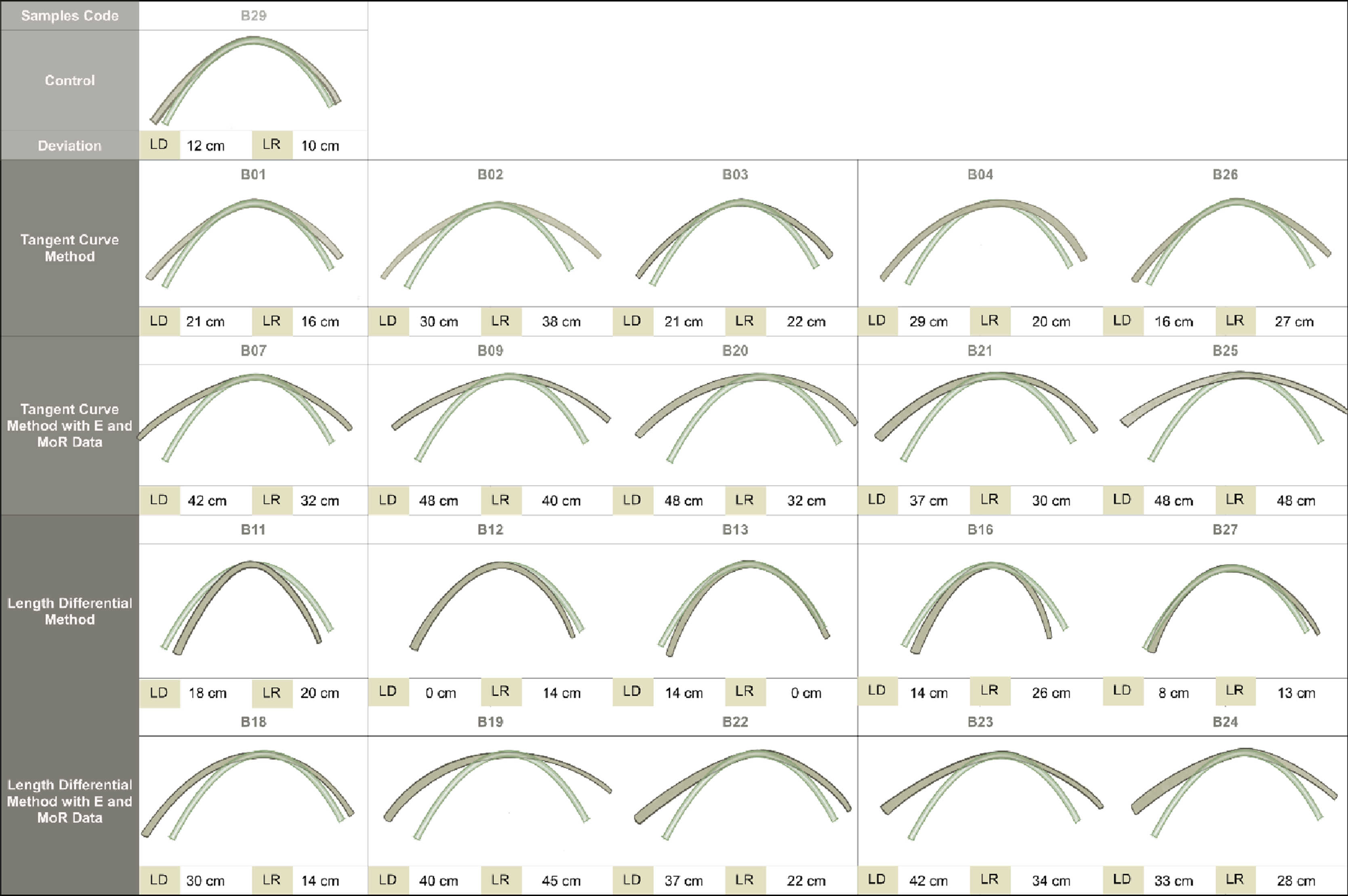
The AR observations revealed a distinct difference in performance between the two computational approaches, illustrated in Figure 19. The Tangent-Curve Method produced bamboo curves that often deviated noticeably from the projected digital line—typically showing distortion at one or both ends of the culm. These irregularities resulted from inconsistent v-cut widths and unequal closure angles, which affected curvature continuity. In contrast, the Length-Differential Method yielded a closer match to the digital reference, producing smoother and more even curvature transitions. By defining a constant v-cut width and adapting the number of cuts per segment, this method achieved higher geometric fidelity and a more controllable bending response. Comparison of accuracy. (a) Tangent curve method. (b) Tangent curve method (MoE-MoR). (c) Length differential method. (d) Length differential method (MoE-MoR).
However, when E–MoR parameters were introduced, the results showed greater deviations in both methods. The inclusion of these mechanical constraints—while theoretically improving predictive realism—reduced the actual bending flexibility during manual fabrication. Because the bending relied on human force and rope tension rather than mechanical jigs, the applied force was often insufficient to achieve the full curvature predicted by the digital model. Consequently, specimens that incorporated MoE–MoR data exhibited under-bending and wider curvature gaps compared to the target AR projection. These findings suggest that while mechanical parameters are valuable for simulation, their physical realization requires controlled or assisted bending mechanisms to fully utilize bamboo’s natural curvature potential.
Comparison of reproducibility and suitability for non-expert users
In addition to curvature accuracy, both computational workflows were evaluated for their reproducibility and suitability for non-expert users. These aspects were examined through fabrication trials conducted by two distinct participant groups: experienced craftsmen familiar with the rup-rup technique and lay participants with no prior experience in bamboo bending or digital modeling. Each group fabricated bamboo specimens using parameters generated from both computational methods. Following the fabrication process, participants were interviewed to reflect on the clarity, usability, and perceived difficulty of each method.
In contrast, the Length-Differential Method proved to be more intuitive and repeatable for both groups. By defining a constant v-cut width and automatically computing the number of cuts per internode, the method produced a simpler and more structured instruction set. Craftsmen appreciated that this logic aligned closely with their habitual estimation process—deciding “how many cuts” to achieve a desired curvature—while lay participants found the uniform spacing easier to measure and replicate. The method reduced dependence on subjective interpretation, allowing both groups to reproduce similar curvature results with fewer deviations.
Recommendation of the length-differential method
Across all evaluations, the Length-Differential Method emerged as the most effective approach for simulating and guiding rup-rup bamboo bending. Compared to the Tangent-Curve Method, it offered higher curvature accuracy, more reproducible results, and clearer usability for both craftsmen and lay participants. Its logic of using a constant v-cut width with adaptive segmentation produced smoother and more predictable bending outcomes, reducing fabrication complexity and user error. While the integration of MoE–MoR parameters introduced higher stiffness and minor deviations in physical results, it provided valuable insight into the limits of bamboo’s elastic behavior. Overall, the Length-Differential Method best reconciles the empirical intuition of craftsmanship with computational precision, making it the preferred workflow for both accurate simulation and practical implementation of the rup-rup technique.
Computational–craft dialogue in fabrication
Observation of the fabrication process revealed that bending bamboo through rup-rup is a dialogue between computation and craft, not a linear execution. While the digital model defined V-cut positions and spacing, the actual process relied on the craftsman’s embodied judgment. Craftsmen continuously compared physical curvature with the AR projection, adjusting cut depth or adding incisions to accommodate stiffness or irregular nodes. The experiments produced a collaborative workflow linking designers, modelers, and craftsmen in a continuous feedback loop (Figure 20). The digital model acts as a responsive framework—a predictive guide that anticipates material behavior while allowing human interpretation. Designers translate geometry and material data into parameterized V-cut configurations incorporating MoE and MoR thresholds. Craftsmen execute the process under AR guidance, refining cuts through tactile feedback. These adjustments are re-entered into the model, establishing an iterative dialogue where computation and craft co-evolve in reciprocal interaction. Hybrid workflow of the rup-rup fabrication process.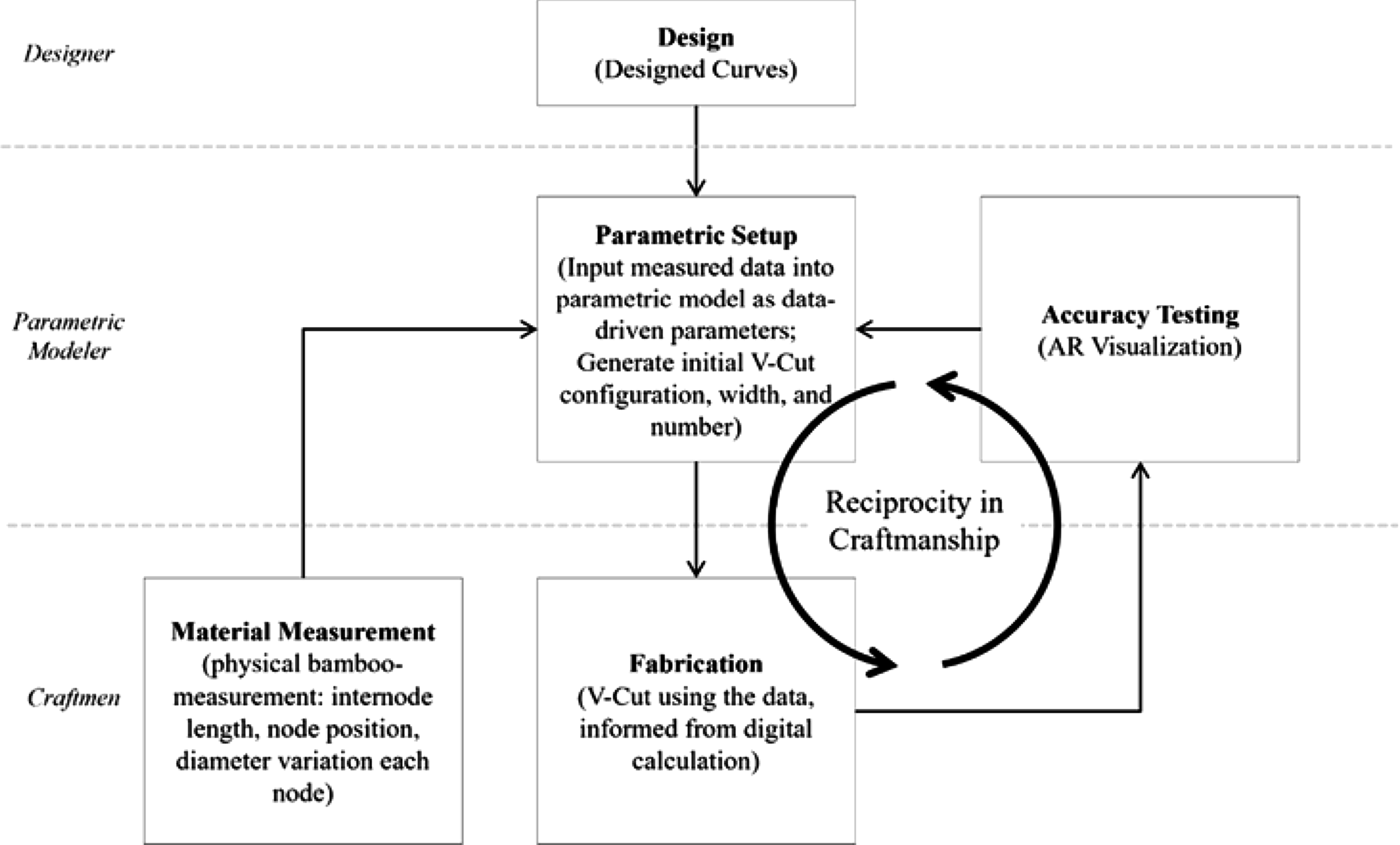
The establishment of this hybrid framework marks a shift from a one-directional process of digital command to a reciprocal mode of making, where prediction and intuition operate in tandem. The exchange between designers, computational modelers, and craftsmen demonstrates that precision in fabrication does not depend solely on algorithmic control but on the dialogue between digital foresight and material intelligence. This reciprocity not only enhances the accuracy and adaptability of the rup-rup technique but also reframes the notion of authorship—positioning fabrication as a collective act of learning between human and non-human agents. The following discussion elaborates on how this interaction advances the idea of computational craftsmanship, where making becomes both a mode of research and a medium for knowledge exchange.
Discussion
From tacit heuristics to computational formalization
The translation of rup-rup practice into parametric logic revealed that formalizing tacit craftsmanship requires exposing both its operative heuristics and its inherent limitations. Traditional rup-rup execution is highly operator-dependent: curvature smoothness varies across repetitions due to differences in how craftsmen regulate cut width, spacing, and bending force. While this embodied calibration enables adaptive responsiveness to material behavior, it constrains reproducibility and transferability.
Parametric formalization did not eliminate material uncertainty, as elastic response remains influenced by internal fiber heterogeneity. Instead, it redistributed decision-making. By adopting a fixed cut-width strategy in the Length-Differential Method and varying the number of incisions to achieve curvature, the model stabilized geometric consistency while reducing reliance on subjective widening decisions. This restructuring shortened the learning curve for non-expert users and improved reproducibility, while preserving the need for tactile evaluation during bending.
In this sense, computation did not substitute craftsmanship but restructured its variability—shifting from operator-dependent modulation toward rule-based geometric control augmented by material feedback.
The adoption of a fixed cut-width strategy in the Length-Differential Method illustrates this redistribution. By stabilizing incision width as a constant parameter and allowing curvature adaptation through variation in cut quantity, the model reduces dependence on subjective widening decisions. This approach shortens the learning curve for non-expert users and enhances reproducibility without removing the need for embodied adjustment. In this sense, parametric formalization preserves the operational sequence of craft while restructuring its variability—shifting from operator-driven modulation to rule-based geometric consistency augmented by material feedback.
Material variability and the limits of geometric abstraction
The results demonstrate that incorporating generalized morphological ranges of Gigantochloa apus was insufficient for accurate curvature prediction. Although published material properties provide typical internode and diameter variations, these ranges could not reliably represent the longitudinal irregularity of individual culms. Variability did not follow a predictable or uniform pattern, and averaged parameters failed to anticipate local geometric discontinuities—particularly at node boundaries. This finding aligns with prior observations in bamboo research that emphasize the difficulty of generalizing culm variability across specimens.
In contrast, integrating culm-specific measurements significantly improved geometric accuracy. Capturing exact node locations and diameter fluctuation allowed incision placement to align with sectional transitions, reducing unexpected stiffness changes during bending. The improvement was not merely incremental but structural: accuracy increased because geometric decisions were based on measured material reality rather than statistical approximation.
These findings suggest that material-informed parametric design in bamboo construction cannot rely solely on generalized datasets when fabrication precision is required. For incision-based techniques such as rup-rup, element-specific measurement remains the more reliable strategy. While manual measurement proved effective in this study, future integration of non-labor-intensive 3D scanning technologies could further enhance precision and enable more comprehensive material-informed modeling. The results therefore position material specificity—not abstraction—as the critical factor in achieving reproducible curvature performance.
Reciprocity between computation and craft
The experimental results indicate that computational integration reduced—though did not eliminate—operator dependency in rup-rup execution. Traditional bending relied heavily on individual expertise, particularly in regulating cut widening and curvature smoothness. By structuring incision logic through parametric rules—especially the fixed cut-width strategy—the model stabilized key geometric variables, thereby mitigating variability introduced by subjective decision-making. While tactile judgment remained necessary during bending, the computational framework narrowed the range of possible error and improved consistency across specimens.
For non-expert users, this structured guidance shortened the learning curve and improved reproducibility, suggesting that parametric formalization can function as a pedagogical scaffold rather than a replacement of skill.
These findings position computation not as a substitute for craftsmanship but as an augmentative system that reorganizes tacit knowledge into transferable logic. By externalizing certain experiential judgments into rule-based structures, the framework preserves the procedural intelligence of rup-rup while making it accessible beyond expert practitioners. In this sense, reciprocity emerges as calibrated collaboration: computation stabilizes geometric control, and craftsmanship sustains material sensitivity.
This reciprocity between digital prediction and manual interpretation exemplifies a symbiotic design culture in which making becomes both a method of research and a medium of cultural continuity. Within this framework, craft and computation operate as co-creative agents—each informing the other to refine understanding of material performance and design intent. Such a view resonates with Burry and Burry’s16 notion of feedback-driven making and McCullough’s14 argument that digital tools extend the reach of the practiced hand. Ultimately, reciprocity in craftsmanship emerges as a generative principle for contemporary architectural practice, linking local material wisdom with global technological innovation.
Conclusion
This study demonstrates that the rup-rup bamboo bending technique, traditionally dependent on skilled artisans, can be effectively integrated into a parametric workflow. The developed computational model predicts V-cut placement and width for target curvatures while accounting for material variability such as diameter change and node spacing. Comparative testing confirmed that the Length-Differential Method provides a more accurate and transferable framework, allowing both experts and novices to reproduce the technique through guided digital assistance. By formalizing tacit knowledge, the reciprocal exchange between computation and craft ensures the continuity and adaptability of rup-rup practice. Rather than replacing manual expertise, computation here becomes an interpretive partner—translating material behavior and embodied reasoning into measurable design logic. This hybrid workflow illustrates how indigenous craftsmanship can inform computational decision-making, linking vernacular intelligence with contemporary digital production.
The research remains limited by its controlled testing conditions and single-species focus. Broader validation across bamboo types, climates, and community-based contexts is needed, as is integration with robotic or semi-automated fabrication systems. Future studies could extend this reciprocal framework to other vernacular techniques, deepening understanding of how computation and cultural knowledge co-evolve in architectural making. Framing rup-rup through reciprocal engagement between craft and computation illustrates how parametric design can both sustain vernacular intelligence and expand the technological possibilities of contemporary architectural production.
Supplemental material
Supplemental material - Reciprocity in craftsmanship: Advancing rup-rup bamboo bending through parametric design
Supplemental material for Reciprocity in craftsmanship: Advancing rup-rup bamboo bending through parametric design by Angeline Dominica, Anastasia Maurina, in International Journal of Architectural Computing
Footnotes
Acknowledgements
The author acknowledges the use of OpenAI’s ChatGPT (GPT-5, 2025) as an assistive research and writing tool throughout this study. The model was employed to support refinement of conceptual development and theoretical framing, as well as to improve language clarity and citation accuracy. The author maintained full authorship and intellectual control over the research content, ensuring that all ideas, data interpretations, and conclusions reflect original academic reasoning.

Ethical considerations
Ethical approval was not required for this study because it did not involve human or animal subjects. The unit of analysis focused on the rup-rup bamboo bending technique rather than personal data or human participants. The involvement of an expert craftsman was limited to technical demonstration and observation of the fabrication process. Verbal consent was obtained prior to documentation, and all participation was voluntary and non-identifiable.
Funding
The authors received no financial support for the research, authorship, and/or publication of this article.
Declaration of conflicting interests
The authors declared no potential conflicts of interest with respect to the research, authorship, and/or publication of this article.
Data Availability Statement
The data supporting the findings of this study were generated as part of an undergraduate thesis project. All datasets, measurements, and documentation are archived within the official thesis, which will be made publicly accessible through the institutional library repository six months after publication. Prior to public release, the data are available from the corresponding author upon reasonable request.
Supplemental material
Supplemental material for this article is available online.
References
Supplementary Material
Please find the following supplemental material available below.
For Open Access articles published under a Creative Commons License, all supplemental material carries the same license as the article it is associated with.
For non-Open Access articles published, all supplemental material carries a non-exclusive license, and permission requests for re-use of supplemental material or any part of supplemental material shall be sent directly to the copyright owner as specified in the copyright notice associated with the article.
