







Abstract
In Hong Kong, the Education Bureau (EDB) is responsible for the quality assurance of kindergarten education services. EDB inspectors regularly conduct school visits to monitor kindergartens’ performance and publish a Quality Review (QR) report for each kindergarten. Given the limited research on pedagogical practices pertaining to physical activities in Hong Kong kindergartens, the current study analyzes the content concerning this learning area in the QR reports. We analyzed 164 QR reports (published between 2017 and 2020) according to four analytic dimensions: (1) Overall presence of content pertaining to physical activities; (2) References to specific forms of physical activities; (3) Positive feedback; and (4) Negative feedback and recommendations. The presence of physical activities in the QR reports was found to be low (5% on average). EDB inspectors alluded to physical activities generically, not specifying the motor skill(s) at hand. Both positive and negative feedback focused primarily on matters pertaining to the time of exposure to physical activities and teachers’ pedagogical quality. Our evidence suggests the existence of potential gaps between Hong Kong’s kindergarten policies and actual physical activity practices. Further professional development seems necessary to strengthen both teachers’ pedagogies and inspectors’ understandings of physical activities.
Introduction
Kindergarten education in Hong Kong: The Quality Review (QR) assessment
In Hong Kong, kindergartens offer education services for 3- to 6-year-old children on a half-day (3 h) and whole-day (6 h) basis. Almost every child in the city enrolls in kindergarten education programs (Bautista et al., 2021). The Education Bureau (EDB) is the government body responsible for overviewing the quality of education services provided to young children (EDB, 2022). In the 2020/2021 academic year, Hong Kong had a total of 1046 kindergartens. While all kindergartens operate privately, over 70% of them are subsidized by the government (EDB, 2021). These are referred to as local kindergartens in this article.
In the 2017/2018 academic year, the EDB launched the Free Quality Kindergarten Education Scheme (FQKES) to improve the quality of kindergarten education and ensure affordability and accessibility to kindergarten education for all children and families in the territory (EDB, 2016). All kindergartens joining the FQKES are required to participate in the Quality Review (QR) assessment (EDB, 2017). To be eligible to receive the government’s subsidies, local kindergartens must show certain levels of quality and fulfill the criteria established by the EDB. Government inspectors regularly conduct 2.5–3.5 days of school visits for QR purposes. Feedback and recommendations for improvement are given to each kindergarten in the form of a QR report. These QR reports are also made available on the EDB’s website for public information. When a kindergarten fails the QR assessment exercise, the kindergarten is excluded from the FQKES scheme, and the provision of government subsidies ceases (EDB, 2016).
The QR reports constitute a large-scale database of high value to different stakeholders in the kindergarten sector (e.g., school leaders, curriculum designers, and front-line teachers). Indeed, the QR reports describe the observations of EDB assessors in natural settings. They also analyze the strengths and weaknesses of kindergartens considered to meet the minimum quality standards in Hong Kong. Finally, they provide recommendations and guidelines for further improvement. These characteristics make the QR reports a particularly interesting database for research purposes.
The QR assessment exercise is based on a series of performance indicators set by EDB in 2017, which include four major domains: “(1) Management and Organization; (2) Learning and Teaching; (3) School Culture and Support for Children; and (4) Child Development” (p. 5). The Physical Development area, which is the focus of the present study, falls into the major domain of Child Development. Physical Development includes two performance indicators: Physical Movements (which assesses children’s gross and fine motor skills) and Health Habits (which assesses children’s awareness of personal hygiene and self-care abilities) (EDB, 2017). This study looks specifically into children’s physical activities at kindergartens.
Given the limited research focusing on physical activities in Hong Kong kindergartens, the present study analyzed the feedback pertaining to this learning area in the QR reports to better understand its role in the local setting. Findings contribute to enriching the limited literature on physical activity pedagogical practices and serve as evidence to analyze the correspondence between Hong Kong’s official policies and actual practices on the ground. The literature review section is divided into two sub-sections. First, we examine Hong Kong’s official curriculum guide from the perspective of physical activity, focusing on the role of this learning area and the specific learning objectives expected from children. Second, we review the international literature, focusing on studies related to physical activities in kindergartens.
Literature review
Physical activities in the Hong Kong kindergarten curriculum
Physical activity refers to “any bodily movement produced by skeletal muscles that requires energy expenditure” (World Health Organization, 2020). Research has shown that young children’s physical activity is highly associated with health and developmental benefits, such as bone health (Janz et al., 2010), psychosocial behavior (Timmons et al., 2012), as well as academic performance (Zeng et al., 2017). Western scholars such as Lu and Montague (2016) and organizations like (SHAPE America, 2021) have emphasized the importance of exposing young children to physical activities in kindergarten education programs.
In 2017, the Curriculum Development Council (CDC) of Hong Kong published the “Kindergarten Education Curriculum Guide: Joyful learning through play, balanced development all the way” (hereinafter referred to as the Guide), an official framework designed to inform the practice of local kindergarten teachers in the territory (CDC, 2017). The Guide considers Physical Fitness and Health one of the six learning areas essential for all-rounded child development. This learning area aims to “help children of different age groups develop a strong and healthy body, an interest in participating in physical activities, positive values and attitudes and good living habits through diversified physical activities.” (CDC, 2017: 31). The three learning objectives established for Physical Fitness and Health are: (1) To develop gross and fine motor skills, acquire control over basic movements, and understand the concepts of space and direction; (2) To nurture an interest and habit of active participation in physical activities and develop positive values and attitudes; and (3) To use senses to explore the surroundings, raise awareness of health and safety, and develop self-protection abilities. (CDC, 2017: 32)
The Guide provides several examples of learning expectations for Physical Fitness and Health (CDC, 2017). For instance, children are expected to develop gross (locomotor, non-locomotor, and manipulative) and fine (e.g., coordination) motor skills. It is stated that children can develop social skills and build relationships with peers during physical activities. They may also learn the functions of the five senses and develop healthy living habits.
The Guide also outlines the expected pedagogical practices for kindergarten teachers. For example, teachers are required to pay attention to the state of children’s health during activities to avoid over-training. The difficulty of learning activities should be increased progressively to enable children to adapt the skills step by step. Furthermore, teachers should appreciate children’s performance and avoid comparing their abilities. Consistent with the performance indicators (EDB, 2017), the Guide suggests that kindergartens should allocate 45–60 min in half-day kindergartens and 90–105 min in whole-day kindergartens for physical, music, and art activities every day. The aim is to ensure that teachers can provide adequate time for children to practice physical activities.
Implementation of physical activities in kindergartens: Contexts and trends
The international literature has identified effective teaching strategies to create adequate opportunities and positive experiences for children to participate in physical activities within kindergarten settings. In a scoping review, Mak et al. (2021) indicated that fundamental motor skills training is a commonly adopted teaching strategy in kindergartens’ physical activity programs. Evidence shows that fundamental motor skills training can significantly enhance children’s physical activity levels, especially in those activities involving locomotor skills. Another common teaching strategy is infusing game elements into physical activities. Such elements can increase enjoyment and are associated with higher participation levels in children who are usually less active. Other strategies, such as embedding physical activities within the context of integrated curriculum units, also positively impact children’s physical engagement level (Ward et al., 2010).
Kindergarten teachers may also consider children’s physical ability differences when planning and implementing classroom activities (Essa and Burnham, 2019). During the practice, teachers should give clear instructions and constructive feedback to facilitate skills development (Veldman et al., 2018). For those children who are frustrated with the new skills, teachers should provide extra support, for example, slow-motion demonstrations, so that children can learn confidently (Moravcik et al., 2013). Furthermore, teachers should maximize children’s enjoyment during physical activities and avoid punishments and reprimands (SHAPE America, 2021). Positive reinforcement, such as encouragement and praise, is vital in raising children’s active engagement, self-confidence, and participation in physical activities (Kippe et al., 2021).
Research conducted in kindergartens worldwide, however, shows that there is insufficient exposure to physical activities. Indeed, several studies have shown that many center-based kindergarten programs provide limited exposure to physical activities. For example, Bautista et al. (2020) revealed that Singapore’s kindergartens do not conduct physical activities involving gross motor skills on a daily basis. In Spain, Alcántara-Porcuna et al. (2022) found that physical activities in kindergartens are only conducted once or twice per week. In Hong Kong, Chow et al. (2015a) indicated that kindergartens arrange less than 30 min for physical activities in a half-day session; children are primarily sedentary in the remaining class time. Similar findings have been reported in Western countries such as New Zealand (Ali et al., 2021), Australia (Ellis et al., 2017), and the US (Willis et al., 2021), where kindergarten children spend around 70% of their time sitting, standing, and engaging in other sedentary behaviors.
Furthermore, studies have also shown that many kindergarten teachers do not follow the pedagogical recommendations offered in official curriculum frameworks and the international literature. For instance, in an observational study conducted in Singapore (Bautista et al., 2020), around half of kindergarten teachers failed to (a) give verbal instructions to children, (b) demonstrate physical skills before the practice, (c) recall the safety rules, and (d) provide feedback to the children during the activities. Chow et al. (2015a) found that kindergarten teachers in Hong Kong spend most of their class time focusing on class management matters, while only 21% of the time was spent teaching and demonstrating skills. In the US, kindergarten teachers were found to use physical activities to punish children that displayed disciplinary problems (Ward et al., 2015).
To the best of our knowledge, no study has investigated the quality of physical activities in kindergarten education from the perspective of assessment authorities, specifically utilizing content analysis techniques. Existing studies in Hong Kong have mainly examined children’s physical activity levels, focusing on a limited number of kindergartens. For instance, Chow et al. (2015b) observed 90 lessons in four Hong Kong kindergartens and found that students only spent approximately 10% of their lesson time in moderate to vigorous physical activities. More recently, Cheung (2020) measured teachers’ and children’s physical activity levels in 12 kindergartens. It was found that children were more active in classes delivered by more active teachers. Aside from these studies, we know little about the pedagogical practices employed by teachers in Hong Kong local kindergartens. The present study addresses this critical knowledge gap.
Research questions
Conducted in Hong Kong, this study analyzes the QR reports with a focus on physical activities to determine the correspondence between official policies in local kindergartens and teachers’ pedagogical practices, as described by the EDB inspectors. More specifically, the study has four research questions (RQs): • RQ #1. What is the overall presence of content related to physical activities within the QR reports? • RQ #2. What is the presence of various forms of physical activities in the QR reports? • RQ #3. What are the most common types of positive feedback given to kindergartens in relation to physical activities? • RQ #4. What are the most common types of negative feedback and/or recommendations given to kindergartens in relation to physical activities?
Method
Data sources
The study presents a content analysis of the QR reports published by the EDB after the academic year 2017/2018, when the current kindergarten curriculum framework was released (CDC, 2017). Content analysis is a research technique often used to analyze qualitative materials by examining the presence of different terms, phrases, and/or ideas that can distinguish the themes and patterns in a series of documents (Columbia University Irving Medical Center, 2019). The number of kindergartens represented was 164, which is approximately 22% of the total number of local kindergartens in the city (N = 763 in 2020/21). The analysis included one QR report published in 2017 (0.6%), 33 in 2018 (20.1%), 122 in 2019 (74.4%), and eight in 2020 (4.9%), which was approximately 40% of the QR reports database. These reports were originally written in Chinese and translated into English by EDB. To maintain language consistency, only reports translated into English were analyzed. These QR reports covered kindergartens in different geographical areas across the territory.
Procedure
All 164 reports were downloaded from the EDB website 1 and imported into the MAXQDA Analytics Pro 2020, an analytical software developed by VERBI (VERBI Software, 2019). A series of analytic categories focusing on physical activities were designed for the analysis. Two coders who specialized in early childhood education read and completed the coding separately using MAXQDA. At the end of the individual coding, the coders met to discuss the disagreements and reached a 100% consensus.
Data analysis
To address RQ #1, we computed the number of words coded pertaining to physical activities and calculated the percentage of words coded compared to the total number of accumulated words in the QR reports using MAXQDA. We also conducted a lexical analysis by focusing on the vocabulary that appeared within the coded textual segments to examine the relative presence of those terms within the QR reports. Furthermore, we generated a word cloud to graphically represent the most common nouns, verbs, and adjectives in coded textual segments.
To address RQs #2, #3, and #4, we designed three comprehensive coding schemes, which allowed us to capture all the relevant contents pertaining to physical activities in the QR reports. Note that all categories were non-mutually exclusive. Descriptive statistics (frequencies and percentages) were used to examine the appearance of each category within the QR reports. For simplicity, the definitions and examples of each category obtained from the QR reports are presented in the Results section.
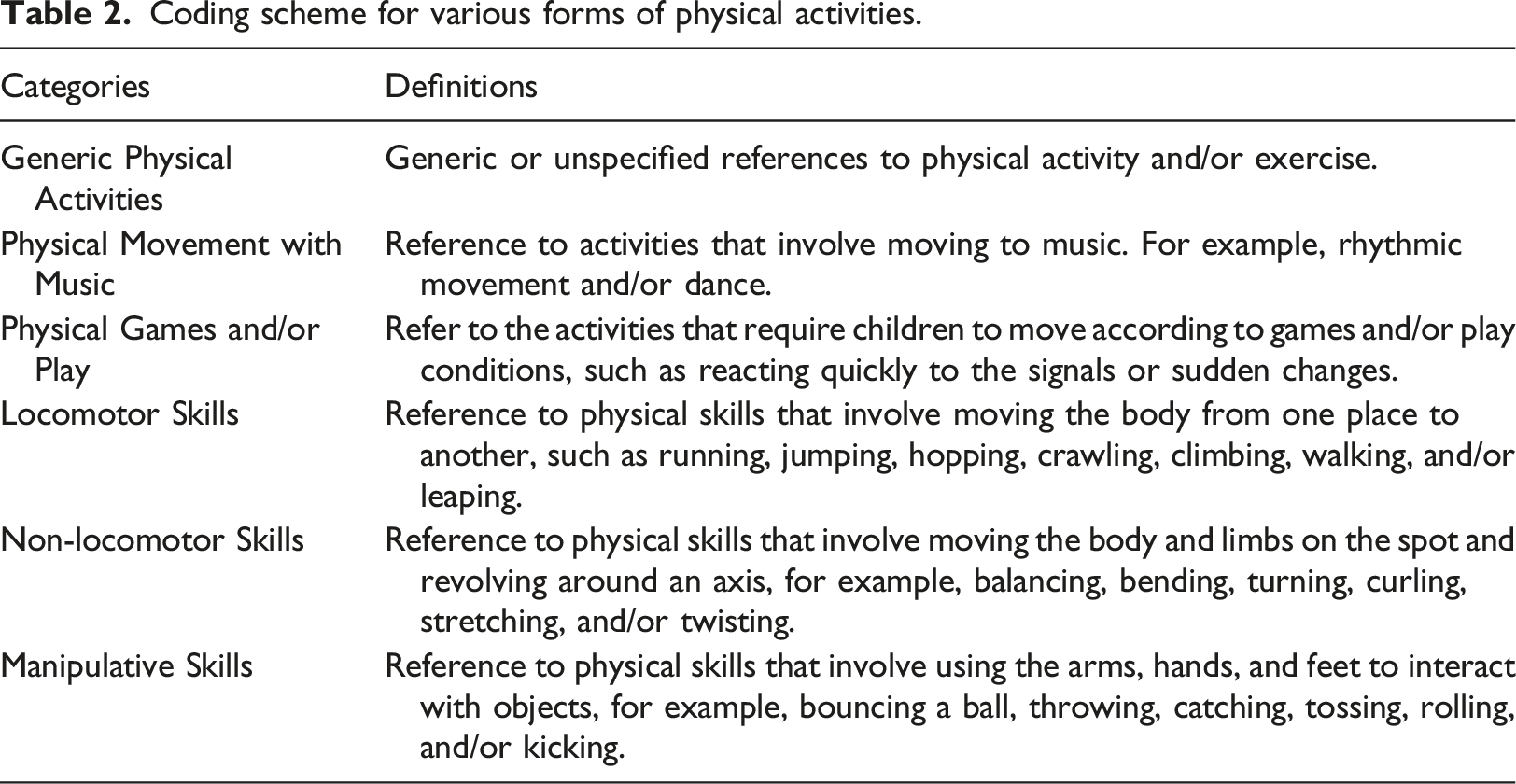
In RQ #2, we designed six categories to analyze the various forms of physical activities. Categories were designed by applying both an inductive approach (starting from the data) and a deductive approach (starting from existing frameworks) (Saunders et al., 2012). We created three categories to capture physical activities described generically, that is, without specifying the physical skills at hand. These categories were: Generic Physical Activities (e.g., “morning exercise”), Physical Movement with Music (e.g., “rhythmic movement”), and Physical Games and/or Play (e.g., “physical group games”). In addition, we created three categories to capture those physical activities that involved specific types of gross motor skills, namely, Locomotor Skills (e.g., “running”), Non-locomotor Skills (e.g., “bending”), and Manipulative Skills (e.g., “throwing balls”).
Regarding RQ #3, we designed six categories using an inductive approach (Saunders et al., 2012) to investigate the most common types of positive feedback regarding physical activities. The categories were: Sufficient Time, Diverse Types of Activities, Teacher Competencies, Adequate Planning and/or Implementation, Children’s Positive Learning Experiences, and Provision of Professional Development.
Finally, to address RQ #4, we examined the most common types of negative feedback and/or recommendations for improvement related to physical activities using four categories, which were also designed using an inductive approach (Saunders et al., 2012). The categories were: Insufficient Time, Lack of Diverse Types of Activities, Poor Teachers’ Pedagogical Practices and/or Children’s Learning Experiences, and Inadequate Environment.
Results
RQ #1: Overall presence of physical activities in the QR reports
In total, there were 2,225,589 words accumulated in the 164 QR reports. A partial total of 107,552 words were coded as related to physical activities, with an average of 655 words (4.7%) per QR report. The presence of coded segments in the reports ranged from a minimum of 66 words (0.5%) to a maximum of 1844 words (13.2%).
Descriptive statistics of 60 most common words in the coded textual segments.
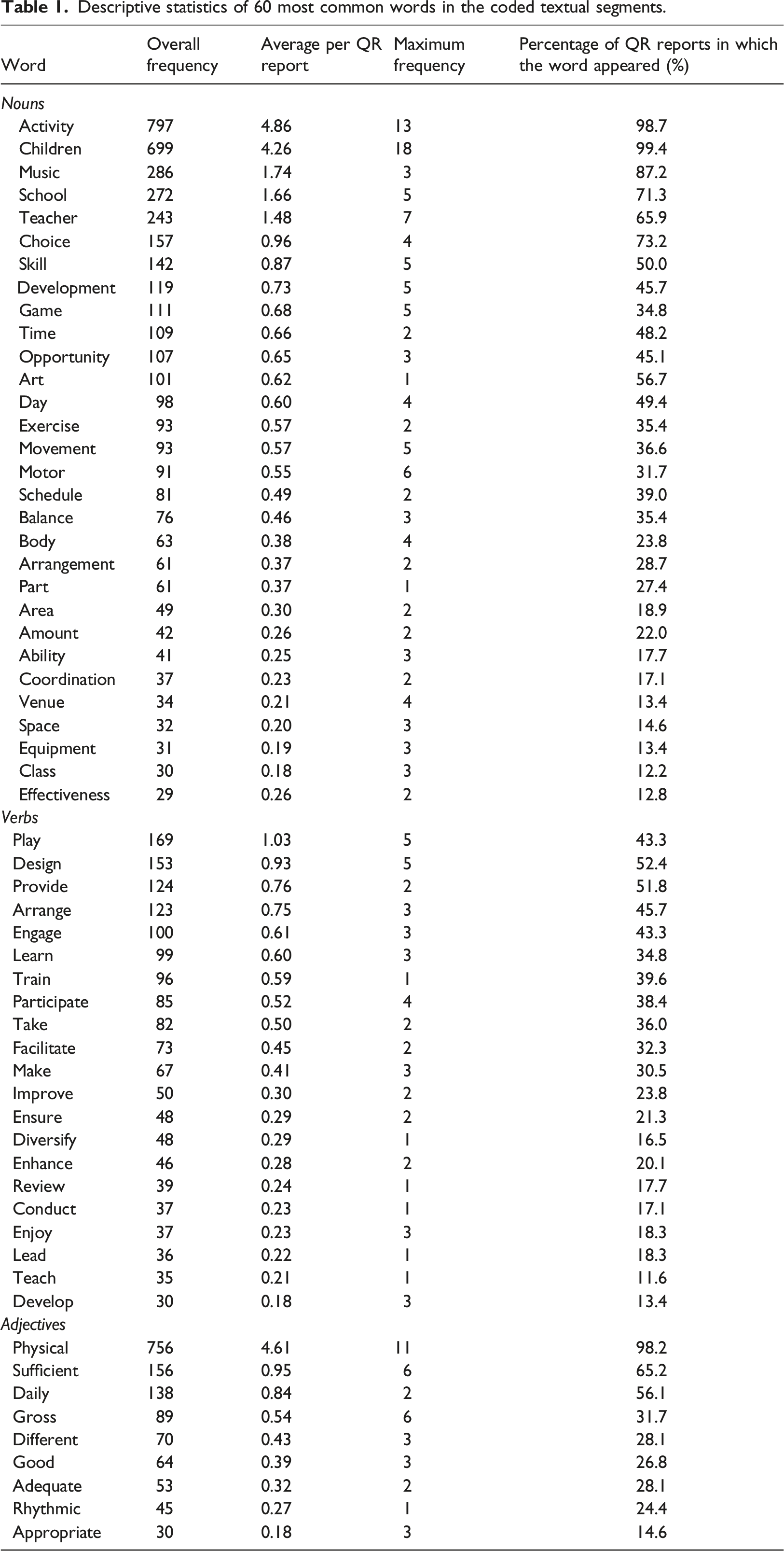
As shown in Table 1, the most common word types in coded textual segments were nouns (30 words), followed by verbs (21 words), and adjectives (9 words). Activity, children, music, school, and teacher were the five most common nouns, while play, design, provide, arrange, and engage were the most common verbs. The most common adjectives were physical, sufficient, daily, gross, and different. The 60 most common words in coded textual segments are presented graphically in Figure 1. Three colors are used: red for nouns, blue for verbs, and green for adjectives. The size of words captured in the word cloud reflects their relative frequency within the QR reports. Word cloud of 60 most common words in the coded textual segments.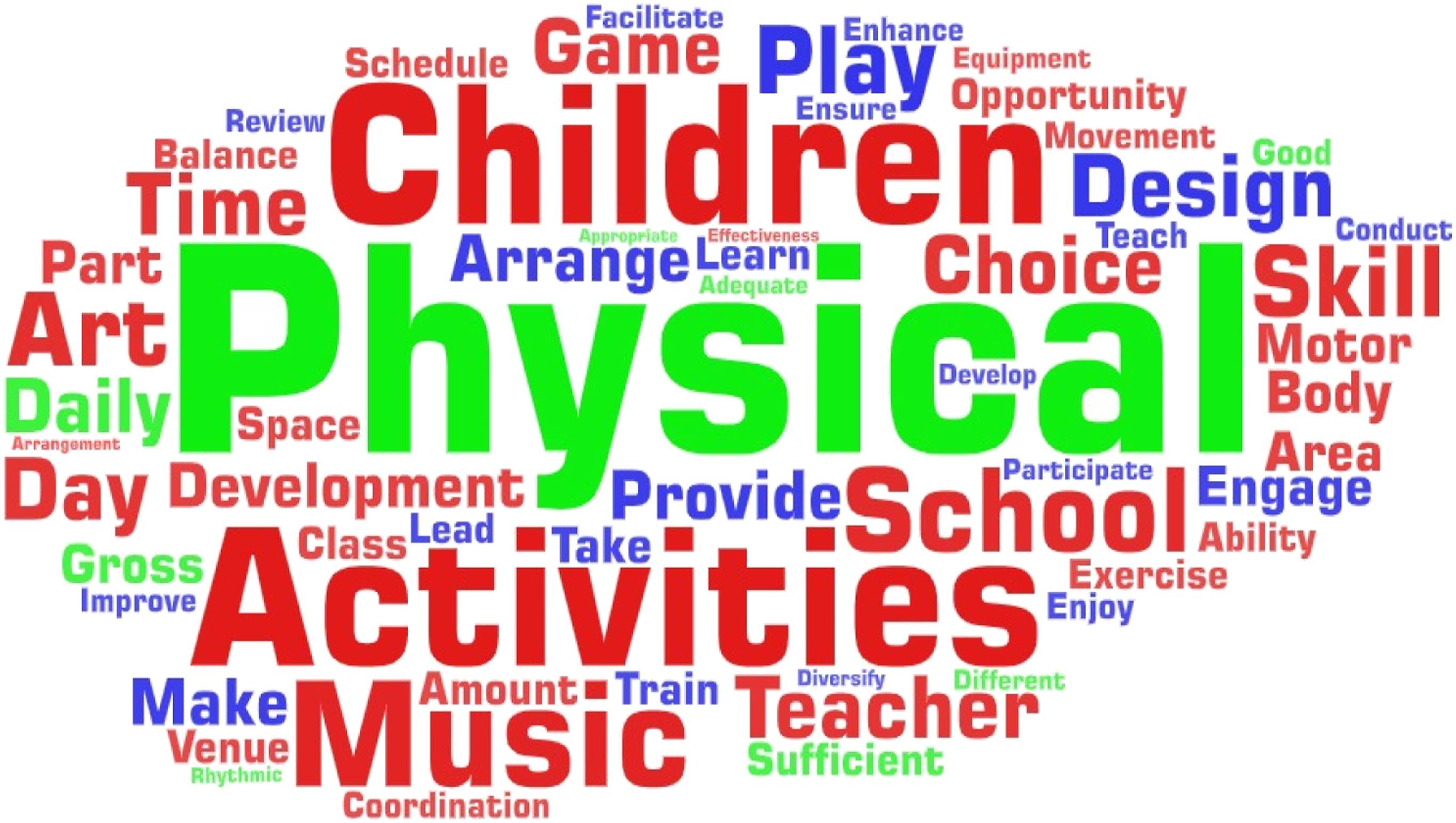
Note that specific terms strongly related to physical activities and teachers’ pedagogical practice had a relatively low presence within the QR reports. These included the nouns such as exercise (35.4% reports only), movement (36.6%), and motor (31.7%), verbs such as participate (38.4%) and teach (11.6%), and adjectives such as gross (31.7%). Furthermore, some terms frequently linked with teaching and learning in physical activities did not appear, including active, demonstration, energy, feedback, fitness, fundamental, and muscle.
RQ #2: Presence of various forms of physical activities
Coding scheme for various forms of physical activities.
Of the 164 QR reports analyzed, 122 (74.4%) reports were coded under at least one form of physical activity. The mean of categories alluded to in each report was 2.1 (min = 0; max = 6). More specifically, 45 reports (36.9%) alluded to one category, 29 reports (23.8%) to two categories, 23 reports (18.9%) to three categories, 17 reports (13.9%) to four categories, six reports (4.9%) to five categories, and two reports (1.6%) to six categories. Figure 2 presents the frequency and percentage of QR reports that refer to each form of physical activity. Frequency and percentage of QR reports coded under each form of physical activity (n = 164).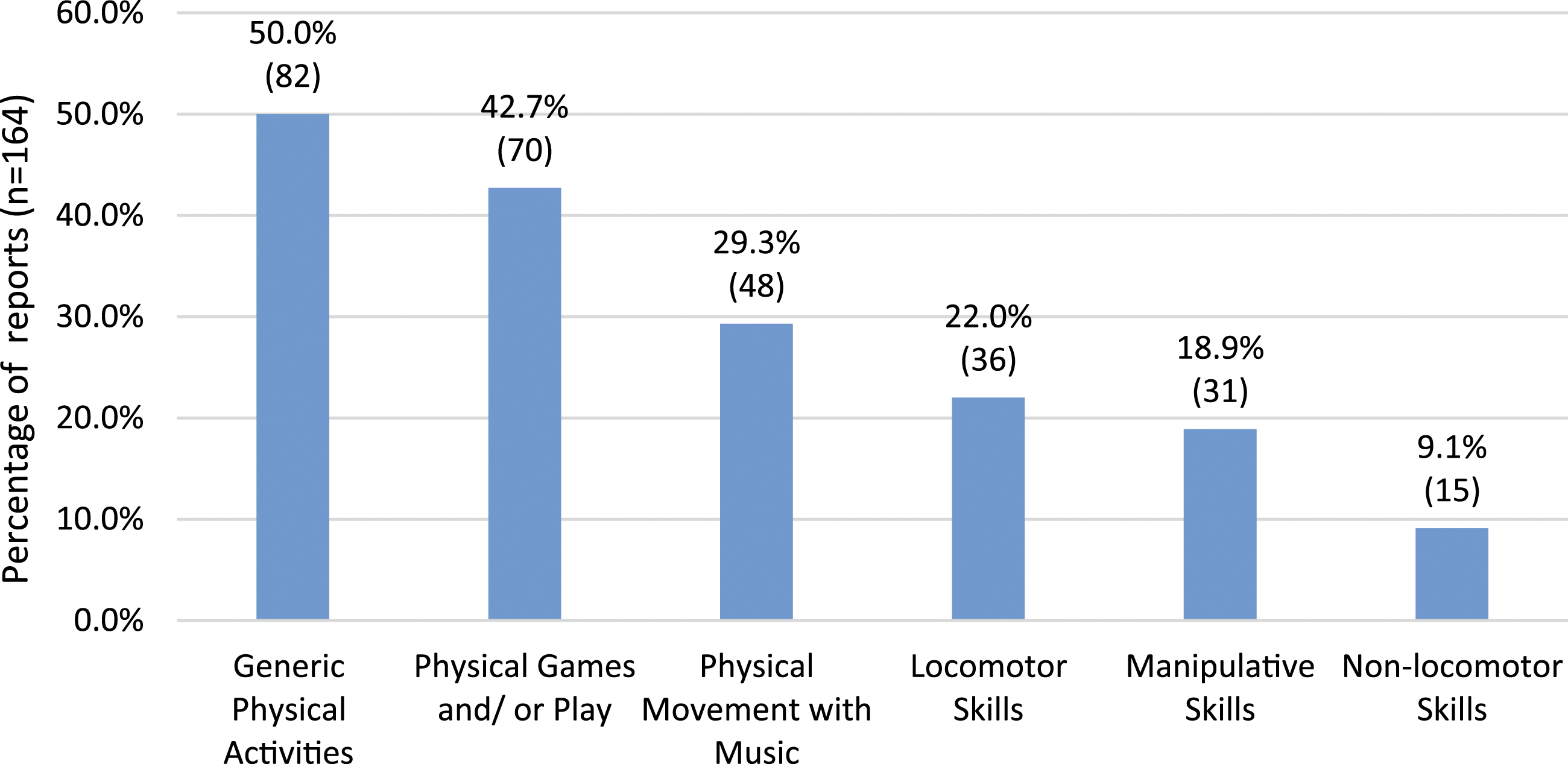
Half of the QR reports (50%) alluded to the Generic Physical Activities category, which contained general references without detailing the exact form of physical activities or exercises involved (e.g., “physical skills training,” “physical activities,” “morning exercise”). The next category was Physical Game and/or Play (42.7%). Examples of activities mentioned in the reports for this category included “teachers organize physical games with sufficient amount of physical exercises” and “interesting physical play to demonstrate their creativity and team spirit.” Physical Movement with Music appeared in 29.3% of the QR reports. Reports indicated that children participated in rhythmic movements during the school day (e.g., “follow the beats to engage in rhythmic movements”).
In contrast, references to fundamental motor skills were identified in a low number of reports. Only 22% of the reports described Locomotor Skills (e.g., “They also enjoy running or jumping”), and 18.9% alluded to Manipulative Skills (e.g., “children control, throw and catch balls”). Non-locomotor Skills were identified in the lowest number of reports (9.1%) (e.g., “they can complete the movements of balancing”).
RQ #3: Most common types of positive feedback
Coding scheme for the most common positive feedback regarding physical activities.
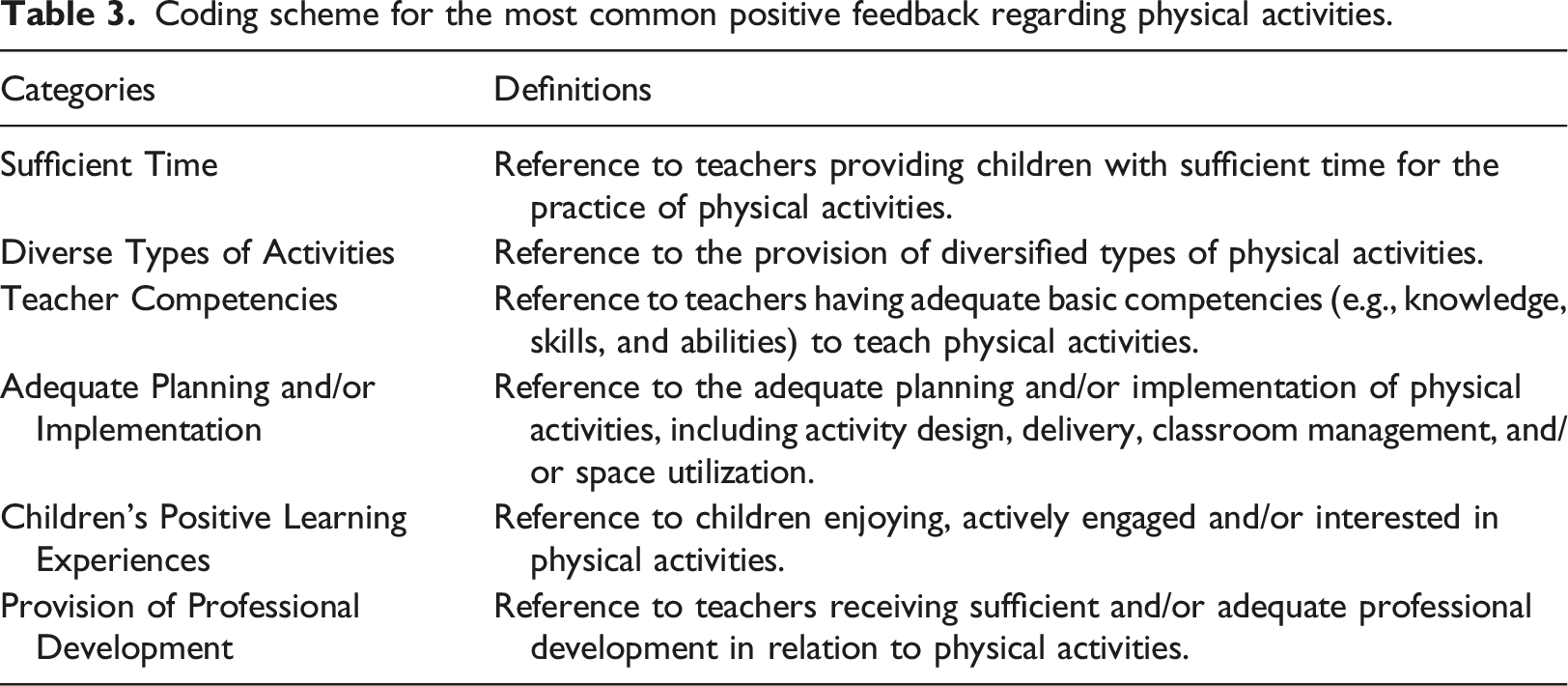
Of the 164 QR reports reviewed, 144 reports (87.8%) were coded under at least one category of positive feedback. The mean of categories alluded to in each report was 2.4 (min = 0; max = 5). More precisely, 45 reports (31.3%) alluded to one category, 46 reports (31.9%) to two categories, 33 reports (22.9%) to three categories, 11 reports (7.6%) to four categories, and nine reports (6.3%) to five categories. Figure 3 shows the frequency and percentage of QR reports coded under each category for positive feedback. Frequency and percentage of QR reports coded under each category of positive feedback (n = 164).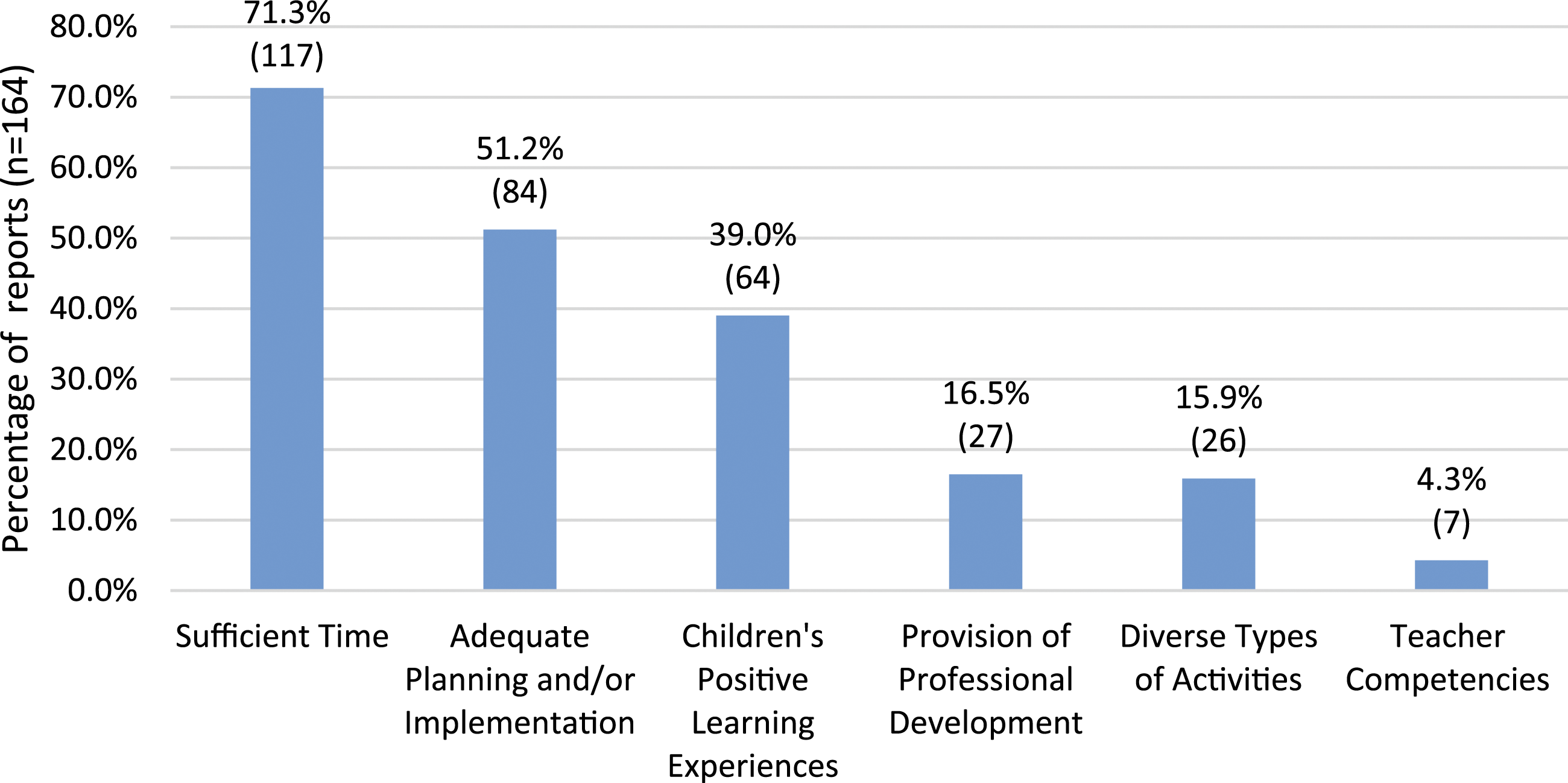
The most common category of positive feedback was Sufficient Time, which appeared in 71.3% of the reports. Reports commented positively on the exposure of physical activities for children (e.g., “the school provides children with adequate opportunities for participating in physical activities every day”). Overall, the reports appreciated the balanced class schedule arrangement of the kindergartens. The following category was Adequate Planning and/or Implementation (51.2%). Reports showed appreciation for the adequate design of activities (e.g., “Teachers plan interesting physical activities and group play according to children’s physical developmental characteristics”), as well as for teachers’ pedagogical strategies (e.g., “teachers give clear instructions when leading physical and music activities”). Some reports further commented on the appropriate venue utilization during activities (e.g., “teachers fully utilize the indoor play area to shorten children’s wait time”).
The QR reports paid less attention to the remaining categories. Children’s Positive Learning Experiences appeared in only 39% of the reports. These reports described children’s performance with some adjectives (e.g., “children are energetic and eager to make attempts”). Provision of Professional Development was found in only 16.5% of the reports that revealed the forms of professional development activities offered by the school (e.g., “external support services and arranges collaborative lesson planning, observation, and evaluation”). Only 15.9% of the reports alluded to the Diverse Types of Activities (e.g., “children are engaged in diversified physical activities”). Lastly, only 4.3% of the reports were coded under Teacher Competencies, which described the teachers’ essential competencies in teaching physical activities were adequate (e.g., “teachers are conscious of taking part in children’s free choice and physical activities”).
RQ #4: Most common types of negative feedback and/or recommendations
Coding scheme for most common negative feedback and/or recommendations related to physical activities.
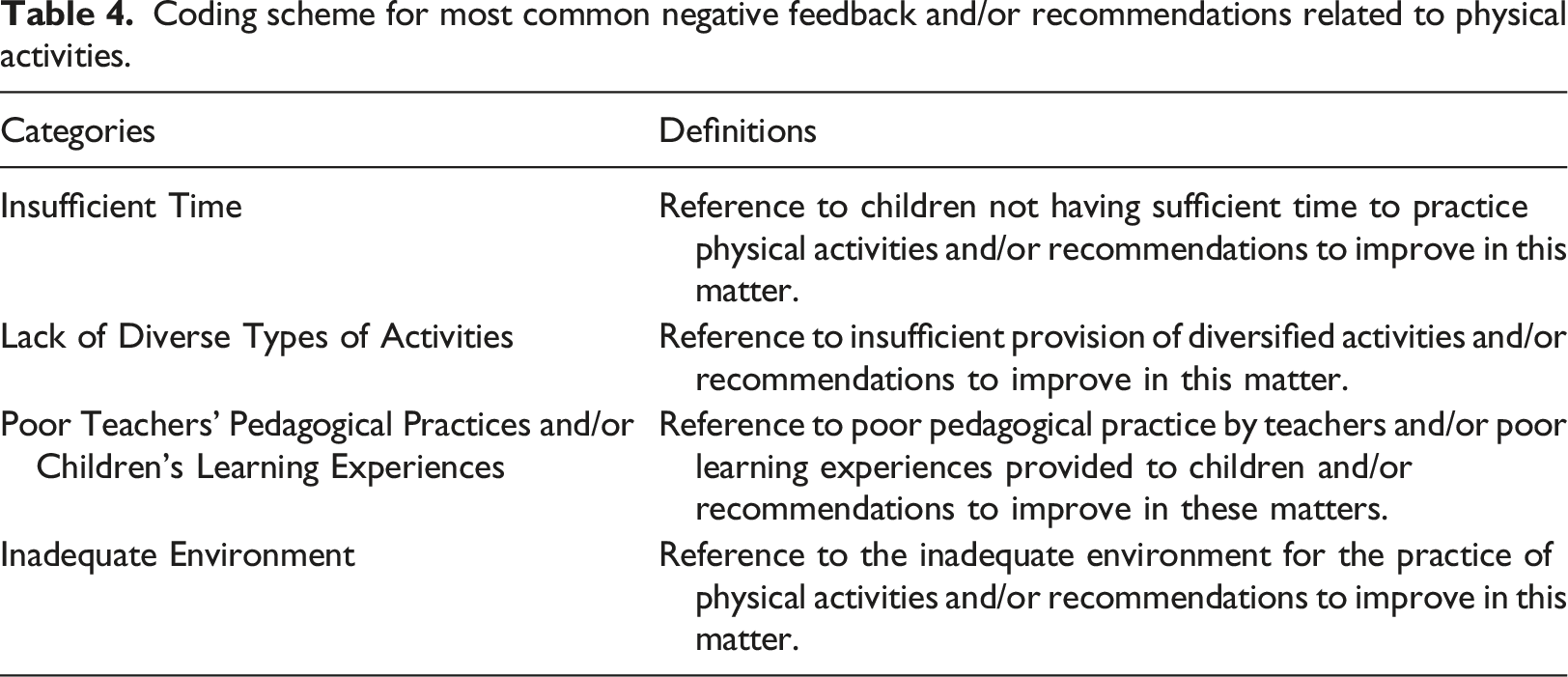
Of the 164 QR reports reviewed, only 50.6% (83 reports) contained at least one negative feedback and recommendation category. The categories for negative feedback in each report ranged from a minimum of zero categories to a maximum of three categories. The mean of categories alluded to in each report was 1.2 (min = 0; max = 3). More specifically, 48 reports (57.8%) alluded to one category, 31 reports (37.3%) to two categories, and four reports (4.8%) to three categories. Figure 4 shows the frequency and percentage of QR reports that referred to each category. Frequency and percentage of QR reports coded under each category of negative feedback (n = 164).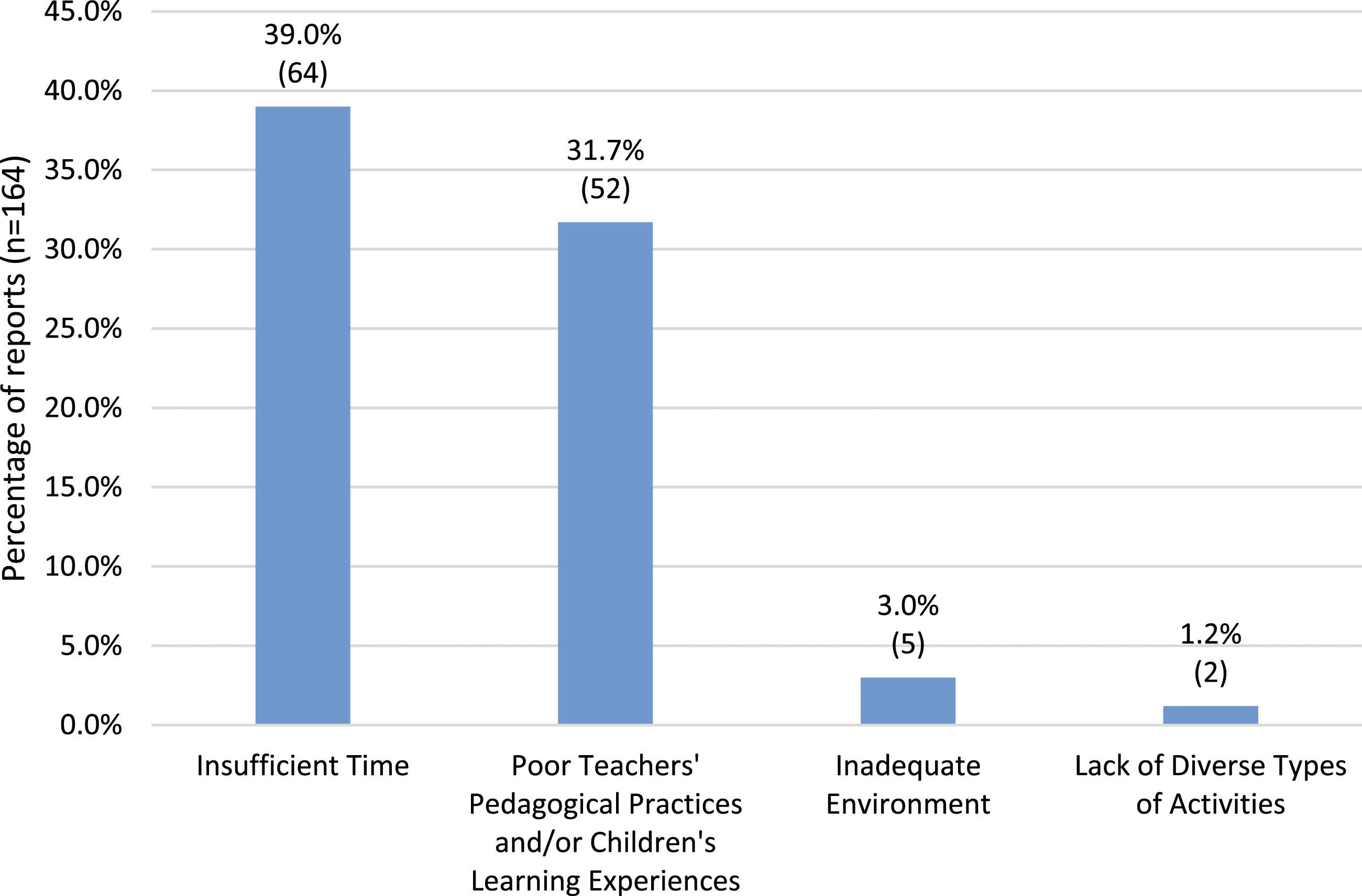
Insufficient Time, which only appeared in 39% of the reports, was the most common category for negative feedback. These reports expressed concerns about children’s inadequate exposure to physical activities during the typical school day (e.g., “there is insufficient time for free choice, music, physical and art activities daily”). Some kindergartens failed to provide enough time for K3 children (5–6 years of age) to participate in physical activities, as children were required to complete primary school simulation activities to prepare them for the transition to primary school (e.g., “the school has been failing to arrange music and physical activities for K3 children on a daily basis during the primary one simulation period”). Consequently, the reports advised these kindergartens to make necessary arrangements to ensure children’s engagement in physical activities (e.g., “the school needed to adjust its timetable to allow children to have sufficient time to engage in physical, music and free-choice activities”).
Poor Teachers’ Pedagogical Practices and Children’s Learning Experiences were mentioned in only 31.7% of the reports. These reports commented negatively on the pedagogical practices of teachers (e.g., “spend too much time on explanation”), resulting in poor learning experiences (e.g., “some children do not show much interest in the activities”). The EDB inspectors recommended that teachers and kindergartens take measures to improve the situation (e.g., “the management should strengthen teachers’ skills in conducting physical activities and guide them to make appropriate intervention”). Only five reports (3.0%) alluded to the category Inadequate Environment. Reports highlighted that some venues are undesirable for conducting physical activities (e.g., “affected by the noise”), as well as safety issues due to inappropriate classroom settings (e.g., “teacher’s view was likely to be obstructed because of the classroom design”). Finally, only two reports (1.2%) alluded to the category Lack of Diverse Types of Activities (e.g., “teachers may make use of more diversified activity modes to enhance children’s interest in learning”).
Discussion
The current study aimed to determine the correspondence between Hong Kong’s official kindergarten curriculum and teachers’ pedagogical practices pertaining to physical activities, as described by the EDB inspectors in the QR reports. We have presented a content analysis of 164 QR reports covering kindergartens from different districts in Hong Kong, which provides an overall account of how physical activities are being implemented in local kindergartens.
In RQ #1, we examined the presence of physical activities in the QR reports. While content related to physical activities appeared in all 164 QR reports analyzed, its presence was minimal (lower than 5% on average). In some reports, the proportion of content coded was as low as 0.5%. Some terms frequently linked with physical activities (e.g., exercise, gross, motor, fundamental, movement) rarely appeared or were fully absent. In RQ #2, we analyzed the presence of various forms of physical activities in the QR reports. We found that EDB inspectors alluded to physical activities generically and that the motor skill(s) at hand were not specified in detail. Overall, these findings revealed a marginal emphasis on physical activities in the QR reports, with the use of rather vague language by the EDB inspectors.
The low status and generic description of physical activities in the QR reports may be caused by multiple factors. One factor could be the limited presence of physical activities in local kindergartens, which could be why the EDB inspectors did not elaborate much on physical activities within the QR report. Similar tendencies have been identified in other studies conducted in kindergartens worldwide, for example, in Spain (Alcántara-Porcuna et al., 2022) and Singapore (Bautista et al., 2020). In a society that prioritizes academic performance like Hong Kong (Mak et al., 2021), another influencing factor could be that the EDB inspectors paid more attention to the academic learning areas (such as numeracy and language) over physical activities during the assessment exercise. The limited presence of physical activity content in the QR reports could be a reflection of the high societal emphasis on academic learning, which is common in Asian societies (Yang et al., 2021; Gupta, 2018).
Another possible reason for the limited presence of physical activities in Hong Kong could be the small size of classrooms, shared spaces, and facilities in local kindergartens, which reflect the characteristics of this heavily populated urban city. Some researchers have argued that the lack of play spaces (Louie and Chan, 2003) and outdoor facilities (Yang and Li, 2018) in kindergartens hinder the implementation of play and physical activity programs. In Hong Kong, most kindergartens operate inside residential buildings and lack sufficient physical space and facilities for children to move freely, especially in outdoor settings (Chow et al., 2015a).
A previous study on school inspection in England pointed out that inspection quality is inconsistent when school inspectors lack front-line teaching experience and relevant knowledge in the assessment area(s) (Baxter, 2013). Since the EDB inspectors team consists of officers and front-line teachers specialized on various learning areas (EDB, 2017), it is possible that EDB inspectors might have insufficient subject knowledge and teaching experience pertaining to physical activities. Perhaps, for this reason, descriptions of physical activities were rather generic and somewhat imprecise.
In RQ #3, we explored the most common types of positive feedback given to kindergartens in relation to physical activities. While Sufficient Time was the theme most frequently alluded to, it is unclear whether the exposure to physical activities was in fact sufficient. The reason is that the minimum time expectation in Hong Kong combines physical activities with music and the arts, with 45–60 min in half-day programs and 90–105 min in whole-day programs (CDC, 2017). This time recommendation would be considered clearly insufficient in Western countries. For instance, the guideline proposed by Institute of Medicine (2011) in the US suggests that kindergartens should arrange at least 15 min every hour for physical activities. Our findings, therefore, call for future investigation of the actual duration of physical activities in Hong Kong local kindergartens. The second most frequent positive feedback was Adequate Planning and/or Implementation. However, this category only appeared in approximately half of the QR reports. We lack information about the performance of teachers in the remaining kindergartens. We also found few references related to children’s experiences, which is inconsistent with the curriculum objective of nurturing children’s interests and habits in physical activities (CDC, 2017). It would be important for EDB inspectors to focus on how children experience and perceive physical activities in kindergartens, as fun and enjoyment are among the most important factors for children’s continuous participation in physical activities (Mak et al., 2021).
Finally, in RQ #4, we explored the most common types of negative feedback and/or recommendations given to kindergartens in relation to physical activities. While the most common positive feedback was Sufficient Time, some reports also warned about the lack of exposure to physical activities, especially among K3 children (5–6 years of age). This situation happens because many kindergartens focus on preparing children for primary school, so teachers reduce the time in non-academic areas. As a result, kindergartens often sacrifice time for physical activities (Rao et al., 2018). The next highest frequency of negative feedback was Poor Teachers’ Pedagogical Practices and/or Children’s Learning Experiences. This result could be due to insufficient teacher training in physical activities. Traditionally, kindergarten teachers in Hong Kong are trained to be generalists (Bautista et al., 2022). In the tertiary education curricula, limited courses focusing on physical activities and motor skill development are provided to pre-service kindergarten teachers (Mak et al., 2021). Similarly, a study focusing on teacher training in Canada reported that over 70% of students majoring in early childhood education had not taken physical activities-related courses in their teacher training program (Martyniuk and Tucker, 2014). As a result, like in other Asian regions (Wang, 2019), teachers in Hong Kong kindergartens may not be fully confident and capable of designing and delivering physical activities due to inadequate and/or insufficient preparation.
Conclusions
Although Physical Fitness and Health is one of the six key learning areas in the curriculum, the presence of physical activities in the QR reports is minimal, and the EDB inspectors tend to describe physical activities rather generically. We infer that the EDB inspectors did not pay sufficient attention to this learning area, perhaps due to a lack of specific content knowledge to assess the performance of physical activities and/or due to the limited implementation of physical activities in kindergartens, perhaps due to competing academic priorities and expectations (Rao et al., 2018). Both positive and negative feedback focused primarily on matters pertaining to the time of exposure to physical activities and teachers’ pedagogical quality. Our evidence suggests the existence of potential gaps between Hong Kong kindergarten policies and actual physical activity practices, specifically with regard to time of exposure (Chow et al., 2015a) and pedagogical strategies (Mak et al., 2021). Considering that prior studies in the area of physical activities in local kindergartens are limited, more investigations on teachers’ pedagogical practices regarding physical activities seem necessary.
Limitations and future research
The study has several limitations. First, the QR reports were the only data source utilized. Although the dataset of QR reports analyzed for this study include many kindergartens across the city, they only represent the perspectives of the EDB inspectors based on what they actually see in kindergartens during the school inspection. Future studies may consider additional data sources, such as interviews and large-scale surveys, to gain more insights into other key stakeholders’ views and perspectives (e.g., teachers, principals, teacher trainers, and parents). This would allow for data triangulation. Second, the QR reports only reflect the performance of kindergartens under FQKES, thus excluding international and private/independent kindergartens. Future research should collect data from different kindergarten providers to allow for generalization. Finally, the current study indicates the low presence of physical activities in the QR reports, but the underlying reasons are uncertain. It is unclear whether teachers neglect physical activities in their daily teaching, perhaps due to pressures from parents and/or school leaders, or whether the EDB inspectors paid low attention during the QR exercise due to insufficient training. Further research is needed to provide more comprehensive accounts on these matters.
Practical implications
This study has several practical implications for kindergarten stakeholders. First, we believe it is important to raise the inspectors’ level of knowledge in the area of physical activities to better assess the quality of practices in kindergartens. The current study shows that some inspectors may not even know the right terminology to accurately refer to certain physical skills. Adequate training with practical knowledge and concrete examples of physical activities should be provided to them. This would allow inspectors to offer more constructive advice and recommendations to kindergartens’ principals and teachers for improving their pedagogical practices on physical activities in the future. Second, local tertiary institutions and professional development providers must offer pre- and in-service kindergarten teachers more solid training in the area of physical activity (Mak et al., 2021) to prepare them better to meet the learning objectives and expectations of current policy frameworks (CDC, 2017). Once teachers are equipped with sufficient knowledge and skills, they will be more confident to plan and deliver physical activities in class, which may positively impact the physical development and health of young children in the long run, thereby narrowing the gap between curriculum and practice (Wong, 2021).
Footnotes
Declaration of conflicting interests
The author(s) declared no potential conflicts of interest with respect to the research, authorship, and/or publication of this article.
Funding
The author(s) received no financial support for the research, authorship, and/or publication of this article.
