







Abstract
In an increasingly complex and uncertain world of the future and aligned with the emergence of Society 5.0, exploring alternative futures of education and the curricula in terms of fulfilling the mission of education systems is necessary. Therefore, this study set out to do foresight for the primary school curriculum in Iran. The study was conducted using the scenario planning method, which resulted in four alternative scenarios. The first scenario, called “The Magic School Bus” represents “curriculum as a personal roadmap.” The second scenario, entitled “The Pursuit of Happyness” describes the “curriculum revival.” The third scenario, named “The Ice Age” represents the “curriculum collapse.” The fourth scenario, entitled “Dead Poets Society” narrates the situation of “curriculum in limbo.” The findings showed that innovation comes from agency of players rather than impeccable structures and requires a transformation in perspectives about the educational aims in the digital era, as well as an increase in the authority and empowerment of schools. A key policy priority should thus be developing practical ideas for reshaping the curriculum and producing prototypes of future-proof educational models.
Keywords
Introduction
Education is one of the most important pillars of any society, which has a positive relationship with development, and its main goal is to nurture competent citizens for the future. As Toffler (1998: 11) stated, “all education springs from images of the future.” Hence, futures thinking is/should be an integral part of educational planning and policymaking. 1
However, education systems have often changed more slowly than their surrounding society (Gidley, 2013; OECD, 2019b). Today, technological, economic, and social transformations have considerably outstripped education systems, and the gap between formal learning and the student/society needs is increasingly deepening. One of the significant challenges facing education systems in the digital era is how to prepare children for a constantly changing future that they do not have a clear picture of and how to prepare them for jobs that have not yet emerged (McCrindle, 2018; World Economic Forum, 2016, 2020). In such a situation, it becomes urgent to explore the future of education in the context of global trends to fulfill the mission of education systems so that they can be prepared for the upcoming and unexpected developments in different areas of society (Organization for Economic Cooperation and Development, 2019a). Otherwise, the curriculum will become a version lacking in effectiveness and adequate relevance to real life.
This research aims to recognize the future changes that have the potential to affect the primary school curriculum in Iran. The primary education was chosen for three main reasons as follows: 1. The primary education is a key determiner in individuals’ success
In all societies, primary education is undoubtedly of great importance due to its fundamental nature and specific functions. If we consider education as the place where the human and cultural infrastructures of development are formed, then primary education is the initial and most productive stage. It is the most general level of formal education in which children are taught foundational knowledge and skills that can empower them for their social and professional life. In recent decades, the level of expectations from primary schools has increased and the issue of quality of education has become a growing public concern worldwide. In many countries, the primary curriculum has been entirely reformed and redesigned, as well as innovative and creative methods have been used to equip students with insights and skills needed in a complex and constantly changing society (Alexander and Doddington, 2010; Bolstad et al., 2012; Métais, 2003; Williamson, 2013). 2. The emphases of the “Document of Fundamental Transformation in Iran’s Education System”
The Document of Fundamental Transformation in Iran’s Education System (2011) emphasizes futures studies in education and monitoring changes affecting educational context while placing top priority on primary education. However, the formal education system in Iran has been based on the traditional ideas of the past suffering from a highly centralized, rigid, and inflexible structure. The Iranian primary curriculum approach has been subject-based over the years and has not benefited much from global educational innovations concerning structure, content, teaching methods, or evaluation models. 3. The primary education has not been a matter of intense debate
Despite the undeniable importance of primary education, there has been no detailed investigation of the various future transformations and their implications for the primary education in Iran. In fact, previous studies have mostly past-oriented, lacking an inclusive and anticipatory perspective to the issue. In addition, the recent coronavirus pandemic has contributed to a clear understanding of how much foresight is necessary for the field of education, as in other fields, and can create capacities to face unexpected events effectively and proactively rather than reactively (Tesar, 2021).
Based on what mentioned above, it seems that any fundamental changes in the education system must be made from the primary level. Therefore, the main question raised in this paper is:
What are the alternative scenarios of the primary school curriculum in Iran in the next 15 years?
The findings of this research can help to anticipate and take a proactive approach toward inevitable future developments, design innovative learning strategies, and increase the quality and effectiveness of primary education.
Literature review
Taking a macro-historical perspective reveals a close relationship between technological, social, economic, and educational developments in different periods of human society evolution (Facer, 2011; Keser and Semerci, 2019; Pink, 2006; Toffler, 1999). Regarding this fact, the factory model of education, as a feature of the industrial age (Gidley, 2013; Ogilvy, 2006), can no longer prepare children for society 5.0 described as a “super-smart society.” Therefore, in line with the digital revolution, which resulted in the emergence of Industry 4.0, a new period called “Education 4.0” was conceptualized in which revolutionary changes will take place in the educational context (Almeida and Simoes, 2019; Keser and Semerci, 2019; World Economic Forum, 2020).
In Education 4.0 paradigm, the evolution of the education system in line with other areas of society is emphasized, which Law and Liang (2019) referred to as “socio-technical co-evolution.” Accordingly, effective education of learners in this paradigm requires a comprehensive understanding of trends and uncertainties of the future world in socio-technical domains. This is possible by using a future-oriented approach in the field of education.
The introduction of futures terminologies and methods in educational discourse and studies includes three main domains: (1) exploring youth’s views and visions of the future; (2) teaching the concepts, tools, and processes of the futures through the school curriculum; and (3) doing speculative research to explore transformative and visionary models of education “which have futures/foresight thinking as part of their worldview” (Gidley, 2004: 5). This research refers to the third area, which employs foresight approach for reshaping education to best prepare students for the future.
The researchers and theorists engaging in this area, according to Glatthorn and Boschee (2019), are “futurists” who think of future transformations and use different tools to create alternative educational scenarios, instead of adapting to the current situation. As Young (1998) said, this viewpoint arises from the critical education theories, which have “a concept of the future and of education in relation to a vision of a society of the future” (p. 181), and they present curriculum theories which “their aim is both understanding and change” (p. 4).
Among different methods and tools for studying futures, scenario planning is a powerful tool within the framework of foresight. It has a cooperative approach to the future and addresses plausible futures instead of preferable ones. By creating alternatives, foresight can question the assumptions of policymakers, and thus, make a wide capacity for change and revision of current goals, policies, and actions (Chermack, 2011; Sardar, 2017). Similarly, Noel Gough (1987b) noted that searching for alternative futures as a “practical (deliberative) art” can complement “historical and comparative studies” (p. 2) in the field of the curriculum and makes our present decisions different. This approach, which Schwab referred to as the “anticipatory generation of alternatives” (Schwab, 1970; cited by Gough, 1987a), can help us in addressing the issue of uncertainty and to evolve our understanding of the future of education and learning in the 21st century.
There is a great diversity of subjects considered in this field, from studying 21st-century competencies and introducing transformative pedagogies to exploring generational differences. Some studies in this context have focused on identifying global transformations, especially technological trends, and presenting a number of future-oriented educational innovations. For example, we can refer to Burnett (2016), who investigated the opportunities and challenges of the digital age and its implications for teaching and learning in primary school and proposed some strategies for the future curriculum. Similarly, Keser and Semerci (2019) have examined technological trends and their effects on teaching and learning processes within the education 4.0 paradigm.
A review of exemplars of educational studies using the scenario method.
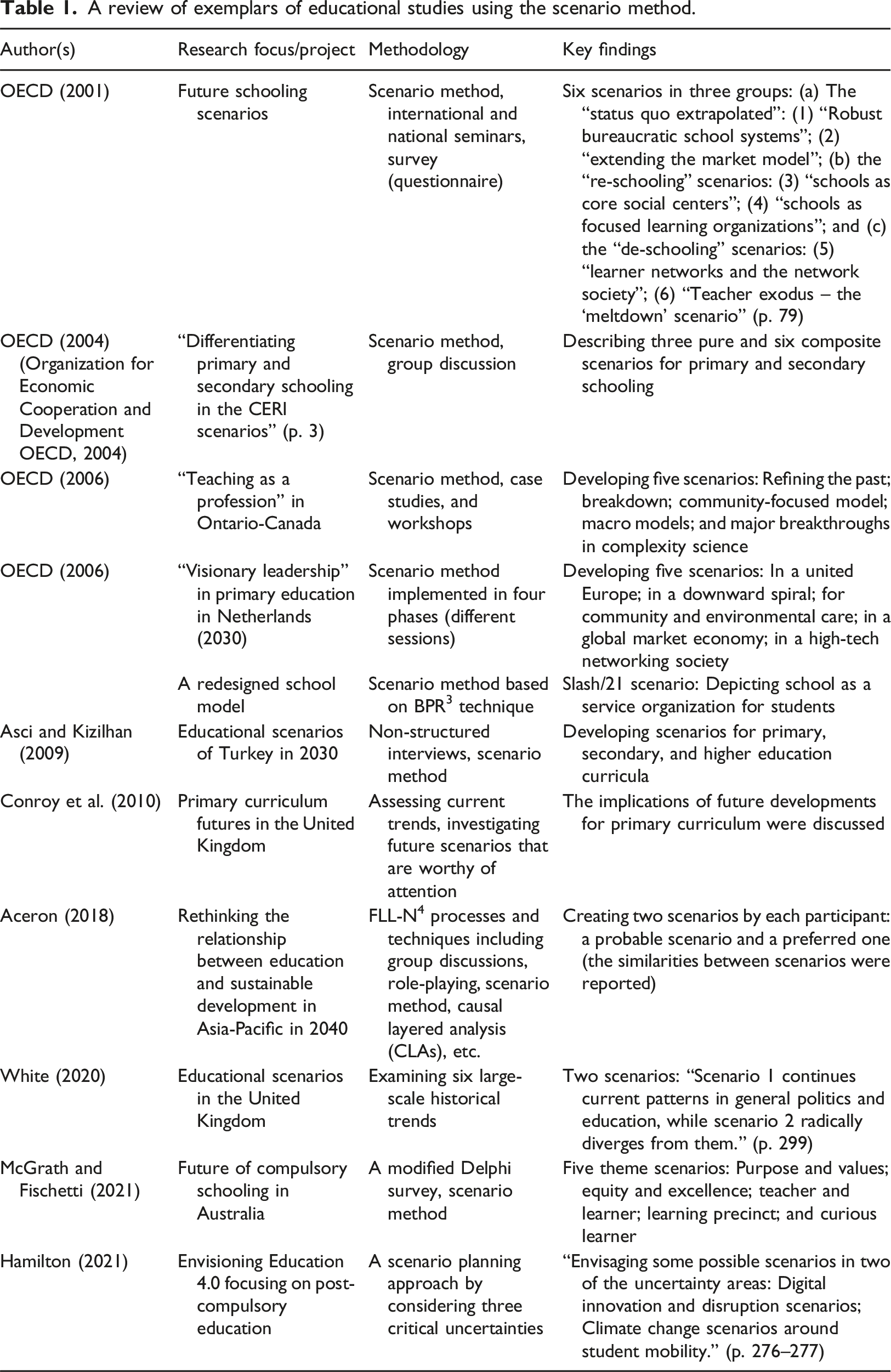
The literature reviewed in this section demonstrates a transdisciplinary approach and a combination of different methods for gathering data, as required in futures studies. The studies are mainly reports, which have been produced by organizations such as OECD and UNESCO, highlighting a global concern about the issue, although they are geographically unevenly distributed. The educational scenarios developed in the analyzed literature describe a continuum of alternative images of future education, from negative and hopeless to positive and hopeful ones that offer ideas for planning innovative educational practices and a need for conducting new studies. By doing foresight and exploring alternative futures of primary curriculum in Iran, this research intends to provide a starting point for subsequent relevant studies in Iran, build capacity and open new horizons for reimagining primary education as well as contribute to the generation of shared knowledge on futures thinking in education.
Research design and methods
As demonstrated in Table 1, a diversity of scenario approaches and processes can be used in the educational context. This foresight research was conducted in an interdisciplinary manner, using a scenario planning framework based on the Global Business Network (GBN) method. The GBN method has an exploratory approach to the future and creates alternative scenarios based on critical uncertainties. It is used primarily for exploration, research, and learning rather than decision-making (Chermack, 2022; Van Notten, 2006). However, it can provide a basis for pre-policy research (Duncan and Wack, 1994; cited by Van Notten, 2006). We thus applied this method as a useful tool to challenge the current mindsets and provoke visionary thinking and futures discourse in curriculum research with a focus on primary education.
The time horizon considered for foresight research should be long enough for significant changes in the external environment to appear, but not so long as those changes become implausible and unmanageable (Brands et al., 2014). Furthermore, setting a long-term horizon provides more opportunities for decision-making (Vincent-Lancrin, 2004). Accordingly, a time horizon of the next 15 years was determined for developing scenarios, which seemed appropriate for making both significant and plausible changes in the educational context.
The foresight process was designed in five steps as presented in Figure 1. In the first step, an environmental scanning was carried out to identify the factors affecting the primary school curriculum, using the modified STEEP framework (Socio-cultural, Technological, Economic, Environmental, and Political factors). Due to the impact of philosophical viewpoints and thinking patterns, or as Gidley (2013) said, “megatrends of the mind” on educational futures, “Intellectual forces” were also added to the mentioned framework and turned it into STEEP-I. Data was gathered from four resources: ministry documents, previous literature on the future of education, studies about trends and weak signals, and the viewpoints of experts. The research process in detail.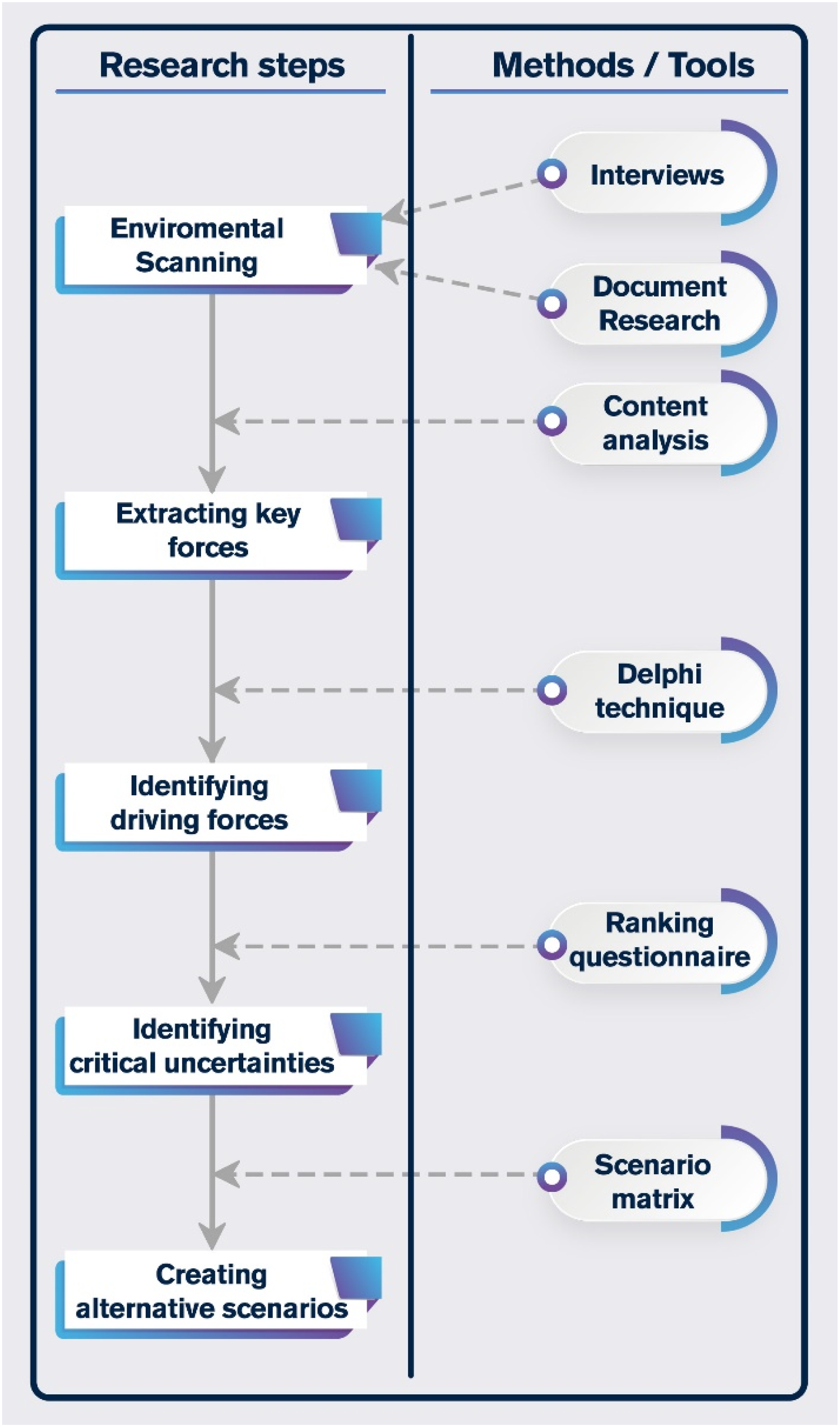
To collect data on trends and weak signals, document research method and semi-structured interviews with key experts (11 persons through purposive sampling method) were conducted. In the second step, data analysis was done using qualitative content analysis to extract key forces. The Delphi method was used in order to prioritize them and identify driving forces. In the following, they were scored to determine critical uncertainties. Finally, based on the two critical uncertainties, four alternative scenarios were developed.
Scenario building
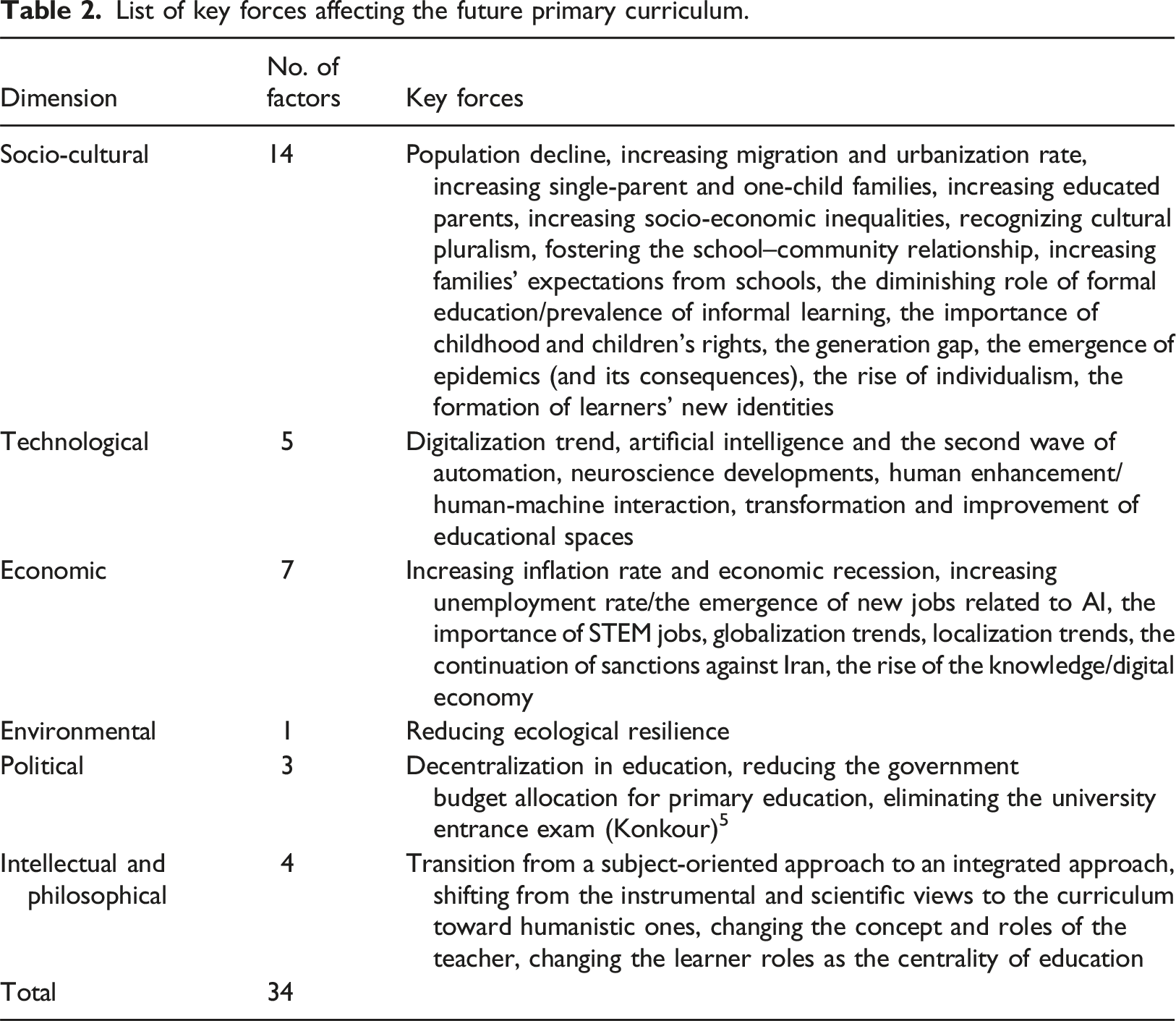
Identifying key forces
List of key forces affecting the future primary curriculum.
Identifying driving forces
To determine the driving forces affecting the primary curriculum, the key forces identified in the previous section were set up in the form of a Delphi questionnaire and given to the experts to score based on the two criteria of “impact” and “uncertainty.”
The Delphi technique was performed in two rounds with a panel of 34 experts. Figure 2 shows some of the demographic characteristics of the expert panel. The criterion for selecting variables was to score higher than the average of the answers. Based on the output of the second round, the impact-uncertainty matrix was drawn. This matrix provides a useful and concise clustering of factors affecting the research subject. Using this matrix, 15 key forces with high impact and high uncertainty were selected. These factors were categorized based on common underlying concepts and causes and formed six main classes as driving forces, which are specified in Table 3 along with their alternative states. Demographic characteristics of the experts. Driving forces and their alternative states.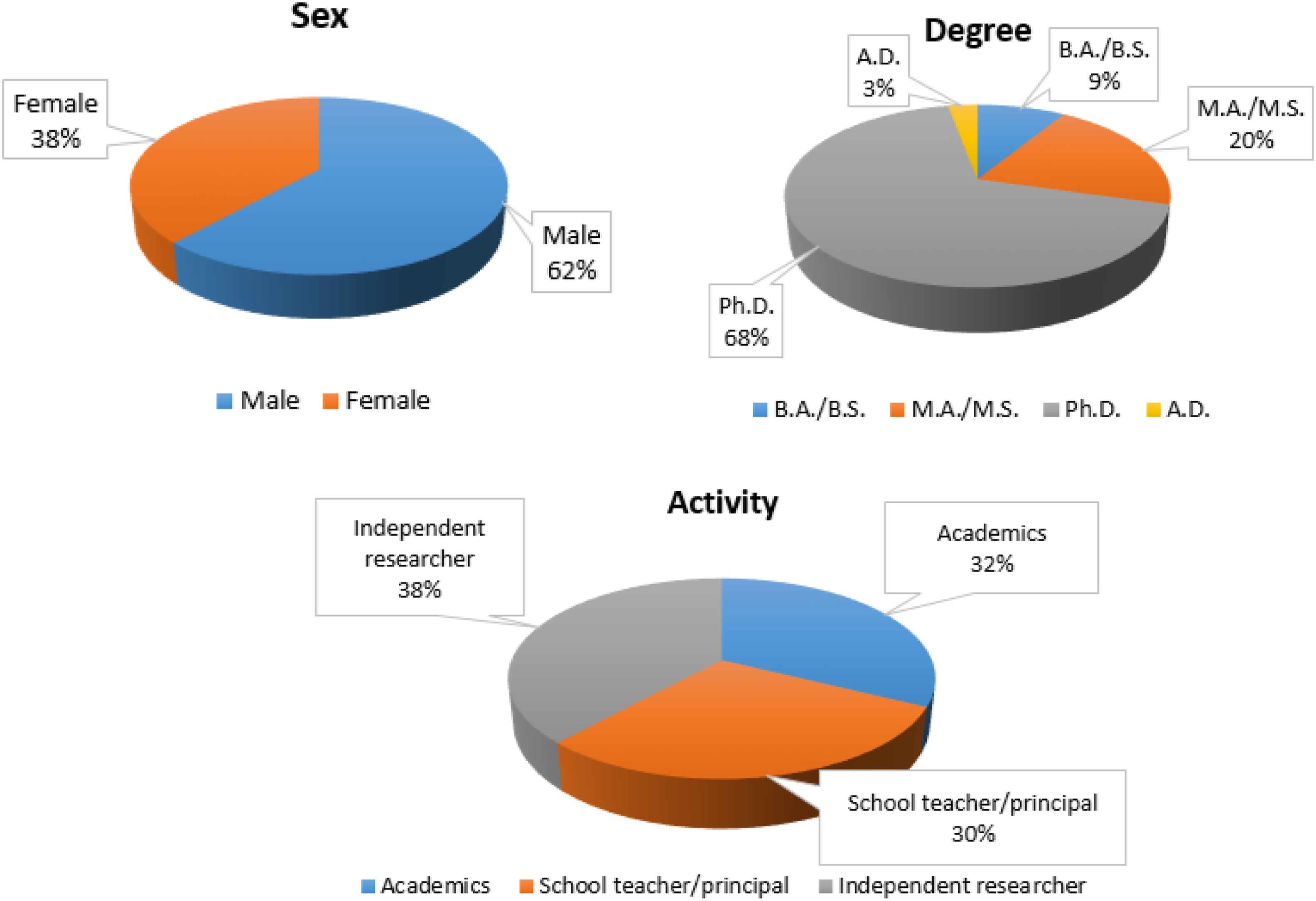
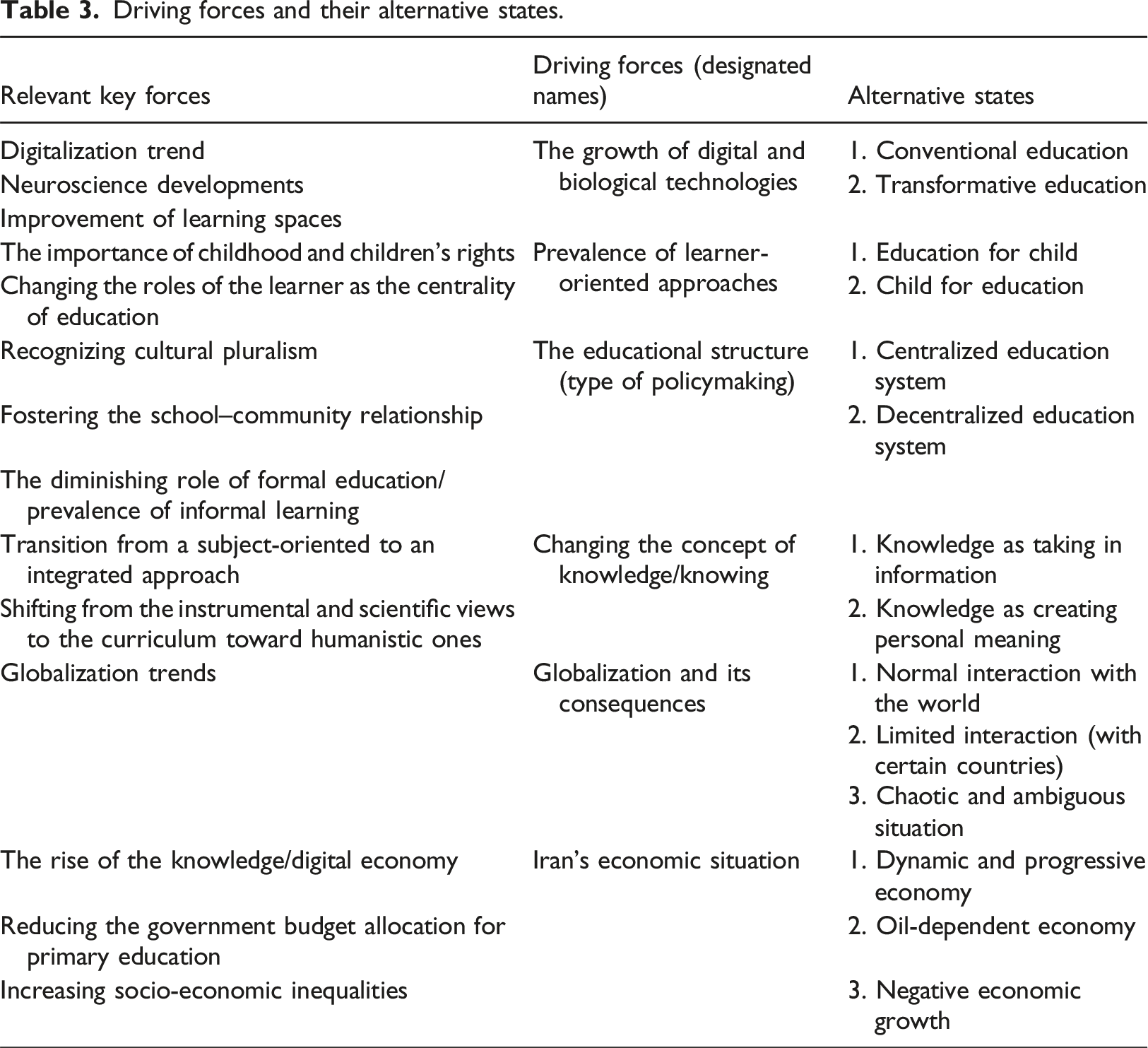
Driving forces should have three characteristics: high impact, high uncertainty, and relative independence (Chermack, 2011). Regarding these characteristics and according to Table 2, the driving forces relating to primary education are (1) the growth of digital and biological technologies; (2) prevalence of learner-oriented approaches; (3) the structure of the education system (type of policymaking); (4) changing the concept of knowledge/knowing; (5) globalization and its consequences; and (6) Iran’s economic situation.
Identifying critical uncertainties
Ranking driving forces.
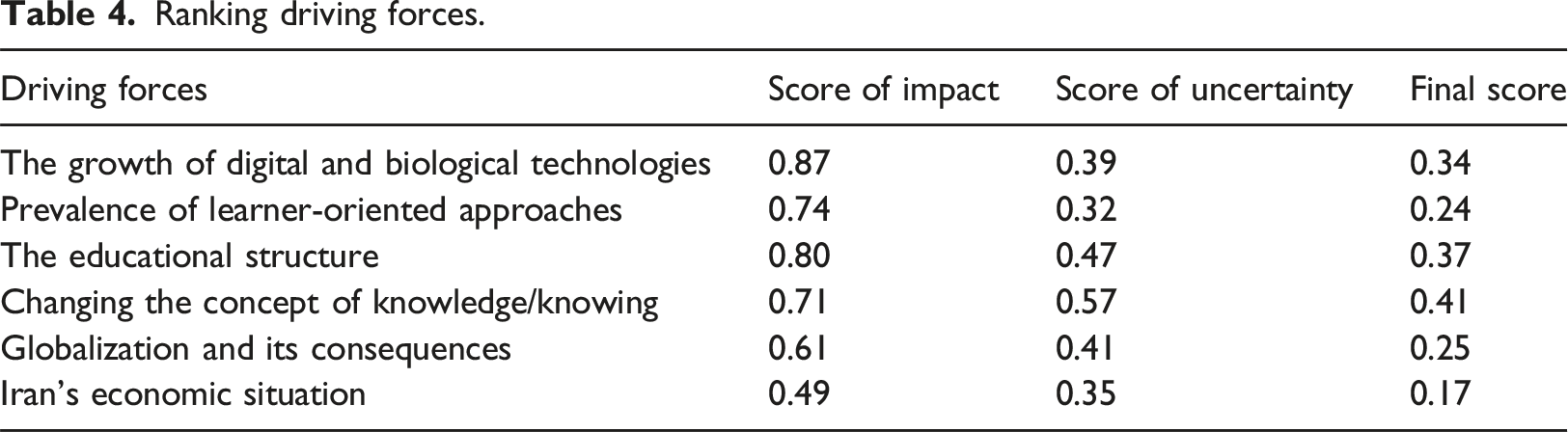
Each of the critical uncertainties had two alternative states that, in combination with each other, made up the logics of the scenarios: 1. The educational structure. It consists of two alternative states, namely, “centralized” or “decentralized,” which shows the degree of centralization in educational policymaking in terms of both theory and practice. 2. Changing the concept of knowledge/knowing. It is comprised of two different states, namely, “knowledge consumption” or “knowledge creation” which refers to the different views about the nature of knowledge. The first one is rooted in realism and focuses on transferring information to learners. The second one is originated from constructivism which believes that learners should actively construct their own knowledge.
Developing scenarios
Criteria for evaluating scenarios.
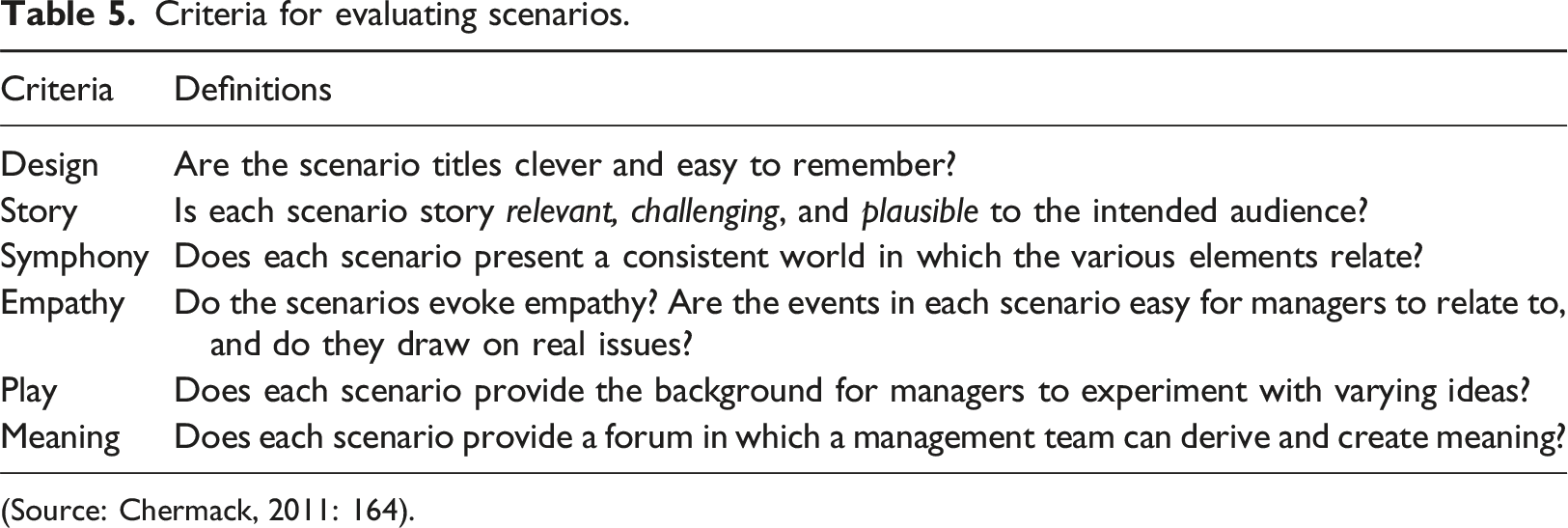
(Source: Chermack, 2011: 164).
Results and discussion
As mentioned above, the two critical uncertainties used to design scenarios are “educational structure” and “changing the concept of knowledge.” Figure 3 illustrates the four alternative scenarios for the primary school curriculum. Alternative scenarios for the primary school curriculum.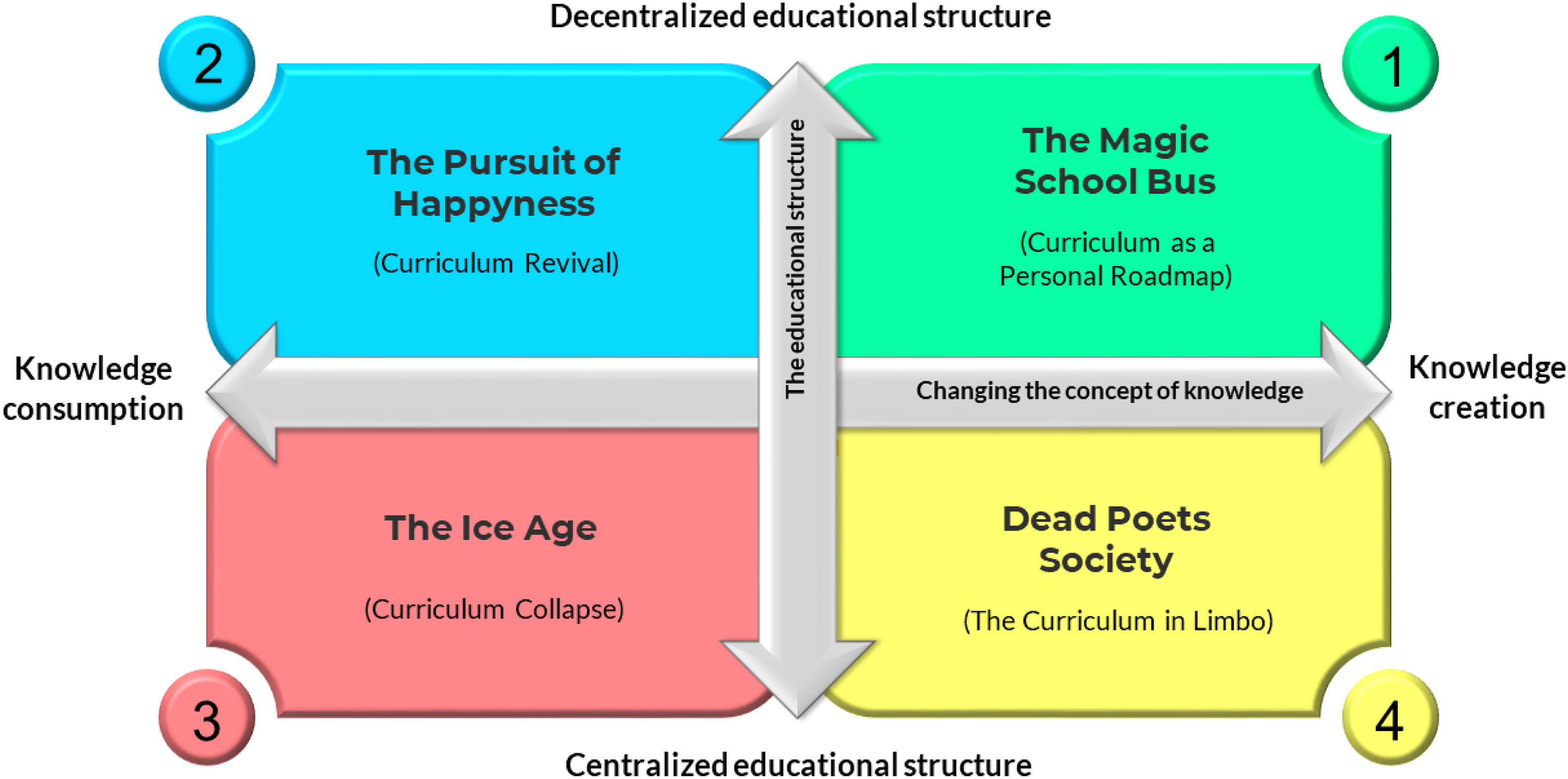
The comparative characteristics of the scenarios.
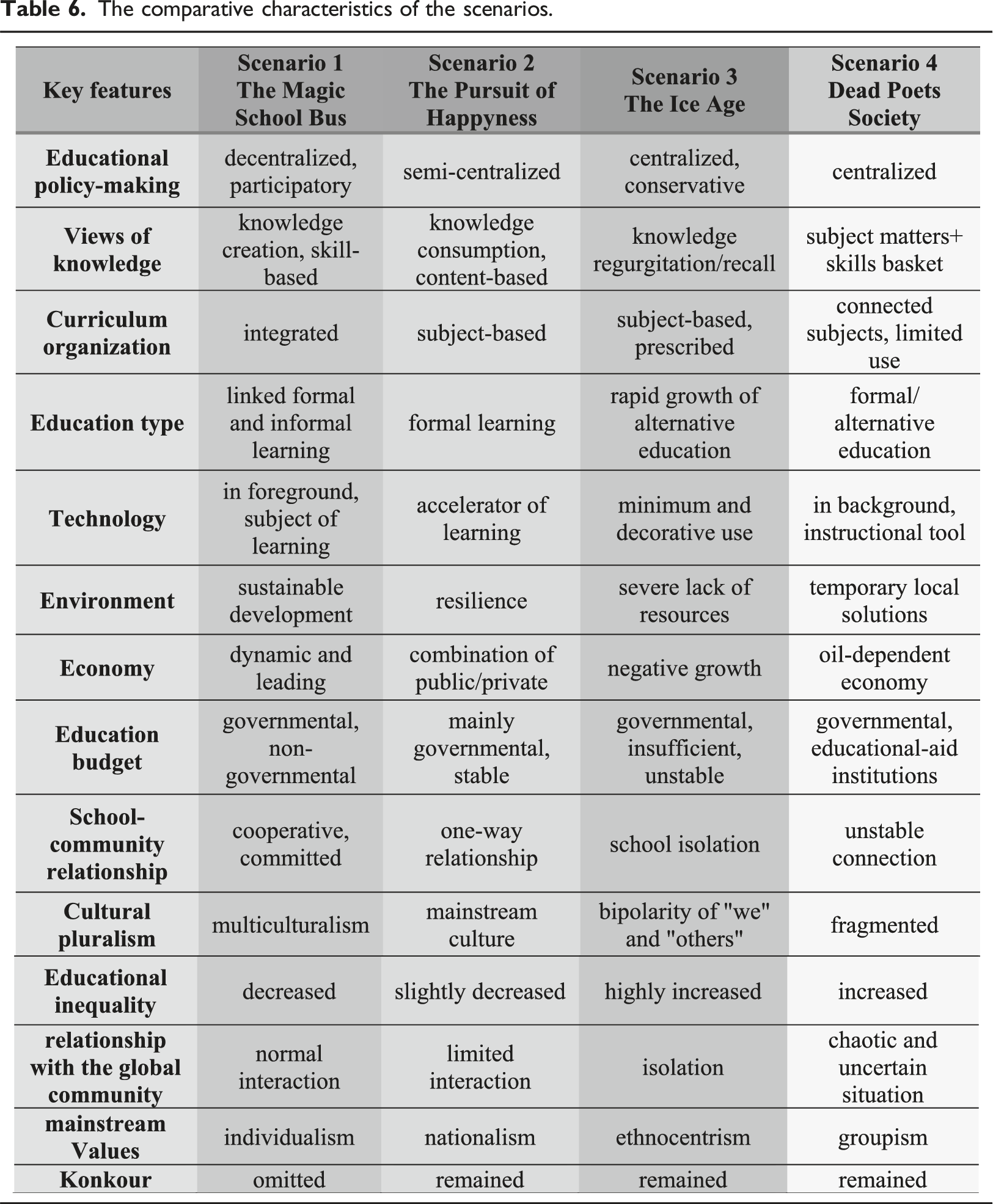
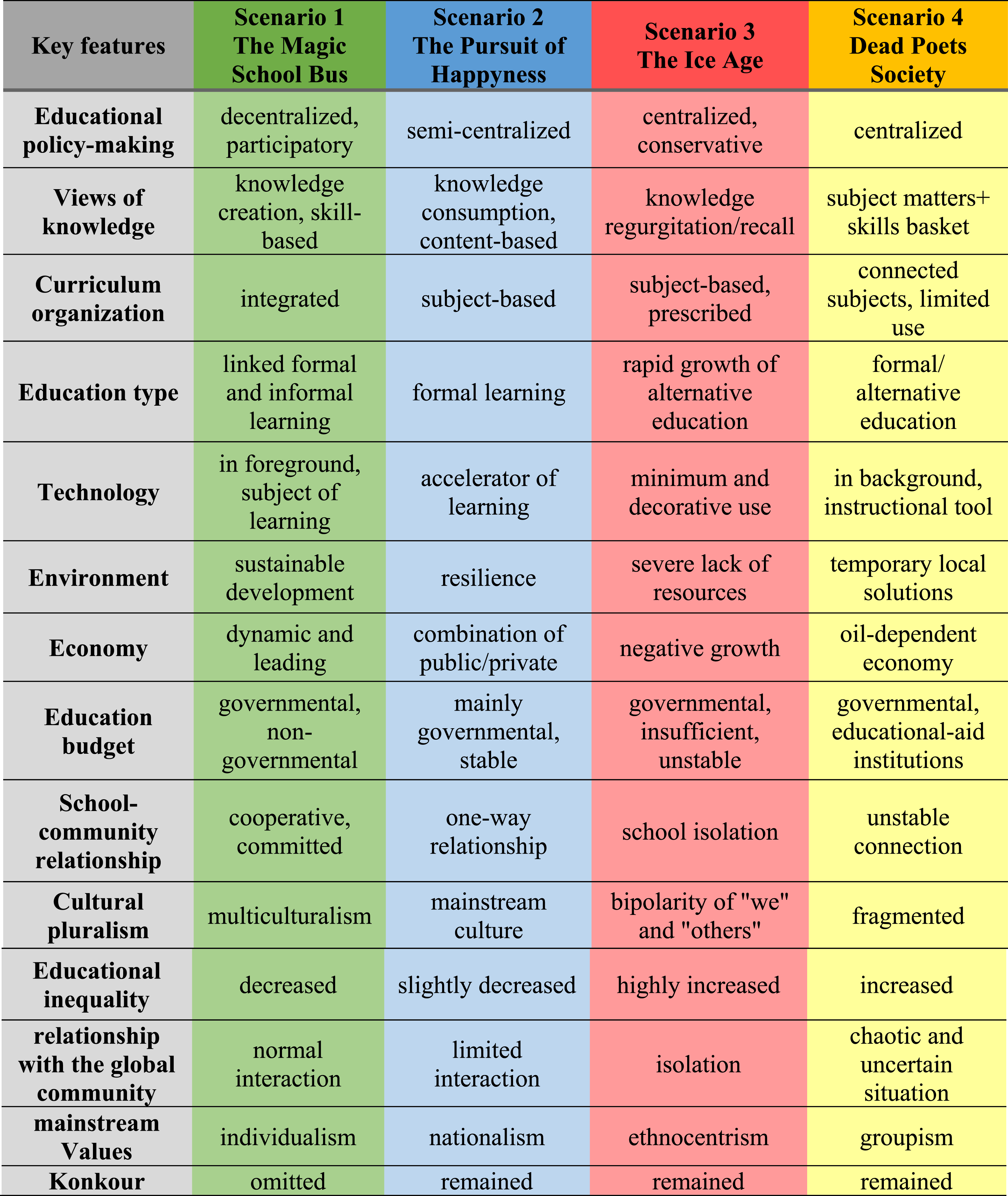
Scenario 1: The Magic School Bus (curriculum as a personal roadmap)
In this scenario, the education system experiences a high degree of decentralization in policymaking. The government merely sets the major educational goals and assumes a supervisory role. In such an atmosphere, there is no more university entrance exam (Konkour) to affect the goals and quality of learning. Intellectual and cultural pluralism is recognized as a potential for promoting change and welcoming new discourses and ideas. As a result, we are witnessing the emergence and flourishing of the “network of innovative schools” across the country with various approaches such as humanistic and entrepreneurial ones. In the networked world, schools are only one of the sources or platforms of learning. Therefore, the boundary between formal and informal learning is blurred and the relationship between school and society is realized satisfactorily so that a diverse network of educational stakeholders and players such as businesses, industries, organizations, parents, and the students themselves actively participate in curriculum planning. In this scenario, anti-Iranian sanctions have been removed, the country has good relations with other countries, and the economy moves toward dynamism and innovation while reducing its dependency on oil resources. In addition to government financial support, schools are funded by investment from industries and knowledge-based companies and are usually governed by a board of trustees. These changes, along with technological advances, define and emphasize quality and lifelong learning. Economic values such as financial literacy and entrepreneurship are more reflected in education. Environmental issues are also assumed as a priority by the policymakers and governors, whereby the development of technological solutions and compatibility with the indicators of sustainable development are continuously been considered as a principle in their plans. Affected by this orientation, sustainability education is embedded into the curriculum. The learning approach is “knowledge construction as a reflective and interactive process” that takes place in the community of learners. The curriculum is organized around themes in an integrated approach. Fostering 21st-century competencies or soft skills is at the heart of the curriculum. In addition to being a tool for learning, technology itself becomes the subject of learning. The use of smart technologies as well as co-teaching approaches allows for more differentiated instruction and personalized learning programs. The training of professional teachers is of fundamental importance in this scenario, and in-service courses are designed with a problem-oriented approach to addressing their actual needs.
The Magic School Bus scenario describes a kind of “revolutionary model” for teaching and learning. The decentered structure has enabled the emergence of creativity and innovation at the school and classroom levels. The curriculum is flexible and skill-oriented, and attention is paid to all aspects of the child’s development. In this integrated curriculum learning “subjects” has turned to “learning through subjects to develop competencies” where “math and science meet arts!” 7 This scenario narrates an episode of the dream of personalizing the curriculum by employing digital technologies and new learning methods, in which the theory of multiple intelligences (Gardner, 1985) is realized. Regarding the consideration of individual differences as well as the active role of learners in the curriculum, the metaphor of “Currere as a personal journey” of the learner—inspired by William Pinar—best represents it.
Scenario 2: The Pursuit of Happyness 8 (curriculum revival)
In this scenario, the educational structure is semi-centralized. The amount of schools’ authority increases in a step-by-step process, moving toward the “school-based curriculum development (SBCD)” approach. In such a situation, about half of the schools have managed to meet the requirements to achieve the SBCD certificate. The most crucial requirement to become certified as a “self-managed school” is empowering the school staff in different fields. Making fundamental changes in the teacher training programs, all incoming student teachers are required to pass certain courses. In this scenario, the actors involved in curriculum design are not as diverse as those in scenario one are; although, the certified schools regularly get consultations from curriculum and technology experts to improve quality learning. Curriculum organization is still subject-based; at the same time, some new topics related to current issues, including foreign language, technological literacy, and sustainability education are added to the learning program. The most significant obstacle to designing and implementing integrated approaches is the survival of the entrance exam (Konkour) and standardized tests. However, the schools try to customize the curriculum to fit the general conditions and characteristics of the large groups of students. The state of the economy and education share of the total budget is relatively stable. Each family receives a voucher from the government for each student and freely chooses the desired school for their child. The school budget is provided by the vouchers received by the families. This causes the formation of a positive competitive market among schools concerning promoting the quality of services and using educational innovations to attract more families. New technologies are used as learning accelerators and are considered one of the effective factors in differentiating schools.
In the second scenario, the reduction of centralism and relative delegation of authority and decision-making to schools has led to a gradual shift toward school-based curriculum development and increasing school productivity. This scenario can be assumed as a reflection of the “market model” in education, which leads to some significant developments in schools. These characteristics indicate the attempt to “revival” or “rebirth” the curriculum and the schools from today’s dysfunctional state. In this regard, Seidel (2017) has used the word “exhumation” as a metaphor for the revival of the curriculum to emphasize the roles of awakening and accountability of the curriculum, schools, and teachers to the conditions of the time and place we live in.
Scenario 3: The Ice Age (curriculum collapse)
This scenario depicts a desperate situation. The education system suffers from extreme centralization and bureaucracy. The overload of subject-based content and curriculum imbalance—driven by social demands and political agenda—put pressure on students and teachers, while the consumption approach to knowledge dries up the roots of innovation and creativity. The economy is experiencing negative growth, the unemployment rate is rising, and sanctions and isolation of the country are blocking the way to economic growth. Issues such as the population aging as well as teachers’ low salaries and low social status, forcing them to turn to jobs other than teaching, create a tough situation in which the education system cannot replace the retired teachers with new ones. Moreover, the standard nature of schooling is neither compatible with the children’s individuality nor with their natural learning process. Water conflict and climatic migrations intensify in many areas of the country due to environmental crises. Consequently, cities confront many problems, including marginalization, violence, and ethnic conflicts, which in turn affect the schools’ social and cultural context as well as the interpersonal relationships of students. The education system, faced with a serious lack of budget and human resources, seeks to provide possible solutions, such as providing low-cost services or virtual education on the same old platforms. The sum of these issues leads to families turning to alternative educational approaches. Due to the budget reduction and inefficiency of the education system, the number of teachers and students leaving the formal education system increases and alternative education grows rapidly. These conditions lead to an alarming status for the education system, in which any opportunity for opening new horizons fades away. Finally, the government’s decision to assign some school buildings to accommodate immigrants makes the puzzle of “curriculum collapse” and “school death” complete.
In the Ice Age scenario, the hierarchical, rigid and inflexible structure of the education system represents the “conservative model” of schooling, in which the dominant political ideology casts a shadow on the education system as on the other entities of the society. One of the main challenges in this scenario is the understaffed education system. Moreover, there is no room in the national curriculum for expressing multiple cultures and beliefs and thinking critically about them. Hence, the learners do not achieve the desired agency and communication skills to act effectively in the global and multicultural context. In this scenario, the schools cannot adapt to the growing changes in society. They become “museums of knowledge” engaging in accumulating and maintaining the heritage of traditional and obsolete knowledge.
Scenario 4: Dead Poets Society (the curriculum in limbo)
In this scenario, the education system still has a centralized hierarchical structure. The curriculum is subject-oriented, and there is little attention to the learners’ individual differences. Although society’s attitude and expectations have shifted toward skill-oriented approaches and developing competencies, there is generally little opportunity for teaching skills through the formal curriculum due to the centralism and excessive volume of textbooks. In addition, unlike in the first scenario, the skills are not integrated across the curriculum but are taught separately. In fact, a “basket of skills” is added to the curriculum, some of which are mandatory and some are optional. In this scenario, the country’s economy is still oil-dependent, sanctions continue, and foreign relations are chaotic. In these circumstances, public schools are faced with a dramatic budget deficit. They, out of desperation, decide to deal with educational-aid and Konkour institutions to receive financial support in exchange for the promotion of their products and services in schools, despite the fact that these institutions themselves have mushroomed due to the shortcomings and wrong policies of the education system. The set of these factors leading to the ineffectiveness of the education system will cause some families to choose alternative educational approaches such as homeschooling or independent schools with new and transformative approaches. This group of critics begins to form a separate island distinct from formal schooling and a serious competitor to it. Furthermore, they focus on what is usually not covered in schools and formal curricula, especially the skill area. Regarding these facts, the curriculum is in a chaotic and “limbo” situation. Due to the imprudence of policymakers, the country continues to experience adverse environmental trends. Although some temporary solutions have been implemented at the local level, they have failed to decrease the climate migration trend. This issue changes cities’ cultural and social context as social cohesion gives way to groupism. As a result, not only the population of students in urban schools suddenly increases, but the cultural and identity fragmentation gradually manifests its impacts in schools as well. These events lead to the increase of inequalities since different levels of the curriculum are implemented for different socio-economic classes.
In the fourth scenario, the need to revise traditional pedagogy is acknowledged, but the education system is not able to meet its requirements, and there is also no serious determination to change. The approach of the education system thus can be described as a “resistance model.” Paying attention to skill areas in this scenario distinguishes it from the third one. However, considering skills apart from subject knowledge indicates a kind of “formalism in educational reforms.” The problem of formalism, as Bagheri (2018) stated, causes any successful, innovative idea in the world, when implemented at the national and local level, to be adopted merely in its form, without considering the real concept and meaning underlying it, making it futile and ineffective. In such a situation, some pioneer and transformative schools turn on the light of innovation in order to adapt and respond to technological developments and the emerging needs of society.
Conclusion
The present study was designed to develop alternative scenarios for the primary school curriculum in response to the highly complex and unpredictable world of the future. Using the STEEP-I framework to identify key forces provides such a wide and multidimensional perspective that prevents sliding toward unidimensional simplistic views resulting in the contrast between the three curriculum sources (i.e., learner, society, and knowledge areas).
We developed four alternative scenarios that have significant implications for educators and curriculum policymakers. The most important lesson that emerges from these scenarios is that innovation takes place in situations where schools have the autonomy and capability to organize teaching and learning activities in different ways using local capacities, rather than all following a single version of the curriculum—as the saying goes, one size does not fit all. In this sense, innovation comes from agency and active engagement of educational players and stakeholders rather than impeccable and perfect structures. Furthermore, innovation arises from the change of views regarding the mission of education in the digital age and understanding how to effectively integrate new technologies into the curriculum rather than merely using them.
The main goal of this foresight exercise was to foster forward-looking thinking about potential educational futures. The created scenarios may be later used to develop indicators for scenario monitoring. The scenario that will take place in the real world will not necessarily fully comply with any of the four mentioned scenarios; rather, it may include a combination of elements proposed in those scenarios or something completely different. This arises from the unpredictable nature of the future. Of course, this does not mean that foresight efforts are futile; on the contrary, it reveals the necessity of such practices and their continuity for understanding and preparing for the future more than ever. Therefore, as Jagodzinski (2017: 3–4) has acknowledged, “education is in need of some serious fabulation. New possible imaginative narratives are needed, possible worlds that engender thought, like that of science fiction, or as Deleuze would have it: ‘Sci-Phi’ as a philosophy of the future.”
The main weakness of this research was the access limitation to educational policymakers at the national level in the research process in which only one person from the Ministry of Education took part in the interview phase. However, this study was one of the first attempts to apply foresight in the context of primary education in Iran, which can contribute to fostering the discourse of futures thinking and foresight-based planning in this area.
To conclude, we must point out that the main advantage of foresight research is to encourage out-of-the-box thinking among planners and decision-makers. A key policy priority should therefore be conducting further research to develop practical ideas for reconceptualizing the curriculum and designing prototypes of innovative and future-proof educational models. However, This requires an active interaction between policymakers, philosophers of education, and practitioners, as well as the philosophers’ shift of focus from conceptual and normative issues to the ones that practitioners face in reality described as “practitioner-aligned.” (Tesar et al., 2022: 6). In other words, changing strategic goals and policies of the Iran education system requires a real discourse turn (Varaki et al., 2022) so that the educational policymakers will be able to create real reform related to the future.
Ultimately, the findings of this study have some recommendations for policymakers and educators as following: 1. Establishing future-oriented approaches in curriculum planning by promoting futures literacy from macro (policymaking) to micro (implementing) levels. 2. Development of an education observatory and early warning systems to monitor environmental changes related to the field of education for active and timely exposure. 3. Generating new ideas to effectively integrate emerging technologies into the curriculum in partnership with school leaders and teachers. 4. Reducing curriculum load, moving toward an integrated curriculum, and adding practical/experiential learning experiences to strengthen soft skills. 5. Fundamental revision of teacher training courses for continuous professional development (CPD) of teachers. 6. Designing learning cycles according to the needs of learners in order to optimally implement the curriculum at micro levels and personalize learning. 7. Strengthening the link between school and community as well as formal and informal learning. 8. Designing learner-oriented spaces through the rearrangement of environmental elements and the use of new learning approaches (such as game-based learning, learning based on design thinking, and self-paced learning).
Footnotes
Declaration of conflicting interests
The author(s) declared no potential conflicts of interest with respect to the research, authorship, and/or publication of this article.
Funding
The author(s) received no financial support for the research, authorship, and/or publication of this article.
