







Abstract
The primary school sector, where educational and socialization activities occur, is the first and most important sector for integrating migrant students into a new environment. Nevertheless, the 2019 Migrant Integration Policy Index (MIPEX) for Slovenia concludes that while Slovenian integration policies provide equality on a legal or theoretical level, they do not fully integrate immigrants into society. Therefore, this research has answered the main research question with a methodologically empirical analysis based on semi-structured interviews with teachers or other professionals in selected primary schools. The study examines the integration of immigrant students into Slovenian primary education, specifically within the pedagogical framework. It explores the challenges encountered by pedagogical and professional staff in this context, as well as the experiences of immigrant students and the overall classroom community throughout the educational process, as reported by the interviewees.
Keywords
Introduction
Global inequalities are reflected in demographic, social, and economic disparities among various countries, armed conflicts, environmental and other disasters, and human rights violations. Alongside the descriptive type evolving landscape of travel and communication possibilities, there is a parallel increase in migration and the arrival of refugees. Migration, a multifaceted and intricate issue, has emerged as one of the most pressing and sensitive challenges in the present and the future (PISRS, 1999).
Given the challenges associated with immigration, it is essential to ensure that immigrant children receive at least a primary education. Education is a fundamental human right and, at the same time, an essential tool that forms the basis for successful integration into society and, as such, is a necessary response to migration from immigrant-receiving countries (INEE, 2022; Sardoč et al., 2022). The educational space is crucial in integrating immigrant children into their new country. It represents a space of opportunities where children can acquire new knowledge and skills, become familiar with the language and culture of the new host country, and form social bonds with other children. Integration into a new (educational) environment is demanding and challenging for children, their parents, teachers, social workers, and school principals, so building a trusting relationship and cooperation is crucial (Hladnik and Rosulnik, 2021; Micreate 2019).
In the last decade, teachers and other professionals in Slovenian educational institutions have confronted more immigrant and refugee children with different cultural and linguistic backgrounds than Slovenian children (Rutar, 2018). As such, this study decided to conduct an empirical analysis using semi-structured interviews with teachers and other professionals in selected primary schools to answer the research question, which is (a) the process of integrating immigrant students into primary education and, in particular, (b) into the pedagogical process and (c) what challenges the pedagogical and professional staff face together with (d) the immigrant students themselves and (e) the class community as a whole during the educational process, especially from the perspective of the interviewees.
Terminological explanation
An immigrant is a Slovenian resident who immigrated to Slovenia from abroad and has a habitual residence in Slovenia (intends to stay in Slovenia for at least 1 year) (Razpotnik, 2021b). Based on statistics provided by the Statistical Office of the Republic of Slovenia (SURS), it is seen that out of the total population of Slovenia, which is equal to 2,108,977 individuals as of January 1, 2021, a proportion of 292,824 individuals, equivalent to 13.9%, were individuals who originally resided outside Slovenia at birth and then came to the country at a later stage (Razpotnik, 2021a). In 2021, Slovenia was home to 169,000 individuals with foreign citizenship. Around 7% of this population were found to have established their primary residence in Slovenia. Consequently, from a statistical perspective, these individuals cannot be classified as immigrants. Most of the non-Slovene European immigrants who now call Slovenia home originally hail from Germany (7600), Italy (4600), or the Russian Federation (4000). Most non-European immigrants to Slovenia came from China (1200 people), followed by the United States (900 people) and Argentina (400 people) (Razpotnik, 2021a).
According to the Ministry of Education, Science, and Sports’s 2017 paper, “Inclusion of Children of Immigrants in the Slovenian Educational System, “there are numerous categories of immigrants in the Republic of Slovenia” (Ministry of Education, 2017), which are as follows: (1) Former immigrants who hold Slovenian citizenship are persons born in the Republic of Slovenia and have lived here since birth (second and third-generation immigrants—mother tongue is not Slovenian) or persons who were not born in Slovenia and have acquired citizenship. (2) Persons who do not have Slovenian citizenship, that is, persons with a permanent residence permit in the Republic of Slovenia and persons with a temporary residence permit in the Republic of Slovenia. (3) Persons who have applied for international protection and persons with international protection. (4) Citizens of the Member States of the European Union. (5) Children of Slovenian emigrants and expatriates (with or without Slovenian citizenship) who have returned to their home country.
This study aims to define the term “immigrant students” as individuals who lack Slovenian citizenship but have a permit for permanent or temporary residence in Slovenia. According to the Rules on Knowledge Assessment and Grading and Students’ Progress to a Higher Class Standing in Elementary Schools (Rules on Knowledge, 2013), it is defined that, with parental consent, schools have the option to adapt the assessment and grading process for an international student for a period of up to 2 years following their enrollment in a Slovenian school (Mihelič, 2017). Consequently, specific accommodations are made to cater to their needs.
Theoretical background
Adjustments within Slovenian primary school educational space for immigrant children
To ensure the effective integration of immigrants into Slovenian society, the study needs integration strategies that enable equal integration of immigrants and respect their culture and tradition. Part of integration strategies is sociocultural integration (along with political, economic, and psychological), which includes learning and education as critical goals in the integration process. Jill Rutter’s research, carried out in Peterborough and south London, examines the diverse school experiences of children from Nigerian, Polish, and Somali backgrounds. The study suggests that multicultural education acknowledges cultural diversity and seeks to equip all children for life in a multi-ethnic society (Rutter, 2015). Integration strategies should create a win-win situation for immigrants and the host country, as immigrants and the host society have much to gain: Society receives new taxpayers (to provide access to employment). In contrast, immigrants offer opportunities for social and cultural exchange (Vrečer, 2011). Therefore, immigrants must be integrated into the education system in kindergartens, primary and secondary schools, universities, and adult education.
This article focuses on primary school education. Primary school is where people of different nationalities, sociocultural backgrounds, ethical groups, religions, and worldviews meet (Vižintin, 2013). Immigrant children face many challenges in integrating into the host country, with language barriers emerging as the most significant obstacle (Okilwa, 2018). Suárez-Orozco discusses the need to understand immigrant students’ challenges to integrate into different educational settings successfully. The notable challenges encompass problems related to identity, language proficiency, community integration, and sense of belonging. Additionally, immigrants, especially unaccompanied minors and asylum seekers, commonly face trauma and stress (Suárez-Orozco, 2017; Suárez-Orozco et al., 2008; Suárez-Orozco and Suárez-Orozco, 2009, 2014, 2018).
These barriers arise from their limited ability to communicate with others effectively. Similarly, immigrant parents face difficulties regarding employment opportunities, cultural disparities, access to suitable housing, and discrimination, further hindering their integration.
Shoba Arun (2019) referenced the following barriers to integration: Issues of identity, language, community, and belonging; trauma and stress for all immigrants, but especially for single and asylum-seeking children; and the role of discrimination (institutional and interpersonal discrimination and prejudice, i.e., forms of racism), hatred, and conflict; limited access to quality early childhood education and care; a focus on disadvantaged schools; low socioeconomic status; difficulties in school choice; parental influence; housing problems; difficulties accessing social services; and parents’ lack of sustained employment (Shoba Arun, 2019).
One must employ a thorough theoretical framework to understand the intricacies of language acquisition and cultural integration in schools, with the former serving as a crucial foundation. Cummins’s theoretical approach is especially applicable in language acquisition and cultural integration. Cummins’ concepts, including the Common Underlying Proficiency, Basic Interpersonal Communicative Skills (BICS), Cognitive Academic Language Proficiency (CALP), and the Threshold Hypothesis, provide a valuable understanding of the intricate nature of bilingual education and the significant influence of first language proficiency on successful second language acquisition. Cummins differentiates between BICS and CALP, providing insight into immigrant students’ difficulties in the language-intensive academic setting. BICS encompasses the language abilities used in everyday conversations.
On the other hand, CALP includes the more intricate language skills necessary for achieving academic excellence. Comprehending these differences is essential for creating language assistance programs that benefit immigrant pupils (Cummins, 1998, 2005, 2023). In addition, the previous research highlights the significance of valuing and leveraging students’ cultural and linguistic origins in the educational process. This is consistent with the sociocultural integration objectives described in the study, emphasizing the necessity of implementing measures beyond providing language assistance and encompassing cultural comprehension and recognition.
Furthermore, researchers such as Sonia Nieto and Gloria Ladson-Billings enrich this framework by highlighting the importance of cultural competence and the application of Culturally Relevant Pedagogy, which establishes a connection between education and students’ cultural heritage (Ladson-Billings, 2014, 2021; Nieto, 2001). Vygotsky’s Sociocultural Theory and Krashen’s Input Hypothesis enhance the understanding by highlighting the social and collaborative elements of learning and the significance of understandable input (Krashen, 1985; Vygotsky, 2012). James Banks’ Cultural Diversity Framework offers a pragmatic blueprint for educators to tackle cultural diversity and language obstacles in the curriculum and instructional approaches. The multicultural education framework developed by James A. Banks consists of five dimensions: content integration, knowledge development, prejudice reduction, equitable pedagogy, and empowered school culture. This strategy promotes the integration of varied subject matter into the curriculum, cultivating analytical thinking, diminishing bias, customizing instructional techniques for various students, and establishing an empowering school environment. Banks’s framework offers educators a succinct yet all-encompassing manual for fostering cultural inclusion, equity, and favorable intergroup relations in educational environments (Banks, 2015). These theoretical views provide educators and researchers with a comprehensive approach to creating inclusive and effective learning settings for students with different linguistic and cultural backgrounds.
Additionally, it is essential to note that COVID-19 was a specific 21st-century challenge and identified additional barriers for immigrant students who need extra support regarding distance education. One of the challenges identified in COVID-19 was the (insufficient) level of knowledge about ICT (Information and Communication Technologies). This is a challenge that Slovenia has faced for some time, as evidenced by the Organisation for Economic Cooperation and Development (OECD)’s 2012 findings (OECD, 2012), in which Slovenia had the most significant gap between the performance of first-generation immigrants and non-immigrants in computer-based problem-solving (OECD, 2015).
Eliminating the language barrier created by having immigrant students attend classes in Slovenia is a long-term process. Therefore, the school that has accepted a new immigrant child can apply to the Ministry of Education and Sports for additional hours in Slovenian so that these children can learn Slovenian in their first year in Slovenia. The amended regulations amending the Rules on Norms and Standards for implementing the Primary School Program (Rules on Norms and, 2021) in Article-43c stipulate that pupils whose native language is not Slovenian may receive additional hours in Slovenian after enrolling in a primary school in the Republic of Slovenia. When the pupils mentioned above are enrolled in primary school in the first assessment period, the additional Slovenian lessons are organized according to the criteria, as shown in Figure 1. Additional Slovene language classes for international students in the first assessment period (Eurydice, 2021).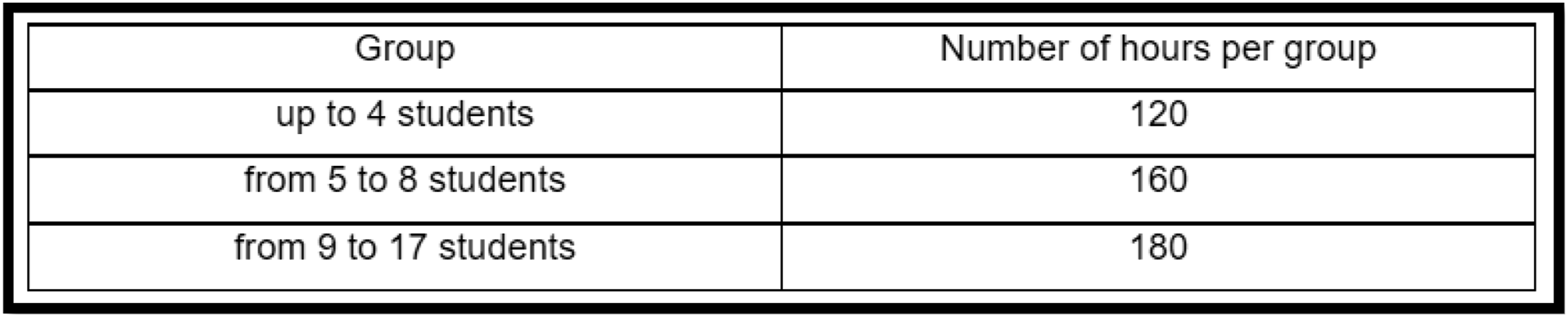
Under the educational policies, primary schools must give pupils at least 35 h of Slovenian instruction during the second assessment period of their enrolled academic year. Alternatively, these students may be included in the subsequent school year cohort to provide Slovenian instruction. The Ministry of Education, Science, and Sports offers educational materials for teaching the Slovenian language and facilitates and encourages the incorporation of lessons focused on mother tongues and cultures designed explicitly for immigrant students (Sloga, 2021).
Inclusion of immigrant children into Slovenian primary school educational space
The Ministry of Education, Science, and Sports recommends integrating children seeking international protection and children with international protection into the educational system. In this case, the integration of immigrant children into Slovenian primary education is divided into two stages, that is, introductory and continuation classes, where the focus is on learning the Slovenian language and integrating into the new environment (linguistic and social integration). Before the children attend regular classes, a 20-h introductory course for migrant children is organized. After the introductory course, the children are admitted to the regular class, receiving additional professional support in learning the Slovenian language (Ministry of Education, 2017).
After the introductory class, students are admitted to the continuation class, wherein additional assistance is provided over two academic years. This program includes various activities offered by the educational institution and the local community. These activities include learning Slovenian as a second language, the provision of teaching aids, the implementation of individualized programs for students, the adaptation of teaching methods and formats, and the modification of assessment practices throughout the academic year. Furthermore, students receive support in engaging in extracurricular activities both within the school and beyond, are presented with various holiday opportunities and local activities, have access to advanced language courses, and are assisted in organizing additional lessons about the native language and culture of immigrant children (Ministry of Education, 2017).
In Slovenia, primary schools create an individualized plan for students with an immigrant background, including a plan for individualization and differentiation, supplementary instruction programs, and other forms of support and assistance. However, Asadi (2017) pointed out that it is challenging to promote the long-term success of immigrants without policies based on a holistic approach that focuses on their educational pathway and pays special attention to the learning domains and emotional and social needs of diverse students (Asadi, 2017). Therefore, Slovenia offers several adaptations for immigrant students, such as: (1) Longer (protective) time for vocabulary acquisition to improve understanding of more complex language structures, to accept culturally different views and beliefs at home and at school, additional time for written exams and knowledge assessment, sufficient time for feedback on knowledge assessment, if a student gets distressed during an oral exam in front of the class, professionals postpone such forms of exams; (2) Seating: the student sits in the classroom in a way that enables hearing the teacher and seeing the board well; (3) Teaching and learning: The student receives extra help with reference points, visual support, extra writing technique tasks (i.e., copying instructions, short texts, misspelled words), simplification of texts, clear, short, unambiguous, slow pace, checking understanding by providing information (written, spoken texts), structured and appropriate homework (depending on language skills); (4) Instructions and task structure: Simplification of instructions and questions with clear, more superficial language structures, use of familiar vocabulary, multi-step instructions are broken down into steps, longer tasks are divided into shorter ones, checking that the student has understood the instructions; (5) Assessment: the number of marks, assessment timing (oral/written/product-based) can be adjusted to the student’s assessment methods, the student can be assessed with a small amount of learning material, knowledge in parts, etc. (Jović Mićković, 2022).
Notwithstanding the above, Slovenia still faces challenges in integrating students with an immigrant background in primary school. Developing and implementing pedagogically sound theories and assessing and adapting curricula are obligations beyond basic needs. Immigrant students must be given equal opportunities while respecting the culture and language of their country of origin. Diaz Rico (2017) explains that schools are representatives of a particular culture and that students whose culture of origin is not predominant “may find the organization, teaching/learning style, and curriculum to be alien, incomprehensible, and exclusionary” (Diaz-Rico, 2017).
In the following study, an attempt is made to answer the main research question. In this way, the integration of immigrant students takes place in primary schools, more specifically in the pedagogical process, and more importantly, what challenges do the pedagogical and professional staff face in this context, and last but not least, the immigrant pupils themselves and the classroom community as a whole during the educational process, especially from the perspective of the interviewees.
Methodology
A pragmatic philosophy was applied in which the context of the study and the research questions determined the research design (Tashakkori and Teddlie, 2021). In this context, the research employed qualitative data collection and analytic methodologies. The study used qualitative content analysis as a hermeneutic loop, following the iterative procedure outlined by White and Marsh (2006) (White and Marsh, 2006). This approach involved conducting in-depth semi-structured interviews, as described by Krippendorff (2018) (Krippendorff, 2018).
The final database consisted of 10 teachers, 8 social workers, 19 immigrant students, and 3 parents of immigrant students. Primary school principals were not involved in this research but were included in another study. The purpose of the semi-structured interviews was to provide more depth to the study. The aim was to gain insight into (1) how the integration of immigrant pupils occurs in primary schools, (2) what challenges the teaching and professional staff and pupils with an immigrant background face, and finally, (3) what challenges the classroom community as a whole face during the educational process.
Respondents were invited to participate in the survey via email and received an invitation to their schools’ email addresses, accessible through those primary schools’ websites. Respondents were asked to participate in the survey if, in the past, they had worked with immigrant students and supported them in the integration process. A non-probability sampling method (i.e., snowball technique) was used. This technique formed the sample based on pre-existing relationships that helped the researchers find the most appropriate respondents.
The first author transcribed the interviews and entered the text into ATLAS.ti (ver. 9). Both researchers reviewed the transcripts. The first author performed the initial coding, and the second author re-coded the transcript. The coding process was iterative to identify significant concepts and patterns (Krippendorff, 2018). An inter-rater reliability analysis was conducted to determine the level of agreement among raters. The resulting dependability coefficient was 95.6% (Miles and Huberman, 1994; Neuendorf, 2017). The investigators discussed discrepancies among themselves to achieve 100% agreement and completed the final analysis. The researchers then worked on the interpretation and final report.
The age of the respondents ranged from 6 to 55 years. Of the total 40 respondents, 28 described themselves as female. Interviews were conducted in April and May 2022. The duration of the interviews ranged from 5 to 30 min.
Due to the sensitivity of the topic, particularly the fear that their statements could result in negative consequences in the form of harassment or judgment by other pupils, colleagues, or school officials, respondents requested absolute confidentiality. As such, identifying information of the interviewees or others mentioned in the interviews (e.g., other teachers, pupils) was omitted from the transcripts, and identification numbers were used instead (i.e., INT 1 for interview participant 1).
Challenges of integration of immigrant students into Slovenian primary schools
Here onward, the following topics will be discussed: (1) immigrant children’s experiences and perceptions of integration in Slovenian primary education, (2) challenges and benefits of teaching immigrant children, (3) ways of adapting teaching for immigrant children, (4) the importance of parents in the integration process, and (5) the ability to teach immigrant children.
Experiences and perceptions of immigrant children while integrating into the Slovenian primary school sector
Immigrant children in this research have experienced diverse negative and positive experiences when enrolling in primary school. Examples of negative experiences as presented by the interviewees were: “When my brother first enrolled in school, he told me that I would also need to enroll, but I didn’t like it. When I went to school, my brother was always with me.” Other immigrant
The immigrant children interviewed indicated that they use their native language in the home environment, with some respondents showing that they sometimes use Slovene with their parents to teach them the Slovene language. They study mainly in Slovenian, while some
Interviewees pointed out that the success of the integration of immigrant children into primary school is dependent on the level of effort of:
Interviewees also pointed out the importance of gradual integration of immigrant children into primary school, stating: “The student is involved in the same way as others, but the involvement is more gradual, especially if the child does not know/understand the language.”
Immigrant children and their parents generally expressed satisfaction with the support that teachers provide to students and with the overall process as they integrate into primary schools. In contrast, some interviewees expressed the need for more support from the school environment when integrating into primary school, as they pointed out: “I missed that someone would help me more in integrating into school.”
Challenges and benefits of teaching immigrant children
When children with an immigrant background enter primary school, they face several challenges, while their integration can also benefit the school if the school, teachers, and classroom community recognize its potential. The - - In connection to the language (and other) barriers, research respondents - - -
Regarding the benefits of teaching immigrant children, the interviewees pointed out: - -
Ways of adapting teaching of immigrant children
There are several ways to include immigrant children and, consequently, to adapt teaching for immigrant children, as emphasized by interviewee participants: - Additional - - - -
The study interviewees also made various suggestions for promoting and ensuring the successful integration of immigrant children into Slovenian primary education: - - - - -
One of the interviewees also pointed out that knowledge is assessed too quickly, stating: “Unfortunately, the beginning of the assessment is already in the second year of schooling with us, which I think is too fast.”
The importance of parents in the integration process
The immigrant children, teachers, and social workers interviewed pointed to the importance of involving parents in the integration process of their children in Slovenian primary schools and stated: “I have been teaching for many years. Of course, I have some experience with immigrant students. For some students, Slovene is a hard nut to crack, and, consequently, has great difficulty acquiring content that requires a lot of new professional vocabulary, but some students quickly find themselves learning Slovene. The help of parents and school professionals is needed.” - - -
The research interviewees could observe the limitations above on the part of the parent that parents can also be an
Ability to teach immigrant children
Teachers assessed that they needed additional knowledge to teach children from immigrant backgrounds adequately and explained: “Given some of the experience I have, it seems that I would still need some additional knowledge.”
Interviewees pointed out that school teachers and social workers lack specific awareness and training to address the challenges of integrating immigrant pupils adequately: “At the moment, I can point out that they have good relations with all professionals, but I meet that they are unfortunately not well aware and educated in these topics.”
Discussion and findings
Concerning the research question, the content analysis of the semi-structured interviews with immigrant students, their parents, teachers, and social workers in primary education revealed that the inclusion of immigrant students in primary education is done with the help of (1) additional hours for learning Slovenian language, (2) learning through play and social interaction, (3) inclusion of immigrant children in various activities, (4) use of bilingual books, realia, and mutual learning, (5) other adaptations such as tailored teaching, additional professional help, (communication) training, books, aids. This type of inclusion is in line with the 2012 Guidelines for the Inclusion of Immigrant Children in Kindergartens and Schools (Ljubljana, 2012) and the 2018 Proposal for a Work Program with Immigrant Children in the Field of Preschool Education, Primary and Secondary Education (Ljubljana, 2012; Rutar, 2018). However, it is essential to keep in mind that, as interviewees confirmed, the success of integrating immigrant students into primary education depends on the level of effort of the immigrant child and the level of their motivation, the individual teacher, the school, and class community, parents, and non-governmental organizations. This research also shows that students must be integrated into the education system as early as possible. For example, participants indicated that attending kindergarten before entering school helps them acquire additional knowledge of the Slovenian language to avoid difficulties entering primary school. This aligns with the 2012 Guidelines for the Inclusion of Immigrant Children in Kindergartens and Schools (Ljubljana, 2012), which recommend that parents enroll their child in kindergarten at least 2 years before entering primary school, and also with Jager (2016, 157), who notes that “the key is awareness and commitment to include all children in preschool educational programs” (Jager, 2016; Ljubljana, 2012).
As seen, teaching and professional staff, immigrant students themselves, the classroom community as a whole, and parents of immigrant students face different challenges in integrating immigrants into the host society. Communication is an essential part of functioning in human society, and one could argue that part of identity is lost due to a lack of linguistic communication skills, especially the ability to express oneself. Although the amended Rules on Norms and Standards for the Implementation of the Primary School Program (2021) in Article 43. c had foreseen that pupils whose native language is not Slovenian might receive additional hours of instruction after enrollment in a primary school (Eurydice, 2021: ). However, research participating children (who had no prior knowledge of Slovenian) indicated they would need additional hours of Slovenian instruction and additional help with integration into the primary school system. Participating parents also cited critical language challenges—not knowing Slovenian or being unable to support their children adequately. As current research and the research conducted by Rutar, 2018 showed, parents must be involved in the integration process of their children (Rutar, 2018); one should also focus on how to help them overcome the obstacles they face—such as psychological and existential stress, passivity, and lack of knowledge of the Slovenian language. This research has also indicated that teachers are skeptical that a translator can be found for each world language from which immigrant children come.
As highlighted in this research, it is critical to build mutual trust between teachers, the classroom community, and immigrant children to promote the integration of immigrant children into the host society. Peer connections in education settings are crucial for creating the initial frameworks of social relationships and laying the groundwork for future development. Children recognize and support their efforts, offering assistance, direction, and cooperative interactions when working on academic assignments (Khalfaoui et al., 2020). In examining and coding the responses, it was found that respondents focused very little on the positive aspects of integrating immigrant students in primary school. In contrast, negative perceptions of immigrant students were evident due to the advanced social closure of society, reflected in the rejection or exclusion of immigrant students from peers, discrimination, stigmatization, or even racist rhetoric, which was also confirmed by (Shoba Arun, 2019). This is reflected in emotional and physical distress as they focus on remembering the significant lack of familiarity with their home country, family, and friends and feelings of deep regret as they are never invited to their classmates’ birthday parties due to prejudice from their classmates’ parents. Oxman-Martinez et al. (2012, 376) warn that perceptions of discrimination and forms of social exclusion as forms of unfair treatment and experiences of social exclusion can hinder children’s healthy development, especially when they are members of a visible minority group (e.g., immigrants). Beelmann et al. (2021, 1) agree (Beelmann et al., 2021; Oxman-Martinez et al., 2012). The interviewed teachers also estimated that they need additional knowledge to teach immigrant children adequately and that the ability to teach immigrant children depends on the language of the immigrant child. To better address the above and the increasing migration and integration of immigrant students into the school system, teachers need to be trained to differentiate instruction for mainstream students and students with different language backgrounds and levels (e.g., a class of 25 students may include five migrant students who have foreign language levels and cultural backgrounds). Although mainstreaming immigrant students is a goal, school systems must consider both the advantages and disadvantages of push-in and pull-out methods (i.e., working with immigrant students in the classroom vs working with immigrant students outside the classroom (Whiting, 2017). In addition, It will be necessary to find other ways to achieve society’s openness to diversity because, as seen, Slovenian culture is increasingly closed to differences and multiculturalism, which, given Slovenia’s low birth rate, makes the fact of increasing migration, also necessary to attract a qualified workforce. This reality has to be accepted. Looking into the future, one can only expect a further increase in the frequency of migration, and a society that hermetically seals itself off will have difficulties surviving in such a competitive international environment.
As shown in this research, some respondents stated they would need additional hours for the Slovenian language and additional help with immigrant children’s integration into the primary school system. This statement is consistent with Milharčič Hladnik and Kožar Rosulnik, who stated that the number of hours funded by the Ministry of Education, Science, and Sports is generally considered insufficient.
The study by Portes and Rumbaut focused on the student’s perspective to understand the challenges and best practices in integrating immigrant students into primary education. This establishes a fundamental basis by highlighting the crucial significance of language competency and discussing more extensive matters of identity and community integration (Portes and Rumbaut, 2001). Moreover, another study highlighted that interventions aimed at promoting the social integration of immigrant children should consider that competency in the national language seems to be of greater significance (Cavicchiolo et al., 2023). The research conducted by Stasiūnaitienė et al. (2020) provides additional evidence that language proficiency plays a vital role in the successful integration of immigrant children into the education system (Stasiūnaitienė et al., 2020). The authors further stated the need for interpreters or translators, especially for communication between parents and teachers and between teachers and students when there are more complex challenges, regardless of the immigrant’s language (Sedmak et al., 2021). The authors further stated the need for the school to provide translations. The research conducted by Harte et al. (2016) and Arun, Bailey, and Szymczyk, as well as the current study, acknowledged the influence of parental influence (Harte et al., 2016; Sedmak et al., 2021; Shoba Arun, 2019). Based on the challenges described in the present study, we propose two steps to overcome this barrier: (i) establishing workshops for parents to understand children’s integration difficulties, the role of students as interpreters, and the importance of school attendance, and if possible, the feasibility of a systematic approach to working with parents should be explored in-depth, and (ii) providing resources for parents to learn the Slovenian language and, if possible and necessary, to receive additional psychological support.
According to this research, certain participants expressed the need for assistance in promoting bilingual books to facilitate the integration of immigrant children into the primary school system. Experts and educators recognized the need to utilize bilingual books during the early stages of integration (Sneddon, 2008).
Lunder Verič (2015) found that intercultural content is absent from all teacher education institutions in Slovenia and rarely offered as an elective module, while Milharčič Hladnik and Kožar Rosulnik (in Sedmak et al., 2021, 198) stated that “studies and projects consistently indicate that professional development of teachers on these topics is needed.” (Lunder Verlič, 2015; Sedmak et al., 2021).” With this in mind, it is suggested that additional professional development courses or materials be developed for teachers to teach immigrants appropriately and increase their awareness and knowledge of the complexities of educating immigrant students by improving their intercultural competencies. As previous research points out, immigrant children are “often torn between inclusion and exclusion processes around the concept of ‘otherness’, discrimination, and ethnic labeling.” It is crucial to find different ways to achieve society’s openness to diversity and reduce the rejection or exclusion of immigrant students, discrimination, stigmatization, or even racist rhetoric that translates into emotional and physical suffering for immigrant students. From the responses of interviewees, various suggestions can also deduced for promoting and ensuring the successful integration of children with an immigration background in Slovenian primary schools, such as (a) the creation of picture dictionaries, (b) group teaching, (c) dividing groups of immigrant students, (d) preparation of an individualized plan, and (e) other suggestions (e.g., review of prior knowledge, additional hours for explanations, fewer assessments, more time, a certain period before enrolling immigrant children in primary school, alternative approach to knowledge assessment) (Sedmak et al., 2021; Shoba Arun, 2019). The above proposals are basically in line with the recommendations from the 2012 Guidelines for the Inclusion of Immigrant Children with a Migrant Background in Kindergartens and Schools (Ljubljana, 2012) and the 2018 Proposal for a Work Programme with Children with a Migrant Background in Preschool Education, Primary and Secondary Education (Rutar, 2018), which do not include the creation of picture dictionaries or the division of groups of immigrant students (Rutar, 2018).
As noted in the research, which showed respondents’ concern about the potential risk of the lack of preventive measures that would discourage the referral of immigrant children to programs for children with special needs, this issue requires special attention. Because the National Institute of Education places children in special needs programs based on expert opinions prepared by the First Instance Commission on Inclusion, the research suggests that immigrant children may be inappropriately referred due to language skills, which can lead to serious academic, behavioral, and long-term problems that should be investigated.
Using Onewuegbuzie’s (2000) framework on external and internal validity threats, validity threats were (a) ecological validity, as participants in the interview were basing their experience in a specific geographic environment; (b) reactive arrangement, where participants were aware they were participating in the interviews and may have affected their responses (also the vocabulary to express their exact sentiments and perceptions may have been a limitation), (c) temporal validity due to the time of data collection; (d) researcher bias and illusory correlation, where categories were developed based on personal beliefs of the researcher, and (e) data saturation may be different if multiple data collection time points would have been used (Onwuegbuzie, 2000). However, to achieve greater validity, (1) an additional researcher was included to review the data, interpretation, and conclusion to achieve face and content validity, (2) participants were contacted to review the findings and comment on the appropriate interpretation, and (3) direct quotes from the interview data were used to ensure descriptive validity.
Conclusion
As perceived by teachers and other professionals, the research findings examined the challenges of integrating immigrant students into the Slovenian primary school system. From a national perspective, integrating immigrant children primarily focuses on the Slovenian language. In contrast, the achievement of integration is contingent upon various elements, including the level of passion exhibited by both teachers and students, the adoption of a translanguaging approach, the provision of supplementary language support, the employment of translators or interpreters, and the implementation of teacher training programs aimed at effectively catering to the unique requirements of immigrant students. This study highlights the need to organize workshops to involve parents actively, provide language acquisition tools, and prioritize efforts to minimize instances of discrimination and exclusion. Moreover, adopting a more comprehensive strategy to safeguard every student’s welfare and foster a society characterized by greater inclusivity and diversity is imperative. Following established criteria, it is recommended to employ various tactics, such as visual dictionaries, group instruction, and tailored planning, to facilitate integration. Further research is necessary to explore the potential risk of inappropriate referral resulting from a lack of language proficiency, which may lead to behavioral issues.
Footnotes
Author contributions
The authors have contributed to the designing, executing, analyzing, and writing this research.
Declaration of conflicting interests
The author(s) declared no potential conflicts of interest with respect to the research, authorship, and/or publication of this article.
Funding
The author(s) received no financial support for the research, authorship, and/or publication of this article.
Ethical statement

Data Availability statement
The authors confirm that the data supporting the findings of this study are available within the article.