







Abstract
In recent years, graphene has remarkably enhanced the protective performance of anticorrosive organic coatings, yielding increasingly frequent exciting results and perspectives. This paper reviews the latest research advancements that we have gathered on the influences of conductivity, modification, dispersion methods and controllable orientation of graphene; the graphene-based smart anticorrosive coatings; the current understandings on the designs of the anticorrosive coating and the action mechanisms of graphene in the coating. It is concluded that there would be greater opportunities for the gravitational field-induced method to play the shielding effect of graphene; noncovalent modification methods may not ensure satisfactory attachment of the modifiers to the surface; green modification methods are expected to reduce the electrical conductivity of graphene and covalently modify graphene; the self-healing and early-warning graphene-based anticorrosive coatings are becoming a trend in the development of anti-corrosive coatings. The current-faced challenges and the future development prospects of the graphene-based anticorrosive coating were also proposed. Although graphene performs well in anticorrosive coatings, there is still considerable room to improve the performance, and a new round of industrial optimisation and upgrading in the anti-corrosion coating industry is inevitable with the rapid development of the anticorrosive graphene-based filler.
Highlights
The freshest research progresses on the graphene-based organic anticorrosive coating
The designs and the action mechanisms of graphene in the coating
The influences of graphene properties on the coating performance
The smart anticorrosive coatings were introduced
The current-faced challenges and the future development prospects of the graphene-based anticorrosive coating
Introduction
Metal materials are widely applied in marine engineering, civil engineering and petrochemical engineering, where they often encounter severe corrosive environments. Such conditions make metals highly susceptible to corrosion, 1 and result in substantial economic losses and energy consumption. According to the 2016 statistics from the National Association of Corrosion Engineers (NACE) in the USA, the annual global cost due to corrosion was estimated at approximately $2.5 trillion, accounting for 3.4% of the global gross product. 2 Despite the passage of several years, the situation appears to be worsening rather than improving. To extend the service life of metal structures and reduce the industrial maintenance cost, it is essential and urgent to protect the metal equipment from corrosion . Among the current strategies for corrosion protection, applying organic coatings on metal surfaces stands out as one of the most practical and effective methods.. 3 Organic layers adhere firmly to the surface of metal parts and act as barriers to prevent the metal from contacting the surrounding media. Furthermore, the addition of nanoparticles into organic coatings was found to improve coatings’ mechanical properties and the barrier effect effectively,4–7 thereby prolong the coatings’ durability. Though all kinds of nanoparticles have been employed to reinforce coatings, graphene-based organic coatings are increasingly gaining attention.8–11 Graphene possesses low density, excellent mechanical strength, nice impermeability and good chemical stability..12,13 Additionally, graphene could also act as a pathway for the electron transfer in zinc-rich epoxy coatings to reduce the permeation threshold of zinc. As a result, graphene is frequently utilised in heavy-duty anti-corrosion coatings for marine applications, endowing the resultant graphene-based organic coatings with desirable attributes such as lightweight, highly strong and superior anti-corrosive. 14
Over the last few decades, graphene drew a considerable research focus in the field of the anti-corrosive coating and still a great number of researches underway. 15 Although graphene performs well in anticorrosive coatings, there is still considerable room to improve the performance, and a new round of industrial optimisation and upgrading in the anti-corrosion coating industry is inevitable with the rapid development of the anticorrosive graphene-based filler. A critical review that focuses more on the developing understandings regarding the design of the anticorrosive coating and the action mechanisms of graphene in the coating is therefore highly desirable. In this review, we provide an overview of the latest research advancements in graphene-based organic anticorrosive coatings that we have collected. Especially, the effect of the conductivity of graphene on the corrosion resistance of the coating, the modification of graphene for improving the anticorrosive ability, the dispersion methods of graphene in coatings and the influences of the controllable orientation of graphene on the properties of the coating were carefully discussed. The smart anticorrosive coatings that appeared in recent years are also reviewed. Finally, the current challenges and the future development prospects of the graphene-based anticorrosive coating are considered. We believe this review could provide a timely progress report on the advancements in graphene-based organic anticorrosive coatings and benefit junior researchers in this field.
Roles of graphene in the anti-corrosive coating
The corrosion process
Corrosion occurs when reactions take place between metals and other materials. Based on the reaction mechanism, corrosion can be categorised into physical corrosion, chemical corrosion and electrochemical corrosion..
16
Physical corrosion happens when damages are caused by a simple physical dissolution of metals. For example, steel containers that used to store molten zinc would be gradually corroded because iron was dissolved by the liquid zinc.
17
Chemical corrosion occurs when metals react with the surrounding non-electrolyte solutions or corrosive gases (such as SO3, SO2 and CO2). Corrosive gases would dissolve in the water layer attached on the surface of metals, and subsequently form acids to participate in the chemical corrosion. Chemical corrosion is a process during which oxidation reaction and reduction reactions happen simultaneously. Electrochemical corrosion consists of two spontaneous coupled electrochemical reactions (Figure 1). When metals come into contact with water molecules, oxygen, Cl− and other corrosive media, the oxidation of the metal and the reduction of oxygen happen simultaneously, creating a primary battery. The anode and the cathode reactions are expressed via the following equations (Me is short for metal):


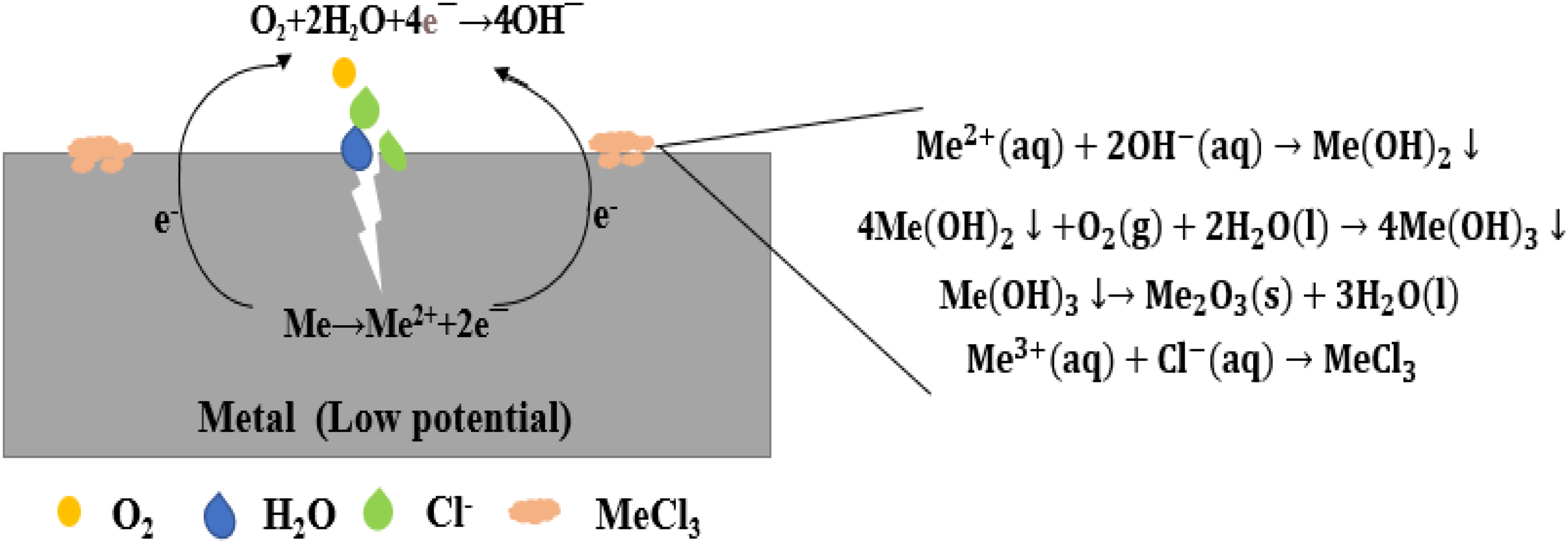
Schematic diagram of the metal corrosion process in the presence of water, oxygen and electrolytes. Extremely localised corrosion resulted in the formation of pitting
Anti-corrosion-related properties of graphene
Graphene is a two-dimensional honeycomb structure consisting of tightly arranged sp2 hybridised carbon atoms and is considered the thinnest two-dimensional material. Since Novoselov et al. 18 successfully extracted graphene from graphite in 2004, it has attracted a lot of attentions from various fields, such as optical components, fuel cells, biological devices and anti-corrosive coatings. 19 Two-dimensional (2D) nanomaterials are of great benefit to perform the ‘labyrinth effect’ to extend the penetration path of the corrosive media and produce protective composite coatings with low filler loading, long-lasting corrosion resistance and weather resistance, lightweight and excellent mechanical properties. 20
Though various 2D nanomaterials such as boron nitride (BN), molybdenum disulfide (MoS2), zirconium phosphate (ZrP) and the MXene family are garnering research interests for their potential applications in metal anticorrosion, graphene stands out due to its unique properties. Herein, the special anti-corrosion-related properties of graphene are introduced as follows.
Graphene owns excellent electrical properties. The carrier mobility of graphene is about 15,000 cm2/(V•s) at room temperature, which is ten times higher than that of silicon, and more than two times higher than that of indium antimonide (the known material with the highest carrier mobility). 21
Graphene owns remarkable thermal conductivity. The thermal conductivity of the defect-free graphene can be up to 5300 W/mK, which is the highest value reported up to now for carbon materials.7,22
Graphene is also considered as the strongest material. The Young's modulus of graphene was reported to be 1.0 ± 0.1 TPa, and the fracture strength of graphene was about 40 N/m. 23 Due to the excellent mechanical properties, graphene plays an important role in the design of structure materials and multifunctional materials, such as graphene-based papers, fibers, foams, etc.
In addition, graphene can shield water molecules and all kinds of gases. In 2008, Bunch et al. 24 prepared a hermetically sealed microchamber covered with a monolayer graphene membrane. By observing the differences of the membrane and calculating the leakage rate of helium inside the microchamber after changing the pressure on both sides of the graphene membrane, a conclusion came out that the single graphene membrane was impermeable to standard gases including helium. The sealed microchamber is shown in Figure 2(a) and (b). The individual atomic layer of graphene was suspended over the predetermined silicon dioxide (SiO2) pores via the Van der Waals force, then a restricted gas microchamber of ∼ (µm)3 was produced. The pressure difference between both sides of the membrane made the membrane convex upward or concave downward, as shown in Figure 2(c) and (d). After treatment under ∼0.1 Pa for four days, the sealed microchamber was removed. The atomic force microscope (AFM) was used to measure the changes of the graphene membrane at ambient pressure during the following three days, as shown in Figure 2(e). The deflection value z of the membrane was −175 nm initially, and z increased slowly over time. In an ideal situation, if the graphene membrane was impermeable, the deflection value z would not decrease or increase over time. The authors examined the changes of the pressure, and it was found that the helium leaked at a rate of 105~106 atoms/sec by calculating via the ideal gas law. The leakage rate of helium showed to be independent of the thickness of graphene (varied from 1 to 75 atomic layers), indicating that the leakage of gases was not through the graphene membrane but the glass walls of the microcavity or the graphene–SiO2 sealing interface. Following Bunch's conclusions, Berry 25 pointed out that the geometric pore size of graphene's six-atom ring was 0.064 nm, which was much smaller than the Van der Waals diameters of small molecules, such as helium (0.28 nm) and hydrogen (0.34 nm). In addition, the π orbitals of graphene form a dense electron cloud which blocks the voids in the six-atom rings. 19 Consequently, even when a pressure difference of 1 to 5 atmospheres is applied to monolayer graphene at room temperature, the smallest molecules (such as hydrogen and helium) cannot penetrate it.
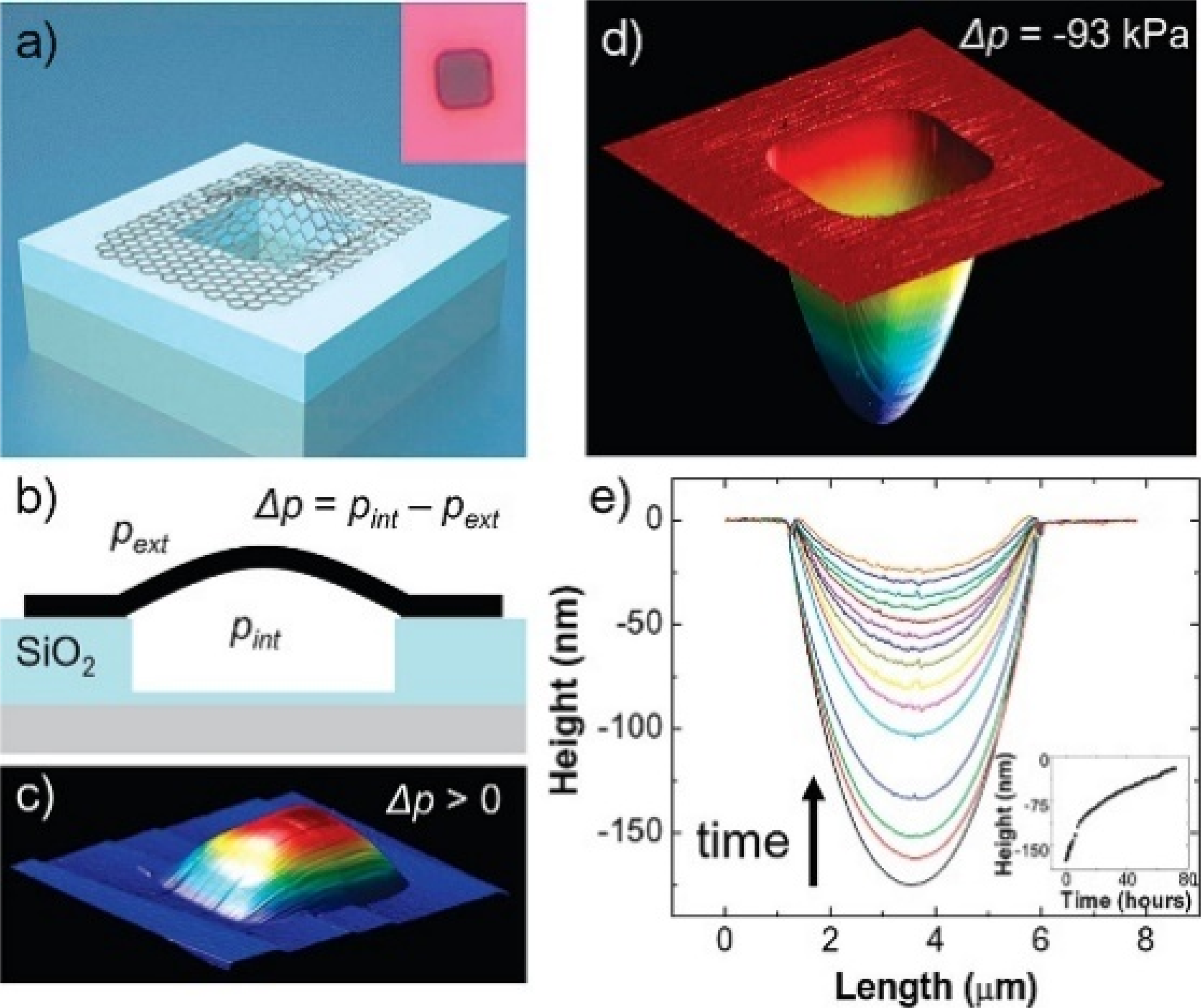
Schematic diagram of the graphene sealed microchamber (a); side view schematic of the graphene sealed microchamber (b); AFM image of ∼ 9 nm thick multilayer graphene drumhead with Δp > 0 (c); AFM image of the graphene sealed microchamber of fig 1(a) with δp=-93 kpa across it (d), AFM line traces taken through the center of the graphene membrane of (a), the minimum length in the z-dir remarkable thermal conductivity ection is −175 nm(e) 24
Graphene is seemingly the only known material that integrates low weight, excellent electrical properties, remarkable thermal conductivity, superior mechanical performances and extraordinary shielding effectiveness into a singular entity. With so many advantages, graphene-based fillers appear to be the natural choices for combating corrosion.
The shielding effect of graphene in the anti-corrosion coating
In order to minimise the losses due to corrosion, organic coatings are typically applied to the surface of metals. By creating a barrier between the metal surface and the surrounding environment, significant corrosion can be prevented. The uniformity, the porosity and the adhesion between the coating and the substrate are vital factors that affect the lifetime and performance of the coating. 8 If air bubbles and pinholes are trapped between the coating and the metal substrate, the mechanical properties of the coating and the adhesion between the coating and the substrate will be seriously damaged, leading to the creation of defects. In this case, the barrier protection usually fails at the defective area, and then electrochemical corrosion occurs, which results in delamination and ultimately the failure of the coating. 26 As shown in Figure 3(a), gases and water molecules diffuse through the pores in the coating along a path perpendicular to the orientation of the coating to the metal surface. However, when graphene is uniformly dispersed in the coating, its excellent impermeability forces corrosive agents to navigate around the graphene and through the interface between the graphene and the coating matrix to reach the metal surface, which greatly elongates the path that corrosive medium infiltrates to the metal surface, and then significantly enhances the shielding performance of the coating, 27 as shown in Figure 3(b).
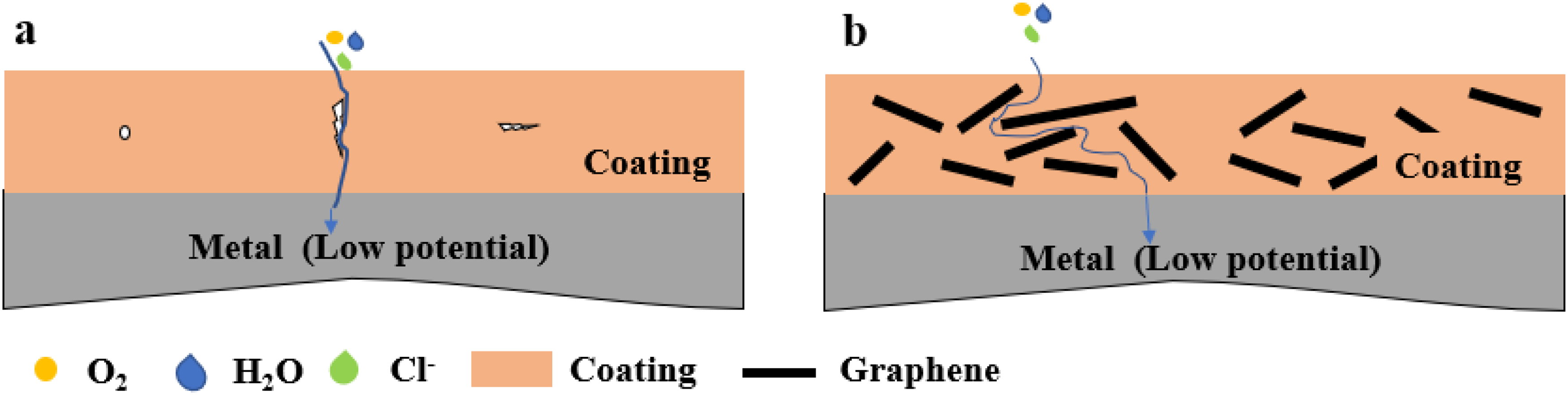
Gases and water molecules diffuse through the pores in the coating along a path perpendicular to the orientation of the coating to the metal surface (a); gases and water molecules escape graphene and go through the interface between the graphene and the coating to get to the metal surface (b)
In most studies, graphene was randomly dispersed within the composite coating rather than being highly ordered. While some studies indicated that better anti-corrosion performances could be achieved when graphene was distributed in an orderly manner within the coating. In 2016, Cui et al. 28 summarised the relationship between the orientation of the aligned graphene in the polymer matrix and the gas permeation path, concluding that more tortuous paths led to enhanced barrier properties and reduced permeability. As shown in Figure 4, the permeation of gases was reduced by approximately 89% when 1 vol.% graphene was dispersed in the matrix parallel to the metal surface (Figure 4(b)), compared to the pure polymer matrix (Figure 4(a)). Then, various methods were developed to adjust the alignment of graphene in polymers. The orientation of graphene can be effectively controlled by the force of the electric field and the magnetic field. Zhu et al. 29 prepared a cationic dopamine-reduced graphene oxide (DRGO+) nanosheet by a simple dopamine oxidative self-polymerisation and ionisation reaction (Figure 5). After the positively charged DRGO+ was stably dispersed in a commercial aqueous cathodic epoxy emulsion, the mixture was placed in a beaker containing pretreated copper and steel, serving as the anode and cathode, respectively. An electrophoresis process at 60 V and room temperature for 5 min resulted in the deposition of a coating with aligned graphene. Ding et al. 30 prepared magnetic graphene by an alcohol-thermal reaction. In their work, graphene-containing coating, magnetic graphene containing coating and magnetic field oriented magnetic graphene containing coating were prepared. Treatment in a magnetic field significantly increased the diffusion resistance of corrosive media and improved the corrosion resistance of the coating due to the parallel layered magnetic graphene. For both the electric field- and the magnetic field-induced alignment of graphene, specially designed arrangements to create an electric field or a magnetic field are necessary (electrophoresis was applied by Zhu et al., and Ding et al. used a magnet). These arrangements are often challenging to implement in large-scale production applications or the molding of complex shapes. Besides the electric field and the magnetic field, the gravitational field could also be applied to adjust the alignment of graphene. 31
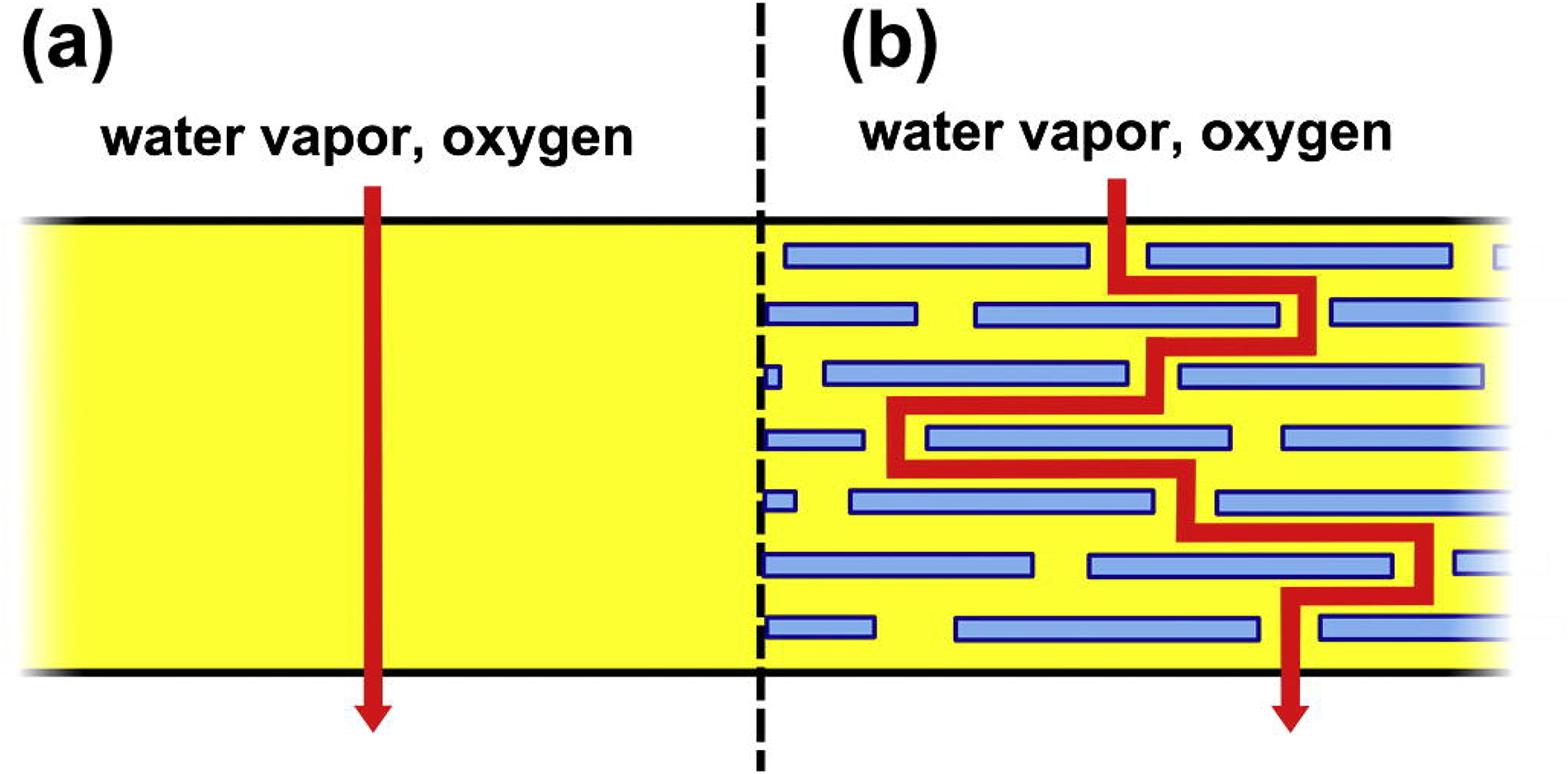
In a polymer film, diffusing gas molecules migrate via a pathway that is perpendicular to the film orientation (a); in a nanocomposite, diffusing molecules navigate around impenetrable graphene and through interfacial zones, which have permeability characteristics different from those of the pure polymer (b) 28
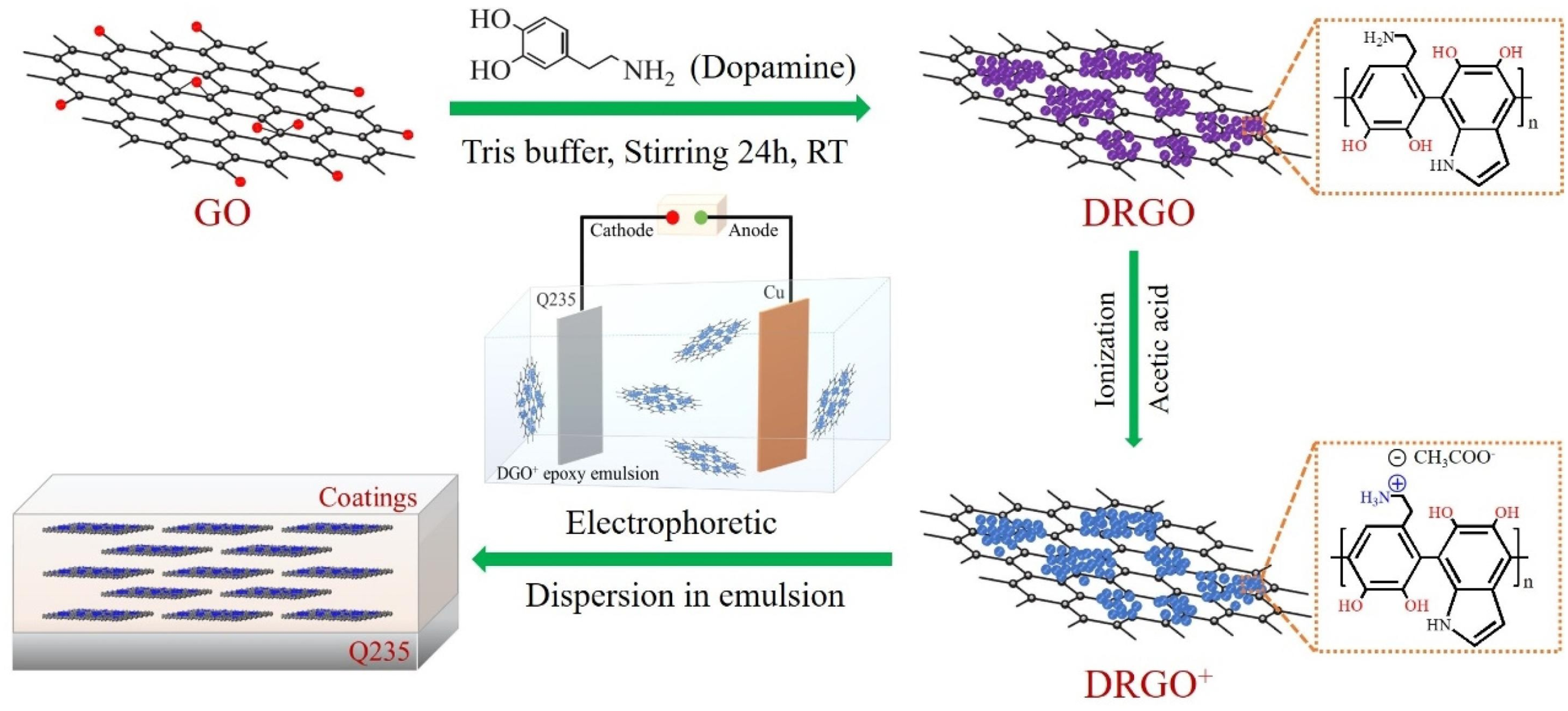
Schematic diagram of the DRGO+ synthesis and electrophoretic deposition process. 29
To maximise the shielding effect of graphene, it is crucial to create intricate graphene pathways within the coating. In this situation, a designed ordered distribution of graphene often results in more complex pathways compared to random dispersion. To manipulate the distribution of graphene in an electric or magnetic field, it is necessary to render graphene electrically charged or magnetic, which are typically complex and polluting processes. While such modifications are usually not a necessary choice in the gravitational field. Concerning simplicity and environmental protection, the gravitational field method for the orderly distribution of graphene may present greater opportunities for industrial applications.
Influences of the conductivity of graphene
The cathodic protection by graphene
Cathodic protection is one of the most effective strategies for preventing the corrosion of steel components. When the electrolyte penetrates to the substrate, a galvanic cell system forms between the steel substrate and the metals more active than steel. In this system, metal powders act as sacrificial anodes, while the steel substrate is protected as the cathode. Graphene is endowed with excellent electrical conductivity (2.5 × 105 cm2 V−1 s−1) 32 and a flake-like structure, and therefore graphene tends to form conductive pathways in coatings. 33 In the situation of cathodic protection, graphene mainly plays the role of transferring electrons, and the addition of graphene would greatly relieve the degradation of the mechanical properties of the coating due to the addition of metal particles.
In 2020, Ge et al. 34 designed alternating multilayer coatings composed of epoxy-reduced graphene oxide coatings (Epoxy-G) and epoxy-zinc coatings (Epoxy-Zn) to provide long-term corrosion protection for metals. The open-circuit voltages (OCPs) of metals protected by the alternate multilayer coatings, Epoxy-G, Epoxy-Zn, and the graphene and zinc simultaneously reinforced epoxy coating (Epoxy-Zn-G) in 3.5% NaCl solution were tested within 100 days, as shown in Fig 6(a). The corrosion protection mechanisms of epoxy-Zn, epoxy-G, epoxy-Zn-G and multilayer alternating coatings are shown schematically in Figure 6(b), respectively. For the pure epoxy coating, the micro-pores formed during the curing process offer pathways for corrosive media to infiltrate the coating and erode the metal substrate. For Epoxy-Zn, Zn acted as the anode to protect the metal substrate, which served as the cathode. The OCP of epoxy-Zn tended to increase with the corrosion products from zinc fill the micropores and cracks in the epoxy, impeding the transport of electrolytes. However, there are strict limitations on the amount of Zn that can be added. Excessive Zn particles would cause agglomerations in the coating, and result in the degradation of the overall performance of the composite coating. 35 In the case of epoxy-G, graphene nanoflakes acted as barriers, which increased the difficulty of the infiltration of corrosive media. Nevertheless, corrosive media could still infiltrate the coating and deteriorate the barrier performance of the coating after a long-term service.. 36 For epoxy-Zn-G, the presence of graphene enhanced the electron transfer from Zn to the Cu substrate and made Zn in epoxy-Zn-G work more efficiently than that in Epoxy-Zn. 37 The alternating multilayer coatings demonstrated superior corrosion protection compared to epoxy-Zn-G. It was because the reason that the epoxy-Zn provided robust cathodic protection, while epoxy-G greatly delayed the infiltration of the corrosive media. Following their idea, the alternate multilayer coatings of epoxy-Zn-G and epoxy-G should further enhance the anticorrosive performance, while it is really a pity that such studies have yet to emerge. There remains substantial potential for enhancing the anticorrosion properties through multilayer coating innovations. The design of the alternating multilayer coating is a smart idea, while it also makes the working procedure much more complicated.
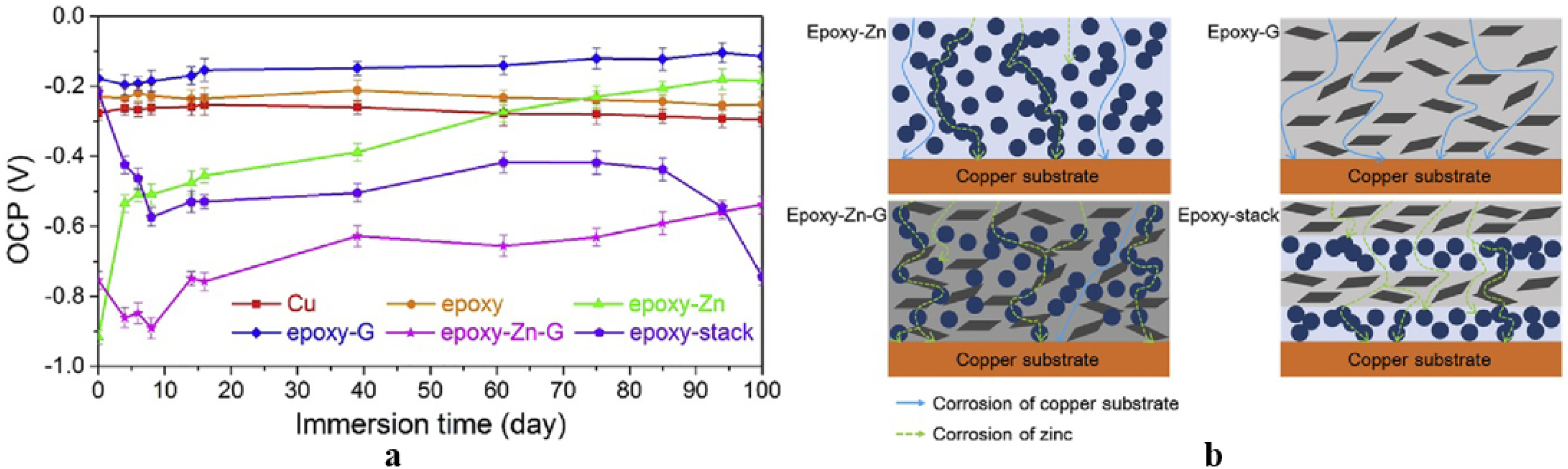
OCP evolutions for coated electrodes at different time intervals during 100 days’ immersion in 3.5 wt.% NaCl solution (a); the protective mechanisms of epoxy Zn, epoxy-G, epoxy-Zn-G and epoxy alternating layers (b) 34
The corrosion promotion by graphene
Graphene's electrical conductivity enables the formation of a conductive pathway in zinc-rich polymer coatings, which protects the metal substrate via an electrochemical mechanism. However, the excellent electrical conductivity of graphene can be a double-edged sword for the anti-corrosion coating. It can enhance the corrosion protection performance of epoxy-zinc coatings, but it may also exacerbate the situation at times.. 38 When the coating is damaged, the corrosion of metal materials can be accelerated by the formation of the primary cell, with the metal serving as the anode and the graphene serving as the cathode. 39 The oxidation of the metal happens on the anode, and the reduction of dissolved oxygen takes place on the cathode. 40 The presence of defects in the coating may ruin all the benefits of graphene as a corrosion inhibitor.
Then, there always has been a controversy about whether graphene is a corrosion inhibitor or a corrosion accelerator in the organic coating. To answer this question, Sun et al. 41 investigated the influence of the permeation threshold of reduced graphene oxide (rGO) in the coating, and the reduction degree of rGO, on the corrosion protection performance of the graphene/epoxy coating. Two rGOs with different reduction degrees (GrOFe and rGOTR) were well dispersed in the epoxy coating by ball milling respectively. For different rGO loadings in the coating and different reduction degrees of rGO, the local impedance and the local current density of the nanocomposite coating at the breakage were measured and calculated, as shown in Figure (7). GrOFe owned more oxygen functional groups than rGOTR. As the loading amount of rGOTR was gradually decreased from 1 vol.% to 0.1 vol.%, the impedance value of the coating gradually increased and the current density of the coating gradually decreased. The coating achieved the highest impedance value and the lowest current density at 0.1 vol.%, which indicated that the permeation threshold of rGOTR in the rGOTR/epoxy coating was about 0.1 vol.%. The results suggested that graphene acted as a physical barrier against corrosion before reaching the permeation threshold. Once the coating was damaged, the exposed graphene at the scratches connected with the corrosive electrolyte, acting as the cathode in the corrosion cell and significantly accelerating the corrosion of the copper substrate. The permeation threshold of GrOFe was about 0.75 vol.%, which was much higher than that of rGOTR. It was because GrOFe owned more oxygen functional groups and lower electrical conductivity. The increased electrical conductivity of graphene further lowered the permeation threshold. In real-world situations, once the coating is damaged, graphene accelerates the corrosion of the metal at the same time, the creation of corrosion products at the defects is also accelerated, which usually results in significant stripping and further leads to more severe corrosion problems.
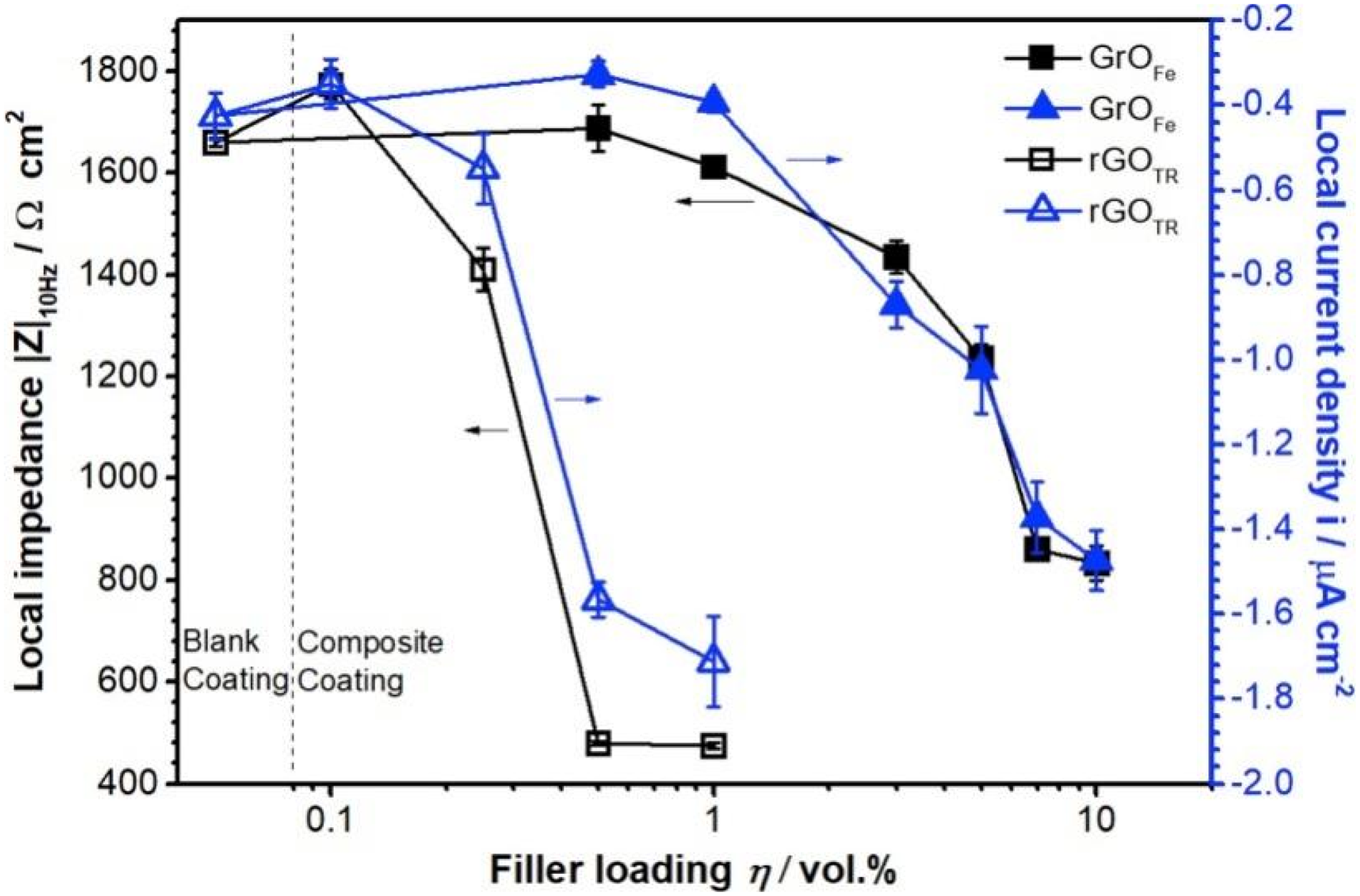
Local impedance and current density at the scratch of graphene/epoxy coating 41
To relieve the corrosion promotion by graphene, an increasing number of studies aim to reduce the influence of the electrical conductivity of graphene while maintaining its excellent barrier effect.. 42 Efforts include forming an insulating layer on the graphene surface to disrupt the current coupling between graphene and the metal, reducing the electrical conductivity of graphene to inhibit the corrosion-promoting activity of graphene and designing a multilayer organic coating to block the contact between graphene and the metal.
In 2021, Zhang et al. 43 coated graphene with insulating poly-m-phenylenediamine by an in-situ polymerisation method (Figure 8(a)), which successfully eliminated the corrosion-promoting effect of graphene and kept the impermeability of graphene. Electrochemical impedance spectroscopy (EIS) was applied to test the corrosion resistance of the coatings. The low-frequency impedance modulus (Zf = 0.01Hz) of the composite coating was four times higher than that of the pure epoxy in the first 40 days. After 60 days of immersion, the Zf = 0.01Hz of the composite coating remained at a high level, while it was 10 times lower for the pure epoxy coating compared to its previous value. Ye et al. 44 obtained aniline trimer-functionalised graphene sheets by intercalation and silanisation of the trianiline precursor (Figure 8(b)). The insulating aniline trimer was anchored to the graphene surface by the π–π interaction. The loading of 0.5 wt.% aniline trimer-functionalised graphene in the epoxy increased the Zf = 0.01Hz by two orders of magnitude over that of the pure epoxy. After 75 days of immersion, the Zf = 0.01Hz of the pure epoxy decreased from 109 to 3.17 × 10⁶ Ω•cm2 and the Zf = 0.01Hz of graphene/epoxy coating decreased from 5 × 10⁹ Ω•cm2 to 6.72 × 10⁶ Ω•cm2, while the Zf = 0.01Hz of the aniline trimer-functionalised graphene/epoxy coating remained 108 Ω•cm2. Ding et al. 45 changed the electrical conductivity of graphene through doping heteroatoms into the skeleton of graphene. Due to the different electronic structures, the boron atom could serve as the electron acceptor, while the nitrogen atom was the electron donor. Then, boron-doped graphene (BG) and nitrogen-doped graphene (NG) were prepared and incorporated into polyurethane (PU), respectively. The Zf = 0.01Hz of PU decreased from 6.05 × 10⁹ Ω•cm2 to 9.25 × 10⁶ Ω•cm2, the Zf = 0.01Hz of NG/PU decreased from 7.2 × 10⁹ Ω•cm2 to 5.51 × 10⁶ Ω•cm2 and the Zf = 0.01Hz of BG/PU decreased from 1.29 × 10 10 Ω•cm2 to 6.67 × 10⁹ Ω•cm2. The BG/PU coating showed better long-term anti-corrosion performance than the NG/PU sample, which was attributed to the excellent insulating properties of BG that hindered the transport of electrons at the interface between the polymer and the metal. In contrast, NG promoted rather than prevent the corrosion of the metal due to the introduction of N atoms, which enhanced the electrical conductivity of the graphene.
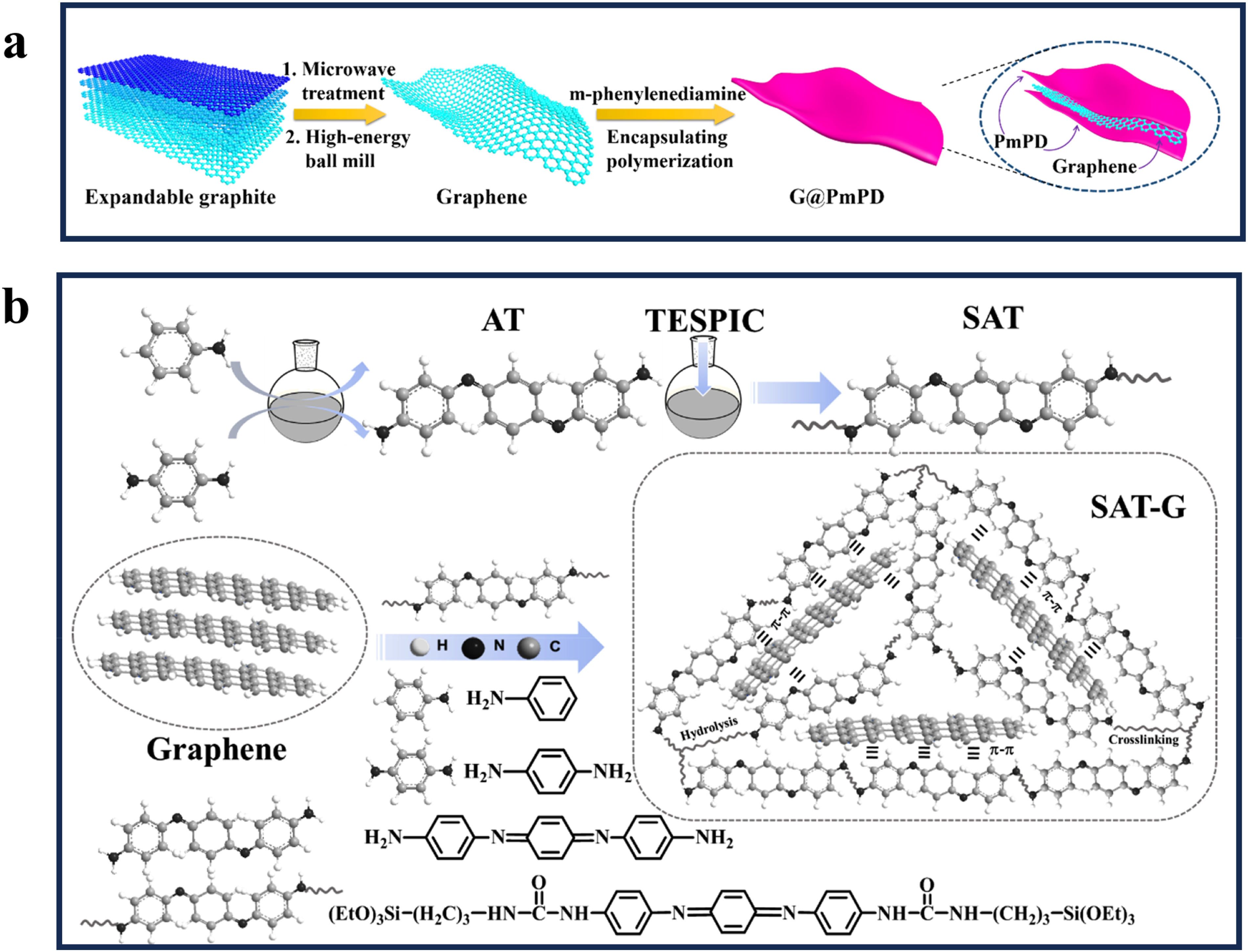
In 2021, Song et al.
46
designed a multilayer organic coating to relieve the corrosion-promoting effect of graphene. A multifunctional epoxy composite coating with a multilayer structure on the metal surface was constructed by a layer-by-layer assembly method. The layers, from top to bottom, consisted of the nano SiO2/epoxy layer, the graphene/epoxy layer and the nano Al2O3/epoxy layer, respectively. This approach endowed the coating not only with high corrosion resistance, but also with excellent ultraviolet and wear resistance. The multifunctional epoxy composite coating exhibited a ten times higher impedance and more excellent long-term chlorine resistance than the pure epoxy coating. It was mainly due to the fact that the corrosive media had to pass through the complicated diffusion paths formed by SiO2, graphene and Al2O3, respectively. The underlying nano-Al2O3/epoxy layer prevented the galvanic coupling between graphene and the metal substrate. The corrosion behavior of the samples in the 3.5 wt.% NaCl solution with different immersion times was investigated by EIS. The Zf = 0.01Hz of the multilayer composite coating was almost one order of magnitude higher than that of the pure epoxy coating. During the immersion of 21 days, the Zf = 0.01Hz value slowly decreased from 3.46 × 10⁶ Ω•cm2 to 7.27 × 10⁵ Ω•cm2. In 2022, Ding et al.
47
prepared a coating consisting of bridged dense graphene layers and epoxy resin layers by spaying, as shown in Figure 9(a). In their work, polydopamine was applied to improve the dispersion of the graphene in the solution, repair the structural defects of graphene through π–π interaction and facilitate tight bonding between the graphene layer and the epoxy resin layer. As a result, the anticorrosive capacity of the multilayer coating (Figure 9(c)
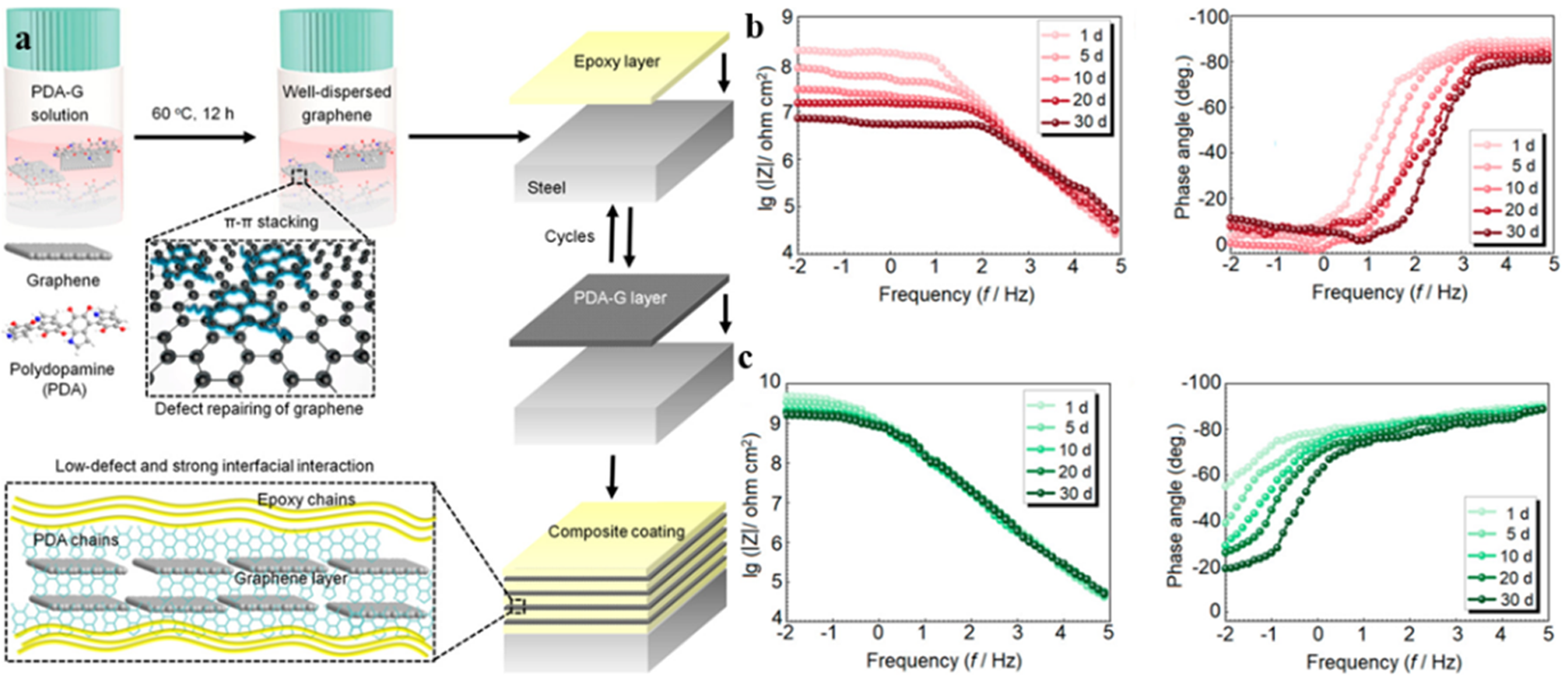
Schematic illustration of the preparation process of the multilayer coating (a); Nyquist and Bode plots of steels coated with the neat epoxy (b); Nyquist and Bode plots of steels covered by the multilayer coating (c) 47
Current methods for forming an insulating layer on the surface of graphene typically involve organic polymerisations, which often necessitate complex operations in toxic environments. The doping of graphene is usually energy-intensive and gives out limited efficiency in reducing the electrical conductivity compared to other methods. The design of multilayer organic coatings effectively solves the problem, while, as just mentioned above, it also significantly complicates the process (increasing normal workload and extending operational hours). From the viewpoint of application, more facile solutions are expected to reduce the electrical conductivity of graphene. Concerning corrosion prevention, it is quite important to make good use of the electrical conductivity of graphene according to different working conditions. In a zinc-rich coating, graphene served as a conductive path to enhance substrate protection. In this situation, preserving the pristine state of graphene is preferable due to its exceptional electrical conductivity. Otherwise, it is better to minimise the electric potential of graphene through chemical modification to prevent galvanic cell formation and subsequent corrosion promotion.
Improving the dispersion of graphene oxide in the coating
The effective dispersion of graphene within a coating is essential for superior anti-corrosion performance.. 48 As shown in Figure 10, on one hand, it is necessary to overcome the π–π interaction between graphene layers. On the other hand, building favorable interactions between the graphene and the polymer typically results in a uniform distribution of graphene throughout the polymer. Due to the atomically smooth surface and the lack of effective functional groups, graphene has difficulty forming interactions with the polymer matrices, leading to poor dispersion. Therefore, in most cases, the oxidised graphene, GO (owns rough surface, enhanced electrical insulating properties, abundant effective oxygen groups and retains the excellent characteristics of graphene at the same time) was applied to improve the dispersion. Herein, various methods for integrating graphene into the matrix are summarised and discussed, along with their respective advantages and disadvantages.
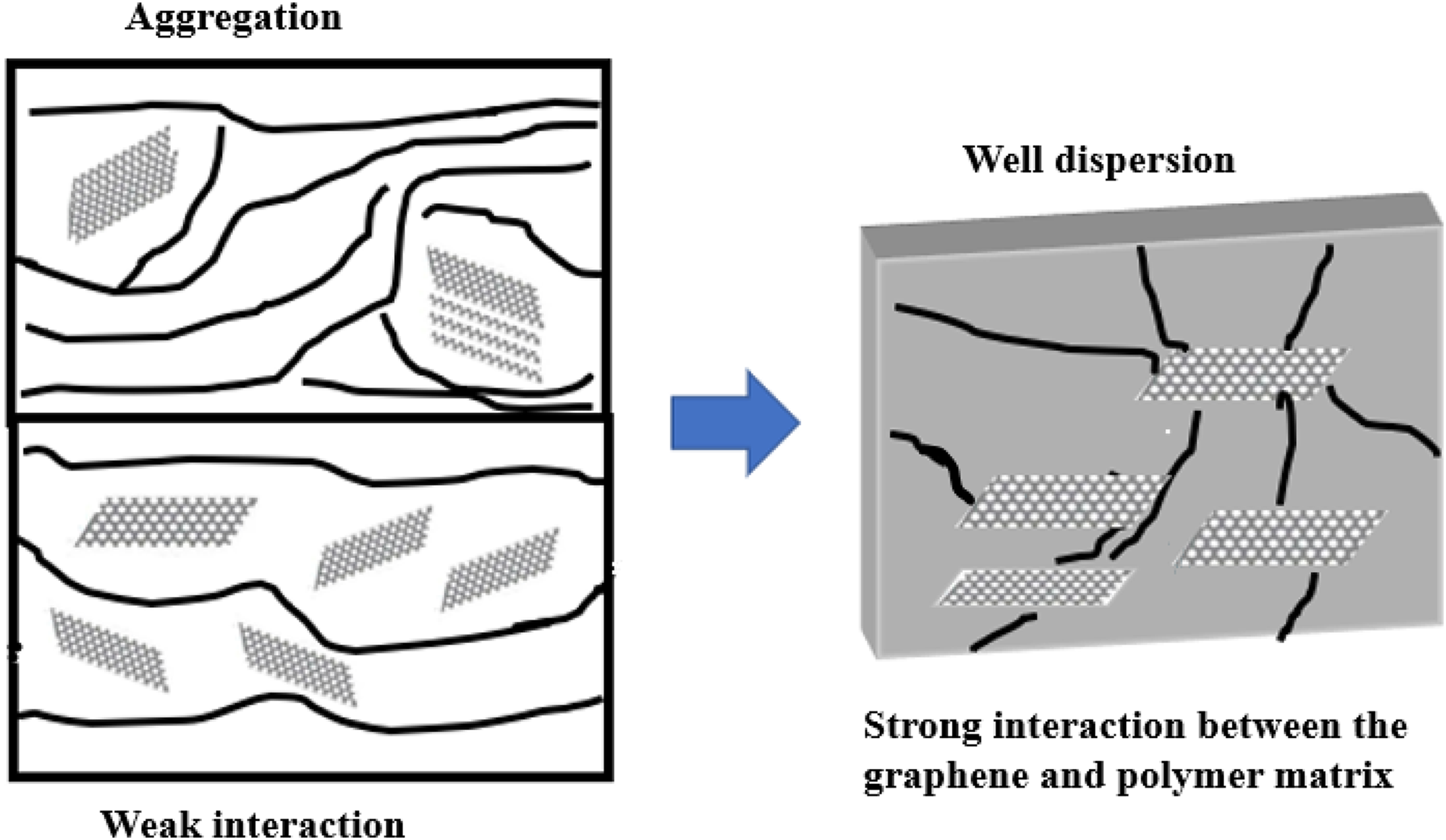
Two main problems of polymer nanocomposites: (1) graphene sheets are prone to aggregation due to the strong van der Waals forces and π–π interaction between graphene sheets; (2) graphene has poor interaction with the polymer matrix. High-performance composites would be obtained after overcoming the two problems
Physical methods
Physical methods typically involve the use of ultrasonic, high-speed stirring, emulsification, ball milling and so on. Merely employing physical methods to disperse graphene into a polymer matrix often results in difficulties in preventing aggregation and achieving a uniform dispersion of graphene within the matrix. It is primarily due to the weak interaction between graphene and the polymer matrix. 49
Wet transfer is a technique that preserves the uniform dispersion of fillers in the coating matrix while maintaining the original structure and morphology of the particles. Amirova et al. 50 proposed a homogeneous liquid phase transfer method to obtain high-quality polymer composites. Isopropyl alcohol served as the intermediate solvent to transfer graphene oxide (GO) from the aqueous solution to the epoxy since it is miscible with water and epoxy resin. The GO remained exfoliated and uniformly dispersed in each solvent without agglomeration during the transfer. The transparency of the solution provided direct evidence for whether GO was uniformly distributed in the polymer matrix and maintained the exfoliated state. It was also observed by SEM that GO was uniformly dispersed during the transfer without any damages. Ideally, GO can be well dispersed in aqueous solutions while retaining its monoatomic lamellar structure. 51 GO possesses almost as rich oxygen groups as epoxy. Based on the similarity-intermiscibility theory, GO is quite possible to form stable dispersion in the epoxy as it does in water. However, GO does not disperse well in almost all other solvents as it does in water. The significance of the work by Amirova et al. lies in achieving a fine dispersion of GO within the polymer matrix while simultaneously keeping the GO exfoliated. However, only ∼0.0375% GO loading was realised in their work, and it suggested limited potential for further increasing the GO loading within the epoxy matrix using this wet transfer method. In this situation, though well dispersed, limited GO loading amount brings about limited performance improvement to the composite coating. Another point is the introduction of other solutions. The extraneous solutions (isopropyl alcohol or water) usually cannot be completely removed, which would limit the reinforcing effect of graphene in the final composite. In summary, wet transfer is a good physical dispersing method, while more creative works need to be done.
Chemical modification
Covalent bonding
The covalent modification is defined as the grafting of macromolecules or functional groups onto the surface of GO via covalent bonds. The grafting of macromolecules is considered an effective method to improve the dispersion of GO in the polymer matrix. On one hand, the grafted macromolecules form steric hindrance between GO layers and then reduce the tendency to agglomerate. 52 On the other hand, the presence of chain-like polymers on the edge or surface of GO enhances the interaction with the polymer matrix, which facilitates better dispersion of GO within the matrix. 53
GO prepared by the chemical oxidation exfoliation method is rich of oxygen functional groups, which enable easy dispersion in water and other polar solvents. Moreover, carboxyl (-COOH), epoxy (-C(O)C-), hydroxyl (-OH) and ester (-COO-) groups on the surface and edges of GO can be used as reactive sites for the covalent bonding. 54 In the case of the amine curing agent, the carboxyl group reacts with the amino group and forms the amide bond.55,56 It also reacts with alcohols, phenols and epoxides, and forms ester bonds. Cui et al. 57 grafted ethylene glycol glycidyl ether (EGDE, a kind of epoxy monomer) onto the GO surface to prevent the aggregation of GO and improve the compatibility of GO with the epoxy matrix (Table 1).
A summary of the covalent modification of GO
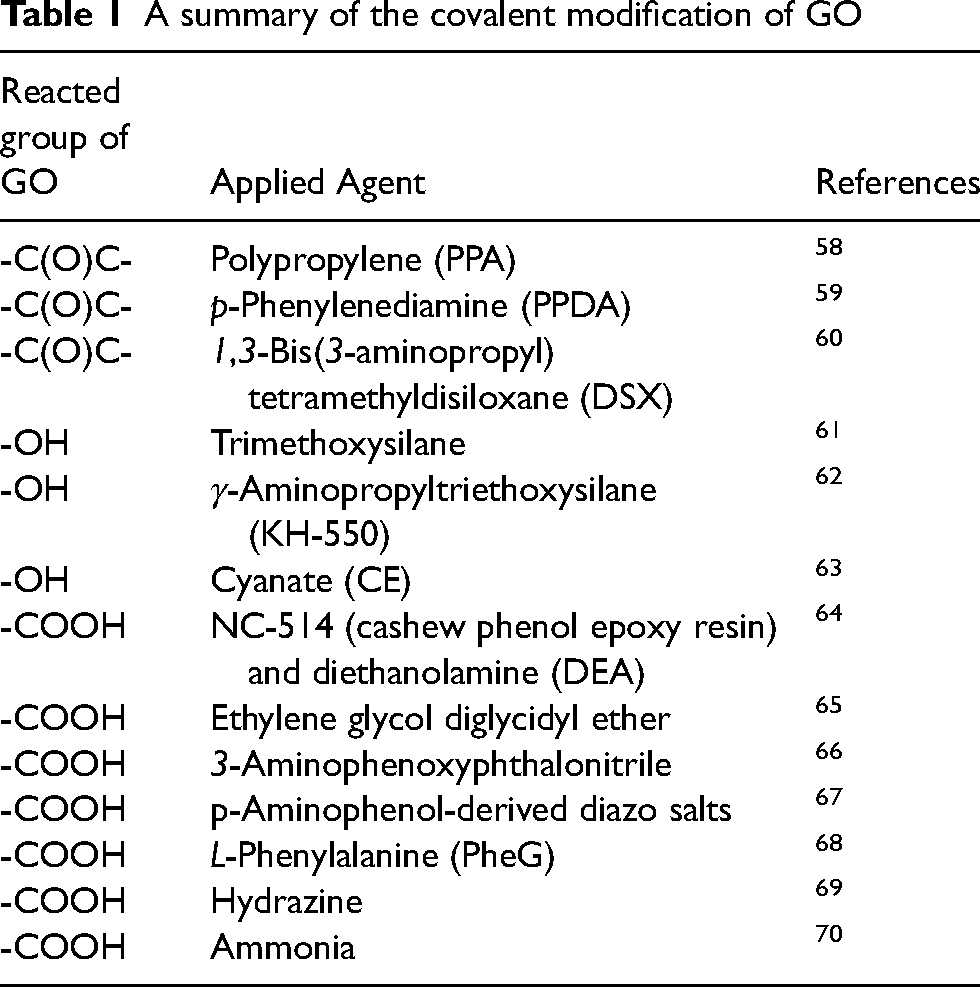
Table 1 summarises the covalent modification methods of GO.
Modifying GO with -NH2-containing groups is well acknowledged as an efficient method to improve the performance of GO in various polymer matrices. The -NH2 group can react with epoxy, leading to strong chemical interactions between fillers and the epoxy matrix, which significantly improves the dispersion of fillers.71,72 Finally, the -NH2-containing groups modified GO effectively and reinforced the properties of epoxy coatings. It is also applicable to the fluorocarbon resin (FEVE) coating. In 2020, Zhong et al. 62 improved the corrosion resistance of FEVE coating by a coupling agent KH-550-modified GO. The -NH2-containing groups improved GO's dispersion and resulted in an extended corrosion path. In 2023, a urea-assisted ball milling was adopted by Zhao et al. 73 to further functionalise a super-easily-dispersed GO filler. The obtained nitrogen-doped super-easily-dispersed GO filler further markedly improved the coating's anti-corrosive performance compared to the super-easily-dispersed GO filler. Their work verified the strong chemical interactions between the nitrogen-doped filler and the FEVE matrix, which filled potential gaps and integrated the coating more effectively. In this way, corrosive media have to go through much more complicated paths to reach the steel substrate, leading to the much better corrosion resistance performance of the nitrogen-doped super-easily-dispersed GO than that of the super-easily-dispersed GO.
Covalent bonding is well acknowledged to be one of the most efficient ways to improve the dispersion of graphene in the matrix. However, modified graphene is rarely found in the market due to the additional modification processes, which are often complicated, hazardous or environmentally unfriendly. The work by Zhao et al. employed an easy, safe and eco-friendly method to modify GO with nitrogen groups, and significantly improved the anticorrosive performance of GO. It holds great potential in the practical applications.
Noncovalent modification
Noncovalent modification is achieved by electrostatic interactions, hydrogen bonding or Van der Waals force interactions, which induce minimal changes to the structure of graphene.. 74 The noncovalent modification is typically employed to preserve the pristine structure of graphene and prevent the introduction of defects.
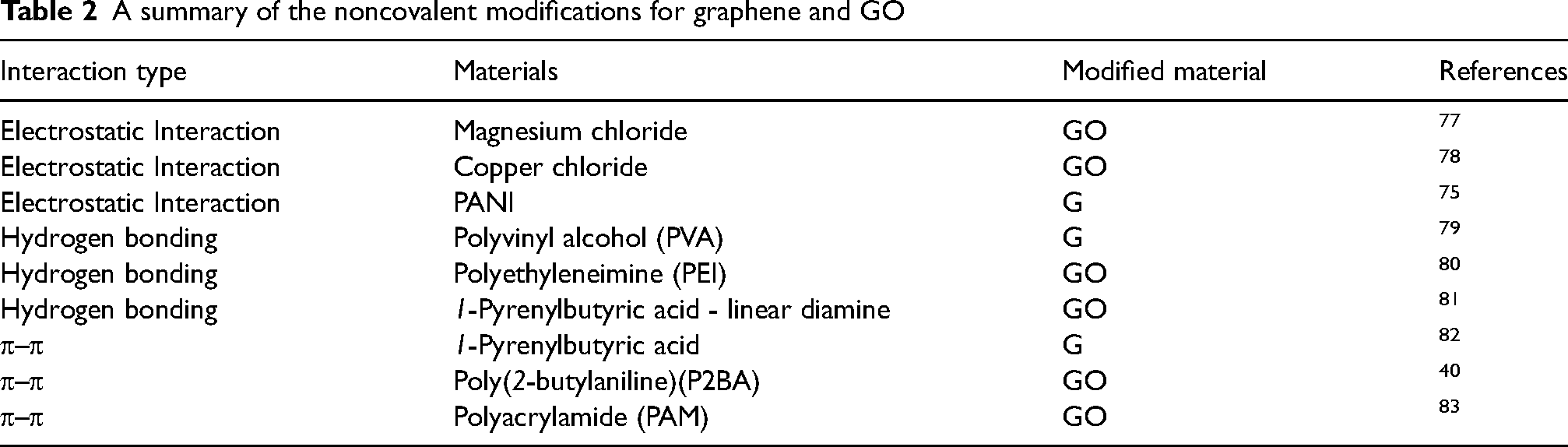
Lei et al. 75 successfully synthesised polyaniline (PANI)-modified graphene by the electrostatic adsorption method. When the aniline monomer was added in the graphene/water suspension, aniline (electron donor) was electrostatically adsorbed to the surface of graphene (electron acceptor) and then formed PANI. The pity is that aniline is a carcinogen, which restricts its application considerably. Chen et al. 76 used polyvinylpyrrolidone (PVP) as a bridge to connect polyethylene (PS) and graphene (G) together to obtain PS-PVP@G, which demonstrated excellent redispersion capabilities (Fig 11(a)). The positively charged pyrrolidone groups on PVP were attached to the negatively charged ions on GO by electrostatic adsorption, while PVP and PS were connected by the Van der Waals force. As shown in Figure 11(b) and (c), the grafting of PS improved the dispersion of graphene in many organic solvents. The sphere-like PS dissolved and transitioned to a chain-like configuration in the solvent, which pushed or pulled the graphene sheets apart, and then largely relieved the agglomeration of graphene. In this work, PS and PVP occupied a much larger proportion than GO in the final filler, which may sacrifice the reinforcing effect of GO on coatings’ mechanical properties. More non-covalent modification methods for graphene and GO are summarised in Table 2.
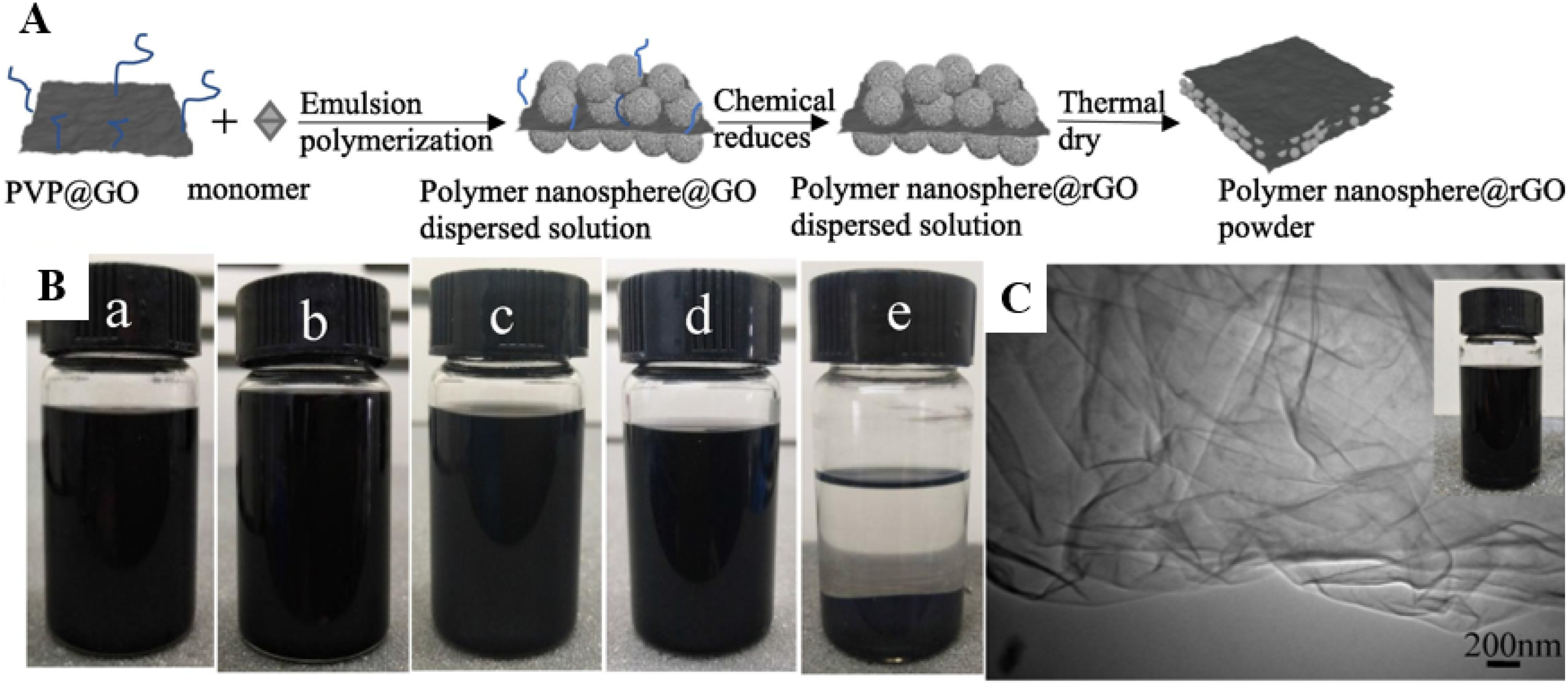
The synthesis of dry graphene nanosheets covered with polymer nanospheres (PS–PVP@G) (A); optical photographs of dry PS–PVP@G nanosheets dispersed in other solvents: (a) DMF, (b) THF, (c) dichloromethane, (d) toluene and (e) EAC (B); TEM image of dry PS–PVP@G nanosheets after re-dispersion in xylene (C). The inset picture is the optical photograph of PS–fPVP@G nanosheets dispersed in xylene at a concentration of 10.0 mg mL−1 76
A summary of the noncovalent modifications for graphene and GO
A comment on the different kinds of dispersion methods
Dispersing graphene-based fillers into the polymer matrix only via physical methods is always difficult to avoid agglomerating and obtain a uniform dispersion of graphene in the polymer matrix. However, the wet transfer method was reported to effectively disperse graphene within a polymer while preserving its original morphology. The noncovalent modification methods can improve the dispersion of graphene in the polymer matrix and retain the original structure to the greatest extent. Therefore, the dispersion of graphene in the matrix is usually improved by π–π interactions, hydrogen bonding interactions and electrostatic interactions. GO and rGO are rich of oxygen functional groups on their surfaces, which help improve the dispersion of GO/rGO in the polymer matrix by further modifying GO/rGO with macromolecules. The macromolecules form steric hindrance between GO/rGO layers and enhance the interaction between GO/rGO and the polymer matrix to prevent the agglomeration of GO/rGO. Moreover, if the groups modified on GO/rGO could react with the polymer matrix to form covalent bonds or other strong interactions, the modified GO/rGO would exhibit increased compatibility with the matrix. The interactions of the covalent bond between GO/rGO and the polymer matrix are usually much stronger than that of the noncovalent bond, and the stronger the interactions between GO/rGO and the polymer matrix, the better dispersion of GO/rGO in the polymer matrix. Appropriate modification methods should be judiciously selected based on the specific application requirements.
Almost all the physical dispersion methods are palliative. The physical means resulted dispersion begin to compromise once the physical behaviors stop. Furthermore, physical dispersion methods are generally only effective for non-reactive mixture systems. In contrast, chemical dispersion methods, achieved by surface modification, surfactant addition or covalent bonding, are generally effective for a wide range of fillers, including both reactive and sensitive materials. Chemical dispersion methods mainly consist of noncovalent modification to the filler and covalent modification to the filler. Noncovalent modification methods are generally simple and versatile, but may not ensure strong or permanent attachment of the modifiers to the surface. Covalent modification methods generally provide strong and stable attachment of functional groups to the filler surface, but require complex procedures and potential safety concerns due to the use of reactive chemicals.
In summary, physical dispersion methods rely on mechanical energy, while chemical dispersion methods rely on chemical modifications. Noncovalent modification methods rely on weak physical or chemical interactions, while covalent modification methods rely on strong chemical bonds. The choice between these two approaches will depend on the specific requirements of the application, including the specific material properties, and the desired strength and stability of the modification.
Smart graphene-based organic composite coatings
In recent years, the concept of ‘smart coatings’ was introduced and the corresponding researches are growing at an explosive rate. These smart coatings can respond to certain stimuli generated by internal or external events, and then enhance the performance and the durability of coatings. 84 Anti-corrosion coatings are designed to serve as an effective physical barrier, which is a fundamental requirement. While for coatings used in harsh environments (e.g., marine environments, dusty environments), the ability to inhibit corrosion, even when the coating is damaged, is also essential. Based on the findings from literatures, the enhancement of protective properties due to the smart graphene-based organic composite coatings is discussed with consideration given to the shielding efficacy of GO itself.
Corrosion inhibition
The typical anti-corrosion coatings with the ability of corrosion inhibition usually use chromate as a corrosion inhibitor. However, the toxicity of chromate hampers the application. 85 In recent years, eco-friendly corrosion inhibitors, such as cerium oxide, 86 benzimidazole 87 and polyaspartic acid, 84 have been discovered, significantly expanding the field of corrosion-inhibiting coatings.
In 2021, Zhang et al.
88
grew a covalent organic backbone (COF) on GO by a liquid-phase synthesis method (Figure 12(a)
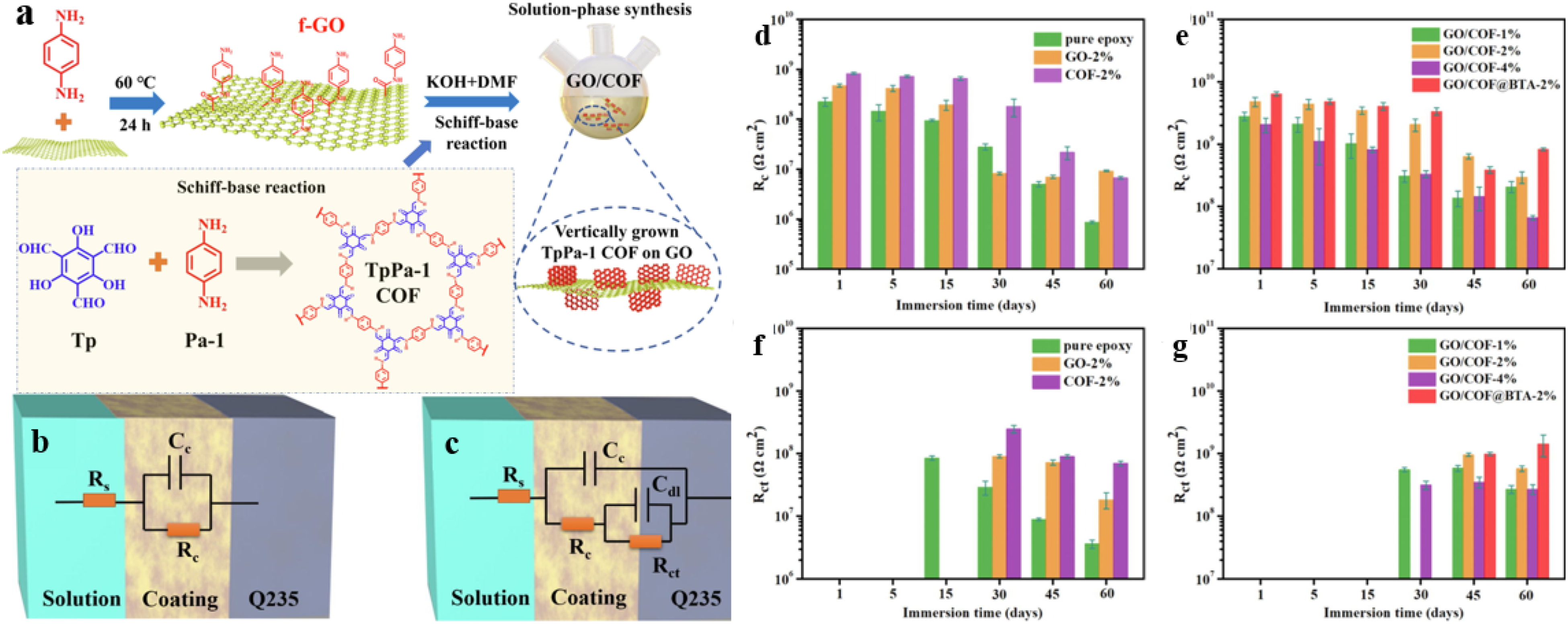
Synthesis schematic illustration of GO/COF (a); the equivalent electrical circuit for coatings in different stages (b and c). The values of (d and e) Rc and (f and g) Rct as a function of immersion time in 3.5 wt.% NaCl solution 88
Graphene was also specially modified and designed to respond to pH gradients, mechanical stress, light, thermal changes, etc., which enabled the controlled release of corrosion inhibitors. 89 In 2021, Li et al. 90 found that the zeolitic imidazole skeleton-8 (ZIF-8) containing Zn2+ was sensitive to the change of pH. ZIF-8 was used as a carrier and trigger agent for the corrosion inhibitor 2-mercaptobenzimidazole (M), and M-ZIF-8/GO was then obtained after loading M-contained ZIF-8 onto the surface of GO (the preparation process is shown in Figure 13). M-ZIF-8/GO was embedded into the epoxy coating. In the alkaline solution, Zn2+ in ZIF-8 began to hydrolyse, and then the corrosion inhibitor M was released. In the acidic solution, M was released due to the hydrolysis of 2-methylimidazole (2-MI) of ZIF-8. The released Zn2+ and OH− formed precipitates and then covered the defects of the iron substrate, which increased the Zf = 0.01Hz of the pure epoxy coating from 2.30× 10⁸ Ω•cm2 to 7.75× 10⁹ Ω•cm2. The Zf = 0.01Hz of the composite epoxy coating was unchanged after 60 days of immersion in the 3.5 wt.% NaCl solution.
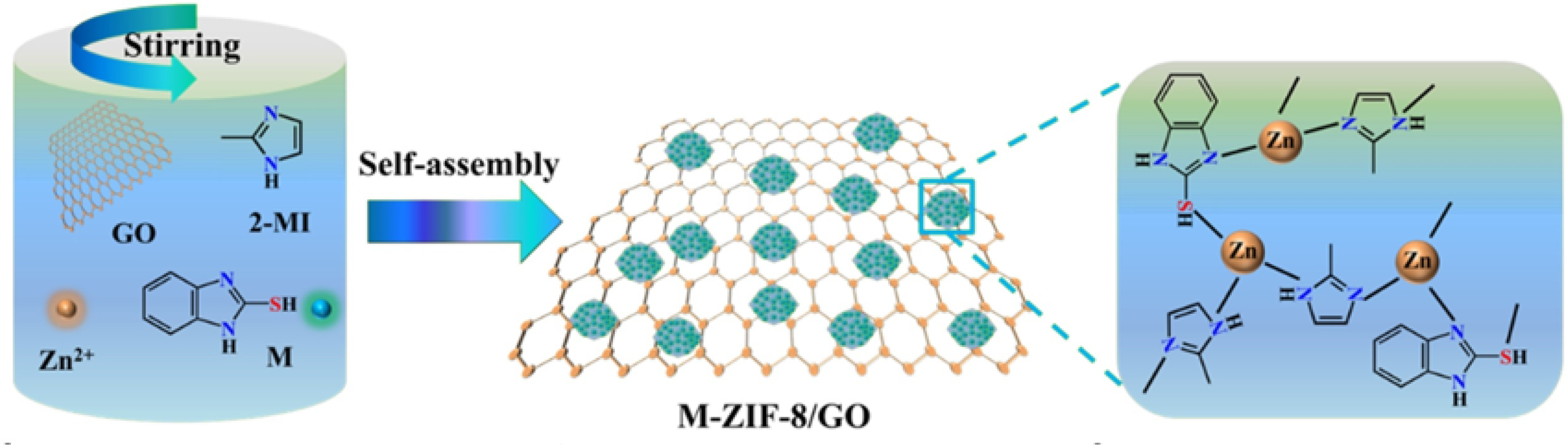
The preparation diagram of M-ZIF-8/GO 90
Corrosion inhibitors work by forming a protective film or barrier on the metal surface, which inhibits the transfer of electrons and slows down the corrosion process . Corrosion inhibitors can be organic or inorganic compounds. The effectiveness of a corrosion inhibitor can be designed to work depending on factors such as temperature, pH and the presence of special chemicals. The designable ability enables graphene to be specially modified and designed to respond to many kinds of signals. Graphene can also help to form containers of corrosion inhibitors. With the help of graphene, the efficiency of corrosion inhibitors can be largely expanded. While concerning specific applications and environments, it is important to choose appropriate corrosion inhibitors with proper concentrations to get optimal performance and minimise any potential negative effects.
Catalytic passivation
Catalytic passivation refers to adding materials with redox catalytic properties to the coating to promote the formation of a dense passive film on the metal surface. 91 PANI is considered an ideal material to improve the anti-corrosion performance of the coating due to its convenient synthesis, excellent chemical stability and excellent chemical oxidation–reduction reversibility. 92 PANI could not only cover the defects of GO and then enable GO with a better barrier effect, but also promote the formation of passivated oxide layers on the steel surface to further improve the anti-corrosion performance of the coating on the steel. Therefore, a large amount of work focused on PANI-modified GO in recent years. In 2021, Wang et al. 93 prepared GO/PANI by in-situ polymerisation and then used them to reinforce polymer coatings. The presence of PANI led to the generation of stable passivated Fe2O3 layers on the steel surface, effectively inhibiting corrosive agents such as water, oxygen and ions. PANI catalysed the reduction of oxygen, compensating for the charge consumed by the dissolution of iron, and finally stabilised the potential of iron in the passivation region. 91 In 2021, Gao et al. 94 prepared functionalised graphene oxide (FGO)/PANI nanocomposites by in-situ polymerisation in the phytic acid (PA) solution, and the waterborne polyurethane (WPU) composite coatings with the incorporation of FGO/PANI showed nice long-term corrosion resistance. Optimised conditions revealed that when FGO constituted 2.5 wt.% of PANI, the coating demonstrated the best long-term corrosion resistance, attributable to the synergistic effects of the barrier provided by GO, the passivation by PANI and the chelation by phytate within the coating. The corrosion resistance mechanism of the coating is shown in Figure 14. However, the strong carcinogen of PANI also seriously limited the application of catalytic passivation. In their work, though nice performance obtained, danger and pollution companied. There is an urgent need for green alternatives to replace PANI.
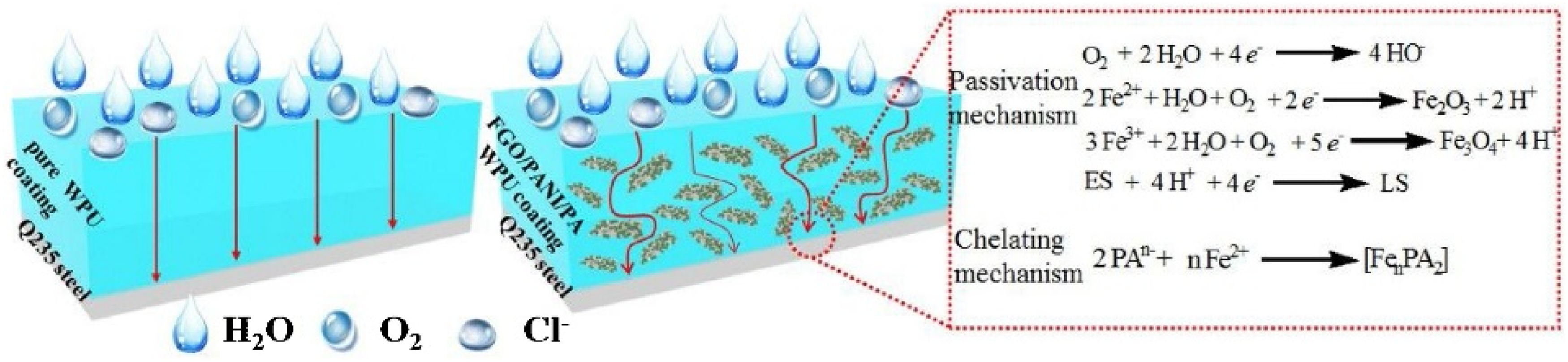
Schematic diagram of the anti-corrosion mechanism of the pure WPU and the FGO/PANI–WPU composite coating 94
There are also other materials in the coating that protect the metal substrate by a catalytic passivation way together with graphene. Cui et al. 95 modified graphene with soluble poly(o-phenylene diamine) (Popd) and investigated the anti-corrosive properties of the resulting epoxy composite coatings. The results showed that the impedance modulus of the composite coating containing 0.5~1.0 wt.% of graphene-Popd was about 10 10 Ω•cm2 after 60 days of impregnation, which was almost the same with that of the initial composite coating. In the presence of artificial scratches on the composite coating, the corrosion of the metal substrate was still limited due to the synergistic effect of the barrier effect of graphene nanosheets and the catalytic passivation by Popd nanoparticles on the metal surface. When the corrosive medium reached the substrate-coating interface, the metal surface was catalytically passivated to a Fe3O4 or Fe2O3 layer, which hindered the transport of electrolyte solution and subsequently inhibited corrosion. In the practical application, Popd faced the same situation with PANI.
Catalytic passivation is an effective method to prevent corrosion. Compared to other methods, catalytic passivation provides long-lasting protection, relatively low cost and simple application. However, as described above, it may not be suitable for all types of materials or environments, and periodic reapplication may be necessary to maintain its effectiveness.
Self-healing mode
Inspired by the phenomenon of self-healing in biological systems, self-healing coatings were developed. The work process of the artificial self-healing coatings mainly consists of three steps: (1) the actuation associated with the timescale of damage; (2) the diffusion of healing agents to the defect site; (3) the regeneration of the coating matrix, which is a chemical/physical healing process depending on different repairing mechanisms (e.g., reversibility, polymerisation, entanglement, swelling, cross-linking). 96 In order to incorporate self-healing capabilities into the polymer system, encapsulated self-healing agents were embedded into the coating matrix. Graphene was usually loaded on the shells of the polymer microcapsules or inside the microcapsules, and once the microcapsules were ruptured by external forces, the graphene released at the cracks could block the infiltration of corrosive particles to some extent. Li et al. 97 prepared a waterborne polyurethane composite coating with GO microcapsules containing linseed oil inside by a self-assembly method. When the coating was subjected to external forces, GO microcapsules ruptured and released linseed oil to repair the coating. Ma et al. 98 synthesised GO-modified double-walled polyurea microcapsules, and the healing agent was encapsulated inside, which would effectively prevent the infiltration of the corrosive substances around the scratch. The formation of GO microcapsules often implies the loss or the partial loss of the nano-barrier effect of GO, potentially compromising mechanical properties. The future of the self-healing mode should focus on the synergetic development of both anticorrosion and mechanical performances.
The anticorrosive self-healing coating is particularly impressive as it combines the benefits of both corrosion resistance and self-healing capabilities, which makes it an ideal choice for applications where durability and longevity are paramount. The self-healing ability prolongs the service life of the coating and saves costs. The early warning function adds flexibility to the use of the coating. The smart anti-corrosion coating is a new concept in recent years, and the graphene-based anticorrosive coating with functions of self-healing and early warning is becoming a developing trend of the anticorrosive coating.
Conclusions and outlook
Graphene seems to be the only matter that integrates low weight, excellent electrical properties, remarkable thermal conductivity, superior mechanical performances and extraordinary shielding effectiveness. The multitude of intriguing properties has made graphene a prominent anticorrosive filler. Some conclusions were obtained from the freshest research progresses we have collected.
Regarding simplicity and environmental protection, the gravitational field-induced method is anticipated to enhance the shielding effect of graphene in industrial applications. It is crucial to make good use of the electrical conductivity of graphene according to different working conditions. Typically, there is a need to diminish the electrical conductivity of graphene, yet current methods are often complicated, toxic, energy-intensive or inefficient. More facile solutions are expected. In the zinc-rich coating, it is preferable to preserve the exceptional electrical conductivity of graphene as much as possible. Dispersion is the key point for graphene to improve the anticorrosion performance. Almost all the physical dispersion methods are palliative. The wet transfer method is a promising physical dispersing method, while due to the introduced solutions and the low loading amount, further innovative efforts are necessary. Chemical dispersion methods mainly include covalent modification and noncovalent modification. The covalent bonding was well acknowledged to be one of the most efficient ways to improve the dispersion of graphene in the matrix, while it was usually complicated, or dangerous, or environmentally unfriendly in most cases. The urea-assisted ball milling holds great potential in practical applications. Noncovalent modification methods are generally simple and versatile, but may not ensure strong or permanent attachment of the modifiers to the surface. Graphene can be designed to respond to many kinds of signals of corrosion inhibitors. Graphene can also help to form containers of corrosion inhibitors. While concerning specific applications and environments, selecting appropriate corrosion inhibitors and their concentrations is vital to achieve optimal performance and minimise any potential adverse effects. Catalytic passivation is an effective anti-corrosion strategy. However, it is difficult for the catalytic passivation to satisfy all types of materials or environments, and it may require periodic reapplication to maintain its effectiveness. Green reagents are also desired. The graphene-based anticorrosive coating with functions of self-healing and early warning is becoming a developing trend of the anticorrosive coating. While the formation of GO microcapsules often implies the loss or the partial loss of the nano-barrier effect of GO and damage the mechanical properties. The future of the self-healing mode should focus on the synergetic development of anticorrosion and mechanical performances. Green modification or modification free: In the field of the graphene-based anticorrosive coating, most of the current modifications of graphene or GO still go with complicated and pollutional methods, which seriously hinder the industrial application. Green modification or modification free strategies are highly desired. Hybrid Coatings: Combining graphene with other materials like polymers, metals or ceramics to create hybrid coatings that leverage the synergistic effects of multiple materials. Coating Techniques: Developing efficient and scalable deposition techniques such as spray coating, dip coating or roll-to-roll processes that can produce uniform and defect-free graphene coatings. Splash Zones: Developing graphene coatings that can withstand the harsh conditions of splash zones, where materials experience both marine biofouling and corrosion from saltwater. Deep Sea Applications: Enhancing the durability and corrosion resistance of graphene coatings for deep-sea applications, where high pressure and low temperatures pose additional challenges. Performance Metrics: Establishing standardised tests and metrics to evaluate the performance of graphene coatings consistently across different studies and applications.
Physical shielding, electrochemical anti-corrosion and the uniform dispersion of graphene in the coating determine the performance and the service life of graphene-based anti-corrosion coatings. This paper provided a comprehensive review on the development of graphene-based organic coatings in recent years and aimed to give out some ideas on achieving the best of graphene's shielding effect, electrical conductivity, excellent mechanical properties and modifiability, which usually resulted in satisfactory performance of graphene-based anticorrosive organic coatings. Although more and more excellent coatings have been developed based on the excellent properties of graphene, the implementations of most schemes are complex, costly and unfavorable for industrial productions. Works that could easily satisfy the industrial production demands are always expected, and are believed to be a developing trend in the future. Some ideas were proposed as follows.
The development of graphene in anticorrosive coatings is an exciting area of research with great potential to improve coatings’ durability and longevity. Many advancements have been made in recent years, but it still requires a multidisciplinary approach that combines materials science, surface engineering and application-specific development. With the maximisation of the advantages of graphene in coatings, the development of the high-performance graphene-containing anticorrosive coating is expected to continue in the coming years, and there must be a new wave of industrial optimisation and upgrading in the anti-corrosion coating industry in the future.
Footnotes
Declaration of conflicting interests
The authors declared no potential conflicts of interest with respect to the research, authorship, and/or publication of this article.
Funding
The authors disclosed receipt of the following financial support for the research, authorship, and/or publication of this article: This work was supported by the Shanxi Scholarship Council of China, Shanxi Province Innovative Disciplinary Group of New Materials Industry, Shanxi Province 1331 Project Key Innovation Team of Polymeric Functional New Materials and Fundamental Research Program of Shanxi Province (grant number 2023-138, 20210302124432).
