






Abstract
This study presents a localised electrochemical investigation of dual-silane functionalised graphene oxide (GO)/silane hybrid coatings developed on AZ31 magnesium alloy using Scanning Electrochemical Microscopy (SECM). The hybrid coatings were synthesised using 3-glycidoxypropyl trimethoxysilane (GPTMS), tetraethyl orthosilicate (TEOS) and γ-aminopropyl trimethoxysilane (APS), while GO was modified through a dual-silane functionalisation approach to improve dispersion, interfacial compatibility and coating barrier performance. The localised corrosion behaviour of coated and uncoated AZ31 alloy was evaluated in phosphate-buffered saline (PBS) solution under simulated physiological conditions. SECM current mapping demonstrated a substantial decrease in localised electrochemical activity for the hybrid coated alloy compared with bare magnesium alloy, confirming the formation of a more uniform and defect-resistant protective layer. The dual-silane modified GO effectively enhanced coating integrity and corrosion resistance by limiting electrolyte penetration and localised anodic activity. The developed hybrid coating system shows strong potential for corrosion protection of magnesium alloys in physiological environments.
Introduction
Magnesium alloys have attracted significant attention for use in biodegradable implant applications due to their favourable mechanical properties (light weight, high specific strength) and excellent biocompatibility. However, their rapid corrosion in physiological environments poses a major challenge for clinical use, as an uncontrolled degradation may compromise mechanical integrity which cause implant loss and release of basic corrosion products in human body. 1 To address this issue, surface modification techniques such as silane-based coatings have been widely explored. 2 Silane coatings form cross-linked siloxane networks (Si–O–Si) which can chemically bond to metal oxide/hydroxide surfaces via M–O–Si linkages, thereby providing a barrier against electrolyte ingress and enhanced corrosion resistance. 3 Moreover, silane coatings are non-toxic and provide versatility in chemical functionalisation. 4 However, despite these advantages, silane films often suffer from micro- and nano-defects (pinholes, cracks, incomplete condensation) and may not provide long-term protection by themselves, especially under aggressive physiological conditions. 5
Incorporating nanoparticles (NPs) into silane/sol-gel matrices has emerged as a promising strategy to enhance barrier performance. In particular, graphene oxide (GO) and its functionalised derivatives act as high-aspect-ratio, impermeable fillers that lengthen ion diffusion paths, minimise coating defects and enhance the mechanical strength of the protective films. For example, a composite film of γ-APS modified GO was shown to significantly enhance corrosion resistance of an AZ31 Mg alloy substrate. 6 Malik et al. 7 developed a GPTMS/GO coating on AZ91 magnesium alloy using a chemical co-deposition method. The GO sheets were functionalised with silanol groups. Electrochemical analysis in 3.5 wt.% NaCl solution demonstrated a significant enhancement in the corrosion resistance of the AZ91 Mg alloy. Wu et al. 8 incorporated Ce into a micro-arc oxidation (MAO) coating on the AZ31 alloy by immersion in a cerium salt solution, and GO was incorporated using a hydrothermal solution to prepare layered double hydroxide composite coating (Ce/LDHs-G). They demonstrated that the Rct of Ce/LDHs-G increased by one order of magnitude compared to MAO coating and corrosion current density decreased significantly. Rajabi et al. 9 studied the anticorrosion performance of GO/epoxy nanocomposite coatings on carbon steel and found that protection of coatings was improved by addition of GO into the coating material and the best corrosion resistance was achieved in 0·25 wt.% GO/epoxy nanocomposite coatings. Despite good results in bulk electrochemical tests, the localised corrosion behaviour of hybrid coatings in physiological environments remains unclear. SECM provides high-spatial-resolution insight into local electrochemical activity, enabling detection of hydrogen evolution, ion fluxes and coating defects at the microscale/small areas. 10 Unlike global electrochemical techniques, SECM provides localised, quantitative insight into electrochemical activity, allowing direct visualisation of coating defects, interfacial heterogeneities and localised breakdown events on coated Mg surfaces. 11
This work presents a exclusive application of SECM to investigate the localised electrochemical behaviour of a hybrid silane/GO coating system on Mg alloy immersed in PBS solution. The GO was uniquely functionalised using a dual-silane approach (GPTMS and TEOS), and incorporated into a sol-gel matrix composed of three silane precursors (GPTMS, TEOS and APS). As far we know, this is the first study to combine such a multifunctional silane-GO network and evaluate its corrosion-protective performance using high-resolution SECM mapping. This approach enables spatially resolved insights into film integrity, defect activity and corrosion heterogeneity, offering a significant advance in understanding local degradation process in physiological environments.
Materials and methods
In the current research, TEOS, GPTMS and γ-APS silanes (each with a purity exceeding 98%) were employed as precursors. GO nanosheets with a purity greater than 99% and particle sizes ranging from 0.5 to 3 µm were utilised. The substrate material was AZ31 magnesium alloy, and its chemical composition is provided in Table S1 (Supplementary Information). Prior to coating, the alloy surfaces were mechanically polished using SiC abrasive papers of 400–1200 grit to achieve a uniform finish. The polished samples were subsequently etched for 1 min in a solution containing 20 mL of glycerol (85%), 5 mL of nitric acid (65%), and 5 mL of glacial acetic acid. This etching step served to eliminate surface oxides and contaminants, as well as to minimise abrasion-induced imperfections. 12 Before applying the silane coating, the specimens were immersed in a 3.0 M NaOH solution for 2 h to generate a uniform magnesium hydroxide layer, which facilitated the formation of covalent bonds between the silane molecules and the alloy surface. 13
Two silanes, TEOS and GPTMS, were utilised for the modification of GO. To prepare the modified GO (m-GO), 10 mg of GO was dispersed in 40 ml of deionised (DI) water and exposed to ultrasonication at 300 W for 30 min to ensure uniform dispersion. Subsequently, 10 ml of silane solution (comprising 5 ml of each silane) and 0.6 mg of KOH were added to the suspension. The resulting black colour mixture was refluxed under continuous stirring at 70–80°C for 24 h. After completion, the solution was centrifuged at room temperature at 600 rpm for 10 min. The obtained black colour m-GO was thoroughly washed with isopropyl alcohol and DI water to remove residual silane and KOH, and then dried at 50°C to yield the final material. Figure S1 shows a scheme of the prepared m-GO with two types of silanes. Figure 1 shows the image of resultant sol-gel solution with m-GO.
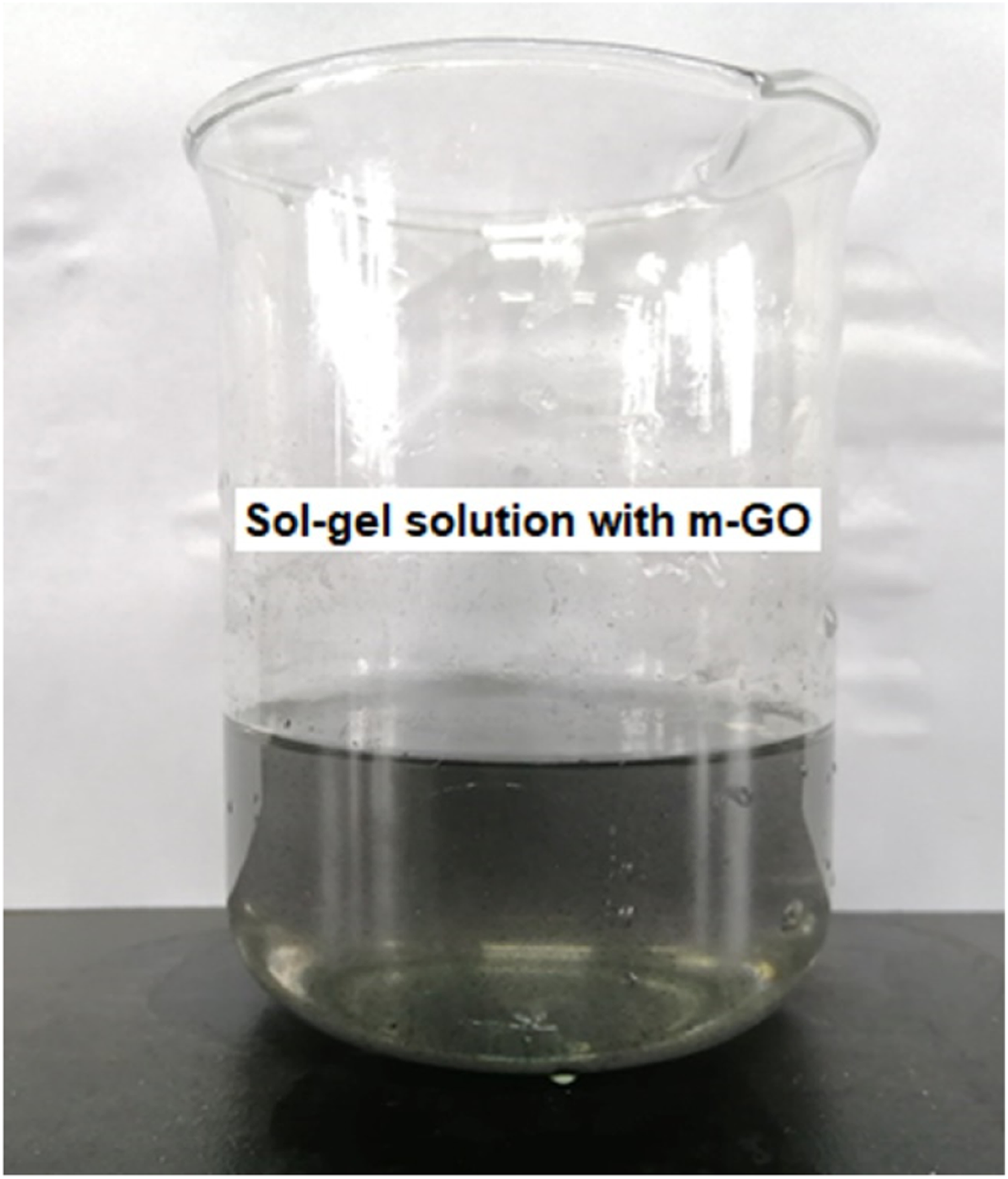
Image of resultant sol-gel solution with m-GO.
The sol-gel solution was creäted by refluxing GPTMS, TEOS, and APS (in a 2:2:1 volume ratio) using a total of 5 ml of silane precursors, along with 15 ml of DI water and 80 ml of ethanol. The pH of the mixture was set to about 3 with acetic acid. The solution was then subjected to hydrolysis at room temperature under continuous stirring for 22 h, resulting in a clear and transparent solution. Then, GO and m-GO nanosheets were individually introduced into the prepared silane solution, followed by sonication for 10 min to ensure uniform dispersion. The pre-treated samples were dipped in these silane solutions under static conditions for 12 h. After withdrawal, the coated specimens were left at room temperature for 30 min and then dried at 120°C for 3 h. Three types of silane solutions were formed; one is without GO, with GO and with m-GO. Three types of coatings were fabricated along with a blank sample for reference, the particulars of which are given in Table S2 (Supplementary Material). m-GO nanosheets were analysed by Transmission Electron Microscopy (TEM) analysis.
The surface morphology of the hybrid silane-coated specimens was examined using SEM while their elemental composition was determined through EDS using a ZEISS EVO MA15 instrument. Prior to SEM observations, the samples were sputter-coated with a thin layer of gold to prevent surface charging due to the low electrical conductivity of the silane coatings. The chemical composition of the coatings was determined using XPS equipped with a monochromatic Al Kα X-ray source after the samples were immersed in PBS solution for 2 h (Model: XSAM 800, Japan). The SECM analysis were performed by a scanning electrochemical microscope (Model: CHI900C) in which platinum microelectrodes (10 µm diameter) were used as the tip. This consist of a three-axis positioning system so that the position of the tip electrode was controlled and the potentials of tip and sample electrodes were independently controlled. SECM measurements were performed in substrate generation–tip collection mode under open circuit potential (OCP) conditions without external polarisation of the substrate. A Pt ultramicroelectrode was positioned at an approximate working distance of 200 µm from the sample surface using controlled vertical approach of the probe. The selected distance ensured stable current response during scanning while preventing tip damage and minimising perturbation of localised corrosion processes. The AZ31 Mg alloys were embedded in epoxy resin to expose a working area of approximately 0.25 cm2. Prior to measurements, the working electrode was immersed in the test solution for 2 h. The scans were conducted at a rate of 2 μm per step.
Results and discussion
The surface morphology and elemental composition of the uncoated and coated (G3) AZ31 alloy are illustrated in Figure 2(a) and (b). Energy-dispersive spectroscopy (EDS) analysis reveals that magnesium is the predominant element in the bare alloy prior to coating. After applying the hybrid silane coating, the surface displays distinct morphological features characterised by small depressions and white particulate formations (Figure 2(b)). The coating appears homogeneous, with minimal visible cracks or defects, which can be attributed to the layered configuration of m-GO and its uniform dispersion throughout the coating layer. The EDS spectra indicate the characteristic peaks corresponding to the detected elements along with their respective weight percentages, and the accompanying elemental maps qualitatively support these observations. For the coated alloy, the EDS results (Figure 2(b)) show an increased amount of carbon, silicon and oxygen, along with a reduction in magnesium content compared to the uncoated sample. The pronounced rise in silicon concentration confirms the effective deposition of the silane layer on the alloy surface, while the higher carbon and oxygen levels further substantiate the incorporation of GO and the formation of Si–O bonds within the coating.

Surface morphology and respective EDS spectra with their elemental mapping of bare and coated AZ31alloy before SECM analysis: (a) bare sample and (b) C3 coating.
Characteristic TEM images of the synthesised m-GO nanosheets are presented in Figure 3. The TEM micrographs reveal thin, transparent, and layered sheet-like structures possessing a relatively large surface area. The observed morphology confirms the successful silane functionalisation of the GO nanosheets. Previous studies on the preparation and characterisation of functionalised GO have similarly reported that the nanosheets preserve their wrinkled, sheet-like morphology after modification. The functionalisation process occurs through the reaction of silane groups with the hydroxyl functionalities present on the GO surface. In addition, the grafted silane molecules form a thin coating on the GO sheets, resulting in a slight increase in the interlayer spacing between adjacent nanosheets. 14 Previous reports have shown that silane modification alters the surface morphology of wrinkled GO nanosheets, resulting in comparatively smoother surfaces with the presence of fine ripples. 15 Covalent functionalisation of GO using GPTMS improves the interfacial interactions between the nanosheets and the surrounding matrix while simultaneously reducing nanoparticle aggregation, thereby enhancing dispersion ability. 16 Furthermore, the formation of a silane network promotes exfoliation of the GO layers and suppresses their agglomeration, leading to better separation between individual nanosheets. 14
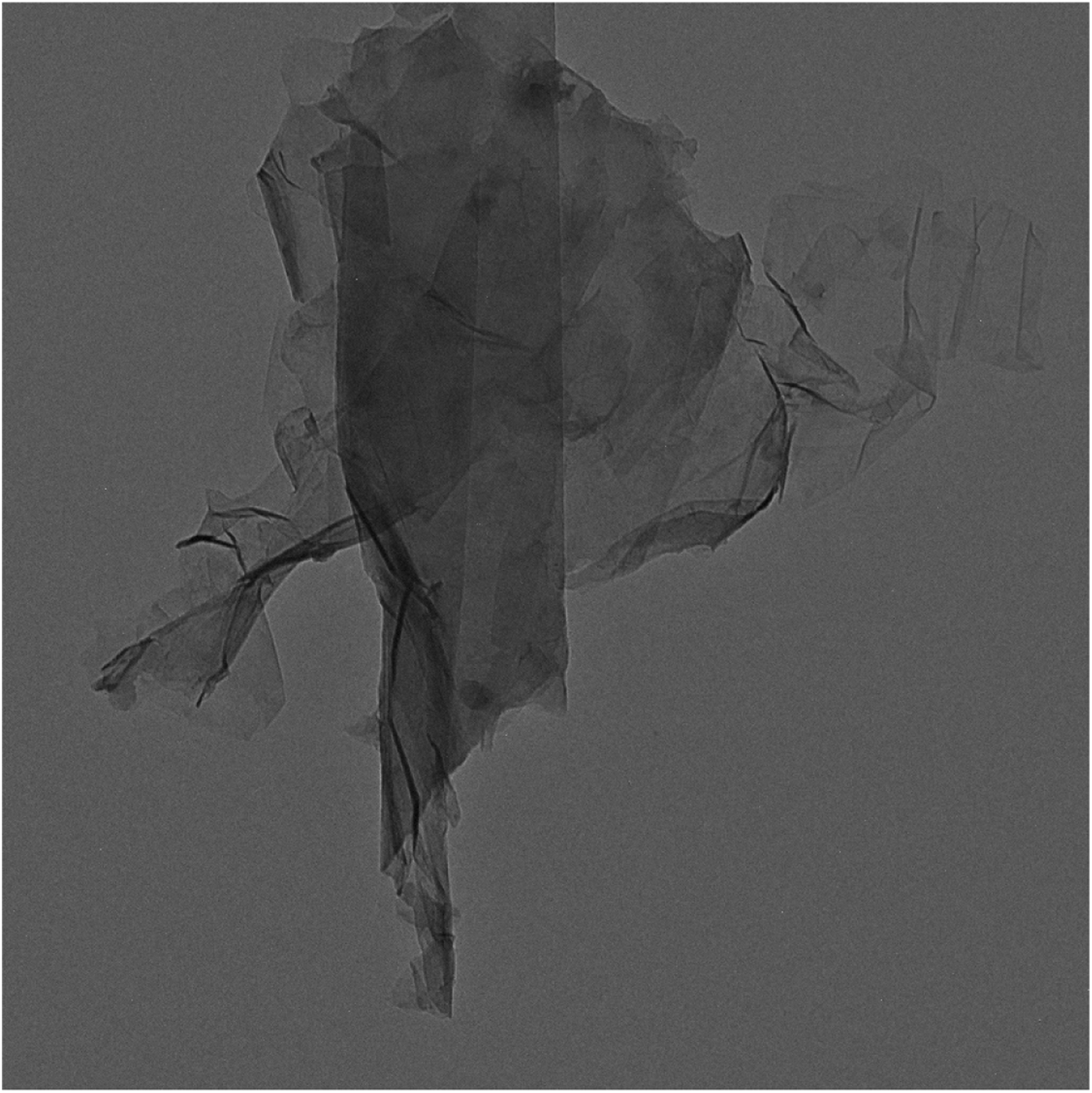
TEM image of m-GO nanosheets.
The SECM maps were obtained with the scanning range 200 μm × 200 μm. Figure 4 demonstrates the 2D SECM maps and Figure 5 shows 3D SECM maps obtained for bare and coated specimens on x and y axes (one axis shown here). The SECM maps represent the experimentally measured tip current values expressed in amperes. The reported current values are raw electrochemical responses and were not normalised. The SECM images reveal the degradation behaviour of both uncoated and coated samples through distinct colour variations, which highlight areas of anodic and cathodic activity. SECM mapping of local electrochemical activity shows a clear and systematic reduction in both the magnitude and spatial variability of tip current after application of hybrid silane coatings, with the greatest suppression obtained in G3 coatings because of m-GO were embedded into the silane matrix. As shown in Figures 4 and 5, when the probe approached the AZ31 surface in the PBS solution, an increase in the absolute current value was observed, indicating enhanced redox reaction conductivity between the AZ31 substrate and the electrolyte. 17 The bare Mg alloy (blank) produced tip currents ranging from −1.14 × 10⁻⁹ A to −9.50 × 10⁻⁹ A, consistent with an actively corroding surface with pronounced localised anodic sites in physiological media. High absolute currents and a wide distribution are typical signatures of heterogeneous corrosion activity on bare Mg alloys measured by SECM. 18
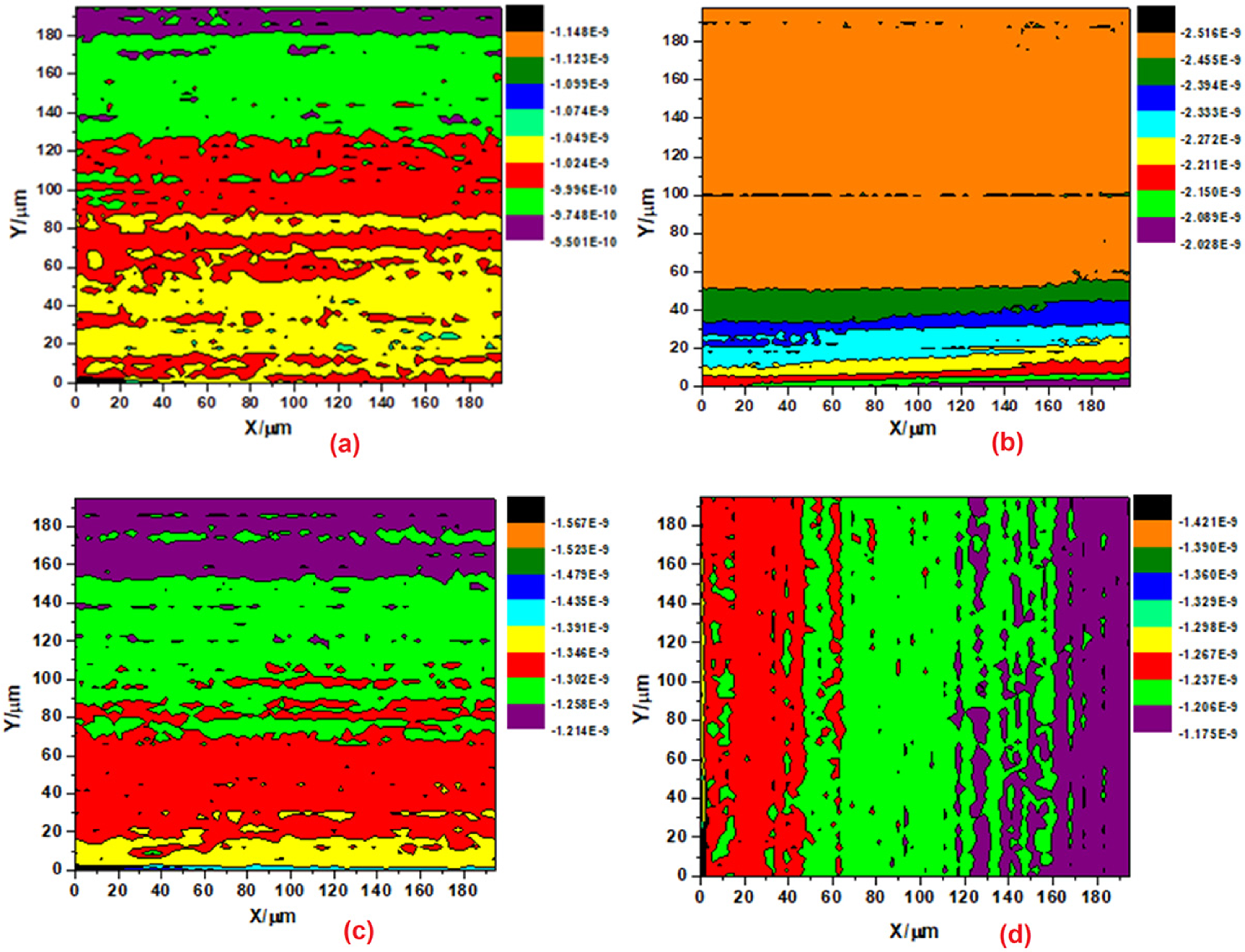
SECM maps (2D) recorded over different samples: (a) blank, (b) G1 coating, (c) G2 coating and (d) G3 coating.
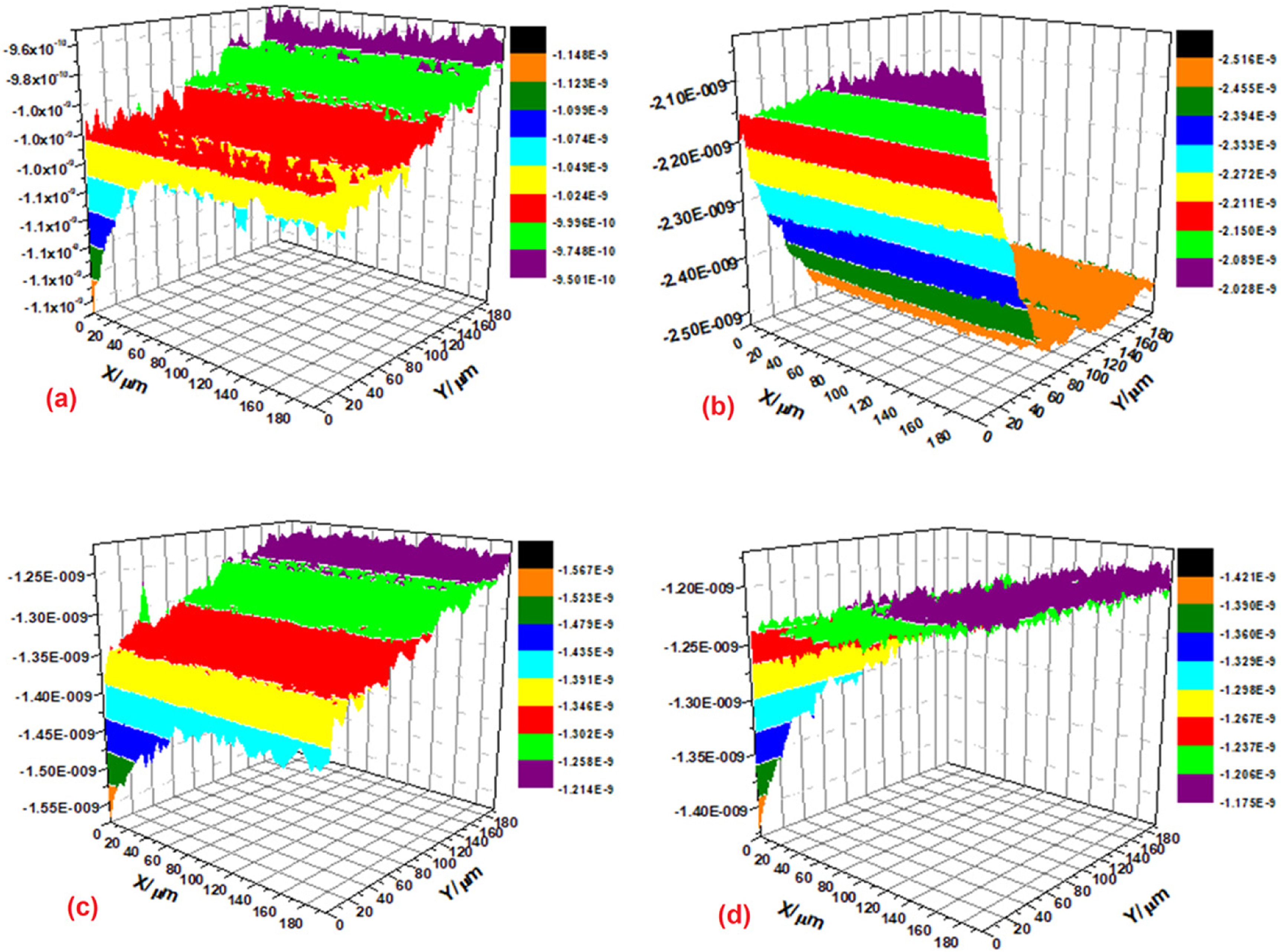
SECM maps (3D) recorded over different samples: (a) blank, (b) G1 coating, (c) G2 coating and (d) G3 coating.
Deposition of the silane sol–gel film markedly reduced both the magnitude and spread of the SECM tip current to −2.02 × 10⁻⁹ A to −2.50 × 10⁻⁹ A as observed for G1 coating. This near-uniform, low negative current distribution is characteristic of a barrier (blocking) that limits substrate-driven mediator regeneration and suppresses local anodic dissolution. Similar trends have been reported for silane sol–gel films that form compact, chemically bonded barriers on Mg substrates.17,19 In the hybrid silane coating G3, the tip current range narrowed further to −1.17 × 10⁻⁹ A to −1.42 × 10⁻⁹ A, indicating the lowest local electrochemical activity among the all sample types. The uniformly small (less negative) currents across the scanned area imply that the G3 coatings provides an improved barrier to charge-transfer processes and local dissolution as compared to the G1 coatings. This observation is consistent with known benefits of silane-functionalised GO fillers, which (when well-dispersed and chemically bonded into the matrix) increase tortuosity for ionic transport, reduce defect density, and strengthen the sol–gel network, effects that translate into reduced localised corrosion currents measured by SECM. 6 The G2 coatings showed slightly higher current which might be due to slight non-uniform distribution of GO in silane matrix which is clearly observed in Figures 4(c) and 5(c). These SECM observations agree with prior reports where silane sol–gels improved barrier performance and where silane-modified GO provided barrier benefits but could create localised conductive pathways depending on dispersion and functionalisation.6,7
The comprehensive elemental composition of the G1 and G3 coatings was investigated using X-ray photoelectron spectroscopy (XPS), and the corresponding spectra are presented in Figure 6. The XPS survey spectra confirm the presence of C, O, Si, N and Mg within the coatings. These results are in good agreement with the elemental composition obtained from the EDS analysis. The deconvoluted C 1 s spectrum of the G1 coating (Figure 6(a)) exhibits characteristic peaks with binding energies cantered at 284.5 and 285.8 eV, corresponding to Si–C and C–C bonding, respectively. In comparison, the C 1 s spectrum of the G3-coated sample (Figure 6(b)) displays four distinct peaks located at 284.0 eV, 284.8 eV, 285.7 eV and 286.8 eV, which are attributed to Si–C, C–C, C–O and COOH functional groups, respectively. A shift of approximately 0.5 eV in the Si–C binding energy was observed, indicating the successful formation of the silane coating on the sample surfaces.20,21 The appearance of the COOH peak confirms the incorporation of GO into the silane matrix and suggests successful grafting of GO with silanol groups.22,23 In addition, the deconvoluted O 1 s spectra show similar features, consisting of two peaks for the G1 coating and three peaks for the G3 coating. For the G1 coating, the O–Si related peaks are located at 531.8 and 533.0 eV, whereas the G3 coating exhibits peaks at 531.6, 532.7, and 534.0 eV. The additional peak observed in the O 1 s spectrum of the G3 coating is associated with C–O bonding, further confirming the functionalisation of GO with silane compounds. 24 Moreover, the slight shifts in peak positions indicate the successful incorporation of GO into the silane network and demonstrate the chemical interactions occurring between GO and the silane groups.25,26 The Mg 2p spectrum can be deconvoluted into two distinct peaks located at 49.5 and 50.8 eV, which are attributed to magnesium hydroxide and Mg–O–Si bonding, respectively.20,27 The N 1s spectrum exhibits peaks at 399.6 and 401.4 eV, corresponding to nitrogen species associated with the –NH₂ groups of γ-APS. 28 In the Si 2p spectrum, peaks observed at 101.7, 102.5 and 103.5 eV are assigned to Si–OH, Si–O–Si and Si–O–C bonds, respectively. Similar to the behaviour of the Si–C bond, the negative shift in certain Si-related peaks suggests that the interaction between GO and the silane network lowers the oxidation state of silicon due to the increased carbon content. Conversely, a positive shift in the Si–O–C peak is observed, which can be attributed to the presence of –COOH groups in GO as well as the higher electronegativity of oxygen, leading to an increase in the oxidation state of silicon.26,29
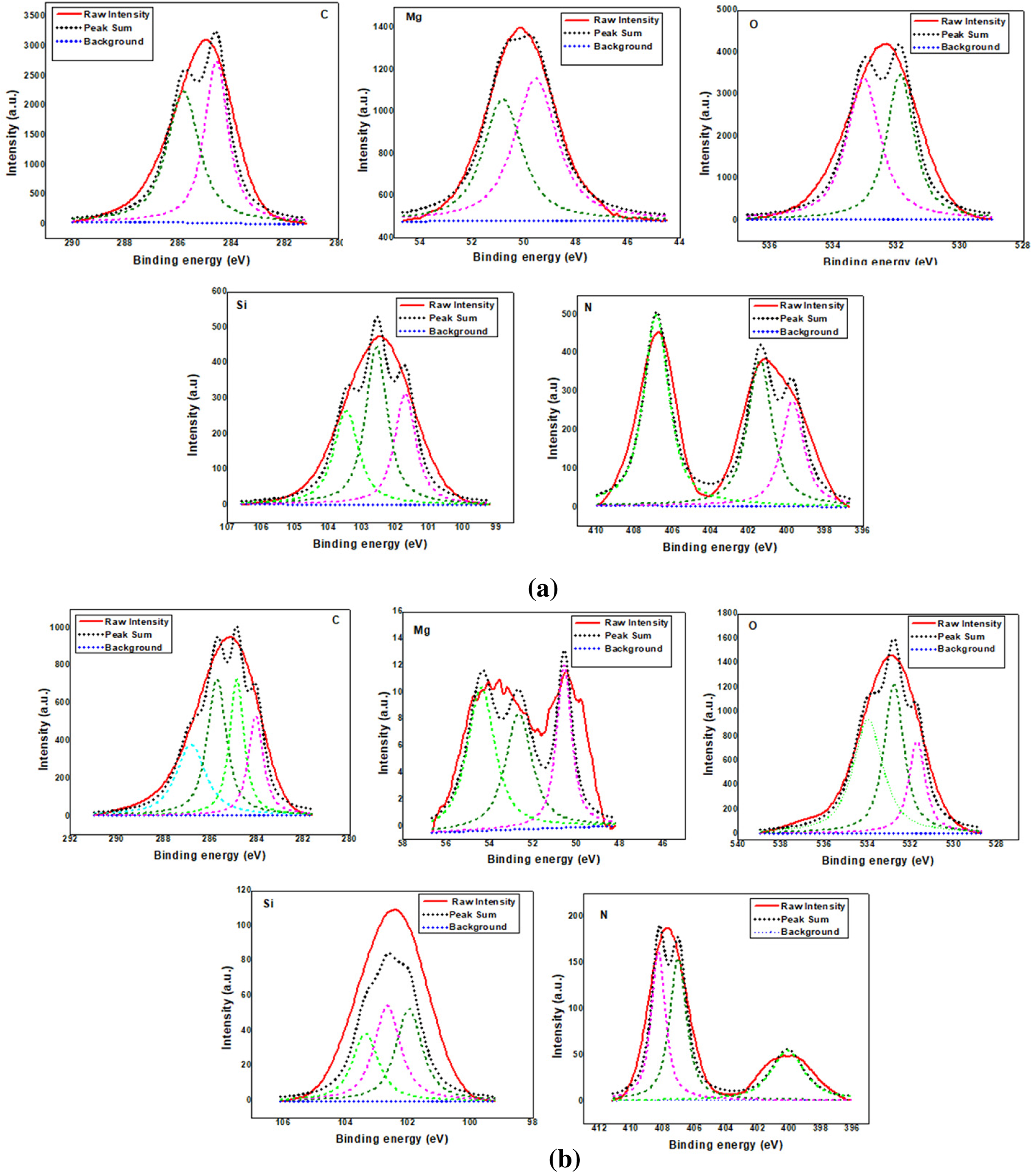
XPS spectra of coated AZ31 magnesium alloy immersion in PBS solution: (a) G1 coating and (b) G3 coating.
Conclusions
The current study involved the addition of dual modified GO nanosheets to silane coatings for the purpose of protecting AZ31 alloy from corrosion. TEM results confirm the modification of GO nanosheets. The results from SEM-EDS and XPS confirm that uniform and transparent coatings have been effectively deposited on the AZ31 alloy and that a siloxane network is present. Scanning Electrochemical Microscopy (SECM) provided clear insight into the localised electrochemical behaviour of silane and silane with dual modified GO coatings on magnesium alloys in PBS solution. The uncoated Mg alloy exhibited large and spatially heterogeneous negative tip currents (−1.14 × 10⁻⁹ to −9.50 × 10⁻⁹ A), confirming intense localised corrosion activity. Application of a silane sol–gel film significantly reduced both the magnitude and variability of the local current (−2.02 × 10⁻⁹ to −2.50 × 10⁻⁹ A) for C1 coatings, indicating effective surface passivation and barrier formation. Incorporation of m-GO further suppressed the current to the narrowest range (−1.17 × 10⁻⁹ to −1.42 × 10⁻⁹ A), demonstrating enhanced coating uniformity and improved inhibition of localised electrochemical activity as observed for C3 coatings. Overall, the SECM results confirm that the dual-silane functionalised GO additive strengthens the sol–gel network, improve interfacial bonding, and enhance corrosion resistance of Mg in physiological environments. This work highlights the strong potential of SECM as a powerful micro-analytical tool for evaluating next-generation hybrid coatings for biodegradable metallic implants and other magnesium-based systems.
Supplemental Material
sj-docx-1-ces-10.1177_1478422X261464780 - Supplemental material for Localised electrochemical characterisation of dual silane functionalised graphene oxide/silane coatings on magnesium alloy by SECM
Supplemental material, sj-docx-1-ces-10.1177_1478422X261464780 for Localised electrochemical characterisation of dual silane functionalised graphene oxide/silane coatings on magnesium alloy by SECM by Mohd Talha, Yucong Ma, Chhail Kumar Behera and Yuanhua Lin in Corrosion Engineering, Science and Technology
Footnotes

Funding
The authors received no financial support for the research, authorship and/or publication of this article.
Declaration of conflicting interests
The authors declared no potential conflicts of interest with respect to the research, authorship and/or publication of this article.
Data availability
All data supporting this article have been presented within the main text. Supplementary information is available.
Supplemental material
Supplemental material for this article is available online.
References
Supplementary Material
Please find the following supplemental material available below.
For Open Access articles published under a Creative Commons License, all supplemental material carries the same license as the article it is associated with.
For non-Open Access articles published, all supplemental material carries a non-exclusive license, and permission requests for re-use of supplemental material or any part of supplemental material shall be sent directly to the copyright owner as specified in the copyright notice associated with the article.
