







Abstract
Social Studies (IPS) education in Indonesia is often dominated by textbook-centered instruction that fails to engage students or reflect their lived experiences. This study introduces ethnopedagogy as an innovative framework for revitalizing IPS by integrating local wisdom, with river tourism in Banjarmasin as a cultural theme. The study is significant in positioning Social Studies not only as knowledge transmission but also as a medium for cultural preservation, ethical reasoning, and civic responsibility. Its novelty lies in synthesizing literature to conceptualize a structured ethnopedagogical model emphasizing meaningful, value-based, active, and challenging learning. The study aims to develop strategies for embedding ethnopedagogy into junior high school IPS, guided by the hypothesis that culturally responsive pedagogy improves cognitive, ethical, and social outcomes. A structured literature review was conducted, analyzing peer-reviewed journals, academic books, curriculum documents, and research reports, with thematic synthesis applied to identify pedagogical dimensions. Findings indicate that ethnopedagogy enhances curriculum relevance by linking content to local contexts. Value-based and active learning dominated, fostering ethical reasoning, identity, collaboration, and motivation, while integrative learning across disciplines remained difficult. The study offers a scalable framework for policymakers, curriculum developers, and educators, highlighting ethnopedagogy as both a cultural preservation strategy and a pedagogical innovation.
Keywords
Introduction
Social Studies (IPS) education functions as a vital integrative field that examines the complex interrelations among science, technology, the physical environment, and social contexts. This educational domain addresses various human dimensions, including behaviors, needs, and cultural manifestations, alongside the systems established for managing natural resources and governance. The incorporation of twenty-first-century skills Communication, Collaboration, Critical Thinking, and Creativity into the IPS curriculum is imperative for equipping learners to navigate the challenges of an increasingly digital and globalized world (Indriyani et al., 2023; Pamenang, 2021).
Despite the ongoing integration of technological media and advanced learning management systems, IPS instruction frequently remains characterized as dreary and overly reliant on traditional textbook methods. This perception signals a significant disconnection between the content delivery and students’ socio-cultural realities, underscoring the pressing necessity for pedagogical innovations that contextualize learning within these environments (Fernando and Mohammad Baihaqi Bin Md Yusnan, 2022; Sukirno et al., 2023). Ethnopedagogy emerges as a promising approach to rejuvenate IPS education by emphasizing local wisdom and cultural values. This method not only aids in preserving cultural heritage but also enriches the learning experience in diverse classrooms, fostering identity, inclusivity, and ethical sensibility (Arjaya et al., 2024; Hidayati et al., 2020).
A substantial challenge facing IPS education today is overcoming its prevailing image of disengagement and lack of contextual relevance, often attributed to conventional, textbook-centered instruction. Despite enhancements in instructional technologies and methodologies, solutions remain inadequate without systematically embedding ethnopedagogical approaches within the curriculum. This integration is essential for fostering valuable, culturally conscious learning experiences among students (Citra, 2023; Munisa et al., 2024). Ethnopedagogy is conceptualized as preserving cultural systems while promoting pedagogical innovation, highlighting strategies that incorporate indigenous knowledge into the learning process to nurture cognitive, ethical, and emotional development (Aura, 2023; Nisa et al., 2024).
The practical application of integrating ethnopedagogy within IPS instruction can be illustrated through the contextualization of educational materials around local themes, such as river tourism in the Banjarmasin area. This thematic focus ensures that students engage with content that resonates with their lived experiences, thereby enhancing motivation and cognitive engagement (Sudjarwo et al., 2018; Wulandari et al., 2020). Utilizing methods like problem-based learning within this framework fosters exploration and analysis of socio-environmental issues from a culturally attuned perspective. Such practices substantiate the learning goals set forth by the National Council for the Social Studies (NCSS), which prioritize meaningful, integrative, and active learning environments (Doolittle and Faul, 2013).
While ethnopedagogy is acknowledged in existing literature and has seen partial implementation in IPS education, there remains a marked inconsistency in its application across different educational institutions. Various models exist, from thematic integration to interdisciplinary strategies, yet these are not uniformly executed. Research indicates significant gaps in systematic models designed for legislating ethnopedagogical principles into national curricula, specifically at the secondary education level (Yulianto et al., 2023). Furthermore, even though localized implementations have yielded positive results, overarching empirical studies examining the longitudinal impacts of ethnopedagogical IPS instruction on critical thinking, civic engagement, and cultural literacy remain sparse. Most extant literature often focuses on theoretical frameworks with insufficient practical guidelines for educators, thereby highlighting a critical research gap in effective pedagogical practices that implement ethnopedagogical notions consistently (Mardhiah et al., 2021).
This study aims to explore and conceptualize the integration of ethnopedagogical approaches into IPS instruction to realize powerful learning experiences, as envisioned by NCSS standards. It seeks to establish a model for culturally responsive IPS pedagogy that is meaningful, integrative, value-based, challenging, and active. The novelty of this research lies in its systematic synthesis of literature to identify practical strategies for implementing ethnopedagogy in IPS contexts, with a particular focus on local cultural assets such as river tourism. The study is delimited to junior high school (SMP) education in Indonesia, examining how localized cultural content can be embedded within national curricular themes to enhance student engagement and learning outcomes.
Method
Research design
This study employs a
Data collection and source identification
Data were collected through a comprehensive search of both international and national academic databases to ensure broad and globally representative coverage. The databases consulted included Scopus, Web of Science, Google Scholar, iPusnas, and ResearchGate, complemented by textbooks and official curriculum documents issued by the Indonesian Ministry of Education. The literature search employed relevant keywords and Boolean combinations such as “ethnopedagogy,” “IPS education,” “Social Studies learning,” “powerful learning,” and “local wisdom in education.” The search focused on publications from the last two decades, with particular emphasis on recent studies addressing contemporary educational challenges. Sources were included if they were academic and peer-reviewed, addressed ethnopedagogy, local wisdom, or culturally responsive pedagogy, were directly related to IPS or multicultural education, presented theoretical frameworks, empirical findings, or systematic analyses, and were written in English or Indonesian. Conversely, non-peer-reviewed publications, studies unrelated to educational or pedagogical practices, articles lacking clear methodological descriptions, duplicate records across databases, and publications with limited relevance after full-text assessment were excluded from the review.
Study selection process (PRISMA procedure)
The study selection followed the four PRISMA stages: identification, screening, eligibility, and inclusion. Records were initially identified from the selected databases and reference lists, yielding a total of 492 records, including Scopus (n = 122), Web of Science (n = 105), Google Scholar (n = 178), and nationally indexed journals (n = 87). After removing 143 duplicate records, 349 records remained for the screening stage. Titles and abstracts were then screened to assess relevance, resulting in the exclusion of 271 records due to non-relevance to education (n = 120), non-peer-reviewed sources (n = 76), vague methodology (n = 39), and additional duplicates (n = 36). Full-text articles were subsequently evaluated against the predefined inclusion and exclusion criteria, with 78 articles assessed for eligibility. Of these, 42 articles were excluded due to not being directly related to Social Studies (IPS) or ethnopedagogy (n = 25) and insufficient methodological quality based on the CASP checklist (n = 17). Finally, 36 studies met all criteria and were included in the qualitative synthesis. The complete selection process, including the explicit number of records at each stage, is presented in Figure 1, which illustrates the PRISMA flow diagram of the study selection process.
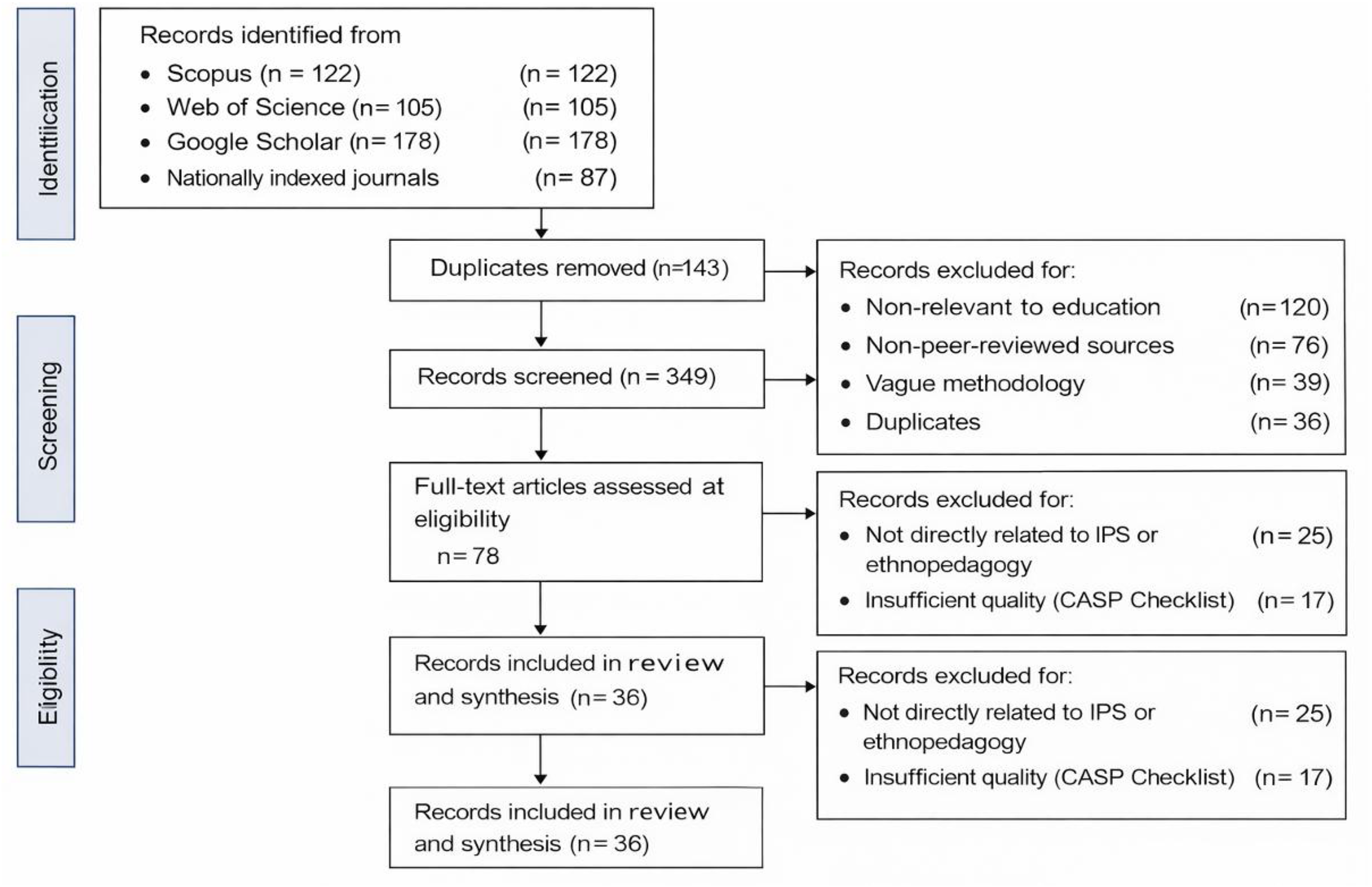
PRISMA flow diagram of the study selection process.
(Figure 1).
Quality assessment (CASP checklist)
To ensure methodological robustness and credibility, all eligible studies were subjected to a quality appraisal using the Critical Appraisal Skills Programme (CASP) Checklist. The appraisal focused on the clarity of research objectives, appropriateness of research design, rigor of data collection and analysis, validity of findings, and relevance to the objectives of this review. Only studies meeting the minimum quality standards were retained for synthesis, thereby strengthening the reliability and validity of the conclusions drawn from the literature.
Data synthesis and analytical approach
Following data selection and quality appraisal, the retained literature was synthesized using a thematic synthesis approach aligned with the framework. This process involved systematic data condensation, thematic categorization, and critical comparison across studies. Each included study was reviewed in full and qualitatively coded according to its dominant pedagogical emphasis, based on explicitly stated learning objectives, instructional strategies, and reported educational outcomes. The literature was organized into five key pedagogical themes consistent with NCSS principles, namely value-based learning, active learning, meaningful learning, challenging learning, and integrative learning. Although individual studies could reflect multiple dimensions, for descriptive purposes each study was assigned a primary thematic category representing its most salient pedagogical focus. The percentage distribution presented in Figure 3 was derived from the relative frequency of studies classified under each dominant theme, and is intended to provide an illustrative overview of thematic tendencies rather than a statistical measure of effectiveness. To enhance analytical rigor, the coding process was conducted independently by two reviewers, with discrepancies resolved through consensus discussion to strengthen inter-coder reliability. This thematic structuring enabled the integration of theoretical perspectives with practical applications and supported the formulation of a coherent conceptual model for embedding ethnopedagogical principles within Social Studies (IPS) instruction.
Descriptive analysis and validation
A descriptive analytical method was employed to interpret the synthesized findings. This involved identifying patterns, comparing pedagogical approaches, and evaluating the consistency and generalizability of ethnopedagogical strategies reported in the literature. As part of the validation process, the findings were cross-referenced with national and international curriculum standards, including those outlined by the National Council for the Social Studies (NCSS) and the Indonesian Ministry of Education. This step ensured that the proposed ethnopedagogical framework is both contextually appropriate and pedagogically aligned with official educational goals.
Results and discussion
Strengthening ethnopedagogy in social studies education: A contextual and integrated approach
Recent research over the past decade has confirmed the growing implementation of ethnopedagogy across diverse educational contexts, particularly within Social Studies (IPS) instruction. This pedagogical approach emphasizes the systematic integration of local culture and wisdom into educational practices, fostering a meaningful connection between students’ cultural contexts and their learning experiences. Ethnopedagogy has increasingly gained recognition in both academic literature and educational programs as a response to the limitations of conventional, textbook-centered instruction. Notably, Education Based on Local Wisdom by Chaer et al. (2021) highlights the strategic role of local wisdom in enriching Indonesia's educational landscape by embedding cultural relevance into curriculum design.
The incorporation of local wisdom into education serves multiple pedagogical objectives, most prominently the enhancement of students’ character development. Mustofa and Aryani (2023) demonstrate that character education grounded in local wisdom provides a strong moral foundation by situating learning within students’ social and cultural realities. This finding is consistent with Warman et al. (2018), who argue that education rooted in local knowledge strengthens students’ sense of identity and belonging within their communities. Similarly, Herlina et al. (2024) emphasize that culturally grounded and character-focused educational models are increasingly crucial for addressing the challenges posed by globalization, particularly in fostering resilience, social responsibility, and ethical awareness among learners.
Beyond character formation, the relevance of ethnopedagogy also extends to the promotion of scientific and social literacy. Asiyah et al. (2023) argue that engaging students with local phenomena enables them to connect abstract scientific concepts to their immediate environment, thereby enhancing scientific literacy through an ethnoscience-based learning model. This approach not only strengthens critical thinking but also allows students to appreciate the socio-cultural dimensions of knowledge. Supporting this perspective, Maunah (2016) contends that character education contributes to a holistic understanding of learners by integrating cognitive, affective, and social domains. Empirical evidence from Xiuyang and Luen (2024) further confirms positive student responses to the integration of local culture in education, underscoring the adaptability and effectiveness of ethnopedagogical practices across different cultural settings.
From an IPS perspective, ethnopedagogy reinforces the foundational goals of Social Studies education: preparing students to become responsible, informed, and competent citizens capable of navigating social diversity, engaging with real-world issues, and making reflective decisions. Integrating local wisdom into the IPS curriculum contextualizes learning, rendering it more meaningful and relevant to students’ lived experiences. This approach challenges conventional textbook-based instruction by transforming learning into an immersive and reflective process rooted in cultural and environmental realities. In this sense, ethnopedagogy functions not merely as an instructional technique but as a cultural mediation mechanism, enabling students to interpret social phenomena through culturally embedded frameworks.
The literature synthesis further indicates that ethnopedagogical integration supports character education by embedding values implicitly within learning activities, rather than positioning them as isolated instructional components. This is pedagogically significant because it repositions IPS as a value-oriented discipline that simultaneously fosters cultural continuity, ethical reasoning, and critical reflection. Consequently, ethnopedagogy emerges as a strategic response to the long-standing critique of IPS as disengaging and disconnected from students’ social realities, offering a pathway toward more reflective, participatory, and socially meaningful learning.
A practical illustration of this integration is presented in Figure 2, which showcases three educational resources that embody ethnopedagogical principles and the use of local wisdom in Social Studies learning.
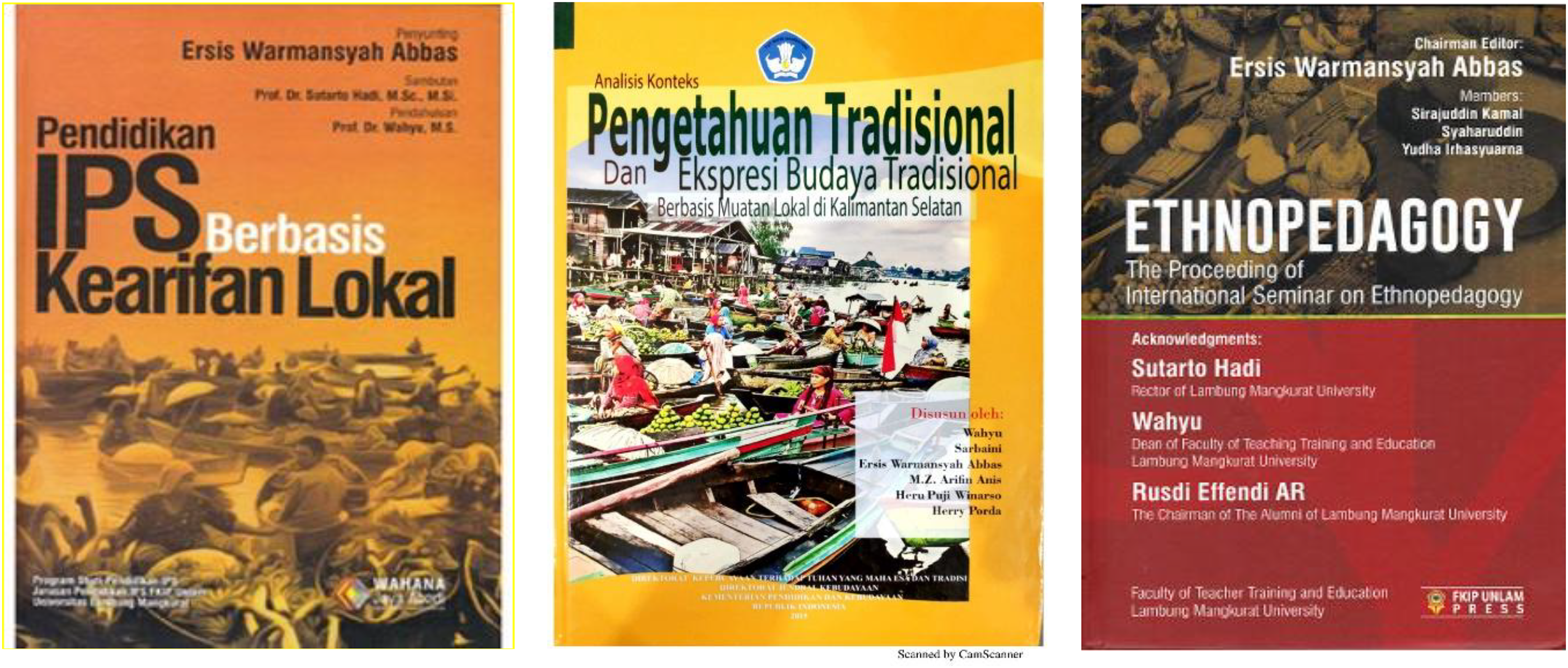
Social studies book based on local wisdom.
(Figure 2).
The first book, Pendidikan IPS Berbasis Kearifan Lokal (Social Studies Education Based on Local Wisdom), emphasizes the incorporation of cultural values within IPS curricula to strengthen students’ identity and moral character. The second book, Pengetahuan Tradisional dan Ekspresi Budaya Tradisional (Traditional Knowledge and Cultural Expressions), provides contextual learning materials derived from South Kalimantan's local knowledge and traditions, serving as a regional model of culturally embedded education. The third resource, Ethnopedagogy: The Proceeding of International Seminar on Ethnopedagogy, compiles scholarly discussions and empirical findings on ethnopedagogical theory and practice, highlighting its broader academic relevance and practical applicability. Collectively, these resources demonstrate how localized educational content can effectively foster character development, cultural appreciation, and academic engagement within IPS learning.
Meaningful and integrated learning through river tourism
One practical and contextually grounded application of ethnopedagogical principles is observed in Banjarmasin, where river tourism an iconic feature of the local geography is employed as a central thematic anchor in Social Studies (IPS) instruction. This approach aligns closely with the thematic structure of the IPS curriculum and enables interdisciplinary learning by integrating concepts from geography, history, economics, sociology, and environmental studies within a single, familiar context. By positioning river tourism at the core of instruction, learning shifts from abstract and fragmented content delivery toward an experiential and inquiry-based process rooted in students’ lived environments.
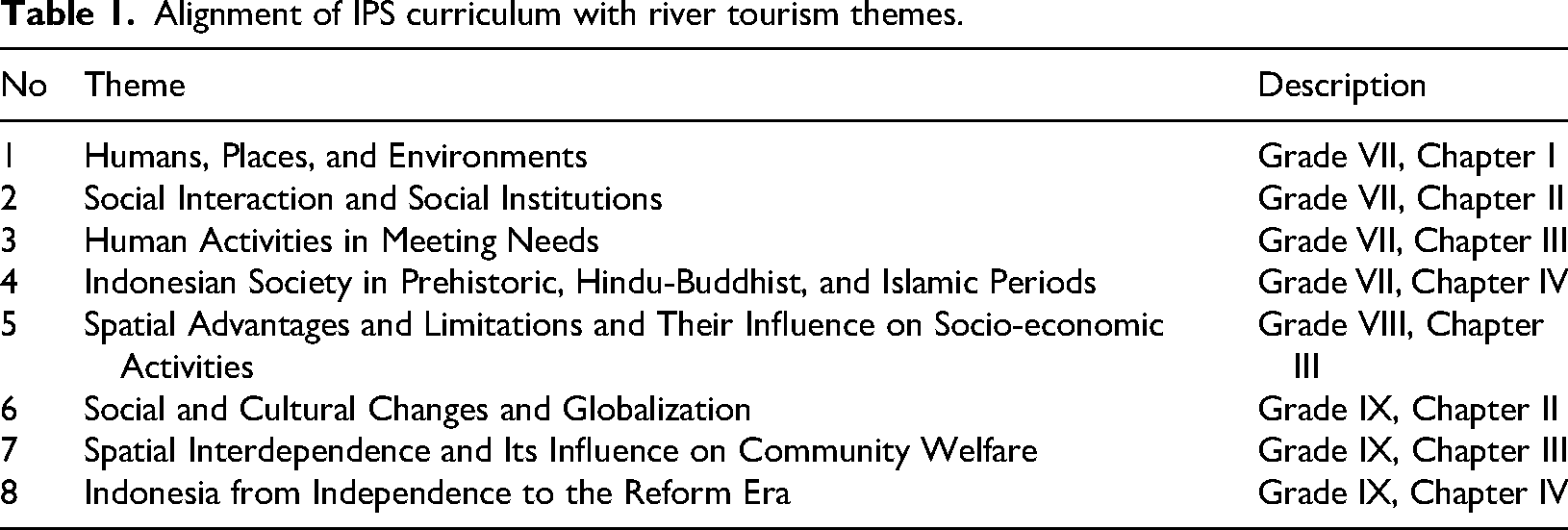
The curriculum mapping presented in Table 1 illustrates the systematic alignment of IPS content with river tourism themes across Grades VII to IX. Foundational topics, such as human–environment interactions and social institutions, are introduced in early grades and progressively extended toward more complex issues, including socio-economic dynamics, globalization, spatial interdependence, and community welfare. This scaffolded curricular design not only supports students’ cognitive development but also maintains contextual coherence across grade levels, allowing students to revisit and deepen their understanding of social phenomena through increasingly complex analytical lenses. Such progression reflects an effective application of contextual learning principles, where abstract concepts are continuously reinforced through observable socio-environmental realities.
Alignment of IPS curriculum with river tourism themes.
The structured integration of river tourism themes exemplifies how applied pedagogy can enhance curriculum relevance and student engagement. River-based activities naturally expose students to themes such as spatial advantages and limitations, economic livelihoods, cultural preservation, and environmental sustainability. Previous studies have highlighted tourism as a powerful medium for learning about spatial dynamics and socio-economic impacts, enabling students to critically examine issues of development, equity, and community welfare (Vânia Maria Nunes dos Santos and Jacobi, 2011). In this regard, river tourism functions not merely as a local example but as a microcosm of broader socio-environmental processes, making IPS content both tangible and analytically rich.
From a pedagogical perspective, the use of river tourism strengthens situated and meaningful learning, allowing students to connect academic content with real-world challenges. This approach is consistent with findings that emphasize the importance of applied and community-based pedagogy in fostering sustainability awareness and social responsibility (Nath and Amin, 2023). By engaging with local tourism practices, students are encouraged to recognize the interconnectedness of environmental stewardship, economic activity, and cultural identity—key competencies for navigating contemporary societal challenges.
Moreover, integrating river tourism within IPS instruction reinforces the role of education as a catalyst for sustainable development. Huang and Cheng (2022) argue that contextualized learning environments help students develop ethical awareness and systems thinking, particularly when addressing environmental and economic interdependencies. García-Morís and Medina (2022) further emphasize that engagement with socio-environmental issues is essential for shaping learners who are capable of contributing to social transformation. Within this framework, river tourism serves as a pedagogical bridge that links curriculum objectives with ethical reflection and civic responsibility. The effectiveness of this model is further strengthened through the incorporation of innovative instructional strategies, such as project-based learning and inquiry-oriented tasks. Research consistently indicates that such approaches enhance students’ critical inquiry, problem-solving abilities, and collaborative skills (Salinas et al., 2022; Tomas et al., 2020). By explicitly connecting river tourism themes to IPS curriculum content, the learning model promotes not only academic understanding but also the development of reflective, environmentally conscious, and socially responsible citizens. In this way, river tourism emerges as a powerful contextual medium for realizing meaningful, integrated, and transformative IPS learning.
Value-Based and challenging learning: interpretation of pedagogical dimensions
The distribution of ethnopedagogical dimensions value-based (30%; n = 11), active (25%; n = 9), meaningful (20%; n = 7), challenging (15%; n = 5), and integrative learning (10%; n = 4) as illustrated in Figure 3, provides important insights into the pedagogical orientation and practical implementation of ethnopedagogy in Social Studies (IPS) learning.
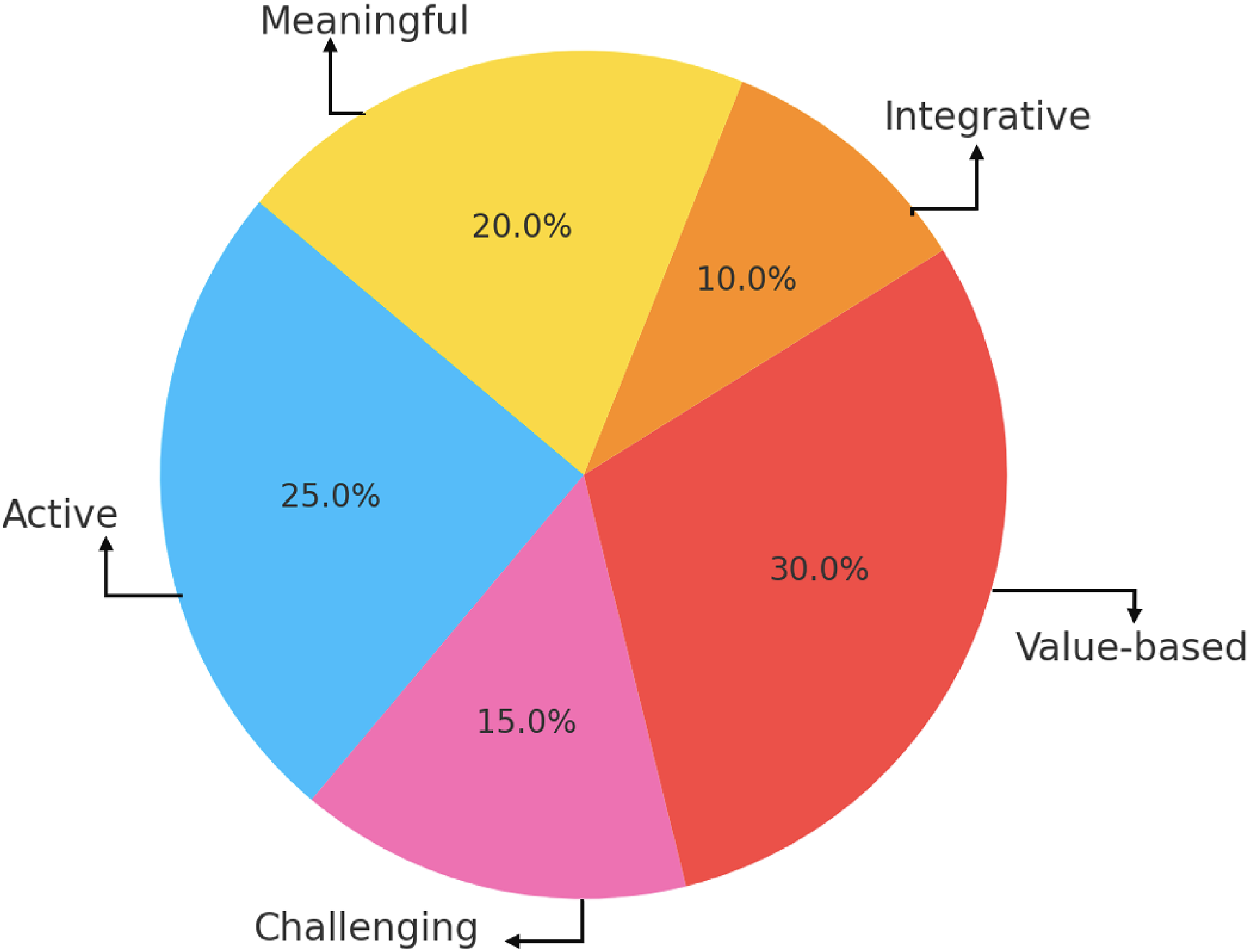
Distribution of ethnopedagogical features in social studies learning.
(Figure 3).
This distribution reflects a contemporary educational emphasis on moral grounding, student engagement, and contextual relevance, which are central to ethnopedagogical frameworks. The dominance of value-based learning (n = 11) highlights the central role of ethical reasoning, local values, and cultural identity in IPS instruction. Value-based learning fosters students’ moral responsibility and sense of belonging by embedding cultural norms and social values directly into learning activities (Hamzaj and Selvi, 2020; Toleubekova and Жуматаева, 2018). This finding strongly aligns with ethnopedagogical principles, which emphasize the integration of local cultural wisdom as a means of making learning more contextual, meaningful, and socially relevant (Erfan et al., 2024). Within IPS, this dimension reinforces the discipline's foundational mission to prepare students as responsible and culturally grounded citizens, rather than merely transmitting factual knowledge.
Active learning (n = 9) emerges as the second most prominent dimension, reflecting the growing adoption of student-centered pedagogies that prioritize participation, collaboration, and inquiry. Numerous studies have demonstrated that active learning positively influences creativity, motivation, and overall learning outcomes (Aryani et al., 2022; Mulyani et al., 2020). When students are actively engaged in discussion, exploration, and problem-solving, they demonstrate deeper cognitive involvement, improved retention, and stronger application of learned concepts (Mulyaningsih et al., 2021). In ethnopedagogical contexts, active learning also supports collective meaning-making and social interaction, reinforcing communal values inherent in local cultures.
Although challenging learning accounts for a smaller proportion (n = 5), its role remains pedagogically significant. Challenging learning encourages critical inquiry, analytical thinking, and problem-solving by engaging students with complex and authentic issues (Cheng and So, 2020). In the context of IPS, tasks related to river tourism such as analyzing environmental sustainability, socio-economic inequality, or cultural preservation require students to synthesize interdisciplinary knowledge and apply it to real-world situations. The relatively lower proportion of challenging learning suggests that while critical inquiry is present, there is still room for strengthening task design to balance cognitive demand with cultural accessibility.
Meaningful learning (n = 7), which connects new knowledge to students’ lived experiences, plays a vital role in reinforcing the relevance of IPS education. By situating learning within familiar social and environmental contexts, students are better able to understand and internalize complex social issues, enhancing both personal development and social awareness (Purwati et al., 2018). Meaningful learning supports the principle that knowledge must be applicable and experientially grounded for students to perceive it as valuable and engaging (Barber, 2014). Within ethnopedagogical frameworks, meaningful learning acts as a bridge between academic concepts and everyday life.
In contrast, integrative learning (n = 4) represents the smallest proportion, indicating persistent challenges in establishing interdisciplinary coherence within IPS instruction. Integrative learning is essential for fostering holistic understanding, enabling students to recognize relationships among social, economic, cultural, and environmental domains (Akib et al., 2020). However, its lower contribution reflects ongoing structural, curricular, and pedagogical constraints faced by educators in implementing fully integrated learning models. Previous research suggests that stronger curricular alignment and targeted teacher professional development are necessary to enhance interdisciplinary integration and better prepare students for complex twenty-first-century challenges (Supriadi et al., 2020).
Overall, the distribution of these pedagogical dimensions demonstrates that ethnopedagogical IPS learning is strongly grounded in values and active engagement, while still facing challenges in advancing higher levels of critical inquiry and interdisciplinary integration. The inclusion of both percentage values and absolute numbers provides a clearer and more transparent representation of the data distribution, strengthening the analytical rigor of the findings. These insights offer a clear direction for future instructional refinement, emphasizing the need to strengthen challenging and integrative learning components without diminishing the cultural and moral foundations that define ethnopedagogical practice.
Active learning and student engagement in ethnopedagogical classrooms
The Figure 4 illustrates the interdisciplinary foundation of Social Studies, which integrates social sciences, humanities, natural sciences, and educational science into a synthesized field. The classroom photographs demonstrate its practical implementation, where active and collaborative learning rooted in cultural contexts engages students meaningfully and supports the development of critical, social, and civic competencies.
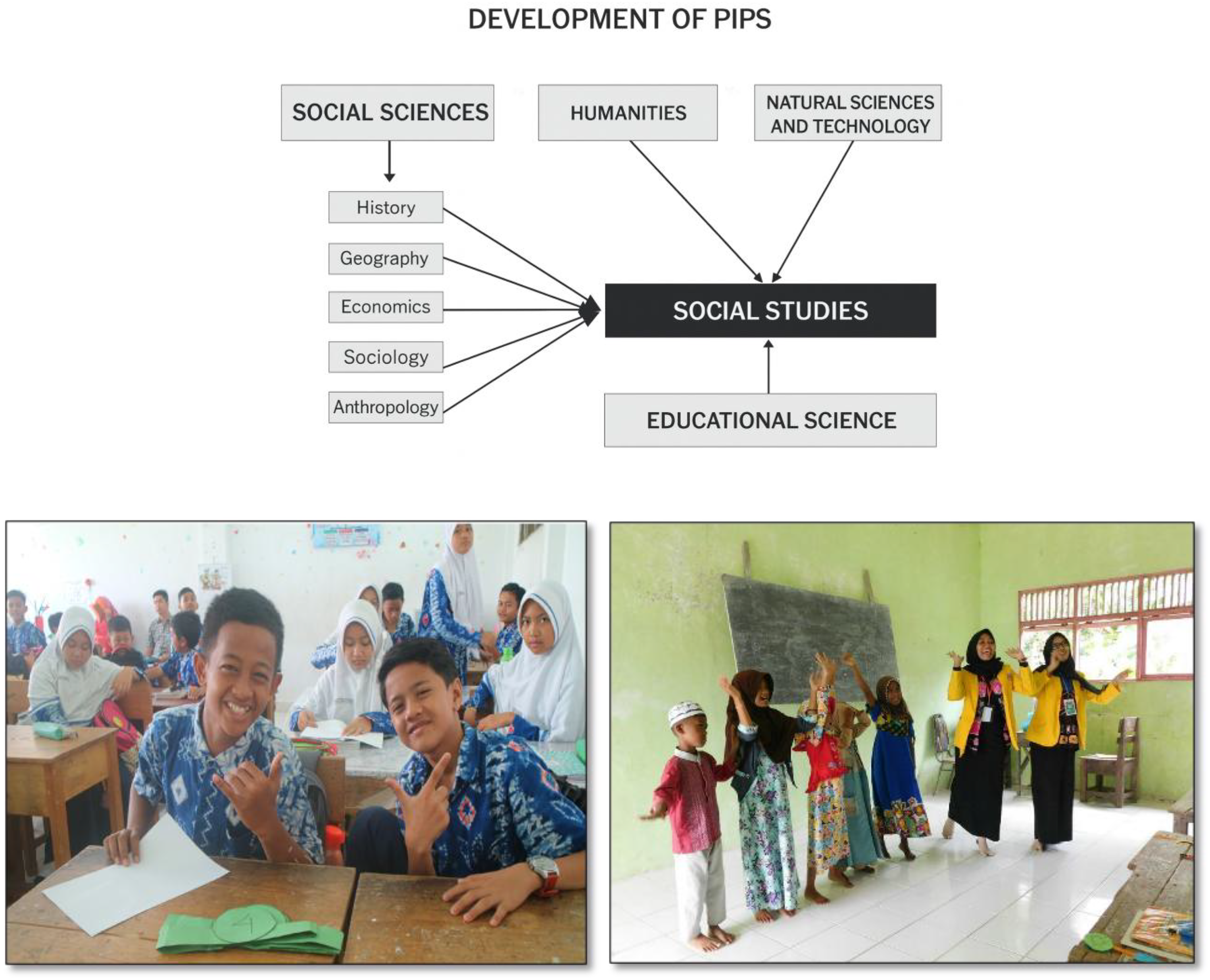
Activating model for social studies learning.
(Figure 4).
Social Studies as an educational domain is characterized by its integration of knowledge from various disciplines, notably the social sciences, humanities, natural sciences, and technology. This convergence aims to provide students with a comprehensive understanding of the complexities of civic, cultural, and environmental issues they will face as informed citizens. The core analytical foundations of Social Studies are deeply rooted in social sciences such as history, geography, economics, sociology, and anthropology, offering students critical frameworks for analyzing societal structures and historical contexts (Dole et al., 2015; Quiaman, 2020). The humanities contribute to this field by infusing ethical and cultural perspectives, which are essential for developing empathy and social awareness among students. Inquiry-based pedagogies encourage active engagement and critical thinking, promoting a learner-centered approach that broadens the educational experience (Dole et al., 2015).
Moreover, the incorporation of natural sciences and technology into Social Studies allows for a nuanced understanding of environmental issues and scientific literacy, which are crucial for addressing contemporary challenges (Jensen et al., 2015). Educational practices further enhance this integration by providing pedagogical strategies that ensure the relevance and effectiveness of teaching practices within Social Studies (Quiaman, 2020). By emphasizing the interconnectedness of these diverse knowledge domains, Social Studies transcends being merely a composite of disciplines; it emerges as a dynamic field crafted to prepare students for the multifaceted realities of their communities. The practical enactment of these theoretical frameworks is vividly illustrated in classroom settings, where active learning strategies foster student engagement and collaborative learning. Research shows that such interactive and student-centered classrooms enhance learning outcomes by promoting critical thinking and teamwork, key competencies for civic participation (Freeman et al., 2014). Specifically, studies highlight the positive impact of inquiry-based learning on student satisfaction and classroom dynamics, thus validating its effectiveness in promoting an engaging educational experience (Nybo and May, 2015).
In group activities, teachers facilitate interactive tasks that incorporate cultural values and cooperative learning, showcasing the ethnopedagogical approaches intrinsic to Social Studies instruction. This approach is crucial in fostering an inclusive learning environment that respects and values diverse cultural backgrounds and perspectives (Gutiérrez, 2002). Such strategies assist in building a classroom culture where students are not only equipped with academic skills but are also encouraged to develop social-emotional competencies essential for community engagement (Sorbet und Notar, 2022). Ultimately, the integration of these pedagogical practices within Social Studies heightens students’ critical awareness, social responsibility, and commitment to their communities, thus fulfilling the discipline's objective of preparing them for the multifaceted challenges they will encounter in their lives.
Comparative analysis and contribution to existing research
To contextualize the findings, a comparative analysis was conducted against existing studies on ethnopedagogy, contextual, and project-based Social Studies learning.
The comparative analysis presented in Table 2 situates this study within the broader landscape of ethnopedagogical and contextual learning research in Social Studies education. Across diverse research contexts and methodological approaches including quasi-experimental designs, case studies, project-based learning (PjBL), interactive video development, and structured literature reviews previous studies consistently report that ethnopedagogical implementation enhances cultural literacy, moral development, and student engagement. These findings collectively affirm the pedagogical strength of integrating local wisdom into learning processes.
Summarizes the comparison.
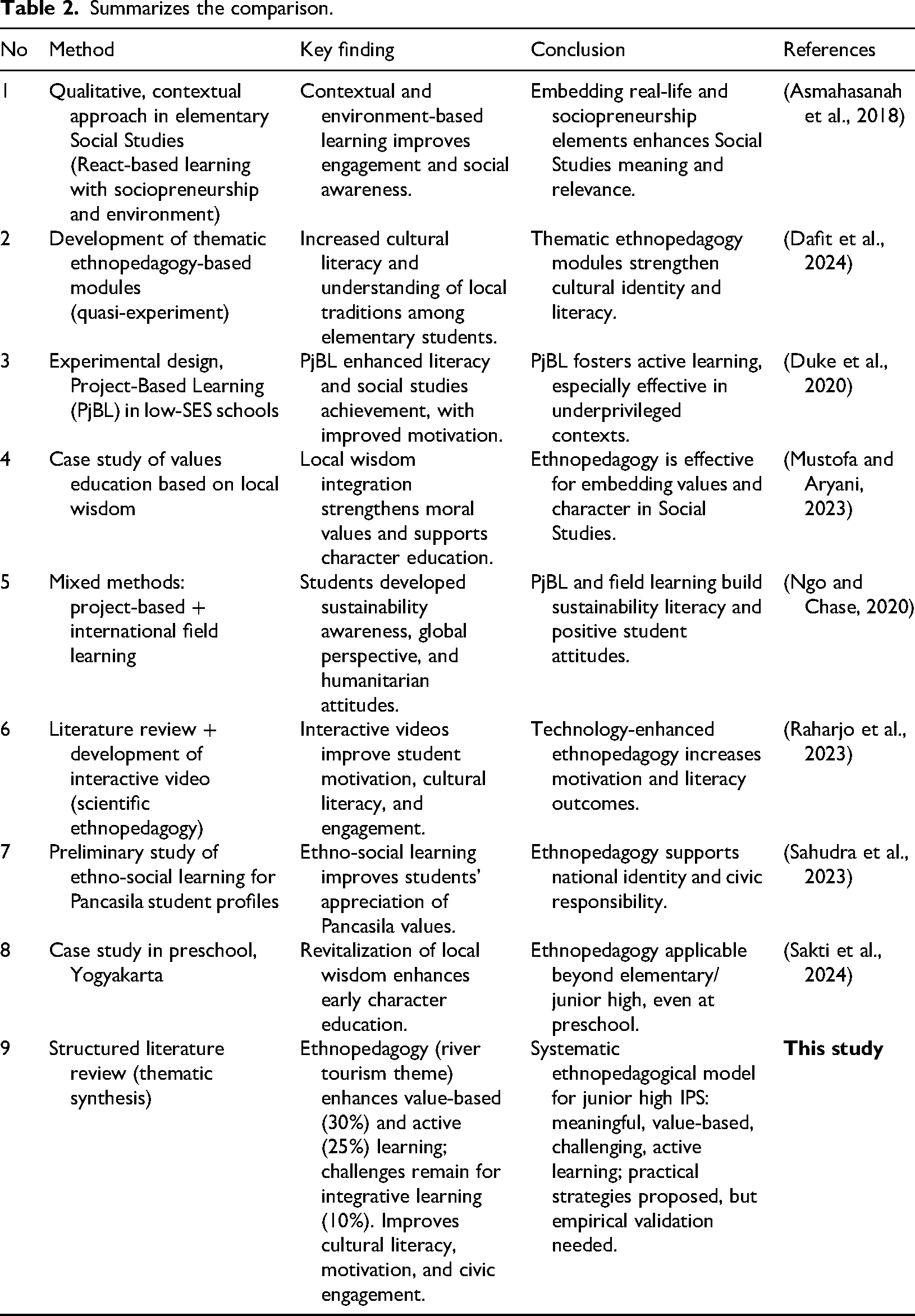
Earlier works have primarily emphasized
In contrast, the present manuscript contributes by offering a systematic and scalable ethnopedagogical framework specifically tailored to junior high school Social Studies (IPS) education. Rather than proposing a single instructional technique, this study synthesizes insights from diverse empirical and theoretical sources into a structured pedagogical model that prioritizes value-based and active learning, while explicitly recognizing integrative learning as an ongoing pedagogical challenge. This synthesis enables a more holistic understanding of how ethnopedagogical principles can be operationalized across curriculum design, instructional strategies, and learning objectives, extending beyond classroom-level innovation.
A distinctive feature of this study is the use of river tourism as a unifying contextual anchor, demonstrating how local cultural and environmental assets can be systematically embedded within national IPS curriculum structures. Importantly, river tourism is not positioned as a fixed or exclusive local example, but as a transferable contextual model that can be adapted to different forms of local wisdom across regions. This design explicitly supports scalability, allowing the framework to inform curriculum development, teacher professional training, and strategic educational planning at the national policy level. In this respect, the present research extends beyond conventional literature synthesis by offering a policy-relevant framework with systemic and long-term educational implications.
It is also acknowledged that the proposed framework has not yet been empirically validated through direct classroom implementation. However, by consolidating and critically integrating findings from prior empirical research, this study provides a robust conceptual and pedagogical foundation for future experimental, design-based, and longitudinal investigations. In doing so, it bridges the gap between theoretical discourse and practical application, contributing to ongoing efforts to revitalize IPS education through culturally responsive, contextually grounded, and scalable pedagogical models.
Limitations and critical reflection
Despite its conceptual contributions, this study is subject to several limitations that warrant critical reflection. First, there is an inherent risk of cultural essentialism in ethnopedagogical approaches, particularly when local culture is treated as a fixed or homogeneous entity. Culture is dynamic, contested, and continuously reconstructed; therefore, reducing it to static representations may oversimplify social realities and obscure internal diversity within communities. This limitation highlights the need for ethnopedagogical frameworks to remain reflexive and adaptive, recognizing culture as a living process rather than a stable set of traditions.
Second, the implementation of ethnopedagogical models in multicultural school settings presents practical challenges. Schools often consist of students from diverse ethnic, cultural, and socio-economic backgrounds, which may complicate the use of a single local cultural context as a dominant learning reference. Without careful pedagogical mediation, such approaches risk marginalizing students whose cultural identities differ from the locally emphasized narratives. This underscores the importance of inclusive instructional design that allows local wisdom to function as an entry point for dialogue, rather than as an exclusive cultural standard.
Third, the use of river tourism as a pedagogical context raises concerns related to the potential commodification of culture. When tourism-based themes are incorporated into educational settings, there is a risk that cultural practices and local knowledge may be framed primarily as economic or aesthetic assets, rather than as meaningful social and historical expressions. This tension necessitates a critical pedagogical stance that encourages students to interrogate tourism not only as a development opportunity but also as a socio-cultural process with ethical and environmental implications.
Fourth, the effectiveness of the proposed framework is highly dependent on teachers’ pedagogical capacity, including their understanding of ethnopedagogical principles, curriculum integration skills, and sensitivity to cultural diversity. Variations in teacher training, institutional support, and resource availability may significantly influence how the framework is interpreted and enacted in practice. As such, successful implementation requires sustained professional development and institutional commitment. Finally, it is important to acknowledge that the ethnopedagogical framework proposed in this study has not yet been empirically validated through classroom-based experimentation or longitudinal observation. As a conceptual and literature-based synthesis, this study offers a theoretically grounded model rather than evidence of direct instructional impact. Future research is therefore needed to empirically test the framework across diverse educational contexts, assess its effectiveness on student learning outcomes, and refine its applicability through iterative design-based research.
Conclusion
This study underscores the importance of integrating ethnopedagogy into Social Studies (IPS) education to bridge the gap between curriculum content and students’ socio-cultural realities. By contextualizing learning through local wisdom, such as river tourism in Banjarmasin, the study demonstrates how Social Studies can become more meaningful, engaging, and relevant to learners. The findings confirm that value-based learning (30%) and active learning (25%) play a central role in enhancing ethical reasoning, cultural identity, and student participation. Meanwhile, meaningful learning (20%) and challenging learning (15%) contribute to strengthening relevance and critical inquiry, though with less dominance, while integrative learning (10%) remains the most challenging to implement across disciplines. The contribution of this study lies in providing a systematic model for embedding ethnopedagogical practices into the junior high school curriculum, offering practical strategies for culturally responsive teaching. While it enriches the current body of knowledge by synthesizing literature into an applied framework, further research is necessary to validate this model through empirical classroom studies and to explore its long-term impact on critical thinking, civic engagement, and cultural literacy. In this way, the study makes a modest yet meaningful addition to the ongoing discourse on revitalizing Social Studies education, pointing toward more contextually grounded and pedagogically robust practices without overstating its immediate reach.
Footnotes

Ethics approval and informed consent statement
Not applicable.
Funding
The authors received no financial support for the research, authorship, and/or publication of this article.
Declaration of conflicting interests
The authors declared no potential conflicts of interest with respect to the research, authorship, and/or publication of this article.
Data availability
Not applicable