







Abstract
To reduce their attrition rates, institutions need to ensure that their students can manage the stressors they confront in their academic work and persist to complete their study programs. Given the significance of non-cognitive attributes in education, this study aimed to identify the non-cognitive profiles exhibited by students which related significantly to academic stress and persistence levels in the middle of a given academic year. Undergraduate students from one of the largest private higher education institutions in Singapore participated in two online surveys. A total of 565 and 122 students participated in the first and second surveys, respectively. Results indicated that three distinct non-cognitive profiles could be identified, which were associated significantly with students’ academic stress levels and their intentions to persist with their studies. Possible implications for enhancing student outcomes by offering students with opportunities to enhance their affective ‘readiness’ profiles are discussed.
Introduction
High attrition rates in higher education (HE) courses have been the subject of significant concern across the sector in the last decade, with rates across HE providers in many countries averaging as high as 31% (e.g., OECD, 2009; Sosu and Pheunpha, 2019). High attrition rates hold significant consequences not only for the HE students themselves, but also, for the institutions from which these students discontinue their studies. High attrition rates are also a burden to societies as a whole, wasting taxpayers’ money and impeding the development of essential labor resources (Paura & Arhipova, 2014; Sosu & Pheunpha, 2019). It is critical, therefore, that the issue of attrition among HE students be addressed. To do this effectively, we need first to understand the factors that influence students’ persistence levels in pursuing their chosen courses of study.
The construct of persistence has appeared in numerous models related to academic attainment in HE (Terenzini & Reason, 2005; Tinto, 1975; Tinto & Pusser, 2006). While a lack of agreed and explicit definitions of this construct has been an enduring concern, in most empirical studies, persistence has been measured operationally as the progression of a student from one academic year to another (Dooley et al., 2012; Lohfink & Pausel, 2005; Pritchard & Wilson, 2003; Russo, 2014; Sparkman et al., 2012; Steward et al., 2015; Yu et al., 2011; Zajacova et al., 2005). In other studies, however, students’ expressed intentions to persist have also been examined (Lerdpornkulrat et al., 2018; Morrow & Ackermann, 2012; Pugh & Vance, 2018).
A wide array of factors has been linked to student persistence, ranging from individual student factors such as prior academic achievement, gender, race, in-college experiences, aspirations, motivations and sense of belonging (Lohfink & Pausel, 2005; Morrow & Ackermann, 2012; Steward et al., 2015; Yu, et al., 2011), to broader institutional factors such as the availability of remedial courses, size, and whether the institution is public or private (Lohfink & Pausel, 2005; Yu et al., 2011)
Academic Stress and Persistence in Higher Education
Students’ limited ability to deal with the stressors that confront them in their HE courses has been raised as a significant problem by various authors (Agolla & Ongori, 2009; Sohail, 2013). Wayment and Cavolo (2019), for example, reported that the number of HE students with high stress levels was at an all-time high. Inability to deal with stress can have a significant effect on students’ academic performance as well as their persistence levels, with several studies reporting associations between early attrition and high stress levels (e.g., Andersson et al., 2009).
One specific type of stress experienced by most HE students is academic stress. Academic stress is any form of stress that arises in direct response to the academic demands of a course of study, which will be one of the major contributors to the overall stress levels experienced by HE students (Barker et al., 2018; Casuso-Holgado et al., 2019; Pierceall & Keim, 2007; Shankar et al., 2014). Academic stress can affect both the physical and psychological well-being of HE students. Symptoms of high stress can include health problems such as physical exhaustion, sleeping disorders, irascibility, negative thoughts and feeling nervous (Casuso-Holgado et al., 2019), as well as various depressive symptoms (Barker et al., 2018). The negative effects of such stress on students’ physical and psychological well-being may lower their ability to perform academic tasks, and, in turn, their persistence levels, prompting a decision to withdraw.
The responsibility for providing adequate student supports to reduce stress is generally seen to fall upon HE institutions. High levels of stress and attrition are typically viewed in a negative light by regulators and potential students, which may threaten the long-term sustainability of programmes or courses with high attrition rates. Not surprisingly, therefore, many scholars have regarded stress as an urgent concern at the HE level, calling for institution-wide interventions to help students better manage their stress levels (Barker et al., 2018; Regehr et al., 2013).
Non-Cognitive Attributes and Higher Education Outcomes
The ability to manage stress well and persist in completing a university course can be influenced both by cognitive skills (e.g., good problem-solving strategies) and by so-called ‘affective’ or ‘non-cognitive’ skills (e.g., high resilience and self-regulation levels). In general, the term affective or non-cognitive skill can effectively be used to describe any skill possessed by an individual that does not fall within the cognitive (i.e., the intellectual or ‘thinking’) domain. The term thus encompasses a wide range of traits (Gutman & Schoon, 2013; Heckman & Rubinstein, 2001), and has defied consistent and precise definition (García, 2014).
In education contexts, however, the terms affective skills or non-cognitive skills generally relate to the attributes which assist students in receiving and respond to the new learning materials they confront (e.g., listening attentively in classes; participating actively in class discussions); in assigning appropriate values to these experiences (e.g., how motivated they are to complete important learning tasks); and in creating an internalized system which prioritizes these values effectively (e.g., prioritizing deep learning approaches to become an independent learner).
Some scholars have argued that affective or non-cognitive skills contribute not only to success in HE contexts, but also, to success in various aspects of post-university life (Farrington et al., 2012; García, 2014; Gutman & Schoon, 2013; Heckman & Rubinstein, 2001). Given also that these skills and attributes are generally seen to be more malleable (i.e., alterable or learnable) than cognitive skills (Cassidy, 2012; García, 2014; Gutman & Schoon, 2013; Heckman & Rubinstein, 2001; Sparkman et al., 2012), enhancing non-cognitive attributes may provide institutions with a valuable mechanism by which to improve multiple student outcomes concurrently.
Based on a systematic review of the relevant literature (including but not limited to Farrington et al., 2012; García, 2014; Gutman and Schoon, 2013), six affective or non-cognitive skills have been posed consistently to influence students’ stress management and persistence levels in HE contexts: academic motivation; Self-regulated learning (SRL); learning approaches; growth mindsets; career aspirations; and resilience.
Academic Motivation
Motivation has been identified as one of key factors associated with student success in HE (see Lai, 2011; Robbins et al., 2004). Empirically, motivation has been found to be an important predictor of academic success in various HE contexts (Credé & Kuncel, 2008; Griffin et al., 2012). Motivation has also been posed to have a significant impact on students’ persistence and academic stress levels (e.g., Morrow and Ackermann, 2012; Huang et al., 2016). These relationships are intuitively reasonable. If a student is not motivated, he or she is unlikely to find meaning in performing demanding academic tasks. This can make it more difficult to engage in the tasks, though doing so will be necessary to complete the course, which can precipitate increased stress levels. This, in turn, will make it more difficult for the student to engage in his or her learning tasks, and may culminate in the student withdrawing entirely and thus failing to complete his or her course of study.
One of the most prominent theories of motivation found within the scholarly literature is the Expectancy-Value Theory (EVT), which relates to the expectancy-value beliefs of learners. The EVT poses that students’ motivation to engage in academic work will be influenced primarily by two key variables: (1) their beliefs about how well they can perform associated learning tasks and, (2) the perceived values that the student attaches to these tasks (Wigfield & Eccles, 2000). The significance of the EVT and the role of expectations in motivation has been recognised widely among scholars (Gorges & Göke, 2015; Steinmayr & Spinath, 2009). Numerous empirical studies have also confirmed the power of the EVT model in predicting students’ academic outcomes at various education levels (Bong, 2001; Chirinos, 2017; Wigfield et al., 2009).
Self-Regulated Learning
SRL has also been posed to be an important affective or non-cognitive skill for students at the HE level. Self-regulated learners are those who are metacognitively, motivationally and behaviorally active participants in their own learning (Zimmerman, 1990). According to the Self-Regulated Learning Interview Scales developed by Zimmerman and Martinez-Pons (Zimmerman, 2008), the metacognitive aspect of SRL includes skills associated with goal setting and planning; organizing and transforming; seeking information; and rehearsing and memorizing. The behavioural aspect includes skills associated with environmental restructuring; keeping records and monitoring; reviewing texts, notes and tests; and seeking assistance. Given that these skills are crucial for HE students in helping them to cope with their day-to-day academic lives, SRL is likely to have an important effect on the academic stress levels experienced by HE students, and, in turn, on their academic persistence.
Learning Approaches
Marton and Säljö (1976), who are widely credited with originating the concept of ‘learning approaches’, described two major approaches that HE students can adopt in their attempts to master new learning materials. Surface learning approaches are deemed to be those which rely primarily on reproduction and rote learning methods (Ajisuksmo & Vermunt, 1999; Ho et al., 1999; Marton & Säljö, 1976). Deep learning approaches, in contrast, are deemed to rely more on the active processing of learning materials, as well as the use of strategies that result in better integration of the knowledge acquired (Ajisuksmo & Vermunt, 1999; Salamonson et al., 2013). In general, HE scholars have underscored the need for students to rely more on deep learning approaches to succeed at this level, given in particular the high-level nature of the learning tasks that HE students confront (Salamonson et al., 2013).
Not surprisingly, various empirical studies have affirmed these views, highlighting significant relationships between the learning approaches that HE students adopt and their subsequent academic performance (Feeley & Biggerstaff, 2015; Salamonson et al., 2013). Learning approaches are also, however, likely to affect HE students’ stress and persistence levels via multiple mechanisms. For example, if certain learning approaches allow students to cope better with demanding learning materials and academic tasks, these are likely concomitantly to reduce academic stress levels, and in turn, increase the likelihood of eventual course completion. A limited number of previous studies have reported results that support these predictions. For example, based on data from four Finnish universities, Lastusaari et al. (2019) reported that deep learning approaches were associated with increased student persistence levels, while surface approaches were associated with high attrition rates.
Growth Mindsets
Dweck's theory of growth mindsets explains how a change in the beliefs that one holds about learning can result in better educational outcomes (Dweck, 2016). According to Dweck, holding a growth mindset, as opposed to a fixed mindset, requires one to believe that qualities such as intelligence are changeable through effort, strategies, and help from others. Using supporting evidence drawn from different studies, Yeager and Dweck (2012) argued that changing students’ mindsets (from a relatively fixed to a more growth-oriented focus) would enable them to be more resilient in achieving academic success.
In three recent studies conducted to investigate the impact of growth mindsets on success in education contexts, positive relationships have been found between the mindsets reported by students (i.e., growth vs. fixed) and their subsequent academic achievement (Broda et al., 2018; Claro et al., 2016; Yeager et al., 2016). Adopting a growth mindset may be particularly important for HE students. As argued above, HE students need to persevere and persist with their studies in the face of challenge to complete their enrolled programmes. Believing that one's abilities are changeable will be necessary to propel the HE student to focus more on how to address these challenges effectively, and less on the stress they create. By implication, HE environments that foster growth mindsets are likely to produce lower attrition levels. HE institutions, accordingly, have been encouraged by scholars to explore ways to cultivate growth mindsets in their students (Hochanadel & Finamore, 2015).
Career Aspirations
According to Gorard et al. (2012), aspirations relate to events or outcomes that an individual hopes will occur or be achieved in the future. Azmat et al. (2013) argued for the relevance of aspirations to the context of HE, based on an extensive discussion of the factors that may affect the aspirations and expectations of international HE students. This proposition has also been supported by empirical studies which have explored relationships between aspirations and performance in university courses (Peteranetz et al., 2018; Signer & Saldana, 2001). Aspirations have also been found to be important at other education levels. For example, Khattab (2015) found that students’ aspirations were significantly related to their subsequent educational attainment levels in a study involving 14,758 sary school students from England.
Given the nature of the HE study environment, all students are likely to confront potential stressors in the course of their studies. Thus, the level of stress that students actually experience will be more of a reflection on how well they respond to these stressors. In such contexts, career aspirations may provide students with an important ‘endpoint’ view, which could allow them to deal more effectively with the transient stressors they encounter.
Career aspirations have been found to be amongst the most important predictors of students’ attainment levels at this level (Peteranetz et al., 2018). While there is generally a lack of scholarly work examining the relationship between career aspirations and persistence or academic stress among HE students, it is posed here that students without clear career aspirations are likely to respond less favorably to the various stressors they confront, and also, as a result, to demonstrate lower levels of persistence in the face of such challenges.
Resilience
Resilience is now viewed by many educators to be essential for success in school (Yeager & Dweck, 2012). Yeager and Dweck (2012) described resilience as a form of positive response towards an academic or social challenge. More specifically, academic resilience was defined by Martin and Marsh (2003, p. 1) as “the ability to effectively deal with setback, stress or pressure in the academic setting”. While much of the research to date on the concept of academic resilience has focused on the school level, significant relationships between resilience and academic success have also been found in studies involving HE students (Kotzé & Kleynhans, 2013; Kwek et al., 2013).
Without resilience, HE students will not be able to overcome the kinds of setbacks that they are likely to confront in their studies (e.g., missing assignment deadlines; performing more poorly than anticipated on end-of-term assessments). In the face of such setbacks, students with low resilience, who lack the ability to ‘bounce back’ from these setbacks, may experience a higher level of stress, and be more likely to withdraw from their studies as a result, than their more resilient peers. A handful of studies have provided indirect support for this notion, indicating positive relationships between resilience and academic persistence (Hartley, 2011), yet negative relationships between resilience and perceived stress (Eom et al., 2016), in HE-level students.
Rationale and Aims of the Present Research
The high attrition rates from HE programs currently seen across the world are likely to persist if institutions do not increase their efforts to address the factors that contribute to them. It is proposed here that academic stress and persistence may be key contributors to the trends observed. Furthermore, based on the existing literature, motivation, SRL, learning approaches, career aspirations, growth mindsets and resilience may all contribute to determining the levels of stress and persistence exhibited by students. If that is found to be so, this could provide institutions with a much-needed avenue to reduce attrition rats in their courses. This is particularly so given that all of these attributes are seen to be relatively ‘malleable’ or alterable.
While several studies have explored relationships between such non-cognitive variables and academic achievement, a smaller number have examined their relationships with persistence and stress. Furthermore, these prior studies have all examined relationships between these variables and academic outcomes in isolation. In reality, however, levels of academic stress and persistence are more likely to be determined by students’ overall or collective non-cognitive profiles, formed through a complex interplay between different factors.
Examining the effects of each non-cognitive factor in isolation fails to take into consideration the interrelationships among different non-cognitive attributes in influencing student outcomes. While the term “non-cognitive attributes” is often used to refer to a multitude of different behaviors, attitudes and strategies employed by students (see Farrington et al., 2012; García, 2014; Gutman and Schoon, 2013), many of these are likely to have reciprocal augmentative effects on others. At present, no studies have explored how these non-cognitive attributes operate collectively to predict academic stress and persistence levels among HE students.
The aim of the present study was to address this gap, by first identifying the different non-cognitive profiles that HE students in Singapore exhibited, based on the six variables identified previously (the motivational dimension, SRL, learning approaches, career aspirations, growth mindset and resilience). These profiles can be conceptualised to represent different levels of students’ ‘affective’ or ‘non-cognitive’ readiness for HE studies. Various authors have underscored the critical role of students’ readiness for major transitions in their education trajectories. In education, the term readiness generally refers to “the extent to which students enter given learning environments with the attributes necessary to engage in, and benefit from, the learning experiences proffered by those environments” (Lim, 2018). Numerous studies have confirmed significant relationships between students’ readiness to confront various elements of tertiary education and the outcomes they eventually achieve (e.g., Agherdien et al., 2018; Wasylkiw, 2016).
The relationships between the affective or non-cognitive readiness profiles identified and students’ levels of academic stress and intentions to persist were then explored. The findings of this study may add value to the existing literature by deepening our understanding of relationships between various non-cognitive attributes and academic stress and persistence levels in HE. This, in turn, may help HE institutions to develop more effective programmes to reduce their attrition rates.
Method
Participants and Setting
Participants were students enrolled in one of the largest private HE institutions in Singapore. This HE institution offers 14 international undergraduate degree programmes by an institution from the United Kingdom. For the purpose of this study, the students were invited to participate in two online surveys at two different timepoints. Survey 1 was conducted at the beginning of the 2018–2019 academic year, while Survey 2 was conducted in the middle of the same academic year.
Survey 1 was designed to collect data on the background non-cognitive attributes of the students (in other words, their starting affective ‘readiness’ levels based on these variables). In total, 565 of the students completed Survey 1. Survey 2 was designed to collect, from the same group of students, their academic stress levels and intentions to persist with their studies in the middle of the same academic year. Of the 565 students who completed Survey 1, 122 students also completed Survey 2. The background characteristics of the participants involved at both timepoints are provided in Table 1. Given that the surveys were voluntary in nature and no incentives were provided, some students could find it burdensome to participate one survey after another. Compounded with the timing of Survey 2 which was conducted during the middle of the academic year where students tend to be busy with schoolwork, this contributed to the notably lower responses in Survey 2. Despite the smaller sample size, the demographic data collected in Survey 2 shows no noticeable bias. As shown in Table 1, the distributions of the demographic variables in Survey 2 remain similar to those of Survey 1. The lower responses in Survey 2 hence were not expected to have any material impact on the study's findings.
Background Characteristics of Participants.
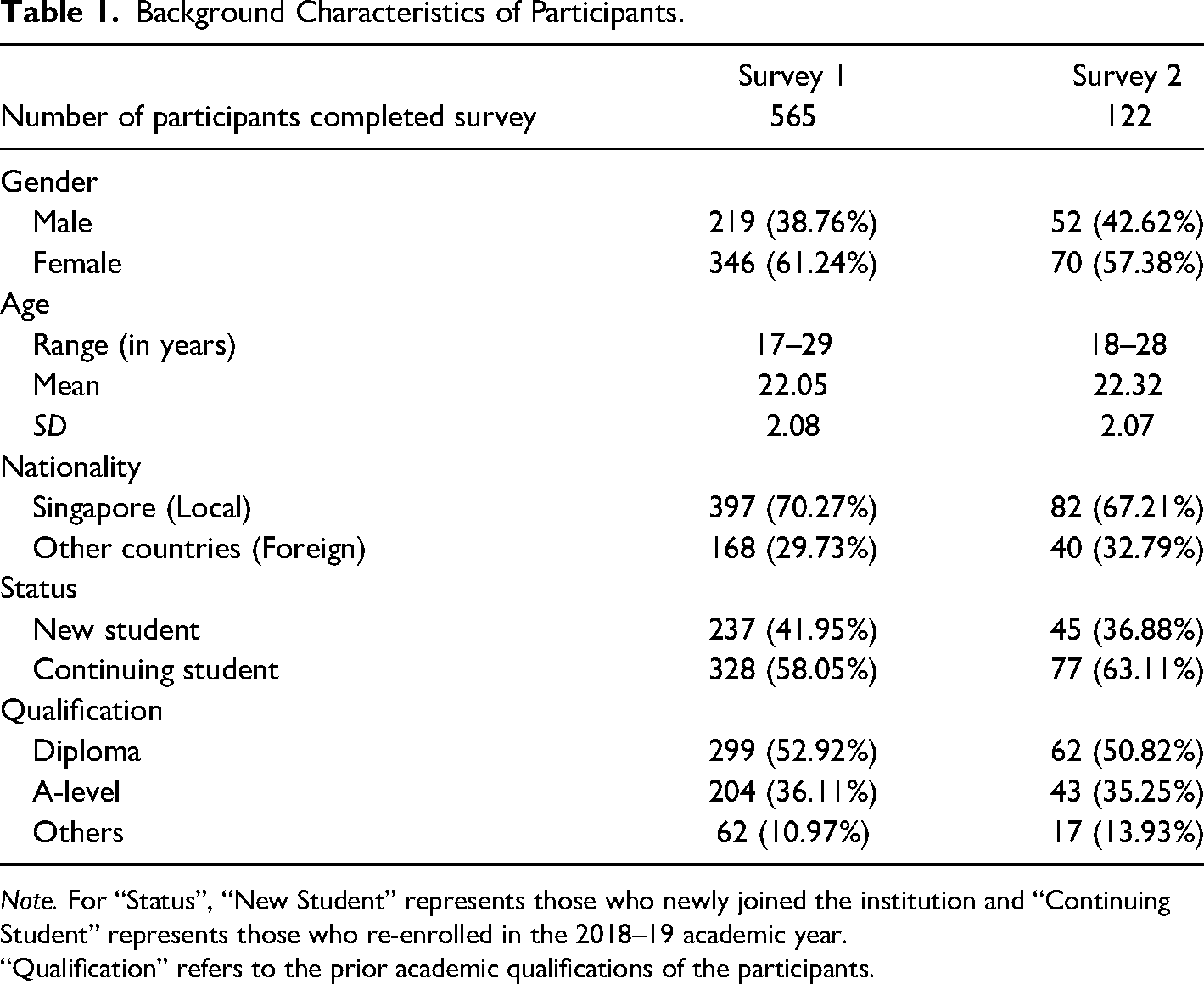
Note. For “Status”, “New Student” represents those who newly joined the institution and “Continuing Student” represents those who re-enrolled in the 2018–19 academic year.
“Qualification” refers to the prior academic qualifications of the participants.
Construct Measurements
Seven scales were used to measure levels of the non-cognitive variables discussed in the introduction – Expectancy for Success, Subjective Task Value, SRL, Learning Approaches, Growth Mindset), Career Aspirations and Resilience. Each was constructed to include at least three items, presented in a 7-point bipolar statement format. Respondents were required to select a point on the scale which best described their own status, with a “1” indicating the lowest rating, and a “7” the highest rating, for each item. It should be noted that Expectancies for Success and Subjective Task Value were used to assess motivation among the ‘readiness’ variables, as per the EVT model. Each of the seven non-cognitive scales were further discussed below.
Academic stress was measured by the scale Stress containing 5 items, each contains a rating score ranges from 1 (lowest) to 7 (highest), measuring the varying intensity of a graduating student to further next year after graduation. Persistence of continuing students and graduating students were measured with two different scales – Persistence Non-graduate, containing four items, each with a rating score ranges from 1 (lowest) to 7 (highest), measuring the varying intensity of a continuing student to persist to continue to next academic year) and Persistence Graduate, containing four items, each with rating score ranges from 1 (lowest) to 7 (highest), measuring the varying intensity of a graduating student to further next year after graduation).
The total score for each scale was used as the measure of the associated variable in all subsequent analyses. Given that some students were continuing and others were seeking to graduate in the year that they participated, each student answered one of two possible questions related to persistence. Non-graduating students, answered questions which referred to intentions to continue with study in the next academic year; graduating students answered questions about their intentions to further their studies post-graduation. The scores generated were converted to standardized format so that the responses to both questions could be incorporated into the same analyses.
The Cronbach's
Expectancy for Success and Subjective Task Value Scales
Following the framework developed by Eccles, Wigfield and their colleagues, two constructs – expectancies for success and subjective task values – were included in this study to represent the non-cognitive variable of motivation. While the four-item Expectancies for Success scale was unidimensional, the 12-item Subjective Task Values scale comprised three subscales (Attainment Value, Utility Value and Intrinsic Value), each of which was measured using four items. Both scales have been validated in a separate study (see Authors, 2021). The Cronbach's
Self-Regulated Learning Scale
Since the motivation construct was captured through the Expectancies for Success and Subjective Task Values scales, the seven-item SRL scale used in the study only referred to metacognitive and behavioral aspects of self-regulation (i.e., did not refer to motivation, which was measured using a separate scale). Based on the SRL Interview Scales (SRLIS) developed by Zimmerman and Martinez-Pons (Zimmerman, 2008), two subscales were used to measure SRL in this study. There were three items in the Metacognitive Construct scale, and four items in the Behavioral Construct scale. Each used the same bipolar response format as was used for all other items.
Learning Approaches Scale
Following the notion that learning approaches can be categorized as either surface or deep oriented, as argued by Marton and Säljö (1976), the two bipolar statements for each of the items in the Learning Approaches scale represented the surface learning approach at one endpoint (score 1) and the deep learning approach at the other (score 7). In total, there were four items in the scale. The rating scale for each item still ranged from 1 to 7. Thus, learning approaches were measured in this study to represent a continuum ranging from surface to deep approaches.
Growth Mindset Scale
Following the distinction between fixed and growth mindsets made by Dweck (2016), the two bipolar statements of each item in the Growth Mindset scale represent the fixed mindset at one endpoint (score 1) and the growth mindset (score 7) at the other endpoint. In total, there were four items in the scale. The rating scale for each item ranges from 1 to 7, again representing this construct as a continuum between fixed and growth mindsets.
Career Aspirations Scale
For most students, career aspirations are linked to the particular specialization in which their undergraduate studies are based. Therefore, instead of focusing on general aspirations, this study focused on measuring students’ career aspirations with respect to these specializations. In total, there were four items in the career aspirations scale. For each item, the rating score ranged from 1 (lowest) to 7 (highest).
Resilience Scale
As noted previously, Yeager and Dweck (2012) conceptualized resilience as a form of beneficial response towards an academic challenge. The items in the Resilience scale developed for this study thus measured the extent to which a student exercised resilience in the pursuit of his or her chosen course. In total, there were four items in the scale, which again used a rating scale ranging from 1 (lowest resilience) to 7 (highest resilience).
Procedure
The two online surveys were hosted on the Qualtrics platform. Participants invited to take part in the two surveys were students undertaking different undergraduate degree programmes across a wide range of academic disciplines covering the areas of Accounting; Business and Management; Computing and Information System; Data Science; Economics; Finance and International Relations. As these are international undergraduate programmes offered worldwide by a United Kingdom-based institution and hence recognised internationally, these programmes attract both local and international students. As shown in Table 1, there was a sizeable proportion of international students (approximately 30%) participated in the two surveys. Students taking these programmes also formed the largest population in the local institution involved in this study. This allows for greater student diversity in selecting participants for the surveys. For instance, participants were noted to have different prior academic qualifications (see Table 1).
Students were invited through e-mail to participate in the online survey. The purpose of the survey, typical time required to answer the survey, identity confidentiality and data protection assurances were also included in the e-mail. Participants were required to provide their consent before proceeding with the online survey. Following the initial invitation, two e-mail reminders were then sent to increase the participation rate.
Results
Prior to conducting any analyses on the data, screening was performed to identify any incomplete responses or violations of the underlying test assumptions. Of the 565 and 122 initial participants for this study, removing identified outliers and incomplete responses reduced the numbers to 551 and 121, respectively.
Establishing Different Non-Cognitive Profiles
The analysis can be divided into two parts, performed using Statistical Package for the Social Sciences (SPSS) V26. First, to establish the non-cognitive ‘readiness’ profiles, a two-step clustering analysis procedure was performed, using the seven non-cognitive variables described previously.
Collectively, the total scores for each of the seven non-cognitive variables (Expectancy for Success, Subjective Task Value, SRL, Learning Approaches, Career Aspirations, Growth Mindset and Resilience) were used to cluster the students into different profile groups. Analyses were then performed to examine the different clusters based on the characteristics of their respective cluster members.
The rationale for choosing the two-step clustering approach was that: (1) it allowed clusters to be formed using both continuous and categorical variables; and (2) this approach automatically determines the optimal number of clusters to retain (Pan & Garcia, 2015; Satish & Bharadhwaj, 2010; Şchiopu, 2010). It has been demonstrated in one study (Bacher et al., 2004), using simulation, that the SPSS Two-step clustering method is able to detect correctly the number of clusters for models with two to three classes, on the condition that all variables are quantitative.
Cluster Identification and Determination of the Non-Cognitive Profiles
Prior to conducting the two-step clustering analysis, the data were checked for the presence of severe multicollinearity among the seven non-cognitive variables. A correlation coefficient greater than 0.9 is deemed to suggest variable redundancy in solving for cluster solutions (Chan & Bauer, 2014). In the present study, bivariate correlations among the seven non-cognitive variables were all well below 0.9 (see Table 2 below), indicating no serious problem of multicollinearity in the data set.
Bivariate Correlations for the Seven Non-Cognitive Variables (n = 553).
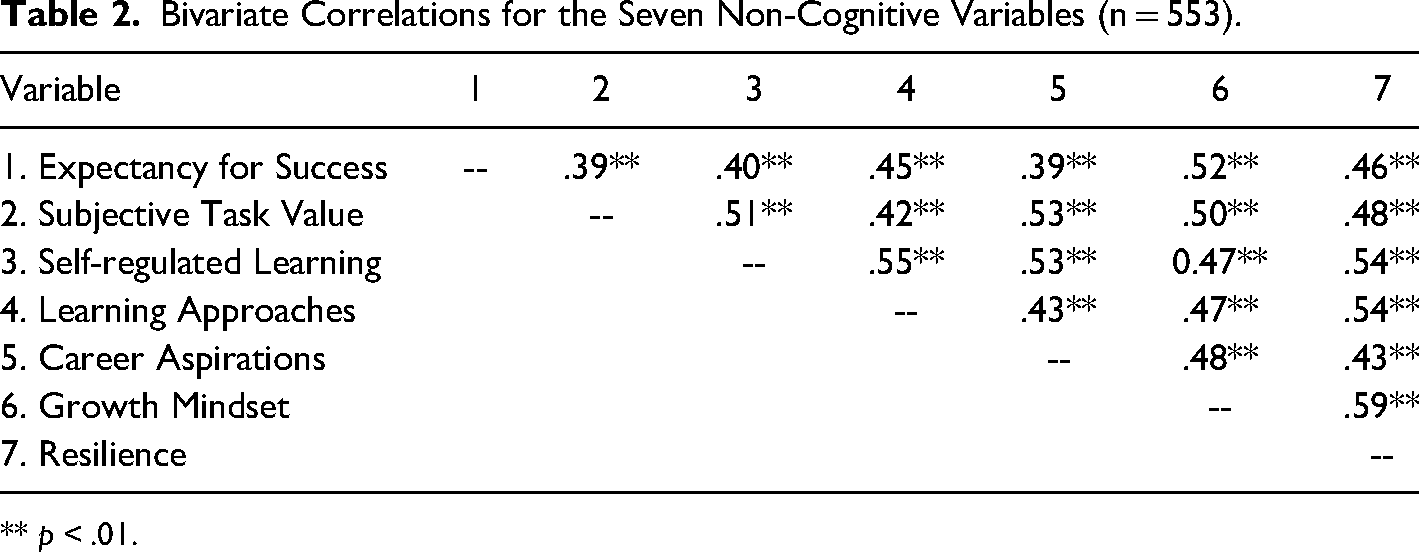
** p < .01.
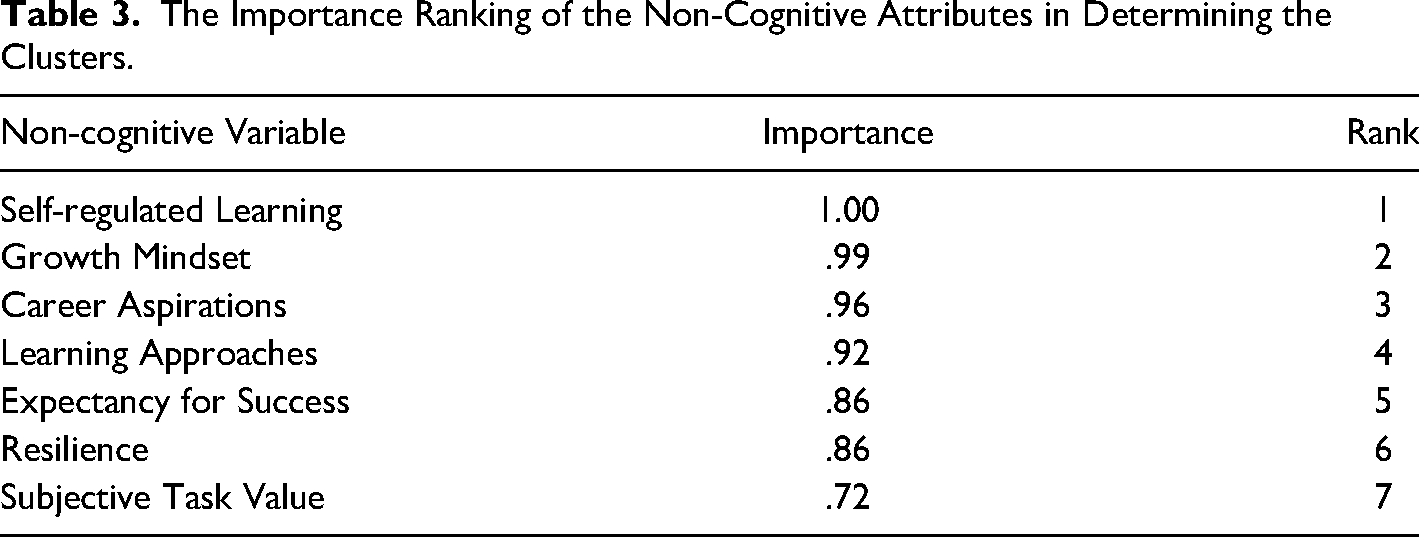
Three distinct profiles of ‘non-cognitive’ attributes, or alternatively, of ‘affective readiness’, emerged from the two-step cluster analysis. The Silhouette coefficient of cohesion and separation was.34, indicating the cluster structure was ‘fair’ (Wendler & Gröttrup, 2016). The ratio of the largest cluster to the smallest was 2.2. Table 3 shows the rankings of the seven non-cognitive variables in terms of their importance in the determining the three clusters.
The Importance Ranking of the Non-Cognitive Attributes in Determining the Clusters.
Three Non-Cognitive Profiles: The High, Moderate and Low Readiness Groups
The first profile was identified as the High readiness group (Cluster 1). Proportionally, this group accounted for 30.85% (n = 170) of the 551 students in the sample. This profile group recorded the highest mean score for each of the seven non-cognitive variables. The second profile group was identified as the Moderate readiness group (Cluster 2). This profile group was the largest among the three profile groups, accounting for 47.55% (n = 262) of the 551 students. The mean score for each of non-cognitive variables of this group fell between the mean scores of the other two groups (see Table 4). The Low readiness group (Cluster 3) accounted for the remaining 21.60% (n = 119) of the 551 students. Details are provided in Table 4.
Mean of the Total Score of Each Non-Cognitive Variables by Profile Group.
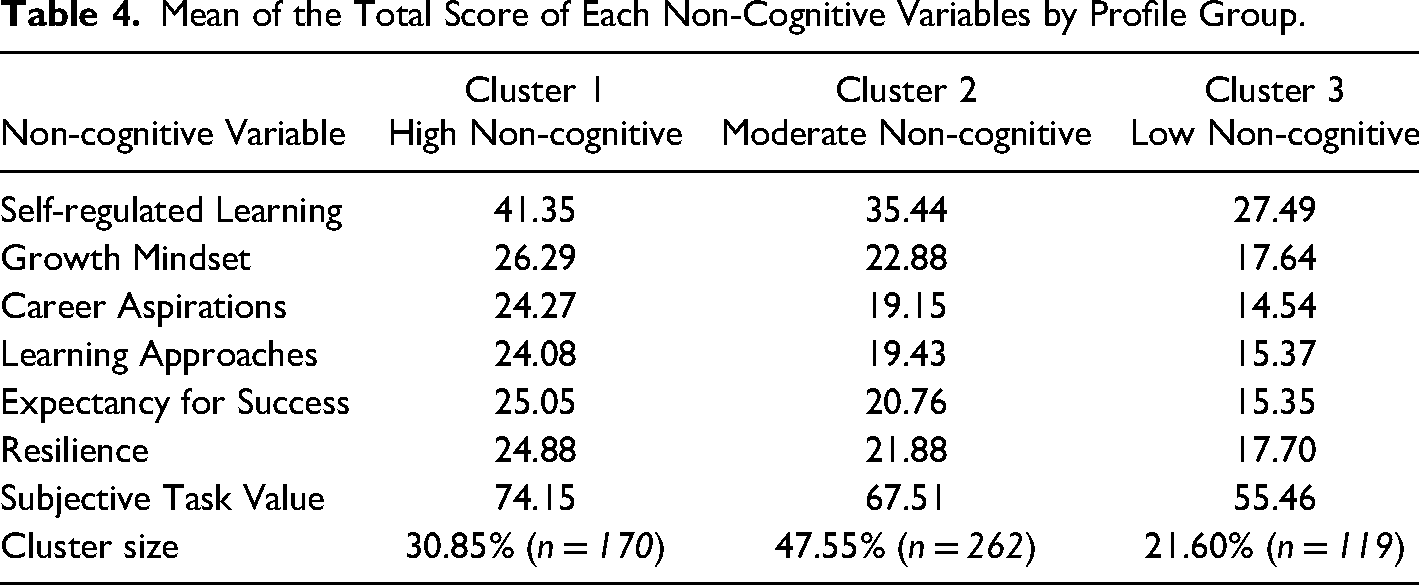
Figure 1 provides a comparison of the score distributions for each measured variable across the three profile groups. The distinctiveness of the High, Moderate and Low readiness groups can be seen in Figure 1, with the score distributions for each group located well apart from one another. The median scores (as indicated by the square marks in Figure 1) for each variable also varied considerably from one another.
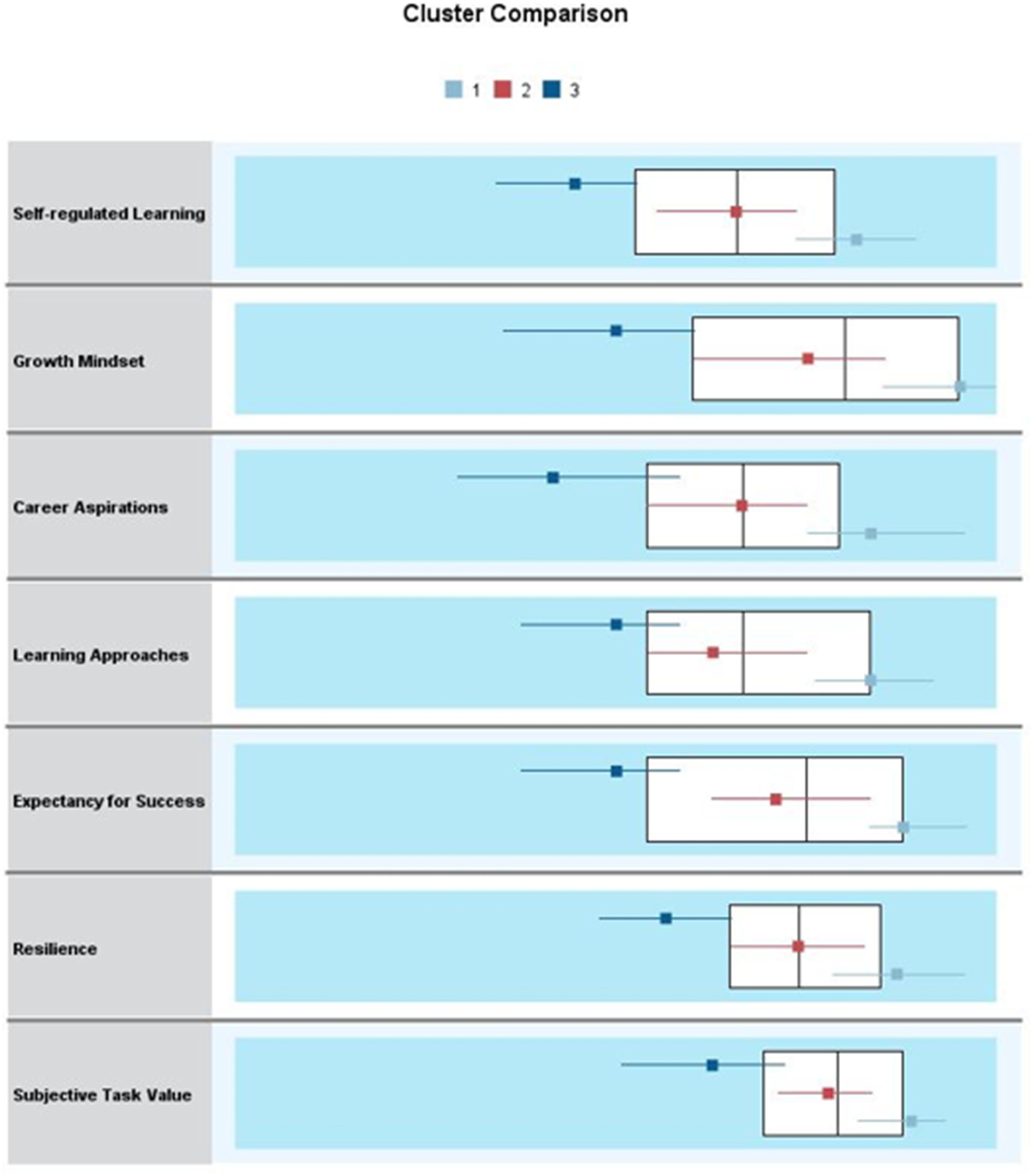
Score distributions for the non-cognitive variables.
Confirmation of the Distinctiveness of the Three Readiness Profiles
Multivariate analysis of variance (MANOVAs) were used to confirm that the three profile groups were significantly distinct from one another in terms of the ‘readiness’ variables incorporated. Preliminary checks (see Fabrigar and Wegener, 2011; Ho, 2014; Tabachnick and Fidell, 2013) on the total scores of each non-cognitive variable were performed prior to conducting the analysis to ensure satisfactory conformity to MANOVA assumptions in terms of normality (whilst minor deviations in terms of skew were observed, with n > 500, the non-normality would not be expected to affect the robustness of MANOVA outcomes, see Tabachnick and Fidell, 2013); linearity (no evidence of curvilinear relationships indicated); and homogeneity of variances and covariances across the three identified clusters (the ratio of the largest to the smallest variances for each variable was in the range 2:1 to 4:1, normally recommended to be < 10:1; see Tabachnick and Fidell, 2013).
In addition, no association was found between membership in specific profile group and student demographic variables: gender, nationality, prior academic qualification and the student's status (newly enrolled or continuing). All the four Pearson
Using the seven non-cognitive variables as the dependent variables and profile group membership as the fixed factor, the MANOVA results showed a significant multivariate difference in the mean scores (of the seven non-cognitive variables) of the three profile groups based on the Wilks’ Lambda criterion, λ = .16, F(14,1084) = 114.49, p < .001. The effect size, provided by the partial
Non-Cognitive Readiness Profiles, Academic Stress and Intention to Persist
A one-way Analysis of Variance (ANOVA) was used to examine the association between the different non-cognitive profile groups and academic stress and intentions to persist (as measured by the variables Stress and Persistence, respectively). As ANOVA can only indicate whether there is a significant omnibus mean difference among the different profile groups, Tukey post-hoc tests were also conducted to investigate pairwise differences between the mean Stress and Persistence scores across the profile groups. The Tukey test is considered a reasonable post hoc test in most research situations (Denis, 2019).
Results from ANOVA and Descriptive Analysis
The ANOVA results showed that the mean scores of Stress and Persistence were significantly different across the three non-cognitive groups with F(2,118) = 5.83, p = .004 and F(2,118) = 10.38, p < .001, respectively. In general, this result indicated that the higher the non-cognitive readiness, the lower the levels of stress and the higher the persistence levels reported (see Table 5 and Figure 2).
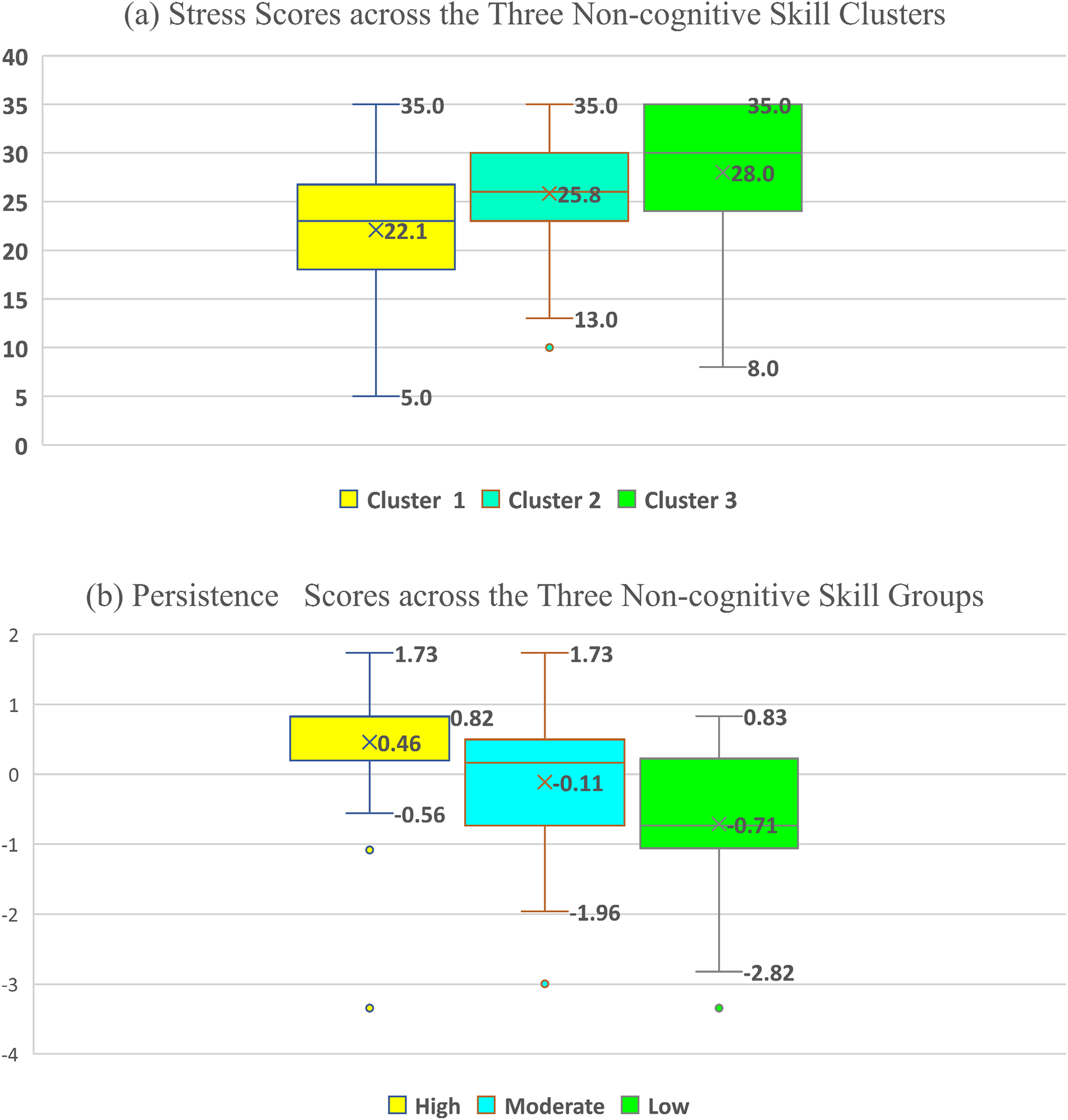
Score distribution across the three Non-cognitive profiles.
Descriptive Statistics of Stress and Persistence Scores by Different Non-Cognitive Profiles.
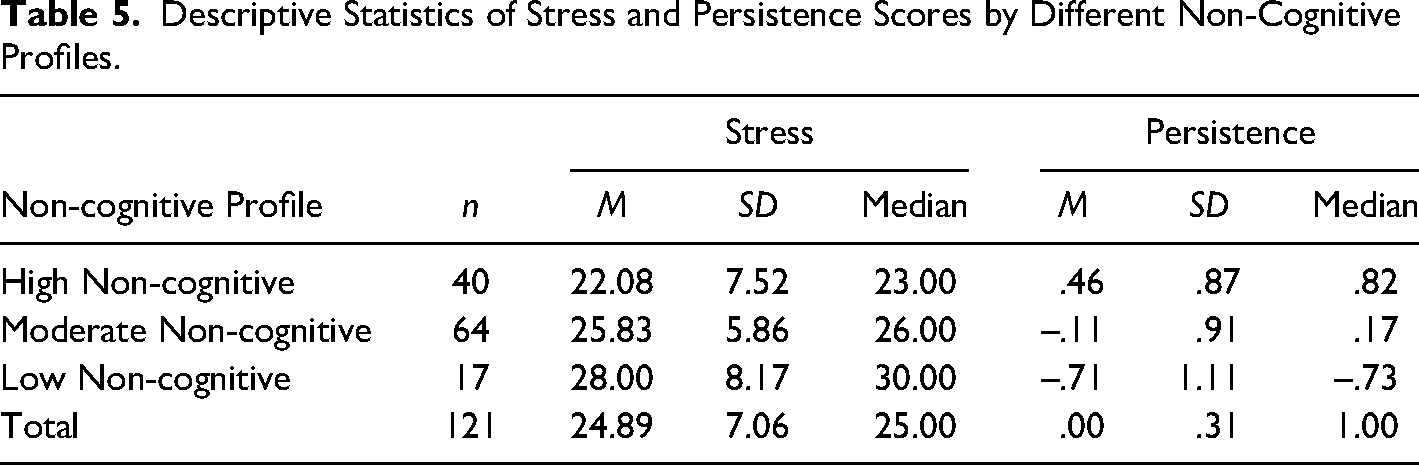
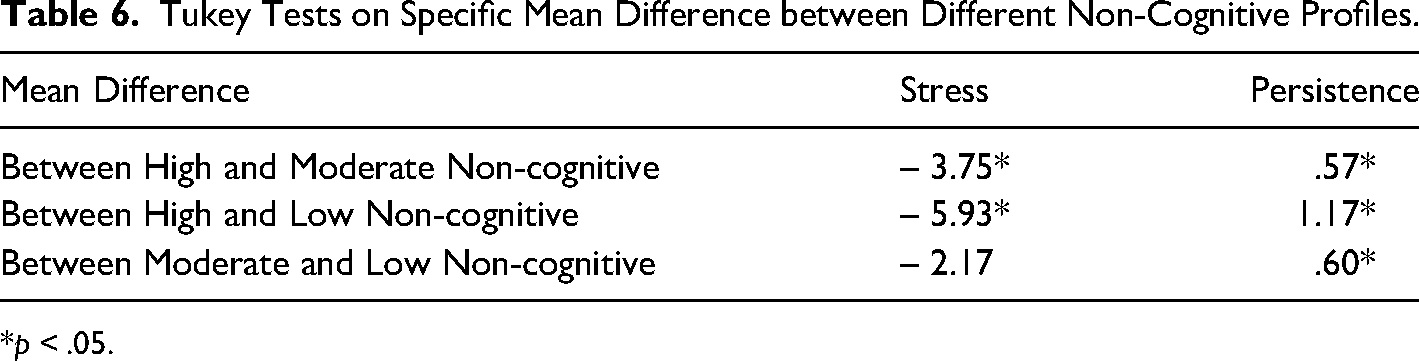
The Tukey tests (see Table 6) indicated that, in terms of Stress, there was a significant difference between the High and Moderate Non-cognitive groups and between the High and Low Non-cognitive groups. In terms of Persistence, a significant difference was found between each pair of profiles compared.
Tukey Tests on Specific Mean Difference between Different Non-Cognitive Profiles.
*p < .05.
Discussion
Attaining success in HE requires students to manage their academic stress levels well, and to persist within their studies to complete their overall courses of study. The main aim of this study was to deepen our understanding of the factors that may contribute to explaining variability in academic stress levels and intentions to persist among HE students in Singapore, using the overall non-cognitive readiness profiles of students as predictors.
The study was primarily exploratory in nature. Using key non-cognitive attributes that have been deemed to be relevant for HE students based on the existing literature (motivation, SRL, learning approaches, career aspirations, growth mindset and resilience), three distinct non-cognitive ‘readiness’ profiles emerged in the study (High, Moderate and Low).
Using these profile groups, the results confirmed significant links between academic stress levels and intentions to persist with the overall non-cognitive readiness profiles of the students. The results of this study thus demonstrated how different non-cognitive attributes might collectively explain why some students might be at higher risk of non-completion as they progress through their HE studies.
The findings of this study may also have implications for how HE institutions can tackle the problems of high academic stress and low persistence among their students, by focusing on developing students’ non-cognitive readiness attributes. For example, the results suggest that institutions could consider adopting a more holistic and integrative approach in developing their students’ non-cognitive attributes, rather than focusing on a specific non-cognitive aspect in isolation.
Furthermore, the results suggest that it would be possible for institutions, perhaps as part of their selection or induction procedures, identify particular cohorts of students who are particularly ‘at risk’ of poor outcomes owing to their lack of affective or non-cognitive ‘readiness’ for HE study. This would allow the institutions to focus on those students who are most in need in offering bridging or remedial intervention programmes. Such information would assist institutions to better plan their use of resources at the institutional level, particularly in resource-constrained environments.
The advantage of institutions focusing on non-cognitive attributes are that these are generally deemed to be more ‘malleable’ than are cognitive skills. Thus, while HE institutions have traditionally focused on developing students’ cognitive abilities alone, many scholars now agree that success in HE also depends on students’ non-cognitive attributes (Ranasinghe et al., 2012; Sparkman et al., 2012). Non-cognitive attributes could thus provide an important avenue through which HE institutions can improve students’ overall learning outcomes.
Armed with knowledge about how different non-cognitive profiles relate to subsequent academic stress levels and intentions to persist among students, HE institutions can now identify those who are less well prepared in terms of their non-cognitive readiness, and provide them with the necessary support mechanisms early in their studies. This could, in turn, help to circumvent some of the negative effects that a deficit in such attributes will ultimately have on their subsequent learning experiences.
It should be noted, however, that only a limited set of non-cognitive variables was considered in the study. It is acknowledged that these variables by no means represent all aspects of the non-cognitive or affective domain that may be important for a HE student to succeed. Future research could, therefore, explore how different non-cognitive profiles can be established using other predictor variables.
In addition, although students participated in this study were from diverse background, the generality of this study could still be limited considering the participants were students enrolled in programmes offered by a specific, United Kingdom-based institution. Often, programmes offered by different institutions are not exactly identical, with programme structures, durations to complete the programme, modes of delivery, assessment modes, and the breadth and depth of courses vary considerably from one institution to another. As such, the students admitted to different institutions may possess different non-cognitive attributes and skills and undergo different learning experiences. A point to note is that students participating in this study were assessed through high-stake external examinations at the end of the term. Their non-cognitive readiness, forms of stress they encounter and intention to persistence are hence were likely to be different from students from other institutions which adopt different forms of assessments. The inferences derived from this study hence may not be an accurate reflection on students studying in other institutions. Further research should replicate the present study using students from different institutions.
Footnotes
Declaration of Conflicting Interests
The author(s) declared no potential conflicts of interest with respect to the research, authorship, and/or publication of this article.
Funding
The author(s) received no financial support for the research, authorship and/or publication of this article.
