







Abstract
Student engagement refers to the quality and quantity of students’ psychological, cognitive, emotional and behavioral reactions to in-class and out-of-class academic and social activities to achieve successful learning outcomes. In literature, the Campus-Class-Technology (CCT) theory in student engagement was developed and tested with some models, which had certain limitations. Thus, the present study aimed to test the CCT theory with a new and more advanced model. The study was carried out using the quantitative research design and conducted with 3967 students, and the models were tested using path analysis. The research data were collected using the research instruments regarding student engagement, technology integration and campus climate. Four CCT models were developed and tested. The results revealed that all the models were confirmed. In general, what the models explained in the study was that technology integration and benefiting from campus facilities increased student engagement and student success.
Engagement, which includes the concepts of effort, attention, participation, attachment, involvement, commitment, and beliefs, is an important term in positive psychology. Student engagement is considered necessary and important for learning, performance, retention, persistence, experience and achievement (Appleton et al., 2006; Bryson & Hand, 2008; Carini et al., 2006; Fredricks et al., 2004; Mendoza et al., 2015). According to Gunuc and Kuzu (2015a, p. 588), student engagement refers to “The quality and quantity of students’ psychological, cognitive, emotional and behavioral reactions to in-class and out-of-class academic and social activities to achieve successful learning outcomes.”
Gunuc and Kuzu (2015a) divided student engagement into two main categories: campus engagement and class engagement. The concepts of participation in activities, sense of belonging and valuing university or education are considered within the scope of campus engagement. Class engagement covers students’ cognitive, emotional and behavioral reactions to in-class and out-of-class educational activities. Cognitive engagement refers to investment on learning, valuing learning, learning motivation, learning goals, self-regulation, and planning (Appleton et al., 2006; Fredricks et al., 2004; Walker et al., 2006). Emotional engagement includes students’ emotional reactions - including their attitudes, interests, relationships and values - to the faculty member, peers, course content, and the class (Bryson & Hand, 2007; Kahu, 2013; Kember et al., 2001; Lillis, 2011). Moreover, emotions such as feeling like belonging to the class, enjoying the class and being a member of a group are also considered within the scope of emotional engagement (Finn et al., 2003; Fredricks et al., 2004; Kahu, 2013; Kember et al., 2001; Torres-Díaz et al., 2006). Behavioral engagement refers to students’ participation in academic, out-of-class educational activities, their efforts as well as their attendance and participation in classes (Al-Rahmi et al., 2018; Appleton et al., 2006; Finn, 1989; Finn et al., 2003; Handelsman et al., 2005; Krause & Coates, 2008).
In order to understand and explain student engagement in higher education, several theories and models have been developed. Two of these models are Astin’s “Student Involvement Theory” (1984, 1993, 1999) and Tinto’s “The Theory of Academic and Social Integration” (1987, 1993). According to Astin, active involvement of students in the social and academic process is quite important for their learning and development. Therefore, students should do academic studies, spend more time in campus, participate in out-of-class activities and interact with the faculty (faculty members and other staff). Tinto (1993) claimed that students adapting themselves socially and academically to the university experience drop out less frequently.
Rashid and Asghar (2016) examined the relationship between technology usage and student engagement, self-directed learning, and academic achievement among undergraduate university students. Findings of the path analysis demonstrated that technology use predicts self-directed learning and student engagement. A perusal of the sub-sets of technology use exhibits that while media sharing, social media use, and Facebook friends were positive predictors, phone calling and watching TV were negative predictors of academic performance. The model of student engagement as mediator between learning support and academic achievement was confirmed (Jelas et al., 2016). Hu et al. (2012) points to the importance of effective student engagement and taking good-quality education within the scope of the “Taiwan student engagement model”. This model contributes to students’ on-going development in their learning processes. According to the Taiwan student engagement model, various activities help students develop their general, cognitive and social skills. Schuetz (2008) developed a model of adult student engagement based on the Self-Determination Theory among college students. According to Schuetz, Self-Determination Theory provides leverage to assess and develop campus policies, practices, facilities, and climates that foster students' senses of belonging, competence, autonomy, and engagement.
Gunuc (2013, 2016) developed the theory of Campus-Class-Technology (CCT) in student engagement. The CCT theory constitutes the basis of the present study. According to the CCT theory (Figure 1), for successful student outcomes, the relationships between student engagement and technology were theoretically explained. In this respect, the value given by the students to university life and university education was among important factors which helped students have the sense of belonging to university and campus, which allowed them to spend time in the campus and which resulted in an increase in class engagement. Technology was another factor influential on class engagement. Effective integration of technology in class is important for increasing students’ class engagement. An increase in class engagement not only increases students’ levels of academic achievement but also leads to positive outcomes. The CCT theory is cyclic, where academic achievement and positive outcomes have influence on the value that students give to learning and to university as well as on the sense of belonging to university.
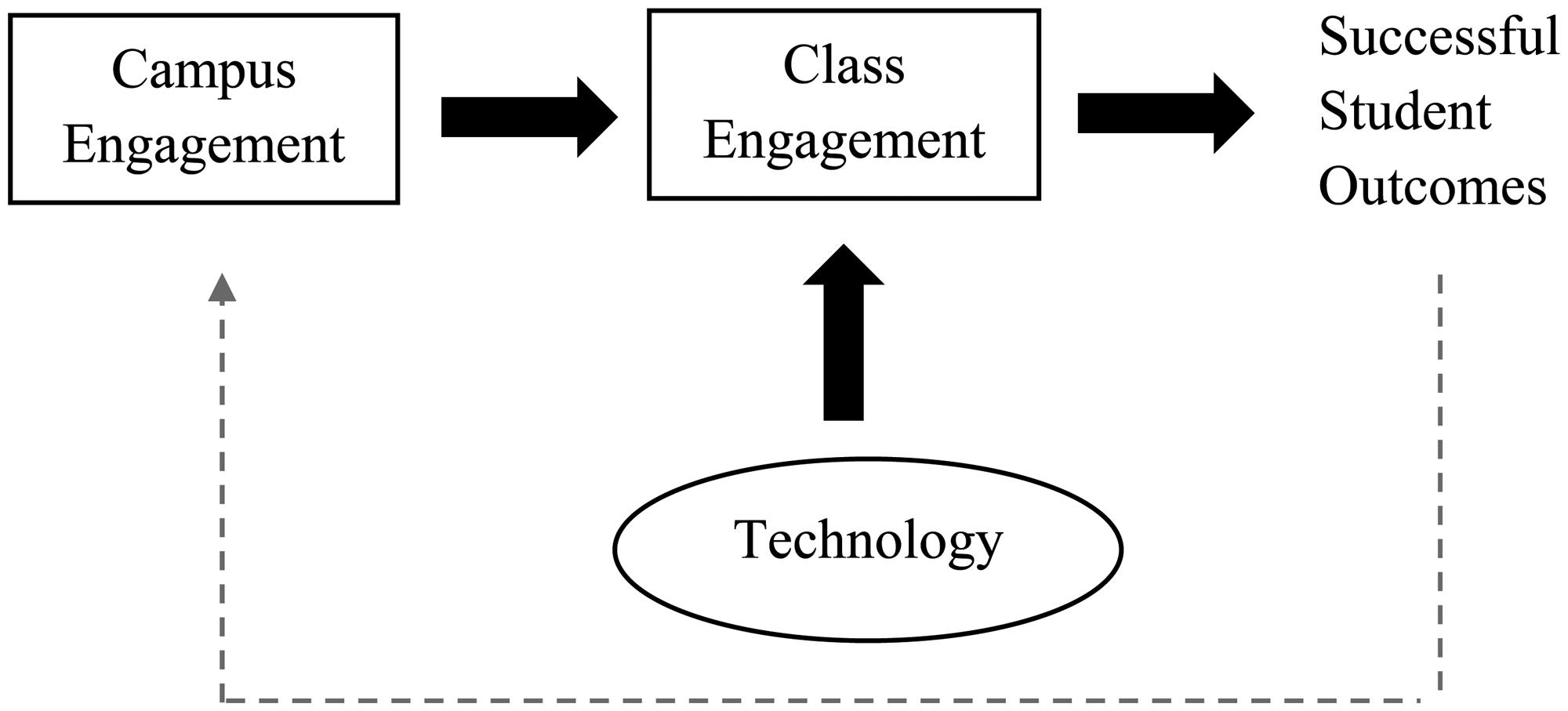
Campus-Class-Technology Theory (CCT Theory).
The CCT theory shown in Figure 1 is its core structure. In other words, other factors could be added to the CCT theory and tested. However, the main elements of the theory are campus, class and technology. In literature, a number of studies investigated the contribution of technology to the processes of increasing and improving student engagement. What is meant by technology is the computer, tablet PC, smart phone, interactive whiteboard, projector, Internet, learning management system and hardware and software like educational software, which are used in and out of class both by faculty members and by students. In this respect, information and communication technologies are considered to be one important way of increasing student engagement especially for generation Z (Gunuc, 2013; Reynard, 2007). When related literature is examined, it is seen that in general, various technologies increase student engagement (Annetta et al., 2009; Bond et al., 2020; Chen et al., 2010; Gibbs & Poskitt, 2010; Golubski, 2012; Hancock & Betts, 2002; Howard et al., 2016; Junco, 2012; Junco et al., 2011; Mama & Hennessy, 2010; McGrath, 1998; Nelson Laird & Kuh, 2005; Patera et al., 2008; Pérez-López et al., 2020; Sheard et al., 2010).
In literature, many studies examined the influence of technology use in teaching and learning processes at universities on student engagement (Bedenlier et al., 2020), yet there is not much research on the holistic contribution of technology integration to student engagement. Technology integration is more than the use of the technology itself. Technology integration includes a systematic, planned, purposeful and controlled process. Gunuc (2016) defines technology integration in education as making comprehensive use of current technology sources in the education process to help students achieve effective learning and as a process of effective application of educational technologies to reach the learning outcomes determined. Faculty members have a wide variety of effects on students in many respects. For instance, faculty members’ context and facilitation influence students’ behavioral and cognitive engagements (Connell, 1991; Connell et al., 1994; Skinner et al., 1990; Xu et al., 2020).
In one study, Gunuc and Kuzu (2015b) tested the CCT theory with the two models they had developed, and they revealed that the model presented in Figure 2 was confirmed with better values.
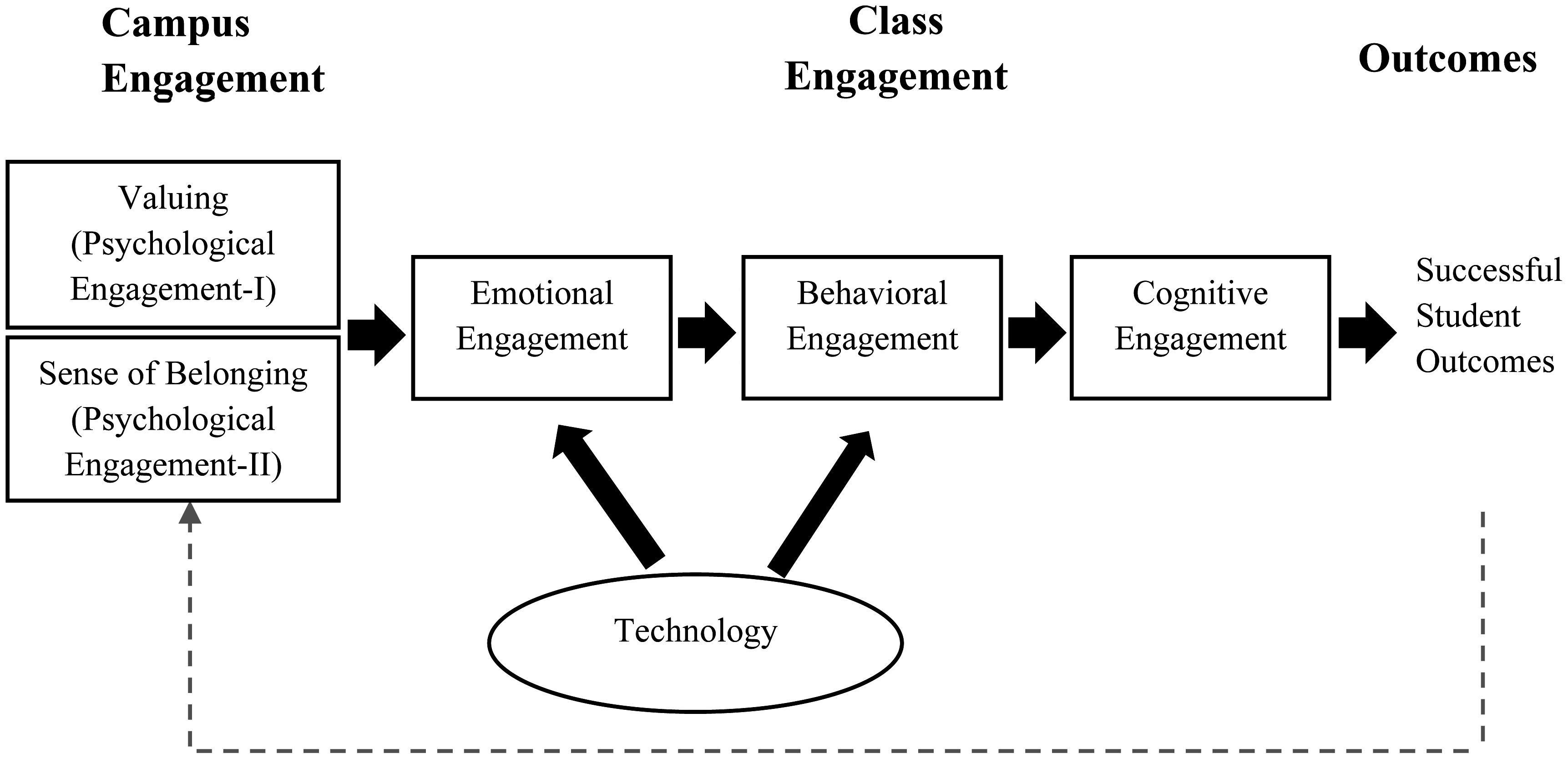
The Campus-Class-Technology Model Suggested by Gunuc and Kuzu (2015b).
As can be seen in Figure 2, this model, in which the CCT theory was tested, had certain limitations. First of all, the model did not include any quantitative data related to “successful student outcomes” (for example
Method
Design
The study was carried out using the quantitative research design and was conducted as a descriptive and correlational study, which aims to examine the relationships between variables. Thus, path analysis was conducted to estimate the relationships between student success and the variables related to campus, class, and technology. For this purpose, the quantitative method was used to test a new and advanced causal model of the CCT theory.
For the purpose of improving the CCT model suggested by Gunuc and Kuzu (2015b), in the present study,
The context of “technology integration” for the data related to the variable of technology in the CCT theory was used. The data related to the element of “successful student outcomes” in the CCT theory were collected using the students’ grade point average scores. The factors in the CCT theory (valuing and sense of belonging within the scope of the components of campus engagement and cognitive engagement, emotional engagement and behavioral engagement within the scope of the components of class engagement) were included as the main components of campus and class engagement in the model hypothesized in the present study. The students’ levels of benefiting from the campus facilities were measured, and the factor of “campus facilities” was added to the model.
As can be seen in Figure 3, student success is a dependent variable, and campus facilities are an independent (predictor) variable. Campus facilities and technology integration are exogenous variables, while campus engagement and class engagement can be regarded as mediator variables. What the path model means is that campus facilities predict (impact) campus engagement; campus engagement predicts class engagement; and class engagement predicts student success. In addition, technology integration influences class engagement and contributes to student success.
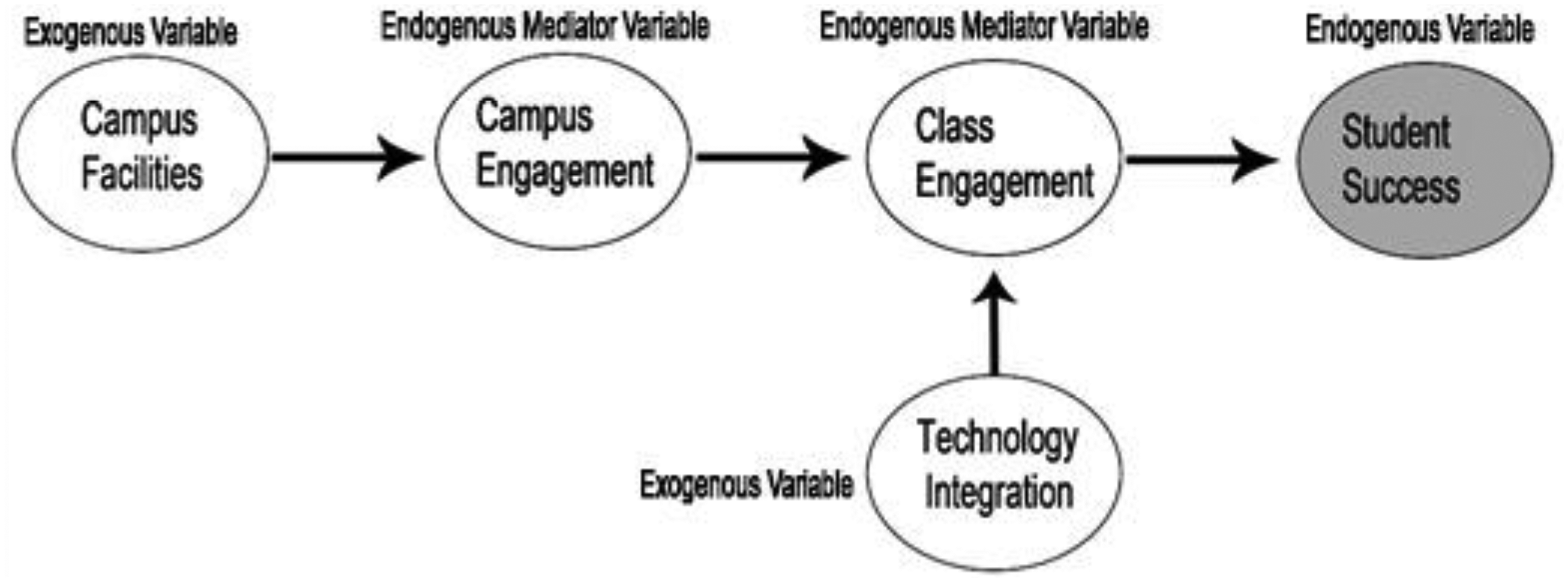
A New Conceptual Model Hypothesized Regarding CCT Theory.
Sample
The study was carried out with a total of 7082 students from 26 state universities in Turkey in 2017. However, among all the students, only 3967 of them provided information about their grade point average scores. For this reason, the data collected from these 3967 students were analyzed in the study. The research data were collected from the students from all class grades on voluntary basis. After the necessary consents were taken, the students were asked to respond to the measurement tools using the paper-and-pencil technique in their classes.
Instrument
In the study, the research data were collected using the following data collection tools: the students’ GPA scores at the time of the study, “Student Engagement Scale”, “Student Perception Scale for Faculty Members’ Technology Integration Efficacy” and “Campus Climate Checklist”.
Student Engagement Scale
The “Student Engagement Scale”, which was developed by Gunuc and Kuzu (2015a), was used in the study. The scale included 41 items with two main components (campus engagement and class engagement) and six sub-scales. The survey was a five-point Likert-type scale which were graded as “I completely disagree”, “I disagree”, “I am neutral”, “I agree” and “I completely agree”. In the study, the exploratory factor analysis revealed that the Cronbach’s Alpha (α) internal consistency coefficient for the whole scale was .957, and the confirmatory factor analysis showed that the internal consistency coefficient in question was .929. Campus engagement included the factors of valuing and sense of belonging, and class engagement included cognitive engagement, peer relationships (emotional engagement-1), relationships with faculty member (emotional engagement-2) and behavioral engagement. A higher score to be produced by the scale shows a high level of student engagement. This means that the student has high levels of campus engagement and class engagement.
Student Perception Scale for Faculty Members’ Technology Integration Efficacy
In order to determine the students’ perceptions regarding the faculty members’ technology integration efficacies, the “Student Perception Scale” for Faculty Members’ Technology Integration Efficacy, which was developed by Artun and Gunuc (2016), was used. The scale was graded using five-point rating: “Never”, “Rarely”, “Sometimes”, “Usually” and “Always”. There were 25 items in the scale. The Cronbach Alpha internal consistency reliability coefficient for the whole scale was calculated as .94. A higher score to be produced by the scale demonstrates that the preservice teachers perceive their teachers’ technology integration efficacy to be high.
Campus Climate (Benefiting From Campus Facilities) Checklist
In line with the purpose of the study, the “Campus Climate Checklist”, developed by Gunuc (2016), was used to determine the degree to which the students were involved in campus climate and benefiting from the campus facilities. The Campus Climate Checklist was rated as follows: “I have no idea (0)”, “I don’t benefit (1)”, “I partly benefit (2)” and “I benefit (3)”. The choice of “I have no idea (0)” was included in the rating of the scale because some of the participants might have been unaware of the campus facilities. The main categories in the checklist included the following: campus life, social facilities, entertainment activities and student clubs/communities.
Data Analysis
The measurement models regarding each measurement were confirmed before testing the structural models as an assumption of path analysis. In this respect, for the mediation test of Model-1, Model-2 and Model-3, Hayes' PROCESS tool in SPSS was used. For the purpose of testing Model-4, the package software of Lisrel 8.5 was used (to obtain the output detail).
Path analysis is a technique used in structural equation modelling. First, a theoretical model is developed. Following this, a path diagram including causal relationships is drawn. Next, a measurement model and a structural model are divided into two parts. Then, predictions regarding the model are tested, and goodness of fit is evaluated. While forming the model in path analysis, analysis is conducted by determining the effects of exogenous (predictor) variables on endogenous (predicted) variables. Path coefficients, also known as standardized regression coefficients regarding the model formed in path analysis, are obtained. The total amount of influence on the model is the sum of direct effects and indirect effects that occur with the mediator variable. The measurement model covers the model that demonstrates the correlations between the observed variables and the latent variables. Testing the measurement models is among the assumptions of path analysis. As for the structural model, it covers the correlations between the latent variables in the model.
Results
The four CCT models developed conceptually were tested separately. What the models generally explained were the effects of campus facilities (CF) on student success, student engagement (SE) and class engagement (CE). In addition, technology
As can be seen in Figure 4, Model-1 is a partial mediation. CF has direct and indirect effects (through TI) on SE. CF has a significant direct effect (β = .18, p < .05) and indirect effect (β = .35, p < .05) on SE.

Path Diagram and Coefficients for Model-1.
According to Model-1, SE could be said to increase as the level of benefiting from CF increases. Consequently, a 1-unit change in CF results in a total of a .53-unit (a total effect) change in SE.
As can be seen in Figure 5, Model-2 is a partial mediation. CF has a direct effect and an indirect effect ((through TI and CAE) on CE. CF has a significant negative direct effect (β = −.14, p < .05) and two indirect effects through TI (β = .17, p < .05) and CAE (β = .25, p < .05) on CE.
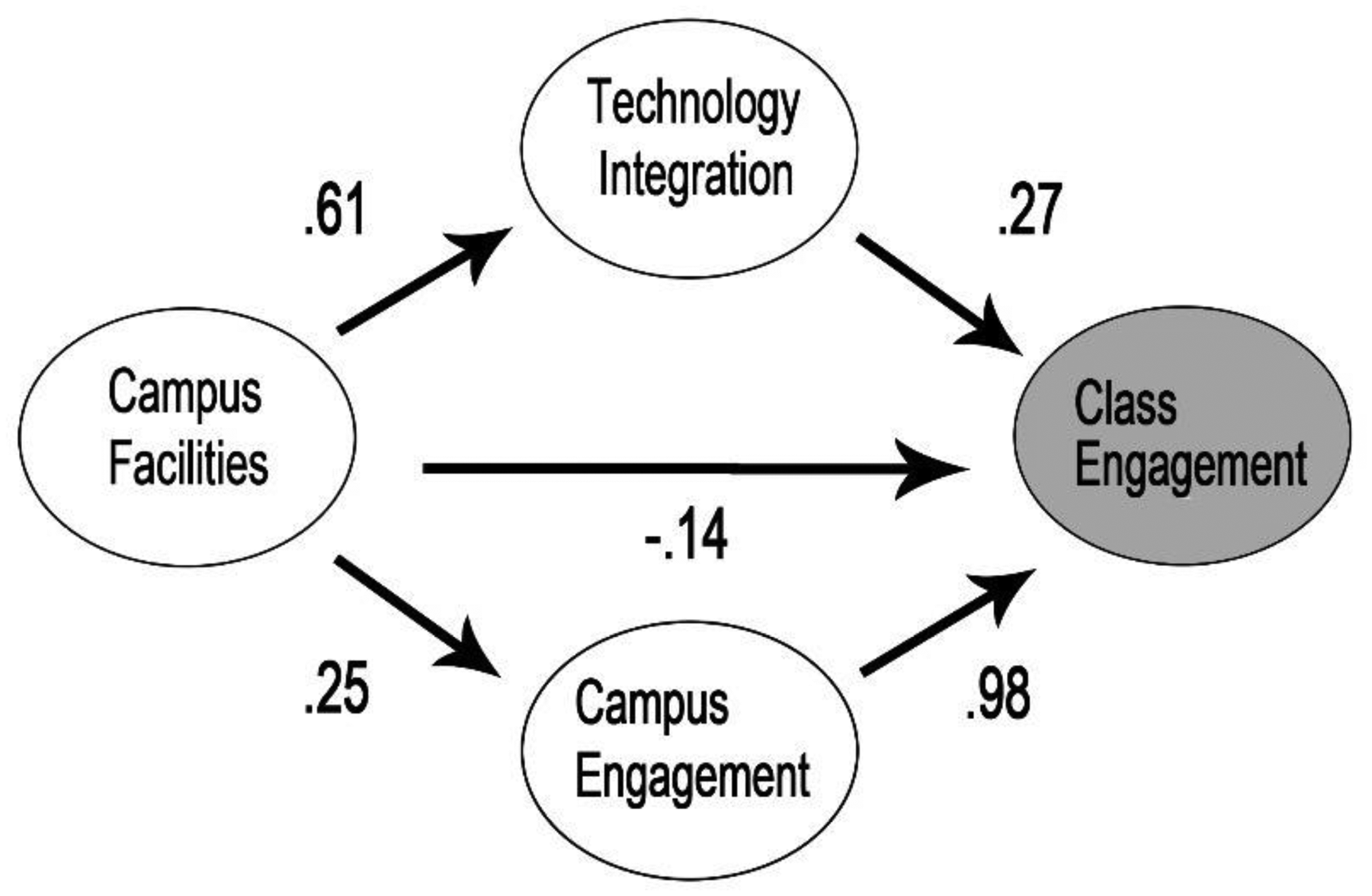
Path Coefficients for Model-2.
According to Model-2, as the level of benefiting from CF increases, CE decreases. On the other hand, it was seen that CF increases CE through the variables of CAE and TI mediator. Consequently, a 1-unit change in campus facilities leads to a total of a .28-unit (a total effect) change in CE.
As can be seen in Figure 6, Model-3 is a partial mediation. CF has direct effect and indirect effects (through TI and CAE) on CE. CF has a significant negative direct effect (β = −.14, p <.05) and two indirect effects through CAE (β = .25, p < .05) and TI (β = .11, p < .05) on CE. However, as a third path, CF does not have a significant indirect effect through CAE and TI (CAE + TI) on CE.
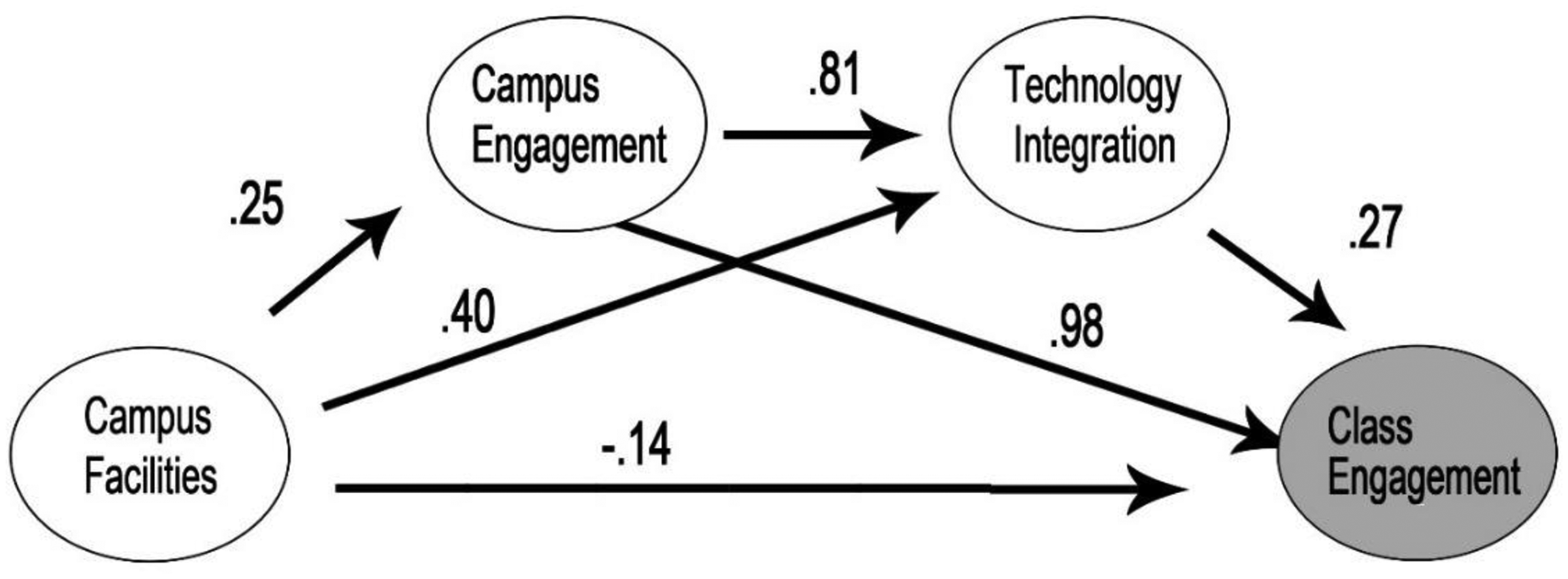
Path Diagram and Coefficients for Model-3.
According to Model-2, as the level of benefiting from CF increases, CE decreases. On the other hand, it was seen that CF increases CE through the variables of CAE and TI mediator. Although different paths were defined in the model when compared to the previous models, a 1-unit change in CF in this model resulted in a total of a .22-unit (a total effect) change in CE as well.
The final model tested in the study was Model-4, which constituted the basic purpose and model in the study. This model explains the influence of CF, CAE, CE and TI on student success. The model also presents an advanced version of the CCT theory (because of including CF).
Model-4 in Figure 7 is the main and improved model of the study. In testing the Model-4, Lisrel 8.5 package software was used to obtain the output details about fit indices. The results of the path analysis with standardized regression coefficients for student success are presented in the figure. The model was evaluated using the fit indices in Table 1.
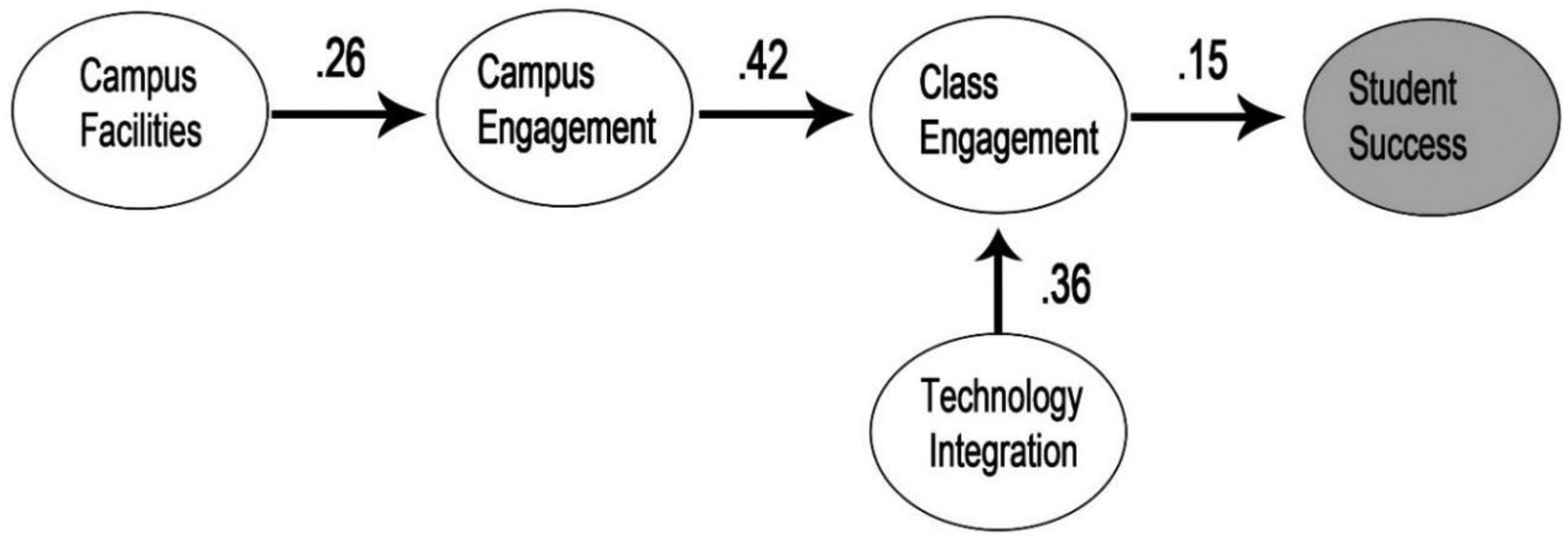
Path Diagram and Coefficients for Model-4 via LISREL Analysis (The Main Model).
Evaluation of the Fit Indices for Model-4.
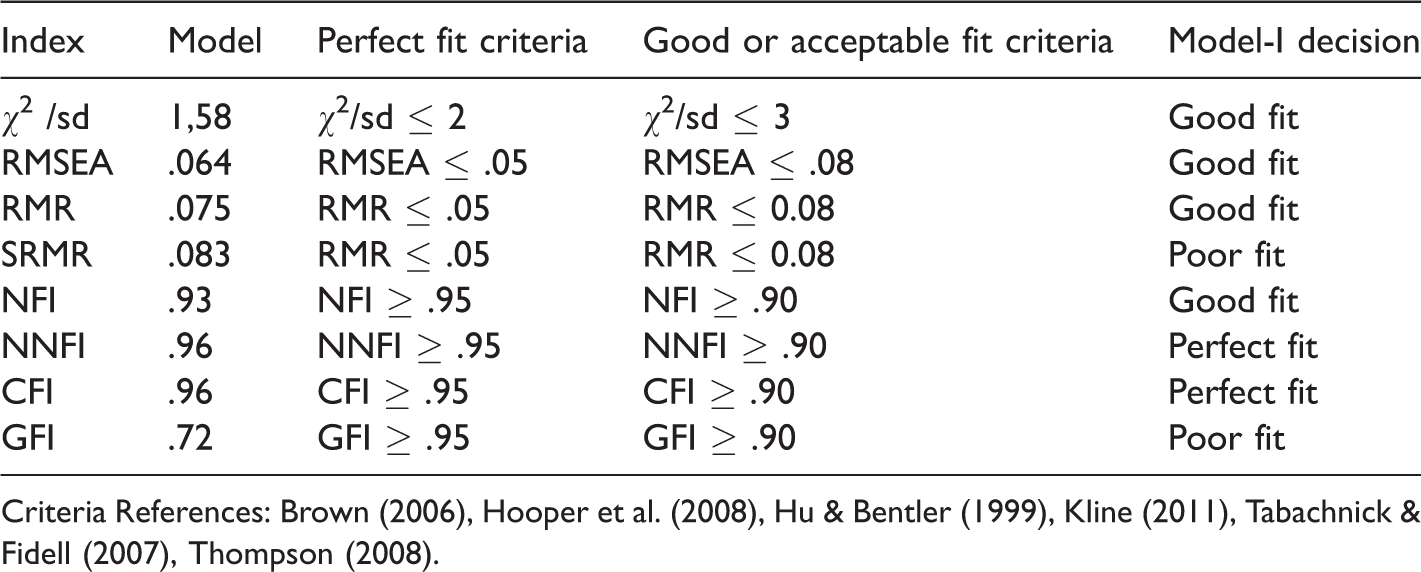
Criteria References: Brown (2006), Hooper et al. (2008), Hu & Bentler (1999), Kline (2011), Tabachnick & Fidell (2007), Thompson (2008).
When fit indices for the model were calculated, the Chi-Square value for the model was found to be χ21 = 5893,70, and the degree of freedom was df1 = 3736. Moreover, the other fit indices were examined for the model, and the values presented in Table 1 were obtained. According to Table 1, some of the fit indices showed good and poor fit, while some of them had perfect fit. The t values regarding the latent variables and all the items in the model were found higher than 1,96 (p < .05). Consequently, the model was confirmed.
Conclusion, Discussion and Suggestions
In the study, the CCT theory and the CCT model developed by Gunuc and Kuzu (2015b) based on the CCT theory were developed, and four models were defined and tested. In this respect, the relationships between the variables related to student success, campus facilities, technology integration and student engagement (campus engagement and class engagement) were modelled in various ways, and the results revealed that all the models were confirmed.
In general, what the models explained in the study was that technology integration and benefiting from campus facilities increase student engagement and student success. Moreover, the models suggested that an increase in student engagement is important for obtaining successful student outcomes. Factors related to such campus facilities as the physical campus area, campus activities, social environment in campus, campus safety and campus sub-structure contribute to the development of students’ perception of a good-quality university. In addition, students’ engagement increases when they make use of campus facilities, and their academic success increases accordingly. Another important variable in the models in the CCT theory as well as in the present study is technology. In this study, the variable of technology was included in the model as students’ perception regarding the faculty member’s efficacy in technology integration. The models revealed that the faculty member’s effective integration of technology in class lectures increases class engagement (or student engagement) and student success.
According to the related literature, use of technology in class or effective technology integration increase student engagement in academically purposeful activities (Bond et al., 2020; Gibbs & Poskitt, 2010; Golubski, 2012; Junco, 2012; Junco et al., 2011; Mama & Hennessy, 2010; Pérez-López et al., 2020; Sheard et al., 2010). In the present study, the contribution of technology was examined within the scope of “the faculty member’s efficacy in technology integration”. Technology integration is not the only variable in which the contribution of technology is involved. The variable of campus facilities includes the indicators of technology facilities and technology sub-structure as well. However, as the variable of technology integration in the model was examined within the scope of the “faculty member’s efficacy in technology integration”, a path from this variable only to class engagement was determined (except for Model-1). In addition, as can be seen in the models, the variable of technology integration was a mediation for the variable of campus facilities. The relationship between the two variables was not just due to the technology-related data; moreover, the indicators regarding a good-quality campus and university show a holistic quality. For instance, universities with good-quality campus sub-structure and campus facilities could be assumed to have qualified teaching staff. All these may help students develop a positive perception regarding the campus and class.
Other theories and models like the CCT theory developed within the context of higher education show the importance of the factors of climates and facilities for fostering student engagement (Rashid & Asghar, 2016; Schuetz, 2008). According to a model developed by Rashid and Asghar (2016), technology use predicts student engagement and academic performance. When studies in related literature are examined, it is seen that there are several other findings supporting the CCT theory in student engagement. Patrick et al. (2007) reported that social and affective environments in classrooms are among the prerequisites to students’ engagement in activities and tasks. In addition, some studies revealed that positive emotions increased engagement and participation in activities (Aspinwall, 1998; Ladd et al., 2000; Skinner et al., 2008). In other words, positive emotions are important for the maintenance of behaviors and actions (Clore, 1994; Fredrickson, 2001). Either students’ emotions or their emotional engagement contributes to cognitive engagement (Gibbs & Poskitt, 2010).
Another important finding obtained in the present study was the direct effect of the variable of campus facilities on class engagement. Model-2 and Model-3 demonstrated that the variable of campus facilities had a negative direct effect on the variable of class engagement. Without doubt, this is a striking and important finding. Although campus facilities generally increase student engagement and student success, campus facilities, as can be seen in the models, had negative influence, though little, on class engagement. If this finding is not specific to the research sample in the present study, then benefiting from numerous campus facilities (though it positively influences campus engagement) might be said to have negative influence on class engagement. The reason is that the variable of campus facilities used in this study revealed the students’ levels of benefiting from campus facilities. In another saying, a student making more use of campus facilities could be said to spend more time on campus facilities. Spending an excessive amount of time may naturally cause students to withdraw from lessons and may eventually decrease class engagement. In relation to this finding, the present study could be replicated in future studies with different research samples to investigate how levels of benefiting from campus facilities influence class engagement (and the variables related only to class). Moreover, in future studies, the models could be tested by including psychological, family-related, socio-cultural, and financial factors or other various factors in the CCT theory.
Finally, researchers might be suggested to include private/foundation universities in their future studies. In this study, the research data were obtained only from state universities. This can be seen as a limitation of the study. In future studies, to what extent the data in both state and private/foundation universities can be tested to prove the CCT theory. It could be predicted that the student profiles (success, motivation, etc.) and different campus facilities of state universities and private/foundation universities will have different effects on the CCT theory.
Footnotes
Declaration of Conflicting Interests
The author declared no potential conflicts of interest with respect to the research, authorship, and/or publication of this article.
Funding
The author disclosed receipt of the following financial support for the research, authorship, and/or publication of this article: This research was carried out with the funding of TÜBİTAK (Scientific and Technological Research Council of Turkey) 3001 Program (Number: 115K070).
