







Abstract
Early identification of undergraduate at risk of dropout is essential for timely intervention and requires validated, context-specific instruments. The objective of this study was analyze the psychometric properties of the Spanish versions of two scales that measure phases of dropout and major change intentions. An instrumental design was used with 641 first-year Chileans students (56.9% male; M = 18.77, SD = .704). Results supported adequate content validity (V = .94). Construct validity by confirmatory factor analysis confirmed five factors (non-fit perception, thoughts of quitting or change, deliberation, information search, final decision) for both scales with good fit indices: Intentions to quit studies completely (χ2 = 200.006, df = 79; RMSEA = .049; CFI = .954; TLI = .939); and Intentions to change a major (χ2 = 302.712, df = 80; RMSEA = .066; CFI = .954; TLI = .940). Both scales showed good discriminant validity and reliability. These tools support early intervention and academic advising.
Introduction
Over the past three decades, university dropout has emerged as a significant concern in higher education institutions (Cáceres et al., 2019). Globally, dropout rates have experienced an increase in member countries of the Organization for Economic Co-operation and Development with global average dropout rates of 30% (OECD, 2023) and over 17% in Chile (SIES, 2023). University dropout evokes interest because of its negative repercussions on multiple levels (Ahn & Davis, 2023; Bardach et al., 2020; Faas et al., 2018; Sáez-Delgado et al., 2020; Schnepf, 2017) which can be analyzed using Bronfenbrenner's Ecological Systems Theory (Bronfenbrenner, 1979). At the microsystem level, it impacts the student through increased risk of stigmatization in the labor market, unemployment, and lower wages (Neugebauer & Weiss, 2018; Pfeiffer & Stichnoth, 2021). At the mesosystem level, it affects Higher Education institutions, as university dropout is an indicator of education quality assurance. At the exosystem level, it has an impact on educational policies and financial resources allocated to higher education, affecting access and quality of education (Aina et al., 2018). In the macrosystem, it impacts the labor market, mental health, and impacts university quality indices (Faas et al., 2018; Schnepf, 2017).
Dropout tends to occur more frequently during the first few semesters (Bernardo et al., 2018; Fourie, 2018; López-Angulo et al., 2021). Consequently, the first year is considered a critical period for university academic adaptation (López-Angulo et al., 2023). The first weeks of classes are especially susceptible to dropout given the high associated risk to dropout, influenced by several internal and external factors that impact the adaptability of Chilean students (López-Angulo et al., 2023; López-Angulo et al., 2024; Pérez et al., 2021). This situation is further aggravated among those students with lower levels of self-perception and regulation (Sáez-Delgado et al., 2023b) in psychosocial and academic areas (Ramsdal et al., 2018; Wilson et al., 2019).
Conceptualization of Dropout and Dropout Intention
University dropout occurs when a student suspends his or her academic activities for three consecutive semesters (Bean & Eaton, 2001; Tinto, 1982). This phenomenon arises as a result of individual, institutional, and economic factors, which are influenced by the student's ability to adapt to the university academic environment (Aina et al., 2022; López-Angulo et al., 2021). Dropout does not occur as an isolated, impulsive decision, but as the result of a gradual, multi-causal process shaped by students’ experiences of university (Braxton, 2019; Heublein, 2014; Litalien & Guay, 2015). This process typically begins with an intention to dropout, which later materializes into actual dropout (Mashburn, 2000). The intention to dropout of university occurs when the student maintains thoughts related to cease their permanence in the formative program leading to the attainment of a Higher Education degree, before reaching the degree (Diaz-Mujica et al., 2018) which implies cognitions and intentions to change or leave the career or the university institution (Mashburn, 2000). Therefore, university dropout intention is considered an early warning signal to avoid consummate dropout (Blüthmann et al., 2011), and its study is fundamental to generate preventive actions.
Theoretical Models for Understanding Dropout Intention
Understanding the intention to dropout as a process implies the existence of different phases that the student goes though in the decision-making process. Rivière (1999) for example, proposes different moments: the pre-dropout phase, the dropout phase and the post-dropout phase. For his part, Mashburn (2000) suggests that student satisfaction has an impact on cognitions (thoughts and intentions) about dropout of university, which in turn influences their behavior and final decision. Bäulke et al. (2022) suggest that it is beneficial to rely on cognitive models of the decision-making process to identify phases in university dropout. An example of this is the “theoretical model of decision making” by Betsch (2005) which proposes three phases: (1) preselection phase, where, faced with the need to make a decision, the person generates behavioral alternatives and searches for information; (2) selection phase, where the possible consequences of the decisions are evaluated in order to choose one; finally, (3) post-selection phase, the person executes the action. The “general Rubicon model of action phases” of Achtziger and Gollwitzer (2018) also distinguishes phases, each associated with a different mindset: (1) pre-decision phase, where the feasibility and consequences of fulfilling certain desires are deliberated, which may result in the formation of the action intention; (2) pre-action phase, in which strategies are planned to achieve the action; (3) action phase, where the intention is carried out; and (4) post-action phase, where the results of the action performed are evaluated.
Derived from the latter two models, Bäulke et al. (2022) propose a sequential and cognitive framework to understand how decision making develops through the “Phases of Student Dropout Intentions Model”. In this, the process begins with a perceived mismatch, a discrepancy between the student and his or her studies, which may lead to prolonged reflections about changing or dropout of the program of study. Subsequently, the deliberation phase involves the student consciously evaluating whether to continue his or her studies or consider other options. This is followed by the search for information on alternatives to continuing studies. Finally, the process culminates in the final decision to dropout and the planning of concrete actions. Derived from this theoretical position, these authors constructed scales to measure the intention to dropout of university and change major.
Measuring Dropout Intention
A recent systematic review of the literature (Muñoz-Inostroza et al., 2024) identified 6 scales that measure university dropout intention: (1) Early University Dropout Intentions Questionnaire (EUDIQ-R), which identifies students at risk of dropout through three dimensions: satisfaction, social adaptation and self-regulation (Bernardo et al., 2023); (2) The University Persistence Questionnaire (CPQ) seeks to understand the causes of university dropout (Davidson et al., 2009); (3) Why and How to Measure Propensity to Dropout of Undergraduate Courses (WWH-Dropout Scale) seeks to measure the latent propensity to dropout of university at high, moderate, low and very low levels (Schmitt et al., 2021); (4) Screening instrument for students at-risk of dropping out from Higher Education is a screening instrument designed for the assessment of dropout risk in first-year students through three scales: academic burnout, satisfaction with education and intention to dropout (Casanova et al., 2020); (5) Questionnaire for the Analysis of University Student Dropout (CADESUN/CADES) allows the identification of the reasons why students abandoned their studies (Díaz & Tejedor, 2017) and finally; (6) Scales to assess student dropout intentions that measures the intention to dropout of university studies through five phases distinguished from each other: non-fit perception, thoughts of quitting studies completely/ changing a major, deliberation, information search, and final decision (Bäulke et al., 2022).
This last research presents scales to measure career change and dropout intention phase, which present six main strengths: (1) understanding university dropout intention through distinguished phases allows positioning the student in one of these phases; (2) allows early detection of university dropout intention; (3) distinguishes complete dropout from career change; (4) both scales yielded adequate psychometric properties in the original study; (5) the scales are supported by a model integrated by the theoretical model of Betsch (2005) and The Rubicon Model (Achtziger & Gollwitzer, 2018; Bäulke et al., 2022); and (6) the number of items is sufficient to measure the different phases, and the scales are short and easy to understand.
Current Study
Given the high dropout rates globally, particularly in Latin America and Chile (Cortés-Cáceres, 2019), this phenomenon represents a significant challenge for higher education institutions. Its impact transcends the institutional sphere, affecting regional development, social mobility and efficiency in the use of public resources (Aina et al., 2018; PNUD, 2018; Valenzuela & Yáñez, 2022). To address this issue, it is essential to have robust evaluation tools. However, despite the existence of several international instruments, a critical gap persists: there is a shortage of scales designed to measure the intention to dropout and career change that have been psychometrically validated for Spanish-speaking university populations; in practice, the creation of ad-hoc items or the use of items from other scales for their measurement is observed (Sáez-Delgado et al., 2020), which reduces the reliability of the results and prevents obtaining an overall view of the phenomenon (Bernardo et al., 2023). This study is particularly relevant for Chile and Spanish-speaking countries because it seeks, precisely, to close this gap by offering a validated instrument that allows for more reliable measurements and a better understanding of the phenomenon. Although there are several proposed instruments related to the issue of university dropout (above-mentioned), no validations of scales developed by Bäulke et al. (2022) have been found in Spanish-speaking university students.
Having valid and reliable scales is crucial as it allows for the early detection of university dropout and the implementation of timely preventive strategies to address this problem (Casanova et al., 2020). Consequently, the following research question is established: RQ1. Are the scales for intentions to quit studies completely and intentions to change major validated and reliable for measuring dropout intentions among Chilean university students?
Method
This instrumental approach study (Ato et al., 2013) aimed to analyze the psychometric characteristics of two scales to measure phases of university dropout and career change (Bäulke et al., 2022) in a sample of Chilean university students.
Participants
A total of 641 first-year university students from 6 faculties of a university in southern Chile participated. Of these, 365 were male (56.9%), 264 were female (41.2%), 7 preferred not to say (1.1%) and 5 did not state (0.8%). Their ages ranged from 18 to 20 years (M = 18.77; SD = .704). Non-probability convenience sampling was used, considering the cohort of first-year students who entered university for the first time.
Measurement
Intentions to Quit Studies Completely Scale. This scale has 15 items organized into 5 dimensions of 3 items each: (1) Non-fit perception (α = .85) (e.g., “It occurs to me that studying does not suit me well.”), (2) thoughts of quitting studies completely (α = .80) (e.g., “I can’t get rid of the feeling that I should quit my studies.”), (3) deliberation (α = .94) (e.g., “I collect and evaluate advantages and disadvantages of quitting my studies.”), (4) information seeking (α = .92) (e.g., “I inform myself precisely about alternatives to studying at a university.”), and (5) final decision (α = .95) (e.g., “I’ve decided to quit my studies completely.”) (Bäulke et al., 2022).
Intentions to Change a Major Scale. It has 15 items that are organized into 5 dimensions of 3 items each: (1) non-fit perception (α = .86) (e.g., “It occurs to me that my major does not suit me well.”), (2) thoughts of changing a major (α = .88) (e.g., “I can’t get rid of the feeling that I should change my major.”), (3) deliberation (α = .94) (e.g., “I collect and evaluate advantages and disadvantages of changing my major.”), (4) information seeking (α = .95) (e.g., “I inform myself precisely about alternative majors.”), and (5) final decision (α = .93) (e.g., “I’ve decided to change my major.”) (Bäulke et al., 2022).
Both scales were self-administered and answered through a Likert-type format ranging from 1 (strongly disagree) to 7 (strongly agree). The responses were coded in such a way as to distinguish in which phase of the dropout process the student is located. Both scales showed adequate reliability and validity indices in the original study (Bäulke et al., 2022).
Brief Scale of Motivation Regulation. It is a self-report scale consisting of 12 items, which are answered on a Likert-type scale ranging from 1 (never) to 7 (very frequently). It evaluates the general tendency of university students to self-regulate their own motivation. It is made up of two factors: (1) Motivation regulation (8 items, e.g., “I use different tricks to keep myself working, even when I have no desire to study.”) and (2) Willpower (4 items, e.g., “Even if a reading seems pointless to me, I demand to keep going until I finish it.”). The first factor alludes to how students deliberately and strategically maintain and enhance motivation in the face of motivational challenges. It measures students’ beliefs about their engagement in regulation. The second measures the strategies students employ to force themselves to read when the text is boring, does not make sense, is difficult, or they have no desire to finish it. In the original study, the internal consistency of both scales was equivalent α = .85 (Kim et al., 2018).
Sociodemographic Questionnaire. Questions regarding age, career name and other data relevant to the study were incorporated.
Procedure
Procedure for Translation of Scales
A rigorous translation procedure was followed to obtain precision and semantic equivalence between the original and translated versions of the scales, focusing on maintaining the meaning and significance of each item. For this purpose, a panel of English language experts with experience in the translation of psychometric instruments was used. The authors and the panel of experts held a joint meeting in order to carry out the process of translating the scale from English to Spanish, analyzing each item (Ozolins et al., 2020). This process ensured consistency and fidelity to the original meaning of the items. Given that the scales were originally in English and German, the translation made by the panel of experts was reviewed by a researcher and psychologist, a native German speaker of Spanish. This process resulted in a final Spanish version of the scale ready to be implemented in this study. This rigorous procedure ensured that the scale maintained its validity and reliability when applied to the target population. This is relevant when considering that back-translation is not a guarantee of equivalence or linguistic adequacy (Behr, 2017).
Procedure for the Validation of the Content of the Scales
For content validation, the method of expert judges was used. Four Chilean judges participated in this process, two women and two men who met the following inclusion criteria: (1) Experience and expertise in research methods in the Social Sciences and/or Educational Psychology; (2) Experience in the construction of measurement instruments. The expert judges were contacted through an e-mail, where they were informed of the objective of the study and provided with indications. Each expert judge had to evaluate and score each item of the scale according to three criteria: (1) clarity (syntactic and semantic comprehension); (2) coherence (logical correspondence with the dimension evaluated); (3) relevance (importance and need for inclusion in the dimension); (4) sufficiency (the items as a whole operationalize the dimension to which they belong). For each criterion, three rating levels were used: (1) low, (2) medium and (3) high. In addition, the judges could make suggestions and/or comments on each item, instructions and/or response format.
Regarding the analysis of content validity, the information reported by the expert judges was systematized and qualitative and quantitative analyses of the items were conducted. When the judges did not agree on the evaluation of a given item, the item was modified. The V index (Aiken, 1980) was used to check the content validity, establishing a minimum of .8 as the criterion for acceptance (Aiken, 1985). In addition, for Aiken's index, asymmetric confidence intervals were calculated at 95% certainty, considering as acceptable those values greater than .50 at the lower limits (Charter, 2003; Penfield & Giacobbi, 2004).
Data Collection Procedure
This study complied with the ethical requirements for research involving human subjects; it was approved by the Ethics, Bioethics and Biosafety Committee of the Vice Rector's Office for Research and Development (VRID) No. CEBB1394-2023. Data collection was part of a larger research project, in which academic authorities were contacted to indicate the objective of the study and request their authorization. After obtaining authorization, we proceeded to coordinate dates for the application, which was conducted in classrooms, where the objectives of the study, the average response time and other aspects of informed consent were explained to the students. The students who agreed to participate signed a consent form before responding.
To evaluate the distribution of the items, descriptive statistics were used, as well as skewness and kurtosis coefficients. To assess the construct validity of the scales, a confirmatory factor analysis (CFA) was implemented using the robust maximum likelihood estimation (MLR) method, which does not require normality of the data and is robust to identify significant effects (Lloret-Segura et al., 2014). The analysis was carried out with MPlus 8.11 software, assessing the model fit using several indices (Hair et al., 2014), including a non-significant Chi-square value (p ≥ .05), a root mean-square error of approximation (RMSEA) and standardized root mean-square (SRMR) below .07, a 90% confidence interval (C.I.) between .000–.050, and comparative fit index (CFI) and non-standardized fit index (TLI) values above .94. Also, item factor loadings were required to be significant and above the .40 threshold. In addition, correlations between dimensions and items were examined for further analysis.
Divergent validity analysis was conducted by observing the correlation between the scores of the Intentions to Quit Studies Completely Scale and the Intentions to Change a Major Scale (Bäulke et al., 2022) and the Subscale of Motivation Regulation (Kim et al., 2018). It considered a correlation below .30 as satisfactory (Fornell & Larcker, 1981). The analysis was conducted using R software. The discriminant validity analysis was performed by comparing the square root of the square root of the average extracted variance -average extracted variance- (AVE) with the correlations between the latent constructs. This index is considered satisfactory when it exceeds the .50 threshold, which suggests that the construct explains more than half of the variance (Fornell & Larcker, 1981). The analysis was carried out with R software.
Reliability analysis was conducted through McDonald's Omega coefficient (ω) (1978), a measure considered more accurate than the alpha coefficient, since it takes into account factor loadings rather than the number of items or response options (Hayes & Coutts, 2020). Values above .70 were considered as indicators of good reliability. The omega estimation is based on the approximate, closed solution for the calculation of loadings suggested by Hancock and An (2020). In addition, the bootstrapping method was used with a 95% confidence interval, ensuring precision in the estimates. SPSS software was used for this calculation.
Results
Content Validity of the Translated Version of the Scales
In sufficiency, the items of both scales obtained adequate values in the Aiken index and in the confidence intervals, therefore, it is assumed that the evaluated components have a complete and adequate coverage of the contents necessary to measure the proposed dimensions. This indicates that each item is representative and sufficient for the intended evaluation https://doi.org/10.6084/m9.figshare.28706036 (see Appendix 1).
In clarity, both scales obtained values lower than 0.8 for different items, and lower than 0.5 within the lower limits of their confidence intervals; therefore, those items were reviewed and modified in relation to the qualitative comments made by the judges. Consistently, both scales obtained values higher than 0.8 for all items; and at the lower limits of their confidence intervals, the indices obtained were higher than 0.5. In relevance, six items (11, 14 and 15) on both scales obtained values lower than 0.8 and indexes lower than 0.5 within the lower limits of their confidence intervals; they obtained indexes lower than 0.5; therefore, those items were revised and modified.
The overall scale obtained an index of V = 0.94, which allows us to affirm that the instrument has content validity with a level of p < .05. The findings of the content validation by expert judgment for the initial version of the scales highlight several characteristics and offer a favorable assessment. However, as indicated, some items showed a slightly lower Aiken index than desired, with figures not reaching the expected minimum at the lower limits of their confidence intervals. This led to the modification and restructuring of these items, for which the qualitative comments made by the judges in the document were also considered.
Evaluation of the Validity of the Response Format: Cognitive Interview
In addition, cognitive interviews were conducted, using the “think aloud” technique following the protocol established by Willis (2005), after obtaining informed consent and authorization to record the students’ responses. Subsequently, these responses were transcribed and analyzed. This methodology was used to be able to recognize difficulties in the answers of the scale, as well as to evaluate the clarity of the questions, the items and the format of the responses of the instrument (Wolcott & Lobczowski, 2021). In addition, it allowed to evaluate the comprehensibility of the scales and to identify any potential problems in the interpretation by the students (Caicedo-Cavagnis & Zalazar-Jaime, 2018).
The participants were students of Kinesiology, Obstetrics, Veterinary Medicine, and Psychology, from three universities in southern Chile. Their ages ranged between 18 and 19 years old. The duration of the interviews ranged from 7 to 13 min. For the most part, participants reported that the items were easy to understand and read, suggesting that no modifications were necessary for most of them. In summary, the findings indicate that most of the items were well understood and did not require significant adjustments.
Evidence Based on the Internal Structure of Intentions to Quit Studies Completely
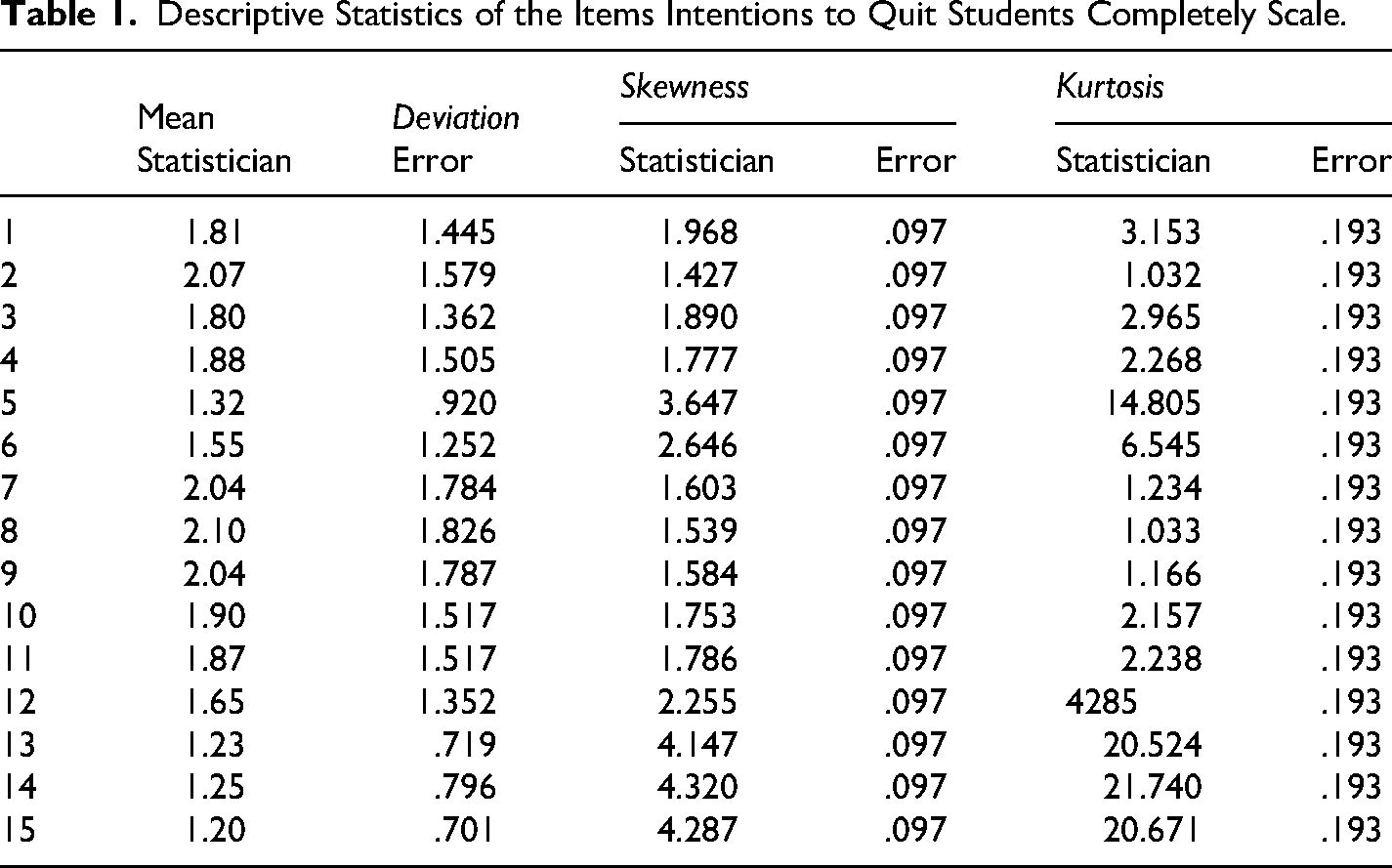
Table 1 presents the descriptive statistics for the 15 items of the Intentions to Quit Studies Completely Scale. The scores of all items were slightly higher than the midpoint of the scale. The analysis of skewness and kurtosis, in most of the items presented values in accordance with the expected, therefore, a normal distribution is assumed (Hatem et al., 2022) except for items 5, 13, 14 and 15, which have high skewness and kurtosis. Regarding skewness, it indicates that the distribution of the data is mostly towards one end of the scale, which means that there is a higher concentration of values at the left end compared to the other. On the other hand, regarding kurtosis the results indicate a concentration of data at extreme values (leptokurtic) that are more pronounced compared to a normal distribution; this suggests that the data values tend to be more dispersed and that there is a greater presence of extreme values in the distribution.
Descriptive Statistics of the Items Intentions to Quit Students Completely Scale.
In order to test the construct validity of the instrument, a CFA was carried out considering the five factors suggested by the creators of the instrument (Bäulke et al., 2022). The results showed an adequate but improvable fit, (χ2 = 243.025*, df = 80; p < .001; RMSEA = 056 (.048-.065); CFI = .938; TLI = .919; SRMR = .053); for which the re-specifying paths suggested by Mplus were reviewed through the analysis of the modification indexes. A relationship between 2 and 1 (MI = 45.109) was added, considering the theoretical meaning of the items belonging to the same factor. These pairs of items allude to feeling unfit for studies. Thus, a better model fit was obtained (χ2 = 200.006*, df = 79; p < .001; RMSEA = .049 (.041-.057); CFI = .954; TLI = .939; SRMR = .044).
Taking into account this confirmed structure, it is concluded that the intention-to-leave scale is composed of 5 related factors, as reported in the original study (Bäulke et al., 2022) see Figure 1.
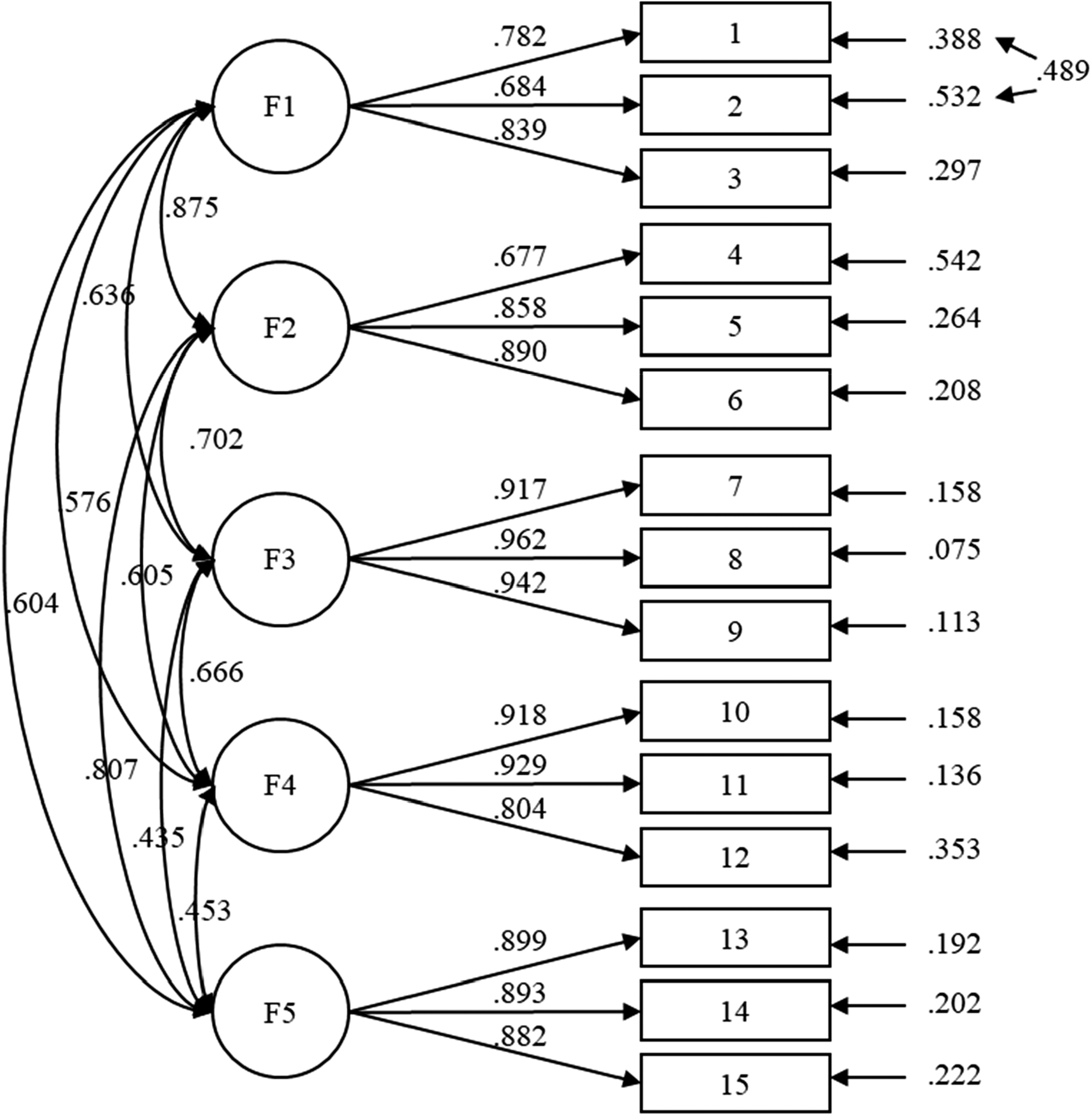
Indices of the Factorial Structure of Intentions to Quit Studies Completely Scale.
Factor 1 groups items that account for students’ perceptions of not feeling fit to study at university; factor 2 refers to thoughts of dropout of university; factor 3 refers to deliberation, i.e., evaluating what it means to dropout versus completing studies; factor 4 refers to information search; and factor 5 refers to the final decision to dropout of university studies.
Evidence Based on the Internal Structure of the Intentions to Change a Major Scale
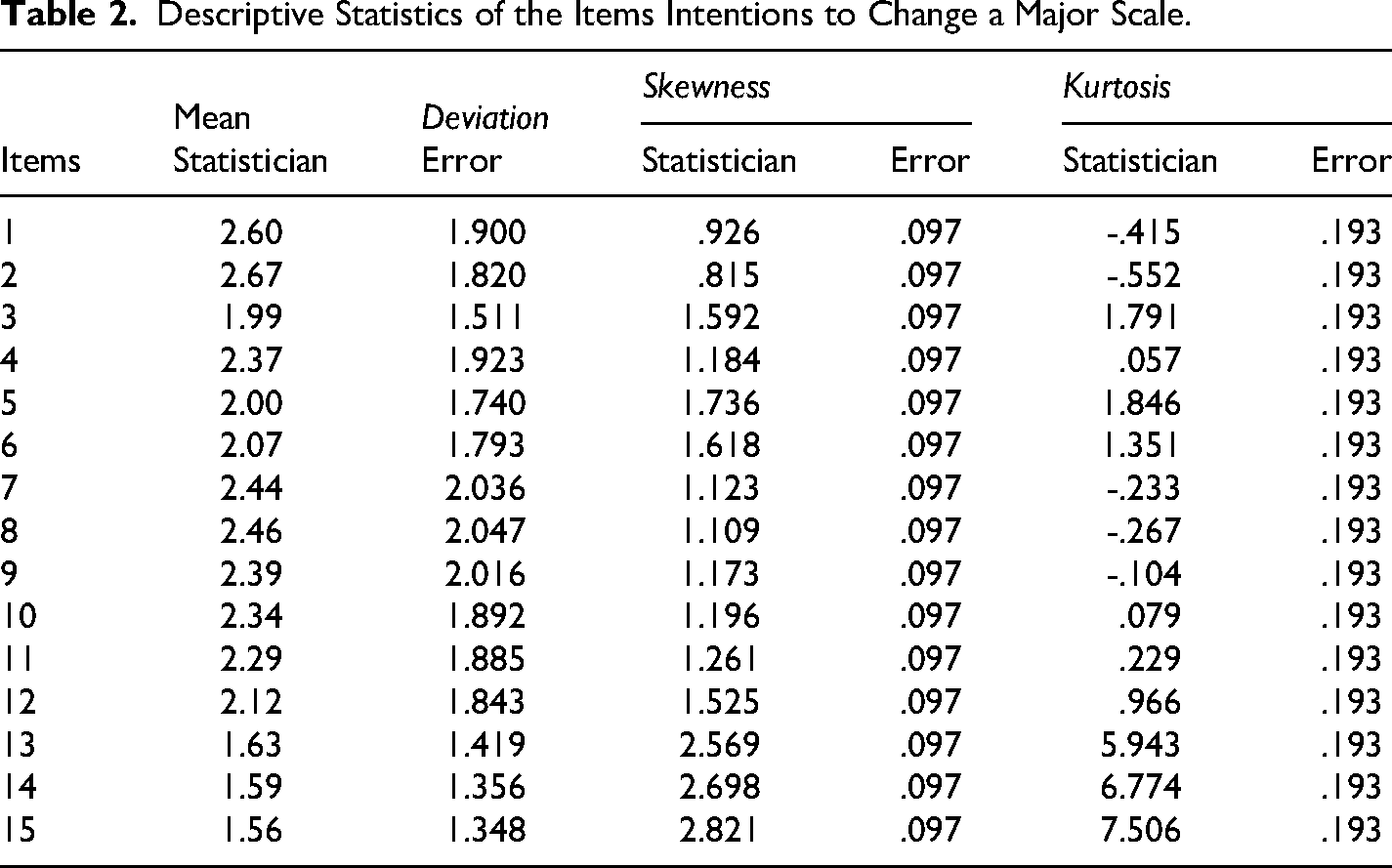
Table 2 presents the descriptive statistics for the 15 items of the Intentions to Change a Major Scale. The scores of all items were slightly higher than the midpoint of the scale. The analysis of skewness and kurtosis, in most of the items presented values in accordance with the expected, therefore, a normal distribution is assumed (Hatem et al., 2022) except for the kurtosis of items 14 and 15; this indicates the presence of values that tend to be more dispersed and that there is a greater presence of extreme values in the distribution. Most students responded at point 1 of the sale, indicating that that they are certain they will not dropout their career. This suggests a strong intention to persist in their studies.
Descriptive Statistics of the Items Intentions to Change a Major Scale.
In order to test the construct validity of the instrument, a CFA was carried out considering the 5 factors suggested by the creators of the instrument (Bäulke et al., 2022). The results showed an adequate fit, (χ 2 = 302.712*, df = 80; p < .001; RMSEA = .066 (.058-.074); CFI = .954; TLI = .940; SRMR = .035). The results of the CFA show that the instrument is composed of 5 related factors, as reported by the original study (Bäulke et al., 2022).
Taking into account this confirmed structure, it is concluded that factor 1 groups items that account for students’ perceptions about not feeling fit to study the career; factor 2 refers to thoughts about leaving the career; factor 3 refers to deliberation, that is, evaluating what it means to leave the career; factor 4 refers to information search; and factor 5 refers to the final decision to leave the career, as shown in Figure 2.
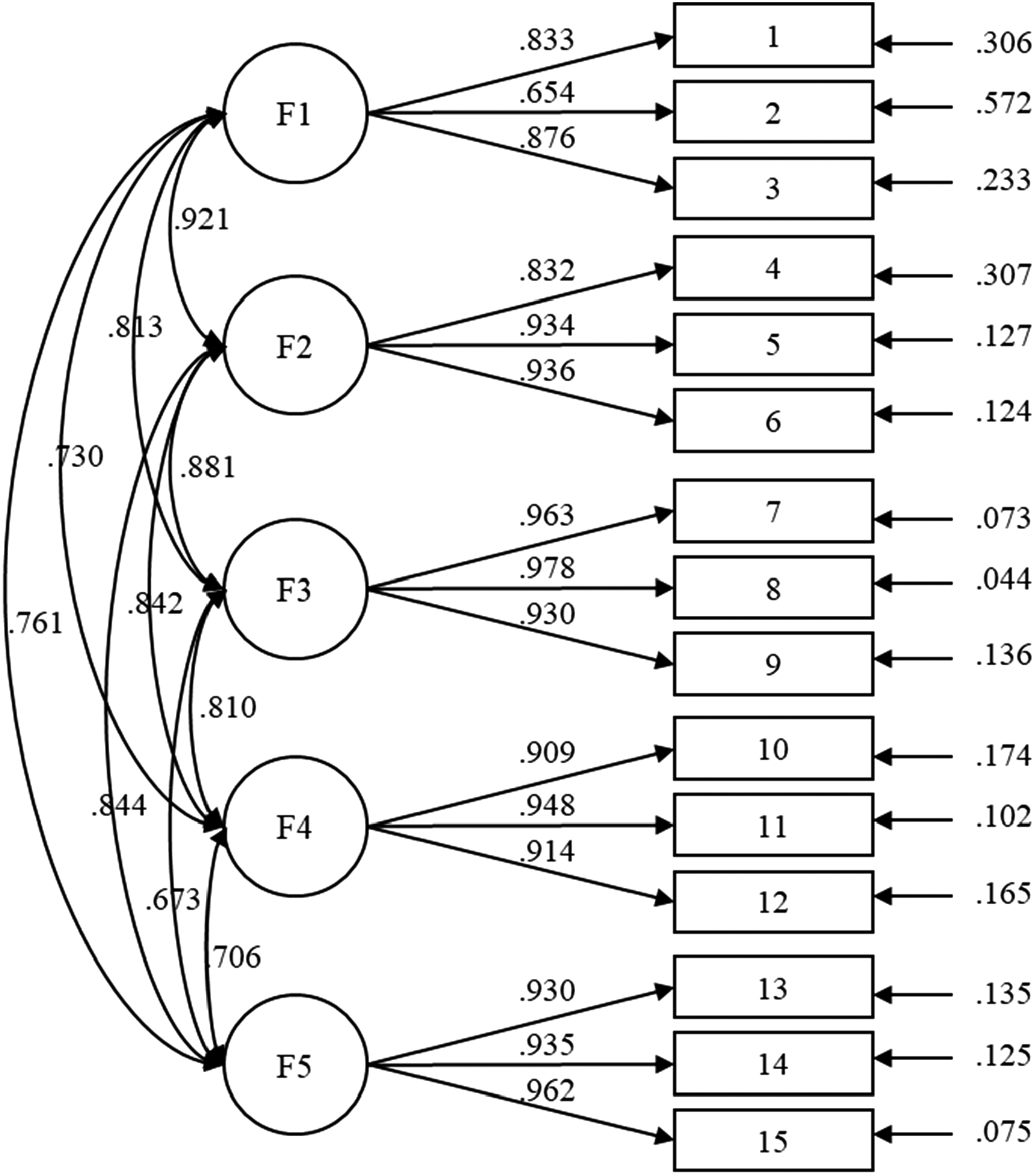
Indices of the Factorial Structure of Intentions to Change a Major Scale.
Divergent and Discriminant Validity Analysis
With the Intentions to Quit Studies Completely Scale and the Subscale of Motivation Regulation, validity based on divergent measures was explored. The results in Table 3 show the existence of significant correlations between factors the Intentions to Quit Studies Completely Scale and the Subscale of Motivation Regulation, ranging from r = .097 to r = .304; however, the magnitudes are low, only one was moderate. These findings suggest that the two instruments are assessing different constructs.
Divergent and Discriminant Validity Indices of the Intentions to Quit Studies Completely Scale.
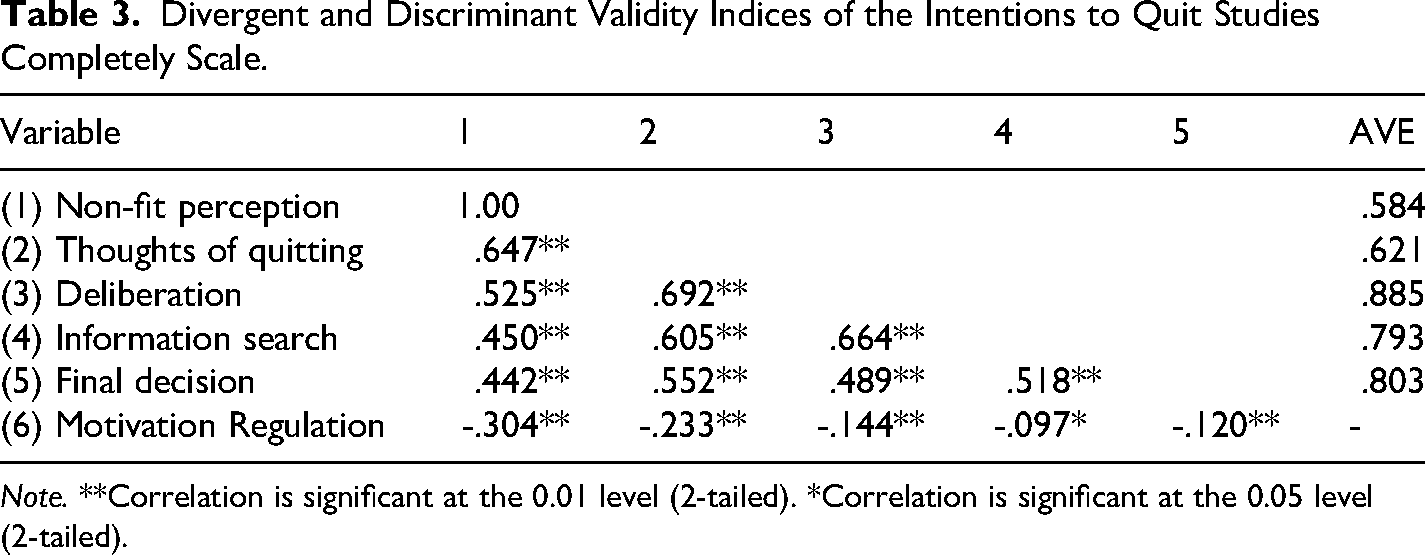
Note. **Correlation is significant at the 0.01 level (2-tailed). *Correlation is significant at the 0.05 level (2-tailed).
For discriminant validity, the AVE of each factor was estimated. The results showed that all the factors have values above .50. With the Intentions to Change a Major Scale and the Subscale of Motivation Regulation, validity based on divergent measures was explored; the results presented in Table 4 indicated the existence of significant correlations between factors of the Intentions to Change a Major Scale and the Subscale of Motivation Regulation, ranging from r = .146 to r = .252; however, the magnitudes are low. These findings suggest that the two instruments are assessing different constructs.
Divergent and Discriminant Validity Indices of the Intentions to Change a Major Scale.
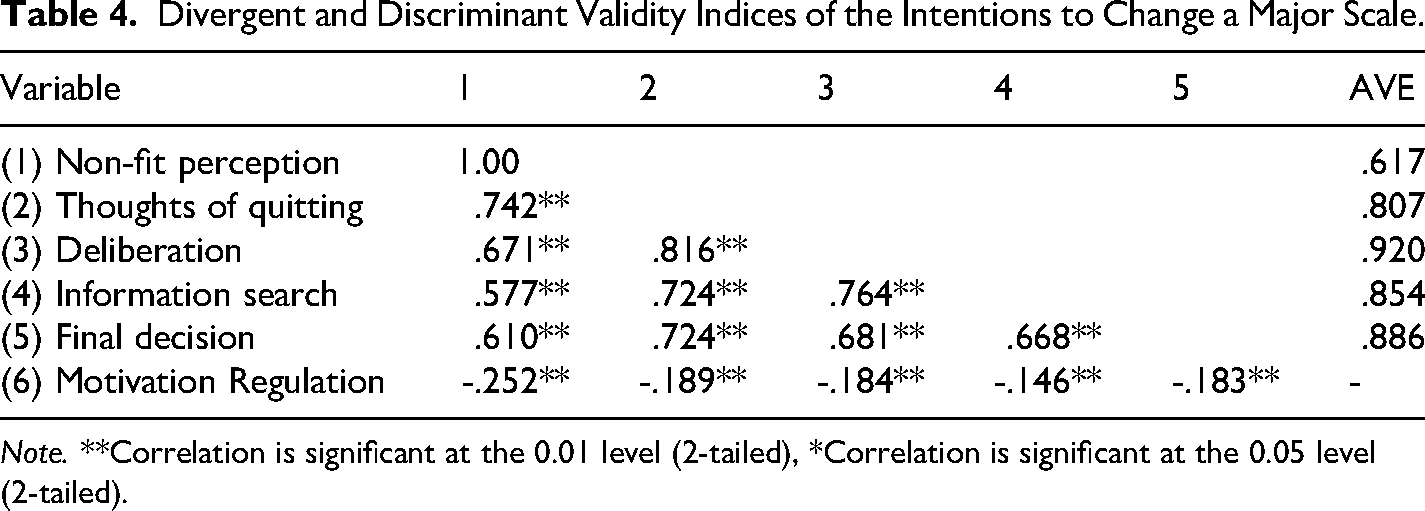
Note. **Correlation is significant at the 0.01 level (2-tailed), *Correlation is significant at the 0.05 level (2-tailed).
The results of the discriminant validity analysis show that all factors have good validity, as the values exceed the expected threshold .50, indicating that the constructs explain more than half of the variance in their items. Deliberation and decision-making show higher AVE indices, providing strong evidence for the validity of the measurement model.
Reliability
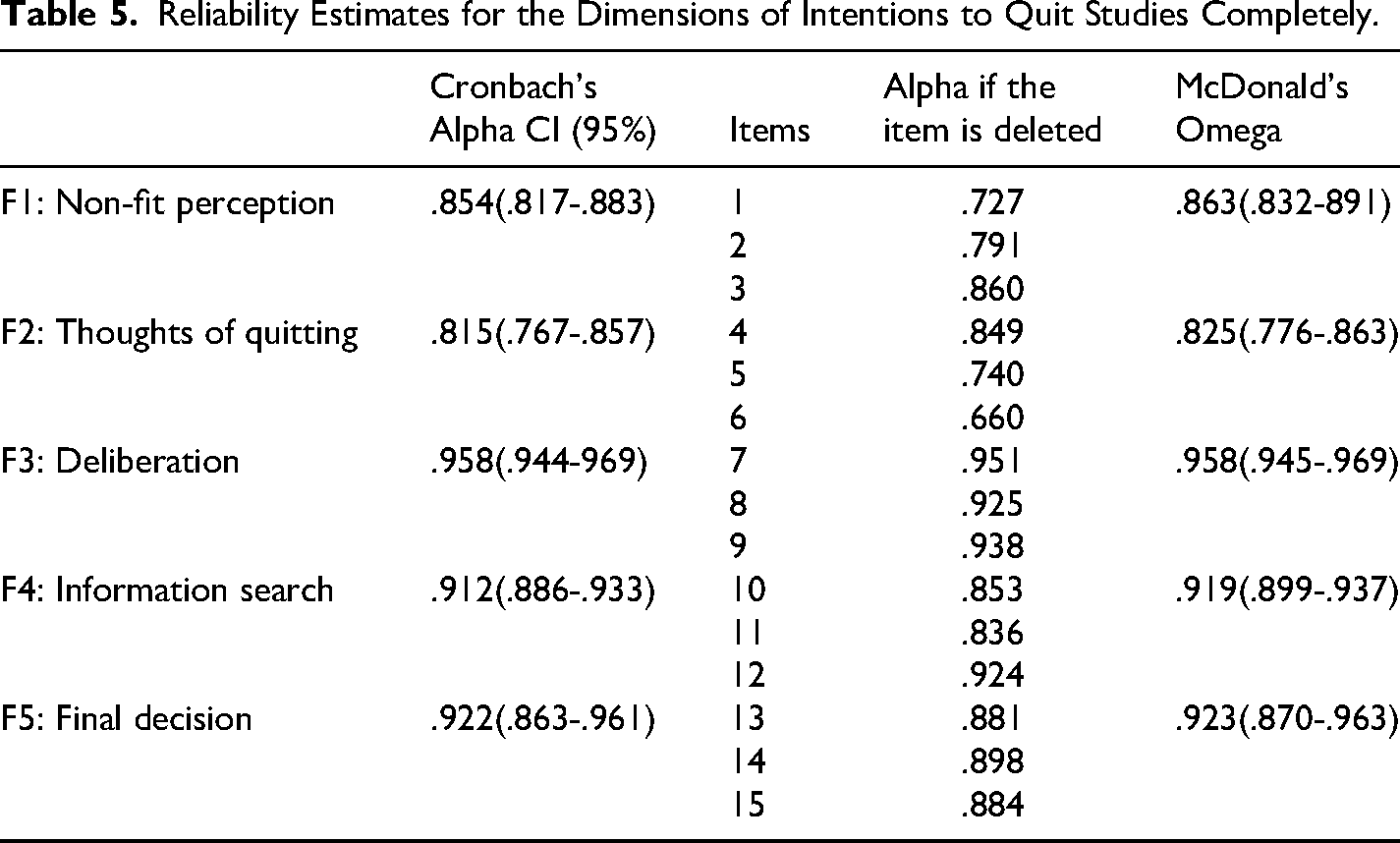
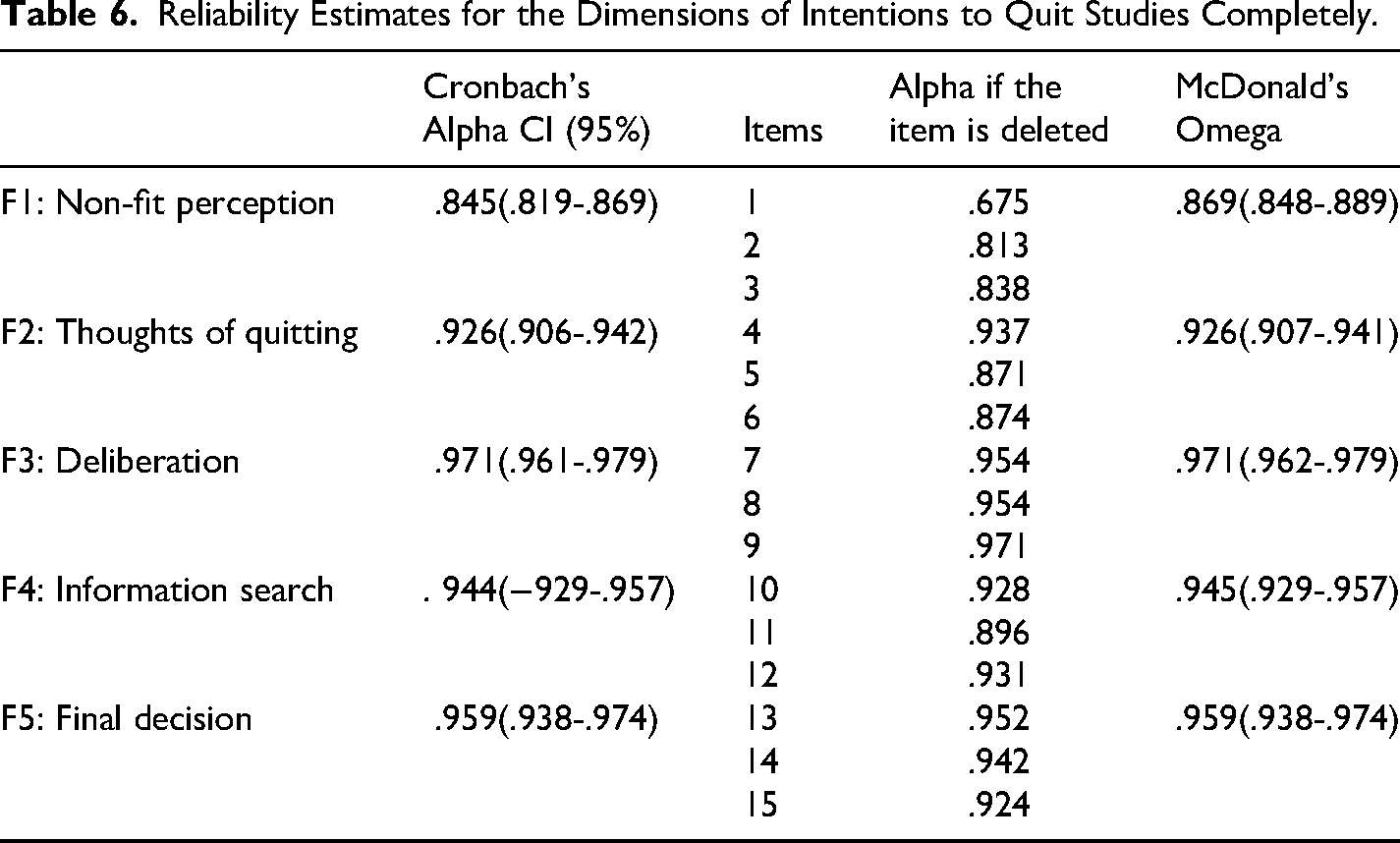
Each dimension of the scales has adequate indices, being equal to or above .70 and below .96. These coefficients suggest that both scales are reliable for use by Chilean university students. See Table 5 and Table 6.
The results, presented in Table 6, show a consistent pattern of high internal consistency across all dimensions, mirroring the findings in Table 5. These findings support the stability and reliability of the instrument.
Reliability Estimates for the Dimensions of Intentions to Quit Studies Completely.
Reliability Estimates for the Dimensions of Intentions to Quit Studies Completely.
Discussion
This research validated and analyzed the psychometric properties of two scales Intentions to quit studies completely and Intentions to change a major in Chilean university students. Based on the results of the content validity analysis of the translated versions of the scales through expert judges and cognitive interviews with university students, the findings showed that the items of the scales completely and adequately covered the contents needed to measure the proposed dimensions. This complies with the criteria of clarity, coherence, relevance and sufficiency, as well as the rigorous validation and adaptation of the scales (APA et al., 2014; ITC, 2018). This study is the first documented effort to translate the dropout and changing majors intentions scales into Spanish, which increases their accessibility and usefulness in Spanish-speaking contexts. These scales could be especially useful in Ibero-America, provided that the cultural, educational and contextual particularities of each region are considered.
Regarding construct validity, this research tested three main components of this type of analysis that account for the degree to which the scales measure the intended constructs: structural/factorial, convergent and discriminant (Loevinger, 1957; Wehner et al., 2020). Regarding the structural/factorial validity of the scales, confirmatory factor analyses reaffirmed the original structure of five related factors: Non-fit perception, thoughts of dropout/major change, deliberation, information search, and final decision; this result is consistent with the original study which was developed in Germany (Bäulke et al., 2022). This theoretical configuration is consistent with previous research and theoretical models that affirm the existence of phases in such a process (Achtziger & Gollwitzer, 2018; Betsch, 2005; Fishbein & Ajzen, 1975; Rivière, 1999). The results showed that the theoretically assumed structure of the constructs is supported by data.
Regarding divergent validity, the results showed significant but low correlations between the Intentions to quit studies completely and Intentions to change a major scale with a motivation regulation scale, which means that they measure different constructs. The results of the discriminant validity analysis showed that all factors have good discriminant validity, since the AVE values exceed the expected threshold .50, indicating that the constructs explain more than half of the variance in their items.
In relation to the reliability indexes, the findings showed that the dimensions of both scales are reliable, since they had Cronbach's Alpha and Omega indexes equal to or higher than .70. However, it is notable that in two dimensions these indices exceed the value of .95, which may suggest that some items are redundant, assessing the same content but in different ways (Tavakol & Dennick, 2011). This phenomenon may also be related to response biases, such as social desirability, where respondents respond consistently not because of the accuracy of the items, but because of the desire to present themselves in a certain way.
These results have theoretical and practical implications in the psychometric and educational psychology areas. Specifically, the findings of this study contribute to a deeper understanding of dropout intention as a process, in addition to confirming internally driven and regulated self-regulatory processes are at work in this decision (de la Fuente-Arias, 2017) the understanding is which is enriched by approaching it in phases. From a processual and cognitive perspective, these phases allow us to understand the intention of university students to dropout and/or change major, as well as its dynamic and sequential character. This reaffirms theoretical models such as the “theoretical model of decision making” by Betsch (2005) and the “general Rubicon model of action phases” by Achtziger and Gollwitzer (2018), since both provide a clear structure of the mental and behavioral phases that an individual goes through when making decisions relevant to their life, such as continuing, abandoning university studies or eventually changing majors. In addition, it allows to fill a gap in terms of instruments that measure dropout intention that are validated in Chile.
Having validated scales allows higher education institutions to use them to detect early on those students who have the intention of dropout of their studies (Casanova et al., 2020). In this regard, the identification of students at risk of dropout allows taking and applying specific prevention measures for each individual or group. This study contributes to that need, as it favors the implementation of effective actions and strategies to understand the process of students’ adaptation to university (López-Angulo et al., 2021).
In addition to the psychometric and educational contribution of this research, it is important to contextualize these findings within the analytical framework of comparative education (Arnove, 1980). This perspective helps to understand how the intention to dropout or change majors is influenced by not only individual and institutional factors, but also global structural dynamics. Indeed, several studies have shown that factors associated with dropout can differ according to the sociocultural and institutional context (e.g., Casanova et al., 2018; Fourie, 2018; González-Morales et al., 2025). In this regard, cultural adaptation and validation quality processes are particularly important to avoid the uncritical adoption of instruments developed in the “center” as Europe or North America (Altbach, 2015); which can lead to the measurement of unspecific, decontextualized constructs and ultimately ineffective recommendations. Moreover, having validated instruments for dropout and career major intentions not only allows for a more authentic understanding of the phenomenon in Chile and Latin America, but also enables international comparisons, contributing to a more equitable global academic dialogue based on contextualized evidence.
Limitations
One of the limitations of this research is that it was carried out on university students from a university in southern Chile, so future studies should extend the characteristics of the sample to other parts of the country and to other careers. A psychometric limitation is that being a cross-sectional study, it was not possible to observe the evolution of the process of intention to drop out; therefore, future research should consider longitudinal studies. Likewise, in this study, the application of the scales was carried out in the second semester; however, it would be enriching for other studies to apply these scales during the first semester of classes, since this is the period when the highest dropout rates occur. Likewise, since these are self-report scales, there is a risk of response bias and social desirability. Although the scale has been validated in Spanish for use with Spanish-speaking populations, it is recommended that linguistic adaptations related to regional idioms be made for future use outside of Chile.
Further Research
In relation to future research lines, the original study, emphasizes the importance of complementing findings with institutional records of studentś actual dropout behavior (Bäulke et al., 2022). Another aspect to consider in future studies is the application format, given that in this study the classic pencil-and-paper format was applied, therefore, it needs to be tested in online mode (Sáez-Delgado et al., 2023a). Furthermore, future research should focus on assessing the complex relationships and interactions that influence the dropout intention process (Behr, 2017), incorporating variables that have solid empirical evidence in the local context. Likewise, instruments are required that not only explore the mental process involved in decision making related to the intention to drop out or change careers, but also allow us to understand this phenomenon sequentially, integrating variables that, according to empirical evidence, influence university dropout.
Conclusion
Considering the findings of this study and the discussion of these, it is possible to specify the following conclusions: (1) universities require incorporating early warning system to identify students at risk of dropout, and this study provides a phased instrument that also facilitates noticing the stage in which the students enter in order to deploy the necessary actions; (2) the scales are valid and reliable to be used for the purpose of identifying students at risk of dropout in Higher Education; (3) it was confirmed that the structure of the instrument has 5 dimensions (non-fit perception, thoughts of quitting studies completely/ changing a major, deliberation, information search and final decision) and 15 items each. It is concluded that the scales present adequate psychometric properties for their use in Chilean university students, see Appendix 2 and 3, in https://doi.org/10.6084/m9.figshare.28926803
Footnotes
Acknowledgements
This study was funded by: FONDECYT Initiation Project N°11230864 entitled “Academic and life purposes, social adaptation, emotional, motivational, and academic self-regulation: A mixed design to explain dropout intention and university academic performance”, of the National Research and Development Agency of Chile (ANID). National Doctoral Scholarship granted by National Research and Development Agency of Chile (ANID) - Human Capital Subdirectorate/National Doctoral 21240341 and 21251777.

Funding
The authors disclosed receipt of the following financial support for the research, authorship, and/or publication of this article: This work was supported by the FONDECYT Initiation Project N°11230864 entitled “Academic and life purposes, social adaptation, emotional, motivational, and academic self-regulation: A mixed design to explain dropout intention and university academic performance”, (grant number 11230864).
Declaration of Conflicting Interests
The authors declared no potential conflicts of interest with respect to the research, authorship, and/or publication of this article.