







Abstract
Previous research has raised concerns about international students’ adjustment and acculturation in U.S. higher education. International students at the institution in the current study had lower grade point averages (GPAs) and retention rates than domestic peers. This study examined whether noncognitive student success factors (e.g., self-efficacy) varied across international student subgroups (e.g., region of origin, English-language proficiency) and whether these factors predicted their GPA. There were meaningful subgroup differences for the noncognitive factors. For example, goal commitment, persistence, self-efficacy, sense of belonging, and institutional commitment differed by region of origin, whereas quality focus, engagement, persistence, self-efficacy, and sense of belonging differed by English-language proficiency. Collectively, the 10 noncognitive factors accounted for 23.3% of the variance in cumulative GPA, with self-efficacy (3.13%) and sense of belonging (4.45%) contributing the most uniquely. These results can guide intentional implementation of programing that addresses these areas of growth for international students.
Approximately 1.12 million international students studied at U.S. colleges and universities in the 2023–2024 academic year, contributing more than $50 billion to the economy (U.S. Department of State, 2024). Beyond the economic impact, international students enrich campus learning environments with the global perspectives and cultures that they bring to U.S. campuses (Bletscher & Hellman, 2022; Geelhoed et al., 2003). Through these studies abroad, international students and the United States engage in meaningful public diplomacy, as educational exchange experiences develop mutual understanding, build favorable opinions (especially of the host country), and promote support for the host country's foreign policy (Lima, 2007). Given these benefits, attracting, enrolling, and retaining international students is critical in fostering a robust experience in U.S. higher education, with ripple effects that last far beyond degree completion. Despite this, far less is known about the factors that shape international students’ experiences and long-term success in U.S. higher education.
The Chronicle of Higher Education (Fischer, 2023) and scholars of critical and culturally responsive pedagogy (e.g., Gautam et al., 2016; Krsmanovic, 2022) have emphasized the need for more empirical research on international students’ experiences and needs. Although a robust body of research has examined factors impacting domestic student persistence (e.g., Richardson et al., 2012; Robbins et al., 2004; Seidman, 2012), studies exploring predictors of international student persistence are comparatively limited and often narrow in focus. That is, existing scholarship tends to examine isolated aspects of the international student experience, creating a fragmented understanding of the factors that support their success.
For instance, some research has examined factors related to international students’ cultural adjustment (e.g., Ammigan et al., 2023; Andrade, 2009). Specifically, understanding U.S. culture helped Chinese students develop a sense of belonging, which in turn promoted engagement, participation, and learning in classroom settings (Yuan, 2011). Other studies found satisfaction with intentional success programing has been associated with higher grades and greater satisfaction with the college learning experience for international students (Ammigan & Drexler, 2023). Importantly, students’ engagement with peers and faculty both in and out of the classroom (i.e., academic integration) has emerged as a key factor contributing to international student persistence (Andrade, 2008; Mamiseishvili, 2012). Although these findings are important, their narrow scope raises questions about generalizability across diverse groups of international students. In short, scholars and practitioners have noted that there is limited research on international students’ engagement within U.S. institutions and a scarcity of evidence connecting international students’ academic success to their institutional experiences (e.g., Ammigan & Drexler, 2023; Wang & BrckaLorenz, 2017).
Given research on international student success typically examines correlates of success in isolation, making it difficult to identify how to best support students, Zhao et al. (2005, p. 211) called for research to accurately guide “whether and where to intervene.” Wong and Chapman (2022) made a similar call when holistically examining seven noncognitive skills (e.g., self-regulated learning) of international students attending the largest, private higher education institutions in Singapore. They found three quantitative ordered profiles of noncognitive skills: high, medium, and low. The profiles differed on the outcomes of stress and persistence, with the higher skills group exhibiting lower levels of stress and higher persistence. In turn, there were calls to examine a broader range of noncognitive attributes.
In response to these calls for more integrated and systematic research, the present study examined 10 noncognitive skills linked to domestic student success. These skills were examined holistically among international students, compared across different international student subgroups, and analyzed in relation to academic performance. This research was imperative for the institution under study, as data from 2017 onward indicate that the six-year graduation rate of undergraduate international students lags 14%–18% behind the overall student population. Similarly, the average grade point average (GPA) of international students remains below that of the domestic student population, highlighting crucial academic gaps between these student groups.
Moreover, although prior research examined differences between domestic and international students on several dimensions, including engagement in educational practices (e.g., Zhao et al., 2005), likelihood of meeting with an academic advisor (e.g., Tippetts et al., 2020), retention intentions (e.g., Haverila et al., 2020), and general persistence to graduation (e.g., Fass-Holmes, 2016; Mamiseishvili, 2012), far less has compared domestic and international students’ average GPAs and retention rates. This gap may stem from international student persistence data not being reported by the Institute of International Education or other agencies (Evans et al., 2009). The existing, limited research suggests mixed results. In some contexts, international students perform similarly (Andrade, 2009; Smith, 2015) or outperform domestic peers on GPA (Hu & Hagedorn, 2015; Luo, 2025), in addition to having higher retention rates than the national average (Fass-Holmes, 2016). In other instances, international students had lower first-to-second year retention rates and six-year graduation rates than domestic counterparts (Berkeley International Office, 2014; Luo, 2025). Despite the mixed research findings, the lower GPAs and retention rates observed among international students at the present institution were of enough concern to prompt action by the research team.
Therefore, to better understand the mechanism(s) underlying retention rates and GPA for international students, profiles of international students’ noncognitive skills were estimated and related to cumulative and term GPA. Having such results can guide evidence-informed decisions regarding which student success programing is necessary for international students (Pope et al., 2023). Prior to presenting the results, the section below briefly reviews typical success programing offered to international students to provide context for the findings.
Supporting International Students: Typical Resources on Campus
For those who regularly work with international students, there are certain observable or anticipated challenges that international students face. These challenges often include language barriers, building a new social network, difficulties with acculturation and unfamiliar customs, adapting to U.S. higher education practices, and navigating limitations and restrictions tied to their immigration status (Gautam et al., 2016; Krsmanovic, 2022; Roberts & Ammigan, 2024). Although these challenges are common, there is great variability regarding international students’ experiences as they navigate U.S. higher education.
Recognizing this complexity, Roberts and Ammigan (2024) advocated for an integrative support model grounded in student development theory, which has been endorsed by other scholars (e.g., Ballo et al., 2019; Seifert & Tran, 2024). Specifically, Ammigan et al. (2023) thematic analysis uncovered three actions that university staff can engage in to facilitate international students’ adjustment: “(1) address culture shocks, (2) provide wellness programing, and (3) build institutional capacity to support students in counseling and advising” (Roberts & Ammigan, 2024, p. 106). By offering intentional resources to facilitate these three actions, universities cultivate an environment that supports international students’ development. These actions may manifest as international student orientations (Bresnahan & Cai, 2000), physical spaces where students engage in place-making activities (e.g., shared lounges or kitchens; Terrazas-Carrillo et al., 2015), cultural sensitivity trainings for university staff and faculty (e.g., culturally responsive advising; Liu & Renn, 2024), and programing that introduces international students to American students (e.g., buddy program; Westwood & Barker, 1990), all for the purposes of supporting international students success.
Need to Understand Noncognitive Skills That Impact International Students’ Success
Although the typical practical resources for international students (e.g., immigration advising, physical space, career resources) and culturally responsive training for faculty and staff support international students, the present study focused on student-level skills that influence academic success, as measured by GPA. As noted above, the impetus for this study arose from existing data at a public university in the mid-Atlantic region of the U.S. with a population of approximately 23,000 students, where international students represent 1.1% of the total population. Importantly, disparities in GPA and retention existed despite availability of typical institutional supports for international students. By shifting the focus from institutional resources to student characteristics, this study aimed to identify the noncognitive skills that contribute to academic success. The findings can then inform the design of intentional programing to further develop these skills and improve international student outcomes.
The last several decades have produced a robust body of research identifying skills that predict academic success for college students (e.g., Aspelmeier et al., 2012; Astin & Oseguera, 2012; Cabrera et al., 2012; Molnár & Kocsis, 2023; van Rooij et al., 2018). These predictors are typically labeled as cognitive and noncognitive skills. Cognitive skills include prior academic achievement (e.g., past GPA or achievement test scores), intelligence, or critical thinking (e.g., Richardson et al., 2012). Noncognitive skills focus on the management of emotions, attitudes, behaviors, and interactions with others. Farrington et al. (2012) developed a model where noncognitive factors such as academic mindset (e.g., self-efficacy), academic perseverance (e.g., grit), learning strategies (e.g., self-regulated learning), social skills (e.g., interpersonal skills), and academic behaviors (e.g., doing homework) impact students’ academic success.
Assessing noncognitive skills can address questions regarding how to understand the strengths and challenges students bring to college, how to relate that understanding to student success, and how to support students to improve their success. Over 20 years of research (e.g., Markle et al., 2013; Poropat, 2009; Richardson et al., 2012; Robbins et al., 2004; Stankov & Lee, 2014) suggest three important findings:
Noncognitive skills have statistically and practically significant relations with outcomes such as GPA, retention, and grades in entry-level (“gateway”) courses; These relations are significant even when controlling for traditional markers of student potential such as standardized admissions and placement tests or high school GPA; and When predicting retention and academic achievement, noncognitive factors equal (and, in many cases, exceed) measures of academic preparation in their predictive strength.
In turn, researchers have noted that these noncognitive skills
1
are critical in student academic achievement, retention, and overall well-being and thus should be a focus for researchers and educators (Farruggia et al., 2018; Lipnevich & Roberts, 2012).
Research on the importance of noncognitive skills has been conducted globally, predominately involving domestic students in specific countries (e.g., Belgium, France, Germany, Greece, Scotland, New Zealand, the United States; see Lipnevich & Roberts, 2012 for summary of this work). Understanding how noncognitive skills relate to academic outcomes for international students is both theoretically and practically important. First, it helps educators understand if theoretical and empirical relations between noncognitive skills and academic success generalize beyond domestic students. If so, educators could identify international students who are more or less likely to perform well academically via early assessment of these noncognitive skills. Second, understanding the relations among noncognitive skills and academic outcomes guides the implementation of interventions or policies supporting international students. Although some researchers and practitioners emphasized the need for comprehensive support for international students (e.g., Andrade, 2006; Glass et al., 2015), subsequent research noted that tailored support can significantly improve academic performance and their overall experience (Lee & Castiello-Gutiérrez, 2020; Martirosyan et al., 2019).
Purpose of the Current Study
Research is needed to understand if and where to intervene to improve international students’ academic success and retention on U.S. college campuses (Atobatele et al., 2024; Lee & Castiello-Gutiérrez, 2020; Zhao et al., 2005). Thus, a needs assessment of the international student population's noncognitive skills at James Madison University (JMU) was central to understanding their needs and adding to the limited empirical studies of differential skills across international student subpopulations. Moreover, by understanding the mechanisms underlying the variability in GPA for international students, necessary supports could be designed (i.e., which noncognitive skills best predicted individual differences in GPA and thus should be targeted for interventions).
The Incoming Student Skills and Attitudes Questionnaire (ISSAQ) was a practical, quick assessment that aligned with the study's purposes (DIA Higher Education Collaborators, n.d.). The ISSAQ assesses 12 noncognitive aspects of student success, providing a multi-dimensional picture of student skills: organization, quality focus, engagement, goal commitment, persistence, effort focus, calmness, coping strategies, self-efficacy, sense of belonging, institutional commitment, and help seeking. Utilizing the ISSAQ as a needs assessment allowed for rich depictions of international students’ noncognitive skills to answer the following questions.
Research Question 1: What are the areas of strength and growth for a population of international students studying at a U.S. higher education institution? Although some studies of international student success (e.g., Ren & Hagedorn, 2012) have examined a few related noncognitive skills (e.g., studying) for specific populations (e.g., graduate students), there has been no study of this set of noncognitive skills for a population of undergraduate international students in the United States.
Research Question 2: Do the areas for growth differ by students’ country of origin, English-language proficiency, and other characteristics, therefore supporting tailored services? When conducting research of this nature, it is important to consider equity (Henning & Lundquist, 2022; Wild et al., 2024). Analyses should involve meaningful data disaggregation to identify areas of need and inform subsequent action (Finney et al., 2024; Montenegro & Jankowski, 2020). Although the international student population is often separated by educational level (undergraduate and graduate), this population is too frequently painted as a homogenous group having a singular “international student experience” (Heng, 2019, p. 308). Such generalizations should not be made regarding international students and their experiences (Heng, 2019; Sullivan & Kashubeck-West, 2015; Wu et al., 2015), as international students’ academic performance has been shown to be impacted by English-language proficiency (Ammigan & Drexler, 2023). Thus, disaggregating by English-language proficiency, as one subgroup, was critical. The profiles the ISSAQ data reveal for international student subgroups’ noncognitive skills will illuminate where university staff can uplift and enhance (i.e., areas of strength) and where tailored resources can be provided (i.e., areas for growth).
Research Question 3: Do the noncognitive skills predict academic success (i.e., GPA) for international students, as has been found for domestic students? To date, no study has examined the predictive utility of these noncognitive skills for international student academic success. The present study addressed this gap by using a quantitative approach to link a set of noncognitive skills to GPA, building upon prior qualitative studies (e.g., Krsmanovic, 2022) and single noncognitive skills studies (e.g., Saklofske et al., 2012).
Methods
Data Collection Procedures
In April 2023, the international student services office hosted an in-person event where international students (F-1 and J-1 visa holders) could receive guidance regarding their taxes, course enrollment, and summer travel planning. All international students were invited to attend via multiple channels (e.g., emails, Instagram posts, in-person interactions). Attendees received food, a shirt, and assistance from international student advisors (e.g., navigating tax software); attendees were also asked to complete an assessment (i.e., ISSAQ). At the in-person event, 54 students completed the ISSAQ. Students who did not attend the event were sent two personalized emails over the next several weeks, which requested that students complete the ISSAQ remotely via a direct link. Remote data collection yielded an additional 66 responses. The total sample contained 120 of the total population of 224 international students (i.e., 54% response rate).
Sample
Before examining ISSAQ results, the sample (N = 120) was examined for representativeness of the entire population of international students (N = 224), as misrepresenting demographic groups can result in erroneous interpretations and generalizations. Sample-population comparisons were examined for the following variables: age, self-identified gender, student-athlete status, housing status (i.e., on- vs. off-campus), education level (i.e., graduate, undergraduate, pathway program), geographic region of origin, GPA (semester and cumulative), and English-language proficiency (i.e., pathway program or direct admission). 2
After comparing the proportion of specific subgroups within the sample (N = 120) to the population (N = 224), researchers concluded the sample was representative with respect to gender, age, housing, and athlete status. However, the sample overrepresented graduate students, students from Southeast Asia, and students in the pathway program. All pathway program students attended the in-person event, hence the overrepresentation of this particular group.
Table 1 presents cumulative and semester GPAs for students who did and did not complete the ISSAQ. The average cumulative GPA for students who completed the ISSAQ was approximately half a letter grade higher (i.e., ∼.40 on a 4-point GPA scale) and over half a standard deviation higher (Cohen's d = .65) than students who did not complete the ISSAQ, t(214) = 4.81, p < .001. Similar findings were observed for semester GPA, t(222) = 4.99, p < .001, Cohen's d = 0.66. Thus, the sample used in this study describes a group of international students who performed better, on average, than the entire international student population at the university. In turn, for the present sample, ISSAQ subscales may have less predictive utility with respect to GPA. That is, the impact of these noncognitive skills on GPA may be underestimated because there is less variability in GPA for the sample who completed the ISSAQ compared to those who did not complete the ISSAQ.
Semester and Cumulative GPA Across ISSAQ Completion Status.
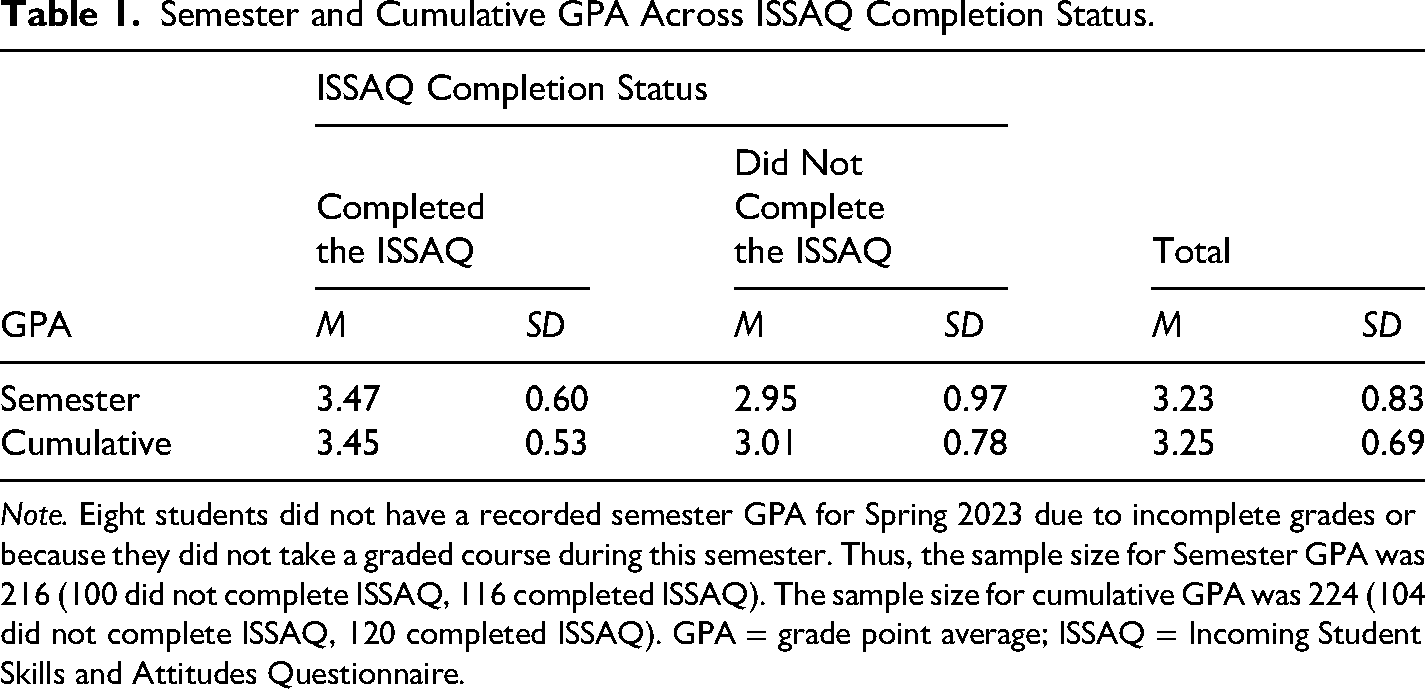
Note. Eight students did not have a recorded semester GPA for Spring 2023 due to incomplete grades or because they did not take a graded course during this semester. Thus, the sample size for Semester GPA was 216 (100 did not complete ISSAQ, 116 completed ISSAQ). The sample size for cumulative GPA was 224 (104 did not complete ISSAQ, 120 completed ISSAQ). GPA = grade point average; ISSAQ = Incoming Student Skills and Attitudes Questionnaire.
Measures
The ISSAQ is a self-report scale that quantifies students’ noncognitive skills on a series of 12 constructs. Each construct has robust theoretical predictive value with respect to success in higher education (e.g., Credé et al., 2010; Markle et al., 2013; Richardson et al., 2012; Robbins et al., 2004). Each ISSAQ subscale contains five to nine items, resulting in 85 items (Table 2). Respondents used a 1–4 point Likert scale to answer each item (1= “Strongly disagree”, 2= “Disagree”, 3= “Agree”, 4= “Strongly agree”). Scores were averaged across subscales to facilitate interpretations regarding the strength of students’ noncognitive skills and make meaningful comparisons across subscales. Responses completed in under five minutes were considered non-effortful and therefore excluded from analyses; no such cases occurred in the present sample. This study is the first to examine and report psychometric properties of the ISSAQ for an international student sample. For the current sample, reliability (i.e., Cronbach's coefficient alpha) was deemed adequate (≥ 0.70) for all subscales except for coping strategies and effort focus. Thus, results exclude these two subscales.
Incoming Student Skills and Attitudes Questionnaire (ISSAQ) Subscales, Definitions, Example Items, and Reliability Estimates.
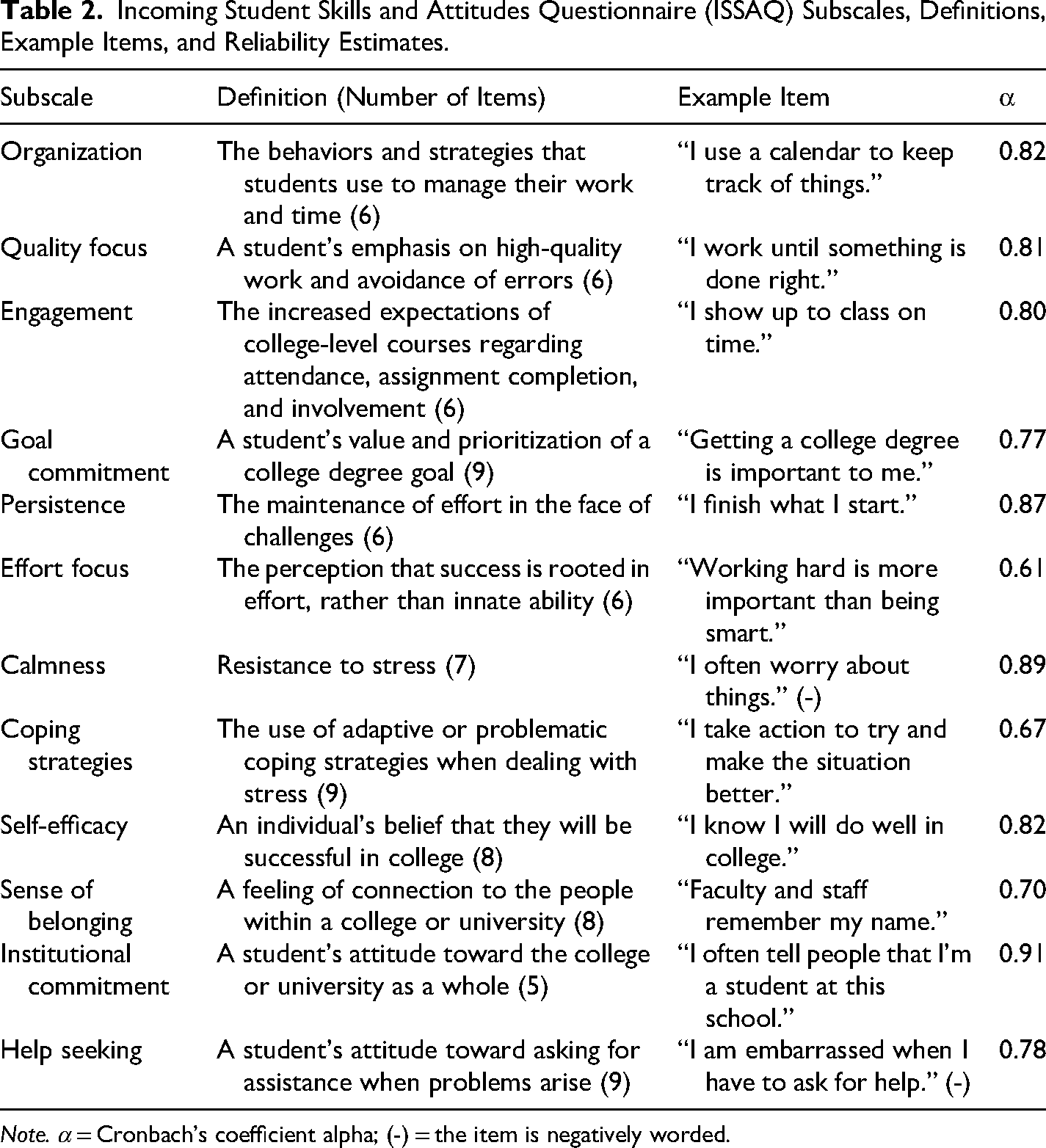
Note. α = Cronbach's coefficient alpha; (-) = the item is negatively worded.
Results
Research Question 1: What are the areas of strength and growth for a population of international students studying at a U.S. higher education institution? Average scores on ISSAQ subscales were rank ordered to identify areas of strength (i.e., students scored highest) and areas for growth (i.e., students scored lowest). Areas for growth included calmness, help-seeking, and sense of belonging. Areas of strength were quality focus, persistence, and engagement (Table 3).
Average Incoming Student Skills and Attitudes Questionnaire (ISSAQ) Subscale Scores.
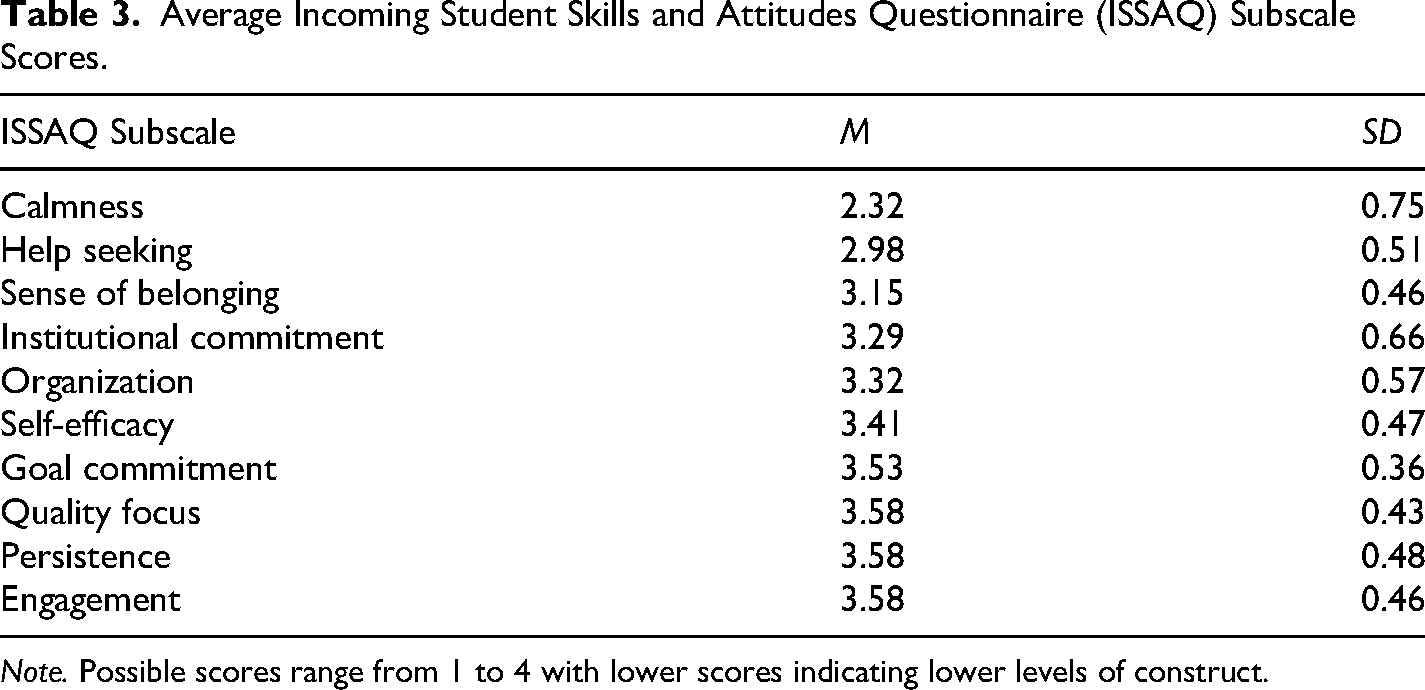
Note. Possible scores range from 1 to 4 with lower scores indicating lower levels of construct.
Research Question 2: Do the areas for growth differ by students’ country of origin, English-language proficiency, and other characteristics, therefore supporting tailored services? Average scores for the overall sample may mask meaningful subgroup differences. Thus, average subscale scores were disaggregated by gender, housing status, geographic region of origin, English-language proficiency, student-athlete status, and academic level. Significant differences emerged across geographic region of origin, academic level, English-language proficiency, and student-athlete status, but not across gender or housing status.
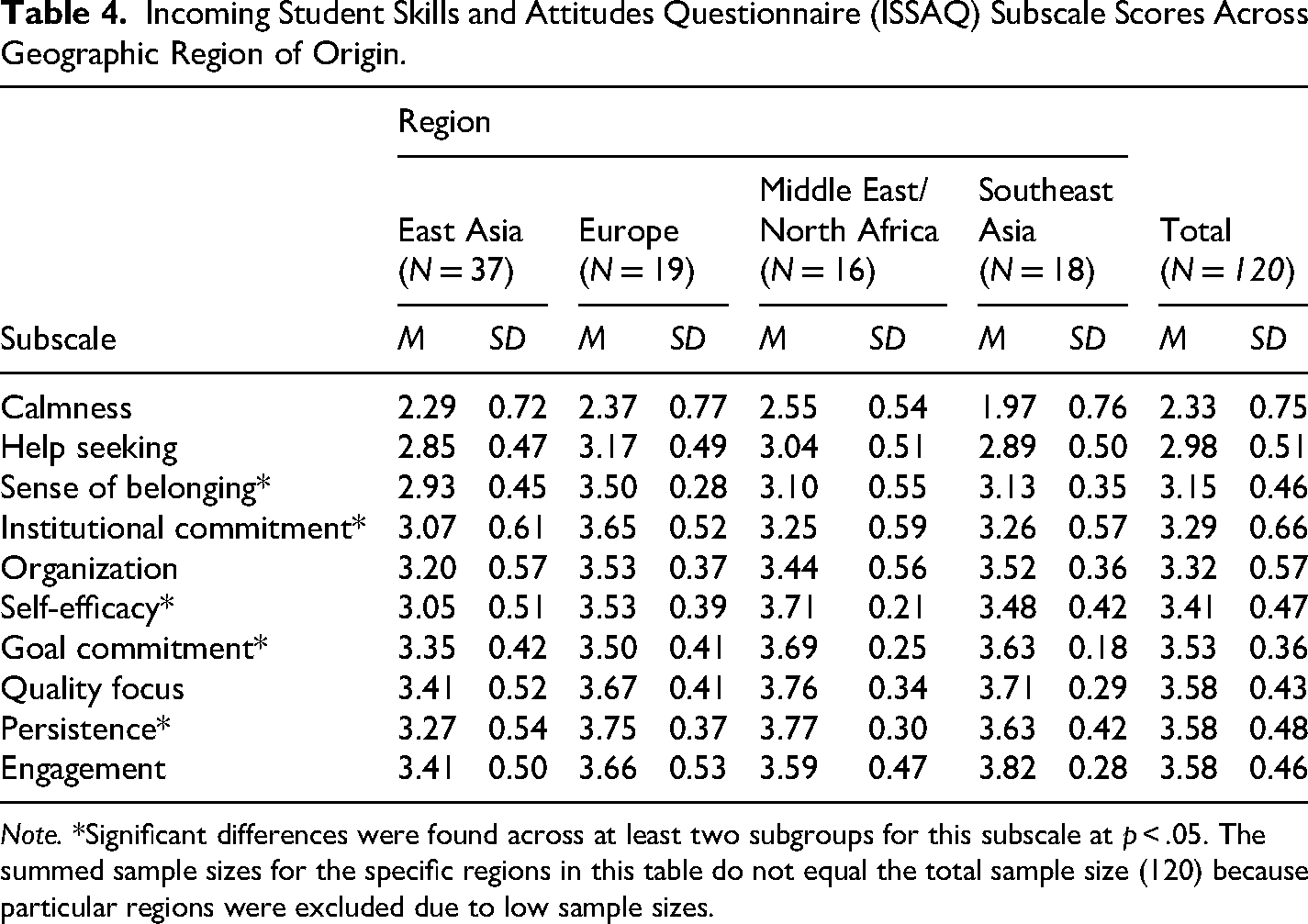
Table 4 and Figure 1 present average ISSAQ subscale scores across geographic region of origin. Geographic regions comprised of fewer than 15 students (Sub-Saharan Africa, Commonwealth of Independent States, and Caribbean/Latin America) were excluded from this specific analysis to preserve students’ privacy.
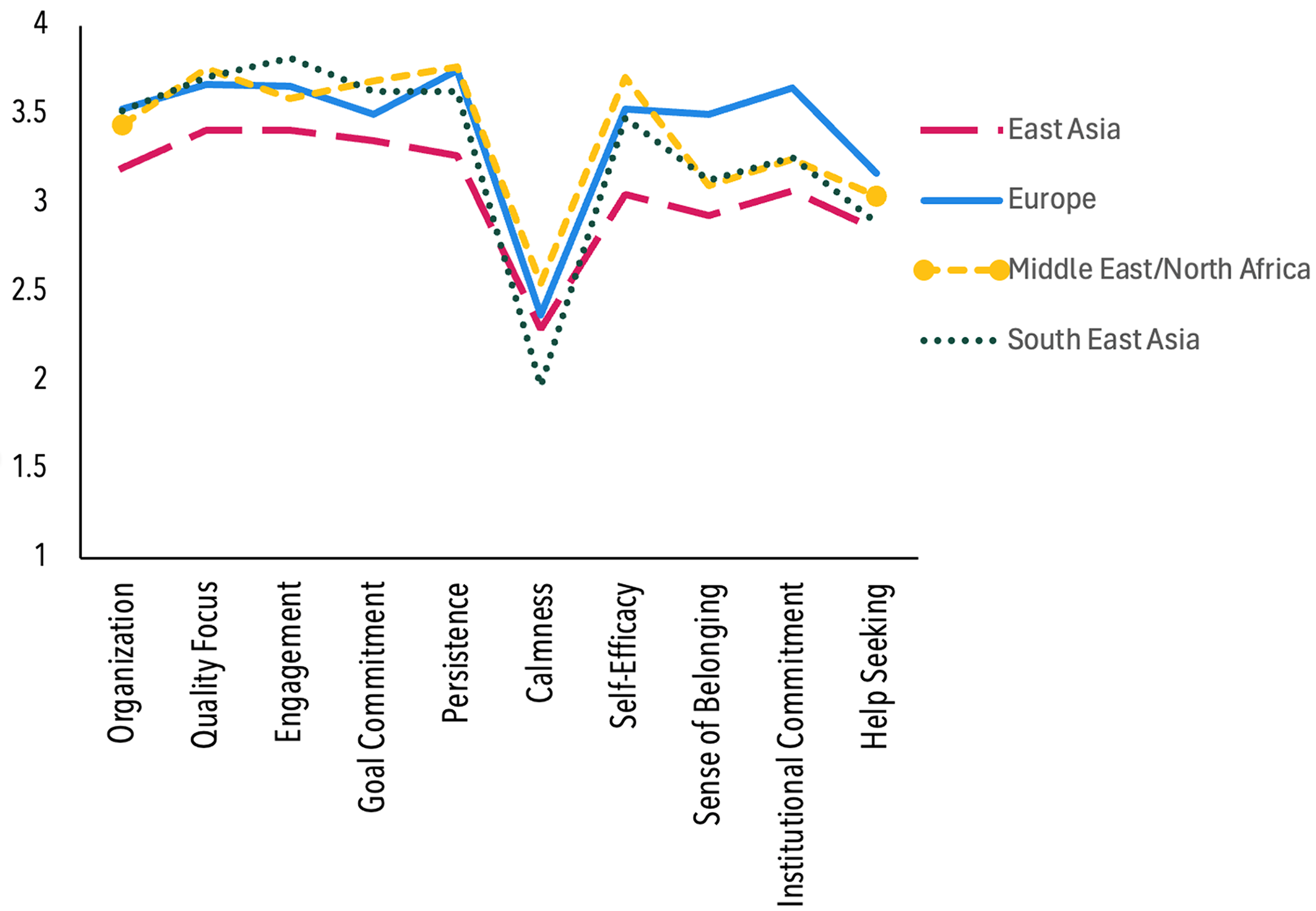
Incoming Student Skills and Attitudes Questionnaire (ISSAQ) subscale scores by geographic region of origin.
Incoming Student Skills and Attitudes Questionnaire (ISSAQ) Subscale Scores Across Geographic Region of Origin.
Note. *Significant differences were found across at least two subgroups for this subscale at p < .05. The summed sample sizes for the specific regions in this table do not equal the total sample size (120) because particular regions were excluded due to low sample sizes.
In general, students from East Asia exhibited lower scores across the subscales compared to students from other regions. Specifically, significant differences across regions emerged for self-efficacy, sense of belonging, goal commitment, persistence, and institutional commitment. Regarding self-efficacy and persistence, students from East Asia scored significantly lower than students from all other regions, on average (Cohen's d > .70). In addition, students from East Asia, on average, scored lower on sense of belonging and institutional commitment than students from Europe (Cohen's d = 1.41 for sense of belonging; Cohen's d = .99 for institutional commitment). On average, students from East Asia scored significantly lower than students from Middle East/North Africa on goal commitment (Cohen's d = .87).
Table 5 and Figure 2 present average ISSAQ subscale scores across academic level. In general, students enrolled in the pathway program scored lower than other students across most subscales. Pathway program students scored significantly lower, on average, on sense of belonging and self-efficacy compared to both undergraduate (Cohen's d = 0.85 for sense of belonging and 0.55 for self-efficacy) and graduate students (Cohen's d = 1.01 for sense of belonging and 0.93 for self-efficacy). Moreover, on average, undergraduate students scored significantly higher compared to both groups on institutional commitment (Cohen's d = 0.42).
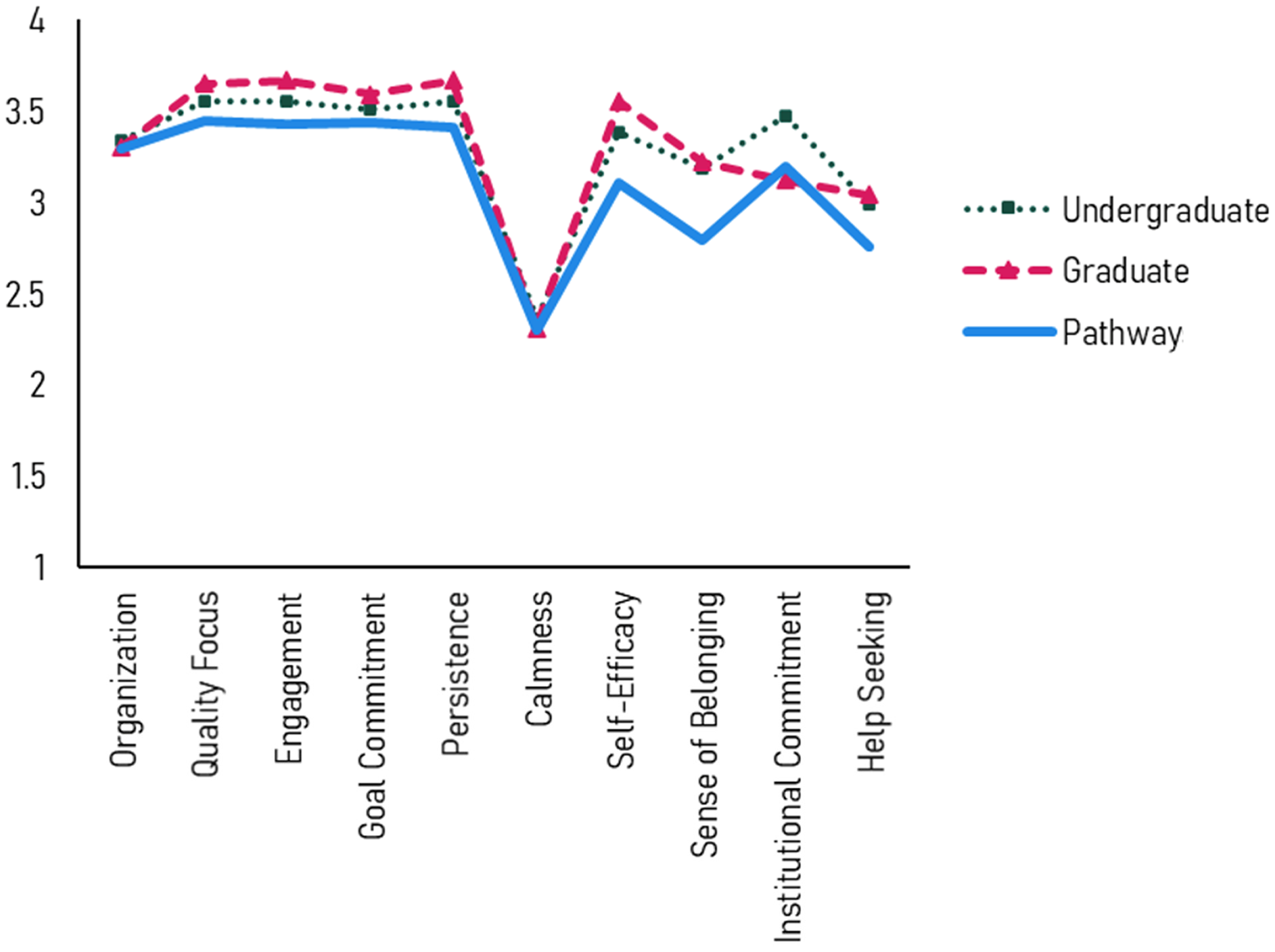
Incoming Student Skills and Attitudes Questionnaire (ISSAQ) subscale scores across academic level.
Incoming Student Skills and Attitudes Questionnaire (ISSAQ) Subscale Scores Across Academic Level.
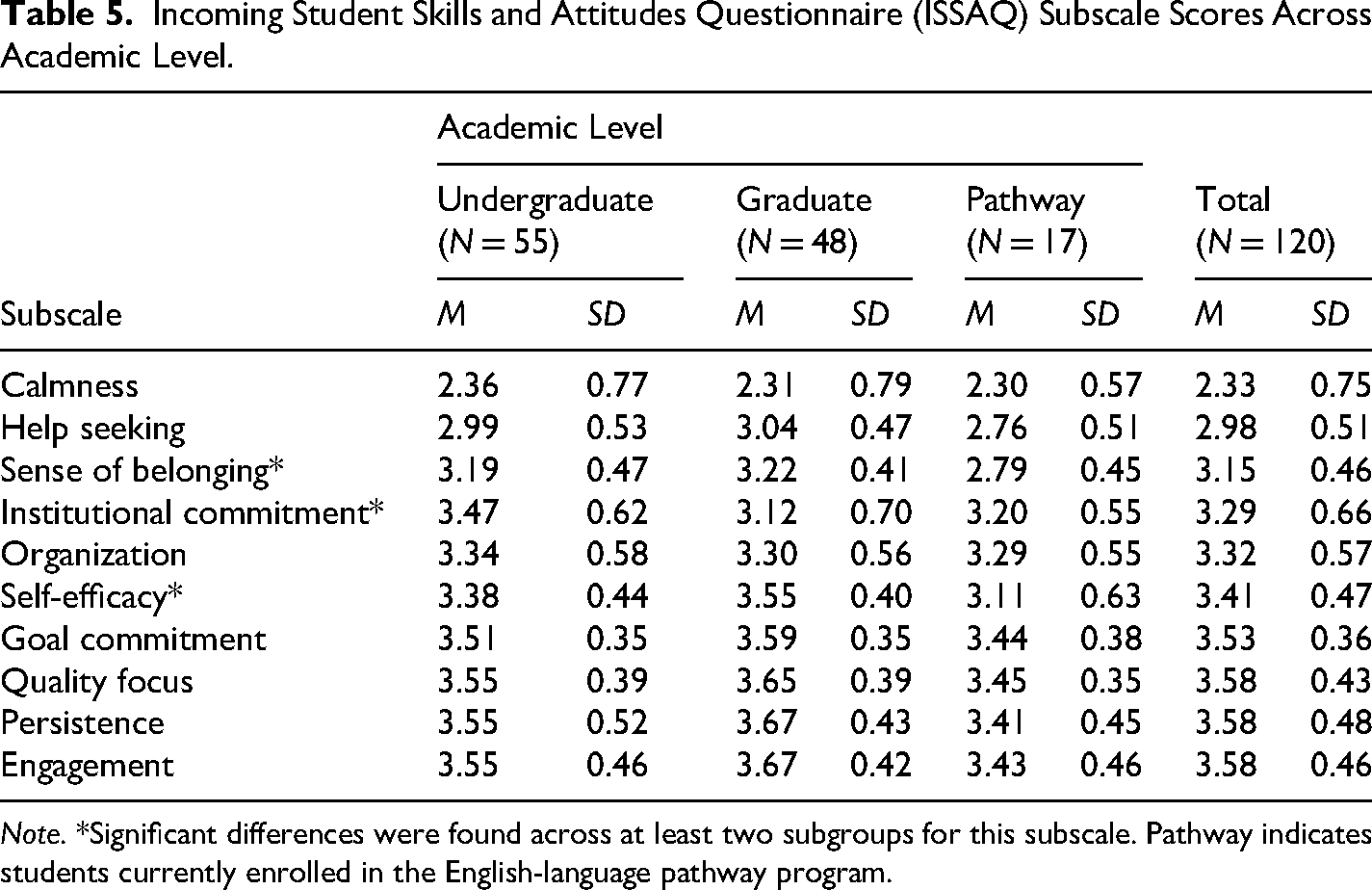
Note. *Significant differences were found across at least two subgroups for this subscale. Pathway indicates students currently enrolled in the English-language pathway program.
Table 6 and Figure 3 present average ISSAQ subscale scores across English-language proficiency group. In this analysis, the pathway program (N = 38) refers to students who matriculated from or are currently enrolled in the pathway program. In general, students who were in the pathway program group at some point during their educational experience scored lower on all ISSAQ subscales compared to students directly admitted to the university. Significant differences emerged across the quality focus (Cohen's d = 0.58), engagement (Cohen's d = 0.42), persistence (Cohen's d = 0.76), self-efficacy (Cohen's d = 1.04), and sense of belonging (Cohen's d = 0.50) subscales, with students directly admitted to the university scoring higher.
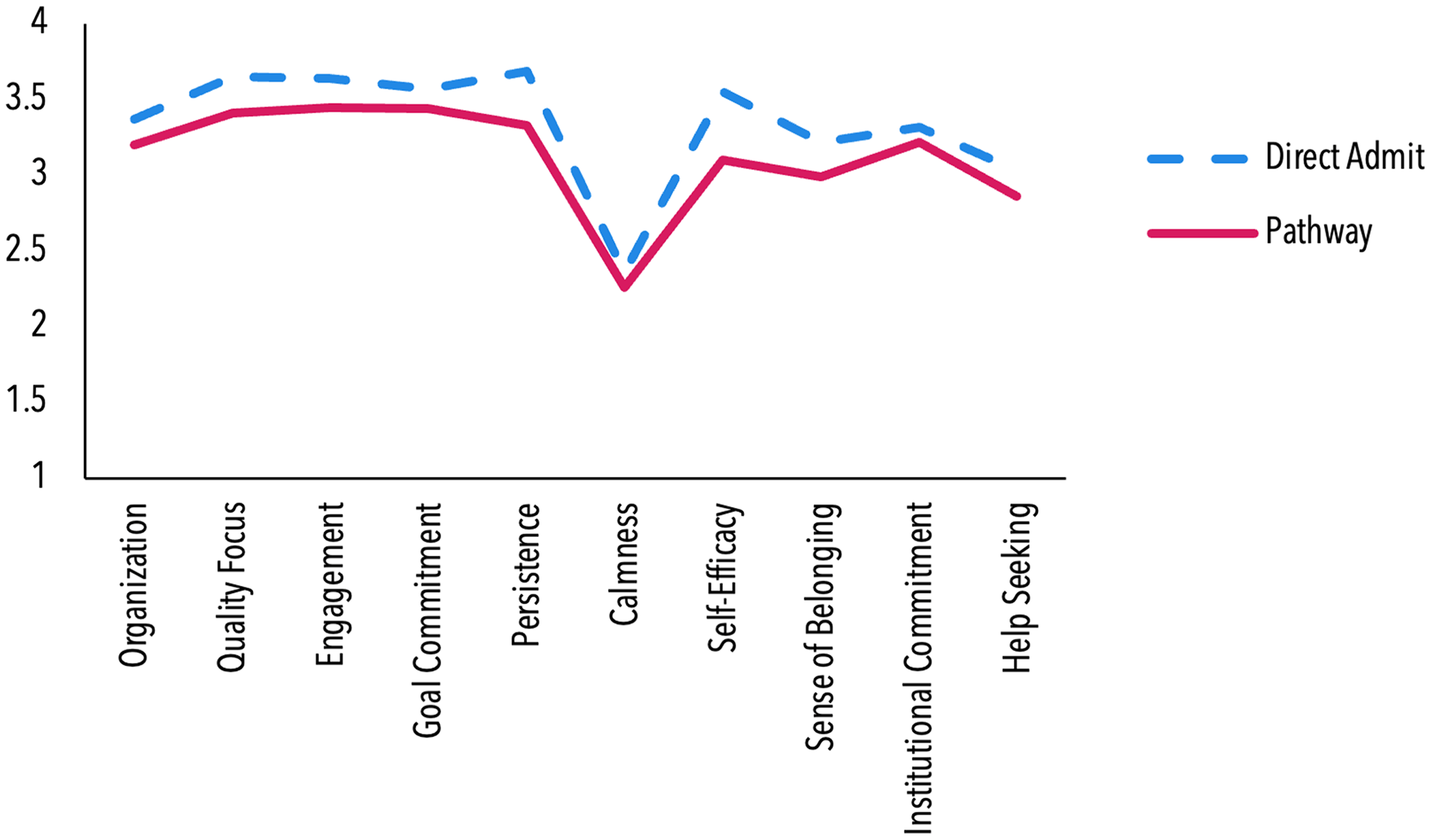
Incoming Student Skills and Attitudes Questionnaire (ISSAQ) subscale scores across English-language proficiency status.
Incoming Student Skills and Attitudes Questionnaire (ISSAQ) Subscale Scores Across English-Language Proficiency Status.
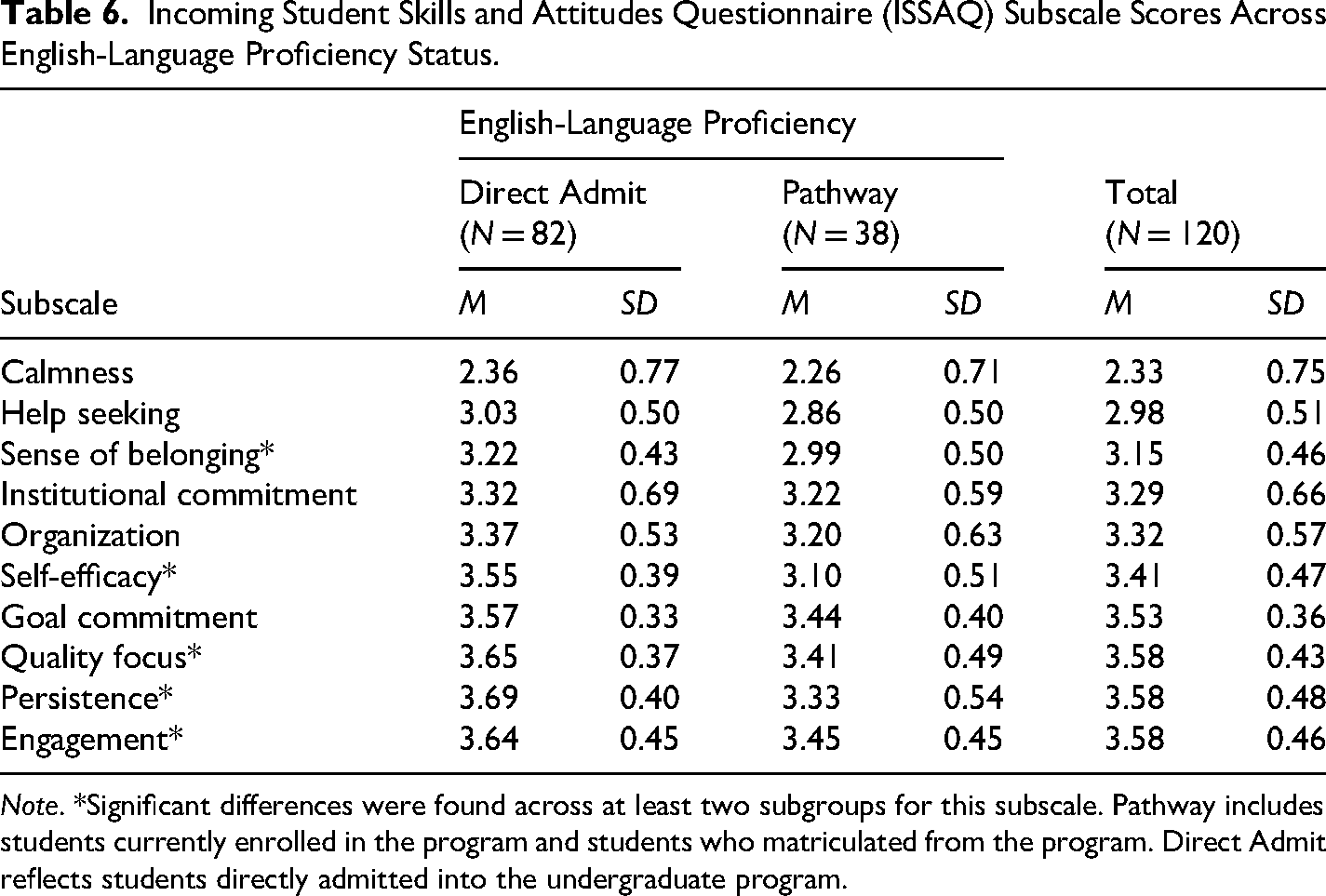
Note. *Significant differences were found across at least two subgroups for this subscale. Pathway includes students currently enrolled in the program and students who matriculated from the program. Direct Admit reflects students directly admitted into the undergraduate program.
Table 7 and Figure 4 present ISSAQ subscale scores across student-athlete status. Active student athletes scored significantly higher on calmness and institutional commitment compared to non-student athletes (Cohen's d = 0.70 for calmness and 0.84 for institutional commitment).
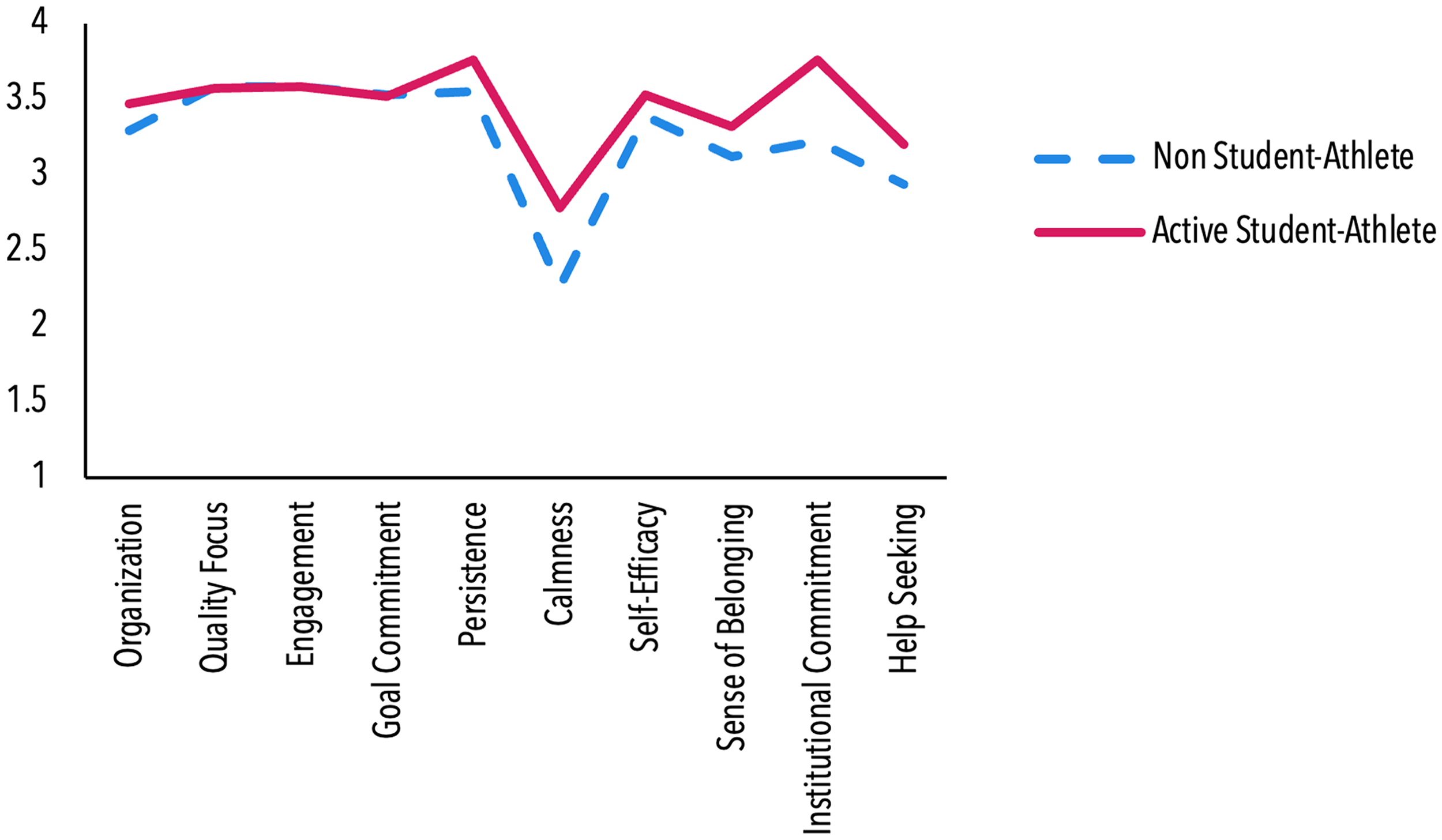
Average Incoming Student Skills and Attitudes Questionnaire (ISSAQ) subscale scores across student-athlete status.
Descriptive Statistics for Incoming Student Skills and Attitudes Questionnaire (ISSAQ) Subscales Across Student-Athlete Status.
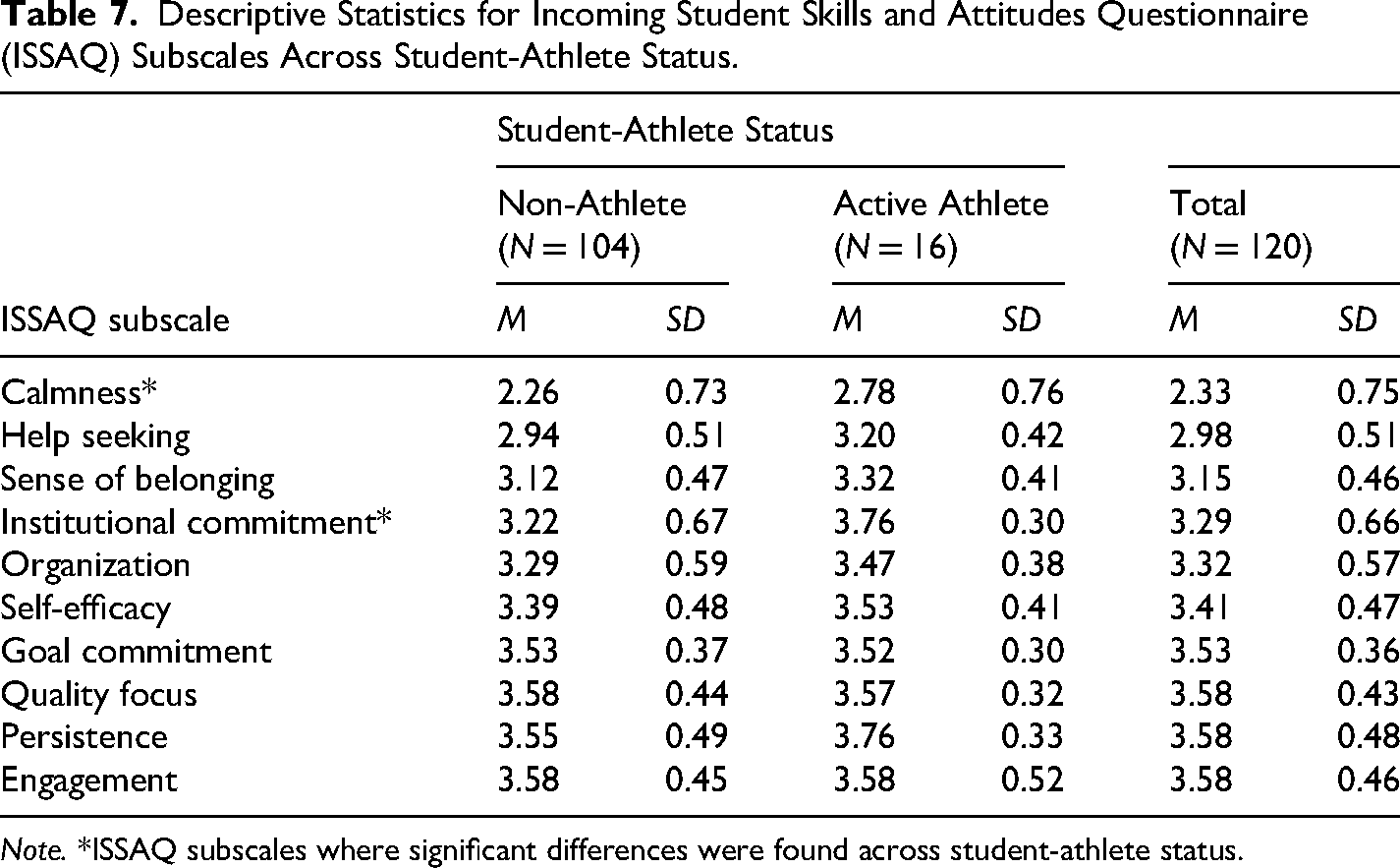
Note. *ISSAQ subscales where significant differences were found across student-athlete status.
In sum, examining the overall profile of ISSAQ scores concealed meaningful subgroup differences. Disaggregating ISSAQ scores by demographic groups revealed subpopulations of international students who could benefit from targeted programing. Significant differences on sense of belonging and self-efficacy emerged in three of the four subgroup analyses, suggesting these constructs as immediate areas of focus. However, recall the ultimate goal of new programing is to impact international student success (i.e., GPA and retention rates). Therefore, before implementing interventions to increase self-efficacy or sense of belonging, it was necessary to evaluate if these two constructs relate significantly to GPA.
Research Question 3: Do the noncognitive skills predict academic success (i.e., GPA) for international students, as has been found for domestic students? To identify the noncognitive skills most related to academic success for international students, bivariate relations between ISSAQ subscales and GPA were examined. Regarding semester GPA, the following relations were statistically (p < .01) and practically (r > .25; Cohen, 1992) significant: Self-efficacy (r = .41), sense of belonging (r = .34), and persistence (r = .27). Furthermore, self-efficacy (r = .36), sense of belonging (r = .31), and goal commitment (r = .25) shared statistically and practically significant relations with cumulative GPA. Notably, self-efficacy and sense of belonging each shared approximately 10% of their variance with variability in GPA.
Multiple regression analyses were conducted to examine how well the 10 noncognitive skills predicted semester and cumulative GPA. Multicollinearity between the subscales was examined prior to the multiple regression, with correlations among the subscales ranging from .002 to .679. Multicollinearity was not an issue when estimating the model (i.e., tolerance values did not result in estimation issues). Table 8 presents results from predicting semester GPA from the 10 ISSAQ subscales.
Multiple Regression Results Using ISSAQ Subscales to Predict Semester GPA.
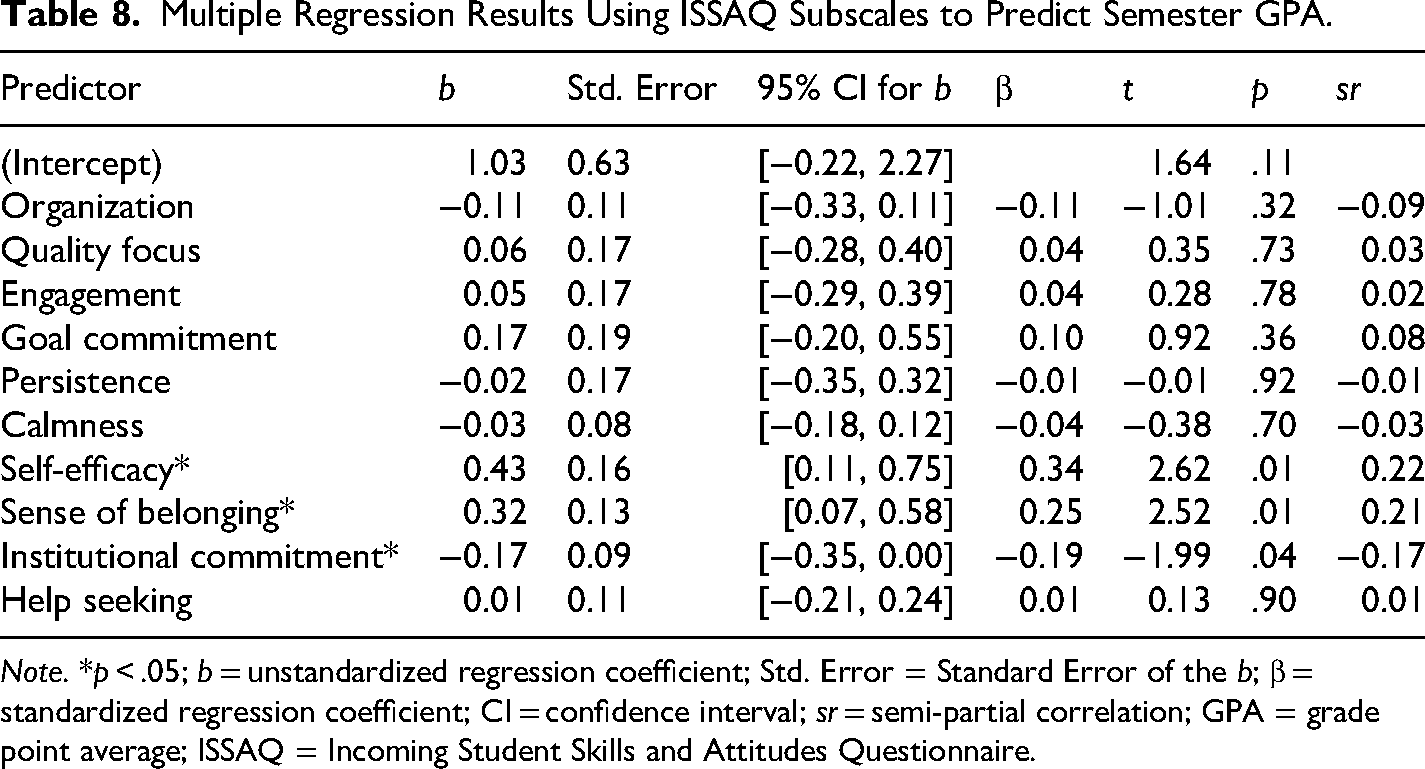
Note. *p < .05; b = unstandardized regression coefficient; Std. Error = Standard Error of the b; β = standardized regression coefficient; CI = confidence interval; sr = semi-partial correlation; GPA = grade point average; ISSAQ = Incoming Student Skills and Attitudes Questionnaire.
Impressively, the ISSAQ subscales accounted for 24.5% of the variance in semester GPA, R2 = 0.245, F(10,105) = 3.41, p < .001. Self-efficacy, sense of belonging, and institutional commitment were significant predictors of GPA. When examining unique contributions of the 10 noncognitive ISSAQ skills, self-efficacy (b = 0.43, p = .01, 95% CI[0.11, 0.75], sr2 = 0.049) accounted for 4.9% of the variance in semester GPA uniquely, above and beyond what could be explained by the other ISSAQ subscales. Additionally, sense of belonging (b = 0.32, p = .013, 95% CI[0.07, 0.58], sr2 = 0.046) accounted for 4.6% of the variance in semester GPA uniquely.
Table 9 presents results when predicting cumulative GPA from the 10 ISSAQ subscales. The subscales accounted for 23.3% of the variance in cumulative GPA, R2 = 0.233, F(10,109) = 3.31, p < .001. Self-efficacy, sense of belonging, and institutional commitment were significant predictors of cumulative GPA. When examining unique contributions of the 10 noncognitive ISSAQ skills, self-efficacy (b = 0.30, p = .037, 95% CI[0.02, 0.57], sr2 = 0.031) accounted for 3.1% of the variance in cumulative GPA uniquely. Additionally, sense of belonging (b = 0.28, p = .013, 95% CI[0.06, 0.51], sr2 = 0.05) accounted for 4.5% of the variance in cumulative GPA uniquely.
Multiple Regression Results Using ISSAQ Subscales to Predict Cumulative GPA.
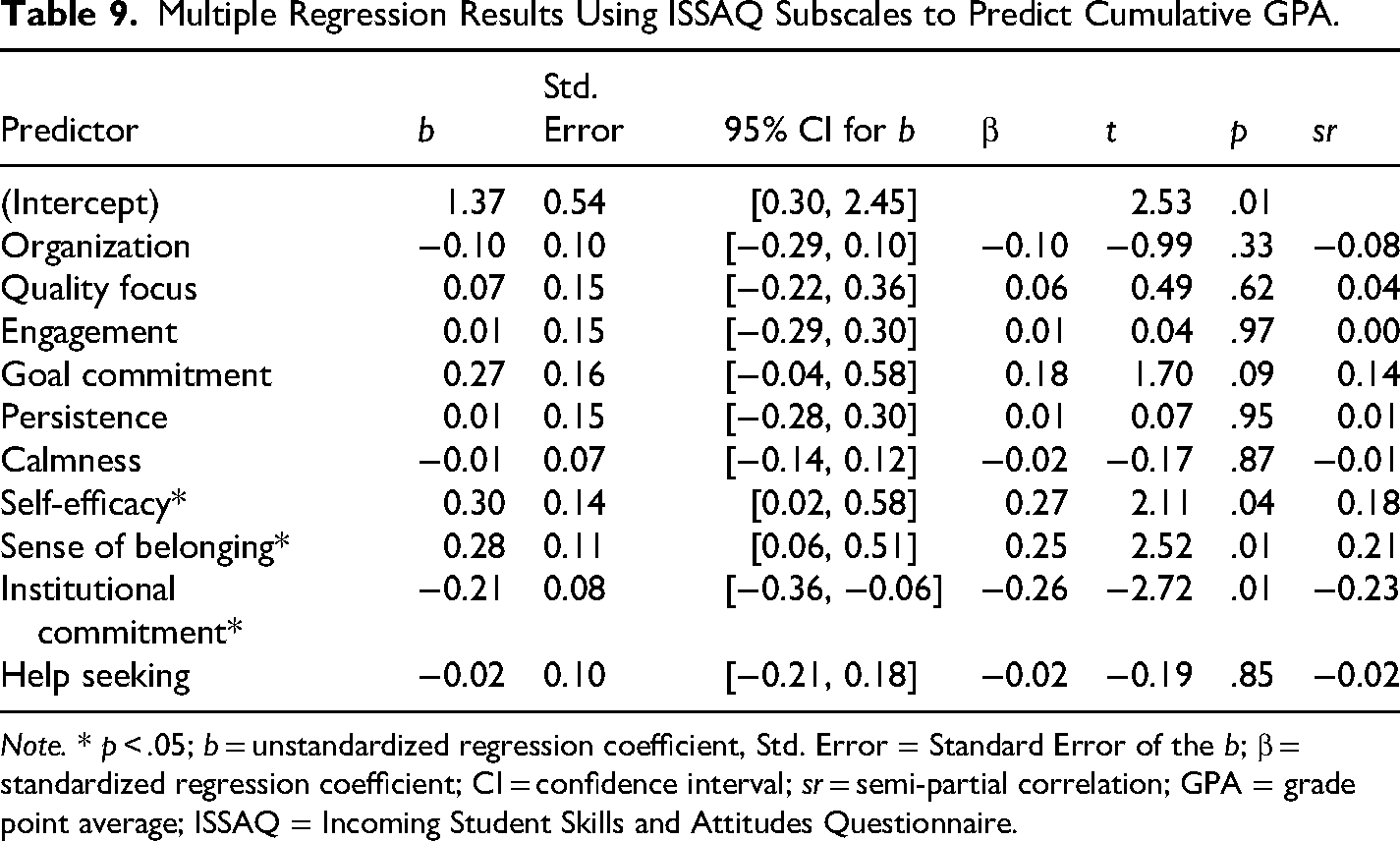
Note. * p < .05; b = unstandardized regression coefficient, Std. Error = Standard Error of the b; β = standardized regression coefficient; CI = confidence interval; sr = semi-partial correlation; GPA = grade point average; ISSAQ = Incoming Student Skills and Attitudes Questionnaire.
Discussion
The current study provides insights into international student success by providing an overall profile of their noncognitive skills, as defined and measured via the ISSAQ, and prediction of academic performance from these noncognitive skills. Regarding the first research question (“What are the areas of strength and growth for a population of international students studying at a U.S. higher education institution?”), skills for growth included calmness, help-seeking, and sense of belonging and skills of strength included quality focus, persistence, and engagement. Importantly, this singular profile of the international student population masked meaningful differences that existed within various subpopulations.
In turn, the second research question (“Do the areas for growth differ by students’ country of origin, English-language proficiency, and other characteristics, therefore supporting tailored services?”) focused on disaggregated scores across student subpopulations. Across gender and housing status, no differences in the noncognitive success factors were found; however, significant differences emerged across geographic region of origin, academic level, English-language proficiency status, and student-athlete status. The noncognitive skills profiles for graduate students, students from Europe, student athletes, and students directly admitted into the undergraduate program (i.e., not enrolled in the English-language pathway program) were higher overall across the various noncognitive skills. However, lower scores prompted concern for two specific subgroups: students who entered the university through the English-language pathway program and students from East Asia.
Students currently enrolled in or who matriculated through the English-language pathway program scored lower on all ISSAQ constructs compared to counterparts who were directly admitted into the undergraduate program. Specifically, pathway students were significantly lower in sense of belonging, self-efficacy, quality focus, persistence, and engagement. Of these constructs, both sense of belonging and self-efficacy predicted individual differences in GPA. These results align with previous findings of a positive relation between international students’ academic success and their English-language proficiency (Ren & Hagedorn, 2012). That is, belongingness directly impacts language learners’ education, as they become more easily isolated by linguistic differences (Finley, 2018).
Students from East Asia also scored lower on most ISSAQ constructs compared to peers from other geographic regions. Existing research on sense of belonging for Asian college students often focuses on Asian American students, examines students from only one country, or generalizes the Asian student experience (e.g., Kao, 2022; Slaten et al., 2016). There is research, albeit limited, on students from certain Asian regions with respect to specific education-related outcomes. For example, South Asian students’ sense of belonging significantly predicted racism-related stress (Aggarwal & Çiftçi, 2021) and East Asian students’ sense of belonging significantly predicted depressive symptoms (Choi et al., 2021). Taken together, the current study reinforces prior research that findings from other Asian populations (e.g., Asian American, South Asian, or Southeast Asian students) should not be generalized to students from East Asia, whose cultural, historical, and educational experiences may differ substantially. Further studies are needed on the sense of belonging with this region-specific population.
Results for the final research question (“Do the noncognitive skills predict academic success for international students, as has been found for domestic students?”) confirmed that noncognitive constructs are crucial for understanding variability in international students’ academic performance. As established for domestic students (Richardson et al., 2012; Robbins et al., 2004), noncognitive success factors explained individual differences in GPA for international students. Remarkably, over a quarter of the variance in GPA was explained by the noncognitive skills; self-efficacy and sense of belonging were uniquely and practically associated with GPA.
Limitations and Future Research
This study was conducted on F-1 and J-1 visa-holding students at one public university in the mid-Atlantic region of the United States. As such, the findings may be unique to these students and this institution at the time of assessment; therefore, limitations exist in generalizing findings to different institutions. Future research could use the ISSAQ measure at other similarly- and differently-typed and sized institutions and data collection could be broadened to include all visa-holding students for a wider picture of the international student profiles.
Another limitation of this study is that the needs assessment was voluntary and students self-selected to participate. In this study, students who completed the assessment had a higher cumulative GPA compared to non-completers, confirming that self-selected participation can lead to findings not representative of the whole population (Olsen, 2008). It may be that students with lower GPAs did not feel comfortable sharing about their skills; however, these students may be struggling and most in need of targeted support. Thus, future research could consider making the ISSAQ measure a requirement for all international students.
Despite these limitations, having profiles of various international student subgroups is useful for university staff to begin addressing areas for growth with tailored programing (e.g., Zhao et al., 2005). For example, low sense of belonging emphasized the need for this institution to implement programing shown to be effective in increasing belonging of college students (Walton & Cohen, 2007). Future research could focus on the effectiveness of these belonging interventions with international students, given the limited existing research.
Implications and Recommendations
This study further informed five recommendations for institutions serving international students. First, international student offices should assess their students. For institutions who employ mandatory assessments for accreditation, a needs assessment could be required for the entire international student cohort. Another option is pairing a needs assessment with a first-year seminar, as research indicates that first-year experiences are crucial for college students’ academic success, retention, and persistence (Connolly et al., 2017). Specifically, first-year seminars designed for international students positively influenced their cultural adjustment and comfort with university systems and services beyond their first year (Andrade, 2009). These findings underscore the importance of integrating assessment with targeted programing early in the student experience. Importantly, assessment results allow administrators to better advocate for resources (i.e., time, money, expertise) to support their international students.
Second, if time and resources are limited, international student offices should prioritize noncognitive skills that are in need of growth and that relate to academic success, which were sense of belonging and self-efficacy at James Madison University. Research consistently shows that a strong sense of belonging promotes student persistence. College students, in general, were more likely to persist and complete their degree when they felt that they belonged and mattered to others (Davis et al., 2019; O’Keeffe, 2013; Renn, 2022). Conversely, students with a lower sense of belonging were more likely to express intentions of dropping out (Pedler et al., 2022). Although sense of belonging has been examined and deemed a concern in the general college student population (e.g., Gopalan & Brady, 2019; Murphy et al., 2020; O’Keeffe, 2013; Strayhorn, 2018) and in underserved populations (e.g., Holloway-Friesen, 2022; Hunter et al., 2019; Kao, 2022), studies focusing specifically on international students remain comparatively limited. As sense of belonging was an area for growth for all international students at JMU, the team recommended that evidence-based sense of belonging programing (e.g., Walton & Cohen, 2007) be researched, implemented, and studied for effectiveness with international students.
Third, students learning English may be a particularly marginalized subpopulation of international students who may need additional supports and attention from the institution. Students who were enrolled in or matriculated through the English-language pathway program at JMU scored lower on all noncognitive factors compared to counterparts who were directly admitted into the university. Given these lower noncognitive skills, the positive relation between international students’ academic success and their English-language proficiency (Ren & Hagedorn, 2012), and the impact of belongingness on language learners’ education (Finley, 2018), programing and services are recommended to support sense of belonging for students working to increase their English-language proficiency while studying in the United States.
Fourth, international student offices should educate faculty and staff on the specific needs of international students and how to address the needs effectively. Support and attention from university staff and international student advisors are crucial for fostering international student success (Roberts & Ammigan, 2024), as is intercultural training for division leaders (Elliott & Bista, 2024). Effective support from international advisors has been positively related to international students’ sense of belonging (Lee et al., 2020). Therefore, international student advisors and student affairs professionals are positioned to impact international students’ experiences on their campuses. Importantly, the measure used for this study (i.e., ISSAQ) allows for both students and their advisors to receive their scores and noncognitive skills profile, priming advisors to step into this important role and holistically advise their students.
Fifth, international student offices should acknowledge and work to mitigate the impact of immigration and sociopolitical landscape changes. Shortly after the U.S. presidential administration change occurred in early 2025, international students started reporting concerns surrounding the visa revocations, deportation without due process, travel bans, expanded social media vetting for visa issuance and entry to the United States, and immigration enforcement activities (e.g., Knox, 2025; Weissman, 2025), making them now an even more vulnerable population (Zhang et al., 2025). These factors are worth noting as they can create an environment where international students have heightened anxiety, feelings of uncertainty, and fear of discrimination, which may erode sense of belonging (e.g., Walton & Cohen, 2007). Furthermore, a November 2025 report from the Institute of International Education showed a 1% decline in total international student enrollment and a 17% decline in new international student enrollment, marking the first drop following four consecutive years of post-pandemic growth (Baer & Ekin, 2025). Institutions attributed these declines to visa application challenges, travel restrictions, students’ concerns about feeling unwelcome, and the broader sociopolitical climate (Baer & Ekin, 2025). These factors challenge university faculty and staff to aid in fostering a sense of belonging among the international student community. The current study was conducted before these sociopolitical factors were amplified for international students in the United States. Thus, future research could incorporate questions regarding these sociopolitical factors as they are now a part of the landscape in which international students experience U.S. higher education.
Conclusion
Prompted by concerns related to retention and GPA, this study explored the noncognitive skills of one university's international student population and established the utility of 10 noncognitive factors to better understand international student success. The use of a multi-faceted measure of student success constructs revealed distinct profiles of various international student groups. Specifically, results suggested that students with lower English-language proficiency need intentional supports to enhance their self-efficacy and sense of belonging. Moreover, students from East Asia may benefit from programing to enhance their self-efficacy, sense of belonging, and persistence. Given their predictive utility for both semester and cumulative GPA, enhancing these noncognitive skills should positively impact student learning, development, and persistence for international students. Gathering this data allowed for the identification of which skills to target with intentional, evidence-informed programing (Finney et al., 2021; Pope et al., 2019). In short, this study expanded upon previous research (e.g., Krsmanovic, 2022; Saklofske et al., 2012) and puts higher education a step closer to answering the call (e.g., Ammigan & Drexler, 2023; Ting & Morse, 2016) for strategic university-wide collaborations between student affairs, academic units, and international offices to identify and bolster factors contributing to the academic experience and success of international students.
Footnotes

Funding
The authors received no financial support for the research, authorship, and/or publication of this article.
Declaration of Conflicting Interests
The authors declared no potential conflicts of interest with respect to the research, authorship, and/or publication of this article.