







Abstract
Problem
Across all sectors, leadership decision-makers question how to professionally develop leaders who foster cohesive, collaborative, and high performing workforce environments in diverse organizations. They doubt the efficacy of traditional leadership development modalities when confronted by unpredictable emerging workforce and workplace challenges.
Solution
The article’s conceptual framework is centered on the premise that the best interaction between leader and led in diverse organizations is inclusive leadership. Leaders who deliberately role model inclusive leadership behaviors create a culture where everyone works to their full potential, stimulate learning organizations, and catalyze workforce relationships towards achieving strategic goals.
Stakeholders
This article is ideal for Human Resources, Human Resource Development, Organizational Development, and Diversity, Equity, Inclusion, and Accessibility professionals, trainers, facilitators, consultants, practitioners, change agents and leaders. It may be helpful in generating ideas and practices for developing interventions catalyzing inclusive practices among leaders and workforce members.
There is a high demand for leaders who can successfully navigate disruptive complexities that are ever present and prevalent across every sector and the globe (Voline et al., 2019; Yawson, 2020). Disruptive change is not new; however, the speed at which it is happening accompanied with uncertainty make adequate response a daunting task and endurance seemingly unattainable (Christensen et al., 2018). Some recent disruptive change examples are: work in office to work from home; Blockbuster to Netflix; mobile phones to smartphones; and diversity to diversity, equity, inclusion and accessibility (DEIA). Key drivers of disruptive complexities are globalization, technology, and demographics (O’Brien & Robertson, 2009). Other external drivers commonly utilized in analysis and decision-making influencing responses and impacting organization performance across its life cycle are political, economic, social, cultural, legal and environmental factors (Wheelen et al., 2018). A combination of these factors intensify existing and growing workforce demands, overstrain processes and resources, generate instability and challenge leaders with how to effectively attend and cope with resulting crises. The implications are far-reaching; however, the focus of this article is the shift required to develop leaders to adapt, improvise and embrace inclusivity as a method to meet the demands of an evolving marketplace.
Professionally developing leaders for dynamic change necessitate competencies optimizing diverse talent capital, cohesion, collaboration, and high performing environments (Buengeler et al., 2018). Traditional leadership models lacking relational and engagement skills are inadequate for the challenge. A leadership approach is needed to improve engagements and increase relationship capacity to better accommodate the modern context (Warrick, 2017). Disruptive change requires a combination of intrapersonal and interpersonal leadership capabilities creating organizational climate and cultures of continuous learning, flexibility and agility (Yawson, 2020).
Progressive organizations are deliberate in mirroring the communities they serve and their leaders attuned to including perspectives of work members with varying backgrounds, skills, and experiences (Buttner et al., 2010). Leaders who recognize solutions reside in leveraging talents, expertise, and contributions of the collective whole are better equipped to direct focused synergy toward progress (Buengeler et al., 2018). Effectively harnessing differences can spark creativity and forge paths of heightened organizational learning; but when diminished, it is an untapped source of innovation and stimulus for enhanced workplace relationships and productivity (Christensen et al., 2018).
Even with the passage of protective acts, controversial public opinions dominate views of DEIA in and outside the workplace and effective management continues to be a prominent business, nonprofit, and government challenge (Shore et al., 2018). We live in an increasingly globalized environment with dynamic workforce demographics where inclusivity should be commonplace, but in many cases, advocacy and action are lacking (Dover et al., 2020). Leaders are in a precarious situation where they are encountering constant disruptions brought on by globalization, technology, and other interrelated complicated factors while simultaneously working to achieve strategic objectives and emerging workforce demands (Wheelen et al., 2018). Nonetheless, leaders are the architects of organizational strategy, culture, and structure (Wheelen et al., 2018). There is an inherent expectation of leaders to accept and bear the brunt of the responsibility for orchestrating solutions. Leaders have at their disposal the answers - organizational talent capital (people talent), and tools - human resource development (HRD). Leaders can catalyze organizational talent learning and growth by maximizing HRD interventions. Vision, strategy, mission and profit – nothing is accomplished without optimizing talent capital.
Research shows embracing DEIA principles in words and deeds are beneficial for the workplace and business (e.g. Ng & Sears, 2020; Nishii et al., 2018; Nishii & Paluch, 2018). A Deloitte 2013 survey reports respondents wanted to see their leaders and co-workers demonstrate inclusion in their everyday behaviors, interactions, and decision-making (DeHaas et al., 2017). However, many organizations and leaders still are not convinced of DEIA benefits and view it as another program initiative competing for resources and time, both of which are often regulated and reserved for what are considered more pertinent strategic matters (Shore et al., 2018). A compliant driven, half-hearted DEIA approach fails to recognize how progress can be achieved amid uncertainty when differing perspectives are explored (Randel et al., 2018). When organizational members are treated with respect and acceptance, regardless of differences and similarities, cultures of learning are formed built upon trust and civility, the building blocks of innovation and enhanced organizational performance (Yawson, 2022).
The responsibility for DEIA inherently resides with leadership and should not be delegated (Ashikali et al., 2021; Randel et al., 2016). Across sectors, leaders play an instrumental role in bridging and bonding relationships across differences and similarities (Ashikali et al., 2021). Their perspectives, beliefs and behaviors determine how individual talent, skills and competencies are developed, valued and ultimately utilized (Ashikali et al., 2021; Dover et al., 2020). Leaders who are comfortable and equipped with communicating and building relationships across differences and similarities positively impact several fundamental yet critical human capital functions including: recruiting, hiring, onboarding, retention, promotion, talent development, performance management, and succession planning (Ashikali et al., 2021; Brimhall & Mor Barak, 2018; Buengeler et al., 2018).
In March of 2021, the lead author of this article had the distinct opportunity of asking three combatant commanding generals plus an ambassador what each would have wanted in their personal toolkit to increase understanding and advocacy of women, peace and security (WPS) efforts. For context, the WPS Act was signed into law on October 16, 2017. It supports advancing consequential inclusion and participation of women in peace and security efforts to deter, detract, and decrease violent conflict (Women, Peace and Security Act of 2017). The responses were interesting and enlightening. The highest-ranking panel member (four-star general) said interactive training with practical examples of how to role model inclusive behaviors. The second (a three-star general) said more education. The next (three-star) said aggressive leader actions and the ambassador also said role models. These senior military and diplomatic Department of Defense leaders would have wanted identified skills and a frame of reference for how to better support, role model, and demonstrate inclusive leader behavior. This article proposes how leaders can learn to role model and integrate inclusion into the workforce not only from a gender perspective but across the dimensions of diversity.
Inclusive Leadership: An Overview
There are various definitions for inclusive leadership and years of research reveals multiple distinct, yet relevant concepts and perspectives (Veli Korkmaz et al., 2022). Shore et al. (2018) define inclusive leadership as behaviors that facilitate employees feeling part of the group (belongingness) and retaining their sense of uniqueness while contributing to group processes and outcomes. “While diversity researchers have conceptualized inclusive leadership, our understanding of leader behaviors to facilitate an inclusive environment is relatively limited” (Roberson & Perry, 2021, p.6). Since inception (around 1990), the concept evolved from focusing on individuals/groups benefits, to intentional systemic inclusive actions, to leaders promoting systems of inclusion (Thompson & Matkin, 2020). Booysen (2014) describes it thus:
Inclusive leadership extends our thinking beyond assimilation strategies or organizational demography to empowerment and participation of all, by removing obstacles that cause exclusion and marginalization. Inclusive leadership involves particular skills and competencies for relational practice, collaboration, building inclusion for others, creating inclusive workplaces and work cultures, partnerships and consensus building, and true engagement of all. (p. 298)
Inclusive leadership invites dialogue of diverse perspectives which stimulate contributions of full potential toward achieving common goals while simultaneously cultivating safety, shared learning, and a culture of inclusion (Barak, 2022). Inclusive leaders enable full participation and contribution of the workforce by reducing, with the goal of eliminating, implicit and explicit barriers (Ashikali et al., 2021). Additionally, they share knowledge, experience and influence because they are aware of how motivation, energy and cooperation accelerate when information, resources and accessibility are equitable (Peterson et al., 2020). Inclusive leadership is a strategic core competency and should not be viewed or considered as a supplemental, intermittent skill, program or activity (O’Brien & Robertson, 2009; Wheelen et al., 2018).
Why Inclusive Leadership?
It is a proven approach generating positive engagement across differences and similarities (Brimhall & Mor Barak, 2018). Inclusive leaders create a culture where everyone, especially the underrepresented and marginalized, are fully accepted for their differences, invited to contribute perspectives, and considered valued team members (Brimhall & Mor Barak, 2018; Randel et al., 2018). It benefits everyone because inclusion engenders a sense of belonging and connection which are fundamental human desires; homogeneous and heterogeneous groups/teams/workforce benefit from inclusion (Randel et al., 2018). Inclusive leadership is the model that enables leaders to successfully navigate diverse groups/teams/workforce in ways not sufficiently addressed by other models of leadership (Randel et al., 2018). It augments leader strategic vision with the guiding principles and ideals of inclusion and is considered the best interaction between the leader and led in diverse groups/teams/workforce promoting positive engagements, high team performance and achieving strategic imperatives (O’Brien & Robertson, 2009).
Benefits of Inclusion and Inclusive Leadership
Leadership plays an indispensable role in assembling and aligning systems and processes to reap the benefits of inclusion (Bourke & Titus, 2020). To fully grasp the benefits, there has to be an awareness of diversity mandates and voluntary, internally driven inclusion initiatives that are interconnected, but serve distinct purposes (Brimhall & Mor Barak, 2018; Randel et al., 2018). Leaders’ role modeling inclusive practices and effectively articulating its business impacts are critical for commitment, buy-in and sustainability. However, none of this can happen without leaders’ comprehension of interdependent DEIA elements and how they are meticulously infused into systems and workplace processes (Warrick, 2017). Everyone has a role to play but leaders write scripts (policies), direct actors (talent capital) and set the stage (systems and structure) (Nishii et al., 2018).
Benefits of inclusion are found throughout the extant literature (Bourke & Titus, 2019; Brimhall & Mor Barak, 2018; Buengeler et al., 2018; Nishii et al., 2018; Randel et al., 2018). Diverse and inclusive groups are proven to perform better, benefitting the workforce and their members (Dixon-Fyle et al., 2020). For example, Towers Watson (2012) published research on 50 companies showing as much as three times higher (27%) operating revenues of businesses with intentional inclusive engagement versus those that did not. A 2013 study of 75 corporations, across 192 countries covering 6 million members, found that inclusive cultures are 45% more likely to report having improved market share its previous 12 months and 70% more likely to have captured a new market (Hewlett et al., 2013). Several studies highlight proven successes of heterogeneous teams in: personal growth and social skill development (Somech, 2006); general and creative problem solving (Tidd; & Bessant, 2020); dealing with conflict (D. A. Thomas & Ely, 1996); decision making (Selim, 2021; Snowden and Boone, 2007); decreased errors when solving problems (Garvin & Roberto, 2003); capturing the product needs of dynamic marketplace (Lee, 2019); more attuned to needs of diverse customers and stakeholders (Mosher et al., 2017); and attracting, recruiting and retaining high quality workforce (Wallace et al., 2014).
When employees feel their organizations are diverse and inclusive, they are: 83% more likely to agree that they share diverse ideas to develop innovative solutions; 31% more likely to agree that they meet the needs of their customers; and 42% more likely to agree that their team works collaboratively to achieve their objectives (Deloitte, 2013). Inclusion and inclusive leadership stimulate full contribution of talents as well as dedicated focus supporting common goals (Dixon-Fyle et al., 2020). The sense of belonging along with motivation to perform above expectations intensifies when people feel valued and respected (Bass, 1985). Despite these encouraging findings, one cannot foster an inclusive workforce and workplace without intentional inclusive leaders.
Contributing Factors to Leadership Challenges
When assessing leadership gaps and the growing sentiments of performance decline, inclusive leadership is often left out of leadership in crisis causality discussions (Ashkenas, 2015; Heifetz et al., 2009). Across industries, senior executives question how to effectively develop and equip leaders with skills to mitigate disruptive and complex challenges. Simultaneously, employees wonder why so much is invested in leadership education, development, and training, yet they do not have leaders (Lundby & Jolton, 2010). Answers are evasive and actions seemingly futile. In a 2015 Deloitte’s Human Capital Trends Survey, 86% of all senior business leaders and human resources professionals characterize leadership as one of their most crucial challenges (Vijay & Singh, 2015). Regardless of the sector or perceptions, the impact of leadership is felt at every level and by everyone.
As a globally recognized strategic imperative, optimizing leadership talent comes at a steep price - in fiscal terms and time (De Smet et al., 2021). Evidence of the costs organizations are willingly (or unwillingly) paying are seen in the billions of dollars spent every year to enhance leadership skills in core competencies (Beer et al., 2016). Various development methods - coaching, mentoring, stretch assignments, and learning simulation centers - are modalities available claiming to deliver just what every organization needs to strengthen leadership resolve and improve performance results. Despite increased attention, allocated resources, and motivation toward improvement, organizations still cite “leadership as a pressing talent challenge faced globally with only 6% of organizations believing their leadership pipeline is “very ready” (Vijay & Singh, 2015, p. 17) – pointing to a staggering capability gap. We contend that what has been and is currently relied upon for developing leaders is not generating maximum return on investment. More than that, it is not addressing or preparing leaders to effectively address wicked problems and situations leaders are constantly confronting (Johnson-Kanda & Yawson, 2018). Leadership models and development theories are in need of a paradigm shift with a focused approach improving engagements and relationships skills to better accommodate the modern context (Warrick, 2017).
Multiple components impact the context of leadership contributing to perceptions of leadership crises and performance gaps. Common themes identified by researchers and practitioners point to rapid globalization, demographic shifts, technological advances, among others as illustrated in Figure 1 (Osafo & Yawson, 2017; Sims, 2018; Smet et al., 2021; Vijay & Singh, 2015; Voline et al., 2019; Yawson, 2020). Contributing factors to leadership challenges.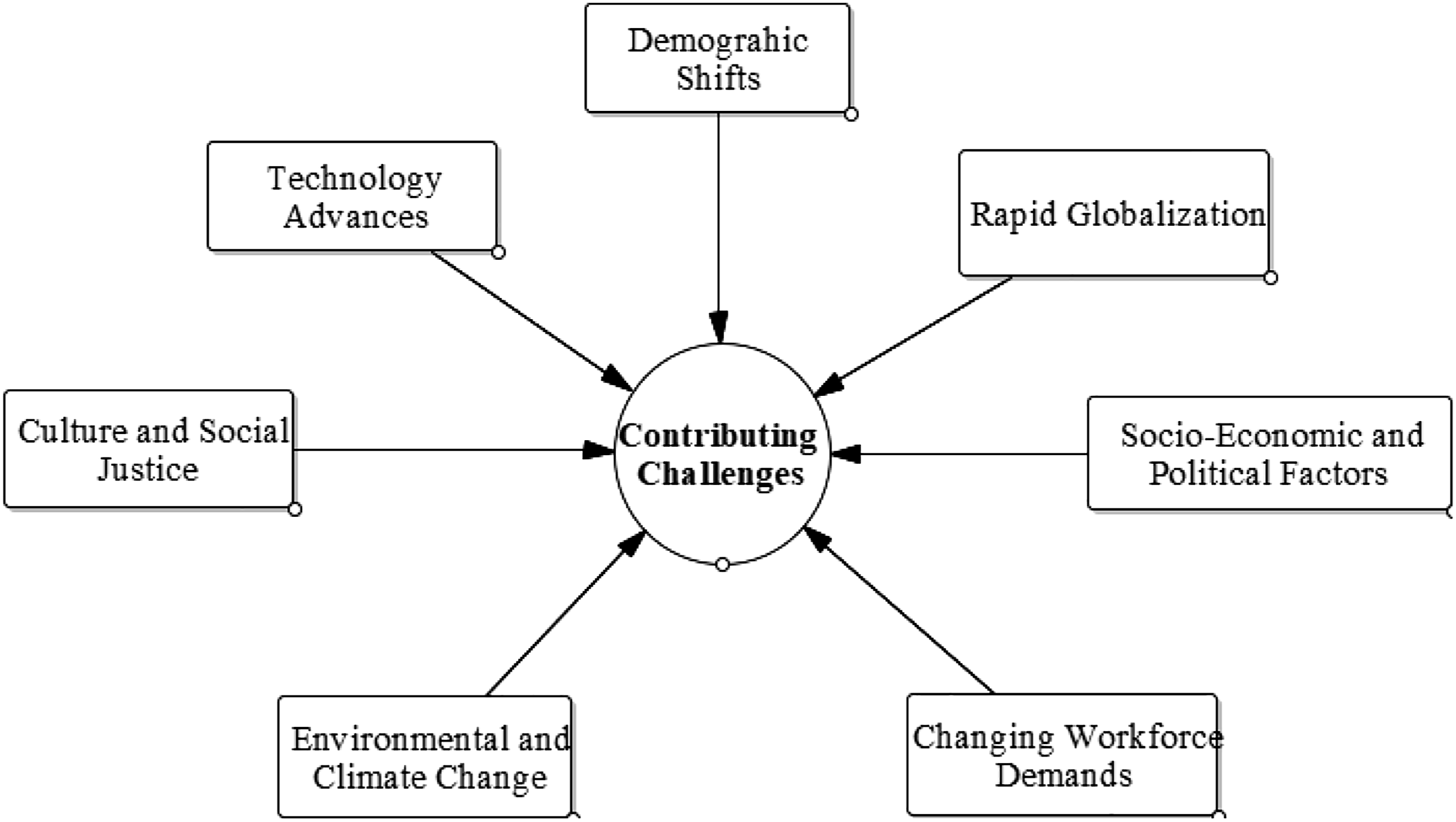
Leaders are confronting unpredictable disruptions, and many are still relying on traditional leadership models that originally did not take into consideration the aforementioned factors and DEIA. As Margaret J. Wheatley indicated, “leaders are not taught how to make sense of uncertainty, chaos, and the interconnected web of activity and relationships” (Wheatley, 2006, p.29). Echoing Albert Einstein “we cannot solve our problems with the same thinking we used when we created them.” It is time to rethink leadership from a modern context.
Understandably, traditional leadership frameworks were designed based on factors supporting contextual culture, climate, and demographics (Landis et al., 2014; Yawson, 2015). Theories and frameworks were primarily designed for hierarchical structures with homogeneous workforce and leadership (Ensari & Riggio, 2020). This reveals an absence of essential social, cultural and relational competencies fundamental for positive engagement with diverse talent capital pools. A model is needed that guides leaders to successfully navigate dynamic demographic, cultural and social changes.
Research highlights actions forward thinking organizations and leaders are implementing to mitigate contextual challenges (Lanka et al., 2020). For example, progressive organizations utilize teams as a strategy to strengthen collaboration for problem solving, innovation and decision making. The shift toward diverse teams, either by talents, functions or demographics, is not new but can exacerbate varying levels of communication, cultural and relationship barriers (Rock & Grant, 2016). Inclusive leaders recognize they are not solely responsible for thinking of viable solutions to emerging trends, but also for orchestrating possibilities utilizing all available resources and talent capital (Peterson et al., 2020). Specifically, leaders must increase confidence in how to explore and make the most of the wide array of perspectives and ideas offered by a talented heterogeneous pool.
Bottom line, the interwoven complex trends, perceived leadership crises, exclusive and non-inclusive leadership models and low return on investment of current development modalities illuminate the elephant in the room: leadership operating models and styles need an upgrade and a reboot (Ensari & Riggio, 2020; Landis et al., 2014; Lanka et al., 2020; Yawson, 2015). An upgrade from antiquated theories of leadership to the requisite engagement competencies for diverse groups/teams/organizations; a reboot to integrate inclusive leadership capabilities designed to equip and strengthen the collective whole, optimizing talent engagement and performance (Rock & Grant, 2016). We argue that skillfully harnessing divergent perspectives toward a common goal is a competency every leader should master. Inclusive leadership sets the foundation to discover solutions for complexities often encountered in diverse organizations.
Conceptual Inclusive Leadership Model
As a senior human resources executive, the lead author of this article engaged with defense and Ministry of Interior security forces executives around the world exploring ways to successfully integrate women into male-dominated organizations. The sensitivities and complexities involved is deeply-rooted in traditional and socio-cultural values often associated with excluding women’s meaningful participation in society, let alone defending and securing a country’s sovereignty. Trends emerged from engagements showing progression and regression in organizational climate and culture when leaders championed or forestalled change. It is our contention that whether working across foreign cultures or addressing domestic barriers, impactful inclusion should not be delegated nor should it be manifested with meaningless rhetoric and policies. There is direct causality between building inclusive organizations and leadership capabilities, commitment and buy-in (Bourke & Titus, 2019).
Leadership plays an indispensable role in building and aligning systems, practices, and behaviors to promote, support and sustain inclusive environments (Ashikali et al., 2021). The executive leaders advocating for women, peace and security (WPS) supported the lead author’s efforts. They were present, involved, and courageous leaders demonstrating inclusive behaviors and actions. It was also about who they were as leaders; who you are is how you lead. Organizational members were aware of their sponsorship as well as the institutions with which the lead author engaged. Policies were aligned with strategy, resources allocated, differing perspectives considered, and opportunities granted.
The lead author’s experiences informed development of the LEAD IncSM model (HC Vantage, 2022) offering a conceptual framework to role model and integrate inclusion successfully in diverse groups/teams/workforce. This model can be a useful resource to equip leaders in actively and deliberately engaging across dimensions of diversity in the workforce. The steps are: (1) Set-Equip Leaders; (2) Shape-Engage Wholeheartedly; and (3) Sustain-Enhance Effectiveness. The framework’s design brings awareness to how leaders’ experiences, assumptions and beliefs drive decision making, influence culture, affect workforce members’ contributions and impact organizational performance. Leaders are presented with a method to identify and dismantle entrenched barriers and limiting beliefs by embracing and leveraging divergent perspectives and building relationships across differences.
Inclusive leadership is relatively a new construct, however, research suggests it has three goals; (1) creating a common purpose accompanied with a sense of belonging; (2) treating everyone with dignity and respect regardless of position, person, or perspectives; and (3) facilitating engagements to generate full contribution of talent with equal consideration and appreciation (Chrobot-Mason & Roberson, 2021). LEAD IncSM framework offers a practical approach to attain these goals by enhancing and expanding leaders’ confidence and capabilities to effectively lead diverse teams (HC Vantage, 2022). Leaders are presented with tools to strengthen competencies to: (1) leverage differing perspectives; (2) build relationships across differences; (3) communicate with impact; and (4) align values enacted with values espoused.
Set is the foundational step with self-awareness being its most vital component. It is most critical because who you are is how you lead; thus preferences, assumptions and beliefs influence how leaders see others, make decisions, and take actions. The goals of Set are identifying barriers and biases and objectively evaluating decisions and behaviors. Self-awareness facilitates insight into identifying existing barriers and biases to inclusion (Hall, 2004). The more self-aware leaders are, the better they can self-correct (Hall, 2004). When leaders have knowledge of self (understanding how their experiences, assumptions, and beliefs drive behavior which impact outcomes), and ability to positively connect with others internal and external to organization, they possess foundational, yet critical factors to elevate engagement skills contributing to achieving desired goals (Gardner & Pierce, 1998). Being self-aware and socially adroit enhance leaders’ abilities to enable people with dissimilar viewpoints to work well together, thus maximizing organizational performance, workforce members’ contributions, workforce relationships and workplace culture (Cox & Blake, 1991).
The information learned through self-awareness is used to identify gaps between leadership skills and organizational goals required to develop competencies corresponding with and specific to accomplishing vision, mission and strategy (Gardner & Pierce, 1998). Set also fosters a greater awareness of one’s own cultural and social identity (Hall, 2004). Having this knowledge of self also catalyzes awareness of diversity in others.
Shape aims to accelerate leaders connecting and communicating through attentive listening, discovery through dialogue, and facilitating development of others. When leaders genuinely welcome diverse perspectives and value their contributions it stimulates an environment built upon trust and promotes a culture of learning (De Smet et al., 2021; Peterson et al., 2020). Wholeheartedness is demonstrated by deliberately engaging beyond the compliance thresholds with motivation and purpose. It engenders a personal commitment to inclusion promoting civility and unity. When leaders commit, it legitimizes and sanctions support.
Sustain combines self-awareness and relationship management to help leaders become role models and change agents for inclusion by inspiring others, instilling accountability, and improving systems. Leaders are invited to examine systems for inequity, power structures and biases that disrupt talent life cycle components (Oberai & Anand, 2018; Ravishankar, 2021; Ridgeway, 2014). As architects of strategy, structure and culture, leaders in this step stimulate inclusive actions by developing systems of accountability, measuring results and refining methods based on collected data (Mertens, 2007). In Sustain, the learning never ends.
Implication for HRD Practice
Leadership development is one of the most essential people-related organizational interventions; it is a strategic imperative (Leskiw & Singh, 2007). Enhancing leaders’ skills and competencies to meet talent demand brought on by disruptive factors is an HRD function and senior leader collaborative effort and responsibility (Yawson, 2020). “Human resource development (HRD) professionals are strategically positioned in multiple roles within the organization to participate in matters of diversity and bringing about social change” (Byrd, 2018, p. 299). The involvement of HRD professionals is crucial to enhancing organizational effectiveness through times of uncertainty and change.
Currently, leadership emphasis is mainly concentrated on developing alignment of individual competencies with strategic focus (Lundby & Jolton, 2010). The speed of change forces a reevaluation of past approaches and models used (Grint, 2010). We propose HRD professionals take a holistic systemic approach expanding capacity to navigate disruption with an inclusion mindset creating interventions that are viable and sustainable. One element of this is identifying intrapersonal skills enabling adaptability, resilience, and agility, thus, being self-aware of strengths and limitations in responding to complex situations. Another is seeking to problem solve, innovate, and make decisions using diverse talent capital. This means comfortably engaging across differences and similarities, building relationships based on civility and not just transactions (Bourke & Titus, 2020).
As HRD professionals and senior executives design professional development interventions for leaders to cultivate inclusivity, we suggest six points to avoid, breaking the pattern of well-meaning efforts that can go awry. The future direction is informed by taking cues from the past.
Overestimating Cultural Competence
Cultural competence is considered a core inclusive leadership attribute (Meyer, 2014; Paiuc, 2021). It refers to the “skills and abilities to relate and work efficiently and effectively in a cultural context different from one’s own” (Paiuc, 2021, p. 365). Studies show people overestimate their cultural competency and tend to gravitate and associate more with individuals like themselves (affinity bias) (Oberai & Anand, 2018). Leaders who are uncomfortable, apathetic or lack ability in communicating across differences would benefit from expanding relationships and social and diversity intelligence to accelerate inclusion in themselves and others (Hughes, 2018). A starting point is understanding one’s own cultural background. Developing a greater awareness of one’s own cultural and social identity opens awareness and appreciation of others (Mosher et al., 2017).
Leaders Confusing Inclusion and Involvement
We argue that using inclusion to accomplish desired ends does not mean everyone has to be involved and every idea accepted. An important responsibility of leaders is to determine who really needs to be included. Involving everyone and every perspective results in death by over-collaboration (Shore & Chung, 2021). As leaders expand engagements, attentively listen and cultivate trust, they are able to better identify voices, talents and required contributors with fairness, focus and purpose (Thomas et al., 2010). Even after careful selection, every perspective may not contribute to the good of the whole. The type of meeting – routine orspecific - also determines what voices should be included. More importantly, identifying skills, competencies, and experience required to achieve desired outcomes affect meeting attendance. Being able to collaborate cohesively at any level requires trust and tact (Selim, 2021). Doing it with multiple dissimilar perspectives while appreciating input and arriving at the best solution requires concentrated effort and selfless commitment to the common goal (Shore & Chung, 2021).
Faking it With Tokenism
Several organizations often set up various affinity groups of protected classes and professional common interests (Glassman & Glassman, 2017). Too often, leaders believe inclusion can be pushed up through employee resource groups (ERGs), business resource groups (BRGs) and diversity councils (Miller & Davis-Howard, 2022). However, it is difficult for those who have been historically excluded and underrepresented to impact strategic organizational systemic change especially when allocation of resources and influence granted to members depends on leaders’ discretionary support (Amis et al., 2018; Yawson, 2021). We contend that when leaders and organizations wholeheartedly approach inclusion, DEIA representatives have direct access to senior executives (preferably CEO) and voices/input from historically excluded groups are incorporated in programs, processes and strategy. Tactics of nonexclusive and exclusive leaders include appointing a spokesperson from an underrepresented group whom they control (powerless pawn) or hiring well-qualified talent to check the diversity box. The latter is usually a rotating position once the incumbent discovers egregious intentions.
Leaders Mistake Consensus with Inclusivity
The root of this mistake, agreement is favored over quality of input. This is probably the result of willfully avoiding conflict and/or resistance (Heifetz et al., 2009). Harmony is given preference over the labor, resources and time intensive process of effective decision making (Heifetz et al., 2009). Office politics and unhealthy cultures may also contribute to leaders channeling consensus instead of diligently exploring viable perspectives (Heifetz et al., 2009).
One Rule for Some, Another Rule for Others
Leaders overly rely on and ignore the non-inclusive or exclusive behaviors of a high performer or lone wolf believing it is beneficial for business (Casciaro & Lobo, 2005). These favorites are allowed to bend and break standards while others are held accountable for inappropriate conduct and conversations. Inevitably, this mindset forms inequity among workforce members and lack of diversity of thought.
What leaders say and do has an outsized impact on others, but our research indicates that this effect is even more pronounced when they are leading diverse teams. Subtle words and acts of exclusion by leaders, or overlooking the exclusive behaviors of others easily reinforce the status quo. It takes energy and deliberate effort to create an inclusive culture, and that starts with leaders paying much more attention to what they say and do on a daily basis and making adjustments as necessary. (Bourke & Titus, 2019, p.4)
There is an innate expectation for leaders to champion change through their words and deeds (Combs et al., 2019). They play a pivotal role in creating cultures of inclusion by wholeheartedly engaging, being fully present and actively involved (Veli Korkmaz et al., 2022). More importantly, there must be intentional commitment from senior leaders to model and incorporate inclusivity throughout all levels of the organization (Roberson & Perry, 2021). We contend that if there are double standards in accountability, tokenism, or over-collaboration, it becomes very difficult to promote and sustain inclusive principles and build inclusive cultures.
Making it Stick (Monitoring, Evaluation, Accountability, Commitment, Engagement and Sustainability)
Inclusive leadership takes deliberate, focused effort (Peterson et al., 2018). Leaders set the tone for success. The measure of how much a leader demonstrates inclusion abides in their preferences, beliefs and mindset. For inclusion practices to show results, tenets need to be carefully articulated and accompanied with transparent acts embedded into daily operations and expected behaviors (performance management, policies and processes) (Brimhall & Mor Barak, 2018). Substantial, sustained inclusive leadership efforts are only possible with a positive, progress-driven mindset.
The intangible nature of inclusion makes it difficult to track, measure and evaluate (Romansky et al., 2021). Nonetheless, difficult is not impossible. Helping people feel able and safe to be their authentic self (uniqueness) and helping people feel that they are a valued member of the team (belonging) may take different forms across the dimensions of diversity (Randel et al., 2018). Therefore, expanding engagement, valuing differences, and attentive listening are crucial actions. Organizations can pattern inclusive leadership actions, goals and objectives similar to how they identify leadership competencies that are distinctive to and aligned with the organization’s strategy, business matters, and new-market targets (Hernez-Broome & Hughes, 2004). Even better, leaders should seek input from workforce members on how and under what conditions they feel included.
Although modeling inclusive leadership behaviors is demanding, cultivating and sustaining high performing, collaborative, and engaged diverse groups/teams/workforce in such an environment can be transformational. We propose four practical areas leaders and workforce members can choose to think and behave in ways perpetuating inclusion: (1) appreciate individuality, treating all with civility, dignity and respect; (2) choose to make fair and equitable assumptions and decisions based on truth about the individual, not inaccuracies from stereotypes, prejudice, and questionable sources; (3) build bridges between people who might see themselves as separate or excluded; and (4) avoid making inappropriate connections open to interpretations leading to feelings of exclusion (even people with similarities are different). These actions and behaviors establish safe spaces where workforce members feel free to genuinely express themselves at work. They will feel safe enough to be vulnerable which fosters trust.
Employees are benefactors and providers of inclusion. They have the responsibility of not only monitoring themselves, but also by being bystanders who proactively bring people together. They can do this by acknowledging, affirming, and accepting individual talents, values and strengths; bringing people together when conflicting views are pulling them apart; and stepping up as a collaborator, negotiator or mediator when there is risk of exclusion.
Conclusion
Inclusive leadership is courageous and deliberate leadership (Peterson et al., 2018). It is the responsibility of the leader to harness the benefits of inclusion to mitigate disruptive change impacting workplace engagement and environment. Inclusive leadership is not just a path towards addressing diversity, equity and accessibility, it is essential for strengthening collaboration and cohesion. It enhances performance and cultivates a culture of learning. An organization will go only as far as the beliefs, preferences and development of its leaders. Leaders need a practical approach to effectively expand engagement and relationship skills, embrace differences, and direct diverse talent capital toward achieving organizational goals. The more leaders know and interact with workforce members, the better it is to create aligned and relevant systemic processes accommodating needs and making decisions.
Across sectors, leaders play an instrumental role in bridging and bonding relationships with employees who are different and similar in various ways. Discovering and developing self-awareness are key components to leaders acquiring a deeper understanding of their mindset and competencies of who they are and how they influence what they do. Having this knowledge enables HRD professionals to assess what behaviors and actions need adjusting to cultivate a workplace where its members feel free to be their true selves, engendering a sense of belonging and facilitating cultures of trust.
More importantly, developing leaders to model inclusive behaviors is shown to have a positive impact on employees’ level of job satisfaction and willingness to perform beyond expectations which stimulate retention of a high-quality workforce and improved organizational performance. Creating an inclusive workforce can pose some challenges, but the end justifies efforts. However, HRD professionals have to approach inclusion with wholeheartedness, mastering skills in perspective taking, facilitating, and acquiring valuable information from diverse team members. Proficiency in inspiring people with dissimilar viewpoints, values and beliefs to work well together maximizes workforce relationships and organizational learning.
For too long, the underrepresented and marginalized have been tasked with teaching, advocating and promoting DEIA tenets. Inclusion is a leadership responsibility and should not be delegated to the very people who are already bearing the weight of its load. Inclusive leadership is a strategic core competency and should not viewed or considered as a supplemental, intermittent skill, program or activity. Inclusive leaders are more accepting of all identities and backgrounds and ensure the workplace is free of barriers and obstacles limiting respect of persons regardless of differences. Being an inclusive leader is not insurmountable, it takes intentionality and commitment to build relationships for more than merely work related, transactional reasons.
Progress is achieved when perspectives are explored. Some of the best ideas are found in differences. Exploring differences open possibilities and promote accessibility to additional options. Leaders who recognize the value of inclusion are better equipped to direct talent and energy toward progress. Inclusive leaders aspire to simultaneously optimize the strengths of the whole while also acknowledging individual efforts contributing to the common goal. Lack of inclusive leadership attributes are problematic and can have a negative impact on talent development, retention, organizational brand, and overall office climate. Inclusive leadership serves as the linchpin that maximizes engagement and enhances organizational effectiveness. It sets the foundation to disrupt the various complexities leaders face when leading diverse organizations.
Footnotes
Declaration of conflicting interests
The author(s) declared no potential conflicts of interest with respect to the research, authorship, and/or publication of this article.
Funding
The author(s) received no financial support for the research, authorship, and/or publication of this article.
