







Abstract
Problem
The career development and professional growth of LGBTQ+ faculty members in higher education is an under researched topic in the field of human resource development (HRD); particularly as it relates to ways that exclusionary diversity policies and practices can hinder well-being and perpetuate marginalization of this group. While current diversity policies and practices in higher education acknowledge and address race and ethnicity, gender identity and sexuality have tended to receive far less attention. This issue is particularly problematic within the HRD career development paradigm. The reinforcement of cisheteronormativity leads to feelings of marginalization and exclusion among LGBTQ+ faculty members, highlighting systemic barriers that hinder their professional growth.
Solution
The purpose of this study was to explore six LGBTQ+ faculty members’ perceptions of diversity policies and practices at their respective institutions, investigating how the language and implementation of them contribute to a sense of marginalization and exclusion. The role of critical human resource development (CHRD) in challenging the social injustices emanating from exclusionary diversity policies and practices is discussed. Implications for positive career development outcomes from implementing and enforcing inclusive diversity policies and practices are highlighted.
Stakeholders
The stakeholders are higher education institutions (HEIs), human resource development (HRD) practitioners who may work with them, and diversity, equity, and inclusion (DEI) executives.
The history of discrimination against LGBTQ+ employees is extensive. For example, Bostock v. Clayton County (2020) highlighted the interplay of employment discrimination and sexuality. Gerald Bostock, an employee of Clayton County, Georgia, faced verbal attacks on his sexuality while also being wrongfully accused of mismanaging public funds. Despite his many years of service and positive performance evaluations, he was terminated, with the county citing “conduct unbecoming of a county employee” (Valenti, 2021, p. 8) as the reason. Bostock disputed this, arguing candidly that his dismissal was due to his sexuality. His case, along with similar ones like Altitude Express, Inc v. Zarda (n.d.) and R.G. & G.R. Harris Funeral Homes Inc v. Equal Employment Opportunity Commission (n.d.), led to a landmark decision by the U.S. Supreme Court in June 2020.
The Court ruled 6 to 3 that discrimination based on gender identity and sexuality violates Title VII’s prohibition of sex-based discrimination. The reasoning was that discrimination against someone’s gender identity or sexuality inherently involves discrimination based on their sex (Bostock v. Clayton County, 2020). This decision had far-reaching implications, particularly in HEIs. LGBTQ+ faculty members at public colleges and universities gained legal recourse against discrimination based on their sexuality and/or gender identity (Craig et al., 2017). However, the ruling also raised questions about its application to non-affirming religious universities. These institutions often hold negative beliefs about the LGBTQ+ community and may terminate LGBTQ+ employees on the basis of their sexuality and/or gender identity under the auspices of religious freedom laws (Kay & Wolff, 2022). This complexity underscores the ongoing debate regarding LGBTQ+ rights in various educational settings.
Even before the Bostock (2020) ruling, LGBTQ+ faculty members faced hostility and discrimination on college campuses (Graves, 2015; Loughery, 1998). Policies and practices enforced by university administrators actively discriminated against and marginalized LGBTQ+ faculty members, leading to harsh work environments and, in some cases, expulsion (Blount, 2006; Hutcheson & Kidder, 2011).
This discrimination traces back decades, with instances of LGBTQ+ faculty members being targeted during the McCarthy era in the 1950s. “Executive Order 10450,” signed by President Eisenhower, institutionalized the purging of LGBTQ+ individuals from the federal workforce (Graves, 2018), influencing similar actions at state and local levels. University administrators adopted similar tactics, resulting in the expulsion of LGBTQ+ faculty members from institutions across the country (Bailey, 1999; Hechinger & Hechinger, 1978; Johnson, 2000; Sears, 1997).
Furthermore, the designation of homosexuality as a mental illness by the American Psychiatric Association perpetuated discrimination within higher education (Johnson, 2000). Conversion therapy, a discredited practice aimed at changing a person’s immutable sexuality or gender identity (Mauldin & Churchill, 2024), was sometimes mandated for LGBTQ+ faculty members, further silencing their identities, stripping away their humanity, and perpetuating anti-LGBTQ+ violence. Even today, the legacy of discrimination continues to impact LGBTQ+ faculty members. Cisheteronormativity, which assumes that gender conformity and heterosexuality are the norm, persists in and is upheld by institutional policies and practices, highlighting the ongoing struggle for LGBTQ+ rights on college campuses. Understanding this history is crucial for addressing current issues and advocating for equality on college campuses.
The purpose of this study is to examine six LGBTQ+ faculty members’ perceptions of diversity policies and practices at their respective institutions, investigating how the language and implementation of them contribute to a sense of marginalization and exclusion. While existing HRD literature has primarily focused on interpersonal challenges faced by LGBTQ+ employees, such as harassment (McFadden, 2015) and discrimination (Collins et al., 2015), this study seeks to broaden the scope to focus on the ways in which institutional policies and practices, in this case diversity policies and practices, contribute to the marginalization and exclusion of LGBTQ+ faculty members. Through this investigation, this study endeavors to provide insights into the effectiveness of diversity policies and practices in promoting inclusion and support for LGBTQ+ faculty members. Furthermore, it seeks to enhance current diversity policies and practices and identify potential strategies for creating more equitable and inclusive work environments for all, regardless of one’s sexuality and/or gender identity.
Using the analytical framework of queer theory, which critiques and contests the institutionalization and therefore the normalization of gender conformity and heterosexuality, treating LGBTQ+ identities as deviant or abnormal (de Lauretis, 1991), this study examines how HEIs uphold cisheteronormativity through diversity policies and practices. By focusing on these policies and practices, this study aims to uncover how they acknowledge and support certain dimensions of a person’s identity while simultaneously neglecting others.
The central question that guides this study is: How do LGBTQ+ faculty members perceive the impact of diversity policies and practices on their experiences in higher education? To facilitate this inquiry, a clear distinction is drawn between policies and practices. Policies are structured rules and guidelines designed to ensure adherence to laws, ethical standards, and institutional goals (Birnbaum, 1989). On the other hand, practices refer to concrete, action-focused strategies that are implemented to attain their objectives while operating within established policy frameworks (Kezar & Eckel, 2002). This distinction allows for a nuanced examination of how diversity policies and practices impact LGBTQ+ faculty members’ experiences, highlighting that the insidious nature of cisheteronormativity persists even within (ostensibly) inclusive frameworks.
Literature Review
Limited research in the field of HRD has delved into the unique experiences of LGBTQ+ faculty members and the impact of cisheteronormativity on their career development. A review of the HRD journals (Advances in Developing Human Resources, Human Resource Development Quarterly, Human Resource Development Review, Human Resource Development International, and New Horizons in Adult Education and Human Resource Development) and related business journals was conducted using a varied combination of keywords: career development, LGBTQ, sexual minority, discrimination, and marginalization. The following section discusses findings from selected studies returned from this search.
Cisheteronormativity and Career Growth of LGBTQ + Faculty Members
The career development and professional growth of LGBTQ+ faculty members in higher education are significantly impacted by cisheteronormativity, yet this area remains under-researched in HRD. Despite a thorough review of HRD and related business journals, only a limited number of studies address how cisheteronormativity stunts the career paths of LGBTQ+ faculty members.
Davies and Joy (2023) found that cisheteronormativity imposes excessive emotional and psychological labor on LGBTQ+ faculty members, a phenomenon they dub “cultural taxation.” This unrecognized burden hinders their career advancement by forcing them to navigate challenges that their cisgender, heterosexual peers do not face. The need for LGBTQ+ faculty members to constantly manage their identity to avoid harassment or discrimination further diminishes their productivity and leads to high turnover (Schmidt et al., 2012).
Collins & Taborda-Whitt (2017) argue for leveraging the experiences of queer people of color (QPOC) to challenge norms within HRD. They stress the importance of integrating discussions on race, gender, sexuality, and identity to foster inclusive work environments that support LGBTQ+ career growth. Mehta et al. (2023) recommend implementing specific HR policies, such as non-discrimination measures and gender-neutral language, along with providing equal benefits and support through employee resource groups. However, Mauldin (2023b) found that even when non-discrimination measures, such as non-discrimination policies, are put in place within higher education, they can be unceremoniously usurped at any time by a hostile political landscape, calling into question their effectiveness. These varying perspectives highlight the need for HRD research to focus on developing robust strategies that can withstand political pressures and effectively support the inclusion and professional growth of LGBTQ+ faculty members.
LGBTQ + Cisheteronormative Experiences in Higher Education
Cisheteronormativity within higher education perpetuates work environments where LGBTQ+ faculty members experience marginalization and exclusion, impacting their professional and personal well-being. Davies and Neustifter (2023) illustrate how normative expectations enforce a “politics of respectability,” pressuring queer faculty members to conform to (cishetero)professionalism or risk professional consequences.
Openness about LGBTQ+ identities among faculty members can lead to risks such as negative evaluations and hindered career progression (Prock et al., 2019). Vaccaro (2012) reveals that campus microclimates significantly influence LGBTQ+ faculty members’ perceptions, with instances of queerphobic comments and discriminatory evaluations affecting their sense of belonging and overall professional well-being.
Garvey and Rankin (2018) further highlight that a cisheteronormative campus climate increases the likelihood of LGBTQ+ faculty members seeking employment elsewhere due to exclusionary behaviors. Dirks (2016) and Dozier (2015) also document the prevalence of gender-based violence and harm experienced by transgender and queer faculty members, including physical harassment and lack of institutional support. Together, these studies emphasize the need for HEIs to address cisheteronormativity and foster inclusive and supportive work environments for LGBTQ+ faculty members.
Intent to leave Among LGBTQ + Faculty Members
The impact of a cisheteronormative campus climate on LGBTQ+ faculty members’ intentions to leave their institutions reveals significant issues of exclusion and exploitation within higher education. Garvey and Rankin (2018) investigated LGBTQ+ faculty members' intentions to leave their institutions and found that a cisheteronormative campus climate significantly increased the likelihood of LGBTQ+ faculty members seeking employment elsewhere. The study highlighted instances of exclusion and exploitation of LGBTQ+ faculty members' identities, illustrating the pervasive influence of cisheteronormativity on campus dynamics and faculty members’ experiences.
Additionally, Patridge et al. (2014) examined the work environment for LGBQ faculty members in science, technology, engineering, and mathematics (STEM) fields and found that openly identifying LGBQ faculty members were more likely to experience discomfort and consider leaving their positions if they encountered exclusionary behavior from their peers. This suggests the detrimental impact of non-inclusive work environments on the comfort and retention of openly identifying LGBQ faculty members, particularly within STEM fields. These findings collectively highlight the need for HEIs, particularly in STEM fields, to create supportive work environments to improve the retention and well-being of LGBTQ+ faculty members.
Experiences of Transgender and Genderqueer Faculty Members
Studies have highlighted the pervasive impact of cisnormativity on the careers of transgender and queer faculty members. The 2015 U.S. Transgender Survey conducted by the National Center for Transgender Equality revealed extensive job-related discrimination against transgender individuals, including instances of job loss, denial of promotions, and rejection from employment opportunities due to their gender identity (James et al., 2016). Incidents of verbal harassment, sexual assault, and physical attacks in workplaces were also commonly reported, all directly linked to their gender identity (James et al., 2016). In addition to these challenges, transgender faculty members frequently encounter issues such as inadequate restroom facilities (Beemyn, 2005), misgendering (Pitcher, 2017), and pressures to conform to gender norms that do not align with their identities (Catalano, 2015).
Pitcher (2017), using minority stress theory, examined how cisnormative cultures marginalize transgender faculty members within academic settings. Similarly, McKenzie (2020) documented experiences of misgendering, difficulties with coming out, and instances of assault driven by cissexist biases within higher education. These studies highlight the challenges faced by transgender and genderqueer faculty members regarding visibility. For instance, in McKenzie's (2020) study, a human resources representative claimed a hiring committee lacked diversity because they assumed all the committee members were cisgender women, erasing the non-binary identity of a genderqueer faculty member who served on the committee. These findings provoke critical reflections on the ethical dimensions of visibility and emphasize the imperative for inclusive diversity initiatives that genuinely support transgender, non-binary, and genderqueer individuals within higher education.
Compounding Discrimination Faced by Racially Minoritized LGBTQ + Faculty Members
Racially minoritized LGBTQ+ faculty members often experience additional layers of violence and harm within predominantly white workspaces. Despite limited research in this area, studies have identified a lack of institutional support. Aguilar and Johnson (2017) highlighted that institutions frequently fail to recognize and address the unique challenges faced by these individuals. The dual pressures of cisheteronormativity and racism manifest in a lack of mentorship, advocacy, and resources tailored to support their career growth. This absence of support systems leaves them without the necessary tools and networks to advance in their careers. Additional challenges include tokenization (Wright-Mair, 2023), multiple forms of discrimination and isolation (Cyrus, 2017; Nadal, 2019), and unsupportive work environments (Wright-Mair & Marine, 2023).
Furthermore, Stewart (2014) observed the reductionist perception of Black queer women faculty members, highlighting how their gender identity and sexuality are often disregarded. Harris and Nicolazzo (2020) described that racially minoritized transgender faculty members, continuously relegated to outsider status, navigate the paradox of being both invisible and hypervisible. These experiences emphasize the interconnected nature of oppression within higher education, where racially minoritized LGBTQ+ faculty members are harmed by cisheteronormativity and racism, among other dehumanizing systems of oppression.
Limitations of Diversity Initiatives
Critiques of diversity initiatives reveal their tendency to prioritize race and ethnicity over gender identity and sexuality, perpetuating cisheteronormativity within organizational cultures (Maxwell, 2005). The exclusion of gender diversity efforts from binary frameworks further marginalizes transgender, non-binary, and gender non-conforming individuals, undermining efforts toward true inclusivity.
Even when organizations include sexuality in their diversity initiatives, they frequently face backlash, mostly from heterosexual employees. Hill (2006) observed that the inclusion of sexuality prompts demands for equal attention and affirmation from heterosexual employees, despite their already privileged positions both in the workplace and society. Despite some organizations including sexuality in their non-discrimination policies, with an even smaller number considering gender identity (Triana et al., 2021), LGBTQ+ employees have continued to experience marginalization and exclusion within these initiatives (Mauldin, 2023b). To address this issue, Ely and Thomas (2001) recommended that organizations broaden their understanding of diversity to include both visible and non-visible dimensions of identity within their diversity initiatives.
Summary
The review of literature in the areas of HRD, business, and higher education highlights how cisheteronormativity significantly impedes the career development of LGBTQ+ faculty in higher education. Despite an extensive review of HRD and related business journals, limited attention has been given to this issue. Cisheteronormativity imposes emotional burdens on LGBTQ+ faculty members, reducing productivity and increasing turnover rates compared to cisgender, heterosexual peers (Schmidt et al., 2012). Faculty members who identify as LGBTQ+, particularly those who are transgender or genderqueer, face discrimination and lack institutional support, necessitating inclusive diversity initiatives that include every dimension of a person’s identity, such as race, ethnicity, sex, sexuality, ability, gender identity, national origin, age, etc., to foster humanizing and socially just work environments within higher education.
Theoretical Framework
Queer theory emerged in 1991 when Teresa de Lauretis introduced it in a special issue of Differences titled “Queer Theory: Lesbian and Gay Studies.” de Lauretis (1991) argued for a new perspective that views homosexuality as independent of heterosexuality, challenging fixed social identity distinctions. This marked the inception of queer theory, characterized by analyzing discourse construction and examining biases. Queer theory seeks to destabilize rigid categories of gender identity and sexuality, while embracing the full spectrum of sexualities and gender identities.
Cisheteronormativity, a combination of cisnormativity and heteronormativity, enforces gender conformity and heterosexuality as societal norms. Cisnormativity universalizes and normalizes the experiences of cisgender people, invisibilizing and delegitimizing transgender, non-binary, and gender non-conforming individuals (Mauldin, 2023b). On the other hand, heteronormativity shapes social relations around heterosexuality, erasing, denormalizing, and denaturalizing sexual fluidity and diversity of sexuality (Mauldin, 2023b). Cisheteronormativity privileges gender conformity and heterosexuality, rendering LGBTQ+ people abnormal, deviant, and perpetuating the notion that they need to be corrected or changed (Mauldin, 2023a; Mauldin & Churchill, 2024). Understanding gender identity and sexuality as social constructs challenges the notion of “normality” designed to benefit dominant societal structures—in this case, cisheteronormativity. Investigating how HEIs embed gender conformity and heterosexuality into diversity policies and practices is crucial for understanding the experiences of LGBTQ+ faculty members.
By focusing on institutional structures, this study addresses the systemic aspects of LGBTQ+ faculty members’ experiences, emphasizing the role of diversity policies and practices in perpetuating cisheteronormativity. This approach broadens the understanding of LGBTQ+ faculty members’ experiences beyond the interpersonal to include institutional-level factors.
Methodology
Research Design
This study employed a critical qualitative research methodology to explore six LGBTQ+ faculty members’ perceptions of diversity policies and practices at their respective institutions, investigating how the language and implementation of them contribute to a sense of marginalization and exclusion.
Qualitative research, in contrast to quantitative methods, acknowledges reality as holistic and constantly evolving, embracing multiple perspectives and interpretations (Reichardt & Rallis, 1994). Given the limited understanding of the impact of cisheteronormativity on LGBTQ+ faculty members’ experiences, a deeper understanding of a critical mode of inquiry is needed.
A Critical Qualitative Mode of Inquiry
Critical qualitative inquiry served as a methodological tool to scrutinize power dynamics and privilege within the experiences of LGBTQ+ faculty members, highlighting the deliberate structural inequities embedded within HEIs (Denzin, 2017). Furthermore, a social constructivist epistemological stance was adopted to recognize the subjective construction of meaning and avoid imposing a singular truth onto participants (Ulbert, 2014). This epistemological stance also mitigated researcher bias, fostering an understanding of multiple truths and promoting continuous interrogation of personal meaning-making processes. The critical paradigm of this study aimed at addressing social justice issues by challenging inequalities, oppression, and injustice (Scotland, 2012).
By centering the voices of marginalized individuals, particularly LGBTQ+ faculty members, this study sought to understand and challenge cisheteronormativity that is embedded within diversity policies and practices, advocating for societal transformation towards inclusion. Critical qualitative inquiry emphasizes the need for the researcher to commit to revealing and opposing social injustices, as well as advocating for humane adjustments to policies and practices, to create a more equitable work environment for all.
Researcher Positionality
Qualitative research relies heavily on the researcher as the instrument of data collection, prompting a desire among readers to understand the researcher’s biases and assumptions. To address this, I approached my role in this study with skepticism of my own positionality, aiming to connect with participants in ways that were less exploitative and more politically astute.
As a queer faculty member interviewing LGBTQ+ faculty members, I sought to subvert the cisheteronormative gaze by centering LGBTQ+ experiences and perceptions. Drawing on perspectives from Portelli and Konecny (2013) and Portelli and Eizadirad (2018), I viewed subversion as a means to effect positive change and challenge injustice and abusive power. My role involved asking open-ended questions about participants' perceptions of diversity policies and practices at their respective institutions, leveraging my emic position as both a member of the LGBTQ+ community and a faculty member. Despite outward appearances of privilege, I acknowledged my own experiences with marginalization and took steps to mitigate the impact of my positionality on this study.
To address potential biases, I examined my own experiences, utilized member checking, and engaged an external source during interviews to ensure questions remained neutral and participant-focused. These measures helped maintain the integrity of the data collection and analysis process while acknowledging and mitigating the influence of my positionality.
Participants and Recruitment Process
Participant Demographics.
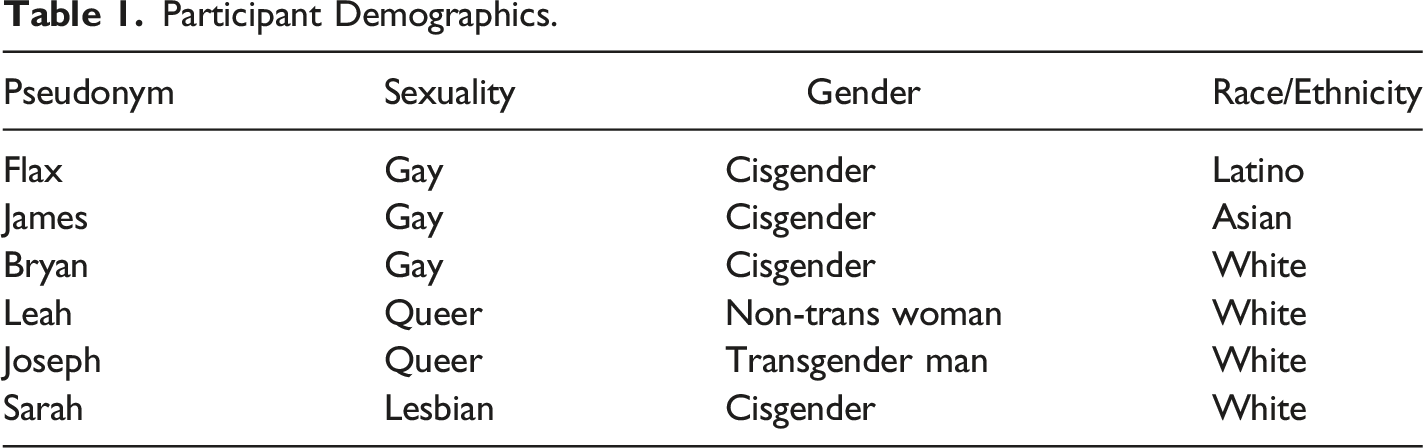
Recruitment strategies included snowball sampling, where participants referred others meeting the criteria, and criterion sampling, focusing on individuals with information-rich data. Potential participants completed a 3-min Qualtrics survey to assess their fit for this study based on predetermined criteria. Qualtrics was chosen for its cost-effectiveness, user-friendly interface, flexibility in survey design, and effectiveness in identifying eligible participants.
Data Collection
The data collection process utilized Zoom, a cloud-based videoconferencing service, chosen for its real-time communication capabilities and the ability to overcome geographical barriers. Zoom facilitated rapport-building with participants and offered the advantage of recording sessions securely, providing insights into personal and professional aspects. To ensure a smooth Zoom experience, steps outlined by Gray et al. (2020) and Archibald et al. (2019) were followed, including sending instructions and backup plans to participants, recording consent explicitly, and offering support for emotional well-being during interviews. The interview protocol informed participants of the expected duration and emotional nature of questions, with resources provided for mental health support, emphasizing participant autonomy to withdraw from the study at any point.
Data Analysis
Bogdan and Biklen (1997) characterized data analysis as the systematic exploration and organization of accumulated materials to deepen understanding and facilitate communication of discoveries. In this study, I utilized thematic analysis, a qualitative method aimed at identifying, analyzing, and reporting patterns within data (Braun & Clarke, 2006).
Through thematic analysis, I investigated the perceptions of LGBTQ+ faculty members on diversity policies and practices at their respective institutions by extracting themes from participant responses. Braun and Clarke (2006) defined themes as patterns or meanings within the dataset related to this study’s aims. Thematic analysis, as a method, uncovers recurring themes, providing insights from rich data and aligning with this study’s aims. It facilitated the derivation of predominant and significant themes (Blacker, 2009). Thematic analysis operates independently of theoretical frameworks or paradigms, adapting to the researcher’s inquiries (Braun & Clarke, 2006). Hence, it can complement critical qualitative inquiry and queer theory. To conduct a queer analysis, which lacks a fixed approach according to Plummer (2005), I revisited participant interview transcripts, focusing on queer concepts such as cisheteronormativity, the closet, visibility, and coming out.
Thematic analysis offers flexibility, allowing for inductive (data-driven) or deductive (theory-driven) approaches, or a combination of both. In my qualitative analysis, I employed both methods, ensuring robustness (Greco et al., 2001). I utilized Dedoose, a web-based application, for data management and analysis due to its user-friendly interface, security, cloud-based accessibility, and cost-effectiveness. Following Braun and Clarke’s (2006) six-phase model, I immersed myself in the data, generated initial codes, organized them into themes, refined these themes through a dual assessment process, and finally created a comprehensive report. This process facilitated the synthesis of data, enabling me to address the research question effectively.
Findings
The findings/analysis that emerged are organized in accordance with the research question that guides this study: How do LGBTQ+ faculty members perceive the impact of diversity policies and practices on their experiences in higher education? Below, three interrelated connections present across the six participants’ experiences are highlighted. The first theme, Erasure, highlights the pernicious ways that exclusionary diversity policies and practices remove LGBTQ+ identities from considerations of diversity in the makeup of academic committees. The second theme, Fear and Discomfort, illustrates how diversity practices ignore LGBTQ+ identities due to implicit biases towards gender conformity and heterosexuality. Finally, the third theme, Exclusion and Marginalization, reveals how the narrow focus of diversity policies and practices relegates LGBTQ+ faculty members to a secondary status. Below, these connections are explored in greater detail.
Erasure
Two participants highlighted the reductionist perception of diversity policies and practices regarding the demographic makeup of academic committees, shedding light on how this approach perpetuates cisheteronormativity through queer erasure. Queer erasure refers to the ways in which queer presence is obscured through everyday practices and institutional norms (Ahmed, 2006). Flax, a Latino gay cisgender man, shared, We had the committee formed, and they told them it wasn't diverse enough, so they took somebody off of that committee and asked me to join the committee because they needed a diverse faculty member. I was asked to be in it because of being Latino, to add to that diversity, because they didn't see my sexuality as diverse.
The decision to prioritize ethnicity over queer inclusion reflects cisheteronormativity. By essentially stating that being queer “doesn’t count” towards diversity, the diversity policy reinforces the notion that LGBTQ+ identities are less significant compared to ethnic identities. This exclusionary policy constitutes a form of social injustice, as it perpetuates the notion that some marginalized identities merit attention in diversity initiatives, but others do not. This also causes racially minoritized LGBTQ+ faculty members, like Flax, to feel both invisible and hypervisible, which supports the findings of Harris and Nicolazzo’s (2020) study. For Flax, this prioritization renders his sexuality invisible in diversity efforts, but his ethnicity is excessively exploited for the sake of diversity. This underscores how the diversity policy fails to reconcile how an individual could be minoritized for both their sexuality and ethnicity—or how an individual could be harmed and dehumanized by both homophobia and racism.
Similarly, Bryan, a white gay cisgender man, demonstrates cisheteronormativity by highlighting selective inclusion within committee’s diversity practices. He shared, We got an e-mail back about a month ago that said that our composition of the hiring committee could not go forward because we did not have enough diversity on our committee and so our academic Dean to her credit sort of went forward and explained sort of you know my identity to the Provost and they said that that didn't count basically that [my sexuality] wasn't what they were thinking about, that it needed to be a racial minority and that being queer didn't matter.
Bryan’s whiteness may influence how his sexuality is perceived within the institution. In this case, being white may lead to his sexuality being seen as less salient, particularly if diversity practices prioritize racial diversity over other dimensions of diversity. This perception could contribute to the dismissal of Bryan’s sexuality as a diversity marker, further reinforcing cisheteronormativity within the institution. This practice, which overlooks Bryan’s and others’ queer identity in favor of racial diversity, reflects a form of social injustice, as it perpetuates the marginalization of LGBTQ+ identities within diversity efforts.
If Bryan were a racially minoritized gay faculty member, his experience may have differed in some respects. Given Flax’s experience, it is possible that Bryan’s racial or ethnic identity could have resulted in him being retained on the committee, thus providing a semblance of diversity without genuinely addressing queer inclusion. However, even in this scenario, Bryan’s sexuality might still be disregarded, as evidenced by Flax’s experience of being asked to join the committee primarily because of his ethnicity rather than his sexuality. This highlights another aspect of social injustice, where individuals with overlapping marginalized identities are often forced into roles that do not fully acknowledge the complexity of their experiences.
Both Flax’s and Bryan’s experience reflect a broader pattern of erasing LGBTQ+ faculty members’ experiences and identities within (ostensibly) inclusive frameworks. By dismissing sexuality as a diversity marker, the diversity policies and practices fail to acknowledge the unique challenges and perspectives of LGBTQ+ faculty members, perpetuating a culture where the voices of LGBTQ + individuals are hushed. Queer erasure contributes to the normalization of gender conformity and heterosexuality, reinforcing the notion that LGBTQ+ identities are less valid—or, worse, nonexistent. Such practices represent social injustice, as they systematically marginalize LGBTQ+ faculty members and ignore the interconnected nature of their identities. The exclusion of LGBTQ+ perspectives from diversity initiatives undermine the stated goals of these policies and practices and thereby exhibits queer erasure.
Fear and Discomfort
Two participants, Joseph, a white queer transgender man, and Leah, a white queer non-trans woman, described their experiences with DEI leaders. They highlighted themes of fear and discomfort among these leaders in addressing LGBTQ+ identities and experiences, consistent with Nadal et al.’s (2010) proposed nine themes of sexual orientation and transgender microaggressions, and the findings in Nadal et al.’s (2012) study, which extends these themes. These instances illustrate how diversity practices, when overseen by biased DEI leaders, perpetuate cisheteronormativity. Joseph shared, And we had a day on like diversity in the school and it was one of, one of these folks, who you could tell that she was really wonderful at discussing the kinds of oppression that she experienced and not really good with anything else, you know, and you could tell by the quality of the scenarios. So, this was a woman of color. She was great at writing scenarios that dealt with racism, sexism, and the intersection between them. But every like homophobia, ableism, transphobia thing she did was a nightmare and a half just like it was just bizarre.
Joseph’s account specifically highlights the shortcomings of a DEI leader who, while proficient in tackling racism and sexism, struggles to effectively address issues related to homophobia, ableism, and transphobia. Rather than educating individuals on the mutually constitutive nature of all systems of oppression—in this case, racism, sexism, homophobia, ableism, and transphobia—she focuses solely on the interplay of racism and sexism. In doing so, she overlooks the reality that individuals are not their race or sex alone; individuals embody multiple identities, such as race, ethnicity, sex, sexuality, ability, gender identity, national origin, age, etc., simultaneously.
Despite good(?) intentions, by sidestepping gender identity and sexuality, she implicitly sends a message that LGBTQ+ identities are unworthy of consideration, even (ironically) in educational scenarios focused on diversity. This practice maintains gender conformity and heterosexuality as the norm. Disregarding discussions on gender identity and sexuality reveals an implicit bias towards gender conformity and heterosexuality, suggesting that the DEI leader is more comfortable addressing these norms and reinforcing them as acceptable topics, while treating LGBTQ+ identities as deviant (and therefore uncomfortable to discuss). The exclusionary nature of this practice represents social injustice, as it marginalizes LGBTQ+ individuals to the extent that their identities and experiences are rendered nugatory. This expands on Patridge et al.’s (2014) study by shedding light on the fact that it is not wholly negative interactions between LGBTQ+ faculty members and their cisgender, heterosexual peers that shape their level of comfort in the workplace; exclusionary diversity practices also play a role.
In the context of DEI work, it is crucial for leaders to recognize their limitations and actively improve their knowledge and understanding of different forms of discrimination. The situation Joseph referenced underscores the complexity of DEI work and the necessity to have a broad understanding of different systems of oppression. While it is commendable that the DEI leader is proficient in addressing racism and sexism, her limited understanding of issues faced by LGBTQ+ individuals perpetuates cisheteronormativity by maintaining a status quo that excludes LGBTQ+ identities and thwarts diversity initiatives at their institution.
Similarly, Leah noted that diversity practices at her Hispanic-serving institution overlook the identities and experiences of Latinx individuals, despite the institution’s diversity initiatives. She shared, I'm working at a Hispanic-serving institution, a HSI, one of the biggest, most well-funded research intensive HSIs in the country. There are lots of HSI initiatives on campus, and I have Latina and Latinx students who like have GA shifts in these spaces and the space is by and large privileged men. There's no talk about queer and trans Latinx, you know, Mexican, Puerto Rican, Guatemalan communities. Yeah, even in the like diversity and equity and inclusion efforts, there’s a fear I think I would say of queerness and transness. And folks just really want to talk about HSI work as…and they'll say Latinx, but the ‘x’ in Latinx never means queer and trans folks.
Leah mentioned that spaces are “by and large” occupied by “privileged men.” These spaces reflect a patriarchal structure where men, particularly those with cisgender and heterosexual privilege, dominate. This dominance, based on the context Leah provides, marginalizes women as well as Latinx individuals. Moreover, the absence of discussion about Latinx communities (e.g., Mexican, Puerto Rican, and Guatemalan) within HSI initiatives highlights the interplay of patriarchy and cisheteronormativity. By failing to address Latinx identities, these exclusionary practices reinforce the notion that being a cisgender, heterosexual man is the norm, a social injustice that marginalizes diverse gender identities and sexualities.
Neglecting the experiences and needs of Latinx individuals also perpetuates power dynamics at the institution, centering cisgender, heterosexual men while relegating LGBTQ+ individuals—in this case, Latinx individuals—to the margins, which is an ongoing systemic issue that Aguilar and Johnson (2017) address in their study. This further entrenches gender conformity and heterosexuality as the norm. Furthermore, by neglecting Latinx individuals, the institution overlooks the ways in which they face compounded discrimination and exclusion due to their ethnicity as well as their sexuality and/or gender identity. This systemic exclusion of Latinx voices marginalizes this community but also fails to recognize and address their unique challenges and contributions within the broader context of diversity efforts.
Leah also mentioned the presence of “fear” that characterizes diversity efforts, which, similar to Joseph’s institution, are overseen by biased DEI leaders, at her institution. This results in the ‘x’ in Latinx being ignored. The origins of this fear could include societal norms, lack of understanding or exposure, and/or ingrained biases towards gender-conforming and heterosexual individuals. Regardless, this fear leads to the continued marginalization of queer and transgender individuals, particularly those who are Latinx. Failing to address queer and transgender, and especially Latinx, issues is a missed opportunity for true inclusion at her institution. Similar to the consequence of the DEI leader sidestepping gender identity and sexuality at Joseph’s institution, the DEI leaders’ refusal at Leah’s institution to acknowledge gender diversity implicitly communicates that LGBTQ+ individuals do not merit recognition, upholding cisheteronormativity.
In both Joseph’s and Leah’s experiences, fear and discomfort overshadow any genuine efforts towards inclusion of LGBTQ+ individuals. Their institutions engage in superficial gestures of diversity, sometimes using LGBTQ+ terminology that fails to confront the systemic challenges faced by these communities. This shallow approach neglects the needs and experiences of LGBTQ+ individuals, perpetuating cisheteronormativity by prioritizing gender conformity and heterosexuality. By avoiding any meaningful engagement with LGBTQ+ individuals, these institutions uphold a status quo that injures and excludes LGBTQ+ individuals, leaving them vulnerable to ongoing institutional harm and violence. Importantly, these exclusionary practices do not merely negatively impact LGBTQ+ individuals; they reduce LGBTQ+ individuals to living mono-identity, mono-issue lives. Addressing only certain aspects of LGBTQ+ faculty members’ identities while neglecting others does not lead to their liberation; it sustains their oppression.
Exclusion and Marginalization
Collins et al. (2015) highlight the pervasive exclusion and marginalization faced by transgender employees, noting that other members of the LGBTQ+ community experience similar challenges. This research underscores significant gaps in diversity policies and practices that fail to adequately address the needs of LGBTQ+ individuals. Four participants described the exclusion and marginalization of their gender identity or sexuality from diversity policies and practices, highlighting how these policies and practices prioritize race and ethnicity while neglecting other critical dimensions of identity. Sarah, a white lesbian cisgender woman, emphasized the need for broadening diversity practices beyond race and ethnicity. She highlighted that diversity encompasses a wide range of identities, including socioeconomic status, sexuality, and more. She shared, But so many times we look at either race or we look at ethnicity, you know, and it's just like it doesn't mean that you can be a poor white kid and bring diversity to the table, you know, or a gay person or, I mean, there's just everything.
Her statement stresses the significance of acknowledging a wide spectrum of identities beyond merely race and ethnicity. She emphasizes that diversity includes invisible markers such as sexuality and socioeconomic status. This adds to Maxwell’s (2005) argument, which does not mention socioeconomic status as being an important aspect of a person’s identity and experience, noting that individuals from various backgrounds contribute valuable perspectives.
She also acknowledges that being “a poor white kid” challenges the notion that all white individuals inherently benefit from privilege across the board. She recognizes that socioeconomic status can interconnect with race to create unique experiences of disadvantage, even among white people. Her perspective highlights social injustices embedded in narrowly defined diversity practices that fail to address the complexities of privilege and disadvantage across various identities.
It is important to note that while socioeconomic status can mitigate some aspects of white privilege, white individuals still benefit from systemic advantages in areas such as education and employment compared to people of color. This systemic advantage is rooted in historical and ongoing racial inequalities, where white privilege is complicit in perpetuating racism. Applebaum (2016) discusses how these advantages are maintained through institutional practices and societal norms, illustrating perfectly how white privilege sustains racist structures.
Similarly, Bryan, a white gay cisgender man, criticized his institution’s diversity policy for its limited scope on race and ethnicity while neglecting other dimensions of diversity, such as gender identity. He shared, There is a diversity policy about this, and it makes no mention at all about gender, right? Well, it does say gender, not gender identity. It's gender, I think. But not any sort of recognition of diversity other than race and ethnicity.
The diversity policy’s failure to explicitly include gender identity implies that gender conformity is the assumed standard. This omission effectively invalidates the identities and experiences of transgender, non-binary, and gender non-conforming individuals. By excluding gender identity, the policy reinforces a binary understanding of gender that fails to accommodate the full spectrum of gender experiences in broader discussions of diversity. This exclusionary policy perpetrates a social injustice by marginalizing gender diverse individuals, delegitimizing and rendering them invisible.
Additionally, the policy in its current iteration ignores the interconnected nature of identity, where individuals experience compounded forms of discrimination based on multiple aspects of their identity simultaneously. By excluding considerations of gender identity, the policy fails to address the unique challenges faced by those who navigate multiple marginalized identities.
Similarly, Joseph, a white queer transgender man, reflected on how queer and transgender experiences are often sidelined by diversity practices, which is an issue highlighted in Triana et al.’s (2021) article, emphasizing the systemic marginalization of LGBTQ+ voices and experiences within various professions and institutional contexts. He shared, I also do think that you know, even when we are written into the laws that queer and trans, you know, like, experiences are often kind of cut out or perceived as like lesser issues in terms of like diversity, equity, justice, and a range of professions. I will also say, and this happened to me a little too.
Joseph’s statement emphasizes that the relegation of queer and transgender experience to a secondary status reflects deeply ingrained biases and prejudices within society, where LGBTQ+ identities are still stigmatized. By minimizing the significance of LGBTQ+ issues, these practices fail to adequately address the unique challenges and forms of discrimination faced by LGBTQ+ individuals, perpetuating systemic inequalities and social injustice.
He also acknowledges that he has personally experienced this marginalization. This illustrates the very real and tangible harm inflicted by exclusionary diversity practices. When LGBTQ+ individuals see their experiences invalidated in discussions of diversity, it reinforces feelings of invisibility, alienation, and distrust towards institutions. This can have profound psychological and emotional consequences, as well as missed chances for career advancement, which supports the findings of Santos and Reyes’ (2023) study, contributing to a hostile work environment for LGBTQ+ individuals within various professional and social settings.
Leah, a white queer non-trans woman, pointed out the tendency for LGBTQ+ issues to be relegated to specific centers within institutions, such as LGBTQ+ centers. This separation of LGBTQ+ concerns, engendered by diversity practices at her institution, perpetuate the harmful and inaccurate idea that they are separate from other concerns within broader discussions of diversity. She shared, It's always the kind of responsibility and purview of the LGBTQ center, which serves as like primarily is the student serving Cultural Center, or the LGBTQ Institute, which is like a Research Center and kind of connector for faculty and coursework.
Leah’s statement illustrates how confining LGBTQ+ issues to specific centers minoritizes these concerns and perpetuates the perception that they are separate or less important than other diversity issues. This practice of separating LGBTQ+ issues represents a form of social injustice by marginalizing these issues and reinforcing the idea that LGBTQ+ identities are ancillary to broader diversity initiatives, rather than integral components of a comprehensive systemic approach to diversity.
Furthermore, while LGBTQ+ centers serve important symbolic roles in affirming LGBTQ+ identities and providing community support, which connects to the findings of Patton’s (2012) and Patton et al.’s (2011) studies, their existence alone does not address the underlying systemic barriers and inequalities faced by LGBTQ+ individuals. True inclusion requires structural change within institutions, including the integration of LGBTQ+ concerns into DEI efforts and the recognition of LGBTQ+ identities as central to broader diversity initiatives. By acknowledging that issues of anti-LGBTQ+ bias and violence are not separate from issues of racism, ableism, sexism, ageism, and classism, as Moradi's (2017) study reveals, diversity initiatives can more effectively advocate for marginalized individuals in the pursuit of dismantling overlapping systems of oppression.
Speaking directly to this, James, a gay Asian cisgender man, stressed that diversity practices should discard a “one-size-fits-all” approach and be fully responsive to diverse experiences and identities. He shared, “If diversity practices were truly intentional, it would prioritize all [marginalized] groups and individuals, rather than go through the motions.” His statement highlights how exclusionary diversity practices represent social injustice by failing to adequately address the needs and experiences of LGBTQ+ individuals. By adhering to superficial diversity efforts that do not authentically engage with LGBTQ+ individuals, institutions perpetuate systemic inequalities that contribute to feelings of neglect and marginalization. Jettisoning a “one-size-fits-all” approach would foster a sense of belonging and validation among marginalized groups, like the LGBTQ+ community, who feel overlooked by broader diversity efforts.
Limitations
One constraint of this study was the lack of racial and ethnic diversity among participants, predominantly comprising white individuals. This homogeneity restricted the ability to generalize findings to more racially and ethnically diverse populations and may have introduced bias into the results. To overcome this limitation, future studies should aim to incorporate a broader and more representative sample, encompassing diverse racial backgrounds to ensure findings are applicable across various demographic groups.
Another limitation stemmed from an overrepresentation of cisgender participants, leading to inadequate representation of transgender, non-binary, and gender non-conforming individuals. This shortfall impeded a comprehensive understanding of gender-related issues by neglecting the distinct challenges and experiences of these individuals. Addressing this limitation in subsequent research is imperative for capturing the full range of experiences within the LGBTQ+ community.
Implications for HRD Research
This study opens the door for more research on the impact of exclusionary policies and practices on the career growth of LGBTQ+ faculty members. It highlights the social injustices stemming from these policies and practices. The consequences are significant, leading to LGBTQ+ faculty members feeling marginalized, overlooked, and, in some cases, feared—especially (ironically) by biased DEI leaders tasked with ensuring equity and social justice in the workplace. These injustices not only stymie the career growth of LGBTQ+ faculty members but also deny them full participation in the workplace.
While CHRD scholars have rightfully criticized the lack of attention given to DEI in HRD research (Fenwick, 2005), this study’s findings strongly suggest that DEI initiatives can sometimes perpetuate the same oppressive systems and norms they aim to eliminate. This raises speculative questions: What is the purpose of diversity initiatives? To manage diversity, or to challenge institutional and organizational norms? Institutions and organizations often tout social justice goals when they establish DEI initiatives, but do these initiatives genuinely align with transformative change, or are they merely tokenistic, fulfilling a performative role without addressing deeper structural inequalities?
CHRD scholars are concerned with challenging dominant ideologies, power structures, and narratives that dehumanize minoritized communities (Gedro et al., 2014), including the LGBTQ+ community (Collins, 2012; Collins, 2012). This study indicates that the dominant narrative shaping exclusionary diversity policies and practices assumes everyone is gender-conforming and heterosexual. To address these exclusionary policies and practices, they must be recognized as matters of social injustice. Therefore, CHRD scholars should adopt a social justice paradigm. Byrd (2018) proposed: Responding to social injustice with the end in mind of equitable, just work environments is best served by a social justice paradigm that: (1) shifts conversations to the affective nature of actions that are unjust and uncivil; (2) represents transformation (from the mindset of privilege) and emancipation (from the mindset of the marginalized); and (3) brings a humanitarian principle to the field of HRD where concern for the welfare, dignity, and respect for all people aligns with the concern for learning, growth, and development. (p. 8)
Adopting this paradigm, CHRD scholars can explore the “unjust and uncivil” nature of exclusionary diversity policies and practices and their impact on LGBTQ+ faculty members in specific institutional contexts. They can investigate how these policies and practices perpetuate inequalities and hinder career growth, focusing on the transformation needed to dismantle privileged mindsets and the emancipation required for marginalized identities. Additionally, researchers can investigate the effectiveness of existing DEI initiatives in genuinely promoting inclusivity for all marginalized groups, not just those based on race or ethnicity. Another valuable area of study could be the development of comprehensive DEI frameworks that integrate a social justice paradigm, ensuring that all aspects of identity, including gender identity and sexuality, are considered in diversity efforts. Lastly, examining the role of DEI leaders in perpetuating or dismantling these exclusionary policies and practices could provide helpful insights into how leadership can better support equitable workplaces to ensure the “concern for the welfare, dignity, and respect for all people” applies to LGBTQ+ faculty members, thereby facilitating their career growth.
Implications for HRD Practice
This study emphasizes the need for HRD practitioners to implement and enforce inclusive diversity policies and practices, ensuring positive career development outcomes for LGBTQ+ faculty members. Audre Lorde’s assertion, “There is no such thing as a single-issue struggle because we do not live single-issue lives,” challenges HRD practitioners to effectuate strategies that address the overlapping dimensions of identity, including race, ethnicity, gender identity, sexuality, and socioeconomic status, within diversity policies and practices. They can do this by ensuring such policies and practices include gender identity and sexuality. By doing so, HRD practitioners can cultivate a more inclusive workplace that supports the diverse career trajectories of LGBTQ+ faculty members, complementing the realities of today’s workforce (Okoro & Washington, 2012).
Given that HRD practitioners have a responsibility to safeguard an employee’s right to a thriving career (Sambrook, 2014), irrespective of gender identity or sexuality, it is essential they require targeted training for DEI leaders. Such trainings should emphasize the importance of ensuring diversity efforts neither prioritize certain identities over others nor exclude some identities due to bias or prejudice. It is vital that diversity initiatives do not reinforce the same oppressive systems and norms they endeavor to eradicate. Reinforcing these systems and norms through exclusionary diversity policies and practices can result in the decreased job satisfaction of LGBTQ+ faculty members as a result of cisheteronormativity (Parnell et al., 2012). Therefore, establishing equitable and comprehensive HRD practices to meet the evolving needs of a diverse workplace requires the unambiguous inclusion of LGBTQ+ identities in all diversity initiatives (Collins, 2012). By implementing and enforcing inclusive diversity policies and practices, HRD practitioners can ensure increased job satisfaction for LGBTQ+ faculty members (Huffman et al., 2008), thereby contributing to their career advancement and professional development.
Conclusion
This study serves as a call to action. Through the voices of six LGBTQ+ faculty members, key gaps and challenges in current diversity policies and practices were identified. These include the erasure of minoritized sexualities and gender identities in academic committees, the perpetuation of cisheteronormativity through the fear and discomfort of biased DEI leaders, and the exclusionary nature of diversity policies and practices, which marginalize LGBTQ+ faculty members.
While this study offers valuable insights, it is important to acknowledge its limitations. Future research should aim to include a more diverse sample of participants within the LGBTQ+ community. Ultimately, this study calls on all stakeholders in higher education to collaborate in creating truly inclusive work environments where LGBTQ+ individuals feel valued and empowered to thrive. After all, isn’t DEI everybody’s responsibility?
Footnotes
Declaration of Conflicting Interests
The author(s) declared no potential conflicts of interest with respect to the research, authorship, and/or publication of this article.
Funding
The author(s) received no financial support for the research, authorship, and/or publication of this article.
