







Abstract
Problem
Organizations face increasing complexity in implementing artificial intelligence (AI) while maintaining a focus on human resource development. Human Resource Development (HRD) professionals struggle to balance technological advancement with human capital development amidst volatile, uncertain, complex, and ambiguous (VUCA) environments.
Solution
We propose a “nested complexity” framework that conceptualizes AI implementation challenges as multi-layered complexities spanning technological, ethical, and regulatory dimensions, nested within broader environmental complexity. Through a narrative literature review and conceptual integration, we develop practical guidelines for assessing organizational readiness, developing learning strategies, and managing change during AI implementation.
Stakeholders
This framework provides HRD professionals with structured approaches for leading AI initiatives while prioritizing human development. It enables organizations to develop implementation strategies that balance technological advancement with human capabilities, offering practical tools for building organizational capacity that supports successful AI integration while maintaining focus on human capital development.
Keywords
Introduction
Organizations today face significant challenges in implementing artificial intelligence (AI) technologies while simultaneously fostering human resource development. As AI systems become increasingly sophisticated and pervasive, HRD professionals must navigate the complexities of technological change while ensuring that human capabilities remain central to organizational success. This dual challenge is particularly acute in today’s volatile, uncertain, complex, and ambiguous (VUCA) environment, where organizations must be agile and adaptable while maintaining their focus on developing human capital.
The concept of “nested complexity” in the context of artificial intelligence (AI) refers to the multi-layered challenges and considerations that arise when integrating AI into organizational and societal frameworks. The accelerating pace of technological, social, economic, and political changes poses major challenges for organizations and communities that must operate and make decisions in a volatile, uncertain, complex, and ambiguous environment (Apostu & Akkaya, 2023; Dwivedi et al., 2023; Mack & Khare, 2016). The concept of VUCA, which originated in the US Army War College in the late 1990s to describe multifaceted warfare scenarios (Stiehm & Townsend, 2002), has been increasingly used in business literature to characterize today’s operating landscape (Hanine & Dinar, 2022; Horney et al., 2010; Mack & Khare, 2016).
Defining Artificial Intelligence and HRD Terminology
In this article, we use the term “artificial intelligence” (AI) to refer to computer systems that can perform tasks normally requiring human cognition. AI encompasses a broad range of technologies and approaches, including traditional machine learning techniques that learn patterns from data, as well as newer generative AI systems that can create novel content and solutions. We maintain this broad definition intentionally, as our framework addresses the nested complexities that arise across the spectrum of AI implementations in organizations. When referring to “human development” within this article, we specifically mean the development of human capabilities within organizational contexts, distinct from the broader academic field of human development. We use “human resource development” (HRD) when discussing the professional field and organizational practices related to developing human capital.
The implications of AI implementation for human resource development (HRD) are particularly significant as organizations navigate this nested complexity. The implementation of AI in HRD presents both opportunities and challenges for organizations. AI can enhance work processes and workplace learning, improve training and development, and optimize performance management (J. Li & Yeo, 2024). However, it raises ethical concerns regarding privacy, bias, and job displacement (Hamouche et al., 2023). Integrating AI into HRD may lead to losing expertise due to reduced opportunities for deliberate practice and learning from experienced colleagues (Ardichvili, 2022). To address these challenges, organizations need to create alternative development opportunities and promote cultures conducive to human-machine interaction (J. Li & Yeo, 2024). HRD professionals must prioritize human and machine learning to ensure sustainable skill development (Hamouche et al., 2023). Future research should focus on addressing social and economic inequalities, improving AI governance frameworks, and exploring the potential of AI to foster ethical and sustainable practices in organizations (Ekuma, 2024; Lilly et al., 2022).
Purpose Statement
The purpose of this article is to develop a ‘nested complexity’ framework for conceptualizing AI implementation challenges as multi-layered complexities, and to demonstrate how this framework can guide HRD practitioners in developing comprehensive strategies for AI adoption that prioritize human capital development alongside technological advancement. Our framework examines how the challenges of AI implementation can be understood as complexities nested within broader environmental complexity, providing a structured approach for HRD professionals to navigate these challenges while maintaining focus on human development
Sustainable Organizations and AI Implementation
In this article, we define organizational sustainability as the capacity to maintain effectiveness and relevance over time while adapting to changing conditions. AI implementation contributes to organizational sustainability when it enhances operational efficiency and adaptability while supporting human capabilities and well-being (Kulkov et al., 2024; Nikseresht et al., 2022). Our nested complexity framework specifically addresses how organizations can achieve this balance, creating systems that leverage AI’s strengths while nurturing the human capabilities that remain essential for innovation, ethical decision-making, and organizational culture.
HRD professionals can be crucial in preparing organizations and their workforce for AI integration, managing the human aspects of technological change, and ensuring that AI implementation aligns with organizational learning and development objectives. This article examines how the nested complexity framework can guide HRD practitioners in developing comprehensive strategies for AI adoption that prioritize human capital development alongside technological advancement.
Technological drivers of complexity include developments in data analytics, artificial intelligence (AI), automation, and the Internet of Things (IoT) (Yawson et al., 2018). Social and generational shifts lead to evolving customer demands, workplace practices, and skill requirements. Economic interconnectedness, fluctuations in markets, and scarcity of resources contribute to uncertainty. Political changes, regulatory transformations, and public pressure around sustainability further shape the complex business milieu (Johnson-Kanda & Yawson, 2018). The necessity for organizations to demonstrate agility, adaptability, and resilience in their operations and strategy has come to the fore (Horney et al., 2010)
There is widespread interest in AI’s potential to enhance decision-making, risk management, efficiency, and sustainability of organizations through pattern recognition, predictive analytics, and automation (Davenport, 2018). However, the successful deployment and integration of AI itself poses complex challenges spanning technological, human, ethical, and regulatory dimensions (Agrawal et al., 2018) Furthermore, as AI techniques continue to evolve, additional intricacies may manifest.
Dialectical Relationship Between AI Solutions and Challenges
AI represents both a potential solution to organizational challenges and a source of new complexities. On one hand, AI offers powerful capabilities for processing vast amounts of data, identifying patterns, and generating insights that can help organizations navigate VUCA environments more effectively. On the other hand, AI implementation introduces new complexities related to data management, algorithmic transparency, ethical considerations, and organizational integration.
This dialectical relationship is central to our nested complexity framework. Rather than viewing AI as either a simple solution or a source of problems, we conceptualize it as a multifaceted phenomenon that must be understood within its broader organizational and societal context. Our framework helps organizations systematically identify both the opportunities and challenges of AI implementation, providing a structured approach for leveraging AI’s benefits while proactively addressing its complexities.
AI has emerged as a potentially transformative set of technologies that can assist organizations in tackling the challenges of complexity and making sense of large, difficult, multifaceted problems. However, effectively leveraging the opportunities enabled by AI also requires grappling with emerging risks, ethical dilemmas, and implementation challenges (Adobor & Yawson, 2023). We conceptualize the implementation of AI capabilities as “nested complexity,” acknowledging AI itself as multifaceted and continually developing, embedded within, and dynamically interacting with the broader environmental complexity. This viewpoint contrasts solutions-focused narratives depicting AI mainly as an instrument for navigating volatility and ambiguity. Instead, we call for greater cognizance of AI’s intricacies and constraints by taking a holistic, vigilant stance where adaptability is imperative, including ongoing recalibration of AI tools, data inputs, and organizational integration. By examining AI through multiple lenses – data, algorithms, human collaboration, systems integration, evolution, and regulation – this framework provides a more holistic understanding of the intricacies involved in deploying AI solutions amidst volatility and uncertainty.
The VUCA Business Landscape
Today’s business landscape is increasingly complex, with organizations facing volatility, uncertainty, complexity, and ambiguity across economic, technological, socio-political, and competitive dimensions. Globalization, digital transformation, emerging technologies, shifting consumer expectations, and events such as the COVID-19 pandemic have accelerated the pace of change, disrupted traditional business models, and increased interconnectedness and unpredictability (Goryunova & Hammond, 2020). This VUCA environment poses significant challenges for organizational leaders in understanding market changes, identifying risks and opportunities, and sustaining performance. Complex adaptive systems (CAS) theory offers useful perspectives for examining organizational challenges within the VUCA context (Johnson-Kanda & Yawson, 2018; Yawson et al., 2017). CAS are open, dynamic systems with multiple interconnected elements, where cause and effect are not obviously linked. Change occurs through emergent self-organization rather than centralized control. CAS theory suggests that organizations must adopt a flexible, decentralized approach and engage in continuous learning to thrive in complex environments. Leaders play a crucial role in creating conditions that foster productive emergence.
The AI Opportunity
Advanced analytical technologies, such as AI, offer new capabilities to make sense of complexity and drive competitive advantage. AI refers to computer systems that can perform tasks normally requiring human cognition and are enabled by techniques such as machine learning, neural networks, and natural language processing (Morandín-Ahuerma, 2022). AI encompasses machine learning and natural language processing, enabling computers to learn from data and understand human language (Tiwari et al., 2018). Machine learning, a subset of AI, uses algorithms to improve performance without explicit programming (Lanzetta, 2018). Deep learning, a subset of machine learning, employs nested hierarchies of concepts for more abstract representations (Tiwari et al., 2018). Specific AI applications, such as predictive analytics, process automation, conversational agents, and computer vision, can enhance organizational decision-making, risk management, and innovation. However, significant challenges remain regarding the effective integration and management of AI solutions. Organizations and HRD professionals must grapple with data complexity and integrity, algorithmic transparency, human–AI collaboration, systems compatibility, AI evolution, and ethical implications.
Article Structure and Roadmap
The remainder of this article is organized as follows. First, we outline our method of inquiry, describing our theory-building approach that combines narrative literature review with conceptual integration. Next, we present a comprehensive literature review that encompasses AI governance, decolonial AI perspectives, environmental complexity, the role of HRD in managing technological change, AI techniques and implementations, and the theoretical foundations of integrating HRD and AI. Building on this literature, we then develop our nested complexity conceptual framework, illustrating how AI implementation challenges can be understood as nested layers of complexity. We demonstrate the application of this framework in HRD practice, offering specific strategies for integrating AI in VUCA environments. The article concludes with implications for HRD practice, limitations of our framework, and directions for future research.
Method of Inquiry
This article employs a theory-building approach that combines narrative literature review with conceptual integration to develop a comprehensive framework for understanding AI implementation in organizations. Our methodological approach draws on Lynham’s (2002) General Method of Theory-Building Research in Applied Disciplines, which provides a structured yet flexible framework for developing theories with both conceptual rigor and practical utility. Below, we detail our research design and theoretical development process.
Research Design and Theoretical Development
Our study adopts a theory-building approach that combines a narrative literature review with conceptual integration to develop a comprehensive framework for understanding AI implementation in organizations. We ground our methodology in Lynham (2002) General Method of Theory-Building Research in Applied Disciplines, a framework particularly well-suited to HRD research due to its emphasis on both theoretical rigor and practical application. The development of our nested complexity framework progressed through three distinct yet interconnected phases.
Conceptual Development Phase
The initial phase focused on building a strong theoretical foundation through extensive analysis of existing literature on AI implementation challenges. This analysis revealed recurring patterns and themes across different organizational contexts, highlighting the multifaceted nature of AI adoption challenges. We then integrated key HRD theoretical perspectives, examining how established theories of human and organizational development could inform our understanding of AI implementation. A crucial element of this phase involved synthesizing complex adaptive systems theory with HRD principles, creating a unique theoretical lens through which to view the challenges of AI adoption. This synthesis helped illuminate the dynamic interplay between technological systems, human development, and organizational change.
Framework Refinement Phase
Building on the theoretical foundation, we engaged in an iterative development process to refine the nested complexity model. This involved multiple rounds of framework development and revision, each iteration incorporating new insights and addressing identified limitations. A key strength of this phase was the integration of HRD practitioner perspectives, which provided valuable real-world insights into the challenges and opportunities of AI implementation. We validated the emerging framework against existing case studies, testing its explanatory power and practical utility across diverse organizational contexts. This validation process helped identify areas requiring further refinement and confirmed the framework’s relevance to real-world implementation challenges.
Framework Operationalization
The final phase focused on transforming theoretical insights into practical applications for HRD professionals. We developed specific tools and guidelines to support the assessment of organizational readiness for AI implementation, creating practical resources that practitioners could apply in their work. These assessment tools evaluated technical, human, and organizational factors, providing a comprehensive view of implementation readiness. We also created detailed implementation guidelines that outline step-by-step processes for applying the framework in various organizational contexts. Through careful analysis of successful implementations and implementation challenges, we identified key success factors that contribute to effective AI adoption, as well as potential barriers that organizations might encounter. This practical orientation ensures that our theoretical framework can be effectively translated into actionable strategies for HRD professionals.
Through this structured yet flexible research approach, we developed a framework that bridges theoretical understanding with practical application. The iterative nature of our methodology allowed us to continuously refine and enhance the framework based on both theoretical insights and practical feedback, resulting in a robust tool for understanding and managing the complexities of AI implementation in organizations.
Literature Review
Review Approach and Key Domains
Our literature review synthesizes research across several interconnected domains to build a theoretical foundation for our nested complexity framework. We examine AI governance and ethical considerations, decolonial AI perspectives, environmental complexity, HRD’s role in technological change, AI techniques and implementations, and the theoretical foundations of HRD and AI integration. This multidisciplinary review reveals the layered nature of challenges in AI implementation, from technical and ethical complexities to broader organizational and environmental factors. The review specifically informs our conceptualization of AI adoption as nested complexity, highlighting the need for integrated approaches that address technical, human, and organizational dimensions simultaneously.
Artificial intelligence (AI) has become a transformative force across various sectors, offering unprecedented opportunities to enhance organizational performance and community sustainability. However, integrating AI into sociotechnical systems is fraught with complexity, necessitating a nuanced understanding of AI governance, ethical considerations, and the interplay between technology and human values.
AI governance is a multifaceted challenge that organizations must navigate to harness AI’s potential while mitigating its risks (Adobor & Yawson, 2023). AI governance is not merely a technical issue but also involves structural, relational, and procedural dimensions (Cowls et al., 2023). Organizations must plan their AI deployments carefully, considering the various obstacles and challenges that arise at different phases and concern different job roles. Papagiannidis et al. (2023) highlight the limitations of AI in decision-making contexts, where human intuition is required to reconcile the options provided by AI. This underscores the need for a structured approach to AI governance that accounts for personal, organizational, and temporal factors.
AI in community settings and the broader societal context has raised critical questions about the power dynamics, ethical considerations, and governance structures that shape its development and deployment. Community-engaged research and decolonial AI perspectives offer a lens through which to examine and address these issues, advocating for more inclusive, equitable, and contextually relevant AI systems.
Decolonial AI and Power Dynamics
Decolonial AI represents one important ethical perspective within the broader ethical complexity dimension of our framework. This perspective is a response to the coloniality of power that persists in the digital age, where AI systems often reflect and reinforce existing power imbalances (Mohamed et al., 2020). The concept of coloniality refers to the enduring patterns of power that emerged from colonialism and continue to influence culture, labor, and knowledge production (Mohamed et al., 2020). Decolonial AI seeks to dismantle these power structures by promoting a more equitable distribution of authority and recognizing the diverse cultural and societal values that should inform AI ethics and governance (Mohamed et al., 2020).
The dominance of Global North perspectives in AI ethics policies and the underrepresentation of the Global South highlight the need for a decolonial approach that considers diverse ethical viewpoints and power structures (Mohamed et al., 2020). This approach challenges the ethnocentrism and digital colonialism that can arise when AI systems are developed without a critical understanding of the complexity of the contexts in which they will operate (Mohamed et al., 2020).
Community-engaged research frameworks, such as participatory action research, emphasize the importance of involving communities directly in the AI development process (Mohamed et al., 2020). This collaborative approach ensures that AI technologies are co-developed with those who will be affected by them, fostering a sense of ownership and agency among community members. It also helps to address algorithmic accountability and the potential harms of AI by incorporating the lived experiences and knowledge of diverse populations (Novelli et al., 2023). The IEEE Ethically Aligned Design is an example of a framework that promotes community engagement and the co-creation of AI systems (IEEE, 2017). It encourages a shift from paternalistic attitudes toward solidarity, where communities are not merely passive recipients of technology but active participants in shaping its use and impact (IEEE, 2017).
Broader Ethical Considerations in AI
Beyond decolonial perspectives, ethical complexity in AI encompasses several other crucial dimensions. Privacy concerns are paramount as AI systems collect and process vast amounts of personal data, raising questions about consent, data ownership, and surveillance (Adobor & Yawson, 2023; Floridi & Cowls, 2019). Autonomous decision-making by AI systems introduces questions about human agency and control, particularly in high-stakes domains like healthcare, criminal justice, and finance (Sartori & Theodorou, 2022).
The potential for algorithmic bias represents another significant ethical challenge, as AI systems may perpetuate or amplify existing social inequities through biased training data or algorithmic design (Mehrabi et al., 2022). Transparency and explainability remain persistent challenges, as many advanced AI systems operate as “black boxes” that make decisions without clear explanation of their reasoning process (de Fine Licht & de Fine Licht, 2020).
These ethical dimensions represent a critical layer of complexity in our nested framework, interacting with technical, organizational, and regulatory factors to shape AI implementation outcomes.
Nested Complexity
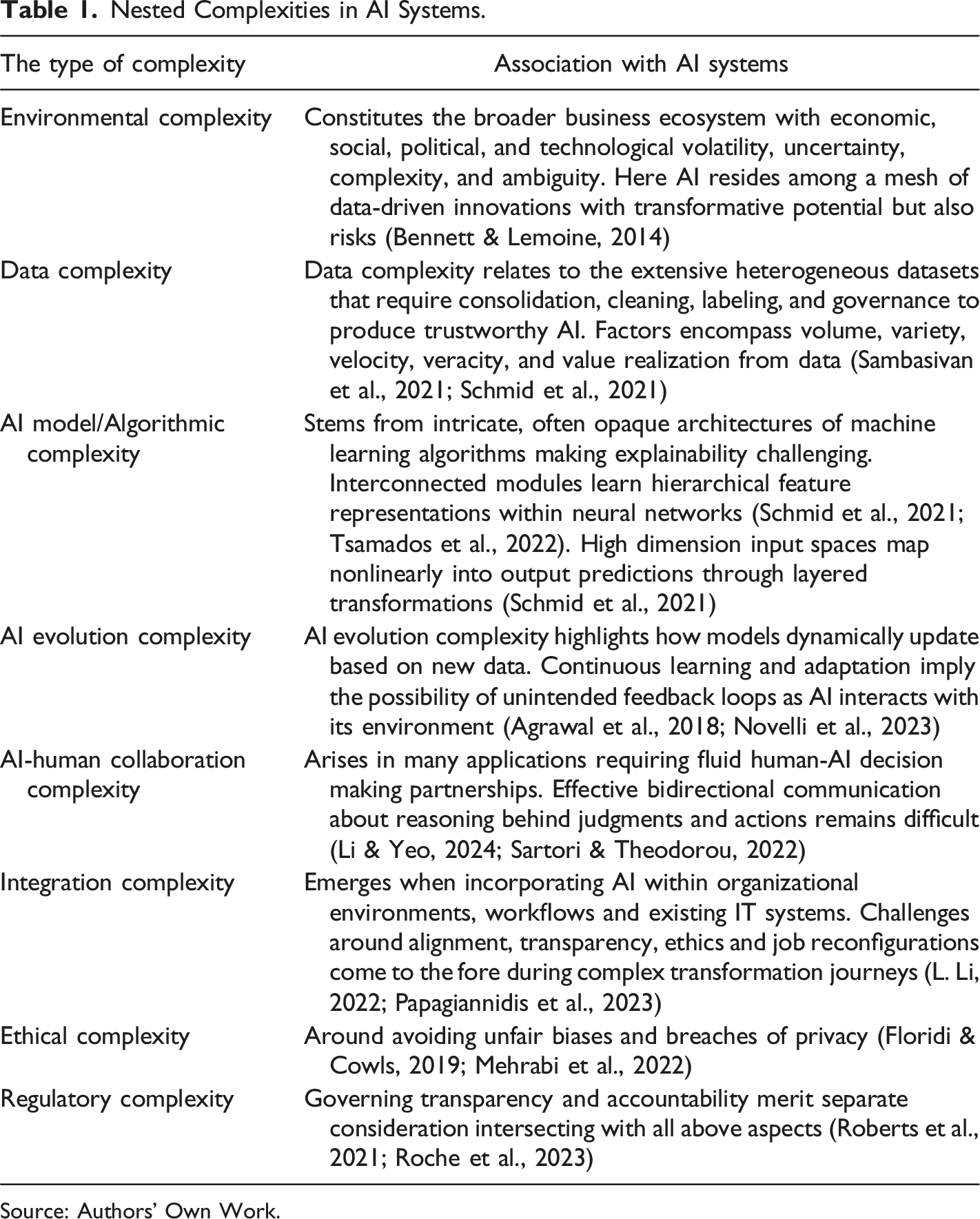
As the promise of AI for enhancing organizational and community sustainability is gaining attention, realizing its potential requires grappling with the inherent complexity of AI systems. Recent analyses have foreground “nested complexity” as an insightful metaphor for understanding AI’s multidimensional uncertainties and constraints across technology, organizations, and communities. Multiple dimensions contribute to this nested complexity in the integration of AI solutions. Data complexity arises from issues of availability, security, integrity, and governance (Schmid et al., 2021). Algorithmic complexity relates to risks of bias, opacity, and improper results that require ongoing auditing and improvement (Sartori & Theodorou, 2022). Human collaboration with AI systems raises challenges of communication, transparency, trust-building, and redefining roles (Sartori & Theodorou, 2022). AI evolution necessitates monitoring for malicious manipulation, unanticipated outcomes, and adapting governance accordingly. Systems integration complexity involves ensuring compatibility with existing architectures and processes (Li, 2022). Ethical and regulatory considerations around privacy, fairness, and accountability contribute to the multifaceted nature of leveraging AI (Mäntymäki et al., 2022; Roberts et al., 2021; Roche et al., 2023; Tsamados et al., 2022).
Developing institutional competence at this dynamic complexity remains imperative for responsibly leveraging AI opportunities while avoiding unintended consequences. Explicitly mapping nested factors can aid nuanced debates in navigating tradeoffs in this complex gambit. Recent scholarship has informed the proposed conceptual framework of “nested complexity” to characterize the multiplicity of complex factors shaping AI implementation and governance. This literature review analyzes key works espousing this perspective.
Tsamados et al. (2022) introduced a system-based, multi-layered analysis of AI complexity. Individual components of AI systems have intricate technical properties; however, additional complexity stems from integration challenges and emergent possibilities as algorithms interact dynamically with social contexts. Technological complexity is thus “nested” within ethical and regulatory complexity, itself embedded in environmental complexity. Building on this, Cowls et al. (2023), in an article on leveraging AI to combat climate change, discuss AI’s carbon footprint as climate risks situated (“nested”) within existing challenges. Training complex models consumes vast computational resources, spurring important tradeoffs between AI’s environmental costs and sustainability benefits across industries and society. However, assessing this balance is obstructed by limited transparency and uncritical “solutionism” regarding the use of AI for social good should be avoided (Cowls et al., 2023).
Novelli et al. (2023) focused specifically on organizations, arguing that AI’s transformative potential relies on holistic governance that recognizes technical, ethical, and integration complexities. As AI systems are neither isolated artifacts nor traditional social systems, “nested complexity thinking” approach promotes vigilance around emergent risks in AI governance, such as emphasized by Novelli et al. (2023) as unfair bias or lack of accountability. The ethical considerations of AI are deeply rooted in the socio-technical systems within which it operates (Adobor & Yawson, 2023). The opaque nature of machine learning algorithms, the need to respect human agency, and the potential for AI to replicate and amplify existing inequalities are core challenges that must be addressed (Sartori & Theodorou, 2022). The sociotechnical perspective emphasizes the importance of transparency and explainability in AI systems to mitigate biases and discrimination (Sartori & Theodorou, 2022). This perspective also highlights the need for human control and contestability in AI decision-making processes (de Fine Licht & de Fine Licht, 2020).
The Moravec Paradox (Deranty & Corbin, 2022), illustrates the “nested complexity” in AI we are proposing, from a technical standpoint. High-level reasoning requires relatively little computational power compared to low-level sensorimotor skills, which are computationally intensive to replicate (Deranty & Corbin, 2022). This paradox suggests that AI may find it more challenging to replace jobs that require basic skills, such as security staff or gardeners, as these roles involve sensorimotor skills that come naturally to humans but are difficult for machines to emulate (Deranty & Corbin, 2022).
Digital transformation, driven by AI, triggers profound organizational changes, necessitating a reevaluation of governance structures (Nadkarni & Prügl, 2021). AI governance, in particular, is a complex endeavor that intersects with corporate, IT, and data governance (Papagiannidis et al., 2023). It requires alignment with an organization’s strategic objectives, legal requirements, and ethical principles. The literature emphasizes the importance of human judgment and collaboration in AI development, as well as the impact of senior executives’ understanding of AI technologies on the organization’s strategic direction (Deranty & Corbin, 2022). A multi-method study approach, including case studies and interviews, revealed commonalities and patterns in AI governance practices across different organizations (Deranty & Corbin, 2022).
Organizational Sustainability and AI
In the context of sustainability, AI can significantly contribute to organizational and community resilience. For example, AI can enhance performance and reduce maintenance costs by forecasting energy consumption and automating repetitive tasks (Papagiannidis et al., 2023). Sustainable organizations leverage AI to improve resource efficiency, enhance decision-making, and adapt to changing market conditions while preserving their core values and human capabilities (Floridi & Cowls, 2019; Kar et al., 2022; Kulkov et al., 2024). AI implementation contributes to organizational sustainability when it enhances operational effectiveness while supporting human development and well-being (Ekuma, 2024). However, organizations must carefully balance the benefits of AI with the need to maintain control over their domain knowledge, especially when their reliance on external suppliers of specialized AI components can undermine their competitive advantage (Papagiannidis et al., 2023).
Nested complexity in AI is thus a representation of the multifaceted issues that span technical, ethical, and governance-related challenges. It requires a comprehensive and structured approach that considers the various levels of analysis, from individual to organizational, and accounts for the temporal dynamics of AI deployment (Papagiannidis et al., 2023). Addressing this complexity is essential for harnessing the full potential of AI.
Environmental Complexity
A system can be deemed complex if it consists of multiple interconnected elements exhibiting dynamic behaviors (Schneider & Somers, 2006). Features of complex systems include non-linearity, self-organization, co-evolution, feedback loops, sensitive dependence on initial conditions, phase transitions between stable and chaotic states, adaptation and emergence of new structures (Schneider & Somers, 2006). Societal and environmental variables that influence organizations have these hallmarks of complexity, which are referred to in the literature as wicked problems (Peterson et al., 2018).
The descriptor VUCA has become an ubiquitous shorthand referring to key aspects of the environmental complexity confronting leaders. Volatility signifies rapidly changing landscapes, acceleration in the pace of change, and growing uncertainty (Codreanu, 2016). Uncertainty denotes inadequacy in the predictability and availability of information required for forecasting and planning (Horney et al., 2010). Complexity points to intricate interdependencies, multiple stakeholders, causes, consequences, and choices to consider (Yawson, 2016). Ambiguity refers to unclear meanings of events that can be interpreted in different ways by various actors (Mack & Khare, 2016). These multidimensional turbulent conditions compel organizations to build capabilities in scanning the external environment for risks and opportunities, adapting in nimble ways, and fostering organizational resilience (Wheelen et al., 2018). Developments in data analytics, automation, and AI hold significant promise in this regard, although judicious assessment of limitations is also warranted (Agrawal et al., 2018) Next, we review the relevant HRD’s role, AI techniques, and implementations.
HRD’s Role in Managing Technological Change
HRD theory and practice have long addressed the challenges of technological change in organizations. R. Swanson and Holton III (2001) foundational work on HRD emphasizes the field’s role in developing human expertise through organization development, training and development, and career development. These core domains of HRD practice become particularly relevant as organizations implement AI systems that fundamentally alter work processes and require new competencies.
Recent HRD literature has highlighted the field’s evolving role in digital transformation. Thite (2022) emphasize HRD’s responsibility to prepare organizations for technological disruption through strategic workforce planning, skills assessment, and learning program development. Oh and Huang (2018) argue that HRD must take a systems approach to technology implementation, considering both technical and social aspects of change.
The nested complexity framework aligns with these HRD perspectives by emphasizing the multifaceted nature of AI implementation and the need for holistic approaches that consider human, organizational, and technical factors. HRD’s traditional focus on individual and organizational learning provides valuable insights into managing the complexities of AI adoption.
AI Techniques and Organizational Implementations
AI commonly refers to computerized systems that exhibit human-like cognition to perceive environments, solve problems, make recommendations, or take actions that optimize specified objectives (Kaplan & Haenlein, 2019). The major categories of AI techniques include machine learning, computer vision, natural language processing (NLP), robotics, and autonomous systems (Huang & Rust, 2021). We focus primarily on machine learning because of its dominant relevance for business applications (Kaplan & Haenlein, 2019).
Machine learning algorithms discern intricate patterns within large, diverse datasets, “learn” models mapping input data to outputs, and apply these models for prediction and classification tasks (Adobor & Yawson, 2023). Based on whether humans label the example inputs-outputs, machine learning is divided into supervised (e.g. predictive modeling), unsupervised (e.g. customer segmentation), and reinforcement learning (optimizing sequential decisions) subclasses. Deep learning is an extremely powerful machine learning technique that leverages artificial neural networks with multiple layers (Kaplan & Haenlein, 2019). Cloud computing infrastructure enables convenient access to the vast storage and computational capacity necessary for modern AI.
Myriad applications of AI in commerce and industry now exist, enabled by proliferating data generation from online interactions, Internet of Things (IoT) sensors, satellite systems, and more (Huang & Rust, 2021). Machine learning (ML) can support personalized marketing and customer recommendations. ML powers fraud detection, credit-risk assessment, and algorithmic trading in financial services (Adobor & Yawson, 2023). AI underlies manufacturing quality control, predictive maintenance, logistics/inventory optimization, and autonomous robots. It enables disease diagnosis, drug discovery, and precision treatment in healthcare. Beyond sector-specific use cases, firms increasingly adopt AI for analyzing disparate data sources to fine-tune strategy, forecast sales, model financials, assess risks, and inform investments (Benbya et al., 2020). AI augments and collaborates with human judgment for enhanced, insight-driven decision making (Davenport, 2018).
Implementation must overcome challenges around trust, transparency, privacy, biases, and job losses (Agrawal et al., 2018). Responsible deployment involves meticulous planning, acquisition of technical talent, curating trustworthy data, and monitoring for unfair biases and unintended consequences (Rai & Sarker, 2019) Next, we discuss the theoretical foundation of HRD and AI integration and conceptualize AI adoption as a multifaceted nested complexity meriting holistic governance.
HRD and AI Integration: A Theoretical Foundation
The intersection of HRD theory and AI implementation presents unique challenges and opportunities for organizational learning and development. Foundational HRD theories, including Swanson’s Human Resource Development Theory Model (R. A. Swanson, 2010), and Watkins’s Learning Organization Theory (Watkins & Marsick, 2019), provide crucial frameworks for understanding how organizations can effectively integrate AI systems while developing human capital.
Traditional HRD theories emphasize three key domains: individual development, career development, and organizational development. AI implementation impacts all these domains simultaneously. At the individual level, employees must develop new technical competencies and adaptive capabilities. Career development takes on new dimensions as AI reshapes job roles and creates new career pathways (Li & Yeo, 2024). Organizational development faces the challenge of creating systems and cultures that support human-AI collaboration while maintaining focus on human potential.
Recent theoretical work in HRD has begun to address the specific challenges of technological transformation (Chuang & Graham, 2018; Oh & Huang, 2018; Prasad, 2024; Wang, 2012). Technology-Enhanced HRD Framework emphasizes the need for systematic approaches to building digital capabilities while maintaining human-centered development principles. This aligns with our nested complexity framework by highlighting the interconnected nature of technical and human development needs.
Nested Complexity: A Conceptual Framework
Complex challenges or so-called wicked problems rarely lend themselves to quick fixes with predictable linear impact and controllable risks (Peterson et al., 2020). AI, possessing intricacies, while embedded within convoluted sociotechnical environments, warrants careful appraisal beyond narrow solutions-focused rhetoric. We propose “nested complexity” as a conceptual framework to elucidate the major components of the AI implementation puzzle from a vigilant, holistic standpoint.
Our framework conceptualizes AI implementation challenges as a series of nested complexities, where each layer of complexity is embedded within and influenced by broader layers. At the core are technical complexities related to AI systems themselves—data quality, algorithmic design, and computational requirements. These technical complexities are nested within organizational complexities related to integration, workflow redesign, and skill development. The organizational complexities, in turn, are nested within broader ethical and regulatory complexities concerning privacy, fairness, and accountability. All of these layers exist within the outermost layer of environmental complexity characterized by VUCA conditions.
Nested Complexities in AI Systems.
Source: Authors’ Own Work.
Propositions on the Relationships Between Complexity Types
Based on our analysis of the literature and our conceptual development, we propose several key relationships between these complexity types:
These multifaceted complexities spanning data, models, collaboration, integration, ethics and regulation issues position AI advancement as an intricate challenge requiring adaptive, holistic governance. Mapping this nested complexity supports nuanced debates on responsibly leveraging AI. This multidimensional perspective contrasts the narrow focuses on AI models alone, decoupled from real-world intricacies essential for integration. We argue against simple cause-effect views of AI deployment outcomes. By encompassing diverse facets and recognizing emergent possibilities, “nested complexity” thinking spurs vigilance - vital when harnessing AI amidst volatility, uncertainty, complexity and ambiguity.
Responsible AI Integration Amidst Complexity
Our framework identifies several key causal mechanisms that drive interactions between different layers of complexity:
Conceptualizing AI adoption as nested complexity within environmental turbulence highlights the need for adaptable, holistic governance. Our “nested complexity” framework recognizes artificial intelligence systems as multifaceted phenomena embedded within equally intricate social, ethical, and regulatory ecosystems. This situates AI governance as an adaptive challenge requiring coordinated efforts across stakeholders. A vigilant, learning approach is needed spanning technology builders, users and oversight bodies.
Testable Propositions
Our framework generates several testable propositions that can guide future empirical research: 1. Organizations that adopt a nested complexity perspective in AI implementation will experience fewer unanticipated negative consequences than those that focus primarily on technical implementation. 2. The effectiveness of AI implementation will be positively associated with the degree to which organizations develop capabilities across all complexity layers, rather than focusing exclusively on technical expertise. 3. Organizations with more integrated governance structures spanning technical, ethical, and organizational domains will achieve more sustainable AI implementation outcomes than those with siloed governance approaches. 4. The impact of regulatory changes on organizational AI practices will be moderated by the organization’s capacity to manage complexity across multiple dimensions. 5. HRD interventions that address both technical skills and adaptive capabilities will lead to more successful AI implementations than those focused solely on technical training.
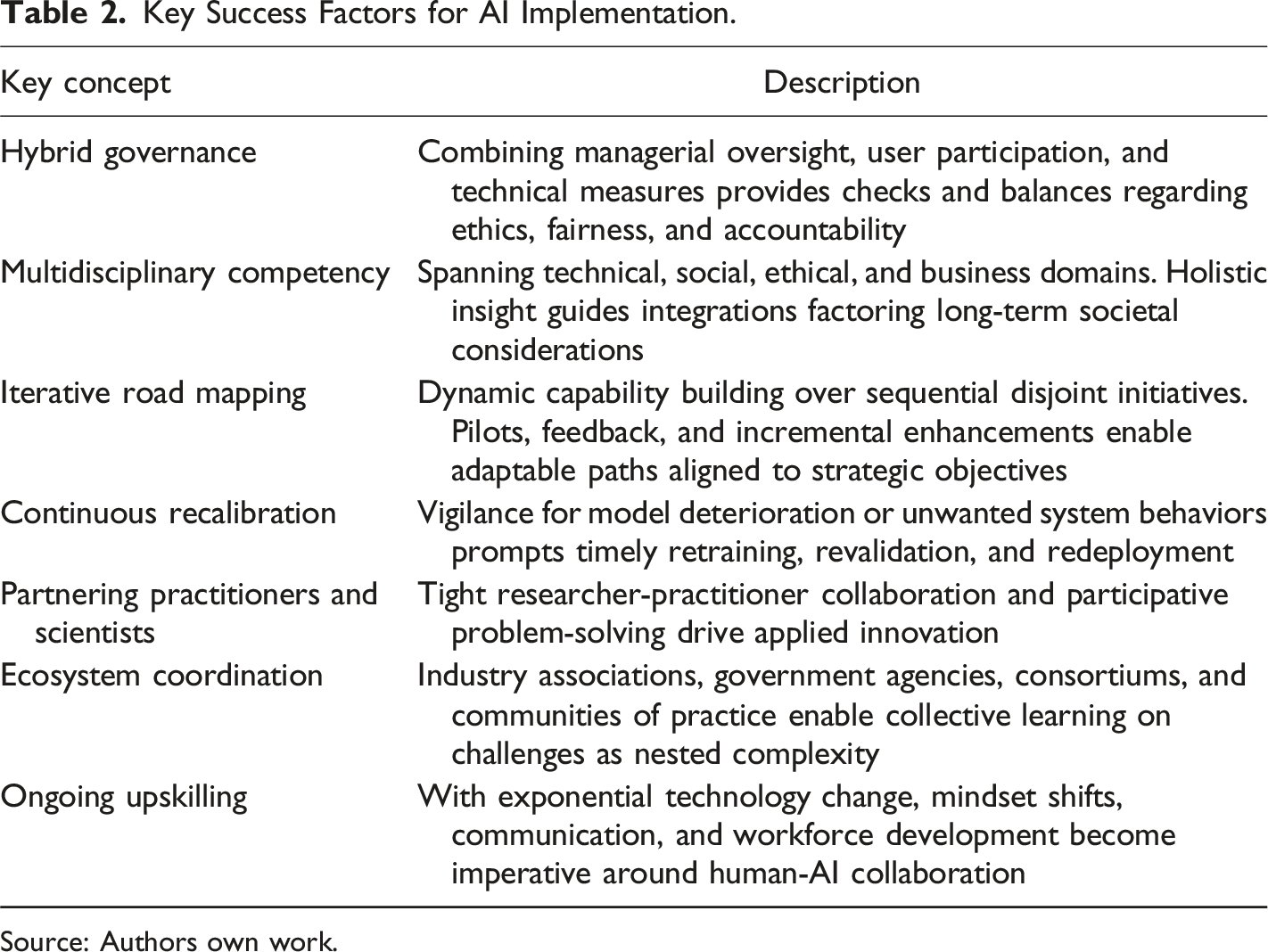
Figure 1 and Table 2 illustrate that success factors include nurturing multidisciplinary expertise and participative partnerships between developers and domain experts attuned to societal impacts. Hybrid governance combines managerial, user, and technical oversight to provide checks and balances around emerging risks like unfair bias. Continuous recalibration of models and renewed workforce skills development further enable responsible innovation trajectories. Industry consortiums play a key role in facilitating the collective sensemaking of AI systems as shifting, “nested” complexes intertwine technological capacity, ethical safeguards, and regulatory needs. The operationalization of this framework is navigating the inherent yet fluid uncertainties of AI-infused transformation through sustained, multidimensional diligence rather than seeking illusory technological fixes to intractable challenges. This demands unprecedented collaboration and a learning mindset from corporations, government agencies and civil society alike. Conceptual Framework of AI Adoption as Nested Complexity. Copyright @2025: Authors Key Success Factors for AI Implementation. Source: Authors own work.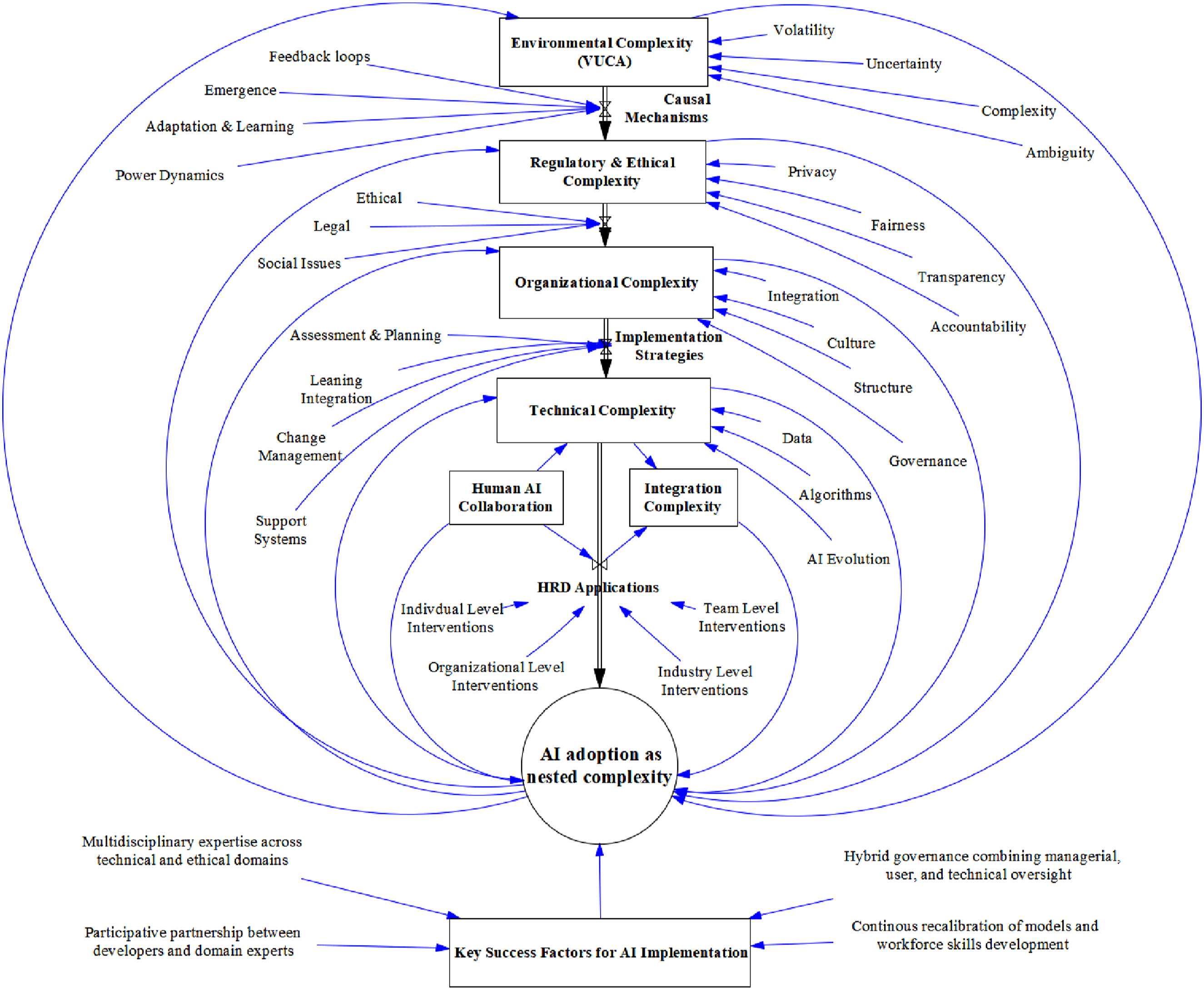
Connecting the Framework to HRD Applications and Strategies
Our nested complexity framework directly informs the HRD applications and strategies discussed in subsequent sections. The framework helps HRD professionals understand the multidimensional nature of AI implementation challenges and develop integrated approaches that address technical, human, and organizational factors simultaneously.
For HRD applications, the framework highlights the need for multi-level interventions that address individual competencies, team dynamics, and organizational systems. Each layer of complexity requires specific HRD responses, from technical skill development addressing algorithmic complexity to change management addressing integration complexity.
The strategies for integrating AI in VUCA environments directly correspond to the complexity layers identified in our framework. For example, adopting a flexible, experimental mindset addresses environmental complexity, while promoting responsible AI through ethics training addresses ethical complexity. This integrated approach ensures that organizations develop capabilities across all dimensions necessary for successful AI implementation.
Vigorously embracing learning and elevated social responsibility positions organizations to harness AI’s potential amidst complexity through deeply mindful approaches. Far from quick fixes, responsible AI integration necessitates patient cultivation of multidimensional capabilities. Our proposed nested complexity framework elucidates key considerations for purposefully leveraging AI towards organizational and community sustainability even as turbulence persists.
HRD Applications of the Nested Complexity Framework
As illustrated in Figure 1, our nested complexity framework provides a structured approach for understanding and addressing the multifaceted challenges of AI implementation. This section demonstrates how HRD professionals can apply this framework to develop comprehensive interventions that support successful AI adoption while maintaining focus on human development.
The nested complexity framework operates across multiple organizational levels, each requiring distinct yet interconnected HRD interventions. At the individual level, HRD professionals must focus on developing comprehensive competency frameworks that address both technical and adaptive skills required for AI implementation. This includes conducting thorough skill assessments to identify gaps (Yawson & Greiman, 2016) in AI-related competencies and creating targeted development programs to bridge these gaps. As AI technologies reshape job roles, HRD practitioners could support career planning and transition. This involves helping employees navigate potential role changes, identify new career paths, and develop the skills needed for emerging opportunities. Learning program design must evolve to incorporate AI tools and concepts, ensuring employees can effectively work alongside AI systems while maintaining their unique human capabilities.
At the team level, HRD interventions focus on fostering effective human-AI collaboration (Li & Yeo, 2024). This requires developing new frameworks for team interaction that acknowledge AI as a team member while maintaining human agency and decision-making authority. HRD professionals should facilitate the development of team capabilities specifically oriented toward AI-enabled work processes, helping teams adapt their workflows and communication patterns to leverage AI effectively. Building cross-functional expertise becomes particularly crucial, as successful AI implementation often requires teams to blend technical knowledge with domain expertise and social skills.
The organizational level demands broader strategic initiatives. HRD professionals must design and implement change management strategies that address AI adoption’s cultural and structural implications. This includes developing leadership capabilities specifically focused on AI governance and ensuring leaders can make informed decisions about AI implementation while considering ethical implications and organizational impact (Yawson et al., 2024). Culture development becomes particularly crucial, as organizations need to foster an environment that supports ethical AI use while maintaining human values and organizational identity.
HRD professionals can leverage this framework in several practical ways. They can develop comprehensive assessment tools to evaluate organizational readiness for AI implementation, considering factors across all three levels - individual competencies, team dynamics, and organizational culture. This assessment informs the design of learning strategies that address identified gaps and support continuous development. Change management approaches can be more effectively tailored when viewing the organization through this multi-level lens, ensuring that interventions address both technical and human aspects of AI adoption. Finally, HRD professionals can create evaluation metrics that measure success across all three levels, tracking progress in individual skill development, team effectiveness, and organizational transformation.
Through this multi-level approach, HRD professionals can ensure that AI implementation efforts address both technical and human aspects of change, leading to more sustainable and effective digital transformation initiatives. This comprehensive framework helps organizations maintain focus on human development while leveraging the benefits of AI technology, creating a balanced approach to technological advancement that supports both organizational goals and human flourishing.
Strategies for Integrating AI in VUCA Environments
Drawing on our nested complexity framework (Figure 1), we propose a set of strategies for organizations seeking to integrate AI systems effectively in volatile, uncertain, complex, and ambiguous environments. These strategies address different layers of complexity, from technical and organizational challenges to ethical and regulatory considerations. The conceptual framework we have proposed suggests several important considerations for organizations seeking to leverage AI in turbulent, complex business landscapes: • Adopt a flexible, experimental mindset recognizing AI integration as an iterative learning process: Organizations should approach AI adoption as an ongoing experiment, being willing to test different solutions, learn from failures, and continuously iterate based on results rather than seeking a one-time fix. • Develop strong data governance and cybersecurity to ensure integrity and reliability: Robust data governance policies and cybersecurity measures are essential to ensure the accuracy and reliability of the data feeding AI systems, as well as protecting sensitive information. • Promote responsible AI through ethics training, diverse teams, and external collaboration: Organizations should make ethical AI a priority through internal training, building diverse teams, and partnering with external experts to proactively address risks like bias. • Institute processes for continuous AI monitoring, auditing and improvement: Ongoing monitoring, auditing and enhancement processes are key to identifying issues with AI systems, correcting errors, and ensuring alignment with organizational goals over time. • Encourage human-AI collaboration and augmentation rather than full automation: Rather than full automation, human-AI collaboration allows the combining of complementary strengths. Organizations should focus on using AI to augment human capabilities. • Take an incremental approach focused on enhancing existing processes and systems: An incremental approach integrates AI into current architectures, avoiding disruptive overhaul. AI should enhance rather than replace organizational systems and human roles. • Anticipate needs for organizational change management and reskilling employees: Proactively planning for talent development and change management is crucial when adopting AI to ensure smooth transition and employee buy-in. • Balance algorithmic transparency with protecting intellectual property: Firms must weigh providing transparency into AI systems for accountability while also protecting proprietary algorithms and data. • Proactively and transparently communicate AI initiatives with stakeholders: Organizations should clearly explain AI projects and their governance to employees, customers, and partners to build trust and awareness. • Collaborate with governments and communities on AI policies and frameworks: Cross-sector collaboration on emerging best practices and policies will help guide the responsible development and use of AI.
This adaptive, holistic approach recognizes the socio-technical intricacies of AI adoption. It emphasizes flexible governance, human oversight, and cross-sector collaboration to integrate AI responsibly and effectively despite volatility, uncertainty, complexity, and ambiguity.
Applying the Nested Complexity Framework in HRD Practice
Assessment and Planning
The nested complexity framework provides HRD professionals with a structured approach to conducting comprehensive organizational assessments across three critical dimensions. The first dimension focuses on technical infrastructure readiness, where practitioners evaluate an organization’s existing technological capabilities, examining both current systems and their potential for AI integration. This assessment includes a thorough review of data management systems, considering their sophistication, scalability, and compatibility with proposed AI solutions. Integration requirements must be carefully mapped, identifying potential technical barriers and necessary system modifications to support AI implementation.
Human capital readiness forms the second crucial dimension of assessment. HRD professionals must conduct detailed skill gap analyses to identify disparities between current employee capabilities and the competencies required for successful AI adoption. This involves evaluating not only technical skills but also adaptive capabilities and digital literacy. The assessment of learning culture becomes particularly critical, as it reveals an organization’s capacity for continuous development and knowledge sharing. Change readiness evaluation provides insights into potential resistance points and helps identify champions who can support the transformation process.
The third dimension examines organizational system readiness, focusing on the structural elements that will support AI implementation. This includes evaluating existing governance structures and their capacity to oversee AI initiatives effectively. Policy frameworks must be assessed for their ability to guide ethical AI use while supporting innovation. Ethical guidelines require particular attention, ensuring they address the unique challenges posed by AI implementation while aligning with organizational values and regulatory requirements.
Implementation Strategies
Following comprehensive assessment, implementation proceeds through three interconnected strategic approaches. A phased approach forms the foundation, beginning with carefully selected pilot programs that allow organizations to test AI solutions in controlled environments while building institutional knowledge. These pilots inform the development of targeted skill development programs, ensuring that learning initiatives address specific organizational needs identified during the assessment phase. Gradual system integration follows, allowing organizations to scale successful pilots while maintaining operational stability.
Learning integration strategies ensure continuous development throughout the implementation process. Just-in-time learning modules provide employees with immediate access to relevant knowledge and skills as they engage with new AI systems. Experiential learning opportunities allow staff to practice with AI tools in safe, supportive environments, building confidence and competence. Knowledge sharing platforms facilitate the exchange of insights and best practices across the organization, creating a collaborative learning environment that supports ongoing development.
Support systems provide the infrastructure necessary for sustainable implementation. Technical support networks ensure that employees have access to immediate assistance when encountering challenges with AI systems. Mentoring programs pair experienced users with those still developing their capabilities, facilitating knowledge transfer and building confidence. Communities of practice emerge as crucial forums for ongoing learning and problem-solving, where employees can share experiences, discuss challenges, and collectively develop solutions to implementation issues.
Through this comprehensive approach to assessment and implementation, HRD professionals can guide organizations through AI adoption while maintaining focus on human development. The nested complexity framework ensures that technical, human, and organizational factors receive appropriate attention, leading to more sustainable and effective AI implementation initiatives. This structured yet flexible approach enables organizations to adapt their implementation strategies based on continuous learning and feedback, ensuring that AI adoption serves both organizational objectives and human development needs.
Implications for HRD Practice
Building on our conceptual framework (Figure 1) and the strategies outlined above, we now explore specific implications for HRD practice. These implications demonstrate how HRD professionals can leverage the nested complexity framework to develop comprehensive approaches to AI implementation that balance technological advancement with human development. The nested complexity framework offers HRD professionals a structured approach to managing AI implementation, with specific implications across five key areas of practice.
Strategic Planning
Corresponding to the environmental and integration complexity layers of our framework, strategic planning serves as the foundation for successful AI integration. HRD professionals must begin by conducting comprehensive organizational capability assessments that evaluate current technical competencies and identify gaps between existing skills and future requirements. These assessments inform the development of integrated learning and development strategies that align with broader organizational objectives. Based on these insights, HRD practitioners can create detailed roadmaps for workforce transformation, outlining clear pathways for skill development and organizational change that support AI adoption while maintaining a focus on human capital development.
Learning Program Design
Addressing the algorithmic, AI-human collaboration, and ethical complexity layers of our framework, the design of learning programs requires a multi-tiered approach to address varying needs across the organization. At its foundation, AI literacy programs must be developed for all employees, ensuring a baseline understanding of AI capabilities, limitations, and implications for work processes. More specialized training programs become necessary for those in technical or leadership roles, focusing on advanced AI concepts and implementation strategies. Crucially, these learning initiatives must incorporate ethical AI decision-making frameworks, helping employees navigate the complex moral considerations that arise with AI deployment.
Change Management
Corresponding to the integration and AI-human collaboration complexity layers of our framework, effective change management becomes paramount in AI implementation. HRD professionals should design comprehensive communication strategies that clearly articulate AI initiatives’ rationale, benefits, and impacts. This involves developing targeted messaging for different stakeholder groups and creating multiple channels for dialogue. Stakeholder engagement requires careful cultivation of buy-in across all organizational levels, from frontline employees to senior leadership. Throughout the implementation process, HRD practitioners should actively monitor signs of resistance to change, developing proactive interventions to address concerns and misconceptions before they become barriers to adoption.
Performance Support
Addressing the AI-human collaboration and AI evolution complexity layers of our framework, supporting ongoing performance during AI transformation requires a robust infrastructure of resources and guidance. HRD professionals should develop detailed job aids that help employees navigate new AI-enabled processes, providing step-by-step guidance for common tasks and troubleshooting procedures. Mentoring programs can pair AI-experienced employees with those still developing their capabilities, facilitating knowledge transfer and building confidence. Performance monitoring systems should be implemented to track progress and identify areas where additional support may be needed, ensuring that employees maintain productivity during the transition.
Evaluation
Addressing all layers of complexity in our framework, the success of AI implementation initiatives requires careful measurement and ongoing assessment. HRD professionals should design comprehensive metrics that evaluate technical proficiency and human factors in AI adoption. This includes creating feedback mechanisms that enable continuous improvement and gathering insights from users at all levels of the organization. Learning program effectiveness should be regularly assessed, measuring completion rates, actual skill application, and business impact. These evaluations could inform iterative improvements to all aspects of the AI implementation strategy, from training design to change management approaches.
Through these interconnected practice areas, HRD professionals can create a comprehensive approach to AI implementation that balances technological advancement with human development. This structured yet flexible framework enables organizations to navigate the complexities of AI adoption while maintaining focus on their most valuable asset – their people.
The nested complexity framework illustrated in Figure 1 provides HRD professionals with a conceptual foundation for understanding these practice areas as interconnected elements within a broader system. By recognizing how each practice area addresses specific complexity layers, HRD professionals can develop more coherent and comprehensive implementation strategies that acknowledge the multifaceted nature of AI adoption.
Conclusion
The nested complexity framework represents a significant advancement in our understanding of how organizations can effectively integrate AI systems while maintaining a focus on human development. By acknowledging the intricate interplay between technical systems, human capabilities, and organizational structures, this framework provides HRD professionals with a comprehensive approach to managing AI implementation. The strength of this framework lies in its recognition that successful AI adoption requires careful attention to both technological advancement and human capital development, ensuring that neither dimension overshadows the other.
Limitations and Future Research
While our framework offers valuable insights for understanding and managing AI implementation, several limitations should be acknowledged. First, the framework’s applicability may vary across different organizational contexts and industries. Organizations in highly regulated industries like healthcare or finance may face different complexity patterns than those in less regulated sectors. Second, our theoretical construction draws primarily from existing literature, which may introduce selection bias based on available research. The rapidly evolving nature of AI technologies means that new complexity dimensions may emerge that are not fully captured in our current framework.
While our iterative development process incorporated feedback from multiple sources, the framework would benefit from more extensive empirical validation across diverse organizational settings. The operationalization of the framework may present challenges, particularly for organizations with limited resources or expertise in AI implementation.
These limitations suggest several important directions for future research:
Theoretical Advancement
Our work makes several important theoretical contributions to the field of HRD. First, we have successfully integrated established HRD theories with emerging concepts in AI implementation, creating a novel theoretical lens through which to view technological change in organizations. This integration provides new insights into how organizations can maintain their focus on human development while pursuing technological innovation. Second, we have extended complex adaptive systems theory into HRD practice, demonstrating how principles of complexity can inform our understanding of organizational learning and development in the context of AI adoption. Finally, our development of new frameworks for understanding technological change offers fresh perspectives on how organizations can navigate the challenges of digital transformation while nurturing human potential.
Practical Applications
The framework’s practical contributions are equally significant. We have developed a structured approach to AI implementation assessment that enables organizations to evaluate their readiness across multiple dimensions, from technical infrastructure to human capabilities. Our comprehensive guidelines for developing learning strategies provide HRD professionals with concrete tools for building organizational capabilities in support of AI adoption. We have created practical tools for managing change and evaluating success, ensuring that organizations can track their progress and adjust their approaches as needed.
For HRD professionals, this framework serves as a valuable roadmap for navigating the complexities of AI implementation while maintaining focus on human capability development. It provides structured guidance for developing comprehensive strategies that address both technical and human aspects of change. The nested complexity perspective encourages HRD practitioners to consider the multidimensional nature of AI implementation challenges and develop integrated approaches that address these challenges holistically.
The ultimate success of AI implementation hinges on an organization’s ability to develop human capabilities in parallel with technological capabilities. Through the nested complexity framework, HRD professionals are better equipped to ensure that AI implementation serves both organizational objectives and human development needs. This dual focus is crucial for creating sustainable approaches to technological advancement that enhance rather than diminish the human element in organizations.
As organizations continue to navigate the challenges of AI implementation, the role of HRD professionals becomes increasingly critical. The nested complexity framework provides these professionals with the tools and perspectives needed to guide their organizations through successful digital transformation while maintaining focus on human resource development and organizational learning. This balanced approach will be essential for organizations seeking to thrive in an increasingly AI-enabled future.
Footnotes
Declaration of Conflicting Interests
The author(s) declared no potential conflicts of interest with respect to the research, authorship, and/or publication of this article.
Funding
The author(s) received no financial support for the research, authorship, and/or publication of this article.
