







Abstract
The Problem
Human Resource Development (HRD) remains a dedicated program in numerous colleges and schools of Education. However, a curriculum of diversity education and social justice education that develops and prepares future leaders, practitioners, professionals, and educators to contribute to an ever-changing, diverse world has not been strongly advocated.
The Solution
The Diverse Voices Framework, a 3-part conceptual development model, will be introduced as a framework that engages student voices and other forms of diverse expressions. The model highlights a participatory approach for teaching diversity and social justice beyond the classroom. In this article, the framework will be applied to a conference format as a practical application for promoting social justice outcomes beyond the classroom.
Stakeholders
HRD educators, practitioners, leaders, and all others engaging in social justice work.
It is time that we [HRD] center our focus more on HRD education, specifically diversity and social justice education where students learn to be morally just human beings and to practice social justice goals in their work. (Byrd, 2022, p.69)
Human Resource Development (HRD) remains a dedicated program in numerous colleges and schools of Education. However, an HRD curriculum designed for diversity education and social justice education that develops and prepares future leaders, practitioners, professionals, and educators to contribute to an ever-changing, diverse world has not been strongly advocated. In this article, diversity education and social justice education are presented in an overarching paradigm that represents critical and culturally relevant approaches to HRD Education. However, each of these educational approaches have unique defining constructs. Diversity education refers to efforts to develop awareness of human difference and cultivate the knowledge and skills to effectively navigate across differences in a variety of contexts (Bell et al., 2009; Bucher, 2004; Connerley & Pedersen, 2005). Social justice is a democratic, collaborative, inclusive process by which individuals have the same basic human rights, opportunities, and social benefits regardless of social location (Adams, 2007; Bell, 2007). Social justice education is “both an interdisciplinary conceptual framework for analyzing multiple forms of oppression and their intersections, as well as a set of interactive, experiential pedagogical principles and methods/practices” (Bell, 2016, p. 4) used to examine how social injustice operates at the individual and larger institutional system.
A diversity curriculum is primarily focused on the development of knowledge, skills, and awareness, (Bell et al., 2009); whereas social justice courses moves beyond awareness, facts, and information towards action and social change. Taken together, diversity education and social justice education in HRD undergraduate and graduate programs are critical approaches that challenges social injustice, power structures, and oppressive behaviors in the individual and the organizations in which they are associated (Bell, 2007). Because the study of systems that create and sustain oppression requires critical approaches, teaching practices that encourage reflection and social action are needed (Byrd, 2014; Ingram & Walters, 2007).
Byrd and Scott (2010) argued how HRD undergraduate and graduate programs lack a social justice lens that equips students with the skills needed to recognize and respond to diversity issues in a practical environment. They proposed that program content should include: (1) historical and contemporary aspects of the social justice issue, (2) strategies for facilitating structured dialogue in a safe space, (3) strategies for dismantling the social justice issue by relying on participatory engagement between teacher and learner, and (4) methods for taking action to implement social change.
In this article, the Diverse Voices Framework will be introduced as an educational tool for promoting diversity awareness and advancing social justice activism beyond the classroom. The framework uses a participatory approach to: (1) develop students’ awareness of injustices in their personal lives, communities, institutions, and the broader society; (2) provide them with the skills and tools needed to speak out against oppressive practices, policies, and behaviors; and (3) empower them with a mindset that operationalizes social justice goals in practical, real-world settings. The guiding question in this article is, how is diversity education and social justice education represented in HRD undergraduate and graduate programs as sources for practical, real-world application?
A Review of the Extant HRD Literature on Diversity Education and Social Justice Education
Overview of Diversity Education and Social Justice Education in HRD Publications
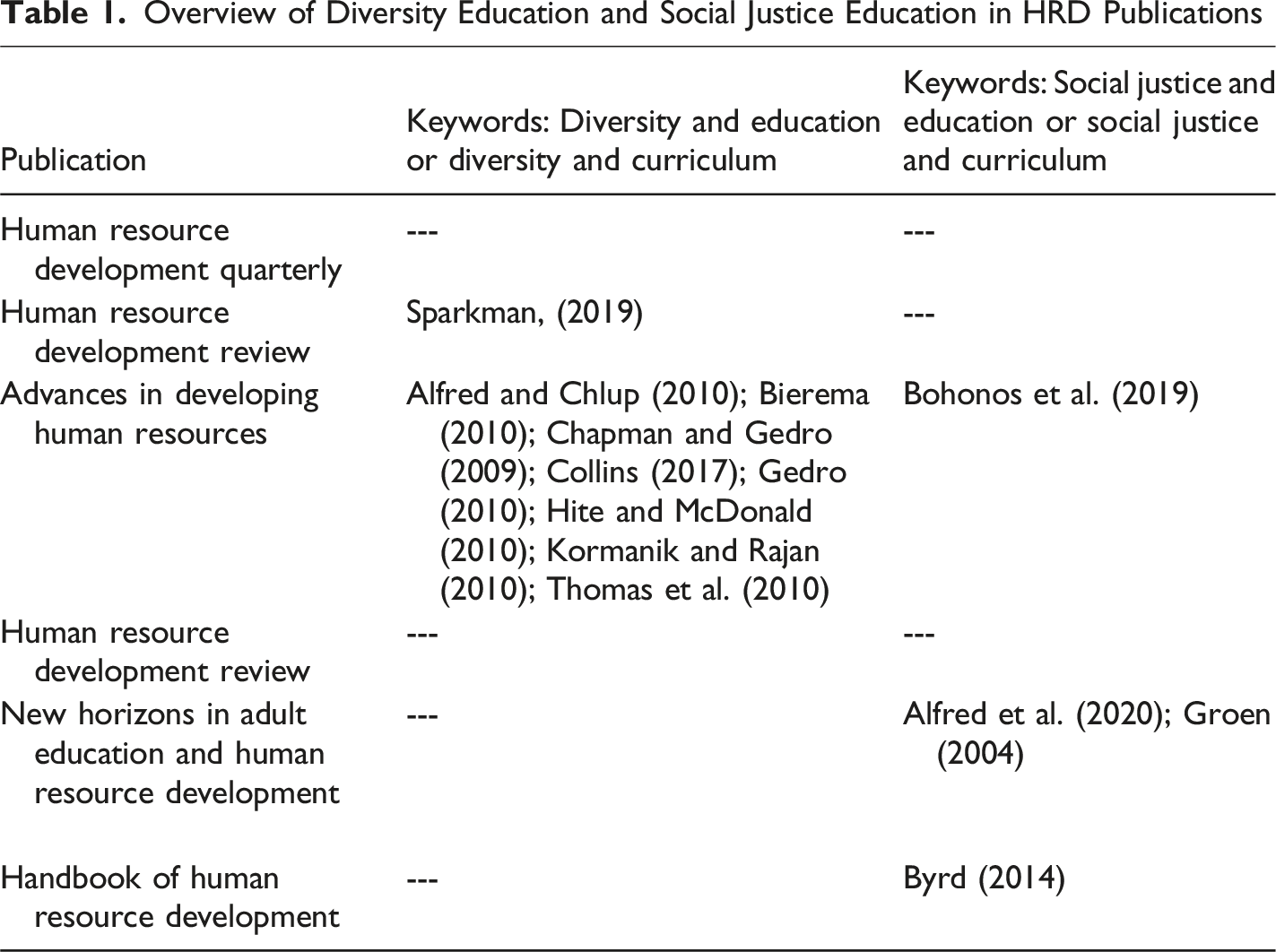
Historically, HRD educational programs have been preoccupied with teaching and learning at the individual level, which has inadvertently neglected the social system where injustices can be embedded and manifested within the broader system (Fenwick, 2005; Groen, 2004). Much of the current approaches to HRD education are guided by economic imperatives that emphasize training, leaving humanistic ideals of democracy, social justice, and human rights on the periphery (Alfred et al., 2020). This is concerning given that education has the potential to disrupt and dismantle deeply held prejudices and beliefs (Gedro, 2010). Human resource development educators are uniquely positioned to advance humanistic ideals of human rights, particularly given that many HRD programs are in colleges of education (Byrd & Scott, 2023). Several scholars have pushed the needle on diversity education and social justice education in HRD programs.
Hite and McDonald (2010) co-edited a Special Issue of Advances in Developing Human Resources on diversity education, with implications for social justice education. In their article, “Perspectives on HRD and Diversity Education,” the authors underscored how changing demographics in workplace settings along with increasing global developments has prompted organizations to focus on the concepts of diversity and social justice. They further emphasized how diversity and social justice work in organizational settings falls under the umbrella of human resource development, as it relates to the established core HRD practices of training and development, career development, and organizational development. Considering these links, Hite and McDonald posed the critical question “What are we doing to prepare our students not only to live and work in a diverse world but also to contribute to building more inclusive systems as HRD scholars and practitioners?” (p.238). Their response to this question, “to include [a] diversity [and social justice curriculum] in the graduate and undergraduate programs that teach HRD” (p. 238).
In the same Special Issue, Gedro (2010) highlighted how including LGBT content in the HRD curriculum intersects with diversity management and aligns diversity and inclusion and social justice goals with an organization’s competitive advantage. In addition, viewing sexual orientation from a paradigm of learning and effectiveness (Thomas & Ely, 1996) taps the strengths of employees and creates conditions where LGBT employees “feel that they can bring their entire selves to work” (Gedro, 2010, p. 356). The field of HRD has staked a claim in “cultural democracy and social justice” (Chapman & Gedro, 2009, p. 98), yet diversity issues stemming from sexual orientation remain underrepresented in an HRD curriculum. Alfred and Chlup (2010) further problematized the lack of attention to diversity and social justice in the HRD curriculum, placing specific emphasis on the lack of race and racism in course content. These authors, like others, argue for an interactive, participatory, engaged process of creating authentic dialogue about diversity issues. By encouraging students to conduct their own research about diversity issues, the teacher and the student become co-instructors in the process.
Based on their study of how some organizations address diversity issues in leadership training programs, Kormanik and Rajan (2010) found that HRD academic programs should develop a curriculum that: (1) explains how diversity is aligned with business strategy, (2) uses an inclusive definition of diversity that minimizes misconceptions about the practice of diversity, (3) instructs practitioners how to customize leadership and management training that explicitly connects diversity and organizational issues (e. g., leadership vision, strategic challenges, goal setting, culture, etc.), and (4) inform practitioners how to master transfer of training and reinforce diversity training with coaching.
Bierema (2010) contributed to the previously mentioned Special Issue by calling for a diversity education curriculum that focuses on social action in HRD graduate programs. Bierema proposed four areas that should be incorporated in this curriculum:1) a focus on raising students’ consciousness of diverse groups as it relates to the understanding concerns and obstacles that exist in diverse organizations and community settings: (2) the use of reflective practice, a self-assessment practice that uncovers the need for specific knowledge to be attained, along with critical thinking (Brookfield, 1987, 1995) which helps students understand various diverse viewpoints and recognize how diverse identities influence biases: (3) a focus on developing graduate students’ social abilities such as listening and engaging in conversations on diversity matters: and last) a focus on transformation and social action (Banks, 1993) be incorporated in the HRD graduate diversity curriculum to promote students’ personal growth along with the development of diversity efforts [and social action efforts] aimed at addressing diversity [and social justice matters]. Bierema (2010) further states: it is time for HRD to take a more committed, strategic, and integrated approach to building diversity [and social justice] into the HRD graduate curriculum to promote a more inclusive, equitable workforce populated with leaders who have a high degree of diversity literacy and ability to lead in increasingly multi-cultural environments. p. 328
Collins (2017) further endorsed the integration of diversity and inclusion education in HRD undergraduate career development, organizational development, and training and development curricula to emphasize their significance in the field of HRD, as well as to intensify classroom discussions on the integration of diversity and inclusion in the above core HRD functions. Collins maintains that including diversity and inclusion in the core areas of the HRD undergraduate curriculum could enhance the “marketability of an HRD undergraduate degree” (p. 13) and encourages HRD undergraduate students to pursue graduate education in HRD or related fields. Finally, Collins states that incorporating diversity and inclusion course content in HRD undergraduate and graduate programs provides HRD educators with opportunities to develop and identify diversity and inclusion education strategies that best impact the students they teach.
Thomas et al. (2010) point out how diversity instruction often highlights differences in a way that encourages the us-them way of thinking. These authors recommend an alternative instructional approach that: (1) structures instruction around topics or themes rather than emphasizing groups or isms, (2) requires educators or trainers to have completed relevant instructional programs to gain insight on their own potential biases, (3) engages an interdisciplinary approach and expands the literature for more inclusive content, and (4) incorporates the strategic use of dominant group perspectives in diversity instruction.
Bohonos et al. (2019) suggests that “graduate students hunger for a deeper level of instructional content directed toward organizational social justice” (p. 251). The concept of organizational social justice, coined by Byrd (2012) is a philosophy that advocates for the respectful, socially just treatment of all individuals in organizational settings regardless of their social backgrounds and identity. Bohonos et al. (2019) additionally maintains that the” formation of social justice education in HRD must center the range of human experiences into its organizational structures and practices” (p. 251) so that graduate students will have a distinct understanding of the impact of social justice efforts in organizational settings. Sparkman (2019) further advocates for diversity education and provides insights on specific content that should be included. First, content should be designed to encourage the development and preservation of authentic forms of cultural heritage. Second, content should speak to behaviors such as incivility and focus on skills that uncover misconceptions and suppressed feelings concerning diversity. Finally, the creation of an empathic space where the use of art, stories, dance, music, etc. is used to evoke empathy and a deeper understanding of lived experience through presentational ways of knowing.
Synthesizing the Literature
The most salient point of agreement among scholars in this literature review is the lack of attention given to HRD education in the areas of diversity education and social justice education. Some suggest speaking to specific issues stemming from diversity such as racism and sexual orientation. Others highlight how business goals should be represented in diversity and social justice content.
Several student learning outcomes for diversity education and social justice education curricula are represented in this literature review: developing self-awareness and critical consciousness, acquiring cultural competence, and demonstrating the ability to transfer learning content to a practical environment that aligns with organizational goals. Without a social justice framework, students will lack analytical skills needed to understand oppressive systems that creates a sense of agency for respond (Byrd, 2014, 2018).
The Diverse Voices Framework: A Conceptual Model for Diversity Education and Social Justice Education
The Diverse Voices Framework (Scott, 2024) is a 3-part, interconnected model that highlights student voices, voices of scholars and practitioners, and a variety of diverse and creative forms of artistic expression. The three components of the framework converge to produce an interactive, participatory parity (Fraser, 2008). Participatory parity ensures social arrangements that creates space for participants to interact with equal voice and independence. This arrangement allows students to learn about, question, examine, then critically reflect about the state of inequitable social structures that deny equal participation (Sensoy & DiAngelo, 2017).
Theoretical Foundations
The Diverse Voices Framework is anchored in a voices epistemology (Giroux & McLaren, 1986); a critical pedagogy (Freire, 1970), and culturally relevant/culturally responsive pedagogies for teaching and learning (Howard, 2003, 2021; Ladson-Billings, 1995; Villegas & Lucas, 2007). First, the concept of voice is a unique instance of self-expression and active dialogue and engagement between students and teachers (Giroux & McLaren, 1986). Voice serves as a foundational point for a theory of teaching and learning as well as generating new ways of knowing and challenging the realities of lived experience. Second, Freire’s (1970) rejection of a banking concept of education for a problem-solving approach involving the “constant unveiling of reality” (p. 89) is considered the origin of critical pedagogy. Therefore, education is the practice of liberation and freedom rather than the practice of privilege and domination.
Finally, a culturally relevant pedagogy is a student-centered approach that encourages and supports students in relating their diverse identities, perspectives, and lived experiences to the associated course content (Ladson-Billings, 1995). Culturally relevant teaching requires teachers to critically reflect on how their positionality influence and shape students’ thinking about race, culture, and social class (Howard, 2003). Similarly, a culturally responsive pedagogy is a teacher-led approach guided by culturally competent supportive teachers who value the perspectives and lived experiences shared by their students in the classroom (Howard, 2021). A fundamental principle of this approach is “an ongoing commitment to challenge injustice and disrupt inequities and oppression” (p. 140). The culturally responsive educator introduces students to a variety of diverse perspectives, recognize their competencies, and validate their lived experiences (Villegas & Lucas, 2007). Furthermore, educators who use this approach must also recognize that to effectively support their students, they must understand how their students learn and how they view societal injustice (Villegas & Lucas, 2007). The Diverse Voices framework creates a space for multiple forms of diverse perspectives to be expressed, and in the process, produce culturally-competent lived, learning experiences.
The Diverse Voices framework builds on these foundations by shifting the teaching and learning format beyond the traditional classroom. Figure 1 illustrates how the three interconnected components of the framework bring together diverse voices of students, voices from subject matter experts, and various forms of artistic expressions that speak to social justice activism. The Diverse Voices Framework. From: Scott, C. L. (2024). Suggested theories, models, and frameworks used to address emerging diversity issues in the workforce. In Byrd, M. Y. & Scott, C. L, Diversity in the Workforce, 3rd edition, (pp. 27-49). Routledge. Reproduced by permission of Taylor & Francis Group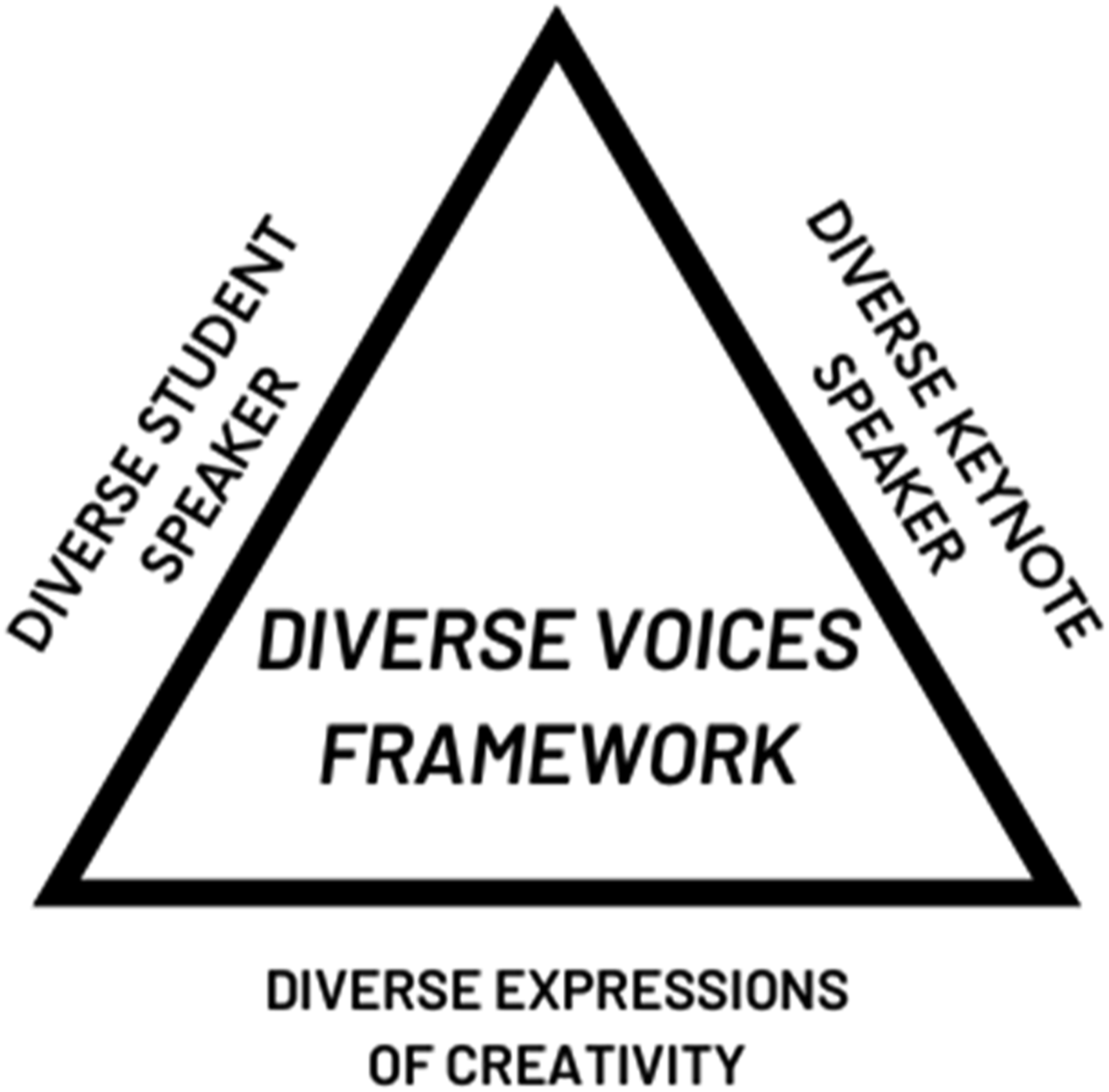
Component One: Diverse Student Speaker
Student voice is understood as valuing the ability of students to express themselves regarding their learning experiences and communicating their expressions to individuals who are in a position to take action and initiate change (Seale, 2009; Wong et al., 2025). The dynamic interplay of student voice and empowerment through a diversity and social justice lens is not merely an academic objective but a fundamental element of educational transformation (Sheblak, 2024).
Component Two: Diverse Keynote Speaker
Diverse keynote speakers are subject matter academics, practitioners, or industry experts from various professions who have specialized, in-depth knowledge of diversity and social justice issues. Their expertise includes knowledge of power structures that produce inequality, social injustice, and oppression (Wiedeman, 2002). This expertise often involves research, analysis, and the development of theoretical frameworks to address systemic issues (Sensoy & DiAngelo, 2017).
Component Three: Diverse Expressions of Creativity
Diverse expressions of creativity are enacted through various forms of artistic expression (music, theater, dance, poetry, etc.). These performing arts “amplify voices that are often silenced…and provide a platform for individuals and communities to express their struggles, aspirations, and demands for justice” (Yousaf, 2023, p. 45). The performing arts have the power to evoke empathy, foster critical awareness, provoke emotional reactions, encourage reflection, and incite action among audiences towards ways of knowing that can lead to change (Sakamoto, 2014; Yousaf, 2014).
The Diverse Voices Conference: Applying the Framework Beyond the Classroom
The Diverse Voices Conference (DVC) is an annual event that serves as the springboard for the Diverse Voices Framework. The conference was founded and launched over two decades ago by Dr Chaunda L. Scott at Oakland University, Rochester, Michigan. The conference is a faculty driven and student-centered event established to develop and enhance students’ understanding of diversity and social justice beyond the classroom setting. The DVC represents all three components of the Diverse Voices Framework. Students have expressed how the DVC has added to their learning more about diversity and social justice: “All of the presenters - the student presenters, faculty presenter, keynote presenter, along with the interpreter, singers, and dancers provided me with some interesting viewpoints to consider regarding how to further my diversity learning along with what I can do to help address and end discrimination and promote the need for equality in society!” “What I liked most about the Diverse Voices Conference was the student presenters – which were my classmates. They were so well spoken, polished and professional. They all have encouraged me to work on becoming a better speaker and advocate for promoting human diversity understanding.” “It was an outstanding student-centered conference and learning experience. I learned a lot about how the presenters and keynote speaker understand social justice – which furthered my understanding of social justice and the need for a socially just society.” “Wow … the Diverse Voices Conference was great! It reinforced the workforce diversity concepts we are learning in Dr. Scott’s workforce diversity course. It was also great to see and learn from professors, professionals and students presenting together on workforce diversity related topics.”
In 2021, the DVC shifted from a town hall forum format to a virtual format. In doing so, the DVC increased its reach locally, nationally, and internationally (Scott, 2024). Each conference event is recorded and archived and can be used as instructional content in diversity and social justice related coursework. The conference is open to faculty and administrative staff as well as students. Students enrolled in Dr Scott’s diversity course are required to attend the live session or view the recording and write a summary of key points explaining how their learning of diversity and social justice was enriched.
The following section applies the keynote speakers’ component of the Diverse Voices Framework. The selected themes represent varying perspectives of diversity education and social justice education presented by Drs. Juanita Johnson Bailey, Marilyn Y. Byrd, Joshua C.Collins, and Jeremy Bohonos. These keynote speakers are scholars who have expressed commitment to social justice activism in their teaching, research, and service.
Voices from the Wilderness: Narratives of Disenfranchised Learners Excerpts from Keynote by Dr. Juanita Johnson Bailey
In 2009, I delivered the keynote address for the 9th Annual Diverse Voices Conference. At that time, the fields of human resource development and adult education were in the infancy of teaching and learning about diversity. The Handbook of Adult and Continuing Education (Wilson & Hayes, 2000), in publication since the 1930s, had finally devoted its first chapter to the topic of race. In the Voices from the Wilderness speech, I began by asking: what is diversity and how is it conceptualized and used within higher education and the context of our professional workplace? So, what follows are the parts of the speech that focused on these two questions.
In Higher Education, we speak routinely of recruiting and retaining students and faculty who are members of disenfranchised groups and of improving the campus climate for women, people of color, and LGBTQ students, faculty, and staff (Baumgartner & Johnson-Bailey, 2008). However, after the 1990s political trend ushered in by the Reagan Administration to reverse Affirmative Action policies (Smith, 1990), higher education institutions resisted the trend and tried to find ways to increase funding through scholarships and outreach programs. There seemed to be a moral imperative to address racial, sexual, religious, color based, and national origin discrimination, the big five from the Title VII of the Civil Rights Act of 1964, which protects employees and job applicants from discrimination based on race, color, religion, sex and national origin (Gurin et al., 2002) and of Section 504A, which addressed discrimination against ‘disabled persons.’
Simply put, it all means that we will try to do the right thing. We will try to do what we should have done all along. But wanting to do the right thing is easy. Doing the right thing is another matter. It is another issue because power never gives away its advantage and privilege. Instead, it rationalizes the reasons for having and keeping the advantage and questions the rights of the ‘others’ who want what they have ‘allegedly’ earned. The enfranchised ask: do they deserve it; did they work for it; and will they only squander it?
As my Grandmother would say when we had to figure things out, “Let’s talk awhile and study on these matters.” My favorite ways of doing this in the classroom is to question and exchange information, data, and research. So, I would first like to relate some of the question and answers that we cover in my diversity classes.
Frequently Asked Questions from My Multicultural Classes
First, in every class the Q&A begins with seemingly innocent questions that contain a dangerous underlying assumption: “All things being equal -- why don’t we talk about all cultures? After all, I’m Southern; and I’m discriminated against every time I open my mouth. Then there are the questions that have a defensive challenge embedded that is borne out of weariness and colorblindness, “Isn’t it time to stop talking about race? People of Color have made it because we have Condoleezza Rice, Colin Power, and Henry Cisneros.” Such appeals are followed by the fair and balanced entreats, “Isn’t Affirmative Action a word. Is it fair to give advantages to any group over another?” Occasionally, when gender is raised, it’s from a young woman who believes that women are equal and she wonders, “Is there a need for laws, discussion, and divisive dialogue around the issue of gender?”
Standard Responses to Frequently Asked Student Questions
Well, all things are not equal. Being gay, Black, Brown, female and a member of a religion other than Protestantism can still get you killed. This is evident in my own home state of Georgia where hate crimes have risen nearly 40%, according to the Southern Poverty Law Center (Dees & Cohen, 2009). I don’t think being ‘Southern’ or a ‘Yankee’ rises to the same level. And according to their Hate Crime Statistics from 2005, there were 7, 160 hate crimes last year, 54.7% motivated by racism, 17.1% motivated by religious bias, 14.2 were motivated by homophobia, 13.2% motivated by bias against ethnic/national origin, and 1% were against people with disabilities.
As long as such statistics exist, we cannot stop talking about diversity and what it means and how we can achieve parity and equal protection for disenfranchised groups. We can only stop talking and worrying about race and gender, when People of Color and women earn 100% of the dollar that their White male counterparts earn rather than 71% and less (depending on the combination of their race and gender). We can only stop talking gender-based violence about when 49% of the women murdered are not murdered by their male partners (Williams, 2004).
However, as long as we frame the discussion as White vs. Black, White vs. Brown, or Whites vs. all Newcomers, there is no way to move forward. We need to reframe it. Instead of talking Affirmative Action, let’s talk privilege and preferences, such as, Veterans’ Preference, which routinely advantages men over women or college admissions’ legacy, which usually advantages the White children and relatives of alumni and benefactors. We have to ask: why do we only want to scrutinize Affirmative Action, when the other systems produce more benefits to more people?
It matters greatly how we talk and conceptualize these issues. And unfortunately, it is on these important issues of race, gender, class, sexual orientation, and national origin that we dance and double speak. The legacy of our segregated American society is that our schools and our workplace are one of the few places where there is some semblance of desegregation. Yet, these major systems which could sponsor change, continue to reproduce existing systems of power, and function to maintain the status quo. Our Western society is based on a hierarchical system where privilege is usually accorded along existing lines of established rights and entitlement. There is no such place as neutral territory – not our workplaces and not our classrooms. When we participate in programs or classes as students, instructors, or planners, we bring the historical weight of optionality with us. It matters little whether we intentionally trade on or naively try to discard the privileges, the deficits, or standpoints of our racial statuses. Such ranks, authorizations, honors, suspicions, and stereotypes cannot be cast aside (McIntosh, 1995). They are accrued in society’s invisible hierarchical banking system of trading and bartering according to designated rankings. If we are to change and function more proficiently, then they must acknowledge and manage these uninvited specters of racism, sexism, and homophobia that haunt us in America.
Concluding Thoughts
The liberal view of access and opportunity are sleights of hand and are not the entire conversation. When the ‘others’ are the center of the discourse what is absent in discussions is the norm of the enfranchised and the privileged who remain the measure of comparisons. Let’s expand our thinking and discuss these facts that encompass our world: (1) five percent of Americans own 59% of all wealth; (2) the top 20% own 83% of the wealth and the bottom 20% have no wealth; and (3) 1% of families hold ½ of all non-home wealth (Lui, 2006). Disenfranchisement cannot exist without enfranchisement and to examine one without the other is an exercise in futility.
When we talk about diversity, here’s what we mean too often. Diversity equals: non-White, gay, woman, the ‘disabled,’ and non-citizens. Diversity, as commonly understood, means ‘learning about or engaging with the ‘Other.’ This basically relieves those who are White, straight, male, able-bodied, and Christian and financially secure from seriously examining what they mean when they say they are interested in ‘diversity.’ Too often we rest the plan and the indeed the conversations at the feet of the disenfranchised to explain, teach, and take action to make change, relieving those in power to contribute.
We cannot throw the term diversity around to make ourselves feel good about increased representation, especially in higher education. This does not work. We need to learn that from the most successful social movement in the last two centuries, the Civil Rights Movement. It is the duty of all of us to speak the diversity speak and do the diversity work of making change. I set forth that if we don’t start to speak plainly, we can never achieve our goal – doing the right thing. We must keep activism and change as central goals within our diversity missions.
It is our ‘ethical’ responsibility as anti-racists, feminists, and people who speak the diversity speak and walk the diversity walk to go beyond “recruiting more people of color as students and employees or hosting another ‘diversity day’ event. We must continue to question how we are defining diversity. Is anyone benefiting in real material ways from our diversity dialogue? Are we making change? How are we accountable? We can take a cue from the business world and ask ourselves continuously, “What is our bottom-line?”
The Role of Social Justice in Practice Excerpts from Keynote by Dr. Marilyn Y. Byrd
In 2021, I delivered the keynote for the 19th annual DVC. I aligned my keynote address with the conference theme by suggesting that a social justice academic curriculum based on knowledge and skills alone is not enough to espouse the practice of social justice. Social justice is a malleable concept that can and should transform depending on the context, the circumstances, and the lived experiences of the learners as well as the teacher (Johnson et al., 2009). Therefore, educators should find innovative ways of changing the learning environment so that social justice action goals of equity and fairness are demonstrated in practice (Chapman & West-Burnham, 2010). Furthermore, educators are often obliged to use political correctness and camouflage the atrocities of social injustice so that they do no harm to those who hold a privileged status (Giroux, 2013). Social injustice is the repression of a person’s civil rights and the capacity to achieve full potential (Byrd, 2018). In this sense, an academic curriculum of social justice has stopped short of explaining the role of moral agency and social action. Moral agency is a self-regulating, philosophical set of values and beliefs that guides or deters an individual from behaving in an inhumane, unjust, or unethical way, and it espouses the duty to respond to social injustice (Bandura, 1991).
In my keynote, I emphasized the need to clarify the concept social justice, particularly since some view social justice as an economic indicator and others view it from a critical perspective. I favor Bell’s (2007) definition that explains social justice as a democratic, participatory, inclusive vision of a workplace where all members are physically and psychologically safe, secure, and able to develop their full capacity; capable of interacting democratically with others. Sensoy and DiAngelo (2017) highlight how social injustice unfairly stratifies individuals across social group lines in significant and impactful ways. Those who participate in the practice of social justice must engage in changing this view must engage in self-reflection and consider how their perceived positionality can align with or interfere with their moral agency and practice of social justice. Perceived positionality refers to how an individual relates their worldview and state of privilege to that of others without a deep understanding of others’ lived experiences and social realities (Tien, 2019).
Conceptual clarity of social justice became apparent to me during a panel event at my university. Panelists from within the university and others from a variety of outside organizations and state agencies were invited to discuss the impact of social movements across the nation. One of the questions asked was to share their view of social justice. I was taken by surprise at the response given by a White woman who affiliated herself with a state government agency. She responded that she did not necessarily agree with the concept of social justice. She continued to explain how she was adamantly opposed to equal distribution of wealth or, as she put it, giving to others so that the distribution of wealth is more balanced. I knew then that her positionality of privilege and her Robin Hood mentality obscured her ability to see social justice through a humanitarian lens as the protection of civil rights.
Social justice is a moral obligation that reflects the highest standard by which individuals should be treated (Byrd, 2018). For some, social justice will be
Philosophical Frameworks: the Agent Group and the Target Group
Social justice is deeply rooted in the study of philosophy. Philosophy is an interacting system of components that helps to answer questions of what is real (ontology); what is true (epistemology); and what is good (axiology) (Ruona & Lynham, 2004). Answering these questions informs our socialized world views and forms a basis for how we respond. The lived experiences of privilege are blind to the lived experiences of difference. Therefore, for the agent group, philosophical framing asks the questions: • “How do I view the [social injustice]?” An ontological perspective: • “How do I gain knowledge about [this social injustice]?” An epistemological perspective: • “How do I act on behalf of those experiencing [this social injustice]? An axiological perspective:
If a social justice agent has developed moral agency he or she will recognize when unjust situations exist and respond by identifying courses of action to remedy or resolve. However, enacting social justice as moral agency is just one side of the coin.
The other is experiencing the reality of social injustice as a target. Although I am reminded of Immanuel Kant’s racist and sexist beliefs, his categorical imperative of treating humanity as an end, respect for persons, or recognizing that people have inherent dignity is one of the foundational principles of Western moral philosophy (Kant, 1996). Applying Kant’s categorical imperative as a target who is experiencing social injustice in a workplace setting, the questions would be: What do I know? (critically reflecting on an event) What ought I do? (trying to make meaning of the event) What can I hope? (becoming energized and motivated to seek a remedy)
These questions acknowledge the quest for answers to a disempowering situation or event but at the same time they acknowledge there is a desired state will bring about a coming to know for improved conditions and a better state of well-being.
My philosophical framing of the actors of social justice prompted me to research how social justice is studied in organizations (not just HRD). I was led to the work of Jerald Greenberg who coined the term organizational justice in his 1987 research on fairness in the workplace. Greenberg’s research represented fairness of the ends achieved (distributive justice) and fairness of the means to achieve the end (procedural justice). Lacking in Greenberg’s research is a representation of fairness in the social systems. Although, Greenberg (1990) pointed out that fairness demands treating others with civility and dignity, his research on social justice failed to address moral agency and fairness in the lived experiences of the socially marginalized.
Building on Greenberg’s (1987, 1990) principle of social justice as foundations for distributive and procedural justice, Rawls’ (2001) theory of justice as equality, fairness, and impartiality, and finally the principle that all individuals are created equal as dictated by the Declaration of Independence, I developed the concept of organizational social justice as the “ideology that organizations operating through a representing agent seek to achieve a state whereby all individuals feel included, accepted, and respected and whereby human dignity as well as equality is practiced and upheld” (Byrd, 2012, p. 120). An idealized vision of organizational social justice in practice envisions the workplace as a space where: difference is recognized, but difference does not mean less than; privilege is a benefit, but privilege does not mean greater than; privilege and marginalization as states of being merit the same outcome in everyday work encounters and interactions; justice meets fairness in a new everyday reality. (Byrd, 2024b)
In practice, organizational social justice responds to the question raised by the agent: How do I act on behalf of those experiencing a social injustice?; and the question raised by the target: What can I hope?
It is challenging, perhaps even difficult, to envision or practice organizational social justice without pursuing stronger human relations. Despite having roots in the human relations movement, HRD has not explored the link between human relations and working across difference for social justice outcomes (Byrd, 2018). However, achieving this state employs an educative process that recognizes not only business and social goals, but specifically how the ideological meaning of freedom and justice in a society that originated in democratic ideals has been exchanged for the sake of power and control (Byrd, 2018; Millard, 1962). Indeed, “a central requirement of human relations for the future must be how make a goodness of life for all-for we cannot allow our differences to divide us to the point where we are incapable of social action for the common good” (Millard, 1962, p. 230).
On the horizon is the ideological workplace----a workplace where people are supported and respected and where others invoke the moral agency to confront the atrocities of social injustice. It is certainly worth envisioning a society in general that is void of social injustice. We are not there yet---but the possibility is worth the anticipation.
Beyond the Visible: Unveiling the Layers of Diversity through Intersectionality and Allyship Excerpts from Keynote by Dr. Joshua C. Collins
In my keynote at the 21st Annual Diverse Voices Conference, I invited attendees to engage with a deeper, more complex understanding of diversity that recognizes not only what is visible but also what often goes unseen. Drawing from critical frameworks in human resource development and grounded in social justice principles (Collins & Callahan, 2023), the keynote explored the interplay between intersectionality and allyship as tools for advancing inclusive learning and organizational transformation. The session challenged participants to consider the role they play, both personally and professionally, in either sustaining or dismantling systems of marginalization, as well as what it would take to build environments where all individuals can truly prosper and are “invited in” (Byrd, 2024a).
Introducing a Layered Understanding of Diversity
The keynote began with the foundational assertion that diversity is more than a demographic box to check. Diversity is the presence of difference, both visible and invisible, and the lived experiences shaped by those differences (Byrd & Scott, 2024). Some forms of diversity such as race, gender expression, and visible disability are often the first to be acknowledged, yet even these are frequently met with explicit and implicit bias, exclusion from networks, and underrepresentation in decision-making structures. It is also important to consider the invisible dimensions of diversity—sexual orientation, chronic illness, mental health status, religious identity, histories of trauma, etc.—which are regularly misunderstood, erased, and invalidated.
To ground this idea, I asked attendees to consider how their own identities, assumptions, and spheres of influence intersect with these dynamics. Where are we seen, and where are we overlooked? When are our identities affirmed, and when are they called into question? By naming these complexities, we can begin to dismantle the reductive narratives that often accompany institutional approaches to diversity work. A critical aspect of this conversation was recognizing that systems of exclusion are not random. Rather, they are patterned, structured, and reinforced through social, cultural, legal, and organizational norms (Bierema et al., 2023). While diversity might be the entry point, social justice and the recognition of social injustice is the goal (Byrd, 2018).
Centering Intersectionality as a Lens for Equity
To further interrogate how systems of power operate, I introduced attendees to the concept of intersectionality, first articulated by legal scholar Kimberlé Crenshaw (1989). We discussed the legal case of DeGraffenreid v. General Motors, where a group of Black women brought a discrimination suit only to have it dismissed because the court could not see them as simultaneously Black and women. The law failed to account for their uniquely situated experiences, exposing how institutional frameworks often flatten identity and ignore the ways race, gender, class, and other dimensions of identity interact.
Intersectionality reminds us that people are not simply one thing at a time, and neither are their experiences of inclusion or exclusion. In a workplace context, this has profound implications (Byrd & Scott, 2024). For example, it is not enough to ask whether women are equitably represented without asking which women. Whose voices are included when we say “diverse”? Who is missing, and why? The conversation also pushed against the idea that following the law constitutes sufficient progress. I asked attendees to consider: What responsibility do organizations and leaders have toward tending to matters of diversity, even in situations where the law has not caught up with our present understandings? This reframing challenges us to think of justice not as compliance, but as a proactive and ethical commitment that moves with, rather than behind, evolving norms and realities.
Moving from Allyship to Action
The keynote then turned toward the concept of allyship not as a status a person claims, but as an ongoing practice of accountability and solidarity (Collins & Chlup, 2014). I introduced a model (Figure 2) distinguishing between two motivations for allyship: one rooted in proximity (e.g., “I care because someone I love is affected”) and another rooted in principle (e.g., “I care because injustice anywhere is a threat to justice everywhere”). Ally motivation and development. Source: Created by Dr. Joshua C. Collins (original work)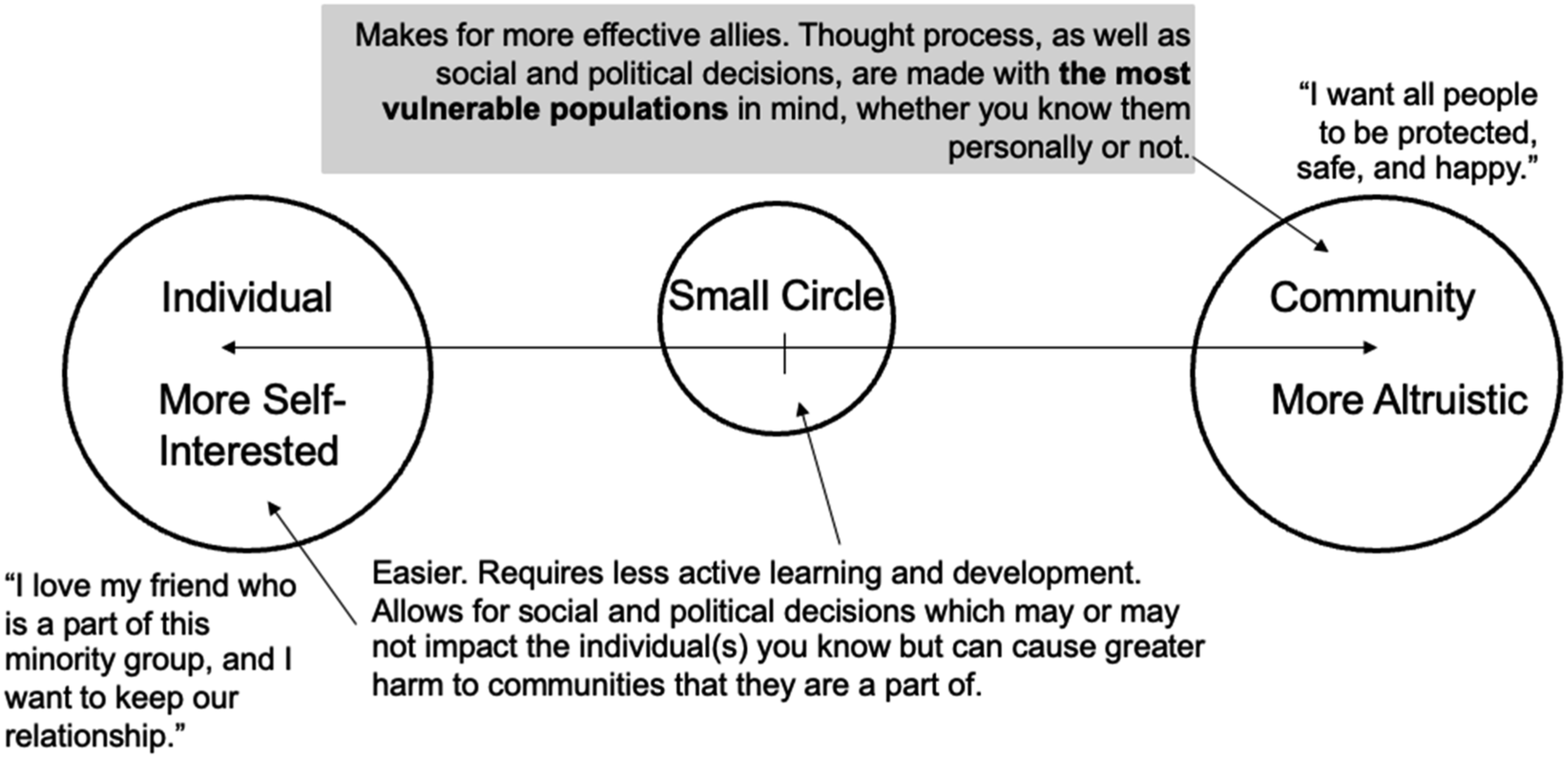
While the former can prompt important personal transformations, the latter invites a broader social consciousness that sees allyship not as transactional, but transformational. True allies do not only show up when someone they know is harmed; they cultivate a worldview centered on equity and responsibility, especially when the consequences do not directly affect them (Collins et al., 2021). This shift in orientation is crucial if we are to move from performative gestures to meaningful and sustained change.
Attendees were asked to reflect: How does our commitment to inclusivity shape our approach to allyship? How can we ensure our actions are responsive to those most impacted by systems of marginalization, rather than centered on our own comfort or recognition? These questions anchored a call to deepen our individual and collective capacity for empathy, humility, and action.
Implications for Creating a Socially Just Society
Throughout the presentation, I emphasized that diversity, equity, inclusion, and decolonization (DEID) are not interchangeable terms. Instead, they each demand different kinds of learning and labor. Drawing on Bierema et al. (2023), I offered definitions to clarify these distinctions: • • • •
Understanding these terms and their interrelationships is foundational to advancing justice-oriented learning and leadership. More than abstract theory, these concepts must be operationalized in organizational practices, policies, and cultures. Finally, the keynote concluded by returning to the core question: How can we foster learning that not only raises awareness, but also inspires social action? My hope is that attendees left with a renewed sense of urgency and agency—to reflect, yes, but more importantly to act. Whether as educators, leaders, advocates, or community members, we each have a role to play in shaping a world where people are not only included, but truly able to belong, contribute, and flourish.
Propelling Multi-Social Identity Initiatives Forward in Challenging Times Excerpts from Keynote by Dr. Jeremy Bohonos
I delivered my DVC keynote in the spring of 2025 while a newly re-elected U.S. president vigorously attacked the diversity, equity, and inclusion initiatives in the federal workforce as well as in education. Preparing for the speech was difficult, given that news was breaking daily about the misdeeds of this aspiring dictator. I found myself temporarily stuck in a reactive mode, asking, “How can I possibly respond to all of the anti-DEI backlash that Trump has initiated?” “How can I do justice to the concerns of all of the marginalized groups whose rights presently are being assaulted?”, “What do I do if the biggest anti-DEI news drops the day before my speech? And how can I possibly be fully prepared to address ALL—This—BACKLASH?!”.
My mind stopped spinning when a well-remembered musical riff started to crescendo in the back of my mind. I could hear the piano playing and then the voice of the incomparable Nina Simone as she sang, “you’re the one who’ll have the blues not me, just wait and see” (Simone, 1967). I frantically looked for the recording and then listened in rapture to Nina’s performance of her original composition “Backlash Blues”. Nina reminded me in that moment that the Backlash that Trump was spearheading was not new, but rather was the latest incarnation of the widespread American antipathy for equity. I wrote the words that would focus my writing, “Any movement towards justice, whether symbolic or tangible, whether real or perceived, will be met with Backlash in these United States” and then named my keynote, “Backlash Blues: Seizing the initiative in multi-social identity advocacy”.
In my keynote, I reminded the audience that the Jim Crow system and the rise of the KKK were Backlash against the abolition of slavery and the Reconstruction era advancements towards justice for African Americans. I used this history to frame the rise of Trump and his assaults on DEI as predictable iterations of Backlash against the election of Barack Obama as the nation’s first Black president and the prominence of the #BlackLivesMatter movement. Citing Derrek Bell’s (2018) contention that racism is a permanent force in the United States and Albert Camus’ (1990) reimagining of the myth of Sisyphus, I called on the audience to (re)commit to a permanent struggle against injustice in which we would experience moments that feel like progress that would inevitably be punctuated by vicious backlash which aim to erase years of organizing and advocacy for justice. Feeling that my ability as a speaker was failing me in my effort to explore the affective reality of committing to such a struggle a turned to the arts and sang a song I had composed as a tribute to Derrick Bell, the chorus was, “we’re gonna push that rock to the topic of the hill, and watch it roll down again (3x). But, we’ll find our meaning in the struggle, cause when it comes to being free that’s where we find our victory”.
Given that I was speaking within a workplace diversity context, I needed to connect the permanence of racism to human resource development practice. For this task, I turned to a dialogue between Myles Horton and Paulo Freire (1990) where these two justice-oriented adult educators addressed the topic of working within the system to achieve social change. While I shared my respect for Horton’s commitment to trying to work outside the system, I also noted that I see wisdom in Freire’s admonition that we must “occupy” positions within the system to establish leverage points for radical change. I called attention to the militarist language of “occupy,” noting that Freire implied that we should take positions of tactical importance and hold them as part of a larger revolutionary strategy. I argued that this is what separates a liberal from a radical in HRD practice. A liberal will see the efforts to reform an unjust system as an end in itself, making DEI programs the core of their strategic vision. While radical HRD practitioners will tactically engage with DEI programs in service to a larger strategic vision for radical justice-oriented change. Again, turning to song, I tried to dig into the complex emotional realities that come while trying to tactically occupy a position within an unjust system. I tried to explore the affective reality of striving to remain committed to a radical strategy while relying on tactics that, on the surface, could appear indistinguishable from complicity with injustice or liberal capitulation.
Am I complicit for remaining here at corporate?
When the gains that I fought for are all forfeit
I know that I’ve got fear, and a responsibility, dear
Am I complicit for remaining here at corporate?
I continued with my keynote by openly reflecting on Audre Lorde’s (2016) famous quote, “the master’s tools will never dismantle the master’s house.” I used this quote as a launching point for a discussion of how working within the system cannot be an ends in itself, and encouraged the audience to commit to organizing and advocating beyond what would be permissible within their organizational roles. I concluded my speech by recalling Nina Simone’s (1967) admonition that, rather than wallowing in the blues when we face backlash, advocates and allies must seize the initiative and find ways to give enemies of injustice the blues!
Bringing the Voices Together
Merging the voices of social justice scholars brings critical depth to diversity education and social justice education. The keynote speakers commonly shared a radical humanist view that focuses on various ways of transcending ideological domination and actively practicing social justice activism (Morgan, 1980). The collective insight of the keynote speakers conveys the critical need for curriculum development in HRD diversity and social justice courses that will help students to contribute their voices “toward creating a more liberating and humane society” (Giroux & McLaren, 1986, p. 236).
Implications for HRD Research
Diversity is an all-encompassing concept; however, diversity issues are not. All social groups have distinct historical backgrounds that inform research to practice in varying ways. Researchers should focus on social identity and speak to diversity and social justice issues that derive from social identity (e. g. diversity and racism; diversity and sexual orientation; diversity and ageism; diversity and gender, etc). However, the outlook for HRD researchers who are pursuing diversity and social justice-related research is grim. The Trump administration has placed plans in motion for erasing diversity and equity from institutional memory (Wilson, n.d.). The private sector could be impacted, particularly those who have used federal contractors. The implication here is that eliminating research that aims to resolve issues stemming from social injustice only serves to mask the problem.
Implications for HRD Education
The Diverse Voices framework presented in this article has offered a beyond the classroom platform for advancing diversity education and social justice education. Other ways of designing in class coursework for equipping students with real-world knowledge and skills include assigning case-studies, inviting guest speakers, planning site visits to available museums or historical locations, and/or attending community events with a related social justice theme.
There are a number of HRD scholars who teach in Adult Education (AE) programs (and vice versa). Students would benefit from a curriculum that includes concepts generally found in AE such as transformative learning to develop and empower them to become agents of social change.
Finally, there are strong implications for teacher preparation emerging from this article. Instructors should not only have subject matter expertise, they should have historical knowledge of diverse topics, a variety of relevant teaching strategies, the ability to apply interpretive frameworks, and the ability to maintain a safe environment for all students to engage in a participatory learning experience.
Conclusion
The guiding question for this article was, how is diversity education and social justice education represented in HRD undergraduate and graduate programs as sources for practical, real-world application? First, it was discovered there is limited research that has explicitly studied diversity education and social justice education within HRD undergraduate and graduate programs as represented by major HRD literature sources. Without a foundation for real-world application, students will lack analytical skills needed to understand oppressive, unjust systems and how to confront problems that might occur. Second, the Diverse Voices framework was introduced as a model that represents how multiple voices and expressions uncover social injustices while at the same time how multiple perspectives can serve to celebrate, authenticate, and legitimize the contribution of those who are marginalized by the standards of society. Finally, the framework was applied in a conference format highlighting keynote speakers who offered varying, in-depth perspectives of how social order can stand in the way of human freedom.
Diversity education and social justice education are crucial for future leaders, practitioners, professionals, and the workforce in general to identify, confront, and address issues resulting from social injustice. Likewise, education is crucial for those who are targets of such acts in navigating their way to wholeness and well-being.
Footnotes

Funding
The authors received no financial support for the research, authorship, and/or publication of this article.
Declaration of Conflicting Interests
The authors declared no potential conflicts of interest with respect to the research, authorship, and/or publication of this article.