







Abstract
This article applies a communication/persuasion model to examine what characteristics of students on a United States university campus are associated with drinking bottled water. Survey results show that those who drank more bottled water included non-Whites, those who trusted traditional organizations more and environmental organizations and scientists less, those who read the campus newspaper, and those who valued water safety, taste, and convenience more. Significant bivariate influences on more frequent bottled water drinking that did not persist in the hierarchical regression included conservatism, religiosity, Christian religion, nonindividualism, less interpersonal communication about environmental issues, less civic involvement, younger age, and fewer environmental behaviors. Groups working to reduce bottled water consumption on campuses should provide access to filtered water and emphasize the connection between bottled water and environmental issues, rather than health issues.
Between 2001 and 2009, the bottled water market nearly doubled from $6 billion to $10.5 billion (Doria, 2006; International Bottled Water Association [IBWA], 2009). In 2009, 8.5 billion gallons of bottled water were consumed in the United States alone, or about 27.6 gallons per person, up from 16.2 gallons per person in 1999 (IBWA, 2009). This rise in bottled water consumption has created numerous negative environmental impacts. Only about 30% of plastic bottles are recycled (National Association for PET Container Resources [NAPCOR], 2010), meaning that 70% go to landfills or end up as litter. As plastic does not biodegrade, single-use water bottles contribute to problems such as the Great Pacific Garbage Patch (Grant, 2009). Bottled water is also extremely energy intensive, both to produce the plastic bottle and to ship the finished water across the world. Gleick and Cooley (2009) estimate that producing and shipping bottled water requires as much as 2000 times the energy needed to produce tap water. Additionally, there are concerns that the plastic may be leaching chemicals such as phalates into the water (National Resource Defense Council [NRDC], 1999). Further, bottled water is not necessarily safer than tap water (Belford, 2008; Government Accountability Office [GAO], 2009; NRDC, 1999), a large proportion (from 40% to 60% worldwide) is packaged and even reprocessed tap water, and the cost factor compared to tap water may be as much as 10000:1 (Doria, 2006).
Because of these concerns, many universities have banned bottled water (for a list of campus initiatives, see http://takebackthetapcornell.wordpress.com/). Where university administrators have not acted, environmental groups have created campaigns targeted at the individual level (e.g., Food and Water Watch, http://www.foodandwaterwatch.org/water/take-back-the-tap/; Sierra Club, http://www.facebook.com/TakeBacktheTapSFSU?v=info). These campus campaigns use tactics that have been supported in the social marketing literature, such as written pledges and advertisements using social norms (e.g., Andreasen, 2006; McKenzie-Mohr, 2010).
Despite the wide-ranging concerns and the action being taken to discourage this environmentally harmful behavior, relatively little research has been conducted on diverse influences about drinking bottled water, particularly in the context of college campus campaigns. This article reviews current research, confirms, and expands on some of this work through a survey study and concludes with suggestions for future research and campaign message design.
Literature Review
This study can be conceptualized as an initial step in establishing the foundations for a broader communication or social marketing campaign on university campuses. Messages that provide information alone are rarely effective at changing behaviors, particularly for environmental behaviors (Lehman & Geller, 2004; McKenzie-Mohr, 2000). Many other factors affect how we behave, including prevailing social norms, prior beliefs, and values. For example, Kempton, Boster, and Hartley’s (1995) comprehensive anthropological study of Americans’ environmental values concluded that people’s “environmentalism goes deeper than just opinion or attitude to core values and fundamental beliefs about the world; and their environmentalism affects market and voting behavior” (p. 4).
Thus, in order to successfully change behaviors, more integrated understandings and approaches are needed. For example, social marketing emphasizes behavior change and the larger societal structures that help or hinder that change (Andreasen, 2006; but see Rice & Atkin, 2012). It draws on the most effective and well-tested principles of traditional marketing, such as appealing to values and emotions, but applies these methods to campaigns for the public good. Social marketing has been used to encourage energy reduction, antilittering, and recycling, and its application within the environmental arena is growing quickly (Takahashi, 2009).
The first steps of social marketing include formative evaluation, where the audience is better understood and often segmented into target groups. Message reception is affected by individual and group differences, including susceptibility to persuasion and pressure to conform (McGuire, 2012). Audience segment research shows that members of each subgroup share not only demographic characteristics such as race or gender but also psychosocial characteristics, including beliefs, values, and behaviors (Slater, 1996). This allows the communication practitioner to tailor messages to specific audiences, to increase the efficacy of the campaign.
Thus, while social marketing programs have met with mixed success, it seems that the most effective programs (i.e., those with higher rates of behavior change) took the most care in understanding their target audiences using formative evaluation and audience segmentation research (Atkin & Freimuth, 2012). A number of nonprofit groups, for-profit businesses, and communication scholars have used audience segmentation surveys to better understand public opinion regarding a variety of environmental issues (e.g., ecoAmerica, 2006; Experian, 2008). Unfortunately, many of these studies use proprietary measures (e.g., Values and Lifestyle Survey [VALS]), meaning their results cannot be duplicated. One notable study is available. Researchers at the Center for Climate Change Communication ([CCCC], 2009) at George Mason University have provided their measures in their Six Americas report. The Six Americas study is an audience analysis that breaks the US into six distinct groups, each with their own beliefs and values regarding climate change. The study provides a useful schematic of questions to ask when conducting evaluative research. This study assessed characteristics and behaviors associated with bottled water use in order to design appropriate messages which can then be pretested and included in campaign implementation, such as reducing bottled water consumption on campus.
The Communication Process
We conceptualized aspects of the communication process based on the five components of McGuire’s (2012) model of persuasive communication: source, message, channel, audience, and destination (i.e., target behavior).
Sources should be credible, attractive, powerful, and share visual characteristics with their target audience (i.e., homophily). We conceptualized trust in information sources as belonging to this component. Message aspects can be divided into type of argument, type of appeal, message style, and frequency. Appeals can also play to various cognitive or emotional needs (e.g., to reduce fear or uncertainty; see also Cialdini, 2001). We conceptualized political ideology, religious ideology, and cultural values as topics that could be conveyed through message aspects to match audience segments.
McGuire (2012) describes the pros and cons of possible channels such as the traditional mass media (ads, news, documentaries, interviews, and so on), school-based education programs, radio, mail, word of mouth (particularly through community groups such as churches and workplaces), posters in high traffic areas, and online/digital/mobile media. The measures for media usage and interpersonal communication about environmental behaviors were included in this component. Theory and research suggests that civic involvement increases people’s connection to society, interconnection to each other, and exposure to diverse information. Therefore we also included civic engagement in this category.
Once the audience has seen or heard the message, it must process the message before acting on it. McGuire describes a 12-step process, ranging from tuning in, having interest in the message, comprehending it, to remembering it later and then deciding to act. Furthermore, though a change in belief does not always cause a change in behavior, there is some correlation between beliefs, attitudes, and behaviors, such that certain variables (e.g., topic involvement and salience) increase the relationship. We also felt that prior behaviors and beliefs that might lead to the target behavior fell under this category, including reasons for consuming bottled water, and other environmental behaviors. We also include demographic characteristics of the audience, as they provide some of the foundations for audience segmentation. The destination, or action requested of the audience, should be something the audience is willing and able to accomplish. Here our destination is the target behavior of reducing consumption of bottled water.
The next section briefly reviews the literature on each of these sets of influences and derives corresponding hypotheses or research questions. Each hypothesis explicitly notes which phase of the process it refers to: S = Source, M = Message, C = Communication, A = Audience.
Source
Trust in information sources
In the United States, science is trusted more than medicine, the Supreme Court, the executive branch, major corporations, or the press (National Science Foundation, 2004). However, the level of trust in scientists has declined over time (1974–2010). Much of this is due to the fact that conservatives’ trust in science declined sharply, while moderates’ and liberals’ trust remained stable (Gauchat, 2012). Further, this effect is most likely subject specific, with conservatives more distrustful of the role of science in setting social policy. A high level of trust in scientists is also correlated with belief in the urgency of global climate change (CCCC, 2009). In Saylor, Prokopy, and Amberg’s (2011) university survey, differences in perceptions of water safety varied across levels of trust in the university administration and in local government.
HS1
Those with less institutional trust will drink more bottled water.
Message
Political ideology
Conservatives may frame environmental issues as market issues, leading to calls for the removal of governmental environmental protection programs and regulatory agencies, much as they did in the Welfare debates of the 1990s (Ryan & Alexander, 2006). Skocpol and Florina (1999) note that while some conservatives argue for unregulated markets as the best solution to social problems and are skeptical of bottom-up engagement, there are “civic conservatives” who value families, churches, and local voluntary groups as alternatives to government involvement.
In contrast, liberals are more likely to support environmental policies. A five-country (US, Great Britain, West Germany, Russia, and Japan) representative survey in 1993 showed pro-environmental attitudes (about consequences on the environment and human health) were associated (with some differences) with liberal values in the US and Russia (Weaver, 2002). Indeed, most studies find that liberals are more likely to engage in environmental behaviors (e.g., CCCC, 2009). However, Saylor et al. (2011) found no statistically significant differences in bottled water consumption based on political ideology; their study, however, was conducted during a tap water contamination crisis. This may have framed the problem as a health issue, rather than an environmental issue, thus reducing the salience of political beliefs.
Thus, we suspect that on a campus where drinking bottled water has been framed as an environmental problem, we are likely to see a relationship between political values and this behavior.
HM1. Those with a more conservative political ideology will be more likely to drink bottled water.
Religious ideology
Religion’s influence on environmental attitudes has received modest and inconsistent support. Weaver (2002) found more relationships with religious orientation in the US, and few in four other countries (Great Britain, West Germany, Russia, and Japan), but in all except Japan there was a positive association of pro-environmental attitudes with a sense of the sacredness of nature.
As far as we are aware, no studies as of yet have examined a link between religious beliefs and behaviors and drinking bottled water, but we suspect that drinking bottled water will follow other environmental behaviors.
HM2. Those who are more religious (especially Christian) will be more likely to drink bottled water.
Cultural values
Collectivistic cultures tend to focus on group norms and putting group goals before individual desires and highlight the implications of one’s behavior others, while individualistic cultures focus on autonomy and independence from the group, and highlight one’s own needs and beliefs. The few studies that have empirically tested cultural appeals’ efficacy in changing health behaviors (which overlap with environmental issues and behaviors) report limited effects (Kreuter & Haughton, 2006; Thompson, Kalesan, Wells, Williams, & Caito, 2010). A meta-analysis of studies on the persuasive effects of cultural appeals within a consumer context reported almost no effects except for collectivism–individualism (Hornikx & O’Keefe, 2009). Lee, Hubbard, O’Riordan, and Kim (2006) found that those individuals who were highly collectivistic tended to be more easily persuaded by messages that focused on social norms, while those who were individualistic were persuaded by messages that focused on perceived behavioral control.
American individualism tends to be negatively associated with resource conservation beliefs (Dunlap & Van Liere, 1984). McCarty and Shrum (2001) proposed that underlying value orientations about interaction with others (e.g., individualism and collectivism) and with the material world (locus of control) affect environmental beliefs and behaviors (in their study, inconvenience and importance of recycling). They concluded that individualism was positively related to recycling inconvenience, and collectivism to importance, and that inconvenience was negatively, and importance positively, associated with recycling behavior intentions. A more consumer-oriented study assessed influences on U.S. college students’ green purchasing (e.g., buying products made from recycled materials and choosing more environmental friendly products). Collectivism influenced consumer effectiveness beliefs (similar to self-efficacy), which then positively affected green purchasing, while environmental concern had a direct positive effect on green purchasing (Kim & Choi, 2005). The researchers considered that those with greater collectivism might expect others to engage in the same socially beneficial behavior, thus increasing their efficacy.
Because bottled water was framed as an environmental issue on campus, we believe that this issue will be more salient to collectivistic respondents.
HM3a
People who are more collectivist will be less likely to drink bottled water.
HM3b
People who are more individualist will be more likely to drink bottled water.
Channel
Media use
Media coverage (or the lack of it), can influence public perceptions, and thus behaviors, about environmental issues, for a variety of theoretical explanations, such as agenda-setting, cultivation, framing, environmental narratives, and presentation of risk (Besley & Shanahan, 2004). For example, cultivation research proposes that heavy TV viewers are less likely to be environmentally interested or to pay more for environmental improvement and have less trust in science and less environmental knowledge (Shanahan & McComas, 1999). This is true of both the disproportionate coverage of certain images that lead heavier TV viewers to perceive the world according to those images and the absence of such coverage leading to “symbolic annihilation.” Further, greater TV viewing increases attention to material abundance, leading viewers to overestimate people’s material goods, fostering increased consumerism and less concern for the environment (O’Guinn & Shrum, 1997), unless those viewers are watching nonfiction programming such as documentaries and nature shows (Good, 2009).
Different newspapers’ ideological positions influence the framing of environmental news coverage, which help in turn to shape the agenda for top political figures, the public, and other media. There seems to have been a general shift in the 1990s from framing environmental stories as science to framing them as political judgments (Trumbo, 1996). The media’s reporting of environmental issues often lacks a “science frame,” instead treating them as topics of public opinion, or as industrial/government crimes (Ohkura, 2003, p. 239). Antilla (2005) identified four main frames in 251 newspapers 2003–2004: 22 of the topics emphasized “valid science” and 11 of the topics emphasized “nonvalid science.”
People do learn about science and environment through television news, newspapers, the Internet, and radio (O’Donnell & Rice, 2008; Ostman & Parker, 1986). However, what is learned? An analysis of several years of General Social Survey data found that, after applying statistical controls, greater television viewing (in 1993 and 1994) and greater newspaper reading (in 1993) were associated with less trust in science, while in 2000 greater newspaper reading was associated with greater trust in science and technology, and greater environmental knowledge (Besley & Shanahan, 2004). Relatively few research studies examine the effects of channel on bottled water consumption; however, Griffin and Dunwoody (2000) found no association between reliance on mass media and preventative behaviors after a water contamination problem. Thus, we make no hypotheses about the role of media but will report associations.
Interpersonal communication about environmental topics
Drinking bottled water is correlated with receiving information from family and friends and from environmental groups (Doria, Pidgeon, & Hunter, 2009; Gorelick et al., 2011; Griffin & Dunwoody, 2000). Though biochemical research shows that tap water is often safer than bottled water, the public may nonetheless perceive tap water quality to be unstable or on the decline (Doria, 2010). Although some of this can be blamed on overhyped media coverage of isolated events and aggressive marketing by bottled water companies, some of the decline in confidence in our drinking water may be due, paradoxically, to environmental groups. Gorelick et al. (2011) suggested that environmental groups are working at cross-purposes, with groups putting out information that shows bottled water and tap water are both unsafe. For example, the Environmental Working Group (EWG, n.d.) recently published summaries of water quality reports for major metropolitan areas. It was implied that the cities at the bottom of the list, such as San Jose, had drinking water that was unsafe—particularly for sensitive populations such as pregnant women and children.
Additionally, while water companies have been legally required to provide information regarding the testing and safety of their water, many people are either unaware that this information exists or feel unqualified to interpret and assess the risks of complicated scientific information (Jones et al., 2007). Griffin and Dunwoody’s (2000) study, conducted after a water contamination problem, discovered that respondents who reported getting information from friends and family were more likely to perceive a risk. On the other hand, respondents who received information from health professionals were also more likely to perceive risk but felt better able to deal effectively with that risk and to adopt preventative behaviors.
Drinking bottled water is an issue with (at least) two competing frames: health and environmental. Though previous research on this behavior suggests that increased interpersonal communication would lead to more bottled water consumption, this would only be true if the issue is framed as a health problem. Because of the context at this university campus, we suspect that an environmental frame will be more dominant.
HC1. People who communicate less about environmental issues will drink more bottled water.
Civic involvement
Through civic involvement and political discussion, citizens may be exposed to diverse information, elevate their thinking, reveal private information, learn to justify their claims, and thereby achieve more sophisticated opinions (Fearon, 1998; Verba, Schlozman, & Brady, 1995). The concept of civic involvement and the public sphere not only includes the public interest and democracy but also the more general Habermasian goal of fostering continuous public dialogue (Croteau & Hoynes, 2006, p. 22), and thus openness to more diverse opinions. Engagement in civic activities may increase one’s sense of political efficacy and interconnections with society (Skocpol & Florina, 1999). Involvement in civic activities emphasizes the collective benefit (such as maintaining a positive environment for all) and a deeper commitment to one’s community. As far as we are aware, no study has yet examined the connection between civic involvement and drinking bottled water.
HC2. Those who participate in fewer civic activities will drink more bottled water.
Audience
Consumption reasons
Previous studies in a number of countries using a variety of research methods have determined that perceptions of safety, taste, and convenience are all strong motivations for consuming bottled water. In particular, two main factors strongly influence the use of bottled water (and filtered water): dissatisfaction with characteristics of tap water (especially taste, but also odor and appearance) and concerns about health/risks.
Doria, Pidgeon, and Hunter (2009) conducted a cross-national mail survey and focus groups in the UK and Portugal, examining the beliefs and experiences that lead to perception of drinking water quality. The researchers looked at an overall assessment of risk and quality, perceptions of water flavor, color, and odor, contextual cues (e.g., well-maintained pipes and absence of litter in reservoirs), trust in water companies, and negative information from friends and family, among other variables. Overall, the flavor of the tap water and the perceived risk of drinking tap water were the strongest influences on the perception of drinking water and thus the decision to buy bottled water. Flavor influences the perception of risk, as do contextual clues and negative information from friends, though this last link is weak. Saylor et al. (2011) conducted focus groups and a large Internet survey at a mid-sized university in the Midwest regarding tap and bottled water preferences during a bacterial outbreak on campus. Safety, taste, and convenience were strong motivators to buy bottled water. They also found that many of their university respondents believed that recycling eliminated the environmental impacts of bottled water.
Safety concerns argue both for and against bottled water. Many people think that their tap water is not treated enough, though they know that the added fluoride is beneficial to dental health (Jones et al., 2007). Men with children at home are more likely to drink bottled water (Dupont, Adamowicz, & Krupnick, 2010), again pointing to concerns with the treatment of tap water. Some people believe that the chemicals in plastic bottles are carcinogenic, though they believe this is only dangerous if the bottle is used repeatedly (Ward et al., 2009).
Other factors include extensive advertising, lifestyle emphasis, substituting for other beverages (not for tap water), preference for mineral or spring water, demographics (especially ethnicity, such as non-White), perception of water source quality, and trust in tap water companies (Doria, 2006; Mackey, Davis, Boulos, Brown, & Crozes, 2005). The convenience of bottled water is also a growing point of emphasis, particularly among the young (Jones et al., 2007; Ward et al. 2009).
HA1. People who have stronger reasons for consuming bottled water will be more likely to drink bottled water.
Other environmental behaviors
Stern (2000) explicates the concept of environmentally significant behavior, whereby underlying values, beliefs, and supporting social norms about environmental issues generate similar environmental behaviors.
HA2. People who engage in fewer other environmental behaviors will drink more bottled water.
Demographics
Weaver (2002) reviews the quite contradictory findings about association between gender and environmental attitudes, with some differences, largely due to female role socialization such as caregiver. Her analysis of data from five countries in 1993 indicated that females were more likely than males to be concerned only about environmental consequences in West Germany, and human consequences in the United States. More specifically, perceptions of safety, taste, and convenience all influenced bottled water purchasing, with certain groups emphasizing some factors over others. Women and younger people (specifically undergraduates versus graduate students, staff, or faculty) tend to be more likely to drink bottled water (Griffin & Dunwoody, 2000; Saylor, Prokopy, & Amberg, 2011). Younger generations focus on taste and convenience, while ethnic minorities, women, and parents tend to emphasize health concerns. Older people and the more educated seem more confident in their water source and thus more likely to drink tap water.
HA3a
Younger people will be more likely to drink bottled water.
HA3b
Women will be more likely to drink bottled water.
Ethnicity
Researchers have begun to investigate the issue of ethnicity and perceptions of tap water safety. A variety of studies have found that minorities are more likely to drink bottled water over tap. Drinking water has recently also become a social justice issue. Tap water taste and safety varies by region. While ethnic minorities may have less trust in their local water supply, they may also live in underserved areas with old or poorly maintained infrastructure that will affect drinking water quality. Purchasing bottled water comes at an added expense for people who are often in lower income brackets. This phenomenon is also giving rise to a public health concern, as bottled water is not treated with fluoride for better dental health.
Huerta-Saenz, Irigoney, Benavides, and Mendoza (2011) surveyed parents at an urban clinic serving predominately low-income African Americans. They found no differences in water preferences between African Americans and non-African Americans; however, their non-African American group was small (N ∼ 20) and included other racial minorities (Latino and mixed race). Of the sample, nearly 40% drank only bottled water and only 24% knew that tap water had fluoride added to it. Drinking water preferences were driven largely by perceptions of quality. In a similar study in a predominately Latino neighborhood, Hobson et al. (2007) found that Latino parents were more likely than non-Latino Whites to give their children bottled water. Many Latinos believed that tap water would make them sick.
Gorelick et al. (2011) collected survey data at an urban emergency room with a larger sample size and more evenly distributed ethnic groups (about a third each of White, African American, and Latino respondents). Here, minorities were three times more likely to give their children bottled water. Safety, cleanliness, taste, and convenience were all significant factors in bottled water consumption (in order of highest to lowest odds ratio, assessed separately). When those beliefs about safety, cleanliness, taste, and convenience were controlled for, the differences by race disappeared. Their findings indicate that perceptions of health risks may be a greater motivator to drinking bottled water in ethnic communities than for mainly White communities, who value taste and convenience.
Minority groups’ information sources and trust in government or water companies may be underlying influences on the decision to drink bottled water (Gorelick et al., 2011). Griffin and Dunwoody (2000) conducted a telephone survey of Milwaukee residents in 1994 after local problems with heavy metals and a parasite contamination of the tap water. Minorities were more likely than Whites to suspect a lead hazard in the tap water but were also more likely to live in areas where those hazards actually occurred, although the analysis controlled for this.
HA4a
African Americans will be more likely to drink bottled water than Whites.
HA4b
Hispanics will be more likely to drink bottled water than Whites.
Method
Site
The present study is part of a larger formative evaluation project for the campus-wide retail and dining operations of a large (approximately 30,000 students) urban university on the West Coast with the dual purposes of (1) identifying customer needs related to sustainable topics and (2) understanding how best to communicate with diverse audiences about issues of sustainability.
Survey Development
We adapted many of our questions from the environmental segmentation study Six Americas (CCCC, 2009). Initial survey questions were pretested with a class of students, using a paper and pencil version. Students completed the pilot survey within a 10-min time frame, the suggested average to help increase completion rates (Czaja & Blair, 2005). Students reported no difficulty understanding the questions.
Survey Procedure and Sample
The finalized survey was provided as an online questionnaire. Email addresses for all current students, both undergraduate and graduate, were obtained from the Office of Student Affairs. As an incentive, respondents were given the option to enroll in a lottery for one of 10 campus gift cards each worth $20. The project received approval from the campus Institutional Review Board. Over a 2-week period from April 20 to 29, 27000 student emails were sent out with a short introduction and a link to the survey. Fewer than 100 were returned as bad addresses. There were a total of 752 complete surveys (i.e., the survey had a response for the final question).
The student sample had proportionally more females (61%) than the University population (53%). White (34%) and Asian (33%) students are slightly over-represented (27% and 30%, respectively), while Hispanic (14%) students were underrepresented (22%). Because a one-university survey is not generalizable to other universities, we did not weight this sample to match this university’s demographics.
Measures
Table 1 provides, for each communication campaign category, the item stems and descriptive statistics for the variables, for mean scales their Cronbach’s alpha reliabilities, and citations to measure sources. The categories and general items are Source (trust in information sources), Message (political ideology, religious ideology, and cultural values), Channel (use of mass media, use of campus media, interpersonal communication about environmental topics, and civic involvement), Audience (bottled water consumption reasons, other environmental behaviors, and demographics), and Destination behaviors (drinking single-use bottled water). Several items were recoded to balance subsample sizes, to meaningfully group many related subcategories, or to create relevant no/yes categories, as indicated.
Descriptive Statistics
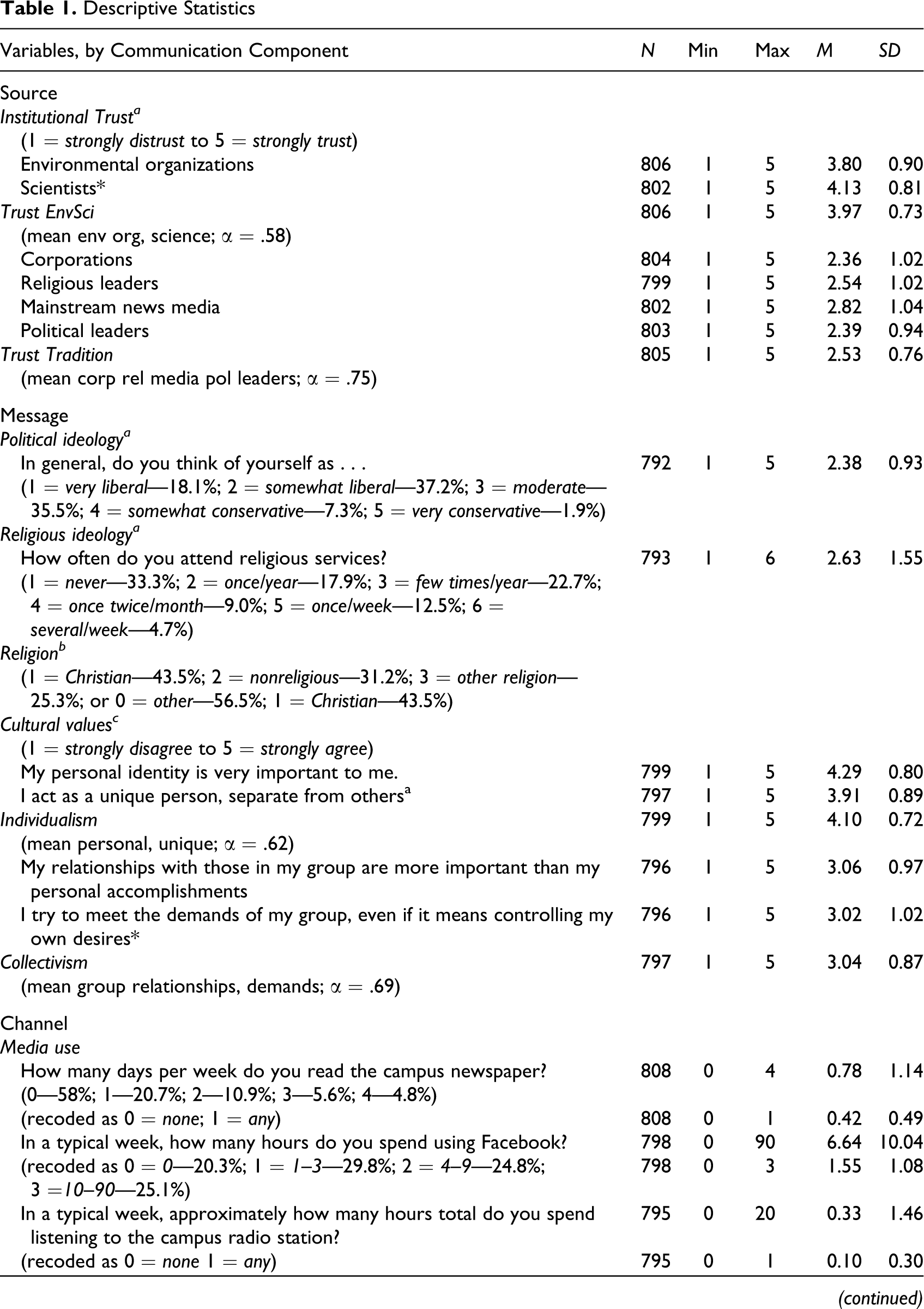
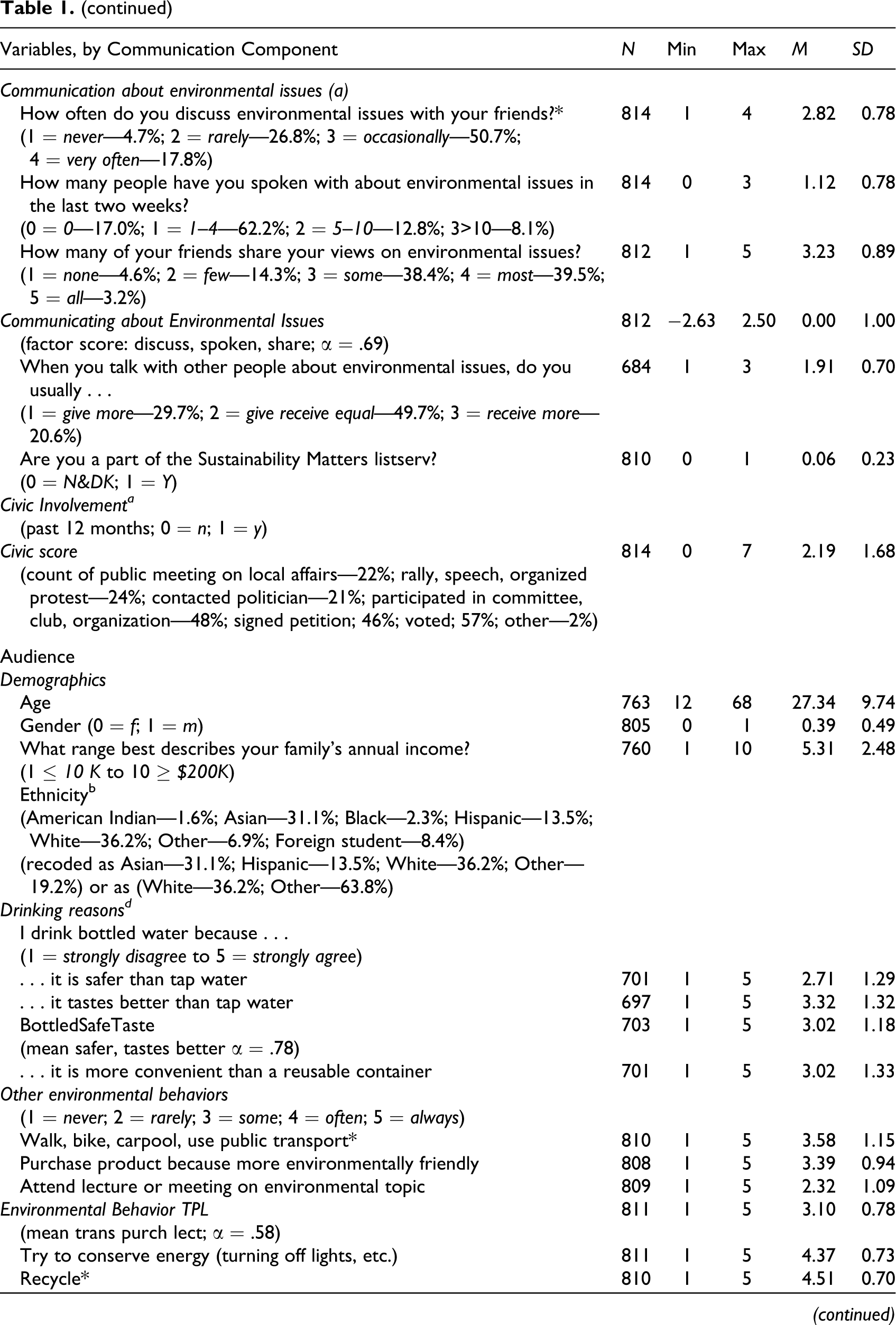
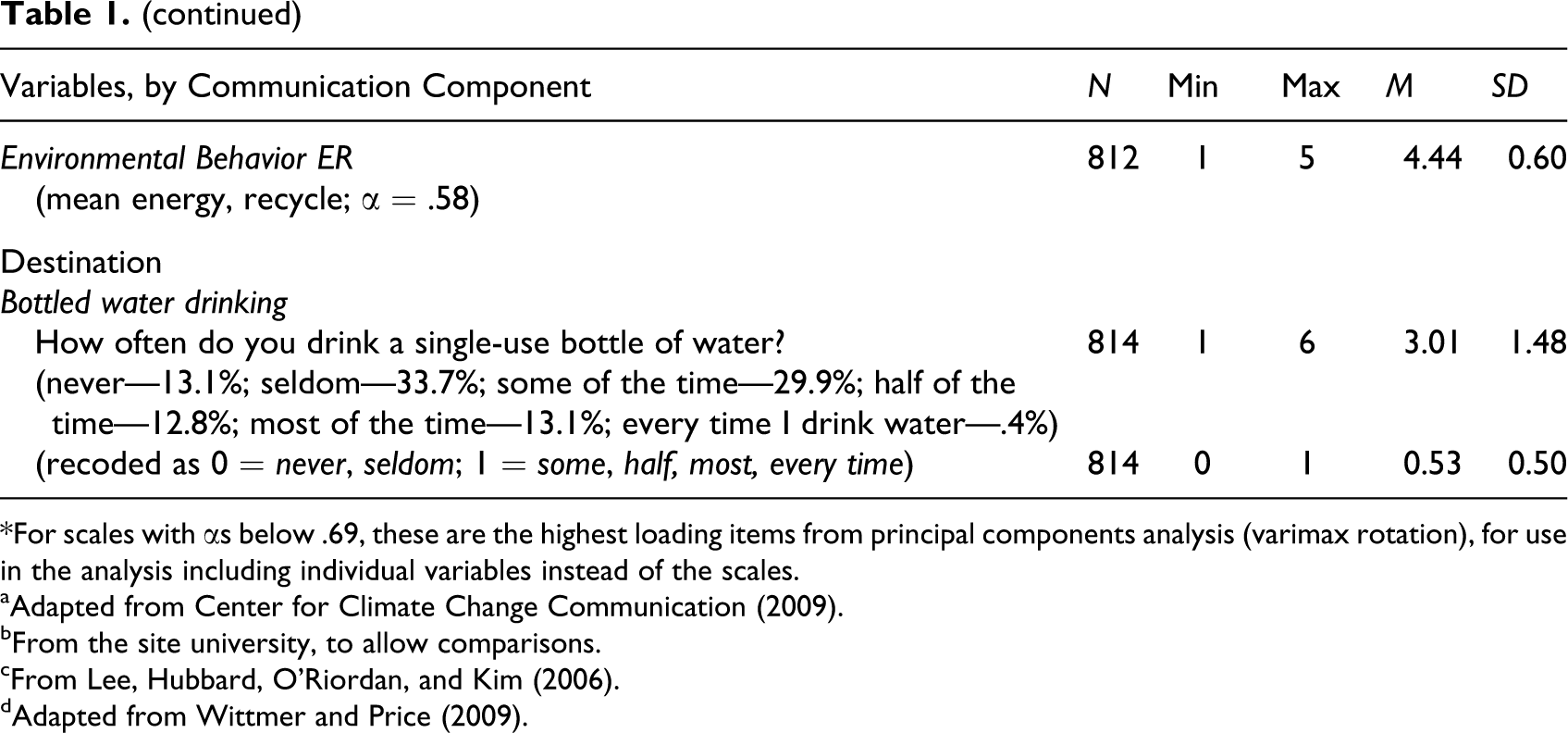
*For scales with αs below .69, these are the highest loading items from principal components analysis (varimax rotation), for use in the analysis including individual variables instead of the scales.
aAdapted from Center for Climate Change Communication (2009).
bFrom the site university, to allow comparisons.
dAdapted from Wittmer and Price (2009).
Analysis
Correlations
The correlations in Table 2 support all of the individual directional hypotheses about influences on frequency of consuming single-use bottled water, except for gender and collectivism (in both cases not significant), with significant correlations ranging (in absolute value) from .08 to .37. ANOVAs of mean differences across main ethnicities and three religious groups were also significant (see notes to Table 2).
Correlations, by Communication Component, With Frequency of Drinking a Single-Use Bottle of Water
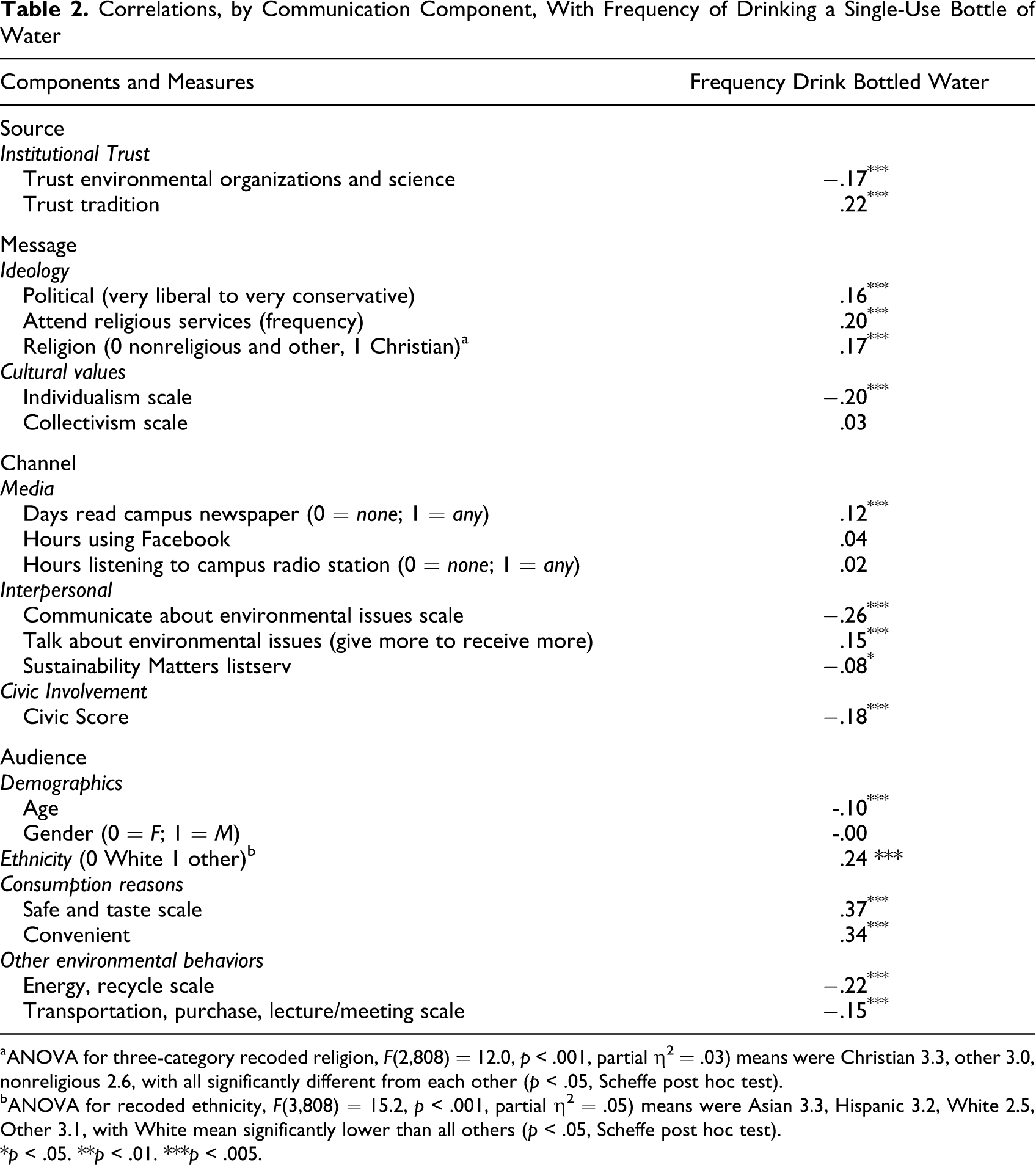
aANOVA for three-category recoded religion, F(2,808) = 12.0, p < .001, partial η2 = .03) means were Christian 3.3, other 3.0, nonreligious 2.6, with all significantly different from each other (p < .05, Scheffe post hoc test).
bANOVA for recoded ethnicity, F(3,808) = 15.2, p < .001, partial η2 = .05) means were Asian 3.3, Hispanic 3.2, White 2.5, Other 3.1, with White mean significantly lower than all others (p < .05, Scheffe post hoc test).
*p < .05. **p < .01. ***p < .005.
Hierarchical Regression
To control for shared variance, we conducted a hierarchical regression of single-use bottled water consumption frequency on the explanatory variables, within relevant blocks. Table 3 shows that at least one, and in some cases several, separate measures from three of the four communication components (source, channel, and audience) remained significant influences, explaining over a quarter of the variance.
Hierarchical Regression of Bottled Water Drinking Frequency on Explanatory Variables
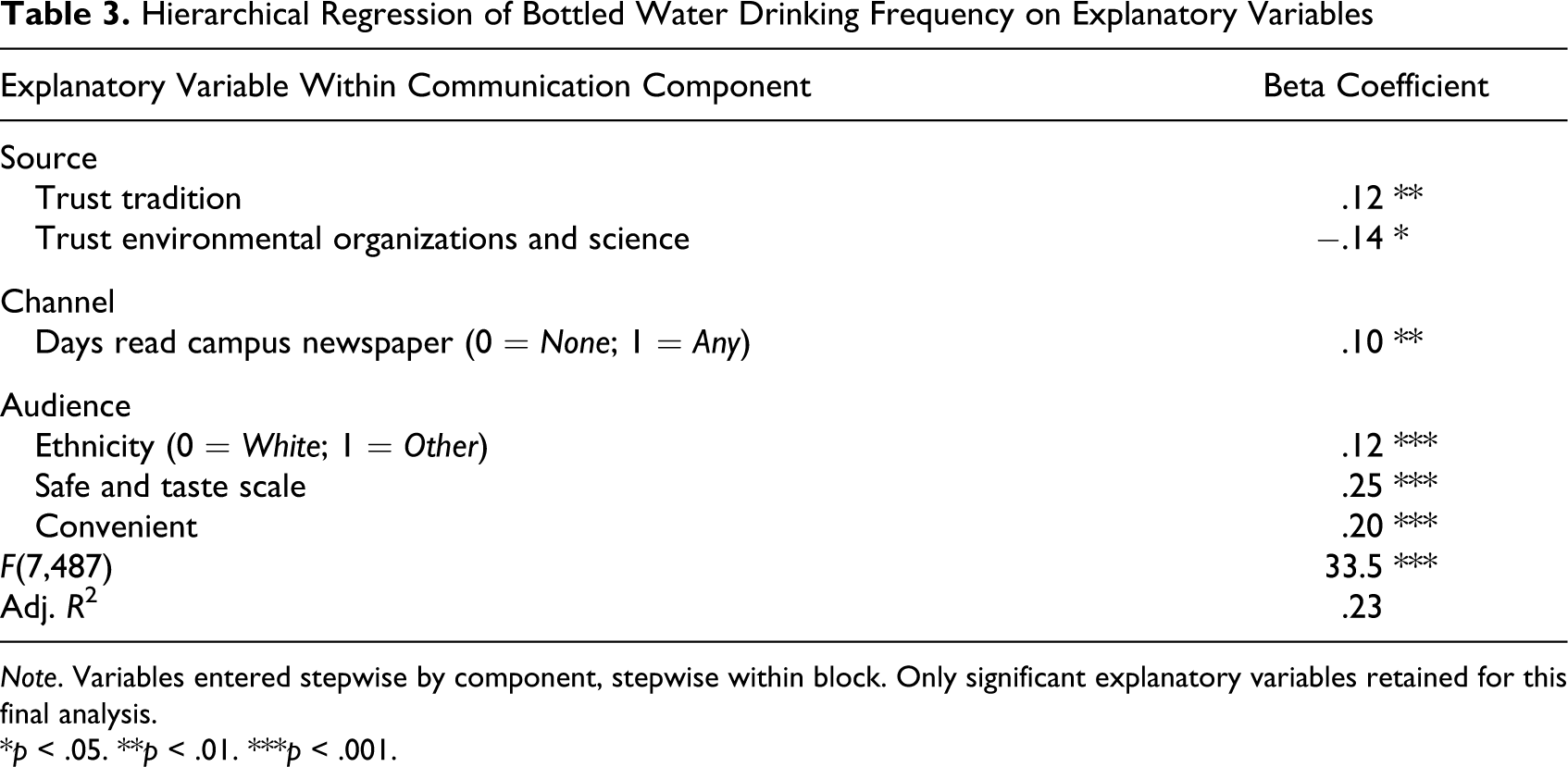
Note. Variables entered stepwise by component, stepwise within block. Only significant explanatory variables retained for this final analysis.
*p < .05. **p < .01. ***p < .001.
Source
Institutional trust affects bottled water consumption, in two opposite ways. Trust in traditional institutions (religious and political leaders, corporations, and mainstream media) is positively associated, while trust in environmental and science organizations is negatively associated (HS1).
Message
Political and religious (Christian or not and attendance at religious services) ideology disappear as unique explanations (HM1 and HM2) in the regression, as did the cultural values of individualism or collectivism (HM3a and HM3b).
Channel
Of the three campus and online media, only reading the campus newspaper more frequently was a significant influence (positively) on frequency of drinking bottled water (RQC1). Giving or receiving more communication about this issue, and being a member of an environmental listserv, did not play a role. Less interpersonal communication about environmental issues was positively associated with bottled water consumption (HC1). Level of civic involvement was no longer a significant influence (HC2).
Audience
Hypotheses about two of the audience factors—ethnicity (HA4a, HA4b combined as non-Whites) and reasons for consumption (safe/taste and convenient; HA1)—were supported, while more basic demographics (age, gender; HA3a, HA3b) were not. Engaging in fewer other environmental behaviors was not a significant influence (HA2). It is particularly noteworthy that two main audience factors (ethnicity and consumer reasons) were significant influences even after prior hierarchical blocks.
Unfortunately, most of the scales had reliabilities less than the general criterion of .70. Thus we ran the same regression analysis with just the individual highest loading item for each of those scales (as noted in Table 1). Results were the same, except the beta for the single “trust scientists” item declined from −.10 to −.07, no longer significant.
Discussion
Summary Results
While other frameworks exist for identifying relevant concepts to consider in environmental social marketing campaigns, the McGuire (2012) communication framework provided an explicit basis for identifying and distinguishing categories of survey measures, and thus possible segmentation categories, especially for university campaigns.
The final significant influences reflect results from some prior research, though the study does bring together more sets of influences than most prior studies. From the communication model perspective, some aspects of source, channel, and audience are each associated with the target destination. Those who purchase bottled water are more likely to have higher trust in traditional institutions but have lower trust in environmental/science institutions, read the campus paper, are non-White, and rate bottled water more positively on safety/taste and convenience.
Implications
We hope our study could provide some help to those people in the field who are struggling to make decisions based on limited data and who may not have the resources to conduct their own formative evaluation research. Student groups and university administrators who want to decrease the use of bottled water consumption at their campuses should consider these results when designing their own campaigns, keeping in mind the unique audiences and scircumstances of their universities.
Individuals’ concerns about the safety and taste of tap water should not be ignored. Providing access to filtered water or increasing awareness of locations on campus that allow students to refill their canteens from a filtered water source is the first step. Further, as suggested in Doria et al.’s (2009) study, simply asserting that tap water is safe is not sufficient, especially if the tap water characteristics (e.g., color, turbidity, taste, smell, etc.) imply otherwise.
For those audiences who might be on the fence about reducing their bottled water consumption, there may be a number of effective appeals. Bottled water behavior operates under two competing mental frames: health and environment. The more on-campus organizations work to strengthen the association between bottled water and environmental issues, the more previous beliefs and behaviors (e.g., liberal values, recycling, etc.) will support the new behavior (i.e., not buying bottled water). On-campus environmental organizations should work to maintain and increase their credibility and particularly their science credentials. Additionally, these organizations should use their implicit student networks to spread messages through word of mouth.
For campuses with large numbers of ethnic minorities, it would be worthwhile investigating further qualitative research into their attitudes and beliefs about bottled water. The fact that ethnicity remained statistically significant in our model, even after accounting for concerns about safety, suggests that some other cognitive or cultural processes are influencing the decision-making process. For these groups, tying environmental messages to messages about liberal politics or religion may be more salient. For example, tying bottled water consumption to Christian values of stewardship or the sacredness of nature may be more effective with these groups.
It is also interesting to consider which components were not associated with levels of bottled water drinking in the final regression (although significant in bivariate associations). As suggested by the debates about the relationship between religious ideology and environmental issues (see section on Religious Ideology), that relationship disappeared as a significant influence when the other components were included. Though higher individualism had a significant bivariate correlation with less frequent bottled water drinking (while collectivism played no role), it too was reduced to nonsignificance in the regression. Possibly such broad cultural values are too abstract for the specific topic of bottled water; however, these results suggest that an effective message strategy may be to emphasize one’s individualism in not succumbing to the popular use of bottled water.
More intriguing is the nonsignificance of political ideology. Prior research is pretty consistent that this matters, certainly with respect to broad environmental issues. It may be the case that bottled water, given the strong factors of safety, taste, and convenience, is not located in the larger sphere of environmental issues. As mentioned earlier, emphasizing this broader connection seems like an obvious strategy.
Limitations
As a formative project, this study was not intended to test the effectiveness of particular messages in a specific campaign.
The nonsignificance of political ideology also points to one of the limitations of this study. This survey was conducted on a more liberal-leaning university, meaning the range of political ideology was relatively narrow. Also, more generally, the use of students limits generalizability of the results beyond the college campus. However, this study replicates findings from other studies conducted on nonstudent populations, giving more credence to its external validity, and is explicitly concerned with campus bottled water campaigns.
Another limitation of this study is inherent to survey research. More and more, the theory of people as rational agents is being supplanted by evidence of consumer behavior showing how often individuals rely on heuristics, of which they may not be fully aware. This survey asks consumers to explain their behavior, but this may not be a question they are able to answer.
Finally, the model used to examine the survey data is linear, while relationships may be nonlinear or have unexamined interaction effects.
Conclusion
Understanding why people engage in the unnecessary and wasteful behavior of drinking bottled water is the first step to stopping it. This study replicates previous findings that bottled water consumption is fueled by desires for water safety, better taste, and more convenience. This study expands on previous research by examining the role of other attitudes and behaviors, such as political ideology, trust in sources, ethnicity, and environmental behaviors.
If environmental groups are serious about tackling bottled water, they must acknowledge people’s concerns about the safety of their water. This also means being sensitive to intercultural communication. The next step is to employ communication strategies that strengthen the ties between using a reusable canteen and other common environmental behaviors such as not littering or turning of the lights when leaving a room.
Once environmental groups successfully make the case of using reusable canteens, they must be prepared for a long-term effort to encourage the maintenance of this behavior until it becomes an engrained part of the culture, much in the same way we now automatically put on our seatbelts before starting the car or turn off the water when brushing our teeth.
Footnotes
Declaration of Conflicting Interests
The author(s) declared no potential conflicts of interest with respect to the research, authorship, and/or publication of this article.
Funding
The author(s) received no financial support for the research, authorship, and/or publication of this article.