







Abstract
In commercial market research, “pulsing” advertising is found to be more cost-effective than placing advertisements continuously. However, the benefits of pulsing policy in social marketing have rarely been tested. This study explores the lingering effect of tobacco control advertising. If the effects of tobacco control advertisements linger beyond the time they are on-air, this would provide a theoretical basis for using pulsing policy in tobacco control campaigns. This study analyzed responses from two independent samples of smokers and recent quitters, where respondents reported whether they were exposed to any tobacco control advertising in the last week. Sample 1 was cross-sectional (n = 3,106), and Sample 2 followed a self-refreshed panel methodology where 846 participants were interviewed for up to 6 times (3,120 interviews). Both studies used the same survey instrument and were in field concurrently. Eighty percent of Sample 1 reported recent exposure to advertising. This was strikingly similar to the response from Sample 2 recorded at their first interview (81%). However, panel members’ self-reported exposure to campaigns decreased at each subsequent interview (approximately a fortnight apart) and eventually reached 56% at the sixth interview. Building on the premises of priming theory, the first response from each Sample 2 respondent represented his or her intuitive thought—a result of the lingering effect of advertising. The drop in recall over time could be due to respondents self-correcting their responses after being primed in the previous surveys. Our findings suggest the effects of tobacco control campaigns linger and support the use of pulsing policy in tobacco control advertising.
Introduction
Background
When utilized effectively, mass media campaigns reduce overall tobacco consumption and smoking prevalence, reduce smoking uptake, and increase quitting (Australia National Preventative Health Taskforce, 2009; Emery et al., 2012; Sims, Salway et al., 2014; Wakefield, Loken, & Hornik, 2010; World Health Organization, 2008). The inclusion of mass media campaigns as part of comprehensive tobacco control programs is endorsed by the World Health Organization under the Framework Convention on Tobacco Control (World Health Organization, 2010, 2013).
Similar to other countries that have a strong tobacco control program in place (e.g., Australia, Canada, and the United Kingdom), New Zealand has a long history of implementing national tobacco control mass media campaigns. The first campaign was launched in 1996, and since then, different campaigns focusing on smoking prevention and cessation have been implemented.
Previous surveys of New Zealand adults have found a notable proportion of them mistakenly report recent exposure to tobacco control campaigns that have not been aired for many years (Li, 2010; Premium Research, 2009). For example, in a campaign evaluation conducted with three independent samples of adult smokers, when asked to recall all tobacco control advertisements they have seen in the past 3 months, 6–11% of respondents had mistakenly reported seeing an old campaign that had not been aired for 4 years (Premium Research, 2009). It appears that the lingering effect of some tobacco control campaigns could be so strong that not only people remembered the campaign for many years but believed they have seen it recently. Factors contributing to this inaccuracy in self-report are not known, but it could be related to the campaign’s novelty or personal relevance to the audience.
The longevity of awareness of tobacco control advertising has rarely been examined. The current study provides new knowledge by empirically assessing the lingering effects tobacco control advertising might have on adult smokers, and discussing its implications in social marketing and campaign evaluation. While the study uses New Zealand data as a case study, it is likely that the findings could apply to other countries that have a strong and long-standing tobacco control mass media history.
Previous Research on Tobacco Control Television Advertising
Television advertising is an important component of tobacco control mass media because of its reach, especially to those of low socioeconomic status (Durkin, Brennan, & Wakefield, 2012). Strong empirical evidence has demonstrated the association between advertising volume and campaign effectiveness (Durkin et al., 2012; Emery et al., 2012; Sims, Salway et al., 2014). While extensive work has been carried out internationally to help understand ways to maximize the effects of tobacco control television advertising, most of these studies focused on the content of the advertisements (e.g., themes, emotional intensity, and execution styles; e.g., Dunlop, Perez, & Cotter, 2014; Farrelly, Davis, Nonnemaker, Kamyab, & Jackson, 2011; Perl et al., 2014; Sims, Langley et al., 2014).
A few studies have explored ways to more effectively schedule tobacco control advertisements. For example, Mosbaek, Austin, Stark, and Lambert (2007) found that placing television advertisements during daytime is more cost-effective because they generate more calls to the quitline when comparing to placing advertisements in the evening. Durkin and Wakefield (2008) found that placing advertisements in nonnarrative programs (light entertainment, sports, documentaries, and news) improved cognitive and emotional responsiveness to the advertisements, compared to when they are played during dramas, comedies, or soap operas.
Information Gaps in the Effectiveness of Different Advertising Policies in Tobacco Control Advertising
To help with better managing marketing resources, commercial market research has investigated campaign decay extensively, an area that has rarely been studied in tobacco control campaign research. Campaign decay refers to the rate at which people forget the campaign and the level of awareness that is retained during the period with no exposure (Mahajan & Muller, 1986). This line of research includes comparing the cost-effectiveness of different advertising policies, such as “even policy,” “blitz policy,” and “pulsing policy.”
Assuming that the resource available for advertising placement is the same irrespective of the chosen advertising policy, an even policy denotes a continuation of advertisement placement at a relatively low level, while a blitz policy involves launching the advertisement at a very high intensity without a maintenance strategy. Similar to the even policy, the pulsing policy allocates expenditure evenly over time. However, the advertisements are not on-air continuously. Instead, the saving made when the advertisement is off-air allows the advertiser to boost the level of advertising when it next goes on-air (Mahajan & Muller, 1986).
In the context of commercial marketing, repeated advertising could backfire as people lose interest and reduce their attentiveness to the advertisements overtime due to repetition wear out (Naik, Mantrala, & Sawyer, 1998). It is therefore suggested that pulsing policy, as opposed to even policy, might be a more cost-effective marketing strategy. Social marketers could also benefit from applying commercial marketing theories and principles (Jones & Rossiter, 2002).
To the best of our knowledge, there is only one published study that has investigated the use of the pulsing policy versus the even policy in tobacco control campaigns (White, Durkin, Coomber, & Wakefield, 2013). White, Durkin, Coomber, and Wakefield (2013) suggest that tobacco control advertising might not need to be played continuously to maintain its effect in reducing adolescent smoking, provided that they are played at high targeted audience rating points (TARPs; i.e., at least 800 TARPs a month) every 2 to 3 months. This provided evidence that tobacco control campaigns continue to affect adolescents even when they were off-air, and therefore, the pulsing policy could be a cost-effective way to manage media placement. Because the data they have drawn were specifically on adolescents smoking, this article aims to extend this line of research by investigating the lingering effect of tobacco control campaigns on current adult smokers.
Research Objective and Hypothesis
This article sets out to examine the lingering effect of tobacco control campaigns on adult smokers. To achieve this objective, this study analyzes responses to a question on self-reported exposure to any tobacco control advertising in the past 7 days. We report on a cross-sectional sample and a panel sample of current smokers and recent quitters, and the fieldwork for both samples was undertaken concurrently over a 12-month period. The cross-sectional sample responded to the questionnaire only once, while the panel sample was interviewed every fortnight for up to six fortnights.
The logic behind this study design builds on the premises of priming theory. Priming is an implicit memory effect that has been well studied in cognitive psychology. It represents a phenomenon where an exposure to a stimulus modifies responses to the same or a related stimulus at a later time and this happens without the person being aware of the influence (Thompson, 2000). Studies on priming have improved understanding of the functionality of different parts of the brain and how information are stored and retrieved from memory.
Applying the priming theory to this study, the first response obtained from each individual from the panel sample represents his or her “intuitive” response to the question—a result of the lingering effect of tobacco control advertising. Exposing the panel respondents to the same survey question repeatedly serves the function of priming. Therefore, the panel respondents, being interviewed repeatedly, would become more attentive to their environment and be able to more accurately represent their exposure to advertising. In contrast, respondents from the cross-sectional sample were only interviewed once, and therefore their responses were not primed.
Because of the priming effect, it is hypothesized that the panel respondents would adjust their responses to recall of tobacco control advertising awareness at subsequent interviews. The panel responses are compared against those reported by the cross-sectional sample. The cross-sectional sample served as a control group as their responses were not primed and yet they were exposed to the same tobacco control environment as the panel sample throughout the 12 months of data collection.
The inclusion of a control group in this analysis is crucial. It is reasonable to assume that the actual volume of tobacco control advertising had some bearings on people’s self-reported exposure, and therefore, it is likely that the data collected over a 12-month period would fluctuate according to the level of advertising activity. When analyzing the changes in responses over time among the panel respondents, a mechanism needs to be put in place to separate out the impact of the changing advertising volume across the study period and the number of times people were being primed. One approach was to statistically control for the level of advertising activity. However, the survey question captured a range of media activities such as television and radio advertising, brochures, and social media, making the collection of objective data difficult. Instead, a more viable option was to include a cross-sectional sample as a control group for comparison. The fieldwork for the cross-sectional sample was scheduled evenly across the data collection period and provided comparable data at all time points. Other supplementary data are also presented in this article to test this hypothesis.
Method
Participants
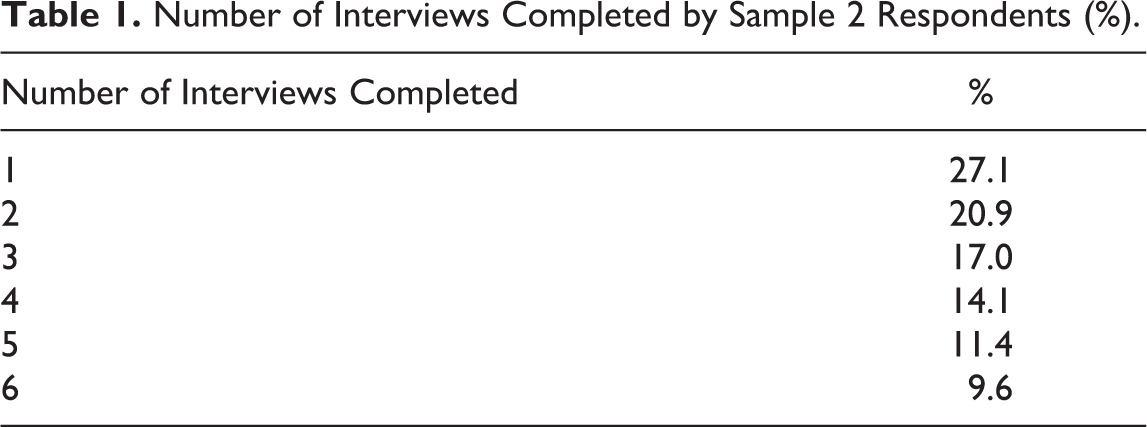
The New Zealand Smoking Monitor (NZSM) is a fortnightly survey of current smokers and recent quitters. This computer-assisted telephone interviewing survey contains a cross-sectional sample (Sample 1) and a panel sample (Sample 2). Both samples were in the field concurrently delivering the same survey instrument, each with an expected sample size of 120 per fortnight. This article reports data collected between July 2011 and June 2012. This included a sample size of 3,106 respondents in Sample 1 (14 short from the expected sample size due to difficulties in recruiting), and 846 unique respondents in Sample 2 who completed a total of 3,120 interviews. Table 1 describes the characteristics of the two samples.
Number of Interviews Completed by Sample 2 Respondents (%).
Sampling Procedure
A quota system was followed to ensure one half of each sample constituted smokers or ex-smokers who had made a quit attempt that lasted for 24 hours or longer in the past 3 months (referred to as recent quit attempters), while the other one half were smokers who had not made a quit attempt in the past 3 months (nonattempters). This decision was deliberate to allow contract of two segments of the market in tobacco control campaigns. Previous studies have found recent quit attempts as predictors of future quitting behaviors (Hellman, Cummings, Haughey, Zielezny, & O’Shea, 1991; Hyland et al., 2006).
Respondents from Samples 1 and 2 were recruited and managed differently, and the sampling procedure is explained subsequently. Sample 1: Respondents from the cross-sectional sample were selected from New Zealand residents using random digit dial (RDD). A two-stage approach was followed to produce a random sample generated from a geographically and demographically distributed sampling frame. The first stage involved computer generation of three-digit combinations (representing the geographical location of residence), where the chance of being selected was equal to the proportion of households in each defined geographical area. The last four digits were randomly generated. The response rate was calculated in two ways. When using a consecutive measure whereby all refusals/barriers prior to screening were assumed to be eligible, the response rate was 11.6% (Completes/[Completes + Refusals + Barriers]). Because the smoking rate is low, when an alternative formula was used, which took into consideration that a portion of refusals/barriers were ineligible, the response rate improved to 60.1% (Completes/Completes + [Completes/Completes + Not Qualified/Over Quota × Refusals/Barriers]). Sample 2: The self-refreshing panel sample was recruited from an omnibus survey that used an RDD approach. Potential respondents were screened for their eligibility to take part in the NZSM and asked for their consent to be recontacted for another survey. Once selected into the sample, respondents could be followed up for up to five consecutive fortnights (i.e., the number of interviews is capped at six). During the study period, 27% of the panel sample only completed one interviews while the remaining sample have completed between two and six interviews (see Table 1 for details). Respondents who were out of contact or had opted out from the study were replenished to ensure a total of 120 interviews were completed each fortnight. The response rate for Sample 2 was 44%. This rate was produced after taking into consideration the two steps involved in recruiting the participants (1) a consent rate of 46% among the omnibus respondents who were eligible to partake in the NZSM and (2) a completion rate of 95% among those who had given permission to be recontacted and were successfully recontacted. Loss in follow-up was not a major issue, with a low attrition rate at 15%.
Questionnaire
The survey collected information on knowledge, attitudes, and beliefs about smoking and quitting and awareness of tobacco control activities. Of relevance to this analysis was a question assessing recent exposure to tobacco control advertising. All respondents were asked, “Do you recall seeing or hearing any advertising anywhere in the last week about not smoking, quitting smoking, or the harmful effects of smoking?”
Respondents also answered a number of questions concerning their sociodemographic status. One of the variables reported in this article is household equivalised income. This is a derived variable that represents the financial deprivation level of the respondents. This measure takes into account the amount of household income, the number of adults (aged 18 or over) living in the household, and the number and the age of children living in the household (Jensen, 1988). Respondents who did not answer the questions about their combined household income and household composition were categorized as having an unspecified income.
Analysis
STATA 12.0 and SPSS 19.0 were used to perform the data analyses. A small proportion of respondents “did not know” whether or not they have seen or heard tobacco control ads in the last week and were excluded from the analysis (1.6% in Sample 1 and 0.9% in Sample 2). Simple descriptive analysis was first performed on data collected from both samples. We then used one-way analysis of variance to examine changes in the fortnightly responses collected from Sample 1. Generalized estimating equation (GEE) was applied on the panel data to compare responses by survey wave and the fortnight when the responses were collected.
Findings
Compared with the general adult smokers’ population, both samples were overrepresented with females, older people, and those with high or unspecified household equivalised income (Table 2). Responses were not weighted in this analysis because we are interested in response change over time, and its representation to the overall population was therefore less relevant.
Participant Characteristics.
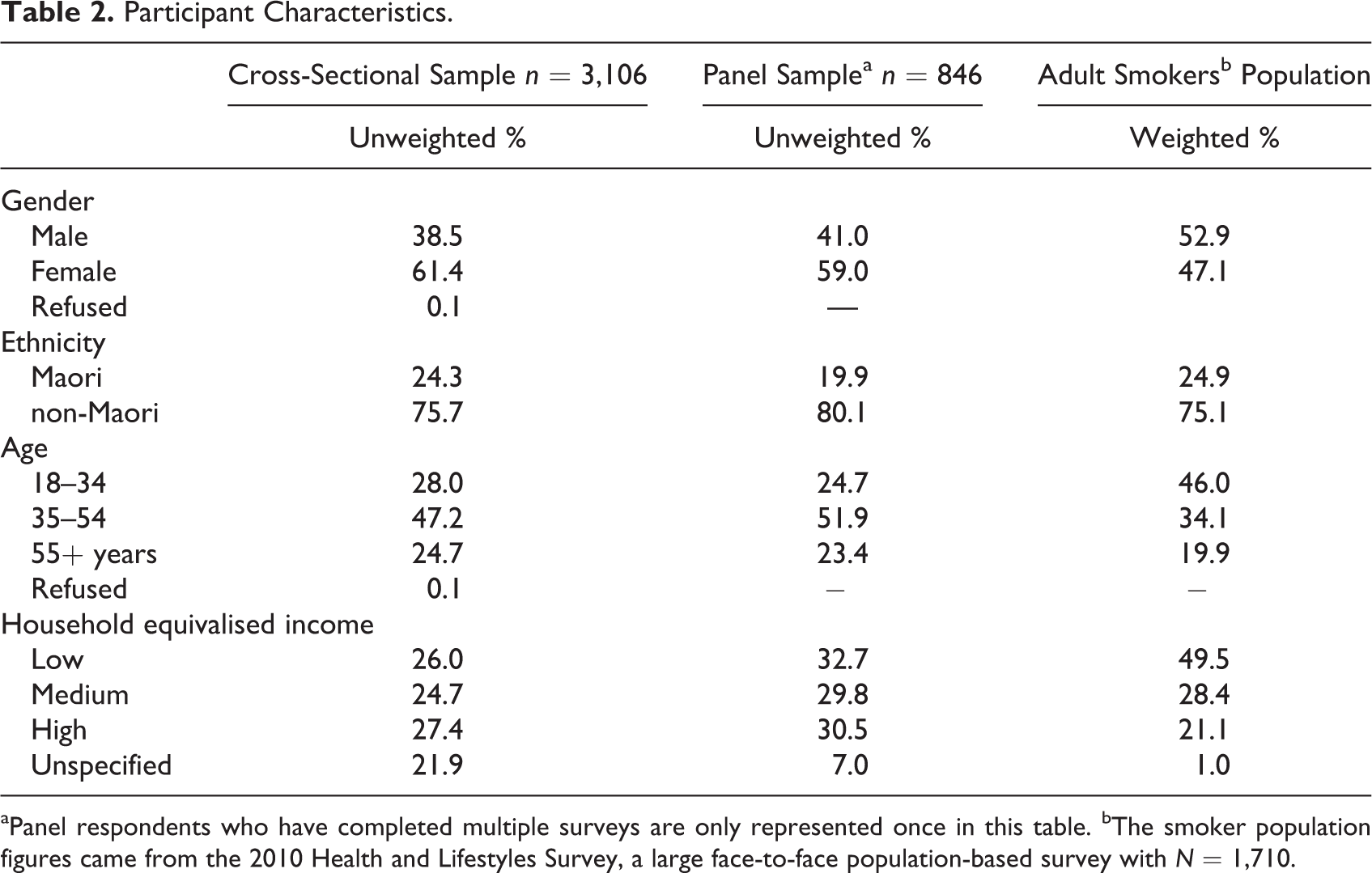
aPanel respondents who have completed multiple surveys are only represented once in this table. bThe smoker population figures came from the 2010 Health and Lifestyles Survey, a large face-to-face population-based survey with N = 1,710.
Overall, across the study period, 79.6% of Sample 1 respondents reported seeing or hearing tobacco control advertising in the last week (see Table 3). The responses recorded at each fortnight were between 67% and 87% (see Figure 1) and were not statistically different, F(25, 3,044) = 1.14, p = .29. A similar proportion of first-time respondents from the panel sample (Sample 2) reported recent exposure to tobacco control advertising (81%).
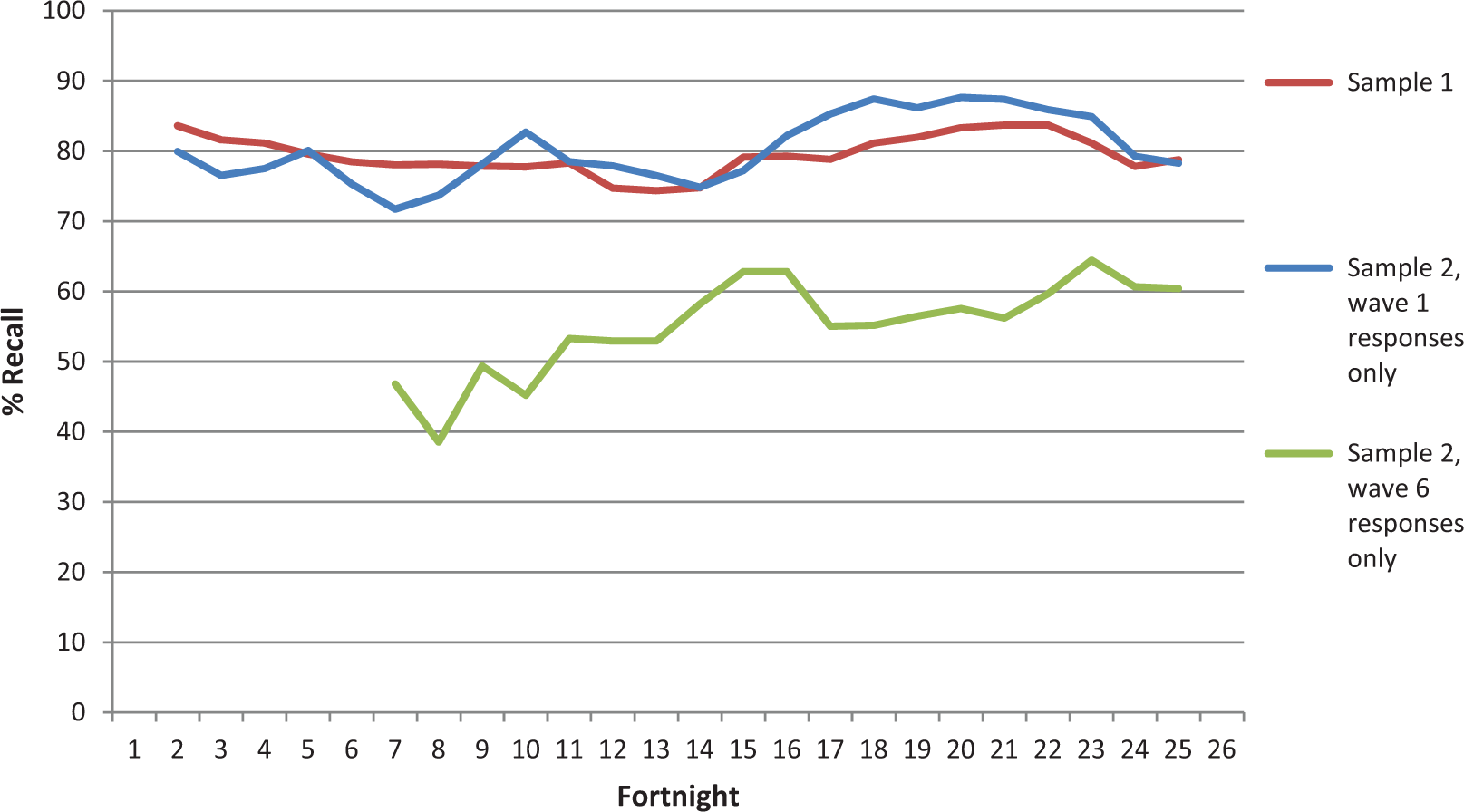
The proportion of respondents (three-fortnights rolling moving average) reported seeing or hearing a tobacco control advertising in the past 7 days, by Fortnight.
The Proportion of Respondents Reported Seeing or Hearing a Tobacco Control Advertising in the Past 7 Days.
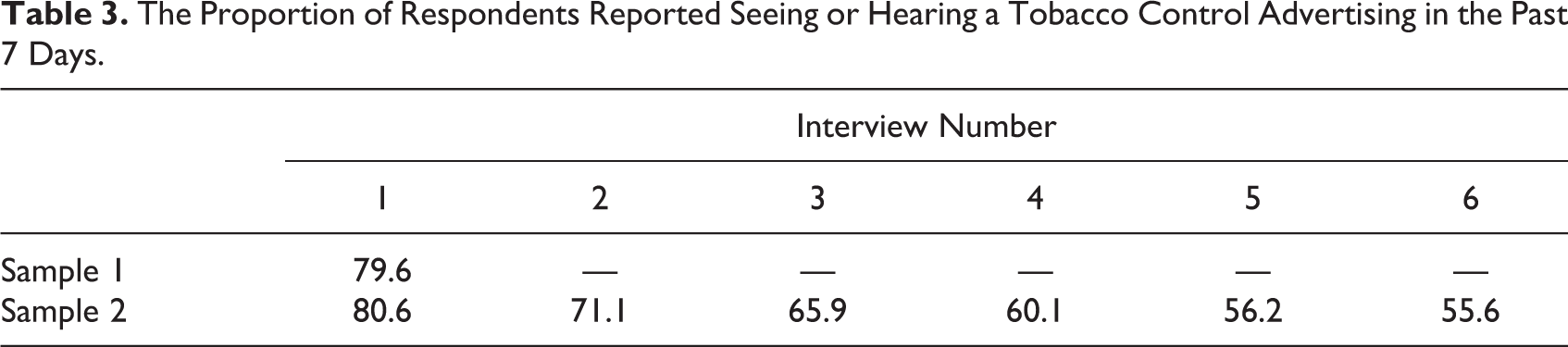
The proportion of respondents in Sample 2 reporting exposure to advertising decreased as they completed more interviews. By the time respondents were completing their sixth interview, only 56% recalled seeing an advertisement in the past 7 days (see Table 3). The GEE model confirmed there were statistically significant differences by interview number (odds ratio [OR] = .78, 95% confidential interval [CI] = [0.74, 0.82]), while responses did not differ by fortnight (OR = 1.01. 95% CI = [0.99, 1.02]).
To assess whether differences observed by interview time were not merely a result of a continual reduction in actual advertising activity, fortnightly data (moving average over three data points) collected from both samples were plotted against each other (see Figure 1). To reduce the visual clutter in the graph, the panel data (Sample 2) were restricted to responses collected at Waves 1 and 6. Figure 1 shows that responses collected from the first interview from either samples (i.e., all respondents in Samples 1 and 2 Wave 1 responses) were closely matched at most time points. However, the level of self-reported exposure reported at the sixth interview was remarkably lower than those reported at the first interview (Samples 1 and 2).
Supplementary Data
To further explore the pattern of self-reported advertisement awareness, at a later time, two new questions were added to the NZSM questionnaire that assessed prompted recall of two specific advertisements in the past 14 days. The order of these questions was counterbalanced. One of the advertisements never existed and was described as having two men dressed as angels and were puffing on a cigarette in heaven. The description did not resemble any of the tobacco control advertisements that have ever been aired in New Zealand, which either feature actors or real people in real-life settings, or used fear-evoking appeals by depicting bodily harms caused by smoking. The other advertisement was new to the respondents and was launched the day before data collection started. This advertisement targeted at adult smokers and aimed at encouraging quitting. It was about three real smokers who shared the moment they knew they had to quit smoking and promoted the national free phone quitline in its end frame.
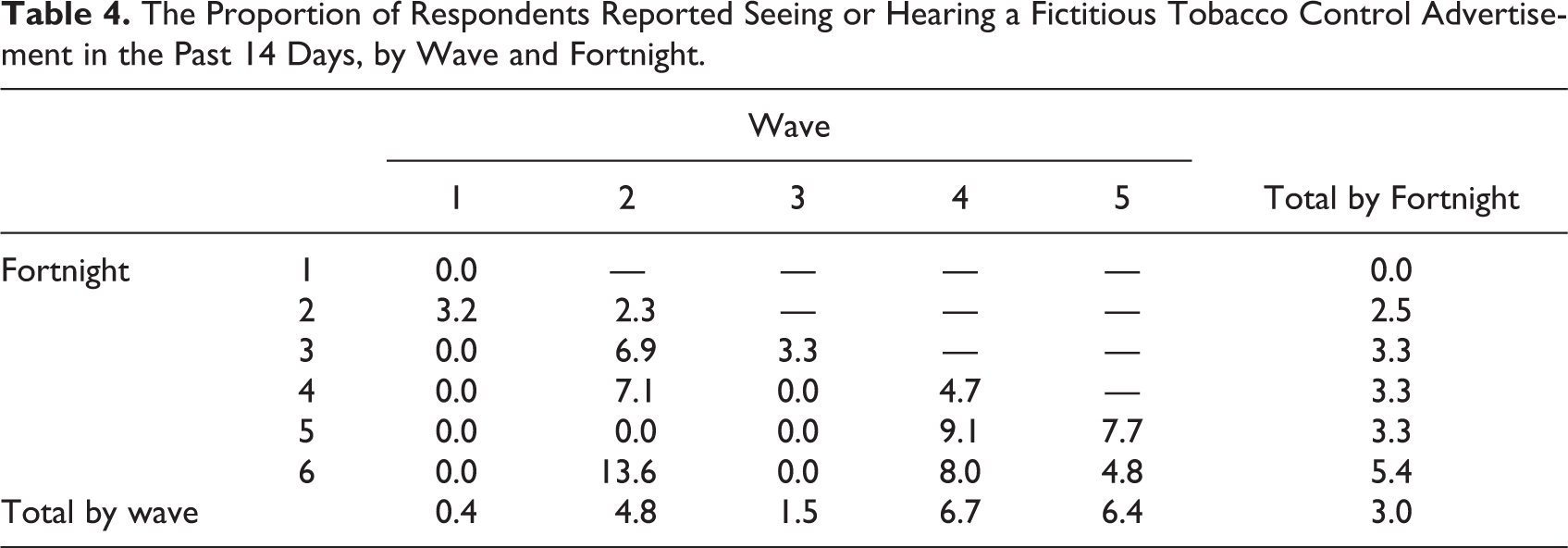
A fresh panel sample answered these questions during a 3-month period between July and September 2013. A total of 157 current smokers or recent quitters were interviewed every fortnight for up to six fortnights and completed 720 interviews in total. The panel was recruited and managed the same way as Sample 2 that was reported earlier. Respondents who answered “don’t know” were removed from the analysis. Because of the small number of respondents who had completed six interviews (n = 9), responses from the sixth interview were also removed from the analysis. We then segmented the data by wave and fortnight (see Tables 4 and 5).
The Proportion of Respondents Reported Seeing or Hearing a Fictitious Tobacco Control Advertisement in the Past 14 Days, by Wave and Fortnight.
The Proportion of Respondents Reported Seeing or Hearing a New Tobacco Control Advertisement in the Past 14 Days, by Wave and Fortnight.
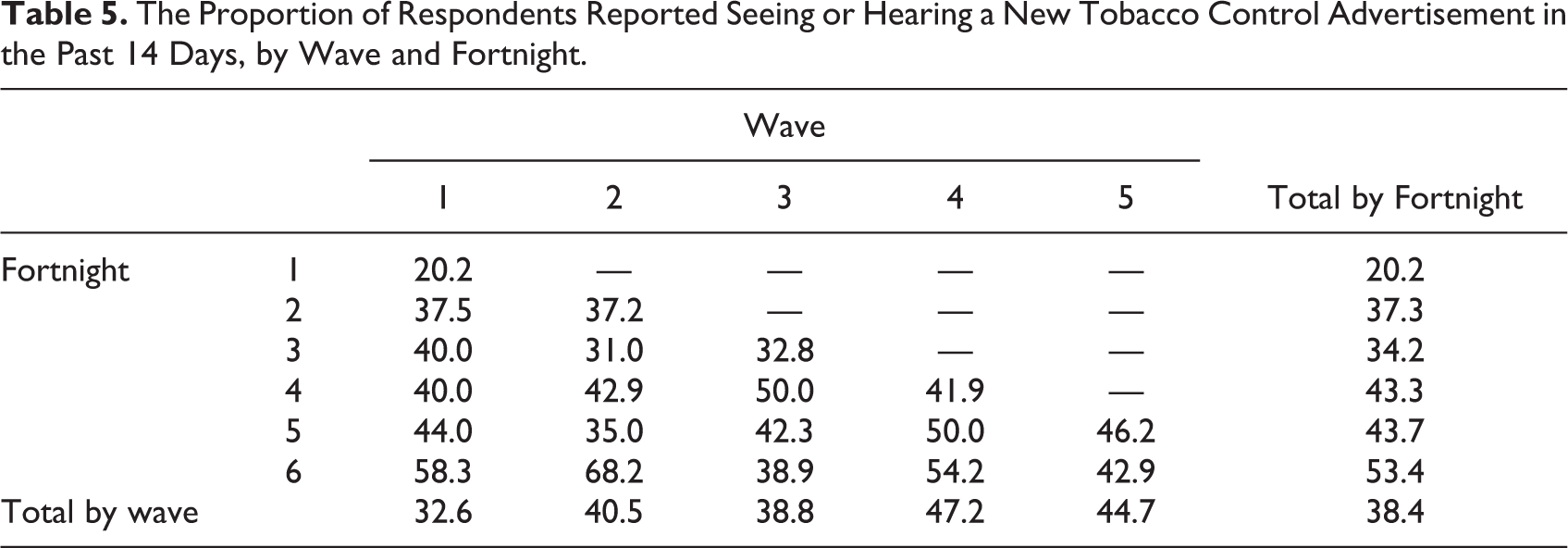
Overall, 3% of the respondents reported seeing the fictitious advertisement in the past 14 days (see Figure 2). The GEE model shows that responses did not differ by wave (OR = .90, 95% CI [0.77, 1.06]) or fortnight (OR = 1.30, 95% CI [1.15, 1.48]). In comparison, more respondents (38%) recalled seeing the new advertisement in the past 14 days. The tendency to recall the advertisement increased over time from 20% at Fortnight 1 to 53% at Fortnight 6. When segmenting the data by the number of time respondents were asked this question (i.e., wave), one third of the respondents recalled seeing the new advertisement at their first interview, and the level of recall then fluctuated between 39% and 47%. When including fortnight and wave into a single model (GEE), we found that responses did not differ by wave (OR = .94, 95% CI [0.85, 1.03]). However, the differences by fortnight were statistically significant (OR = 1.26, 95% CI [1.15, 1.38]).
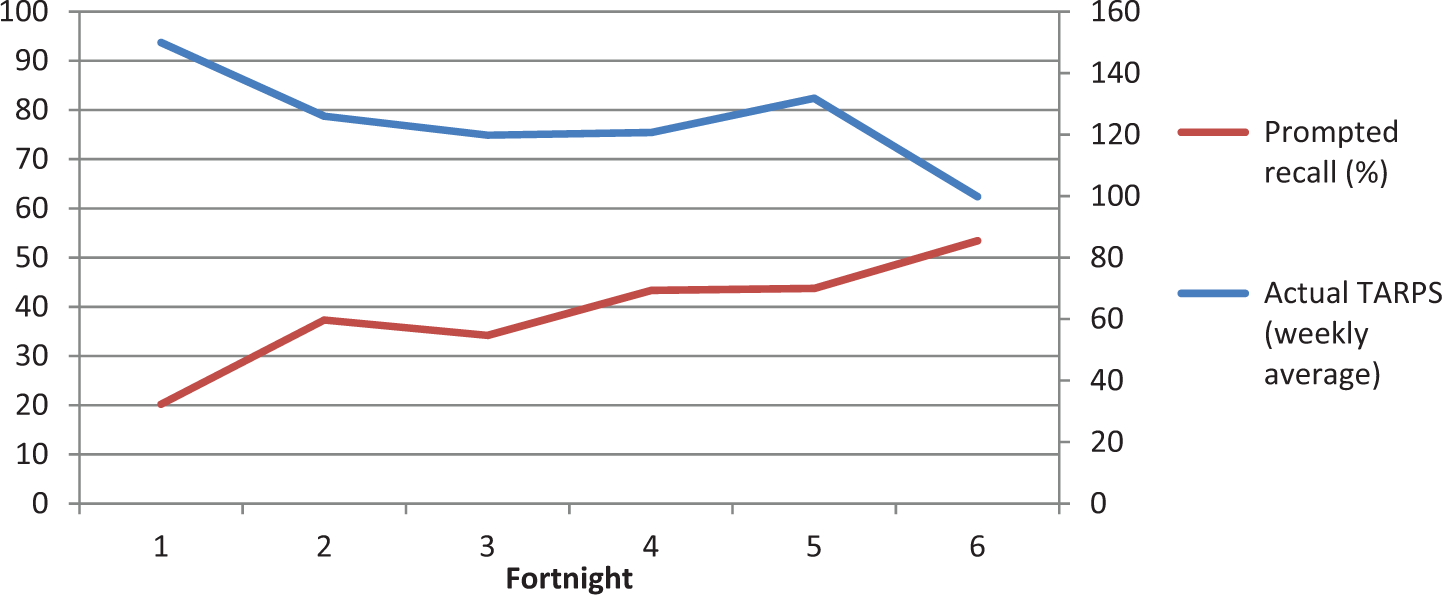
The prompted recall and the actual targeted audience rating points (TARPs; weekly average) of the new advertisement.
The increase in the proportion of respondents who recalled the new advertisement was not a function of an increase in advertising activity. In fact, the actual TARPs were relatively similar over the first five fortnights before it tapered off at fortnight six.
Discussion
We found evidence of a priming effect in the recall of tobacco control advertising. The proportion of panel respondents who recalled seeing advertising reduced at each interview, which was consistent with our hypothesis derived from priming theory.
The first response collected from each individual, reported either by a cross-sectional or by a panel respondent, represented an unprimed response to the question that is subject to a recall bias. We found almost an exact proportion of Sample 1 respondents (79.6%) and Sample 2 first-time respondents (80.6% at Wave 1) recalled being recently exposed to tobacco control advertising. Importantly, the effect of priming was evidenced in the panel sample when their responses were compared by wave. As hypothesized, we found that the proportion of Sample 2 respondents who reported seeing or hearing an advertisement reduced after each interview.
This finding provides evidence that tobacco control campaigns have a lingering effect and is therefore consistent with a previous analysis that has demonstrated the cumulative effects tobacco control campaigns have over time (Australia National Preventative Health Taskforce, 2009). We believe that, the implementation of a strong national tobacco control media strategy in New Zealand for over a decade had created enough presence for smokers to believe that they are constantly being exposed to tobacco control advertising even when they are not. Similar to how branding works in commercial marketing (Lehnert, Till, & Carlson, 2013), the repeated exposure to antismoking messages helps people to get familiar and remember smoke-free campaigns.
At any point in time during data collection, a large proportion of Sample 1 respondents reported seeing or hearing a tobacco control advertising in the last week. We challenge the accuracy of this self-reported data and believe this consistently high level of self-reported exposure to tobacco control advertising is contaminated by overreporting. There are at least two plausible explanations for the overreporting, namely, social desirability bias and memory bias. However, social desirability bias probably played a relatively small role in our data, as we found that less than 1% of respondents reported they had seen or heard the fictitious advertisement at their first interview.
The other supplementary data on the recall of the new campaign suggested that it did not take long for a new campaign to build its awareness. The self-reported exposure to the new advertisement increased rapidly. When aired at an average of 127 TARPs a week, by the end of the third month, over half of the respondents reported having a recent exposure to the advertisement (i.e., last 14 days). As the TARPs level had not changed substantially during this 3-month period, the increase in recall over time was probably a function of people getting more aware of and familiar with the campaign, creating a misconception of being recently exposed to the advertisement. Noting that the content of tobacco control advertisement affects the levels of impact it has (Durkin et al., 2012), this finding nonetheless provides further evidence for the momentum of tobacco control campaigns.
Implications
Findings from this study have a number of important implications. First, our findings provide new insights into how to best manage media spend in tobacco control advertising targeting adult smokers. The evidence that tobacco control campaigns have a lingering effect was consistent with the findings of White et al. (2013), despite the use of a different research methodology. This study also extended previous findings by providing evidence that tobacco control campaigns have a lingering effect not only on adolescents but also on adult smokers. That is, adults are able to recall advertising that is not currently on air. Our finding implied that pulsing policy might also be effective to adult smokers.
However, it is important that smokers not only remember a campaign but also change their smoking behaviors as a result of being previously exposed to the campaign. Future research is required to advance our understanding on the relationship between adult smokers’ perceived exposure to tobacco control advertisements and their attitudes and behaviors relating to quitting smoking.
The second implication relates to campaign evaluation. Our data challenge the validity of using a self-reported measure to assess campaign recall. Typically, campaign evaluations only allow respondents one opportunity to report their recall. Our data suggest that people are likely to overreport their exposure to mass-media campaigns within a defined time period, unless respondents are primed through repeated interviewing. However, in a typical campaign evaluation, respondents are only interviewed once. The errors in the data collected through a one-off survey would lead to an overestimate on the actual reach of the campaign.
Memory bias in advertising recall could be removed by interviewing respondents again; therefore, they could self-correct their response after being primed to the survey questions at the previous interview. Another strategy to overcome the problem associated with self-report errors would be to obtain less subjective data from respondents. For example, instead of asking respondents to self-report their exposure to a television campaign, they could be asked to maintain a television viewing diary. Their exposure to a particular advertisement could then be assessed by matching up the television programs they have watched and the advertising placement schedule.
We are unsure whether our findings could be applied to other areas in social marketing. First, most developed countries have a comprehensive tobacco control package that includes a mass media communication strategy. A strong history in mass media campaigns probably heightens people’s attention to tobacco control advertisements in general and allows the effects of these advertisements to linger. However, other health areas may not have a strong history in social marketing. Further, tobacco control is very different from other public health domains. Tobacco is a legal product for purchase (with restrictions on age) and to use, yet it is highly addictive. Research has also shown that the proportion of smokers who regret smoking is universally high (Fong et al, 2004; Sansone et al., 2013), yet quit rates often remain low due to the addictive nature of nicotine. Therefore, tobacco control campaigns are likely to be targeted at the same people over a long period of time.
Future Research
This study represents an early attempt to explore the lingering effects of tobacco control advertising. While our findings suggest that tobacco control campaigns have a lingering effect on recall, further research is required to substantiate the findings and understanding how the public health sector could make use of the momentum that tobacco control advertisements carry. For example, future research should investigate whether the perception of being recently exposed to tobacco control advertising has actual benefits on cessation, such as an increased likelihood of making a quit attempt, or to seek cessation support. It has been established in the literature that tobacco control television advertisements elicit immediate responses among current smokers, such as to call the quitlines (Carroll & Rock, 2003; Mosbaek, Austin, Stark, & Lambert, 2007; Wilson, Grigg, Graham, & Cameron, 2005). If the perceived exposure to advertisements elicits similar desirable outcomes as to the actual exposure to advertisements, this finding would provide further justification for the using of a “pulsing” advertising strategy in tobacco control campaigns that target smokers.
The measure we used in this study captured the combined advertising activity of the tobacco control sector, instead of identifying self-reported exposure of a specific campaign. Future studies could use a more narrowly defined question, for example, to focus on one advertising channel only or one specific campaign. In which case, the self-reported data could be more easily validated by matching them up with the advertising schedule.
Strengths and Limitations
This study has a number of strengths. While the panel sample had the ability to examine the impact of priming on the recall of tobacco control advertising exposure, the cross-sectional sample had an added benefit acting as a control group. In fact, the responses from the cross-sectional survey and the Wave 1 responses of the panel survey were strikingly similar. This increased the confidence that the different sample characteristics did not create differences to self-reported media exposure.
Self-report is subject to a number of response biases. However, we believe that social desirability bias only plays a small role in the changes in responses among the panel sample. If respondents were affected by social desirability bias, their responses would probably change from waves to waves in both directions (including changing from answering “no” to “yes”). Instead, there was a continual drop in the proportion of respondents who reported recent exposure to tobacco control advertising. We argue that the changes in response observed over survey wave were a result of priming through repeated interviewing. The repeated questioning appeared to play a role in correcting self-reported responses. As discussed earlier, the supplementary data also suggested that respondents were unaffected by social desirability bias.
Conclusions
This study improves the understanding of the lingering effect tobacco control advertising has on adult smokers and has important implications on managing media spending. Future studies are needed to further accumulate evidence for the momentum of tobacco control advertising specifically and social marketing advertising in general. These studies will continue to test and challenge the hypotheses that built upon the priming effort.
Footnotes
Acknowledgments
We thank the New Zealand Smoking Monitor participants and TNS New Zealand and UMR Research for managing the data collection. We also acknowledge the Ministry of Health, New Zealand as the funder of the survey.
Declaration of Conflicting Interests
The author(s) declared no potential conflicts of interest with respect to the research, authorship, and/or publication of this article.
Funding
The author(s) received no financial support for the research, authorship, and/or publication of this article.