







Abstract
Thirty-five percent of forestland in the United States is owned by individuals. The purpose of this research was to identify woodland owners’ barriers to harvesting trees using the advice of a forester. Harvesting trees with the advice of a forester ensures a sustainable harvest that meets the needs of the woodland owner as the forester makes recommendations depending on what the woodland owner wants to gain from their land. The research further informed the marketing mix by identifying woodland owners’ perceptions about trusted communication channels, providing a framework for segmenting the audience, and pointing to viable outreach strategies for rural interventions. Results of mail (New England) and telephone (Mississippi) surveys indicated that selling trees for income was the lowest rated land use activity reported by woodland owners. Additionally, across both regions, the surveys indicated that the primary barrier to using a forester involved some form of distrust. When comparing trusted sources of information across the two regions, forestry experts were rated similarly, but family and other woodland owners were perceived as more trustworthy in New England compared to Mississippi. Both groups preferred to receive information in written form, a preference that was almost twice as high as receiving an e-mail. This research provides the foundation for a marketing mix, improves the conservation community’s body of knowledge regarding woodland owner’s barriers to sustainable forest management actions, and provides broad recommendations for practitioners to use going forward.
Forestland in the United States provides a myriad of public benefits, including clean air and water, wildlife habitat, places to recreate, and the wood products we all use every day (American Forest Foundation [AFF], 2016). Of the 751 million acres of forestland in the United States, 56% is privately owned, and of this, nearly two thirds is owned by families and individuals (AFF, 2011). Two hundred eighty-two million acres of family-owned forestland are owned by more than 22 million people making communicating to everyone difficult, but appropriate for segmentation (Butler, 2013). The large number of woodland owners and the aggregate acreage of forested land they manage are important to the success of any conservation initiative. This is particularly the case in areas where forestland dominates the geography. Achieving conservation goals for the betterment of our communities and the country will require engaging millions of woodland owners in sustainable forest management. To lay the foundation for these efforts, we must develop an understanding of the barriers and benefits that they face to engaging in a wide range of sustainable forest management actions.
The AFF conducts a variety of campaigns in partnership with other on-the-ground conservation groups working to engage woodland owners in sustainable forest management (AFF, 2016). Sustainable forest management is the management of forests according to the principles of sustainable development. Sustainable forest management has to keep the balance between three main pillars: ecological, economic, and sociocultural (Food and Agricultural Organization of the United Nations, 2016). This can include fostering the growth of certain trees to attract wildlife, removing invasive plants and insects, thinning overly dense forests to control the risk of wildfire, and diversifying the age and type of tree species to prepare for an uncertain climate future.
The principal purpose of this research was to identify the barriers to harvesting trees using the advice of a forester. The research was designed to inform the marketing mix (product, price, place, and promotion) in two geographies, where AFF had started to work with woodland owners: southeastern Mississippi and the border of Connecticut and Massachusetts in New England. The research activities were implemented by AFF and Action Research with input from either the Mississippi Forestry Association or the New England Forestry Foundation as local partners. The research team is hereinafter referenced as the “collaborative.”
The National Woodland Owner Survey (NWOS) suggests that our target audience is between 65 and 85 years of age because of their focus on wanting to keep their woods healthy for future generations (Butler, 2013). The benefit of the behavior we seek, or core product, is healthy family forests. One way to build a healthy forest is to periodically harvest some timber (U.S. Forest Service, 2005). Therefore, we identified timber harvest as our actual product. The impact on overall forest health is at its highest at the time of harvest and immediately following. However, harvesting actions can be complex and are best done with the advice of a professional forester (U.S. Forest Service, 2016). Consequently, an impactful action on the part of the woodland owner is to harvest following the recommendations of a forester. For this reason, our augmented product is to offer a free visit with a professionally licensed forester to get harvesting advice. Through this engagement, the forester learns what the woodland owners want to gain from their land such as enhanced beauty, recreation, income from timber production, or attracting wildlife. The woodland owners’ needs then inform the forester’s recommendations as to which trees, where on the property, and in what season trees should be harvested in order to support either the natural regrowth of the desired tree species or the planting of specific seedlings. Because each woodland owner’s parcel is different, the forester takes into account soil types, slope, temperature, sunlight, other nearby land use, accessibility, and potential invasive plants and insects.
In addition to identifying barriers to meeting with a forester for harvesting advice, the research sought to identify woodland owners’ perceptions about trusted channels and messengers for communications about forest management. This formative research effort was important for informing current and future strategies for promoting sustainable forest management actions. More specifically, the research helped to identify common themes across audiences, geographies, and target behaviors. It also provided a framework for segmenting the audience based on the identified barriers and pointed to viable outreach strategies for rural interventions. National and state university Cooperative Extension research efforts have focused mainly on attitudes and awareness and not on identifying barriers to specific forest management actions (Family Forest Research Center, 2016). This research builds the conservation community’s body of knowledge regarding woodland owner’s barriers to sustainable forest management actions and provides broad recommendations for practitioners to use going forward.
Approaches to Promoting Sustainable Forest Management
Traditional approaches to promote sustainable forest management have primarily consisted of information delivery and efforts to increase awareness to ensure that woodland owners fully understand and value the social, economic, and environmental benefits that America’s forests provide (Kittredge, 2004). This approach is based on an assumption that people do not participate in sustainable forest management actions because they do not know that they should or because they do not know what actions to take. Although education campaigns can positively affect knowledge or attitudes, they are often ineffective at creating lasting changes in behavior (McKenzie-Mohr, 1996, 1999, 2011; Schultz, 2002; Schultz & Tabanico, 2007). Information-focused approaches often fail to change behavior because they do not adequately address the motivations for behavior and the barriers that inhibit action. People engage in behaviors for reasons (e.g., social pressures or financial motives), and simply knowing what to do is not a reason to take action. Similarly, barriers that can inhibit participation in sustainable behaviors often go beyond knowledge deficits to include both personal barriers (e.g., time, apathy, and trust) and external barriers (e.g., lack of access to foresters, complex application processes, and availability of program resources).
Social marketing began in the 1970s as a way to improve various social issues (Kotler & Zaltman, 1971). Community-based social marketing is a form of social marketing that has been particularly applied to behaviors in the environment and conservation domain (McKenzie-Mohr, 1996, 1999, 2011; McKenzie-Mohr, Lee, Schultz, & Kotler, 2011; Schultz & Tabanico, 2007). Through this research, the collaborative is extending these well-tested social marketing approaches to engage woodland owners in sustainable forest management. Social marketing and community-based social marketing place a strong emphasis on understanding what inhibits and encourages an audience around a target behavior. Importantly, these barriers and benefits can differ at the level of individual actions. For example, the reasons that a woodland owner might not harvest could be markedly different from the reasons for not removing invasive species. Both approaches also emphasize the importance of piloting programs prior to widespread implementation. Community-based social marketing brings additional theoretical knowledge from the social sciences, particularly social and environmental psychology, to include a variety of behavior change “tools” in the marketing mix that can be utilized to foster changes in behavior (McKenzie-Mohr et al., 2011)
Previous Woodland Owner Research
NWOS
Every 6 years, beginning in 2002, the United States Forest Service conducts a NWOS (U.S. Forest Service, 2016). This survey asks woodland owners about their reasons for ownership, actions taken on the land, and their intentions for the future. The NWOS survey provides valuable insight into the attitudes and behaviors of woodland owners, both past and future. Key findings from this research have provided a general understanding about how woodland owners perceive their land and have been used by the forestry community to improve the creation of messages sent to woodland owners. These findings are summarized below. The most important reasons reported for owning forestland are related to aesthetics, privacy, and the desire for a family legacy. Many woodland owners have a primary or secondary residence on their land and greatly value the privacy and solitude their forests provide. Oftentimes, owners have inherited the land from their parents or other relatives and would like to pass it on to future generations (Butler, 2008). Many woodland owners lack awareness of the importance of managing their land for maintaining healthy woodlands. In general, owners do not object to active forest management. The problem is that many of them do not know what to do and therefore choose to do nothing (Butler, 2011). The NWOS has resulted in a typology that includes four categories of woodland owners: (1) woodland retreat owners, (2) working the land owners, (3) supplemental income owners, and, (4) ready to sell owners. Woodland owners statistically aggregate into these four categories according to similar attributes. This typology has provided practitioners with audience profiles that can be used to create communication campaigns and targeted messaging. Along with the typology, a prime prospect analysis was conducted to help efficiently target outreach. This analysis is depicted in Figure 1 (Butler et al., 2007).
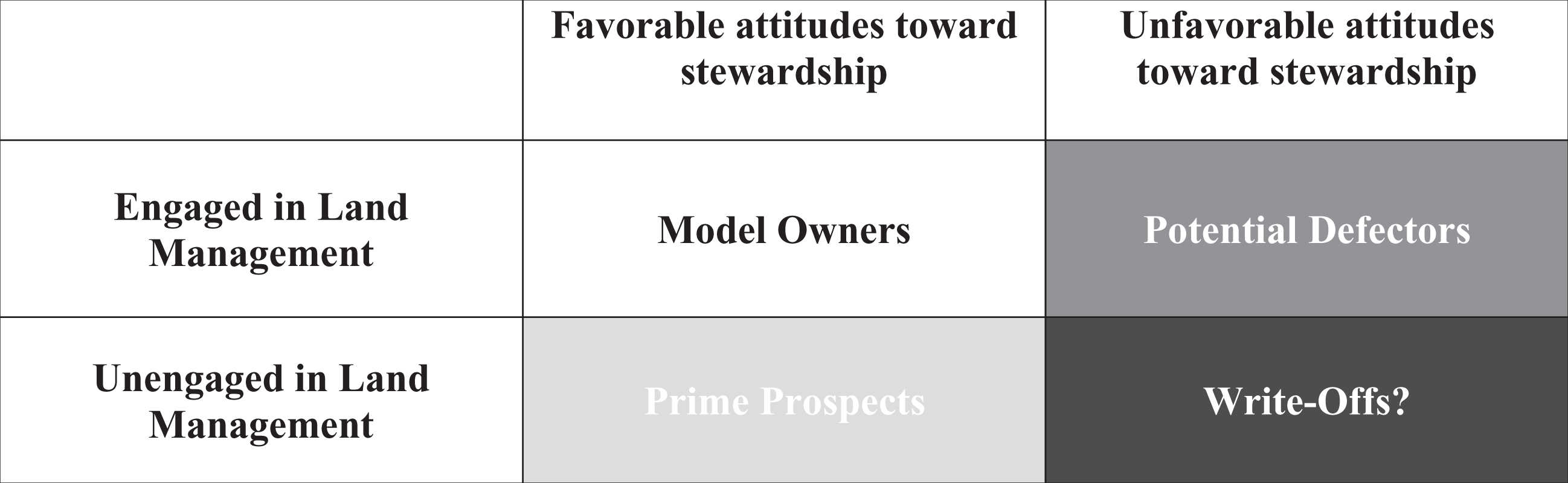
Woodland prime prospect analysis from the National Woodland Owner Surveys.
Although the NWOS survey provides insight into the changing attitudes and characteristics of woodland owners, it does not delve into barriers at the level of individual actions. AFF and partners like the Sustaining Family Forests Initiative are working to conduct this research along with message testing to better understand how to move woodland owners to action.
Place-based surveys
AFF and partners have conducted focused research in geographies where on-the-ground partners are actively implementing woodland owner outreach. The research activities conducted to date are summarized below. In Baldwin, Maine, AFF used personal interviews, mail surveys, and a focus group to learn about the community’s perceptions of forest management actions such as timber harvesting (Dennings & Panzera, 2015). In the Cumberland Plateau of Alabama, AFF conducted focus groups to learn about writing of forest management plans, harvesting for timber, and societal norms to forest management (Dennings & Panzera, 2016). In eastern Connecticut, AFF conducted focus groups to identify woodland owners’ perceptions about planning for the future of their land (i.e., the intergenerational transfer of property through estate planning; Action Research, 2015). Across 11 Western states, AFF conducted a mail survey to identify barriers to actions that would prevent wildfire (AFF, 2015).
The Aldo Leopold Foundation (ALF), a partner of AFF, also held focus groups or interviews in two Wisconsin locations. This research was conducted to supplement existing attitudes and awareness research and better understand the barriers and benefits that woodland owners perceive with regard to sustainable forest management. Aggregating the results across all geographies, the primary barriers that emerged from this research are as follows: Access due to conditions or age: In the Lake Superior Basin of Wisconsin, ALF asked woodland owners in a focus group to report what challenges they faced when caring for their woodland. Woodland owners regularly mentioned access, due to seasonal conditions (e.g., too wet), lack of easement across land-locked properties, or difficulty to explore the entirety of the property due to age (Koshollek, 2014). Similarly, owners in Baldwin, Maine, reported unsafe access, lack of access to their woodlots, and difficulty reaching their property due to health issues as reasons for not conducting sustainable forest management actions (Dennings, 2015). Difficulty controlling nature: In the driftless area of Wisconsin, the Wisconsin Department of Natural Resources interviewed woodland owners about the challenges they face managing for oak on their property. Oak management requires enlisting help from a professional forester to prep the site by doing a selective harvest of existing tree species, along with removal of invasive plants and then using natural or artificial regeneration to grow the oaks. The perceived challenges discussed by the most number of participants included deer browse, invasive species, competition from other tree species, and the need for intensive forest management to get oak to thrive (Knoot, Anhalt, Flournoy, & Sharp, 2014). Financial and time constraints: Woodland owners interviewed in the driftless area of Wisconsin reported expense or cost as a significant barrier for managing for oak (Knoot, 2014). Financial and time constraints were also mentioned in the Lake Superior Basin, as typical challenges owners face (Koshollek, 2014). Similarly, Dennings (2015) found that woodland owners in Maine identified a variety of cost and price-based barriers regarding forest management. Generally, the wood market and economy drives when some woodland owners decide to harvest. Other financial barriers mentioned were property taxes and costs associated with hiring the manpower to manage their woodlot. A survey of woodland owners in the Western United States investigated the reasons why woodland owners say they have not taken all the actions they could on their land to reduce the risk of wildfire. Of the respondents, 77% said the high cost/cost of hiring additional workers or contractors was a top barrier. The second most cited barrier, by 63% of responders, was that wildfire fuel reduction actions took too much time (AFF, 2015). Lack of trust: Lack of trust was a frequently mentioned barrier across a wide range of geographies and forest management domains. In the Lake Superior Basin, woodland owners reported the challenge of selecting a trusted contractor to do the work on their property (Koshollek, 2014). Baldwin, Maine, woodland owners discussed their lack of trust in professional forest management services based on work they had seen performed on other properties (Dennings, 2015). In an eastern Connecticut focus group about estate planning, similar ideas arose. A major source of anxiety for many participants was how to know who to trust and whether their land would actually be protected (Action Research, 2015). Uncertainty and anxiety about making a mistake: A slight twist on the barrier of distrust was heard in three focus groups in Alabama. Specifically, many woodland owners reported not trusting themselves to make informed and appropriate decisions about their land. Some woodland owners prefer to do nothing rather than make a wrong decision that will impact their land 20–50 years in the future (Dennings, 2015). This theme also emerged in an eastern Connecticut focus group about estate planning. In that discussion, participants spoke frequently about the amount of information they need to make legacy planning decisions. While many felt motivated to make these decisions, they were afraid of doing something wrong, and therefore, they were moving very slowly toward action (Action Research, 2015). Lack of forest management on federal lands: Research in the Lake Superior Basin uncovered several themes regarding the federal government’s management of lands or, more specifically, the lack of forest management. Many owners commented that their land is near or adjacent to county, state, or federal lands and therefore they are looking to these agencies to lead by example and have demonstration areas (Koshollek, 2014). In AFF’s study of wildfire fuel reduction in the West, 64% of woodland owners reported a serious concern regarding neighboring and nearby land owners and managers who are not properly managing their own land. Therefore, many believe that their actions would not necessarily reduce the risks to their property (AFF, 2015).
Research Objective
The research conducted with woodland owners to date has identified a number of general barriers to and broad perceptions of forest management in general. In addition, the research has identified some crosscutting themes that exist across geographies. The purpose of the current research is to expand on and contribute to this research foundation by identifying barriers to engaging with a professional forester for harvesting advice. The research focused on identification of these barriers in order to inform the marketing mix. The target behavior of meeting with a professional forester for harvesting advice was explored across two geographies: the border of Connecticut and Massachusetts in New England (Study 1) and the Piney Woods region of southeastern Mississippi (Study 2). In Connecticut and Massachusetts, the collaborative was interested in helping woodland owners conduct sustainable forest management actions to maintain an important wildlife corridor between three large existing state forests. In the Piney Woods, the goal was to restore forested areas to the native longleaf pine, which is extremely drought tolerant, disease resistant, and able to withstand wildfires. Despite the variations in project focus, a core management action in both geographies was to engage with a forester.
Study 1: New England
The collaborative conducted three focus groups in order to begin to develop somewhat of an understanding of the range of barriers experienced by woodland property owners living in one of 10 towns in the MassConn Sustainable Forest Partnership area. The first two groups consisted of participants who had not harvested their timber in the past, and the third group consisted of participants who had harvested their timber. The focus groups were designed to gather in-depth information about woodland owners’ perceptions of harvesting, perceptions of foresters, and reasons why they might not engage with a forester. The range of issues identified in the focus group were used to directly inform the development of a mail survey instrument. The mail survey had a broad goal of gathering quantitative data on the perceived barriers and benefits to (1) placement of a restriction or conservation easement on all or part of their property and (2) managing their woods by harvesting timber. The present article focuses on results pertaining specifically to barriers to engaging with a forester for harvest.
Method
Participants
Participants in the mail survey were 392 woodland owners who, according to tax rolls, owned 10 or more acres of wooded land in an area along the Massachusetts and Connecticut border called the MassConn region.
Procedure
A brief survey was mailed to a sample of 1,200 woodland owners in the MassConn region, who had 10 or more acres. The sample was randomly selected from tax roll records of the population of woodland owners who owned 10 or more acres of wooded land. The goal was to achieve a final sample of at least 300 completed surveys. Sample size was determined based on the following assumptions: (a) a total estimated population of 2,600 woodland owners with 10–75 acres in the 10 towns representing the MassConn region and (b) ±5.6% margin of error, 95% confidence interval (CI). The collaborative received completed surveys from 392 woodland owners between March 24, 2014, and May 6, 2014. This sample provided a margin of error of ±4.56%, 95% CI. After eliminating from the original 1,200 records in the database the invalid addresses, persons who were not woodland owners or who owned nonwooded land, and those who were deceased, there were 1,101 valid records. This resulted in a 36% overall response rate for the mail survey.
The survey included items exploring a variety of woodland owner issues including use of wooded land, harvesting practices and perceptions, barriers to using professional foresters, and trusted channels of communication. Even though formal institutional review board approval was not a requirement with this project, care was taken to make sure that the collaborative protected human subjects from harm, avoided intrusion, honored confidentiality, and secured the personal data of the participants. All participants provided their informed consent.
Findings
Participants were asked to describe how they used their wooded land. The survey results indicated that the main “activity” conducted on a woodland owner’s land is enjoying peace and quiet followed by walking/hiking. Selling trees for income was at the bottom of the list. The top three challenges that woodland owners reported regarding the management of their woodland included time to maintain the property (21%), invasive plants and animals (14%), and money to maintain the property (10%). With regard to the target behaviors, 29% of the respondents had used the services of a professional forester to sell trees and only 23% of the respondents had harvested trees at least once.
The survey included items asking participants to rate a list of various barriers to harvesting using a scale from 0 (strongly disagree) to 10 (strongly agree). As seen in Table 1, the primary barrier to harvesting trees was a belief that loggers leave owners with a mess to clean up. This was the top rated barrier for woodland owners who had harvested and those who had not harvested. Overall, participants who had not harvested trees reported greater barriers to harvesting than those who had harvested at least once.
Barriers to Harvesting Trees and Using a Forester in New England.
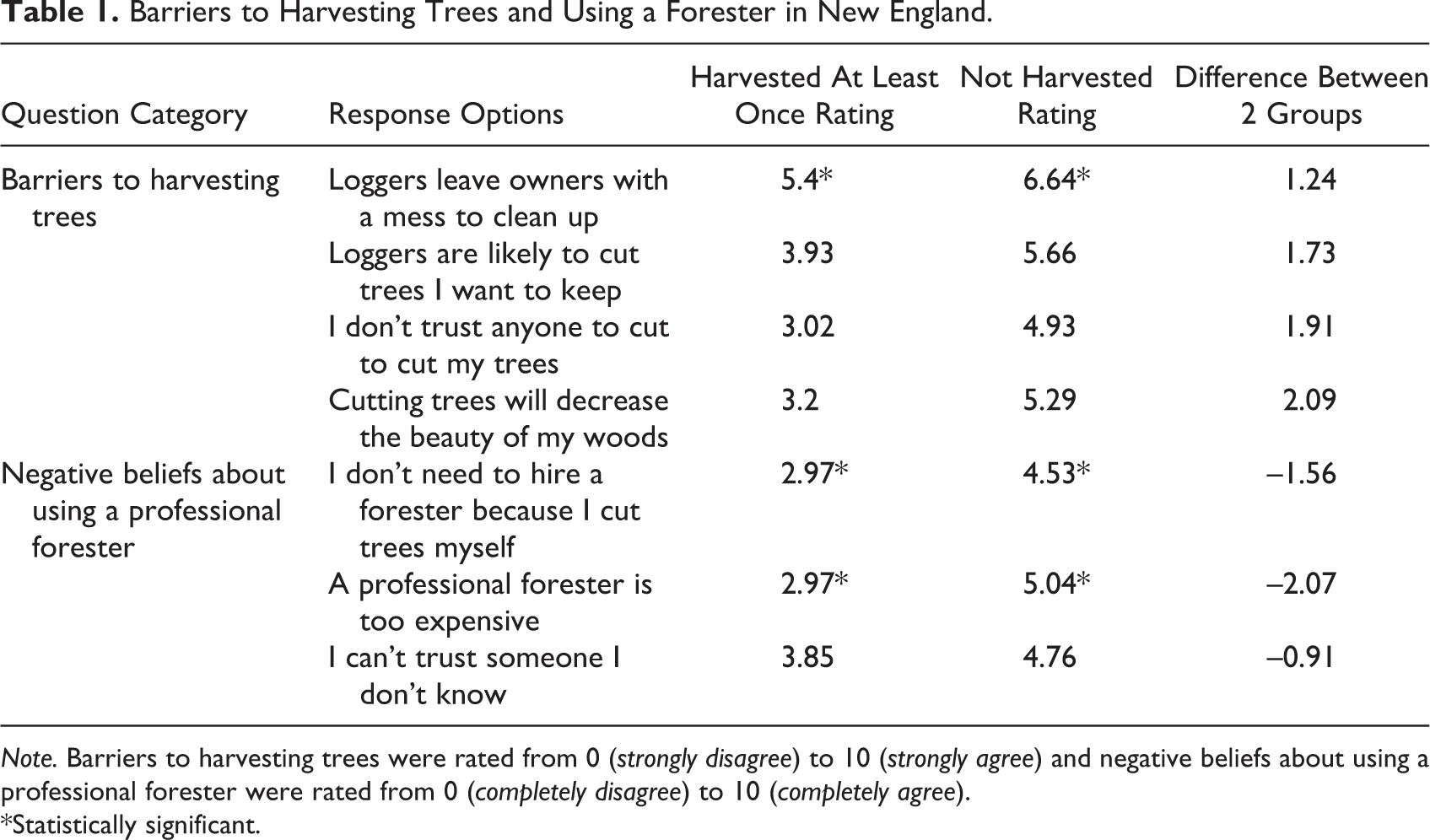
Note. Barriers to harvesting trees were rated from 0 (strongly disagree) to 10 (strongly agree) and negative beliefs about using a professional forester were rated from 0 (completely disagree) to 10 (completely agree).
*Statistically significant.
Participants were also asked to rate barriers to hiring a forester using a scale from 0 (completely disagree) to 10 (completely agree). Participants who had not harvested in the past reported significantly higher barriers to hiring a professional forester than those who had harvested at least once. This was particularly true for perceptions of forester expense. With regard to hiring a forester, 38% of participants did not know whether a forester would be too expensive and 37% did not know whether they would get a higher price for their trees if they worked with a forester. The mean scores of barriers to using a forester and harvesting are presented in Table 1.
The survey also investigated trusted sources of information and preferred channels of communication for issues related to their land. Survey responses were examined separately for residents (those living on their wooded land) and nonresidents (absentee woodland owners not living on their property). The reported preferences for each information source are summarized in Tables 2 and 3. Nonresident land owners were more likely than resident woodland owners to report family members as trusted sources of information. However, this was the top-rated information source for both groups, performing better than professionals.
Trusted Sources of Information in New England.
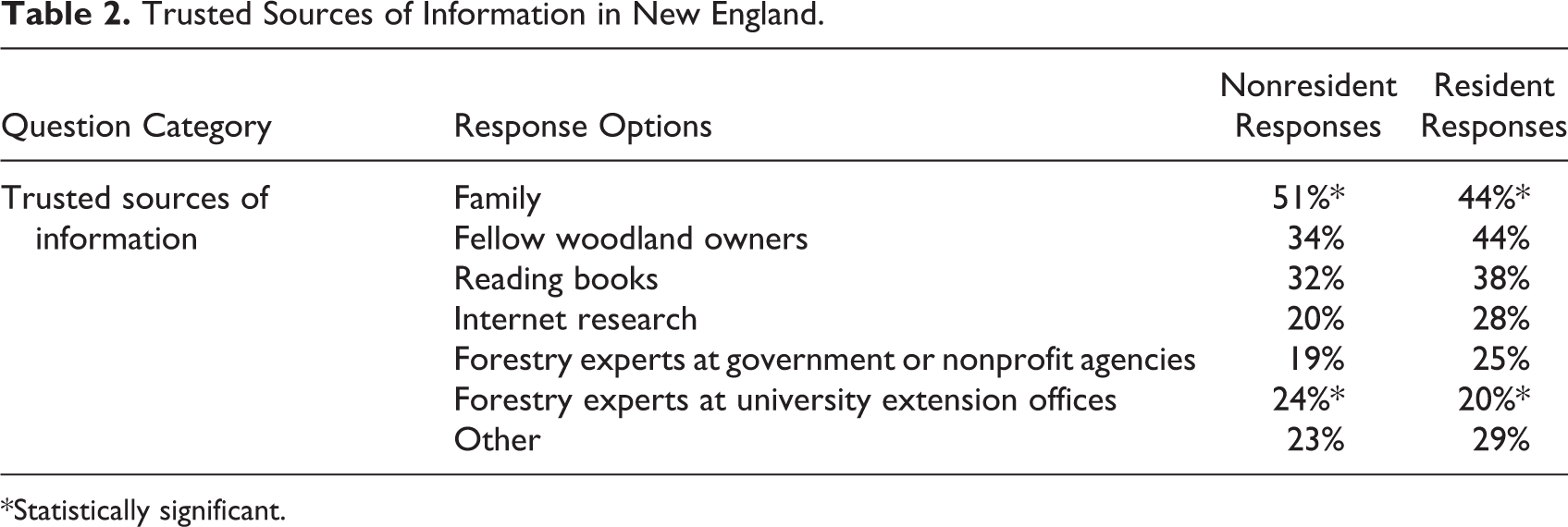
*Statistically significant.
Preferred Communication Channels in New England.
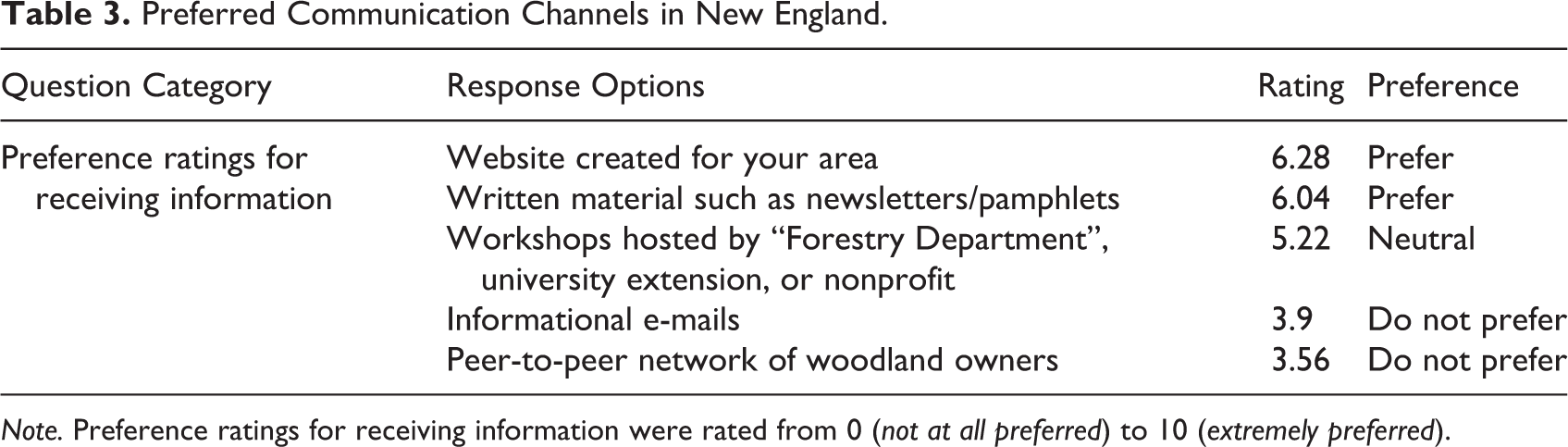
Note. Preference ratings for receiving information were rated from 0 (not at all preferred) to 10 (extremely preferred).
Limitations
This research utilized a mail survey methodology as it was determined to be the most efficient and practical means of obtaining data from a known sample of woodland owners with 10 or more acres (based on tax roll records). However, potential limitations of the mail survey include incomplete tax records which were used to obtain woodland owner addresses, nonresponse bias, and less randomization as those who respond are self-selected. Using this method, it is impossible to determine to what extent the respondents are (or are not) systematically different from those who did not respond to the survey. These potential limitations should be taken into consideration in interpreting the findings.
Study 2: Piney Woods Mississippi
The collaborative conducted three focus groups designed to inform the development of a barrier and benefit telephone survey instrument to be deployed in the Piney Woods region of Mississippi. Focus groups were conducted with African American woodland owners, woodland owners who harvested timber without the assistance of a professional forester, and woodland owners who harvested timber with the assistance of a professional forester. The goal of the telephone survey was to identify the factors that play a role in woodland owners’ decisions to engage with a professional forester at the time of harvest. The survey also sought to identify whether there were any concerns that were unique to African American woodland owners in the region. African American woodland owners were identified as one who had been underserved by previous outreach efforts. This present article focuses on survey results specifically pertaining to barriers that inhibit harvesting with the assistance of a forester.
Method
Participants
Participants were 335 woodland owners with 10 or more acres living in the 16 counties representing the Piney Woods, Mississippi.
Procedure
A telephone survey was conducted with a target sample of 300 general population woodland owners. The sample size was determined based on the following assumptions (a) an estimated population of 20,000 woodland owners with 10 or more acres in the 16 counties representing the Piney Woods and (b) ±5% margin of error, 95% CI. In addition to the general woodland owner sample, African American woodland owners were oversampled with a target sample size of 100. However, only 35 African American respondents were ultimately reached.
The collaborative conducted the telephone survey between February 17, 2014, and February 27, 2014. To ensure sensitivity to cultural nuances and language, a research firm located in Baton Rouge, Louisiana, was chosen to conduct the telephone interviews. Care was taken to make sure that the collaborative protected human subjects from harm, avoided intrusion, honored confidentiality, and secured their personal data. Respondents were not compensated for their participation, and all participants provided their informed consent.
The survey included items exploring a variety of woodland owner issues such as reasons for harvesting, concerns about wooded land, perceptions about using a forester, and preferred sources of communication. The time taken to complete a survey ranged from about 15 min for a respondent who had never harvested trees and had no plans to do so to about 20 min for a woodland owner who had harvested trees. Those who responded to the survey reported that they were the primary person responsible for making decisions regarding their wooded land. The survey had a 14% incidence rate based on talking to someone who qualified for the survey.
Findings
The first part of the survey focused on woodland owner perceptions of their property. The survey results indicated that the main activity conducted on a woodland owner’s land is walking/hiking (27%) followed closely by observing wildlife (22%) and hunting (20%). Growing trees for income was at the bottom of the list. With regard to the target behaviors, 63% of the respondents had harvested trees for sale at least once, and 44% of the respondents had used the services of a professional forester.
Where meaningful, survey responses were compared between the non-African American woodland owner sample (N = 300) and the African American woodland owner sample (N = 35). Two main differences associated with the non-African American population as compared to the African American population emerged. Specifically, participants were asked to rate their agreement with the sentence, “most of what I know about my land I learned from my ancestors” using a scale from 0 (strongly disagree) to 10 (strongly agree). African American respondents (mean = 8.34, SD = 3.31) reported significantly stronger agreement with this statement than non-African American respondents (mean = 6.53, SD = 4.24; p < .05). Participants were also asked about whether they had purchased their land or inherited it. African American respondents (37%) were less likely to report that they had purchased their land compared to non-African American respondents (59%).
The survey included items asking participants to rate a list of concerns about harvesting using a scale from 0 (not at all important) to 10 (extremely important). There were no significant differences in perceived barriers between those who had harvested in the past and those who had not harvested. For both the African American and non-African American sample, the most important concern was “getting the best price for timber.” Other important concerns for both groups were having the land look nice after harvest, having a written contract, and having protection from liability.
Participants who reported having harvested were asked about their perceived barriers to engaging with a forester for a harvest. A list of barriers were presented as statements and participants were asked to rate each statement using a scale from 0 (strongly disagree) to 10 (strongly agree). The highest rated barrier was, “I can’t trust someone that I don’t know” (mean = 6.46) followed by, “I want to handle harvesting myself” (mean = 6.21). A complete list of mean scores for barriers to harvesting and engaging with a forester is presented in Table 4.
Barriers to Harvesting Trees and Using a Forester in Piney Woods.
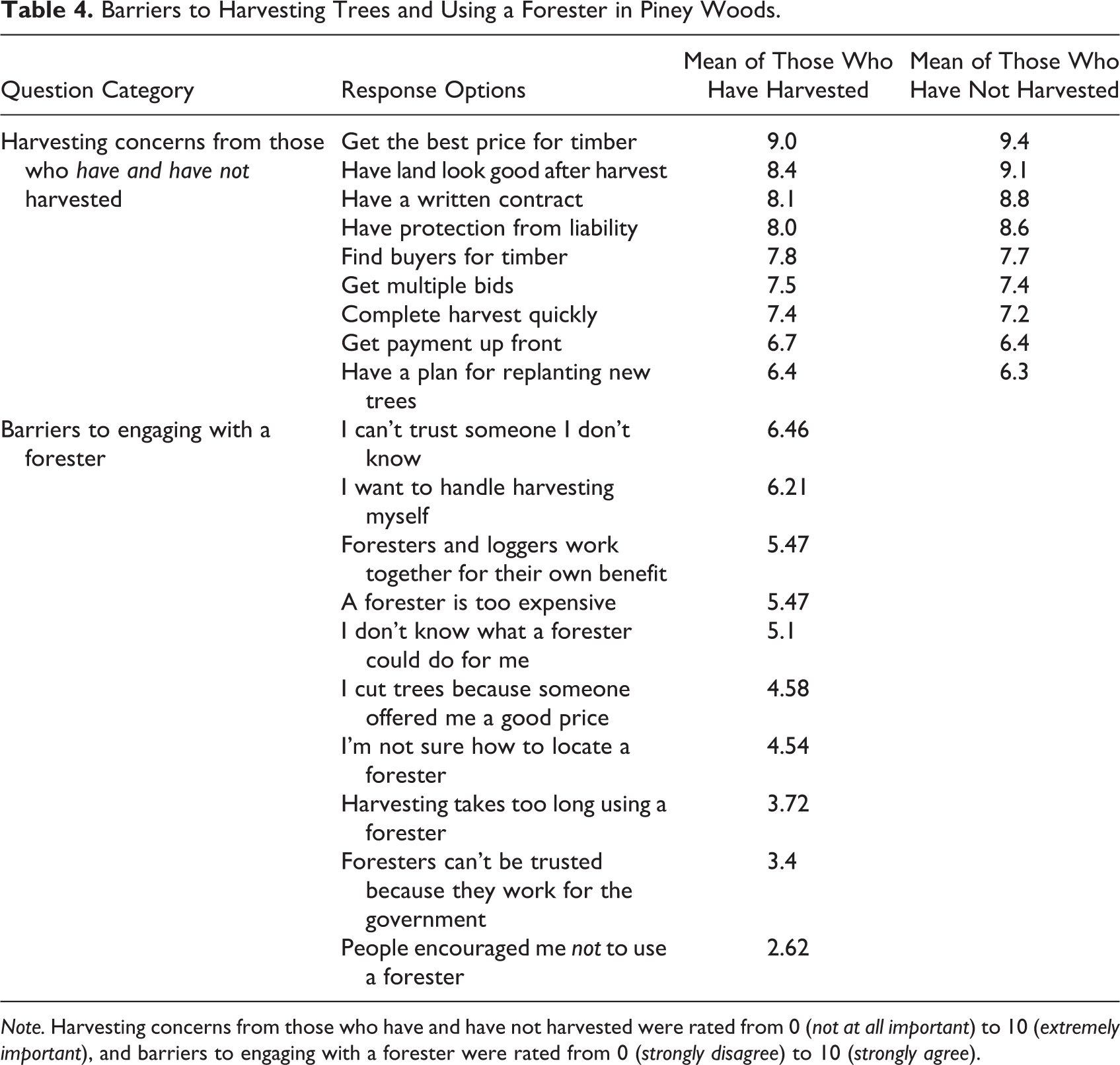
Note. Harvesting concerns from those who have and have not harvested were rated from 0 (not at all important) to 10 (extremely important), and barriers to engaging with a forester were rated from 0 (strongly disagree) to 10 (strongly agree).
Finally, the survey included a series of items asking woodland owners to report their opinions about how and from whom they would prefer to receive information and educational materials. The proportion of responses for each of the response options is presented in Table 5. What is particularly intriguing about the results from this question is that 17% of respondents said there is no one they trust to get useful information about their woodland.
Trusted Sources of Information and Preferred Communication Channels in Piney Woods.
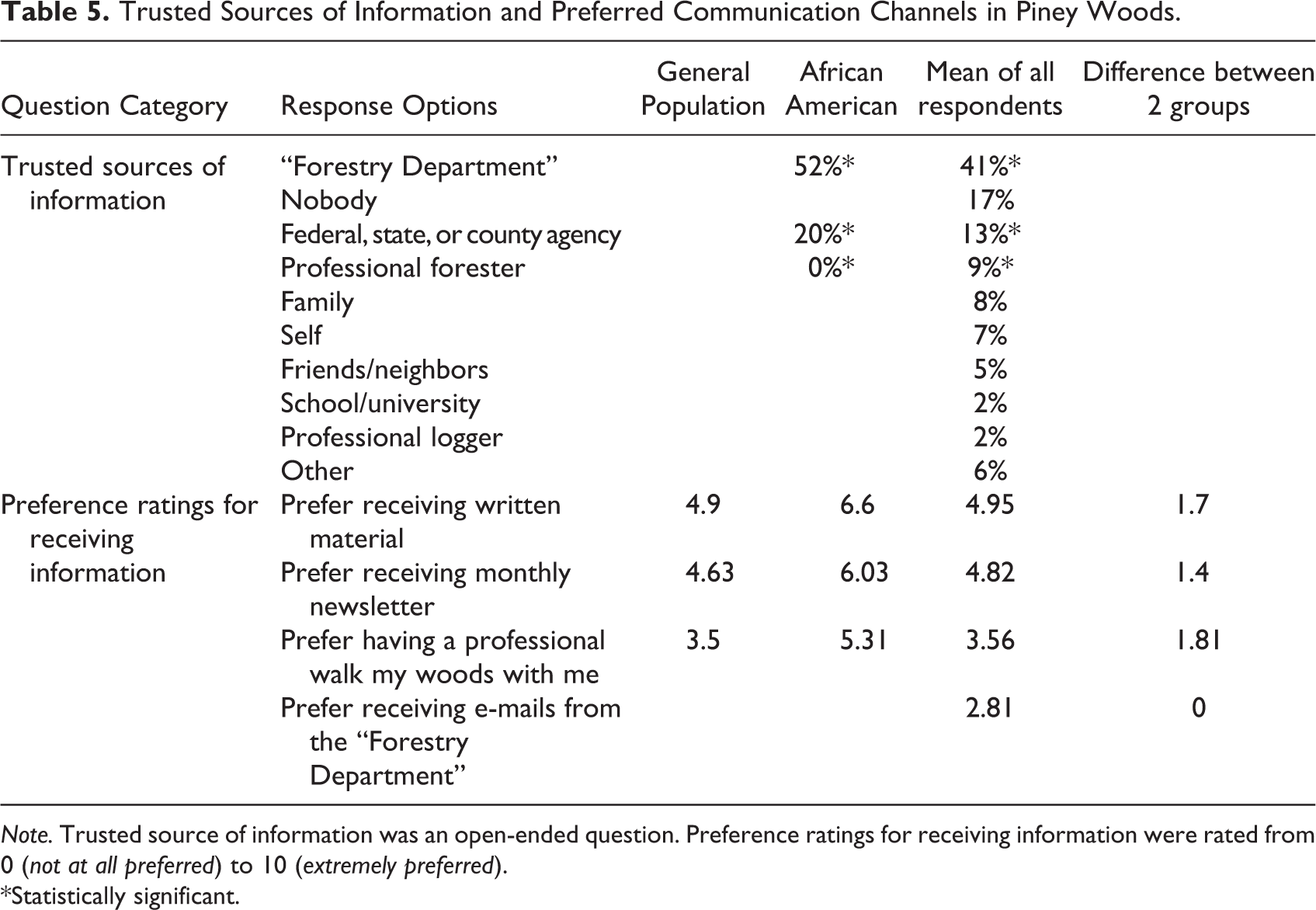
Note. Trusted source of information was an open-ended question. Preference ratings for receiving information were rated from 0 (not at all preferred) to 10 (extremely preferred).
*Statistically significant.
Limitations
This study faced a number of limitations related to methodology. First, the potential limitations of the telephone survey are short responses from the woodland owners and the need to have a simple questioning route. Additionally, the response rate to the telephone survey was small, which presents concerns about nonresponse bias. Finally, the small size of the African American sample limited the ability to make concrete comparisons between the two groups.
Overall Conclusions
Selling trees for income was the least rated land use activity reported in both the Mississippi Piney Woods in the south and New England in the north. A greater proportion of Piney Woods woodland owners (63%) reported harvesting trees compared to those in New England (23%). When comparing the results of the two regional projects, we observed that a common barrier to using a professional forester involved distrust. This was the highest rated barrier for woodland owners in both the Piney Woods and New England, although it was more intense in the Piney Woods. In the Piney Woods, the average rate was 6.5 for distrust (above average), and in New England, it was 4.3.
Regarding the barriers to harvesting, New England woodland owners ranked above the midpoint on only 1 item, whereas in the Piney Woods region in the south, every item ranked above the midpoint. Piney Woods woodland owners have stronger concerns when it comes to harvesting. The highest barrier in New England and the second highest in the Piney Woods is that loggers do not leave the land looking good/clean up their mess after harvesting. In the south, where timber production is a large part of the economy, it is no surprise that the top barrier to harvesting is getting the best price for their timber. Woodland owners will wait to harvest until markets are strong. New England has fewer wood product mills and production facilities so this response was not offered in the mail survey.
When comparing trusted sources of information between the two regions, forestry experts are fairly similar but family and other woodland owners are viewed as more trustworthy in New England than in the Piney Woods of Mississippi. In the Piney Woods telephone survey, 17% of the respondents stated that they don’t trust anybody. These responses were recorded in an open-ended format, but this response choice was not offered on the New England mail survey. Regarding preferences for receiving information, both groups prefer to receive information in written format. This is almost twice as high, in both surveys, as their preference to receiving an e-mail. In New England, the survey asked their preference about getting information through a website. This was the highest rated method in that geography but was not asked in the Piney Woods. Additionally, in the New England project, when analyzing the results of preferred communication channels with trusted messengers, the interpretation of the results shows that websites would be appropriate and useful for this audience, but those websites would most likely be created by professional forestry experts whom were not seen as trusted messengers. Unfortunately, the advice received from friends and family isn’t always accurate. These issues should be addressed when building the intervention strategy.
Sustainable forest management is a desired outcome that involves multiple actions be taken by the woodland owner over time. For this reason, the research, interventions, and iterative evaluations are lengthy and must be broken up into phases. This research addresses just one step in a longer chain of onetime and repetitive sustainable forest management actions. The authors acknowledge that this article summarizes only the formative research and does not yet include highlights from campaign implementation and/or evaluation of the results. However, this research is being aggregated with other surveys, focus groups, and results from similar woodland owner campaigns being conducted by AFF to create an effective marketing mix for the augmented product—offer a free visit with a professionally licensed forester to get harvesting advice.
The price attribute will be addressed in a couple of ways. The actual cost of the forester visit will be supplied through grant funds or donated by the forester. The collaborative will work to overcome the issue some woodland owners had in trusting a forester. The outreach efforts to address this barrier will involve using peer woodland owners as an intermediary messenger prior to sending a forester to visit with an owner and/or publicly displaying the biography of the forester who will be visiting woodland owners in the direct mail appeal and on the website. The peer woodland owner also provides an opportunity to use norms and social diffusion strategies from the Community Based Social Marketing (CBSM) discipline.
To address the place component, the intervention of the forester visit will occur on the woodland owner’s property so that the forester can advise them regarding correct sustainable forest management next steps. Additional CBSM strategies such as commitment, prompts, and feedback will be part of the marketing mix as it relates to the forester visit. While on the property, the forester will ask the woodland owner to commit to an action they will perform in the next 3–6 months. This will be facilitated through a checklist created on carbonless copy paper. One copy of the checklist will be provided to the woodland owner the day the forester visits, showing the commitment of the woodland owner. Then 6 months later, the collaborative will send the duplicate copy to the woodland owner as a reminder of their commitment.
The promotion component of the marketing mix will include prompts like direct mail, websites, e-newsletters, and community flyers. The conservation community is also testing different messages to see what resonates with the audience knowing those in the south more frequently harvest than those woodland owners in the north. Based on our formative research of woodland owner’s main activities on their land (enjoying peace and quiet and hiking in the north and hiking and observing wildlife and hunting in the south), messages will be segmented and targeted to these topics. A subtle link can be made in the messaging describing how harvesting of trees can attract wildlife or improve forest health for better hiking. All woodland owners are concerned about the aesthetics of their land after a harvest. The collaborative will help to address this issue through informational packets and the experts that are deployed.
Once the marketing mix is finalized, we will implement the project with our partners. We will run agile campaigns and test messages as we go. This will be done in a couple of different ways: (1) We will conduct printed, hard-copy message testing intercept surveys at woodland owner community events; (2) We will send two different direct mail postcards to the target audience using different themes, language, and pictures to see if one receives a higher response rate; and (3) We will use A/B testing methods with our e-newsletters to test if one e-mail message receives a better open and click-through rate, based on different themes, language, and pictures, than another. To track the impact of our project, we will build a database for the collaborative. This helps us monitor and evaluate our progress with woodland owners. Not only will we track inputs, outputs, and outcomes, we will work to calculate impact on the land using Geographic Information System (GIS) spatial analysis. We will also track a woodland owner’s progress through the stages of change using various follow-up surveys. Finally, with a service model product, we will conduct satisfaction surveys to make sure the forester intervention is being well received and will modify as needed.
This research, along with campaign results, will be shared with the conservation community to help increase the use of social marketing to change behavior and solve environmental problems. The authors acknowledge that social marketing environmental projects are more unique than public health projects and have fewer foundational campaigns within the literature to call upon when creating social change interventions. We want to build the body of knowledge around impactful environmental rigorous social change campaigns that can be replicated, scaled, and conducted efficiently. We hope to inspire fellow environmentalists to contribute to this literature.
Footnotes
Authors’ Note
American Forest Foundation—Jennifer Jones, (former) vice president, communications; Chris Erwin, director, Southern Forest Conservation; Christine Cadigan, senior manager, Woodland Conservation; Kristina Castille, senior director, Innovation; Tom Fry, director, Western Forest Conservation. Action Research—Lori Brown Large, director of research and operations; Dani Ballard, research associate.
Acknowledgments
The authors thank New England Forestry Foundation - Sonya leClair, (former) Programs Coordinator; Lisa Hayden, Landowner Outreach Coordinator; American Forest Foundation - Jennifer Jones, (former) Vice President, Communications; Chris Erwin, Director, Southern Forest Conservation; Christine Cadigan, Senior Manager, Woodland Conservation; Kristina Castille, Senior Director, Innovation; Tom Fry, Director, Western Forest Conservation; Action Research - Lori Brown Large, Director of Research and Operations; Dani Ballard, Research Associate.
Declaration of Conflicting Interests
The author(s) declared no potential conflicts of interest with respect to the research, authorship, and/or publication of this article.
Funding
The author(s) disclosed receipt of the following financial support for the research, authorship, and/or publication of this article: This study was funded by U.S. Forest Service.