







Abstract
Background
Despite sustained social marketing and public communication efforts in Vietnam promoting waste reduction, plastic-use reduction, and greener mobility, behaviour change remains uneven. Prior research using the theory of planned behaviour (TPB) shows that attitude and perceived behavioural control (PBC) predict pro-environmental consumption intention, yet these relationships are not always consistent across contexts. This study therefore examines whether a moral-value factor, biospheric value orientation (BVO), helps explain when TPB predictors translate into stronger pro-environmental consumption intention.
Focus of the Article
We extend TPB by theorising BVO (prioritizing the well-being of nature and the biosphere) as a moderator that shapes the strength of the attitude-intention and PBC-intention relationships in pro-environmental consumption.
Research Question
How does biospheric value orientation moderate the impact of (a) attitude toward pro-environmental consumption and (b) perceived behavioral control on pro-environmental consumption intention?
Importance to the Social Marketing Field
By clarifying when rational predictors (attitude, PBC) translate into intention, the study helps social marketers design more effective interventions in settings where campaign exposure is high but behavioral outcomes are mixed. It also highlights that BVO as a segmentation and message-framing lever to improve program efficacy and reduce ineffective campaign spending.
Method
A quantitative survey research method was conducted among Vietnamese consumers (N = 293). Data were analyzed with regressions to test the proposed hypotheses.
Results
Results reveal that attitude towards pro-environmental consumption and perceived behavioral control are significant predictors of pro-environmental consumption intention. BVO strengthens the attitude-intention relationship but weakens the reliance of PBC when forming intention.
Recommendations for Research/Practice
Our study shows that consumers form stronger intentions to engage in pro-environmental consumption when they hold positive attitudes toward such behaviours and feel capable of performing them. Furthermore, individuals with stronger BVO are more likely to translate their positive attitudes into pro-environmental consumption intentions even when they perceive barriers or inconvenience.
Limitations
First, the survey-based research design among Vietnamese consumers might limit the generalizability of our findings. Second, only the moderating role of BVO was investigated in the study. Future research should further examine other personal or cultural values as moderators in this relationship.
Keywords
Introduction
Hanoi, Vietnam, has been repeatedly exposed to public communication and social marketing initiatives encouraging (i) reductions in single-use plastics and unnecessary packaging, (ii) recycling and waste-sorting, and (iii) greener mobility such as public transport use, walking, and cycling (de Koning et al., 2015; Nguyen et al., 2018; Trudel, 2019). Such initiatives typically rely on providing information, raising awareness, and framing convenience to promote pro-environmental choices, consistent with conventional approaches in environmental social marketing (McKenzie-Mohr, 2011; Yuriev et al., 2020). However, empirical evidence suggests that the behavioural effects of these programs are often mixed or modest, particularly when interventions focus primarily on rational or informational appeals without addressing deeper motivational drivers (Trudel, 2019; White et al., 2019). This pattern indicates that repeated campaign exposure alone may not be sufficient to generate strong or sustained pro-environmental consumption intentions.
In Vietnam’s urban centres, rapid consumption growth, increasing plastic waste, and accelerating motorisation continue to exert substantial environmental pressure (de Koning et al., 2015; General Statistics Office of Vietnam, 2024; World Bank, 2023). Hanoi, as one of the country’s most urbanised and consumption-intensive cities, has been a focal point for national and municipal environmental communication efforts, making it a particularly suitable context for examining why widely promoted pro-environmental behaviours do not always translate into strong behavioural intentions (Lanzini, 2017; Nguyen et al., 2018). Understanding the psychological mechanisms that precede behavioural change is therefore critical for improving the effectiveness and cost-efficiency of public social marketing interventions, especially in emerging economies where program resources are limited and policy learning is essential (White et al., 2019; Yuriev et al., 2020).
The theory of planned behaviour (TPB) has been widely applied to explain pro-environmental consumption behaviours (Amoako et al., 2020; Gkargkavouzi et al., 2019; Nguyen et al., 2018). On the one hand, existing literature generally supports the predictive power of TPB components for pro-environmental consumption intention and behaviours. Accordingly, consumers are more likely to conduct pro-environmental consumption behaviours if they hold favourable attitudes toward them (Nguyen et al., 2018; Varshneya et al., 2017; Wei et al., 2017) and/or they perceive that they possess skills, knowledge, and information to do so (Afroz et al., 2015; Lee & Jan, 2017). However, evidence also shows that the strength of TPB relationships varies across settings and behaviors (Lao, 2014; Moser, 2015; Onel, 2016). This variability is especially relevant for social marketing contexts where campaigns provide information and cues, yet intention formation may still depend on deeper moral motivations.
Regarding social marketing, examining intention is both theoretically appropriate and aligned with the focus on identifying psychological levers that precede behaviour change. Although TPB is grounded in rational decision making, scholars argue that pro-environmental actions also involve moral considerations beyond cost-benefit evaluations (Clark et al., 2019; Miller, 2017). Consumers are morally motivated to consider pro-environmental consumption practices when they prioritize the well-being of the biosphere over their immediate interests (Landon et al., 2018; Lee & Jan, 2017; Wang et al., 2021b). Accordingly, we integrate biospheric value orientation (BVO) into TPB as a boundary condition that explains when attitude and perceived behavioral control (PBC) translate into stronger pro-environmental consumption intention. This value-based extention responds to calls for incorporating moral-related factors to address attitude-intention inconsistencies in pro-environmental contexts.
This study aims to examine intention for pro-environmental consumption, including using recycled paper, refusing plastic-wrapped products, and choosing green transport. These three behaviors were selected because they are (a) frequently targeted by pro-environmental communication in Hanoi, Vietnam; (b) high-frequency everyday choices; and (c) actionable for social marketing interventions (Nguyen et al., 2018; Trudel, 2019). Although recycling or plastic use refusal can become habitual, intention-based models remain appropriate when the goal is to understand change or variability in behavior. Recent reviews also show TPB is widely used to predict recycling and waste-sorting intentions (Islam et al., 2024), and intention remains the strongest predictor even when habit is included in extended models (Gkargkavouzi et al., 2019).
Literature Review and Hypothesis Development
Biospheric Value Orientation (BVO)
In pro-environmental consumption research, three competing values, namely egoistic, biospheric, and altruistic values, have usually been studied (Gkargkavouzi et al., 2019; Kim & Seock, 2019). BVO denotes the importance placed on benefits for the biosphere and have been pinpointed to be the most critical determinant of pro-environmental consumption. BVO predisposes consumers to take pro-environmental consumption practices based on their expectations and evaluation of the environmental benefits of the pro-environmental consumption practices (Groot & Steg, 2008; Stern & Dietz, 1994) and their internal self-satisfaction (their feeling of happiness). Therefore, BVO drives consumers to prioritize benefits for the environment and the moral benefit for themselves over other personal costs (Stern, 2000). It is logical to expect that for consumers who strongly endorse the BVO, the effect of perceived benefits on pro-environmental consumption motivation is stronger, and the influence of negative perceived costs is weaker. Thus, different from previous literature which only treat BVO as predictors of behaviors, the present study investigates the moderating role of BVO in the relationships between TPB antecedents and pro-environmental consumption intention. In detail, the study examines how BVO moderates the effects of attitude and perceived behavioral control (PBC) on pro-environmental consumption intention.
Hypothesis Development
Attitude and Pro-environmental Consumption Intention
Attitude towards pro-environmental consumption results from consumers’ beliefs about environmental outcomes produced by the behaviors and their evaluation of such outcomes. The positive evaluation of the possible outcome forms positive attitudes toward the behaviors that, in turn, increase their intention to perform the behaviors (Ajzen, 1991). Accordingly, a favorable attitude towards pro-environmental consumption can increase the intention to undertake pro-environmental consumption.
Empirically, prior findings are relatively consistent regarding the positive linkage between favorable attitude towards pro-environmental consumption and intention. For example, pro-environmental consumption intention was proved to be the outcome of a positive attitude towards pro-environmental consumption behaviors (Wei et al., 2017). Similarly, consumers are prone to environmentally friendly eating out for environmental protection if they have a positive attitude towards waste reduction (Kim et al., 2020). Therefore, we retest the relationship with a formal hypothesis:
Attitudes towards pro-environmental consumption positively affect consumers’ intention to conduct pro-environmental consumption behaviors.
Perceived Behavioral Control and Pro-Environmental Consumption Intention
PBC is the third independent predictor of the TPB model. PBC over a behavior refers to people’s beliefs in their sufficient ability to perform the behavior (Ajzen, 2012). In other words, it indicates people’s perception that performing the behaviors is easy or not with their time, effort, and other resources (Ajzen, 2005). Accordingly, if individuals believe that they can perform the behaviors with ease, they are more willing to undertake such behaviors (Ajzen, 2012).
To date, the effects of PBC have been comprehensively tested by pro-environmental consumption researchers. For example, the study by Parveen and Ahmad (2020) reported that consumers’ perception of their ability to consume pro-environmental products positively predicted their intention to consume pro-environmental products. The evidence was further supported by the research of Esfandiar et al. (2020) investigating the binning intention of national park visitors. Also, PBC was a predictor of pro-environmental consumption intention in a private-sphere context in the study of Gkargkavouzi et al. (2019). Based on such evidence, we retest the hypothesis that:
PBC positively affects consumers’ intention to conduct pro-environmental consumption, such that the easier consumers perceive pro-environmental consumption, the stronger their intention to conduct pro-environmental consumption is.
Moderating Effects of Biospheric Value Orientation
Behavioral attitude is based mainly on consumers’ evaluation of expected behavioral outcomes or external rewards/punishments that the behavior is possible to produce (Ajzen, 2012). In pro-environmental consumption, attitude becomes more motivating when the environmental benefits of the behavior matter personally to the consumer. If environmental protection is not a priority, a positive attitude may not reliably translate into intention.
Personal values have been indicated to drive consumers’ pro-environmental consumption for positive feelings such as happiness or self-worth (Schwartz, 1977; Stern, 2000) and thus can be supplemental to the behavioral outcome effect of the attitude (Pham et al., 2022). Evidence from other domains has supported the moderating effects of personal values on attitude-behavior relationships. For example, attitude towards sports supplements has a weaker impact on doping use among athletes who strongly endorse moral values (Hurst et al., 2022). In the pro-environmental domain, the positive interaction effect of universalism values and the environmental attitude on pro-environmental consumption behavior was reported by Sharma and Jha (2017).
BVO reflects deep moral concern for the biosphere and captures how consumers emphasize benefits for other species and nature (Steg et al., 2014). Studies suggest that BVO may increase the consistency between moral ideals and intentions (Wang et al., 2021b) by highlighting people’s beliefs about the possible outcomes of their pro-environmental consumption (Groot & Steg, 2008; Stern & Dietz, 1994). Chaihanchanchai and Anantachart (2023) further show that environmental values moderated the attitude-behavior gap in green product purchase. Therefore, we argue that biospheric value orientation may positively moderate the influence of attitude on pro-environmental behavioral intention and propose the following hypothesis:
The stronger the BVO consumers endorse, the stronger the effect of their positive attitude towards pro-environmental consumption on their pro-environmental consumption intention.
However, we expect BVO to negatively moderate the effect of PBC. PBC can be viewed as an indicator of the perceived barriers or difficulties which might prevent individuals from conducting pro-envirionmenal consumption behaviors (Ajzen, 1991, 2012). Individuals who perceive high barriers typically rely more heavily on PBC when forming their intentions. However, BVO denotes the extent to which consumers prioritize benefits for the environment and moral benefits for themselves over other personal costs (Schwartz, 1977; Stern, 2000). When consumers strongly prioritise environmental protection (high BVO), they may be willing to form intention even under inconvenience or barriers, reducing their reliance on perceived behavior control to achieve their behavioral goals. Thus, we expect that the effect of PBC on consumers’ pro-environmental consumption motivation is weaker among consumers who strongly endorse BVO. Based on such arguments, we formally hypothesize that:
The stronger the BVO consumers endorse, the weaker the effect of perceived behavioral control on consumers’ pro-environmental consumption intention.
Our research framework focuses on attitude and perceived behavioral control as TPB predictors and test BVO as a moderator of these relationships (Figure 1). Hypothesis testing model. Source: Authors’ own work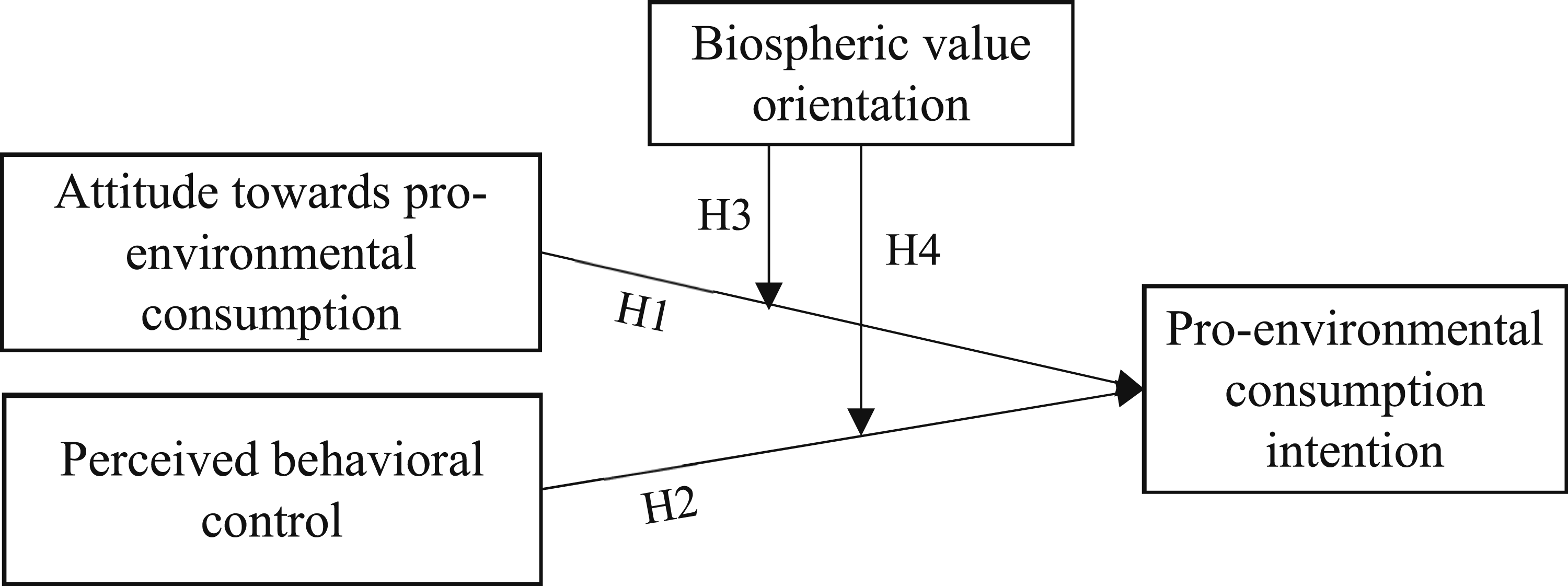
Methodologies
Measurement
We adapted three items from the study of Lin and Hsu (2015) to assess consumers’ attitude towards pro-environmental consumption. Perceived behavioral control consists of three items assessing whether engaging in the three pro-environmental consumption behaviors is easy (Ajzen, 2005). Four items measuring the BVO scale were adapted from Bouman et al. (2018). Pro-environmental consumption intention measure consists of three behavior items adapted from Braun and Dierkes (2019). In this study, we focused on examining the three pro-environmental consumption, including recycled paper purchase and use, plastic bag refusal, and walking or using bikes and public transport.
Data Collection
Vietnam has been among the countries where significant overconsumption patterns have considerably contributed to the degradation of the environment. Being one of the largest populations in Asia with about 96 million people (General Statistics Office of Vietnam, 2024), promoting pro-environmental consumption practices among Vietnamese consumers is critical to the sustainable development of human society. Hanoi is one of Vietnam’s most urbanised and consumption-intensive cities, and its residential blocks vary considerably in demographic composition (General Statistics Office of Vietnam, 2024). Additionally, the city has been the focus of many national and municipal social marketing initiatives promoting waste and plastic reduction as well as green transport, ensuring that residents have frequent exposure to the three behaviours investigated in this study. Survey participants were intentionally selected from three residential groups in Hanoi to represent typical middle-class urban living environments where the three pro-environmental consumption behaviours (using recycled paper, refusing unnecessary plastic wrapping, and using green transport) are most salient and most frequently promoted by ongoing social marketing initiatives. This a-priori sampling approach, guided by established recommendations in environmental behaviour and social marketing research (de Koning et al., 2015; Nguyen et al., 2018) ensured the inclusion of residents who regularly encounter these behaviours in their daily consumption contexts, maximising the relevance of the data for examining pro-environmental consumption intention.
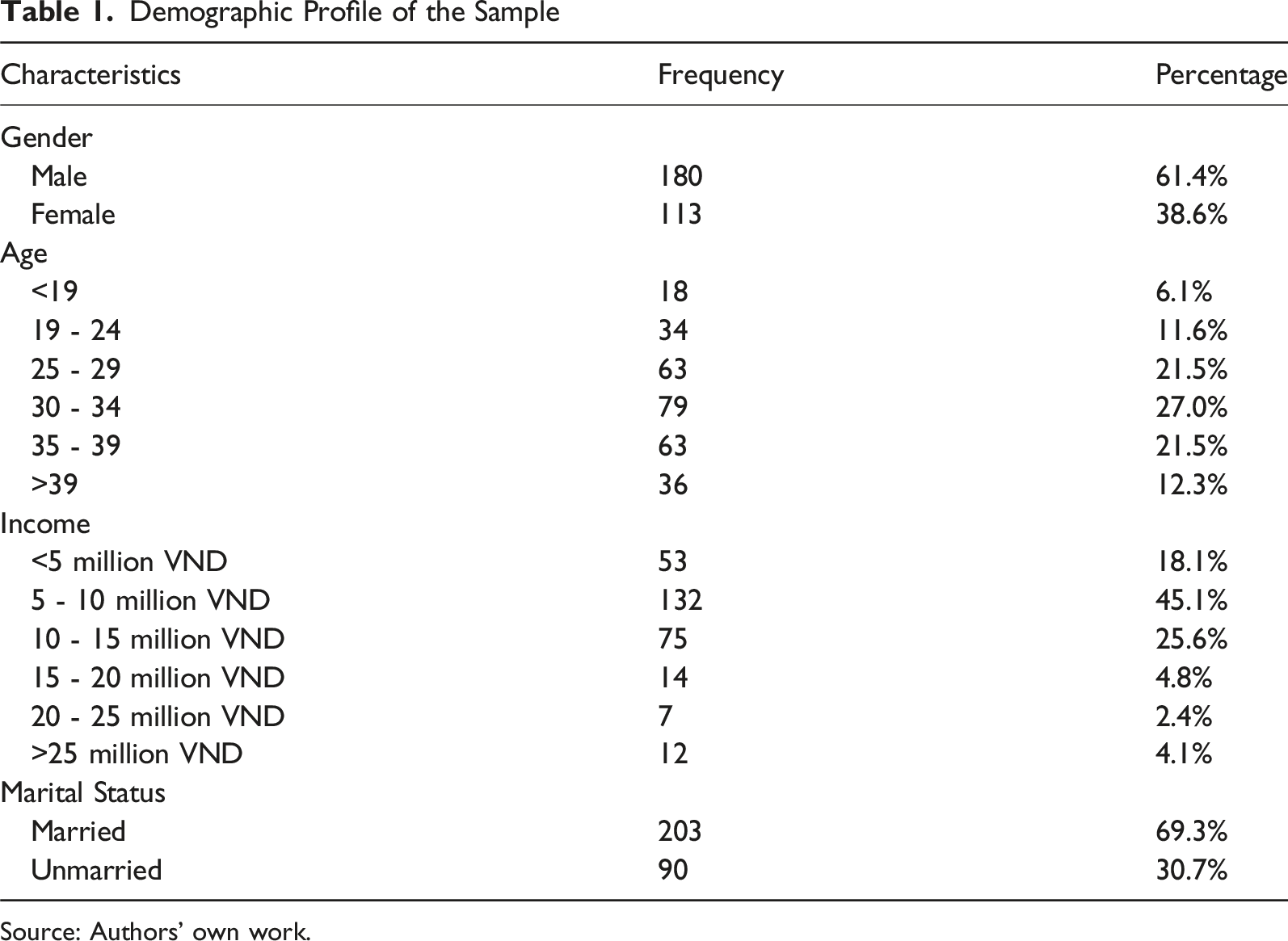
Demographic Profile of the Sample
Source: Authors’ own work.
This demographic profile of the sample reflects key characteristics of Vietnam’s urban middle-class population, which is the most responsible for rising consumption levels and environmental pressures (de Koning et al., 2015). Age distribution and income range of 5-15 million VND per month align closely with national statistics indicating that these groups constitute the largest proportion of urban consumers in major cities (General Statistics Office of Vietnam, 2024). Thus, the sample appropriately represents the population that differ in infrastructure accessibility, population density, and exposure to environmental campaigns (Lanzini, 2017).
Research Findings
Reliability and Validity of Measurements
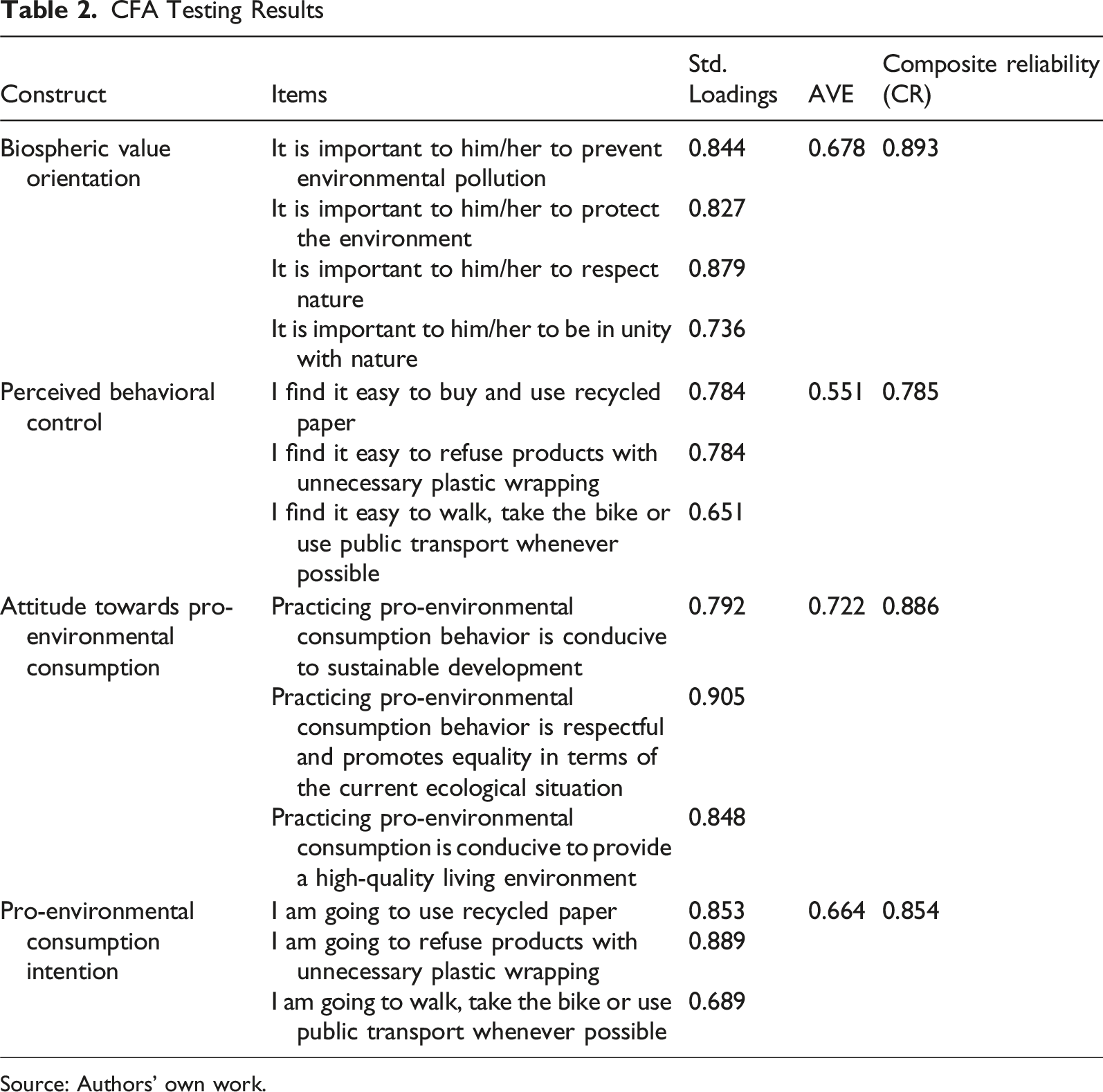
CFA Testing Results
Source: Authors’ own work.
The results also confirmed the reliability and validity of the measures. Standardized factor loadings of all measurement items exceed the practically adequate threshold value of 0.60. The composite reliability values are all greater than 0.70 (Hair et al., 2014). Meanwhile, the AVE values of each construct are higher than 0.5 and exceed its squared correlations with other constructs, verifying the measure discriminant validities.
Hypothesis Testing Results
Correlation Matrix
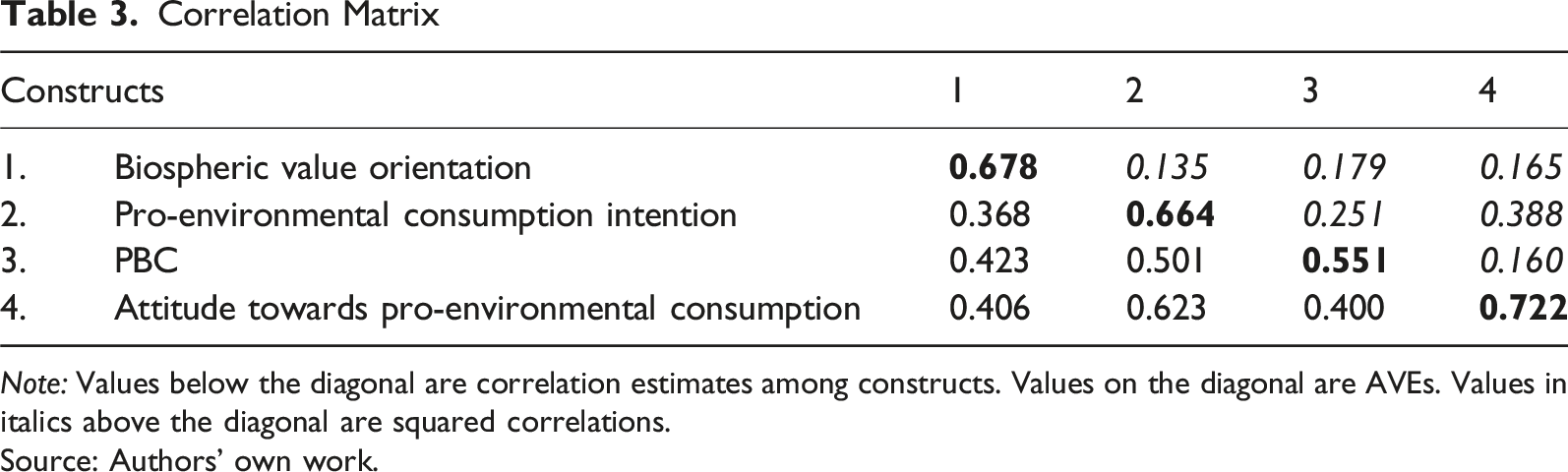
Note: Values below the diagonal are correlation estimates among constructs. Values on the diagonal are AVEs. Values in italics above the diagonal are squared correlations.
Source: Authors’ own work.
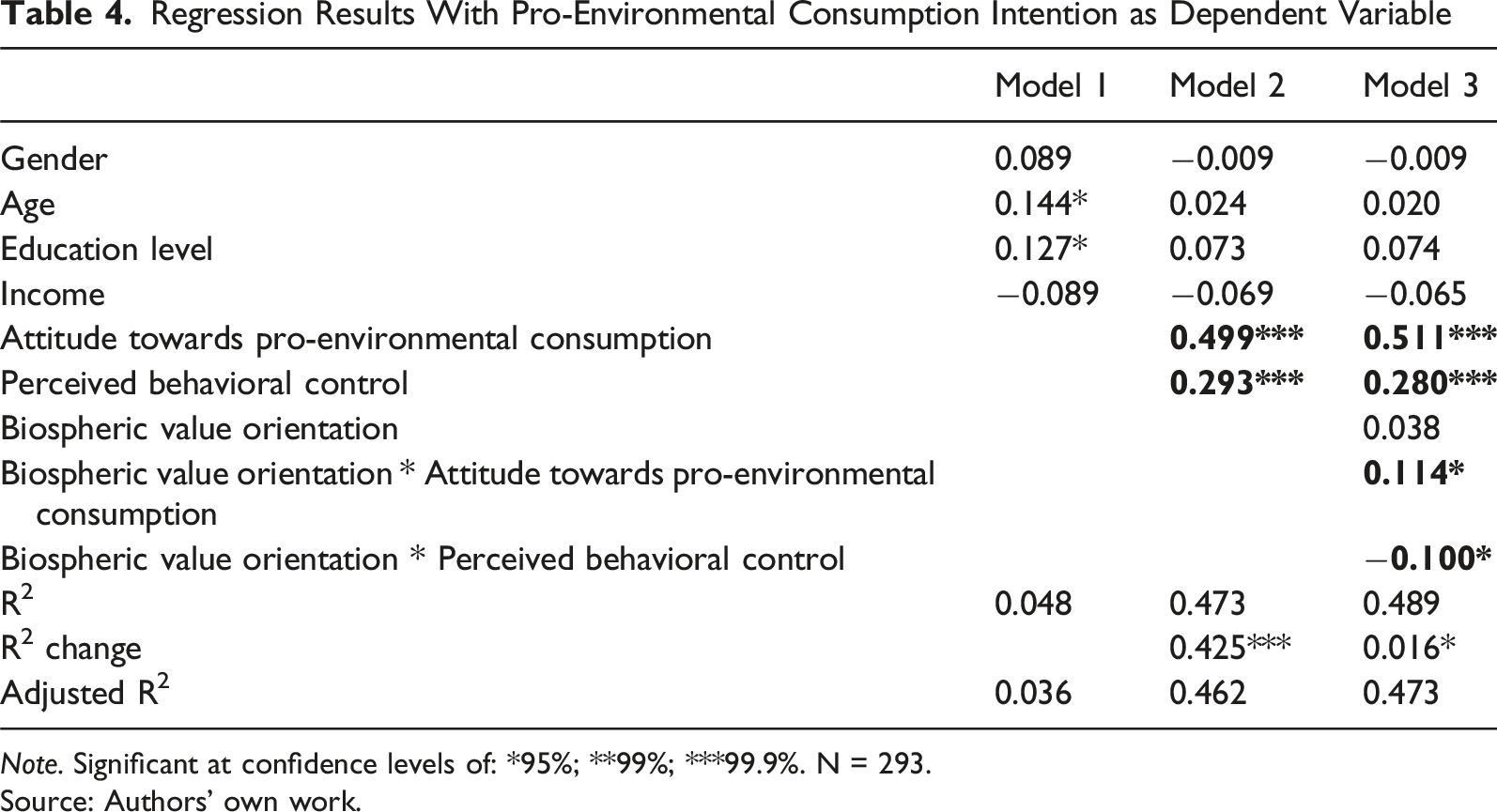
Regression Results With Pro-Environmental Consumption Intention as Dependent Variable
Note. Significant at confidence levels of: *95%; **99%; ***99.9%. N = 293.
Source: Authors’ own work.
Model 3, with the addition of BVO as a moderator, explained 48.9% of the variance in pro-environmental consumption intention (R2 = 0.489), representing a significant improvement over Model 2 (R2 change = 0.016; P-value <0.05). Attitude towards pro-environmental consumption is a significant determinant of pro-environmental consumption intention (β = 0.511; P-value <0.001), supporting H1. Perceived behavioral control is also a significant determinant predictor (β = 0.280; P-value <0.001), supporting H2.
As hypothesised, the interaction between BVO and attitude is significant and positive (β = 0.114; P-value <0.05), indicating the positive moderation effect of BVO, supporting H3. In contrast, the interaction between BVO and PBC is significant and negative, (β = −0.100; P-value <0.05), showing that BVO negatively moderated the PBC-intention relationship, supporting H4 (see Figure 2(a) and (b)). (a) The moderating effect of biospheric value orientation on attitude towards pro-environmental consumption intention relationship Source: Authors’ own work. (b) The moderating effect of biospheric value orientation on PBC-pro-environmental consumption intention relationship. Source: Authors’ own work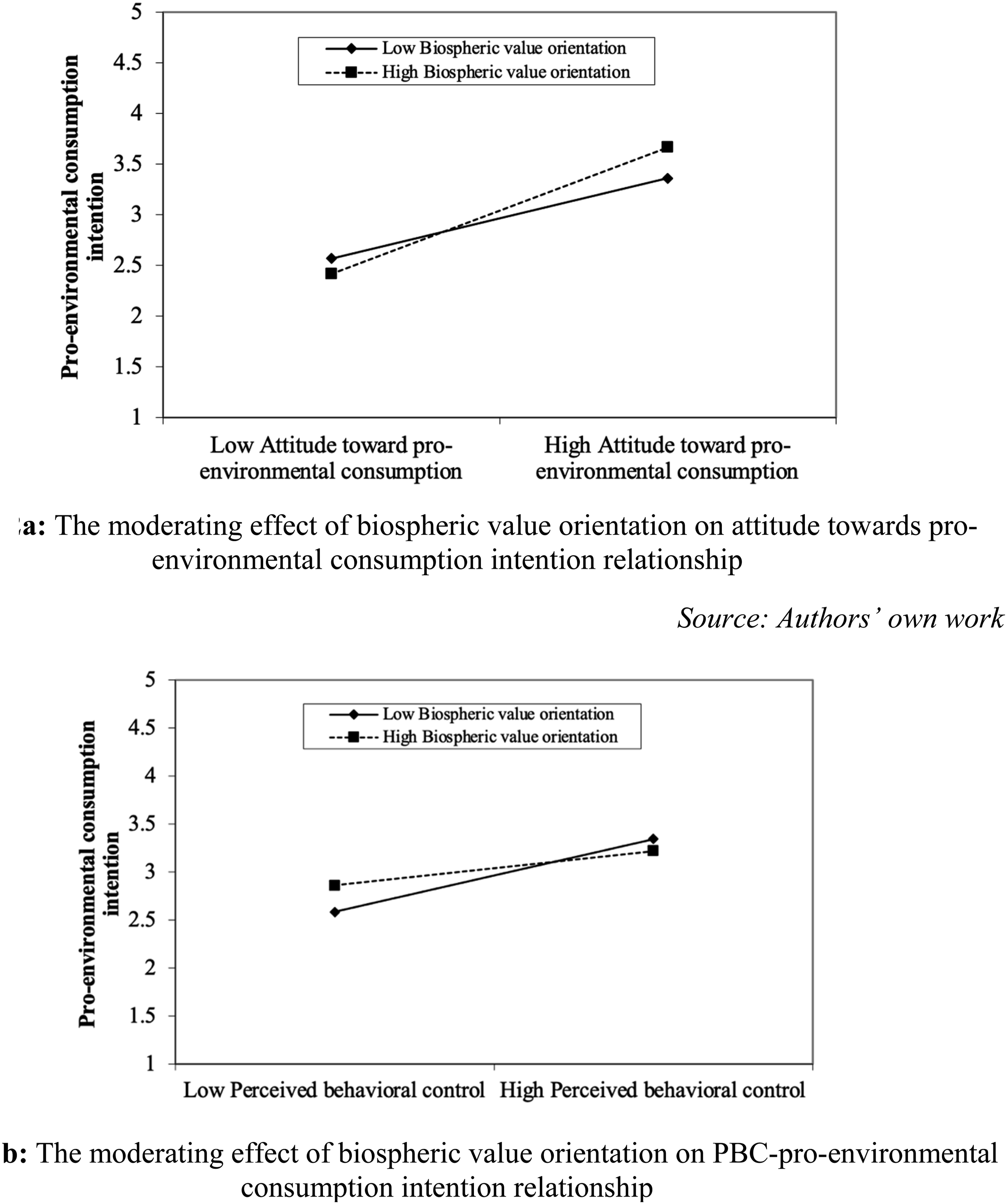
Discussion
Extending the TPB theory with personal value orientation, this study investigated how BVO moderates the relationships between the TPB predictors, namely attitude towards pro-environmental consumption, perceived behavioral control, and pro-environmental consumption intention. Overall, the findings are in line with previous studies about the positive association between consumers’ attitudes and pro-environmental consumption intention (Kim et al., 2020; Wei et al., 2017). The attitude towards pro-environmental consumption appears to be the strongest determinant of pro-environmental consumption intention. Perceived behavioral control is the second driver of pro-environmental consumption, supporting previous findings of Parveen and Ahmad (2020); Esfandiar et al. (2020), and Lee and Jan (2017). It demonstrates the importance of removing behavioral barriers in stimulating and diffusing pro-environmental consumption practices.
Interestingly, using recycled paper, refusing unnecessary plastic wrapping, and choosing public or active transport were intentionally selected because they represent everyday, low-cost, high-frequency behaviours that are widely targeted in social marketing and sustainability campaigns in Vietnam and globally (Nguyen et al., 2018; Trudel, 2019). These simple actions are considered gateway behaviours that can initiate or reinforce a broader pro-environmental lifestyle through spillover or habit formation (Nash et al., 2017; Thøgersen & Crompton, 2009). Furthermore, these behaviours are highly relevant in the Vietnamese urban context, where overconsumption of single-use plastics, limited waste sorting, and rapid motorisation have become major contributors to environmental degradation (de Koning et al., 2015; General Statistics Office of Vietnam, 2024). By focusing on these common and policy-relevant behaviours, the study responds to calls for contextually grounded, actionable insights for social marketing interventions in emerging markets.
Moreover, different from the extant literature (Geiger & Keller, 2018; Lee & Jan, 2017), BVO was not modelled as the direct or indirect predictor of pro-environmental consumption. Instead, the opposite moderating effects of BVO were revealed, demonstrating another nuanced picture of the value-behavior relationship. More specifically, the values moderated the influences of consumers’ attitudes and PBC on pro-environmental consumption intention in opposite directions. For consumers with strong BVO, pro-environmental consumption attitude had a stronger impact on their intention, but perceived behavioral control had a weaker one.
Theoretical Implications
Our findings advance the application of the TPB and the theory of human value in several ways. First, for the TPB, considering the moderating effects of personal values on relationships between TPB antecedents and behavioral intention or actual behaviors may enhance the predictive power of the model. As shown by the regression results in this study, the explanatory power of the model increases with the presence of BVO as a moderator.
Second, the findings of this study contribute to a clearer understanding of the attitude-intention gap within the TPB framework. While prior literature often refers to this as an “attitude-behaviour gap” (Wang, Shen, & Chu, 2021), our data allow us to comment only on the extent to which positive attitudes do or do not translate into pro-environmental consumption intentions. The moderating role of BVO provides insight into why some consumers with favourable attitudes form stronger pro-environmental consumption intentions than others. Specifically, individuals who prioritise environmental protection appear more likely to convert positive attitudes into intention despite perceived barriers.
Third, our findings also offer an alternative perspective on the value-intention relationship rather than the value-behaviour relationship. Prior research often conceptualises BVO as direct or indirect predictors of behaviour through attitudes (De Groot & Steg, 2008; Steg et al., 2014). Our results instead suggest that BVO acts as a moderator in the formation of intention: they strengthen the association between attitude and intention and weaken the reliance on perceived behavioural control.
Practical Implications
From a program-management perspective, the findings support the need for systematic evaluation of ongoing social marketing initiatives in Hanoi and similar cities. When campaigns focus primarily on providing information or convenience cues, they may improve perceived control but still fail to convert favourable attitudes into intention among segments with weaker biospheric values. Incorporating value-based segmentation and pre-testing message frames (e.g., moral identity, nature protection, intergenerational responsibility) can improve program efficacy and reduce expenditure on interventions that do not shift intention (Gkargkavouzi et al., 2019; Kim et al., 2020; Wei et al., 2017). For public agencies and NGOs, this implies that investments should be allocated not only to media reach but also to diagnosing motivational barriers and testing whether value-framed messages strengthen the attitude-intention relationship.
Our results also show that perceived behavioural control positively predicts pro-environmental consumption intention. Consumers are more likely to intend to take pro-environmental consumption behaviors when they feel capable of performing the behaviour or perceive fewer obstacles. Consequently, interventions should focus on reducing perceived barriers and improving the ease with which consumers can consider adopting environmentally friendly options. Examples include enhancing the accessibility, affordability, and visibility of pro-environmental alternatives, such as improving public transport infrastructure or increasing the availability of low-plastic and recycled products. These recommendations are consistent with research showing that infrastructural limitations and lack of accessible green options are major obstacles to forming pro-environmental consumption intention in developing-country contexts (de Koning et al., 2015; Nguyen et al., 2018).
Next, this study’s findings recommend strategies to strengthen BVO to supplement the influence of consumers’ attitudes on pro-environmental consumption, which help resolve the attitude-intention gap. However, personal values theoretically are assumed to be somewhat stable in adults (Stern & Dietz, 1994). The strength of values in adults may only be changed when they encounter significant and new experiences in life (Hansen et al., 2014; Lönnqvist et al., 2011), especially when these experiences occur for a long period (Bardi & Goodwin, 2011). Values in adults can also be changed by the models of people who are significant to them (Abrams et al., 1990). Meanwhile, shaping BVO requires long-term strategies grounded in early socialisation, for example, during childhood and adolescence, when cognitive frameworks, moral reasoning, and identity are still forming (Kahn and Kellert, 2002; Zelezny, 1999). Social marketing can still strengthen value salience in decision moments through identity-based prompts, normative feedback tied to moral meaning, and community stewardship experiences, especially among younger cohorts. Therefore, social marketing efforts that aim to foster stronger BVO should prioritise value-based environmental education programs integrated into school curricula and community youth activities. Effective approaches include hands-on environmental stewardship projects, schoolyard nature restoration, or child-led recycling initiatives that links children’s actions to pro-environmental outcomes. Social marketing practitioners should collaborate with educators to design programs that frame environmental care as part of children’s positive self-identity, as identity-relevant messaging is shown to strengthen long-term value internalisation (Clayton, 2003). In addition, family-based interventions such as parent-child shared green routines and household behaviour pledges can reinforce environmental values established in school settings, as children often influence adults through “reverse socialisation” (Meeusen, 2014). Together, these strategies reflect actionable pathways through which social marketing can meaningfully support the development of BVO that persists into adulthood.
Limitations and Future Research Directions
There are some limitations in our study. The first one is the survey-based research approach, which has been admitted among scholars. Although survey-based research design has been commonly used to test and extend the application of theories, future studies should utilize other methods to retest the generalizability of our findings. Second, while our study reveals the moderating role of BVO on the effect of TPB components, future research should further examine the research idea by investigating other personal values or cultural values. Also, the idea of this study can be applied to explain behaviors in other domains like prosocial and antisocial behaviours, political behaviours, or health behaviours. Third, since the idea of this study was examined and supported by the data from consumers in Vietnam, a developing country, it is therefore important for further research to apply the present theoretical framework in other contexts to shed light on effective ways to promote pro-environmental consumption culture. Finally, whilst the sampling technique in the present study is expected to enhance the diversity of the sample, the randomness of such a technique could be questioned. Thus, other sampling methods with more probability should be utilized by future research to retest the generalizability of the current research findings.
To conclude, the present study furthers extant knowledge in pro-environmental consumption literature by investigating the moderating effect of BVO on the relationships between TPB predictors and pro-environmental consumption intention. The confirmed moderating effect of BVO provides meaningful managerial implications for fostering pro-environmental consumption and narrowing the attitude-behavior gap. Also, the core findings contribute to the extension of TPB theory and value-behaviour relationship theories in understanding human behaviors.
Footnotes

Ethical Considerations
Our institution (National Economics University) does not require ethics review board approval for research conducted by staff and students. However, in our research, human participants were provided with written consent forms and assured of their anonymity, ensuring adherence to ethical standards. Participants were informed of their right to withdraw at any point without repercussions.
Funding
The authors received no financial support for the research, authorship, and/or publication of this article.
Declaration of Conflicting Interests
The authors declared no potential conflicts of interest with respect to the research, authorship, and/or publication of this article.
Data Availability Statement
The data that support the findings of this study are available from the corresponding author upon reasonable request.