






Abstract
Background
Nicotine consumption among young adults remains a critical public health concern despite advances in tobacco control. The rapid rise of e-cigarettes and heated tobacco products has introduced marketing practices that frame nicotine use as modern, innovative, and less harmful. These strategies often leverage cognitive biases and digital environments to appeal to younger audiences, contributing to the normalization of nicotine consumption and challenging prevention efforts.
Focus of the Article
This manuscript reports Research and Evaluation emphasizing target audience orientation, competition, and behavior change. It examines how commercial marketing strategies exploit cognitive biases to influence perceptions and decision-making, and how these mechanisms can inform social marketing responses. By integrating behavioral economics and social marketing, the study contributes to understanding how marketing shapes health-related behaviors.
Research Question
The study investigates how cognitive biases embedded in marketing for new nicotine delivery devices influence young adults’ perceptions, evaluations, and decision-making processes. It explores which biases—such as framing, halo/horn, decoy, and zero-price effects—most strongly shape perceived risk and product attractiveness.
Program Design/Approach
A social marketing lens is applied to analyze how commercial “competition” operates through cognitive mechanisms that shape behavior. Marketing mix elements—including product design, promotional strategies, pricing structures, and digital environments—are examined as interacting components that reinforce biased perceptions and normalize nicotine use among young adults.
Importance to the Social Marketing Field
This study advances social marketing theory by conceptualizing cognitive biases as a form of “competition” that influences behavior. It provides a framework for understanding how marketing communication shapes decision-making and offers insights for developing more effective counter-marketing and public health interventions.
Methods
A qualitative, exploratory design was employed with 15 young adults aged 22–28 in Spain. Participants were recruited through university networks and social media. Semi-structured interviews explored perceptions of nicotine marketing, awareness of persuasive strategies, and behavioral responses. Data were analyzed using reflexive thematic analysis.
Results
Participants demonstrated awareness of persuasive marketing tactics but remained influenced by them. Marketing emphasizing design, innovation, and reduced harm activated multiple cognitive biases—particularly framing, halo effects, and decoy mechanisms—leading to more favorable evaluations and reduced perceived risk. A key finding is the tension between awareness and influence, where recognition of manipulation does not necessarily translate into resistance.
Recommendations for Research or Practice
Social marketing interventions should move beyond information provision and explicitly address the cognitive biases embedded in commercial marketing. Strategies that reframe risk, disrupt misleading associations, and account for heuristic processing may enhance the effectiveness of counter-marketing and regulatory approaches.
Limitations
As a qualitative study, findings are not statistically generalizable. The sample is limited to Spanish young adults and relies on self-reported experiences. Future research could employ mixed-method approaches and cross-cultural designs to extend these findings.
Keywords
Introduction
Tobacco, with nicotine as its primary addictive component, remains one of the most hazardous yet legally available products worldwide. Although newer nicotine delivery systems—such as e-cigarettes and heated tobacco products—are often perceived as less harmful, nicotine remains highly addictive and associated with significant health and social risks, while the long-term effects of these products remain uncertain (Feeney et al., 2022; Miller et al., 2023).
In many developed countries, restrictions on tobacco advertising have coincided with the promotion of novel nicotine delivery devices such as IQOS, MyBlu, Juul, and GLO (Huang et al., 2018). The rapid diffusion of these products poses significant public health challenges, particularly among young people.
Marketing strategies for these products increasingly leverage cognitive biases and limitations in consumer decision-making (Siegel et al., 2021; Yang et al., 2023). Research shows that marketing can exploit framing, nudges, and decision architecture to shape perceptions and choices in health-related contexts, including tobacco and nicotine products (Reed et al., 2021; Tanner et al., 2022). Understanding these mechanisms is critical because they may contribute to risk misperceptions and the normalization of nicotine use among young adults (Noar et al., 2022; Wackowski et al., 2022; Yang et al., 2023).
This study examines how marketing communications for next-generation nicotine products incorporate cognitive biases and how these influence young adults’ perceptions and decision-making.
Despite growing research on nicotine marketing, existing studies have primarily focused on marketing strategies, exposure, and behavioral outcomes. Less attention has been paid to the cognitive mechanisms through which these strategies shape perceptions and decisions, particularly within a social marketing framework. Addressing this gap, the study adopts an integrated social marketing and behavioral economics perspective to examine how marketing communications leverage cognitive biases to influence young adults, and how these processes may function as a form of “competition” that challenges public health efforts.
Literature Review
Marketing Strategies for the Next Generation of Nicotine Products
Nicotine remains the primary addictive component of tobacco products and is associated with substantial health risks. In recent years, the tobacco landscape has evolved through the rapid diffusion of e-cigarettes and heated tobacco products, which are frequently marketed as reduced-risk alternatives despite containing nicotine and having uncertain long-term health consequences (Glantz, 2019; Hori et al., 2021; McDermott et al., 2023).
In many countries, smoking remains a pressing public health concern, and emerging nicotine consumption technologies such as e-cigarettes and heated tobacco products have intensified debate within the public health community (Fauzi & Areesantichai, 2022). The e-cigarette market now includes hundreds of brands (Subramaniam et al., 2023), and flavored products together with perceptions of lower harm have contributed to widespread adoption (Harrell et al., 2024). Marketing expenditures have grown rapidly (Collins et al., 2018), emphasizing sleek design, social media influencers, and direct digital engagement (Collins et al., 2018; A. E. Kim et al., 2014). Such campaigns frequently frame these products as innovative and reduced-harm alternatives, linking nicotine consumption to identity and lifestyle, particularly among young adults (Huang et al., 2018).
Although some jurisdictions have begun regulating these products similarly to cigarettes, regulation often lags behind industry innovation (Glantz, 2018). This enables companies to expand their market share among adolescents and young adults (Ackary et al., 2025; Berg et al., 2014; Ling et al., 2022). From a social marketing perspective, these dynamics represent a form of “competition,” whereby commercial marketing promotes behaviors that conflict with public health goals while shaping social norms and perceptions that may undermine efforts to reduce nicotine consumption (Almestahiri et al., 2017; Christensen et al., 2022; Fitzpatrick et al., 2022; Hastings, 2003).
Cognitive Biases, Marketing Communication, and Perceptions of New Devices
While marketing strategies for next-generation nicotine products increasingly emphasize innovation, reduced harm, and lifestyle appeal, their societal implications extend beyond individual consumption choices. The social costs of nicotine use include health consequences, healthcare expenditures, productivity losses, and the normalization of nicotine consumption among younger populations, increasing vulnerability to addiction and long-term public health harms (Jordt & Jabba, 2024; Ling et al., 2023; Lyu et al., 2025).
Understanding these outcomes requires moving beyond traditional rational-choice models and examining the cognitive processes through which individuals interpret marketing communications. Exposure to nicotine advertising can distort perceptions of risk and addictiveness, particularly when products are framed as safer or socially desirable alternatives (Tosakoon et al., 2023). Behavioral research shows that decision-making is often shaped by cognitive biases rather than purely rational evaluation (Tversky & Kahneman, 1974; Zhang, 2022), and that commercial marketing actively leverages these biases to influence consumer perceptions and choices (Dowling et al., 2019; Peón et al., 2017; Rockloff & Hing, 2012).
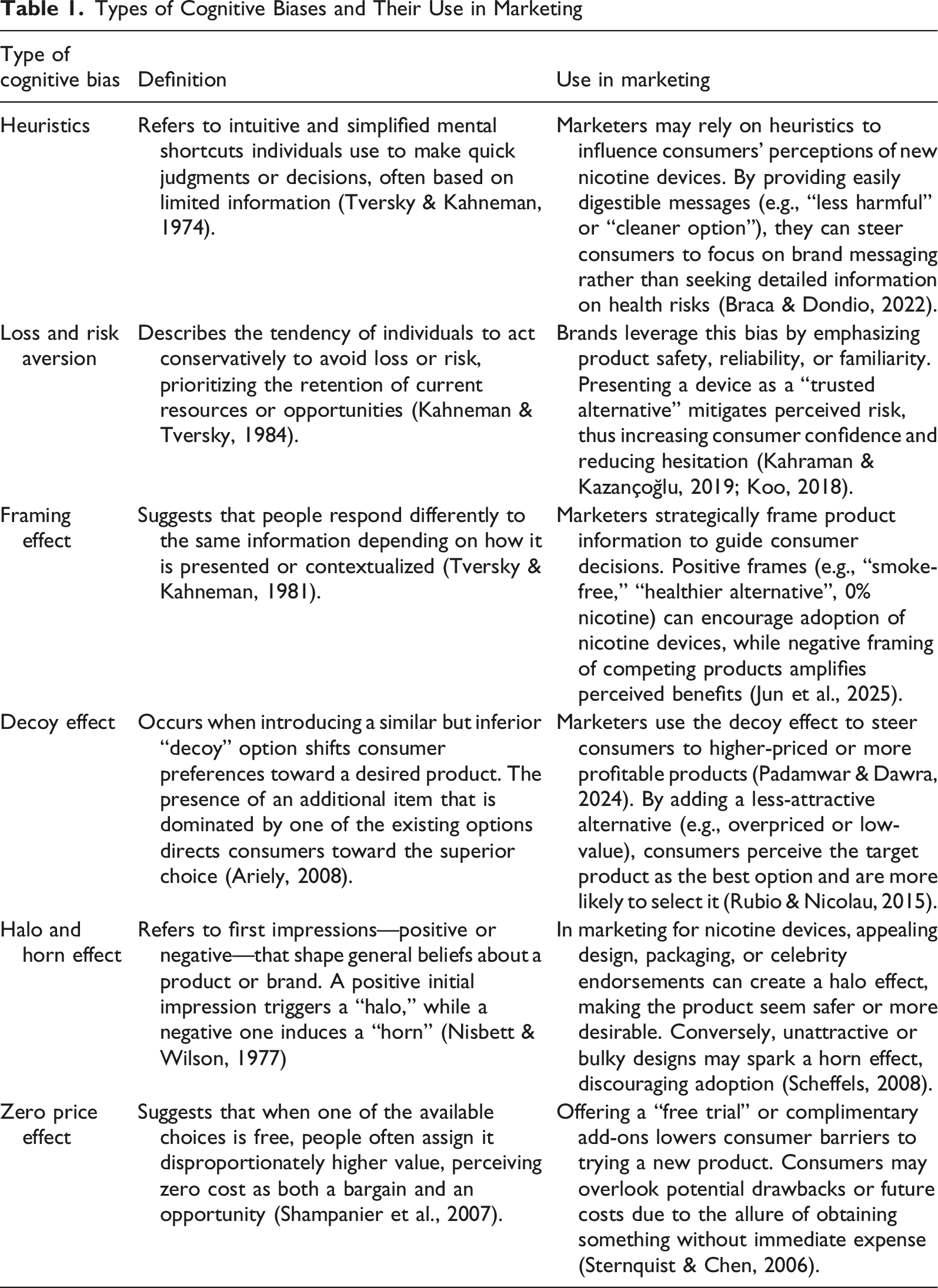
Young consumers appear particularly susceptible to such influences, making the prevention of early nicotine uptake a public health priority (Isip & Calvert, 2020; Marron, 2017). Marketing messages that frame products as “cool,” “modern,” or “less harmful” may distort perceptions of risk and social acceptability (Isip & Calvert, 2020; Marron, 2017). The literature identifies several key biases commonly exploited by nicotine marketers: • Framing Effect – Positive framing (e.g., “reduced harm,” “clean vapor”) enhances favorable evaluations (Marron, 2017; Tversky & Kahneman, 1974). • Loss and Risk Aversion – Consumers gravitate toward perceived “safer” brands to minimize uncertainty (Isip & Calvert, 2020; Marron, 2017). • Decoy Effect – Adding an inferior option increases the appeal of a target product (Almodarresi & Rasty, 2019; Ariely, 2008). • Halo and Horn Effect – Aesthetic design or celebrity endorsement shapes perception of quality and safety (Ermeç, 2022; Mishra et al., 2016). • Zero Price Effect – Free samples and promotional offers lower resistance to trial (Ariely & Shampan’er, 2007).
Types of Cognitive Biases and Their Use in Marketing
Digital and Social Media Marketing: Youth Appeal and Regulatory Gaps
Digital environments have become a primary arena for nicotine marketing. Platforms such as Instagram, TikTok, YouTube, and Snapchat allow brands to reach young audiences through visually engaging, peer-driven content, while influencer partnerships and lifestyle storytelling create aspirational brand identities (Cheney et al., 2015; M. Kim et al., 2020; Ling et al., 2023).
These strategies may activate cognitive biases such as the Bandwagon Effect and Confirmation Bias, reinforcing product attractiveness and social acceptability (Corsello et al., 2025; Watts et al., 2024). Endorsements by cultural icons further enhance product credibility (Jackler & Ramamurthi, 2019). At the same time, regulation in digital spaces remains inconsistent, allowing tobacco and e-cigarette brands to exploit influencer marketing, social media content, and flavor-based appeals targeted at younger audiences (Harrell et al., 2024; Huang et al., 2018; Marynak et al., 2021; Romijnders et al., 2018).
These developments illustrate how digital marketing ecosystems reinforce cognitive biases and contribute to the normalization of nicotine use. From a social marketing perspective, these dynamics represent a complex form of competition, where commercial messages shape behavior through both social influence and cognitive mechanisms.
Although adolescents are widely recognized as particularly vulnerable, young adulthood represents a critical transitional stage in which consumption patterns, risk perceptions, and brand preferences become consolidated (Fielding-Singh et al., 2020; John et al., 2024; Shadel et al., 2001).
Despite growing research on nicotine marketing, comparatively less attention has been paid to the cognitive mechanisms through which marketing communications influence perceptions and decision-making, particularly from a social marketing perspective (Almestahiri et al., 2017; Glantz, 2019; McDermott et al., 2023). Addressing these gaps, the present study adopts a social marketing and behavioral economics perspective to examine how marketing communications for next-generation nicotine products leverage cognitive biases and shape young adults’ perceptions and decision-making, with particular attention to contemporary digital marketing contexts.
Research Questions
Drawing on the preceding literature review, the present study is guided by the following research questions:
Taken together, this theoretical perspective highlights the role of cognitive biases as key mechanisms through which marketing communications shape young adults’ perceptions and decision-making regarding nicotine products. From a social marketing perspective, understanding these processes is essential to identify how commercial practices may influence behavior and challenge public health efforts. This provides the foundation for the empirical investigation that follows.
Research Design and Rationale
A qualitative exploratory design was adopted to examine how young adults perceive and respond to marketing communications for new nicotine delivery devices, with particular attention to cognitive biases. This approach is appropriate for investigating complex decision-making processes and the social and subjective dimensions of behavior (Tisdell et al., 2025).
Participant Recruitment and Sampling
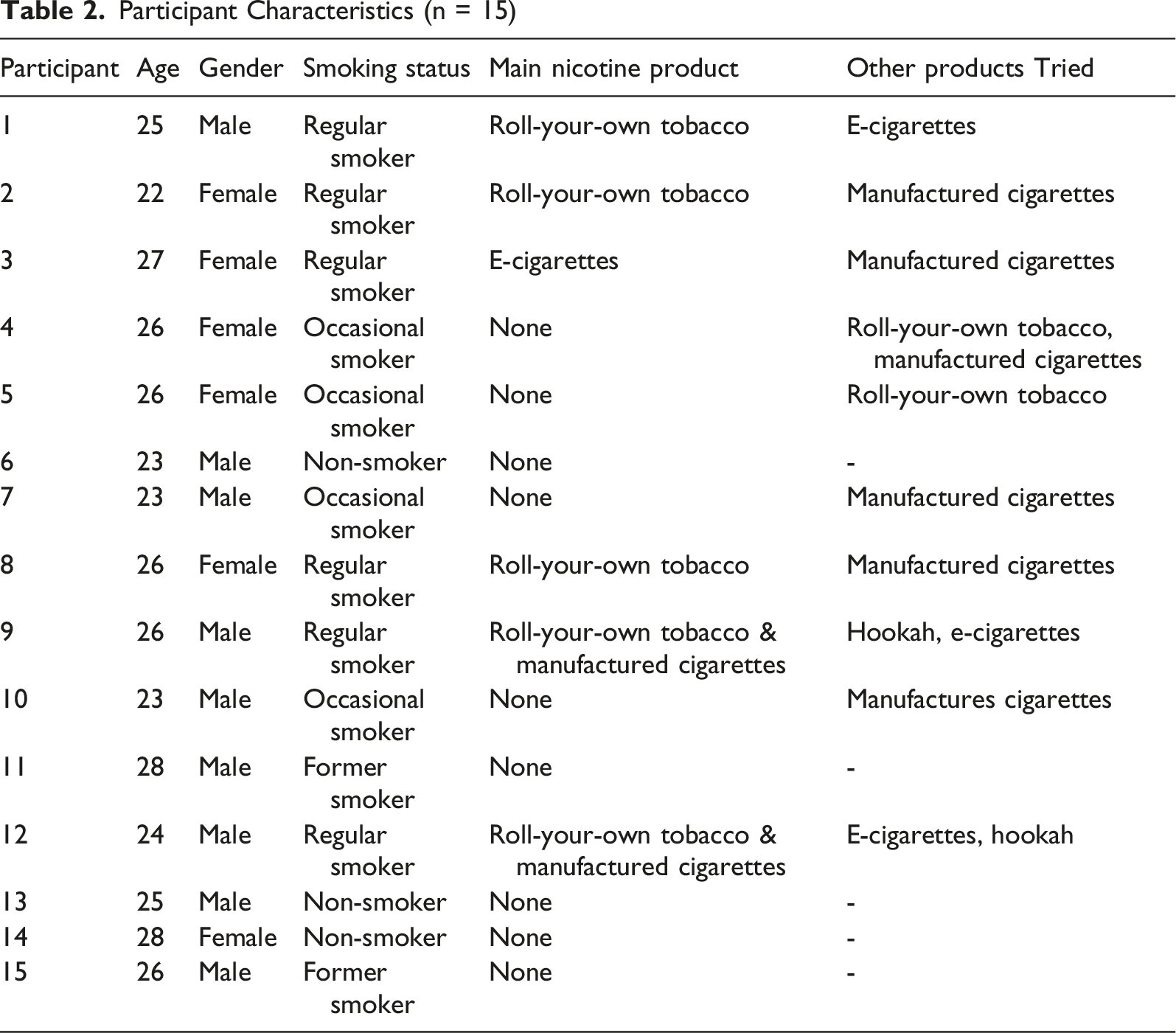
Participant Characteristics (n = 15)
Inclusion criteria included: (1) age between 22 and 28; (2) fluency in Spanish; and (3) willingness to discuss personal attitudes and behaviors related to nicotine. Exclusion criteria included being under 22 or over 28 years of age, or expressing discomfort discussing nicotine-related topics.
Recruitment and data collection proceeded concurrently until thematic saturation was reached, defined as the point at which no substantively new themes emerge (Hennink & Kaiser, 2022).
Data Collection Procedures
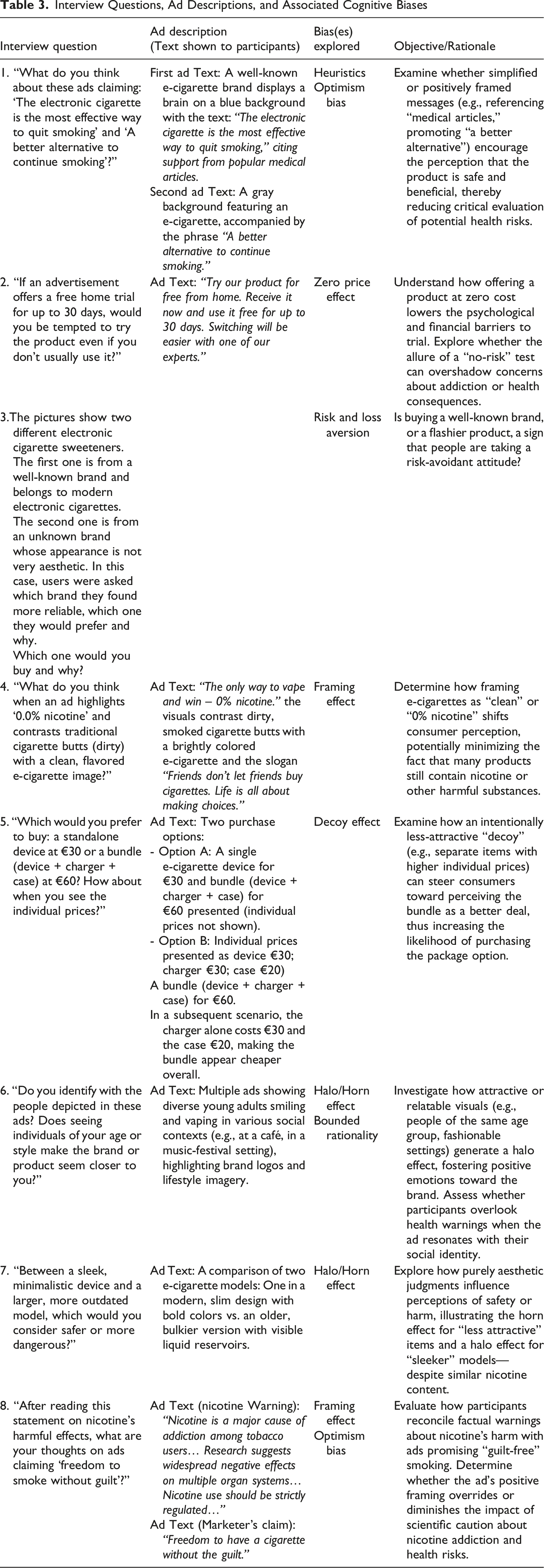
A semi-structured interview guide was developed based on the literature on tobacco marketing, cognitive biases, and youth smoking behavior. The guide explored four areas: (1) nicotine use history and contexts of consumption; (2) perceptions of new nicotine delivery devices; (3) exposure and reactions to marketing communications; and (4) responses to advertising stimuli designed to elicit cognitive biases such as framing, decoy, and halo effects.
The guide was pilot-tested with three volunteers who were not included in the final sample, resulting in minor refinements to question wording and interview flow.
Interview Questions, Ad Descriptions, and Associated Cognitive Biases
In-depth interviews were conducted online via Google Meet and lasted between 30 and 45 minutes. All interviews were conducted by the lead researcher, audio-recorded with participant consent, and transcribed verbatim. Prior to participation, respondents were informed about the study objectives, confidentiality measures, and their right to withdraw at any time. Field notes were recorded during and after interviews to support data interpretation.
Data Analysis
Data were analyzed using reflexive thematic analysis (Braun & Clarke, 2006) supported by NVivo 12 Plus. Analysis combined deductive codes informed by the literature on cognitive biases (e.g., framing effects, decoy effects) with inductive codes emerging from participants’ accounts (e.g., “feeling misled,” “cool factor,” and “fear of missing out”). Codes were iteratively grouped into themes and subthemes, which were reviewed and refined through ongoing discussions among the research team. Themes were then defined in relation to the research questions and interpreted within the broader frameworks of bounded decision-making and social marketing.
The advertisements shown to participants were also subjected to focused content analysis to identify verbal and visual elements associated with cognitive biases, including slogans, imagery, color schemes, and promotional offers (Krippendorff, 2026). Findings from this analysis were compared with participants’ interpretations to identify areas of convergence and divergence.
Trustworthiness and Rigor
Trustworthiness was ensured following Lincoln and Guba’s (1985) criteria. Credibility was enhanced through triangulation of interview data and advertising materials, as well as participant validation of preliminary interpretations. Dependability and confirmability were supported through an audit trail, reflexive journaling, and regular discussions among the research team regarding coding and theme development. Transferability was addressed through detailed contextual descriptions of participants, data collection procedures, and analytical decisions.
Ethical Considerations
This study adhered to the ethical standards established by ESOMAR (2022) and the Market Research Society (2021). In accordance with Spanish regulations and institutional guidelines for non-invasive social research involving adults, formal ethics committee approval was not required. Participants received information about the study objectives, confidentiality measures, and their right to withdraw at any time, providing informed consent prior to participation. All data were anonymized, securely stored, and handled in accordance with professional standards for confidentiality and participant protection.
Results
Contextual Foundations: Nicotine Use, Social Contexts, and Initial Perceptions
Participants reported diverse patterns of nicotine use, with six identifying as regular smokers, four as occasional or social smokers, two as ex-smokers, and three having never smoked. Most preferred roll-your-own tobacco over manufactured cigarettes, and several reported using hookah in social settings. While daily e-cigarette use was uncommon, a few participants had experimented with vaping in casual contexts.
A common thread across experiences was the strong social dimension of nicotine initiation and maintenance. Thirteen participants recalled trying tobacco for the first time with friends, often in group settings such a
“I started rolling cigarettes because my friends were doing it when we went out. It was mostly about being part of that group. Back then, I didn’t think about health or addiction, it was just… having fun and fitting in.” (Participant 2, female, 22, regular smoker).
Emotional factors also shaped nicotine behavior, with stress, boredom, and sadness frequently cited as triggers. Many participants described smoking or vaping not only as nicotine consumption but as a coping practice embedded in everyday routines, providing a temporary sense of calm and detachment from daily pressures. As one participant remarked:
“I smoke socially, but also when I’m stressed about exams. I feel like it gives me a break. It’s not really the nicotine, it’s more the action of stepping away from my desk and breathing differently.” (Participant 6, male, 23, non-smoker).
At the same time, participants’ accounts revealed a degree of ambivalence. While social and emotional factors reinforced nicotine use, they also coexisted with moments of discomfort or resistance. Even non-smokers acknowledged nicotine’s emotional pull as expressed by their peers, though they personally refrained due to health concerns or family histories of tobacco-related illness.
This ambivalence became particularly visible in context-dependent situations. For example, smoking in enclosed spaces -particularly around strangers-was often viewed as unpleasant, even by those who smoked socially. As one participant explained:
“I get annoyed if a random person smokes close to me in a closed space, but if it’s my friend group, it’s different—I actually feel tempted to join.” (Participant 7, male, 23, occasional smoker).
This contrast highlights how nicotine-related behaviors are not stable preferences but fluctuate depending on social proximity and situational cues, suggesting that the same individual may simultaneously resist and engage in consumption depending on context.
When considering newer nicotine devices like e-cigarettes and heated tobacco products, participants’ attitudes ranged along a continuum—from viewing them as helpful alternatives to seeing them as misleading or equally harmful. Some participants praised their use in quitting traditional cigarettes, especially highlighting modern designs and appealing flavors. Participant 3 (female, 27, regular smoker) commented, “I switched to e-cigs because I thought it would help me quit. I like the flavors, it’s less harsh than normal cigarettes, and it just feels cleaner.” Others, however, expressed skepticism toward such claims.
However, this positive framing was not uncontested. Other participants expressed skepticism toward such claims, questioning whether these perceptions were driven more by marketing than by actual health benefits. As one ex-smoker stated:
“They say it’s healthier, but I’m not sure if that’s just the ads talking. You still get nicotine, so it’s probably not that harmless.” (Participant 11, male, 28, former smoker).
Visual appeal played a major role in shaping perceptions. Many participants were drawn to the aesthetics of new devices—described as having “cool packaging,” “stylish shapes,” and “fresh colors”—especially when compared to traditional cigarette packs. This influence extended to advertising as well. As one participant observed:
“They look so futuristic… You see these sleek gadgets and it’s like, ‘Wow, that’s modern.’ It almost makes you forget it’s still tobacco.” (Participant 8, female, 26, regular smoker).
At the same time, a parallel narrative of distrust emerged. Some participants explicitly questioned marketing tactics that emphasize terms such as “zero tar” or “ash-free” while omitting reference to nicotine content. As Participant 14 (female, 28, non-smoker) noted, “I see e-cig ads saying, ‘Zero tar, zero ash,’ but they never shout about the nicotine. It feels sneaky. I think a lot of people get confused.”
Cognitive Biases in Advertising: Framing, Risk, and Perceived Reduced Harm (RQ1, RQ3)
This section examines how cognitive biases embedded in marketing communications shape young adults’ perceptions of harm and product attractiveness in relation to new nicotine delivery devices. During the interviews, participants reacted to a range of advertisements that employed persuasive tactics such as framing, risk aversion, decoy pricing, halo effects, and zero-price offers. Their responses revealed, often simultaneously, both awareness of, and susceptibility to, these strategies, highlighting the role of limited rationality in consumer decision-making.
Several participants displayed a clear preference for familiar brands over unfamiliar ones, even when the latter offered lower prices. Known brands, often presented with more appealing designs and perceived credibility, were trusted more readily. One participant explained, “I would not venture into a new brand,” (Participant 4, female, 26, occasional smoker). Another explained “I believe in the known brand because I am familiar with it, and for an extra €1, I prefer to buy something of quality.” (Participant 10, male, 23, occasional smoker). This pattern illustrates risk aversion, where consumers lean toward options that feel safer or more predictable, even when cheaper alternatives are available. However, this preference was not always based on objective product differences, but rather on perceived familiarity and trust cues embedded in marketing presentations.
The framing effect also emerged prominently, particularly in response to product descriptions such as “0.0% nicotine” or “clean smoking.” These phrases triggered positive emotional responses, even among non-smokers. Participant 5 (female, 26, occasional smoker) observed, “Seeing ‘0.0% nicotine’ in big letters just makes me think it’s not addictive at all… the ad just feels reassuring.”
At the same time, participants frequently questioned the credibility of such claims, indicating an awareness of potential manipulation. While most participants acknowledged that such claims might be misleading, they admitted the language still made the products seem more attractive. This reveals a tension between cognitive evaluation and affective response, where reassurance cues continued to shape perceptions despite conscious skepticism. Many contrasted these ads with traditional cigarette messaging, noting that the newer devices were framed as modern, sleek, and even health-conscious alternatives.
The halo effect further influenced judgments based on device aesthetics. Participants tended to view sleek, modern-looking products as safer or cleaner, despite recognizing that nicotine content was likely similar. As one participant admitted:
“I’m drawn to the smaller one just because it looks nicer. It doesn’t scream chemicals. But logically, they’re probably both equally risky” (Participant 1, male, 25, regular smoker).
This suggests that visual design cues can override more analytical assessments of risk, reinforcing intuitive rather than deliberative decision-making.
The zero-price effect also significantly shaped perceptions of risk. Many participants were enticed by advertisements offering free 30-day trials and acknowledged that the absence of cost increased their willingness to try the product. As one participant commented:
“If it’s free, why not? I’d give it a go… though knowing me, I might end up hooked after 30 days. That’s how they get you” (Participant 12, male, 24, regular smoker).
Interestingly, even when participants explicitly recognized the potential long-term risks or manipulative intent behind these offers, the immediate attractiveness of “free” reduced perceived barriers to trial.
Collectively, these insights illustrate how cognitive biases embedded in advertising can shape consumer choices in ways that may bypass deliberate, fully rational evaluation. Rather than operating in isolation, these biases appear to interact, reinforcing one another and creating a persuasive environment in which positive product attributes are amplified while potential risks are downplayed. Even when participants recognized the manipulative nature of the ads, many still described feeling drawn to the products. This tension between awareness and influence underscores the potency of cognitive bias in marketing and the need for critical engagement with persuasive health-related messaging.
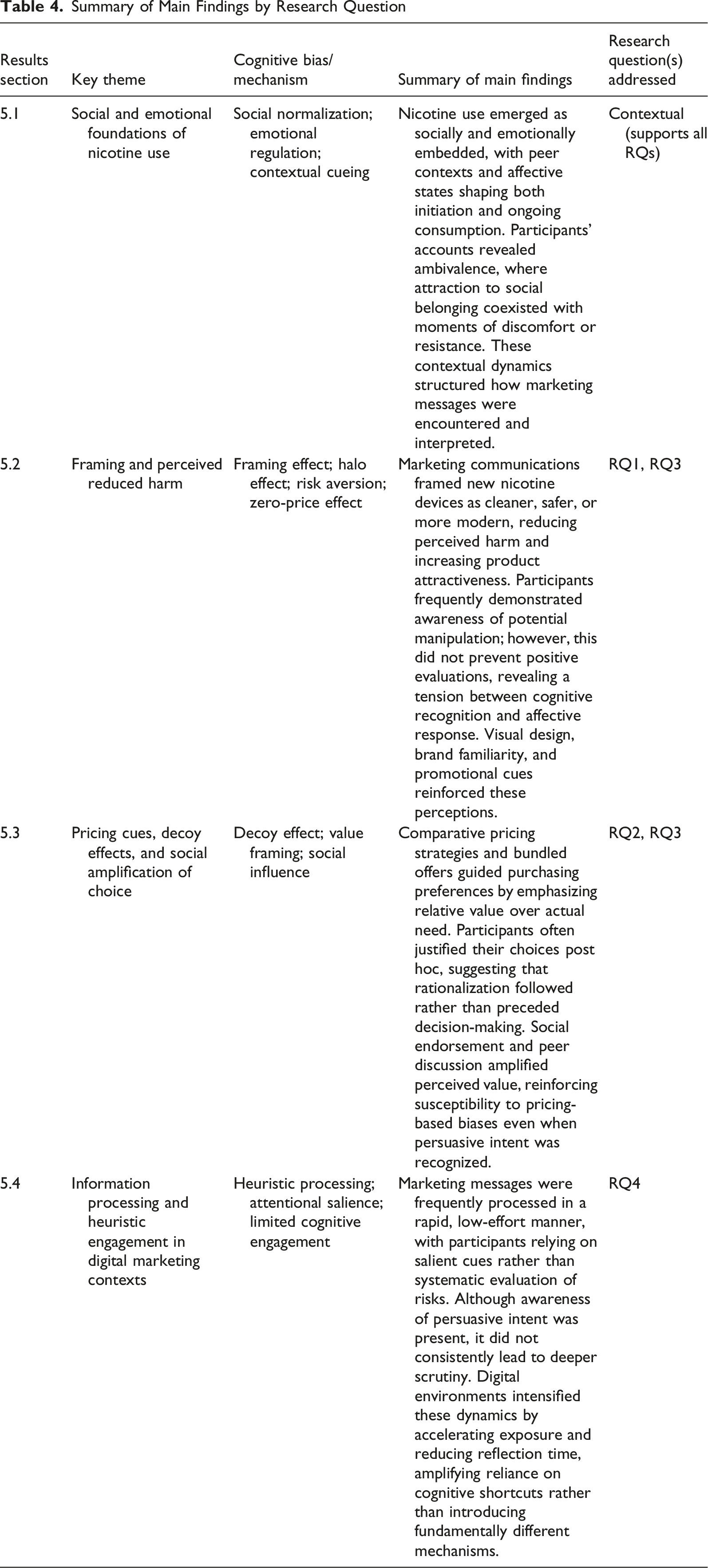
This theme primarily addresses RQ1 by illustrating how marketing strategies incorporate framing biases to influence perceptions, and RQ3 by highlighting the strength of framing in shaping perceived harm and attractiveness.
Pricing Cues, Decoy Effects, and Social Amplification of Choice (RQ2, RQ3)
This section examines how comparative pricing strategies activate decoy effects that shape young adults’ purchasing preferences and the ways in which these choices are subsequently justified. When presented with product bundles positioned alongside comparatively overpriced individual components, participants frequently selected the bundled option, perceiving it as a better deal even when not all components were necessary. As one participant explained:
“At first, I wanted the single product for 30 euros… but once I realized the charger alone was also 30, the 60-euro bundle looked like a deal. I’m not even sure if I really need the case, but it feels like a bargain.” (Participant 5, female, 26, occasional smoker).
Similar patterns emerged across interviews, with participants describing how explicit price comparisons prompted a re-evaluation of value. Another participant noted that once individual prices were made salient, the bundled option appeared economically advantageous, even framed as a gain:
“The portable charger costs 30 euros and the case costs 20. I would buy the bundle because it feels like they’re basically giving me 20 euros for free.” (Participant 15, male, 26, former smoker).
These accounts illustrate how decoy pricing structures guide preferences by emphasizing relative value rather than absolute need, encouraging choices that feel rational and financially justified. Importantly, participants’ evaluations were often anchored in comparative framing rather than actual necessity, suggesting that perceived savings outweighed functional considerations.
Social context further amplified the influence of these pricing cues. Participants reported being more inclined to try new nicotine devices when promotional offers were discussed, endorsed, or normalized within peer groups. In such situations, shared enthusiasm appeared to increase the salience of perceived value and reduce hesitation toward trial. As one participant remarked:
“If everyone is talking about the offer and saying it’s worth it, you don’t want to be the only one who misses out.” (Participant 9, male, 26, regular smoker).
This indicates that pricing effects do not operate in isolation but are reinforced through social influence mechanisms, where perceived consensus and fear of missing out amplify the attractiveness of promotional offers.
Importantly, many participants demonstrated an explicit awareness of the persuasive intent underlying these strategies. They recognized that price bundles and promotional offers were designed to influence choice, yet this awareness did not necessarily diminish their impact. Instead, participants frequently justified their decisions in terms of opportunity or value, even while acknowledging manipulation. In this sense, rationalizations appeared to follow rather than precede choice, suggesting a post-hoc justification process consistent with bounded rationality.
This tension between awareness and influence was captured succinctly by one participant who reflected:
“I know they’re trying to persuade you, but it still works on me.” (Participant 2, female, 22, regular smoker).
Together, these findings address RQ2 by illustrating how cognitive biases embedded in pricing strategies influence purchasing decisions, and RQ3 by indicating the salience of decoy effects -in interaction with value framing and social influence-in shaping perceived value and choice justification among young adults.
Information Processing and Heuristic Engagement in Digital Marketing Contexts (RQ4)
This section addresses RQ4: How do digital marketing communications for new nicotine delivery devices interact with cognitive biases to shape young adults’ information processing and decision-making? Specifically, it examines how marketing messages influence the ways in which young adults attend to, interpret, and evaluate information related to these products, often encouraging rapid, heuristic-based judgments rather than deliberate assessment of risks.
Across interviews, participants frequently described engaging with marketing communications in an automatic and low-effort manner. Rather than carefully scrutinizing claims about nicotine content or long-term health implications, they reported relying on salient cues such as promotional offers, visual design, or simplified slogans. As one participant reflected, “You don’t really stop to think about it. You just see the offer and it feels like it makes sense” (Participant 2, female, 22, regular smoker). This pattern suggests that marketing communications steer information processing toward intuitive and impression-based evaluations, consistent with limited decision-making capacity.
At the same time, this reliance on heuristic processing did not necessarily imply a lack of awareness. Several participants demonstrated an ability to recognize persuasive intent, yet still engaged with messages at a superficial level. Participants also noted that certain message features reduced their motivation to seek additional information. Claims emphasizing cleanliness, innovation, or modernity appeared to narrow attention toward positive attributes while backgrounding addictive or health-related considerations. Even when individuals recognized that advertising messages were strategically framed, this awareness did not necessarily prompt deeper scrutiny. This reveals a gap between cognitive recognition and processing depth, where awareness does not automatically translate into critical evaluation. Instead, messages were often processed as sufficiently credible to justify interest or trial.
Digital marketing environments further intensified these effects. Participants described rapid exposure to advertisements on social media platforms, where scrolling behaviors, repeated exposure, and peer engagement limited opportunities for reflective evaluation. In these contexts, nicotine-related marketing was processed alongside lifestyle and entertainment content, reinforcing surface-level interpretation and diminishing perceived risk. Compared to more traditional marketing contexts, digital environments appeared to accelerate exposure and compress decision time, thereby amplifying reliance on cognitive shortcuts.
Summary of Main Findings by Research Question
Discussion
This study examines, from a social marketing perspective, how marketing communications for next-generation nicotine products operate through cognitive biases to shape young adults’ perceptions and decision-making.
Cognitive Biases as Mechanisms of Influence in Nicotine Marketing
Consistent with prior research (Tosakoon et al., 2023), the findings show that cognitive biases function as key mechanisms through which marketing distorts perceptions of risk and harm. In line with framing theory (Tversky & Kahneman, 1974), participants responded positively to cues such as “clean,” “modern,” or “0.0% nicotine,” often interpreting them as indicators of reduced harm despite expressing skepticism. These results reinforce evidence that nicotine marketing capitalizes on misperceptions of safety (Evoy et al., 2025; McDermott et al., 2023).
More broadly, the findings illustrate how cognitive biases embedded in advertising shape consumer choices in ways that often bypass fully deliberative evaluation. Rather than operating independently, framing effects, halo effects, and zero-price incentives appear to reinforce one another, amplifying attractive product attributes while attenuating perceptions of risk.
Bounded Rationality, Ambivalence, and the Limits of Awareness
A key contribution lies in highlighting the tension between awareness and influence. Although participants recognized persuasive intent, this awareness did not consistently translate into resistance. Instead, individuals remained susceptible, particularly in emotionally or socially meaningful contexts.
This supports bounded rationality perspectives (Mullainathan & Thaler, 2008), showing that decision-making is shaped by cognitive and affective constraints. Participants’ accounts revealed ambivalence, where attraction coexisted with skepticism, suggesting that responses are negotiated rather than fully rational or passive. Evidence of post-hoc justification in pricing further indicates that evaluation often follows choice, reinforcing the idea that marketing actively constructs preferences.
Furthermore, participants' accounts suggest that social context, emotional regulation, and prior nicotine experiences not only shape consumption patterns but also influence how marketing messages are interpreted. The tension between awareness and influence appears to emerge within these broader social and emotional contexts, where attraction to product attributes coexists with skepticism toward marketing claims.
The Role of Social Context and Normalization
The findings underscore the role of social context in amplifying cognitive biases. Consistent with research on peer influence (Ling et al., 2023), participants described how social settings increased product attractiveness and reduced perceived risk. These dynamics suggest that nicotine consumption is embedded in socially constructed environments that normalize use (Gu et al., 2016; Kostygina et al., 2022), reinforcing the persistence of these behaviors.
In addition, the findings suggest that decoy effects rarely operated in isolation. Rather, they interacted with value framing and social amplification processes, whereby promotional offers became more attractive when reinforced through peer discussion, perceived consensus, and shared interpretations of value. This combination of cognitive and social influences may further reduce critical evaluation and strengthen the perceived attractiveness of nicotine products.
Digital Environments as Amplifiers of Cognitive Bias
Digital environments intensify these processes by increasing exposure, repetition, and reliance on heuristic processing (Thapa et al., 2022). Participants described engaging with content in fast-paced, low-effort ways, consistent with research on impression-based judgments (Cheney et al., 2015; Ling et al., 2023). Even when persuasive intent is recognized, platform features such as scrolling and peer engagement limit deeper processing, reinforcing reliance on cognitive shortcuts.
The findings further suggest that digital environments do not introduce fundamentally different cognitive mechanisms. Rather, they appear to amplify and scale the influence of cognitive biases already embedded in marketing communication by increasing exposure frequency, accelerating message processing, and reducing opportunities for reflective evaluation.
Implications for Social Marketing: Addressing Cognitive Bias as “Competition”
From a social marketing perspective, these findings have significant implications. Existing literature emphasizes the need to counteract harmful commercial influences and promote healthier behaviors (Gu et al., 2016; Hastings, 2003; Kreitzberg et al., 2019; Lavoie, 2024). However, the present study suggests that the “competition” faced by social marketing is not limited to alternative products or behaviors, but includes the cognitive mechanisms through which marketing shapes perception and decision-making (Kreitzberg et al., 2019; Thapa et al., 2022).
Commercial marketing for nicotine products systematically exploits predictable cognitive biases, framing products as less harmful, enhancing their appeal, and normalizing their use (Gu et al., 2016; Kudenga et al., 2023; Thapa et al., 2022). As a result, interventions that rely solely on information provision or rational appeals may be insufficient (Thapa et al., 2022). Instead, social marketing strategies must explicitly address the cognitive biases activated by commercial messaging (Kreitzberg et al., 2019; Thapa et al., 2022).
This may involve reframing risk information, disrupting misleading associations (e.g., “clean” or “safe”), and designing counter-messages that account for heuristic processing rather than assuming deliberative reasoning (Sun et al., 2023; Thapa et al., 2022). Additionally, interventions should consider the social and digital contexts in which these biases operate, incorporating peer influence and platform dynamics into campaign design (Lavoie, 2024; Seabrook et al., 2021; Sun et al., 2023).
Theoretical Contributions
This study makes three contributions to social marketing and behavioral economics. First, it extends cognitive bias theory by showing how framing effects, decoy effects, risk aversion, halo effects, and zero-price effects are actively leveraged through nicotine marketing communications to shape perceptions of harm, product attractiveness, and consumer choice.
Second, the findings advance bounded rationality perspectives by demonstrating that cognitive biases operate within socially embedded and digitally mediated environments. Peer influence, social normalization, and rapid digital communication reinforce heuristic processing and shape how marketing messages are interpreted.
Third, the study contributes to social marketing theory by conceptualizing cognitive biases as a central component of the “competition” faced by public health interventions. Rather than competing solely against alternative products or behaviors, social marketing must also address the cognitive mechanisms through which commercial marketing influences decision-making. This suggests that effective interventions should move beyond information provision and explicitly target the biases activated by commercial messaging.
Taken together, these contributions help explain how marketing communication translates into consumer response and provide a theoretical foundation for developing more effective counter-marketing and regulatory strategies.
Conclusions
This study examined how marketing communications for next-generation nicotine products operate through cognitive biases to shape young adults’ perceptions, decision-making, and information processing. The findings show that marketing strategies systematically leverage cognitive biases to influence how these products are interpreted, evaluated, and consumed.
Across the research questions, the results indicate that framing strategies play a central role in shaping perceptions of reduced harm, while pricing cues and promotional offers influence purchasing decisions through value framing and social reinforcement. Importantly, cognitive biases were found to operate even when participants were aware of persuasive intent, highlighting the limits of purely rational decision-making.
Finally, the findings show that digital marketing environments intensify these effects by accelerating exposure and encouraging heuristic processing, reinforcing the influence of cognitive biases on consumer behavior. Taken together, this study provides a comprehensive account of how marketing communication shapes nicotine-related decision-making among young adults.
Limitations and Future Research
This study has several limitations. As a qualitative study with a relatively small sample, the findings are not intended to be statistically generalizable. Participants were recruited primarily from university settings, which may introduce a socioeducational bias and limit transferability to broader youth populations. In addition, remote data collection may have influenced interaction dynamics and the depth of disclosure compared with face-to-face interviews.
Future research could employ mixed-method, experimental, or neuromarketing approaches to further examine the mechanisms identified in this study. Additional work is also needed to assess the effectiveness of counter-marketing strategies, explore specific demographic segments, and investigate how cognitive biases operate across different cultural and regulatory contexts.
Footnotes

Ethical Considerations
This study involved non-clinical, interview-based research with adult participants and did not require formal approval from the University of Granada Research Ethics Committee under applicable institutional and national regulations. The study was conducted in accordance with the principles of the Declaration of Helsinki and adhered to the ethical standards outlined by ESOMAR and the UK Market Research Society (MRS). The University of Granada Research Ethics Committee was informed of the project and confirmed that it was exempt from full ethical review.
Consent to Participate
Informed consent was obtained from all participants prior to participation. Participants provided verbal consent before the interviews and were informed about the study’s purpose, confidentiality measures, and their right to withdraw at any time without penalty.
Funding
The authors received no financial support for the research, authorship, and/or publication of this article.
Declaration of Conflicting Interests
The authors declared no potential conflicts of interest with respect to the research, authorship, and/or publication of this article.
Data Availability Statement
The data that support the findings of this study are not publicly available due to ethical and confidentiality restrictions, as they contain information that could compromise participant privacy. Anonymized excerpts of the data are available from the corresponding author upon reasonable request.
Artificial Intelligence Statement
AI-assisted tools (e.g., ChatGPT) were used to improve the clarity and formatting of the manuscript. All content was reviewed and approved by the authors.