







Abstract
The relationship between three types of child maltreatment, including physical abuse, emotional abuse and neglect, and childhood behavior problems in Mainland China, has not been systematically examined. This meta-analysis reviewed findings from 42 studies conducted in 98,749 children in Mainland China and analyzed the pooled effect sizes of the associations between child maltreatment and childhood behavior problems, heterogeneity in study findings, and publication bias. In addition, this study explored cross-study similarities/differences by comparing the pooled estimates with findings from five existing meta-analyses. Equivalent small-to-moderate effect sizes emerged in the relationships between the three types of maltreatment and child externalizing and internalizing behaviors, except that emotional abuse related more to internalizing than externalizing behaviors. Considerable heterogeneity exists among the 42 studies. Weak evidence suggests that child gender and reporter of emotional abuse may moderate the strengths of the relationships between child maltreatment and behavior problems. No indication of publication bias emerged. Cross-study comparisons show that the pooled effect sizes in this meta-analysis are about equal to those reported in the five meta-analyses conducted in child and adult populations across the world. Findings urge relevant agencies in Mainland China to build an effective child protection system to prevent child maltreatment.
Child maltreatment, especially physical abuse, emotional abuse, and neglect, is highly prevalent in Mainland China. Researchers estimated that in China, one in three Chinese experienced physical abuse, one in five experienced emotional abuse, and two in five experienced neglect in their childhood (Fang et al., 2015; Ji & Finkelhor, 2015). In particular, the prevalence of physical abuse is higher in Mainland China (40.6%) than the estimated prevalence in other Chinese societies (19.5%; Ji & Finkelhor, 2015) and the pooled estimate globally (17.7%; Stoltenborgh, Bakermans-Kranenburg, IJzendoorn, & Alink, 2013).
Accumulating evidence shows that child maltreatment by parents, guardians, or family members relates to aggressive and violent behaviors, depression, anxiety, and suicide in Chinese societies (for reviews, see Dunne, Chen, & Wan Yuen, 2008; Fry, McCoy, & Swales, 2012; Gershoff, 2010; Kwok, Chai, & He, 2013). However, existing systematic reviews or meta-analyses of the relationship between child maltreatment and behavioral outcomes in the Chinese context are limited in several ways. First, they focused on studies conducted in child and adult populations together and failed to differentiate between them. Childhood behavior problems are a major risk factor for adulthood crime, violence, and mental disorders (Leschied, Chiodo, Nowicki, & Rodger, 2008; Reef, Diamantopoulou, van Meurs, Verhulst, & van der Ende, 2011). Investigation of child maltreatment–related childhood behavior problems is informative for prevention of behavior problems at an earlier life stage. Second, whether different types of child maltreatment relate to different behavior problems equally or differently is still unclear. Third, many possible factors that could contribute to the heterogeneity in relationships between child maltreatment and behavior problems have not been analyzed in the existing meta-analyses. For example, emerging evidence shows that child and parent gender matter in the relationship between child maltreatment and behavior problems (Cui, Deatrick, & Liu, 2018; Xing & Wang, 2013; Xing, Wang, Zhang, He, & Zhang, 2011); however, whether child or parental gender moderates the average effect size of the association of child maltreatment and behavior problems is unclear. Lastly, the cross-study similarities and differences in the pooled estimates of the associations between child maltreatment and behavior problems among existing meta-analyses have not been analyzed.
The primary objective of the present meta-analysis was to estimate the effect size of the relationships between three types of child maltreatment, including physical abuse, emotional abuse, and neglect, and childhood behavior problems. Childhood behavior problems refer to child externalizing and internalizing behaviors and their subtypes including aggression, delinquency/antisocial behavior, hyperactivity/attention deficit, anxiety, depression, somatic complaints, suicidal attempts, suicidal ideation, and self-injury behavior (J. Liu, 2004; J. Liu, Chen, & Lewis, 2011). In addition, the meta-analysis also (1) examined whether different types of child maltreatment relate to different behavior problems equally or differently, (2) tested the heterogeneity in study findings and the contributions of sample characteristics and methodological factors to the study heterogeneity, and (3) explored cross-study similarities/differences in the effect sizes of the relationship between child maltreatment and behavior problems by comparing our findings with those in recent existing meta-analyses.
Method
Literature Search
A computerized literature search was conducted using the two largest Chinese databases (the Chinese National Knowledge Infrastructure and Wanfang Data) and three English databases (PubMed, PsychoInfo, and Scopus) in May 2016. Chinese and English search terms related to child maltreatment (i.e., child maltreatment, child abuse, victimization, trauma, neglect, emotional abuse, psychological abuse, physical abuse, or physical punishment), behavior problems (i.e., externalizing behaviors, internalizing behaviors, aggression, violence, crime, delinquency, antisocial behavior, hyperactive, attention deficit, anxiety, depression, somatic, suicide attempt, suicidal ideation, or self-injury), and Mainland China were used. The search terms were restricted to English or Chinese language but not restricted to any time period. Reference lists of eligible articles and five review articles (i.e., Dunne, Chen, & Wan Yuen, 2008; Fang et al., 2015; Fry, McCoy, & Swales, 2012; Ip et al., 2016; United Nations Children’s Fund, 2012) were also examined to identify additional relevant publications.
A separate computerized literature search was conducted in Scopus to identify recent existing meta-analyses on the relationship of child maltreatment and behavior problems for the cross-study comparison. Search terms were the same as described previously (without Mainland China) and meta-analysis in January 2017 and time period restricted to 2012 and beyond.
Eligibility Criteria and Study Selection
To meet inclusion criteria for this meta-analysis, studies had to (1) be quantitative original research, (2) include children under 18 years old (i.e., maximum age or 1 standard deviation above mean age was below 18 years old, or participants were from senior high school 1 or lower if age range or mean was not reported) from Mainland China, and (3) have the independent variable of child maltreatment and the dependent variable of behavior problems that meet the definitions described in Table 1. Studies were excluded if they (1) presented child maltreatment as dependent variable, (2) used data that were duplicated in another article, or (3) did not provide sufficient information in articles directly or through contact with the authors to calculate effect sizes. Studies solely on child sexual abuse or maltreatment contaminated by sexual abuse were also excluded because this meta-analysis focused on maltreatment practiced by parents or family members, whereas very few Chinese studies on child sexual abuse specified whether parents or family members were the abusers.
Definitions of Child Maltreatment and Behavior Problems in the Meta-Analysis.
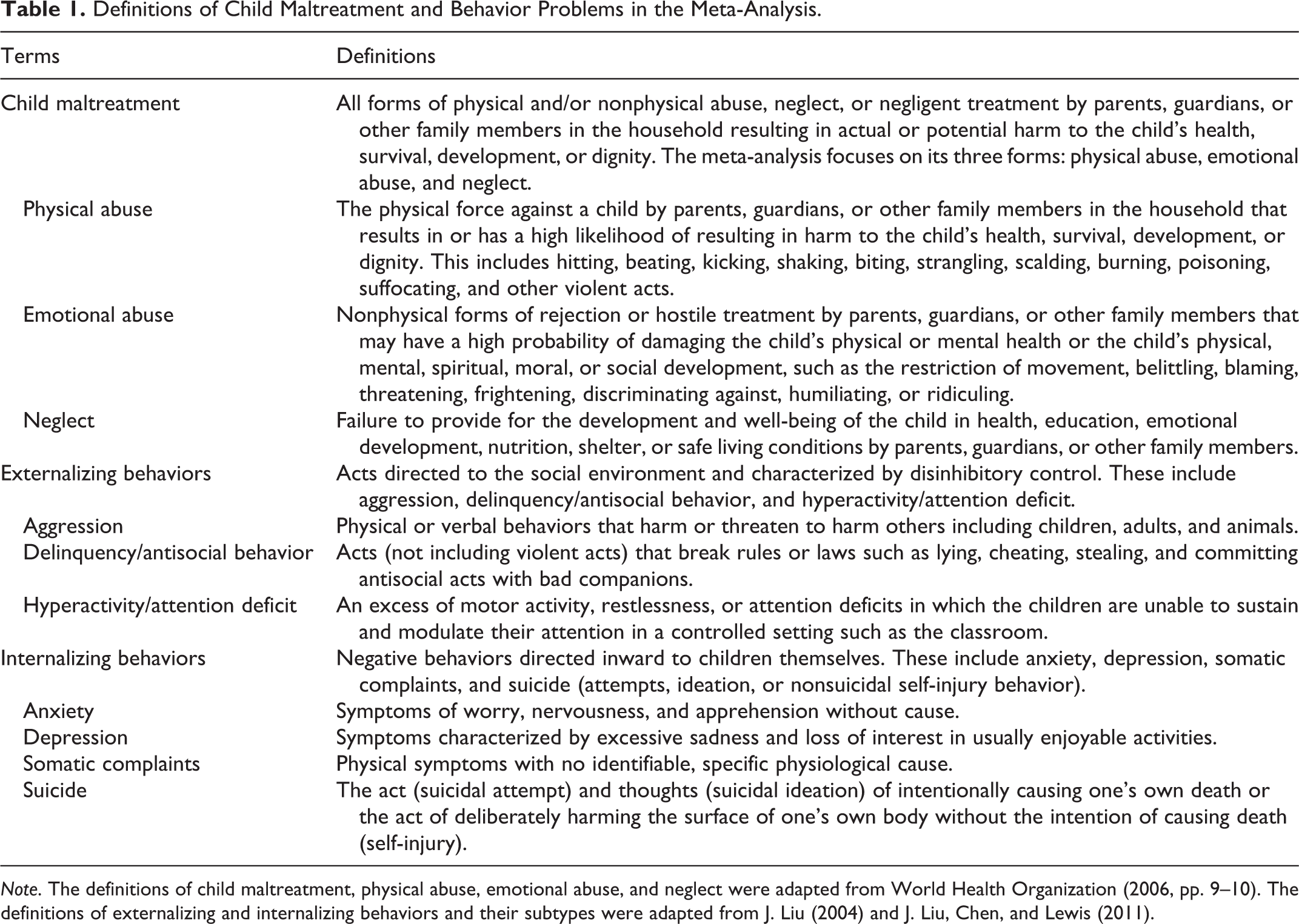
Note. The definitions of child maltreatment, physical abuse, emotional abuse, and neglect were adapted from World Health Organization (2006, pp. 9–10). The definitions of externalizing and internalizing behaviors and their subtypes were adapted from J. Liu (2004) and J. Liu, Chen, and Lewis (2011).
To meet the inclusion criteria for the cross-study comparison, meta-analyses must (1) focus on the relationship between at least one of the three types of child maltreatment (i.e. physical abuse, emotional abuse, or neglect) and behavior problems, (2) have comparable definitions of child maltreatment and behavior problems with those in the present meta-analysis, and (3) have available information of pooled estimates of effect size and their confidence intervals (CIs).
Data Extraction and Coding
Two raters screened the search results independently based on the eligibility criteria. Disagreements were resolved by consensus to reduce bias and errors (Buscemi, Hartling, Vandermeer, Tjosvold, & Klassen, 2006). After obtaining all eligible studies, we used the first author’s last name and publication year to identify each study. Based on the literature, we extracted the following data from each study using the predetermined codebook. Publication type (peer-reviewed journal article, conference paper, or thesis/dissertation). Sample characteristics including sample size (large if n > 1,000, otherwise small), percentage of girls, age (mean and standard deviations or age range or grade if mean age was unreported), study region (northeast, central, southwest, northwest, north, south, east, multiple regions, or unspecified regions; X. Zhou et al., 2015), residential areas
2
(rural, urban, or mixed if participants were from both rural and urban areas), and response rate (RR; the number of usable responses returned divided by the total number eligible in the sample chosen) or usable return rate (URR; the number of usable responses returned divided by the total number of questionnaires distributed) if RR was unreported. Methodological factors including study design (cross-sectional or longitudinal), sampling methods (probability sampling or not), subgroups (e.g., girls or boys, father report, or mother report), number of study sites (single site or multiple sites), validated assessment of child maltreatment (yes or no), assessment tool of child maltreatment (Conflict Tactics Scale for Parent and Child [CTSPC], Childhood Trauma Questionnaire [CTQ], self-developed instrument, or others), reporter of child maltreatment (child, parent, or others), abuser of child maltreatment (father, mother, parents if the parental gender was not specified, or mixed with parents, guardians, and family members), and measurement of behavior problems (questionnaire, diagnosed, or others). These factors may contribute to the heterogeneity in study findings and hence were used as moderators separately (Ji & Finkelhor, 2015).
Information of child maltreatment (physical abuse, emotional abuse, neglect, or mixed) and behavior problems (Level-1 coding: externalizing behaviors, internalizing behaviors, or mixed if externalizing and internalizing behaviors were not differentiated; Level-2 coding: aggression, delinquency/antisocial behavior, hyperactivity/attention deficit, anxiety, depression, somatic complaints, suicidal attempts, suicidal ideation, and self-injury behavior) and information to calculate effect sizes were also collected. Missing information was requested from authors and was coded as missing if it could not be obtained. Additionally, after obtaining eligible existing meta-analyses for the cross-study comparison, information regarding types of child maltreatment, types of behavior problems, pooled effect sizes, and CIs of the relationship between child maltreatment and behavior problems were also extracted.
Quality Assessment
The same two raters appraised the quality of each study using the modified Quality Assessment Tool for Observational Cohort and Cross-sectional Studies (National Institute of Health, 2014) based on each study’s objective(s), sampling description, measurement, and analysis. Each item is worth one point and a higher summed score indicates better study quality. Study quality was regarded as high if the point sum was higher than half of the total number of items that applied to the study. Otherwise, it was rated as low. Disagreements in the assessment between the raters were resolved by consensus.
Statistical Analysis
Calculation of effect sizes
To calculate the effect size for each study, Cohen’s d was first calculated from bivariate correlation coefficients, unadjusted odds ratios (ORs), means and standard deviations, or frequencies and/or proportions. Then, Hedges’s g was calculated from Cohen’s d multiplying J, where
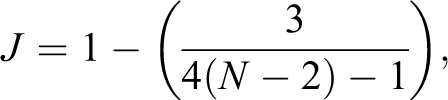
to correct for potential bias introduced by studies with small sample sizes (N) to estimate the effect size of each study. Similar to Cohen’s d, Hedges’s g = .2 is considered a small effect size, .5 represents a medium effect size, and .8 a large effect size (Lipsey & Wilson, 2001).
Effect sizes within a study were averaged in the following cases when necessary: (1) studies that reported two or multiple Level-2 behavior problems by the same participants that can be categorized into the same Level-1 behavior problems, (2) studies that assessed multiple conditions of a single type of child maltreatment (e.g., physical abuse reported by fathers and mothers separately, or information about mild physical abuse and severe physical abuse separately), and (3) longitudinal studies that reported cross-sectional relationships between child maltreatment and behavior problems at multiple time points. The variance of the averaged effect size was calculated using:
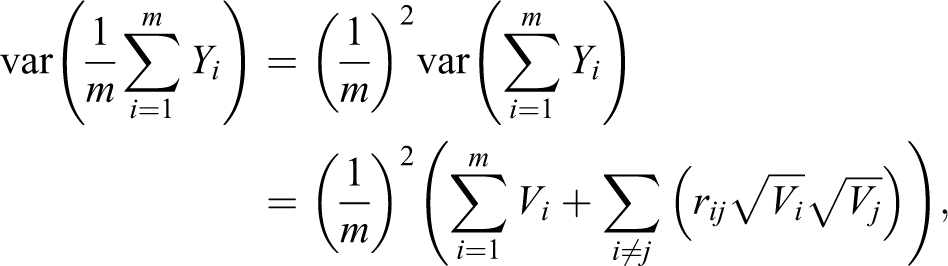
as described in Borenstein, Hedges, Higgins, and Rothstein’s (2009) study, where Yi denotes the effect sizes from different behavior problems, conditions of child maltreatment, or time points within a study; Yj denotes the outcome variable i , i = 1,…m, Vi and Vj denotes the variance of Yi and Yj Yj when i ≠ j (j = 1, ...m), respectively; and rij is the correlation between Yi and Yj. When rij was not reported in the study, correlation equal to 1 was used.
Considering that only two studies reported the longitudinal relationships between child maltreatment and behavior problems and the remaining studies were cross-sectional, the effect sizes of all the cross-sectional relationships were submitted to analyze the pooled estimates across studies, moderator effects, and publication bias. Sensitivity analysis was conducted by adding the effect sizes from the longitudinal relationships.
Separate meta-analyses using random effects model (DerSimonian & Kacker, 2007) were run for each type of child maltreatment and each type of behavior problems at the two levels. The differences in the associations of each type of child maltreatment and each behavior problems were first screened if there were any pairs of 95% CIs were not overlapped. Then, for nonoverlapped 95% CIs, we further tested if the heterogeneity was statistically significant using the Q statistics (Higgins, Thompson, Deeks, & Altman, 2003).
Heterogeneity
Firstly, heterogeneity across studies was identified by the I2 statistic that was calculated for each pooled estimate to determine the proportion of the observed variance that reflects variance in true effect sizes. I2 values <25%, 50%, and ≥75% represent low, moderate, and high levels of heterogeneity, respectively (Higgins et al., 2003).
Next, heterogeneity among studies due to the categorical moderators was estimated using the Q statistic. Meta-regression was used to estimate the possible effect of mean age, RR, or URR on the relationship between child maltreatment and behavior problems. Because the number of studies reporting information for boys and girls separately was small, the effect of child gender was analyzed in two ways: (1) meta-regression using the proportion of girls as the independent variable and (2) Q statistics comparing the effect sizes in boy and girl subgroups, respectively, using studies that reported such information.
Publication bias
Publication bias was estimated using three methods such as the classic fail-safe N, funnel plot, and the trim-and-fill method. The classic fail-safe N calculates the number of potential unpublished studies with insignificant findings that would be needed to reduce the pooled effect size in the meta-analysis below the level of significance. A file-drawer effect, selective publication bias, exists when the fail-safe N is less than 5 times the number of published studies plus 10 (Rosenthal, 1979). A funnel plot is a plot of the effect sizes in studies included in meta-analysis against their standard errors (Sterne & Egger, 2001). It is expected to be symmetrical. An asymmetrical funnel plot might arise if larger studies with nonsignificant results or with an effect size in the nonhypothesized direction are preferentially published, while smaller studies with such findings are less likely to be published (Sterne & Egger, 2001). Based on the funnel plot, the trim and fill method imputes the missing effect sizes to fill in asymmetrical areas of the funnel plot and then recalculate the overall effect size to test publication bias (Duval & Tweedie, 2000).
Sensitivity analysis
Sensitivity analyses were conducted to test the uncertainty in the study findings. For studies without information about the correlations among multiple behavior problems or child maltreatment conditions, the variance of the average effect size was recalculated using correlations of 0 and 0.5, respectively, and then all analyses were rerun. The correlations of 0 and 0.5 were chosen conventionally to represent no correlation and moderate correlation. Next, all analyses were rerun after adding in the longitudinal relationship between maltreatment and behavior problems. Finally, the relationships between child maltreatment and behavior problems were tested in the high and low study quality subgroups, respectively.
Converting effect sizes in the eligible existing meta-analyses for cross-study comparison
The pooled effect sizes and CIs were converted to Cohen’s d if other forms (e.g., OR, risk ratio) of effect sizes were reported in the eligible meta-analyses to ensure comparability.
All the formulae employed in these analyses but not displayed can be found in the work by Lipsey and Wilson (2001). Comprehensive Meta-Analysis Version 3 (Biostat, Englewood, NJ) was used to complete the meta-analysis.
Results
Study Selection
The literature search yielded a total of 4,466 unique citations; 4,313 were excluded after title and abstract screening. Of the remaining 153 articles, 105 were further excluded upon full-text screening based on the eligibility criteria. One additional eligible article was identified from the reference list of a retrieved article. This process resulted in 46 articles from 42 studies that met the eligibility criteria (Figure 1). Articles from the same study were identified based on the author names, study location, and sample characteristics and were coded as one study if they focused on different maltreatment or behavior problems.
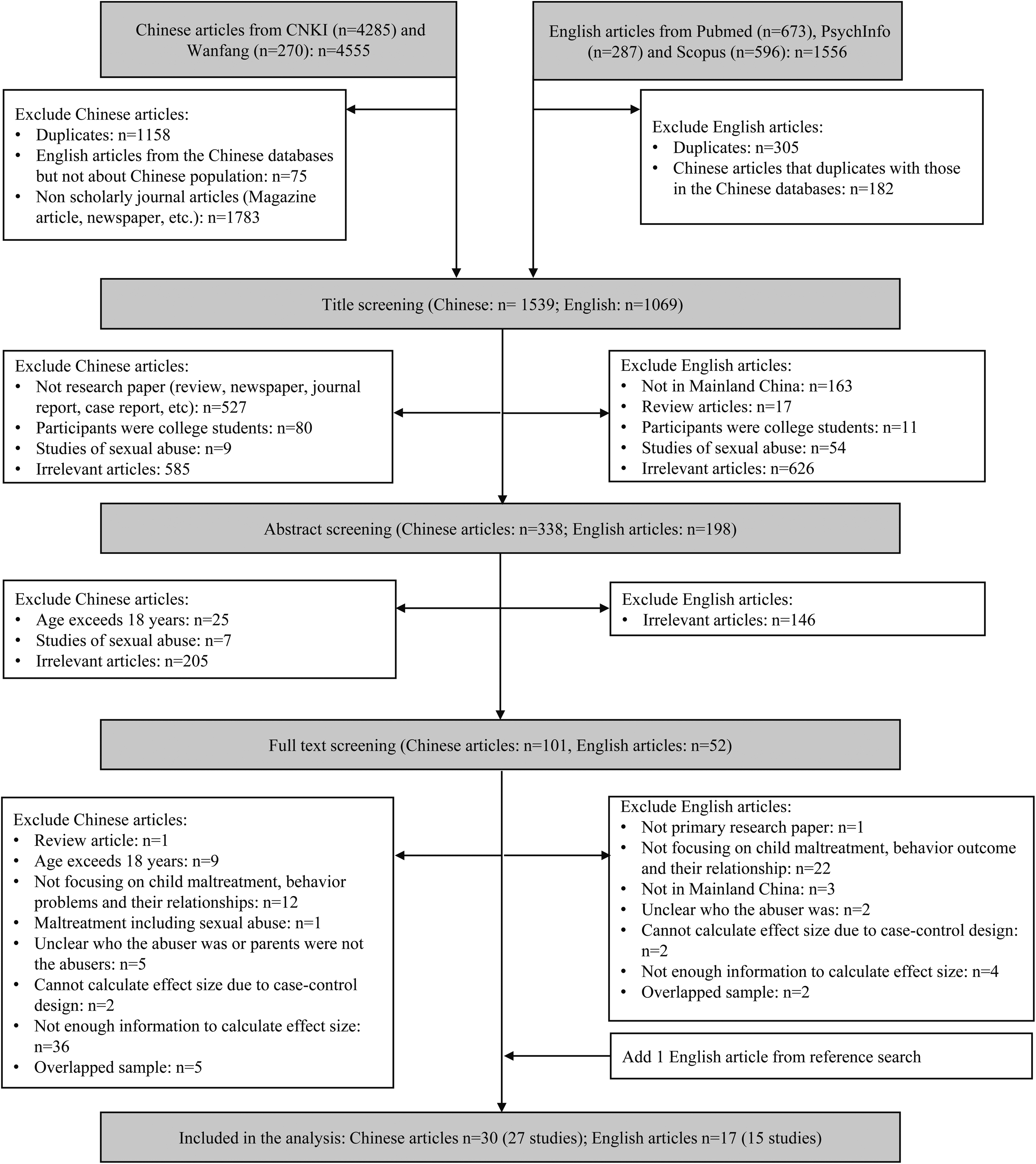
A PRISMA (Preferred Reporting Items for Systematic Review) diagram for the steps of article search and selection for the meta-analysis. CNKI = China National Knowledge Infrastructure.
Study Characteristics
Study characteristics of the 42 studies were summarized in Table 2. These studies were conducted among 98,749 children with an average mean age of 12.13 years and an average of 48.7% girls in all the seven regions of Mainland China. Among the 42 studies, 34 were peer-reviewed publications, 7 were theses/dissertations, and 1 was conference paper. Nineteen studies had sample sizes over 1,000. Sixteen studies used probability sampling methods. Eleven studies reported RR (>90% in eight studies), 17 studies reported URR (>90% in 16 studies), while 14 studies did not specify RR or URR. Fourteen studies recruited samples from both rural and urban areas, 2 from rural areas only, 2 from urban areas only, and the remaining 24 did not specify this information.
Summary of Study Characteristics and Effect Sizes.
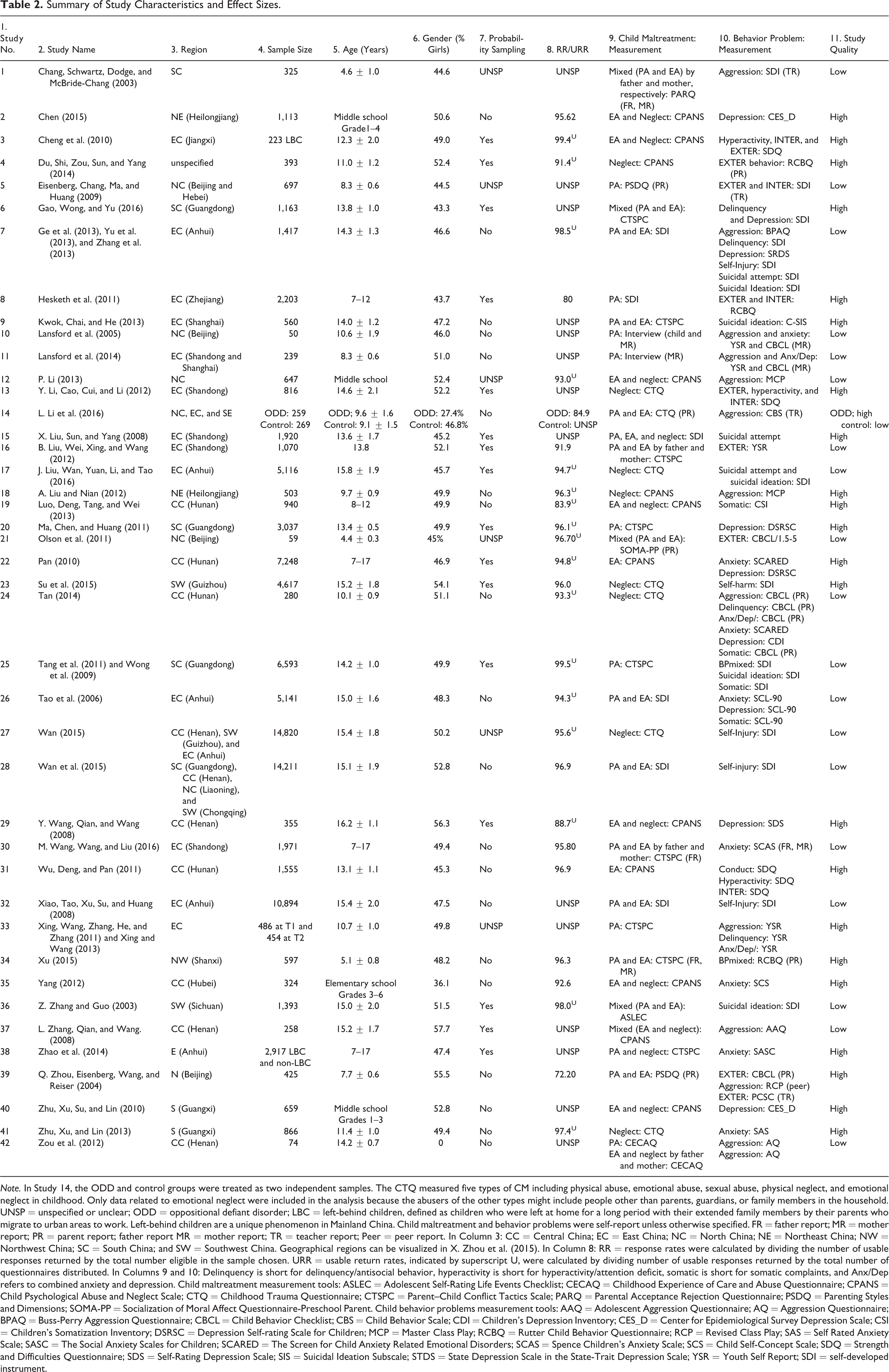
Note. In Study 14, the ODD and control groups were treated as two independent samples. The CTQ measured five types of CM including physical abuse, emotional abuse, sexual abuse, physical neglect, and emotional neglect in childhood. Only data related to emotional neglect were included in the analysis because the abusers of the other types might include people other than parents, guardians, or family members in the household. UNSP = unspecified or unclear; ODD = oppositional defiant disorder; LBC = left-behind children, defined as children who were left at home for a long period with their extended family members by their parents who migrate to urban areas to work. Left-behind children are a unique phenomenon in Mainland China. Child maltreatment and behavior problems were self-report unless otherwise specified. FR = father report; MR = mother report; PR = parent report; father report MR = mother report; TR = teacher report; Peer = peer report. In Column 3: CC = Central China; EC = East China; NC = North China; NE = Northeast China; NW = Northwest China; SC = South China; and SW = Southwest China. Geographical regions can be visualized in X. Zhou et al. (2015). In Column 8: RR = response rates were calculated by dividing the number of usable responses returned by the total number eligible in the sample chosen. URR = usable return rates, indicated by superscript U, were calculated by dividing number of usable responses returned by the total number of questionnaires distributed. In Columns 9 and 10: Delinquency is short for delinquency/antisocial behavior, hyperactivity is short for hyperactivity/attention deficit, somatic is short for somatic complaints, and Anx/Dep refers to combined anxiety and depression. Child maltreatment measurement tools: ASLEC = Adolescent Self-Rating Life Events Checklist; CECAQ = Childhood Experience of Care and Abuse Questionnaire; CPANS = Child Psychological Abuse and Neglect Scale; CTQ = Childhood Trauma Questionnaire; CTSPC = Parent–Child Conflict Tactics Scale; PARQ = Parental Acceptance Rejection Questionnaire; PSDQ = Parenting Styles and Dimensions; SOMA-PP = Socialization of Moral Affect Questionnaire-Preschool Parent. Child behavior problems measurement tools: AAQ = Adolescent Aggression Questionnaire; AQ = Aggression Questionnaire; BPAQ = Buss-Perry Aggression Questionnaire; CBCL = Child Behavior Checklist; CBS = Child Behavior Scale; CDI = Children’s Depression Inventory; CES_D = Center for Epidemiological Survey Depression Scale; CSI = Children’s Somatization Inventory; DSRSC = Depression Self-rating Scale for Children; MCP = Master Class Play; RCBQ = Rutter Child Behavior Questionnaire; RCP = Revised Class Play; SAS = Self Rated Anxiety Scale; SASC = The Social Anxiety Scales for Children; SCARED = The Screen for Child Anxiety Related Emotional Disorders; SCAS = Spence Children’s Anxiety Scale; SCS = Child Self-Concept Scale; SDQ = Strength and Difficulties Questionnaire; SDS = Self-Rating Depression Scale; SIS = Suicidal Ideation Subscale; STDS = State Depression Scale in the State-Trait Depression Scale; YSR = Youth Self Report; SDI = self-developed instrument.
Most of the studies were cross-sectional; two were longitudinal. Almost all studies were conducted in multiple sites except three studies that did not specify study sites. Nine studies used the CTSPC, 6 used the CTQ , 5 used self-developed instruments, and the remaining 22 studies used other tools to assess child maltreatment. Nine studies collected child maltreatment data reported by parents, while the remaining studies used child-report data. Four studies reported the relationships between child maltreatment and behavior problems for boys and girls, respectively. Four studies differentiated father abuser and mother abuser. Eight studies collected maltreatment information from parents, while the remaining used child-report data. All studies measured behavior problems using questionnaires.
The included studies analyzed the relationships between physical abuse and externalizing behaviors (n = 10), physical abuse and internalizing behaviors (n = 13), emotional abuse and externalizing behaviors (n = 8), emotional abuse and internalizing behaviors (n = 16), neglect and externalizing behaviors (n = 7), and neglect and internalizing behaviors (n = 15). Six studies focused on mixed maltreatment or mixed behavior problems without differentiating their types. Twenty-one and 20 studies were classified as high quality and low quality, respectively. The study quality of L. Li et al. (2016) was evaluated for the two subsamples separately (one was classified as high and the other was low).
In addition, two studies reported information specific to left-behind children (children who were left at home for a long period with their extended family members by their parents who migrate to urban areas to work); therefore, a code to indicate left-behind children or not was added to capture this unique phenomenon in Mainland China.
Physical Abuse
Among all the studies that examined the relationships between physical abuse and externalizing behaviors, all but one study reported increased externalizing behaviors in relation to physical abuse, Hedges’s g = .503 (95% CI [0.358, 0.649]). All studies but one examining the relationships between physical abuse and internalizing behaviors reported increased internalizing behaviors related to physical abuse, Hedges’s g = .493 (95% CI [0.469, 0.518]). The two studies that reported relationships between physical abuse and mixed behavior problems showed a small effect size, Hedges’s g = .376 (95% CI [0.330, 0.422]). The separate analyses for the relationships between physical abuse and each Level-2 behavior problems showed similar small-to-medium effect sizes. All the 95% CIs were overlapped, indicating there were not significant differences in the relationships between physical abuse and Level-1 or Level-2 behavior problems (see Figure 2 and Table 3).
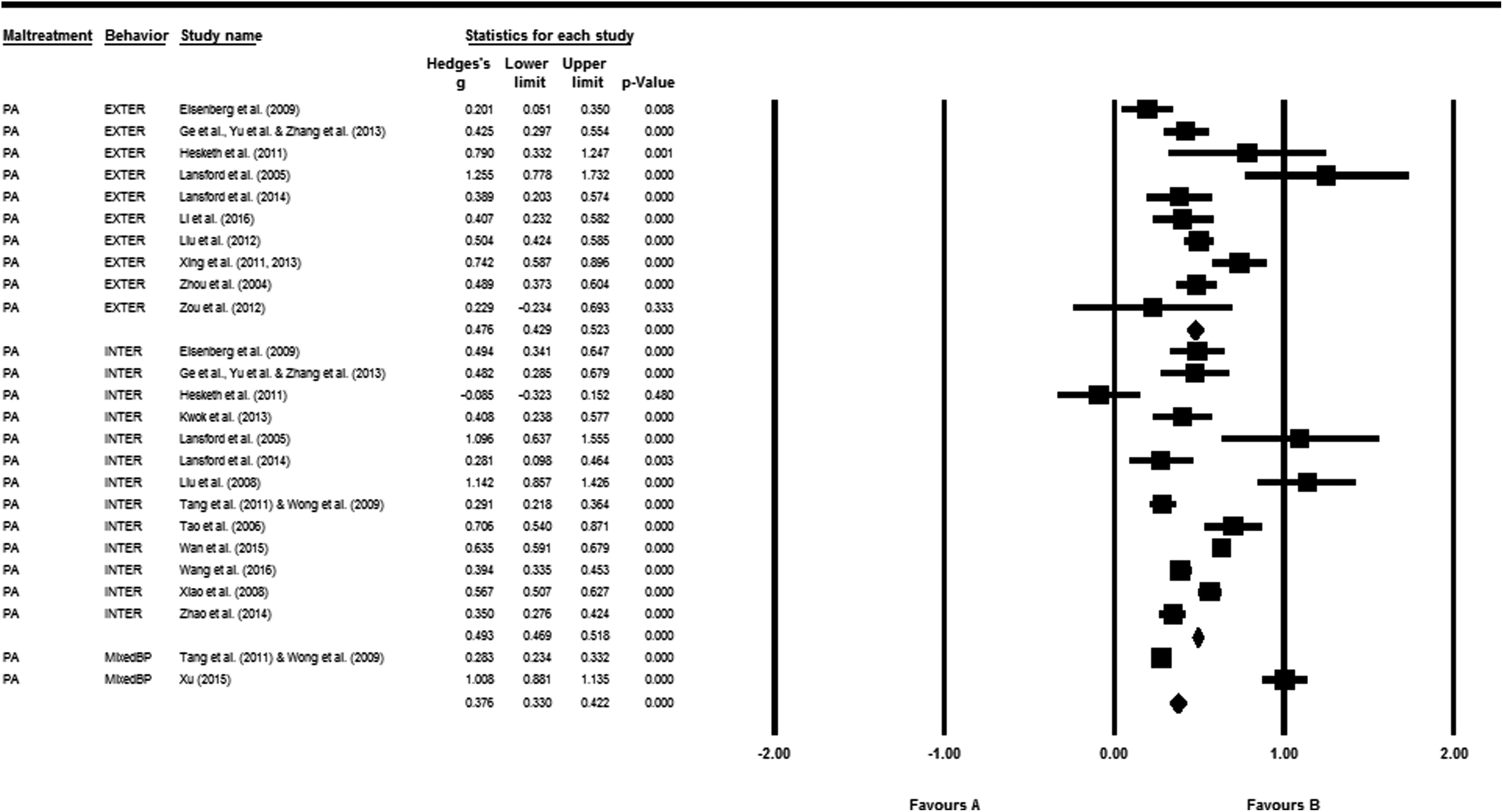
Forest plot of the association of child physical abuse (PA) and externalizing (EXTER), internalizing (INTER), and mixed behavior problems (MixedBP, which refers to both externalizing and internalizing behaviors). The square shape and bar line represent the estimate of effect size and 95% confidence interval for each study, respectively. The diamond shapes represent the pooled estimates of the effect sizes for different behavioral outcomes. Favors B indicates that child maltreatment increases behavior problems, while Favors A indicates child maltreatment decreases behavior problems.
The Pooled Estimates of Effect Size and Heterogeneity (I2) From the Meta-Analysis.
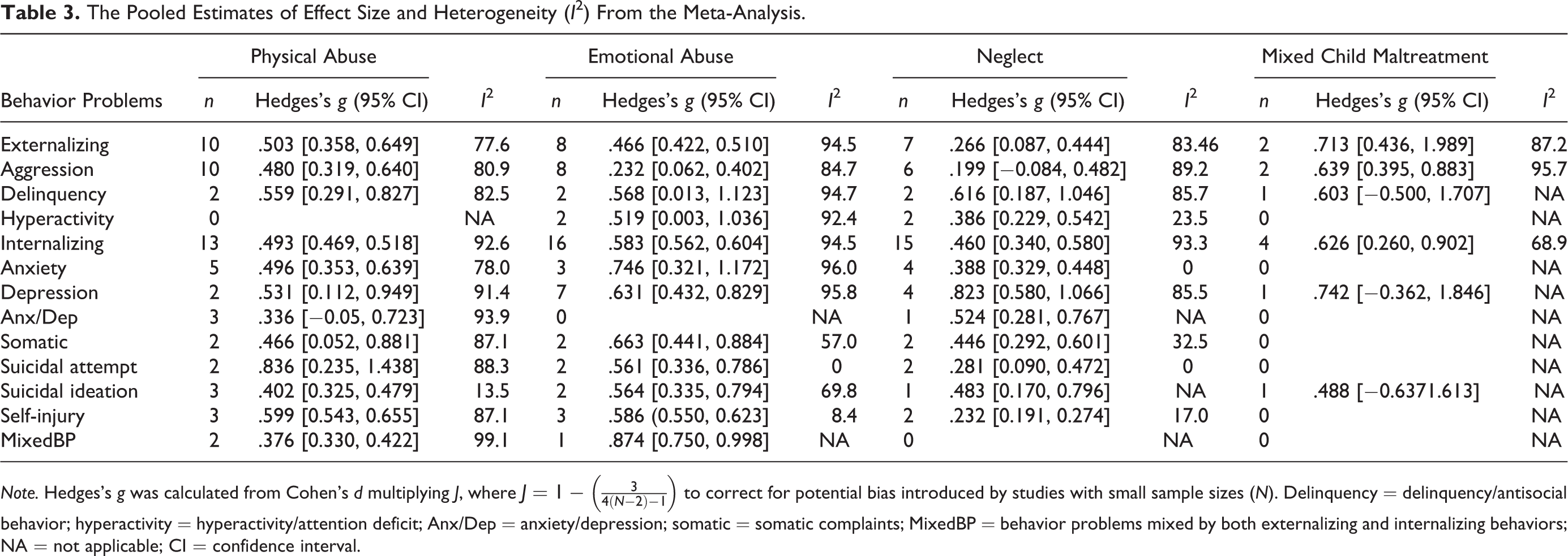
Note. Hedges’s g was calculated from Cohen’s d multiplying J, where
Emotional Abuse
Among all the studies focused on emotional abuse and externalizing behaviors, all but one study reported increased externalizing behaviors in relation to emotional abuse. The pooled estimate Hedges’s g = .348 (95% CI [0.150, 0.547]). All studies on emotional abuse and internalizing behaviors reported positive relationships and the pooled estimate was 0.592 (95% CI [0.489, 0.695]). One study on the relationship between emotional abuse and mixed behavior problems reported a large effect size, Hedges’s g = .874 (95% CI [0.750, 0.998]). The effect size of the relationship between emotional abuse and internalizing behaviors was larger than the relationship between emotional abuse and externalizing behaviors (Q = 5.961, p = .015). Specifically, the associations of emotional abuse with Level-2 behavior problems, including depression, self-injury behavior, and somatic complaints, were higher than that of emotional abuse with aggression ( p values < .05; see Figure 3 and Table 3).
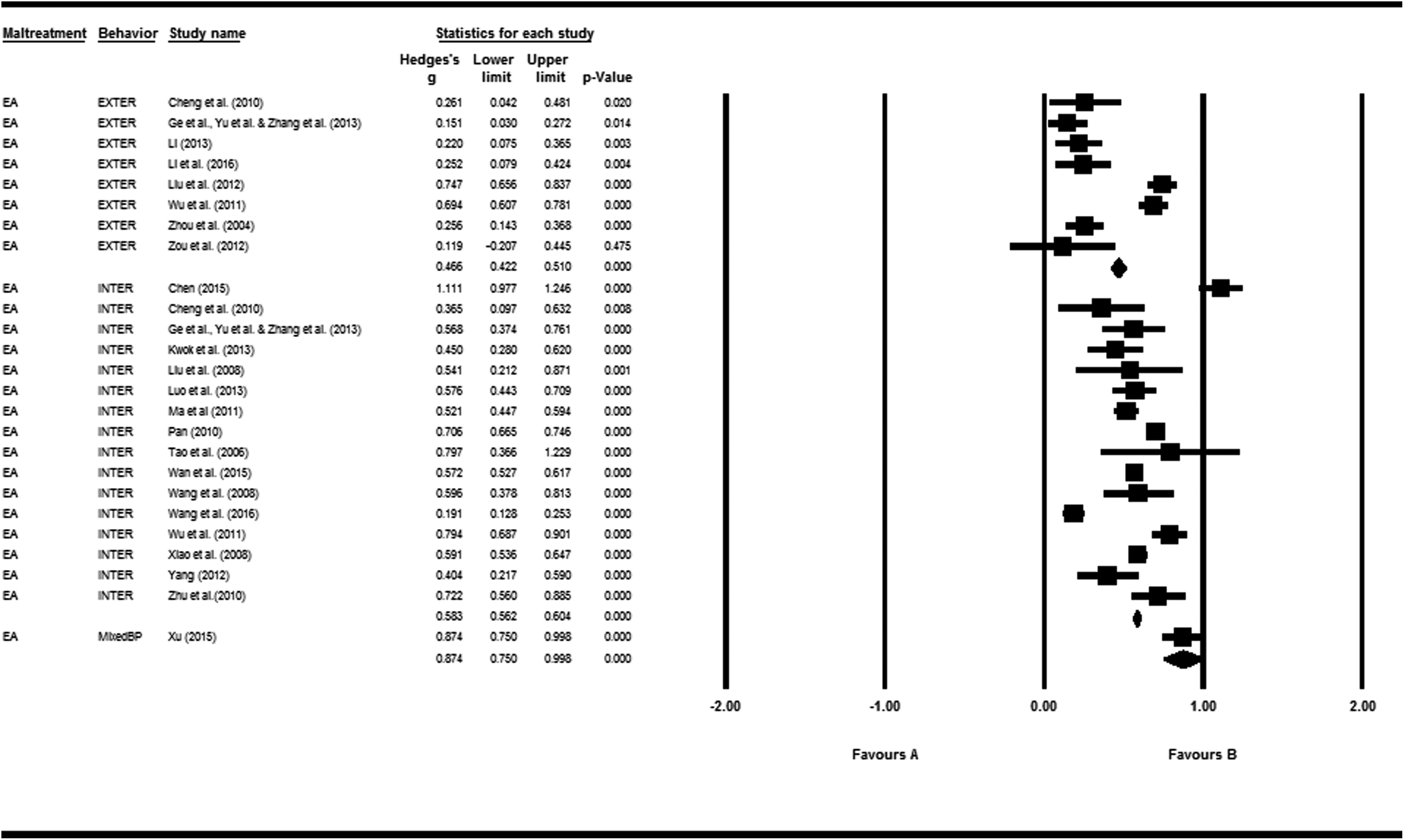
Forest plot of the associations of child emotional abuse (EA) and externalizing (EXTER), internalizing (INTER), and mixed behavior problems (MixedBP, which refers to both externalizing and internalizing behaviors). The square shape and bar line represent the estimate of effect size and 95% confidence interval for each study, respectively. The diamond shapes represent the pooled estimates of the effect sizes for different behavioral outcomes. Favors B indicates that child maltreatment increases behavior problems, while Favors A indicates child maltreatment decreases behavior problems.
Neglect
The majority of studies on neglect and externalizing or internalizing behaviors reported that neglected children had more behavior problems except for the five studies. The pooled estimates for the relationship between neglect and externalizing behaviors and internalizing behaviors were 0.266 (95% CI [0.087, 0.444]) and 0.460 (95% CI [0.340, 0.580]), respectively. These were not significantly different. Neglect was also associated with all Level-2 behavior problems about equally because all 95% CI overlapped (see Figure 4 and Table 3).
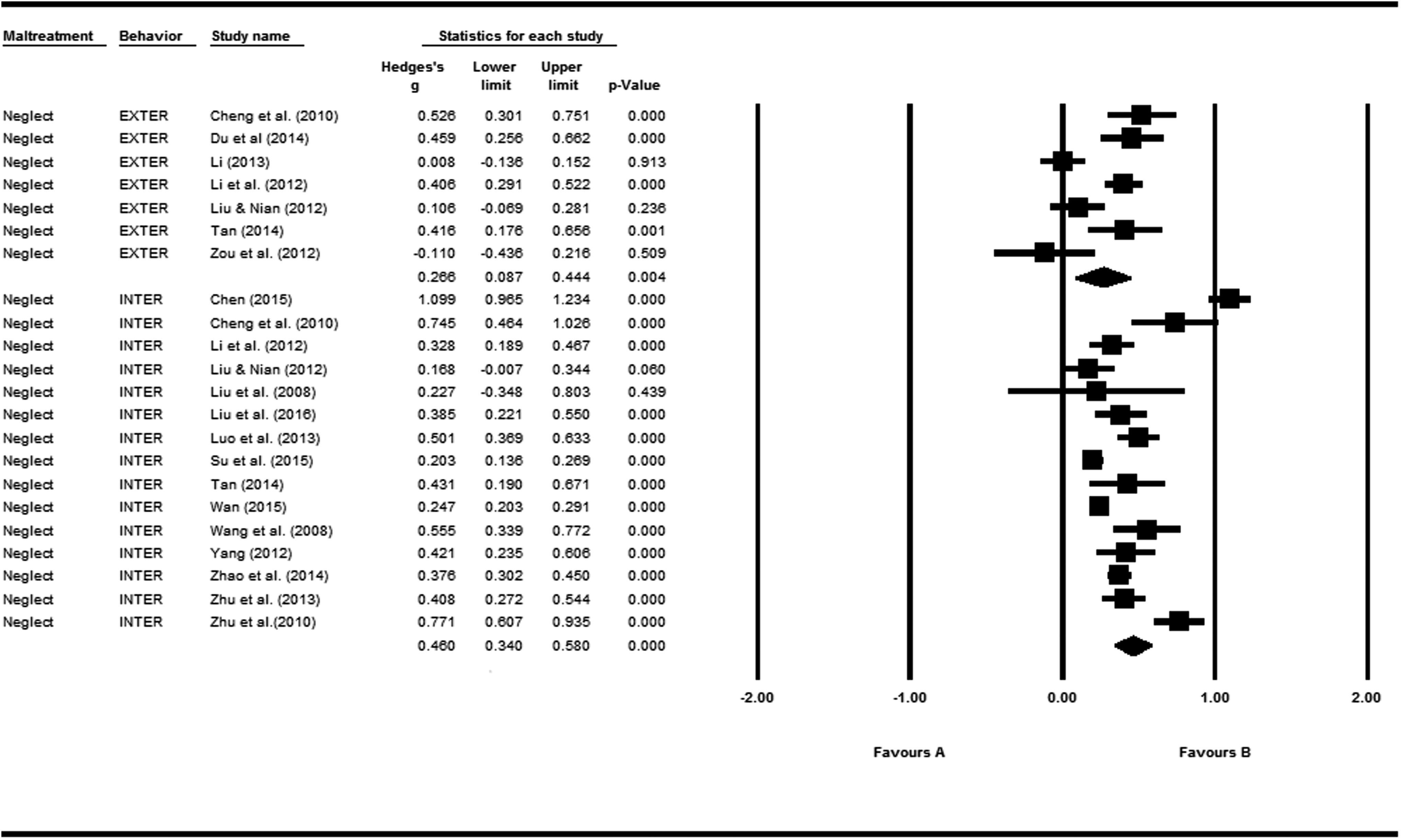
Forest plot of the associations of child neglect and externalizing (EXTER) and internalizing (INTER). The square shape and bar line represent the estimate of effect size and 95% confidence interval for each study, respectively. The diamond shapes represent the pooled estimates of the effect sizes for different behavioral outcomes. Favors B indicates that child maltreatment increases behavior problems, while Favors A indicates child maltreatment decreases behavior problems.
Mixed Child Maltreatment
All studies that examined the relationship between child maltreatment without differentiating its subtypes reported increased externalizing (Hedges’s g = .713, 95% CI [0.436, 1.989]) and internalizing (Hedges’s g = .626, 95% CI [0.260, 0.902]) behaviors about equally (Figure 5 and Table 3).
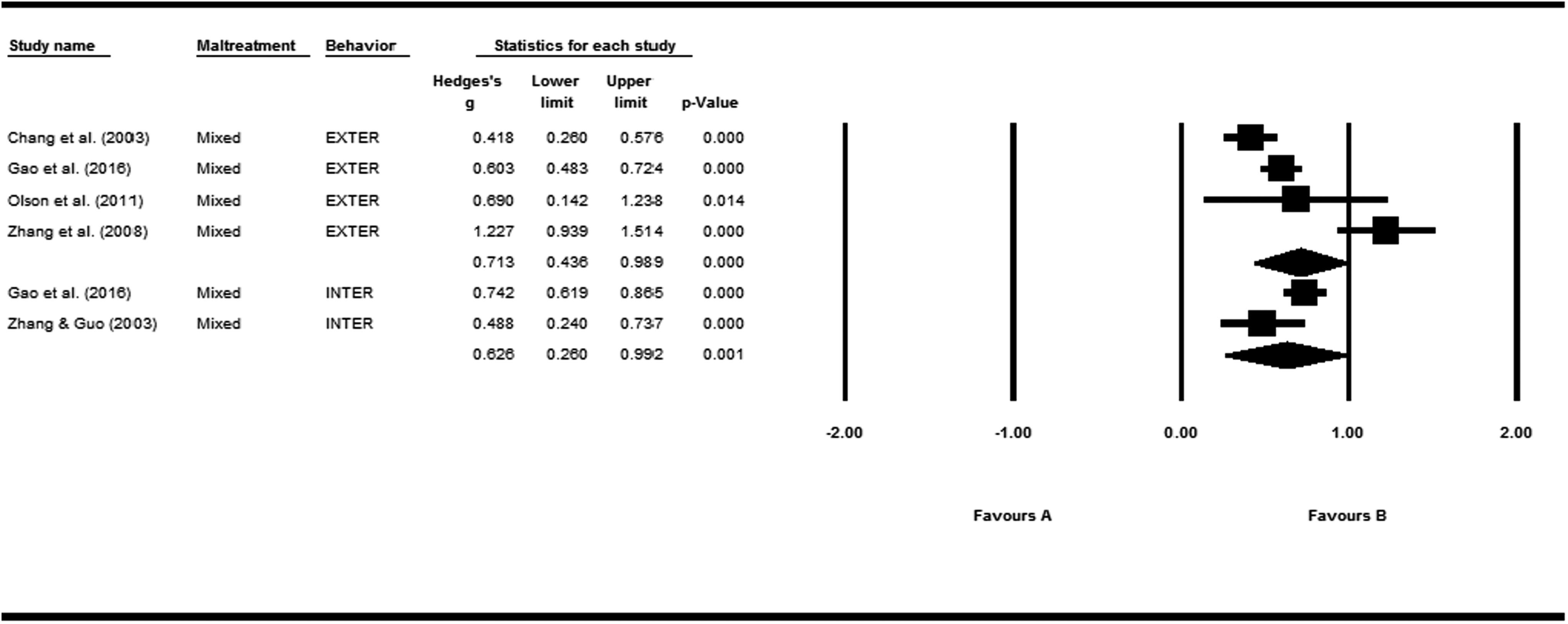
Forest plot of the associations of mixed child maltreatment (MIXED refers to combined multiple types of child maltreatment) and externalizing (EXTER) and internalizing (INTER). The square shape and bar line represent the estimate of effect size and 95% confidence interval for each study, respectively. The diamond shapes represent the pooled estimates of the effect sizes for different behavioral outcomes. Favors B indicates that child maltreatment increases behavior problems, while Favors A indicates child maltreatment decreases behavior problems.
Heterogeneity
Despite some exceptions, there was substantial heterogeneity among most of the studies evidenced by the majority of I2 values >75% ( p values < .001, Table 3). Child gender and reporter of child maltreatment were identified as potential moderators that may contribute to the heterogeneity. However, separate analyses of other moderators did not show significant results.
Child gender
Meta-regression analysis did not find a significant linear relation between the proportion of girls and the estimated effect sizes. A further analysis using the four studies that reported information stratified by child gender revealed that the relationship between physical abuse and externalizing behaviors was stronger among girls (Hedges’s g = .935, 95% CI [0.712, 1.160]) than boys (Hedges’s g = .568, 95% CI [0.354, 0.781]), Q = 5.443, p = .020. The association of emotional abuse with internalizing behaviors was stronger among boys (Hedges’s g = .651, 95% CI [0.584, 0.718]) than girls (Hedges’s g = .507, 95% CI [0.447, 0.567]), Q = 9.835, p = .002.
Reporter of child maltreatment
The effect size of the relationship emotional abuse and internalizing behaviors in one study that used parent-report data (Hedges’s g = .191, 95% CI [−0.059, 0.441]) was smaller than the pooled estimate of this relationship in the 14 studies that used child-report data (Hedges’s g = .632, 95% CI [0.554, 0.709]), Q = 10.920, p = .001.
Sensitivity Analyses
The same analyses were rerun using variance of the average effect sizes among multiple outcomes/conditions calculated from correlations of 0 and 0.5, respectively. These analyses produced equivalent results. The results remained unchanged after adding the effect sizes of the longitudinal relationships. The effect sizes of the relationships between child maltreatment and behavior problems did not significantly differ between high and low study quality subgroups.
Publication Bias
The present meta-analysis did not find evidence of publication bias. The funnel plots were symmetrical (Figure 6). The fail-safe N numbers were very large to reduce the mean effect size below the level of significance for the relationship between physical abuse and externalizing (N = 845) or internalizing behaviors (N = 3,500), between emotional abuse and externalizing (N = 582) or internalizing behaviors (N = 8,190), and between neglect and externalizing (N = 171) or internalizing behaviors (N = 2,366). The trim-and-fill method did not identify any missing studies for these relationships.
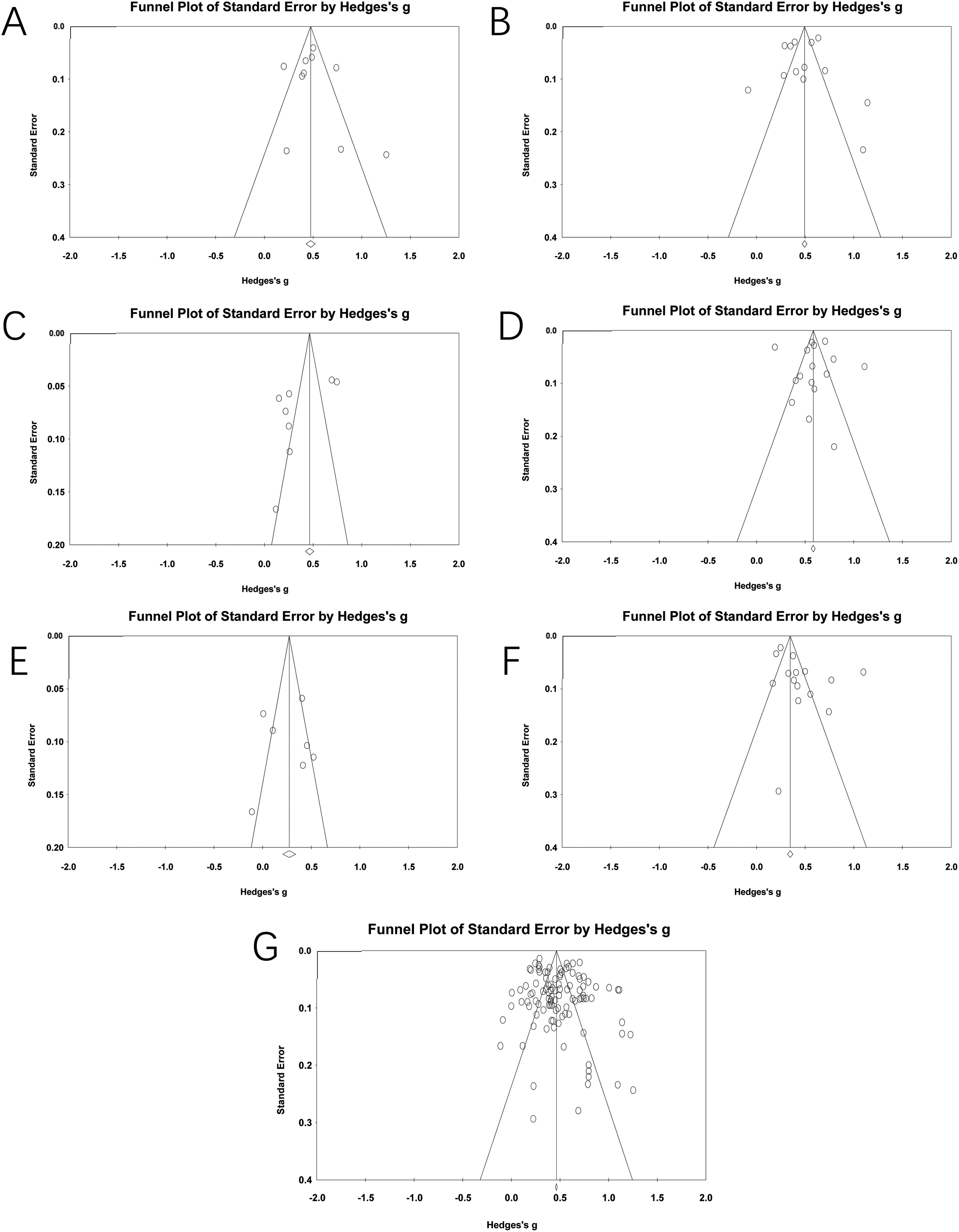
Funnel plots of the included studies. (A) Studies of physical abuse and externalizing behaviors, (B) studies of physical abuse and internalizing behaviors, (C) studies of emotional abuse and externalizing behaviors, (D) studies of emotional abuse and internalizing behaviors, (E) studies of neglect and externalizing behaviors, (F) studies of neglect and internalizing behaviors, and (G) all studies included in the meta-analysis. Hedges’s g was calculated from Cohen’s d multiplying J, where
Cross-Study Comparison
Five meta-analyses (Ip et al., 2016; Lindert et al., 2014; Mandelli, Petrelli, & Serretti, 2015; Norman et al., 2012; Wilson, Norris, Shi, & Rack, 2010) were yielded from the secondary literature search and compared with the present findings. As shown in Table 4, the point estimates (Hedges’s g) in the present meta-analysis were slightly higher than those (Cohen’s d) in the five meta-analyses conducted in child or both child and adult populations across the world. However, all 95% CIs overlapped.
Cross-Study Comparisons.
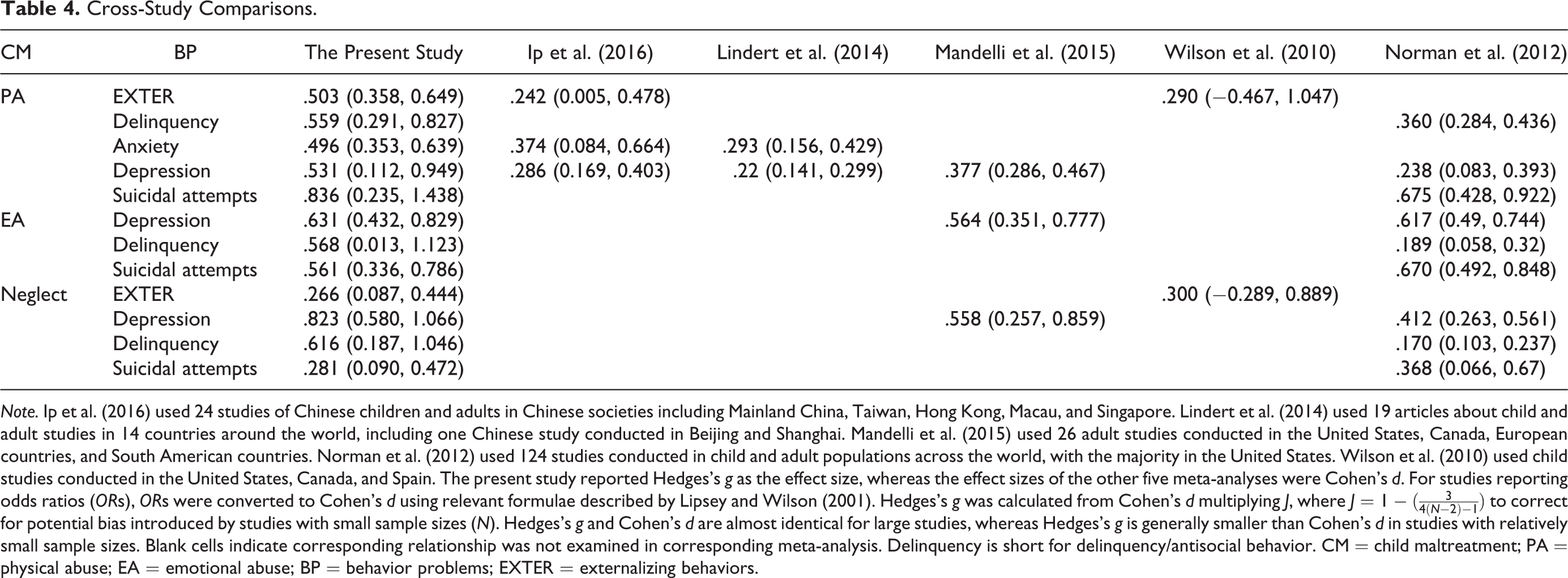
Note. Ip et al. (2016) used 24 studies of Chinese children and adults in Chinese societies including Mainland China, Taiwan, Hong Kong, Macau, and Singapore. Lindert et al. (2014) used 19 articles about child and adult studies in 14 countries around the world, including one Chinese study conducted in Beijing and Shanghai. Mandelli et al. (2015) used 26 adult studies conducted in the United States, Canada, European countries, and South American countries. Norman et al. (2012) used 124 studies conducted in child and adult populations across the world, with the majority in the United States. Wilson et al. (2010) used child studies conducted in the United States, Canada, and Spain. The present study reported Hedges’s g as the effect size, whereas the effect sizes of the other five meta-analyses were Cohen’s d. For studies reporting odds ratios (ORs), ORs were converted to Cohen’s d using relevant formulae described by Lipsey and Wilson (2001). Hedges’s g was calculated from Cohen’s d multiplying J, where
Discussion
Findings from the 42 studies conducted among 98,749 Chinese children supported the hypothesis that physical abuse, emotional abuse, and neglect by parents, guardians, and other family members in the household are undoubtedly associated with a broad spectrum of behavior problems in childhood. The pooled estimates suggest that different types of child maltreatment relate to different types of behavior problems approximately equally, with small-to-moderate effect sizes, except that emotional abuse related more to internalizing than externalizing behaviors. Moderator analysis showed that child gender and reporter of child maltreatment may contribute to the heterogeneity among study findings, but the evidence is still weak. No indication of publication bias emerged. In addition, the cross-study comparison showed that the present findings are equivalent to findings from the five identified meta-analyses conducted in child and adult populations across the world.
Pooled Estimates of Effect size
The present meta-analysis found that all three types of child maltreatment related to a broad spectrum of childhood behavior problems, including externalizing and internalizing behaviors in Mainland China. This is consistent with evidence that child maltreatment may be a nonspecific risk factor for health problems due to its universal adverse effects on multiple biological, neurological, and epigenetic pathways underlying behavioral, mental, and physical health problems (Kelly-Irving et al., 2013; McCrory, De Brito, & Viding, 2010; Vachon, Krueger, Rogosch, & Cicchetti, 2015).
The estimated small-to-moderate effect sizes were considered as of practical significance. Methodologically, public health, social, and psychological studies are more likely to produce smaller effect sizes due to attenuation in validity of measures in comparison to studies with good experimental control like clinical random trials (McCartney & Rosenthal, 2000). Empirically, they are of practical importance because of the high economic burden and the long-term adverse consequences related to child maltreatment and childhood behavior problems. Based on the modest associations of physical and emotional abuse with mental health problems in China, Fang et al. (2015) estimated that the economic cost of physical and emotional abuse was 0.47% and 0.84% of the gross domestic product (i.e., about US$27 and US$50 billion) in 2010, respectively. Also, childhood externalizing and internalizing behaviors are major risk factors for many social, societal, and health outcomes such as adulthood crime, violence, and mental disorders (for meta-analyses, see Leschied et al., 2008; Reef et al., 2011).
Heterogeneity
Considerable heterogeneity exists among study findings. Although most of the predetermined sample characteristics and methodological factors did not significantly contribute to the heterogeneity, weak evidence emerged that child gender may contribute to the heterogeneity. This notion was supported in the literature that child maltreatment and behavior problems are not equally prevalent in boys and girls (Cui, Xue, Connolly, & Liu, 2016; J. Liu, 2004; J. Liu et al., 2011) and that child gender moderates the relationship between child maltreatment and behavior problems (Braza et al., 2015). In addition, parent-report emotional abuse showed different strength of relationship with internalizing behavior from child-report emotional abuse. This could be because Chinese parents and children have discrepant perceptions of emotional abuse (Chan, 2012), but the exact explanation needs more studies to clarify.
Cross-Study Comparison
The positive relationship between child maltreatment and more externalizing and internalizing behaviors in Chinese children is consistent with findings from five recent meta-analyses conducted in a variety of populations from different countries and regions. The point estimates of the pooled effect size in the present study were consistently and slightly larger than the estimates in the other five meta-analyses, especially regarding physical and emotional abuse. This outcome may be because the relationships between child maltreatment and behavior problems are relatively stronger in child populations than in adult populations. All studies included in the present meta-analysis measured behavior problems using subjective questionnaires rather than diagnostic standards, whereas the other meta-analyses included studies using diagnostic behavior problems as outcomes. Therefore, measurement error introduced by subjective measures may contribute to the difference. Also, it is possible that the effect sizes calculated from unadjusted estimates in the present meta-analysis may produce larger effect sizes than other meta-analyses with effect sizes calculated from estimates that were adjusted for covariates (Norman et al., 2012). Nevertheless, the 95% CI overlapped across all meta-analyses, indicating that the observed differences were not significant. The cross-study comparisons provided initial evidence of the equal strength of the relationship between child maltreatment and behavior problems across populations and countries. Researchers can make greater effort to directly compare similarities and differences in the relationship between child maltreatment and behavior problems across social, cultural, and societal contexts using comparable methodology.
Limitations
Findings should be interpreted cautiously in light of study limitations. First, considerable variations exist in how researchers defined and measured physical abuse, emotional abuse, and neglect across the 42 studies. As discussed in the five existing meta-analyses, the present meta-analysis found that some studies defined physical abuse using multiple specific parental violent behaviors such as hitting, beating, and kicking (e.g., Kwok et al., 2013; Tang et al., 2011), whereas others simply referred to “physical punishment” or “being hit” (Hesketh et al., 2011; X. Liu, Sun, & Yang, 2008). Some studies (e.g., Ge et al., 2013; Tao et al., 2006; Yu et al., 2013; W. Zhang et al., 2013) may have excluded physical abuse in its mild form that are conventionally accepted as ordinary discipline but still related to behavior problems (Gershoff, 2002). Emotional abuse was measured by public humiliation (Olson et al., 2011), verbal abuse (X. Liu et al., 2008), or multiple behaviors including both and threatening to hit (e.g., B. Liu, Wei, Xing, & Wang, 2012; Pan, 2010; Tao et al., 2006). The majority of studies on neglect applied the Child Psychological Abuse and Neglect Scale developed by Chinese researchers based on the CTQ, the CTSPC, and the Chinese sociocultural context and assessed physical, psychological, and educational neglect (A. Liu & Nian, 2012; Yang, 2012), whereas others applied the CTQ and only measured psychological and physical neglect.
Second, child participants in the 42 studies were diverse in gender, age, and geographic region. However, they were relatively homogenous considering that all were students attending regular schools in the regions where Han Chinese people populate. Attention is still needed for disadvantaged children who do not attend regular schools (e.g., disabled or critically ill children who reside at home or in special education schools) and children in the 55 minority ethnic groups in Mainland China.
Third, the review focused on studies using child maltreatment as the independent variable and behavior problems as the dependent variable. However, all studies but two were cross-sectional. Hence, no causal relationship can be inferred, and the possibility that behavior problems increase the risk of child maltreatment should not be ruled out.
Fourth, the moderator analyses for child gender, reporter of child maltreatment, and abusers of maltreatment were performed only in a limited number of studies. Therefore, the estimate may be not precise enough to draw any conclusion. Future studies should stratify analysis by child and parent gender and collect child maltreatment information from children and from parents to generate more evidence.
Lastly, the present meta-analysis calculated effect sizes using the unadjusted rather than adjusted relationship between child maltreatment and behavior problems because estimate adjusting covariates may be affected by possible mediating mechanisms which will downwardly bias estimates of the overall effect of child maltreatment. It is possible that the relationship can change after adjusting for confounding variables, especially co-occurring maltreatment, family dysfunction, and parental behavioral and mental health (Norman et al., 2012).
Conclusion
This meta-analysis contributes to the existing literature by examining the associations between physical abuse, emotional abuse, and neglect and childhood behavior problems in the Mainland China context. Findings showed child maltreatment was undoubtedly related to a broad spectrum of childhood behavior problems among Chinese children. The associations of different types of child maltreatment and different types/subtypes of childhood behavior problems were about equivalent. In addition, associations between child maltreatment and behavior problems in Mainland Chinese children were equal to the estimates in some existing meta-analyses of studies of child and adult populations across the world.
Practice, Policy, and Research
Child protection persists as a concern in Mainland China. China still lacks an implemented and effective child protection system, and child maltreatment still does not receive much attention from the public, child welfare agencies, and the law enforcement (Man, Barth, Li, & Wang, 2017). Our findings provide empirical evidence that it is urgent and important to build an effective child protection system and launch evidence-based programs for the prevention and intervention of child maltreatment and childhood behavior problems in Mainland China. It is also important for practitioners and health professionals to develop strategies and take actions to prevent child maltreatment from occuring, and to prevent or treat maltreatment related behaivor problems. With respect to resarch, the present findings suggest that further research in minor groups (e.g., ethinicity minorities, disadvantaged families, children in underdevelopped areas) is warranted. In addition, future studies can differentiate child and parent gender to examine the gender effect in the relationship between child maltreatment and behavior problems.
Footnotes
Acknowledgments
We thank Fanghong Dong for her great help in literature screening and quality assessment. We also thank Drs. Ruth Lebet and Miranda Varrasse for proofreading this article.
Declaration of Conflicting Interests
The author(s) declared no potential conflicts of interest with respect to the research, authorship, and/or publication of this article.
Funding
The author(s) disclosed receipt of the following financial support for the research, authorship, and/or publication of this article: This study was funded by the Research Award from Office of Nursing Research at University of Pennsylvania School of Nursing and the Starting Grant for Young Investigator of Shandong University School of Nursing.
